Monthly Archives: August 2017

Quantity over Quality

Screen Shot 2017-08-13 at 21.21.11

When we hear many politicians try to add weight to their arguments, they often will add references to their own lives, “I served in the Army for 20 years,” or “Having been a lawyer for 35 years.” In this way, they seek to promote their argument through the weight of what they possess. One of the most common that was used by Congressional Republicans in order to prove they are not misogynists like Trump was to bring their “wives and daughters” into their argument. This is a technique that I like to call rhetorical quantifying, a way of attempting to prop up a fairly weak, or entirely unoriginal argument by showing how one’s relates to the topic, whether it be through family, friends, acquaintances, or personal possessions.

 I’ll be completely honest; this tactic really annoys me. A valid argument will always be able to stand on its own without the help of some extra quantitative fluff. It doesn’t matter that Speaker of the House Paul Ryan is married to a woman, nor that he has a daughter, what matters is that his argument is valid. Yet what makes this tactic go by with so little press is that the general public has largely accepted it. People in all situations will attempt to bolster their position in a discussion, argument, or even a fight by trying to show how much better they are than someone else.

 On Saturday, at the height of the chaos unleashed by White Supremacists on Charlottesville, Virginia, a 20 year old from Ohio named James Fields drove his car into a crowd of counter-protestors killing one and injuring nineteen others. Upon hearing the news from reporters, his mother in the spur of the moment used this same technique pointing out that her son “had an African American friend.” While she was certainly in the early stages of processing all that her son had done, and the fact that he will quite possibly spend the rest of his life in prison, the way in which she attempted to counter his white supremacist actions by bringing his African American friend into the conversation shows the weakness of this argument. It does not matter that he was friends with someone who is not of European descent, what matters are his intentions and actions.

 Rhetorical quantifying rests heavily upon two particular issues, firstly the use of non-consequential evidence within an argument, that is mentioning one’s connection to a certain group of people or things in an attempt to bolster one’s argument and secondly the inherent possessiveness of quantifying. In regards to the argument itself, both issues are inevitably overshadowed by the fundamental reality that quantifying distracts from the main argument. A listener who should be paying close attention to a politician’s weak denial of misogyny is instead distracted by the sudden appearance of all of the female members of that politicians’ nuclear family.

 Rhetorical quantifying is just one of many tools a speaker can use to distract an audience away from a main point that might be rather unseemly. Though not as irritating as pivoting, an art form exhibited beautifully by Senator Al Franken on The Late Show on 1 August, rhetorical quantifying is a tried and true way to avoid answering the question and attempt to cover one’s tracks. Undoubtedly there will be those in Congress and in many state houses across the country that will use rhetorical quantifying to distance themselves from any of the white nationalist groups that partook in the rally this weekend in Charlottesville. Yet while they may gather together all of their connections to both religious and ethnic minority communities, these individuals will still be wolves in sheepskins.

 Rhetorical quantifying is a deceptive tool used to distract. Yet it is a deception that has become so commonplace we hardly notice it. We should consider our arguments carefully and consider whether what we say contributes or distracts from what we are arguing. In my book, rhetorical quantifying is a quasi-boastful tactic to be avoided at all costs.
“The Adventures of Horatio Woosencraft” is on its way!

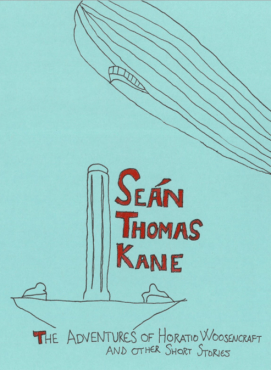
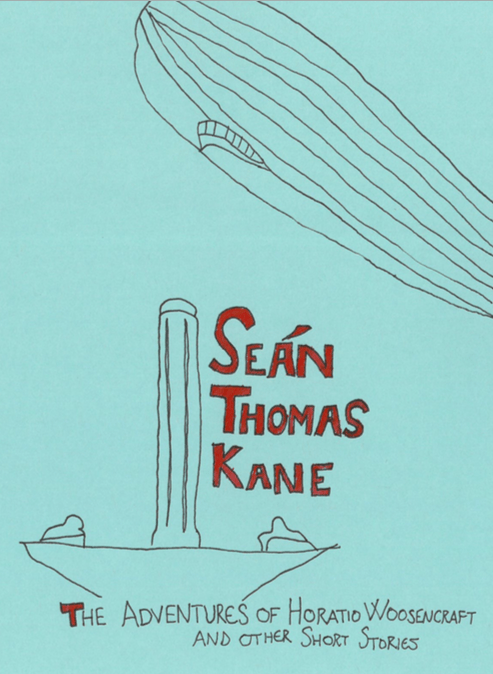
Horatio Woosencraft front cover

I am overjoyed to announce that you will be able to purchase copies of my first fiction book The Adventures of Horatio Woosencraft and Other Short Stories beginning this Friday, 18 August 2017 on Amazon! The book will be available in both paperback and Kindle editions.

In the meantime, I’ll be wrapping up work on Travels in Time Across Europe and preparing to record the companion audiobook (yes, you’ll have a chance to hear my strange accent for hours on end [it makes good listening for long road-trips, transoceanic flights, and extended waits in line at the DMV, doctor’s office, and on your commute home]).

Introducing “The Adventures of Horatio Woosencraft and Other Short Stories”

Horatio Woosencraft front cover

After a decade of writing, I have decided to release a collection of my short stories, composed between 2008 and 2017. I am happy to announce it will be available for purchase on Amazon starting in late August 2017 in paperback form to readers in Europe, and in the United States as well as to a global audience digitally on Kindle.

From the fictional Welsh immigrant detective Horatio Woosencraft who solves mysteries in an alternate-reality Kansas City to the glamour and adventure of the massive airship Phaëton and bewildering confusion of the characters in Abducted and Abandoned, this volume is sure to please. I have included my epic poem Caffydd, a tale of love and the daily struggle against evil with deep theological undertones in this volume as well. While it does not reflect my current theology quite as closely as it did when I wrote it in 2010, Caffydd still serves as a fascinating read, a vision of what might be.

Beyond the stories, this book includes many, many of the stories and ideas, the metaphors and hyperboles that I thought of through out my high school and undergraduate years. It reflects my interests in history, theology, linguistics, and the great Classical, Victorian, and Edwardian works of fiction that fill out my library.

The Adventures of Horatio Woosencraft and Other Stories will be available for sale in both paperback and Kindle formats on Amazon later this month, just in time for Halloween, any Autumn birthdays, and Christmas. Keep an eye on my website, Twitter, and the Adventures of Horatio Woosencraft and Other Stories Facebook page for further updates on the book.

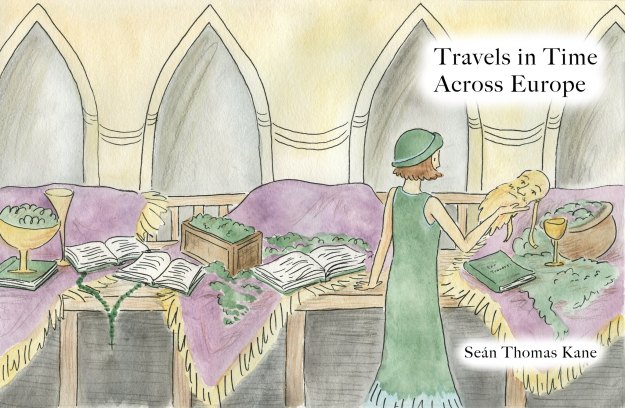
Introducing “Travels in Time Across Europe”

20785758_320378948370801_6506869756429809_o

Artist: Emily Henebrey

After almost two years of writing and editing, my first book Travels in Time Across Europe is nearing completion. I am happy to announce it will be available for purchase on Amazon this coming Autumn in paperback form to readers in Europe, and in the United States as well as to a global audience digitally on Kindle.

From snow-capped Alpine peaks to the low coastlines of England, Finland, and Ireland, Travels in Time Across Europe recounts my adventures while living in London from November 2015 to August 2016. Within the day-to-day elements of the story, moments both humourous and pensive from my life, I have interlaid the histories of the places and peoples I visited. From crossing the Alps in the footsteps of Hannibal, Caesar, and Napoléon, to retracing the footsteps of my ancestors back to the towns and villages they left behind for new lives in America, this is a story of exceptional breadth.

On top of all of this are laid the realities of the times in which we live, the major political and cultural phenomena that have shaped this our current decade. As I wrote this book, I couldn’t help but watch as tumultuous turn after tumultuous turn of events reshaped the world that I have come to know so well. The uncertainty of 2015 and 2016 run throughout this book, an uncertainty that is anything but unprecedented, despite what the pundits may say; after all our history is full of tumult and precedent.

Travels in Time Across Europe will be available for sale in both paperback and Kindle formats on Amazon this Autumn, just in time for Christmas. Keep an eye on my website, Twitter, and the Travels in Time Across Europe Facebook page for further updates on the book.