Monthly Archives: March 2021

How to Plan for a Half-Transcontinental Road Trip

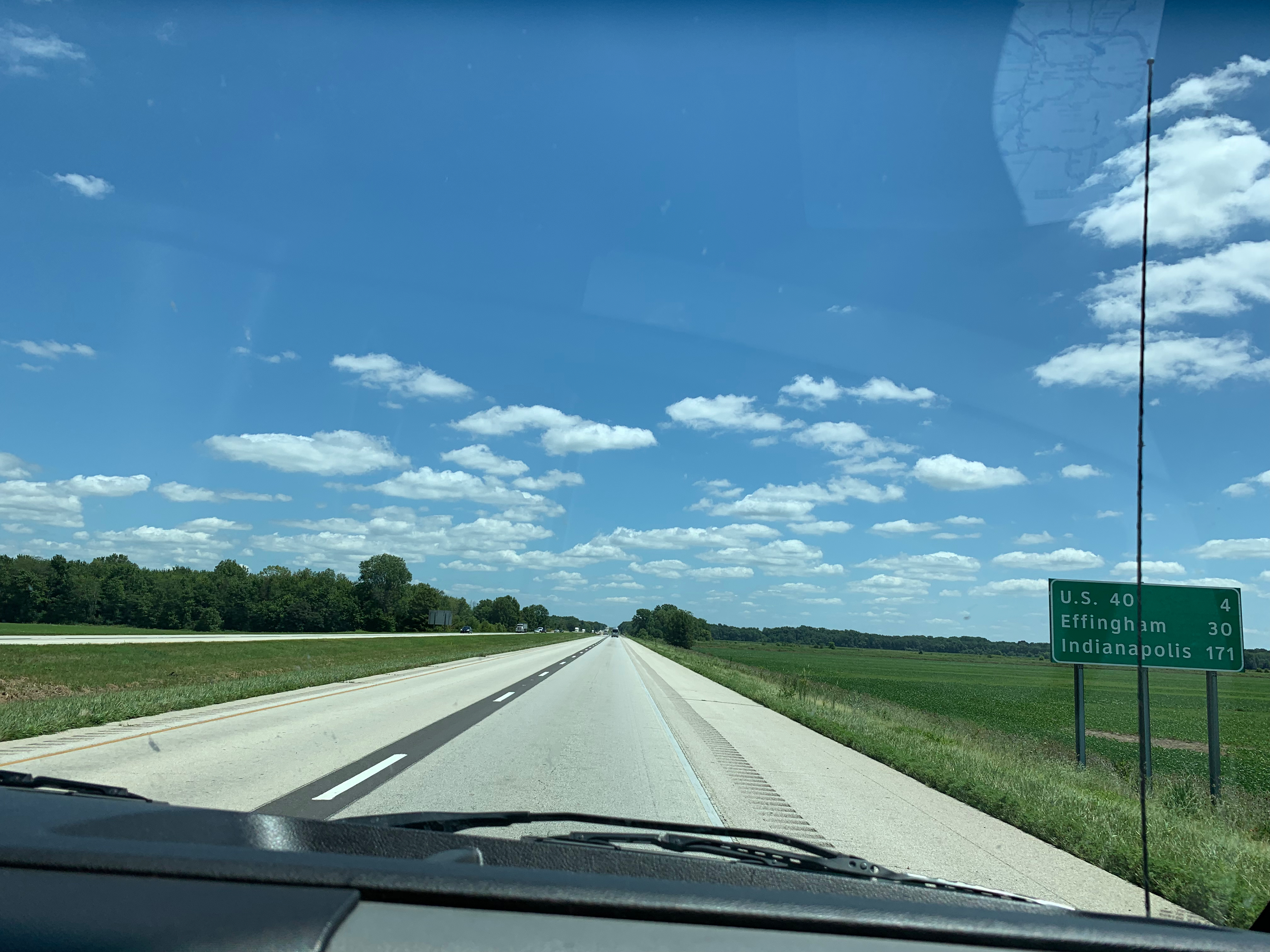
All “on the road” pictures were taken not while driving.

Growing up, road trips were a fairly common phenomenon. My parents and I would usually drive at least once a year between Chicago and Kansas City, and vice versa after we moved from the Windy City to the City of Fountains. In the 2000s we’d fairly often make the 3.5 to 4 hour drive east from Kansas City to St. Louis, and every summer in the first half of the 2000s we would drive across the Great Plains for a weeklong vacation at a dude ranch up in the Colorado Rockies. Road trips, then, were a pretty regular sort of thing to do.

However, in the last decade or so, our adventures beyond Kansas City have tended to be less on the highway and more on the rails or in the skies. It got to a point that the few road trips I’d end up doing would be rare instances that would increasingly become frustrating for how long they seemed to take. So, in February 2019 when I got accepted into the History PhD program at SUNY Binghamton in the rolling hills of New York’s Southern Tier, I knew immediately looking at the map that I’d have to make at least a couple road trips just to get there and back again.

Endurance

The thing is, as long as a 7.5 to 8 hour drive to Chicago or a 9 to 10 hour drive to Denver might seem, any drive to Binghamton was going to steamroll past those regional drives. Binghamton is 1,000 miles (1,609 km) as the crow flies from Kansas City, and on the road, the trip can be anywhere from 1,100 miles (1,770 km) to 1,500 miles (2,414 km) in length. This usually means that in full the drive itself will take between 18 and 21 hours, which itself requires an overnight stop. For me, when I was first sketching out how I was going to make these long drives, it was clear from the first moment that this was no small undertaking.

A transcontinental drive on any continent is something to be proud of. It requires a lot of planning, a good knowledge of your own endurance, of your car’s capabilities, and of the regions you’re going to be driving through. At the time of writing, it’s only just becoming possible to make such a drive in an electric car, meaning that most such road trips are going to be producing their own carbon footprint. I haven’t calculated exactly how much CO2 I’ve produced so far on these, but that is one big problem with road tripping that I’d like to resolve. Beyond the things you can control, before going on any such road trip you have to bear in mind the road conditions themselves.

In the next few days, the Biden-Harris Administration is supposed to be announcing a $2 trillion infrastructure plan as a part of their American Rescue Plan. The plan covers a wide range of different initiatives, all of which badly need more funding. Road repair is one such initiative, and trust me when I say the roads in many parts of the US that I’ve driven through need help. There are a number of places along the routes I use between Kansas City and Binghamton that have been so badly potholed and worn down that you have to be constantly vigilant for trouble. There’s even a stretch of I-88 in New York (not the same interstate as the tollway in Illinois) that has permanent signage warning drivers “Rough Road” ahead. Whoever is driving at any given moment can’t take their eyes off the road for a second, because you never know what could happen next.

Weather
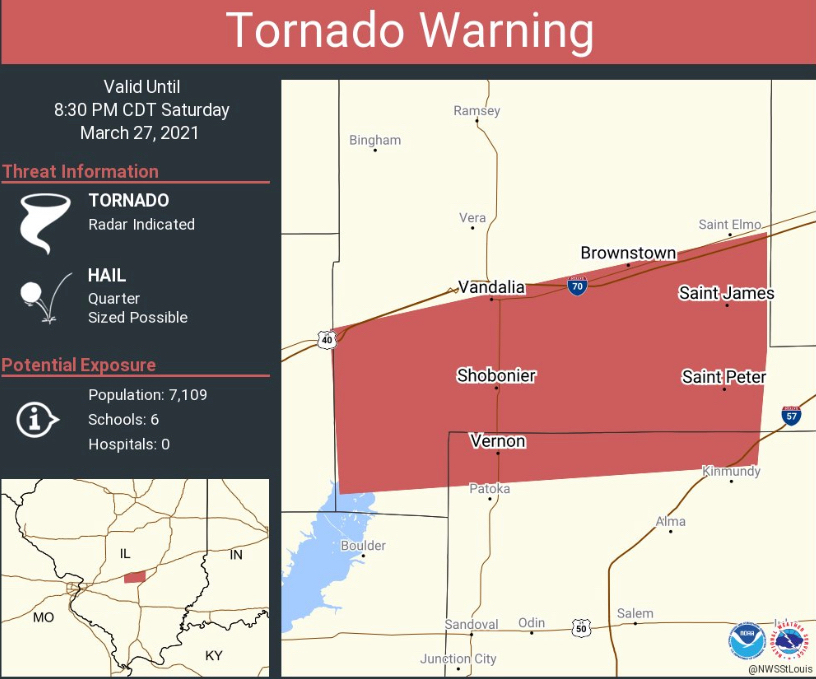
The most recent storm I encountered on the long drive west.

Another big issue to keep in mind is the weather. I usually will start monitoring weather forecasts in a couple of key cities I usually go through about a week before my planned departure date. Covering all the possible routes, these cities are Binghamton, NY; Erie, PA; Scranton, PA; Harrisburg, PA; Pittsburgh, PA; Columbus, OH; Indianapolis, IN; Chicago, IL; St. Louis, MO; and Kansas City, MO.

In the winter months (October to April) if there’s any chance of lake effect snow along Lakes Erie and Michigan, I’ll reroute further south, staying on I-70 after Columbus and eventually taking the Pennsylvania Turnpike to Harrisburg, PA before turning north on I-81 towards Binghamton. If there’s also really bad snow in the Appalachians in Pennsylvania, and lake effect snow in Chicago, Cleveland, or Erie, I might end up postponing the trip for a day or two to let the weather calm down again. In January 2020, midway through my long drive east I got caught up in a whiteout blizzard on US-22 east of Pittsburgh (you can read more about that here) in the predawn hours of that Sunday morning.

Snow and ice are worse problems for driving than rain is during the rest of the year. I’ve been lucky a couple of times. In August 2020 I had a near miss of a big derecho that wrecked widespread damage across Iowa, Illinois, and Indiana. I could actually see it off in the distance in my rear-view mirror when I was getting dinner in Indianapolis. And on day 1 of this most recent long drive west, 27 March 2021, I was less lucky with my timing, and drove right into a powerful thunderstorm with reported tornado activity between Mulberry Grove and Highland, IL.

As terrifying as the January 2002 blizzard in the Pennsylvania mountains was, this thunderstorm was worse. I made it out okay, with only 15 minutes added onto the total drive time, but to quote my favorite Lando Calrissian line from Return of the Jedi, “that was too close.”1 It was reminiscent of my first time doing a cross-country drive in August 2009 when on the way back from Dubuque, IA I was at the wheel when my parents and I hit a powerful late-summer thunderstorm an hour east of Des Moines. We ended up pulling over in Altoona, IA at a Culver’s until the storm passed.

Entertainment

When I was still too young to drive, and kept my place in the back seat of whichever car my parents owned at the time, I often found various ways to keep myself entertained. Among those that I haven’t carried over into my current long drives are watching movies on DVD. We had a screen and DVD player that could be strapped to the back of the front passenger seat’s head rest with velcro. As a driver, it’s not safe to be looking at much of anything besides the road. As I’ve gotten older I’ve found that I tend to get motion sickness whenever I try to read in the car, so on the rare occasions when I’m a passenger these days, that’s out of the question. Instead, the tried and true classic remains satellite radio, music, and audiobooks.

Generally, my first choice will be to listen to a good long audiobook, something that will keep me awake the entire way, a true page-turner. In the first two years of these drives to and from Binghamton, I’d listen to a lot of Star Wars books on Audible, which were usually action packed and entertaining enough to keep me going. On the most recent pair of drives (January and March 2021), I’ve been listening to President Obama’s new memoir A Promised Land. It’s a really fascinating book to listen to, narrated by the guy himself even, but as much as I enjoy hearing about economic or foreign policy (and I’m not being sarcastic there), after a couple hours on this most recent drive I noticed I was starting to get tired of it. So, at that point I’d switch over to what I call my “stay awake” playlists: a good combination of ABBA, Elton John, and more recently Hamilton.

I first compiled that particular playlist in the preparation for a 2 am departure from Binghamton to make a 5 am flight out of Wilkes Barre/Scranton Airport an hour south of Bing in NE Pennsylvania. It’s been especially helpful on the nighttime legs of my long drives, and formed much of the soundtrack for the last 2 hours of Day 1 of my most recent Long Drive West, and a good portion of the predawn hour of the drive on Day 2. On other occasions, like a shorter road trip I took in my first couple weeks after moving to Binghamton in August 2019, I’ll switch to satellite radio and listen to NPR, the BBC World Service, or maybe catch the Cubs, Royals, or Sporting KC if they’re on. As much as I want to listen to whatever it is I’m playing, the primary goal of that audio is to keep me awake and going. And, if all else fails, and I know it’s a good time, I’ll call my parents or a couple of really close friends to chat for 15 or 20 minutes.

Conclusion

Looking ahead, I anticipate I’ll continue to make these long drives at least until I’ve finished my PhD in Binghamton and to wherever my next job takes me. The COVID Pandemic has only heightened the need for these road trips, with most other modes of travel not really being as safe as I’d like in the last year or so. My original plan when I left for Binghamton in 2019 was to make these long drives at most four times per year: on either end of each semester in January, May, August, and December. The main reason for driving rather than flying or taking Amtrak is that I need the car on either end. In the future I’d gladly fly, make the trip in 4 to 8 hours instead of 18 to 21, or even take Amtrak once they’ve resumed dining car services on their transcontinental lines.

Moreover, I really want to help reduce my own carbon footprint, eventually replacing my 2014 Mazda 3 with an electric car, maybe in about 4 or 5 years. By then though, hopefully I’ll be in a situation where either I’ll be working here in Kansas City again and won’t need to drive cross-country to see my family, or I’ll be in a city with a strong enough public transit system that I won’t need to worry about having the car in one place or another like I do now.

All of that said, these road trips are fun. They’re adventures pure and simple. I never really know what’s going to happen on the road or on the stops I make along the way. In November 2019, I reached what I’d call a pretty special milestone when I drove my Mazda to within sight of the New York skyline and the Atlantic Ocean beyond. I cheered, I, a guy from flyover country, from the middle of the continent, had driven to the ocean. One of these days, I’ll complete the entire transcontinental drive, make it to the Golden Gate, and maybe even drive down the Pacific Coast Highway. On its own, the bragging rights involved, to be able to say that I’ve driven the same car from Atlantic to Pacific will be worth the trip.

From my 2016 trip (flying) to San Francisco. One of these days, I’ll drive there.

Notes

1 Someone should really make a GIF of that particular line. I’ve been looking for one for a couple years now.


Corrections

Amended 1 April 2021 to reflect a more accurate dollar amount for the Administration’s Infrastructure Bill.

Understanding Others and Communicating Well, Pt. 2: English

Introduction

In the week since I published my last little mumbling about why Latin scholars today should use the macron, see here, I’ve had more conversations than normal with those of you who’ve been reading this about ways we can improve communication and education in and for English. Ours is a very complicated language, one that has effectively assimilated aspects from other languages, grafting them onto its strong oaken Germanic trunk, and created new ways of explaining things both familiar and foreign. English’s complexity is due to all of this adopting and assimilating, to the fact that we have two words for many things, especially if it’s something that we both live with on a regular basis, like a cow, and something that we eat, like beef.

English has also tended to play somewhat loosey-goosey with how to spell these assimilated words. Take my name for example, Seán Kane. Over the 28 years I’ve been around, I’ve seen people spell my first name four different ways, and my last name in even more variations. There’s Seán/Sean, Shawn, Shaun, and even Shon. With my last name, itself an English version of the Irish Ó Catháin, there’s the two spellings used in my family, Keane and Kane, as well as Cane, Caine, Cain, Kayne, Cayne, and Keene. When it comes to my first name, my given name, it’s easy, it’s Seán. Yeah, it’s not an English name, it’s still very Irish. Often, a name will tend to be one thing that’s assimilated that stays truest to its native form. But over time, as a name gains popularity, it’ll adapt to fit how an individual speaker figures it ought to be spelled.

English spelling on its own is a tricky topic, as anyone who’s studied English as a second language can affirm. Why is it that the words through and pew rhyme, but not trough and new? Simply put, English spelling began to be standardized with the introduction of the printing press in England in the late fifteenth century. The first English presses largely came from Dutch and Flemish-speaking printers in the Low Countries (modern Belgium, Luxembourg, & the Netherlands), who essentially began to use their own preferred spellings of English words in their books and pamphlets. Thus, we got an extra “h” in ghost where one was not present before. English spelling has generally stayed the same in the intervening 500 years, even while the language itself has changed.

So, today, I thought I might discuss a few changes I think could be helpful for us Anglophones, and for everyone else stuck learning this language. These are generally based off of things I’ve appreciated from other languages, you can guess which ones.

Possessives

When I was taught how to write the English possessive in elementary school, I was told that all you have to do is add an ‘s to the end of a word. So, if I wanted to write about the wings of a bird outside the window, all I had to write was the bird’s wings. But what if I wanted to write about something that a guy named James owned? Would I write James’ or James’s? At the time, my teacher told my class, “You choose which one you want to use, they both mean the same thing.” And for about fifteen years, I wrote James’. But when I was living in London, going through St. James’s Park tube station one day, I started wondering is there a difference between James’ and James’s?

The issue here is that saying it’s alright for people to write about a singular noun ending in an s possessing something as s’ only confuses that noun with any other plural noun. Why should the singular possessive James’ and the plural possessive birds’ have the same ending? I realized then why that station is called St. James’s Park, because it’s a park dedicated to only one of the two St. Jameses, not to both of them (which one remains to be seen). So, really the rule should be that the possessive ending of a noun ending in s should be s’s, and that the plural possessive in all cases in English should be s’. Why wasn’t I taught this? Probably because of custom, habit, or because that particular question hadn’t been thought about by that teacher or anyone else they had discussed it with.

If we clear up how to write a possessive ‘s ending on a noun, we’ll save a lot of people a lot of trouble. More often than not one this is one of my most frequent grammatical corrections on assignments that I grade. Explaining to students that the possessive of Athens is not Athen’s but Athens’s. If we explained the rule this way, there’s a better chance people would make sense of it and we’d clear up one big confusion.

And, or &

The conjunction and is a very solid word. It’s clear what it’s used for, and it’s usually hard to mess it up. But what it I told you there was a way to make its use even clearer? In Latin, the main word for and is et, but there is another way of expressing this particular conjunction. Latin has the capacity of adding a suffix, -que to a word to express a version of and that’s closer in proximity than the usual and. Take the classic name of the old Roman state: Senatus Populusque Romanus (SPQR). Usually, traditionally, this is translated as the Senate and People of Rome, but I personally prefer the Roman Senate and People because Romanus is an adjective.

But notice here the use of -que to mean and. Latin’s -que is not the same as English’s and in its purest form. Rather, -que refers to a close proximity between the two nouns being connected by it. In this case, it implies that the Roman Senate and the Roman People are arm in arm united in government. (Note, implies; political names are always ideals). Our and as it’s written can be interpreted to mean that same idea as -que a closer, more intimate sort of and, but not without context and interpretation. That said, we do have a symbol which means and, the ampersand (&), which itself is a stylized form of the Latin word et. So, why not adopt the very informal & into formal written English as our very own intimate conjunction?

Jack and Jill went up the hill together right? So, they went to fetch that proverbial pail of water as Jack & Jill. And what about a couple of newlyweds, surely they deserve to be represented in print as one grammatical phrase, united by a neat and tidy &. Instead of translating Senatus Populusque Romanus (SPQR) as the Roman Senate and People, a better translation, noting the ideal of the Roman state, would be the Roman Senate & People.

Spelling

Let’s go back to English spelling for a minute. When it comes to spelling, English is a lot like Spanish, by and large the language is spelled the same way anywhere English is spoken, with two main versions: UK & Commonwealth English, and US English. The differences here largely come from the work of one Noah Webster (1758-1843), who in his 1806 Compendious Dictionary of the English Language decided the new American republic ought to have its own version of English, distinct from the King’s English, so he decided to adopt some spellings over others as he saw fit. For example, we in the US spell honor closer to how it’s spelled in Latin, rather than as honour, which derives its spelling from Norman French. All this would be firmly established 22 years later in Webster’s more famous work the American Dictionary of the English Language, the first edition of the modern Webster’s Dictionary.

Today, though English doesn’t have an official academy or institution dictating the rules of the language or how it should be spelled, like French’s Académie Française, or Spanish’s Real Academia Española. English does have two main dictionary editorial boards that effectively do the same job. For UK & Commonwealth English there’s the Oxford English Dictionary (OED), and for US English there’s Merriam-Webster’s Dictionary (MW). (Naturally, in true American fashion the double name is due to a corporate acquisition). These two dictionaries set the rules and standards within each of the varieties of written English, and provide standards for style and citation guides, like the friend of many a US-based historian, the Chicago Manual of Style (CMOS).

As a result of this, English spelling reflects written conventions far more than it does the spoken language. As I noted in my post about Latin, each of the five, sometimes six, written vowels represent at least three sounds each in my own idiolect. This is thanks to the many layers of speech introduced to the language by waves of immigration to the Midwestern United States, which included all of my ancestors. There are hints of my ancestral languages in there: Irish, as well as some odd echoes of Welsh, Finnish, Swedish, and Flemish included. There’s also a sizable chunk of German phonology in the varieties of Midwestern American English, thanks to the predominance of German Americans in our part of the country.

It would then, quite possibly, be better for learners if we spelled English phonetically rather than per centuries-old written conventions. But if we do that, then each local variety of English would be spelled differently from the next. And how would we determine how to spell words? The only really good option would be to switch to spelling everything using IPA, the International Phonetic Alphabet. bʌt ɪf wi spɛl θɪŋz fəˈnɛtɪkli ˈjuzɪŋ aɪ-pi-eɪwoʊnt ɪt luz sʌm ʌv ɪts ˌlɛʤəˈbɪləti?1

Conclusion

English, it’s a tricky language to figure out. I only started with a couple things that I’d like to see changed with it, things that could well be improved upon. What are some things you’d like to see done with English? Please leave your comments below.


1 But if we spell things phonetically using IPA, won’t it loose some of its legibility?


Corrections

24 March 2021: Added the Real Academia Española into the section about spelling in reference to the role that language academies play in French and Spanish.

Understanding Others and Communicating Well

This may not necessarily be a post that will be on a topic that’s familiar to most of you, the 30 or so people who occasionally read these posts, but it’s something that’s important to me. The ability to communicate well, and efficiently, is paramount. It’s ultimately going to be key to solving all of our problems, to making life better for everyone. I truly believe if we could, or rather would, actually sit down and talk with someone we have a disagreement with, chances are we’d find enough common ground to begin sorting our problems out.

But this post isn’t about solving humanity’s big problems, and I’m going to try to refrain from my usual upbeat optimistic conclusions that I’ve noticed I tend to write. Because this evening I want to write about a topic I’ve been interested in for nearly 20 years, one that I’ve struggled with and studied, and am only now really feeling like I’ve confidently mastered: Latin.

Latin is a language that I’ve been fascinated by for a very long time. In part, I’ll admit it’s an attraction to the prestige it embodies: the language of the Romans, and of my Church. It’s been a constant piece of the intellectual and cultural fabric of European and now Atlantic civilization (that’s another idea I’m working on) for millennia. It’s also a highly logical language, a systematic language governed by a set of rules that, once explained, make pretty good sense. Moreover, it’s the ancestor of a number of humanity’s most widely spoken languages, and has directly influenced many, many others, including English. It’s taken three tries now, but I’ve made sense of the language well enough now to feel confident not just repeating the declensions and conjugations that I’ve memorized, but understanding the intricacies of their meaning, and in so doing, to have a better idea at understanding how Latin works.

Latin has also come to reflect the people who have written in it and spoken it over the generations, particularly in their preferences in word order and writing. I’ve often thought, considering that word order isn’t as important in Latin, after all the word endings provide the meaning, couldn’t a native Irish speaker go ahead and speak Latin using a verb, subject, object order and be decently-well understood just as much as a speaker using the classical Ciceronian order of subject, object, verb? Yet there’s one thing that does survive from the ancient world in faint traces that was revived later than other customs in written Latin, something that is still not universally adopted: the macron.

Macrons: the flat line over a vowel sometimes seen in Latin writing, as well as the first family of France, is something that I believe to be fundamental in properly understanding Latin. Sure, my medievalist friends will say, it wasn’t used in Medieval Latin, so we (Medieval and Renaissance historians & scholars, myself included) don’t need to memorize the macrons. But for me, it’s the macrons that have been one of the best tools to help me make sense of Latin. It’s answered the question for me of how a Latin speaker might differentiate between līber, “a child” (pronounced like Lee) and liber, “a book” (li pronounced like literature). It helps me make sense of the difference between a 1st declension nominative singular noun (the subject form) and a 1st declension ablative singular noun (a slightly more complicated form).1 The macron makes everything clear.

This is a good explanation from a far better Latin scholar than me about the use of macrons (the apex).

Without the macron, the meaning of a sentence can be understood, but with much more difficulty. This particular idea makes perfect sense to me because of my work with my primary ancestral language, Irish. In Irish, there are two types of vowels, long and short. The long vowels are represented by a fada over the vowel, essentially an acute accent (accent aigu en français). This is how an Irish speaker knows when reading my name that they’re in fact reading about a guy named Seán and not something that’s old (sean). The presence of the fada isn’t just to make the language look cool (which it also does), but it has a very real impact on the pronunciation and meaning of the word as a whole.

I think it’s best not to think of Irish vowels with fada or Latin vowels with macrons as just variant forms of those vowels but instead as entirely different vowels all together. The á in Seán is an entirely different sound, and thus ought to be seen as an entirely different letter to the a in sean. In the same way, that ī in līber is a different character, and a different sound from the i in liber.

We don’t have these same written variations of our vowels in English. We just have the 5 vowels, occasionally 6, which are supposed to represent all of the vowel sounds that English uses, in all national and regional Englishes around the globe, and in all of their local varieties. In my own accent, I can count at least 3 different sounds that each of the vowels represent. Granted, English wasn’t always like this, macrons were also used in Old English, and through generations of linguistic change, immigration, and English’s constant adoption of foreign words the language has become the exceedingly complicated, often irregular form of communication it is today. Not only is my English influenced by the most basic form of the language studied and spoken here in North America, but there’s also hints of Irish in there as well as the strong British, German, and Nordic influences in my English from all those immigrants who settled in my home region, the American Midwest, in the 19th and 20th centuries, including some of my other ancestors from England, Finland, Flanders, Sweden, and Wales.2

In English, we’ve chosen complexity in spelling as it relates to the spoken language over a 1-to-1 matching of the written language with the spoken language. Why? My best guess is it’s to preserve the unity of English. This keeps it so that all English speakers are generally spelling their words in the same way, between the two main written forms of English (UK & Commonwealth, and US English). For the most part, it’s worked for English, and I wouldn’t recommend moving away from the current model for the exact reasons why it exists; more on that at a later date.

But returning to Latin, if students trying to learn this language, famous for its now generally unspoken nature, really want to give themselves a good chance of succeeding in learning it, then those of us familiar with Latin, whether as students or as teachers, should embrace the macron even more than it already is, and use it throughout all our written Latin. Up until recently, it was challenging especially on computers with English keyboards to type any sort of accented vowels or consonants, but the technology has advanced enough that it’s readily possible today for most keyboards to make things work. On my Mac, I can hold down any of the vowel keys until a box pops up on the screen indicating each accent that can be put on that vowel. I then just have to choose them by number. So, for līber, when it comes to the ī, all I have to do is hold down the i key and press 4, et voilà, I’ve got myself an ī. We should do ourselves, and Latin itself, a favor, after all the easier we make learning this language, the more likely people are going to want to keep learning it.

I like Latin, it’s orderly, and when it’s explained well it can make a lot of sense. All of my Latin teachers to date have done a wonderful job explaining it, sometimes though it takes a bit more maturity to make sense of things. In general, I think we tend to have trouble in the English-speaking world understanding grammar. Let’s face it, our own language has so many contradictions that often English speakers don’t even really understand the rules of English grammar all that well. One of these days, I want to write a little book, a libellus in Latin, that can provide at least what I see as some of the more important rules in English, that’ll allow English to make more sense for the average speaker.

Today though, in my Latin studies (Wheelock, Ch. 20), I learned to my delight that the word frūctus means both fruit and profit. Frankly, those two make sense together, after all what are profits but the fruits of our labors. For the rare admirer of Star Trek out there who might be reading this, it came to mind that if I ever get the chance to write for them on a future Trek TV show involving the Ferengi of DS9 fame, I’d want to have a particularly smart-ass human academic offer a Ferengi a bowl of fruit (frūctus), after all the sole goal in the life of a Ferengi is the acquisition of profit (frūctus). A Latin pun set in an imagined version of the 24th or 25th century CE somewhere out in Space. I wonder what Cicero would make of it?


1 For the sake of the narrative flow, the ablative basically is the form that distinguishes a myriad of ways a noun relates to the rest of the sentence not covered by the nominative (subject), genitive (possessive), dative (indirect object), and accusative (direct object). I’m going to let the Latin teacher who runs the Latin Tutorial channel on YouTube explain it in this playlist:

2 What can I say, I’m an American.

CORRECTION: 18 March 2021, added pronunciations of līber and liber.

Welcome to the 2020s

This morning, while looking through my YouTube feed during breakfast I came across an upload of the Air France swing ad from early in 2015. I remember seeing this ad fairly frequently in ’15 and ’16 when I was in Europe, the tune in particular that was used for that ad is something that I remember hearing on a regular basis for about a year or so. Today though, listening to it again it felt like watching something from another time.

One thing as a historian that often seems to get debated in my field is chronology, how we define specific periods of time as distinct from others. The basic way to do this is by years––decades, centuries, and millennia––but those designations often feel artificial when discussing social or cultural phenomena that seem to fit one century but creep into another. Because of this, there’s been a trend in academic historiography (the history of writing history) of referring to “the long x century” in order to compensate for that complication. This is something which I’ll admit really annoys me, I suppose because it feels overused. I personally try to avoid it, often writing in a close focus more about generations than decades or centuries. Yet watching that Air France ad from 2015, before Brexit and Trumpism, before COVID, the idea that we are in a new decade feels very natural to me.

Generally, I’d say major moments in our history are what force us into a new decade or a new century. In the past I’ve argued that in some ways humanity as a whole didn’t begin to really live in the 20th century until World War I forced our forbearers to rethink their world. Likewise, I’ve often thought that the 21st century began not on New Year’s Day 2000 but on 9/11. The 21st century has been marked by generational wars in Afghanistan and Iraq, the consequences of which we will be dealing with for generations to come, and by a new sort of fear of what dangers lie in wait.

The 2020s began with COVID, with that boogeyman that has left humanity battered and bruised, and that has left at least 2.6 million people dead globally. Our sensibilities from the 2010s, a strange combination of the optimism of a world recovering from the Recession mingled with the reactionary fear and anger that fueled a rise in divisive nationalistic politics in many countries remain, but feel somewhat out of place in our current time. We are left with some lasting images of those two sensibilities, yet reshaped in the image of our new time. The 2020s offer us a renewed sense of urgency and uncertainty. COVID has shown us that we are unprepared for a global catastrophe, our window to slow the effects of climate change is closing, and ideas that seemed untouchable and resolute a decade ago, like the doors of the US Capitol, have been broken down.

We have an uncertain future ahead of us, and like any new decade, we can choose how we will move ahead. That Air France ad and all the emotions I feel when seeing it, the nostalgia for what were for me the good times of 2015 and 2016, are now in the past. Looking at it again, it feels to me like something very truly from another decade, from another time, familiar and recent, but distinct from today. The 2020s are an unknown future for us, they could turn out to be a wonderful time in human history, or the troubles and trials of recent years brought into extreme focus with the pandemic could set the tune for the next few years to come.

Welcome to the 2020s!

One Year In

By the time this is published, 1 March 2021, St. David’s Day for all my Welsh and Welsh American readers out there, we will have very nearly reached the first anniversary of the beginning of the lockdown. For me, that anniversary is on 13 March, the last day that I reported to my university for normal teaching duties. It was a Friday, an unlucky Friday the 13th. I only kept my students in class for maybe 20 minutes a piece, just long enough to explain how we were going to continue the class online going forward. I said my usual “Good luck,” and “Hope to see you on the other end of this,” and that was that. The rest of the day was filled with meetings, half of which were wrapping things up that my colleagues and I had been working on, the other half planning for the uncertain future to come. 

We figured the storm would pass by Memorial Day, echoing many a voice from many a war in history, and quickly found our predictions far too brief for what would actually happen. Now, one year later, with 512,979 dead in the United States, 2.5 million or more dead globally at the time of writing this, we have seen our world forever changed by the pandemic of 2020-2021. How do we move past the past year, that annus horribilis to borrow a phrase from the Queen, and begin to live our lives again while remembering to take account for all that has happened? One thing that we absolutely should not do is try to “return to normalcy” to borrow another phrase, this time from President Harding, whose presidency a century ago was marked by scandal in ways that are painfully familiar to us now. 

A century ago, our ancestors didn’t forget the horrors and sacrifices of the Spanish Flu of 1918, but that pandemic would always be overshadowed by the four-year nightmare that was World War I. After four years of brutal war and two more years of pandemic, Americans along with the rest of humanity wanted to move on, to enjoy life again. Once this pandemic is over, we should enjoy life to the fullest, but we should never allow ourselves to forget what has happened in the last year. By now, everyone of us ought to have figured out that there is no such thing as normal in this everchanging world of ours, except of course for a town in Downstate Illinois. Saying “things will be normal again” disincentivizes us from working to better ourselves and our world.

There will be more crises to come throughout this century and into the next. More hurricanes, polar vortices, wildfires, weeks of constant thunderstorms, flooding, and tornadoes, and yes even pandemics. After millions of years of evolution and tens of thousands of years of civilization you’d think we would’ve figured out that as much as we can control our own lives, we can’t control nature. Influence it, absolutely, but we’ll never be able to control it, to keep ourselves safe from the disasters that mark our lives. The best we can do is be prepared for them, winterize our power grids, and invest in green energy among other things, to leave a stable, prosperous, and healthy world for our future to enjoy. 

The children of the 2020s will more than likely live into the 22nd century. Our dreams of a better tomorrow can be their today, but only if we do our part to make it. Let’s not allow ourselves to make today’s crises and stubborn inability to change the normal of tomorrow. We owe it to them and to ourselves. I’m not fond of dystopian fiction, it encourages pessimism and helps convince us that trying to improve things is a futile task. We should always be optimistic, after all we have the power and ability to make things better, to ensure there is a future for humanity.

Let that be the lesson of the Coronavirus Pandemic.