Of any one of my talents, the one that I tend to pride myself in the most is my ability to pick up languages fairly easily. I listen for the patterns, for words that may sound familiar, and gradually piece together what the speaker or author is trying to say. I have a number of stories involving me fumbling through having to speak languages foreign to me, whether it be the time I accidentally said “no” in Finnish when I mean to say “eh?” as in asking the flight attendant to repeat her question, or the time when I tried to tell a pair of Flemish men I didn’t need to see a doctor after falling down a flight of stairs at the train station in Welkenraedt in eastern Belgium. My solution there, by the way, was to merge the German “Ich bin gut” with what little I knew of Dutch, coming up with “Ik bin gut.” Regardless of how accurate it was to the situation, the fumbled line in my attempted Flemish worked, and kept the medical attention at bay.
The first language I learned to speak was English, American English, centered on the Midwestern cities that I’ve called home, Chicago and Kansas City. I’ve often yearned for small signs here or there of linguistic peculiarities in my own speech, and in the ways my family and friends speak. While many of the most evident signs I’d hope would appear haven’t shown, we aren’t terribly distinctive in how we speak, pretty standard American to be honest, the potential that we could have some regionality in our speech certainly makes the foundations for a good story.
I wouldn’t really begin to learn other languages until I was 14, when I began taking classes in Irish, the language of the majority of my ancestors. I’ve always wanted to be fluent in Irish, to speak the language which I feel is the closest to the beating heart and origins of my community. Based on Census data, my great-grandparents’ generation among my Kane ancestors, the ones who came over from Mayo a century ago, were the last ones who likely had some Irish. That multigenerational gap in our ability to read, write, speak, and think in our ancestral language reflects the degree to which we’ve become American with each generation, to which we’ve given up the cóta of the coasts of Clew Bay and embraced our new urban Midwestern American nature to its fullest.
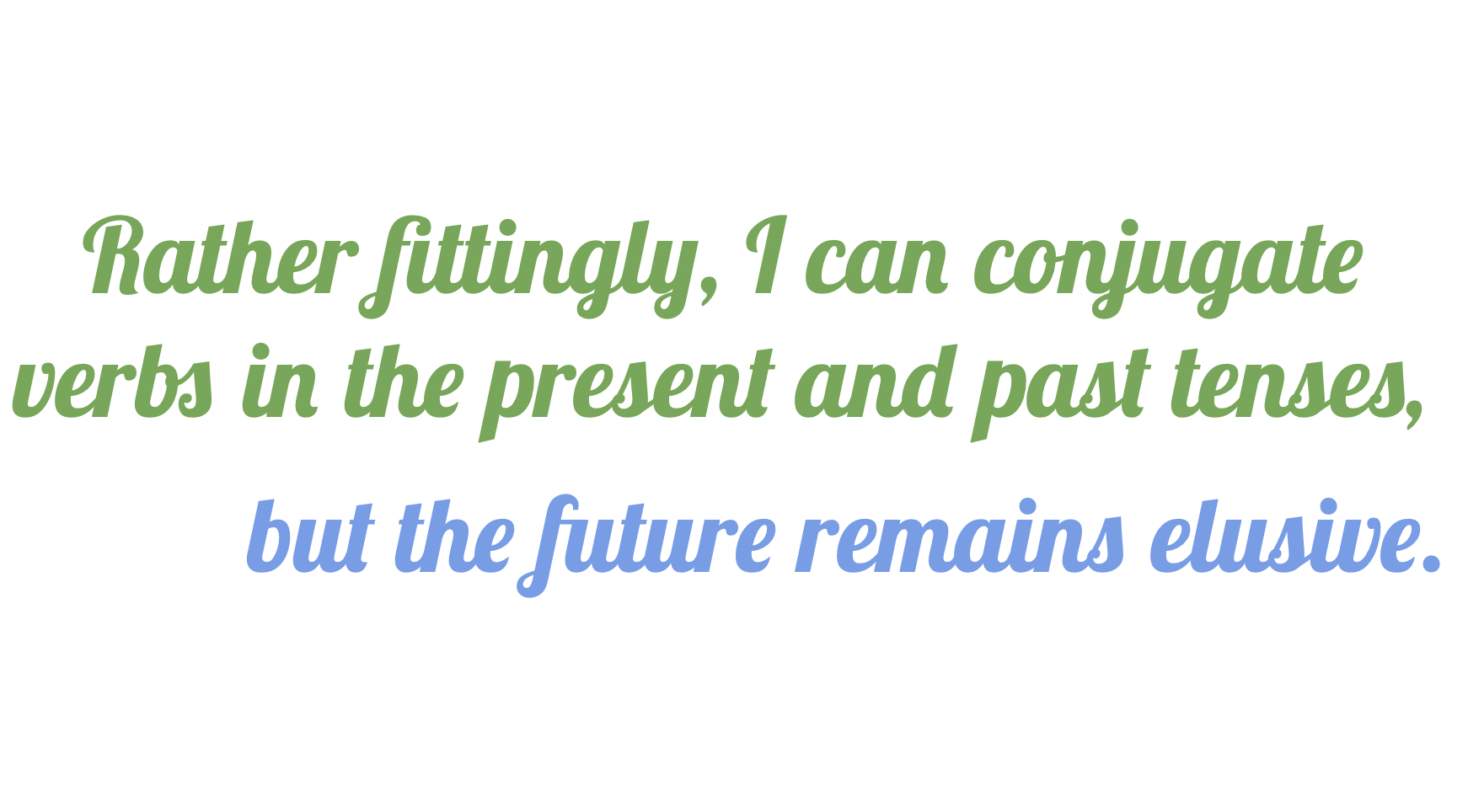
Today, I can do somethings in Irish; rather fittingly I can conjugate verbs in the present and past tense, but the future remains elusive. I use my limited Irish in some contexts, when she was still alive I’d talk to Noel in Irish, saving that language so dear to my heart for my dearest of friends. In the meantime, I’ve focused on other languages: I’m now on my third attempt to properly learn Latin, thankfully as I hope my previous post made clear, third time’s a charm. I’ve also spent a great deal of effort and time learning French, with enough comfort to the extent that I built my PhD dissertation’s source material around the availability of French sources that I could. I’ve spent time studying German and Italian, Ancient Greek, and Egyptian Hieroglyphs. I’ve studied my other ancestral languages, Welsh, Finnish, and Swedish, as well as a little more Flemish after my railway station tumble.
I once wrote a sentence in Irish that I thought expressed how I think about the language, how many of us the descendants of European immigrants spread across this continent may well equally think of their ancestral languages. Is ár dteanga an glór ár n-anama í. “Our language is the voice of our soul.” As best I can tell, it’s grammatically correct, and to me it has deep meaning. As long as we understand and remember our ancestral languages, the deep and intricate contexts of so many aspects of our familial manners and ways of life will stay alive. Even in the whisper of an ethnic memory that comes in preserving our names, the many Irish Americans named Patrick, Molly, Colleen, Brendan, Aidan, or Seán, we can see a hint of the Irish language alive today.
If I am able to truly become fluent in Irish, and I hope I’ll be able to dedicate the time and energy to do so in the long run, I hope my contribution to the language will reflect our times, that as truly it will recognize the efforts of generations past, my Irish will be the language as it is spoken in the twenty-first century, with recognition of the international nature of the language deeply rooted in the native soil from whence all Irish Americans’ ancestors came. I hope deeply, as an American cousin, that my efforts to continue my studies will reflect the respect and admiration I feel for the modern, progressive people my Irish cousins have become.
 Wednesday Blog by Seán Thomas Kane