Monthly Archives: February 2022

Pride

This week, a bit about humanity's greatest asset, and our greatest fault.

Of all the emotions that we can feel, pride is the one that seems to be the most complicated. It can be one of the greatest emotions a person will feel in their life. Pride can also be something that drives us to do terrible things. Pride mixed with fear makes fertile ground for bigotry, nationalism, and unfounded ideas of superiority over others. The very idea of the Other, something which my research deals with in part, is drawn from a prideful root. By this thinking we identify ourselves by our difference from others. 

Here in the United States, we pride ourselves on being the “land of the free and home of the brave.” That line in our national anthem is diluted by the fact that we’ve never fully achieved the first part of it: we aren’t the most free or the most democratic society out there anymore, and for many Americans this society isn’t free. Still, we have ideals like these emblazoned in our national mythos, so that’s a step in the right direction. Our pride as Americans, drawn from our collective mythology, helps conceal the innate problems that have existed since the beginning of our colonial societies four centuries ago.

Pride can drive us to do terrible things. It can make us feel like we have a right to things that rightfully aren’t ours. In past generations rallying cries of national superiority led to the worst wars in human history, and even still the worst genocides and atrocities in human history. Pride gives us the false hope that we can act regardless of society, regardless of right, regardless of the consequences. It can give us the fodder to challenge the autonomy of neighbors and wreck lives in the process. Generally, we’ve begun to move past some of these outcomes of our prideful nature; wars of territorial conquest are far less common than they were even a century ago, but that ghoul still haunts the thoughts of those who see in it opportunity.

Pride can also drive us to do wonderful things, to embrace the progress and well-being of humanity. It has driven us to seek scientific advancement, to embrace change for the benefit of all. Pride in our common humanity has allowed us to truly begin to see ourselves as one common species, divided by nationality, language, and culture sure, but less so than ever before. Pride in my work is one of the things that keeps me plodding forward with my dissertation, knowing that what I’ve written so far is something I can be proud of, and hoping that the final product will be equally worthy.

If there is anything that we should be cautious of though it is the pride that convinces us that we are already at the summit of human achievement. The pride that says our methods and technology can determine the reality of all things as they exist now is just as troublesome as the argument that all that could be revealed to humanity, like a book turning page by page, has been revealed, and we find ourselves now at the end of that book. I strongly disagree with this, these ideas that are fueled by our pride more than anything else, that say we are at the culmination of our achievement. Each generation in their own turn does reach that culmination, in their own time, but to mistake one generation’s sum for humanity’s only holds us back. I hope we have many more generations of exploration ahead of us, exploration not only of ourselves and this planetary ecosystem of which we are intrinsically a part, but of the greater Cosmos beyond our orbit as well.

As we go forward our pride will continue to evolve with our experiences. That pride in human achievement that I mentioned a little bit ago has the potential to evolve into a new sort of bigotry that is human supremacy rather than white supremacy or any of the worst cases of nationalism today. We need to be cautious as we are proactive and remember that, as President Lincoln said, “as our case is new, so we must think anew, and act anew.” With every change in circumstance our methods of understanding those new circumstances needs also to change to fit the moment in question.

It’s naïve of us to think we know everything, to think we have all the answers. That is the fun part of living, getting to learn new things, to make mistakes, and to grow from them. And that is something I’m proud of.

Patience

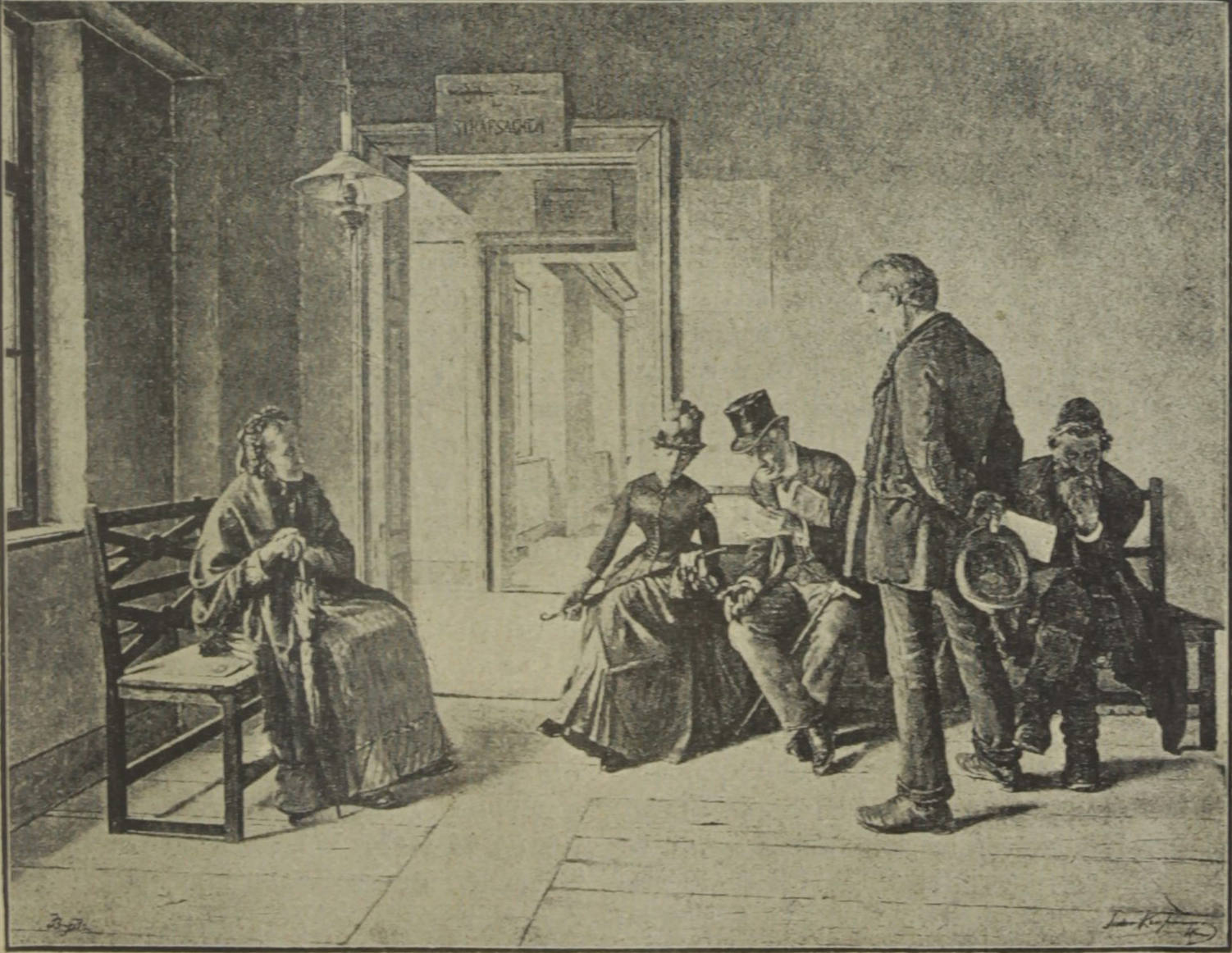
Isidor Kaufmann (1853–1921), “Waiting room at the Court”, 1888
This week, how I've learned that patience really is a virtue.

I’ll freely admit that I’m a pretty impatient guy. I feel the most rewarded when I’m able to solve problems quickly and efficiently, and throughout my life I’ve never really enjoyed dealing with things that are long term questions. As I’ve gotten older though my impatience has mellowed out, I’m more willing now to let myself take a day to relax and think rather than trying to force myself to write a page a day or read a book in an afternoon.

In the last few years, with this global pandemic, it’s really begun to occur to me that there is far more outside of my control than within it, a lot more that I simply can’t do anything about. Sure, I’m not naïve enough to think I could single-handedly stop the looming war clouds hovering over Ukraine or solve the climate crisis. Those are big problems that are going to be solved by a whole host of people likely over generations of hard work. And even in my own work as a historian, and especially as a teacher, I’ve come to learn that as much as I’d like my students to follow directions to the letter, the best I can do is make sure those directions are clear and concise and then let them go down the road I’ve laid. They’re adults after all, it’s up to them how they want to perform in my classroom.

At this moment in my work, I’m writing my doctoral dissertation. The working title is “Trees, Sloths, and Birds: Brazil in Sixteenth-Century Natural History”. It’s a bit of an odd ball of a topic, a combination of many different topics, ideas, and fields that I’ve been interested in from childhood. As of today, I have one out of six of my chapters written, and I’m glad to be in the position I am. But looking ahead at the second chapter, the next one I’m going to start writing in the next week, I’ve got to admit it’s daunting to imagine how I’m going to make it work. And that’s the key to this project and every project any of us will ever attempt; we have to be able to imagine doing it before we actually do it. So, now in my doctoral studies, I’ve learned the benefit of professional patience.

Today is one of those days when I intended to get more done than I actually have. I did make a very loose outline of the chapter I’m about to start writing, with some questions about which order the sections should go in, and I’ve made some headway in coordinating the primary and secondary sources I’m using in my thinking about this chapter. Unlike Mozart in Peter Shaffer’s play Amadeus, I don’t have a fully written draft of this chapter already done in my mind, just waiting to process through my hands and the keyboard into the word processor on my computer. Instead, I’ve got a loose collection of ideas, and an understanding that in a little while, whether it be hours, days, or weeks, I’ll start crafting those into sentences and paragraphs.

That’s my writing process today. It’s less about the mad dash to the finish, and more a leisurely stroll through different interrelated ideas that I’ve got until they’ve come together in a convincing argument that I’m willing to send around to those interested parties. Patience is a virtue, and while I’m thinking through what this chapter will look like, I’m happy to sit and wait for a good result, knowing that eventually it too will pass.

Episode Untitled, or Humanity and What We Can Do About It

Episode Untitled, or Humanity and What We Can Do About It Wednesday Blog by Seán Thomas Kane

This week, an attempt at trying to suggest how we humanity can be better humans.

I had a grand piece planned out for this week: how we should come to notice our common humanity more, which I outlined while I was watching the Opening Ceremony of the Beijing Olympics last Friday, but the script that it turned into isn’t something I’m very proud of. It’s too American, too focused on capitalism setting us free, when really that hasn’t happened for millions if not billions of people around this planet. So, I’m writing this with no real goal in mind, just hoping it’ll go somewhere that I can record it and send it out to the twelve of you who listen to my podcast and the other handful of you who read my blog.

I’ve got to say, it’s hard coming up with something new every week. Sometimes when I’m on top of things I’ll have a running list of topics that I want to cover, and slowly make my way down that list. The intended post for this week fit into that model pretty well. But, whether it’s because of sleep deprivation, forgetfulness, or whatever else, I can’t remember where I put that list, so here we are ladies and gents! The big thing I wanted to get across in this week’s intended episode is that we really don’t need enemies, we don’t need rivals or there doesn’t need to be a battle between good and evil. All that builds community, sure, but it also builds mistrust and leaves us poorer in the long run. 

My beloved baseball team (Go Cubs) has a long-standing rivalry with our neighbors downriver, the St. Louis Cardinals, and while that rivalry has sometimes spilled over into actual brawls on the field it’s just a sports rivalry at the end of the day. Except that it’s grown beyond just being a sports rivalry. Rivalries like that can grow into actual hatreds, actual animosity, and that, ladies and gents, is what leads to us having full scale enemies. It’s silly, but it’s also human nature to follow the crowd, and if that crowd tells us to hate then that’s probably what we’ll end up doing.

So, what’s the point of me telling you this? Is it that hate is inherent? Nope. Is it because I made a commitment to write one of these things every week? Yep, and I’m going to make each one count. We follow the crowd, but we don’t necessarily have to follow bad advice. If we take the time to sit down and learn from each other, if we’re honest with each other we can probably solve our problems. The trick is actually meaning it. That’s something I’ve learned through all the toughening my skin’s gone through over the years that I’ve been in grad school, as jaded as I could easily become, every day I still need to remind myself what it is I care about, and why I keep doing what I do. 

If there’s anything I’d like to see happen in my time on this marble rolling around in the sky it’s some cooperation among us humans. Like the commentators at the New York Times did this weekend, I do tend to roll my eyes whenever I heard John Lennon’s song “Imagine” play during the Olympics opening ceremony. It’s lost its impact after the umpteenth time it’s been played in stadiums and games put on by dictators and bullies, in a moment of global solidarity that’s always co-opted into one big marketing campaign for some corporation or another. But as long as those guys listen to Lennon’s words, that’s John, not Vladimir, maybe we will achieve that world where there’s no war, no suffering, no hunger, and where everyone knows how to read.

Examen

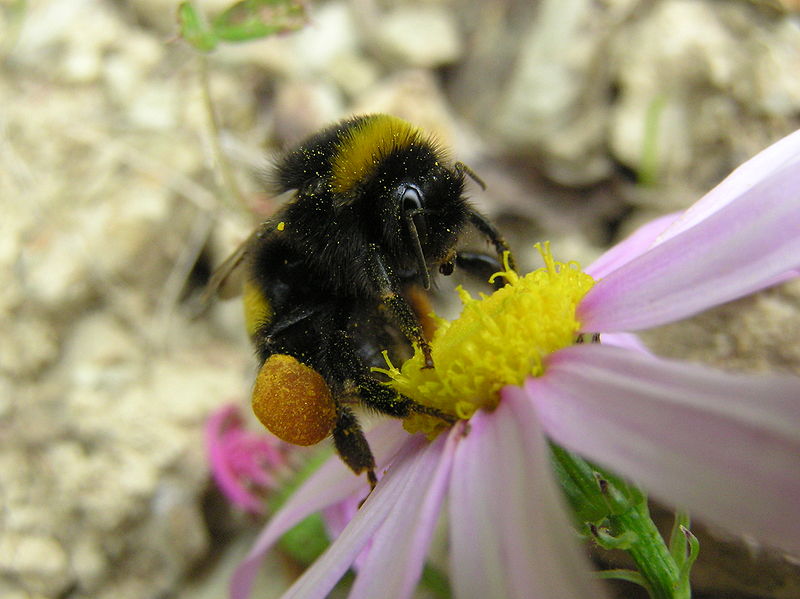
Photo by Tony Wills CC BY-SA 3.0
This week, a bit of Jesuit word play. Photo by Tony Wills CC BY-SA 3.0

I’m proud to say that I’m Jesuit educated, I earned my Bachelor’s in History and Theology with minors in French and Philosophy from Rockhurst University in Kansas City. My time at Rockhurst was one of the most formative periods in my life, a time when I feel like I really did grow into the adult I’ve become from the teenager that I was when I arrived for move in day my Freshman Year. One of the great things that the Jesuits promote is self-awareness, understanding how we exist amid the Cosmos, how we are who we are. A daily exercise of this sort of self-awareness is the Examen, a meditation devised by St. Ignatius of Loyola, the founder of the Jesuits, almost 500 years ago now.

I’ve tried doing the Examen at different points in my life, pausing during the day, most often before bed, to reflect back on the day I just lived, the highs and the lows, and offering my gratitude for all of those experiences. Naturally though there are distractions all around, whether my phone announcing new messages or the sound of a dog barking outside, or even my own thoughts about what it is I’m actually trying to do. The word examen stuck out to me yesterday, I know it as the French word for an exam, and I had a sneaking suspicion that it was originally a Latin word, after all it has that classic Latin prefix ex- included.

When I turned to my favorite Latin dictionaries, I found sure enough that the word exāmen is of Latin origin, coming from a combination of the prefix ex- and the verb agō meaning “I drive”, with the -men suffix added to render exagō a noun. Thus, exagmen becomes exāmen. Still, the meaning of this word, or rather its particular uses strike me as amusing. It is not only an examining of conscience in the Jesuit sense, but also a means of balancing something. Yet there’s a third meaning that came up, exāmen has been used to refer to exāmen apium, a swarm of bees.

At first, I’m not entirely fond of the idea of an examination of conscience having anything in common with a swarm of bees; perhaps there’s some lingering misgivings from my own childhood experiences being stung by bees (both occasions were my fault). Still, the idea that the Latin name for a group of bees, like how we might say a flock of birds or a herd of bison, would be an exāmen is curious to me. It seems as though the idea is that when we do examine our consciences, or when we consider something as fully as possible, we ought to be able to get into every little crevice of that question like a swarm of bees can.

This phrase exāmen apium is used by a number of ancient Roman authors, yet in every moment while that phrase literally means a swarm of bees it often seems to herald bad omens, whether it be a swarm of bees appearing on a standard or on the statues of an emperor or in the middle of a market. So, how can we interpret this to be more than just an odd Roman connection between bees and Jesuit meditations? Think of what might be the best thing to do after getting such an omen; rather than stand idly by and let “fate” take its course, why not instead stop, and think about what you have done to receive such a warning, and what you can do to change how things are going? One of the great disservices that our civilization’s heritage has given to us is a belief in fate, that things are decided and there’s nothing we can do to fix them. Nothing could be further from the truth! It’s up to us to examine our lives and figure out where we’ve gone wrong, and then to do the hard thing and fix our problems.

That is what at the end of the day the Examen means to me. It’s an opportunity to become a better version of myself, a reassessment that, when I don’t forget about it, happens every day.