Monthly Archives: April 2022

Close Encounters of the Three-Toed Kind

Close Encounters of the Three-Toed Kind Wednesday Blog by Seán Thomas Kane

This week, introducing my research into the introduction of the three-toed sloth to European science in the 1550s. I'll be giving a public talk about my work at the Kopernik Observatory and Science Center in Vestal, NY on Friday, 29 April 2022 at 8 pm Eastern, 7 pm Central. You can find a link to the YouTube broadcast here: https://youtu.be/70lJ0NmT8Kw Also here's a link to the Kopernik Observatory's website: https://www.kopernik.org

You’ve heard me talk at length about a fair number of topics on this podcast, and those of you who have been reading my blog now for the 60 straight weeks that I’ve been writing it will perhaps know parts of me a bit better than some. This week I want to talk to you about something that’s personal yet also professional, it’s the project I’m staking my career on at this early stage––my dissertation. The big document I’m writing now is called “Trees, Sloths, and Birds: Brazil in Sixteenth Century Natural History.” It tells the story of how those three groups––the trees, sloths, and birds––were introduced to European natural history by a French cosmographer named André Thevet (1516–1590) in his 1557 book The Singularites of France Antarctique. It’s been a fun project to write so far after years of research and nearly a year of fighting to get it approved. At the moment, I have the first two chapters written and the next two, the sloth chapters, in the works.

So, naturally this seemed like a good time to stand up in front of a crowd and announce my intent to study the history of the natural history of sloths to all the world. This Friday, 29 April, at 8 pm Eastern I’ll be giving a public talk about my sloth research called “Close Encounters of the Three-Toed Kind: How Unknown Life was Named in the First Age of Exploration”. I’ve got to admit, I’m going out on a big limb here, and not lazily or slowly either. On Friday evening I’ll be introducing not only my research about the three-toed sloth’s role in cementing the strangeness of American zoology in European eyes but arguing for the recognition of what we today call the Age of Exploration, the period that began when Columbus stumbled on the Bahamas in 1492, as in fact the First Age of Exploration. The reason for this is straightforward: 61 years ago, humanity entered a Second Age of Exploration at the moment when the first human left the Earth’s atmosphere and entered Space beyond. Yuri Gagarin’s monumental first spaceflight is a moment that ought to be marked as the beginning of a new age in the human story, one where we began to move, however slowly, towards venturing out of our home and into our planetary neighborhood at the very least, our stellar neighborhood in the long run.

I don’t think it’s anachronistic to say the way Thevet and his contemporaries understood the sloth in 1555 and 1556 is similar to how we might well understand life that’s new to us that our explorers in the coming years might well encounter on other worlds. In Thevet’s time the Americas, these continents, were seen as an alien world by the Europeans, it was as foreign, as strange as they could imagine. In their efforts to make sense of what they saw and who they encountered in those first generations of contact the European explorers often either gave names familiar to them to that American life they encountered, as with the sloth, or they adopted local indigenous names for the life of these continents, as in the case of many of the local peoples they met. All of the states in my home region, the Midwest, bear indigenous-derived names, largely drawn from the names of local peoples who the French encountered and traded with during the seventeenth and eighteenth centuries.

The main theme of my talk will be about the meaning of names, their importance and intrinsic value to the named and the one doing the naming. In the first fifty years of its inclusion into European natural history the three-toed sloth went by several names. Thevet first recorded it in 1557 as the haüt, a Middle French phonetic spelling of the Tupinambá name for the creature, itself derived from the sloth’s cry which Thevet described as like “the mournful sigh of a small child.” Haüt also appeared in Conrad Gessner’s entry for the sloth in his 1567 Thierbuch, a German translation of his History of Animals, first published in Latin before Thevet’s visit to Brazil in the 1550s. Yet Gessner himself gave the sloth a more scientific name, Arctopithecus, meaning “bear-like ape” out of an effort to identify it by its physique, or how at least Thevet described its physique in his writing and a woodcut of the animal in his Singularites. Another French writer, Jean de Léry (1536–1616) who visited Brazil after Thevet left in 1556 and 1557 called the animal a Hay, with a closer phonetic spelling to the modern . Yet it was the Portuguese who first called this animal a sloth, namely the Spanish Jesuit missionary St. José de Anchieta (1534–1597), whose letters to his Jesuit superiors describe the animal as a preguiça in Portuguese, a sloth in English.

Another epithet Thevet gave to the sloth in his 1575 book the Universal Cosmography referred to it as “the animal that lives only on air” because during the 26 days that he kept one in captivity he never saw it eat or drink. Therefore, in Thevet’s logic, the sloth must only nourish itself on the air surrounding it. How Thevet didn’t realize the animal was probably terrified from being brought indoors, and likely was starving and dry for thirst baffles me. Still, the idea that Thevet believed he had found an animal in this alien world of America that “lives only on air” meant that the sky was truly the limit for the possibilities of American life. Thevet’s own Twilight Zone contributed to the groundwork for the notion of alien worlds that persisted in speculation and fiction into the present day, beyond the bounds of his own Age of Exploration, which I might argue ended with the competing Amundsen and Scott expeditions to the South Pole in 1911, or perhaps with the gradual end of the old colonial empires over the last century. So, if you’re in the Southern Tier of New York this Friday and want to hear me talk about sloths come up to the Kopernik Observatory and Science Center in Vestal, New York. The talk begins at 8 pm on Friday, and if the skies are clear, as hopefully they will be, we should have some wonderful opportunities for some stargazing after I wrap up my show. And for those of you who are listening from afar you can watch me take the stage live on YouTube. The link is in the show notes.
Homo Sapiens

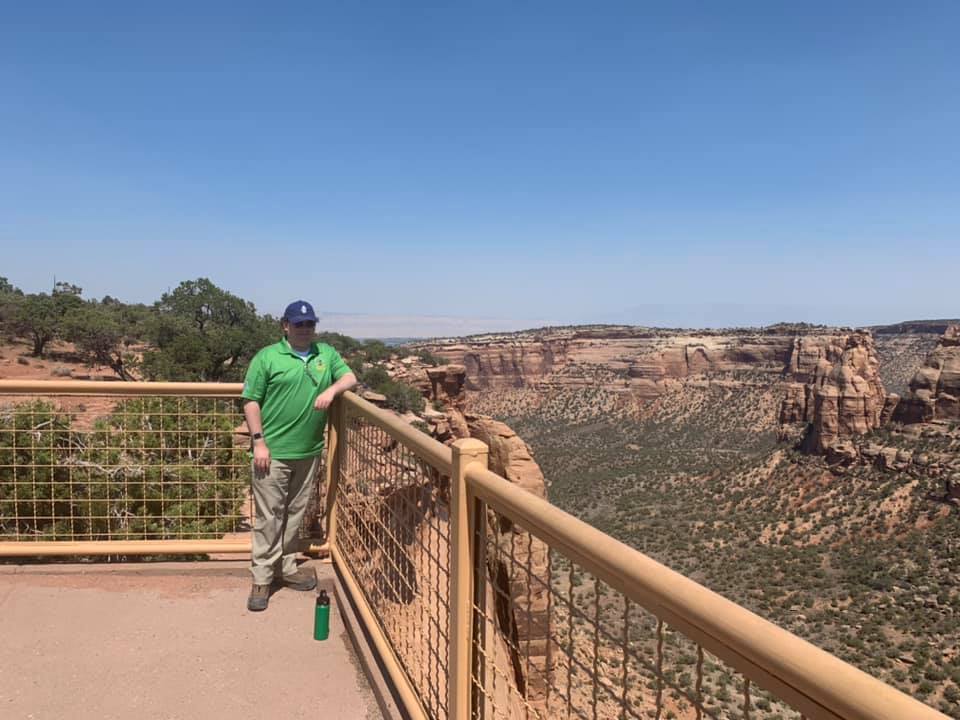
A particularly bumbling specimen of the species.
This week, a bit of self-reflection. The Man from Earth website The Man from Earth trailer

On Monday last week, I sat down to watch the 2007 film The Man from Earth for the second time. You may remember hearing or even reading my reflections provoked by that film. I said I’d probably watch the sequel, The Man from Earth: Holocene soon, and well I did just that. Compared to the original, Holocene lacks some of the powerful dialogue, and the gripping storytelling. The Man from Earth felt like it was a story being told in real time, while Holocene, its sequel, seemed more like a TV pilot that was turned into a feature. Both films feature some wonderful actors that I recognize from the many Star Trek series I’ve seen in the last few years, notably John Billingsley and Richard Riehle in the first film, and the great Michael Dorn himself makes a wonderful appearance in the second film.

If I were to draw any deep arguments out of the second film, Holocene, it would be something to do with how we identify ourselves. We humans call ourselves Homo sapiens, a scientific designation that we’ve given to ourselves to distinguish us from our hominid cousins including the Neanderthals. Homo is Latin for human; it is the genus which represents all hominids as a subset of primates. Sapiens on the other hand is more interesting. It is a Latin participle based on the 3rd conjugation verb sapiō, sapere which is used to mean many things from “to taste,” “to have flavor,” to the more innate concept of being able to sense or discern things, all of which is necessary for knowledge. Homo sapiens then means we distinguish ourselves from our hominid cousins by our abilities to understand ideas. Now there’s evidence today that other early humans could think and create in ways that are similar to us, evidence for example that Neanderthals created art of some sort in ancient Europe, so in many ways the fact we designate we humans as Homo sapiens is as much a way of patting ourselves on the back as anything else.

This brings me back to The Man from Earth: Holocene. It’s a film that introduces the core conflict when a group of inquisitive undergrads start to wonder about their professor who they soon realize is the same 14,000-year-old man from the first film. Only now he’s begun to age in slow but noticeable ways. This film made me question the idea that we are Homo sapiens for the personifications of humanity in this film, the four students seeking the truth about their professor, make a series of terrible decisions that prove as book smart as they might be they are clueless to so many other factors of life. Homo sapiens indeed.

In my own research I study the introduction of Brazilian flora and fauna into European natural history through the writings of several French explorers dating to the 1550s through the 1580s. And while I came into my research thinking I would have some fun writing about sloths and parrots and dyewood trees, I have found that the story I’m trying to tell is as much a warning to our present and our future as it is anything mundane about Renaissance natural history. There is a theory, an idea that is introduced late in The Man from Earth: Holocene called the Anthropocene, a concept that is widely discussed today which argues that human interventions and influence upon nature have become so great that we have shifted the course of Earth’s natural development from the Holocene, the current geological epoch defined by our planet’s warming by the Sun over the past 11,650 years, making for the perfect conditions for the development of life as we know it today into a new geological epoch where we humans, the Anthropoi in Greek, are now the prime movers of Earth’s natural course. In the film this becomes an understated note of caution, yet in my own research I find the Anthropocene to be a fundamental piece of the story of the European exploration, conquest, and colonization of the Americas largely ignored until recently.

We call ourselves discerning, we call ourselves wise, and yet we allow our own demands on nature to outstrip what nature can provide. It’s a curious balance we need to maintain, one which I am just as guilty of destabilizing as anyone else. It’s curious to me that we call ourselves wise when we think of all we have done with our home. We are one of maybe only a handful of species (leaving room here for other hominids at least) that has created beautiful art and weapons of mass destruction all with the same innate tool: our brains. We have just as much an ability to love as to fear, and in a given day I think it’s safe to say we act on those emotions without often really realizing it. 

Through it all we’ve survived and thrived on this planet of ours. There are 7.9 billion of us today, and while our population growth is a marvel of our ingenuity and ability to adapt to everything that this planet has had to offer so far, our own exponential growth may be the thing that drives the planet to the point of no longer being able to care for us the way we have been. If we don’t eat, we starve, yet if we eat too much we will run out of food and then starve. As the Man from Earth himself said in the first film, it’s the species that live in balance with nature that survive.

I argue in my dissertation that the Anthropocene really began when two different gene pools of life, one Afro-Eurasian the other American intersected in a large scale for the first time in thousands of years following Columbus’s accidental stumbling on land and people on this side of the Atlantic in 1492. That was the moment when human endeavors began to triumph over natural barriers, when a new global world was first conceived out of the collective products of a series of old worlds on every inhabited continent. It’s fair to call ourselves sapiens, discerning and wise, for the fact that it was humans who bridged that gap through innovation and technology. Yet it’s also fair to say that it was humans too whose innovation and technology created the great climate crisis we find ourselves in now. While the pessimists among us would end the story there, in a way that is in vogue to do these days, I want to continue the story, to contribute a verse to the poetry of life and say to you here and now today that it will be our innovation and technology, our discerning and wise nature that will figure out a way out of this crisis and that will lead us to adapt again to a new life in this new world we’ve created in our own image.

The Man from Earth speaks to me of the potential of humanity and of how at the end of the day we’re still just telling each other the same sorts of stories around a campfire. Like our ancient ancestors before us we see what we know and imagine what could be out there beyond the light of our knowledge. Unlike our ancestors we today are comfortable in a world we’ve created for ourselves, or at least some among us are comfortable in that world. We don’t need to innovate quite so greatly as past generations; we can let our minds become lazy and unimaginative. Like the big wigs from every time just before a storm we can be content and let the tides overcome us, but some among us will be hit more fiercely by those tides than others, and they’ll be the ones to stand up and say we can do better for ourselves. We will always stumble and fall, like those four characters from The Man from Earth: Holocene but we will always find a way of getting back up.

At the end of the day, we’ve created this new world where we are at its center, the keystone species around which all others exist in a new balance. I personally find that balance more precarious than I’d like, and personally I’d rather not be the one holding the entire balance of nature up like some modern Atlas. Yet over generations of decisions for good or ill this is what we’ve decided to do, and who we’ve decided to become. All we can do now is live up to the task and make the burden less strenuous for our descendants.

The Fog of Time

Photo by wsdidin on Pexels.com
This week, some thoughts inspired by the Jerome Bixby written 2007 science fiction film The Man from Earth. The Man from Earth website The Man from Earth trailer

When I was an undergrad, I watched a lot of really neat films and TV shows. It was something that sticks out to me from those years as distinct, something that I’ve continued and recreated from time to time as my mood allows it. In the Fall of 2013 I saw a movie on Netflix that peeked my curiosity called The Man from Earth that I’d never really forgotten. It’s not really an action-packed story in the modern sense, no rather it’s 90 minutes of dialogue, discussion, good old fashioned storytelling about a professor who is leaving his job, home, and friends after 10 years. The reason: because he’s learned over the 14,000 years of his life that that’s a good policy to do every decade or so. Yep, John Oldman, the Man from Earth himself, is a Cro-Magnon.

For some of you hearing or reading this the plot of The Man from Earth will be all too familiar to you. It became something of a quiet hit among certain crowds. One reviewer called it “intellectual sci-fi” even. While I was home over one of my recent breaks from working on my dissertation I bought an HD copy of it on YouTube figuring I’d like to re-watch this particular classic of my early 20s again. It took me a few months but on Monday night this week while I was keeping an eye on my students’ term papers streaming in before the 11:59 pm deadline I sat down and watched The Man from Earth all over again.

What stands out to me the most about my memories of watching this film for the first time nine years ago is how it unsettled me a bit, as it did the expert characters on the screen. The very idea seems counter to all that experience has taught us. “People die!” as the goddess Persephone cries to Orpheus in another film I purchased on YouTube. Yet somehow in the logic of The Man from Earth the title character, Dr. John Oldman had been able to live for 140 centuries and still after all that time appear to be only around 35.

This time I came away from my second viewing of The Man from Earth thinking less about the literal story and more about the ideas it proposes. For one thing I found myself thinking of the perspective that such a man would have of nature and reality. My own perspective is fundamentally framed by my upbringing, it’s conditioned by the powerful forces of my Catholic faith, my Irish American traditions, my personal ethics, and by my upbringing learning about Creation as both an Act of God and scientifically the product of a Big Bang and billions and billions of years of evolution. 

On the other hand, John Oldman––the fourteen thousand year old Cro-Magnon––reflects and recognizes a different sort of perspective, one born out of the entirety of human experience, one where the world began as what was knowable from the furthest reaches of the light from the nearest campfire inside a cave. For him, the Big Bang and all the creation stories we’ve been telling ourselves could well have happened after his first memories, his first inklings of reality and existence. To him those were all things that were learned over time, and their existence only became tangible once they were learned. If you think about it no one really knows things before they begin to have that first spark of an idea that those things could be possible. Today, I believe that anything is possible. That belief is grounded in my faith in an omnipotent and omniscient Divinity, yet it’s also equally held up by the course of human intellectual history, of how we keep finding out more and more things are real, and by extension at the edge of our knowledge that more and more things are possible. How wonderous is that?!

On Sunday evening, in honor of Yuri’s Night, an annual celebration held around 12 April to commemorate Yuri Gagarin’s first spaceflight, the first time a human left our home planet, I decided to watch a space-themed film. Last year I was lucky enough to join the global livestream party and hear all sorts of neat panelists talk about the past, present, and future of Space exploration. This year though that wasn’t an option, so I improvised and put on the 1982 classic The Right Stuff. For those of you who aren’t familiar with it, this is a film celebrating the Mercury 7 astronauts, the first Americans to leave the Earth and among them the first humans to orbit our planet. The Right Stuff begins with Chuck Yeager’s triumphant 1947 flight that proved the sound barrier (Mach 1) could be broken. Before he flew his Bell X-1 faster than the speed of sound no one was entirely sure it could be done. It pushed the edge of our knowledge out of a pure hope that supersonic travel could be possible.

Maybe then on a human scale we should think of our place in the history of the Cosmos less as a story beginning with the Big Bang, which as scientific as it is does bear some resemblance in how its story is told to the other great Creation stories out there, and more with that first human spark that signaled to our conscious thoughts that we exist. Maybe the beginning of the human story ought to be around a campfire in a cave somewhere, or maybe this leaves room for multiple human stories, each threads that broke off from one another until as it is in our present time there are 7.9 billion such threads living, all vibrant and emotional and passionate each in their own way.

When I think back to my beginnings, to what I can ascertain as my first definite memory that I can remember, that first moment when I could recognize my own internal narrative that keeps me going even now, I think of a day trip my parents and I took when I was around 3 or so from our home in the Chicago suburbs to the farm where my Mom’s grandfather grew up in Sheffield, Illinois. I remember sitting in the back seat, on the passenger side watching out the window as we drove by new suburbs, new neighborhoods were being built as we drove west. For me so much that I consider etiological, that I consider as origin-stories to my own, whether they be Genesis or the Big Bang or the many stories keeping my ancestors’ memories alive even when the people involved are long dead, all of those come after that moment in my own memory. So, to my own individual, my own personal recollection of history, of reality, of the Cosmos in all its wonder, all of that comes after that one moment that I can remember from 27 years ago.

What does this mean for how we understand our place in nature? I think if it changes anything, it ought to follow another line of wisdom from The Man from Earth, that the species that lived in balance with nature tended to be the ones who survived. Maybe we need to balance ourselves with our worlds. What I mean to say is maybe we should allow room for our own individual views of things while acknowledging there’s a greater truth to be found in the collective knowledge and wisdom of humanity. There is an inherent fog surrounding our understanding of time, after all we can only ever really see what’s happening right in front of us at any given moment. We can remember with growing haziness what happened in the past, and we can yearn for possible futures that are equally fuzzy in our imaginations today.

This time around I was delighted to see that a sequel was made called The Man from Earth: Holocene back in 2018. It stars the same actor, David Lee Smith, as John Oldman. I think I might watch it tomorrow, and who knows maybe you’ll hear more from me about this story next week. For now, keep imagining because that’s what allows for the improbable to become the possible.

The Man from Earth (2007) trailer

Sandwiches

Photo by Brigitte Tohm on Pexels.com
This week, to conclude what I’ve been saying.—Click here to support the Wednesday Blog: https://www.patreon.com/sthosdkane—Sources:%5B1%5D “Signs,” Wednesday Blog 1.10.[2] “On Servant Leadership,” Wednesday Blog 6.15.[3] Percy Bysshe Shelley, “Ozymandias,” Poetry Foundation.

Like many people I love a good sandwich. My tastes are a bit austere, a bit simple for most. I’ll go between one or two options: ham and provolone with maybe some lettuce and rarely a tomato slice or two, or roast beef and Swiss. More often than not lunch is a meal that I tend to eat on the run, either in between things in my apartment or on the go between meetings and lectures at the university. There are also plenty of lunches where I’ve ended up going through the drive-thru at one of the local outlets of the national burger chains, you know what I mean, or made a stop for a burrito at Chipotle, but beyond all of those options nothing beats a good sandwich decked out on wonderful bread.

Some of the best sandwiches I’ve ever had were in France. There my preference is the rather plain jambon-beurre, ham and butter on a baguette. Writing this now that doesn’t seem like such a bad idea to try making in my apartment in Binghamton one of these days. You could go as fancy as you’d like with your lunch, have all sorts of sauces and toppings on your sandwiches, and bravo for you with your preference. Yet what I’ve ended up settling on here is putting my ham and provolone or roast beef and Swiss on a bagel, often a raisin bagel mildly toasted and buttered to perfection.

Sandwiches are good topics to make podcasts about because eventually everyone gets hungry. There’s a chance this one might rise above my average 10 listeners per episode, all because I tag the blog post version of it with the keyword “sandwich”. There are plenty of sandwich-themed short videos and other entertainments out there, take British motoring journalist James May’s bunker kitchen on Food Tribe, and while I enjoy Mr. May’s commentaries for their insight and humor, I appreciate seeing how different his tastes are to my own.

There are all sorts of commentaries about sandwiches and what they mean below the surface. Some say they are symbols of how our culture has developed a need to deal with human necessities on the go, we “eat when [we’re] hungry ” to borrow a phrase from an Irish folk song about moonshiners. There are also the endless debates about sandwiches, what makes sandwiches, how we define sandwiches, are hot dogs sandwiches? The jury is still out on that one, no doubt enjoying their own bready concoctions in the jury room. The sandwich is one thing too good for even the French to ignore, adopting it with its pure English name despite a general cultural distrust of anglicismes.So, here’s to the sandwich, the humblest crust upon which we stack our hopes and dreams, the object of our fancies, and the delight of a quick lunch.