This week, living in exciting times often turns out to be a bit unlucky, from a certain point of view.
To say we’ve been living in boring times would be the lie of the decade. The twenty-first century has proven to have nearly as many pitfalls and joys as the twentieth, albeit pitfalls of varying types. We’ve avoided the great cataclysmic chasm of world war so far, but that portal to the Underworld remains visible off in the distance. How close our collective human path comes to its shadows remains ours to decide. What we have that our ancestors didn’t is their collective memories of the century now past to ensure we avoid some of the same mistakes they made in their wanderings through life.
As a child I had many dreams about what my future would bring, what sort of job or jobs I’d have, who I’d spend my adulthood with and the kids we’d have together; the joys and griefs that would come with the waxing and waning of our days. I figured my adulthood would be straightforward, that I wouldn’t have any trouble finding work or building a life for myself, after all that’s how my parents’ lives seemed to me. Yet in the last decade as I’ve entered my twenties and now see the great stone gateway leading to my thirties near the horizon, I have to laugh at those juvenile ideas of what my life would be like.
The last decade has been tough, and everything that I’ve done that I feel truly confident about has yet to really translate into a stable long-term career. This is a sentiment that I doubt I’m alone in expressing. For all the benefits of our modern world and its advances, for the threats of the past seeming to be in the past (until they reawaken like the zombies that dominate our popular culture), many in my generation remain stuck having trouble finding work or finding that the industries that we’re interested in working in are “broken” or simply aren’t hiring.
I’ve been very frustrated at how the whole hiring process hasn’t worked for me yet, no matter seemingly hard I try and how many applications I send in. It often feels like there’s some lesson that I missed in my close to 27 years of schooling about how to get a job. It makes me angry when the response from people around me is “oh, don’t worry, you’ll get something eventually” or any other related phrases and sayings that aren’t constructive or helpful.
Today’s title comes from the first volume of President Truman’s autobiography, the stories of his starts and stops as he tried to build his own career a century ago here in Jackson County, Missouri. I’ve always felt that I could relate to Truman more than many other presidents, perhaps because he came from the same area as me, or because he was good friends with some of my more distant relatives. Whatever the case, Truman’s words ring true to me. These are truly times of trial and hope, and I think despite how trying the current time may be, we have to keep up hope that we can drag ourselves out by our fingernails if we have to and into a better tomorrow.
The best solution in my Sisyphean task of applying for jobs is to keep rolling that boulder up the hill and hope that eventually I’ll make it through. The funny thing is the security that graduate school provides with a stipend and a position in an institution hides the fact that in many ways the activities central to graduate school are also Sisyphean in wrangling together support for your work all with the hope, however dim it may be that that work will ensure you a job once you’ve earned your credentials.
It’s hard to be hopeful right now in 2022, and there’s so much to be worried about. I don’t really have a positive spin to put on this one because I’m still not sure what that positive spin might possibly be. All I’ll say is that it’s up to us to figure out a solution to move from our times of trial and hope to our times of decisions and maybe eventually into a new age of optimism.
This week, some thoughts on what keeps a culture alive.
I really enjoy going to concerts and hearing all sorts of musicians from all around the globe perform. I’ve been lucky enough to attend some historic concerts, such as the 2012 performance of the Cuban National Symphony Orchestra at the Kauffman Center in Kansas City. It was their first performance in the United States since the beginning of the embargo on Cuba in the 1960s. In that moment I could feel echoes of a vibrant and lively culture living alongside my own in the same moment in time. The way the musicians put their own spin, their own rhythm on Gershwin’s Rhapsody in Blue to make it sound Cuban was wonderful to hear. Still, the setting of the concert hall where there is a clear physical barrier between the performers who stand or sit on a stage frozen in place with an audience watching all around does sometimes give me chills.
There have been many other concerts that I’ve attended where music or stories from particular cultures are played or told, relayed to us an audience foreign to those artists’ culture. Yet the way they’re transmitted, removed from the physical surroundings of those artists’ home, placed on a sterile stage where we can hear and see everything in perfect clarity, takes something out of the performance. It worries me that in America we’ve come to expect that particularly “cultural” things, especially if they’re foreign or “ethnic” ought to be neatly packaged in an expected format and set up. That way they can be interpreted through our own cultural lens in such a way that if I see a bottle of Italian seasonings in the grocery store, I’ll be able to tell first and foremost that those are seasonings. Yet in that standardization of culture to fit a set mold into which all its many and contradictory elements can be poured and melted down, we lose a great deal of the memories and the life that those cultural artifacts embodied.
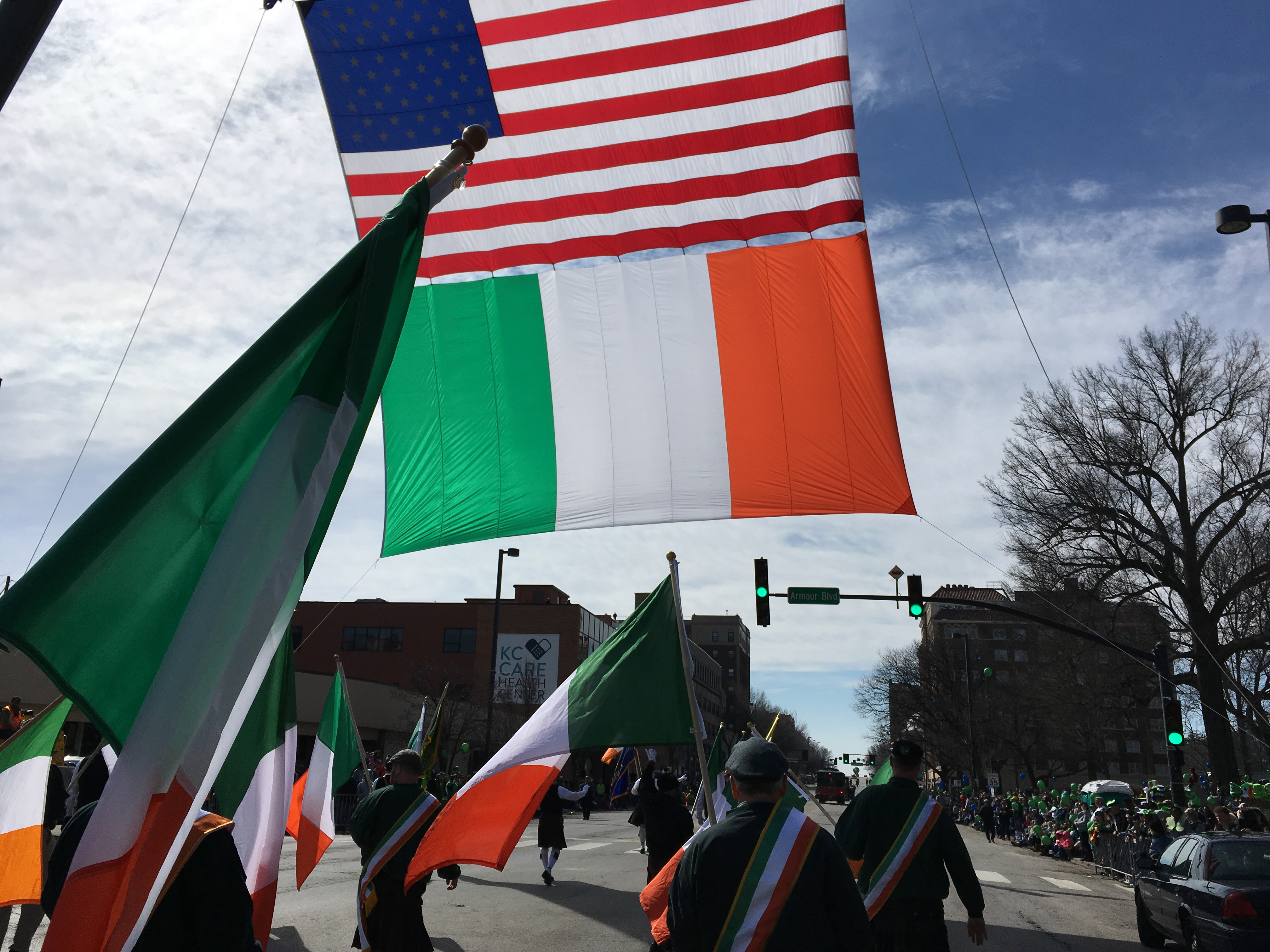
My own people, the Irish Americans, have an interesting relationship with this. We still maintain some elements of a distinct culture from other European-descended ethnic groups in the United States, though I know some reading or listening to this might object to my use of the word “ethnic” to describe a community so assimilated into mainstream American society. The problem for me arises in trying to answer how our culture is still even partially Irish. Here in Kansas City, we have plenty of people who play Irish music, myself included, as well as a couple of local Irish dance schools. We even have a local Irish Center where classes in the Irish language are taught. Yet when most of those cultural milestones are performed, they are often more so in delineated places and situations where they are expected, say at the Kansas City Irish Fest, rather than more organically on a regular basis as a daily part of life.
One of the great exceptions to this rule is with music, after all some of my favorite concert memories have been sitting in on the jam sessions at the Irish Center and at other venues around town, even in the homes of friends. There, an element of our Irish American culture is still being performed organically, like a group of friends getting together one evening for a party. It just so happens that instead of playing the Top 40 Hits at that party they might pull out their own instruments and play their own top 40 for themselves.
Culture is fundamentally performative, and to survive it must flourish organically in the setting where it exists. This past weekend I had the honor of serving as a groomsman for one of my best friends who is Greek Orthodox. The wedding took place in his church, and clearly seemed to be an unfamiliar ceremony to many of those present who weren’t themselves Greek (myself included). Still, I found the chanted prayers and hymns––most of which were performed in English––to be fairly easy to learn, and after the first one I was able to add my own voice to the congregation. Later that evening the typical wedding reception DJ hits were freely interspersed with Greek dances, which likewise for the average participant were far easier to pick up on than any of the Irish dances I’ve done over the years. There’s a culture that’s still vibrant in how ordinary its performances tend to be for the people who live it every day.
It struck me that the idea of having Irish music played at an Irish American wedding reception would probably be met with shock, after all most of us don’t know the steps for the jigs and reels that make up Irish dance today. Furthermore, someone is bound to be annoyed by some inconsistency with what is properly Irish American, meaning that trying to toe the line of ensuring that one’s Irish American cultural practices are so highly regulated that they become harder than necessary to follow. I for one would love to try and introduce some elements of jazz into the jigs, reels, and airs that I’ve learned to play on the tin whistle, and if I do ever get around to joining in a specifically Irish dance again you can bet that I’ll let my arms move more freely than is expected.
I worry that a culture which isn’t performed as a daily routine will gradually become fossilized. Such a culture, if confined only to special events that aren’t expected or normal for the everyday, will surely die, leaving its participants poorer as a result. Perhaps one of the greatest differences between Greek American culture and Irish American culture is that our ethnic church, Roman Catholicism, did not preserve our Irish language as the language of liturgy and spirituality. Rather, Catholic priests continued to say the Mass in Latin until the 1960s, by which point so few Irish Americans still spoke Irish that there are hardly any Irish Masses performed here in the United States today. I’ve only ever been to one such Mass that was done entirely in Irish. It was said on a stage at the Dublin Irish Festival outside Columbus, Ohio where we the congregation watched on as if gazing at some exotic ceremony stuck out of place and out of time. That most essential element of any culture, the way in which it speaks and sings and laughs and cries, its language, is vital to that culture’s survival. And in a country where we make up a good portion of English-speaking Catholics, our Church has assimilated faster than our hopes for a distinct Irish American culture may have wanted.
This week, reflections on childhood, from my own personal experience.
One of my favorite types of daydreams is to imagine my current self talking to my younger self. It could be me as a junior in high school or me watching off to the side as my three- and four-year-old self began to conceive of the world around me. I can remember what my younger self was thinking in any given time so the “script” if you want to call it that is one of the easiest ones to write. And in the past, as is still the case today, I often wonder about my future self, who I’ll become as I continue in my life, who I’ll meet, where I’ll live, who I will be in my future.
A couple of weeks ago I found myself thinking about all this for a good three hours while I was flying east from Kansas City to Newark on my return trip to Binghamton from a wonderful Easter weekend at home. As I watched the prairies of the Midwest give way to the deep cloud covered Appalachians, I kept thinking about who I dreamed I would become when I was at varying stages of my life. Would my six-year-old self whose life changed dramatically when he moved with his parents from Chicago to Kansas City be proud of how my 29-year-old self has found a way into a career where he still looks back at what he loved to think about as a kid? Would my moody teenage self be happy knowing that he was still going to be single at the end of the following decade? And what about my more recent past? Would the Seán who lived in London for a year and learned so much about the world in those months abroad, would he be proud or scared at how tough the next seven years of his life were going to be?
I wonder, and maybe this is a conversation better posed to psychologists, are we still the same people who we were as kids? Or do we transform or change the shape of our personality through our lived experiences, through our joys and sorrows? I remember thinking about myself more simplistically as a child, a time when the things that I was proud to be a part of conjured up images like the Space Shuttle or other marvels of the modern world. As I learned more about myself, I found more and more things that were new to me that I could attach myself to, that I could find some connection to. My interest in Ancient Rome was born out of a conversation with my Mom when I first remember hearing my Church called Roman Catholic. I knew where Rome was (I memorized the globe at a very early age) so the idea that I was a part of something so rooted to something so ancient was thrilling.
Similar things happened at a time that I can’t pin down when I began to understand and listen to the stories about my Irish ancestors. It’s funny, I remember only one person from that generation, my grandfather’s Aunt Catherine who died in 2000 when I was seven. I remember her accent puzzling me, but I bet if I sat with her today, I’d be able to understand her perfectly well now that I’ve got nearly 30 years of listening to people from Mayo under my belt. On my Mom’s side I have only one memory of my great-grandmother, my GG as I always called her. I must have been very young, but I remember waking up from a nap in what’s now the computer room in my grandmother’s house in Kansas City and going out into the living room where she was sitting with my grandmother. All I remember her saying was “Hi, Seán.” When I told my Mom about this memory recently she said she must have carried me out because my GG died before I could walk, meaning this could well be one of my very first memories.
Still, when I think back to all those moments as if looking down the long string of a double bass, I wonder if the guy whose eyes saw those moments, whose ears heard those sounds, whose nose smelled those smells (for good or bad) was the same guy who I am today? If I can say anything definitive, it’s that the one constant among all those memories isn’t necessarily how they were framed or what I was thinking or feeling in each moment. It’s that the same internal monologue was going in the same voice that I still think in today. A few weeks ago, I wrote about the first time I recognized my conscious thoughts, something that a lot of people said was a profound idea. I asked if that for me was the moment best described as “In the beginning” for me, with everything else I ever have come to know or will come to know happening afterwards in the order that I discovered those things? Today I want to add onto that dogpile of a question and ask, which part of my past is most influencing my present, and by extension my future? I think the best way to look at answering this question is through the lens of nostalgia.
The truth is I’m not sure which reflections of my past that live on in my memory is the one that I’m most nostalgic for. There are echoes of all of those shadows in my life and my work today, the deep passion for natural history and the natural world in general that drove my six-year-old self whose favorite places in the world included the Field Museum and the Brookfield Zoo, or the teenage reflection who loved his Latin classes more than any other and really wanted to be doing better at it but just didn’t have the patience to stop overthinking things. I think those teenage loves drove me into my adulthood, after all as much as I loved spending my time in London’s Natural History Museum it was the British Museum that I dreamed working at when I decided to do either a Classics or a History PhD in 2016. It took me a few years to get into a program, by which time I’d settled not on Ancient Rome but on the Renaissance, before building my own field from the ground up, as a kid with my childhood would tend to do, to become a Historian of Renaissance Natural History.
As it happens, this whole idea of a hyper-individualized vision of a historical timeline, beginning with a person’s first consciousness about something could be useful in my work. After all, one of the great debates in the history of how the Americas were approached by Europeans during the Renaissance is whether it’s right to say they “encountered” or “discovered” these continents. I usually prefer to say “encountered” seeing as there were already generations of people reaching back into the Ice Age who had called these continents home. Still, if we think about this question less in the scope of all of human experience and more in the limited view of how one set of humans, one branch of the family isolated from others by circumstance understood the Americas when they reached those shores in 1492 then the word “discover” coming from the Latin “discooperiō” meaning “to expose” or “to lay bare” then the word does fit the experience of the many peoples of Europe in first learning of the existence another series of worlds across the Ocean Sea that they came to call America. But our history is the history of the creation of our modern world, a global world defined by shrinking borders and a growing sense that we’re all in this together, and for that world this isolated story of one perspective “discovering” the fact that other people had already made it to first base merely makes the discoverer a shortsighted pitcher. Without all the caveats and framing, the idea doesn’t work. It speaks to the warning that it’s best not to think of whole groups of people in the same context that we’d use to think of just one guy.
So, with that out of the way, do I think my younger self would be proud of who I am today? In some ways, yes, after all I’m sticking to doing something that I love despite a great deal of the odds and the circumstances of our world in 2022 seeming to be stacked against me making a living out of being a Historian of Renaissance Natural History. I may not be working at the Field Museum or at one of the other wonderful natural history museums in this country or beyond, but I’d say that’s still a possibility. Nonetheless, I imagine that teenage Seán would be a bit more forlorn knowing he’d still be single all these years later. Teenage moodiness can cast a shadow even from the confined distance of your memories. I think the moral here, if there is one, is that there’s always room for improvement, right? And at the end of the day, as my undergrad self the triple major in History, Philosophy, and Theology with double minors in French and Music would like to say, “Anything is possible.” So, if I could go for three and a half years without a lunch break trying to earn 3 majors and 2 minors in 4 years then I can get a job doing something I love and maybe figure out the personal life while I’m at it too.
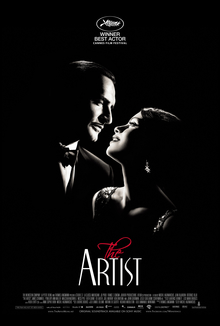
This Week: Alex Brisson joins me for a conversation about The Artist
Last week after finishing my daily Jeopardy! viewing I decided to turn to Netflix for the first time in a while and see what was on my watchlist that I hadn’t touched recently. Perhaps the inclination to turn to Netflix instead of my more frequent streaming services, notably Paramount+ and PBS, might well have been urged by the recent poor market performance of the streaming giant following its first poor quarterly performance in its history. Still, there are many wonderful shows and movies to watch on Netflix, and one in particular caught my attention.
I first saw The Artist back in 2011 when it was playing in the theatres. I went with a group of friends from Rockhurst to see it at the now old Tivoli Cinema in the Westport neighborhood of Kansas City, and for whatever reason the people I went with decided we would get there about halfway into the film, something which annoyed me because this was one that I really wanted to see. We took our places in the back row of the theatre with about 40 minutes left in the 90-minute picture. I enjoyed what I saw but felt cheated at not getting to see the entire thing, and for whatever reason I never got around to going back to the Tivoli to see it again in full. So, when I saw it was on Netflix a few years ago now I saved it to my watchlist and then never got back to it. Therefore, last week when I saw The Artist would be leaving Netflix that very night, I decided to not overthink it for once and pressed play.
What followed was everything I hoped for. Longtime readers of this blog will know I’m a fan of silent films, old friends will remember I even made a few in high school, which honestly was as much due to the poor quality of the sound that my video camera could record at the time in the late 2000s and early 2010s. I’ve written in the past in this blog about how Charlie Chaplin’s The Gold Rush touched me and spoke to me of a loneliness I truly can relate to now in grad school, and I think that blog post speaks to the unspoken power of silent films to sing directly to human emotions through visual cues only. The visual metaphors that abound in The Artist are loud and clear, as if shouting from the rooftops, yet they are iconic in their heritage from the theatre and ballet, art forms that served as some of the roots of silent film itself.
The Artist tells the story of a Douglas Fairbanks type of leading man, George Valentin, played artfully by Jean Dujardain, whose career playing the same mustachioed hero over and over again is eclipsed by the coming of sound in 1927. Into the scene walks the young extra Peppy Miller, played joyfully by Bérénice Bejo, whose own career takes off as Valentin’s descends. Valentin has many opportunities to maintain his triumph through the transition to sound, yet his fear of change and his pride make him tumble from the heights of stardom like Icarus at the roaring heat of the Sun’s rays melting the wax on his silent wings.
The film’s message is one of emotional turmoil in distress, Valentin falls as far as he can in life, almost to the grave itself, yet he continues to have people around him who love and care deeply for him. Among them first and foremost is Jack, his beloved dog and quite likely best friend, played terrifically by Uggie, a Parson Russell Terrier, who stayed with Valentin through thick and thin, even saving his life on the odd occasion. I want to pause for a minute here and acknowledge some of the discussion that was going on in 2011 about giving Uggie recognition for his work on The Artist, even perhaps an Honorary Oscar. One quote that made me do a spit take with laughter from a spokesman at the BAFTAs (British Academy of Film and Television Arts) was quoted in The Daily Telegraph as saying that Uggie wasn’t eligible because he wasn’t “a human being” and because of “his unique motivation as an actor was sausages.” I will say, I bet if we didn’t need to work for wages to survive there’d be many a person out there who might consider a good sausage a nice reward for a day’s work. Speaking of that, I need to add some brats to my shopping list …
Anyway, The Artist is special in that it was a silent film made 84 years after the development of talking pictures. It is also one of the few fully black-and-white pictures to be made in the last few decades. Another one of note that I quite liked was the 2020 David Fincher film Mank about Herman J. Mankiewicz and the creation of Citizen Kane in 1939 and 1940. As such The Artist is a silent film made with 84 years of extra technical know-how. From what I could tell as a silent film buff the creators of The Artist did a great deal to make it authentic to the period it sought to depict from the lighting to the camera angles, to the profound metaphors through set design, such as the moments when Valentin finds himself looking into mirrors and seeing what he’s become or the way in which the creators seemed to be using new yet old-looking ways of telling their story.
When sound does appear in The Artist it’s as if an alien invasion has commenced. George Valentin’s first contact with sound comes halfway through the film in the form of a series of defiant noises that terrify the silent star. Later though once comfortable with it the sound returns and becomes embedded in the world of The Artist as something ordinary and wonderful at the same time.
This week I’m reflecting on the 2011 Best Picture winner “The Artist” and introducing a new segment to The Wednesday Blog in an interview with my friend Alex Brisson about the film.




 Wednesday Blog by Seán Thomas Kane