Monthly Archives: June 2022

Church and State

Photo by Pavel Danilyuk on Pexels.com
This week, a message for the present moment for the future prosperity of the country.

The foundation of good government is good ethics, which I fully acknowledge can and are taught by many faiths and learned through religious teaching. The Golden Rule after all is in various forms the foundation of most major religions after the various commandments to love and honor God above all else. Those ethics –– treat others the way you would want to be treated, contribute to society in a positive way, build a better future for your children and their children to come, among others –– aren’t inherently tied to religion; they feature in many religious teachings but they themselves are not inherently religious. 

A good society unbound by religion can also teach these morals. Some of the great humanists of the last century have proven that; great minds like Carl Sagan whose call to reflect on how we’re all residents of this one Pale Blue Dot in the vastness of Space. Like it or not, we all have to live together, and so our laws which govern our societies in a way that makes life better for all themselves ought to be built upon those same codes of ethics. It is possible for a society to legislate based on religion, to derive their laws from a common bond of faith. This has happened time and again in societies around the globe. Even in my own references to God exist in an otherwise secular republic. 

Yet if laws are going to be written to dictate in a manner grounded in religious doctrine or the interpretation of everyday questions through one interpretation of religious doctrine then those laws must reflect the will of the whole society, not only one part of it. Show me a council of any type of scholars whether theologians, philosophers, economists, or historians where everyone has willingly and freely agreed on every issue of their own accord. I doubt there has ever been one in the long memory of humanity.

With that in mind any state which governs over a society made of a plurality of faiths should never legislate based on the teachings of one faith, lest they elevate that faith above all others. I left a religious social club in 2014 because they violated the core principle that in our country the church and the state should remain separate through their continued political fundraising and campaigning. A state cannot govern without the support and trust of the public in the blind justice of its institutions to craft, execute, and interpret the law in such a manner that is beneficial to the society as a whole.

A transgression of that trust would damage the reputation, the honor of the very institutions that form the foundations of this society. The wanton abandon of obligations and duties that come with high office is a great symptom for the corruption in our society today. Elected officials who have coopted their offices to support a narrow set of highly partisan campaigns at the detriment of their constituents who expect those they elected to be responsive to them and be their voice in the halls of power. A branch of government designed to be above the partisan fray that has dominated our legislatures since the Early Republic has too fallen into the mire, making decisions its members promised they would not make to overturn “the law of the land” as one such member said before the legislature in his confirmation hearings. Still, a profound conviction grounded in religion rather than civics has influenced two key rulings by that august body in the last week. Two rulings that prove how poorly the separation of Church and State is faring today in this country.

The support of these causes which drove the twin arguments forward to on the one hand expand the rights of the individual at the fatal expense of the society at large and on the other to deny the rights of the individual at the will of a few who after generations of single-minded clamoring like Cato the Elder before the Roman Senate that “Carthage must be destroyed” those particular rights are now revoked. Better options exist in other societies with other governments and other relationships between the Church and their states, yet here in a country so engorged by its own reflection that any action less than overt and aggressive nationalism is unpatriotic the power of the pulpit cannot be denied.
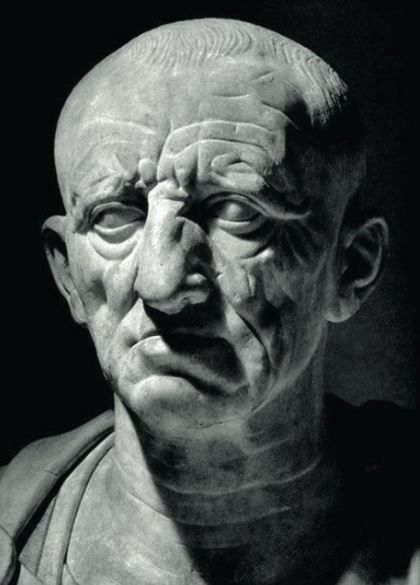
Cato the Elder

Carthāgō dēlenda est! | Carthage must be destroyed!

Cato the Elder (234–149 BCE)

Those other options, opportunities to improve our own quality of life in such a manner that the great debate at the heart of this affair would be resolved without any sweeping action to legislate prohibition as was done with alcohol a century ago. Still in our current state our bloated yet fragile national ego won’t allow for ideas to enter the narrative from beyond our borders lest we lower our guard and allow those distantly related bogeymen of Communism and Socialism to invade just as prior generations of proud Americans feared the influence of Papism and foreign interlopers.

Of all the songs from Handel’s Messiah the one that has always stuck with me the most is the aria sung by a female voice “If God be for us, who can be against us?” The chief issue at the heart of this stalemate in public discourse is that one side of the argument claims the blessings of Heaven behind their words, their actions, and their beliefs. To them anyone who opposes them opposes God, and the opponents of God are inherently wrong. Thus, there is no need for debate at all. I do believe that we humans have been fortunate from time to time to be able to interpret the Will of God, look no further than the Beatitudes or the Greatest Commandment uttered by the scholar of the law in answering his own question to Jesus in Luke’s Gospel, 

“He said in reply, ‘You shall love the Lord, your God, with all your heart, with all your being, with all your strength, and with all your mind, and your neighbor as yourself.”

(Luke 10:27, NAB)

Are those public servants honored by the duty and responsibility to fulfill the obligations of their offices who legislate based on a very particular interpretation of the law of the land directed by their own personal religious beliefs truly doing service to the country in their actions? Are they truly acting out of love for their neighbor? This is a time when the durability of the institutions that form the bedrock of this society are being challenged in every direction both by those who see less need for democracy in their own self-interest and by those who seek to reform and revitalize those institutions to flourish for generations to come. 

We must always act with an eye to the past that we build our generation on the precedents that have come before us, but with our mind turned toward the future that we today now build, that it will be a just and kind world for our descendants.

Kitty

Kitty, Easter 2022
This week, I want to tell you about my cat Kitty.

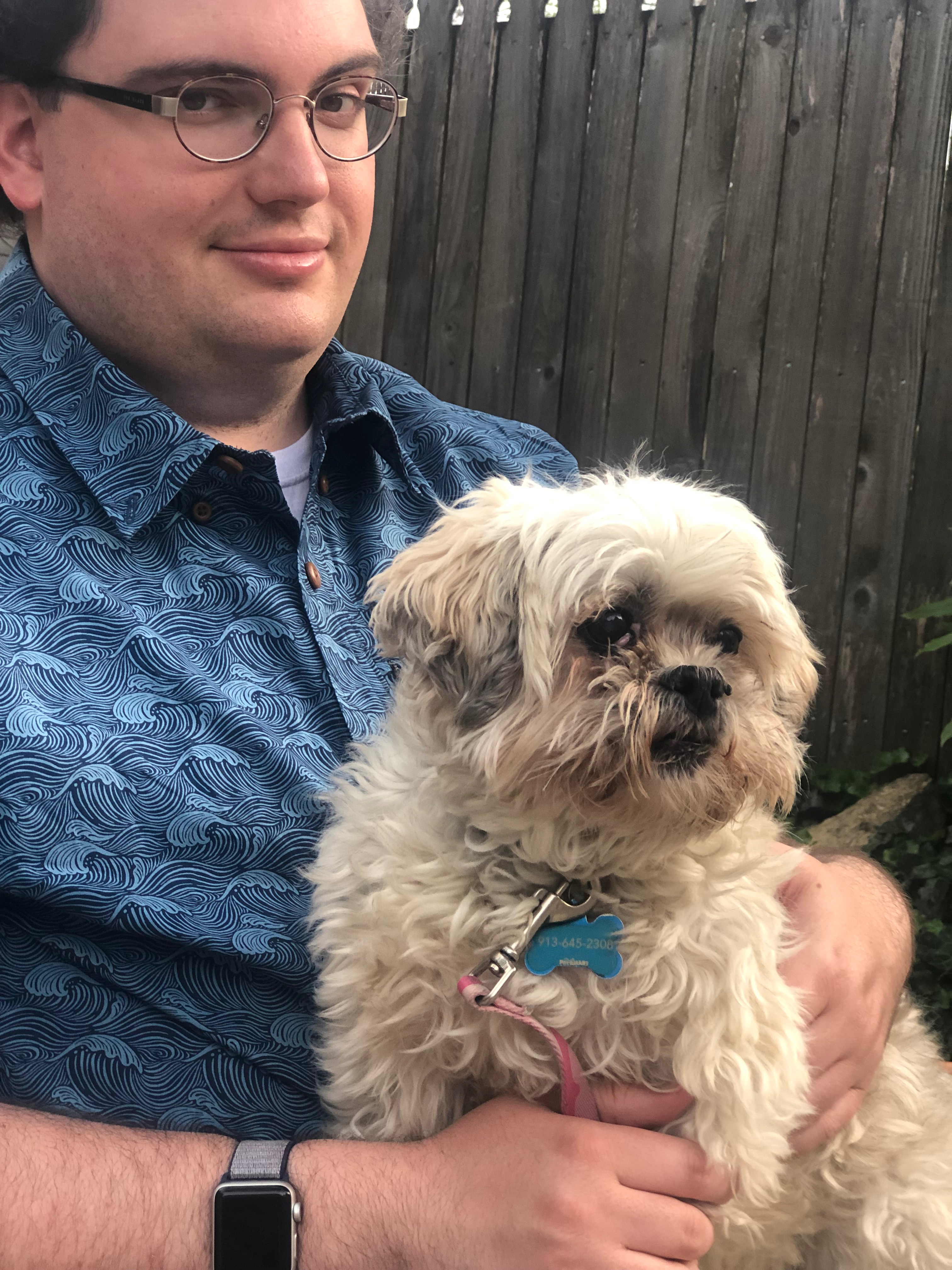
I’ll freely admit I’m more of a dog person. I am fascinated by cats, their social behaviors, their mannerisms, their temperamentality. Yet at the end of the day, I like the unconditional love a dog will always offer if you treat it well. This summer is my first one in over 20 years without a dog in my life, as my best friend Noel died a year ago at the start of June at the ripe old age of 16. Throughout all that time that I’ve had dogs, first Pretty the Beagle, then Spot the Aussie Shepherd, then Caesar the Black Lab mixed with a pony, and finally Noel the Shih Poo. 

I’ve also lived with a succession of cats. First among these was a black cat named Mrs. Norris, who we more commonly called Nora, then a grey cat we rescued who we named Crookshanks. After these two Harry Potter-themed names my Dad and I adopted a Siamese farm cat named Leo who could be very lovable but also was a bully to first Nora. Finally in the Summer of 2009 my Dad rescued a fourth cat, an orange and white cat who we named Kitty Kiernan, or Kitty for short.

When I first met Kitty on that Saturday afternoon, she was standing on an ottoman in our living room at our old house on the farm looking out the window onto the porch and into the western fields beyond. She quickly turned at my entrance and began talking to me, meowing with so much excitement. We became fast friends and over the next year she loved to sit in my lap when I was at the computer or watching TV. She also became best friends with Noel, after all Leo and Crookshanks were friends, and while Crookshanks was kind to Kitty, Leo was a jerk to her from the first moment they met. So, Kitty became Noel’s best friend. They slept together a lot when they were young and continued playing with each other even into their senior years until Kitty got tired of Noel jumping on her and tackling her and retreated to her own parts of our current house where Noel couldn’t reach her.

Over the years I’ve collected a large photo album of what I call “Noel Pictures.” I still look at them from time to time, I’ll freely admit I’m still in mourning for my pup. One of my favorites taken a few days before Noel died is of her sleeping on the old red Victorian sofa in the sunroom in my parents’ house with Kitty sitting on the floor below her looking up at Noel with concern clearly written all over her face. In those last few weeks Kitty came downstairs to check on Noel from time to time, and in the last day she came to say goodbye, sniffing Noel and rubbing her head against the ailing pup’s. The amount of affection those two showed for each other both in their youth and as they’ve grown up together really does touch my heart.

This week I’m reading about the premodern concept of the Great Chain of Being, a hierarchy of nature which places God at the top followed by Angels, then Humans, then Animals, followed by Plants, and finally Minerals at the bottom. This is inspired by both Plato and Aristotle, but especially Aristotle’s biology found in his book the History of Animals (Books 1 & 8). Aristotle classified life forms based on what sort of soul they have between a Rational, Sensitive, or Vegetative Soul. We humans, Aristotle wrote, had all three types of soul in ours. All other animals lacked reason but had the sensitive and vegetative types in their souls. Plants, as the name suggests, are just vegetative in their essence. When I was a freshman in high school my theology teacher said that animals don’t go to Heaven, that Salvation is reserved for humans alone, and even then, only those humans who willingly surrender themselves to God. As I’ve lived with Noel and Kitty, as well as Caesar, Spot, Leo, Crookshanks, Nora, and Pretty over the years I’ve come to see more in their eyes than just a partially completed soul. When I saw Noel die last June, I saw something leave her, the will to keep going, the consciousness that dwelt within her little body for sixteen years left her, and her body fell into a far more restful slumber once her last snores stopped.

On Monday evening, as with every other time when I sit down with my parents to enjoy that evening’s televisual feast (to borrow a phrase from Fawlty Towers) Kitty was quick to jump up onto my lap for some quality pet time. I’ve learned where she likes to be petted and try to do my best at it. Considering how blissful the look on her face often is after just a few minutes I suspect I meet my objective time and time again. This Monday though it went a step beyond just mere bliss. Kitty curled up in a ball on my lap and slowly, softly, gently began to snore as I petted her in one smooth stroke from forehead to the tip of her tail and back again in a circle. In that moment I too started to relax, to breath deeper, and to feel something of the serenity I often feel when I imagine myself floating in air or dream of the delicate beauty of the evolutionary order of the Cosmos.

Kitty conked out, June 2022

I don’t entirely agree with Aristotle’s idea that animals are inherently lesser than us, sure they aren’t human, but we are animals in our own right. We’ve just evolved differently than animals. Whereas Kitty’s daily routine involves napping, watching birds and squirrels out the windows, eating and drinking, and getting petted whenever there’s a free lap for her to lay down on, mine is far more focused not only on the abstract, both the past and the future, but also on affairs far from our home. Sure, I think about meals just as she does, and I long for those moments of physical interaction with the people I love, holding my Mom’s hand or giving my parents hugs from time to time. When it comes to Kitty though, I do enjoy letting her jump up onto my lap so I can pet her. I appreciate being appreciated. I like the fact that even when we do have disagreements (she has bit me from time to time) she always returns to me when she wants to.

I don’t know how much longer Kitty will be around, we never really figured out how old she is seeing as she was found by a friend in the parking lot of an apartment building here in Kansas City. But regardless of how much longer I get to be her friend, she’s taught me a lot about empathy and what it means to care for someone else.

Kitty snoozing on the clock, September 2015.

Anniversaries

The Chicago skyline as seen from the Museum Campus in January 2013
This week, I feel a bit sentimental about the biggest anniversary in my life to date.

23 years ago this week, my parents and I packed up our house in the Chicago suburbs and moved about 500 miles southwest to a farm on the western edge of Kansas City, Kansas. There were so many different aspects to that move from an opportunity for a different sort of life to the chance that I could grow up with my maternal cousins. In the years since we’ve had all that and more. Still, for the first 20 years I approached this anniversary with a bit of a sour attitude. 

I was excited at first at the prospect of moving to a farm, to a place where we’d have horses and all sorts of pets (back then I was really into cowboys as well as dinosaurs like your typical 6-year-old). But as time passed and I began to realize what it meant to be living on a farm on the outskirts of a metropolitan city away from so many of the things I’d come to know and love back in Chicago, I developed a sense of gloom about the whole story.

It took until my mid-twenties for me to fully appreciate how wonderful a city Kansas City is, and how much it had really become my home. As the twentieth anniversary of the big move approached in 2019, I was back in Chicago for a week for probably the first time as an adult returning to my original hometown for business rather than on a family trip. At that point I seemed to be on the verge of securing a position back in that city and felt like all my hopes of the previous two decades were finally coming true. That job didn’t end up panning out, and besides a quick overnight stop in the suburbs on a long drive west to Kansas City from Upstate New York in October 2020, I haven’t been back to the city of my birth yet this decade.

When I was there in January 2019 attending the American Historical Association’s annual conference, I paused here and there between things to reflect on the life I might have had if we’d stayed. Now as an adult having gone through academia I wonder if I might be in a more advantageous position today professionally if I’d gone to high school and college up there rather than down here. Don’t misunderstand me, my education at St. James and Rockhurst was wonderful and something I’ll always treasure. Still, the opportunities of things to study, especially in the sciences, are far greater there than here. In fact, I wonder if I would be in a different field today if we had stayed there than here: planetary science, paleontology, geology, who knows, maybe even anthropology.

It’s curious to me that my interest in history didn’t really begin until after the move to Kansas City. In Chicago we were members of the Field Museum, a cultural icon that we visited easily once or twice every month. My fascination with the past was born in those hallowed halls, first for dinosaurs and in more recent years for the ancient megafauna of the Pleistocene and for anthropology. Without that steady anchor in the natural sciences to keep my interest I began to turn to other things like Roman and later medieval history as well as linguistics.

The Field Museum in its Winter splendor

In many ways, that move impacted me far greater than any other event in my life so far. I became the guy I am today because of it. The guy in the classroom with more complicated loyalties and interests, the one with two favorite baseball teams (the Cubs and the Royals). Yet I’ve realized in recent years that I accentuated the fact that I’m not a native Kansas Citian for a good long while because it was something I could use to stand out from the crowd. Though rather than it being just a bunch of grandstanding, that fact of my life is one of the deepest and most personal parts of my story. Loyalty is something I treasure above all, and my own loyalty to my original hometown, even after 23 years, remains strong. To me, for example, abandoning the Cubs would be like turning my back on a core part of my identity.

That passion is helped by the fact that those first six years contain many of my best memories, like the April Fool’s Day when my Mom woke me up to a clear sky and said, “I took the day off work, and I’m keeping you out of school today. Let’s go to the Brookfield Zoo.” Or the time when some relatives were visiting, and I rode with my Aunt Kay in the back of my parents’ Ford Explorer down the Eisenhower Expressway so all of us could go see the then brand-new Michael Jordan statue outside the United Center. There are the times when I got to go visit my grandparents with my Dad up in Mt. Prospect, or the times when he took me on the Metra downtown to go to the Field Museum (again, that old museum). There are all the summer days we spent on our sailboat, the Arctic Tern, out on Lake Michigan up and down the Chicago lakefront and out to where the skyline fell below the western horizon.

You can understand why then for 20 years I felt like I was missing something from my life. After we moved to Kansas City we went from the big towers and expansive museums and endless suburban streets to big open skies, beautiful sunsets, and days spent remembering what we had before we left the place that to me still felt most like home. I think the farm wasn’t ever really going to feel like home to me, it was too quiet, and as an only child out there I was pretty lonely. Only after we moved into Brookside, the neighborhood where my Mom grew up, did Kansas City really feel like a place where I belonged.

Still, as much as I may grumble about the move it has also brought so many wonderful and dear people into my life. I got to know most of my family after moving to Kansas City, all my aunts, uncles, and cousins on my Mom’s side. I also made many dear friends in school and in daily life, including some who have been a part of this podcast so far and my brothers in the Donnelly Division of the Ancient Order of Hibernians in Kansas. I would not have gotten to know my dogs and cats and other pets if it weren’t for the move. I learned to love my best friend Noel, departed a year ago this month, and became a far better, kinder, and gentler person because of her presence in my life. Kansas City has given me so much, and made me who I am today.

Now as an adult I can see many different paths ahead of me, some of which lead back to that great lakefront metropolis, the beating heart of the Midwest. Others lead me back here to the Fountain City that I’ve adopted as home after a long and sometimes begrudging trial period. Some see me keep working out in the East in one of those great cities, and still more see me move out West to California or stay closer to home in Colorado. Nevertheless, today I could conceivably decide to fly up to Chicago for the day and go walk around those museums and streets that I remember so fondly from my youth. For me the Field Museum today is as much a place of scientific wonder as it is a place of wonderful memories. I’m still a member there, even though I haven’t actually visited in three years. (Thanks, COVID!)The Ancient Greeks had an understanding of time that we are always facing backwards to the past with the future still over our shoulders. I like that idea both as a historian and as a passionate person with a still young life filled with memories. What can I say, I’m always in a sentimental mood.


23 Years Later and I finally bought my first Royals hat.

Creatures of Habit

Photo by Jeremy Bishop on Pexels.com

This week, how we tend to stick to the same things over our lives.

I’m writing this week’s blog post substantially later than I usually do. This past week has been very uncomfortable for me, first with a bout of food poisoning last Tuesday and Wednesday, and now with the continuing aftereffects of it still in my system. So, at a time like this when I feel physically terrible, I often find myself returning to the same old routines and manners that I’ve practiced my entire life. There’s something comforting in watching an old episode of Bill Nye the Science Guy all these years later because it’s nostalgic as well as staying educational.

Last night I found myself craving some good music, the soaring melodies and rich harmonies found in opera. I ended up listening to a couple of things including the Queen of the Night’s second aria “Der Hölle Rache kocht in meinem Herzen” from Mozart’s Magic Flute. For all the hellfire innate in the words––the title translates to “Hell’s vengeance boils in my heart”––there’s one line near the end that caught my eye, “Alle Bande der Natur.” At the moment I thought of “Bande” as in “bonds” or more metaphorically “customs” when in fact it really means “bonds” as in “connections.” So, in my elementary level German I translated “Alle Bande der Natur” as “all bonded by Nature” or that it was a matter of instinct and habit.

My misinterpretation of the German text there brought me to think a bit more about habit and instinct. What sets us off to do what we do? Why for example do some people eat each thing on their plate in turn rather than mix the flavors together? Or why does my cat like to extend her claws when she’s happily being petted?

Instinct is a survival mechanism. If you recognize you’re in a bad situation, you’ll probably do your best to get out of it. That goes back to the days when our distant ancestors were hunted as prey by other larger animals. Perhaps the urge to laugh at other people’s misery, embodied in my youth by America’s Funniest Home Videos and today by a good portion of the content on Instagram and the “Hold My Beer” subreddit, comes from a similar primal satisfaction that it’s not me who’s getting his leg gnawed off by a lion today.

As long as we’re tuned into our own natures, we’re bound to avoid some of the pitfalls that inspired that particular metaphor and survive. I learned the hard way to avoid bad food this past week and am still suffering the consequences now eight days later. On the other hand, my pup Noel learned in which house her best friend the black lab Henry lived and liked to stop and sit at the bottom of his stairs to see if he’d come out to play. We create habits out of experience and grow as a consequence.So, the moral of the story, the greatest lesson to learn here: to quote the Two-Thousand-Year-Old Man himself, “never run for a public bus, there’ll always be another.”

Art

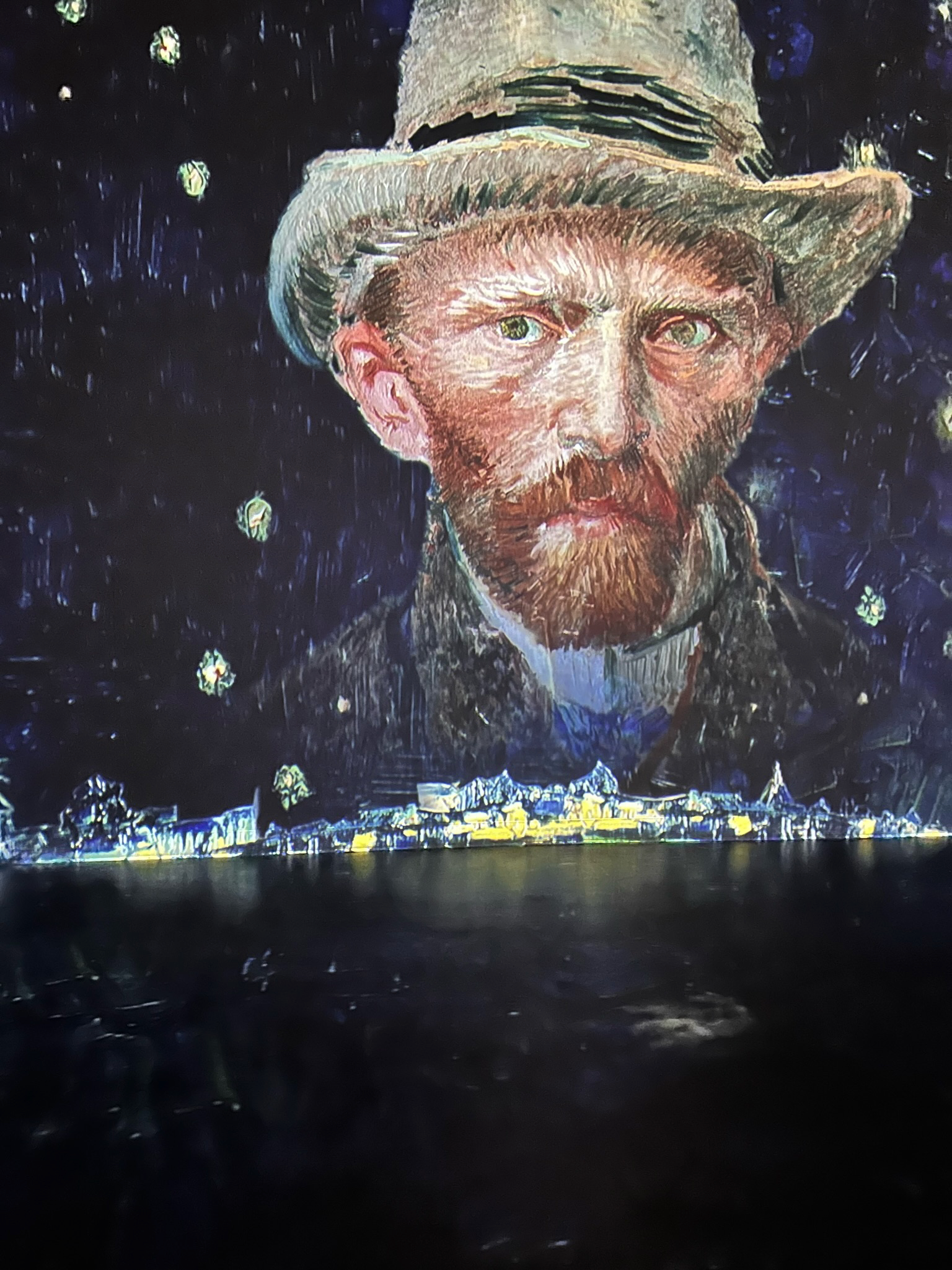
Photo: Tom Kane at Immersive Van Gogh Kansas City
This week, how art impacts how we see the world around us. ~~~ Immersive Van Gogh: https://www.kansascityvangogh.com Claude Monet, Boulevard des Capucines, (1873): https://art.nelson-atkins.org/objects/17852/boulevard-des-capucines George Caleb Bingham's Catalog: https://www.binghamcatalogue.org Thomas Hart Benton's art at the Nelson-Atkins: https://art.nelson-atkins.org/people/2320/thomas-hart-benton/objects "Hard Times Come Again No More" by The Chieftains and Paolo Nutini: https://youtu.be/uPqjQTkEA6g

On Sunday, I went with my parents to see the Immersive Van Gogh exhibit that’s been touring around the globe for the past few years. I first heard about it when I was in Paris in May 2018 and thought about going to see it there but ended up not paying a visit to it then. So, the following year when it was announced that Immersive Van Gogh would be coming to Kansas City, I jumped on the opportunity and bought tickets for my family to attend. 

Then the world changed in what now seems like a prolonged moment as the COVID-19 Pandemic took hold around the globe. The exhibit opening was delayed in Kansas City, and it began to slip from my mind for the next couple years as the storms that shadowed the last few years of the 2010s burst into the troubled times that have been the hallmarks of the 2020s thus far.

So, after years of anticipation when I finally entered the Immersive Van Gogh exhibit this past Sunday afternoon I was awed to experience it, the sights and sounds combined for a truly awe-inspiring experience. We entered the gallery as Edith Piaf’s “Je ne regrette rien” burst over the speakers to the bright yellow hues of the fields of Provence as observed 140 years ago by the artist’s eyes. I took a seat on the floor with my back to a mirror-covered pillar and watched as the images danced across the walls and floor surrounding me.

The exhibit inspired a question: does our art influence how we perceive the world around us, and as a historian more importantly does the art of past generations influence how we today perceive the light and color and nature of past periods? Take the Belle-Époque, the age of the Impressionists like Monet and Post-Impressionists like Van Gogh, do we understand and think of the daily reality of that period in a way that is colored by the works of those artists? There is a Monet painting in the Nelson-Atkins French collection here in Kansas City of the Boulevard des Capucines which dates to 1873. It shows the hustle and bustle of the French capital in a manner that is both of its own time and seemingly timeless in how modern it appears. This extends in my own mind to the point that I’ve imagined the same scene whenever I’ve happened to walk down that same boulevard in the last few years.

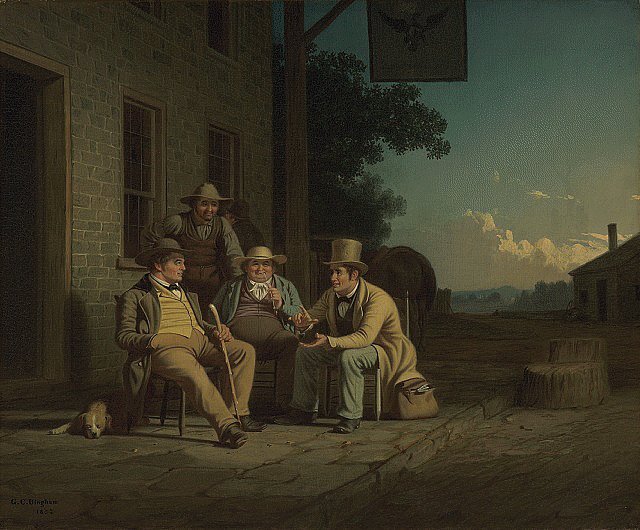
On the other hand, the images that exist of Kansas City from the nineteenth century are largely dominated by black-and-white photographs and the odd painting by the likes of our first great local artist George Caleb Bingham (1811–1879). So, for how many of us are our ideas of say the Civil War largely just in black and white even though the reality was in the same vibrant color as we see now today? Even in my own life, I’ve found that there’s a slight hint of faded color in my memories of earliest days of my life, perhaps influenced by the technology available in the color photography of the 1990s which is noticeably less radiant than the colors available today in our digital images.

George Caleb Bingham, Canvassing for a Vote, 1852, (92.71 x 105.41 cm), Nelson-Atkins Museum of Art

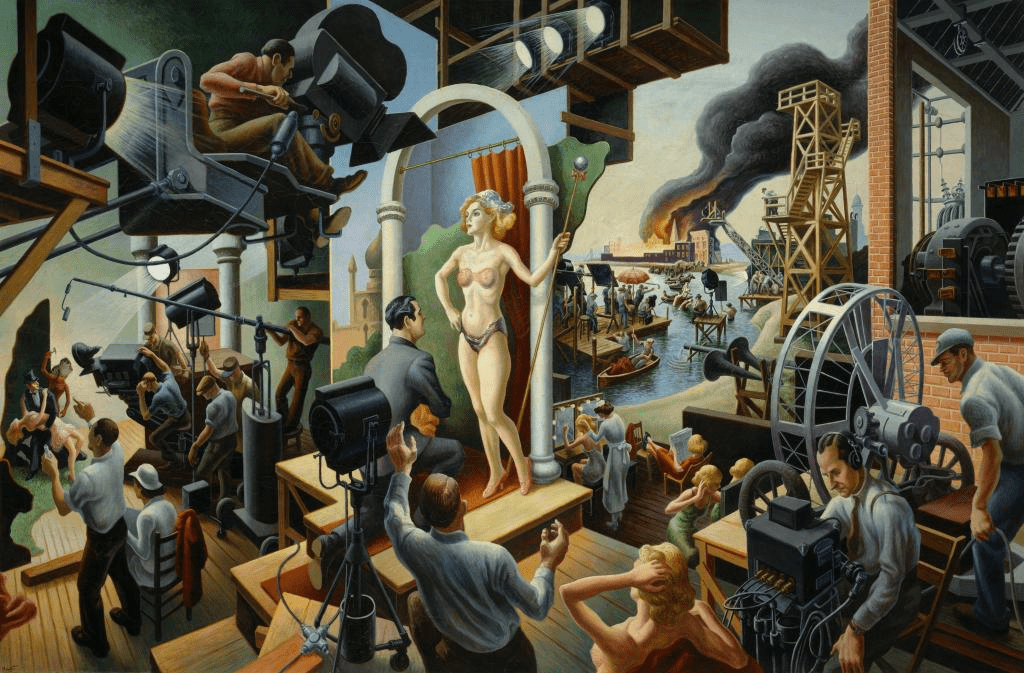
Art at its most fundamental level is a means of communication. It transmits memories from the creator, a historian of their own sort, to their patrons in posterity. Whether that art is expressed in painting or sculpture, sketching or cartoons, music or poetry, theatre or film, and in every form of literature both fiction and non-fiction alike, it is still at its core a transmission of knowledge and information. Through art the dead are able to speak to us still. In art we can experience something of the world that others live, that they see and hear and think. In the paintings of Thomas Hart Benton (1889–1975), in my opinion the greatest Kansas City artist to date, we can see echoes of American life as he understood it in the first half of the twentieth century. I can truly say that his art has influenced how I understood the Depression, World War II, and the Postwar years in a way that is best described by the fact that having grown up in Kansas City going to the Nelson and the Truman Library I saw his art far more often than many other Americans might well have. Through his paintings, Benton communicated ideas about what it means to be American, and the place of the Midwest in general and this part of Missouri in particular in the wider fabric of this diverse country of ours.

Thomas Hart Benton, Hollywood, 1937-1938, (156.53 x 227.01 cm), Nelson-Atkins Museum of Art

So, what sort of message will we in the 2020s leave for future generations? What do we want to communicate to them? In the last couple of weeks, I’ve been thinking of the Stephen Foster song “Hard Times Come Again No More.” Written in 1854 at a time when my home region was embroiled in the Border War known more commonly as Bleeding Kansas, one of the last preludes to the American Civil War of the 1860s, I’ve always thought of “Hard Times” as a song not of the nineteenth century but of the Great Depression, something that I could imagine being sung by farmers fleeing the Dust Bowl here in the prairies for new lives elsewhere. Still, the fact that the stories surrounding that song can speak to different times with common troubles speaks to the power of art. Maybe it’s high time we restore “Hard Times” to the charts, after all what better description of the present could there possibly be?