

Human Goodness – Wednesday Blog by Seán Thomas Kane
Eight years ago, when I was a masters student in International Relations & Democratic Politics at the University of Westminster in London a question was posed in one of my first semester classes by the professor who asked “are we inherently good or bad?“ I raised my hand among the few in the room who argued that we are inherently good. That, at heart, we have evolved to trust one another, and to be kind, not only to our own tribe, our own community, but of those outsiders to whom we are in some way connected, as we are with our pets, or in human terms as we are with peoples from around the globe whom we come to meet on a personal level.
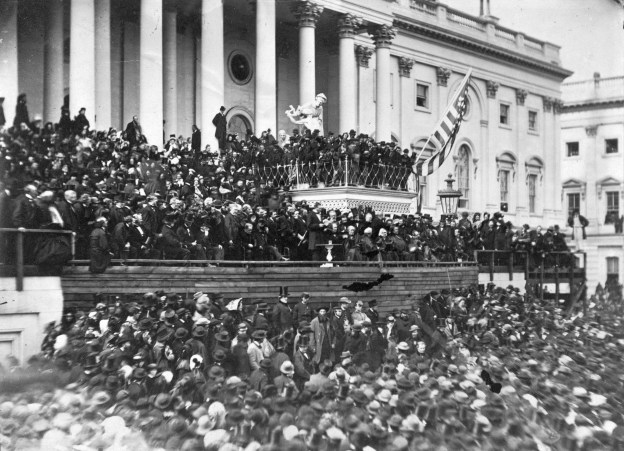
It occurs to me when thinking about some of the great and good figures in recent human history, and even going back several centuries, if not several millennia, that a great many of those figures were killed, their lives ended in acts of evil, in moments of malice. When President Lincoln gave his second inaugural address in March 1865, and called for us to “bind up the nations wounds” and to progress forward with the now immortal words that I have surely used on many occasions here on the Wednesday Blog,
“With malice toward none, with charity for all, with firmness in the right as God gives us to see the right, let us strive on to finish the work we are in, to bind up the nation’s wounds, to care for him who shall have borne the battle and for his widow and his orphan, to do all which may achieve and cherish a just and lasting peace among ourselves and with all nations.”
Yet there on the balcony above Mr. Lincoln in the famous photograph of his second inaugural address that depicts not only the president, but the crowd as well, one can just discern the face of John Wilkes Booth, the man who would assassinate Mr. Lincoln a little over a month later on Good Friday. Clearly then, Mr. Lincoln’s, message of reconciliation & reconstruction, not only of the nation’s infrastructure but also for the government to be more just, put pressure upon the nation’s heart to recognize that when we say all men are created equal that we mean everybody. Clearly that message didn’t resonate with his assassin. So where was the inherent goodness in John Wilkes Booth?
I think if we are to describe some innate human goodness to all of us, then we ought to recognize that it exists deep within us. We are like the strata that make up Earth’s geology, each layer representing a different age, era, or epoch in the long history of our planet in our own lives; our experiences with each passing moment add layers one atop the other, until as Aristotle wrote 23 centuries ago, we become truly wise through our lived experiences. So, our innate goodness must exist be deep within. I’m reminded of the line at the heart of the Return of the Jedi, the third film of the original Star Wars trilogy, in which Luke Skywalker tells everyone around him that he knows there’s still good in Darth Vader, despite all the evil that the fallen Jedi had committed. C.S. Lewis remarked in the final book of his Narnia series, that the eldest of the children who are the central characters in the Chronicles of Narnia, Susan, did not return to Narnia for the last battle, because she no longer believed in Narnia, for she had grown up and “put away childish things” to quote Saint Paul. Yet the best of us, or so our great allegories seem to tell us, have never really forgotten that childlike innocence, though some have never really been able to experience it, after all not everyone has the same happy childhood.
I believe that at the end of the day, the best way that we can truly find our goodness, our kind nature, is in the simple fact that at some point along the way we all want to be loved, and I would imagine for the most of us we all want to love others. I often wonder in the vein of Machiavelli‘s Prince if I do things out of a desire purely to love others, or out of a desire to make myself feel good, or out of a desire for others to love me? And which of these three is perhaps lesser than the others or is there a lesser and a greater, or are these three perhaps all equals? Is it okay to be selfish it for the right cause? I don’t know.
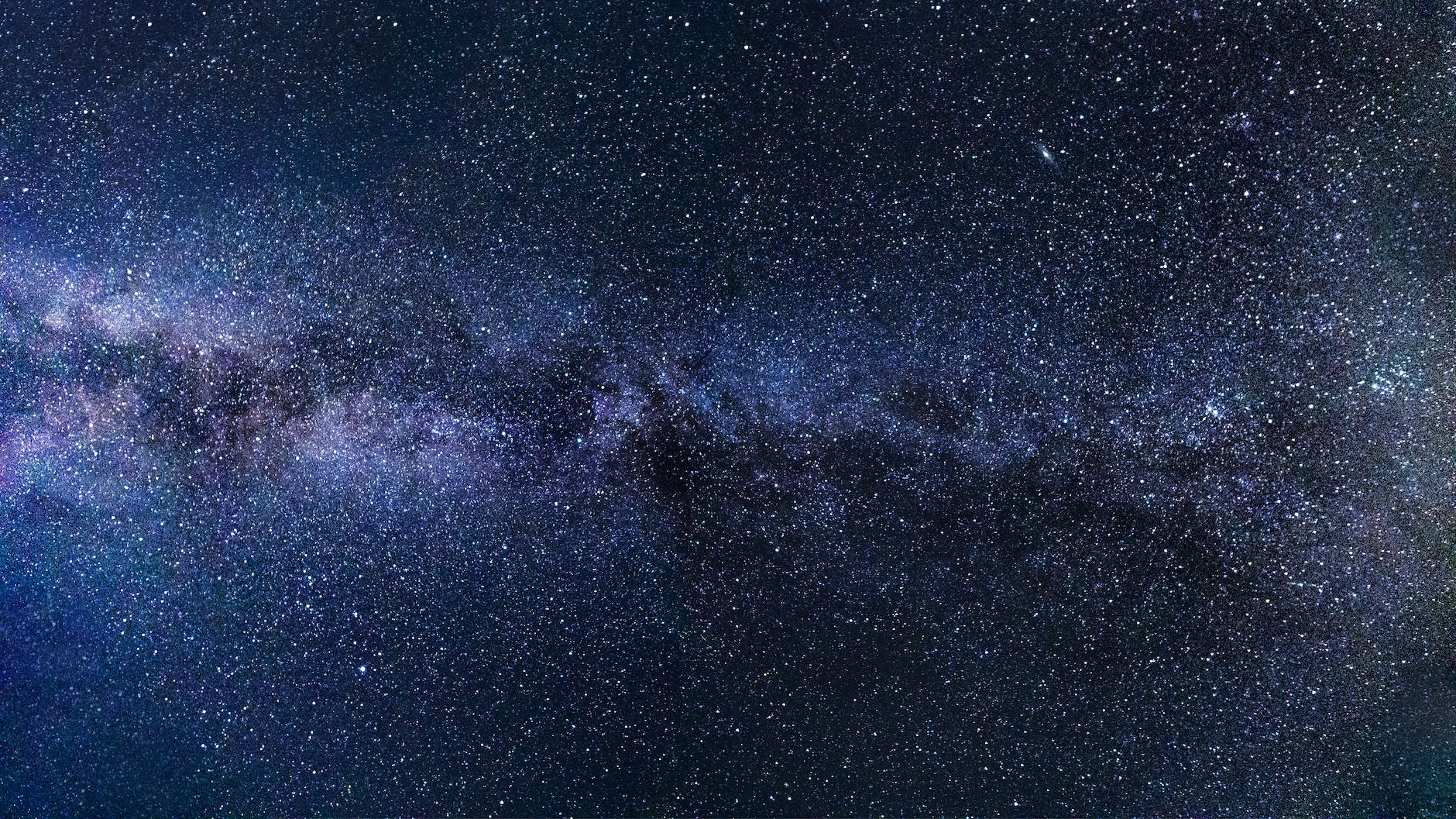
There certainly should be limits to vanity, I for one am not terribly fond of taking selfies, nor do I really care for watching videos of other people watching videos. Still, as many of the self-help people will say some degree of self-love is a good thing, and to paraphrase the old saying that appeared carved in the mantle above the great doorway at the ancient Library of Alexandria, “know thyself,” one should be able to love oneself before one truly begins to appreciate the people around them and by extension world in which they live. So perhaps it ultimately comes down to one’s environment if we live in a world where you’re taught that negative news and emotions and violence ought to be glorified then that’s the kind of stuff we are going to do. However, if we look at the world as a place full of beauty and wonder, and if we find a way to appreciate the great variety of humanity and nature at large and the incomprehensibility of the Cosmos, then I think we can truly begin to define ourselves by our inherent goodness again. What a wonder it is to be a part of our human family.


 Wednesday Blog by Seán Thomas Kane