Monthly Archives: August 2023

The Guy

This week on the Wednesday Blog, some thoughts on what it means to be a man in 2023 inspired by Greta Gerwig's new film Barbie. Yes, there are a handful of mild spoilers. — Click here to support the Wednesday Blog: https://www.patreon.com/sthosdkane

This week on the Wednesday Blog, some thoughts on what it means to be a man in 2023 inspired by Greta Gerwig’s new film Barbie. Yes, there are a handful of mild spoilers.

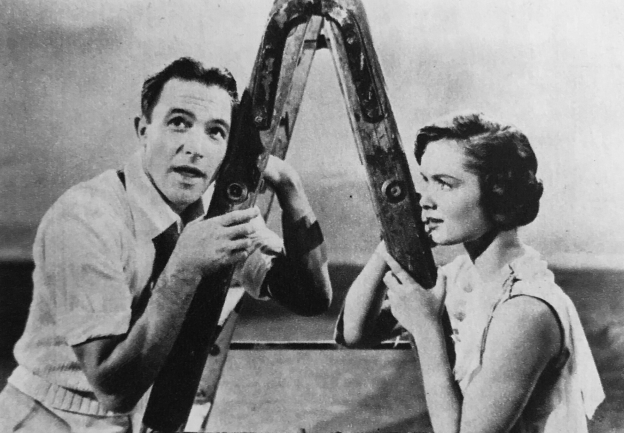
On Saturday I went to see the new and widely acclaimed Barbie film after many weeks of hearing glowing reviews. I was particularly caught by one review in the New York Times which discussed how a dance scene featuring multiple Kens, Barbie’s male companion, was reminiscent of and even nodding towards the work of the late great Irish American song and dance man Gene Kelly, one of my favorite actors. So, I went into this movie with that anticipation at seeing something approaching Mr. Kelly’s work again on the screen, and with a good humor about the whole experience knowing this is a film about a toy.

And yet as the film progressed it became clear that it was not just a film about a toy but a story about the roles which people hold in society as they are traditionally inspired and determined by their gender. It became clear to me that this film was both deep in its commentary and clever in its camp. I particularly loved the moments where the characters in speech more so than in action broke the fourth wall and joined the audience in the joke. Yet the core idea that there is a parallel world off the Pacific coast called Barbieland where the dolls created by Mattel live happy lives knowing what good they’ve brought to the human world is something with far older roots.

To me, this idea fit in with a sort of sense of Heaven, a land beyond our mortal imaginings where those who have made a good impact on the people around them end up and rest on their sunny laurels side-by-side with other do-gooders. The idea of a place where the streets are paved with gold, and where people go to be good neighbors fits too with the idealized image I admit to conjuring in my own imagination of California, especially on our darkest, coldest, and snowiest days here in the Midwest. I know all too well that this sunny dream is far from the reality of the Golden State or any other place on Earth, yet without that dream how can we bring such a place to life?

In the Barbie film, the characters that I felt were intended to be my proxies in the story were the Kens, Barbie’s doting male companions and besides the one Allan the only guys in Barbieland. To be honest though, none of the Kens really stood out to me as someone who I could recognize in myself. Sure, when I’ve had crushes or begun to feel affection for a particular woman, I’ve longed for her to notice me and signal that the affection is mutual, yet the idea that men ought to be like the Kens in the same way that each Barbie represents a different type of accomplished woman feels limiting to me.

I actually felt more of a connection to the one Allan in Barbieland because he at least could see what was going on around him, in part because of his isolation from everyone else. Michael Cena played the awkwardness of being the only person with a level of realization about the goings on around him that fits those of us who often watch the social scene unfold around them. What struck me most about the Kens was how extreme their swings were, from docile doting admirers of the Barbies to overacting and overcompensating defenders of patriarchy with a strange fascination for horses. Ryan Gosling’s Ken in particular seemed to draw a great deal of his character, especially when he took over Barbieland, from William Zabka’s character Johnny Lawrence in the Karate Kid franchise and most recently the wonderfully silly Cobra Kai series on Netflix. All the flaws of that hypermasculinity best characterized in the muscle-man action films of the 80s was visible in Gosling’s Ken, and this represents one image of the ideal American man which we still see in our society. He’s the kind of person who has the potential to gain power or high status in business yet lacks the depth and self-awareness to make him an emotionally mature adult.

I’ve known a lot of people like this, and in many ways, they are one side of the big spectrum of what I’d call the guy, the average American male. I’ve been thinking about writing something called The Guy for a while, and I may still go all the way and write a novel with that title describing an average man just trying to go about his life. To me, when I think of this guy, he’s somewhat of a cross between Harold Lloyd’s character in The Freshman (1925), or Robert Petrie on the Dick Van Dyke Show, or more recently Adam Scott’s character Mark Scout in the recent Apple TV series Severance. The guy is the straight man in his world, yet he could be the comic to those around him and not be in on the joke. He sees his life as not quite what he dreamed of but he appreciates what he has and dreams of better things. He might be in a relationship or married, he might be gay or straight, he could be of any ethnic or racial background, what’s important is that he knows who he is and has found a culture to make his own.

In some ways, I tend to think of myself as the guy. I certainly haven’t had a normal American story, I’ve traveled and am only now at 30 starting my first full-time job, yet in many ways I recognize that I have less control over the world around me than I’d like, and so I hang on to what I can and go with the flow. The guy relies on others, whether consciously or not, and appreciates being seen and heard, even if he may not be comfortable admitting it. The guy might like watching sports but isn’t necessarily an athlete. All around, the guy is the Illinois of American males, about as ordinary and run-of-the-mill as you could imagine with some interesting bits here and there in his life.

So, watching the Kens take the stage together in that Gene Kelly-inspired dance number at the end of Barbie, I got what they were trying to do, but they were all on such a far extreme end of being a guy from me that I had a hard time emotionally connecting with them. But then again, they represent the ideal American male in our popular culture, the popular guys in school who became the fraternity brothers in college and eventually the corporate executives in their careers. That’s not me, and I’m okay with that. I like it when I see other people accept that they don’t fit this ideal definition of manhood, yet I worry when some who do accept that fact then also lose interest in trying to better themselves, when they lose interest in becoming their own ideal self. That goal should never be forgotten for the sake of convenience. The best thing about the guy, above all else, is that in his finest moments he remembers to dream of better tomorrows, and will even find a way to make it happen. 

Our society needs guys like that to keep imagining a better future and how we can make that happen. They are the ones who Aaron Copeland honored with his New Deal era Fanfare for the Common Man. When I picture the guy in my mind, it is often in the style of the New Deal artists, the WPA painters whose murals decorate many public buildings across this country now 90 years after the New Deal began. Like all of Gene Kelly’s characters, the guy can dream, and will be remembered as a someone who makes those dreams come to life.

Mirrors

This week on the Wednesday Blog, how I've learned to deal with stage-fright and in some cases overcome it. — Click here to support the Wednesday Blog: https://www.patreon.com/sthosdkane

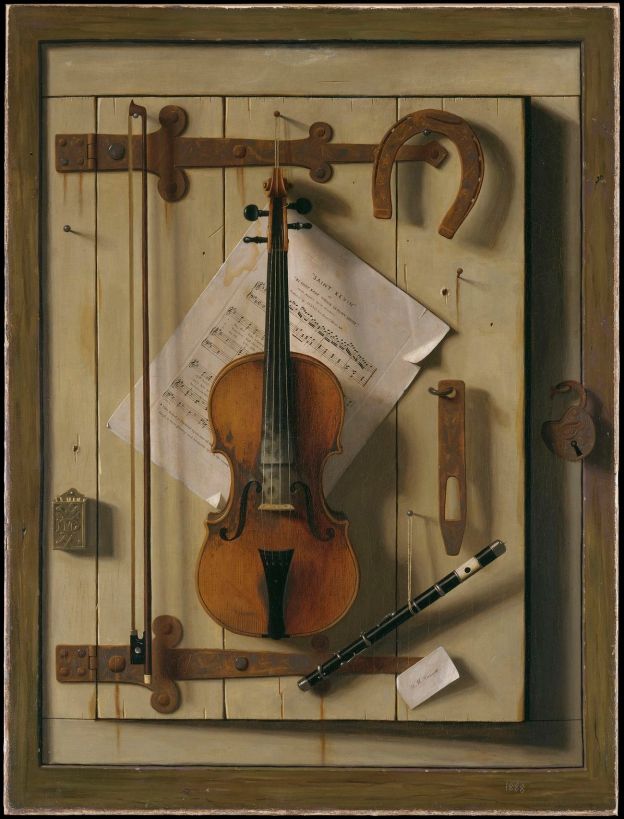
For a few years starting when I was thirteen, I took lessons in traditional Irish music from a good friend named Turlach Boylan who is quite talented on the flute, tin whistle, and mandolin and plays locally in sessions. I had potential but never really got there, in part because I didn’t practice as much as I should’ve, yet also in part because I kept running up against a sort of translucent wall of my own self-consciousness. After a while when we were both around during sessions, Turlach would invite me to come join the circle and play with the other musicians. I’d try but often when I’d hear someone else playing with me, I would burst into a big smile and have a very hard time playing my tin whistle with the group.

There’s something about playing an instrument with a group of people in such a loose and lively manner as in a trad session that has been hard for me. This week I read a story in Commonwealabout the joyous experience of all the craic that goes on in the trad sessions that the author, Commonweal‘s managing editor Isabella Simon, had joined in New York City. It made me think more that perhaps in that context my fear was less a shock at the fact that I was playing with other people but the worry that I’d mess things up, play the wrong note, or not know the jigs, reels, polkas, waltzes, and airs they were playing. As Ms. Simon wrote the talent of a session player is judged not in their virtuosity but “by whether the listeners are tapping their feet.” That clicked for me because that is how I approach teaching and lecturing, the expertise and skill that I exhibit in the classroom is a big part of the puzzle, yet it is one half of the whole picture which is best filled out by a comfort and ease with entertaining my audience and keeping them engaged.

I’ve found that difficult the last few days as I’m starting my new teaching job, sometimes I’m not sure my messages are getting across, especially when I have to shout over a room of excited students. Still, it’s not an unfamiliar lesson for me. One story I’m sure I’ve told on this blog before is about an icebreaker presentation that I gave in my Junior Year AP English class in high school, where our teacher asked all of us to bring in baby pictures of ourselves that she could hang up on the back wall of her classroom. When I got up to present my own picture, I let slip that I had considered bringing in a picture of a monkey to say that “I was a very hairy baby,” a line I think I partially stole (lovingly indeed) from Father Ted‘s milkman episode. Still, the picture I showed to the class was of a very large ancient tree on the grounds of Canterbury Cathedral with my Dad and I barely seen near the base sitting on a park bench. My classmates laughed at the whole routine, and I returned to my seat at the end of it feeling really good about myself; my fear that they’d all be laughing at me was avoided by telling the joke rather than being the joke.

In my teaching, I like to keep things loose, to have more of an improvisational style that changes to fit the room. That worked well at the university level and is kind of working here with the middle schoolers, but with more guidance from myself to make sure they’re doing what they need to be and getting the correct information about the day’s subject in the moment. I tend to not have the same kind of stage-fright that I used to, I can usually get up in front of a crowd and say what I need to, yet I do judge the room every time. There have been moments when I’ve started talking and I can immediately tell most of the people in the room either don’t care or actually are sitting there against their will. In those cases, I keep things brief. If I can play around with an audience though I’ll have more fun and will weave different stories together.

I love music, from the structured virtuosity of a fine orchestra like our own Kansas City Symphony to the fluid vitality of an Irish traditional session and all the great jazz in between. I love how it can express things that mere words could not annunciate. Yet where Irish music shines is in its ability to keep that conversation, no matter how joyous or sad, beyond one tune and into the next. In that moment the memories of generations of musicians can be heard, their voices echoed in the instruments and songs of their students which keep this rich tradition alive and well.

The lesson I’ve learned in all of this, which Ms. Simon’s story clarified for me, is that all life is a performance, and in the moments when I can relax and see past the mirror in my mind, I’ll be okay. In all the things I’ve tried for personal enrichment, from learning French and Irish to learning how to skate on ice after the Pyeongyang Olympics in 2018 to standing on stage in front of a full house, I’ll be okay as long as I don’t think about the fact that I’m putting myself out there too much, taking that risk of ridicule. My stage-fright will only ever be experienced by me and me alone. And at the end of the day if I’m comfortable with my own performance, if I play to the internal audience as well as the external, then I’ll be happy. To paraphrase something the gentlemen of the Monty Python troupe once said, “we only write jokes that we think are funny.” In those sessions, I’m playing not just for my own ear, but to be a part of a circle of friends united by our common musical language, at ease with each other’s company, rejoicing evermore in that fine moment.

Listen!

This week on the Wednesday Blog, I've decided to write about some of the advice I'm thinking about as I prepare to teach an entirely new age range in this new school year. — Click here to support the Wednesday Blog: https://www.patreon.com/sthosdkane

Some of my friends will talk about their favorite stories or even verses from the Bible. I never really have a favorite, the Song of Songs often comes to mind for the lyrical beauty of the verse, or there’s the Exodus story that captured my imagination as a child, aided by the powerful 1998 animated film The Prince of Egypt. At one point I joked it was the final line in the Book of Revelation merely for it just being the very end of the Scripture. A decade ago, in my New Testament Greek class at Rockhurst I wrote an essay on the original Koine Greek text from Luke’s Gospel where Jesus tells the people that the greatest commandment is to “love the Lord, your God, with all your heart, with all your being, with all your strength, and with all your mind, and your neighbor as yourself.” (quoting here from the English translation that I grew up with the New American Bible approved by the US Council of Catholic Bishops).

These days my own vision of my faith tends to reflect that same line from Luke’s Gospel, yet just as often I keep returning to a story of the Prophet Elijah waiting on the slopes of Mount Horeb to hear a message of Divine inspiration. In succession he feels a “strong, rushing wind” followed by an earthquake, and then a roaring fire. After all of these Elijah heard “a tiny whispering sound,” which he recognized as God’s presence. In all the cacophony of our world and the proclamations of truth with such a clamor that the voice grows hoarse, and the ears ache we often forget the simple beauty of just sitting and listening to nature, to ourselves, and to each other.

In my own experiences, one of the great messages I’ve felt has been “Listen!” uttered in an exclamatory yet soft voice. Nothing more than that, just “Listen!” It’s something that I try to do better today than I have in the past, and going into this new job teaching 10-14 year olds history and geography at one of the local Catholic schools, I am reminded more and more of the need to not only impart what I know about my subjects to my students but to cherish them, and demonstrate my care for them and their needs by listening to them and paying attention to what they need to succeed in my classroom. They will not grow as people if they aren’t given that attention and care by the people responsible for helping them along their way to adulthood.

I don’t remember as much as I’d like from my own middle school years, I’ve been trying to dredge up more of those memories as my work shifts from my home office to my classroom, to better judge my own actions and decisions based on what I loved that my middle school teachers did and on those things that I wish they’d have done better. In my university teaching I’ve endeavored to speak to each student in their own way, to reach them personally and ensure that they are thriving in my classes. My own university memories are far fresher, and continue to be written in fact, which makes that adaptation of the lessons that I was taught far easier. Here though, it’s been nearly 20 years since I started middle school, and so these students who I am now meeting have far less in common with me than I do with my 18 to 22 year old university students.

In my life to date I have often had to adjust my speech and style to be understood by the people around me. These have gone from more drastic shifts like speaking an entirely different language when I’m traveling to more subtle changes in adopting the words being used for one thing or another by the people I’m speaking with. I’m quite conscious of my own speech thanks in large part to my fascination with language and all its intricacies. 

One thing that still troubles me in English, my first language, is reading strings of letters aloud using the letter names rather than just pronouncing words. This is especially troublesome when I have to read my email address to someone over the phone. 99% of the time the person on the other end of the line misses half of the letters in my email address, leading me to prefer to use the NATO phonetic alphabet in this instance, yet for some people that doesn’t help in the slightest. Using the same vowel sound in the names of most of our letters the “ee” as I’d write it phonetically in English just doesn’t help. For one thing, we use that letter “e” yet when that letter is spoken in a regular word it rarely is pronounced “e.” So, as much as I try to ease communication with the people around me, I feel let down by the very language I speak.

In a more general fashion though we tend to not fully listen to each other for all the things each of us have to think and worry about on a given day. I get it too; I’ve got three jobs right now and a dissertation near finished. Yet I know how wonderful it feels when the people around me listen to me, so why would I not extend that same joy to the people who I’m with on a daily basis? One of my favorite aspects of that film The Prince of Egypt is that when Moses hears God’s voice in the burning bush the voice he hears is a variation on his own voice played by the actor Val Kilmer. We ought to listen to one another because that’ll give us enough pause to listen in general. There is so much there for us to hear.

And I dearly hope that we can grow out of what Carl Sagan called “our adolescence as a species,” as humans. Deep down, I do believe a lot of the problems and cataclysms we seem to be marching lock-step towards would be avoided if we just stopped and listened to each other.

In the Field

This week on the Wednesday Blog, how the pandemic made permanent somethings that were once reserved for fieldwork. — Click here to support the Wednesday Blog: https://www.patreon.com/sthosdkane

I never drank much water throughout the day in elementary school because our breaks were few and far between, and I didn’t want to have the discomfort of needing to leave the classroom on a regular basis. I followed much the same model through my high school years and into my time as an undergraduate, only really bringing water or tea with me to class when I was sick or if I was having lunch in the back of the room (I was a triple major, double minor for most of my college years after all). 

Things began to change when I moved to London and found myself in a sort of limbo between feeling like a resident and constantly being on the move from one place to another in that city. Having classes in different buildings several blocks apart; I started getting bottled water here and there. It wasn’t until I started my doctorate at Binghamton that I got a reusable water bottle to carry around with me from my office to my classes and just in general daily use. With the start of the pandemic a few months later, it became ever clearer that drinking more water than I’d traditionally done would help offer some protection from COVID-19, and all the other illnesses that I tended to catch seasonally from colds to the flu to occasional stomach bugs.

Today then, unless I’m home where I still drink out of a glass, I’m always carrying a bottle of water. This is something that I first really learned about over the summers when I was little when my parents and I would go out to a dude ranch in Pike National Forest. On our daily rides into the mountains everyone was encouraged to carry water. I usually carried an old fashioned round canteen, a style that I kept using by and large through my scouting years. It’s only been around the advent of the pandemic that I’ve stopped relying on hallway water fountains or vending machines and instead always carrying my own water with me.

This speaks to me of a normalization of things that once were reserved for fieldwork, travel, or moments when domestic answers to big questions weren’t as helpful. In the last few years, I’ve begun to buy more shoes of different styles, snow boots which inspired the hiking boots that I bought at first for a trip to the high desert of the Colorado Plateau and now wear when necessary, on muddy and icy days. I see it in how gym shoes and athletic clothing is now fairly ubiquitous as everyday wear. 

The boundaries which our society developed between compartmentalized situations and uses have slowly worn down, we’ve become less formal in many respects. All of this sped up with the pandemic when our domestic and public lives intersected in a time of work from home. These boundaries were helpful, I for one want to keep my work at my desk and save time every day to spend beyond its confines, yet there is also so much we can learn about ourselves if we allow the compartments of our lives to intersect and inspire each other.These days, it’s hard for me to leave home in the morning without my travel bottle in hand, filled to the brim, ready to go for the first bit of the day. I drink a lot of water now and have seen many of my allergy-related illnesses that I’ve experienced diminish in ferocity. Cheers!

Context is Key

This week on the Wednesday Blog, I want to air a pet peeve of mine about stories taken out of context. — Click here to support the Wednesday Blog: https://www.patreon.com/sthosdkane

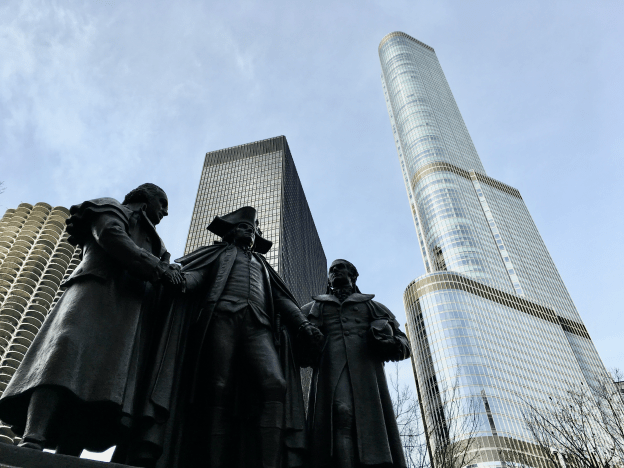
In late December 2017, during one of my family’s regular Christmas trips back to Chicago, my Dad and I were walking along Wacker Drive (upper, not lower) past the Herald Square Monument on the northwest corner of Wabash and Wacker. The monument depicts George Washington with two of the principal financial backers of the Continental Army during the Revolutionary War, Robert Morris and Haym Salomon. I took a picture of the monument with the Trump Tower looming in the background, a pairing of two presidents who in many ways could not be more different in character from one another. My Dad suggested I should learn more about the monument before posting my picture and get the full context of why it’s there in the first place.

As it turns out, the inscription on the monument’s base “The Government of the United States which gives to bigotry no sanction, to persecution no assistance, requires only that they who live under its protection should demean themselves as good citizens in giving it on all occasions their effectual support,” was what made my picture seem so poignant in the first place, and likely had the same effect on many pocket photographers who had walked by in the years since 2016 with their smart phones at the ready to capture the world as they saw it.

That inscription, I learned later that day when we returned to our hotel, was from a letter President Washington sent to the Jewish congregation of the Turo Synagogue in Newport, Rhode Island affirming their religious liberty and emancipation from any separate law code contrary to the custom in most western countries at the time. The context fit the story I was hoping to tell with my picture, yet I was appreciative of the advice to learn more about that monument before making a statement of my own with its picture.

I have many pet peeves, most of which I don’t talk about out of respect for everyone else. I’d rather be known as someone who has positive things to say rather than a complainer, and in those moments when I find myself overly melancholic or acting in a “woe is me” manner, I tend to annoy myself a fair bit. So, it takes a lot for me to want to say anything terribly negative, yet this matter of context is key to something that does bother me. I am annoyed when stories are taken out of the context in which they were created. 

This usually doesn’t happen with novels or movies or TV shows, except now with the deluge of memes using images and moments from these stories to express emotions. I do see this trend played out more in music where the original story of a song might not be as familiar to the people listening to it, yet they sing the words all the same. Context provides so much more color and energy to a story that turns it from a linear narrative with a beginning, middle, and end into a vibrant world crafted by a storyteller that began as a mere idea in their mind.

Pulling a story out of its original context robs the listener of a chance to appreciate the whole depth of the yarn being spun, to see every last fiber of that tapestry being brought together in a great work of art that is inspired by the ideas of its creator. When we break ourselves off from the context of life, we lose a great deal of the beauty of the Cosmos around us. This is why we can sit back and do too little to help our planet as the climate crisis grows ever dire day by day. Last week, several researchers from the University of Copenhagen’s Niels Bohr Institute reported their findings that the Atlantic’s currents could stop moving this century, as soon as 2025, due to rising sea temperatures; earlier in the week the National Weather Service also reported that water temperatures over 100ºF (38ºC) were recorded for the first time off the Florida coast. The currents feed the very life we have evolved to depend on and to be an integral part of. By focusing just on our own story, we have lost the context of the greater world of stories that ours inhabits.

Here in the Midwestern United States the weather tends to move in cycles with some wet years followed by some dry years. In my adult life we’ve seen three wet cycles so far, with heavy flooding on the Missouri River around the years 2011, 2015, and 2019. Since 2019 we’ve been in a drier spell, with some seasonal thunderstorms but not the great floods of years past; yet these last two summers the Midwest has been inundated with flood after flood, striking different regions at different times. Over the 4th of July weekend, there were rainfalls in Chicago that dropped as much as 8.96 inches (22.76 cm) of rain on the western Chicago suburbs of Berwyn and Cicero. A few weeks later on 14 July, Kansas City experienced a storm line that produced minimal tornadoes, what we’re more used to here, but instead a line of storms over 40 miles (64 km) long from north to south which produced winds reaching at least 75 if not 80 mph (120.7–128.7 km/h) winds that brought down trees throughout Kansas City, knocking out power lines and leaving much of the metro in the dark. 

I for one am used to thunderstorms, they’re quite exciting to be frank, yet this one scared me more than any other I’ve watched from the safety of a well-built house. What scared me most was that the windswept rains reminded me of video I’d seen of the Category 1 hurricanes that hit the East Coast every Fall. To me, this proved that the story I’d been hearing my whole life about the weather here in the Midwest was truly changing, that it was not a couple of bad years followed by a return to milder weather. The baking summer heat that followed that Friday afternoon storm, which last week left portions of Kansas City reading heat indices of over 120ºF (49ºC), was the flip side of the same story we heard in December when the extreme Arctic cold winds that swept down from Canada and locked much of the continent in an ice box settled on Kansas City. That weekend we were treating our garage like an air lock, closing the interior house door and making sure everyone who was going outside had all their skin covered before opening the garage door to the -30ºF (–34ºC) blistering wind to go shovel out our driveway of snow and lay down kitty litter (our preferred road salt) to try and break up some of the ice that had formed.

Without the full context, we cannot see the future we are creating for all life on Earth. Visitors to my favorite place on Earth, Chicago’s Field Museum, will likely go see their fossil halls, an exhibit now called Evolving Planet, in order to see the famed dinosaurs––and especially SUE the Tyrannosaurus Rex––who live in those galleries. I love going in there for many reasons, which if I haven’t written about before on the Wednesday Blog, I’ll be sure to write about the next time I visit. Yet, the Evolving Planet exhibit ends with a counter showing the number of species that have on average gone extinct over the course of any given day. The later in the day you leave that exhibit, the higher the number is. In all our other problems, and especially in all our distractions, we forget that we need all the other life that evolved on this planet with us. We forget that their stories are important to understanding our own.I know a great deal more about the history of the Turo Synagogue after stumbling into Sam Aronow’s Jewish History series on YouTube just before Christmas in 2021. Learning other peoples’ histories allows us to have a better appreciation for the entire tapestry of humanity. For me, it presented a greater sense of respect in President Washington’s words engraved in the base of the Herald Square Monument at the corner of Wacker and Wabash. That context only strengthens the story of our national experiment at citizen-led representative government, now nearing its 250th anniversary.