Monthly Archives: September 2023

The Power of Personality

The Power of Personality Wednesday Blog by Seán Thomas Kane

This week on the Wednesday Blog, a look back 200 years to another time of great political change in the United States. — Click here to support the Wednesday Blog: https://www.patreon.com/sthosdkane

Next week, I will be teaching about the Era of Good Feelings and the elections of the 1820s which saw the rise of the Second Party System in my Eighth Grade United States History classes. The Era of Good Feelings was a period of political transition between the two-party politics of the Early Republic between the Jeffersonian Democratic-Republicans and the Federalists led by Alexander Hamilton and John Adams towards the Democratic Party founded by Andrew Jackson and the Whigs founded by remnant Federalists and anti-Jacksonians. This era is so named because it saw one major political party, the Democratic-Republicans, dominate American politics after the decline of the Federalists after the War of 1812. The President of the late 1810s and early 1820s, James Monroe, and his successor John Quincy Adams sought to ensure party politics would never return, yet those hopes soon proved futile.

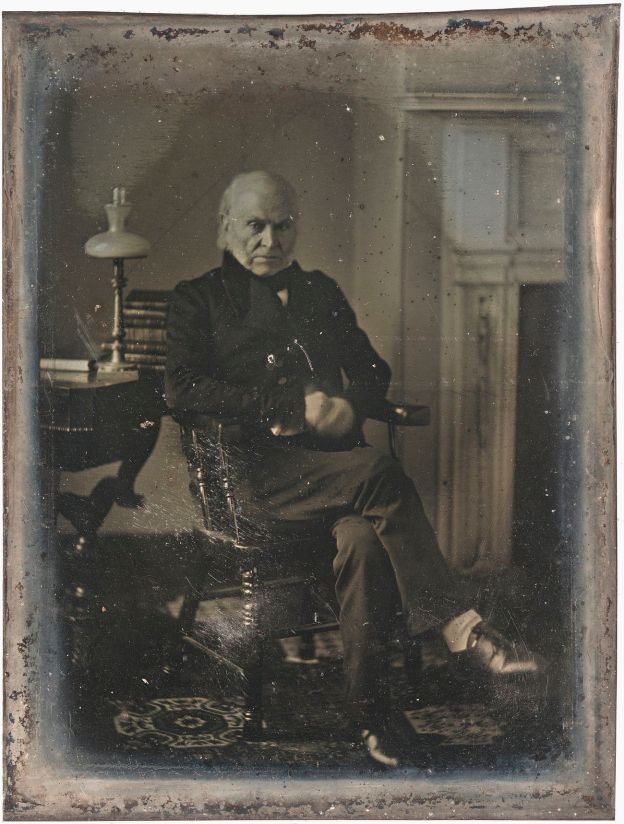
I’ve long enjoyed reading about John Quincy Adams, the eldest son of the second President, John Adams. The younger Adams had many qualities that I admire in a public servant: a great intellectual talent, a Ciceronian love of rhetoric, the patience of a great diplomat, and an openness to change for the benefit of new ideas. Adams was an early abolitionist and supporter of women’s suffrage fifty years before the passage of the 13th Amendment and a century before the 19th Amendment became law. Adams even tried to found a national university and a national observatory, as well as get the United States to adopt the metric system. 

Sadly, none of these things happened during his administration, which ended in failure when his old political rival of 1824, General Andrew Jackson, returned with a populist fervor that elevated the Tennessee planter to the Presidency in 1828. This week as I’ve been making my slides for next week, I’m struck by the clarity of choices in the Election of 1828, and how those choices were between an incumbent who ran on policy and a firebrand outsider who ran on personality. It’s a familiar election narrative, yet it provoked a new conclusion about our current political stalemate between 2023’s Democrats and Republicans than what I had considered before.

Whereas the far-right of the Republican Party has a loud and defiant outsider candidate to rally behind to promote their vision of America, no other faction in either the Republican or Democratic Parties have the same kind of clear leadership. The parties are in a moment when few unifying voices can be heard, when there is always something about the current roster of politicians that leaves more voters choosing between “the lesser of two evils” rather than for a candidate they genuinely like.

Now, I’m biased in this monologue that I’m writing this week: I would have gladly voted to reelect John Quincy Adams in 1828, and not just because I don’t care for Andrew Jackson. Adams is one of my favorite presidents for all the reasons I included above; and his status as one of the fathers of the Whig Party, a preeminent predecessor of the modern Republican Party, shows how party philosophy changes with each successive generation. Still, while many in his day and now might discount the idea that John Quincy Adams had a strong political personality, I suggest we look to the politics of the early republic to find a guide out of our current quagmire.

Having a political figure who can unite a broad coalition behind their own banner, someone who is well liked by a majority of the voting public, is a way to move out of a period of uncertainty and nigh political chaos into a restored stability. The recent political history of the United States has elevated some who could fit this model, yet the extreme levels of bile flung by one faction at another leaves any sense of partisan unity, or better yet partisan magnanimity, far from certain. This leader should be able to bring this wide coalition together yet be humble enough to practice servant leadership, and remember they are in their role as President to help and guide the American people.

The great challenge of our time is to find a common purpose where we have long seen what divides us. It is a challenge which I know we can overcome, a hope which I believe we can realize.

The New Frontier

This week on the Wednesday Blog, I try to remember a story for this week that I came up with on Saturday while lost in a parking garage. — Click here to support the Wednesday Blog: https://www.patreon.com/sthosdkane

This week on the Wednesday Blog, I try to remember a story for this week that I came up with on Saturday while lost in a parking garage.

I will usually have a few ideas for the Wednesday Blog lying around in one of several repositories, including my memory of incidents that’ve happened within the last few days or weeks that might make for curious anecdotes for this weekly publication. This Saturday, while I was getting dinner on the Plaza on my way up to my evening shift at the Kauffman Center, I thought of one such idea that at the time seemed golden for this week. For some reason, walking back down the stairs from street level to where my car was parked underground, I found myself thinking about the first line of Captain Jean-Luc Picard’s opening monologue from Star Trek: The Next Generation, identical to the same line in Captain James Kirk’s monologue from the Original Series, “Space, the Final Frontier.” This idea of the frontier sticks with me because my own world here in the Midwest is so very new; where now there are tree-lined streets, parks, and fountains little more than a century ago was open prairie.

At the 1893 Columbian Exposition World’s Fair in Chicago, the American historian William Jackson Turner presented his famed Frontier Thesis, which argued that as of that moment the American frontier was well and truly closed; all land from Atlantic to Pacific was taken, bought, or occupied by some one or another. Turner, a historian at the University of Wisconsin-Madison, made this point to mark 1893 as a major turning point in American history from the age when our culture was defined by the endless frontier extending far out beyond the horizon to a distant and nigh mythic Pacific Ocean and towards a new world where the United States was an island unto itself, with travel from New York to San Francisco possible in a matter of days by rail. Today, of course, the same journey can be made in about 6 hours by plane, and for much of my life I’ve heard of Alaska as the new frontier and, like the two Captains of my favorite science fiction series, Space as the final frontier.

Yet I think there’s another frontier that bears consideration, one which is far more personal to each of us. I stand today looking at my own life and childhood with a great degree of nostalgia, and especially now that I am spending my days with students who are going through those same moments, I often want to connect with them by remarking about how I was doing this or that when I was their age. Yet, it is hard for me to reconcile that these people are living out their adolescent years in the early 2010s and not the early 2000s as I did. Their world is a new frontier for me, one that is far more digital, one that is far more interconnected, and one that is in many ways far more dangerous than my own.

I’ve long thought about how different things would be if I had children for them compared to my own life. If I were to have children this year in 2023, they would be in middle school in the early 2030s and graduate high school in 2041, a full 30 years after I did. This is almost equal to the same gap that I have with my parents, yet to me the cultural and technological differences between even today in 2023 with what I knew in 2011 are in some ways far greater than what I remember being around when I was little in the mid and late 1990s that my parents lived with in their teenage and young adult years in the 1980s. It is harder for me to understand some of this generation because my experiences are far more framed in the world that existed when I was born, and as much as I look forward to the futures that this century could hold, I still feel a close connection to the century that formed my own existence.

This is all a very linear way of thinking about time and even space. It could be that echoes of moments from my own past keep appearing in my present as I experience this new period in my life. The frontier of full-time employment has been reached, and I’ve chosen for the moment to cross its threshold into whatever its potentials may hold. I look back at my life from just a few months ago with some wistful longing for the days before I was constantly needing to be my best self, the days when I had plenty of time to get all of the things I need to complete done. There are always echoes in my memory which announce themselves in the present, from the way the sunlight shines nebulously in the sky on a morning after an overnight rain to the new takes on old hymns we sang in my elementary school Masses each week. I find myself remembering the people I knew and loved in my past and see a great deal of them in those I surround myself with now.

I hope that as I move further into this new frontier I will be glad to see what it has to offer, what ideas it will inspire in me, and how I can continue to grow, hopefully, to become the person who people will remember in centuries long after I and all those around me are gone when perhaps humans will have begun venturing out from our home planet to seek their own new frontiers deep in the void of Space.

Masks

This week on the Wednesday Blog, how we present ourselves to the world around us and in the mirror to our own reflections. — Click here to support the Wednesday Blog: https://www.patreon.com/sthosdkane

This Monday saw the twenty-second anniversary of the attacks on September 11th, 2001. I decided I’d talk about that day and the days and years that followed with my 8th grade U.S. History students as it most closely dealt with their own curriculum more than with anyone else who I’m teaching right now. I told them that to me 9/11 was the true beginning of the 21st century, rather than Millennium Night the year before. That’s because so much of this century has been defined for me by its violence, its chaos, and its terror. This compares to what I remember of the late 1990s as a time of peace, optimism, and wonder from my own childish eyes at the time. I saw the world as a little boy, not noticing most of the troubles or worries of the world, just gazing in awe and wonder at what was before me in the moment.

My early childhood wasn’t a time of blissful ignorance akin to the early moments in the story of Siddhartha Gautama, later known as the Buddha, who knew no suffering in his princely palace until his curiosity led him out onto the street and into the real world for the first time. I knew bad things happened, and that there were people misled into evil. I had seen the effects of death and had an idea of what it was, but none of these essences of our reality set themselves into that visceral sensation of knowing until after that sunny Tuesday morning when the world changed all around me, and I and my classmates in our third grade room on the upper floor of St. Patrick’s School in Kansas City, Kansas were unaware of it all, the great tempest brewing around us on that cloudless day.

Over the last few weeks on my drives to and from my new day job at another parochial school on the Kansas side of the border I’ve been listening to a new audiobook of Andrew Robinson’s A Stitch in Time, a novel following the life of Star Trek: Deep Space Nine‘s beloved Cardassian spy-turned-simple tailor Elim Garak. The audiobook is narrated by Robinson, who played Garak throughout DS9‘s original 1993-1999 run, much to the delight of fans of the show such as myself. I of course had already read A Stitch in Time, and its anthologized sequel the story “The Calling” which was published in 2003 in the delightful collection Prophecy and Change. Let me briefly digress from this week’s topic to say that as much as I loved reading and now listening to A Stitch in Time, Robinson’s “The Calling” remains for me the greatest sequel I have yet read for how beautifully it captures a sensation of peace and resolution coming to a people as maligned by their own poor decisions as the Cardassians.

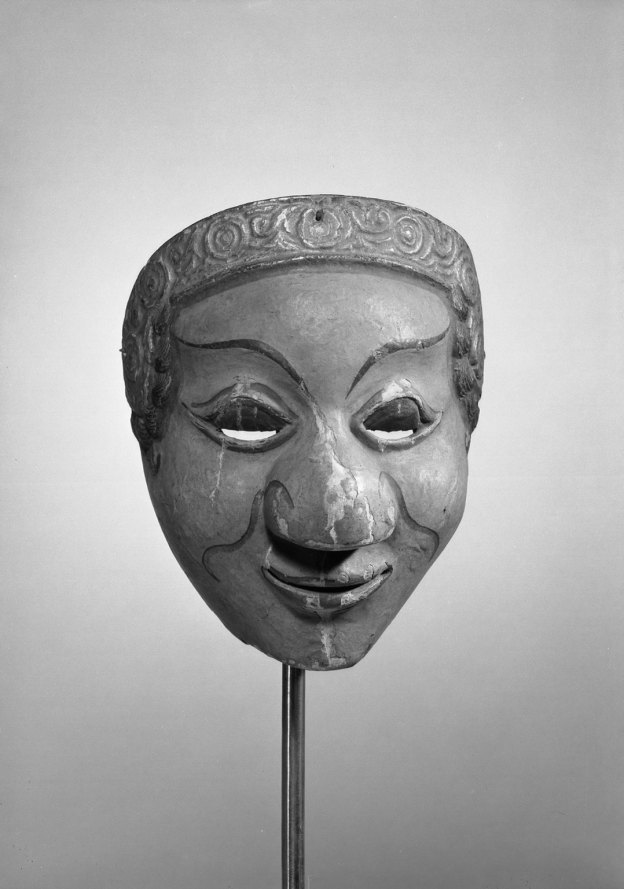
Many moments stuck out to me from A Stitch in Time, yet the pinnacle of these was Garak’s realization that everyone around him, himself included, regularly wears masks to hide their true intentions and weaknesses. These masks might be physical, like an ancient theatre mask or the famed half mask worn by Gaston Leroux’s Phantom of the Opera, but more often they are built in the wearer’s personality and projection to those around them. So, when I was trying to find a conclusion to my recollections about 9/11 this Monday, I thought of Garak and the masks. I told them that everyone wears them, everyone has something they highlight for all to see, and that beneath that mask of power, popularity, ferocity, clownery, or even awkwardness lies another person. That person may be self-conscious or afraid of showing their true face, or they may have just grown used to wearing that mask from a time when they were unsure how to face the world around them. Still, behind every emotion we express there lies another human being who like all of us was once born naked, exposed, powerless, and most importantly innocent of both good and evil.

To me, 9/11 was a moment of great tragedy for what we chose to do in its aftermath. The United States was quick to act in launching the largest manhunt in human history to capture and kill the leader of Al-Qaeda, Osama Bin Laden, and in the process to ensure that countries like Afghanistan under the Taliban would no longer be safe havens for terrorists. The enemy soon shifted, once a role filled by the Nazis and later by the Soviets, a role that had shifted without focus for some time now began to sharpen in relief towards terrorists, but not any old terrorist, only Muslim terrorists were the true enemy. The rage of America fed a deep Islamophobia which still burns bright within this country. Yet as that rage was noticed for its power it was quickly monetized and commercialized, utilized by those wishing for quick victories against their political rivals at home at the expense of compromise and civil discourse. The longest legacy of 9/11 was a new political era in American history driven by fear and hatred of the other, whether foreign or domestic.

The masks that Bin Laden and all those who use terror and fear to achieve their aims may seem powerful in the moment yet quickly crack under pressure from demands for justification. They do not seek to ensure passage to some blissful afterlife like the death masks or sarcophagi of the Egyptian mummies, but instead seek to do the greatest amount of harm to those in the way for the short term gains of greater terror among one’s enemies and greater publicity for one’s cause. To fight these masks, we adopted our own versions of them, donned visages painted red in our own rage, and forgot what each other’s faces beneath those masks looked like.

Beneath each mask lies another person, who fears their own weaknesses and searches often in vain for their strengths within the great dark forests of our fears. It is often hard for me to focus on all the things I’ve accomplished in my thirty years amid all those memories of embarrassment and pain, and this new job working with young people just learning how to fit into their own skin has helped me tremendously to be comfortable in my own as an adult and a sometimes leader. I tried to impart my deepest held belief on all of this in my last point about this week’s somber anniversary before moving onto Monday’s lessons; that we should never celebrate the death of those who have done evil things, for as evil as that person’s choices may have been they were still just another person behind a mask. Perhaps, that mask had become their face, engrained seething onto their skin until they could not remember the face beneath, until they could not see the child they once were, the innocence they once embodied. Theirs is a mask which they could still lower, a false vision of strength they could let go of, if only they didn’t fear the warm sunlight touching their face for the first time in so very long.

Community

This week on the Wednesday Blog, recollections of this past holiday weekend's activities at the Kansas City Irish Fest and beyond. — Click here to support the Wednesday Blog: https://www.patreon.com/sthosdkane

I had a realization this weekend when I was talking to some people who were friends of friends in the Kansas City Irish community: I don’t need to try to be someone else or to accentuate one part of my personality over any other part to fit in, I am who I am and the people around me accept me for it. Growing up I would see my friends and classmates make their name as the big baseball player or the dancer or as the Polish guy who could tell you everything you ever wanted to know about the thing, they were passionate in. For me, I filled several different roles from the history and geography nerd to the Irish guy in the room, to the Chicago kid living away here in Kansas City. Yet throughout all of it, I always felt the need to highlight one part of who I was over all the others in a given moment.

I often get annoyed when I see other people do this, when they talk about the same thing over and over again to no end and will catch myself doing the same thing. So, it is a relief and a moment of joy to realize that I don’t need to be that person, that I never needed to be that person. I’ve always been complicated and multifaceted in my interests, roots, and personality and I am the combination of all those things. 

This weekend saw my return to the Kansas City Irish Fest after five years away thanks to my time in Binghamton. I remembered the Fest being larger in the mid-2010s during my most recent visits, and this year my own participation was somewhat muted by outside circumstances of a new job and a general need to use the Labor Day weekend to rest after months at work on my latest dissertation draft. So, I found myself relieved to be surrounded by my own community, the Kansas City Irish community which is made up of long-time locals like my maternal family, recently arrived Irish immigrants, and transplants from other Irish communities across North America like my Dad and I. It was a moment when I felt like I was returning to something of the normal that I once knew before the pandemic and before I left for Binghamton that I had forgotten I missed.Still, the holiday weekend also saw another momentous occasion in the history of this city beyond the regular annual festivities in our community. On Friday, 1 September, the new aquarium at the Kansas City Zoo opened. I got to tour it with my parents on Labor Day, this Monday, and was awed at the achievement of all the people who conceived of the idea of building an aquarium at the Kansas City Zoo, and of all the people who built it including one of my uncles. This aquarium, while small compared to the Shedd in Chicago still offers a complete picture of life in the world’s oceans and seas from the deepest depths to the coastlines. I want to go back on a cold, snowy winter day when no one is at the Zoo and just wander the halls of the aquarium without all the people around and admire what was achieved in that building’s construction. Surely there will be scientists who will be inspired by that building to pursue careers in marine biology and oceanography. That alone makes me radiant with joy at the future that this our metropolitan community has as we continue to improve ourselves and open ourselves up to new worlds and ideas, and with each passing day to a great many more future possibilities.