Monthly Archives: January 2024

Leadership

I've long wondered about what kind of leader I want to be. This week a coalescing of those ponderings. — Click here to support the Wednesday Blog: https://www.patreon.com/sthosdkane


I’ve long wondered about what kind of leader I want to be. This week a coalescing of those ponderings.


Leadership is one of the great qualities which we yearn for today, particularly in this country agreement among our leaders on the same basic principles of democracy and integrity. We seek the same fundamental truths even while truth is far more diffuse a concept than ever before. To take the first step towards this restoration we need to begin talking to each other again and really work towards rebuilding our mutual understanding of who we are and what we want out of our Union.

Throughout my life I’ve looked up to certain types of leaders: a citizen like Abraham Lincoln, a unifier like Eleanor Roosevelt, and a servant like Pope Francis. Each of these figures took their own stands in their own circumstances of time and place and worked to their own ends, and in some respects they were successful. 

I’ve been humbled to serve as a leader at varying moments and in several capacities and my own efforts are often rewarded by how I can connect with the people around me. I make a point of working with people, of listening to their ideas and trying to incorporate them into something all of us working together can be proud of.

Today then, I want to present to you a paper that I wrote at the end of my time as a Master’s Student at the University of Missouri-Kansas City in November and December of 2018. I presented this paper “Erasmus’s Enchiridion militis Christiani and the Humanist Knight in early-sixteenth-century England” at the American Catholic Historical Association’s 2019 annual meeting, co-current with the American Historical Association conference at the old Stevens Hotel, now the Hilton, on South Michigan Avenue in Chicago on Friday, 4 January 2019. I hope this offers two visions of leadership from the Renaissance, one rooted in Erasmus’s Christian Humanism which hearkens towards the social justice-rooted morality of my own Catholicism, and from the realpolitik of Niccolò Machiavelli in his timeless book The Prince.


Erasmus’s Enchirdion militis Christiani (The Handbook of the Christian Knight) was one of the most popular books of its day in Western and Central Europe; translated into eight languages between 1519 and 1542. Its most popular and widely disseminated edition was that published by Johann Froben in Basel in 1518. The Enchiridion‘s enduring popularity throughout the first half of the sixteenth century is a testament to its relevance at a time when Europe was witnessing tremendous social and religious upheaval through the Reformations of Luther, Calvin, and Henry VIII. The Enchiridion was intended to be a guide for Europe’s many princes, kings, and lesser lords on how to be good moral rulers, how to be “soldiers of Christ” as the title states. Through this role as a guide for good governance, the Enchiridion can be seen as a Christian Humanist equivalent to Machiavelli’s The Prince as a guide in Renaissance political philosophy. In considering the Enchiridion‘s role as a book of political philosophy, this study will consider both the 1518 Froben edition[1], and the 1523 Alnwick manuscript[2], the earliest known English translation of the Enchiridion, from which all quotes derive.

Originally written in 1502, the Enchiridion was said to be inspired by an unpleasant evening that Erasmus experienced in the castle of a knight recorded as “John the German.”[3] The knight’s wife begged Erasmus to write a treatise offering her husband guidance on better manners, thus resulting in the Enchiridion.[4] While the Enchiridion was first published in 1503 by Maartens in Antwerp[5] it did not achieve widespread fame until its first publication by Froben in 1515.[6] The Enchiridion‘s philosophical inspirations come from a number of different sources, both Biblical and Classical, from Moses, Solomon, and David to Julius Caesar and his nephew Augustus to the heroes of the Iliad and the Aeneid. While this work takes great influence from Platonic philosophy, it nevertheless bathes Platonism in a deep bath of Christian theology before allowing it to enter into the main work.

As a work of Christian Humanism, the Enchiridion contains a thorough retelling of the many morality stories found in the Bible. It appears, through the wording of the Biblical quotes in Froben’s Latin edition, that Erasmus used his own revised translation of the New Testament throughout the Enchiridion, which had been published by Froben in its most widely read form in 1516.[7] Nevertheless, Erasmus draws just as heavily from the Old Testament, looking at Moses, David, and Solomon as good and worthy models for the Christian knight of his day. For Erasmus, a Christian ruler should follow closely the teachings of the Church and its Old Testament forbearers. Countering Machiavelli’s view that the two safest manners for a prince to control a population is to either “destroy them or reside there,”[8] Erasmus argued that it is a “grete obomynation … if a man forsake his fynge or theiss lorde [Christ].”[9] For Erasmus, temporal power was secondary to spiritual wellbeing, arguing later in the same chapter of the Enchiridion that the death of the soul is far more consequential than the death of the body, as the death of the soul “is extreme misery,”[10] even greater than bodily death. The key difference here is that Machiavelli wrote as a politician, while Erasmus set his words to paper as a theologian. 

The disparity between the political realities of early sixteenth century Italy and the theological expectations on morality at the same time are stark. Erasmus’s chief concern is the wellbeing of the soul, while Machiavelli’s is the accumulation of power and its subsequent preservation. Erasmus’s knight is a moralist, while Machiavelli’s prince is a pragmatist. Yet where Machiavelli’s vision of rulership is often shown as a testament to the various leaders in Italy during the Italian Wars, Erasmus’s shows the theological ideal of a Christian Humanist ruler, akin in character to Plato’s philosopher kings who should rule in a conjunction between “political power and philosophical intelligence.”[11] Both Erasmus and Machiavelli reference Moses as fine examples of leadership, the former spending the first chapter of his Enchiridion discussing Moses’s role as leader of the Hebrews and his loyalty to God’s will and light[12], while Machiavelli names Moses alongside Cyrus, Romulus, and Theseus as “the most excellent”[13] of princes. While Machiavelli considered striking Moses from this list because he was “a mere executor of things, that were made ordained by God,”[14] and thus less a prince in his own right and more a vassal for a Higher Power, he nevertheless respected Moses’s leadership of the Hebrews and saw him as an equal to Cyrus, Romulus, and Theseus through his deliverance of the Hebrews out of slavery.[15]

Erasmus’s Enchiridion makes great use of Platonic philosophy, referring back to the Athenian academic’s teachings time and again in his work. Erasmus noted in the fifth chapter of his Enchiridion, entitled “Off the dyusitue of affeccions” that Plato and the later Stoics both saw  “philosophy to be nothing else but a remembrance of Deth.”[16] Interestingly, in Froben’s 1518 Latin edition this line reads, “with nothing else [Plato] thinks Philosophy however to be a meditation of death.”[17] The differences in meaning between the words remembrance and meditation is striking. While they are synonyms, the former appears to have changed in meaning over the centuries, becoming today a manner of meditation about a person or event that takes place only after that person has died, while a meditation can happen when they are still living. For the translator of the Alnwick Manuscript, this difference does not appear to have been as profound, and by and large it would appear that, at least in that translator’s eyes, remembrance and meditation are a good pair of cognates. 

Machiavelli’s text looks at death as an inevitability and in many cases a means to an end, especially for men who “forget more quickly the death of the father than the loss of their inheritance.”[18] In Machiavelli’s view, while the living may mourn the dead, they celebrate in the riches left behind by the deceased and seek to improve their own fortunes off of the demise of their fathers. Machiavelli accepts that this degree of swift respect for the dead is tantamount to theft, yet he dismisses any degree of moral ambiguity by noting how common and easy the practice can be, writing, “it is always easy to find cause to take away property,” and “anyone who lives by theft will always find reasons to occupy the things of others.”[19] For Erasmus, death is a moment of great spiritual significance, one to be taken seriously in securing the sanctity of one’s soul; yet for Machiavelli, death is a moment of great personal significance, one to be taken seriously in securing one’s fortune and power from the deceased, whether they be one’s father or another.

If philosophy is merely a meditation on death, as Erasmus argued, then what is life but a march towards that inevitable fate and, if one is fortuitous enough, Heaven, which “is promysed to hym that fighteth swftely.”[20]The Humanist Knight, therefore, should strive to fight their battles with speed, and in doing so keeps in mind the prospect of eternal life in Heaven, and end the suffering of those whom they are fighting sooner. Fighting should only be a last resort, as the Humanist Knight should consider their moral and spiritual wellbeing before taking up arms against another. The promise of Heavenly reward drives the Humanist Knight, sending them into their world with the purpose of ensuring their own moral wellbeing and salvation. One’s soul should be “refresshed with manna from heven and with water that kame oute of the harde Rock,”[21] consuming the heavenly donation and fortifying oneself so that “neither strength neither hie / nor lowe : nor no other Creature shall seperat us from the love of god which is Christ [Jesus].”[22] In this sense, Erasmus argued that the rewards of mortal riches and conquests should not come before the spiritual rewards awaiting the Humanist Knight, faithful to Christ, in Heaven.

In contrast, Machiavelli argued in favor of prolonged war, if only to secure a prince’s authority over their own people and supremacy over their adversaries. A prolonged war, according to Machiavelli, is sometimes necessary to secure the authority of the prince against threats both foreign and domestic, and while one might lose some territory, or even some cities, as in the case of Philip V of Macedon, yet the loss of a few cities ranks lower as a threat to the stability and security of a prince’s power.[23] For Machiavelli, Philip V was a strong leader because he acted when others would have passively watched as events unfolded in front of them. He stands as a good example of the Machiavellian prince, as he was willing to make sacrifices of his cities and territories, their populations included, in order to preserve his power. In contrast, for Machiavelli a bad prince is one who loses “their principalities after so many years of rulership not because of fortune but because of their own sloth.”[24] The Machiavellian prince is an active ruler, directing their supporters on the ground with a tenacity that is matched in the Humanist Knight by the latter’s desire to ensure the purity of their soul, despite the devilish business of the titular Enchiridion, not only a handbook but also a hand dagger.

Both the Machiavellian Prince and the Humanist Knight have agency, the chief difference is in how they use it. For the Prince, their agency is best utilized through the fortifying of oneself and one’s possessions to weather any future assaults or other attempts at threatening the Prince’s standing. The Prince acts only to ensure the stability of their power and its continued vitality, standing on one’s own two feet rather than with the support of another. As Machiavelli wrote, the only sure way to preserve one’s power is through one’s own “virtue” or “power”, depending on the translation.[25] The use of the word virtù for both “virtue” and “power” in Italian is striking, showing the intense relationship between one’s morality and one’s authority. With virtue and power standing hand-in-hand, Machiavelli’s perspective comes clearer to light. He is writing not just as a pragmatist, but also as a political veteran of his times, advising princes how to seek virtue, much like Erasmus’s advice to the Humanist Knight, only Machiavelli’s idea of virtue is clothed in the unstable trappings of the Italian Wars that raged throughout his life and deeply affected the world of the Italian city states.

For Erasmus, virtue comes from God, and is shared by all humanity; thus, Erasmus writes to the Humanist Knight “thow shalt be able to do all thing in the power of God”[26] but in order to do this the Knight must “take hede that thow be a member of the body”[27] It is interesting here that the Alnwick manuscript translator of the Enchiridion does not conjugate thow shalt be as thow shalt art or thow shalt beest as was used in some dialects of Early Modern English. This particular pair of lines in the Alnwick manuscript do not match exactly the Latin in Froben’s edition, where in English the Knight can do all things “in the power of God” in Latin they will be able to achieve the same “in capite”, who is identified in the previous sentence as Christ. Two points can be taken from this, firstly that Early Modern English verb conjugations inherited the structures of their Germanic roots, moving the conjugation onto the modifiers as in German and Old English. Thus, the verb appears as thow shalt be rather than thow shall art, which mirrors this verb’s Modern descendant you should be. Secondly, the translator of the Alnwick manuscript rephrased and adapted the text to fit the expectations of an English-speaking audience, especially when translating from a language with more fluid word order like Latin to one with strict rules like English.

The relationship between the Humanist Knight and the Machiavellian Prince shows the diverging perspectives of Renaissance Humanists on both sides of the Alps. Whereas Italy was embroiled in war between rival city states supported by distant powers, fueling the pragmatic political philosophy of The Prince, the political structures of Northern Europe remained largely stable, with the old kings, princes, and magnates ruling over the continent. Erasmus’s Humanist Knight seeks power, but only through the blessing and support of God. Thus, the Humanist Knight must remain a moral and upright person, standing firm in the warm glow of God’s grace. While the Prince believes he will find victory through his own exploits and prowess as both a politician in the government of his principality, and as a commander on the battlefield, the Knight believes that victory is “putt hole in the handes of God and by hym in our handes.”[28] The greatest difference between the Knight and the Prince is their understanding of virtue. For the Knight this comes from God’s favor of one’s good deeds, while for the Prince it results from political stability. 

What can be seen in Erasmus’s Enchiridion and Machiavelli’s Prince are two very different views of the role of the ruler and the source of that ruler’s power. This reflects the differing political situations between Italy and Northern Europe in the early sixteenth century, when both authors were writing. Furthermore, when translated into English in the form of the Alnwick manuscript, the Enchiridion offers the modern reader not only an idea of what the ideal knight was for Erasmus and the manuscript’s translator through the translator’s interpretation of Erasmus, but also an image of the role of the faith in the promulgation of Humanist values amongst the English gentry and aristocracy in the first decades of the sixteenth century.


Thank you for bearing with an admittedly unusual Wednesday Blog this week. This idea began somewhat differently than it ended. I hope to return to this topic of leadership again and write about Pope Francis’s vision of the servant leader which I find quite compelling.


[1] Desiderius Erasmus, Enchiridion militis Christiani cum alijs quoru[m] Catalogum pagellae, (Basel: Johann Froben, 1518), http://www.mdz-nbn-resolving.de/urn/resolver.pl?urn=urn:nbn:de:bvb:12-bsb10164787-8.

[2] “A compendus tretis of the sowdear of Christ called enchiridion which Erasmus Roteradame wrote unto a certen courtear & Frende of his,” [1523], Additional Manuscripts, 89149, British Library, London.

[3] Anne M. O’Donnell, S.N.D., “Rhetoric and Style in Erasmus’s Enchiridion militis Christiani,” Studies in Philology, Vol. 77, No. 1: (Winter 1980), 26-49, at 30.

[4] Brian Moynahan, William Tyndale: If God spare my Life: A Story of Martyrdom, Betrayal, and the English Bible, (London: Abacus, 2003), 26-27.

[5] Judith Rice Henderson, “Language, Race, and Church Reform: Erasmus’ ‘De recta pronuntiatione’ and ‘Ciceronianus’, Renaissance and Reformation / Renaissance et Réforme, Vol. 30, No. 2: (Spring / Printemps 2006), pp. 3-42, at 8.

[6] Diane Shaw, “A Study of the Collaboration Between Erasmus of Rotterdam and His Printer Johann Froben at Basel During the Years 1514 to 1527,” Erasmus of Rotterdam Society Yearbook, Vol. 6: (1986), pp. 31-124, at 35.

[7] Erasmus, Novum Instrumentum omne, (Basel: Johann Froben, 1516), http://www.mdz-nbn-resolving.de/urn/resolver.pl?urn=urn:nbn:de:bvb:12-bsb11059002-1.

[8] Niccolò Machiavelli, Il libro del principe, (Florence: Bernardo di Giunta, 1532), 7a, http://catalogue.bnf.fr/ark:/12148/bpt6k852526w; the original Italian reads “tal che la più sicura a via è, spegnerle, ó habitarvi.”

[9] “A compendus tretis of the sowdear of Christ called enchiridion which Erasmus Roteradame wrote unto a certen courtear & Frende of his,” [1523], Additional Manuscripts, 89149 f.3v (1:140-141), British Library, London. In the Latin, “Quantus pudor, quanta penè publica humani generis execratio, cum à duce principe deficit homo?”

[10] “A compendus tretis,” BL Add. MS 89149 f.5v (1:235-6). In Froben’s Latin edition this reads as “At animam mori, infelicitatis extremæ est,” Erasmus, Enchiridion militis Christiani, (Basel: Froben, 1518), 6.

[11] Plato, Republic 5.473d in Plato in Twelve Volumes, Vols. 5 & 6 trans. Paul Shorey, (Cambridge, MA: Harvard University Press; London, William Heinemann Ltd., 1969) in the original Greek, δύναμίς τε πολιτική καὶ φιλοσοφία.

[12] “A compendus tretis,” BL Add. MS 89149 f.1v-f.9r (1:1-397); Froben’s: Enchiridion, 1-9.

[13] Machiavelli, Il libro del principe, 7b, “li più eccellenti.”

[14] Machiavelli, “E benché di Moisè non si debbe ragionare, essendo stato un’mero esecutore delle cose, che gli erano ordinate da Dio.”

[15] Machiavelli, “Era adunque necessario à Moise trovare il Popolo d’Israel in Egitto schiano, et opresso da gli Egittii: accioche quelli, per usare di servitù, se disponessino à seguirlo.”

[16] “A compendus tretis,” BL Add. MS 89149 f.28v (5:39-41)

[17] Froben’s Enchiridion, 30, “cum nihil aliud putat esse Philosophiam, cumque mortis meditationinem.”

[18] Machiavelli, Il libro del principe, 26a, “per che gli huomini dimenticano più tosto la morte del padre, che la perdita del patrimonio.”

[19] Machiavelli, “Di poi le cagioni del torre la robba non macono mai,” and “e sempre colui, che comincia à vivere con rapina, truova cagioni d’occupare quel d’altri.”

[20] “A compendus tretis,” BL Add. MS 89149 f.5r (1:208); Froben’s Enchiridion, 5, “Cœlum promittitur strenue pugnanti.

[21] Machiavelli, f.10v (2:114-115); Froben’s Enchiridion, 12, “quam esset manna cœlesti, et aqua de petra scatente refectus.”

[22] Machiavelli, f.18v (2:554-556); Froben’s Enchiridion, 20, neque fortitudoneque altitudo, neque pfundum, neque cretura alia, poterit nos se parare à charitate dei, quæ est in Christo Iesu.” This is a quote from Romans 8:38-39. The Greek original reads οὔτε δυνάμεις, οὔτε ὔφωμα, οὔτε βάθος οὔτε τις κτίσις ἐτέρα δυνήσεται ἠμᾶς χωρίσαι ἀπὸ ἀγάπης τοῦ θεοῦ τῆς ἐν Χριστῶ Ἰησοῦ. The Vulgate and Erasmus’s Novum Instrumentum differ in their translations of the Greek, in the Vulgate, neque fortitudoneque altitudo, neque profundum, neque cretura alia poterit nos separare a caritate Dei, quæ est in Christo Jesu” while in Erasmus’s NIOneque futuraneque altitudo, neque profunditas, neque ulla cretura alia, poterit nos separe a dilectione dei, quæ en in Christo Iesu”. The NASB translates this verse as “… nor powers, 39 nor height, nor depth, nor any other created thing, will be able to separate us from the love of God, which is Christ Jesus…” The NIO leaves out neque fortitudo, jumping from neque futura to neque altitudo.

[23] Machiavelli, Il libro del principe, 38.

[24] Machiavelli, “Per tanto questi nostri Principi; i quali molti anni erano sta ti nel loro Principato, per haverlo di poi perso; non accusino la fortuna, ma la ignavia loro.”

[25] Machiavelli, Il libro del principe, 38b, “Et quelle difese solamente sono buone, certe, et durabili; che dipendono da te proprio, et da la virtù tua.” 

[26] “A compendus tretis,” BL Add. MS 89149 f.8r (1:367); Froben’s Enchiridion, 9, “et omnia poteris in capite.”

[27] BL Add. MS 89149 f.8r (1:366); Froben’s Enchiridion, 9, “Tu modo cura ut sis in corpore.”

[28] “A compendus tretis,” BL Add. MS 89149 f.8r (1:373); Froben’s Enchiridion, 9, neuticibus à fortuna pendeat victoriased eaomnis in manu sita sit deiac per eum nostris quoquibus in manibus.”


Travel as the Great Educator

Travel as the Great Educator Wednesday Blog by Seán Thomas Kane

As we end the coldest month of the year and I think ahead, I want to share with you my thoughts on the joy of travel. — Click here to support the Wednesday Blog: https://www.patreon.com/sthosdkane

As we end the coldest month of the year and I think ahead, I want to share with you my thoughts on the joy of travel.


For most of my life my mother traveled for her work to offices and customers near and far here in North America and in Europe. I then early on learned to love travel from her and my father, and in the process of venturing far from home I learned a great deal about our world. Travel remains for me one of the great educational resources we have available, yet the purposes of our traveling will have a clear impact upon where we go and for what reasons.

Because of these frequent forays beyond my childhood home, and our grand move west from Chicago to Kansas City when I was six years old, I learned to read maps quite quickly. I distinctly remember loving to tune the family television to the Weather Channel as a young child just to see the big colorful maps that made up most of that network’s broadcast schedule in the late ’90s (it was Channel 58 on our TV by the way). With family in both Midwestern metropolises, we often drove or flew between each city for Christmas, Easter, and big family events, and on these road trips when I could still read in the car without getting motion sick, I would spend hours engrossed in the maps and road atlases to the point that now as an adult I can navigate from memory across most of the United States.

Today of course I have a computer in my car which does most of the navigating  for me, and I love having all the detailed information that it provides: distances to the next turn, estimated times of arrival (ETAs), and an overall route suggestion, yet I just as often ignore the computer’s suggestion and go whichever way feels right to me as I actually follow it. I feel that I’ve been formed to be the person I am today just as much by the places I’m from as by the places I’ve visited and the experiences I’ve had as a guest in someone else’s city.

When I was eight years old my mother took me on a grand European adventure. It was my second time crossing the Atlantic, I’d visited relatives stationed with the U.S. Air Force in Germany when I was very little, yet the first that I really experienced and can remember. Before that trip, I remember thinking that the things I was most proud of were the great American achievements of the late twentieth century which for me included the space shuttle, the great skyscrapers of Chicago, the idealized memory of cowboys, the dynastic Chicago Bulls, and of course Sammy Sosa. The two weeks that followed opened my eyes to a far wider world than I had yet imagined. I knew about Europe, but to me England and France were places more suited to a medieval and ancient past than to a vibrant present. I laugh now when I look back at the journal we kept on that trip and scrapbook that resulted from all our photos. Returning to the two great cities we visited on that trip––London and Paris––time and again afterward I’ve grown to appreciate the childish wonder that filled me in my first visit there now 23 years ago.

In the last few months, I found myself looking back at that first overseas trip and trying to recapture some of the spirit of it as I felt it so early in my life. As it turned out, after I took my parents to see the latest Indiana Jones film The Dial of Destiny last summer, I found my way into that corner of Disney+’s catalog that contains the old Young Indiana Jones Chronicles created during my first decade and recaptured some of that youthful spirit I was seeking. While not as grandiose or adventurous as Young Indy’s own childhood voyage across the Atlantic, mine was just as strong a gateway into a whole host of new stories, ideas, and possibilities that have led me to the career I enjoy today.

One thing I regret about how my teaching has gone so far is that I haven’t been able to take people on field trips to some of these great monuments to human ingenuity that mark the globe’s tourist trails. I’ve had an idea for a while of starting a freelance tour guide service, after recommendations from friends and relatives, and while this isn’t an announcement of anything grand, it’s still a suggestion of something that could come. Some of the wisest people I’ve met and read like to say that the best way to describe a setting is to visit it. My long time readers will note how specific I made the locations in my first published novella Abducted and Abandoned, something I tried to do in Erasmus Plumwood as well.

Learning on the road offers the student more than a classroom can because one is having to learn not only about the sights and sounds around them but how to interact with other people who may have very little in common with them. I always make an effort to learn the local language as best I can before I travel somewhere, something that I’m currently working on for an upcoming trip. I’ve rarely felt more embarrassed than when I don’t get the joke or understand what people are saying around me. This goes for English as well as other languages. On my second night in Finland, my phone died as I was walking back to my lodging from the tram stop and without a dictionary, I felt too embarrassed to ask the clerk in the corner market what was Finnish for ham and Swiss cheese, resulting in me buying a loaf of bread and eating that dry and alone for dinner. Last March too, during my visit to San Juan in Puerto Rico I could understand what the people were saying around me but still couldn’t quite get the confidence to reply in Spanish despite thinking up the right things to say.

Travel is a great teacher of humanity. There’s a sense of accomplishment that I feel when I make it to a waypoint or destination. I cheered the first time I drove my car within sight of the towers of Manhattan in November 2019 and sighed with relief after hours of bumper-to-bumper traffic when I made it all the way south to the Gulf of Mexico in the Florida panhandle in August 2022. On this most recent European trip I was proud with how most of the time I was finally able to converse in French without too much trouble, though I still have room to grow.

I love wandering through cities and experiencing the ordinary daily life continuing on as it would had I not been there. I love wandering into grocery stores and bookstores and seeing what familiar and foreign is for sale. I love meeting people in random places who have vague commonalities with me like the woman in the Erasmus House Garden in Brussels who joined me in a curious stroll among the medicinal herbs and asked me many questions about my research.

Today I’m traveling more than my mother for work. I tend to go to two or three academic conferences per year to present my research and will usually try to fit in another trip or two for fun. Yet even my traveling is at a low now compared to just a few years ago when I was driving four times a year on my Long Drive East to Binghamton. So much of how I travel is informed by how my parents travel, and the stories they’d bring back of their own experiences. Increasingly, while I will take photos and videos and post them to my social media accounts or save them for future editions of this Wednesday Blog, I appreciate more now the simple pleasure of being there. 

I read over the weekend an argument that play is necessary among all animals and that we adult humans have a way of stripping out our playtime in exchange for more “productive” work. The author of that now lost piece suggested that one thing we could do was to create something that would be impermanent and be sure to not take a photo of it so it lasts only in our memory. I think travel fills that role for me in a way, it’s my time to be looser and play with living in a different place if only for a short while. It helps make my world feel much larger than just my neighborhood, city, state, region, or country. In travel, I to try to recapture some of my childlike wonder at seeing the richness of this our world for the first time. That, dear reader, is what makes traveling a great educator.


How to Know the Unknown

How to Know the Unknown Wednesday Blog by Seán Thomas Kane

This week I want to talk about how we can recognize the existence of unknown things. — Click here to support the Wednesday Blog: https://www.patreon.com/sthosdkane

This week I want to talk about how we can recognize the existence of unknown things.


At the beginning of the month when I was preparing for my copyright post, I looked into an old interest of mine that had always been there, yet wasn’t quite active in the last few years, the effort by an organization called Thank You Walt Disney to restore the building that his first studio, Laugh-O-Gram, occupied at 31st & Forest here in Kansas City called the McConahay Building. To this end, I made a detour by the old building one afternoon on the way back from the central post office at Union Station and saw a good deal of work underway on that block, and after some back and forth I found a book written by some members of that organization called Walt Disney’s Missouri that I requested from the Kansas City Public Library.

I found Disney’s early years in Marceline, Chicago, and Kansas City quite familiar; his passion and drive to create art and tell stories in a new and inventive way using the skills and talents he developed over those early years remind me deeply of many of the ideas and projects I’ve worked on since my high school days. The sky truly is the limit in this mindset. I find the young Walt Disney to be a familiar face, someone who is quite relatable to all of us who have adopted Kansas City as our canvas for the many things we create.

Yet Kansas City is not like many other great American cities, for unlike New York, Los Angeles, or even Chicago we aren’t on a shoreline, we don’t look out onto an endless expanse of water far out to the horizon. Instead, we have the vast sightlines of the prairies and Great Plains extending out from our city in every direction. The astounding sunsets that glowed across the prairies out to the west of our old family farm are some of the great images of my childhood that will forever be burned into my memory.

When I was reading about Disney returning to Marceline, Missouri as an older man, I felt intensely familiar with the setting having grown up in the Midwest; familiar with the vast scale of the prairie that overwhelms me in how small it makes me, and the few built-up edifices of our civilization feel amid the tall grass Prairie. Our interventions only emptied this landscape and rebuilt it anew with the farms & ranches that have largely replaced the native roots. We have changed this landscape to suit ourselves, and yet this landscape remains its own because its fundamental character is too distinct for us to fully comprehend in our vision of a normal inspired by the great woodlands and old colonies of the East Coast and even older cultivated and measured forests and farmland growing around the ancient generational villages and towns of Europe.

My research focuses on the unknown entities that were too far-fetched to be imagined on the edge of the European imagination, particularly animals whose proportions were exaggerated to a degree that set them and the world they inhabited apart from the well-known and measured Mediterranean World at the heart of the European cosmos. This question of how we can begin to describe the unknown has stood out to me for a while and it’s something that both thrills and scares me at the same time. I feel a profound sense of humility thinking of all the things that we don’t know that exist beyond our world, whether they be lifeforms deep in the still largely unexplored oceans or entities deep in the void of Space. Yet I love stopping to think of these things and the endless horizon they represent as it gives me a sense of things still to accomplish.

Imagine, dear reader if you will, what it would be like to witness something you never before knew appear before your own eyes, or even those things which you do know about but only in stories and fables happening in real life. Shakespeare asked his audience to use their imaginations to fill in the breadth and depth of his world. In the prologue of Henry V, the Chorus asks the audience to imagine that the actors on the stage might

“on this unworthy scaffold bring forth 

so great an object. Can this cockpit hold 

the vasty fields of France? Or may we cram

within this wooden O the very casques

that did affright the air at Agincourt?

O pardon, since a crooked figure may

attest in little place a million,

and let us, ciphers to this great account,

on your imaginary forces work.

Suppose within the girdle of these walls

Are now confined two mighty monarchies,

Whose high upreared and abutting fronts         

the perilous narrow ocean parts asunder.”

Henry V, Prologue 11–23

Our imaginations are perhaps our greatest assets, after all we call ourselves Homo sapiens, wise humans. We pride ourselves on our capacity for thought, on our ability to imagine possibilities for ourselves and our posterity. We need the unknown to give us hope that there will be something new to discover tomorrow, for even if that new thing is familiar to others, it will still invoke wonder in us. Hope is what the greatest human endeavors are built upon, the hope that even if a cause seems doomed in the short term that someday it will succeed.

I feel this sense of potential success is central to my nature. I grew up with this hopeful maxim from three sources, my Catholic faith in things inexplicable, my Irish heritage informed by the experiences of generations who hoped for home rule and justice under a colonial government, and more light-heartedly from my lifelong passion for the erstwhile lovable losers, the Chicago Cubs. Robert Emmet perhaps put it best in his speech from the dock that he knew someday his epitaph would be written, someday someone yet unknown to him in 1803 would be able to judge his efforts towards Irish independence. “Let my character and my motives repose in obscurity and peace, till other times and other men can do them justice. Then shall my character be vindicated; then may my epitaph be written.” 

We cannot truly know what our future will hold, though we can predict what variable futures might come to exist. I wonder if a young Walt Disney would have imagined the man he would become, and how his name would be known by what surely is a majority of humanity alive today, 123 years after his birth. All of that was unknown in his childhood, just as all the things that will happen tomorrow and every day after that are still to a certain degree unknown to us today. That might be the closest we come to touch the unknown, to recognize its ambiguous feel, yet while that fine cloth of silk might seem somewhat familiar in its unfamiliarity, we ought to always remember that it extends far enough from our view and beyond all our horizons into infinity. There is, and likely will always be, more unknowns than knowns in the Cosmos.

A historian restores things forgotten from the vast silk threads of the unknown and weaves those fibers back into the great tapestry of human knowledge. I just started reading a book yesterday which does this with the understanding that religion and science have always been at odds when it comes to the age of the Earth. Perhaps I will write about that book, Ivano Del Prete’s On the Edge of Eternity: The Antiquity of the Earth in Medieval & Early Modern Europe in this publication later this year. That, good people, remains well and truly among those strands of the great yet smooth silky unknown sea which lies behind us, beyond our vision as the Greeks understood the future to be. The future is perhaps more unknown to us than the past because we at least have means and methods to uncover the past we’ve long forgotten and left behind, whereas the future remains unwritten and daunting to behold.

Perhaps that is why I chose to become a historian, because I find a comfort in imagining and reading about the past that is absent when I imagine the future. There is some truth there that the future I behold is colored in the same hues as my present, which I know will not be realized as the future will certainly be its own creation, inspired by our current moment yet distinct from it all the same. The characters who grace this “kingdom for a stage” will have taken their last bow by the time many of these events I imagine in the future occur; and at the culmination of the future lies the greatest unknown of all, one about which we tell many stories and ascribe many tenants, all to humanize it and make it more familiar.Our memories keep past ideas, people, places, and things alive in our knowledge. I hope the people at Thank You Walt Disney are successful in restoring the McConahay Building which housed Disney’s Laugh-O-Gram Studio so that the memory of that time when so many creative minds, so many animators, lived in this city is preserved; so that Kansas Citians in the present and unknown future remember that art can be created here, and dreams first imagined here can grow into wonders for all humanity to behold.


Supplementing Human Nature

Supplementing Human Nature Wednesday Blog by Seán Thomas Kane

This week, how technology enhances and supplements human nature. — Click here to support the Wednesday Blog: https://www.patreon.com/sthosdkane

This week, how technology enhances and supplements human nature.


Just before the New Year began, I paid a visit to the new aquarium at the Kansas City Zoo, a new favorite haunt of mine. Because the high holiday week between Christmas and New Year’s Day was in full force, we were joined by a sizable crowd curious at what this new aquatic construction might contain. This was my third visit to the new Sobela Ocean Aquarium, so while some of the wonder had faded, I was still fascinated to see some of these creatures up close and in person.

Amid all the fish though I paused in front of a shark, caught in thought about its method of propulsion. How is it that this animal is able to glide so smoothly through its space with so few motions of its fins when we need to move our legs for each step? Our language for motion itself is biased towards human propulsion, we move forward step-by-step, pace by pace. There is little sensible movement that the human body can make without moving our arms or legs. Other life forms––floral and faunal––have other means of moving about their world, yet for us and most life that we find sensible there’s an inherent reliance on feet, legs, and even arms to move.

As I stood there, I thought about Prometheus, the titan in Greek mythology who formed all mortal life out of clay saving humans for last. Yet when he came to creating humans, he found he had used all the claws, fangs, furs, scales, feathers, and fins that he had, leaving humanity more naked and exposed than any other species. To rectify this the cunning Prometheus guided humanity towards wisdom and stole fire from Zeus “which, unknown to Zeus, he had hidden in a stalk of fennel,” wrote Pseudo-Apollodorus in the Bibliotheca (1.7.1). In the Abrahamic traditions, humanity’s original sin was to eat from the tree of knowledge of good and evil and to question God. Zeus punished Prometheus for his theft by chaining him up onto the side of Mount Elbrus where each day an eagle was sent by Zeus to eat out his liver, which would grow back only to be eaten again the following day.

Plato wrote in his book the Protagoras that humanity supplemented our standing and raised ourselves above other life by adopting the creative power demonstrated by Prometheus, whose name means “forethought” in Greek. Our use of techne (τέχνη), our skill and inventiveness, drove us to create not only with our hands like other animals do but with our minds as well. Mel Brooks’s 2000 Year Old Man joked that as soon as one of his pet cave chickens walked through a fire and cooked itself, he and his companions realized that cooked meat tasted good. So too with most things, we can discover wonders with the things we’ve made for ourselves. Today the human eye extends far beyond that of any other known life. 

This weekend I went to see an IMAX film called Deep Sky about the James Webb Space Telescope (JWST) which launched from the European Space Agency’s spaceport in French Guiana on Christmas Day 2021 and six months later began transmitting images back to Earth of the earliest moments in the Universe’s long story. There are glimpses of light, whisps of dust, and clouds of matter that were unknown to humanity until just now yet predate our evolution by billions of years. We can now see that, well beyond what our own evolved eyes can see. Yet is our nature evolved only to perceive certain things with our senses, only those things we can immediately touch, smell, taste, hear, and see? Knowledge could be a sense of its own, one which perceives further using supplements from technology and reliance on other people alike. Yet knowledge is what sorts through all the signals coming from our senses and, well, makes sense of them.

Yesterday afternoon on our drive back to Kansas City from seeing that film at the St. Louis Science Center I awoke in the front passenger seat of the family car to see a snowplow in the lane next to us. I watched as it drove past us and was at first startled by what I thought I saw, a man hanging onto the back of the plow moving at 70 mph (112.6 km/h) only to blink again and see that what I thought was a man hanging on for dear life was actually an assortment of things hanging down from over the rim of the back of the plow that holds the road salt, with a large box in the back near the middle that my sleepy brain mistook collectively for a person.

Knowledge could be a sense of its own yet unlike the others I can’t say if it contributes its own information to the assortment that is our understanding of the world around us. Everything enters our mind through our senses, I saw those images captured by the Webb Telescope just as I’ve heard, read, and seen retellings of the ancient myths of Prometheus and stories of Genesis time and again. In some ways then, the reflective pause that I experienced watching that shark two weeks ago was less a reaction to the shark itself and more a realization of my own human nature in contrast to the shark’s. I may be able to dream, and often do, of flying or floating distances without moving my arms or legs yet those visions remain encased in my mind, thoughts to return to in my sleep or in those quiet moments fit for daydreaming.

And yet those same thoughts are what propel us as a species forward. We supplement our human nature with those thoughts, and work through the questions they raise until we have solutions which can make our lives better. I have always lived with this understanding that human history is one of overall general progress, that our finest minds are always finding ways to improve the human experience, to raise humanity’s stars so that we can hold onto that dream, that belief which is fundamental to human nature that we can better ourselves and the lives of future generations.

We offer these thoughts and all their creations as our inheritance to posterity, that they may make of what we left unfinished something even more wondrous than what we and our forbearers aspired to.


Copyright

This week, a discussion of copyright expiration and what that means for this publication. — Click here to support the Wednesday Blog: https://www.patreon.com/sthosdkane

This week, a discussion of copyright expiration and what that means for this publication.


I’m a relatively cautious writer when it comes to many of my friends. The Wednesday Blog reflects this caution in its simplicity and dearth of music or asides. Since day 1, I’ve been concerned about avoiding copyright infringements that could sink this entire project. This fear may not be justified, as some of you my audience have told me, because of how small an audience I have; I could well get away with using audio clips from songs that are still copyrighted interspersed in my work so long as the owners of those clips don’t notice. I gape at this perspective with an astonishment that characterizes the litigious world in which we live today.

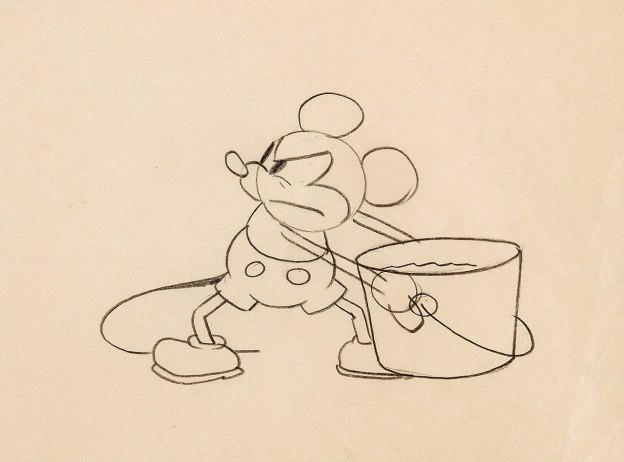
So, it was a delight to read several weeks ago that a great deal of music, film, and stories would be entering the public domain on New Year’s Day, just earlier this week. Films like Mickey Mouse’s first appearance in Steamboat Willie, characters like Peter Pan and Tigger, and the Marx Brothers musical Animal Crackers saw their copyright expire at the end of 2023 and start of 2024. What this means for me is complicated. I could use song recordings that were created before 1928 here in the Wednesday Blog, especially in episodes that deal with timely topics to those tunes, though so many of those older recordings have fared so poorly that I’ve chosen to avoid including them.

I did consider writing this week about Walt Disney’s influence on Kansas City––the place where he got his start, and his old Laugh-o-Gram Studio which is today being slowly renovated––and building that story around the audio track from Steamboat Willie, yet by my best understanding while the silent film itself is now in the public domain, the music and sound effects that go along with it were copyrighted by Disney in 1930 and remain so until that copyright expires in 2026. That’s a story for another day, then.

For at least two years now I’ve planned a story that would express my appreciation for the music of George Gershwin, the great American composer of a century ago whose work blended the classical orchestra with jazz in clever ways that created a certain American voice. Yet again, while many of Gershwin’s works are now in the public domain their recordings aren’t. A good solution to all of this would be for me to reach out to my musician friends and see if we can make new recordings of these public domain scores.

Copyright is a tricky issue for me. On the one hand, I want all of my work to remain my own. I’ve had moments in the past where others have taken credit for things I’ve done, and that really doesn’t feel good. Still, it makes things difficult for me in this instance of crafting a podcast each week because my best solution is to do everything myself, text and score, and record all of it by myself so that I own all of my own copyrights. This problem is less pronounced when it comes to the text of the Wednesday Blog itself. There I know exactly what to do, after all in my day job I spend a good deal of time citing sources and filling out footnotes in my historical research, something that I do actually enjoy in spite of how time-consuming it can be. Yet plagiarism is a different matter from violating someone’s copyright, and the two only overlap in that I know better than to try and use audio in the podcast without permission.

My friends are right when they say I’m a small enough fish that if I skirt along the hem of copyright law by using the odd audio-clip here or there it won’t be much of a problem. Yet I don’t want my work to remain that of a small fish in a big pond forever, I want what I write to make an impact on our world. As boastful as it may sound, I want to help, and this is the best way I know how. I want to help advise and inspire our world with the stories I tell whether through my non-fiction writing in this outlet or in my research, or through the occasional stories that I tell. To do this well, I need to cover all of my bases so that if I am fortunate enough to be in a position of impact, I won’t have any early-career problems that could harm my credibility.

I hope this new year 2024 brings a brighter future than the present we find ourselves in. For now, I’ll leave you with the Victor Mixed Chorus’s 1928 performance of “Auld Lang Syne” from their record Songs of Scotland. Happy New Year everyone!


Audio scanned by Internet Archive Python library 3.5.0, scanner George Blood, L.P.