Monthly Archives: April 2024

Is Cash Still King?

Over the last week, I've been thinking about how much I still use cash, and what that says about my lifestyle as a whole. Guests: Alex Brisson, New York City Elizabeth Duke, Kansas City, MO George Vial, County Donegal, Ireland — Click here to support the Wednesday Blog: https://www.patreon.com/sthosdkane


Over the last week, I’ve been thinking about how much I still use cash, and what that says about my lifestyle as a whole.


One of the chief ways that ordinary people would interact with their government was through the coins or banknotes in their pocket. We get to know the faces on our currency better for that role than for the things they did that got them printed onto dollar bills or Euro coins. Many were probably more familiar with the late Queen because her face was on the currency in the United Kingdom and all the Commonwealth realms more so than in any other fashion.

Yet, in the last five years, my cash usage has dropped significantly from a high around the mid-2010s when I used it more than my cards. Today, when I go to the bakery or when I buy concert tickets, I do so digitally. I prefer to use contactless payments on my phone over any other for the ease of use, and the security of not having to pull out my wallet in public. Still, I realized early on last week that this was a question better answered by more than one mind.

So, to answer this question, I turned to my Patreon supporters (only $5 a month at patreon.com/sthosdkane) to ask them how much they still use cash.

One of my Patreon supporters who agreed to talk to me this week was regular Wednesday Blog film expert, Alex Brisson who offered a few thoughts of his own from his home in New York City.

How much do you still use cash?

SK: When I moved to Binghamton, when I was going out there to go look at an apartment in May of that year, my Dad gave me $50 in $5 bills and said “Go, drive to Binghamton,” we were in Niagara Falls, “go, drive to Binghamton and find an apartment and be back here by tomorrow to catch the train to Toronto.” And that was the last time I ever used cash for tolls. Traditionally, I’d use cash for tolls, taxis, and really small family run Chinese restaurants. So, let me ask you then: how much do you still use cash?

AB: Almost not at all, extremely rarely. Unless it’s an arcade game that only takes cash, or once in a while the street hot dog vendors in New York only take cash, which is a big mistake in my view, and sometimes there’ll be one cart that takes card next to one that takes cash will get all the business. I’m making constant financial transactions; I’m buying things every day. New York City is just a big shopping mall. I use Apple Pay the huge majority of the time, unless a place doesn’t accept it.

SK: Yeah, it’s much more secure than even using your card. You don’t have to pull your wallet out, and also the encryption of the card number helps.

AB: Yeah, and also there are those machines that can steal your card number going around, so Apple Pay is more secure against those, though Apple Pay might be just as easily compromised, I don’t know. Definitely, money has gone from being a physical, gold-backed thing but now money is purely digital.

One of my Patreon supporters is closer to home, and we were able to do an in-person interview. – “Hi, Mom!” – “Hi, Seán!”

SK: How much do you still use cash?

ED: Very little. I carry maybe $20 for an emergency, but I rarely use cash.

SK: How much do you still use cash?

GV: Not as much as I would like to.

That’s George Vial, who spoke to me from his home in County Donegal, Ireland.

SK: So, you would prefer to use it over card?

GV: Compared to using it over card, the inaccessibility of getting to an ATM is probably the biggest drawback. Today, I had to pay a guy working on a car, and to find an ATM that would dispense the amount took two different trips, so I eventually got him the money. It would’ve been easier if he had taken a bank card, but that was the first time I used cash in almost two weeks.

Do you prefer cash over card or vice versa?

SK: So, you prefer cash over card, I get that. When you’re in the US do you use cash or card more than in Ireland?

GV: I use more cash than card in America, and vice versa in Ireland for one simple reason: Euros don’t fit in the wallet, they were never designed for wallets, and the amount of coins over here is too much. If you go out with €100 your trousers are falling down by the end of the day.

SK: Yeah, I stopped carrying a coin purse. The trouser leg didn’t look right with that in there. What do you think are the benefits to your preferred payment method? You talked about a couple of the drawbacks of using cash in Ireland, what are some of the benefits?

GV: The benefits of cash are that you stick to what you have. When you do digital payments you tap your card, while in America it’s still a lot of swiping. Here there are no minimums to how much you can spend by tapping, so you spend more freely, whereas with cash if you have €200 in your pocket that’s how much you can spend.

SK: Do you prefer cash over card or vice versa?

ED: I prefer to use a card or to actually use Apple Pay so I don’t have to pull something out of my bag. Although, at restaurants in the US you have to give them your card and they take it away from you to run it whereas in Europe they run your card for you there at the table.

SK: I’m starting to see more places in the US where they do have the portable card reader that they bring around, or even the big chain restaurants that has the machine at the table that you can play games on and also use to pay at the end.

~

AB: Money has gone from being a physical, gold-back thing, and I guess the gold is still somewhere, and now money is just a number on a screen.

SK: So, the value of the money has gone fully abstract then, in the last 120 years. So, now instead of being valued off gold it’s an abstract concept. So, what do you think are the benefits to your preferred payment method?

AB: Mainly that I no longer carry a wallet. I have my phone and there’s a little pouch on the back where I carry my cards. I’ve consolidated the things that I carry in my pocket, and as a man in New York City your pockets are prime real estate. Another one is the convenience of my phone being my payment method. Unlike cash, it can’t get wrinkled or blow away or you can’t really steal my Apple Pay. It doesn’t have to be replaced all that frequently like a credit card does, and because it’s contactless it’s safer in terms of transmission of germs and things. During the pandemic we realized we’re passing around all that dirty cash. The main people here who use cash are homeless people because they need you to give them cash, but if you don’t have cash on you then you circumvent that, which is kind of a low thing to say. And, also unlike with cash not carrying around a finite amount of it I can access all of my funds potentially, not instantly but nearly instantly if I shuffle things around.

What do you think are the benefits to your preferred payment method?

SK: So, then do you see any benefit to using cash over card?

ED: I suppose if you don’t want your purchase tracked then that’d be a benefit, or if you’re going to a farmers’ market, but even those will take cards. There are a few places that are cash only but they’re few and far between now.

SK: And inflation has impacted that now, because you have to use more cash to buy stuff now. I remember when I was little you could get a candy bar at a gas station for less than a dollar, and now it’s probably close to $2.

SK: What do you think are the benefits to your preferred payment method?

ED: It’s more secure,  if my wallet were stolen I could stop the card immediately, any of the cards I carry. The same cards work globally, so I can travel and not make many changes. It’s the convenience and the security, although I will say back when I carried cash I had a budget for discretionary spending per month. With a card it’s much harder to do that. It’s really easy to spend more with a card.

SK: When I lived in London, I found it was very beneficial to only use cash if I could because I could control my spending, whereas with my card and contactless it was very easy to buy stuff.

ED: It’s something we all need to figure out how to manage our lives now. I spend a lot more time in the bank app on my phone than I used to.

SK: I found that when I went overseas this most recent time in October that I’d get Pounds and Euros out but this time I used my card everywhere, so I never needed to stop by an ATM, and that was bizarre, even going into the Tube in London, like with OMNY in New York, I just used my phone to get in, and that’s a new thing just within the last 5 years. In New York, you used to have the MetroCard instead.

AB: You’re right, because the Apple Pay and credit card transcend borders. You can use it anywhere in the world. You don’t have to convert your cash.

SK: That was a huge realization, because I realized when I got there that I forgot to get cash out, so I started paying for things with my Apple Pay and quickly realized that I wouldn’t need to get cash out at all. I got to Brussels and paid for my first croissant and thought, “wait a second, I don’t need to get cash out here.” Yeah, that was a big benefit to it. Then, do you think cash will fully ever disappear?

Do you think cash will ever fully disappear?

SK: Yeah, so you’re doing the mental math and figuring you’re borrowing from a future paycheck to pay for this. Do you think cash will ever fully disappear?

GV: I know they’re going to try, the banks of the world, but I don’t think it will. All it will do is create more of a digital black market, so it’s everything from the criminal black market to paying all of the little cash transactions of paying the babysitter or paying the car guy which they’ll be able to monitor, so they should just leave cash as it is.

SK: So, cash in Europe it’s coming out of the European Central Bank (ECB), whereas here it’s coming out of the Federal Reserve and the Mint, while when you’re doing a card payment it’s going through Visa, MasterCard, or Discover, or American Express, or take your pick. Do you see a way that it could be problematic that those particular financial corporations would have that much of a role in our everyday monetary transactions whereas previously it was a public enterprise that was managing it?

GV: Oh, yeah absolutely because it’s throwing the control of our money to these for-profit corporations, it’s totally wrong, and we know behind the scenes the amount of charges, there’s a meme going around talking about how to spend $100 locally, yet to spend that $100 digitally the amount of transactions and fees that go on makes it all very convoluted. I’m not a fan of the big companies tracking our money.

SK: Yeah, I absolutely get that.

AB: My immediate answer is that I’m not properly educated enough to truly venture a guess at that, that said it does feel realistic to think that you could have a post-cash society. That feels very feasible in my mind at least. There’s also this aspect that you only print so many dollars, or that you could track that digitally anyway. I bet we’re shipping a lot of gold and huge stacks of dollar bills from place to place, I bet there are people who are spending time counting money. And we’re handing over a lot of our societal things to computers these days, yet this is a logical usage of this.

SK: I only hesitate with that in 2 points: Jackson County, Missouri’s systems were hacked with a ransomware attack, and the systems were shut down for a while. Having all of your money going through computer systems leaves them up to attack in that sort of hack. Secondly, having your money going through a computer system means that every transaction you make is processed by a financial institution like Visa, so they are getting a cut or have some arbitrary control over the transaction. So, does that give them too much power?

AB: There’s also the data tracking aspect of this too. The thing you were saying about how it could be hacked and disappear is true for any form of currency. There’s an episode of The George Lopez Show where his mom keeps all of her money in a safe under her bed and there’s a house fire and all of it burns. So, is there a truly safe form of currency? I think the answer is no, there’s not. You can hope that each version is more secure, at least digitally there’s a record of its existence. So, if your bank gets hacked then there’s a record of what the bank owes you. Digital money then might be more secure. It’s truly hard to say. It’s scary, the new digital world is scary in a general way, I would say, and things are changing so rapidly. The minds of this generation, and all who are alive right now are struggling to keep up with it all.

SK: Do you think cash will ever fully disappear?

ED: Maybe. It’s expensive for countries to print bills or mint coins, I don’t know. I wonder what the percentage of people are that use cash? You can’t use cash at the new Kansas City Current stadium (CPKC Stadium). So, the more places that refuse to take cash the less we’ll see people using it.

SK: Some countries that I’ve heard about that have dropped cash all together, like Sweden, it’s because the Kronor there has so little value that you’d have to use a lot of it. During my four hours at Arlanda Airport in Stockholm, I paid 200 or 300 kr for a burger there at Max’s Burgers, I thought that was a lot but it’s actually around $10. So, will inflation impact how much cash we use?

SK: Because cash is controlled by the Treasury, with card transactions those are all done through the big companies, does that give those companies too much power over our national economy or our global economy if they’re the middleman in every transaction?

ED: I know bank transfers are still monitored by the Federal Reserve. Cash was just the vehicle to exchange for goods and services, right? So, you’re still doing that exchange, it’s just happening in a contactless or a low-contact manner.

Is cash still king? I don’t think so. I could see how it might return to its former position of prominence if we had massive technological failures, yet that seems remote and unlikely. I do agree with George about the need to have better monitors on the financial institutions that house and monitor all of our digital transactions, though. I wonder if the cultural role that cash plays as our symbol of prosperity will change? This, like many questions I consider here on the Wednesday Blog, remain uncertain in their answers.
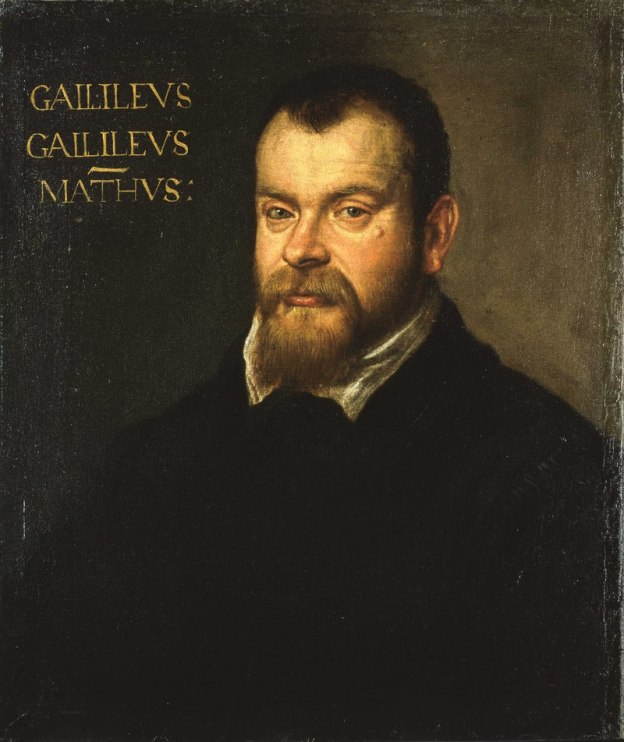

Galileo Galilei pictured in his early 40s c. 1600.

Return to Normalcy

Over the last week, I've been thinking about the standards we define to cast a model of normality, or in an older term normalcy. This week then, I try to answer the question of what even is normal? — Click here to support the Wednesday Blog: https://www.patreon.com/sthosdkane


Over the last week, I’ve been thinking about the standards we define to cast a model of normality, or in an older term normalcy. This week then, I try to answer the question of what even is normal?


One of the great moments of realization in my life to date was when it occurred to me that everything we know exists in our minds in relation to other things, that is to say that nothing exists in true isolation. The solar eclipse I wrote about last week was phenomenal because it stood in sharp contrast to what we usually perceive as the Sun’s warmth, and a brightness which both ensures the longevity of life and can fry anything that stares at it for too long. So too, we recognize the people around us often in contrast to ourselves. Everyone else is different in the ways they walk, the ways they talk, the ways they think and feel. We are our own control in the great experiment of living our lives, the Sun around which all the planets of our solar system orbit.

There is a great hubris in this realization, as a Jesuit ethics professor at Loyola said to my Mom’s class one day, in a story she often recounts, no one acts selflessly, there’s always a motive for the things we do. That motive seems to be in part driven by our desire to understand how different things work, how operations can function outside of the norm of our own preferences or how we would organize them. I might prefer to sort the books on my shelves by genre, subgenre, and then author; history would have its own shelf with the history of astronomy in its own quadrant of that shelf and Stillman Drake’s histories of Galileo set before David Wootton’s Galileo: Watcher of the Skies. Yet, at the same time I could choose to add another sublevel of organization where each author’s titles are displayed not alphabetically but by publication date. So, Stillman Drake’s Two New Sciences of 1974 would be placed before his 1978 book Galileo At Work.

This shelving example may seem minor, yet one can find greater divergence in book sorting than just these small changes here or there. My favorite London bookseller, Foyle’s on Charing Cross Road, was famous for many decades for the eccentricities of organizing the books on their shelves by genre, yet then not by author but by publisher. This way, all the black Penguin spines would be side-by-side, giving a uniform look to the shelves of that establishment. It is pleasant to go into Foyle’s today and see on the third floor all the volumes of Harvard’s Loeb Classical Library side-by-side with the Green Greek volumes contrasting with the Red Roman ones on the shelves below. Yet to have books organized by publisher when the average reader is more interested in searching for a particular author seems silly. Yet that was the norm in Foyle’s for a long time until the current ownership purchased the business.

Our normal is so remarkably defined by our lived world. In science fiction, bipedal aliens who have developed societies and civilizations are called humanoid, in a way which isn’t all that dissimilar from how the first generations of European explorers saw the native peoples of the Americas. André Thevet wrote in his Singularitez, the book which I’ve translated, that the best way he could understand the Tupinambá of Brazil was by comparing them to his own Gallic ancestors at the time of Caesar’s conquest of Gaul in the first century BCE. Even then, an older and far more ancient normal of a time when he perceived that his own people lived beyond civilization was needed to make sense of the Tupinambá. The norms of Thevet’s time, declarations of the savagery of those who he saw as less civilized for one, are today abnormal. Thus, our sense of normal changes with each generation. For all his faults and foibles, Thomas Jefferson got that right, in a September 1789 letter to James Madison, Jefferson argued that “by the law of nature, one generation is to another as one independent nation to another.” Thus, the norms of one generation will both build upon and reject those of their predecessors.

At the same time that we continue to refer to the aliens of fiction in contrast to ourselves, we have also developed systems of understanding the regulations of nature that build upon the natural world of our own planet. The Celsius scale of measuring temperatures is based on the freezing point of water. At the same time, the Fahrenheit scale which we still use in the United States was originally defined by its degrees, with 180 degrees separating the boiling (212ºF) and freezing points (32ºF) of water. the source of all life on our own planet and a necessary piece of the puzzle of finding life on other planets. I stress here that that water-based life would be Earthlike in nature, as it shares this same common trait as our own. So, again we’re seeing the possibility of other life in our own image. Celsius and Fahrenheit then are less practical as scales of measurement beyond the perceived normalcy of our own home planet. It would be akin to comparing the richness of the soils of Mars to those of Illinois or Kansas by taking a jar full of prairie dirt on a voyage to the Red Planet. To avoid this terrestrial bias in our measurements, scientists have worked to create a temperature scale which is divorced from our normalcy, the most famous of these is the Kelvin scale, devised by Lord Kelvin (1824–1907), a longtime Professor of Natural Philosophy at the University of Glasgow in Scotland. Kelvin’s scale is defined by measuring absolute 0. Today, the Celsius and Fahrenheit scales are both officially defined in the International System of Units by their relations to the Kelvin scale, while still calculating the freezing point of water as 0ºC or 32ºF.

In this sense, the only comparison that can be made between these scales comes through our knowledge of mathematics. Galileo wrote in his 1623 book Il Saggiatore, often translated as The Assayer, that nature, in Stillman Drake’s translation, “cannot be understood unless one first learns to comprehend the language and interpret the characters in which it is written. It is written in the language of mathematics, and its characters are triangles, circles, and other geometrical figures.”[1] I love how the question of interplanetary communication in science fiction between humanity and our visitors is often answered mathematically, like the prime numbers running through Carl Sagan’s Contact which tell the radio astronomers listening in that someone is really trying to talk to them from a distant solar system. There one aspect of our own normalcy can act as a bridge to another world’s normalcy, evoking a vision of a cosmic normal which explains the nature of things in a way that would have made Lucretius take note.

I regret that my own mathematical education is rather limited, though now in my 30s I feel less frustration toward the subject than I did in my teens. Around the time of the beginning of the pandemic, when I was flying between Kansas City and Binghamton and would run out of issues of the National Geographic and Smithsonian magazines to read, I would sit quietly and try to think through math problems in my mind. Often these would be questions of conversions from our U.S. standard units into their metric equivalents, equivalents which I might add are used to define those U.S. standard units. I’ve long tried to adopt the metric system myself, figuring it simply made more sense, and my own normal for thinking about units of measurement tends to be more metric than imperial. That is, I have an easier time imagining a centimeter than I do an inch. I was taught both systems in school, and perhaps the decimal ease of the metric system was better suited to me than the fractional conversions of U.S. Standard Units, also called Imperial Units for their erstwhile usage throughout the British Empire.

In his campaign for the Presidency in 1920, Republican Warren G. Harding used the slogan “Return to Normalcy.” Then and ever since, commentators have questioned what exactly Mr. Harding meant by normalcy. I think he meant he wanted to return this country to what life had been like before World War I, which we entered fashionably late. I think he also meant a return to a sort of societal values which were more familiar to the turn of the twentieth century, values perhaps better suited to the Gilded Age of the decades following the Civil War which in some respects were still present among his elite supporters. I remember laughing with the rest of the lecture hall at the presentation of this campaign slogan, what a silly idea it was to promise to return to an abstract concept that’s not easily definable. Yet, there is something comforting about the idea of there being a normal. I’ve looked for these normalcies in the world and seen some glimpses of it here or there. Perhaps by searching for what we perceive as normal, we are searching within our world for things we have crafted in our own image. We seek to carry on what we have long perceived as works of creation, the better to leave our own legacy for Jefferson’s future generations to use as foundations for their own normal.


[1] Galileo Galilei, Discoveries and Opinions of Galileo, (Garden City, NY: Doubleday Anchor Books, 1957), 238.


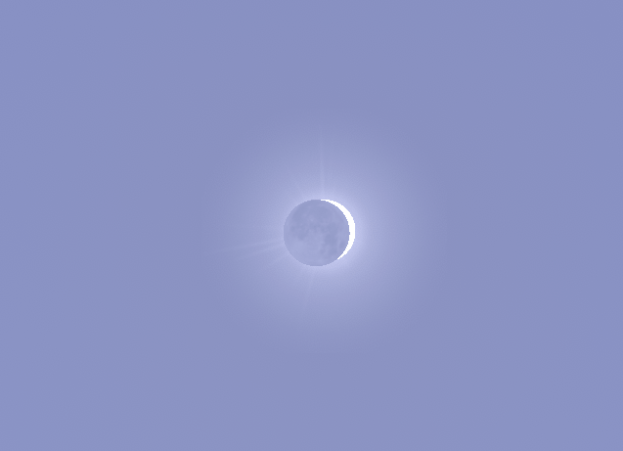
Eclipse simulation using Stellarium

The Eclipse

This Monday, North America experienced its second total solar eclipse in the last decade. — Click here to support the Wednesday Blog: https://www.patreon.com/sthosdkane


This Monday, North America experienced its second total solar eclipse in the last decade.


I remember being over-the-moon excited when we began preparing for the Total Solar Eclipse in August 2017. Several weekends before the eclipse, my parents and I drove north from Kansas City into the path of totality to scout out possible places where we might travel on Eclipse Day to see the phenomenon for ourselves. Eclipse Day 2017 also happened to be my first day as a history graduate student at the University of Missouri-Kansas City. That morning a sudden summer thunderstorm rolled through Kansas City and as the day continued the clouds persisted in our skies. When the moment of totality arrived around 12:55 pm on 21 August, we watched it through darkened clouds and heard the birds and insects around us revert to their nocturnal states and songs.

I was excited to have experienced a total solar eclipse yet disappointed that I wasn’t able to see it. So, when the prospect of traveling for this week’s total solar eclipse appeared, I seriously considered going afield to Texas to observe it. That trip didn’t end up working out because of a series of scheduling conflicts, and so instead seeing that the cloud forecast across North America called for most places along the path of totality to be obscured, I decided to stay here in Kansas City and observe our partial solar eclipse. At its greatest extent, the April 2024 solar eclipse reached about 90.5% totality. I was able to see that extent, yet the feel of it was quite different than 100% totality from seven years ago. We were watching Everyday Astronaut and the Planetary Society’s live broadcast from the Society’s Eclipse-o-rama event in Fredericksburg, Texas while observing the eclipse here at home, and what they experienced was far more dramatic than what we observed. I do regret not travelling for this eclipse, yet at the same time in the circumstances as they fell, I’m glad I chose to stay home all the same.

This concept of an eclipse is one that speaks to me both astronomically, as a big space nerd, historically, and linguistically. Eclipses are phenomena that have made their mark on the psyche of more than just us humans, note how the birds began singing their twilight songs when the Moon passed in front of the Sun. I have never put much theological potency into eclipses because we have been able to predict their occurrences with increasing accuracy for generations now. Religion, in many ways, relies on our perceptions of things. Some see in an eclipse a threat to divine order in the Cosmos. This view reminds me of Mozart’s final opera, near to my favorite of his works, Die Zauberflöte (The Magic Flute) in which the Queen of the Night is defeated by Sarastro, the high priest of the Temple of the Sun. Sarastro proclaims victory for the good and right, singing: 

Die Strahlen der Sonne

Vertreiben die Nacht.

Zernichtet der Heuchler

Erschlichende Macht.

The rays of the sun

Drive away the night.

Destroyed  is the hypocrites’  

Surreptitious power.

(Source: Aria-Database.com, trans. Lea Frey)

Sarastro’s triumphant finale in Die Zauberflöte sung by Josef Greindl with the RIAS Symphonie-Orchester Berlin.

The divine hand is better seen in the wisdom of devising a manner to mathematically ascertain the revolutions of these celestial orbs, to borrow the title of Copernicus’s magnum opus, De revolutionibus orbium coelestium. In our ability to ascertain our surroundings, and to make sense of nature we see a loving design.

Still, knowledge of the movements of the Sun, planets, moons, and stars across our night skies have had their impact in our history. During his fourth voyage, on 1 March 1504, after 9 months stranded in Jamaica, Christopher Columbus (1451–1506) used his knowledge of eclipses from an almanac he brought with him written by the Castilian Jewish astronomer Abraham Zacuto (1452 – c. 1515) to inspire the Taíno caique of that part of Jamaica to give Columbus’s men food and provisions. Columbus wrote in his journals that he pointed at the Moon and told the Taíno that “God caused that appearance, to signify his anger against them for not bringing the food” to Columbus and his men.[1] Several years ago then, when discussing this story with a friend and fellow Renaissance historian, I decided to use the Stellarium astronomy program to simulate this lunar eclipse as Columbus and those with him in Jamaica saw it. Our ability to track the movements of these celestial orbs is good enough that our computers can show exactly what was visible in the night sky (baring any atmospheric data) at any moment in the past or future.

My simulation of the March 1504 Lunar Eclipse as seen from St. Ann’s Bay, Jamaica using Stellarium.

This ability to calculate the dates and locations of eclipses came in handy when researchers look at mentions of eclipses in ancient literature to seek to date the events of the stories. Plutarch and Heraclitus both argued that the Odyssey contains “a poetic description of a total solar eclipse,” which astronomers Carl Schoch and P.V. Neugebauer proposed matched an eclipse which occurred over the Ionian Sea on 16 April 1178 BCE, though a more recent article in the Proceedings of the National Academy of Sciences by Constantino Baikouzis and Marcelo O. Magnasco offer doubts concerning this proposition owing to the difficulty of finding exact matches in spite of centuries of the Odyssey‘s transmission through the oral tradition before it was written.[2] Still, that eclipses are so readily discernible and measurable with our mathematics speaks to the potential that they could be used to date moments long remembered only in heroic literature like Odysseus’s return to Ithaca in Book 20 of the Odyssey (20.356-57). In this effort, where others divine gods, we make tools out of the Sun and Moon to better understand ourselves.

The way we describe an eclipse speaks to our culture’s relationship with the phenomenon. Our Modern English word derives from the same word in Old French, which developed from the Latin eclīpsis, which in turn was borrowed from the Ancient Greek ἔκλειψις (ékleipsis), which comes from the verb ἐκλείπω (ekleípō)meaning to abandon, go out, or vanish.” Eclipse eclipsed the Old English word āsprungennes, which derives from the past participle of the verb āspringan, meaning “to spring up, to spread out, to run out, to cease or fail.” As an adjective, āsprungen meant that something was defunct or deficient, so perhaps this sense of an eclipse meant that it seemed for a moment as though the Sun had run out of energy and ceased to burn? Again, this speaks to the idea that nature had limits as humanity does, to an older understanding of nature from the perspective of a limited human lifespan. 

In Irish, there is the Hellenic word éiclips, yet there’s an older Gaelic word which means the same thing, urú. Now, usually students of the Irish language will learn of urú in the context of Irish grammar, an urú or eclipsis is one way that Irish handles both consonant clusters and situations when one word ends in a vowel and the following word begins with another vowel. So, in that sense the word gets eclipsed by this urú which preserves some of the integrity of the language. Yesterday’s eclipse then was less an urú focail (word eclipse) and more a urú gréine (solar eclipse). That both the Sun and the words we speak in Irish can be eclipsed makes this astronomical phenomenon all the more ordinary and measurable. 

We use this word eclipse beyond astronomy in many cases; it seems to me today that the old guard of the Republican Party has been eclipsed by an orange political pulsar whose violent rhetoric and chaotic behavior have eaten away at their party’s support in these last 8 years, not unlike a pulsar discovered by NASA’s Swift and Rossi X-Ray Timing Explorer satellites in 2007. An eclipse is something wonderous to behold yet ordinary in how readily we can predict when they will appear. They have given us a great deal of cultural qualifications that continue to influence how we see our world.

On Monday then, when the sky began to darken as the Moon passed in front of the Sun, I noticed that the color spectrum that I’ve always known began to change. Before my eyes the colors seemed to take on a sort of metallic glow, as if the light which illuminated them was shifting into a spectrum that seemed unnatural to the natural world I’ve known. The Sun is fundamental to how we understand the world around us. Its light is what illuminates our senses, and without it, or even with partial changes to its glow, we would find ourselves observing a very different world.


[1] Christopher Columbus, “The Fourth Voyage,” Select Letters of Christopher Columbus: With Other Original Documents Relating to the Four Voyages to the New World, trans. and ed. R. H. Major, (London: Haklyut Society, 1847), 226.

[2] Constanino Baikouzis and Marcelo O. Magnasco, “Is an eclipse described in the Odyssey?” Proceedings of the National Academy of Sciences 105, no. 26 (2008): 8823–8828, nn. 1, 12–14.


A Matter of Grammar

This week, after going down the rabbit hole of the Chicago Manual of Style's monthly Q&A newsletter, I thought I'd talk a bit about grammar. — Click here to support the Wednesday Blog: https://www.patreon.com/sthosdkane


This week, after going down the rabbit hole of the Chicago Manual of Style‘s monthly Q&A newsletter, I thought I’d talk a bit about grammar.


One of my favorite newsletters to read is the Chicago Manual of Style‘s monthly Q&A email which tries to answer some pressing questions regarding the English language in this particularly formal academic setting that I often write in professionally. We historians in the United States use the Chicago Manual of Style as our main style guide, both for its system of extensive footnotes and for its grammatical rules. I am familiar and have used several other systems, including the AP Style Guide, and the MLA, APA, and Harvard citation systems, yet my preference remains Chicago for its clarity. Chicago is the preferred style guide for us historians as well as the basis of the style used by the American Anthropological Association.

English is an unusual language in that we don’t have a single central authoritative language academy as does French, Spanish, Irish, and German. Our best bet is to see what our two major dictionaries say: the Oxford English Dictionary and the Merriam-Webster Dictionary. The former is the standard in the United Kingdom and throughout the Commonwealth, while the latter is the American standard developed first during the Early Republic when its initial author Noah Webster sought to better differentiate American English from its imperial counterpart, the better to craft a specifically republican national language fit for our young Union. I’ve had my problems with Webster’s dictionary for a while now in part because I don’t see the point of most of his spelling reforms, and for a good part of my teens and twenties I used British spellings over American ones. Today though, I’ve reverted to the American standards in what might well be a sign of my general weariness of the constant fight over so many different topics and issues; this was one that fell by the wayside.

This month then, the Chicago Manual‘s Q&A included a question about whether it was fine for an academic writer to write in the first or second person, to use the pronouns I and you. We are taught to always restrict our writing to the third person, to avoid the subjectivity that is implicit in the first person. I’ve begrudgingly accepted this, to the extent that amid the 96,276 words that comprise the ninth draft of my dissertation only three of those are the pronoun I. All three instances where I drift into the first person are in the footnotes where it is necessary to explain my decisions regarding certain translations or connections that would otherwise not be possible in the English language. By contrast, I use this pronoun a great deal here in the Wednesday Blog, where I am writing to you, dear reader, in a more personal manner that I hope is evident in this text. Of the 189,993 words that I’ve written for the Wednesday Blog before this week, 3,360 of those are the pronoun I.

The response in the Q&A about using the pronoun I spoke to that concern for subjectivity, yet also spoke of a need that our academic writing ought to be “more lively and personal.” I see both sides of this, more and more books written by my fellow academics do include more of the first person in them, yet at the same time Kate Turabian’s writer’s manual––an abridged version of the Chicago Manual––suggests that writers “avoid beginning your sentences with I believe or I think (which go without saying).” I am often frustrated to hear people use fillers like these, or like “it goes without saying,” or “to be honest,” when those are things I hope they would be adhering to in the first place. On the other hand, I’ve heard papers at conferences where the author reads out “this author finds that _____,” which sounds ludicrous. Two weeks ago, at the Renaissance Society of America’s conference I did make it clear where I was presenting my own theories based on the evidence that my primary sources provided. A spoken context is different than a written one, not only can there be more repetition of material to bring a point home, one can also use more personal elements, bring oneself into the topic and show the audience why they ought to care about it the way you do.

Academic writing is quite formal, and it follows set patterns and standards. It is in many ways an intricate dance, whether a waltz or an older minuet, which we follow in order to write to one another in the same methods and manners that we will all recognize. One may want to deconstruct some of these Elements of Style, to borrow a title, yet those standards exist to facilitate communication. Language proscription has its place along with all the innovations that happen each and every day in speech and writing. I might use this pronoun more in my academic writing in the future, especially if I choose to write a prologue which tells my reader why I am fascinated by a topic that will invite them to consider it as well.

I would like it if there were an English Language Academy in the same vein as the Académie Française, yet I would prefer to have a say in its decisions. Is that bold of me, sure. Yet that academy’s function is best served by the continued writing and publication of those of us who use the English language to express our thoughts on a daily basis. For every article or book I submit for publication about the history of animals in the Renaissance there will be countless other works published in all manner of settings which demonstrate the versatility of this language and its uses. We academics have just as much a claim to it as anyone else, and my own English is not everyone’s English. Still, we have our common grammar that keeps this language together, and that is something worthwhile.


Corrections

3 April 2024: Soon after publication, I corrected this week’s blog post for grammar, naturally.