Monthly Archives: October 2025

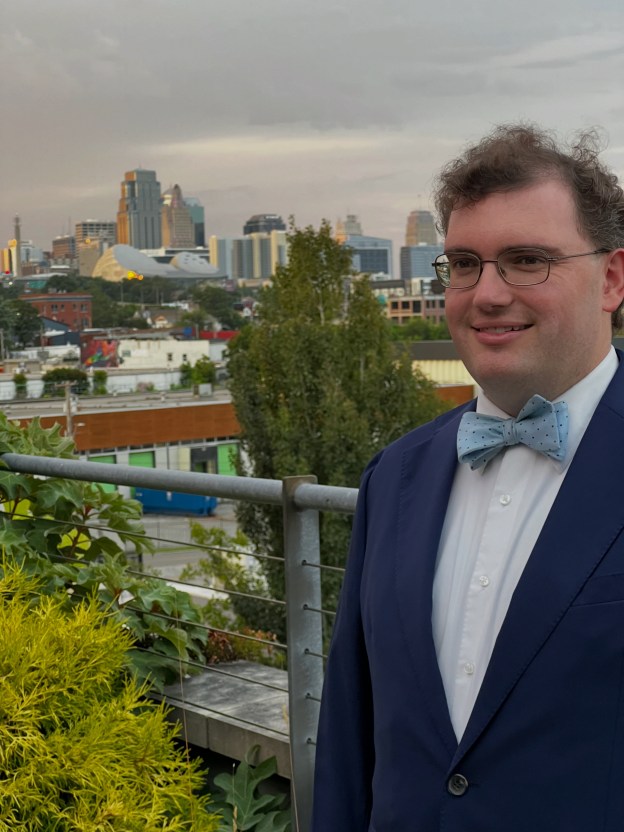
The author posing in front of the Kansas City skyline in July 2025.

The Wednesday Blog

This week, to conclude what I’ve been saying.—Click here to support the Wednesday Blog: https://www.patreon.com/sthosdkane—Sources:%5B1%5D “Signs,” Wednesday Blog 1.10.[2] “On Servant Leadership,” Wednesday Blog 6.15.[3] Percy Bysshe Shelley, “Ozymandias,” Poetry Foundation.


This week, to conclude what I’ve been saying.


I’ve said over the four years that I’ve been writing the Wednesday Blog weekly that I would stop writing this when it ceased to be fun. That’s a good rule for life overall that I’ve found: devote your life to things you love doing and keep them fun in the process. I tend to put on a very dry public face; a friend recently commented that I didn’t seem like one to scream or cheer at a concert, I affirmed that statement and demonstrated my own gentle “hurray!” to great amusement. This blog has changed with the times. It began as a project for me to write about things I enjoy outside of my research. I like to point to an early blog post all about my favorite state highway signs as a good example of this.[1] Yet I’ve found the topics I write about are changing, they’re becoming more academic, outlets where I can introduce some of the ideas I’m working on in my professional life and workshop them in a public forum. It’s a bald faced way of getting more readers to the Blog, I admit, yet so far, it’s worked.

I continue to cover politics here when I feel there’s a need to say something. Yet I’ve tried to balance what I’m writing to keep it positive, or at least to ensure that what I end up publishing suggests ways we can move forward out of the current crises we face. After all, there are enough writers out there pointing out the crises of the moment, some of us should be looking to the future to offer a light ahead that we all can reach for. This Spring, I was inspired by the commemorations in Boston of the 250th anniversary of the start of the American Revolution and the rallies for democracy here in Kansas City to focus that positive attention on popular action, the root of any good political system. I believe that government must act with the consent and full participation of the governed, and that through our elected representatives at all levels we ought to consider ourselves both governed and government. It sounds paradoxical, I know, and to an extent I believe that paradoxes are often a good thing. I devised one of my favorite phrases, “the extraordinary acts of ordinary people” to express this sentiment, that it is people acting out of the ordinary, out of what is considered ordered, which propels political change and keeps our politics fresh.[2] In 2023 one of the fads of the year on the internet was women asking men how often they think of the Roman Empire. I was asked this by one of my colleagues over lunch at the Nativity Parish School and remarked that because I was teaching the Romans at the time they were front of mind. Beyond this however, as much as I am familiar with the remains of the Empire, I am more drawn to the Republic and its ideals of popular government, even if they were never realized. The founders of the United States sought to model this federal republic on Roman models, yet they kept the Constitution they framed fresh for its day, an American constitution living in its ability to be amended to fit the changing times and passage of each generation rather than a Roman one deemed sacred through association with the old Republic’s gods and ancient institutions. Our republic is secular because for it to be sacred is to make it inviolate and unchanging, a monolith which will grow ever more distant from the people it was meant to govern, until like Shelley’s Ozymandias it is left as a mere pedestal of itself adrift in the sands of time.[3]

I want to stay a while longer with this phrase because I am so proud of it. To trumpet the extraordinary acts of ordinary people is to say that everyone has a voice and an impact upon the rest of us. In the first few years of the Wednesday Blog, my political essays tended to get lower readership across the board. I started writing the Blog in March 2021, a year after the January 6th insurrection showed how much the Republic was corrupted by the refusal to concede the 2020 election which caused that attack on the Capitol. I’ve seen a steady decline in political readership for my writing since the 2016 election, yet after 2020 that readership dropped off a cliff. American politics today is not a happy thing to write about, and at the moment it only seems to be getting worse. Yet by focusing less on the people in power and more on the people engaged for the common good I saw my readership grow on these political essays until they tended to be level with my other non-academic writing. A great inspiration for me here lies in the revolutionary era anthem Chester, sung by the New Englanders in the Continental Army and one of the older tunes in this country’s patriotic songbook. I’d been listening to it here and there without realizing for months, yet once I figured out what it actually was, when I was in Boston in March no less, I found that it spoke to my sentiment in a far greater way than I anticipated. I’m listening to William Schuman’s arrangement in his New England Triptych (1956) as I write this now, a New Deal era work intended to celebrate the democratic spirit of the cradle of the revolution.

There is a great deal of history behind my politics, naturally I notice that being a trained historian, and having taught American and British history on several occasions and having read a great deal in Irish history I can point out the various threads which I’ve coalesced into a logical genealogy of my political philosophy. Suffice to say, I believe it is better to look to the future and enact political policy which will build a future that we can all be proud of. At the core of this is listening to the people around us, hearing what they have to say, and listening to our own logic and empathy, two things which should always work together in our decisions. In writing about the extraordinary acts of ordinary people I look to those who will appear from the crowd as the leaders from my millennial generation and those coming up behind us in Generations Z and Alpha. We have inherited a great mess, and we have a lot of work to do. There are plenty of people arguing and advocating on what needs to be reformed, I feel better suited to provide an optimistic voice of what we could look forward to. By putting ordinary people front and center, I hope to make clear that policy should address problems from the bottom up, help reinforce and support the poorest in society that the whole structure grows stronger in kind. You might call this trickle-up economics, to speak to the Reaganites. We could build a future where everyone has good work, they can be proud of, enough to eat, a roof over their heads, and where every child learns how to read. We could have this future where people feel that law is meant to support them rather than push them down. I see this every day when I’m out around town: I suspect that the general sentiment behind people who run stop signs, red lights, or drive in transit only lanes is that the law has never worked in their favor, always rather beaten them down and stripped them of their humanity, so why should they follow the law? We must find our humanity in each other if we are ever going to grow out of this time of crises and begin to build a better future.

I enjoy thinking about the future in other languages, not just in the sense of the future tense but in the mentality of the language. How do they express things which haven’t happened but will come? In English we have the word future as a monolith on its own, derived from French and originally from the Latin futūrus, an irregular future active participle of the to be verb sum. In English, the future is as much a place as it is a time, it’s the destination we’re going to. Yet is it not better to think of the future as the scenery about to pass by as we go down the line like the trees and fields that we pass on a train? The present is momentary, here and gone in the blink of an eye, each millisecond the present, and the past a great gulf of memory whence we came. Yet the future is something both unknown and recognizable. It is both what we can see ahead of us along the way and what is just over the next horizon. It is an irregular version of being which will come someday. French expresses the concept of the future like this, whereas futur refers to the tense, l’avenir is instead the noun I’ve heard used most to describe the concept of the future. Yet l’avenir instead merely is the crafting of a phrase, temps à venir (time to come) into a noun, avenir, or that which is coming. We don’t know in truth what it is, what it will feel like when it comes, yet we know that someday we will see it and live in it. The future is inevitable, yet it is not singular by nature. Rather, if there is one past and present those are merely the choices made by actors in those moments which were chosen from the multitude that is possible from what could come. 

Irish expresses this sense of the future well because Irish really has no specific word for future. There is a future tense, which in some ways is more regular in its formation than the Irish present tense. Instead, Irish uses a phrase which breaks down the future into its core concepts:  An rud atá le teacht, or the thing which is coming. Therein lies the future in its baldest form: it is merely the thing that is coming next out of all the possibilities. Another topic which I seemed to write about a fair deal for a while was faith, self-help, and religion. My Catholicism is influential to my cosmovision and political philosophy in my core belief of the paradoxical nature of God, that God can exist yet also be omnipotent and omniscient. Because of this, I like to say, “anything is possible in the Eyes of God,” or for short, “anything is possible.” As I think about the end of my doctoral writing and needing a dedication to affix on my dissertation, I’ve found myself thinking about this phrase, and about who my audience is. After all, you now reading this sentence in my future, just as I wrote it in your past. It is possible that just about anyone could be reading this now, and so rather than dedicate my work to one person in particular in the moment in which I am writing it, perhaps I ought to instead dedicate it to the possible, or rudaí indéanta in Irish. That second word indéanta is a neat one because it comes from the verb déan, meaning to do, thus the possible is something that might be done. In English and French, I say, “I am studying” or « J’étudie, » yet in Irish, I say, “Déanaim ag staidéar,” or “I am doing study,” which makes the study more of an act than a state of being. The future has and always will be something acted, something done by individuals in our own small ways that creates great change in the collective form.

I study history because of all the things I am interested in it is history which brings them together. So far, history is a human creation made in our image and likeness which seeks to tell our story as best as we can recall it. We’ve devised historical methods of a similar manner to understand other histories, salvation history, church history, and natural history to name three. I returned to natural history as an adult yearning for the halcyon days of curiosity and wonder from my early childhood and built my career on my study of André Thevet’s (1516–1590) sloth. It’s become my gateway into the history of natural history, and through it I’m beginning to make my name as a sloth historian. I do not believe in prescriptivism, the notion that history in inexorably leading to some great moment in the future when the final form of human nature will announce itself. I think this is limiting, claustrophobic in fact. It’s far too simplistic to say that we will all wake up someday and find the morning sunlight is just a little bit brighter, the grass and trees greener, and the sky a prettier shade of blue because there’ll be somebody among us who will find something contrary about the experience. I for one an enjoying the gray skies outside my window today, it’s finally cool enough in mid-October for me to open the blinds in my room and let some sunlight in without making it too hot. Rather, history teaches us that the future is what we will make of it. I chose to not study the twentieth century because I felt this dolorous pain in my heart that there were so many things which happened in the last century which could have been avoided, choices which could have been different. In studying recent history, I worried I would be faced with the ghosts of the world wars, Great Depression, and all the troubles faced by humanity in general and my fellow Irish Americans in particular throughout my working life. 

Instead, I looked deeper into the past, first to the Roman Republic with an interest in studying the expansion of Roman citizenship in the late Republic after the Social War of the 90s and 80s BCE and later to the Renaissance, a period that seemed similar enough, Latinate to be sure, yet full of people and stories who I felt I could relate to better than the ancients. I found Thevet almost accidentally, and through his sloth I feel that I’ve found balance in my life that sustains me today, makes me feel more fulfilled in my efforts than I was before. My history is fundamentally interdisciplinary, historical zoology adopts zoological methods and theories to determine the true nature of historical animals, layering their scientific taxa upon their far older human memory and legendaria. In Thevet I am able to work with the ancients, looking especially Aristotle and Pliny, yet soon after I can turn around and look ahead to Buffon and Linnaeus and see how they interpreted what Thevet wrote in order to establish a clear lineage through the historical record for the animal in question. There is nothing sure about this history, often the historical sources are lacking with detail about a given animal, or the zoological data may not have enough detail about an extinct species to offer a clear picture of what it is I am describing. Both are limited by the foggy memory of the human past, yet together they can offer a light with which to move ahead and keep exploring those parts of our cosmos which are still strange and unfamiliar to us today.

I write because it is the greatest way I’ve yet found to express myself. I can say far more in an essay such as this than I could in a conversation. The Wednesday Blog remains less formal than my academic writing, here I use the first person. Yet with the passage of time, I’ve found the Blog has become more academic to the point that friends have told me they got an education about Thevet that they never expected. The Blog has several antecedents, including earlier less regular blog posts which you can find on this same website from before 2021 that all form the roots of this project. I’m proud of the writing I’ve done here, the Wednesday Blog now is comprised of 238 essays and 200 podcast episodes, I’ve written 521 pages, and the total word count is over 300,000. The future is defined as much by its potential as the fact that once it comes to be what was present will then be past. To see an end gives all things meaning. It is for this reason, at the end of the sixth book of the Wednesday Blog, and fifth season of the podcast, that I’ve decided to end this particular publication. This remains a fun thing to write, yet I have so much more to do today, and I only see that workload growing as I try my hand at more peer-reviewed articles, books, and translations in the coming decades. I hope the Wednesday Blog will be a testament to who I was at this point in my life in the years after the COVID-19 Pandemic and during my long years of doctoral study. Let these essays remain a monument of the first half of the 2020s, a sign of where we’ve been and where I hope we will be going.


[1] “Signs,” Wednesday Blog 1.10.

[2] “On Servant Leadership,” Wednesday Blog 6.15.

[3] Percy Bysshe Shelley, “Ozymandias,” Poetry Foundation.


The author on a blue background wearing Apple AirPods.

On Machinery

This week, for the penultimate post of the Wednesday Blog, how machinery needs constant maintenance to keep functioning.—Click here to support the Wednesday Blog: https://www.patreon.com/sthosdkane—Sources:%5B1%5D Surekha Davies, “Walter Raleigh’s headless monsters and annotation as thinking,” in Strange and Wonderous: Notes from a Science Historian, (6 October 2025).[2] “Asking the Computer,” Wednesday Blog 5.26.


This week, for the penultimate post of the Wednesday Blog, how machinery needs constant maintenance to keep functioning.


I am just old enough to remember life before the ubiquity of computers. I had access to our family computer as long as I can remember, and to my grandparents’ computer at their condo when we stayed with them in the Northwest Suburbs of Chicago. Yet even then my computer usage was limited often to idle fascination. I did most of my schoolwork by hand through eighth grade, only switching from writing to typing most of my work when I started high school and was issued a MacBook by my school. I do think that a certain degree of whimsy and humanity has faded from daily life as we’ve so fully adopted our ever newly invented technologies. Those machines can do things that in my early childhood would’ve seemed wonderous. Recently, I thought how without knowing how powerful and far-reaching my computer is as a vehicle for my research and general curiosity, I would be happy, delighted in fact, if my computer could conduct one function, say if it had the ability to look up any street address in the United States as a device connected to the US Postal Service’s database. That alone would delight me. Yet that is the function of not just one application on my computer but merely one of many functions of several such programs I can load on this device, and not only can I look up addresses in the United States but I can look up addresses in any country on this planet.

With the right software downloaded onto this computer I can read any document printed or handwritten in all of human history and leave annotations and highlights without worrying about damaging the original source. Surekha Davies wrote warmly in favor of annotating in her newsletter this week, and I appreciated her take on the matter.[1] In high school, I was a bit of a prude when it came to annotating; I found that summer reading assignment in my freshman and sophomore English classes to be almost repulsive because I see a book as a work of art crafted by its author, editor, and publisher to be a very specific way. To annotate, I argued, was like drawing a curly-cue mustache on the Mona Lisa, a crude act at best. Because of this I process knowledge from books differently. I now often take photos of individual pages and organize them into albums on my computer which I can then consult if I’m writing about a particular book, in much the same fashion that I use when I’m in the archive or special collections room looking at a historical text.

All of these images can now not only be sorted into my computer’s photo library, now stored in the cloud and accessible on my computer and phone alike, but they can also be merged together into one common PDF file, the main file type I use for storing primary and secondary sources for my research. With advances in artificial intelligence, I can now use the common top-level search feature on my computer to look within files for specific characters, words, or phrases to varying levels of accuracy. This is something that was barely getting off the ground when I started working on my doctorate six years ago, and today it makes my job a lot easier; just my file folder containing all of the peer-reviewed articles I’ve used in my research since 2019 contains 349 files and is 887.1 MB in size.

Our computers are merely the latest iterations of machines. The first computer, Charles Babbage’s (1791–1871) counting machine worked in a fairly similar fashion to our own albeit built of mechanical levers and gears where ours have intricate electronics in their hard drives. I, like many others, was introduced to Babbage and his difference engine by seeing the original in the Science Museum in London. This difference engine was a mechanical calculator intended to compute mathematical functions. Blaise Pascal (1623–1662) and Gottfried Wilhelm Leibniz (1646–1716) both developed similar mechanisms in the seventeenth century and still older the Ancient Greek 2nd century BCE Antikythera mechanism can complete some of the same functions. Yet between all of these the basic idea that a computer works in mathematical terms remains the same even today. For all the linguistic foundations of computer code, the functions of any machine burn down to the binary operations of ones and zeros. I wrote last year in this blog about my befuddlement that artificial intelligence has largely been created on verbal linguistic models and was only in 2024 being trained on mathematical ones.[2] Yet even then those mathematical models were understood by the A.I. in English, making their computations fluent only in one specific dialect of the universal language of mathematics making their functionality mostly useless for the vast majority of humanity.

Yet I wonder how true that last statement really is? After all, I a native English speaker with recent roots in Irish learned grammar like many generations of my ancestors through learning to read and write in Latin. English grammar generally made no sense to me in elementary school, it is after all very irregular in a lot of ways, and so it was only after my introduction to a very orderly language, the one for which our Roman alphabet was first adapted, that I began to understand how English works. The ways in which we understand language in a Western European and American context rely on the classical roots of our pedagogy influenced in their own time by medieval scholasticism, Renaissance humanism, and Enlightenment notions of the interconnectedness of the individual and society alike. I do not know how many students today in countries around the globe are learning their mathematics through English in order to compete in one of the largest linguistic job markets of our time. All of this may well be rendered moot by the latest technological leap announced by Apple several weeks ago that their new AirPods will include a live translation feature acting as a sort of Babel Fish or universal translator depending on which science fiction reference you prefer.

Yet those AirPods will break down eventually. They are physical objects, and nothing which exists in physical space is eternal. Shakespeare wrote it well in The Temepst that 

“The solemn temples, the great globe itself,

Yea, all which it inherit, shall dissolve,

And, like this insubstantial pageant faded,

Leave not a rack behind. We are such stuff

As dreams are made on, and our little life

Is rounded with a sleep.” (4.1.170-175)

For our machines to last, they must be maintained, cleaned, given breaks just like the workers who operate them lest they lose all stamina and face exhaustion most grave. Nothing lasts forever, and the more those things are allowed to rest and recuperate the more they are then able to work to their fullest. So much of our literature from the last few centuries has been about fearing the machines and the threat they pose. If we are made in the Image of God then machines, our creation, are made in the image of us. They are the products of human invention and reflect back to us ourselves yet without the emotion that makes us human. Can a machine ever feel emotion? Could HAL-9000 feel fear or sorrow, could Data feel joy or curiosity? And what of the living beings who in our science fiction retrofitted their bodies with machinery in some cases to the extent that they became more machine than human? What emotion could they then feel? One of the most tragic reveals for me in Doctor Who was that the Daleks (the Doctor’s main adversaries) are living beings who felt so afraid and threatened that they decided to encase the most vital parts of their physical bodies in wheelchair tanks, shaped like pepper shakers no less, rendering them resilient adversaries for anyone who crossed them. Yet what remained of the being inside? I urge caution with suggestions of the metaverse or other technological advances that draw us further from our lived experiences and more into the computer. These allow us to communicate yet real human emotion is difficult to express beyond living, breathing, face-to-face interactions.

After a while these machines which have our attention distract us from our lives and render us blind to the world around us. I liked to bring this up when I taught Plato’s allegory of the cave to college freshmen in my Western Civilization class. I conclude the lesson by remarking that in the twenty-first century we don’t need a cave to isolate ourselves from the real world, all we need is a smartphone and a set of headphones and nothing else will exist. I tried to make this humorous, in an admittedly dark fashion, by reminding them to at least keep the headphones on a lighter mode so they can hear their surroundings and to look up from their phone screen when crossing streets lest they find themselves flattened like the proverbial cartoon coyote on the front of a city bus. 

If we focus too much on our machines, we lose ourselves in the mechanism, we forget to care for ourselves and attend to our needs. The human body is the blueprint for all human inventions whether physical ones like the machine or abstract like society itself. As I think further about the problems our society faces, I conclude that at the core there is a deep neglect of the human at the heart of everything. I see this in the way that disasters are reported on in the press: often the financial toll is covered before the human cost, clearly demonstrating that the value of the dollar outweighs the value of the human. In abdicating ourselves to our own abstractions and social ideals we lose the potential to change our course, repair the machinery, or update the software to a better version with new security patches and fixes for glitches old and new. In spite of our immense societal wealth, ever advancing scientific threshold, and technological achievement we still haven’t gotten around to solving hunger, illiteracy, or poverty. In spite of our best intentions our worst instincts keep drawing us into wars that only a few of us want.The Mazda Rua, my car, is getting older and I expect if I keep driving it for a few years or more it’ll eventually need more and more replacement parts until it becomes a Ship of Theseus, yet is not the idea of a machine the same even if its parts are replaced? That idea is the closest I can come to imagining a machine having a soul as natural things like us have. The Mazda Rua remained the Mazda Rua even after its brakes were replaced in January and its slow leaking tire was patched in May. Yet as it moves into its second decade, that old friend of mine continues to work in spite of the long drives and all the adventures I’ve put it through. Our machinery is in desperate need of repair, yet a few of us see greater profit from disfunction than they figure they would get if they actually put in the effort, money, and time to fix things. If problems are left unattended to for long periods of time they will eventually lead to mechanical failure. The same is true for the machinery of the body and of the state. Sometimes a good repair is called for, reform to the mechanisms of power which will make the machine work better for its constituent parts. In this moment that need for reform is being met with the advice of a bad mechanic looking more at his bottom line than at the need of the mechanism he’s agreed to repair. Only on this level the consequences of mechanical failure are dire.


[1] Surekha Davies, “Walter Raleigh’s headless monsters and annotation as thinking,” in Strange and Wonderous: Notes from a Science Historian, (6 October 2025).

[2] “Asking the Computer,” Wednesday Blog 5.26.


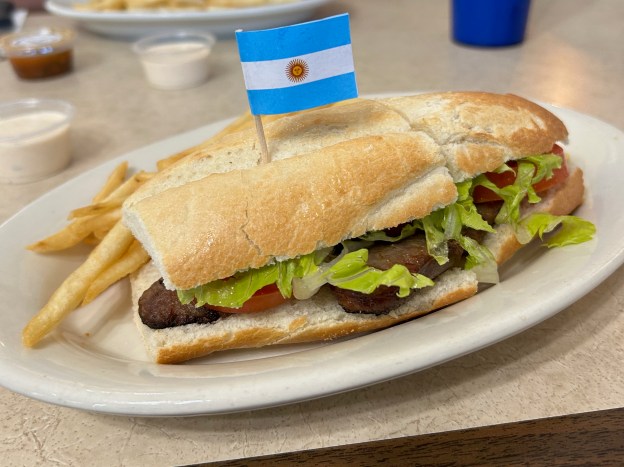
A choripán sandwich from Los Hornos Argentinian Flavors in Kansas City, Missouri photographed by the author just before it was eaten by the same.

On Language Acquisition

On Language Acquisition Wednesday Blog by Seán Thomas Kane

This week, how living in a culture is required to speak a language in depth.—Click here to support the Wednesday Blog: https://www.patreon.com/sthosdkane—Sources: [1] “A Letter from San Juan,” Wednesday Blog 3.29.[2] “The North American Tour,” Wednesday Blog 5.34.


This week, how living in a culture is required to speak a language in depth.


The languages which I speak are directly responsible for the ways my life has turned, its winding path a result of the words I use and the ideas they represent. Language is the voice of culture; it evokes the rich harmony of thought that comes from seeing things from certain points of view. At the University of Westminster, I was regularly in classes where there were maybe 10 or 20 languages spoken between each of the students, if not more. English remained our common language and the language of instruction, yet how many of us must have been switching between English and their own native language as they thought about the readings and topics in political philosophy and science which we discussed on a given day? Even then, my English is not the same as the King’s English, nor is it the same as the English I heard spoken when I drove through Alabama in July 2022. Language then reflects our individual circumstances of experience. Knowledge is gained through experience first and foremost, whether that experience be theoretical through books or practical through lived experience. I make this distinction because I often feel that when I’m reading a particularly well written book that I can actually imagine the characters as real people who I might meet in my life. The best TV shows and films are like that, their casts that we see regularly begin to seem like old friends who we look forward to visiting again and again.

Language acquisition is a lot like this for me. Today, I speak three languages: English, Irish, and French, and I can read Latin, Italian, Catalan, Spanish, and Portuguese and some Ancient Greek. I break my languages down into these two categories by their utility in my life. The handful which I can read are those which I’ve worked with in my historical capacity. I’ve spoken Italian and Spanish from time to time, yet those moments of elocution are few and far between. The same could be said for my German, though it’s now been five years since I last spoke that language in Munich, and at time of writing I can’t say that I’d be much use in remembering it today. This is even more true for my Mandarin, a language which I studied for a semester in between my two master’s degrees out of pure curiosity. I can remember the pronouns, a couple of verbs, and a noun or two but that’s about it. All this to say that I may know something about German and Mandarin yet it’s little more than a foundation for the future when I might be faced with a desire or need to learn the language properly.

I’ve been thinking lately that of any of these I need to work most on my Spanish, the most useful of these languages for me to speak here in the United States. I can understand Spanish fine yet speaking it remains a challenge. On Sunday evening after my shift I decided to reopen the Spanish course on the app Busuu––one which I used for Spanish before my March 2023 trip to the Renaissance Society of America’s annual meeting in San Juan, Puerto Rico––and try it out again.[1] That time I got through the A1 level before life got in the way, and I gave it up feeling frustrated with the process. I did not resume any online Spanish courses before my trip to Mexico last November for the History of Science Society meeting in Mérida, instead choosing the less preparatory method of winging it.[2] That worked with fits and spurts, my best Spanish conversations were in taxis with locals, though I was mostly thinking about how I would say things in French and then Hispanifying them based on my minimal knowledge of Spanish grammar. On Sunday, after I retired for the evening from my Spanish lessons on the app I realized what it was I missed so much in these apps: the human connection. Busuu prides itself on its crowd-sourced learning method; throughout the course learners are asked to submit spoken or written answers to the computer’s prompts which learners of other languages who speak the target language then correct. I like this system overall, and it does give this sense of community, yet I feel that it could go further.

After English, the second language I learned was Irish, my ancestral language. I started studying the Irish language when I was fourteen and have been focused on it to varying degrees for the last eighteen years. It really took until 2022 for me to connect with the language though, in spite of the fitful starts and stops because in that year I began to build a community around the Irish language. First on Zoom through Gaelchultúr, an Irish language school in Dublin, I met other speakers from across North America and beyond who like me were descendants of Irish immigrants old and new. I looked forward to seeing some of the same people term after term. Yet after returning to Kansas City, I began to look locally for Irish classes and came across the community that my friend Erin Hartnett has built at the Kansas City Irish Center. Through Erin I’ve met some really good friends and from our mutual appreciation for our ancestral language we’ve found a lot more in common from mutual histories to mutual appreciations for rugby. Without this community I would speak Irish but not terribly well. Now, not only do I speak Irish daily, but I also write in Irish every day. It has truly surpassed French as my second language, something I’m proud of yet not too concerned about when it comes to my Francophonic abilities.

French exists in a different sort of place for me than Irish. It’s not an ancestral language with deep family ties. Rather, it’s a language that I gravitated toward out of a fascination with French culture and history. I may have written here in the Wednesday Blog before that my first exposure to French came at sunset on a Sunday in February 2001 when my Mom put a “Learn French” cassette tape into the tape player in our family car when we were driving through the hills of northwestern Illinois toward Dubuque, Iowa. She and I were preparing for a trip to London and Paris that summer, the first European trip that I could remember, and she wanted to put in the effort for us to have some French before we arrived on the Eurostar from Waterloo Station at Paris-Gare du Nord. I didn’t like Paris much on that first visit, I found the language barrier to be too great for me to really feel a sense of connection with the place. On my next visit to France in March 2016 with three years of undergraduate French under my belt I found that I not only got the place more, but I appreciated the nuances of French culture more than I had as a child.

I owe a great deal to my undergraduate French professors M. Kathleen Madigan and Claudine Evans. It’s through their classes that I gravitated toward my career studying the French Renaissance. When I get asked why I chose to study the French I keep it simple and say it was a matter of pure convenience: I already spoke French, so I wouldn’t need to learn a new language (Spanish or Portuguese) to read my primary sources. That’s how I ended up studying André Thevet (1516–1590). I chose him because he happened to write about a sloth and for me the idea of being a sloth historian made me laugh. It’s as simple as that. I loved studying French in college, and even more teaching it with the online Beginner French course I built for the Barstow School in 2023 and 2024. I found that going through the same textbook I used a decade before I was not only teaching the students who in the future would go through my course, I was also renewing my own French education and learning things that I’d missed on my first go around. This is a critical point in language acquisition: few people are going to get a language on their first try, it’ll take multiple goes to understand what’s being said and to make oneself heard as well. It took me three tries to get Irish down, and the same is the case for Latin. Failure in the moment is merely a setback which can, and ought to be overcome in future endeavors. After all, remember that if we’re paying attention to our lives we’ll learn from our experiences.

I grew to really embrace a lot about the Francophonie to the point of paying Sling TV for access to TV5 Monde, France’s global TV channel which now broadcasts several different channels. I personally enjoy TV5 Monde Style, which tends to broadcast documentaries and cooking shows, though I don’t watch it as much as I might like. I read a lot of French books for my research, after all I work with source material that has largely only been written about in French and to a lesser extent in Portuguese. I am able to do what I do with those sources because I can read them and the secondary literature about them in French. All this made it all the easier for me to go to France and Belgium in the last several years and be able to switch from English to French as soon as I walked off the plane. I found when I was flying back to the United States in June 2024 after spending about a week speaking mostly French in Paris that I was consistently responding with the quick phrases “please, thank you, you’re welcome,” and the like bilingually with the French followed by the English as I’d heard so many people do in shops and the museums during that visit. It took me a while to get past doing this and just say things in English again after I returned.This then is why I think I’ve had so much trouble with learning Spanish. It’s the first language that I’ve given a big effort to learning outside of a classroom on my own. At least in the classroom you have fellow students around you to practice with. When you’re on your own you’re on your own, a wise-sounding craic which is to say that when alone you have no one else to talk with. I have friends here in Kansas City who speak Spanish, and I know all I have to do is ask, yet it’s finding the free time to sit down with them and work on it that I need to figure out. To truly gain a footing in a language one needs to immerse oneself in the culture. Apps and online learning will only take you so far. A classroom learner will blend into their own classroom idiolect of the language in that particular space where it exists in their life. Only if they move beyond classroom and begin to converse and live with people in places where that language is spoken will they begin to speak it in a manner which is more recognizable to native speakers.


[1] “A Letter from San Juan,” Wednesday Blog 3.29.

[2] “The North American Tour,” Wednesday Blog 5.34.