I am a PhD student studying the history of Renaissance natural history focusing on French accounts of Brazil. Chicago born, longtime KC resident, SUNY Binghamton grad student.
This week on the Wednesday Blog, I extol the virtues of listening to our bedfellows in nature.
—
Click here to support the Wednesday Blog: https://www.patreon.com/sthosdkane
This week on the Wednesday Blog, I extol the virtues of listening to our bedfellows in nature.
For all our pretenses of difference from the natural world as political animals in Aristotle’s words we remain a part of the great fabric of the Cosmos itself. In those moments when we find ourselves at a loss for words, for what to do in our lives, I suggest remembering that no matter how political we may be, we are all still animals. We all still are creatures created through the process of evolution and natural selection after many generations of formation to become the species we are today. Our very nature is tied with this long distant memory of Eden, of a time when our ancestors still lived amid the flowers, the vines, and all living things.
We remember less the perfection, which seems remote to our sensibilities like some sort of a nebulous dream that will burn up as soon as the Sun of our rational minds awaken in the morning, and more the shame that ended that dream. We’ve covered ourselves all too well, with our trappings of civility, our industry, our commerce, and our shows of strength. What remains of that dream that may once have been our reality? It is but a shadow cast by a passing cloud upon the land below where we live, seeking a truth we can’t be sure is real?
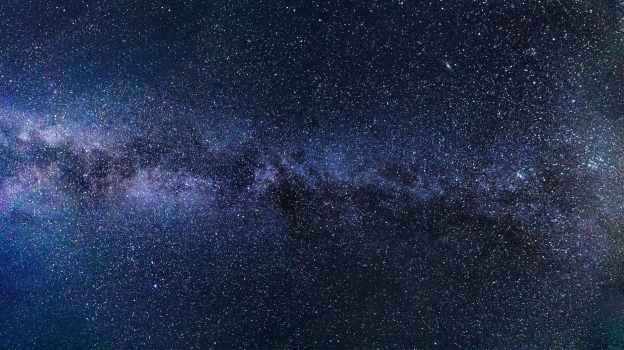
Yet in those moments when I am most distressed, most beaten down by life and work, all those things I do, I try to remind myself to go sit outside a while and listen to the birds. Their joyous singing tells of another time when we too were free of the cares that we’ve burdened ourselves with. Birdsong is to us an echo of a lost world, just as the stars burning bright high above us are an echo of worlds, we imagine we might one day come to know and understand. In the great moments of sorrow and trouble it’s best to return to the purest form of joy there is. The simplest voice often has the finest chorus in this great cosmic play of life.
So, take a moment to go out today and listen to the birds and all the other wild things, for at some level we have more in common than we lack. I for one long for a day when I can sit in a garden, close my eyes, and listen.
This week on the Wednesday Blog, looking back to a Renaissance philosopher to try and make sense of the present.
—
Click here to support the Wednesday Blog: https://www.patreon.com/sthosdkane
This week on the Wednesday Blog, looking back to a Renaissance philosopher to try and make sense of the present.
I was in my 8th grade year when Hamas took control of Gaza, and throughout my childhood as much as my own country was at war in Afghanistan and Iraq in what our government called the “War on Terror,” I knew of Israel and Palestine as a set of nations that had been in some state of war since the foundation of the State of Israel in 1948. To hear then last week that Hamas had attacked Israel, starting a new war at the end of the Jewish high holy days filled me with a grief I thought had been lost in the jaded and bruised reactions of my conscience after decades of hearing of atrocities here at home and abroad. At one point in my life, I thought of war as a sort of grand adventure, of the glory that men like Theodore Roosevelt and Winston Churchill looked to in combat. I never chose to serve, nor would I have likely been allowed to because of my health, though as I grew up, I found the very idea of war, let alone the idea of taking another person’s life to be anathema and horrific to behold.
The Catholic Church has a theory of just war, which argues that in the case of most need, when no other option is available that war is the only solution available to a good and morally upright people. I for one have trouble with this theory, though I do see how it could make sense. I’d rather negotiate for as long as possible, try to find common ground with a potential enemy in the same way that I try to speak to those I interact with on a daily basis in their own language. Yet sometimes it does come down to this question of whether after all the negotiating and the impasses that have resulted if fighting is justified?
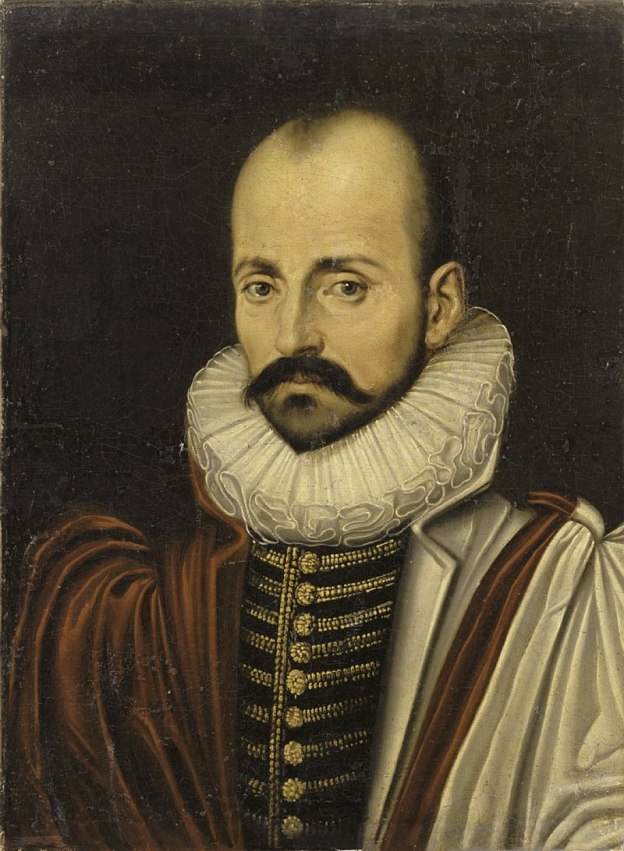
In 1580, the French humanistic philosopher Michel de Montaigne, the first great essayist, published in his first volume of Essays one such document titled “Des cannibales,” or in English “On the Cannibals.” In it, Montaigne spoke about a Tupinambá man from Brazil who he met in Rouen, the great port in Normandy where most of France’s trade with Brazil was based. Montaigne described how the Tupinambá became famous in his time for their cannibalism, rituals which were an intrinsic part of their culture that made them seem alien to his own, and dreadful in their otherworldliness.
Yet Montaigne saw also in the Tupinambá something of a reflection of his own world. 1580 saw France embroiled in the Wars of Religion, which lasted nearly 40 years and cost the French people a great many lives across several generations. Montaigne retired from public life in the civil service in part out of disgust for how the course of French history had gone, disgust that Frenchmen were not just killing fellow Frenchmen but torturing them and bringing ruin onto their families and communities all in the name of religion.
Religion is a tricky thing in human cultures. Most religions today are intended to give their believers a guide to living a good and true life; the greatest commandment which Jesus offers in the Gospels is to “love the Lord, your God, with all your heart, with all your being, with all your strength, and with all your mind, and your neighbor as yourself.” (Luke 10:27, NAB) I’m a practicing Roman Catholic, as a priest once said to me “I’m practicing, I’m still learning how to do it right,” and at the end of the day the best any of us can do is try to be good people, to make something positive and impactful of our lives, even if it is only a small impact on our immediate friends and families. I am religious for many reasons which perhaps someday I will write about here.
Yet I am also a skeptic, much like Montaigne whose essays reflect this uncertainty about life, humanity, and established norms. Montaigne’s skepticism reflected the empiricism that was born in the following decades of the Scientific Revolution and flowered 150 years later during the earliest stirrings of the Enlightenment as much as it came from the humanism of his own time during the Renaissance. Montaigne challenged his readers, his fellow Frenchmen amid their own bloodletting, to save their cries of barbarity for the Tupinambá lest they also “call that barbarism which is not common to them” at the same time. Montaigne thought it more barbarous to “eat men alive than feed upon them when dead.” The way in which this war is being prosecuted by Hamas, while they hold clear grievances, loses any sense of moral justice when, as Montaigne charged his countrymen, they “mangle by tortures and torments a body full of lively sense, wresting him in pieces.” The horrors of this war then, in all their wanton cruelty, show this twisted version of the human character in its fullest expression.
When I thought more about the war after it began last week, and as I thought of what I could write about it, about the renewal of this long simmering conflict in lands thought to be holy by three of our species’s largest religions, I was drawn to Montaigne’s words again, especially after reading reports from a journalist friend about the killings of infants and children by Hamas still defenseless in the earliest verses of their song.
What worries me is this idea of religious war, fighting “under pretense of piety and religion” in Montaigne’s words, remains in my own Catholicism. I know there are some who adopt the image and iconography of the Crusaders of old to battle against what they see as the wickedness and snares of evil, desecrations against what they hold most dear. Theirs is a faith limited to only a few, a scarce number that will surely only grow within their own families. When one says, to quote Handel’s Messiah “if God be for us, who can be against us?” it is very hard to argue, let alone change the mind of those who see God on their side. That is a faith limited to only the most elect, denying the promises of salvation to “our neighbors and fellow citizens” who instead receive scorn at the least, torture, death, and dismemberment at the worst.
I worry about how large this war will become. It is not like the other sudden conflicts that Israel has found itself in throughout its young history as a modern nation-state. This is a war fought against a terrorist organization with clear backing from another power in the region. Will that power leave the shadows or be attacked directly by Israel to stop the flow of weapons and funds that at time of writing is likely going to Hamas? And if so, how far will the Israeli Defence Force go to defeat Hamas before they lose their own moral standing? This is why I do not care for the idea of just war; taken too far with too much emotion driving one’s judgement a just war can quickly become unjust and the warriors fighting in the defense of their own kind could resort to brutality like their foes “that exceeds them in all kinds of barbarism.” So, in the last week when I’ve been at Mass, when I’ve led my classes at my Catholic school in prayer, my thoughts have been on the victims of this war, the fighters who see their actions as their best and only recourse, and on the faint glimmer of hope that peace will someday return to the Israeli and Palestinian peoples. In an age when terror is as potent a weapon as any other, I hope those able to see an end to this war will find a way to start talking with each other again. Until then, just as Montaigne wrote 443 years ago, so too today we find ourselves “not sorry we note the barbarous horror of such an action, but grieved, that prying so narrowly into their faults, we are so blinded in our own.”
The translation of Montaigne’s Essays used here is based off of John Florio’s 1603 first English edition of the Essayes, or Morall, Politike, and Militaire Discourses of Lord Michell de Montaigne published in London.
This week on the Wednesday Blog, I have a bone to pick with the weather.
—
Click here to support the Wednesday Blog: https://www.patreon.com/sthosdkane
This week on the Wednesday Blog, I have a bone to pick with the weather.
I wouldn’t be a good Midwesterner, nor even a good human being, if I didn’t always have the weather as a fall back conversation topic. There’s always something going on out there to comment on. This week I’m befuddled by the sudden shifting of the moment from a prolonged summertime heat that lasted throughout September to a sudden crisp Fall chill which made the date, now in the second week of this month, all the clearer to me.
My own human surprise at the sudden change of weather might best be described with a mechanical being, in this case the idea that Star Trek‘s android Lieutenant Commander Data had a functioning internal chronometer that kept him accurate to the nanosecond. Yet that chronometer could be turned off if he wanted, though before that was suggested to him, Data hadn’t ever considered the possibility. I’ve had my odd week where I’ve lost track of time, whether due to sickness or exhaustion. So, to come to this week and be caught unaware that the warm days of Summer are truly behind us when they seemed interminable in Kansas City struck me harder to believe than I expected.
In my current situation this means that I’m closer now to Thanksgiving than the start of this Fall Semester when I began my new and current job teaching middle schoolers. It also means that the late Fall deadlines that I have for written submissions are indeed closer than they may have initially appeared. We passed by the usual markers of the changing of the seasons, and I recognized them as I watched them go by; yet I think because I haven’t spent a full year in Kansas City since 2019 I found myself unassuming when the hot days continued even as the Sun began to set sooner over the Great Plains to our west, venturing ever as it does each day towards the Rockies, Deserts, and Pacific beyond.
On Monday, my photo app reminded me that 4 years ago this week I made my first trip home after the big move east to Binghamton, and in the pictures featuring my beloved and dearly missed dog Noel in my arms I’m wearing the same sort of woolen sweater I’d usually don when indoors throughout the Winter. So, even in that moment when my seasonal expectations were still attuned to Kansas City’s climate, by now I’d be far colder than I am today.
It’s curious considering that I was told to expect earlier winters when I was in Binghamton, yet even there I only began to don my winter coat by about the first week of October. It seems reasonable to assume then that all of this is due to changes in our climate, a topic I’ve written about a great deal in this blog of late. What strikes me the most about 2023 has been the stability of our climate over most of the past four months. My suspicion long term is that the extreme heat we experienced in the late Summer, which drove my students indoors for recess for a week, and the extreme cold we felt around Christmas last year will become our new normal. I hope then, that we can adjust properly to this new normal, both in our energy use and in our ways of living throughout the changing seasons. I grew up knowing Winter to be long, cold, and snowy, Spring to be stormy, Summer to be long, hot, and dry, and Fall to be of crisp with occasional storms. Now though, the frosts of Winter “come pale, meager, and cold” to quote Henry Purcell’s The Fairie Queen, for far longer in a mirror to the lengthening Summer heat. Should I be fortunate enough to have children, my lived wisdom of the seasons may prove useless to them in their own brave new world. Certainly, the moderation which brought my ancestors to this middle bit of the North American continent is fast fading from view.
My seasonal confusion is in part born out of how fast my life is moving at this moment, juggling three jobs and trying to maintain my research all at the same time. Still, as I feel the crisp air filter in while writing this, I am eager to see another Fall arrive like all the others I’ve known.
This week on the Wednesday Blog, why our conversations about ecology and culture are grounded in loss.
—
Click here to support the Wednesday Blog: https://www.patreon.com/sthosdkane
This week on the Wednesday Blog, why our conversations about ecology and culture are grounded in loss.
Over this past weekend I was in Denver for a cousin’s wedding, a joyous event on Sunday evening that was beautiful to be a part of. Besides the two evening events on Saturday and Sunday I had the weekend to myself to spend some time in one of my favorite cities in the United States. My first stop on Saturday morning then was to my old favorite Denver haunt, the Museum of Nature and Science in City Park. Longtime readers of the Wednesday Blog will remember this museum from my two-part post from the pre-podcast days of June 2021 titled “Sneezing Across the West,” in which I described my return to this museum as an adult 22 years after visiting as a young child.
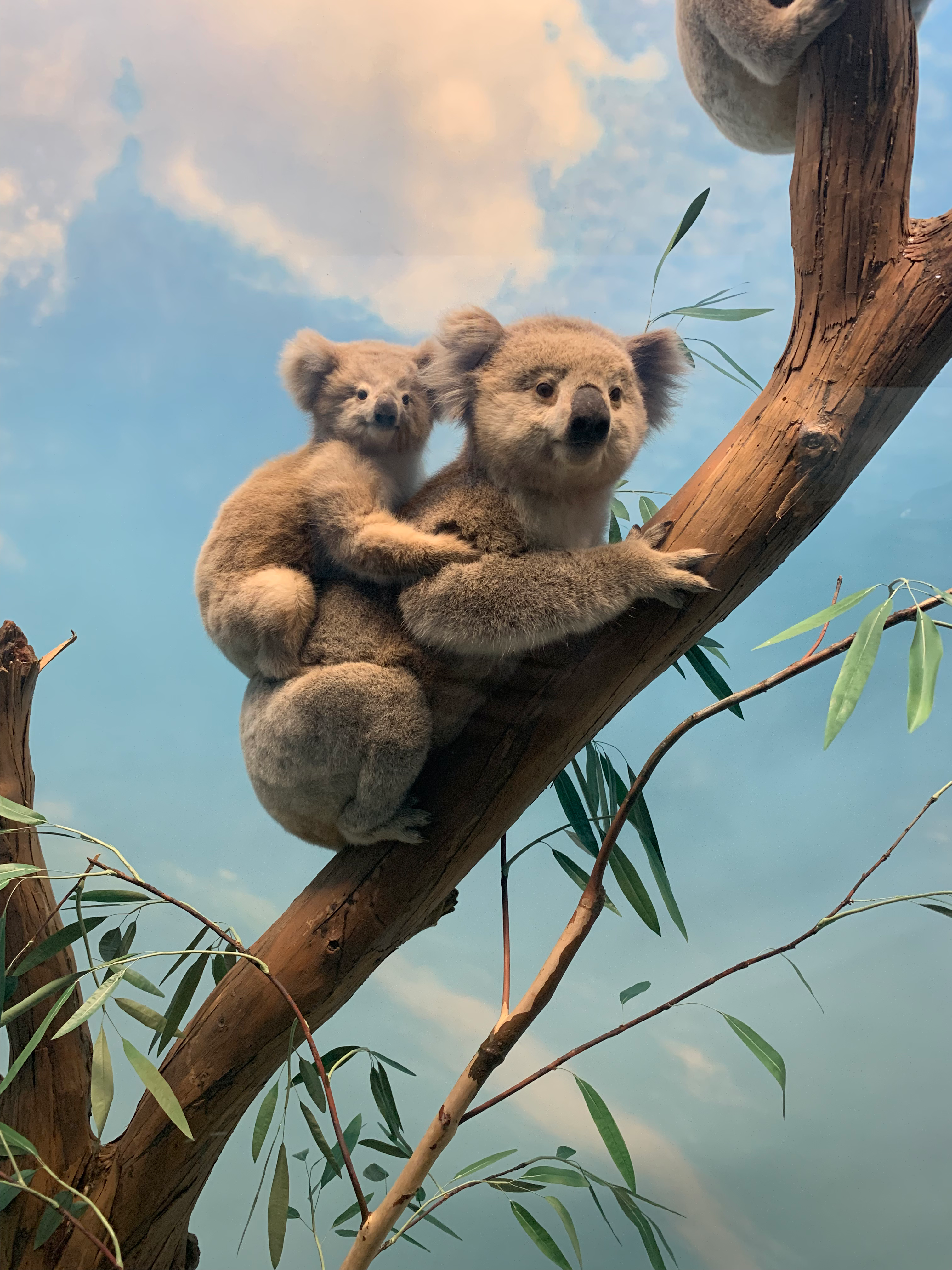
The Denver Museum of Nature and Science excels in its collection of dioramas, scenes from the natural world of taxidermied animals in their own habitats recreated in several halls on two floors for the public to experience a snapshot of wild life in its element. These dioramas capture my attention today far more than most paleontological exhibits, as while I enjoy seeing the dinosaurs and their fellow fossils, I’m now more drawn to the recreations of modern lifeforms, particularly mammals, that dioramas offer.
The DMNS’s koalas.
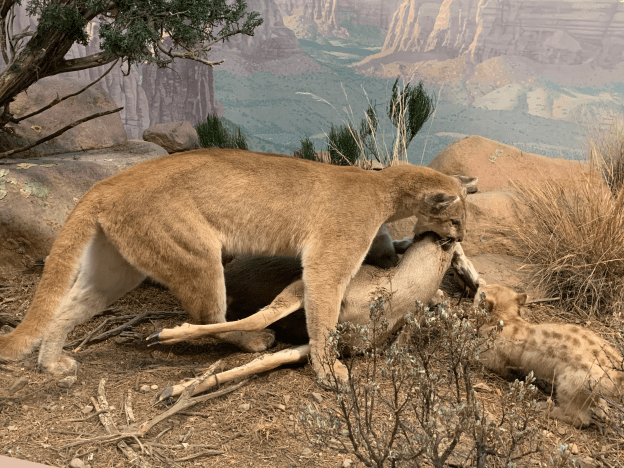
On this Saturday morning stroll through the museum, I stopped in front of a display of a puma, North America’s famed mountain lion, one of our more enigmatic megafaunal predators. I haven’t seen any mountain lions in the wild, though on one occasion a decade ago while hiking to a cave to shoot an ill-fated short film adaptation of Plato’s Allegory of the Cave in Pike National Forest I could swear our party was being watched from the ridgeline several hundred feet above us by a puma. I’ve only ever seen and encountered pumas in zoos and museums, behind wire fencing or glass. I got to know the resident puma in the Ross Park Zoo in Binghamton rather well, to the point that it would slow blink at me as I approached it, a sign among domestic cats of acceptance.
With my own limited experiences of pumas in the wild, it struck me to see the ubiquitous line on the diorama’s plaque which read “Historic Range” on the key to a map which showed how most of this continent was once puma country. I paused in my stroll at that point, and it occurred to me that our entire narrative of conservation and the preservation of human diversity in North America goes back at some point to a story of historic loss and the subsequent poverty for certain pieces in the continent’s ecology. For one thing, we lack large predators in much of North America west of the Rockies today, so especially in the great eastern woodlands the deer population is often higher than it ought to be.
Still, there is this core truth to our continental story, let alone the collective history of our hemisphere which tells of a black mark in our soil dividing the present age born in imperial colonialism and the time which came before. Like the K-T Boundary which can be seen in rock strata dividing the fossilized remains of creatures who lived at the time of the dinosaurs below in the Cretaceous Period and in the Tertiary Period after the asteroid impact which saw the demise of those reptiles 66 million years ago, this line demarcates a clear beginning of a modern world in the Americas warts and all. Before the arrival of Europeans into each distinct region of the Americas, each valley even, life on these continents developed in a very different manner, responding to circumstances which existed perfectly well without all the new flora, fauna, and bacteria which my European forebearers introduced after 1492.
I’ve always felt grief at the idea that so much of the life on these continents once flourished and now lies far diminished, shadows of their former selves. We could say that nature has been lost in the drive for conquest, to paraphrase a key point in Betty Meggers’s 1996 book Amazonia: Man and Culture in a Counterfeit Paradise, in our desire to realign nature around us to fit our own interests, we replace a tortured ecosystem with a corrupted egosystem which pales in comparison to its former glory. Nature is something we can try to control yet never fully overcome, for in spite of ourselves we remain a part of the natural world we seek to command to our will. Like Cnut in his greatest legend, we cannot command the tide to turn, nor can we even really ask, we can only observe and embrace the patterns of nature as they have developed over eons.
On Sunday, I turned from the beauty of the natural world to the beauty of the artistic world. That morning I paid my first visit to the Denver Art Museum, and was astounded by the seven stories of galleries, each designed around not only the art they contained but with strategically placed windows which opened the objects within to the cityscape and distant peaks of the Front Range and the Rocky Mountains beyond. I was most moved by the gallery containing art from the Old West, the period in my own home region’s history just before my ancestors arrived in places like Iowa, Kansas, Minnesota, Nebraska, and North Dakota at the turn of the last century. At the peak of what we call the Wild West, most of my ancestors who were living in the United States were farmers in Bureau County, Illinois, today located along Interstate 80 and the BNSF line that Amtrak’s Southwest Chief rolls along each day from Chicago to Los Angeles.
I grew up with a very romantic view of the Old West, of the cowboys and ranches, the wide open spaces of the prairies and the wild mountain landscapes of the Rockies which I visited as a child in the 1990s and early 2000s on annual summer trips to a dude ranch in Pike National Forest (the same property where I shot that film in 2013). Like many kids at that age, at the height of my love for the Old West, I wanted to be a cowboy paleontologist, pairing that historical fascination with my equally powerful love for dinosaurs. While I was in Binghamton, I enjoyed driving the 75 miles west to Corning, New York to visit the Rockwell Museum which specializes in this same American Western art, in order to get a taste there in the East not only of my childhood love for the West, but a sense of my own home region as it once was, a slight pill for my ever-present homesickness. Yet while the Rockwell Museum highlighted the effects of Manifest Destiny and westward expansion on the Native Americans and Mexican settlers who were already there, topics I’ve taught about in the U.S. History survey courses I’ve TAed before, it wasn’t until I wandered through that gallery on the 7th floor of the Denver Art Museum that I really began to understand how the romantic adventure stories of my childhood were also laments of the conquest of the world known and loved by the people who were already here.
On my way to Denver on Friday evening, I read a story in Smithsonian Magazine about the donation made by the Choctaw in the 1840s to help my own people, the Irish, during the Great Hunger caused by the potato blight that struck Europe at the time. I’d known about that donation for many years ever since I read about it in an Irish history book titled The Famine Ships when I was in middle school. Yet this article telling of two Choctaw students using an Irish Government program to travel to UC Cork to study and coming into direct contact with people whose lives and history were impacted by such unexpected generosity generations ago. My 3rd and 4th great grandfathers Keane were the ones who lived during An Gorta Mór, and on the Irish side of my mother’s family, my Irish 4th great grandparents came to America in the same decade after participating in the 1848 Young Irelander Rebellion. Like the Irish participants in the Smithsonian article, I too feel some of the kindness offered to my ancestors in one of their greatest times of need.
This empathy helps me to see less of the romance in the art from the Old West depicting the lonely native warrior standing proud and defiant against the conqueror, and more of the common cost of colonization which both my own ancestors in Ireland and the native peoples of these continents have faced down the generations. We all have our historic range, like the pumas in my life, we all have the limits to our modern lives cast in iron by the will of others seeking to control far further than their own borders. Denver today holds some of that Old West spirit that once defined it and Colorado at its core, yet the many voices which have written that city’s history and continue to define its present and future remain strong. In the Museum of Nature and Science I noticed how the remaining older exhibits were monolingual, with plaques written only in English, while all of the newer materials there and in the Art Museum are bilingual in English and Spanish.
We can learn from each other, and perhaps even restore some of the memory of our histories if we learn to listen to each other speak in our own words. The relationships we have with our relatives, friends, and neighbors alike will change with time, yet it is up to us what those changes will be.
This week on the Wednesday Blog, a look back 200 years to another time of great political change in the United States.
—
Click here to support the Wednesday Blog: https://www.patreon.com/sthosdkane
Next week, I will be teaching about the Era of Good Feelings and the elections of the 1820s which saw the rise of the Second Party System in my Eighth Grade United States History classes. The Era of Good Feelings was a period of political transition between the two-party politics of the Early Republic between the Jeffersonian Democratic-Republicans and the Federalists led by Alexander Hamilton and John Adams towards the Democratic Party founded by Andrew Jackson and the Whigs founded by remnant Federalists and anti-Jacksonians. This era is so named because it saw one major political party, the Democratic-Republicans, dominate American politics after the decline of the Federalists after the War of 1812. The President of the late 1810s and early 1820s, James Monroe, and his successor John Quincy Adams sought to ensure party politics would never return, yet those hopes soon proved futile.
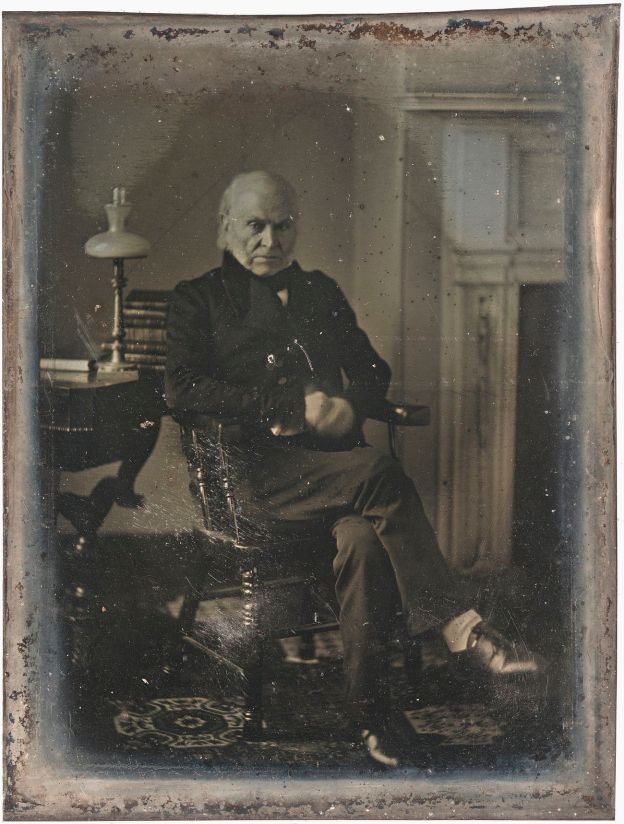
I’ve long enjoyed reading about John Quincy Adams, the eldest son of the second President, John Adams. The younger Adams had many qualities that I admire in a public servant: a great intellectual talent, a Ciceronian love of rhetoric, the patience of a great diplomat, and an openness to change for the benefit of new ideas. Adams was an early abolitionist and supporter of women’s suffrage fifty years before the passage of the 13th Amendment and a century before the 19th Amendment became law. Adams even tried to found a national university and a national observatory, as well as get the United States to adopt the metric system.
Sadly, none of these things happened during his administration, which ended in failure when his old political rival of 1824, General Andrew Jackson, returned with a populist fervor that elevated the Tennessee planter to the Presidency in 1828. This week as I’ve been making my slides for next week, I’m struck by the clarity of choices in the Election of 1828, and how those choices were between an incumbent who ran on policy and a firebrand outsider who ran on personality. It’s a familiar election narrative, yet it provoked a new conclusion about our current political stalemate between 2023’s Democrats and Republicans than what I had considered before.
Whereas the far-right of the Republican Party has a loud and defiant outsider candidate to rally behind to promote their vision of America, no other faction in either the Republican or Democratic Parties have the same kind of clear leadership. The parties are in a moment when few unifying voices can be heard, when there is always something about the current roster of politicians that leaves more voters choosing between “the lesser of two evils” rather than for a candidate they genuinely like.
Now, I’m biased in this monologue that I’m writing this week: I would have gladly voted to reelect John Quincy Adams in 1828, and not just because I don’t care for Andrew Jackson. Adams is one of my favorite presidents for all the reasons I included above; and his status as one of the fathers of the Whig Party, a preeminent predecessor of the modern Republican Party, shows how party philosophy changes with each successive generation. Still, while many in his day and now might discount the idea that John Quincy Adams had a strong political personality, I suggest we look to the politics of the early republic to find a guide out of our current quagmire.
Having a political figure who can unite a broad coalition behind their own banner, someone who is well liked by a majority of the voting public, is a way to move out of a period of uncertainty and nigh political chaos into a restored stability. The recent political history of the United States has elevated some who could fit this model, yet the extreme levels of bile flung by one faction at another leaves any sense of partisan unity, or better yet partisan magnanimity, far from certain. This leader should be able to bring this wide coalition together yet be humble enough to practice servant leadership, and remember they are in their role as President to help and guide the American people.
The great challenge of our time is to find a common purpose where we have long seen what divides us. It is a challenge which I know we can overcome, a hope which I believe we can realize.
This week on the Wednesday Blog, I try to remember a story for this week that I came up with on Saturday while lost in a parking garage.
—
Click here to support the Wednesday Blog: https://www.patreon.com/sthosdkane
This week on the Wednesday Blog, I try to remember a story for this week that I came up with on Saturday while lost in a parking garage.
I will usually have a few ideas for the Wednesday Blog lying around in one of several repositories, including my memory of incidents that’ve happened within the last few days or weeks that might make for curious anecdotes for this weekly publication. This Saturday, while I was getting dinner on the Plaza on my way up to my evening shift at the Kauffman Center, I thought of one such idea that at the time seemed golden for this week. For some reason, walking back down the stairs from street level to where my car was parked underground, I found myself thinking about the first line of Captain Jean-Luc Picard’s opening monologue from Star Trek: The Next Generation, identical to the same line in Captain James Kirk’s monologue from the Original Series, “Space, the Final Frontier.” This idea of the frontier sticks with me because my own world here in the Midwest is so very new; where now there are tree-lined streets, parks, and fountains little more than a century ago was open prairie.
At the 1893 Columbian Exposition World’s Fair in Chicago, the American historian William Jackson Turner presented his famed Frontier Thesis, which argued that as of that moment the American frontier was well and truly closed; all land from Atlantic to Pacific was taken, bought, or occupied by some one or another. Turner, a historian at the University of Wisconsin-Madison, made this point to mark 1893 as a major turning point in American history from the age when our culture was defined by the endless frontier extending far out beyond the horizon to a distant and nigh mythic Pacific Ocean and towards a new world where the United States was an island unto itself, with travel from New York to San Francisco possible in a matter of days by rail. Today, of course, the same journey can be made in about 6 hours by plane, and for much of my life I’ve heard of Alaska as the new frontier and, like the two Captains of my favorite science fiction series, Space as the final frontier.
Yet I think there’s another frontier that bears consideration, one which is far more personal to each of us. I stand today looking at my own life and childhood with a great degree of nostalgia, and especially now that I am spending my days with students who are going through those same moments, I often want to connect with them by remarking about how I was doing this or that when I was their age. Yet, it is hard for me to reconcile that these people are living out their adolescent years in the early 2010s and not the early 2000s as I did. Their world is a new frontier for me, one that is far more digital, one that is far more interconnected, and one that is in many ways far more dangerous than my own.
I’ve long thought about how different things would be if I had children for them compared to my own life. If I were to have children this year in 2023, they would be in middle school in the early 2030s and graduate high school in 2041, a full 30 years after I did. This is almost equal to the same gap that I have with my parents, yet to me the cultural and technological differences between even today in 2023 with what I knew in 2011 are in some ways far greater than what I remember being around when I was little in the mid and late 1990s that my parents lived with in their teenage and young adult years in the 1980s. It is harder for me to understand some of this generation because my experiences are far more framed in the world that existed when I was born, and as much as I look forward to the futures that this century could hold, I still feel a close connection to the century that formed my own existence.
This is all a very linear way of thinking about time and even space. It could be that echoes of moments from my own past keep appearing in my present as I experience this new period in my life. The frontier of full-time employment has been reached, and I’ve chosen for the moment to cross its threshold into whatever its potentials may hold. I look back at my life from just a few months ago with some wistful longing for the days before I was constantly needing to be my best self, the days when I had plenty of time to get all of the things I need to complete done. There are always echoes in my memory which announce themselves in the present, from the way the sunlight shines nebulously in the sky on a morning after an overnight rain to the new takes on old hymns we sang in my elementary school Masses each week. I find myself remembering the people I knew and loved in my past and see a great deal of them in those I surround myself with now.
I hope that as I move further into this new frontier I will be glad to see what it has to offer, what ideas it will inspire in me, and how I can continue to grow, hopefully, to become the person who people will remember in centuries long after I and all those around me are gone when perhaps humans will have begun venturing out from our home planet to seek their own new frontiers deep in the void of Space.
This week on the Wednesday Blog, how we present ourselves to the world around us and in the mirror to our own reflections.
—
Click here to support the Wednesday Blog: https://www.patreon.com/sthosdkane
This Monday saw the twenty-second anniversary of the attacks on September 11th, 2001. I decided I’d talk about that day and the days and years that followed with my 8th grade U.S. History students as it most closely dealt with their own curriculum more than with anyone else who I’m teaching right now. I told them that to me 9/11 was the true beginning of the 21st century, rather than Millennium Night the year before. That’s because so much of this century has been defined for me by its violence, its chaos, and its terror. This compares to what I remember of the late 1990s as a time of peace, optimism, and wonder from my own childish eyes at the time. I saw the world as a little boy, not noticing most of the troubles or worries of the world, just gazing in awe and wonder at what was before me in the moment.
My early childhood wasn’t a time of blissful ignorance akin to the early moments in the story of Siddhartha Gautama, later known as the Buddha, who knew no suffering in his princely palace until his curiosity led him out onto the street and into the real world for the first time. I knew bad things happened, and that there were people misled into evil. I had seen the effects of death and had an idea of what it was, but none of these essences of our reality set themselves into that visceral sensation of knowing until after that sunny Tuesday morning when the world changed all around me, and I and my classmates in our third grade room on the upper floor of St. Patrick’s School in Kansas City, Kansas were unaware of it all, the great tempest brewing around us on that cloudless day.
Over the last few weeks on my drives to and from my new day job at another parochial school on the Kansas side of the border I’ve been listening to a new audiobook of Andrew Robinson’s A Stitch in Time, a novel following the life of Star Trek: Deep Space Nine‘s beloved Cardassian spy-turned-simple tailor Elim Garak. The audiobook is narrated by Robinson, who played Garak throughout DS9‘s original 1993-1999 run, much to the delight of fans of the show such as myself. I of course had already read A Stitch in Time, and its anthologized sequel the story “The Calling” which was published in 2003 in the delightful collection Prophecy and Change. Let me briefly digress from this week’s topic to say that as much as I loved reading and now listening to A Stitch in Time, Robinson’s “The Calling” remains for me the greatest sequel I have yet read for how beautifully it captures a sensation of peace and resolution coming to a people as maligned by their own poor decisions as the Cardassians.
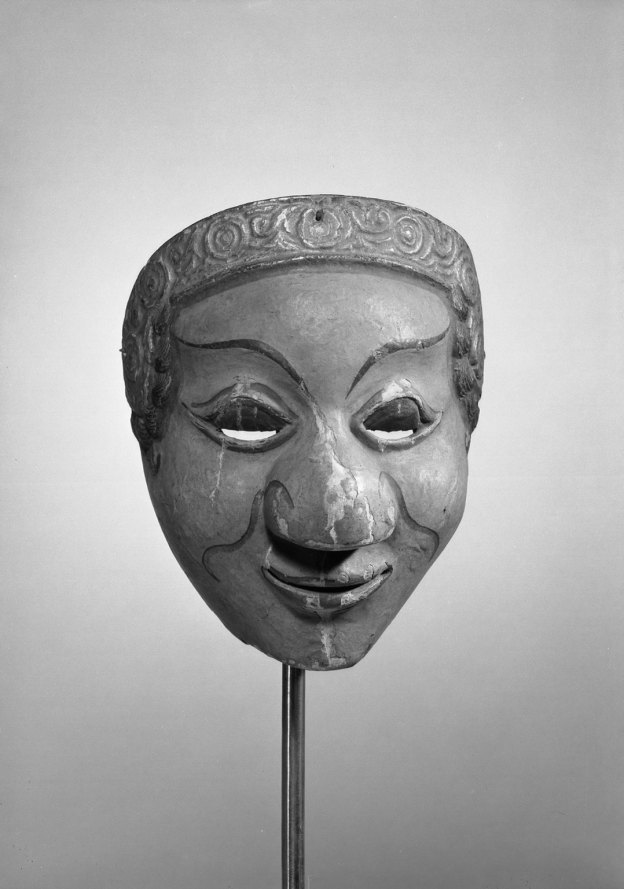
Many moments stuck out to me from A Stitch in Time, yet the pinnacle of these was Garak’s realization that everyone around him, himself included, regularly wears masks to hide their true intentions and weaknesses. These masks might be physical, like an ancient theatre mask or the famed half mask worn by Gaston Leroux’s Phantom of the Opera, but more often they are built in the wearer’s personality and projection to those around them. So, when I was trying to find a conclusion to my recollections about 9/11 this Monday, I thought of Garak and the masks. I told them that everyone wears them, everyone has something they highlight for all to see, and that beneath that mask of power, popularity, ferocity, clownery, or even awkwardness lies another person. That person may be self-conscious or afraid of showing their true face, or they may have just grown used to wearing that mask from a time when they were unsure how to face the world around them. Still, behind every emotion we express there lies another human being who like all of us was once born naked, exposed, powerless, and most importantly innocent of both good and evil.
To me, 9/11 was a moment of great tragedy for what we chose to do in its aftermath. The United States was quick to act in launching the largest manhunt in human history to capture and kill the leader of Al-Qaeda, Osama Bin Laden, and in the process to ensure that countries like Afghanistan under the Taliban would no longer be safe havens for terrorists. The enemy soon shifted, once a role filled by the Nazis and later by the Soviets, a role that had shifted without focus for some time now began to sharpen in relief towards terrorists, but not any old terrorist, only Muslim terrorists were the true enemy. The rage of America fed a deep Islamophobia which still burns bright within this country. Yet as that rage was noticed for its power it was quickly monetized and commercialized, utilized by those wishing for quick victories against their political rivals at home at the expense of compromise and civil discourse. The longest legacy of 9/11 was a new political era in American history driven by fear and hatred of the other, whether foreign or domestic.
The masks that Bin Laden and all those who use terror and fear to achieve their aims may seem powerful in the moment yet quickly crack under pressure from demands for justification. They do not seek to ensure passage to some blissful afterlife like the death masks or sarcophagi of the Egyptian mummies, but instead seek to do the greatest amount of harm to those in the way for the short term gains of greater terror among one’s enemies and greater publicity for one’s cause. To fight these masks, we adopted our own versions of them, donned visages painted red in our own rage, and forgot what each other’s faces beneath those masks looked like.
Beneath each mask lies another person, who fears their own weaknesses and searches often in vain for their strengths within the great dark forests of our fears. It is often hard for me to focus on all the things I’ve accomplished in my thirty years amid all those memories of embarrassment and pain, and this new job working with young people just learning how to fit into their own skin has helped me tremendously to be comfortable in my own as an adult and a sometimes leader. I tried to impart my deepest held belief on all of this in my last point about this week’s somber anniversary before moving onto Monday’s lessons; that we should never celebrate the death of those who have done evil things, for as evil as that person’s choices may have been they were still just another person behind a mask. Perhaps, that mask had become their face, engrained seething onto their skin until they could not remember the face beneath, until they could not see the child they once were, the innocence they once embodied. Theirs is a mask which they could still lower, a false vision of strength they could let go of, if only they didn’t fear the warm sunlight touching their face for the first time in so very long.
This week on the Wednesday Blog, recollections of this past holiday weekend's activities at the Kansas City Irish Fest and beyond.
—
Click here to support the Wednesday Blog: https://www.patreon.com/sthosdkane
I had a realization this weekend when I was talking to some people who were friends of friends in the Kansas City Irish community: I don’t need to try to be someone else or to accentuate one part of my personality over any other part to fit in, I am who I am and the people around me accept me for it. Growing up I would see my friends and classmates make their name as the big baseball player or the dancer or as the Polish guy who could tell you everything you ever wanted to know about the thing, they were passionate in. For me, I filled several different roles from the history and geography nerd to the Irish guy in the room, to the Chicago kid living away here in Kansas City. Yet throughout all of it, I always felt the need to highlight one part of who I was over all the others in a given moment.
I often get annoyed when I see other people do this, when they talk about the same thing over and over again to no end and will catch myself doing the same thing. So, it is a relief and a moment of joy to realize that I don’t need to be that person, that I never needed to be that person. I’ve always been complicated and multifaceted in my interests, roots, and personality and I am the combination of all those things.
This weekend saw my return to the Kansas City Irish Fest after five years away thanks to my time in Binghamton. I remembered the Fest being larger in the mid-2010s during my most recent visits, and this year my own participation was somewhat muted by outside circumstances of a new job and a general need to use the Labor Day weekend to rest after months at work on my latest dissertation draft. So, I found myself relieved to be surrounded by my own community, the Kansas City Irish community which is made up of long-time locals like my maternal family, recently arrived Irish immigrants, and transplants from other Irish communities across North America like my Dad and I. It was a moment when I felt like I was returning to something of the normal that I once knew before the pandemic and before I left for Binghamton that I had forgotten I missed.Still, the holiday weekend also saw another momentous occasion in the history of this city beyond the regular annual festivities in our community. On Friday, 1 September, the new aquarium at the Kansas City Zoo opened. I got to tour it with my parents on Labor Day, this Monday, and was awed at the achievement of all the people who conceived of the idea of building an aquarium at the Kansas City Zoo, and of all the people who built it including one of my uncles. This aquarium, while small compared to the Shedd in Chicago still offers a complete picture of life in the world’s oceans and seas from the deepest depths to the coastlines. I want to go back on a cold, snowy winter day when no one is at the Zoo and just wander the halls of the aquarium without all the people around and admire what was achieved in that building’s construction. Surely there will be scientists who will be inspired by that building to pursue careers in marine biology and oceanography. That alone makes me radiant with joy at the future that this our metropolitan community has as we continue to improve ourselves and open ourselves up to new worlds and ideas, and with each passing day to a great many more future possibilities.
This week on the Wednesday Blog, some thoughts on what it means to be a man in 2023 inspired by Greta Gerwig's new film Barbie. Yes, there are a handful of mild spoilers.
—
Click here to support the Wednesday Blog: https://www.patreon.com/sthosdkane
This week on the Wednesday Blog, some thoughts on what it means to be a man in 2023 inspired by Greta Gerwig’s new film Barbie. Yes, there are a handful of mild spoilers.
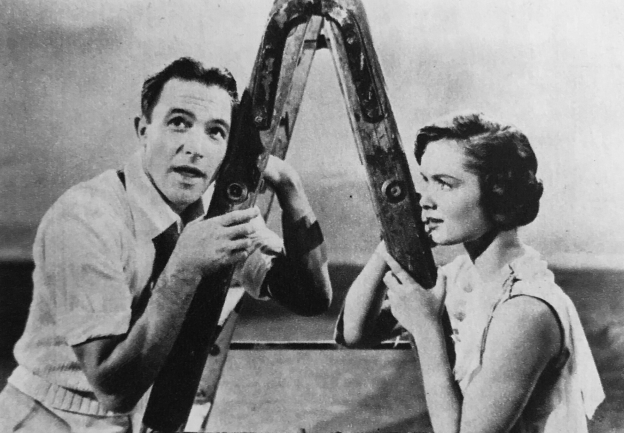
On Saturday I went to see the new and widely acclaimed Barbie film after many weeks of hearing glowing reviews. I was particularly caught by one review in the New York Times which discussed how a dance scene featuring multiple Kens, Barbie’s male companion, was reminiscent of and even nodding towards the work of the late great Irish American song and dance man Gene Kelly, one of my favorite actors. So, I went into this movie with that anticipation at seeing something approaching Mr. Kelly’s work again on the screen, and with a good humor about the whole experience knowing this is a film about a toy.
And yet as the film progressed it became clear that it was not just a film about a toy but a story about the roles which people hold in society as they are traditionally inspired and determined by their gender. It became clear to me that this film was both deep in its commentary and clever in its camp. I particularly loved the moments where the characters in speech more so than in action broke the fourth wall and joined the audience in the joke. Yet the core idea that there is a parallel world off the Pacific coast called Barbieland where the dolls created by Mattel live happy lives knowing what good they’ve brought to the human world is something with far older roots.
To me, this idea fit in with a sort of sense of Heaven, a land beyond our mortal imaginings where those who have made a good impact on the people around them end up and rest on their sunny laurels side-by-side with other do-gooders. The idea of a place where the streets are paved with gold, and where people go to be good neighbors fits too with the idealized image I admit to conjuring in my own imagination of California, especially on our darkest, coldest, and snowiest days here in the Midwest. I know all too well that this sunny dream is far from the reality of the Golden State or any other place on Earth, yet without that dream how can we bring such a place to life?
In the Barbie film, the characters that I felt were intended to be my proxies in the story were the Kens, Barbie’s doting male companions and besides the one Allan the only guys in Barbieland. To be honest though, none of the Kens really stood out to me as someone who I could recognize in myself. Sure, when I’ve had crushes or begun to feel affection for a particular woman, I’ve longed for her to notice me and signal that the affection is mutual, yet the idea that men ought to be like the Kens in the same way that each Barbie represents a different type of accomplished woman feels limiting to me.
I actually felt more of a connection to the one Allan in Barbieland because he at least could see what was going on around him, in part because of his isolation from everyone else. Michael Cena played the awkwardness of being the only person with a level of realization about the goings on around him that fits those of us who often watch the social scene unfold around them. What struck me most about the Kens was how extreme their swings were, from docile doting admirers of the Barbies to overacting and overcompensating defenders of patriarchy with a strange fascination for horses. Ryan Gosling’s Ken in particular seemed to draw a great deal of his character, especially when he took over Barbieland, from William Zabka’s character Johnny Lawrence in the Karate Kid franchise and most recently the wonderfully silly Cobra Kai series on Netflix. All the flaws of that hypermasculinity best characterized in the muscle-man action films of the 80s was visible in Gosling’s Ken, and this represents one image of the ideal American man which we still see in our society. He’s the kind of person who has the potential to gain power or high status in business yet lacks the depth and self-awareness to make him an emotionally mature adult.
I’ve known a lot of people like this, and in many ways, they are one side of the big spectrum of what I’d call the guy, the average American male. I’ve been thinking about writing something called The Guy for a while, and I may still go all the way and write a novel with that title describing an average man just trying to go about his life. To me, when I think of this guy, he’s somewhat of a cross between Harold Lloyd’s character in The Freshman (1925), or Robert Petrie on the Dick Van Dyke Show, or more recently Adam Scott’s character Mark Scout in the recent Apple TV series Severance. The guy is the straight man in his world, yet he could be the comic to those around him and not be in on the joke. He sees his life as not quite what he dreamed of but he appreciates what he has and dreams of better things. He might be in a relationship or married, he might be gay or straight, he could be of any ethnic or racial background, what’s important is that he knows who he is and has found a culture to make his own.
In some ways, I tend to think of myself as the guy. I certainly haven’t had a normal American story, I’ve traveled and am only now at 30 starting my first full-time job, yet in many ways I recognize that I have less control over the world around me than I’d like, and so I hang on to what I can and go with the flow. The guy relies on others, whether consciously or not, and appreciates being seen and heard, even if he may not be comfortable admitting it. The guy might like watching sports but isn’t necessarily an athlete. All around, the guy is the Illinois of American males, about as ordinary and run-of-the-mill as you could imagine with some interesting bits here and there in his life.
So, watching the Kens take the stage together in that Gene Kelly-inspired dance number at the end of Barbie, I got what they were trying to do, but they were all on such a far extreme end of being a guy from me that I had a hard time emotionally connecting with them. But then again, they represent the ideal American male in our popular culture, the popular guys in school who became the fraternity brothers in college and eventually the corporate executives in their careers. That’s not me, and I’m okay with that. I like it when I see other people accept that they don’t fit this ideal definition of manhood, yet I worry when some who do accept that fact then also lose interest in trying to better themselves, when they lose interest in becoming their own ideal self. That goal should never be forgotten for the sake of convenience. The best thing about the guy, above all else, is that in his finest moments he remembers to dream of better tomorrows, and will even find a way to make it happen.
Our society needs guys like that to keep imagining a better future and how we can make that happen. They are the ones who Aaron Copeland honored with his New Deal era Fanfare for the Common Man. When I picture the guy in my mind, it is often in the style of the New Deal artists, the WPA painters whose murals decorate many public buildings across this country now 90 years after the New Deal began. Like all of Gene Kelly’s characters, the guy can dream, and will be remembered as a someone who makes those dreams come to life.
This week on the Wednesday Blog, how I've learned to deal with stage-fright and in some cases overcome it.
—
Click here to support the Wednesday Blog: https://www.patreon.com/sthosdkane
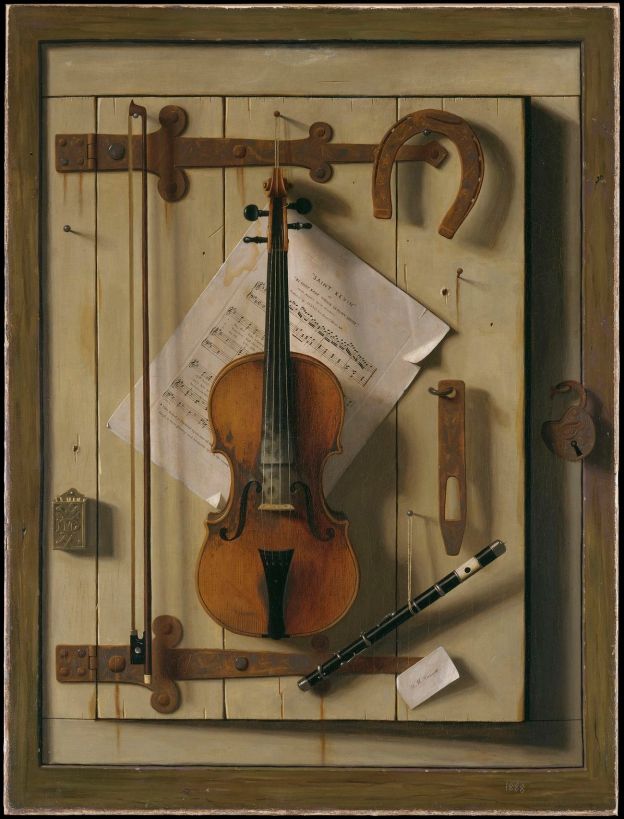
For a few years starting when I was thirteen, I took lessons in traditional Irish music from a good friend named Turlach Boylan who is quite talented on the flute, tin whistle, and mandolin and plays locally in sessions. I had potential but never really got there, in part because I didn’t practice as much as I should’ve, yet also in part because I kept running up against a sort of translucent wall of my own self-consciousness. After a while when we were both around during sessions, Turlach would invite me to come join the circle and play with the other musicians. I’d try but often when I’d hear someone else playing with me, I would burst into a big smile and have a very hard time playing my tin whistle with the group.
There’s something about playing an instrument with a group of people in such a loose and lively manner as in a trad session that has been hard for me. This week I read a story in Commonwealabout the joyous experience of all the craic that goes on in the trad sessions that the author, Commonweal‘s managing editor Isabella Simon, had joined in New York City. It made me think more that perhaps in that context my fear was less a shock at the fact that I was playing with other people but the worry that I’d mess things up, play the wrong note, or not know the jigs, reels, polkas, waltzes, and airs they were playing. As Ms. Simon wrote the talent of a session player is judged not in their virtuosity but “by whether the listeners are tapping their feet.” That clicked for me because that is how I approach teaching and lecturing, the expertise and skill that I exhibit in the classroom is a big part of the puzzle, yet it is one half of the whole picture which is best filled out by a comfort and ease with entertaining my audience and keeping them engaged.
I’ve found that difficult the last few days as I’m starting my new teaching job, sometimes I’m not sure my messages are getting across, especially when I have to shout over a room of excited students. Still, it’s not an unfamiliar lesson for me. One story I’m sure I’ve told on this blog before is about an icebreaker presentation that I gave in my Junior Year AP English class in high school, where our teacher asked all of us to bring in baby pictures of ourselves that she could hang up on the back wall of her classroom. When I got up to present my own picture, I let slip that I had considered bringing in a picture of a monkey to say that “I was a very hairy baby,” a line I think I partially stole (lovingly indeed) from Father Ted‘s milkman episode. Still, the picture I showed to the class was of a very large ancient tree on the grounds of Canterbury Cathedral with my Dad and I barely seen near the base sitting on a park bench. My classmates laughed at the whole routine, and I returned to my seat at the end of it feeling really good about myself; my fear that they’d all be laughing at me was avoided by telling the joke rather than being the joke.
In my teaching, I like to keep things loose, to have more of an improvisational style that changes to fit the room. That worked well at the university level and is kind of working here with the middle schoolers, but with more guidance from myself to make sure they’re doing what they need to be and getting the correct information about the day’s subject in the moment. I tend to not have the same kind of stage-fright that I used to, I can usually get up in front of a crowd and say what I need to, yet I do judge the room every time. There have been moments when I’ve started talking and I can immediately tell most of the people in the room either don’t care or actually are sitting there against their will. In those cases, I keep things brief. If I can play around with an audience though I’ll have more fun and will weave different stories together.
I love music, from the structured virtuosity of a fine orchestra like our own Kansas City Symphony to the fluid vitality of an Irish traditional session and all the great jazz in between. I love how it can express things that mere words could not annunciate. Yet where Irish music shines is in its ability to keep that conversation, no matter how joyous or sad, beyond one tune and into the next. In that moment the memories of generations of musicians can be heard, their voices echoed in the instruments and songs of their students which keep this rich tradition alive and well.
The lesson I’ve learned in all of this, which Ms. Simon’s story clarified for me, is that all life is a performance, and in the moments when I can relax and see past the mirror in my mind, I’ll be okay. In all the things I’ve tried for personal enrichment, from learning French and Irish to learning how to skate on ice after the Pyeongyang Olympics in 2018 to standing on stage in front of a full house, I’ll be okay as long as I don’t think about the fact that I’m putting myself out there too much, taking that risk of ridicule. My stage-fright will only ever be experienced by me and me alone. And at the end of the day if I’m comfortable with my own performance, if I play to the internal audience as well as the external, then I’ll be happy. To paraphrase something the gentlemen of the Monty Python troupe once said, “we only write jokes that we think are funny.” In those sessions, I’m playing not just for my own ear, but to be a part of a circle of friends united by our common musical language, at ease with each other’s company, rejoicing evermore in that fine moment.





 Wednesday Blog by Seán Thomas Kane