Author Archives: seanthomaskane

Unknown's avatar

About seanthomaskane

I am a PhD student studying the history of Renaissance natural history focusing on French accounts of Brazil. Chicago born, longtime KC resident, SUNY Binghamton grad student.

Simplicity

This week to finish out March, a few words on the need to keep things simple. Click here to support the Wednesday Blog: https://www.patreon.com/sthosdkane ~ Here are the two websites I mentioned regarding the new Kansas flag proposals: Flags for Good's Kansas Flag: https://flagsforgood.com/products/kansas-flag Anson from Lawrence's New Kansas Flag: https://www.newkansasflag.com/

There’s an old idea called Ockham’s razor which slices the complexity out of a problem to find the simplest solution that I’ve grown quite fond of. At first, I was annoyed by this way of working through questions, not because of how it worked, that made good sense, but because of how it was introduced to me as general knowledge that surely, I must already know about. 

There’s a whole category of knowledge that tends to be approached in this way, stuff that’s so accepted that surely the listener will know what’s going on, even if the general knowledge in question has particular nuanced names that rely on a certain amount of specific background knowledge to really understand the general knowledge in question. I find this sort of problem comes up in financial and medical lingo in particular, and in any specialized lingo in general. Topics that were introduced to me in this way, from William Jackson Turner’s Frontier Thesis to Joseph Campbell’s Hero’s Journey still tend to annoy me purely because the people who I first heard about these ideas from expected that I already knew about them. Both of these ideas are themselves quite useful, the frontier is central to my dissertation’s focus on the periphery of the European worldview in the middle and later decades of the sixteenth century, and yes, I’ve seen aspects of Campbell’s ideas play out in the stories I’ve read, seen, and heard. Still, like Ockham’s razor the fact that the people telling me about these just expected I and everyone else in the conversation already knew about them, never bothering to explain what they are, annoyed me.

So, to not be that guy, let me quickly digress a bit here. W.J. Turner was a history professor at the University of Wisconsin-Madison in the 1890s who gave a lecture at the Columbian Exposition World’s Fair in Chicago in 1893 arguing that at that moment in time the Frontier of the American West was officially closed, that there was no new land to be explored or discovered between Atlantic and Pacific, and that the character of America’s very identity was bound to change as a result. Look ahead a few years to 1898 and the United States gained a small colonial empire mostly in the Pacific, extending the dream of a frontier further beyond the Golden Gate and West Coast to places like Hawaii, Guam, and the Philippines, as well as northward beginning in 1867 with the purchase of Alaska from Russia. Today, that frontier is in orbit, in our solar system, and beyond in deep space. Joseph Campbell’s idea is that every hero story tends to have the same narrative arc, the sort of storytelling format that I was taught in my high school AP English classes. Yeah, Campbell’s ideas make sense, and that’s that.

Returning to William of Ockham and his razor, I think this is a principle that we really ought to use more often than we do. In our efforts to correct past wrongs we often over correct, only making things more complicated in the process. I’ve often thought of the last few decades as a sort of Wild West, a new frontier in certain parts of society, particularly in regard to information and the Internet. We’re also in a time when individuals are defining themselves and societal expectations at large as more than some sort of collective will as occured in past generations. I applaud all the self-investigation, I’ve done a fair bit of that myself, and yes, I find that it rather hard to define myself in so many ways. Still, as I’ve written before in the Wednesday Blog and its predecessors, we have a tendency to at times proscribe changes and reforms for ourselves and our perspectives that aren’t natural and often tend to be a bit clunky, making them uncomfortable to adopt.

One area where we over complicate things is in our symbols, especially for American states and cities. We have a tradition in this country that the easiest way to create a flag is often to use the seal of a government and put it on a field of varying color, often blue. It’s something we got from the colonial period, just look at all the Commonwealth flags that have a Red or Blue Ensign, with a Union Jack in the upper-left corner and the coat of arms of that government in the middle to the right. Here in Kansas City, our City Council just voted to adopt a new design for our city flag, moving away from essentially putting the city’s fountain emblem on the French tricolor with variations on the name of our city beneath the fountain and instead putting that same fountain emblem astride twin fields of blue and red. Yep, we’re keeping the nod to our French colonial and settler roots, which I appreciate, but we’re also making the statement that our flag presents simpler to get.

The flags of the American states generally are a mess, often again just the seal on a field of blue often with the state’s name written beneath the seal; here in Kansas the name is in yellow on a blue field while in my native state of Illinois it’s in black on a white field. We could do so much better than this, and in the last few years some states are beginning to change their flags to somewhat better designs. Mississippi finally dropped their Confederate battle flag design in favor of a new flag depicting a magnolia, the state flower, though they kept some wording on the new flag. Utah also just announced a new flag that depicts the state’s mountains and the old Mormon beehive insignia that appears on their state highway signs. This got me back to thinking, how could Kansas improve upon its state flag? 

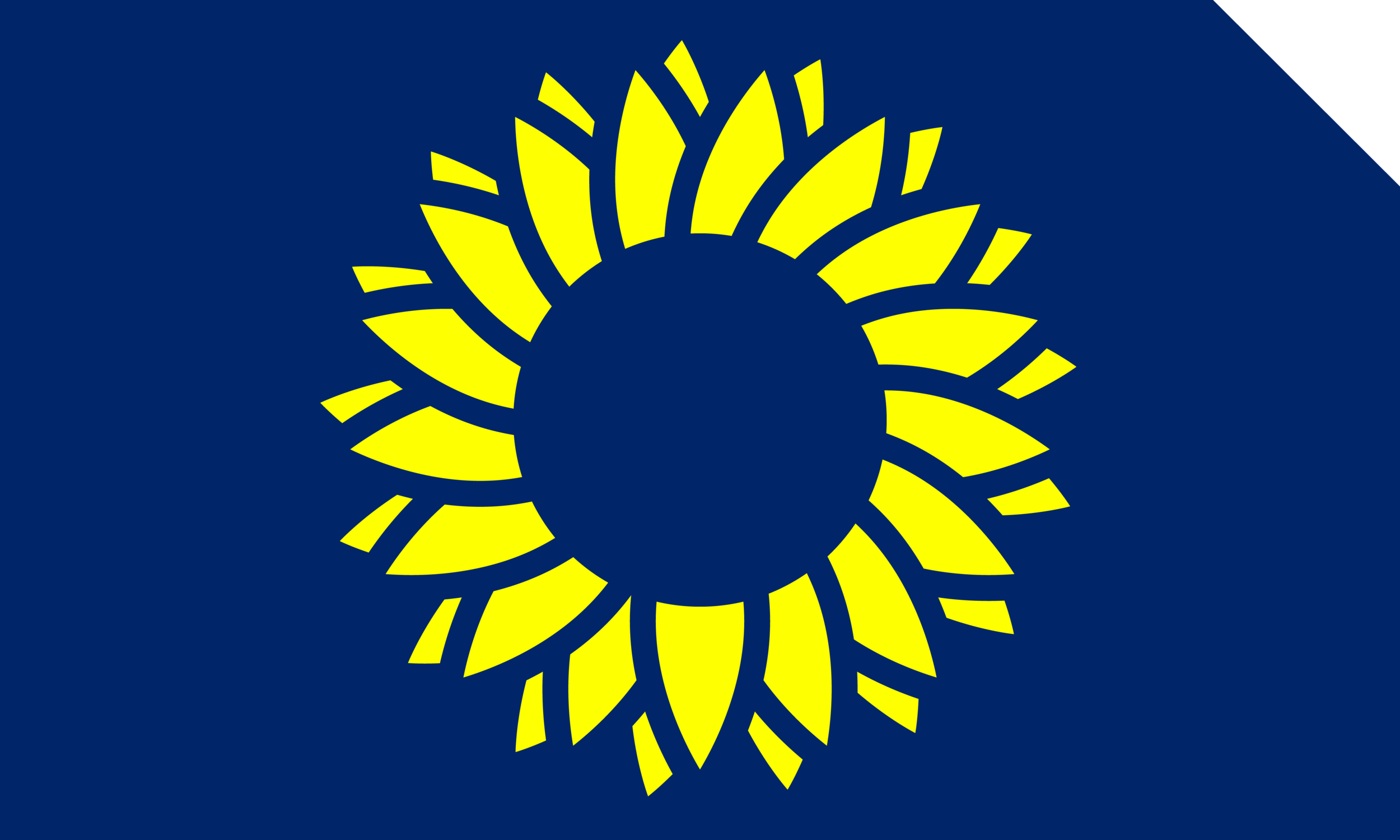
I found one proposal from a company called Flags for Good that got rid of all of the symbols of the current flag all together in favor of a green field with a yellow sunflower in the center. Another sunflower design proposed by a guy from Lawrence named Anson who runs the website www.newkansasflag.com kept the blue field except for the upper-right corner, presumably to symbolize the northeastern border of the state along the Missouri River, yet with a 34 pointed sunflower, symbolizing Kansas’s place as the 34th state admitted to the Union in 1861. I quite like both of these, after all Kansas is the Sunflower State, and as I’ve written before here, I personally think Kansas’s sunflower emblem state highway signs are among the finest in the nation. Their simplicity does a great deal to announce Kansas to the rest of the Union and the globe at large.

Simplicity is one of the finer aspects of life that we tend to forget about. Life itself is hardly ever simple, there is rarely ever just a right or wrong decision to be made but always shades of gray that need to be waded through to find the best answer for a given moment. I hope more people will begin to look for the simpler answers, give a yes or no instead of an unnecessarily longer answer when the simple affirmative or negative will suffice. Let’s at least make a few things easier on ourselves.

Terminologies

Today, I'm going to talk for a bit about how the meanings of words change. Click here to support the Wednesday Blog: https://www.patreon.com/sthosdkane

Normally, I’ll have something written for the Wednesday Blog by Monday and recorded at the latest by Tuesday morning. Yet this week I’m sitting here on Tuesday at 2:30 pm with nothing written, and thus nothing recorded. Some weeks I’m abuzz with ideas and others, like this week, the hive remains silent. So, while I was talking this morning with my friend Rebecca Legill, I was in the background searching for something to write about this week.

Our conversation turned, as many conversations in Kansas City do these days, to the new terminal at Kansas City International Airport. The big shiny new building opened to the public a month ago on February 28th and has seen around 300,000 travelers pass through its doors in the weeks since. What struck me while I was talking about the new terminal with Rebecca was that the word terminal itself is a bit of an odd word. Terminal comes from the Latin terminus, a word for a boundary or a limit. The modern context of a terminal as a transportation hub came from the railways whose end stations are called terminals. Think of Grand Central Terminal in New York or the London Terminals that you used to see on old British Rail tickets. Here in Kansas City, it’s a bit of a weird idea because our Union Station was built as a through station. Sure, trains once terminated and still terminate here, the Missouri River Runner’s western end is in K.C., but elsewhere the idea of a terminal station makes sense.

So, when the languages of railways and ocean liners were being adopted for airports a century ago the idea of the airport terminal as one building among others where people board and disembark from planes was born. In many cases a terminal isn’t necessarily where a trip ends, especially on a point-to-point carrier like Southwest Airlines here in the United States, yet for hub airlines like our big three––American, Delta, and United––to say that the new building at KCI is the terminal works pretty well. In a similar way, saying that O’Hare Airport in Chicago has Terminals 1, 2, 3, and 5 or that London Heathrow has Terminals 2, 3, 4, and 5 also makes sense in this logic of aviation naming considering that a flight is most often the equivalent of an express train, they rarely make stops along the way anymore to unload some passengers and bring aboard others.Language evolves with its speakers; my English today is different from my English twenty years ago when I was a spry 10 year old. The complexity of any language becomes more noticeable with time and experience speaking that language. Language is the vehicle that carries us from one terminal in our lives to the next, it’s how we interpret the experiences that our senses describe to us. Language is our mechanism for crafting new worlds and ideas, whether fantastical or ordinary. Language is how we think, so it strikes me as curious to consider which philosophers speak to which people. Some appreciate the Stoics for their straightforwardness, others like me the Existentialists who see patterns and subtext in every interpretation. In the study of history perhaps the most influential thinker is Karl Marx, whose economic philosophy has defined a great deal of historians especially in Europe following the Second World War. All of us have read Marx to varying degrees. I get his ideas though I don’t entirely buy them. Of all the Marxist philosophers the one who speaks the most to me has to be Harpo Marx for all the life and joy that can be found in his chaotic wisdom. Language can be more than just words, and Harpo lived and breathed that kind of expression.

A Letter from San Juan

A Letter from San Juan Wednesday Blog by Seán Thomas Kane

This past week I was in San Juan, Puerto Rico for the annual meeting of the Renaissance Society of America. Click here to support the Wednesday Blog: https://www.patreon.com/sthosdkane

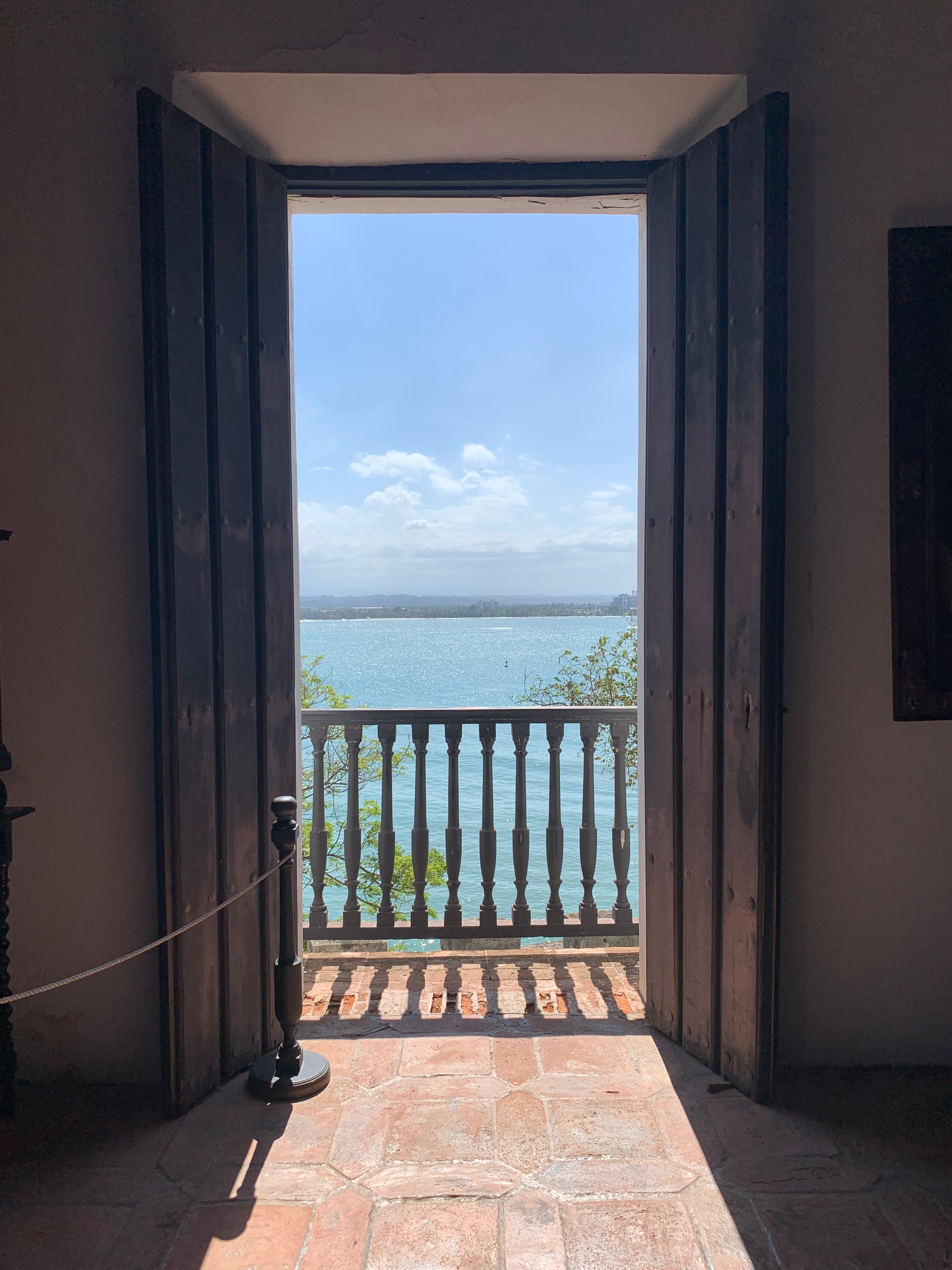
Puerto Rico is an island caught between two waves, one originating in Spain and radiating throughout the Americas, the other originating in the United States whose influence is out of place here yet established enough to be present beneath the surface. I was uncertain what I’d find here amid the palm trees and verdant greenery, the bustling streets and amid the lives of 3 million people who have seen tremendous troubles over the recent past. After a week here I’m still unsure of some questions I came to this island pondering: what would be best situation for the Puerto Ricans themselves, what is it that they generally want of their relationship with the United States, and how can I, an Estadounidese, contribute positively to answering these questions?

It is strange for me spending time in a place like Puerto Rico. I’m familiar with travelling overseas, leaving the comforts of my Midwestern home for distant shores in Europe, but this week was my first spent in Latin America. What’s more, this was also my first time traveling to one of the US territories that are a part of the United States but lack full representation within our federal government. On Saturday, I texted my friend the political journalist Luis Eduardo Martinez that it was strange for me, an Irish American, to be the colonizer in someone else’s homeland when the most central tenant of our Irish American culture and identity is that we are the descendants of exiles who sought refuge from British colonialism in our own ancestral homeland. I felt uncomfortable in San Juan knowing that while I was in the United States, I was still a guest whose presence was perhaps not entirely welcomed considering that the American conquest of Puerto Rico in 1898 came at a moment when arguments for Puerto Rican independence from Spain were growing and quite outspoken.

At the end of the day this question of whether Puerto Rico’s status as a Commonwealth, or Free Associated State in Spanish, of the United States among its territories should change, either towards independence or towards statehood must be decided by the Puerto Ricans themselves. All we in the 50 states can and should do is encourage that decision be undertaken democratically, so it reflects the will of the Puerto Rican people and not just their leaders. I’ve been a bit more glass-half-empty of late, so while I was here on a working vacation, I still found these questions weighing on my thoughts for much of the trip.

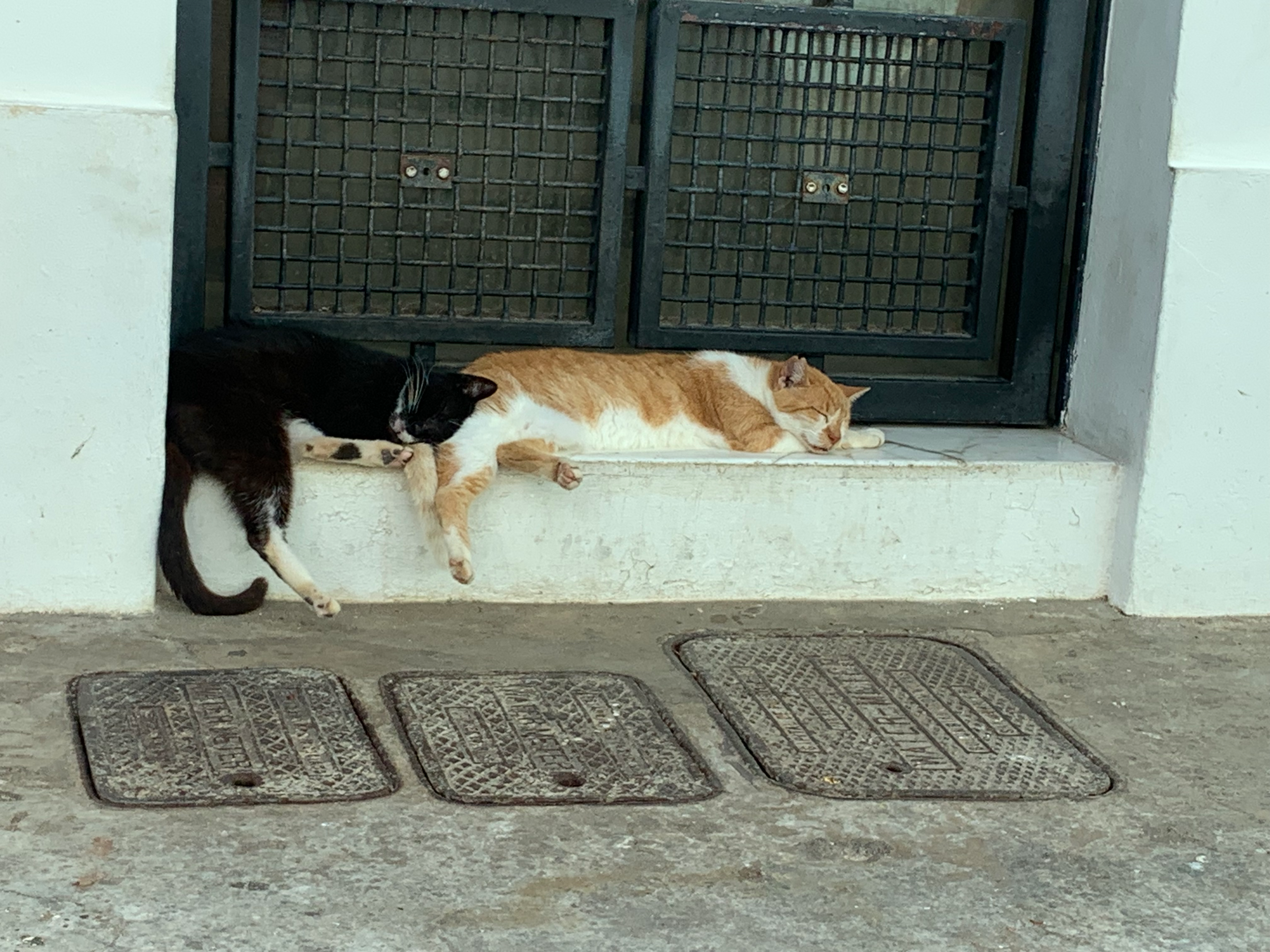
When I learned the Renaissance Society of America would be meeting in San Juan this March, I invited my parents to come along with me. We were also joined by one of my best friends from Binghamton, the Italian historian of Italian-Ottoman trade relations in the Adriatic, Marco Alì Spadaccini, who joined us a few days later. Initially we were going to stay in a Marriott property within walking distance of the conference location, the Caribe Hilton, but in between the initial planning and when things finally were booked at Christmas, rooms at that hotel were quite a bit more expensive. So, I ended up finding a couple places on AirBnB around the Caribe Hilton in Santurce and Old San Juan and proposed each of them to my parents and Marco. The one we picked, a large apartment on Calle de San Francisco near la Fortaleza, the governor’s palace in the heart of Old San Juan turned out to be a wonderful decision. I’m writing this now listening to the tropical birds chirping away as the Sun sets on our final evening here in San Juan, in a fine old, terraced room with a balcony looking out over the street, palm trees in view, street cats prowling below.

San Juan is not the oldest city I’ve spent time in by far; when they were building my basement flat on the edge of the old walled City of London, they found a Roman grave dating to the start of the second century CE. Still, it is the oldest city on this side of the Atlantic that I’ve yet visited. At the time of writing this I haven’t left the Islet of San Juan in nearly a week, and if I lived here, I probably could spend most of my life on this islet here in the old city. It is a beautiful place with vibrant buildings painted many colors and blue cobblestone streets that tend to be run by pedestrians more than drivers, unlike our Midwestern cities, San Juan was built at a time before cars when we were all still pedestrians. The sound of joyous music ringing from bars and restaurants in the evenings did a great deal to cheer me up.

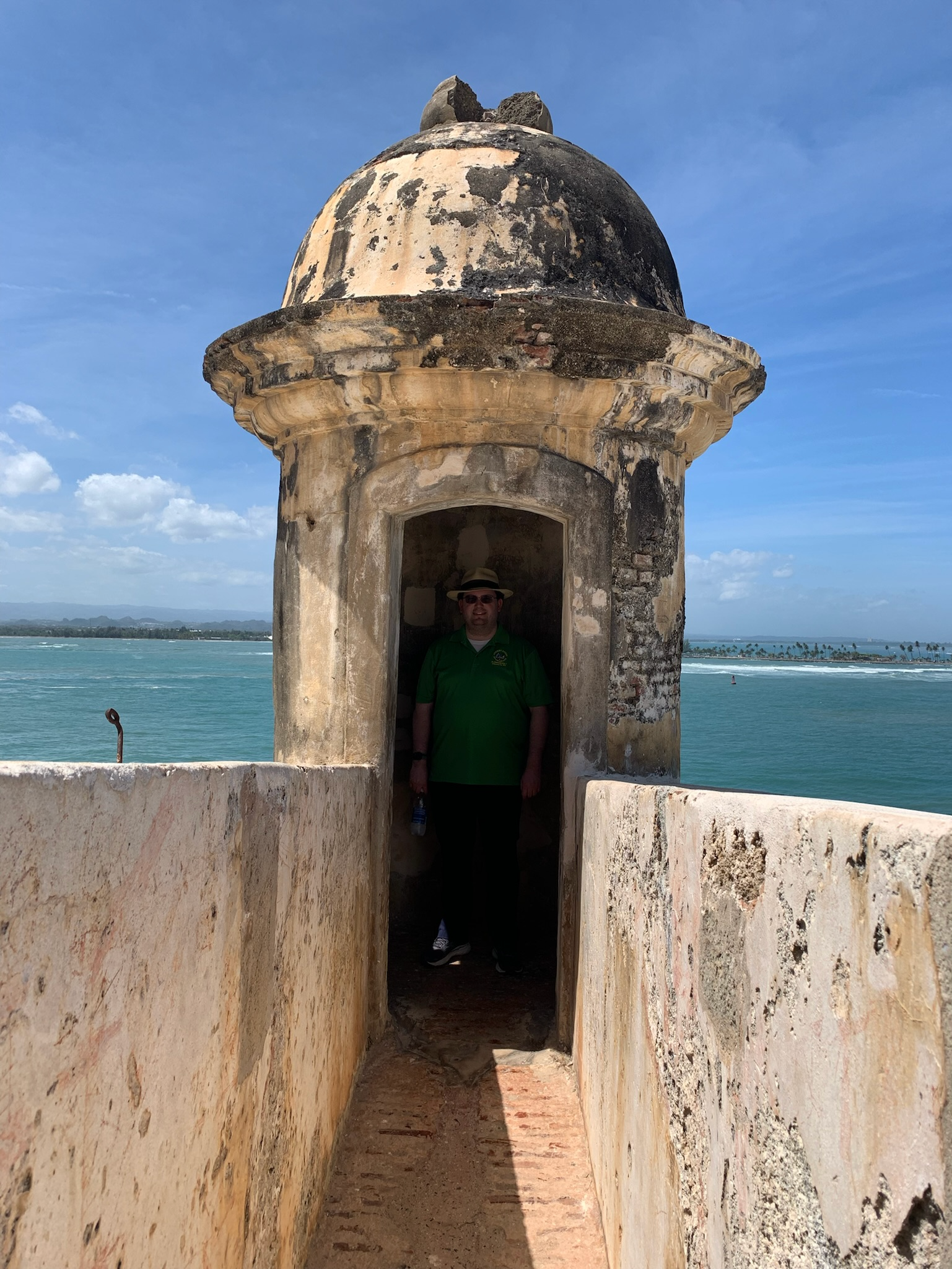
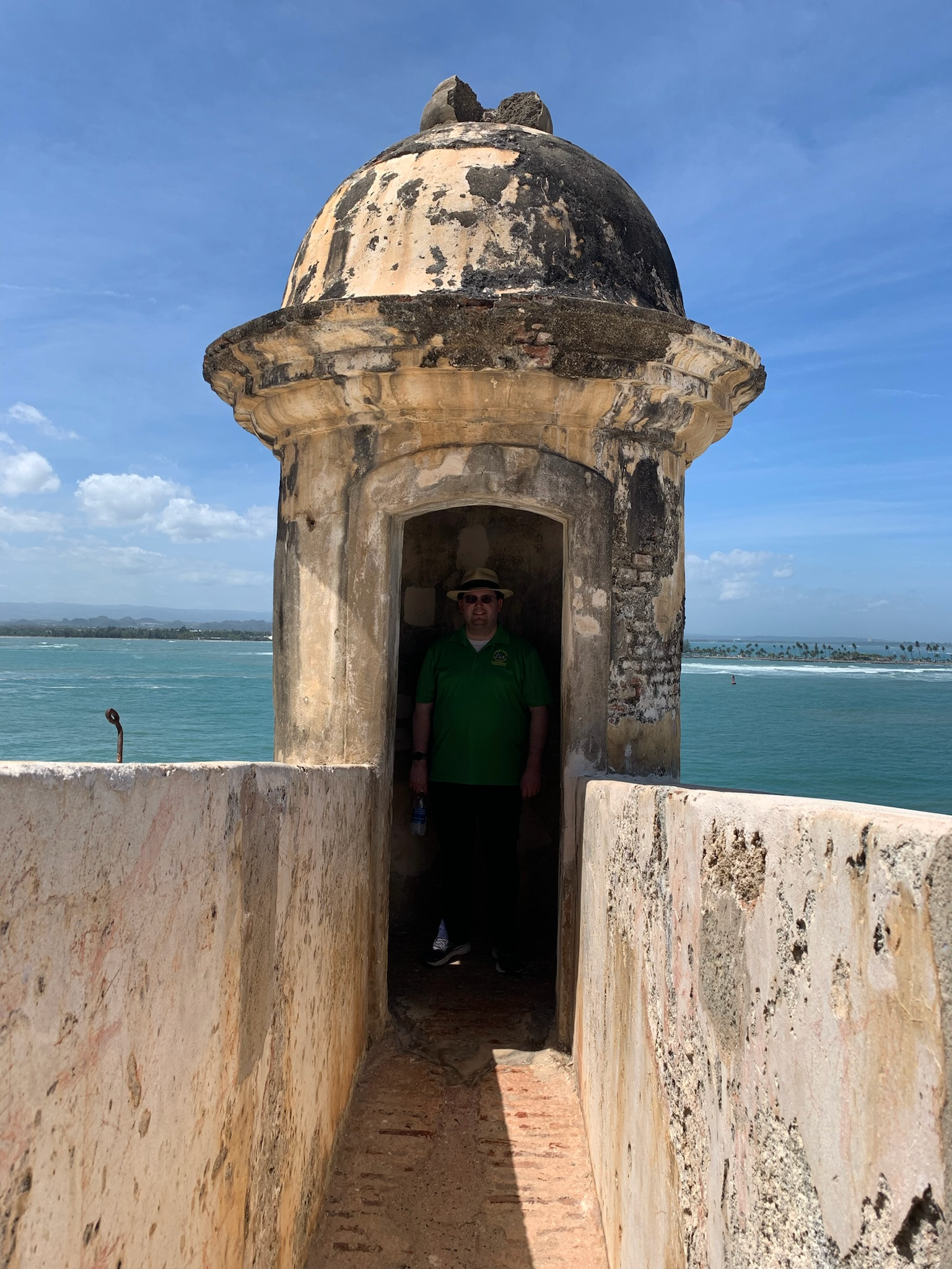
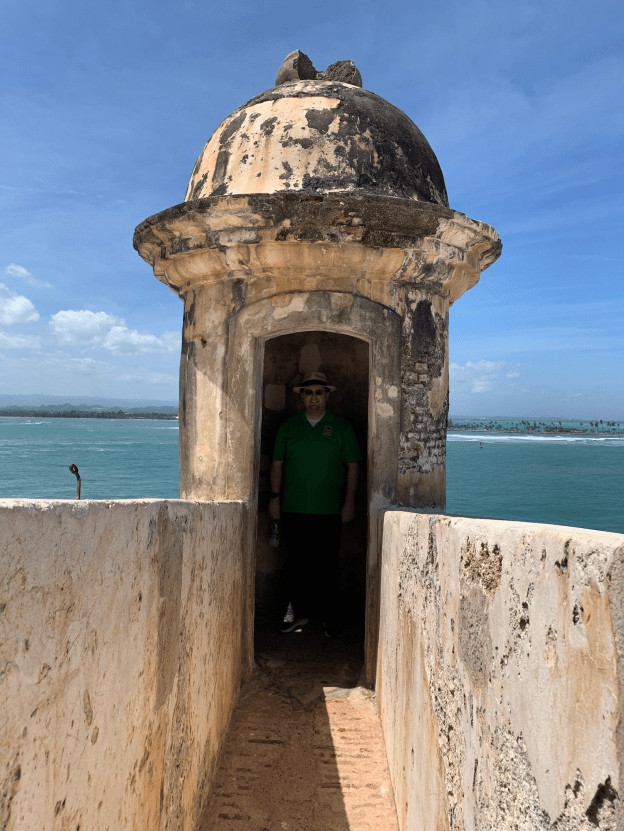
Old San Juan’s history is one of the great draws for me. It makes sense that the Renaissance Society of America would hold their conference in a city such as this that was built during the Renaissance. Names that I’ve known for as long as I can remember like Ponce de Leon come to life in this city, where he and his family built their home, the Casa Blanca on a hill just to the north of where I stayed along the western edge of the city walls. To the north of Casa Blanca stand the mighty fortresses of San Felipe el Morro and San Cristóbal who guarded San Juan for centuries from attackers sailing into Puerto Rican waters from the open Atlantic to the northeast. El Morro is impressive in the sheer scale of its battlements, which reminded me of some of the citadels that Vauban built for Louis XIV in France that I’ve visited in Besançon and Lille, and of Fort Ticonderoga on Lake Champlain in Upstate New York. San Cristóbal is a younger fort, its construction largely took place between 1766 and 1783 under the supervision of a couple of Irish nobles exiled into Spanish service named Alejandro O’Reilly and Tomás O’Daly. Still, San Cristóbal is impressive in its scale and in its continued use by the Spanish Army and later the US Army through the Second World War.

Of all the things I’ve done in the last week here in Old San Juan perhaps my favorite has been simply wandering this city’s streets, seeing both the busy shops and restaurants, walking by local places crowded with Puerto Ricans cheering on their team in the World Baseball Classic, yet even more wonderful were my wanderings down Calle del Sol, Calle de la Luna, and around the Casa Blanca along the old city’s residential streets. I often find myself thinking when I travel about whether I could live in the place I’m visiting. In general, as much as I’ve enjoyed this week in San Juan, I’m not sure it would be a place where I could settle down full time. Yet walking along these residential streets I did find the idea becoming more appealing. Still, while I hear it’s going to be quite cold this week in Kansas City, I am looking forward to getting back home.

¡Gracias, mis amigos sanjuaneros!


In Praise of my Favorite Latin Verb

In Praise of my Favorite Latin Verb Wednesday Blog by Seán Thomas Kane

Today, I'm talking about a particularly versatile Latin verb that I'll admit I'm rather fond of: mittō. Click here to support the Wednesday Blog: https://www.patreon.com/sthosdkane

I first started studying Latin when I was fourteen, a high school freshman at St. James Academy. Over the next four years I studied Latin with Bob Weinstein, then the St. James Latin teacher, and even took a year of Ancient Greek with him as well. In those years I got a good foundation in Latin, though I’ll admit I didn’t learn as much as I wanted, in part thanks to my own immaturity at the time. In the years since I’ve been able to connect more of these concepts in my thinking about the language, now on my third round of studying it. I often like to say that there are certain languages which I feel I can inhabit, that are so familiar and comfortable to me that I feel empowered to read, speak, write, and even think in them on a regular basis. These four are English, my native language, Irish my ancestral language, French, the language I fell in love with in college, and Latin, my original language of study in school.

Honestly, it took me until my third round studying Latin to really get the hang of today’s verb of note: mittō. Its full dictionary entry, laying out its principal parts are mittō, mittere, mīsī, missum. Looking at these four we can see the utility of this verb, which in its most basic meaning I’d translate mittō as “I send.” It means to send, but it also includes other types of sending like dispatching, releasing, or extending a hand, yielding, bringing out, attending, and dedicating a book, among many others. To say that one verb has so many meanings, so many actions it represents seems a bit of a stretch to me, but if you only think of a language by taking its parts out of place and analyzing them individually of the rest of the language, you’ll find you’re getting a different picture than you would if you considered the whole thing in one go.

Mittō has a great many descendants in English. Just looking at that 1st person present active form (mittō) we can see emit, intermittent, omit, permit, remit, submit, transmit, and everyone’s favorite cat name mittens. Frommīsī and missum we get all of the mission words, words like intermission, missile, omission, permission, promise, remission, and transmission. 

Even the word Mass as in the Catholic liturgy comes from mittō. It originated in the phrase Īte, missa est, which I’ve always heard as “Go, the assembly is dismissed” though I think of it more in line with the phrase “the Mass has ended” that you hear at the end of every liturgy. Missa in that phrase comes from missiō, a 3rd declension Latin noun meaning sending or dismissal, which itself has roots in our old friend mittō. One thing of interest regarding the name of the Mass is that the Latin word Missa is the origin of a great many names for the liturgy in the Romance and Germanic languages as well as the Polish msza. Yet in Irish the Mass is called Aifreann, which comes instead from the Latin verb participle offerendus, essentially translating as offering. The same Latin word is the origin of the name for the Mass in all of the other Celtic languages, though Welsh and Breton today call it an offeren and an oferenn respectively.

I decided to write about mittō this week because it keeps coming up in stuff as I find myself going about my work. I like versatility, the idea that we can look to something as particular as a verb like mittō to find the source for so many concepts and ideas. Language is the way we understand the world around us. It’s one of the first things in most creation myths that the humans do, they look about and start naming things. Those names transmit information about the object to people whether in earshot or in other worlds through writing. In our own day we are pushing the limits of mittō and its descendants by sending data back and forth to our furthest out exploratory spacecraft, from the Voyagers on the edge of the Solar System to the Perseverance Rover on Mars to the International Space Station in orbit. All of that data gets submitted back to each craft’s mission control here on Earth for further analysis.So, here’s to mittō, one of my favorite Latin verbs.

St. David’s Day

Today, is the Welsh National Holiday, the Feast of St. David. Click here to support the Wednesday Blog: https://www.patreon.com/sthosdkane

As Irish as my name is, I’m still very much an American, and a central part of this country and its population is the fact that we are all a mix of different ethnicities and races. There are competing visions of American diversity. There’s the melting pot of assimilation which sees new immigrants enter the pot and get boiled down until they blend in with everyone else to rise from the water newly minted Americans. Then there’s my favorite, the salad bowl which sees us as a healthy mix of different cultures, heritages, and traditions that come together to create something new whose history and roots stretch deep into a variety of different soils from around the human world.

My own salad bowl is made up of English, Swedish, Finnish, Flemish, and Welsh parts as well as an Irish majority. It means that when I think of indigeneity as a universal human concept I’m left wondering where I might be considered indigenous. I’ve been to several of my ancestors’ hometowns in Ireland and Finland and while they were lovely places, I was very much the tourist there, a stranger in a somewhat strange land. I felt even more foreign over these last three years spent living and working in Upstate New York, a place where I couldn’t quite get the pulse of the people and never fit in with their way of living.

I knew little of my Welsh heritage until one Sunday in November 2002 when my Aunt Mary Ruth, who was then doing a teaching exchange in England at Canterbury’s Christ Church University took my parents and I up to Surrey to meet our distant Welsh cousins, my cousin Glenys and her husband Cyril along with their children Carys and Gareth. I wasn’t quite sure what to make of the whole situation at first but quickly found them welcoming and genial. Glenys’s grandfather was a younger brother of one of my 3rd great grandfathers, making us 2nd cousins 3 times removed. By the time I met her she had retired from her work as a science teacher and devoted herself to her family and her beloved garden. We kept in touch after that by mail, she sent me lots of stuff about Wales, its history, and culture, and so I began to think of my Welsh heritage as an integral part of who I am. It takes knowing someone with a common passion for something to really embrace it, and that passion is something Glenys instilled in me.

I didn’t visit the house in Surrey again for another decade, next returning in June 2013 when I was in London for a study abroad session at my graduate alma mater the University of Westminster. Ten years made a huge difference, everyone had grown older, wiser, and in my case I left them a little kid and returned in my early 20s. Glenys told me many stories on that visit about her own life, her connections with her American cousins, some of whom I know and others I’ve yet to meet, and of course about Welsh culture. I even made an effort to learn Welsh at one point, what little I remember has proven useful to my Irish studies.

Glenys always talked with a smile about St. David’s Day, the 1st of March, when Welsh pride is at its height. It reminded me somewhat of the celebrations I grew up with a few weeks later on St. Patrick’s Day but with a different set of memories baked into the celebrations. Each year then, as March arrived, I’d think of her, Cyril, Carys, and Gareth and occasionally even write a letter wishing them well. In the last decade we’ve begun to communicate digitally more, Gareth even is one of my regular readers here on the Wednesday Blog, and with each passing year when I’d think about making a trip over to London one part of it would always be to pay Glenys and family a visit.So, I was saddened to hear how her health was failing over the past few years and then a few weeks ago to receive the news from Gareth that she’d died. Glenys was one of a kind, a true joy of a person to meet. She touched so many lives both among her students, her community, her friends, and those of us in her extended family. With this in mind I thought for this St. David’s Day I’d use my soapbox here to remember her.

Ash Wednesday

Today is Ash Wednesday, the start of Lent. Some thoughts about that. Click here to support the Wednesday Blog: https://www.patreon.com/sthosdkane

In past years when I’ve written columns and devotionals around this time of year recognizing the beginning of Lent, they’ve been on some levels joking (I once referred to this season as the past tense of to lend) while on others they’ve been overly serious and solemn. There’s certainly room for both angles. This year, I feel a little less strongly moved by the whole experience, yes, I know we’re approaching a time of great meaning and purpose, yet in my mind that’s overwhelmed by the onset of what hopefully will be better Spring weather this week. 

As I’ve gotten older, I’ve found that the passing of the seasons impresses me differently than it used to. When I was first learning the names of the months and seasons in school, I noticed the changes quite profoundly. The first of each month was a moment of regard. Today though, month by month passes as one after another in a parade ever blending with its compatriots into one great cyclical mass of the year. I notice today more so the changing of the weather than I do the months or even the seasons. I notice the waves of warm air coming out of the southwest fighting against the cold air pushing down from the northwest. I notice now how each passing rain and snow leads either towards the warmth of summer or the cold of winter. For me the year is far more a day-by-day affair now than anything else.

So, where does that leave the liturgical year, the cycles around which my faith orbits? Honestly, I’m not sure. Perhaps because I had the opportunity to attend Catholic schools for much of my life the Catholic feast days and holidays stood out to me more at one time than they do now. The highest holy days, the Easter Triduum, Christmas, and of course the Irish feast days of Saints Patrick, Brigid, and Columcille stand out the most for me today, days when I can imagine my present moment lining up neatly with memories of my past and of the generations who came before me.

If Ash Wednesday has any potency for me today it’s in its reminder that we’re all mortal, and yes, at some point our lives are going to end. It’s a reminder of our limits, in body if possibly not in mind. I’ll go to Mass and get the ashes on my forehead as I’ve done for as long as I can remember, and yes, I’ll do the Catholic fasting (one large meal with two small meals, no meat), and I’ll likely be a bit grumpy about the whole affair. Ash Wednesday is a reminder of our lives on this Pale Blue Dot, to blend Carl Sagan’s humanism with Catholic theology. We’re all a part of this our home planet, forever tied to it, no matter how far we and our descendants might travel from its surface.A holy day like Ash Wednesday is a reminder of our worldliness, and how that world which we cherish and which we have helped build is as fragile, as mortal as we are. The ashes of the palm branches from last year’s Palm Sunday are from this same world that we are. It’s an honesty that can’t be beat or diluted, we are who we are. That’s what I’ve got this week.

Author vs Writer

Today, on Chiefs Parade Day, I thought it'd be interesting to consider the distinctions between an author and a writer. Click here to support the Wednesday Blog: https://www.patreon.com/sthosdkane

Recently I noticed when someone referred to a guy as “the author of x”, in my mind I thought about what it means that they were called “the author” and not “the writer.” This whole question came to me considering that in Irish, I’d introduce myself with “Is staraí agus scríbhneoir mé,” or rather “I’m a historian and a writer,” and the same goes in French « Je suis historien et écrivain, » yet in neither context would I introduce myself at a party as “I’m an author.” Both words have their origins and similar yet separate meanings in every language, and that distinction is worth noting.

Author comes to us from the Latin auctor via Old French autor, it’s a cognate of the modern French auteur. The Irish version of this, údar also comes from the Latin auctor, demonstrating that the core idea of an author may well have spread northwards with the Romans. On the other hand, writer is an inherently English word, a writer is most fundamentally someone who writes. I like words that make their function this clear, words that are built off of the verb that they accomplish. When I’ve thought about trying to emulate Tolkien’s work it’s been less to create my own massive legendarium of fantasy literature and more to devise new ways of understanding the world through constructed languages like his own Quenya and Sindarin. In those thought experiments one of the key principles, I’ve wanted to address is crafting a language where there is a relatively small vocabulary because every word is a stem upon which one adds grammatical endings to make it a noun, adjective, verb, or adverb, or to include prepositional elements to it. This is something you see in older languages like Latin with its declensions and conjugations or in Finnish with its 14 noun cases. So, these simplest of English words like writer that demonstrate what they do as efficiently as possible are among my favorites.

Author too in its Latin origins was a word like writer. An auctor is someone who increases or nourishes their object (augeō in Latin). In classical literature the story comes from the muses, In the Loeb translation Ovid began his Metamorphoses acknowledging “my mind is bent to tell” the stories that will follow, for “ye gods, for you yourselves have wrought the changes, breathe on these my undertakings, and bring down my song in unbroken strains from the world’s very beginning even unto the present time.” (Met. 1.1.1–4) Shakespeare picked up on this in his reading and began Henry V with the chorus uttering the line 

            “O, for a muse of fire that would ascend

            The brightest heaven of invention!” (Henry V, 1.0.1–2.)

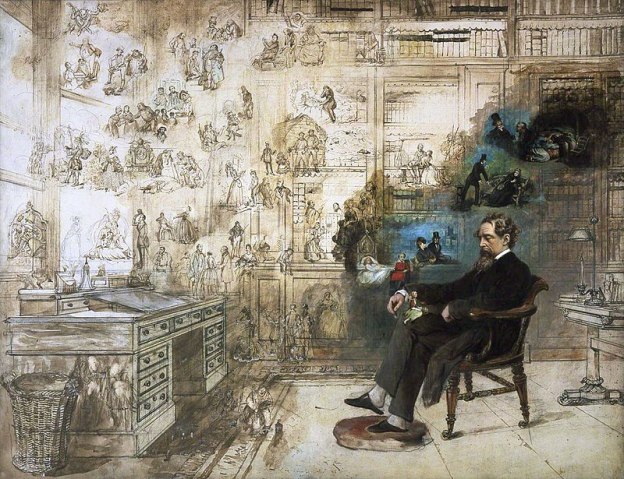
In my mind an author is both someone who has received inspiration for their work and an active participant in the creation of those works. There is a wonderful print of Dickens dreaming at his desk with all his myriad of characters he nourished into existence in his stories floating about him. I sometimes wish that this is the way that I’ll be remembered, as a storyteller who crafted so many lives that while they only exist in my writings therein is encapsulated a little world, an imagined reality all its own. In this act of creation, I am an author, but I am also a writer, for it’s my job to translate these worlds from my imagination onto paper where others can experience these characters’ lives.

A writer is a craftsman busy in their workshop devising new ways of getting information across. They could be writing serious factual information, reports of the events of the modern world, or setting the scene of stories more fantastical than anyone before could’ve imagined. I think of Dr. Franklin in his printing shop as the archetypal writer his sleeves rolled up hard at work, a stark contrast to the image of Dickens asleep in his chair dreaming of his many creations. Yet we rarely have authors without writers anymore, they are of course more often than not the same person, still in older times there were stories that existed without the written word. The Gaelic file tradition which I hope my own stories can be worthy heirs to is one such form of authorship beyond the boundaries of the written word.

So perhaps I don’t like to introduce myself as an author because of the world-building implications of authorship. Day-to-day I am a writer, a craftsman of words, scrawled onto paper, typed into a computer, and printed onto the page. I am an author of some stories, there are characters you’ve met here on the Wednesday Blog like Dr. Noël Felix and Captain Amelia Daedalus from a few weeks ago. I hope to get back into writing more fiction again in the coming months and years, to telling those kinds of stories. Yet perhaps because my authorship is so much more personal than my craftsmanship as a writer, I am left preferring to keep my creations closer to my chest and instead hold my craft out for all the world to see.


“Casablanca” at 80

Today, I'm talking about the classic 1942 film Casablanca with my good friend Alex Brisson. Click here to support the Wednesday Blog: https://www.patreon.com/sthosdkane Today's episode features contributions from Alex Brisson (https://www.alexbrisson.com) and Michael Ashcraft (https://soundslikeashcraft.com). Thanks to both of them for their help making this week's episode!

Listen to this week’s podcast for a conversation about Casablanca with Alex Brisson


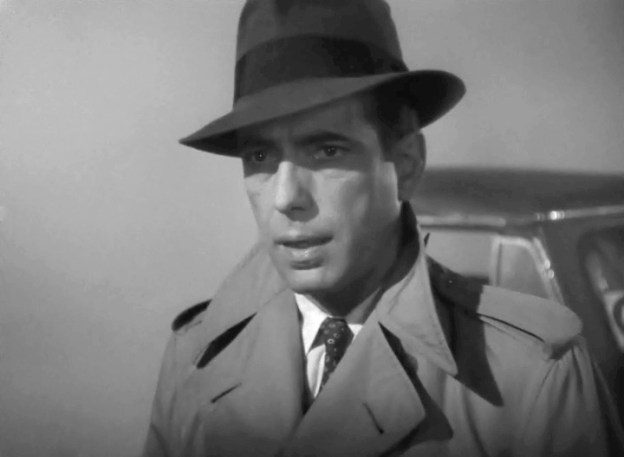
Few films have held our attention for as long as Casablanca, a romantic drama filmed at the height of the Second World War telling a story yearning for America to remember it’s passion and enter the fray against the forces of evil. The story, now well known, is about an American café owner, Rick Blaine, in the Moroccan city of Casablanca, then a French protectorate under the control of the Vichy government. Into his purely neutral life walks an old love interest, Ilsa Lund with her husband the resistance leader Victor Laszlo.

Everything that could be said about Casablanca has likely already been said. So, what I’m going to say here isn’t anything new, there really isn’t any intervention that I can make into this particular discussion as my fellow academics would insist every bit of writing make. So, I’m going to point out a few things that I thought of watching the film, subtextual themes that I hadn’t noticed the first time I watched it a few years ago. That time, I paired Casablanca with a delightful French film titled Que la lumière soit ! (Let There Be Light!) starring Hélène de Fougerolles. They were an odd pairing I’ll admit.

Casablanca is set in December 1941 on the eve of the Japanese attack on Pearl Harbor and America’s entry into the war. It’s the last hour in the limelight of an isolationist America, an America that still around but has been forced into the shadows by our country’s leading role in the postwar world. I nevertheless found it interesting that the opening credits placed Casablanca the city less as a Mediterranean, or rather Mediterranean-adjacent port, but rather as a city on the map behind the opening titles on the far northwestern corner of Africa. Casablanca is a gateway for those seeking to leave Europe either to the west across the water to America or south across the Sahara to the remaining Free French and British colonies in Africa. This makes it clear that Casablanca is distinct from Europe, it’s exotic when compared to the port of origin and the destination of the travelers waylaid in Casablanca.

Amid all of them one such traveler who’s made a slightly more stable living than most, accepting the circumstances of his complicated situation in isolation amid many others of the displaced appears Rick Blaine, who’s found stability in his café after losing stability in his life at the German invasion of Paris and Ilsa’s disappearance all on the same day. The film’s central conflict is Rick’s internal struggle between the isolationism he’s adopted since Ilsa left him and he ended up a saloon keeper in Casablanca and the passion he once felt for Ilsa in the last summer of the age of optimism in 1939. Now that Ilsa appears with Laszlo, the embodiment of the resistance to Nazi rule in Europe, Rick is confronted by his lost passion for that cause. Ilsa is a reminder of the passion for liberty he once felt that left him on the run from the Nazis in Paris where they met in the first place.As with the first time that I watched this film in 2021, I now find myself pondering the message of isolation vs. passionately standing up for the causes one believes in. I know people who are leaving this country to escape all the troubles we inflict on ourselves. I’ve thought of it myself, but there’s that stubborn passion in me that won’t give up on America. Rick’s isolationism shows us how we can let bullies march into our lives and dictate orders to us if we let them if we try to simply survive. That’s a fair way to live, I dealt with bullies in school and life by not reacting to them. But at some point, a person can only take so much pushing around, and I worry that today in America we’ve forgotten that fact. Rick’s turning point comes when the Nazi officers bully their way into controlling the voice of his café, Sam’s piano, to play a march of their own, Die Wacht am Rheinwhich was written in response to French efforts to annex the western banks of the Rhine in the 1840s, a moment a century before when France was the great power and Germany still divided among its princes. Laszlo tells the band to respond to this insult by playing La Marseillaise, not only the French anthem but an anthem for the struggle of the people against oppression everywhere. At that point, Rick is no longer an isolationist, America is no longer on the sidelines, but is tacitly helping the Allies, readying to cross the Atlantic in the words of French philosopher Bernard-Henri Lévy like an Aeneas returning to the aid of old Troy.


St. Brigid’s Day

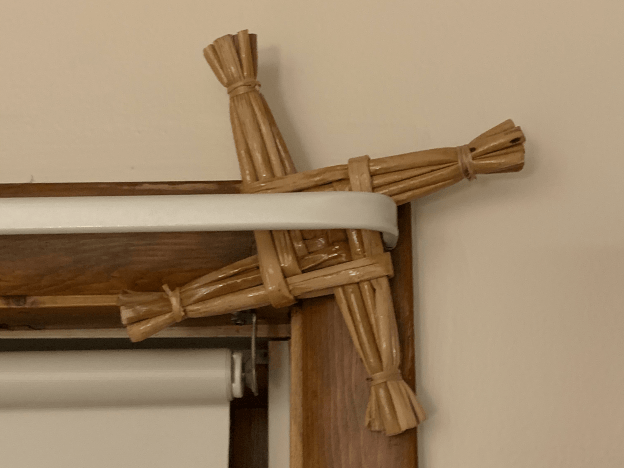
Among the saints are the Irish Trinity, Saints Patrick, Colmcille, and Brigid. These three were among the first Christian leaders and holy figures in the history of the Church in Ireland and remain centrally prominent today. This Wednesday, the first day of February, was once the ancient feast of Imbolc, which celebrated an ancient harvest goddess known as Brigid, whose patronage included wisdom, poetry, and healing. Brigid’s springs and wells remain sacred places today for how the deity was incorporated into Irish Christianity through the person of Saint Brigid, perhaps a real holy woman named for the goddess who converted in those first generations after St. Patrick’s arrival, or perhaps a reinterpretation of the goddess herself into a saint.

Either way, I don’t honestly mind. St. Brigid represents for me the continuation of the oldest of rituals, the most ancient of memories, into the modern day. Her feast marks the beginning of Spring according to tradition, a time of year which I do yearn for with how cold it’s been here in Kansas City of late. My own faith is open to the reality that it has a variety of sources, both biblical and traditional. In my lifetime I’ve heard here and there of efforts either by the Vatican or by other Catholic authorities to soften the devotions of certain saints deemed mythic, like St. Brigid, St. Barbara, or St. Christopher. I get where they’re coming from, after all who’s to really say if these people ever lived? I for one can’t prove it. Yet I disagree with this assessment because there are truths about life and nature we can learn from saints like Brigid.

The one catch about honoring a saint like Brigid who is so tied to Ireland and the environment of that island country is that some of these traditions don’t entirely make sense here in America. To say that Spring begins at the start of February is laughable here in the Midwest. The forecast today calls for highs of 36ºF (2ºC) and lows of 16ºF (-9ºC), far from Springtime temperatures that would be expected for the first day of Spring. True, we have had some nice days of late, days when I’m comfortable walking around without a hat or gloves, but they’re becoming fewer as January ends and February begins. I hope that February will see warmer temperatures return, heading into what might be a lovely March. But enough of the weather, to my point I find it hard to follow some of these traditional understandings of saints from back in Europe because the world of the Americas is different enough to make the experience of trying to say “Spring’s begun” when it’s snowing laughable.

Perhaps a better way to think of St. Brigid’s Day as an Irish American is to consider it as one of the last winter holidays which began with Advent in December. These winter festivities are marked by their sense of mystery, earned through the long dark nights this time of year and all the unknown things that can go on when the Sun remains down for longer hours and so much of our native wildlife sleeps in their burrows. St. Brigid’s Day means the winter is coming to its climax, and soon will fade into the first whisperings of Spring with its rains and lush greenery. If St. Brigid’s Day is the beginning of the end of Winter, then St. Patrick’s Day is the beginning of the height of Spring, a time when here in Kansas City sure it could snow, but it could also be warm and comfortable for parades under the Spring Sun. So, to all my listeners who feel like commemorating the story of St. Brigid, Lá Fhéile Bhrigid shóna daoibh! Happy St. Brigid’s Day!

Human Goodness

This week I'm considering the fundamental question of whether we are inherently good or bad. Click here to support the Wednesday Blog: https://wednesdayblog.org/patreon.com/sthosdkane

Eight years ago, when I was a masters student in International Relations & Democratic Politics at the University of Westminster in London a question was posed in one of my first semester classes by the professor who asked “are we inherently good or bad?“ I raised my hand among the few in the room who argued that we are inherently good. That, at heart, we have evolved to trust one another, and to be kind, not only to our own tribe, our own community, but of those outsiders to whom we are in some way connected, as we are with our pets, or in human terms as we are with peoples from around the globe whom we come to meet on a personal level.

It occurs to me when thinking about some of the great and good figures in recent human history, and even going back several centuries, if not several millennia, that a great many of those figures were killed, their lives ended in acts of evil, in moments of malice. When President Lincoln gave his second inaugural address in March 1865, and called for us to “bind up the nations wounds” and to progress forward with the now immortal words that I have surely used on many occasions here on the Wednesday Blog

“With malice toward none, with charity for all, with firmness in the right as God gives us to see the right, let us strive on to finish the work we are in, to bind up the nation’s wounds, to care for him who shall have borne the battle and for his widow and his orphan, to do all which may achieve and cherish a just and lasting peace among ourselves and with all nations.” 

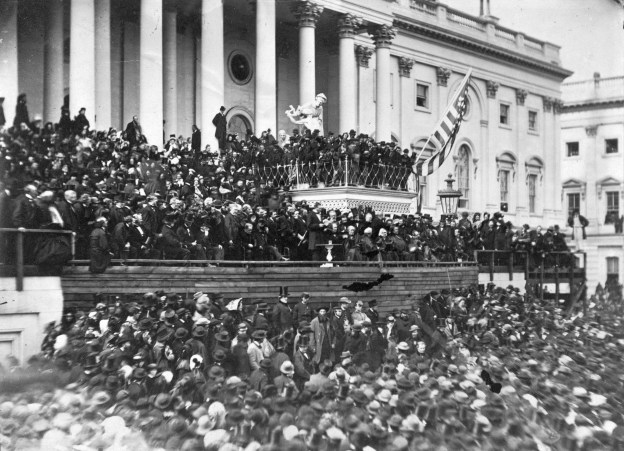
Yet there on the balcony above Mr. Lincoln in the famous photograph of his second inaugural address that depicts not only the president, but the crowd as well, one can just discern the face of John Wilkes Booth, the man who would assassinate Mr. Lincoln a little over a month later on Good Friday. Clearly then, Mr. Lincoln’s, message of reconciliation & reconstruction, not only of the nation’s infrastructure but also for the government to be more just, put pressure upon the nation’s heart to recognize that when we say all men are created equal that we mean everybody. Clearly that message didn’t resonate with his assassin. So where was the inherent goodness in John Wilkes Booth?

I think if we are to describe some innate human goodness to all of us, then we ought to recognize that it exists deep within us. We are like the strata that make up Earth’s geology, each layer representing a different age, era, or epoch in the long history of our planet in our own lives; our experiences with each passing moment add layers one atop the other, until as Aristotle wrote 23 centuries ago, we become truly wise through our lived experiences. So, our innate goodness must exist be deep within. I’m reminded of the line at the heart of the Return of the Jedi, the third film of the original Star Wars trilogy, in which Luke Skywalker tells everyone around him that he knows there’s still good in Darth Vader, despite all the evil that the fallen Jedi had committed. C.S. Lewis remarked in the final book of his Narnia series, that the eldest of the children who are the central characters in the Chronicles of Narnia, Susan, did not return to Narnia for the last battle, because she no longer believed in Narnia, for she had grown up and “put away childish things” to quote Saint Paul. Yet the best of us, or so our great allegories seem to tell us, have never really forgotten that childlike innocence, though some have never really been able to experience it, after all not everyone has the same happy childhood.

I believe that at the end of the day, the best way that we can truly find our goodness, our kind nature, is in the simple fact that at some point along the way we all want to be loved, and I would imagine for the most of us we all want to love others. I often wonder in the vein of Machiavelli‘s Prince if I do things out of a desire purely to love others, or out of a desire to make myself feel good, or out of a desire for others to love me? And which of these three is perhaps lesser than the others or is there a lesser and a greater, or are these three perhaps all equals? Is it okay to be selfish it for the right cause? I don’t know. 

There certainly should be limits to vanity, I for one am not terribly fond of taking selfies, nor do I really care for watching videos of other people watching videos. Still, as many of the self-help people will say some degree of self-love is a good thing, and to paraphrase the old saying that appeared carved in the mantle above the great doorway at the ancient Library of Alexandria, “know thyself,” one should be able to love oneself before one truly begins to appreciate the people around them and by extension world in which they live. So perhaps it ultimately comes down to one’s environment if we live in a world where you’re taught that negative news and emotions and violence ought to be glorified then that’s the kind of stuff we are going to do. However, if we look at the world as a place full of beauty and wonder, and if we find a way to appreciate the great variety of humanity and nature at large and the incomprehensibility of the Cosmos, then I think we can truly begin to define ourselves by our inherent goodness again. What a wonder it is to be a part of our human family.