Author Archives: seanthomaskane

Unknown's avatar

About seanthomaskane

I am a PhD student studying the history of Renaissance natural history focusing on French accounts of Brazil. Chicago born, longtime KC resident, SUNY Binghamton grad student.

Phaëton: A Short Story

It hung over the streets and steeples of Kansas City like a great dark cloud, the many neighborhoods and suburbs looking up at it in awe. It had been said by some that the airship Phaeton was over a mile from bow to stern, but many could not believe such a craft could ever take to flight. And yet here it was, towering over nearly half a million pairs of eager eyes, who looked up at her underside with a mix of fear and wonder. All were running out into the streets to behold the sight, businessmen and artists, cabbies peering from within their charges and clergy praying to their God at such a magnificent sight. There were scholars and vagabonds, sportsmen and aviators, soldiers, sailors, and marines on leave, politicians and pensioners, inmates and the invalid all looking upward at the great edifice in the sky. From 33rd to 54th, the city was clouded by the shadow of Phaeton, the greatest wonder ever built by human hands.

         Out of his home on 55th near Main, still in his slippers ran Noël Felix, a lecturer on transportation and public efficacy at the University of Kansas City. He was in awe of the sight that rose high above his home, the great sign of humanity’s technological achievements, which only a decade prior had been considered too fantastical to even be allocated probability within the modern imagination. “He’s done it!” cried Noël, “Captain Daedalus’ ship flies!” It was certainly an amazing start to a quiet Lenten Friday.

         Alongside the lecturer, out in 55th Street, the many residents of the neighborhood clamoured and shouted praises to the world-renowned Captain Daedalus. It was said that he was the first person to land on both poles without stopping to refuel, the first to bring much needed humanitarian aid to the people of North Korea, the first to arrive on the summit of Mount Everest from above rather than below. Daedalus was by far the most renowned figure of his time.

~

There was a certain air about him, he did seem both kind and boastful, but not to much more than a degree expected of a man who was the conqueror of the last great terrestrial trials facing an adventurer. He had been welcomed with fabulous balls and galas in every city he visited. No less of a welcome would he receive upon arriving in the Paris of the Plains, whose artistry and musicianship were renowned throughout the world. In the great hall of the Performing Arts Centre, a great ball was held in Daedalus’ honor in the evening of 31 March 2012, the Saturday following his arrival. All the great figures of the Metro were invited, the rich and famous along with those of high moral and social regard as well.

Nöel had spent the greater part of the day allocating a good evening suit for the occasion, for he was not often accustomed to wearing black tie. He arrived in the Arts Centre to hear some light chamber music being played by the house orchestra; largely at this point it was Mozart and Haydn. Upon arrival he was presented to the mayor, Edward Johnson, who had personally invited all of the guests. “Welcome, Mr. Felix,” he said, shaking the lecturer’s hand, “I trust your father is well?”

“He is,” replied Noël with a polite smile, “he sends his regards to you and your wife.”

“That’s very good of him,” said Mayor Johnson as he turned to converse with Walter Gregson, the famed industrialist and philanthropist. Noël gave a slight bow to the mayor and then turned and walked about the great hall. He was dazzled by the beautiful brilliance of the hall, its amazing use of glass, steel, and marble to allow for light to flood through its great open chasm that stood between the theatre that was home to the opera and ballet, and the concert hall that was home to the orchestra.

He began to walk up the stair that led to the mezzanine level of the concert hall, observing the beautiful blue shades that surrounded him. It felt as though he were walking on an aquatic azure cloud, which rang with the beauty of the music from the hall below. The swirling sounds of the strings and woodwinds mesmerized Noël, and he leaned against the wall, his breath becoming the chief function of his body, as he let the music consume his senses. The very nature of the sounds that flooded into his metaphysical soul through the all-too physical existence of the ear were enough to make even the hardest of hearts relish in the exuberance and beauty of this nearly angelic artistry.

Noël had always loved Mozart, but his life had taken him far from his youthful aspirations of soaring high above the mundane in a realm of celestial beauty, far down to laboring over improving the roads and railways of America, forming what he hoped would be a better infrastructure for posterity. And yet, despite his career bearing him amongst those who are all too fond of cynical pessimism, he retained some degree of his youthful optimistic imagination, a trait which had earned great accolades for the once time pianist turned civil engineer.

Suddenly, the music picked up, a trumpet sounded in one of the higher galleries that led to the highest levels of the theatre. All eyes turned towards the grand staircase that led up to the hall from the foyer below. Noël rushed to the edge of the balcony on which he stood, peering down as a figure robed in finery processed up the stair to Mayor Johnson, whose smile beamed all the way up to where Noël watched.

His heart pounded with excitement, as he rushed down the stair to the hall, pushing his way through the mob, to the head of the stair where the adventurer stood. Though he recognized the sounds of many voices about him, he understood not any verbal expression that erupted from his fellow Kansas Citians. His eyes were on the place where stood the subject of an entire world’s admiration.

The Mayor caught sight of Noël, and called to him, allowing for many members of society to steadily push the little lecturer forward, many out of a deep desire to be in his position, others simply euphoric at that historic moment in their city’s history. All seemed like a daze to Noël, like a lifetime of impressionistic fog covering his eyes, the sounds of the applause and personalities about him muffled, the music slowed, yet his own heartbeat taking center stage in this symphony of the present moment. The light about him seemed to dim as well, as he moved ever forward, to the one whom he admired most. His every thought bent on little more than his plausible reactions to the introduction that was certainly coming closer with every step.

Suddenly he was at the top of the stair, standing next to the Mayor looking headlong into his idol’s eyes. “Noël Felix, may I present Captain Amelia Daedelus.”

Noël was amazed: before him stood Daedelus, not the wizened man that he had long thought, but a beautiful woman, with the steely determination of any great name from the history of humanity. He bowed low, “Captain,” being the only word his tongue could emit.

“Mr. Felix,” she replied, with a fine mezzo-soprano voice, “it is an honor to meet you.” As she walked forward into the throng, she turned to look once more at Noël, whose face by this point was a fine shade of red. She winked, then turned and walked on.
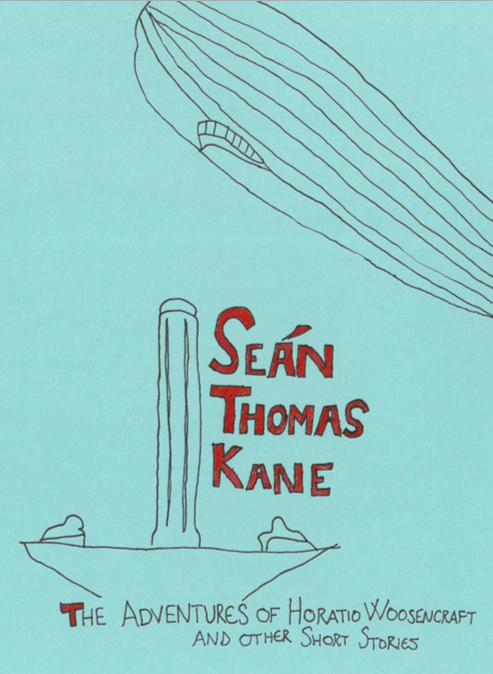
To read more stories like this, please consider purchasing a copy of my book The Adventures of Horatio Woosencraft and Other Short Stories

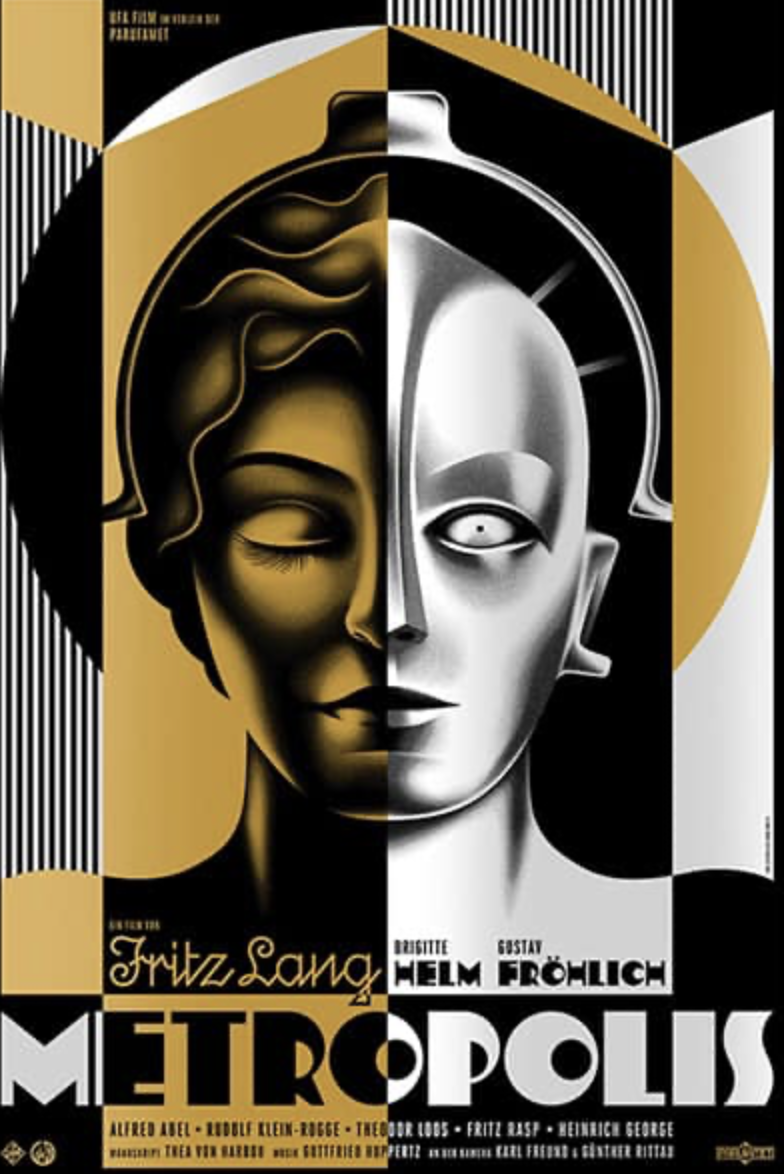
Metropolis

When I returned home to Kansas City about a month ago, I saw an email from the Nelson-Atkins Museum of Art that the Tivoli Cinema, which since 2020 has been housed in the Nelson’s auditorium, would be holding two showings of Fritz Lang’s 1927 silent masterpiece Metropolis. I jumped at the opportunity and immediately bought a ticket for the opportunity to watch this film on a big screen with an audience around me. So, this past Sunday afternoon I showed up for the matinee screening and was even more dazzled by the experience than I’d expected.

I had seen Metropolis once before when it was on Netflix about a decade ago. I remember feeling a bit wary of the film and its story when I first watched it that time. Now I know that watching a movie as monumental as this one on a screen as small as my laptop does a disservice to the whole experience. Metropolis was made to be seen on the big screen with a live orchestra, or at least a live organist, adding a whole extra dimension of music to this already vivid story. In the case of this weekend’s showings, Metropolis was accompanied by a 2010 recording of the original Gottfried Huppertz score performed by Berlin Radio Symphony Orchestra conducted by Frank Strobel. I’ve since played that recording again on iTunes while grading essays this week and have felt just as profoundly moved by it as I was in the theatre on Sunday.

It occurred to me while listening to that album again this week that as much as this score is a film score, listening to it on its own it feels far more like ballet music. In the past I’ve written about how I feel that ballet and silent film share similar characteristics born out of their mutual need for wordless expression to tell their stories. As I listened to Huppertz’s score without seeing the images in front of me I found myself thinking back to each particular scene in Metropolis as I’d seen them the day before. Yet in the moment as I sat in the third row of the Atkins Auditorium watching this spectacle unfold before me, I felt that Metropolis was more operatic than balletic in its very character. These were actors performing at a time when the quantity of film influences were far fewer on their lives thanks to the relatively recent invention of motion pictures, film at that point was only about 40 years old. 

In Metropolis I saw echoes of Wagner and Strauss as well as hints of the future, all the films and television shows that would follow it. There is a scene near the beginning of the film’s first act, the 45-minute prelude, where a shift change of the underground workers occurs that seemed strikingly similar to several scenes from the new Star Wars: Andor series released on Disney+ this Fall. Don’t worry, no spoilers here. There are many elements of Metropolis that certainly have been influential, look no further than the Machine-Man, the poster child of Metropolis that wreaks havoc on the city and nearly destroys it and all who live within it. There perhaps we see the ancestor of Doctor Who‘s cybermen, Star Trek‘s Borg, or Alicia Vikander’s character in Ex Machina.

In the last few days, I read in Variety that there’s a TV series remake of Metropolis in the works for Apple TV+. While I’m normally hesitant about remakes of classic films or shows, the new Star Trek: Strange New Worlds which sees the adventures of the original 23rd century USS Enterprise before it was captained by James T. Kirk, has made the idea more amenable to me, though that’s likely because Strange New Worlds does the whole reboot idea perfectly. I’m most curious to see how Apple TV+’s new Metropolis will depict the city of tomorrow. In 1927 Fritz Lang’s original film used the great art deco skyscrapers of New York built of brick and steel as his model. Will this new series seek to depict the sort of futuristic architecture that I’ve collected on my architecture Pintrest board, filled with gentle curves, evocative colors, and dramatic lines? That remains to be seen.

Metropolis was a gripping film to see, and while long, with some aspects perhaps a bit old fashioned to our tastes, notably the over-the-top heart-gripping that happens throughout that made the crowd around me laugh from time to time, it still has my attention caught even now a few days later. Silent films speak to us in a way that their talking counterparts created after 1927 simply don’t. They tell stories in different ways, adjusting their style to fit the technical limitations of their time. I’ve always been drawn to silent films for this reason, and perhaps I’m drawn to ballet for much the same reason. After all, Chaplin was as much a dancer as he was a slapstick comic. Metropolis is a testament to the time and place in which it was made, Weimar Germany in the 1920s. In Joh Fredersen, the master of Metropolis I see Henry Ford, both in his character and in his physical appearance. I see fears about extremism on all fronts, and a call for unity and dialogue in the face of anger. I wonder what the new Metropolis will be like?

Belief & Science

Photo by Felix Mittermeier on Pexels.com

I often stop myself mid thought when considering questions of truth to ask whether I believe in something or know of something. The distinction here is rather simple, knowledge is founded upon evidence, upon scrutiny & careful consideration of the facts of a case. Belief on the other hand is more of a gut feeling, it’s something we can discern but never really know until that feeling is backed up by fact-based evidence. Of all the forms of knowledge we have yet devised perhaps the most precise and useful is science, or rather the Scientific Method, which is fundamental to understanding the most innate truths of our world.

Both belief & science are built on a certain degree of faith. If the hard facts found in scientific inquiry are the bricks used to construct a house for our collected wisdom built up over every generation, then faith is the mortar that keeps those bricks together. You have to have faith in your senses, in your reasoning, and in the methods and tools you use to come to your scientific conclusions. Similarly, faith is necessary to believe, faith in an idea, in a hope, yes even in a dream of eternity. I’ve been using the English for these ideas so far, but now I think it might be useful to dive into the Latin, which will give us a better idea of how these concepts of belief, science, and even faith, interact in our Modern English.

In Latin the verb crēdō fits my own understanding of belief best. This verb refers to the action of believing and trusting in something, for belief is inherently an active thing. This verb is the origin of our English word creed, and in fact is the opening word of the Latin version of Nicene Creed. Something is credible because it can be believed, and so perhaps there is a certain degree of belief necessary and inherent in science whose facts and statements have enough credit to be considered irrefutable.

Science is itself an English adaption of the Latin word scientia, which had its origins in the Late Roman Republic as an abstract noun referring to the present active participle sciēns, a form of the verb sciō meaning “to be able to,” or “to know,” or “to understand.” Sciō is a practical sort of knowing, it refers to a manner of knowledge that can be tested, reviewed, and proven. Science relies on these proofs to survive and flourish, yet moreover science relies on the tools used to know being credible in their utility. You wouldn’t use a dull knife to cut meat, let alone blunted senses or scientific instruments to prove the fullness of our perceivable reality.

I have a deep admiration for many of the great scientific thinkers of the last few generations, and frequently mention the likes the great public science educators as Drs. Carl Sagan, Neil DeGrasse Tyson, and my generation’s favorite science teacher Bill Nye as people whose curiosity and intellect I look to for inspiration. It is striking then that someone like me who does believe in God, who is a practicing Catholic, would be so admiring of thinkers who themselves are profoundly atheistic in their worldview. I understand where they’re coming from, the existence of God cannot be proven through science, that is an indisputable fact, and to say otherwise would likely diminish the power and vitality of my own faith. I don’t mind that God cannot be proven real or otherwise, for the simplest summation of God in Christian theology as I was taught it, largely coming from the Latin Catholic and Greek Orthodox perspectives, is that God is a paradox. God can only really be approached through belief, through the hope that one might be doing things as some original Creator hoped things would turn out, because in my tradition Free Will is something fundamental to Creation.

I think of God in terms of a Divine Essence, certainly not physical let alone personal in a way that we as humans could fully understand a guy sitting across a table from us. I wonder then can we say that we knowGod, for knowledge relies on those same proofs born out of scientific inquiry? I’m not sure there, and I hesitate to talk about a personal relationship with God because how does one really go about talking to or feeling for someone who can’t be discerned by our methods or means? In the end, if God exists, as I believe, then it relies on that same belief, guided by faith, in Latin fidēs, a word that can also mean reliance, trust, confidence, or a promise that the thing you believe in, whether it be the accuracy of the Webb telescope to find for us the rings of Neptune in greater detail than ever before seen, or in the existence of a God who created all things at some moment deep beyond the furthest reaches of our known past.

I used to think that one could place God’s act of creation at the moment of the Big Bang, after all the image of a great explosion fit neatly with a certain idea of an outpouring of Divine Love, caritas in Latin, that is so central to the writings of many of the mystics of the Church. Yet now using scientific measures our experts have determined that the Big Bang was caused by an eruption of pure energy that had built up before the beginning. It makes me wonder whether we will learn more about those earliest moments as time goes on, whether today’s and tomorrow’s cosmologists will find new truths determined by their own proofs of what might well have happened when all matter in our Universe was compressed into a minute area of tremendous mass.

It seems fair to me to argue then that the moment of Creation did take place, and that at some point our own abilities as humans, all our own wisdom, ingenuity, and cleverness, will reach its limit. Thankfully our scientific tools have yet to reach that limit, and I doubt that limit will be reached in a good long while. It is in our nature as humans to continue pushing the boundaries of our knowledge, first beyond the campfires our ancestors gathered around on the long cold nights of the Last Glacial Period which ended somewhere around 11,700 years ago, then as we learned to plant crops and live sedentary lives, building villages, towns, and later cities where we settled. 

As our ancestors continued to develop their societies, they continued to fill in the edges of what became their maps, pushing the edges of what they came to call Terra incognita (unknown land) further and further out to the periphery until 500 years ago the disparate human family was reconnected through our ingenuity and technology transforming the oceans that were once barriers into bridges which we today can cross with ease. In the last seventy years those boundaries have begun to be pushed upward and outward from our home planet and into the stars beyond. We are explorers driven by our desire to understand the unknown, to see over the next horizon. Yet at the core of all that exploring we have continued to explore ourselves, to look within and ask deep questions about who we are not just as physical beings made of flesh, blood, and bone but as individuals, personalities each distinct from the rest. It is this exploration of the self that continues to drive our desire for some greater truth than we can know, a memory of a Creator who began our long and winding story as a species billions of years even before we ourselves evolved into the species we are today, Homo sapiens, discerning humans.

In times now past our ancestors often turned to belief rather than science to answer their questions, to find truths behind the mysteries they faced in their lives. Ideas of monsters, magic, and spirits out for good or ill were born from that worldview. Today, many of those same phenomena could be readily explained using the tools that our sciences have provided, yet still there are limits to our reason, for there are limits to what we as rational beings are capable of. The fullness of God as I believe in such a Divine Essence is beyond that reasoning, something reliant on my belief supported by my faith, my reliance in the possibility of the wisdom that such a Word, to borrow from St. John’s Gospel, promises. That belief is far from scientific, yet it is reinforced by my faith that we as humans can make sense of the reality into which we exist through our own tools, our Scientific Method.

Cold

Photo by Aleksandr Slobodianyk on Pexels.com

When I returned home to Kansas City at the beginning of December, I was pleased to be able to go outside without a scarf or a hat. For at least those first two days it was pleasant here, with temperatures in the 40s and 50s Fahrenheit. I got pretty lucky with my own long drive west being during such a warm spell. The only snow I saw was in Michigan along I-94. Even in Chicago, a city famous for winter snow, I found only rain. So, when I first read that we were expecting a surge of Arctic winds to descend south down the Great Plains into the United States from Canada around Christmas, I, like everyone else, braced for the impact. 

The worst of the cold began to arrive here on Wednesday, 21 December, with temperatures that night reaching below 0ºF and wind chills well into the negative double digits with the cold bottoming out around -35ºF (-37ºC). Things didn’t really improve for a while just yesterday we started to see regular temperatures above freezing again. At first, I thought this storm was going to miss the Northeast, that it was something we’d have here in the Midwest, but as the week went by I watched as the storm moved across the continental radar first in a southeasterly direction across the Midwest giving what turned out to be a mere glancing blow to Kansas City, before turning northeast with the influence of Gulf and Atlantic winds and heading straight up the East Coast. 

Now, as I write this the City of Buffalo and its suburbs remain buried under feet of snow with nearly 30 dead. Air travel remains broken down across the Midwest and East, and journalists & meteorologists alike are calling this one “the storm of the century.” It proves that for all our technology and innovations, we remain subject to the whims of the weather. On a normal day someone with enough income could conceivably commute by air from one region of this country to another for work, perhaps not on a daily basis but certainly on a weekly one. Yet when extreme cold and blinding snow such as this barrel across North America we’re at its mercy.The funny thing about the last week is that looking ahead to the next few days things are supposed to greatly improve. Not only are we in Kansas City forecasted to rise out of our current frozen state but our temperatures are apparently supposed to climb back up into the high 50s Fahrenheit, warm enough for a nice walk in the park without a scarf, warm enough for some rain to wash away at least some of the snow and salt that’s making our streets and sidewalks dangerous to pass. Maybe that’s a good sign for 2023, that the new year will arrive to better weather than 2022 is leaving behind.

Thirty

Photo by Soly Moses on Pexels.com

Yesterday, December 20th, I celebrated my 30th birthday. It seems strange to me to be thinking about my thirties as here and now, rather than something in the perhaps not so distant future, yet here they are. One story that comes to mind about the thirtieth birthday is the time when Julius Caesar found himself standing in front of a statue of Alexander the Great when the Roman general was himself 30. He found himself weeping at the thought of how little he had accomplished at that point compared what to the Macedonian king and conqueror of much of the known world had done by the age of 30.

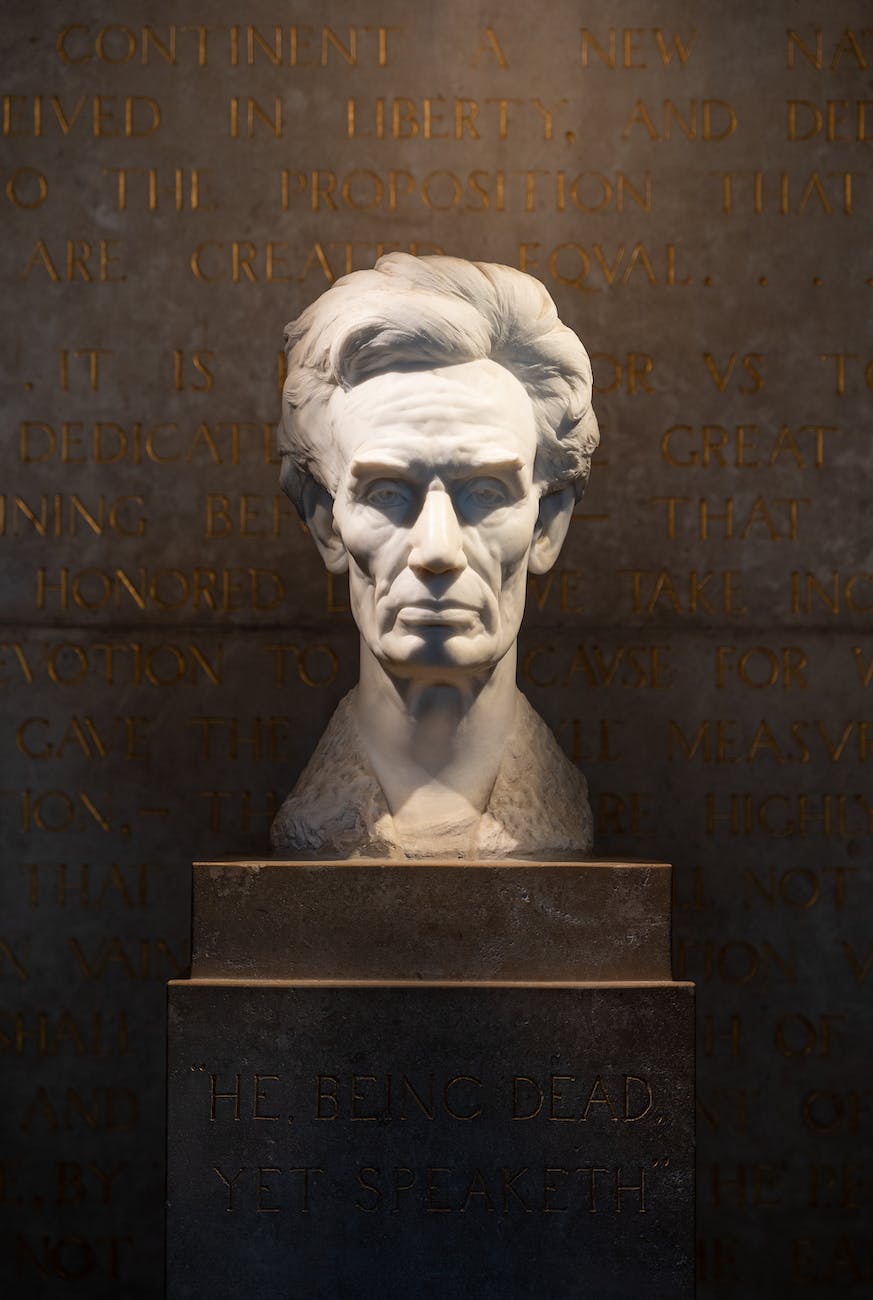
I for one don’t care as much for conquest or war, I’d rather avoid both and live peacefully, yet I still had my own moment of reflection just a few days ago at the tomb of the man who I have on some occasions referred to as my “patron saint” in the American civic religion.

Last week, on my move back to Kansas City, I stopped in Springfield, Illinois to pay a visit at the Lincoln Tomb. It’s one such monument that I’ve visited a handful of times before, but never before this time have I been alone with the Lincolns in the building. We are at a moment in our history when things seem to rhyme with Lincoln’s day, when we Americans are divided against one another to such an extreme not seen in these last 160 years. Lincoln has always been a sort of patron saint for me in our American civic religion, someone who I looked up to as a boy in the Chicago suburbs over twenty years ago, and so in this visit I found myself asking him to guide our leaders today, to offer them wisdom to “bind up the nation’s wounds” as he endeavored to do.

In a day as now when the loudest voices nearly drown out all the rest in our public discourse we need more quiet people, like Lincoln, to step up and speak out. I have tried in my own way both in public and in the Wednesday Blog to do this but have felt inadequate to the task and unheard by society at large. I worry today that we have lost sight of the need for balance in our lives, a drive for excess, loud colors, and garish noise contributing to the cacophony which makes maintaining our great society more difficult with each passing day. We ought to remember the common humanity that binds us together and “confidently hope that all will yet be well.”I hope these next years of my fourth decade will be good ones, that all the dreams of personal and professional accomplishments will be realized, and that we may again have a time of unity, and perhaps peace, in this country and around the globe.

Cosmos

Photo by Pixabay on Pexels.com

Cosmos comes to English from Ancient Greek, where it referred to a sort of order in nature, the opposite of Chaos. This meaning stuck into the medieval period in works like the twelfth-century philosopher Bernardus Silvestris’s Cosmographia. In the Renaissance, the period I study, a science called cosmography developed in Europe as a way of making sense of all the worlds the explorers setting out from Portugal, Spain, France, and England were encountering. Still later, in the early nineteenth century the German scientific polymath Alexander von Humboldt named his greatest work, the five volume book Kosmos, which sought to describe the totality of nature as he and his colleagues had observed throughout his long lifetime. Today, Cosmos speaks to something far exceeding the Earth in scale, it’s the observable Universe with a potential for even more that we presently don’t know to be included under that cosmic umbrella.

A term like Cosmos is important because it helps us understand how we make sense of everything around us. I feel like I can imagine the entirety of the Universe but I’m sure if I saw an artistic rendering of the visible Universe, I’d feel like I was seeing a new face. This weekend as I was on my way west back to Kansas City through Chicago, the two cities I’ve called home over these past thirty years, I found my perspective shifting away from that of the stranger in the Northeast to one of familiarity and comfort back in my own native Midwest again. Arriving in Chicago I was delighted to realize I didn’t need the GPS in my car anymore, I knew exactly where I was in a place so vividly familiar to me. The same can be said for the rest of my drive west of Chicago, everything was familiar and wonderful to see.

My own Cosmos then, the order that keeps my life together, is built with Midwestern sentiments and expectations. Something that made life in New York difficult for me was how the customs there are at least somewhat different from what I’m used to. Even in these last few weeks there I still had to remind myself it wasn’t intentional rudeness when people I knew wouldn’t acknowledge me, let alone smile and say “hi” when we’d walk past one another, it’s just the impersonality of life in a place that has never really become familiar to me.

In these last three years I’ve now stretched my world out further, filling in many of the gaps of my own experience here in North America with trips to nearly all of the major cities on the East Coast and to Montréal and Toronto. I now know so many of the highways that link the Midwest & Great Lakes with the east. I found myself thinking about how as a child living in the Chicago suburbs that my family never took road trips east out of Chicago to Michigan, Indiana, or Ohio, nor north to Wisconsin. Instead, whenever we traveled it was west to St. Louis, Kansas City, and Denver further afield. Thus, the ways heading east were new to me as I drove along them this weekend, the easy drive on I-94 from Detroit to Chicago being one such example.

I’ve known many people who define themselves by where they’re from, for good or ill. There have been plenty who are loud and proud supporters of their hometown baseball team, and others who use their origins as an excuse to be unkind to the people around them. Over these last three years I had moved into a state of mind where my own origins were somewhat more dormant, sure I had all sorts of art up on the walls in my apartment celebrating both Chicago and Kansas City, and I’ve interchangeably worn my Cubs and Royals hats, but I’d begun to think of myself more as a person who can shift between places and communities, a skill that I needed to develop in Binghamton. Yet upon my return first on Saturday to Chicago and then on Monday to Kansas City I found all those old emotions and memories flooding back. 

One of the parts of the Christmas story that I always remember is that St. Joseph had to go to Bethlehem from Nazareth to participate in the census because that’s where he was born. I am who I am just as much because of the places I’ve grown up in and the people I’ve lived among as the experiences I’ve had as an individual trying to make things work over these last three years alone in a lonely valley far from home. Home is a word of tremendous significance for me, it’s the place where I feel the most comfortable, the safest, and the most appreciated. For much of my life I’ve seen both Chicago and Kansas City as my home. It’s a sentiment I’ve reinforced this weekend on my first visit to the city of my birth since the pandemic began. Were I to say I have a “homeland,” Lake Michigan would remain its eastern boundary, the Great Plains beyond Kansas City its western. That is the heart of my Cosmos.

1st Anniversary

A year ago, I decided on a whim to turn my weekly blog into a podcast. I’m a bit late on the blogging game, and I always knew the podcast likely wouldn’t be one of the most popular out there, but despite all that I knew one thing for sure: it would be fun to make. I quickly found the audio editing enjoyable, and after the first couple weeks decided to keep things up, to add new elements into the recordings, and see where this would take me.

Now, one year in I’ve recorded 415 minutes of the podcast, according to Spotify, or 6 hours, 55 minutes. That’s enough to listen to for the last couple days of driving during my Longest Commute this August, or enough to get you west across Kansas on I-70 from Kansas City with an extra 50 minutes of podcasts to spare for those first flat miles in Colorado. It’s a big milestone for a project that survives depending on how much fun I’m having with it. Each week I know I could end this show, even end the Wednesday Blog all together, if I’m tired of it.

I think the reason why I keep this going is because I enjoy getting to write about something other than history every week. It could be as mundane a topic as highway signs or as personal a story as how I ended up working in Binghamton, NY. For the longest while I found it funny that the top rated episode by listener numbers was “Episode Untitled, or Humanity and What We Can Do About It,” which has had 34 plays to date. Currently, “Episode Untitled” ranks ninth in the standings, just above this summer’s excited reflections on the launch of Artemis I and below my episode on “Suspending Disbelief”, and the necessity for imagination to keep our lives fresh and exciting.

I was surprised to see “The Longest Commute” perform so poorly overall. While the first episode is ranked at seventh, “Part 3” sits at 28th and “Part 2” at 34th, well below my estimates. This trio of episodes, which I used to end the first season of the podcast, were inspired by the pair of blog posts I wrote in June 2021 about my trip with my Dad across Colorado and Utah, both of which performed extraordinarily well both with my usual readers and with members of the public who found them through WordPress and Twitter. So, the fact that “The Longest Commute, Part 2” ended up only getting 18 listeners is disappointing, but something I’ve learned from.

My two lowest played episodes, two that I really hoped would get more listeners are “Vote!“, the first Wednesday Blog Tuesday Special released a month ago on Election Day, and “How Space Exploration Can Unite Us,” which I released following the launch of the James Webb Space Telescope (JWST) last December. Even my February 2022 episode “Patience” only got 10 plays, and sits at 51st in the rankings. I’ve learned to be patient with these listener numbers, whether it be with the disappointment with the longer episodes that I put a lot of work into, like “The Longest Commute” or the shorter ones like June 2022’s episode “Kitty,” which at 67 plays is currently ranked at the top of the most played episodes of the show. And, of the episodes with musical interludes and bonus songs, you’ve seemed to like “S’Wonderful” the most at 46 plays with my two baseball episodes “Bad Practices in Baseball Broadcasting” (21 plays) and “Baseball is Back” (20 plays) ranked 27th and 29th respectively.

I’ve begun to incorporate guest voices into the podcast, from the voice of dead presidents, the talented actor Michael Ashcraft, to my good friend Alex Brisson who joined me to talk about the 2011 silent movie The Artist this Spring. This is something I want to do more, in the long run I have an idea for an expanded Wednesday Blog format where this weekly editorial would remain at the center of the show, but there’d also be a weekly musical interlude and a conversation included for a 30 minute episode. We’ll see how or when that’ll happen.

I want to thank you, my audience, for listening in over this last year. While most of you (74%) have been here in the United States, there has been a steady and growing listenership elsewhere around the globe. I’ve had a fair number of listeners in Ireland (9%) and the United Kingdom (4%), with the odd listener here and there in France, India, Tanzania, Canada, and Saudi Arabia. Most of you seem to be finding the podcast through the Wednesday Blog website, though I’ve got a fair number of listeners tuning in elsewhere. Anchor tells me there are 23 people in my audience, two less than the average size of my classes here at Binghamton University.

I’ve been surprised and excited to hear passing mentions of The Wednesday Blog from friends who haven’t come up in any of the analytical data, people who’ve read or listened to this. There’s a small group of friends, and my parents, who I send this to each week, and who have given me good feedback each time, but then there’s those of you who I don’t know but deeply appreciate who listen to this podcast and read this blog. I hope I can keep this going for you guys for a while yet.

So, from me to you, thank you!

Essay Writing

Photo by picjumbo.com on Pexels.com

I’m at a rather fun point in my doctoral studies. Today, I get to spend my days working on my dissertation and serving as a Teaching Assistant for a class. In my TA duties here at Binghamton, I’ve been assigned two sections of 25 students each, so when they submit essays, I find myself grading 50 of those in the course of a few days. It’s a lot of work, and in the moment the grading inspires a variety of emotions in me, from joy at a wonderfully written essay to disappointment at one that could’ve done better with just a little more effort.

One of the greatest boons to my work as a teacher is that now, after 12 years in college and 27 years overall as a student, I’ve finally made sense of how to write an essay. This word, used so often in academic writing, never really clicked for me. I knew I was supposed to write a research paper that had a introduction, body, and conclusion, but never really got the structure my teachers and professors were going for beyond that. It took my own transition from student to teacher for me to really understand that an essay is an extended argument. 

It also took for me to start studying Renaissance French Humanism and Natural History for me to really understand the origins of the essay with Michel de Montaigne’s 1580 book of Essays, where the term originated. These were reflections on a variety of topics, from children’s education to cannibalism and everything in between. My own Wednesday Blog is in some ways a nod to Montaigne in format. Montaigne’s essays sought to describe his world as he saw it and understood it, in all its rich detail and complexity.

In the academic essays that I write, from the quick 3 to 5 page papers I used to write for my undergrad history classes at Rockhurst to my dissertation, which in many aspects is itself a long essay, all have the same core structure and spirit. Yes, at its barest bones the essay is made up of an introduction, body, and conclusion, but there’s so much more rich detail to a good essay than just that. 

This semester it really occurred to me that the introduction ought to be made up of three main things: something to catch the reader’s attention, a thesis statement laying out the essay’s argument, and a brief summary of the main points with some context in the existing literature included if you’re writing on a graduate or professional level. Any of my colleagues reading or listening to this will either find their eyes are glazing over here or are instead laughing that I only really figured this out this late in the game as I was writing my dissertation.

The body is more than just the main points of the essay, it’s the real meat of the work, the rich quotes and analyses of the sources, the connections made to other works in all their intricate splendor, the quotable lines that help the essay stick in the reader’s memory and look forward to reading more of your work in the future. I still would say though that the thesis remains more important than the body, after all the body isn’t going to make sense without a strong central argument, a beating heart at the core of the entire work. I often tell my students this and have even begun advising them to underline their thesis statements to help them keep that heart in mind as they continue to flesh out the rest of their written creation.

Finally, there’s the conclusion. It’s a summary of the main points of the essay, a restating of the thesis with the memory of the body fresh in the reader’s mind. The conclusion is a chance to leave your reader with a really strong impact from your essay, something to find them wanting more. 

For a while now I’ve often thought of the essay as a form functioning for scholarship and literature as the symphony functions for music. In both cases there are different styles and methods of elevating the pure form into an art that reflects the writer or composer’s personality and craft, that leaves the audience feeling something different, something that they can best describe as emblematic of that work’s author. In symphonic music there are clear distinctions between the classical composers like Haydn & Mozart and the romantic composers like Beethoven & Brahms. Sometimes, the best way to end an essay is to borrow an idea from the romantic symphonies and even the romantic operas of composers like Gounod and Wagner: let the main themes finish and then have a sigh to really round things off. If you listen to the finale of Wagner’s Götterdammerung, you’ll hear this very sigh, as if all the energy built up in the composition over the last few hours is nearly extinguished but has one last breath. If you can write an essay like that then bravo.

I’m writing this in the midst of an extensive round of edits to my dissertation, going line by line making corrections, clarifications, and all around tightening down my work until it really just elevates the core form of my thesis. In the last year since I started writing this dissertation, I’ve learned a great deal about how to do this job, and I hope I will in future avoid some of the great pitfalls that I’ve caught myself up in time and again in my studies.If you’re a fellow academic, or interested in academic writing, I highly suggest you go listen to my friend Kate Carpenter’s podcast Drafting the Past, which is all about the process of writing history. It’s a wonderful service to the profession that Kate’s doing. Enjoy your week!

Doctoral Study

Photo by Ricardo Esquivel on Pexels.com

I was 27 when I arrived here in Binghamton at the start of August 2019. I made a big move out here, with immense help from my parents, and set up shop in a good-sized one bedroom apartment that’s remained my sanctuary in this part of the country ever since. I’d wanted to continue my education up to the PhD since my high school days, and it’s a plan I’ve stuck with through thick and thin. After a false start in my first attempt to apply to PhD programs in 2016, which led to two wonderful years working on a second master’s in History at the University of Missouri-Kansas City (UMKC), I applied again, now far better positioned for a PhD program and ended up here through the good graces and friendly insight of several people to whom I’m quite grateful.

Arriving in Binghamton though I found the place very cold and quite lonely. In recent months I’ve begun to think more and more about getting rid of some of my social media accounts only to then remember that Facebook, Instagram, and Twitter were some of my greatest lines of communication with friends and family back home in Kansas City and elsewhere around the globe throughout these last three years. That first semester was tough, very tough, and while the second semester seemed to get off to a good start it was marked by the sudden arrival of the Coronavirus Pandemic and the end of my expectations for these years in Binghamton. 

I spent about half of 2020 and 2021 at home in Kansas City, surrounded by family and finding more and more things to love about my adopted hometown with each passing day. When I was in Binghamton it was to work, in Fall 2020 to complete my coursework and in Spring 2021 to prepare for my Comprehensive Exam and Dissertation Prospectus defense. I still did a good deal of the prospectus work at home rather than here, though the memories of those snowy early months of 2021 reading for the comps here at this desk where I am now always come to mind when I’m in this room.

As the Pandemic began to lessen in Fall 2021 and into the start of this year, I found myself in Binghamton at a more regular pace. There was something nice about that, sure I wanted to be home with my family, but I also felt like I was getting a part of the college experience of going away for a few years to study that was reminiscent of the year I spent working on my first MA at the University of Westminster in London. I started to venture further afield in the Northeast again, traveling to Boston, New York, Philadelphia, Baltimore, and Washington again. When I first decided to come here one of the things, I decided was I’d take the opportunity of being in the Northeast to see as much of this region as possible.

2022 saw another transition, I wasn’t in one of the newer cohorts in my department anymore. Now, in Fall 2022 I’m one of the senior graduate students. It’s a weird thing to consider, seeing as it felt like 2020 and 2021 evaded the usual social life of the history graduate students here, thanks to the ongoing pandemic. I also began to look more seriously at my future, applying for jobs in cities across this country, and even looking again at some professorships, something I doubted for a while would be an option for me. If there’s anything about life that I’ve learned over the past three years spent here, it’s that you always need to have things beyond your work to look forward to. Whether that be a long walk in the woods on the weekends or a day trip to somewhere nearby, or even the latest episode of your favorite show in the evenings. Doing this job without having a life beyond it is draining. 

For me the best times here in Binghamton were in Fall 2021 and Spring 2022 when I truly began to feel like I had a place here that I’d made my own. I was confident in my work, happy with how my TA duties were going, and really enjoying my free time as I began to spend my Friday evenings up at the Kopernik Observatory and Sundays at the Newman House, the Catholic chapel just off campus. I was constantly reading for fun as well, something I’d lost in 2020, even falling behind with the monthly issues of my favorite magazines National Geographic and Smithsonian. There were many weeknights I’d spend out having dinner alone reading natural history, science fiction, anthropology, and astronomy books. 

It’s interesting looking back on myself from six years ago when I was in London, the months that summer when I decided I wanted to get back into history after a year studying political science. My motivations were to earn a job working at one of the great museums I’d spent countless hours in during that year in the British capital. While I studied for my MA in International Relations and Democratic Politics, I was still spending my free time looking at Greek and Roman statuary and wandering the halls of Hampton Court or watching the hours of history documentaries on BBC 4 in the evenings. And now that I’m back in History as much as I do appreciate and love what I do, I find my free time taken up by science documentaries and books.

It’s important if you do want to get your PhD in the humanities and social sciences to figure out why it is you want to do this before you start. Have a plan in mind, have a big research question in mind, and focus your attentions onto that question. My own story has many twists and turns from an interest in my early 20s in democratic politics to a brief dalliance with late republican Roman history before settling into the world of English Catholics during the Reformation. I ended up where I am today because of another series of events that led me to moving from the English Reformation to the French Reformation, and from studying education to natural history. So, here I am, a historian of the development of the natural history of Brazil between 1550 and 1590, specifically focusing on three-toed sloths. In a way there are echoes of all the work I’ve done to date in what I’m doing now, thus as particular as this topic is it makes sense in the course of my life as a scholar.

A month from now will be my 30th birthday, a weird thing to write let alone say aloud. My twenties have been a time of exploration of both the world around me and of myself. When I look at my photo on my Binghamton ID card, the best way to describe my appearance would be grumpy yet optimistic. Just as I was a decade ago, a sophomore in college, so now I am today, looking ahead to the next decade with excited anticipation of what it’ll bring, and hopeful that all the work I’ve done in this decade will find its reward in the next.

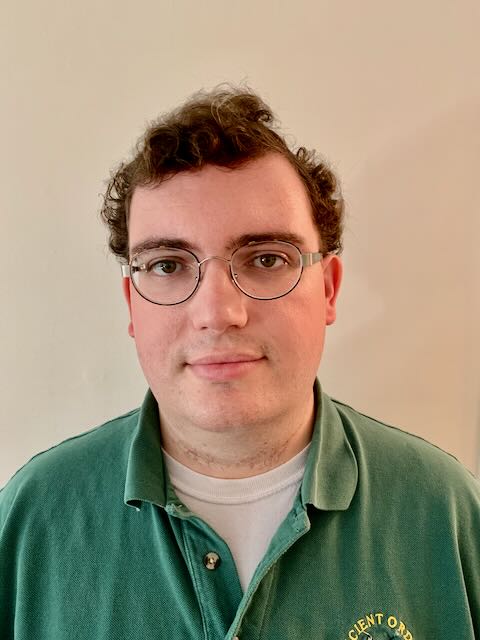
Me upon arrival in Binghamton, August 2019.

Winter

Photo by Pixabay on Pexels.com

I was born on a snowy day in December 1992 in the Chicago suburbs, and over the past 30 years my life has been marked by the cyclical changes between warm and cold months. The winters often stand out more than the summers, perhaps because winter snow is always more of an event than a really scorching hot day in July. As I’ve gotten older, I’ve come to wish for snow less and less, certainly the incentive of a snow day is mostly absent now but also snow means I’m responsible for shoveling my sidewalks and driveway, something which I’ll do but don’t wish for.

In the last few days, we haven’t had any accumulation, the ground is still too warm, but the flakes falling on my head have been enough of a warning of things to come. Last year it occurred to me that there’s a pattern to how the seasons change and how the weather gets colder over the fall months. Late Summer here in North America is often stormy with the Atlantic hurricane season at its height and changing temperatures causing seasonal rains and occasionally thunderstorms across the continent. Each successive rain has its own small change on the overall temperature, first it’ll be steamy and hot after a rain in August, then as September progresses there’s a cool spell after each rain, until finally in October there’s that climactic storm that pushes the temperature enough that once the cool spell ends the temperature doesn’t rise again to its summer highs, instead settling now into a much cooler Winter low.

Here in Binghamton that final storm that did the trick was the remnants of Hurricane Nichole which reached this valley on Friday morning bringing moderate to heavy rains from the south that sat over this valley for much of the day. That evening the skies remained too cloudy for stargazing up at my usual Friday haunt, the Kopernik Observatory, and since the clouds have only faintly parted to reveal radiant sunshine. It took until Sunday afternoon for the temperature to fall enough for the steady flickering rain to freeze and become first sleet and then snow. Winter’s arrival is likely to be for the season now, it got this cold a few weeks ago before warm winds blew in from the southwest convincing me to lose my sweaters for a day in favor of my short sleeved shirts, but that last gasp of warmth wasn’t going to last.

There are things about Winter that I admire and look forward to. The conviviality of Summer is replaced by the twinkling celebrations in the long dark nights around Christmas and New Year’s, born from ancient mystery and ritual yet vibrant in its modernity. For the moment I’m still getting used to the Sun setting around 4:30 pm, still grumbling about it. The darkness of our Winter nights is bearable because we always know it’s temporary, the long summer days will eventually return, and with them all the nostalgia fueled memories of the glories of summers now past.