Author Archives: seanthomaskane

Unknown's avatar

About seanthomaskane

I am a PhD student studying the history of Renaissance natural history focusing on French accounts of Brazil. Chicago born, longtime KC resident, SUNY Binghamton grad student.

Kitty

Kitty, Easter 2022
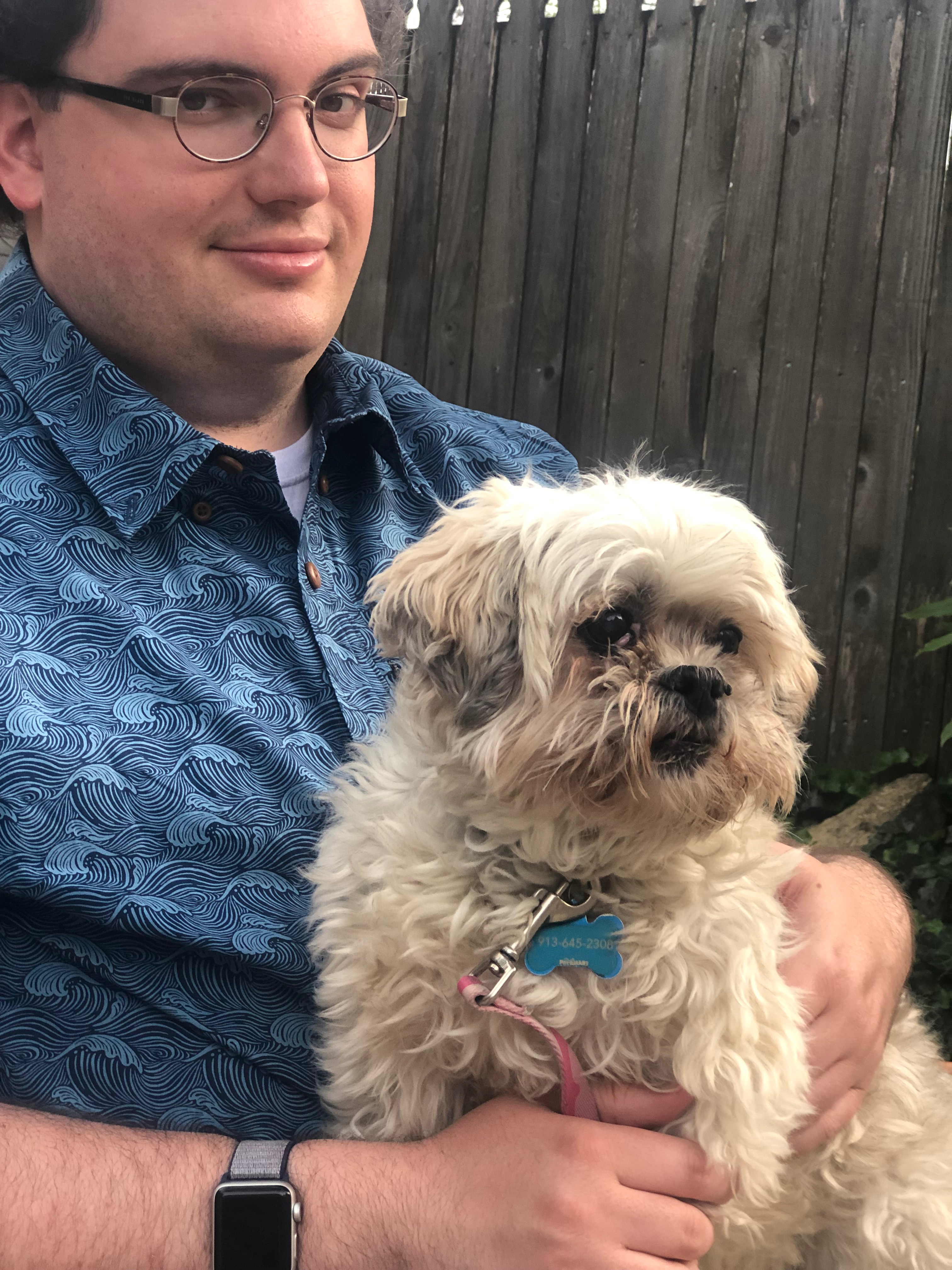
This week, I want to tell you about my cat Kitty.

I’ll freely admit I’m more of a dog person. I am fascinated by cats, their social behaviors, their mannerisms, their temperamentality. Yet at the end of the day, I like the unconditional love a dog will always offer if you treat it well. This summer is my first one in over 20 years without a dog in my life, as my best friend Noel died a year ago at the start of June at the ripe old age of 16. Throughout all that time that I’ve had dogs, first Pretty the Beagle, then Spot the Aussie Shepherd, then Caesar the Black Lab mixed with a pony, and finally Noel the Shih Poo. 

I’ve also lived with a succession of cats. First among these was a black cat named Mrs. Norris, who we more commonly called Nora, then a grey cat we rescued who we named Crookshanks. After these two Harry Potter-themed names my Dad and I adopted a Siamese farm cat named Leo who could be very lovable but also was a bully to first Nora. Finally in the Summer of 2009 my Dad rescued a fourth cat, an orange and white cat who we named Kitty Kiernan, or Kitty for short.

When I first met Kitty on that Saturday afternoon, she was standing on an ottoman in our living room at our old house on the farm looking out the window onto the porch and into the western fields beyond. She quickly turned at my entrance and began talking to me, meowing with so much excitement. We became fast friends and over the next year she loved to sit in my lap when I was at the computer or watching TV. She also became best friends with Noel, after all Leo and Crookshanks were friends, and while Crookshanks was kind to Kitty, Leo was a jerk to her from the first moment they met. So, Kitty became Noel’s best friend. They slept together a lot when they were young and continued playing with each other even into their senior years until Kitty got tired of Noel jumping on her and tackling her and retreated to her own parts of our current house where Noel couldn’t reach her.

Over the years I’ve collected a large photo album of what I call “Noel Pictures.” I still look at them from time to time, I’ll freely admit I’m still in mourning for my pup. One of my favorites taken a few days before Noel died is of her sleeping on the old red Victorian sofa in the sunroom in my parents’ house with Kitty sitting on the floor below her looking up at Noel with concern clearly written all over her face. In those last few weeks Kitty came downstairs to check on Noel from time to time, and in the last day she came to say goodbye, sniffing Noel and rubbing her head against the ailing pup’s. The amount of affection those two showed for each other both in their youth and as they’ve grown up together really does touch my heart.

This week I’m reading about the premodern concept of the Great Chain of Being, a hierarchy of nature which places God at the top followed by Angels, then Humans, then Animals, followed by Plants, and finally Minerals at the bottom. This is inspired by both Plato and Aristotle, but especially Aristotle’s biology found in his book the History of Animals (Books 1 & 8). Aristotle classified life forms based on what sort of soul they have between a Rational, Sensitive, or Vegetative Soul. We humans, Aristotle wrote, had all three types of soul in ours. All other animals lacked reason but had the sensitive and vegetative types in their souls. Plants, as the name suggests, are just vegetative in their essence. When I was a freshman in high school my theology teacher said that animals don’t go to Heaven, that Salvation is reserved for humans alone, and even then, only those humans who willingly surrender themselves to God. As I’ve lived with Noel and Kitty, as well as Caesar, Spot, Leo, Crookshanks, Nora, and Pretty over the years I’ve come to see more in their eyes than just a partially completed soul. When I saw Noel die last June, I saw something leave her, the will to keep going, the consciousness that dwelt within her little body for sixteen years left her, and her body fell into a far more restful slumber once her last snores stopped.

On Monday evening, as with every other time when I sit down with my parents to enjoy that evening’s televisual feast (to borrow a phrase from Fawlty Towers) Kitty was quick to jump up onto my lap for some quality pet time. I’ve learned where she likes to be petted and try to do my best at it. Considering how blissful the look on her face often is after just a few minutes I suspect I meet my objective time and time again. This Monday though it went a step beyond just mere bliss. Kitty curled up in a ball on my lap and slowly, softly, gently began to snore as I petted her in one smooth stroke from forehead to the tip of her tail and back again in a circle. In that moment I too started to relax, to breath deeper, and to feel something of the serenity I often feel when I imagine myself floating in air or dream of the delicate beauty of the evolutionary order of the Cosmos.

Kitty conked out, June 2022

I don’t entirely agree with Aristotle’s idea that animals are inherently lesser than us, sure they aren’t human, but we are animals in our own right. We’ve just evolved differently than animals. Whereas Kitty’s daily routine involves napping, watching birds and squirrels out the windows, eating and drinking, and getting petted whenever there’s a free lap for her to lay down on, mine is far more focused not only on the abstract, both the past and the future, but also on affairs far from our home. Sure, I think about meals just as she does, and I long for those moments of physical interaction with the people I love, holding my Mom’s hand or giving my parents hugs from time to time. When it comes to Kitty though, I do enjoy letting her jump up onto my lap so I can pet her. I appreciate being appreciated. I like the fact that even when we do have disagreements (she has bit me from time to time) she always returns to me when she wants to.

I don’t know how much longer Kitty will be around, we never really figured out how old she is seeing as she was found by a friend in the parking lot of an apartment building here in Kansas City. But regardless of how much longer I get to be her friend, she’s taught me a lot about empathy and what it means to care for someone else.


Kitty snoozing on the clock, September 2015.

Anniversaries

The Chicago skyline as seen from the Museum Campus in January 2013
This week, I feel a bit sentimental about the biggest anniversary in my life to date.

23 years ago this week, my parents and I packed up our house in the Chicago suburbs and moved about 500 miles southwest to a farm on the western edge of Kansas City, Kansas. There were so many different aspects to that move from an opportunity for a different sort of life to the chance that I could grow up with my maternal cousins. In the years since we’ve had all that and more. Still, for the first 20 years I approached this anniversary with a bit of a sour attitude. 

I was excited at first at the prospect of moving to a farm, to a place where we’d have horses and all sorts of pets (back then I was really into cowboys as well as dinosaurs like your typical 6-year-old). But as time passed and I began to realize what it meant to be living on a farm on the outskirts of a metropolitan city away from so many of the things I’d come to know and love back in Chicago, I developed a sense of gloom about the whole story.

It took until my mid-twenties for me to fully appreciate how wonderful a city Kansas City is, and how much it had really become my home. As the twentieth anniversary of the big move approached in 2019, I was back in Chicago for a week for probably the first time as an adult returning to my original hometown for business rather than on a family trip. At that point I seemed to be on the verge of securing a position back in that city and felt like all my hopes of the previous two decades were finally coming true. That job didn’t end up panning out, and besides a quick overnight stop in the suburbs on a long drive west to Kansas City from Upstate New York in October 2020, I haven’t been back to the city of my birth yet this decade.

When I was there in January 2019 attending the American Historical Association’s annual conference, I paused here and there between things to reflect on the life I might have had if we’d stayed. Now as an adult having gone through academia I wonder if I might be in a more advantageous position today professionally if I’d gone to high school and college up there rather than down here. Don’t misunderstand me, my education at St. James and Rockhurst was wonderful and something I’ll always treasure. Still, the opportunities of things to study, especially in the sciences, are far greater there than here. In fact, I wonder if I would be in a different field today if we had stayed there than here: planetary science, paleontology, geology, who knows, maybe even anthropology.

It’s curious to me that my interest in history didn’t really begin until after the move to Kansas City. In Chicago we were members of the Field Museum, a cultural icon that we visited easily once or twice every month. My fascination with the past was born in those hallowed halls, first for dinosaurs and in more recent years for the ancient megafauna of the Pleistocene and for anthropology. Without that steady anchor in the natural sciences to keep my interest I began to turn to other things like Roman and later medieval history as well as linguistics.

The Field Museum in its Winter splendor

In many ways, that move impacted me far greater than any other event in my life so far. I became the guy I am today because of it. The guy in the classroom with more complicated loyalties and interests, the one with two favorite baseball teams (the Cubs and the Royals). Yet I’ve realized in recent years that I accentuated the fact that I’m not a native Kansas Citian for a good long while because it was something I could use to stand out from the crowd. Though rather than it being just a bunch of grandstanding, that fact of my life is one of the deepest and most personal parts of my story. Loyalty is something I treasure above all, and my own loyalty to my original hometown, even after 23 years, remains strong. To me, for example, abandoning the Cubs would be like turning my back on a core part of my identity.

That passion is helped by the fact that those first six years contain many of my best memories, like the April Fool’s Day when my Mom woke me up to a clear sky and said, “I took the day off work, and I’m keeping you out of school today. Let’s go to the Brookfield Zoo.” Or the time when some relatives were visiting, and I rode with my Aunt Kay in the back of my parents’ Ford Explorer down the Eisenhower Expressway so all of us could go see the then brand-new Michael Jordan statue outside the United Center. There are the times when I got to go visit my grandparents with my Dad up in Mt. Prospect, or the times when he took me on the Metra downtown to go to the Field Museum (again, that old museum). There are all the summer days we spent on our sailboat, the Arctic Tern, out on Lake Michigan up and down the Chicago lakefront and out to where the skyline fell below the western horizon.

You can understand why then for 20 years I felt like I was missing something from my life. After we moved to Kansas City we went from the big towers and expansive museums and endless suburban streets to big open skies, beautiful sunsets, and days spent remembering what we had before we left the place that to me still felt most like home. I think the farm wasn’t ever really going to feel like home to me, it was too quiet, and as an only child out there I was pretty lonely. Only after we moved into Brookside, the neighborhood where my Mom grew up, did Kansas City really feel like a place where I belonged.

Still, as much as I may grumble about the move it has also brought so many wonderful and dear people into my life. I got to know most of my family after moving to Kansas City, all my aunts, uncles, and cousins on my Mom’s side. I also made many dear friends in school and in daily life, including some who have been a part of this podcast so far and my brothers in the Donnelly Division of the Ancient Order of Hibernians in Kansas. I would not have gotten to know my dogs and cats and other pets if it weren’t for the move. I learned to love my best friend Noel, departed a year ago this month, and became a far better, kinder, and gentler person because of her presence in my life. Kansas City has given me so much, and made me who I am today.

Now as an adult I can see many different paths ahead of me, some of which lead back to that great lakefront metropolis, the beating heart of the Midwest. Others lead me back here to the Fountain City that I’ve adopted as home after a long and sometimes begrudging trial period. Some see me keep working out in the East in one of those great cities, and still more see me move out West to California or stay closer to home in Colorado. Nevertheless, today I could conceivably decide to fly up to Chicago for the day and go walk around those museums and streets that I remember so fondly from my youth. For me the Field Museum today is as much a place of scientific wonder as it is a place of wonderful memories. I’m still a member there, even though I haven’t actually visited in three years. (Thanks, COVID!)The Ancient Greeks had an understanding of time that we are always facing backwards to the past with the future still over our shoulders. I like that idea both as a historian and as a passionate person with a still young life filled with memories. What can I say, I’m always in a sentimental mood.


23 Years Later and I finally bought my first Royals hat.

Creatures of Habit

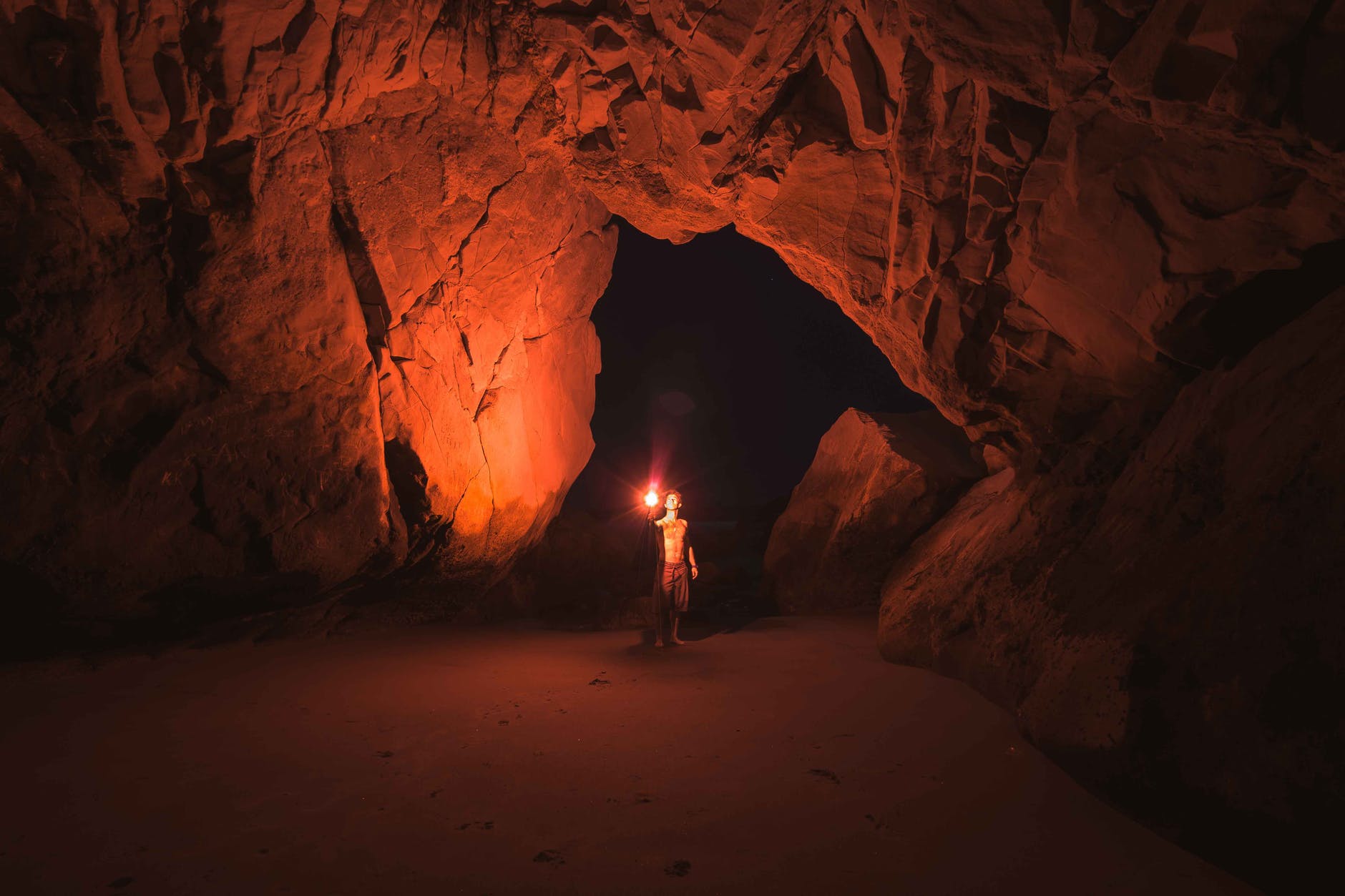
Photo by Jeremy Bishop on Pexels.com

This week, how we tend to stick to the same things over our lives.

I’m writing this week’s blog post substantially later than I usually do. This past week has been very uncomfortable for me, first with a bout of food poisoning last Tuesday and Wednesday, and now with the continuing aftereffects of it still in my system. So, at a time like this when I feel physically terrible, I often find myself returning to the same old routines and manners that I’ve practiced my entire life. There’s something comforting in watching an old episode of Bill Nye the Science Guy all these years later because it’s nostalgic as well as staying educational.

Last night I found myself craving some good music, the soaring melodies and rich harmonies found in opera. I ended up listening to a couple of things including the Queen of the Night’s second aria “Der Hölle Rache kocht in meinem Herzen” from Mozart’s Magic Flute. For all the hellfire innate in the words––the title translates to “Hell’s vengeance boils in my heart”––there’s one line near the end that caught my eye, “Alle Bande der Natur.” At the moment I thought of “Bande” as in “bonds” or more metaphorically “customs” when in fact it really means “bonds” as in “connections.” So, in my elementary level German I translated “Alle Bande der Natur” as “all bonded by Nature” or that it was a matter of instinct and habit.

My misinterpretation of the German text there brought me to think a bit more about habit and instinct. What sets us off to do what we do? Why for example do some people eat each thing on their plate in turn rather than mix the flavors together? Or why does my cat like to extend her claws when she’s happily being petted?

Instinct is a survival mechanism. If you recognize you’re in a bad situation, you’ll probably do your best to get out of it. That goes back to the days when our distant ancestors were hunted as prey by other larger animals. Perhaps the urge to laugh at other people’s misery, embodied in my youth by America’s Funniest Home Videos and today by a good portion of the content on Instagram and the “Hold My Beer” subreddit, comes from a similar primal satisfaction that it’s not me who’s getting his leg gnawed off by a lion today.

As long as we’re tuned into our own natures, we’re bound to avoid some of the pitfalls that inspired that particular metaphor and survive. I learned the hard way to avoid bad food this past week and am still suffering the consequences now eight days later. On the other hand, my pup Noel learned in which house her best friend the black lab Henry lived and liked to stop and sit at the bottom of his stairs to see if he’d come out to play. We create habits out of experience and grow as a consequence.So, the moral of the story, the greatest lesson to learn here: to quote the Two-Thousand-Year-Old Man himself, “never run for a public bus, there’ll always be another.”

Art

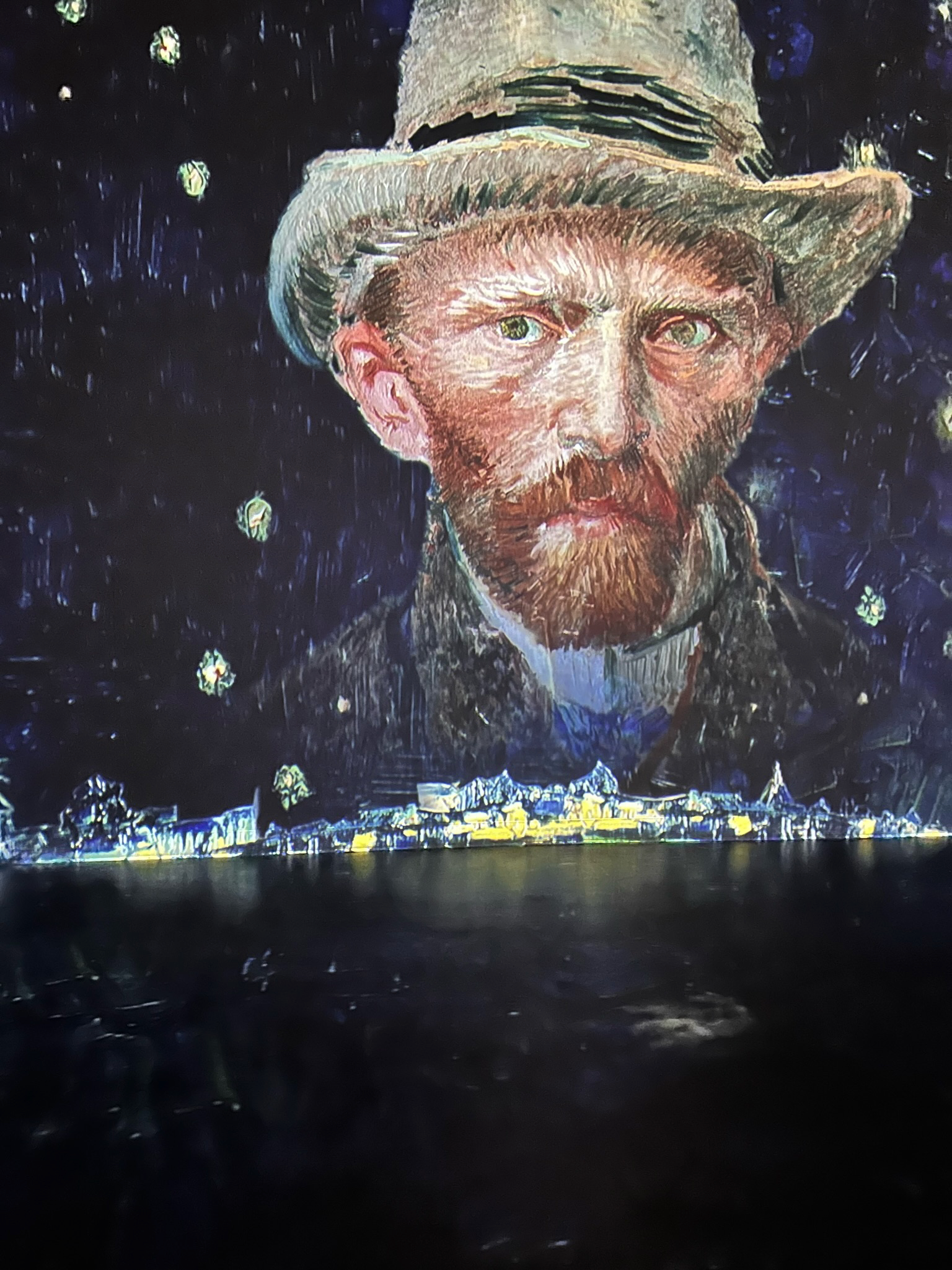
Photo: Tom Kane at Immersive Van Gogh Kansas City
This week, how art impacts how we see the world around us. ~~~ Immersive Van Gogh: https://www.kansascityvangogh.com Claude Monet, Boulevard des Capucines, (1873): https://art.nelson-atkins.org/objects/17852/boulevard-des-capucines George Caleb Bingham's Catalog: https://www.binghamcatalogue.org Thomas Hart Benton's art at the Nelson-Atkins: https://art.nelson-atkins.org/people/2320/thomas-hart-benton/objects "Hard Times Come Again No More" by The Chieftains and Paolo Nutini: https://youtu.be/uPqjQTkEA6g

On Sunday, I went with my parents to see the Immersive Van Gogh exhibit that’s been touring around the globe for the past few years. I first heard about it when I was in Paris in May 2018 and thought about going to see it there but ended up not paying a visit to it then. So, the following year when it was announced that Immersive Van Gogh would be coming to Kansas City, I jumped on the opportunity and bought tickets for my family to attend. 

Then the world changed in what now seems like a prolonged moment as the COVID-19 Pandemic took hold around the globe. The exhibit opening was delayed in Kansas City, and it began to slip from my mind for the next couple years as the storms that shadowed the last few years of the 2010s burst into the troubled times that have been the hallmarks of the 2020s thus far.

So, after years of anticipation when I finally entered the Immersive Van Gogh exhibit this past Sunday afternoon I was awed to experience it, the sights and sounds combined for a truly awe-inspiring experience. We entered the gallery as Edith Piaf’s “Je ne regrette rien” burst over the speakers to the bright yellow hues of the fields of Provence as observed 140 years ago by the artist’s eyes. I took a seat on the floor with my back to a mirror-covered pillar and watched as the images danced across the walls and floor surrounding me.

The exhibit inspired a question: does our art influence how we perceive the world around us, and as a historian more importantly does the art of past generations influence how we today perceive the light and color and nature of past periods? Take the Belle-Époque, the age of the Impressionists like Monet and Post-Impressionists like Van Gogh, do we understand and think of the daily reality of that period in a way that is colored by the works of those artists? There is a Monet painting in the Nelson-Atkins French collection here in Kansas City of the Boulevard des Capucines which dates to 1873. It shows the hustle and bustle of the French capital in a manner that is both of its own time and seemingly timeless in how modern it appears. This extends in my own mind to the point that I’ve imagined the same scene whenever I’ve happened to walk down that same boulevard in the last few years.

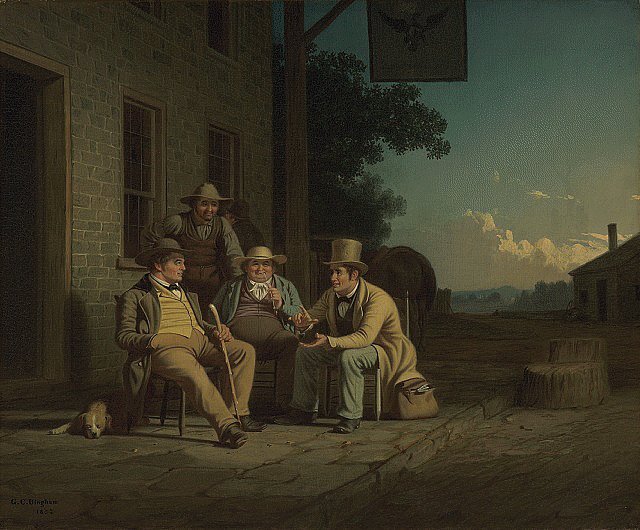
On the other hand, the images that exist of Kansas City from the nineteenth century are largely dominated by black-and-white photographs and the odd painting by the likes of our first great local artist George Caleb Bingham (1811–1879). So, for how many of us are our ideas of say the Civil War largely just in black and white even though the reality was in the same vibrant color as we see now today? Even in my own life, I’ve found that there’s a slight hint of faded color in my memories of earliest days of my life, perhaps influenced by the technology available in the color photography of the 1990s which is noticeably less radiant than the colors available today in our digital images.

George Caleb Bingham, Canvassing for a Vote, 1852, (92.71 x 105.41 cm), Nelson-Atkins Museum of Art

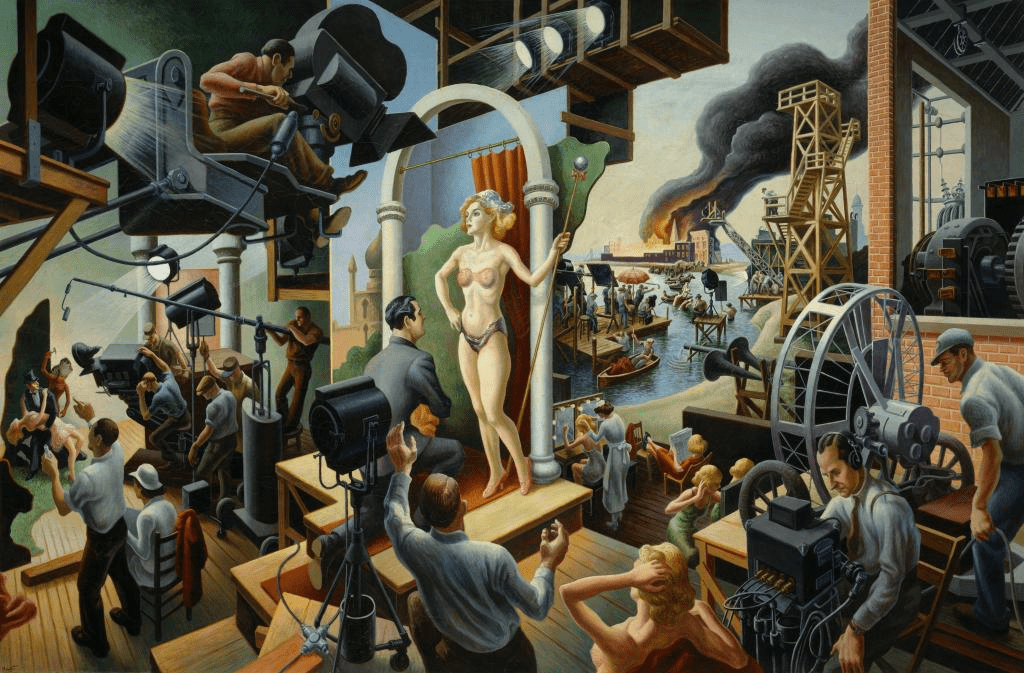
Art at its most fundamental level is a means of communication. It transmits memories from the creator, a historian of their own sort, to their patrons in posterity. Whether that art is expressed in painting or sculpture, sketching or cartoons, music or poetry, theatre or film, and in every form of literature both fiction and non-fiction alike, it is still at its core a transmission of knowledge and information. Through art the dead are able to speak to us still. In art we can experience something of the world that others live, that they see and hear and think. In the paintings of Thomas Hart Benton (1889–1975), in my opinion the greatest Kansas City artist to date, we can see echoes of American life as he understood it in the first half of the twentieth century. I can truly say that his art has influenced how I understood the Depression, World War II, and the Postwar years in a way that is best described by the fact that having grown up in Kansas City going to the Nelson and the Truman Library I saw his art far more often than many other Americans might well have. Through his paintings, Benton communicated ideas about what it means to be American, and the place of the Midwest in general and this part of Missouri in particular in the wider fabric of this diverse country of ours.

Thomas Hart Benton, Hollywood, 1937-1938, (156.53 x 227.01 cm), Nelson-Atkins Museum of Art

So, what sort of message will we in the 2020s leave for future generations? What do we want to communicate to them? In the last couple of weeks, I’ve been thinking of the Stephen Foster song “Hard Times Come Again No More.” Written in 1854 at a time when my home region was embroiled in the Border War known more commonly as Bleeding Kansas, one of the last preludes to the American Civil War of the 1860s, I’ve always thought of “Hard Times” as a song not of the nineteenth century but of the Great Depression, something that I could imagine being sung by farmers fleeing the Dust Bowl here in the prairies for new lives elsewhere. Still, the fact that the stories surrounding that song can speak to different times with common troubles speaks to the power of art. Maybe it’s high time we restore “Hard Times” to the charts, after all what better description of the present could there possibly be?

Times of Trial and Hope

Photo by Pok Rie on Pexels.com

Times of Trial and Hope Wednesday Blog by Seán Thomas Kane

This week, living in exciting times often turns out to be a bit unlucky, from a certain point of view.

To say we’ve been living in boring times would be the lie of the decade. The twenty-first century has proven to have nearly as many pitfalls and joys as the twentieth, albeit pitfalls of varying types. We’ve avoided the great cataclysmic chasm of world war so far, but that portal to the Underworld remains visible off in the distance. How close our collective human path comes to its shadows remains ours to decide. What we have that our ancestors didn’t is their collective memories of the century now past to ensure we avoid some of the same mistakes they made in their wanderings through life.

As a child I had many dreams about what my future would bring, what sort of job or jobs I’d have, who I’d spend my adulthood with and the kids we’d have together; the joys and griefs that would come with the waxing and waning of our days. I figured my adulthood would be straightforward, that I wouldn’t have any trouble finding work or building a life for myself, after all that’s how my parents’ lives seemed to me. Yet in the last decade as I’ve entered my twenties and now see the great stone gateway leading to my thirties near the horizon, I have to laugh at those juvenile ideas of what my life would be like. 

The last decade has been tough, and everything that I’ve done that I feel truly confident about has yet to really translate into a stable long-term career. This is a sentiment that I doubt I’m alone in expressing. For all the benefits of our modern world and its advances, for the threats of the past seeming to be in the past (until they reawaken like the zombies that dominate our popular culture), many in my generation remain stuck having trouble finding work or finding that the industries that we’re interested in working in are “broken” or simply aren’t hiring.

I’ve been very frustrated at how the whole hiring process hasn’t worked for me yet, no matter seemingly hard I try and how many applications I send in. It often feels like there’s some lesson that I missed in my close to 27 years of schooling about how to get a job. It makes me angry when the response from people around me is “oh, don’t worry, you’ll get something eventually” or any other related phrases and sayings that aren’t constructive or helpful.

Today’s title comes from the first volume of President Truman’s autobiography, the stories of his starts and stops as he tried to build his own career a century ago here in Jackson County, Missouri. I’ve always felt that I could relate to Truman more than many other presidents, perhaps because he came from the same area as me, or because he was good friends with some of my more distant relatives. Whatever the case, Truman’s words ring true to me. These are truly times of trial and hope, and I think despite how trying the current time may be, we have to keep up hope that we can drag ourselves out by our fingernails if we have to and into a better tomorrow.

The best solution in my Sisyphean task of applying for jobs is to keep rolling that boulder up the hill and hope that eventually I’ll make it through. The funny thing is the security that graduate school provides with a stipend and a position in an institution hides the fact that in many ways the activities central to graduate school are also Sisyphean in wrangling together support for your work all with the hope, however dim it may be that that work will ensure you a job once you’ve earned your credentials.

It’s hard to be hopeful right now in 2022, and there’s so much to be worried about. I don’t really have a positive spin to put on this one because I’m still not sure what that positive spin might possibly be. All I’ll say is that it’s up to us to figure out a solution to move from our times of trial and hope to our times of decisions and maybe eventually into a new age of optimism.

Culture

This week, some thoughts on what keeps a culture alive.

I really enjoy going to concerts and hearing all sorts of musicians from all around the globe perform. I’ve been lucky enough to attend some historic concerts, such as the 2012 performance of the Cuban National Symphony Orchestra at the Kauffman Center in Kansas City. It was their first performance in the United States since the beginning of the embargo on Cuba in the 1960s. In that moment I could feel echoes of a vibrant and lively culture living alongside my own in the same moment in time. The way the musicians put their own spin, their own rhythm on Gershwin’s Rhapsody in Blue to make it sound Cuban was wonderful to hear. Still, the setting of the concert hall where there is a clear physical barrier between the performers who stand or sit on a stage frozen in place with an audience watching all around does sometimes give me chills. 

There have been many other concerts that I’ve attended where music or stories from particular cultures are played or told, relayed to us an audience foreign to those artists’ culture. Yet the way they’re transmitted, removed from the physical surroundings of those artists’ home, placed on a sterile stage where we can hear and see everything in perfect clarity, takes something out of the performance. It worries me that in America we’ve come to expect that particularly “cultural” things, especially if they’re foreign or “ethnic” ought to be neatly packaged in an expected format and set up. That way they can be interpreted through our own cultural lens in such a way that if I see a bottle of Italian seasonings in the grocery store, I’ll be able to tell first and foremost that those are seasonings. Yet in that standardization of culture to fit a set mold into which all its many and contradictory elements can be poured and melted down, we lose a great deal of the memories and the life that those cultural artifacts embodied.

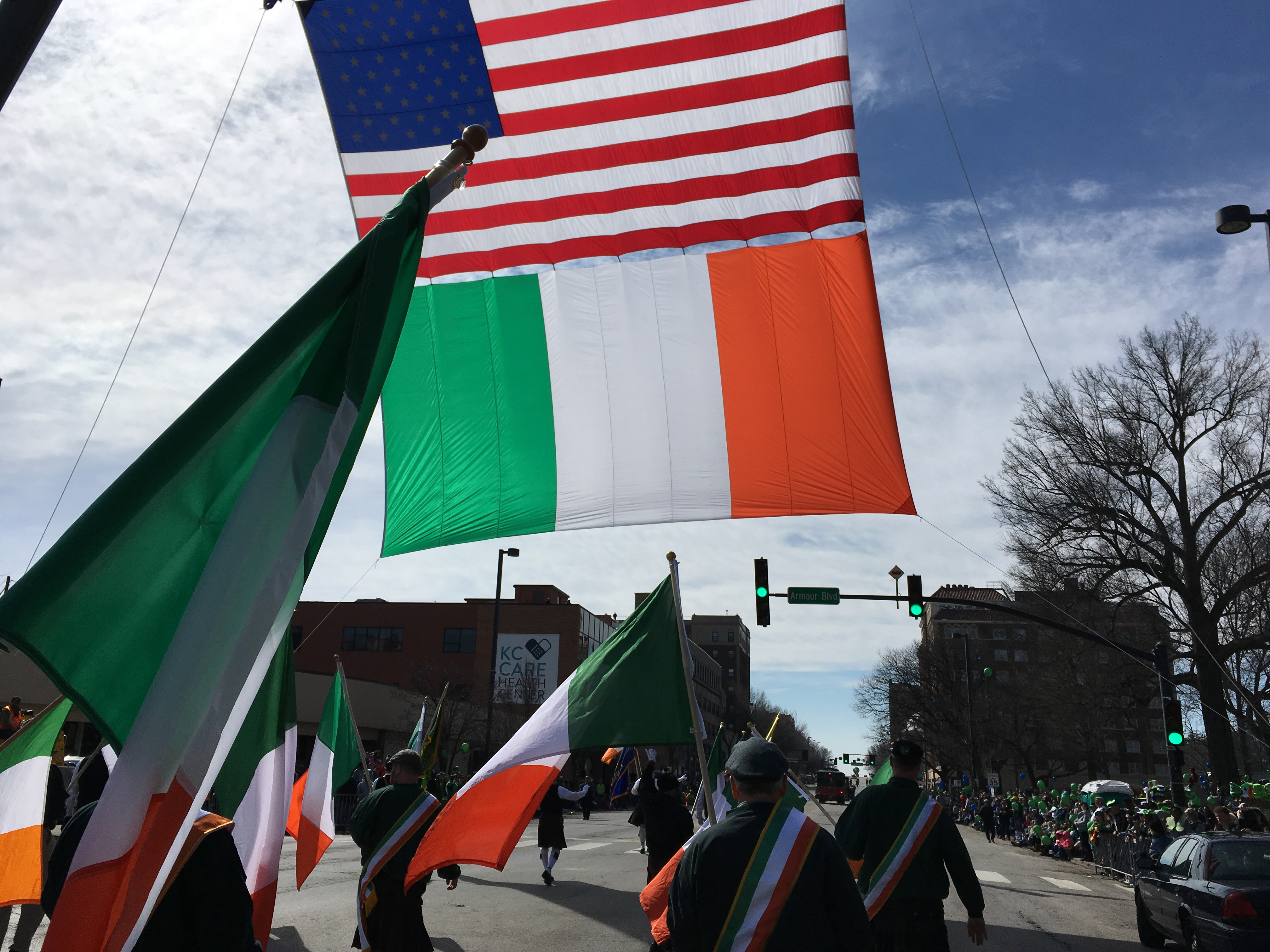
My own people, the Irish Americans, have an interesting relationship with this. We still maintain some elements of a distinct culture from other European-descended ethnic groups in the United States, though I know some reading or listening to this might object to my use of the word “ethnic” to describe a community so assimilated into mainstream American society. The problem for me arises in trying to answer how our culture is still even partially Irish. Here in Kansas City, we have plenty of people who play Irish music, myself included, as well as a couple of local Irish dance schools. We even have a local Irish Center where classes in the Irish language are taught. Yet when most of those cultural milestones are performed, they are often more so in delineated places and situations where they are expected, say at the Kansas City Irish Fest, rather than more organically on a regular basis as a daily part of life. 

One of the great exceptions to this rule is with music, after all some of my favorite concert memories have been sitting in on the jam sessions at the Irish Center and at other venues around town, even in the homes of friends. There, an element of our Irish American culture is still being performed organically, like a group of friends getting together one evening for a party. It just so happens that instead of playing the Top 40 Hits at that party they might pull out their own instruments and play their own top 40 for themselves.

Culture is fundamentally performative, and to survive it must flourish organically in the setting where it exists. This past weekend I had the honor of serving as a groomsman for one of my best friends who is Greek Orthodox. The wedding took place in his church, and clearly seemed to be an unfamiliar ceremony to many of those present who weren’t themselves Greek (myself included). Still, I found the chanted prayers and hymns––most of which were performed in English––to be fairly easy to learn, and after the first one I was able to add my own voice to the congregation. Later that evening the typical wedding reception DJ hits were freely interspersed with Greek dances, which likewise for the average participant were far easier to pick up on than any of the Irish dances I’ve done over the years. There’s a culture that’s still vibrant in how ordinary its performances tend to be for the people who live it every day.

It struck me that the idea of having Irish music played at an Irish American wedding reception would probably be met with shock, after all most of us don’t know the steps for the jigs and reels that make up Irish dance today. Furthermore, someone is bound to be annoyed by some inconsistency with what is properly Irish American, meaning that trying to toe the line of ensuring that one’s Irish American cultural practices are so highly regulated that they become harder than necessary to follow. I for one would love to try and introduce some elements of jazz into the jigs, reels, and airs that I’ve learned to play on the tin whistle, and if I do ever get around to joining in a specifically Irish dance again you can bet that I’ll let my arms move more freely than is expected.

I worry that a culture which isn’t performed as a daily routine will gradually become fossilized. Such a culture, if confined only to special events that aren’t expected or normal for the everyday, will surely die, leaving its participants poorer as a result. Perhaps one of the greatest differences between Greek American culture and Irish American culture is that our ethnic church, Roman Catholicism, did not preserve our Irish language as the language of liturgy and spirituality. Rather, Catholic priests continued to say the Mass in Latin until the 1960s, by which point so few Irish Americans still spoke Irish that there are hardly any Irish Masses performed here in the United States today. I’ve only ever been to one such Mass that was done entirely in Irish. It was said on a stage at the Dublin Irish Festival outside Columbus, Ohio where we the congregation watched on as if gazing at some exotic ceremony stuck out of place and out of time. That most essential element of any culture, the way in which it speaks and sings and laughs and cries, its language, is vital to that culture’s survival. And in a country where we make up a good portion of English-speaking Catholics, our Church has assimilated faster than our hopes for a distinct Irish American culture may have wanted.

Childhood

My Mom and I, Thanksgiving 1997
This week, reflections on childhood, from my own personal experience.

One of my favorite types of daydreams is to imagine my current self talking to my younger self. It could be me as a junior in high school or me watching off to the side as my three- and four-year-old self began to conceive of the world around me. I can remember what my younger self was thinking in any given time so the “script” if you want to call it that is one of the easiest ones to write. And in the past, as is still the case today, I often wonder about my future self, who I’ll become as I continue in my life, who I’ll meet, where I’ll live, who I will be in my future. 

A couple of weeks ago I found myself thinking about all this for a good three hours while I was flying east from Kansas City to Newark on my return trip to Binghamton from a wonderful Easter weekend at home. As I watched the prairies of the Midwest give way to the deep cloud covered Appalachians, I kept thinking about who I dreamed I would become when I was at varying stages of my life. Would my six-year-old self whose life changed dramatically when he moved with his parents from Chicago to Kansas City be proud of how my 29-year-old self has found a way into a career where he still looks back at what he loved to think about as a kid? Would my moody teenage self be happy knowing that he was still going to be single at the end of the following decade? And what about my more recent past? Would the Seán who lived in London for a year and learned so much about the world in those months abroad, would he be proud or scared at how tough the next seven years of his life were going to be?

I wonder, and maybe this is a conversation better posed to psychologists, are we still the same people who we were as kids? Or do we transform or change the shape of our personality through our lived experiences, through our joys and sorrows? I remember thinking about myself more simplistically as a child, a time when the things that I was proud to be a part of conjured up images like the Space Shuttle or other marvels of the modern world. As I learned more about myself, I found more and more things that were new to me that I could attach myself to, that I could find some connection to. My interest in Ancient Rome was born out of a conversation with my Mom when I first remember hearing my Church called Roman Catholic. I knew where Rome was (I memorized the globe at a very early age) so the idea that I was a part of something so rooted to something so ancient was thrilling. 

Similar things happened at a time that I can’t pin down when I began to understand and listen to the stories about my Irish ancestors. It’s funny, I remember only one person from that generation, my grandfather’s Aunt Catherine who died in 2000 when I was seven. I remember her accent puzzling me, but I bet if I sat with her today, I’d be able to understand her perfectly well now that I’ve got nearly 30 years of listening to people from Mayo under my belt. On my Mom’s side I have only one memory of my great-grandmother, my GG as I always called her. I must have been very young, but I remember waking up from a nap in what’s now the computer room in my grandmother’s house in Kansas City and going out into the living room where she was sitting with my grandmother. All I remember her saying was “Hi, Seán.” When I told my Mom about this memory recently she said she must have carried me out because my GG died before I could walk, meaning this could well be one of my very first memories.

Still, when I think back to all those moments as if looking down the long string of a double bass, I wonder if the guy whose eyes saw those moments, whose ears heard those sounds, whose nose smelled those smells (for good or bad) was the same guy who I am today? If I can say anything definitive, it’s that the one constant among all those memories isn’t necessarily how they were framed or what I was thinking or feeling in each moment. It’s that the same internal monologue was going in the same voice that I still think in today. A few weeks ago, I wrote about the first time I recognized my conscious thoughts, something that a lot of people said was a profound idea. I asked if that for me was the moment best described as “In the beginning” for me, with everything else I ever have come to know or will come to know happening afterwards in the order that I discovered those things? Today I want to add onto that dogpile of a question and ask, which part of my past is most influencing my present, and by extension my future? I think the best way to look at answering this question is through the lens of nostalgia.

The truth is I’m not sure which reflections of my past that live on in my memory is the one that I’m most nostalgic for. There are echoes of all of those shadows in my life and my work today, the deep passion for natural history and the natural world in general that drove my six-year-old self whose favorite places in the world included the Field Museum and the Brookfield Zoo, or the teenage reflection who loved his Latin classes more than any other and really wanted to be doing better at it but just didn’t have the patience to stop overthinking things. I think those teenage loves drove me into my adulthood, after all as much as I loved spending my time in London’s Natural History Museum it was the British Museum that I dreamed working at when I decided to do either a Classics or a History PhD in 2016. It took me a few years to get into a program, by which time I’d settled not on Ancient Rome but on the Renaissance, before building my own field from the ground up, as a kid with my childhood would tend to do, to become a Historian of Renaissance Natural History.

As it happens, this whole idea of a hyper-individualized vision of a historical timeline, beginning with a person’s first consciousness about something could be useful in my work. After all, one of the great debates in the history of how the Americas were approached by Europeans during the Renaissance is whether it’s right to say they “encountered” or “discovered” these continents. I usually prefer to say “encountered” seeing as there were already generations of people reaching back into the Ice Age who had called these continents home. Still, if we think about this question less in the scope of all of human experience and more in the limited view of how one set of humans, one branch of the family isolated from others by circumstance understood the Americas when they reached those shores in 1492 then the word “discover” coming from the Latin “discooperiō” meaning “to expose” or “to lay bare” then the word does fit the experience of the many peoples of Europe in first learning of the existence another series of worlds across the Ocean Sea that they came to call America. But our history is the history of the creation of our modern world, a global world defined by shrinking borders and a growing sense that we’re all in this together, and for that world this isolated story of one perspective “discovering” the fact that other people had already made it to first base merely makes the discoverer a shortsighted pitcher. Without all the caveats and framing, the idea doesn’t work. It speaks to the warning that it’s best not to think of whole groups of people in the same context that we’d use to think of just one guy.

So, with that out of the way, do I think my younger self would be proud of who I am today? In some ways, yes, after all I’m sticking to doing something that I love despite a great deal of the odds and the circumstances of our world in 2022 seeming to be stacked against me making a living out of being a Historian of Renaissance Natural History. I may not be working at the Field Museum or at one of the other wonderful natural history museums in this country or beyond, but I’d say that’s still a possibility. Nonetheless, I imagine that teenage Seán would be a bit more forlorn knowing he’d still be single all these years later. Teenage moodiness can cast a shadow even from the confined distance of your memories. I think the moral here, if there is one, is that there’s always room for improvement, right? And at the end of the day, as my undergrad self the triple major in History, Philosophy, and Theology with double minors in French and Music would like to say, “Anything is possible.” So, if I could go for three and a half years without a lunch break trying to earn 3 majors and 2 minors in 4 years then I can get a job doing something I love and maybe figure out the personal life while I’m at it too.

The Artist

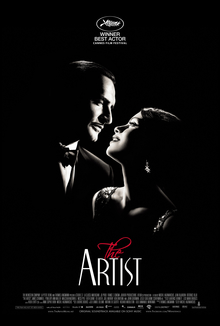
This week I'm reflecting on the 2011 Best Picture winner "The Artist" and introducing a new segment to The Wednesday Blog in an interview with my friend Alex Brisson about the film. Alex Brisson's website: https://www.alexbrisson.com Star Trek: The Original Siblings Podcast: https://stosibspod.buzzsprout.com Brissflix: https://www.alexbrisson.com/brissflix The musical interlude in this episode comes from "April Showers" recorded by Gene Rodimich's Orchestra in 1922. Listen to the full version here: https://freemusicarchive.org/music/Antique_Phonograph_Music_Program_Various_Artists/Antique_Phonograph_Music_Program_04072015/April_Showers_-_Gene_Rodemichs_Orchestra/

This Week: Alex Brisson joins me for a conversation about The Artist

Last week after finishing my daily Jeopardy! viewing I decided to turn to Netflix for the first time in a while and see what was on my watchlist that I hadn’t touched recently. Perhaps the inclination to turn to Netflix instead of my more frequent streaming services, notably Paramount+ and PBS, might well have been urged by the recent poor market performance of the streaming giant following its first poor quarterly performance in its history. Still, there are many wonderful shows and movies to watch on Netflix, and one in particular caught my attention. 

I first saw The Artist back in 2011 when it was playing in the theatres. I went with a group of friends from Rockhurst to see it at the now old Tivoli Cinema in the Westport neighborhood of Kansas City, and for whatever reason the people I went with decided we would get there about halfway into the film, something which annoyed me because this was one that I really wanted to see. We took our places in the back row of the theatre with about 40 minutes left in the 90-minute picture. I enjoyed what I saw but felt cheated at not getting to see the entire thing, and for whatever reason I never got around to going back to the Tivoli to see it again in full. So, when I saw it was on Netflix a few years ago now I saved it to my watchlist and then never got back to it. Therefore, last week when I saw The Artist would be leaving Netflix that very night, I decided to not overthink it for once and pressed play.

What followed was everything I hoped for. Longtime readers of this blog will know I’m a fan of silent films, old friends will remember I even made a few in high school, which honestly was as much due to the poor quality of the sound that my video camera could record at the time in the late 2000s and early 2010s. I’ve written in the past in this blog about how Charlie Chaplin’s The Gold Rush touched me and spoke to me of a loneliness I truly can relate to now in grad school, and I think that blog post speaks to the unspoken power of silent films to sing directly to human emotions through visual cues only. The visual metaphors that abound in The Artist are loud and clear, as if shouting from the rooftops, yet they are iconic in their heritage from the theatre and ballet, art forms that served as some of the roots of silent film itself.

The Artist tells the story of a Douglas Fairbanks type of leading man, George Valentin, played artfully by Jean Dujardain, whose career playing the same mustachioed hero over and over again is eclipsed by the coming of sound in 1927. Into the scene walks the young extra Peppy Miller, played joyfully by Bérénice Bejo, whose own career takes off as Valentin’s descends. Valentin has many opportunities to maintain his triumph through the transition to sound, yet his fear of change and his pride make him tumble from the heights of stardom like Icarus at the roaring heat of the Sun’s rays melting the wax on his silent wings.

The film’s message is one of emotional turmoil in distress, Valentin falls as far as he can in life, almost to the grave itself, yet he continues to have people around him who love and care deeply for him. Among them first and foremost is Jack, his beloved dog and quite likely best friend, played terrifically by Uggie, a Parson Russell Terrier, who stayed with Valentin through thick and thin, even saving his life on the odd occasion. I want to pause for a minute here and acknowledge some of the discussion that was going on in 2011 about giving Uggie recognition for his work on The Artist, even perhaps an Honorary Oscar. One quote that made me do a spit take with laughter from a spokesman at the BAFTAs (British Academy of Film and Television Arts) was quoted in The Daily Telegraph as saying that Uggie wasn’t eligible because he wasn’t “a human being” and because of “his unique motivation as an actor was sausages.” I will say, I bet if we didn’t need to work for wages to survive there’d be many a person out there who might consider a good sausage a nice reward for a day’s work. Speaking of that, I need to add some brats to my shopping list …

Anyway, The Artist is special in that it was a silent film made 84 years after the development of talking pictures. It is also one of the few fully black-and-white pictures to be made in the last few decades. Another one of note that I quite liked was the 2020 David Fincher film Mank about Herman J. Mankiewicz and the creation of Citizen Kane in 1939 and 1940. As such The Artist is a silent film made with 84 years of extra technical know-how. From what I could tell as a silent film buff the creators of The Artist did a great deal to make it authentic to the period it sought to depict from the lighting to the camera angles, to the profound metaphors through set design, such as the moments when Valentin finds himself looking into mirrors and seeing what he’s become or the way in which the creators seemed to be using new yet old-looking ways of telling their story.

When sound does appear in The Artist it’s as if an alien invasion has commenced. George Valentin’s first contact with sound comes halfway through the film in the form of a series of defiant noises that terrify the silent star. Later though once comfortable with it the sound returns and becomes embedded in the world of The Artist as something ordinary and wonderful at the same time. 


This week I’m reflecting on the 2011 Best Picture winner “The Artist” and introducing a new segment to The Wednesday Blog in an interview with my friend Alex Brisson about the film.

Alex Brisson’s website: https://www.alexbrisson.com

Star Trek: The Original Siblings Podcast: https://stosibspod.buzzsprout.com

Brissflix: https://www.alexbrisson.com/brissflix

The musical interlude in this episode comes from “April Showers” recorded by Gene Rodimich’s Orchestra in 1922. Listen to the full version here.

Close Encounters of the Three-Toed Kind

Close Encounters of the Three-Toed Kind Wednesday Blog by Seán Thomas Kane

This week, introducing my research into the introduction of the three-toed sloth to European science in the 1550s. I'll be giving a public talk about my work at the Kopernik Observatory and Science Center in Vestal, NY on Friday, 29 April 2022 at 8 pm Eastern, 7 pm Central. You can find a link to the YouTube broadcast here: https://youtu.be/70lJ0NmT8Kw Also here's a link to the Kopernik Observatory's website: https://www.kopernik.org

You’ve heard me talk at length about a fair number of topics on this podcast, and those of you who have been reading my blog now for the 60 straight weeks that I’ve been writing it will perhaps know parts of me a bit better than some. This week I want to talk to you about something that’s personal yet also professional, it’s the project I’m staking my career on at this early stage––my dissertation. The big document I’m writing now is called “Trees, Sloths, and Birds: Brazil in Sixteenth Century Natural History.” It tells the story of how those three groups––the trees, sloths, and birds––were introduced to European natural history by a French cosmographer named André Thevet (1516–1590) in his 1557 book The Singularites of France Antarctique. It’s been a fun project to write so far after years of research and nearly a year of fighting to get it approved. At the moment, I have the first two chapters written and the next two, the sloth chapters, in the works.

So, naturally this seemed like a good time to stand up in front of a crowd and announce my intent to study the history of the natural history of sloths to all the world. This Friday, 29 April, at 8 pm Eastern I’ll be giving a public talk about my sloth research called “Close Encounters of the Three-Toed Kind: How Unknown Life was Named in the First Age of Exploration”. I’ve got to admit, I’m going out on a big limb here, and not lazily or slowly either. On Friday evening I’ll be introducing not only my research about the three-toed sloth’s role in cementing the strangeness of American zoology in European eyes but arguing for the recognition of what we today call the Age of Exploration, the period that began when Columbus stumbled on the Bahamas in 1492, as in fact the First Age of Exploration. The reason for this is straightforward: 61 years ago, humanity entered a Second Age of Exploration at the moment when the first human left the Earth’s atmosphere and entered Space beyond. Yuri Gagarin’s monumental first spaceflight is a moment that ought to be marked as the beginning of a new age in the human story, one where we began to move, however slowly, towards venturing out of our home and into our planetary neighborhood at the very least, our stellar neighborhood in the long run.

I don’t think it’s anachronistic to say the way Thevet and his contemporaries understood the sloth in 1555 and 1556 is similar to how we might well understand life that’s new to us that our explorers in the coming years might well encounter on other worlds. In Thevet’s time the Americas, these continents, were seen as an alien world by the Europeans, it was as foreign, as strange as they could imagine. In their efforts to make sense of what they saw and who they encountered in those first generations of contact the European explorers often either gave names familiar to them to that American life they encountered, as with the sloth, or they adopted local indigenous names for the life of these continents, as in the case of many of the local peoples they met. All of the states in my home region, the Midwest, bear indigenous-derived names, largely drawn from the names of local peoples who the French encountered and traded with during the seventeenth and eighteenth centuries.

The main theme of my talk will be about the meaning of names, their importance and intrinsic value to the named and the one doing the naming. In the first fifty years of its inclusion into European natural history the three-toed sloth went by several names. Thevet first recorded it in 1557 as the haüt, a Middle French phonetic spelling of the Tupinambá name for the creature, itself derived from the sloth’s cry which Thevet described as like “the mournful sigh of a small child.” Haüt also appeared in Conrad Gessner’s entry for the sloth in his 1567 Thierbuch, a German translation of his History of Animals, first published in Latin before Thevet’s visit to Brazil in the 1550s. Yet Gessner himself gave the sloth a more scientific name, Arctopithecus, meaning “bear-like ape” out of an effort to identify it by its physique, or how at least Thevet described its physique in his writing and a woodcut of the animal in his Singularites. Another French writer, Jean de Léry (1536–1616) who visited Brazil after Thevet left in 1556 and 1557 called the animal a Hay, with a closer phonetic spelling to the modern . Yet it was the Portuguese who first called this animal a sloth, namely the Spanish Jesuit missionary St. José de Anchieta (1534–1597), whose letters to his Jesuit superiors describe the animal as a preguiça in Portuguese, a sloth in English.

Another epithet Thevet gave to the sloth in his 1575 book the Universal Cosmography referred to it as “the animal that lives only on air” because during the 26 days that he kept one in captivity he never saw it eat or drink. Therefore, in Thevet’s logic, the sloth must only nourish itself on the air surrounding it. How Thevet didn’t realize the animal was probably terrified from being brought indoors, and likely was starving and dry for thirst baffles me. Still, the idea that Thevet believed he had found an animal in this alien world of America that “lives only on air” meant that the sky was truly the limit for the possibilities of American life. Thevet’s own Twilight Zone contributed to the groundwork for the notion of alien worlds that persisted in speculation and fiction into the present day, beyond the bounds of his own Age of Exploration, which I might argue ended with the competing Amundsen and Scott expeditions to the South Pole in 1911, or perhaps with the gradual end of the old colonial empires over the last century. So, if you’re in the Southern Tier of New York this Friday and want to hear me talk about sloths come up to the Kopernik Observatory and Science Center in Vestal, New York. The talk begins at 8 pm on Friday, and if the skies are clear, as hopefully they will be, we should have some wonderful opportunities for some stargazing after I wrap up my show. And for those of you who are listening from afar you can watch me take the stage live on YouTube. The link is in the show notes.

Homo Sapiens

A particularly bumbling specimen of the species.
This week, a bit of self-reflection. The Man from Earth website The Man from Earth trailer

On Monday last week, I sat down to watch the 2007 film The Man from Earth for the second time. You may remember hearing or even reading my reflections provoked by that film. I said I’d probably watch the sequel, The Man from Earth: Holocene soon, and well I did just that. Compared to the original, Holocene lacks some of the powerful dialogue, and the gripping storytelling. The Man from Earth felt like it was a story being told in real time, while Holocene, its sequel, seemed more like a TV pilot that was turned into a feature. Both films feature some wonderful actors that I recognize from the many Star Trek series I’ve seen in the last few years, notably John Billingsley and Richard Riehle in the first film, and the great Michael Dorn himself makes a wonderful appearance in the second film.

If I were to draw any deep arguments out of the second film, Holocene, it would be something to do with how we identify ourselves. We humans call ourselves Homo sapiens, a scientific designation that we’ve given to ourselves to distinguish us from our hominid cousins including the Neanderthals. Homo is Latin for human; it is the genus which represents all hominids as a subset of primates. Sapiens on the other hand is more interesting. It is a Latin participle based on the 3rd conjugation verb sapiō, sapere which is used to mean many things from “to taste,” “to have flavor,” to the more innate concept of being able to sense or discern things, all of which is necessary for knowledge. Homo sapiens then means we distinguish ourselves from our hominid cousins by our abilities to understand ideas. Now there’s evidence today that other early humans could think and create in ways that are similar to us, evidence for example that Neanderthals created art of some sort in ancient Europe, so in many ways the fact we designate we humans as Homo sapiens is as much a way of patting ourselves on the back as anything else.

This brings me back to The Man from Earth: Holocene. It’s a film that introduces the core conflict when a group of inquisitive undergrads start to wonder about their professor who they soon realize is the same 14,000-year-old man from the first film. Only now he’s begun to age in slow but noticeable ways. This film made me question the idea that we are Homo sapiens for the personifications of humanity in this film, the four students seeking the truth about their professor, make a series of terrible decisions that prove as book smart as they might be they are clueless to so many other factors of life. Homo sapiens indeed.

In my own research I study the introduction of Brazilian flora and fauna into European natural history through the writings of several French explorers dating to the 1550s through the 1580s. And while I came into my research thinking I would have some fun writing about sloths and parrots and dyewood trees, I have found that the story I’m trying to tell is as much a warning to our present and our future as it is anything mundane about Renaissance natural history. There is a theory, an idea that is introduced late in The Man from Earth: Holocene called the Anthropocene, a concept that is widely discussed today which argues that human interventions and influence upon nature have become so great that we have shifted the course of Earth’s natural development from the Holocene, the current geological epoch defined by our planet’s warming by the Sun over the past 11,650 years, making for the perfect conditions for the development of life as we know it today into a new geological epoch where we humans, the Anthropoi in Greek, are now the prime movers of Earth’s natural course. In the film this becomes an understated note of caution, yet in my own research I find the Anthropocene to be a fundamental piece of the story of the European exploration, conquest, and colonization of the Americas largely ignored until recently.

We call ourselves discerning, we call ourselves wise, and yet we allow our own demands on nature to outstrip what nature can provide. It’s a curious balance we need to maintain, one which I am just as guilty of destabilizing as anyone else. It’s curious to me that we call ourselves wise when we think of all we have done with our home. We are one of maybe only a handful of species (leaving room here for other hominids at least) that has created beautiful art and weapons of mass destruction all with the same innate tool: our brains. We have just as much an ability to love as to fear, and in a given day I think it’s safe to say we act on those emotions without often really realizing it. 

Through it all we’ve survived and thrived on this planet of ours. There are 7.9 billion of us today, and while our population growth is a marvel of our ingenuity and ability to adapt to everything that this planet has had to offer so far, our own exponential growth may be the thing that drives the planet to the point of no longer being able to care for us the way we have been. If we don’t eat, we starve, yet if we eat too much we will run out of food and then starve. As the Man from Earth himself said in the first film, it’s the species that live in balance with nature that survive.

I argue in my dissertation that the Anthropocene really began when two different gene pools of life, one Afro-Eurasian the other American intersected in a large scale for the first time in thousands of years following Columbus’s accidental stumbling on land and people on this side of the Atlantic in 1492. That was the moment when human endeavors began to triumph over natural barriers, when a new global world was first conceived out of the collective products of a series of old worlds on every inhabited continent. It’s fair to call ourselves sapiens, discerning and wise, for the fact that it was humans who bridged that gap through innovation and technology. Yet it’s also fair to say that it was humans too whose innovation and technology created the great climate crisis we find ourselves in now. While the pessimists among us would end the story there, in a way that is in vogue to do these days, I want to continue the story, to contribute a verse to the poetry of life and say to you here and now today that it will be our innovation and technology, our discerning and wise nature that will figure out a way out of this crisis and that will lead us to adapt again to a new life in this new world we’ve created in our own image.

The Man from Earth speaks to me of the potential of humanity and of how at the end of the day we’re still just telling each other the same sorts of stories around a campfire. Like our ancient ancestors before us we see what we know and imagine what could be out there beyond the light of our knowledge. Unlike our ancestors we today are comfortable in a world we’ve created for ourselves, or at least some among us are comfortable in that world. We don’t need to innovate quite so greatly as past generations; we can let our minds become lazy and unimaginative. Like the big wigs from every time just before a storm we can be content and let the tides overcome us, but some among us will be hit more fiercely by those tides than others, and they’ll be the ones to stand up and say we can do better for ourselves. We will always stumble and fall, like those four characters from The Man from Earth: Holocene but we will always find a way of getting back up.

At the end of the day, we’ve created this new world where we are at its center, the keystone species around which all others exist in a new balance. I personally find that balance more precarious than I’d like, and personally I’d rather not be the one holding the entire balance of nature up like some modern Atlas. Yet over generations of decisions for good or ill this is what we’ve decided to do, and who we’ve decided to become. All we can do now is live up to the task and make the burden less strenuous for our descendants.