I am a PhD student studying the history of Renaissance natural history focusing on French accounts of Brazil. Chicago born, longtime KC resident, SUNY Binghamton grad student.
This week, a bit of Jesuit word play.
Photo by Tony Wills CC BY-SA 3.0
I’m proud to say that I’m Jesuit educated, I earned my Bachelor’s in History and Theology with minors in French and Philosophy from Rockhurst University in Kansas City. My time at Rockhurst was one of the most formative periods in my life, a time when I feel like I really did grow into the adult I’ve become from the teenager that I was when I arrived for move in day my Freshman Year. One of the great things that the Jesuits promote is self-awareness, understanding how we exist amid the Cosmos, how we are who we are. A daily exercise of this sort of self-awareness is the Examen, a meditation devised by St. Ignatius of Loyola, the founder of the Jesuits, almost 500 years ago now.
I’ve tried doing the Examen at different points in my life, pausing during the day, most often before bed, to reflect back on the day I just lived, the highs and the lows, and offering my gratitude for all of those experiences. Naturally though there are distractions all around, whether my phone announcing new messages or the sound of a dog barking outside, or even my own thoughts about what it is I’m actually trying to do. The word examen stuck out to me yesterday, I know it as the French word for an exam, and I had a sneaking suspicion that it was originally a Latin word, after all it has that classic Latin prefix ex- included.
When I turned to my favorite Latin dictionaries, I found sure enough that the word exāmen is of Latin origin, coming from a combination of the prefix ex- and the verb agō meaning “I drive”, with the -men suffix added to render exagō a noun. Thus, exagmen becomes exāmen. Still, the meaning of this word, or rather its particular uses strike me as amusing. It is not only an examining of conscience in the Jesuit sense, but also a means of balancing something. Yet there’s a third meaning that came up, exāmen has been used to refer to exāmen apium, a swarm of bees.
At first, I’m not entirely fond of the idea of an examination of conscience having anything in common with a swarm of bees; perhaps there’s some lingering misgivings from my own childhood experiences being stung by bees (both occasions were my fault). Still, the idea that the Latin name for a group of bees, like how we might say a flock of birds or a herd of bison, would be an exāmen is curious to me. It seems as though the idea is that when we do examine our consciences, or when we consider something as fully as possible, we ought to be able to get into every little crevice of that question like a swarm of bees can.
This phrase exāmen apium is used by a number of ancient Roman authors, yet in every moment while that phrase literally means a swarm of bees it often seems to herald bad omens, whether it be a swarm of bees appearing on a standard or on the statues of an emperor or in the middle of a market. So, how can we interpret this to be more than just an odd Roman connection between bees and Jesuit meditations? Think of what might be the best thing to do after getting such an omen; rather than stand idly by and let “fate” take its course, why not instead stop, and think about what you have done to receive such a warning, and what you can do to change how things are going? One of the great disservices that our civilization’s heritage has given to us is a belief in fate, that things are decided and there’s nothing we can do to fix them. Nothing could be further from the truth! It’s up to us to examine our lives and figure out where we’ve gone wrong, and then to do the hard thing and fix our problems.
That is what at the end of the day the Examen means to me. It’s an opportunity to become a better version of myself, a reassessment that, when I don’t forget about it, happens every day.
This week, I want to explain how fiction is necessary for my survival.
I am in the business of writing serious, analytical, and factual accounts about the human experience. As a historian, that’s my job. I do write fiction as well, though I keep both as separate as the church and state are supposed to be in this country. Still, as much as I enjoy my work, as much as I like the feeling of getting my academic writings on paper and presenting them at conferences, when I’m looking for some fun reading, I usually turn to fiction. Fiction is fundamental to the human spirit, it allows us to dream, to imagine alternate possibilities, to envision possible futures.
At any given moment I’m usually reading 2 or 3 books for fun, normally there’s at least one sci-fi novel, maybe a memoir, and possibly something relating to natural history. I admit, 2 out of 3 of those are nonfiction, depending on how you understand the truth of that memoir, but if I had to choose between those three genres when I’m sitting alone in a restaurant at lunch or dinner or looking for something to read before bed, I’ll go for the fiction ahead of the others. I also tend to disagree with the trend of late that prefers dystopian fiction over anything else. There are so many of those stories out there, from the Ender’s Game books by Orson Scott Card, to the Blade Runner and Mad Max films, to even my old favorite Douglas Adams’s A Hitchhiker’s Guide to the Galaxy. I don’t like dystopia, and I don’t honestly understand how it could be enjoyable to read or watch a story talking about such a future.
Rather, I prefer the opposite, utopian fiction, stories that offer us a vision of what our future could be like. I think that’s why I’ve been drawn to Star Trek since the pandemic began, and have now watched several of the TV series, a few of the films, and even read some of the accompanying novels. There’s something about a vision of humanity’s future as a contributing member of an interstellar community that really seems heartening to me, that as distant as that potential future seems now, we might well reach it someday. This is one area where my work and my favorite stories intersect; my historical research deals squarely with exploration, in my case mostly set in Brazil in the 1550s. In many respects, my research is a cautionary story of all the horrible things that the explorers fanning out from Europe did to the peoples they encountered. Normally, academic history books aren’t read by many people, and certainly there are only a few that get much public attention. So, I hope that if anyone eventually reads my work, they’ll recognize in it my efforts at warning our own generations and generations to come of the rocks and shoals that threaten any present or future explorer who seeks to venture out without harming others in the process.
So yes, my love of fiction does influence my work, but only indirectly. When it comes to my writing, when I need to refresh and rethink my work, I’ll turn to those same novels and bask in their eloquence and style. As a writer, as a dreamer, as an optimist, fiction is necessary to my survival.
This week, I'm thinking about how we humans fit into the structures of natural history.
There’s a big problem with a lot of older anthropology exhibits in natural history museums around the globe, namely that they were built in the last two centuries often using either old and out of date information about the peoples they seek to describe, or like the old bronzes depicting the variety of humanity in the Musée de l’Homme in Paris, they were inherently racist to begin with.
Museums like San Diego’s anthropology museum have sought to rectify this with rebrandings and reorganizations. The museum in question, located in the California Tower building in Balboa Park, has recently renamed itself from the Museum of Man to the Museum of Us. Others like the Musée de l’Homme in Paris have worked to reassess how they display older historic anthropological exhibits like those old bronzes, so that today their primary message is one of “this is how people used to think, but not how we think anymore.” They’ve gone from being scientific teaching tools to historical artifacts.
There needs to be a very fine balance between lumping individual ethnicities with the rest of the natural world and actually considering humanity as a whole as part of nature. We are, after all natural beings, no matter how far we try to remove ourselves from nature with the edifices of civilization we’ve built up around ourselves. In case you’re wondering, this is a pretty central theme to the dissertation that I’m writing. In older generations, the idea of “natural humanity” was inherently understood to mean different peoples who were less civilized than others. It was used in the idea of the savage as a means of demeaning and describing the native peoples of the Americas following the beginning of the Columbian Exchange in 1492 (borrowing a term from one of my favorite historians, Alfred Crosby, here).
I’ve often thought of the world natural as being something good. Natural, or organic, food often tastes far better than the processed stuff. Natural soaps and such are less likely to harm our bodies. There’s even a style of music that I’ve called “natural” before, but only to myself. The liturgical music written by the St. Louis Jesuits, or the album Adiemus by Karl Jenkins would fall into this category.
So, if we’re natural beings, why then shouldn’t we be included in the kaleidoscope of life studied under the big tent of natural history? I for one have developed my own professional career from being an intellectual historian of the Renaissance to being a historian of late Renaissance natural history. That means I study natural history texts written between 1550 and 1600, in particular those which introduced new species from the Americas to audiences in Europe. At the time, natural history was closely related to another field called Cosmography, which while originally a theological study of the Cosmos had by the Renaissance become essentially the study of everything natural and human under the Sun. The first great proto-encyclopedias of our own modern age were descendants of the cosmographies of people like Sebastian Münster and my own focus of study, André Thevet (1516-1590), whose Cosmographie Universelle (1575) basically sought to describe everything, and yes I mean everything, that he knew about.
Today, we live at a turning point in human history. It seems like the last vestiges of the post-World War II order are finally beginning to break off, letting whatever the current century will bring be hatched from that shell born of the last century. Every century’s generations live in the shadows of their forebearers and have to figure out how to deal both with the benefits and the problems those generations left them. So, for us today talking about natural history we have the terrible realities of racism and bigotry which cloud this field and all its constituent studies. I do think humanity ought to be considered a part of natural history, ought to be studied like any other animal, but if we are going to speak of ourselves in those sorts of terms then it ought to do it in the same language across the board for all humanity, recognizing that we are all equal.
Today though, even more than any other time in our past, humanity has a critical role in the future of nature, and the stories that will be told someday in natural history. We’ve entered the beginnings of a new geological epoch, the Anthropocene, when we are the greatest influencers on the natural order of things. I’m seeing this in how many natural history and science museums have extensive exhibits on climate change, and even the handful of older ones on human biology, like my personal favorite at the Natural History Museum in London. We can try to ignore our part in shaping life on Earth, but at the end of the day as much as we’ll ignore it, we’ll end up like the proverbial unicorns who missed the boat. At that point, we will fall victim to our own pride, to our own endless thirst for more raw materials until the nature we need to survive has been stripped away. Human history has always been a part of natural history. Perhaps that’s a key to solving our current crises and all potential crises in the future: we must reckon with nature and our place within it.
Last week I got the opportunity to ride along with my parents in my Mom’s Tesla on a cross-country road trip for the first time. We traveled across Missouri the 3.5 hours from Kansas City to St. Louis to visit relatives, many of whom we hadn’t seen in nearly 2 years because of COVID. When they were first looking at buying an electric car it was understood that because of battery range limitations those vehicles would make good city cars but wouldn’t be nearly as good for any long trips between cities. So, when Tesla announced their Model 3 would have an option for a 300-mile range and would be priced low enough that they could be more likely to be affordable in the long term, my Mom jumped at the opportunity. In many ways, while the electric car market was quietly growing before Tesla, with models like the Nissan Leaf driving the way forward, Tesla has in its own way revolutionized the speed at which electric cars are growing in the American automotive market.
In ideal conditions, at 248 miles, St. Louis is within the range for the Model 3 to make it without stopping to recharge. That said, generally it’s a good idea to stop and recharge in the middle. Yet as much as Tesla has revolutionized electric cars, the batteries are still susceptible to range fluctuations depending on the weather. In this case, we left Kansas City on a blistering cold day, and were lucky to make it as far as the supercharger at a Holiday Inn on the eastern side of Columbia, MO where we could recharge. Superchargers have the benefit of fast charging; it only takes 30 minutes or so for the batteries on a Model 3 like ours to fully recharge at a supercharger. Still, the idea that we were making a “refueling stop” that would take longer than 5 minutes, my usual stop length when I’m driving my Mazda, seemed a little bizarre. Still, the rare moment where we didn’t really have anything to do gave us the opportunity to stand around and chat.
Developments are being made in terms of making electric car charging stations more common across the country. 7-11 announced in June 2021 that they were beginning the process of installing charging points at 250 of their 9,522 stores in the United States. Meanwhile, cities like Kansas City, MO have long had partnerships with their local power companies to provide electric car charging stations at businesses and institutions throughout the city. Going forward, I think it would be well within the best interests of gas station chains like QuikTrip, BP, Speedway, Shell, or Mobil to invest in electric car charging at their locations around the US and globally.
In my own case, I plan on my next car being electric, whether that’s in five years or seven. I currently drive a 2014 Mazda 3, a wonderful sporty car that has proven itself time and again on my long drives between Kansas City and Upstate New York four times a year over the last four years. As much as I love that car, I fully recognize the need to move off fossil fuels and internal combustion in favor of vehicles and other transportation modes that aren’t as harmful to our environment. Thus, my interest in an electric car.
While my ideal would see the United States moving toward more public transit, better electrified rail networks, including a national high-speed rail system, and less car ownership all around, we live in a country rebuilt after the Great Depression and World War II with the car in mind. Here in Kansas City, I’m lucky to live in a neighborhood that is walkable, and that has regular bus service to Midtown and Downtown. I could conceivably even take the city buses as far as KCI Airport and not worry about driving up there at all, though the way the local public transit system is currently set up, connecting buses is more challenging than it needs to be.
As it stands, the US is going to remain a car-dependent country. Better to drive cars that are more sustainable, quieter, and safer. Progress means we continue innovating and moving forward. Let’s do it in electric cars!
In this episode I talk about how FDR’s Four Freedoms from his 1941 State of the Union is pertinent to today.
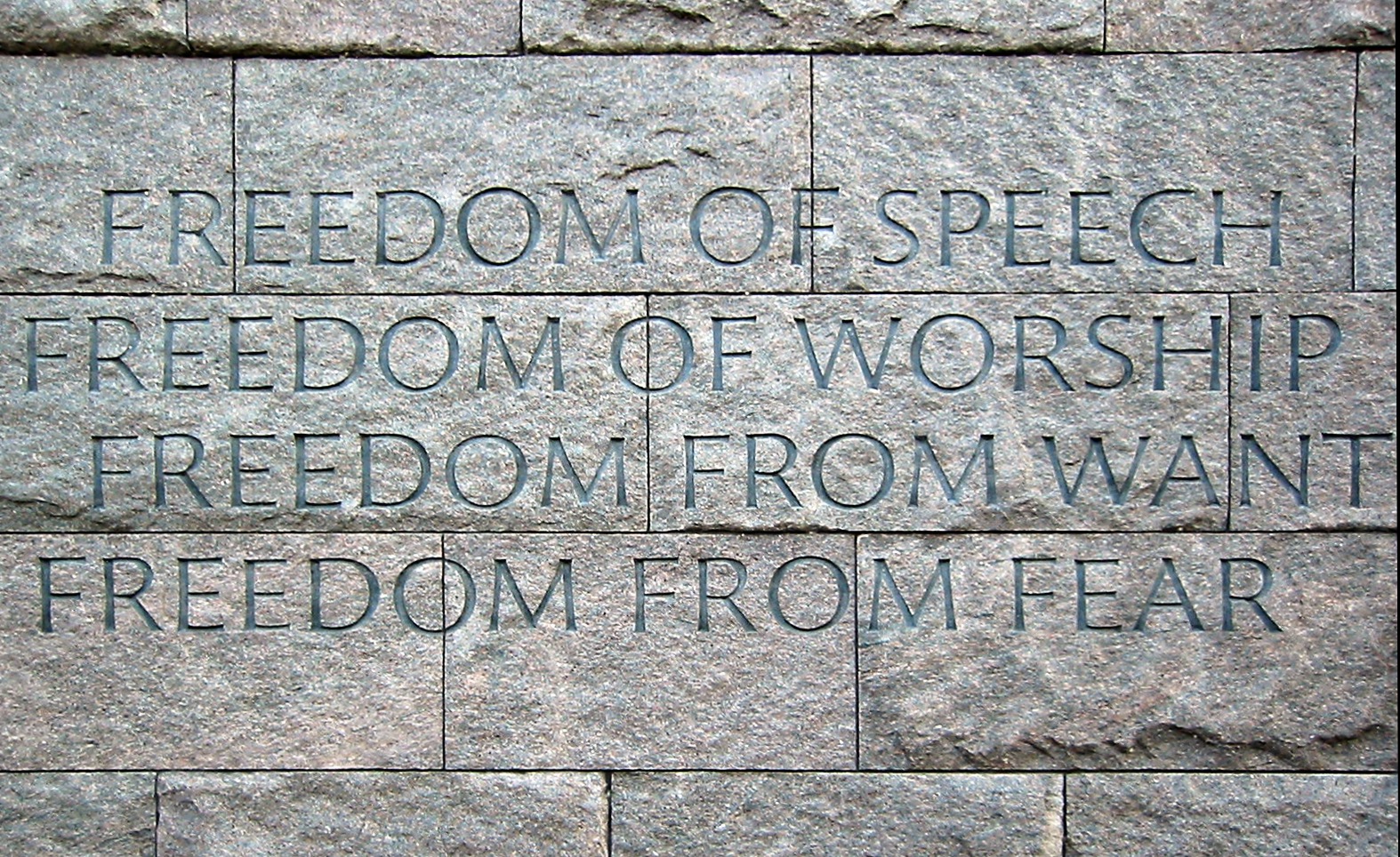
When I worked as a Teaching Assistant for the US History II class (1877-present) at the University of Missouri-Kansas City, the week that we’d discuss the Great Depression and the New Deal, I would always highlight President Franklin Delano Roosevelt’s Four Freedoms and spend a good deal of time discussing them, what they meant to Americans in the 1940s, and what they mean to us today. Chief among these for me has always been the most abstract yet primeval of these Four Freedoms: Freedom from Fear.
At the time he announced the Four Freedoms in his 1941 State of the Union Address, 81 years ago this week, FDR saw Freedom from Fear as “a world-wide reduction of armaments to such a point and in such a thorough fashion that no nation will be in a position to commit an act of physical aggression against any neighbor –– anywhere in the world.”
This spoke as profoundly to a world plunged into the worst war yet known in human history as it does to us today in a world where the instability of war has of late shown its face both in the form of terrorism and paramilitary attacks as well as in more conventional fighting around the globe. Yet now as I write this, headlines in the major papers and other prominent news outlets continue to warn of aggression from the likes of China or Russia against Taiwan and Ukraine, both conflicts that surely, we in the United States would be likely to involve ourselves in.
Yet beyond the terrible yet over-glorified world of weapons and war, I often think of this fourth freedom in other social contexts all the same. It saddens me, yet still doesn’t surprise me to know that now, nearly as distant from FDR’s presidency as Lincoln’s was from the Continental Congress, we still are a country that lives in fear of enemies both foreign and, yes, domestic as well. This cycle of fear has led to so many of our fellow citizens buying guns for self-defense, often in response to the frequent mass shootings and other homicides that are a wrathful shadow over our lives.
This cycle of fear has kept us indebted to our for-profit health insurance industry, without which we couldn’t afford to pay the medical bills that result from the healthcare that keeps us alive. I thank God that my employer has good quality health insurance, because honestly if I were given the choice of surviving or going into severe debt to pay for an emergency surgery or other procedure, I’d have to really think about that before making a decision. What value is there in life if you can’t really live because all your earnings are going to pay off not only your debt but also the interest on that debt?
Fear can drive us to achieve better things, to overcome our fears, yet it can also inspire us to do terrible things. Fear of the other, fear of difference, is the root cause of so many problems that beset our country and humanity at large. I study this in the context of how the idea of the savage was understood in Renaissance natural history in my professional capacity as a PhD candidate in history.
One of my favorite episodes of Star Trek: Voyager provides a clue as to how we could truly achieve the dream of this fourth freedom. In the second season episode “The Thaw” Captain Janeway and the crew of Voyager take on an AI that was created by the imaginations of a group of interstellar settlers who put themselves into cryogenic stasis for decades. That AI ended up manifesting itself as Fear itself and proceeded to terrorize the settlers and eventually the Starfleet officers from Voyager who enter the stasis chambers to try and deactivate it from the inside. At the end of the day, Captain Janeway herself confronts Fear and proceeds to give the best argument for power that I’ve ever heard; power only lasts if its authority is unchallenged. Fear only lasts if we are afraid. At the end of the day, the answer it seems is coming to terms with our own agency, our own ability to make decisions for ourselves.
We as the United States have become paralyzed by fear; there are reforms and changes we really should make but the people who could make them more often say it’s too dangerous to disrupt the status quo, to shake the foundations if only slightly. To quote another President, this time Mr. Lincoln from his 1862 “Annual Message to Congress”, “As our case is new, so we must think anew and act anew.” Times have changed, and with them the ways we deal with our government and its relationship with the people must change as well. We need universal healthcare; we need electoral reform that will fully protect the right to vote enshrined in the Voting Rights Act. We need to make the changes necessary in our educational system, policing, and in nearly every other facet of our society to tackle bigotry in every venomous form it takes. We need to rethink our immigration laws, unscramble them, welcome in people who want to become our fellow citizens, our friends, our neighbors, who want to contribute to our society by their presence within our borders.
Eventually, I dearly hope, we’ll finally achieve FDR’s fourth freedom. I look forward to a day when I, and everyone around me has nothing to fear. I’m a teacher, admittedly in higher ed rather than in K-12, but a teacher nonetheless, and here in the United States being a teacher means knowing that there’s always a chance someone is going to decide they need to attack the students, faculty, and staff at your school or university. In my classroom, while my first priority is to teach, in that situation my first priority is to ensure my students’ safety. I long for the day when I won’t have to worry about someone attacking my classroom, and frankly I know there’s a decent chance even if I don’t experience a school shooting firsthand that I’m likely to experience a lockdown because of one, and not just the frequent drills we did for school shooters when I was in high school.
We fear each other because we don’t trust each other, and a country comprised of citizens who are too afraid to trust one another is a country in peril. Everything that I said today could well be interpreted as a partisan statement. Think about that: fear itself has been weaponized for partisan purposes to such an extent that the few solutions to that fear are themselves inherently partisan, fundamentally political. What have we done to ourselves to get to this point?
To turn again to President Roosevelt, freedom from fear “is no vision of a distant millennium. It is a definite basis for a kind of world attainable in our own time and generation.” Make this my hope, my prayer even, that if my generation and the generations to follow are remembered for anything it’s at long last overcoming those innate human fears that have driven us since the first Cain of our legendary past cast their stones against their fellow humans.
In the podcast version of this post, the recording of FDR’s 1941 State of the Union Address, his “Four Freedoms Speech” comes from the Archives of the Franklin D. Roosevelt Presidential Library and Museum in Hyde Park, New York which is operated by the National Archives and Records Administration. I’d also like to thank my friend the immensely talented voice actor Michael Ashcraft for his giving life to President Lincoln’s words in this episode.
In this episode I argue that we should consider Space exploration as a way of uniting humanity around a common cause in what otherwise is a time when we seem far more divided.
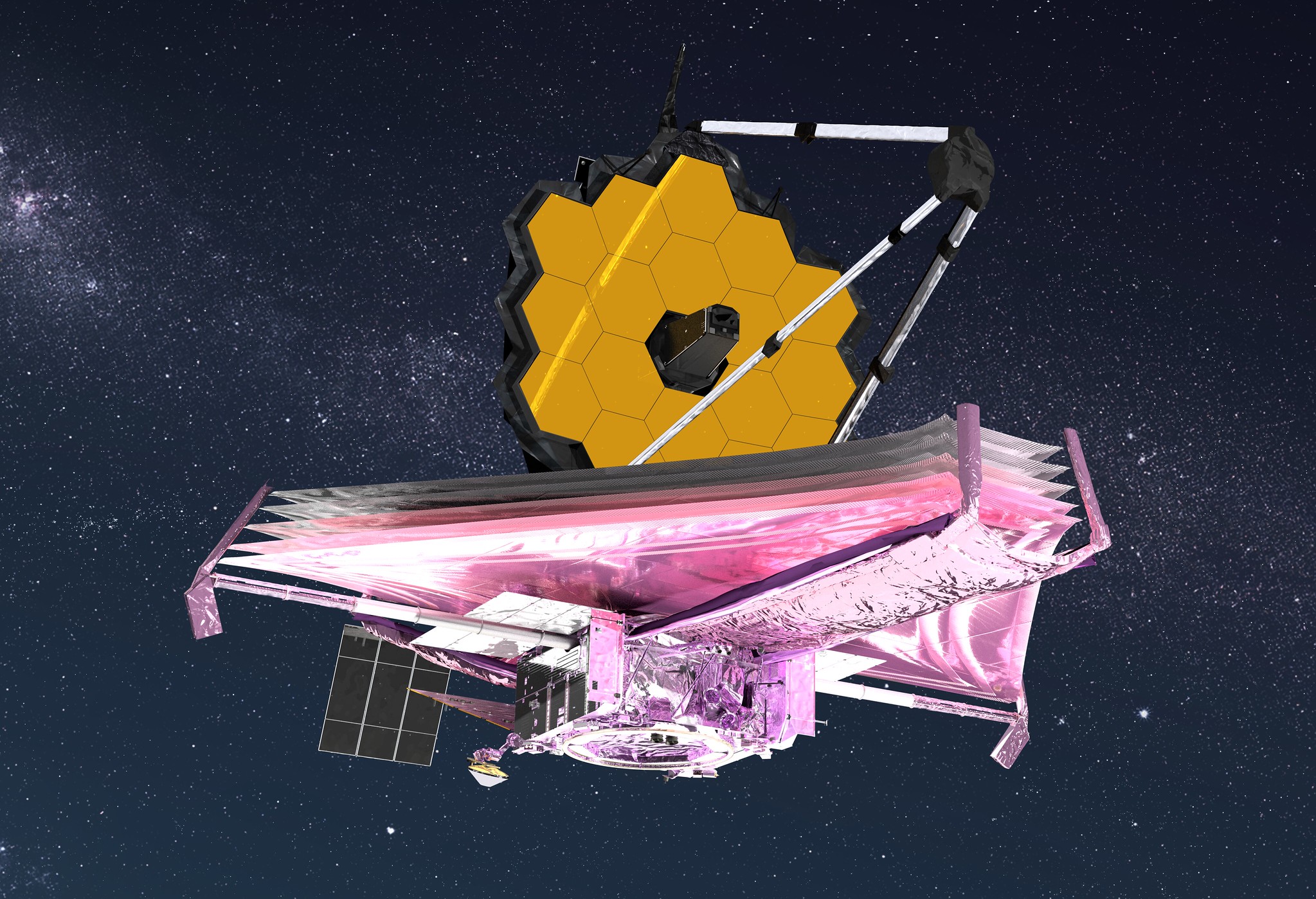
My Dad woke me up just before 6 am on Christmas morning to watch the long-anticipated launch of the James Webb Space Telescope (JWST) from the European Space Agency’s spaceport in French Guiana. Over the past few months, I’d heard and read a great deal about Webb, the engineering behind it, and the mission it has been sent on to travel to the Lagrange 2 point about 1 million miles, or 1.5 million kilometers, from Earth. Once there, Webb will serve as our newest set of eyes on the stars and planets far removed from our own. It will even be able to detect the chemical composition of the atmospheres of distant exoplanets, which could provide us with far better leads than ever before to finding life on distant worlds.
In this last week of 2021, during the Christmas season, a generally happy time of the year, I’ve got to admit there are a lot of problems facing us that are sure to dominate the year to come. The COVID pandemic continues and has recently flooded humanity with a new wave powered by the omicron variant, leaving us scared and worried during the holiday season. The tensions that have boiled over in the last few years in this country, social unrest born out of decades of dissatisfaction, disenchantment, and the pressures of our lives in this Second Gilded Age have brought we Americans closer to the brink than we’ve been in quite some time. Globally, we can’t bring ourselves to do enough to combat climate change, the greatest existential threat humanity has yet faced. Still, the familiar tempo of the drumbeats rises quicker and quicker as the Ukrainians prepare for a potential invasion from Russia, and tensions continue to simmer in the waters between China and Taiwan. Both of these regional wars could well draw my country, the United States, and our allies in, cycling further and further until that simmering pot comes to a boil in the form of another world war.
Meanwhile civil wars, famines, and the other children of fear torment people around the globe in nearly every country, some worse than others. The 2020s have thus far proven to be one of the darkest decades in recent memory, with many of its woes being fruits born from the troubles of the 2010s, 2000s, and the century prior.
Yet alongside all of this, I still have hope that we, humanity, will see ourselves through these threats, that somehow, someway we’ll survive as we have now for so long. It’s interesting to me how the same story, human history, can be told in so many different ways. I was brought up learning the story of human progress, of ingenuity and invention from the Promethean discovery of fire to the digital age in which we now live. It’s a story that has a happy ending, that believes we will eventually overcome our sins and the ghosts that have haunted our waking days as much as our dreams of a better tomorrow. The question I’m left with now, as an adult prone to daydreaming rather than a child without a responsibility to make something of myself, is how do we achieve that future? How do we make tomorrow better than today or all the yesterdays in our collective memory ever have been?
I suggest we look to the potential of what Webb can tell us about the Universe around us. We are after all made of stardust, as Carl Sagan was famous for saying, and at the end of the day it is to that stardust that we will return. The exploration of Space has the potential to be truly revolutionary to our story. If done right, it could be the catalyst that pushes our boulder over the hill, letting us the eternal Sisypheans we are, out of the Hadean turmoil we’ve been in for as long as we can remember. By realizing we are not alone in the Universe, that there are others out there who like us have struggled and fallen time and time again yet still found the strength within them to rise up and build civilizations in their own images, to leave legacies for others to remember them by. We have the potential to overcome our troubles: war, hunger, poverty, ignorance. Let’s set those drums aside and sit down and talk to one another, get to know one another, and learn from each other. Let’s realize that we’re more alike than different, no matter who we are, where we’re from. We may speak different languages, and by extension think in slightly different ways, we may have different incentives for our actions, but at the end of the day we’re all still human.
On the Sunday of Christmas weekend, a date I know as St. Stephen’s Day, I read a thoughtful editorial in the Washington Post by the conservative columnist George Will called “National conservatives and racial identitarians have a common enemy: Individualism”. While I didn’t agree entirely with his argument, and while in general Mr. Will and I only agree on a small number of things (in particular our mutual love of baseball) the main thesis of this column made good sense to me, that here in the United States individuality and the ability of the individual to express their self has fallen by the wayside in many circles in favor of a degree of collective identity on both sides of the political spectrum. The focus has fallen so much on what divides us that we’ve lost sight of how we are really so alike.
We are all Scrooges as long as we stay in our camps and refuse to venture out into the no man’s land between them. There are past wrongs that need to be delt with, crimes that have yet to be punished, I would be naïve to deny that. At the same time, we need something to bring us together, to break these circles of violence that have been carried out since the time immemorial, embodied in stories like the primordial Fall from Paradise described in the Abrahamic religions. At this point, it’s fair to say we’re in a time when revolutions and counterrevolutions born out of a spirit of vengeance are far more in vogue than any belief in a common humanity. Yet through the fog of war that we allow the dragons of our imagination to breathe out into our world, there are still those among us who send missions beyond Earth with hopes that knowledge will broaden our horizons and increase our knowledge of not only the Universe around us but of ourselves as well. This Second Age of Exploration offers us the chance to unite around a common purpose of bettering ourselves, of elevating humanity above that fog and into a new age in our history when we can achieve all those lofty ideals we continue to set ourselves from each generation to the next.
This week I'm discussing what Christmas has meant to me throughout my life, and how it fits into the mythos of the seasons overall.
I think the general feelings I get at different times of the year were instilled very early on. I remember in first grade being told that if the weather in March came in “like a lion” it would surely go out “like a lamb,” meaning if the month started with bad weather, snow, ice, or even thunderstorms in a warmer year, then we’d end up with a quiet end to that month. Likewise, I can’t remember quite when I first heard it, that the Winter Sun always shines with the wolf’s teeth. This to say that as bright and warm as the Sun’s rays appear in Winter, you’ll still feel the biting cold of Winter if you go outside in that time of the year.
To me, Christmas has always been a bright light on a wine-dark sea, a moment of celebration, of seeing family and friends, of hearing the triumphant hymns at Midnight Mass and reaffirming how much we all really do care for each other. Christmas has its traditions, both sacred and secular: not only is Midnight Mass, now often celebrated at 21:00 or 22:00 on Christmas Eve a part of the schedule, but so too traditionally are the big family parties, unwrapping gifts on Christmas morning next to our tree, and watching any number of Christmas specials, especially Charlie Brown, and occasionally Die Hard too. The week before Christmas always includes my birthday, the 20th, which has its own traditions and things I look forward to every year.
Yet as I get older, now in the last year of my twenties, I can understand what C.S. Lewis meant in The Last Battle when he said that the eldest Pevensie sibling, Susan, didn’t return to Narnia because she had grown up and didn’t believe in it anymore. I still believe in the fact that there’s something special at Christmas, even if I’m more the skeptic about any sort of “Sanity Claus”, as Chico Marx put it, but it doesn’t have the same impact on me as it did when I was a wide-eyed child. Last Christmas … (I’ll give you a minute to sing that Wham! song) … Last Christmas, our first during the COVID pandemic, my parents and I decided to take a firmly defiant stance: we were going to go all out with the decorating and try to force the point that it was Christmas as much as possible, lest we remember we wouldn’t be going to any services or hosting any big family parties. It ended up being a melancholy affair, sure there were wonderful moments, but by and large I found myself longing for Christmases of yore when we’d be so exhausted come bedtime on Christmas night that we’d drift off into wonderful dreams, perhaps “visions of sugar-plums” dancing in our heads.
This year though, now in our second year of the pandemic if anything the three of us are exhausted by it all. The constant fear of infection, the usual work-induced weariness, and life in general. 2021 has been a hard year. We’ve struggled through it, through every season as the calendar rolls along, but I think it’s fair to say 2021, like 2020, is a year we’ll be happy to leave. This Christmas feels like Christmas, just as my birthday this week felt like my birthday usually does, but with a shrug instead of a smile. Winter even seems harder to tolerate this year.
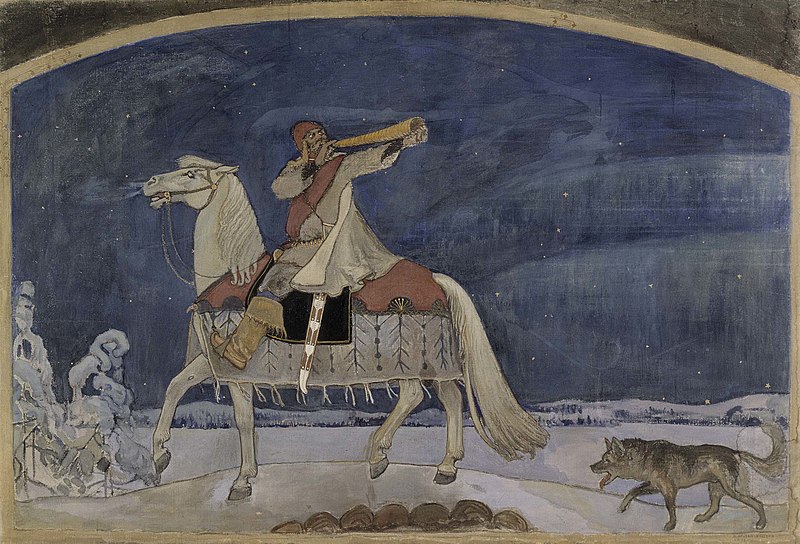
I was in high school when I first saw a Finnish painting that to me spoke of the nature of Winter. It shows a horseman mounted, wearing a slightly medieval garb, turning around to look up into the stars that carpet the purple night sky, illuminated as much by the snow below as the lights in the heavens above. In his hand he holds a hunting horn, which he blows to announce his ride onward as his trusty hound follows behind. The image there, of the rider in the snow beneath the stars in the purplish Winter’s night sky always seemed to speak to me of Winter, meagre and cold, yet suggestive of some magic that might exist in those long dark nights.
It was only later, when I visited Finland for the first time in May 2016 that I learned that this painting, first created in 1901, is one by Akseli Gallen-Kallela (1865-1931), called Kullervo Sets Off for War. It depicts Kullervo, a tragic character from the Kalevala, the Finnish national epic compiled by Elias Lönnrot in the 19th century. The story behind the painting, while different from how I imagined it, reminds me nevertheless of the mystery of Winter, the unknown quality that those long dark nights hold, and the stories I’ve heard and come up with myself to give character, voice, and song to what might otherwise be a quiet, dark, and lonely time for us all.
For those of you who celebrate it, I wish you a most Merry Christmas, and for all the rest of you, Happy Holidays.
This week, I want to talk about some reasons that I see for why we Americans are so deeply divided. You can find the editorial by Charles M. Blow that inspired this episode here.
A few evenings ago, I read an editorial by the frequent New York Times contributor Charles M. Blow about what he called the first signs of the next civil war looming on the horizon. Blow’s argument boils down to the idea that today’s political actors on the right who accept our most recent former President’s Big Lie that the 2020 Election was somehow stolen are themselves inheriting rhetoric from former Vice President, and Senator from South Carolina John C. Calhoun. Calhoun has often been called the father of secession, the one who laid the rhetorical and political groundwork for eleven southern states to leave the Union in open rebellion, launching a Civil War in 1861, 11 years after Calhoun’s death, that would lead to around 720,000 American deaths. Just as today the Trumpist faction feeds on this Big Lie of their own creation, so too the secessionists of the nineteenth century made their fateful decision to embark on the conflict that my friend and fellow historian of Midwestern extraction Josh Kluever recently termed the “Treasonous Southern Enslavers’ Rebellion” on the basis of an even bigger lie, one that contends that there are varying degrees of humanity, some better than others, and that those degrees are understood on an arbitrary designation based on phenotype: distinctions in skin color.
If the Trumpist argument has any merit it’s that it’s a reaction to a sense that some Americans feel left behind by the dominant forces in our culture and society today. As much as being American implies that we are all one people, one culture, in the same way that old caesaropapist rhetoric would cry that under the banner of the emperor of the day there was “One God, One Emperor,” so too the idea that the United States is “one nation indivisible” makes it entirely evident that we are expected to be unified not only politically but culturally and socially as well. The great façade of this line from our Pledge of Allegiance is that we have never truly been “one nation” in any more of a sense than we share some common cultural and social bonds brought about in part through the spread of American dominance on this continent through westward expansion, phantom dreams of manifest destiny, and frequent generational rallying calls of “America First,” embodied in the idea of the melting pot that boils down all of us ethnic descendants of immigrants and makes us one common people: Americans. The South, in its misguided attempt at going it alone in the 1860s, has long recognized that it has a distinct culture from the rest of the country. We in the Midwest too are different from our cousins in the Northeast, even if we generally come from the same immigrant roots as our fellow Americans in New England or the Mid-Atlantic states. Then there’s the great gulf between the east and West, which falls somewhere in the Great Plains. During my recent visit to San Diego I mentioned to my family back in Kansas City that if any part of this country could even remotely think about successfully seceding from the Union it would be California, which is geographically so remote from the still largely eastern center of power and wealth in this country that as American as it does feel, it still seems foreign enough to my Midwestern senses as to be mistaken for a foreign country.
The greatest fault that our collective popular history has perpetuated is by smoothing out the surfaces of our past to make an easy to digest collective etiological story, a creation myth of this most artificial of countries born out of a series of settler colonies founded by the English in the seventeenth and eighteenth centuries on the Atlantic coast. Unlike the majority of countries around the globe, the United States is not a nation, it is a political collection of peoples living together in the same region of the globe. A nation is something far more ancient, its members share not only a common political leadership but common heritage going back centuries if not millennia. The purest examples of nationhood are countries like Iceland that have had little immigration to its shores, and thus a fairly stable population for generations.
Considering this, by my estimation there are few nations today, instead many countries, states which represent the interests of the peoples who live in those places. Those peoples are often either native to those areas or varying degrees of newcomers. Yet the degree to which people are either native or newcomer is itself vague, after all would the old Bay Staters be considered at this point after 400 years of settlement on the shores of Massachusetts Bay native to that part of the world? Or are they, like the descendants of the Ulster Scots who were brought to Ulster in the same century still relative newcomers to the places that they have called home for generations?
Here in the United States, we often highlight the English and Dutch colonial heritage of our country while demoting the French, Spanish, and Russian colonial heritages of other regions beyond the old Thirteen Colonies. Our holidays commemorating the colonial period, notably Thanksgiving, commemorate the founding of one English colony on Cape Cod, and even the history behind that commemoration is flimsy at best. It struck me when I was walking through the Museum of Us, San Diego’s renamed anthropology museum in Balboa Park, that the most basic understanding of “us” as the intended audience of the museum’s exhibits are Anglo-Americans. I feel a sort of secondary connection to this idea of “us” as Anglo-Americans, after all I have old colonial ancestry on my Mother’s side going back to seventeenth-century Connecticut, and eighteenth-century Maryland and Pennsylvania, but I see myself far more in light of my more recent and familiar status as a third-generation Irish American. What was especially profound about this particular definition of “us” in San Diego’s anthropology museum was that it was being used in a city that was founded not by the English or later American settlers but by the Spanish in 1769. Sure, there were exhibits that included the stories of the local indigenous peoples, notably the Kumeyaay, but they were always the object of focus not the subject describing the object. In the process of conquest by the United States during the Mexican-American War of the 1840s, not only were the Amerindians living in the West and Southwest subjugated and demoted to second-class citizens in their own home, so too were the Californios, Nuevomexicanos, and Tejanos, the descendants of the Spanish colonists who settled in their northernmost American colonies and would later become regional identities in a newly independent Mexico after 1821.
Similar patterns can be seen among the French of the Mississippi Basin; it’s noteworthy that Homer Plessy of Plessy vs. Ferguson fame was seen as a free person of color within the French and Spanish racial contexts, while to the Americans any hint of African ancestry deemed him to be legally black. If you want to understand why the fight for racial justice is so complex consider that firstly race is an artificial concept that was created to promote a colonial order of hierarchy, and secondly that out of these ideas of race entire notions of identity and community have developed that are very real, very powerful, and frankly beautiful. Just because I don’t feel any affinity for my legal identification as white doesn’t mean that my relatives, friends, and neighbors who identify as black aren’t in any way unjustified in being proud of being black.
Secessionist rhetoric had power in the nineteenth century because of how new the Union was. Remember how Lincoln introduced his Gettysburg Address, noting that he spoke “four score and seven years” after the Declaration of Independence from the British Empire was made in 1776. Speaking only 87 years after the conception of this idea of a country called America, populated by a people called Americans, it makes sense that some in the South would feel far closer to their identities as South Carolinians, Georgians, and Virginians among others. Yet it is interesting to me that the President of the Confederacy, Jefferson Davis, was born in Kentucky but served from Mississippi, both states that were created by the United States out of territories controlled by the Federal Government after the signing of the Federal Constitution in 1787. In short, Davis’s claim to some innate loyalty to his state before any loyalty to the Union was far less well founded than that of the father of secession, John C. Calhoun of South Carolina. I’ve written before about how I argue that the moment that the United States became more important than the individual states themselves was when the United States Congress began admitting new states to the Union west of the Appalachians that hadn’t existed before the Revolution. The first thirteen states created the Union, yet the Union created nearly every state that would follow its own founding, save a few holdouts with preexisting governments that elected to join the Union, whether by popular demand like Texas or by coup and minority rule like Hawaii.
Today though, secessionist rhetoric is less well founded on the idea that the states have some precedence over the Union and more on the idea that the power of the Union relies on the states’ and by extension the voters’ full faith in the credit and authority of the Union itself. No institution exists without that most fundamental level of trust that it can do what it sets out to do. Historically, governments have been able to hold power through a combination of force of arms and public support. This is at the heart of what Machiavelli argued about how a good prince ought to govern in the sixteenth century. The definition of what it means to be American is inherently exclusive, it relies on this identity created out of the twin foundation myths of Jamestown and Plymouth. Because of this we have seen a continual multigenerational struggle to expand that definition to become inherently inclusive, that it might embrace not only the English heritage of the oldest colonies that eventually contributed to the foundation of the United States but all the other identities, whether indigenous, colonial, or immigrant that best express the intricate mosaic of what it means to be an American.
If we do have a second civil war, whether on the battlefield or in the destabilization of the authority of the ballot box, it will be because we don’t recognize the interests and needs of our myriad of different Americans. I agree with Mr. Blow that the efforts of activists and politicians on the right in the last year to take control of government at the local level, whether on school boards or in local election boards, better reflects the true battleground of this second civil war. Yet I’d take that argument one step further and say that the fact that this focus has been so intent on assuming authority over the most local of political offices reflects more than anything else how at the local level we are still divided into our own nations, whether they be as Southerners, Northeasterners, Midwesterners, or Westerners, or whether it’s even more particular that we truly define ourselves by our towns and cities, or even by our neighborhoods and blocks. The homogenization inherent in the narratives constructed around being American over the last 245 years brews conflict with this hyperlocal level of identity that is inherent not only in we the American people, but in all humanity no matter who we are.
This week, I'm proposing that we've entered a new period in the history of the English language.
Could it be good for us to start thinking about a new period in the history of the English language? A bold question if ever there was one, after all that would imply that we’ve moved past Modern English and into something that could potentially be “Postmodern”? Heaven forbid I go into “post-this” and “pre-that”, things which we academics love to play with on a daily basis in our writing. I’d argue that we may well have moved past “Modern English” as it has been known for the last five hundred years, since its birth in the Renaissance, and into something new. This change isn’t dramatic, it’s been happening over a very long time; even though English has been in its modern phase since the sixteenth century, it’s continuously evolved with each passing generation.
So, what makes today any different than yesterday? Why make the break here between Modern English and whatever we’re going to define the next period of English as? I’d argue this is in large part because of the influx of a great many more voices speaking and writing in English than ever before. Not only is English now a global language, spoken by hundreds of millions of people around our planet, but it’s become one of only a handful of languages through which most global affairs, whether economic, political, or social, are conducted. English is influenced by the introduction of popular words like woke just as much as it is by the theorizing of scholars like me trying to invigorate those ancient Germanic and Latinate elements still living in the fibers of our tongue.
My own native form of English, American English, is a great example of how the language is changing. I argue that one of the main reasons why many American English speakers differ in their phonology and word choice from both the old colonial Americans of the East, as well as our English cousins across the water, is because we have far more ethnically diverse immigrant elements in our English. There are hints of the Irish, Finnish, Flemish, Swedish, and Welsh in my English that my ancestors spoke, just as there are traces of the German that many the immigrants who settled in my native Midwest spoke. Our ancestors may have spoken “broken English” when they first arrived, but that broken English has become our English, another thread in the beautiful and diverse tapestry that is this most diverse of languages.
Yet alongside the influx of new words, and ways of expressing ideas that have proliferated in English are new circumstances that have forced us to come up with new words to express ideas we hadn’t considered before. Just as Modern English was born out of the dramatic transformations in the European understanding of their world and the globe at large in 1500, so too our English is being changed by our own growing understanding of our now global world and its place in the Cosmos. This may be a good time to begin to talk about a Second Age of Exploration, this time not out across the oceans but instead out among the stars. And just as the English of Caxton developed into the English of Shakespeare by way of the English of More, so too our English has developed from the English of Asimov, Heinlein, and Sagan into an English that can prove useful to humanity as it tries to make sense of the wonders previously unknown that our explorers are sure to encounter in Space.
So, what do we call this new English? Perhaps we could take after the oft-quoted George Orwell and call it Newspeak? After all, dystopian visions of the future are just as much in vogue today as stories of violent moments in our past ever are. Or we could call it Global English, to better reflect the geosocial nature of our language as a new lingua franca for all humanity? I see the point in both arguments, but I have less a taste for dystopia and more for utopia, expressed in my love for the stories told in Star Trek, and as much as I’d say it’s good to acknowledge the global nature of English in naming this new period in the history of the language “Global English”, that name also smacks of hegemony and empire, something to be avoided. Instead, I suggest we consider something like “Contemporary English”. This reflects that a change has occurred from Modern English, while effectively meaning the same thing. In short, it’s a perfectly politically safe bet.
Think of how this language is changing every day. There are more efforts at either being gender neutral in speech or inclusive of the diversity of gender which we are all quickly learning about. Think of the extreme irregularity in spelling personal names. My own given name, Seán, has at least four different spellings. For the record, I spell it the Irish way, Seán. English spelling really hasn’t been purely phonetic for centuries, yet today I often meet people who do have phonetic spellings of their names. The funny thing is, at first situations like that throw me for a loop because I’m so used to the idiosyncratic ways that we spell words, including names, in English. This new phonetic spelling is one big influence that the diversity of English speakers has had on our common language. I do think there should be more cultural awareness of the underlying rules in English, but that’s more a problem of poor English education than anything else, something I’ve written about previously.How we react to the diversity of English speakers will dictate how this language continues to evolve in the coming generations. Just as the first English explorers’ interpretations of indigenous American names and languages reflected the culture of their time, so too the ways we interpret what to us are foreign words and ideas will reflect upon our own time. In this Second Age of Exploration, I hope we can learn from our history and explore with a passion for learning far more than any desires for conquest. Our English will be a reflection of our intentions as much as it will be a tool for our usage.
On Saturday I took the opportunity to go to 4:00 pm Mass at my home parish here in Kansas City, MO while I was in town for Thanksgiving. It was wonderful getting to see the place again, and even though it’s only been 3 months since I left town for the semester a part of me doubted I’d actually see these places that are so dear to me anytime soon.
During the Nicene Creed as I recited the words I’ve known at least since freshman year of high school, the proclamation of the Faith, kind of a Pledge of Allegiance that we Catholics still have mostly in common with our Orthodox and Protestant cousins, I noticed something that made perfectly good sense but I hadn’t thought of yet. A friend who was standing near me said that Jesus “became human” instead of “became man.” It caught me off guard for a number of reasons. Firstly, the official English translation that we use in the US does use the older word “man” rather than the newer “human” but secondly, I had a feeling from what I could remember of the Latin translation that our English one is more closely based on that “human”, “homō” in Latin, might actually be the noun used.
That evening I made a point of going to the source. I looked up the Creed in Latin and sure enough the line there is “et homō factus est,” which I’d translate in my schoolroom Latin as “and he was made human.”1
The one catch here is that the Creed wasn’t originally written in Latin but in Greek. So, in order to get to the original meaning and intent of the Church Fathers at the Council of Nicaea (325) that wrote the Creed we still say nearly 17 centuries later, I’d need to call up my admittedly elementary and rusty knowledge of Greek. Unlike Latin, which I studied all through my high school years, have picked up again twice since, and use professionally on a regular basis as a historian of Renaissance natural history, I haven’t been lucky enough to use much of my Greek. I took Classical Greek in my senior year of high school after finishing my last required math credit the summer before, and then took a semester of Koine Greek (aka New Testament Greek) in my sophomore year of undergrad at Rockhurst. So yeah, my Greek is rusty. I can still read the alphabet pretty well and I know enough about etymologies that I can get by, but I never really got it the way I got Latin or French.
Still, I was determined to spend at least a few minutes of my Saturday evening at home working through this question: what was the original Greek line that the Latin translator rendered as “et homō factus est“?2 I went to a pretty reliable source that has both the Latin and Greek versions and started scouring the Greek, figuring I was either looking for one of two words: ἄνθρωπος (anthropos) meaning human or ᾰ̓νήρ (anḗr) meaning man.3
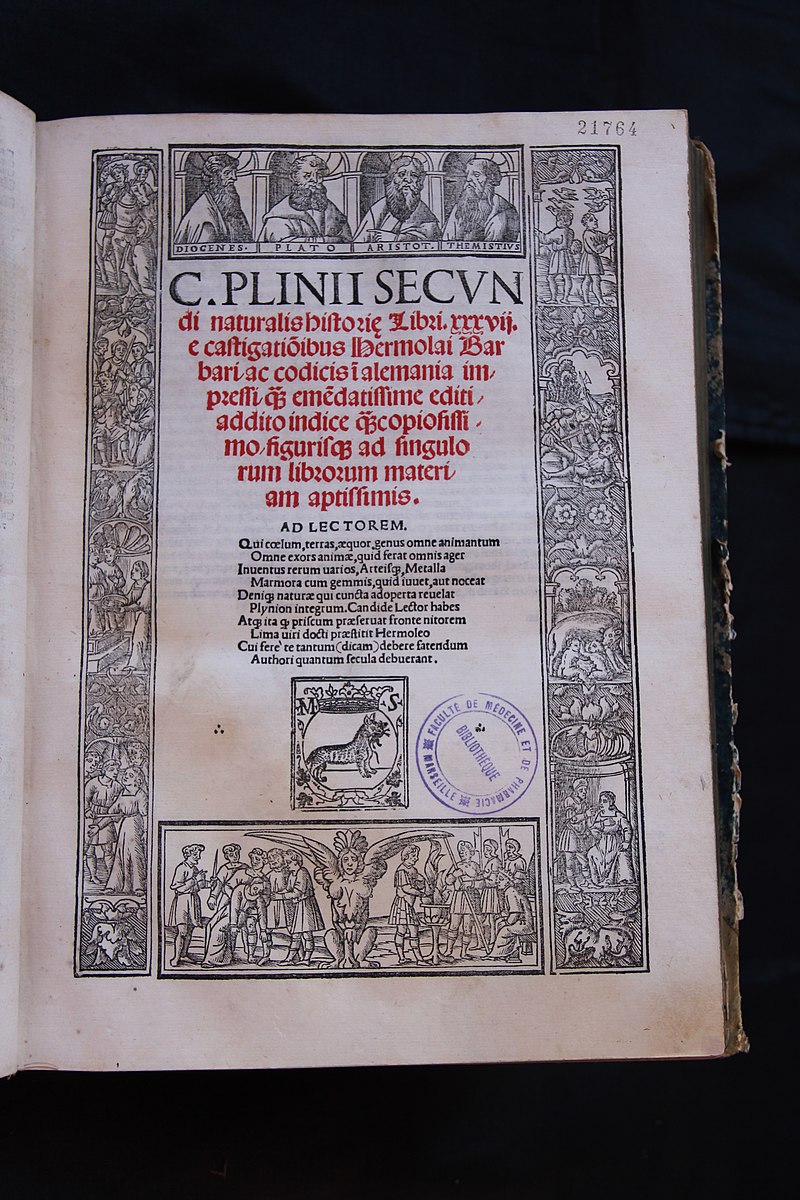
One of the big tricks that I’ve learned after now a few years of working with sixteenth-century printed books that are often not in English is the quickest way to find a particular word you’re looking for is basically to just focus on finding that word, don’t pay too much attention to the rest of the text. Once you’ve found the word you’re looking for then go and read the rest of it to put that word into context.
One example of a 16th century printed book that I’ve worked with.
Anyway, back to the story.
So, I scanned through the Greek original version of the Nicene Creed and was left stumped. I couldn’t find either ἄνθρωπος or ᾰ̓νήρ anywhere. I began to wonder if there was some third Greek word for human or man that I didn’t know about, and knowing what I do know about Greek there being three words for the same concept isn’t at all out of the question. Looking for clues, I turned then to the previous line, “and by the Holy Spirit was incarnate of the Virgin Mary”. In the Latin this appears as “Et incarnātus est, ex Spirītū Sānctō ex Marīā Virgine“. A great trick for any researcher working in a second or third language, or better yet one that they have a passing familiarity with is to always keep an eye out for personal names or other proper nouns: those will usually be more prominent, and when it comes to the BVM (Māter Deī, Θεοτόκος [Theotókos]) you can bet her name will be prominent. Sure enough, I quickly found mention of a Μαρίας τῆς Παρθένου (Marias tés Parthenou) meaning the Virgin Mary and kept looking along that line for something that resembled either ἄνθρωπος or ᾰ̓νήρ. Two words over came my answer: a fittingly long Greek verb ἐνανθρωπήσαντα (enanthrōpōpésanta).
I quickly returned to my favorite English-Greek dictionary and found the root form of the verb in question, ἐνᾰνθρωπέω (enanthrōpéō), meaning “to put on human/man’s nature,” or more essentially “to become human/man.” The only job left to do was to take out that clunky slash and acknowledge which noun, ἄνθρωπος or ᾰ̓νήρ was at the heart of that verb. As it turned out, and as you can see, it’s ἄνθρωπος.
Thus, to the best of my efforts as a scholar and translator, and as you can see, I’d argue that in English saying that Jesus “became human” works, perhaps even better than “became man”. Why? Well, remember that English has changed a lot as a language in the past century. We have so many more people and ideas using this language than ever before, and to be honest while the English noun man began as both a word meaning males in both gender and sex (ever a complicated series of terms) and our entire species in general, it has steadily come to lose that second, neuter meaning in favor of solely being a masculine noun. Neil Armstrong’s first words when he stepped onto the Moon’s surface in 1969 were “it’s one small step for man, one giant leap for mankind.” For a guy in 1969 that worked. But for the astronauts that will be setting foot on the lunar surface again in the next few years with the Artemis program, I firmly believe that man won’t cut it anymore.
A few years ago, I wrote a blog post that was a predecessor to this now weekly Wednesday Blog about why I prefer to say “you guys” rather than “y’all”. Long story short: I’m not a Southerner, and I’ll fully admit when I hear “y’all” I don’t tend to think of much besides the people who drug our country into a Civil War 160 years ago because they couldn’t accept the fact that it was morally corrupt to own other human beings. The fact that their heirs are still fighting against racial equity in this country makes my case for me. In that same blog post I also argued that we should move away from the word mankind, and towards something that more closely reflects a more gender neutral word for our species: humanity. On a small side note here (in a paragraph begun with a side note) I don’t like humankind because it combines the very Germanic -kind with the very Latin human. Instead, Latin gives us the word humanity, derived from the Latin hūmānitās. Let’s use that instead. It works, and frankly as we do become far more globally interconnected (which, guys, really isn’t a bad thing at all), it translates far better than humankind ever will.
All this said, getting back to the main point after a brief stop in the politics and history of American English, I think it’s actually a lot better and more profound to refer to Jesus as God becoming human instead of God becoming man. It means that Jesus came to be among all of us, to be one of all of us. I’ve written before in an academic setting about why I believe it’s flawed to refer to God in gendered terms: gender is cultural, it’s fundamentally human, and it keeps the blinders on us to the extent that we can’t make a true effort at seeing, and by seeing hopefully we can get closer to understanding the fullness of God. From there, I’ll leave the writing about how to understand the fullness of God to the theologians and clergy.
Footnotes
Why the difference between the official “became” and “was made” in my translation of the Latin passive verb factus est? Factus est is the passive perfect 3rd person singular form of the verb faciō, which my old stalwart dictionary William Whitaker’s Words translates into the English verbs “do, make, create; acquire; cause, bring about, fashion; compose; accomplish.” So, while “became” is more poetic, “was made” is more accurate to the verb in question. But, theologically was Jesus the passive recipient of the blessing of being made human? After a significant amount of time for what I thought would be a short search I found an entry in the Liddell, Scott, and Jones Ancient Greek Lexicon (LSJ) on the Perseus database that listed the original Greek verb that was translated into Latin as factus est, namely ἐνανθρωπήσαντα, as an aorist participle singular active masculine verb in the accusative case. So basically, while the Latin factus est is in the perfect passive voice (meaning it’s describing an event that fully happened to the subject in the past), the Greek verb is an event that happened in the past without any time specified as to when it happened (kinda like a French passé simple?) This alone shows the complexity of trying to translate from Greek into Latin and then by extension into English. One final note here: while the Greek verb grammatically has a masculine gender (see above in this oversized footnote) I’d stress that that gender designation is referring to Jesus who it’s generally accepted was biologically male. In the process of trying to figure out how the Greek verb in question (ἐνανθρωπήσαντα, in case you forgot) was conjugated, I found an interesting article from the Orthodox Christian Studies Center at Fordham University discussing how best to translate this very verb in the Nicene Creed from the Greek original into English. So, to return to the original question that led me to write this footnote that would outrun the Gettysburg Address in length: the fact that Jesus in the Latin was apparently the passive recipient of his humanity, given to Him by the Holy Spirit is more or less a “it’s the best we can do” translation from the original Greek where Jesus actively “became human”. So, in English while the best translation from the Latin is “was made” human, when taking the Greek into account the official Catholic “became” human works a lot better, because it recognizes that at the end of the day Jesus and the Holy Spirit are consubstantial with the Father, meaning they all share the same Substance, i.e. they are all One. “Three Persons in One God” as my notes from my undergrad freshman Honors Christianity I notes say.
For my fellow grammar constables out there, yes I put the quotation mark outside the quotes. There’s a reason for that, it’s not a part of the quote so I don’t see why it should be included in the quotes. I’m going to write another blog post about this eventually.
For my Greek friends and all Greek scholars out there: to my understanding ᾰ̓νήρ is the Ancient Greek word for “man.” To my understanding the more familiar and modern word άνδρας is descended from the accusative singular (direct object form) of ᾰ̓νήρ.






 Wednesday Blog by Seán Thomas Kane