This week, some notes on the story I released here last week, more about Carruthers Smith and the other stories who populate that tale.
—
Click here to support the Wednesday Blog: https://www.patreon.com/sthosdkane
This week, some notes on the subtext and background of my story “Carruthers Smith’s Museum” which I released in this blog last week.
This story about Carruthers Smith was born out of a dream I had at some point between 5:00 am and 9:00 am on Saturday, November 23rd, 2024, after a late night working at the Kauffman Center for the Performing Arts. I often have quite thematic dreams like this one, and so when I woke from this particular dream, I knew I had a story to write. The dream itself only lasted as far as Part I of the story you will have just read, or perhaps heard if you prefer the podcast version. I began writing it shortly after waking and finished it close to 3:00 pm on that same Saturday. It proved therefore to be one of the quicker ones that I’ve written in quite some time, though one of the stranger ones at that. I wanted to write out several notes about the story, its characters, and its setting so you might better understand the subtext behind the story, and to preclude any other interpretations of what I’ve written.
In my original dream none of the characters had names. I observed the action from the perspective of Agent Pat O’Malley, which is why in the first part of the story he is the narrator. In my original dream he was filing some sort of metallic slide rule for the character that became Carruthers Smith, a reversal of roles as in the dream I was initially there to interrogate Smith for some uncertain cause. The setting of the story, Carruthers Smith’s Museum, was there in the original, though now writing this nearly 18 hours after waking today I remember it looking more like an art gallery built on a platform above the sanctuary of some old Upstate New York church with a big square base to the bell tower and a more Victorian looking wooden exterior that I often saw in the small villages in Broome, Tioga, and Tompkins Counties on my drives between Binghamton and Ithaca when I lived in Binghamton between 2019 and 2022. Agent Penny Wilson’s character was in the dream yet taken off-stage by Smith’s accomplice, trapped somewhere, yet my character couldn’t prove they were so entangled and thus I had no reason to properly accuse Smith’s character. At that point of desperation, I awoke and began writing.
My characters’ names are always quite intentional and tell more about the characters than their actions or dialogue in the story might convey. Carruthers Smith was the first character who I named in this story. I wanted the villain to be a looming WASPish figure, the last scion of the Gilded Age living a recluse in this vast museum he built for himself somewhere far from the great cities of the Northeast yet still within a day’s drive of any of them. I settled on Southeastern Delaware as the setting simply because it seemed most practical for the federal agents to drive there from Washington than if they were in New Jersey, on Long Island, or on Cape Cod. Lewes became the setting for the story because I’ve always liked that name and its connections to the county town of East Sussex in the south of England. I went back and forth for a minute between the names Smith and Jones; several weeks ago, I’d gotten the idea for a story about a man who is always wrong about everything named Erroneous Smith, which I haven’t written yet though I took aspects of his sketched character and took them into the less comical Carruthers Smith. As for his first name, I drew that from an old Sherlock Holmes story, “The Adventure of the Solitary Cyclist” published at the beginning of 1904 in The Strand Magazine in London and a month earlier in Collier’s in New York. The 1984 Granada TV adaptation of the story featuring Jeremy Brett as Mr. Holmes was my introduction to the story and remains etched into my memory from watching that series in the early mornings on PBS during my high school days. Carruthers is one of the two suspects in Conan Doyle’s story, and it’s a British-enough name that it felt fitting for the old colonial New York type of person I was looking for.
Sidney Paget’s art in The Strand edition of Sir Arthur Conan Doyle’s “The Adventure of the Solitary Cyclist” (1904). Public Domain.
The federal agents were all named in quick succession. Bill Hardy is named to make him appear as non-descript and American as I could with a nod to the Hardy Boys. I know a lot of Bills, though none from Buffalo, and so it seemed a fitting name to use here without nodding to one in particular. Pat O’Malley drew from the idea that I can best write from the perspective of someone like me, that is a fellow Irish American. My family comes from the townlands around Newport, County Mayo a part of the country which before colonization was ruled by the O’Malleys and Burkes. Everyone around Clew Bay is related to some degree or another if you go far enough back, and I have a handful of O’Malley ancestors myself. Patrick was an easy choice, it’s the most accepted Irish name in the English-speaking world, with my own Seán in all its phonetically spelled variations reflecting each country’s version of English coming in second, though Liam, the Irish version of William, is quite popular now too probably thanks to the recently buried Liam Payne of One Direction. Penelope Wilson was a harder one to name. I’ve used the name Penelope in my long awaited second novel in my romantic comedy series which I dramatically call the Plumwoodiad and was hesitant to use it again. It’s in part a nod to Penny Hofstadter in The Big Bang Theory, one of my favorite TV shows, yet more so a nod to the original Penelope in Homer’s Odyssey. At one point when I stepped away from my desk yet was still engrossed in this story while making breakfast, I considered putting a line in there about her having to wait a long time to find a man who can string her husband’s bow. The name Penny was intended to give her a deep well of resilience and strength that she would call on to save everyone else from Carruthers Smith. Wilson was another choice of trying to make her sound as American as possible, and while I did have President Woodrow Wilson in mind a bit here, I also thought about Robert Sean Leonard’s character Dr. James Wilson in the Fox series House in mind with this name.
I didn’t initially plan on making everyone else in this story Irish Americans. This is something which makes me laugh now thinking about it. I’ll make a small digression here, if you’ll permit me. When I was in elementary school, I remember one day my teacher brought out a stack of books for us to all read together as a class that was about a character who she said, “was from an ethnic group that aren’t often talked about in books.” I remember thinking then how the only book about Irish people or Irish Americans I could remember reading in my school was Tomie de Paola’s picture book about the life of St. Patrick, the namesake and patron saint of my elementary school, St. Patrick’s in Kansas City, Kansas. That’s nagged at me since, and I do think we Irish Americans tend to get forgotten because the Carruthers Smiths of this country have largely accepted us as white in the last sixty years since the first of our kind was elected President. It’s often forgotten today how we Irish Americans were reviled by the old English colonial population in this country for a long time. I heard some stories about this, and in the older histories of my alma mater Rockhurst University, there are stories of Rockhurst students in the 1920s and 1930s sneaking into Klu Klux Klan rallies to try and fight back against their banality. And yet, all that fit neatly into the background of Carruthers’s assistant, who I decided would be a first-generation Irish American, whose parents crossed the Atlantic during the big wave of migration among our people to this country in the 1890s. That character developed into Peter Dougherty. I had to be careful here, the first couple of names I gave him ended up being changed because I realized they were the names of actual people I know either in the Kansas City Irish community at large or nationally among my brothers in the Ancient Order of Hibernians. I imagined Peter was a sort of Bob Newhart type character who spent his early life trying to get by amid the shifting tides of the world around him, and once he found Carruthers Smith he was eventually willing and able to give up on trying to just survive and instead enjoy something more comfortable even if it meant sacrificing the woman he loved. That woman became the penultimate character I named in this story. At first her named was Bridie McGinty, Bridie being a pet form of the Irish name Brigid, yet that changed near the end of the story when I decided instead to name her after my great-great aunt Delia McDonnell who came to America from Ireland in the 1940s or 1950s. yet I had a mental image of her from the start. She was going to be a cross between Mamie O’Rourke in the 1894 classic song The Sidewalks of New York, Dorothy Day, and many of the women who I’ve known in my life who day in, and day out work in the schools and hospitals and for nonprofits trying to make life better for others. There’s a subtle yet profound truth in this: if you make life better for other people who’re worse off than you are, it’ll eventually make your own life better too. Call it trickle-up economics if you will. Lastly, there was the town doctor, who got the name Ronald out of a desire to find something that felt like it’d fit a character born in the 1940s or 1950s, and Yancey because it was the end of the story, and I was looking for something at the end of the alphabet.
From Ric Burns’s New York: A Documentary Film, sung by Robert Sean Leonard who already got a mention in this blog post.
Let me say something briefly about the time in which this story is set. From the first moment I thought of this story taking place in 1990, thirty-four years ago. I felt this was far enough removed from the turn of the twentieth century to have much of the off-stage action feel removed yet still before the millennium which feels like a profound break in time in my own life. I did have aspects of the lived environment of the 1979 Peter Sellers film Being There in mind when I thought of the décor and technology that Carruthers Smith would have in his museum, where the building itself was largely designed forty years earlier in the first few years just after World War II, yet the technology kept getting updated to a certain point at which Carruthers no longer felt comfortable replacing things. I’ve seen this in people who prefer to stick with certain technology that they’re most familiar with even if many years or decades have passed since that technology has been commonly sold or can be repaired with replacement parts on hand with the manufacturer. Doing the math here, this places Carruthers Smith’s birth in 1914, Peter Dougherty’s in 1899, and Delia McGinty Dougherty’s in 1898. The agents meanwhile are largely children of the 1950s and 1960s, with Penny Wilson the youngest at around 25 years old. It seemed less important for me to settle their ages than it did the characters in Carruthers’s orbit. There is something of the nostalgic for me writing about characters in the seventies, eighties, and nineties who were born in the decades just around the turn of the twentieth century. These birthdates were the norm for the oldest generations when I was born in 1992, and today I do miss something of the expectation that my great-grandparents’ generation born between 1890 and 1918 would still be living in our world with us today. I in fact only met one of my eight great-grandparents, the last of them to be born, who died when I was three years old.
The Walter Parks Thatcher Archive in Citizen Kane
Finally, I want to end by addressing the museum itself. I love museums, or musea as Carruthers would surely use the Latinate plural of that word, and so Carruthers Smith’s Museum was intended to be a twist on that happy place of mine as it was in my dream. The museum is made of one long gallery whose white walls and white marble floors match the place where I work yet whose shape is more akin to some of the galleries at the Corning Museum of Glass in Corning, New York, yet I often thought of how it appeared with its own internal lighting in a manner similar to the private archive of Walter Parks Thatcher in Citizen Kane with its long shadows and stark surfaces. That warm and welcoming space is twisted however when you remove all of the art from its confines except for something that seems eerily out of place. The great rubber artifact is a phrase that made me laugh the first time I wrote it, and yet what’s essentially a giant eraser-shaped blob of milky white goo became the unintended means of Carruthers Smith’s fall into depravity. Was he ever afraid of it? I think so at first, yet by the time we met Carruthers he’d lost any real desire to live and was happy to have something that could take his life at any moment be a constant presence in his life. He may have once loved another, he may have once been happy with his success, he may have once believed in being the patriotic good boss whose tires helped drive the Allied advances across North Africa and Europe, yet by the time we meet him he is so jaded about life itself that he sees no reason to cherish it. I imagined this rectangular piece of rubber standing atop a foot-tall podium, with the object itself reaching up to about six or seven feet in height, so it would tower over anyone who approached it, yet not by too much. Was the rubber alive? Perhaps in a sort of imagined monstrous way, yet only as much as a Venus fly trap is alive.
The giant rubber monolith in the center of the room stands for the corruption at the heart of Carruthers, his willingness to sacrifice others for his own success. His two-faced approach to people like Peter who keeps the keys to his house, yet he still sees as little more than a servant speaks to just how morally bankrupt Carruthers is. Here is a man who was once on good terms with presidents for his wartime industrial service. In one line which I cut he admitted for the first time how on the morning of the 1948 election he voted for Dewey and then put a call to President Truman to wish him good luck because if Truman thought Carruthers Smith was a friend then maybe he’d sign another contract for more tires and tank treads for the impending war in Korea. Money for the sake of money alone is the corruption at the heart of this man, a heart that’s been hollowed out so he can hide away even more of his gains. He is the true face of an oligarch who puts on a nice mask for the sake of selling his wares in a democracy yet would rather all the nice people who buy those goods stay out of his way and leave the governing of society to the captains of industry and their cronies in government.
Carruthers Smith then is a warning, a vision of the last echoes of the First Gilded Age at the dawn of its successor. All the successes for expanding suffrage, workers’ rights, and improving our education, healthcare, and overall quality of life are at risk if we allow the oligarchs of today try to return us to a limited regulation small government policy of the late nineteenth century. If we let the wolves into the henhouse the chances are good that they’ll turn it into a buffet for themselves to feast upon while everyone else is left out in the cold to fight over scraps or starve. Of all the federal agents who seek to bring Carruthers to justice, it’s Penny Wilson who is successful. Without her tenacity or her compassion for Peter Dougherty that reinvigorates his soul after decades of uneasy slumber in his boss’s shadow, Carruthers would have remained at large, a glowering menace on the far horizon of the seat of our democracy. The youngest of all the characters in this story is the one who saves them all.
This week, a story about excess and secrets all in a museum built by an old reclusive Gilded Age tycoon named Carruthers Smith.
—
Click here to support the Wednesday Blog: https://www.patreon.com/sthosdkane
The episode artwork this week was generated by Dreamstudio. I really need to get back to sketching.
This week, we join a team of federal agents as they investigate a strange museum owned by a reclusive Captain of Industry that has never opened its doors to the public.
Part I.
I arrived at Carruthers Smith’s Museum just after 4:15 in the afternoon after nearly a three hour drive out from D.C. and across the Chesapeake Bridge and most of Delmarva to Lewes, Delaware where the reclusive tycoon had taken up residence nearly fifty years before. My office began tracking his investments five years ago, when my colleague Bill Hardy was on the case, but just last week when he came out here to this beach town he never returned. My partner, Penny Wilson, joked when we were leaving the Hoover Building’s garage that Bill must’ve gotten distracted by the beach and stuck around for an unannounced vacation. Whatever the case, Smith’s file was dropped on my desk, and I was sent out to the Delaware Shore to see what became of Bill, and then to pick up where he left off investigating Smith’s Museum. There was something that didn’t make sense about a museum that had never opened to the public.
Carruthers Smith was one of the titans of the rubber industry, his tires and tank treads had helped us win the War in Europe, for one, and he was lauded by every administration since Franklin D. Roosevelt for his service to our country as one of the good, charitable captains of industry. His father was a strong supporter of the Taft Administration, having had his wings clipped by Theodore Roosevelt’s trust busting, and his grandfather one of the great Wall Street investors that supported Republican nominees from Grant through McKinley. The Smith Company hadn’t started with rubber tires, first they were a shipping company that cornered the market for trade between Rio de Janeiro and New York. They even helped keep an eye on ex-Confederates who’d escaped to Brazil in 1865, reporting on their whereabouts to Union authorities. Thanks to their deep connections in Rio as well as New York, they were well placed to corner the developing rubber market when it appeared almost forty years before Carruthers Smith was born. All this is to say it took a lot for any federal agency to be willing to investigate a good tycoon when there were plenty of rotten ones out there who ignored their workers’ safety or were notorious union-busters or preferred to outsource their factories overseas and flood the American market with cheap goods that were easily breakable and commonly known among the public as generally worthless. Smith Tires were different, they were sturdy and dependable, far more so than any competitor. They were especially good traveling over sand, so much so that the Army still kept a contract with Smith for tires for any future desert operations.
Still, Penny and I were there in front of Carruthers Smith Museum, our car parallel parked with the handbrake on Franklin Avenue. It was a very modern building, white walls that showed some of the characteristic curves of the Art Deco, yet it seemed less brutalist than the Hirshhorn and more akin in color to the Guggenheim in New York. There seemed to be no front door where you could queue to enter, but there was a smaller service door off Franklin Ave. that I could see from the driver’s seat. “Do you think that’s it, Pat?” Penny asked.
“Yeah, that seems to be it. Let’s go ring the bell.”
We got out of the car and walked into this small service driveway and up the five concrete steps that led to the service door. There was an industrial-type doorbell affixed to the wall at the top of the steps next to a door that on closer inspection turned out to be steel painted white to match the rest of the building, yet it had no window through which the respondent could see their visitors or vice versa. I rang the bell, holding down the button for a good two seconds. “Mr. Smith, this is Agents Patrick O’Malley and Penelope Wilson of the FBI, may we come in and talk to you?” We waited for another thirty before a buzzing announced to us that the metallic lock on the door was released, and we were allowed entry.
We found ourselves in a sort of room that could be a back office, it had denim blue carpet, and high wooden walls around which were photographs of the museum under construction beginning from the laying of the cornerstone in 1942. An old wooden desk stood to my left; it reminded me of a smaller version of the Resolute Desk that sits in the Oval Office. Before us was a set of stairs that led three steps up to another door. This one had a window, yet it was high up in the door, and thus too high for either of us to see through it. Yet there was light beyond it that seemed to dance off the high white ceilings of the room beyond. I nodded at Penny, and she walked up the steps and opened the door. The room beyond seemed minimalist in nature, yet it was still quite large. “This must be the museum,” Penny said.
“It looks that way,” I replied, scanning left and right as we entered the room beyond. There was a high angled white wall to our left in front of us, blocking our view beyond to whatever was to the south in that room. To our right the room continued for some uncertain distance, its white tile floors fading into the darkness at the far edge of the room. There didn’t seem to be any art on the walls of the museum, nothing here displayed. What could Carruthers Smith have been collecting these last 50 years? Beyond the angled wall in front of us light danced on the ceiling from something metallic. I proceeded cautiously, my gun still holstered, as was Penny’s, yet we both knew we could draw in 3 seconds at least and be on guard. The heavy sounds of our shoes clicked across the floor as we rounded the corner and found a small metallic box on a table in front of a large glass display case standing erect that housed a large rubber object, rectangular in shape, and standing at least 6 feet tall. It seemed taller being up on a podium. I looked up at it, confused what I was seeing, “maybe it’s the largest single piece of rubber the Smith Company has ever produced,” I quipped to Penny.
“It is in fact,” came a voice from behind us. We turned to see Carruthers Smith standing there, a tall man who once might have been the eye of many a high society debutante. He was slim in frame, wearing a gray double-breasted suit of the kind not often seen since the early 1960s. “This is the largest single piece of rubber that my family’s firm ever acquired and sought to study. How do you find it, Agent Wilson?”
Penny looked back at it, “it’s a little unsettling, how is it held up in the case?”
“You are welcome to walk around the back and discover that fact for yourself,” Carruthers replied in a slow, tenor voice that betrayed hints of the Transatlantic accent he and his class used decades ago.
Penny looked at me and I nodded approval, sending her around the case to its right to ascertain the supports for this piece of rubber. “How is it standing on its own?” she asked with incredulity seeping through their voice.
I walked left around the case and found her behind it looking for where some sort of supports ought to be yet instead there was nothing. The rubber artifact instead stood erect inside the case, not leaning on it or putting any pressure on the glass that could shatter it. Carruthers appeared behind Penny, “it truly is a wonderous specimen, one that was brought to our office in Rio from deep in the Amazon in 1941, on the same day that the Japanese attacked our fleet at Pearl Harbor. My agent who ran the Rio Office then, a Senhor Dos Santos, said that anyone who touched it felt as though they were touching something that seemed alive.”
“Alive?” I asked, quizzically raising an eyebrow.
“Yes, Agent O’Malley, this artifact was alive when it arrived here in early Spring 1942. I had it shipped into our wharves in Jersey City where it was loaded onto a train and brought to Lewes where I could study it myself.”
“Mr. Carruthers, I know your family’s connection to this town doesn’t go back very far, didn’t your father have a summer cottage here?”
“No, most of the family would summer in Newport, Rhode Island with our friends, yet I was the one who enjoyed the waters further south here in Delaware and found Lewes a fine enough little town to build my summer cottage here,” Carruthers replied, never dropping his hint of a smile.
“When did you first come here then?” Penny asked.
“In 1932, an 18 year old looking for something profound and reclusive in life. I’d read Thoreau you see; Walden inspired me to seek new things beyond the family firm or society life in New York. The Depression brought land prices low here, and I thought I might be able to help the local people. I provided tires at a 33% discount to all residents of Lewes, which ingratiated myself to their company.”
“Is that why you built this museum?” I asked.
Carruthers looked around him at the cavernous space, its white walls and white tile floors made the space feel monochromatic and minimalist. “I built this museum to house the treasures I’ve collected in my years, things old and new, mundane and,” he gestured to the rubber artifact before us, “wonderous.”
“But why haven’t you opened it to the public?” I asked, “Surely this would be a testament to your life and work like the Carnegie Museums in Pittsburgh or the Freer Gallery in Washington?”
“I never felt that it was complete and ready for the public. There was always something missing, something which I couldn’t quite place. I’ve been collecting for this museum now for 58 years ever since I first arrived in Lewes, and still the museum is not yet finished. But you, dear agents, have come a long way, surely you have business to attend to?”
I looked at Penny who nodded and walked back around the display case. We followed behind her to the metal table that stood beyond. “Mr. Smith,” she began, “we are here to ask two questions. An agent of ours, Bill Hardy, came here a week ago to inquire into the contents of this museum that has never opened and ensure they are all legally in the country, and he has yet to report back to the office since. So, we are here both to see if you know what might have happened to Agent Hardy and to complete his assignment.”
“I met with Agent Hardy when he arrived here on the 10th, he seemed to be in a hurry to return to Washington, so I didn’t want to detain him too long. As to his investigation into this museum, you can find the effects of that effort on the table here,” Carruthers motioned downwards toward the metal table between them where a single silver box was placed in the middle.
“Sir, are you here alone?” I asked.
“In fact, I have one assistant here with me,” Carruthers motioned to a man who only just seemed to appear from the corner of my eye. He wore a dark green museum guard’s uniform, with a black necktie on a white shirt. “Have you met Peter Dougherty? He’s one of your tribe, a fellow Irish American born in Brooklyn.”
I turned to see Peter more clearly and saw a wizened old man, at least 80, who looked back at me with tired eyes. “How long as Mr. Dougherty been working for you?” I asked.
“Peter was hired by my father as a warden to keep watch over me in my youth, in 1929 I believe.”
“That’s correct, Mr. Smith,” Peter replied in a low baritone voice.
“And you’ve been with Mr. Smith ever since?” Penny asked.
“That’s correct, Agent Wilson.”
“Peter served in the first war in the trenches under my Uncle George’s command, and after the war when lost his job after Black Tuesday, my dear uncle asked my father to bring him on.”
“So, this Peter has been working for the Smith Family for over 60 years,” I thought, “he’s loyal then, very loyal.” “Where did you serve, Mr. Dougherty?”
“At St. Mihiel and in the Meuse-Argonne Offensive with the Fighting 69th,” he replied proudly.
“We appreciate your service,” Penny smiled at him. Peter returned the smile, yet he seemed tired by the process.
“So, you say that this box is what remains of Agent Hardy’s investigation?” I asked.
“Yes, Peter collected the things he left here.”
“And when did he leave?”
“He left his investigation on the 10th,” Carruthers replied, his expression unchanging.
“On the same day he arrived?” Penny confirmed aloud.
“Indeed,” Carruthers affirmed.
“Then you haven’t seen him since the 10th?” I asked, pulling a notepad and pen out of my jacket’s right pocket and opening it to a page titled “Carruthers Smith Museum.”
“That is correct, he had a sudden change of mind and chose to end his investigation right here while he was looking over the financial records of my museum.”
“May we see those records?” I asked, trying to understand why Bill would give up an investigation like that.
“Certainly, Agent Wilson, will you follow Peter, he’s not as strong as he once was and could use the help lifting these boxes, unless you’d rather attend to it, Agent O’Malley.”
I looked at Penny who gave me a glance, I knew she could do this well enough, “Go with him, you’ve got this.”
“Understood,” she replied, before turning and following the aged soldier to the northeast across the large gallery in which we stood until they passed beyond the light and into a portion enveloped in darkness. I could still hear their footsteps as a door beyond sight opened and they passed through that portal to the collections’ storage beyond.
“How long have you and Agent Wilson been together?” Carruthers asked.
“She was assigned to be my partner fresh out of the academy two years ago.”
“So young,” he pined, “but keen eyed still. Would you care to sit and inspect the effects of Agent Hardy’s investigation,” Carruthers motioned toward the box on the table.
I sat, feeling as though the invitation was unavoidable and slid open the metal lid with my hands. Inside were several metal artifacts, a slide-rule, Hardy’s notepad, and a paper sheath for the instrument. I took the notepad out first, noting that it was closed and flipped open the cover. The first few pages were notes from other cases he’d worked recently, followed by a page with directions to Lewes from Washington. Yet after that the pages were just filled with what seemed like random numbers, ten full pages of random numbers. “Can you explain these numbers, Mr. Smith?”
Carruthers looked down at the paper in my hand, “they refer to specific indices in my records, you can find everything you need in the documents that Agent Wilson and Peter will shortly be bringing to this table.”
I looked back down at them, and began to mutter the numbers aloud, for no apparent reason, yet still to mutter them aloud all the same. “Seven, nine, six, five, three, one, nine, eight, two, five, three, one, eight, three, seven, six, nine, zero, seven, five, three, nine, zero, seven, two, one, six, five, three,” until I found my eyes drooping, an air of drowsiness coming over me. It seemed like a good long while since Penny and Peter had left my sight and gone into that distant room off in the dark, what could be taking them so long? “Seven, nine, six, five, three, one, nine, eight, two, five, three, one, eight, three, seven, six, nine,” I tried to stand from the table yet felt my body heavier than expected; it was a weight which felt less physical and more emotional. I could swear I saw the display case to my left open, how could that be opening?! The large rubber artifact was there before me, what a strange thing it was. I began to see the darkness consume the distant edges of my vision until all that remained was that artifact, which seemed to yawn before me. I thought I could hear Bill’s voice, “Pat! What are you doing?” but soon all was silent.
Part II.
Penny found the collections room to be far less impressive than the gallery beyond. It’s linoleum floors and light green walls seemed to be caught in a time loop going back to the late 1940s when this part of the museum was built. She followed Peter further and further back into the collections until they came to a locked metal cabinet on a nondescript back wall. Peter took a key from his coat and unlocked it, revealing nearly a century’s worth of documents behind the door. “This is everything,” he said, “everything from Mr. Smith and his father’s time leading the firm.”
“Mr. Smith’s father retired in 1936, yes?” Penny asked.
“Yes, he left the firm to Mr. Smith in that year.”
“And how long has Mr. Smith been collecting for this museum?”
“For as long as I’ve known him,” Peter replied.
“You know, my grandfather served in World War I,” Penny said, trying to make small talk as she began to finger through the files.
“Did he,” Peter seemed uninterested in the topic.
“Yes, he was an ambulance driver from Kansas City, most of the guys on his crew became animators.”
“We all have our own paths to take, Agent Wilson.”
Penny kept looking through the files, moving fast between folders with handwritten dates and names on them. “Are you looking for anything in particular, Agent Wilson?” Peter asked.
“Not yet just trying to get an idea of what’s in here,” she replied as she kept quickly flipping through the folders. “So then, if you won’t talk about the war, what did you do between then and when you started working for the Smith Family?”
“I was an interpreter for a while at Ellis Island until the government closed that facility in 1922.”
“Which languages do you speak?”
“English, French, Spanish, and Portuguese.”
“Oh wow, you’ve got a knack for language, then.”
“I ran away from home when I was fourteen and took a job on the Smith Company’s ships going to Rio, learned Portuguese there and Spanish on their stopovers in San Juan and Havana. I learned my French during the war. Captain Smith put me on interpreting duty with our French allies when he heard about my work.”
“That’s Mr. Smith’s Uncle George, right?”
“Right.”
“So, what’d you do after 1922, Mr. Dougherty?”
“I tried going back to the Smith Company, but they weren’t taking as many sailors for the Brazil Route anymore, so I became a policeman.”
“You were a cop?” Penny turned to look at Peter who stood behind her still looking as tired as before.
“I served with the New York Police Department for five years until 1927.”
“What happened then?”
“My sergeant had us raid the wrong alderman’s office and we were all out of a job.”
“That’s tough,” Penny paused a moment, “I’m glad you were a good cop. My dad is a cop in Kansas City, it runs in our family.”
Peter was silent, he still seemed reluctant to share much more than was necessary, even if it was just to pass the time.
Penny ignored this, “What about your personal life, did you ever marry?” she asked, trying to unlock the man behind her as she pried open the files before her.
Peter was silent for a moment before she heard a sigh, the first sound he’d made other than the odd monotone words she’d heard from him before. “I did, a long time ago.”
Penny smiled, “what was her name?”
“Delia McGinty.”
“I see you stayed in the community,” Peter made no response to that attempted joke. “How did you meet?”
“At a party in 1924 at the Hotel Commodore on 42nd Street in Manhattan hosted by one of the big Irish organizations in the city. She was there with a friend, Mary Mulroney. They were both famous for standing up for themselves.”
“What did they do?”
“They were suffragettes during the war, and afterwards Delia worked as a schoolteacher on the Lower East Side. She wanted to give these new kids who’d just arrived the welcome that our parents’ generation didn’t get.”
“She sounds like an amazing woman. So, what happened?”
Penny could feel a darkness shift over Peter’s face even though her back was turned to the older man, “We were married for nearly twenty years, but she disappeared around the time we went to war with Germany the second time in 1942.”
Penny turned and offered a compassionate look, “I’m sorry, Peter, that must have devastated you.”
Peter returned her gaze with a weary look, “It was a long time ago. My cop friends couldn’t find her, there was no sign of her anywhere. Mr. Smith took me in and invited me to move here to Lewes with him. I left the city and the memories and started anew.”
Penny had reached the bottom third of the files when she found one that caught her eye, she read the label, “1941,” and turned to Peter again, “Isn’t this the year that that rubber artifact came into the Smith Family’s possession?”
Peter’s face seemed weary, yet sharp with a renewed purpose. He reached into his coat pocket and drew a pistol, pointing it at Penny who stood from her squatted position. “Peter, what’re you doing?” Penny asked, alarm in her voice as she reached for her sidearm.
“Don’t move, Mr. Smith said no one is to inquire about the origins of the artifact.”
“Peter, you need to lower your weapon and put it on the floor,” Penny commanded.
“I work for Mr. Smith, not you,” Peter said with a cold steel in his voice.
“Mr. Smith is hiding something, Peter, why else would he order you to put your life and freedom in jeopardy by threatening a federal agent to protect it?”
Peter gave no answer, but his hand had begun to shake. Penny stepped forward, gingerly, eyes on Peter’s. “Peter, I’m not going to hurt you, just give me the gun. There’s a reasonable explanation for all this.”
Peter’s hand lost its steadiness, and Penny closed the gap between them, taking the gun from his hand and resetting the safety. She looked it over, “whose gun is this, Peter?”
“It’s my old service pistol, from my cop days.”
Penny looked at the gun, it had to be at least 63 years old, before returning her gaze to Peter, “let’s start over again,” she held the 1941 file up to him, “why is this file so important, Peter?” Peter was silent, “You were a good cop, remember, going after corrupt officials, protecting your community. Is it worth going to prison in your nineties to stay silent about this?”
“I’ve lived a long life,” Peter said slowly, “Mr. Smith is the only person I have left. You’ll get there someday, Agent Wilson, when everyone you’ve ever known is gone.”
“Yeah, you’re right, but for now Peter I’m with you, and I want you to understand I’m not going anywhere until you explain why you pulled your gun on me.”
“Mr. Smith said no one should ever know what that thing really is, what it does. It caused a big ruckus in Rio when they first brought it into the warehouse. He never said what happened, just that they had to handle a police investigation over it and that some workers died.”
“Some workers died because of that thing?” Penny was alarmed at the thought. “Pat’s in there, right next to it.”
She ran for the door, leaving Peter behind her, pulled it open and charged back toward the table where Carruthers stood. “Where’s Pat!” she shouted.
Carruthers turned to meet Penny’s fierce eyes, “Agent O’Malley left his investigation,” he said in the same soft, dry voice he’d used when they met him.
Penny looked at the display case, it wasn’t quite as she’d left it, instead the front plate of glass seemed to reflect the light just a bit differently. “Mr. Smith, when I collected this file from your cabinet, your man Peter pulled his gun on me. Would you care to explain?”
Carruthers looked to the file in her hand, “1941” he read on the label. “That file is confidential, and without a warrant I see no reason why you must be aware of its contents. Please return it to me,” he held out his hand.
“No.”
Carruthers’ face lost the soft glow of friendliness it’d had since they arrived, “I believe the law is clear on this matter, you have a piece of my personal property which if I’m correct in assuming you have no specific warrant to search.”
Penny opened the file, as the papers caught the light from above, yet at that moment Carruthers moved to slam it shut, “you will not read anything in that file, it is not yours to read!” he commanded.
“If you don’t want me reading that file then you can tell me where Pat is. When I left you, he was sitting at that table. You were the last person to see him and now he’s not here.”
“He needed a rest from his troubles.”
“What do you mean, rest?” Penny gave Carruthers an interrogatory look, her eyes locked on his. She caught the smallest of a micro expression, his eyes glanced slightly to the left toward the display case behind him. Penny dropped the file, revealing Peter’s service pistol in her hand beneath it, pulled the safety back and fired a shot into the display case. A second shot shattered the glass. A third pierced the rubber artifact within. An oil began to ooze out of the artifact as the air entered a newly formed chasm in the bullet’s path. Penny drew her own service weapon from the holster at her hip and pointed it at Carruthers. “Explain,” her one word command.
“You have no right,” he whispered in a seething, quiet, and deadly voice.
Footsteps came from behind as Peter appeared from the darkened far end of the gallery, a shocked look on his face. “Mr. Smith, I tried to stop her,” his voice faltered as he looked to the shattered display case and the fast liquifying rubber artifact. A hand appeared from within, followed by the arm to which it was attached, and soon Pat’s face and body were restored to light and air. Penny ran forward, her gun still drawn toward Carruthers. She pocketed Peter’s service weapon and caught Pat at his shoulder.
“Are you okay?” she asked.
Pat looked around, and caught Carruthers in his sight, “what was that thing?”
Yet before he could respond another body appeared from the case, someone who was placed below Pat, it was Bill Hardy. He hadn’t taken that unannounced beach vacation after all. Penny got Pat onto his feet and went to help Bill who’d been immobile for a week now. “That thing ate me!” Bill shouted; his eyes blurred by the sudden shock of the gallery’s artificial light.
There was still a good half of the artifact left, yet it kept draining out of the case, a white liquid oozing down onto the white tile floor below. Another figure began to appear, someone crouched down, kept still by the weight of the prison in which they’d been enthralled. Penny heard a sob come from across the room, and unsteady feet run forward as Peter approached the milky pool, “Delia?!” he shouted.
Peter saw as a frail woman appeared from within, she didn’t seem to have aged as much as would be expected. She was crouched over, in almost a fetal position, wearing the same blue dress she’d worn the last day he saw her. Her eyes were glazed over, surely, she hadn’t seen daylight in almost fifty years. Yet her hair still had mere whisps of gray. Peter helped her up, though unsteady he lifted her from what remained to the artifact and set her in a chair at the metal table. Ensuring she was safe, and wouldn’t fall from her chair, where she’d begun to rub her eyes, Peter turned to his employer. “What happened?”
Carruthers looked at the man who’d stood by his side for the last half century and laughed, a cruel, heartless laugh. “She came to me to ask about the workers who’d died in Rio. She said that she wouldn’t let it slide, and that if I was a true patriot, I would be better to my workers. Yet while we spoke, she saw the artifact, and slipped in.”
“I didn’t slip,” Delia spoke with a defiant voice. “You gave me a piece of paper with notes about the workers to read, you told me this would have all the information I needed. You said I should read it aloud to prove to me that what you read was the truth. I read it and was drawn into that monstrous thing of yours.”
“That’s what happened to me!” Pat shouted.
“You had me write those numbers in my notebook, I figured they were accounting figures,” Bill said groggily. “What do those numbers do?”
Carruthers remained defiant, keeping his silence in spite of his situation.
“Give it up, Carruthers, you’re done for,” Peter said, standing up to the man who’d commanded his loyalty.
“How dare you speak to me that way,” Carruthers seethed.
Peter raised himself before the man, “You’re no better than the rest of us, you and your captains of industry. You were born into riches, but do you really know what I had to do just to survive? I’ve been watching you for sixty-one years, I know who you really are you two-faced miser. You’d happily put on the red, white, and blue in support of the war effort and to make people feel proud to buy Smith, but any chance you got to denigrate Mr. Roosevelt or Mr. Truman you took. You’re one of the good bosses, that’s what you told everyone, but I know you for the weasel that you are, the wolf in sheep’s clothing. You don’t care for any of us, not a one. We could all be starving and dying of plague and all you’d do is pack up and leave us to die.”
Carruthers was seething with rage now, “How dare you speak to your betters like that, you worthless Irish scoundrel! All of you should’ve been sent back on your ships with your agitators and your freedom fighters! And you, Delia McGinty, we had a name for you and your kind who upset the natural order of things in 1920. Insufferables you all were!”
Penny stepped forward, “that’s enough of this,” she took a pair of handcuffs from her jacket pocket, “Carruthers Smith, you’re under arrest for kidnapping, and attempted murder.” She grabbed his wrists and placed them behind his back, cuffing him there. “Bill, do you want to help me get him to our car? This was your case first.”
“Gladly,” Bill said.
Pat turned to Peter, “do you have a phone? I should call the office for backup.”
Peter pointed toward the darkened portion of the gallery where he and Penny had disappeared before Pat began to read Bill’s notepad. Pat nodded and walked to the collections room to place his call.
Peter turned and looked back at Delia. He took the other chair at the table and brought it around to her side, sitting in it next to her. “Delia, do you remember me?”
“How long has it been, my love?”
“Forty-eight years, forty-eight long years,” he sobbed as he hugged her.
She looked at his face, “you must be at least ninety by now.”
“Yes, but you don’t look a day older than the last time I saw your face.”
“I don’t understand it,” she said, “if it’s been forty-eight years then I must be at least ninety-five. Do you have a mirror?”
Peter looked around and cautiously took a shard of glass from the floor and held it up for Delia to see her reflection. “How is this possible?”
They looked down at the floor, at the milky white liquid that oozed from the fallen artifact, gobsmacked at this new lease on their life together.
Part III.
The following morning a story appeared on the newswires in papers nationwide, “Carruthers Smith Arrested on Kidnapping Charges,” the headline read.
Carruthers Smith, of the Smith Import Company family, was arrested by federal agents at his home in Lewes, Delaware on kidnapping charges on Saturday. Among his victims were 95 year old Delia McGinty Dougherty of Brooklyn, New York, and Agents William Hardy and Patrick O’Malley of Washington, D.C. who were in Lewes investigating possible charges of art theft lodged against the accused. Mr. Smith began building the Smith Museum of Contemporary Art in Lewes a town of just over 2,000 inhabitants on the shores of Delaware Bay in 1941, yet the museum famous in Lewes for its Streamline Moderne architecture never opened to the public.
Dr. Ronald Yancey, M.D. of Lewes inspected Agents Hardy and O’Malley, and the miraculously young suffragette Delia McGinty Dougherty, and concluded all were in good health despite the unusual circumstances of their captivity. Carruthers himself was taken by federal agents from Washington, D.C. for questioning and is being held in a detention facility in Wilmington pending trial before the United States District Court for the District of Delaware. No other arrests were made in the raid. Mr. Smith, age 76, was famous in his youth as the captain of industry who singlehandedly supplied the Allied forces in World War II with rubber tires that could traverse the deserts of the North African Campaign and the muddy fields of Northern France and Germany. For his service, he was awarded the Congressional Gold Medal in 1947 by Speaker of the House Joseph W. Martin, Jr. (R-MA).
One curiosity of the case is the vitality of Mrs. Dougherty, age 95, who Dr. Yancey wrote appears to be physically fifty years younger than her age. Dr. Yancey offered no comment when asked further about her condition. Mrs. Dougherty’s husband, Mr. Peter Dougherty, age 91, of Brooklyn, has lived in Lewes with Mr. Smith since 1942. When asked for comment on his wife’s health, Mr. Dougherty said “I am fortunate indeed to have these next few years to spend with my beloved.” No charges have been filed against Mr. Dougherty. Agent Penelope Wilson, one of the three federal agents who were investigating Mr. Smith told Sophie Fleming of the Daily Whale, the Lewes local newspaper, that Mr. Dougherty was unaware his employer had been imprisoning Mrs. Dougherty in the museum. Mr. Dougherty agreed to stand as a witness against Mr. Smith in the tycoon’s impending federal trial.
This is not the first missing persons case connected to Mr. Smith. In 1941 several workers from the Brazilian branch of the Smith Company disappeared on the job Rio de Janeiro. Brazilian authorities have said they are interested in questioning Mr. Smith.
A spokesman for the federal agency responsible for the raid said no objects were found in the museum’s galleries.
This week, I have a spooky short story for you, based on an experience I had over the summer.
—
Click here to support the Wednesday Blog: https://www.patreon.com/sthosdkane
Photo: an empty corridor in the Paris Métro as seen by the author on the evening when this spooky story takes place.
This week, I have a spooky short story for you, based on an experience I had over the summer.
The second evening since my colleagues had left town now arrived, I made my way down into the caverns of the metro to cross Paris from Opéra to the Maison de la Radio. The journey should only take 30 minutes, during which time I knew I would be surrounded by people, it was the rush hour after all. Yet one thing was certain about this journey: none of us would intentionally make eye-contact with each other. That is one of the great, universal, cardinal rules of public transport systems. To look into the eyes of a stranger who was stuck sitting or standing beside you in close quarters was to break some great pact of collective anonymity. I kept to this rule as well as I could, having learned it as a child and improved within its bounds in my teenage and young adult years.
That is what struck me the most about the face that I saw peering at me from ahead. At first, I thought I must’ve been seeing things, yet then I looked at it more closely and saw its eyes gazing back at me in an unbroken stare. Whose face was this that would be so flagrant in their regard for the social order of the metro? I turned away quickly and restored my gaze on the linear route map on the upper section of the walls of the carriage. It was just above the twin doors which stood before me. I was positioned in the center of the train’s vestibule, holding onto the vertical pole as all of the seats were taken, and if I could’ve taken one for myself it would’ve served little purpose, as I was alighting in only a few stops.
I looked back in the corner of my eye and saw those eyes piercing their way through the stifling air back at me. A shiver ran down my spine, and the hairs on the back of my neck stood on end, someone really was watching me, someone here on this train. I looked up at the map again, we were only just arriving at Miromesnil. I knew I could transfer here, but it would take me out of my way, and I needed to get closer to the Maison de la Radio if I was going to have time for dinner before my concert. At Miromesnil, I looked to see if the face I’d seen was one that alighted, perhaps to transfer to Line 13 or to the streets of the 8th Arrondissement above. The doors closed as soon as they opened, and we were off southwest again toward the intersection of l’Avenue de Franklin Roosevelt and les Champs-Élysées. I feared turning to look again, those eyes could well still be there staring at me. They didn’t look friendly, I’d convinced myself. They were eyes that stood out for how sharp their whites appeared against the brown of their pupils, like a milky sea surrounding a distinct island of mahogany. It seemed unnatural in the greenish light I saw them in, a light produced by the electronic lighting on the train.
At Alma – Marceau, I knew I could transfer to the RER C, which would take me to my final destination, but I stuck to my plan, in spite of the eyes that I was sure still gazed at me. Did their owner long to know more about me? Did they think me foolish, or could they see through the sport-coat and sweaty dress shirt that I’d been wearing for several days? I let the doors close on the Alma – Marceau platform without alighting, and watched as the station flew past us until the darkness of the Line 9 tunnel overwhelmed the green light illuminating the train again.
There they were! The eyes! Gazing at me from behind, I thought. I felt tired, weary of feeling like I had to look over my shoulder to see who this person was, like the unknown figure who’d sit behind me at Mass when I would feel too self-conscious to turn around and see who it was. That would require I acknowledge them, say “hello” or what you will. Here though, the sign of peace was not turning to acknowledge this figure standing behind me, rather to acknowledge that I could see someone’s eyes there staring at me in the window yet not turn and interrupt their privacy in so public a place by looking into them myself. So, there I stood, trying my hardest not to turn as Orpheus did and lose the love which I felt for that vaunted, phantom privacy.
At Trocadéro, I alighted with relief, and walked down the platform following the signs for Line 6. I pulled out my phone and searched in the metro’s app for my route again, confirming I would need to take Line 6 only one stop to Passy. I walked up a flight of stairs and down another, noting the Trocadéro ticket lobby was surely nearby, before I descended onto the Line 6 platform for trains terminating at Place de la Nation. I didn’t notice anyone familiar from the Line 9 train on the platform and breathed a sigh of relief. I thought about buying a bottle of water from the vending machine on the platform to help calm my nerves, but thought better of it, remembering I was hopefully heading to dinner before my concert.
A minute later, the train arrived, its light green signage mirroring the color scheme of the Paris Metro overall. I watched it arrive, and boarded in the penultimate carriage, which I found moderately full. I had plenty of room on either side of me as I again chose to stand, keeping myself upright with the aid of the vertical pole in that train’s rear vestibule. I watched the doors close and lock, and the train begin to move, picking up speed with a good rhythm from the tracks below us.
As we reached the tunnel my relief turned to horror, there was that face again, those eyes piercing my soul with their weary look, as if the weight of a life lived well yet not to its fullest sang a plaintive hymn from their gaze. Was that what I feared about them the most? That they seemed to be tired, forlorn? Something else caught my attention though, without many other people around me, logically there wouldn’t be anyone else in this carriage’s end vestibule who was on my last train. I looked back at those eyes with trepidation and let out an audible laugh as the train flew out of the tunnel from beneath Trocadéro and onto the elevated line that took Line 6 over the Seine and along the western edge of the Champ du Mars.
Those eyes were my eyes, their piercing stare was my piercing stare, that weary gaze was my weary gaze. I saw myself in the window this whole time and feared what I saw. I feared the figure who was trying to make it through one day to the next without causing too much trouble for himself. I was scared of failure and restless in this self-enforced frugality of expression.
I saw the platforms of Passy station appear alongside the train, and alighted onto the platform, descending down the stairs, and out toward the banks of the Seine.
This week, I have a short story for you, in the style of an Irish aisling, a dream narrative, about a tiger basking in the warm February sun.
—
Click here to support the Wednesday Blog: https://www.patreon.com/sthosdkane
This week, I have a short story for you, in the style of an Irish aisling, a dream narrative, about a tiger basking in the warm February sun.
On a sunny, warm, and blustery day in February I left my desk in the afternoon for a walk at the city zoo. You could never really know how many warm days you’d have in February on the prairies, a time of snow, cold, and gray skies. I showed my member’s pass at the gate to the clerk and strolled between the polar bear’s wide enclosure and the lorikeets’ walk in cage towards the penguin house where I often liked to stand quietly and watch the birds waddle and swim about. There was something wistful about these penguins today, their black and white feathers glowing with a renewed exuberance from the lengthening days outside. I’d seen these penguins in all seasons, confined to their Antarctic chamber with many good places to swim, enclosures, and crevices that even I hadn’t seen. Worlds still unfamiliar to my eyes yet already known to my imagination which saw places where these birds could play and rest away from human eyes.
I left the penguins and began to walk further into the zoo towards the Asian and Australian animals who I hadn’t seen in my last few afternoon visits. I’d read that a new pair of Sumatran tigers had been brought to the zoo from another facility on the West Coast where they’d been born into captivity. These animals it seemed had a comfortable life, if confined as they were from the wilds their ancestors had once known. My walk took me past the alligators still hidden indoors and the camels who wandered about the edges of their sandy glade looking for new grass and leaves to eat.
After passing the pelicans I came to a grand sign displaying a portrait of a tiger, in all its majestic ferocity. The entry to this Asian walkway was marked by a fleeting glimpse of another red, black, and white animal whose furry legs and tail darted behind a wall to my left. I walked onward and rounding the wall met a red panda on a stroll within the confines of its fenced enclosure. I stopped to look at the red panda who climbed a gangway that’d been set up for its enrichment and admired its ease of movement, the jolly grace of its demeanor. Yet still, the hairs on the back of my neck stood tall, alert. I knew the tigers dwelt behind me, yet they could’ve been anywhere in their terraced enclosure. I turned and caught the yellow eyes of a cat staring back at me, its orange nose wreathed in a beard striped black, orange, and white. This new tiger was smaller than I imagined, perhaps little older than a cub. It lay there on its side like my own cat often does, finding a nice place at the highest point in its home with the sun’s rays glittering down upon its neck and back between the barren branches of the cottonwood grove which towered above both feline and me.
I stood stock still, my nature sensing some intrinsic danger in my situation despite the double layers of fencing between us. This was a tiger after all, a hunter who if in the mood would gladly seek prey from either myself or its red panda neighbors across the path. Who was I to say I was any finer a creature than this one, who was lounging the afternoon away in the warm winter sun. It had no need of work or time; no economy or politics furrowed its brow. Here was a creature free of all our worldly concerns in its terraced enclosure. I would soon have to leave this tiger and continue on my way. My walk in the zoo was merely a distraction from my labors, an escape from the small walled enclosure of my desk where Sisyphean work awaited my attention. What time did I have to lay out in the sun and cherish the day? I walked on, my body moving back towards my work, yet my imagination remained. I dreamed as I walked of adventures I might have, greater escapes from my work, and of absconding for more than an afternoon from worry.
As I rounded the corner past the lower terrace of the tiger’s enclosure my phone began to ring. I pulled it from my pocket and caught myself seeing the number, “213, who’s calling me from Los Angeles?” I answered, looking up towards where the tiger lounged high above me. “Hello?”
“Hello, I’m calling you about your application for the archivist position at the Space Science Center.”
“Oh yes, how may I help you?” I asked reflexively, a knot building in my throat worried at what word might come next after so many rejections.
“We would like to offer you the position here, if you’re still interested.”
I caught myself in my jubilation, remembering I was in public, “Oh!” I cried, “what wonderful news!”
“So, you’ll take it?”
“Yes,” I stopped myself from being too exuberant, “It would be an honor to work with all of you there.”
I thought I heard a smile from the other end of the phone. “I’m glad to hear that. Can you be here later this week to start?”
“Later this week?” I asked, stopping in my tracks near the entrance to the kangaroos’ enclosure.
“Yes, we’d like you to take over the work from our outgoing archivist who’s retiring at the end of this week.”
I looked at my watch, it was nearly 3 ‘o clock in the afternoon. “Well, it’s Monday now, I can be there on Friday morning if that’d be alright with you.”
“That’d be fine,” the herald of good news replied over the phone. “We’ll see you on Friday morning here in Pasadena.”
“Thank you again!” I said as I heard the phone on the other end hang up. “Friday, Friday morning in Pasadena. I need to start packing,” I turned from the kangaroos and was about to walk past the building ahead when I remembered that path was closed for winter renovations. I turned back again towards the gate and strolled through; my head held higher than before with a newfound exuberance. Soon I wouldn’t be scraping by just as a freelancer, my four part-time jobs would have to go. Now, I could really earn enough to begin living my life.
I passed the Australian birds in their walk-through enclosure and was amused to see they were all standing stock still on various fenceposts. One squawked at the world, in what seemed to me a jubilant chord of praise for the wonderous afternoon sun.
If I was going to be in California on Friday morning, I would need to leave at dawn tomorrow. I could drive to Denver on Tuesday and stay at my cousin’s house there, if he’ll have me, and then cross the Rockies and the high deserts on Wednesday. I’d driven most of that route before one summer vacation several years ago, but the Rockies in winter would surely be an entirely different challenge than they are to cross in summer. The last time I drove through the Eisenhower Tunnel that bored its way beneath the Continental Divide I waited to use my breaks for just a few seconds too long on the western side and nearly ignited them in their furious efforts to slow my car down as it pulled into a parking spot along a creek in the village of Silverthorne. Should I get my snow tires out then, and have those on in case the interstate was slick up in the mountains? But I wouldn’t need them once I reached Utah where the high deserts would surely be dry, and possibly still hot despite it being February.
Once in Utah, even if my tank was nearly full, I would still stop in Green River, the last town before nearly 125 miles of open desert to ensure I wouldn’t run out of fuel on that other most dangerous part of the trip. I’d avoided that part of the interstate last time, taking a smaller high mountain pass through Central Utah. This time though there was no avoiding the desert. Once I made it to the junction with Interstate 15, I could turn south and make my way to my second overnight stop in Las Vegas. I figured I might not be the only traveler passing through Sin City who wasn’t there to gamble or for the spectacle. Then at last, on Thursday, I would finish with the last leg of the drive southwest across the California border and to Pasadena where my future awaited me. Work, to be sure, was something that drove me forward, the aspiration that I might make something of myself, that I might better my stars and spend my days doing something that both kept the lights on and fulfilled my dreams.
Like the tiger, I would perhaps have time to rest in the sun, to enjoy the afternoons on a park bench near the science center. Surely in California, I would never have to shovel snow again, or scrape the ice off my car in the cold January mornings. Wasn’t California where that tiger was born? I thought about that for a moment as I walked along the path. To my left the local kangaroo mob lounged and grazed on the grasses of their meadow. A kangaroo stood and stared at me. I warily watched it, silently snapping a photo of it with my phone, and continued on my way, keeping ever a respectful distance from those remarkable creatures.
But what of my cat? How would she fare the long voyage west? Would she appreciate so much time in the car? She’d never been one for car rides even to her vet just a few blocks away. Perhaps she’d rather stay with my parents, they always enjoyed her company and she theirs. She was surely napping now too, finding a sunbeam somewhere near a south-facing window where she could enjoy this lovely day like her far larger yet far distant cousin. It would be a great change for my cat, as much as it was for me. We’d have to travel light, perhaps I could send for the rest of my belongings, especially my books, after we settled into our new abode.
I paused at the southern gate leaving the kangaroo enclosure. Before me one of the camels stopped its grazing to stare back at me as I stood there, deep in thought. I could see my life in California well. I’d probably get a space in the basement of the science center, somewhere with no natural light where they kept their records. My domain would exist in the deep darkness there, somewhere I could make my own. Maybe I’d be far enough away from the rest of the staff or the general public to bring a radio in and listen to baseball games during the season like my grandmother used to do in her kitchen. There’d always be a part of me that would yearn for home of course, for the prairies and woodlands of the Midwest. Who would I be without this place that I came from? What would my life be like so far from everyone I know and love? Could I really separate myself off, devote my working hours to a place where few would understand what it meant to be from here, where few would understand me?
My mind returned to that tiger lying there in the sun, content with its lot in life. There was a creature that could try to hunt and prowl, perhaps it did so in its dreams. What are dreams but the longings of the subconscious? I’d always been a dreamer, an imaginer of wonders near and far from the truth. Do dreams then tell the truth, or is there such a thing as truth in the surreal realm which we imagine? I remembered a story I read as a child, from P.L. Travers’s original Mary Poppins novel, of a scene in which the roles were reversed and all the animals of London Zoo were gawking at the humans in the cages. Was fantasy so different from reality that it could not be informed by the real but instead kept unreal?
I felt I had to return to that being whose yellow eyes had so deeply captured my thoughts that even now as I planned the monumental voyage of these coming days, a week spent crossing half a continent in winter, I couldn’t shake the image of those deep yellow eyes. I followed the path back towards the tiger sign that greeted visitors to the Asian footpath and ignored the red pandas in all their charm and found my captor laying there still. Those eyes caught mine again, and they seemed to recognize me from only a few minutes before. In those eyes I saw a truth that life was meant to be enjoyed, to be lived, yet in my eyes I was sure the creature could only see fear and wonder. Without these fences we both knew those yellow eyes would be a death sentence for me and that my power was devised in only the most artificial of means. The tiger was the real power, the true monarch of our shared domain. And yet it blinked at me, slowly, a signal that my own cat offers when it feels comfortable around me. Could this tiger feel at ease in its enclosure or is its ease perhaps from its inherited knowledge that nature gave it the upper hand over feeble, clawless, scaleless, featherless, furless me.
I didn’t feel the need to speak, this tiger could understand my expressions. I gazed into those eyes deeper, feeling my thoughts free fall into that yellow sea of potent grace. Did these eyes envision things like mine did? Could this tiger see things unknown to it in its dreams? Could it imagine a Creator? Would I still feel such a connection when I retired from my native place to that basement archive where surely, I would spend my waking hours? I wasn’t sure that the adventure of it all would be worth the query, yet I felt my nature pull me towards exploring further and deeper. I heard a noise from before me, a deep hiss emanating from a striped sea of orange, black, and white. The tiger had enough of my gaze, and with a hiss told me enough, “move along, leave me be.”
I backed out from the tiger’s view and turned away, looking to the red panda who seemed unfazed by the hissing hunter across the way. Move along indeed. In this adventure I’ll learn more about myself, and what I am capable of. When I reach the end of the line on this drive, when I arrive in California, there will surely be many new possibilities and wonders to behold. How often had I experienced a warm, sunny day in February here on the prairies? Wonderous things remained for me to find beyond my desk. I walked back to the front gate of the zoo and felt something new inside of me glow with confident glee at the thought of all that was to come.
Season 2 Finale: This week, the conclusion of "Ghosts in the Wind" as Dr. Olivia Stephens and her team make a groundbreaking discovery on Mars.
—
Click here to support the "Wednesday Blog": https://www.patreon.com/sthosdkane
The Peregrine spent the two hour flight out to the source abuzz with active anticipation. The crew of four knew how much was riding on the results of this journey. Olivia kept her eyes on the monitor that showed their distance from the source, worried that everything she’d staked her career on was about to go up in a great cloud of dust like the carbon traces she’d chased all the way from Earth. “Still, something’s out there,” she kept thinking, “Something’s out there.”
“We’re approaching the source,” Anneli announced to the crew, “Prepare for landing.”
Every urge in her body wanted to make Olivia jump from her seat and go stand behind Anneli as they landed but she knew that wasn’t safe for any of them. Instead, she stayed in her place and buckled up. This time they boarded the Peregrine in their E.V. suits and as they approached the landing coordinates they merely needed to lock and seal their helmets. All four dutifully did so after one last lecture from Lieutenant Commander Quillen about how this mission would be closely watched by every allied space agency back on Earth and so needed to be conducted in the best manner possible. Olivia looked across the way at her fellow scientists Dr. Rosalind O’Brien the chemist and sometimes geologist, and Dr. Viola Penelope, M.D., whose medical knowledge was backed up by enough biology expertise to keep all the Elysians occupying the base alive and well enough to complete their missions and return home to Earth when their time came. Both were as determined as Olivia to see this mission through, whatever the outcome, and if possible, to prove conclusively that there had once been life on Mars.
Anneli and Jo sat at the front of the shuttle, the Finn at the helm and the American in the co-pilot’s seat monitoring the shuttle’s engines and structural integrity. The Martian weather had begun to change again, ever fickle as it was, to which end neither they nor the meteorologists in Elysium or back on Earth could determine yet. Jo earned a scolding stare from Quillen when she quipped that the forecast of “it could either be the biggest dust storm we’ve ever experienced or nothing at all,” was “just like our daily forecast in Kansas City.” Durante laughed at that, as did Viola, Jim, Anneli, and Olivia. The engineer’s shrugging can-do attitude was what Olivia appreciated most about her. Jo McGonigle knew weird things could happen at any moment that would throw a mission right off track, but she was ready for whatever nature, humanity, or technology threw at her.
Olivia soon felt the landing gears descend and make contact with the ground below. “Elysium, this is Peregrine, we have landed at the source of the dust storm. Proceeding to disembark and collect further samples,” Anneli said into her radio.
“Peregrine, this is Elysium, you are cleared to egress,” came the call back from base.
“Jim’s voice” Olivia thought.
Olivia and the team unbuckled themselves and stood from their seats, making their clumsy way to the rear of the shuttle where a ramp lowered that led them out to the surface. Olivia led the way as usual, after all she was in command of this mission. Anneli was the most qualified security officer, but she also was needed to fly the Peregrine back to base if anything happened to them. So, Olivia was the one who led them outside.
The first thing she noticed was the haze that glowed over the sunshine, blocking some of the light that would’ve been helpful in closely analyzing anything on the surface that matched the carbon traces they were looking for. Rosalind and Viola shortly followed Olivia down the ramp, while Jo and Anneli stayed aboard, monitoring the on-board sensors and keeping things ready for launch should any of that ever-considered trouble arise. Olivia pulled out her tablet and began following the carbon sensor forward and to the left, turning to pass the shuttle until the three scientists were visible to Anneli and Jo from the forward windows. They continued walking for another 200 meters until the sensor stopped calling for forward motion.
Olivia & Rosalind walking on the surface in Terra Cimmeria.
Olivia took in a deep breath and looked down at the rocks below her. There wasn’t too much sand that she was slowed down by it, it wasn’t as though she were walking on a beach, the sand covering her feet. Instead, she found just enough that she began to try to move some away as she took steps about. The sensor in her tablet clearly showed the carbon was right below her. She turned to Rosalind, “Do you have the brush?”
“Yes,” came the reply over their comms. Rosalind was carrying a bag of tools. She set it on the ground half-a-meter away from Olivia and pulled out a paleontologist’s brush, “Here it is, Olivia.”
“Thanks,” she replied, taking the brush in her gloved left hand, and letting herself kneel down onto the ground, a challenging task in her E.V. suit, yet something she’d practiced enough times in Houston, on the Moon, and here on Mars that it wasn’t as much of a challenge as she still expected it to be. Olivia began brushing around where the carbon sensor was beeping and began to see more of the dust move.
“Are you seeing anything?” Viola asked, leaning to get a better look.
“Careful, you’re blocking my light,” Olivia replied. Viola stepped away and around, so she wasn’t eclipsing the Sun.
“There’s something there,” Rosalind peered from the side opposite Viola, on her knees as well next to Olivia.
Olivia kept brushing away as the rockface began to reveal itself further and further. At first, she thought she saw the impression of some ancient water or water ice reveal itself with a spindly impression, but that later gave way to something more defined, for there wasn’t just one spindle but several that kept growing in number. “They’re connected together!” she shouted through the comms, “Look at this! There’s some sort of a central core to it!” She seemed to have uncovered the entirety of the rock’s surface and saw what looked like something, though frankly she wasn’t sure what she was seeing yet at all. “What would you call it, Viola?” Olivia asked.
“Well, it looks like a complex structure, um, those could be the branches or spines of a plant, or they could be the limbs of an animal coming off of its main body, like some sort of arthropod.”
The fossil
“What do you think, Rosalind?”
“I’ve never seen anything like it, I just don’t know what it could be.”
“Olivia, you better get your samples and pictures as quickly as you can, that haze is a dust storm after all. This whole place is going to be flooded soon,” Jo said over the comms from the Peregrine.
“How long do we have?” Olivia asked.
“An hour at best before it hits us, but that’s as long as the wind doesn’t pick up any further to the east.”
“Got it, we’ll get what we need and be out of here,” Olivia said. She turned to Rosalind and Viola, “Okay, can we get an etching of this?”
“Not in this wind,” Rosalind replied.
Olivia turned to the northeast and noticed the wind was picking the dust up more than it had just a minute before. If she couldn’t get an etching to study, then she’d have to get a few pictures. She pulled out her camera and began snapping, but no sooner had she extracted the device then the dust began to get into the camera and damage its gears. She knew she should’ve left this camera back in the lab, but it was a gift from her father, a hobbyist with old analog film cameras. She thought he’d be so proud to know the first photograph of an alien lifeform was taken with his camera. She put it back in its bag and turned to Rosalind, “Give me a shovel, we’re taking this fossil with us.”
“Understood, Doctor.” Rosalind turned back to the bag and grabbed the shovel out of it, unfolding it and letting some of the dust fall away from it as she did so. She handed the shovel to Olivia who set it on the ground next to her and began to brush away more dust to reveal any seams that might show her where this fossil finished, and the other rocks began. She just noticed a crack when Anneli’s voice sounded over the comm, “I need to start the engines if we’re going to keep them dust free enough to take off.”
“Understood, we’ll be back on board in just a minute,” Olivia said as she began to work at that crack with the shovel. The fossil began to slowly pry away from the other rocks and Olivia removed the shovel from one side turning it towards the far side of the fossil, trying her best to force it free. It began to move, but the cracks started to creep closer to the thing encased inside of it, too close for anyone’s liking. “Go back to the first side and see if you can get underneath it,” Rosalind hurriedly suggested. Olivia obliged, returning to the first side. She was able to get the lip of the shovel underneath the rock and slowly, gently, over what seemed to everyone involved on the ground and in the Peregrine to be well over an hour yet what was merely five minutes free the fossil from the rockface.
Olivia held the fossil up in the Martian air, gently placing her gloved hands beneath it. She turned to Viola, “place the bag around my hands.” Viola obliged with a carefully handled thick plastic bag, which was then placed into a rectangular box big enough for the fossil to fit into. “Okay, Peregrine, we’re coming back in,” Olivia said, as she held the fossil gently ahead of her, “like a pizza box” she thought, catching herself laughing.
“What’s so funny?” Viola asked walking beside her.
“We put the first evidence of Martian life into a glorified carry-out box,” Olivia replied. The three scientists stopped at the foot of the Peregrine‘s ramp and laughed, looking at each other.
Viola put her hand on Olivia’s arm and leaned in with her belly laugh before Rosalind shouted, “No, stop! You could damage it!”
Viola stood upright, looking down at the box in Olivia’s hands, “Sorry,” she said, looking up into Rosalind’s eyes, a big smile on her face, “Let’s get this thing back to base.”
They ascended the ramp, which quickly closed behind them. Olivia took her seat first, “Viola, could you buckle me up? I’m not putting this box down until we get back to the lab.”
“You’ve got it,” came the reply as Viola gently moved the seat belts around Olivia’s outstretched arms and buckled her in. She returned to her seat across the shuttle and sat, buckling herself next to Rosalind who was already ready to go. “Alright, Anneli, get us out of here!”
“Elysium, this is the Peregrine, we’re ready for launch and on our way back,” Anneli called out over the comms.
“Get in the air now, Captain, you’re almost out of time, that wind is really picking up out there!” Jim shouted over the comms.
Anneli engaged the vertical thrusters, and the Peregrine took flight, turning in a gentle but assertive arc and heading back towards Elysium.
“Can we outrun the storm?” Olivia asked.
“At our usual speed, no,” Jo said, “but I’ve got our fuel efficiency up to 105%, which should get us into the shuttle bay just in time before the storm hits Elysium.”
The Peregrine raced ahead, far and fast, making the return trip 30 minutes quicker than usual and landing into Shuttle Bay 1 with a minute to spare before the dust hit the bay doors that closed as soon as the Peregrine was clear.
Olivia waited for the pressurization light to turn green and she nodded to Viola whose hands went to the locks on her helmet, “No, I need to get this to the lab, just unbuckle me.” Olivia commanded, a rare order from her that Viola followed without question. Now released, Olivia ran out of the Peregrine, her crew following after her and towards the shuttle bay doors where Durante, Quillen, and Jim were waiting. “Move, move!” Olivia shouted, running straight for the doors which glided open upon sensing her presence. The command crew stood aside as she passed, still in her E.V. suit. “Follow me to the science lab!” she shouted as she turned left and headed around the circle quicker than she’d ever moved before in that suit. Some residents were in the corridor as she passed, quickly moving out of the way to let the sudden appearance of the suited astrobiologist through. She turned left at her lab’s door and ran in, setting the box down on the center table and stepping back, unlocking, and removing her helmet, gloves, and then reaching back to press the button that would unzip the rest of her suit. It fell to her feet revealing her jumpsuit as Durante, Quillen, Jim, Anneli, Jo, Viola, and Rosalind entered the room together, the Peregrine crew out of breath for their own E.V. suit run. “Lock the door behind you, Rosalind,” Olivia gave one more command, she hoped it’d be her last of the day. The lock sounded.
Olivia’s Lab
“Okay, Doctor, what’ve you got?” Durante asked.
“Something.”
“Something?” Quillen asked, eyebrow raised.
“Yeah, something,” Olivia said, taking the lid from the box and pulling the bag out of it, placing it gently on the desk. “I’m just not sure what that something is yet.”
Durante looked down at the fossil that lay on the desk, the soft light glowing from underneath the opaque surface gave the fossil a sort of sanitized feel, like something brought in from out in the open for the first time. “Do you have pictures of it where you found it?” he asked.
“Yes, I need to get them developed, but I got a few,” Olivia replied.
“Developed?” Jim asked.
“Yeah, I decided to take my Dad’s old camera out there with me, take some film pictures of it.”
“Did you use flash?” Jo asked.
“Of course not, that would’ve damaged the fossil.”
“So, it’s a fossil, then?” Quillen puzzled over it, a look of genuine curiosity crossing her face.
“It seems to be one. I need to do more work on it. Can we talk about this with command in the morning?” Olivia asked, “There will be silence from this lab to everyone from here until I’ve got your go-ahead.”
“You do your research, figure out what this is in two hours. I want an answer by 14:00. You got back fast enough we might be able to send something back to Earth about this once the storm passes,” Durante said, “Good luck!” he turned, taking one last look at the fossil, and heading out the door.
Quillen followed, but Jim held back for another moment staring down at the fossil before him. “You did it, Olivia, you found the proof!” he looked up at her, eyes watery, a glowing smile on his face.
“Thanks, Jim,” she was still shocked at the moment she found herself in and so couldn’t say more. He turned and left, letting the door close behind him.
Silence filled the room as Anneli, Jo, Rosalind, and Viola walked up to the table from each side and looked down at it. “Things were moving so fast down there on the surface it feels like we haven’t been introduced yet,” Viola said.
“Well, before it really introduces itself, we need to figure out what it is,” Rosalind replied.
“Any initial thoughts?” Olivia asked.
“Well, let’s get a digital photo of it and put that into a search engine, see what comes up,” Jo suggested.
Olivia turned to her fallen E.V. suit and pulled the tablet out of its pocket, aiming it above the fossil and snapping a photo of the rock below. “Running a search on the image now,” she announced. Several suggestions came up, but one seemed closest to this in the fossil record, “has anyone ever heard of Hallucigenia?” she asked.
“That’s a sort of worm from the Cambrian Period, right?”
“The what?” Jo asked.
“The Cambrian Period was the first period of the current eon in Earth’s geologic history. I think it started around 530 million years ago and ended 485 million years ago,” Olivia replied.
“Close, it started 538 million years ago,” Rosalind corrected.
“Thanks,” Olivia nodded to her colleague.
“So, you’re saying this fossil resembles that Hallucigenia that existed on Earth over 400 million years ago?” Viola asked.
“Yes, though I doubt it’s necessarily related, after all life on Earth had 4 billion years to evolve after planetary formation. Life on Mars would’ve already been well and truly extinct by then. The Martian Noachian Period corresponds to Earth’s Hadean and Archean Eons, which ended 1.9 billion years before the Cambrian Period began,” Rosalind explained.
“So, not only is this the first alien life ever discovered,” Olivia began, “it’s also the oldest lifeform ever discovered.”
“What have we done?” Viola asked.
“We’ve changed how we understand the very nature of life itself,” Anneli said, looking down at the fossil, “there are so many things we don’t know that could still be out there.”
“We need to go back out there, to search further, see what more we can find!” Olivia shot back, the excitement was all-consuming. She hurried over to her E.V. suit on the floor and took the camera case from its belt, pulling out her father’s old film camera from within and raising it to her eye, opening the shutter and snapping a photograph of the fossil.
Jo looked up at Olivia who stood there staring at the fossil, camera absent mindedly being fiddled with in her hands, “You got it, the photo. That could be the one on the front page of every newspaper, every television station, every news site on Earth.”
“I, I don’t know what to say, what to do,” Olivia stammered, she felt her confidence drain away, “could it really be possible? Is this really an alien?” She looked down at her feet, “what do we need to do to confirm that this fossil is real, Dr. O’Brien?”
“If we can date the carbon molecules then that’ll be a start, but radiocarbon dating has rarely been used on fossils that predate the end of the Cretaceous 66 million years ago, so I don’t know if it’d work.”
“What else?” Olivia asked sharply. When no answer came, she added, “We need options to prove that this is a genuine Martian fossil.”
Rosalind spoke up again, “Well, Martian geology is dated using impact crater density, so what we can say for sure is the area where we found this fossil, Terra Cimmeria, has more impact craters than other areas. There’ve been geological charts of Mars that show that area’s rocks are definitely Noachian in origin for almost eighty years now, so we have proof that the rocks in that area date to the Noachian.”
“I think we need to go back out there and find another fossil to confirm this theory.”
“That dust storm will have covered the entire source area in meters of debris by the time it’s safe to go back out there,” Viola sighed.
“Then we need to try radiometric dating, though we don’t have that equipment here at Elysium,” Rosalind offered with some reluctance.
“So, in order to prove it we need to contact people on the outside, but in order to get clearance to contact people on the outside we need definitive proof first,” Olivia said, tapping her left index finger to her lips, her thumb and middle fingers resting on her chin as she paced about the lab. “Rosalind, what can you do in your own lab here at Elysium?”
“I can try radiocarbon dating a small piece of the rock around the fossil, though I don’t know what we’ll find. Most carbon is hard to date after the lifeform has been deceased for around 60,000 years.”
“Do it, go get your tools and collect your sample. We need something more to show to command at 14:00.”
“I’ll go get that drill now,” Rosalind replied, turning, and running out the lab door. Her own lab was two doors down still in the Science Section, but she nevertheless felt a strong sense of urgency, after all everyone’s careers hung on this discovery. Collecting a dental drill that she used on rocks she returned to the fossil and began working, taking a small sliver of the rock edge off, and letting it fall into a vial that Olivia had provided. The extraction done she turned back to the corridor and returned to her lab, extracting the sample with a pair of tweezers, and putting it onto a petri dish, into which she released several drops of a liquid scintillator which combined with the carbon to convert it to benzene, drawing out the carbon-14 from the sample which she could then attempt to date.
After an hour Rosalind returned to Olivia’s lab. Jo was looking at some of Olivia’s equipment, no doubt trying to increase its efficiency and range, while Anneli sat by the door, unsure of how she, their pilot, could help. Rosalind and Olivia were sitting at her desk analyzing pictures and negatives they’d taken of the fossil intently. Rosalind announced her presence by clearing her throat, then saying “I’m sorry, the carbon is too old to date using radiocarbon dating.”
Olivia turned from the monitor and looked at the fossil from across the room, the weariness of the whole experience showed on her face. “Okay, if that’s what we have to do then let’s go to Command and tell them.” She rose and walked over to the door. “Rosalind, Viola, could you come with me?” The scientists obliged, Viola joined Olivia and Rosalind at the door. Olivia turned to Anneli and Jo, “The rest of you, please stay here with the fossil. Let no one but us into this room, understood?”
“Understood,” Anneli said, finding a purpose for her at this stage in the mission. She would guard the fossil, the only known evidence of life from another planet from the rest of Elysium Base until Olivia returned with a decision about its next steps.
Olivia walked with Rosalind and Viola into the Command Console and approached Quillen, “We have results we need to share with Commander Durante.”
“You’re thirty minutes early,” Quillen replied, looking Olivia in the eye. The two women were the same height and shared a common determination to see their missions through.
“It’s urgent, Commander,” Olivia said with all the strength her tired voice could muster.
Quillen turned, waving them forward, “This way.” She led the trio into Durante’s office where he sat reading something on his monitor that made him frown.
Durante looked up, leaning forward in anticipation, “Dr. Stephens, what have you found?”
“Commander, the fossil is too old to be accurately dated with the equipment that Dr. O’Brien has here at Elysium, but based on the geological dating of the surrounding area where it was found in Terra Cimmeria, we argue that it is in fact a Noachian fossil and is at least 3.7 billion years old.”
“That’s something at least then,” Durante replied, leaning back in his seat. “Dr. O’Brien, your radiocarbon dating didn’t work?”
“No, sir. Radiocarbon dating is less accurate if a sample is more than 60,000 years old. The time scale is off the charts, this fossil is too old to be dated using that method. However, radiometric dating will be more accurate, and is far more likely to confirm the age of the fossil. If it is Noachian then it could be contemporaneous with the earliest known life yet found on Earth, which dates to the Archean Eon, but those are microorganisms that are dwarfed by the complexity of this fossil.”
“So, Martian life was more evolved than Earth life?” Quillen asked.
“Is that genuine curiosity I’m hearing, Quillen?” Durante asked, looking up at where she stood to his right.
“Skeptical curiosity. Martian geological chronology isn’t as defined as Earth’s. We still just don’t know enough about how old the rocks on this planet are, thanks to this same problem that O’Brien is bringing up.”
“Then what do you want to do about this fossil, Dr. Stephens?”
“Sir, we need to take it back to Earth to have it radiometrically dated. It can stay in an allied government lab under tight security. We don’t have to announce why one of my team is going home early, whoever it is will have a sudden need to return––”
“They’re too ill to remain on Mars, perhaps?” Viola suggested.
“Yes, and they need to return for better medical care. The work on the fossil will take whoever goes back out of the public eye for long enough to recover before the news breaks back home.”
“Finally, you’re thinking less like a scientist and more like a strategist, Stephens,” Durante said, leaning further back in his chair and putting his hands behind his head. “Alright, it’s your fossil, so you’re the one going home. The Australians are going back in four months. I’ll alert Jack Collins, their mission commander, that you’re coming along for the ride.”
“Jo will be on that flight too,” Olivia said, smiling at the thought of getting a ride home with her friend from Opportunity III.
“Jo?” Durante asked, “Oh, yes McGonigle, the JPL Engineer. Yeah, that works out pretty nicely, doesn’t it.”
“It’s settled then,” Quillen said, “I’ll adjust your mission parameters and put you on the Endeavour heading home.”
“Thank you, Commander. This discovery means the world to me,” Olivia smiled meekly, her energy restored however slightly by the commander’s decision to let her return to Earth with the fossil.
“Go to your team, Doctor,” Durante said gently, “And give them a well-earned rest. In the meantime, we need to keep that fossil in your lab with limited access. I’ll have McGonigle install added security measures so only your team will have badge access to the lab. No one goes in or out without your approval, and that includes command staff.”
“Thank you, sir,” Olivia replied, nodding, and turning to walk out of the Command Console. Jim was standing at his station, waiting expectantly to hear what she had to say. She turned to him as she walked past and whispered, “I’m taking it home.”
~
That evening in their quarters Olivia lay back in her bunk while Viola, Rosalind, and Jo chatted away about everything they’d discovered. By this point word of the fossil had spread throughout the base, no secret was safe in a place so small as Elysium anyway, that Commander Durante had to make an announcement over the P.A. system to everyone there that Olivia’s lab would only be accessible to her team, and everyone else was to stay clear of it. He posted several security officers in four shifts outside her lab, day & night. She’d get used to the idea of having a guard standing outside. Still, she found herself drifting off to sleep, the stress and weariness of it all had worn her down more than usual. It really had been a long day. Yet one thing that Viola said from across the way in her bunk caught her attention just enough for her to open her eyes and listen, “Olivia’s going to be famous though, I mean we all are, but she’s the one who came all this way to look for it, who tracked it down, and who found it. The first alien life we’ve ever known! When she announces the results, she’ll be on TV, in books, the whole nine yards!”
“Maybe,” Olivia said, pulling back her bunk’s curtain just enough to see Viola’s face, “But at the end of the day I’m still just a scientist. I don’t care for the fame, hell, I don’t even think I want it. I came here to prove a theory, and so far, it’s still just a theory. Who knows whether we’ll be able to radiometrically date it. No one’s ever tried that on a Martian rock before.”
“It’s still a new frontier, Olivia. Something to be proud of.”
Olivia thought of her brother’s kids, going to school telling their friends that their aunt the astronaut had actually found an alien on Mars. Well, a dead alien, but an alien, nonetheless. She smiled, closed her eyes, and drifted off to a much earned sleep. The rocky ground of Terra Cimmeria filled her imagination, and she saw it begin to turn back in time, to fill with liquid water, until she herself was submerged beneath the waves. Then there before her the fossil broke free of the rock into which its remains had been encased billions of years before and began to swim about in the waters of this its prehistoric ocean home. She had found it, had traced a ghost on the wind and found its grave on this rocky planet six months from home.
This week, the story continues as Dr. Olivia Stephens settles down on Mars with her colleagues at Elysium Base, making new friends and continuing her search for evidence of past Martian life.
—
Click here to support the Wednesday Blog: https://www.patreon.com/sthosdkane
All images included in this story were produced using DALL-E 2, an Open AI service.
Act 3
“Hi Mom, Dad, Seb, I’m on Mars!” Olivia said to the camera in her new office in the science lab of Elysium Base. She had set herself up with a base computer as soon as she cleared the initial arrival medical scans and began recording a message home. By now the half an hour communication lag had passed and surely her parents as well as everyone else on Earth would’ve had the chance to see the images of their landing and to hear her own celebratory cry over the comms. Olivia blushed thinking about it, “Neil Armstrong had his ‘It’s one small step for man, one giant leap for mankind’ when he first set foot on the Moon almost 90 years ago, and now Dr. Olivia Stephens, Canada’s leading astrobiologist greets Mars with a chipper ‘I made it!'”
Olivia looked at the monitor and imagined her parents receiving the message, their faces glowing with joy. “Mars is quite a different place,” she continued, turning to look out the window of the science lab. The vista was filled with a clear sky and red soil as far as the eye could see. In the distance Elysium Mons rose majestically over the plains surrounding it. “You should see the big mountain here,” Olivia said to the monitor, “Elysium Mons is bigger than anything we’ve got on Earth by a long shot. There are something things about being out here that you just can’t believe until you’ve arrived, and seeing a 12,600 meter tall volcano is one of them. Imagine it on Earth, it would dwarf Mount Everest, and yet it’s just outside my office!”
The monitor chimed at her, her personal calendar reminding her of an appointment she had with the base commander. “I need to go,” she said, looking hurriedly at the screen, “I love you all so much! And I can’t wait to see you here on the screen soon. Bye!” she ended the recording and sent it out, beginning its half-hour journey through Space back to Earth, where it would be picked up and forwarded onto her parents in Toronto. She looked at the digital clock on her desk, it was just after noon there at Elysium Base and just after 13:30 back in Toronto. She hoped she wouldn’t confuse her own local EPT for Elysium Planitia Time with her native EST for Eastern Standard Time for however long she ended up staying there on Mars.
She was due in the command center for an arrival briefing, scheduled to start then at exactly noon local time, meaning she was late for her first assignment on Mars. “Great!” she thought, moving away from her desk and rushing to the lab door. Elysium Base was one of a newer generation of Martian bases that had such refinements as automatic sliding doors, like the ones all of its residents had known from science fiction, so it was a tad disconcerting for Olivia at first getting used to not having to open the door she was passing through, yet so far she hadn’t run into a less cooperative one. The corridor beyond the lab was angled slightly, connecting the disparate labs, offices, mess halls, and quarters throughout the modular base. Each piece of Elysium Base had been brought separately from Earth, and while most of it was 3-D printed there on site, several pieces retained older building styles that saw their components brought piece by piece from Earth and reassembled here on Mars. She figured that command wouldn’t be too difficult to find, after all it was in the center of Elysium, an octagonal structure that had been the first to appear on the Martian surface twenty years before. Still, she knew she had to walk a ways around the exterior ring corridor before she’d reach a tube that would take her in towards command.
Each module she passed had its own particular function. Beyond her own astrobiology lab were laboratories devoted to geology, climatology, chemistry, and stellar cartography. The science section was then on the outside of Elysium, along the northeastern quadrant of the base with imposing vistas of Elysium Mons out their windows. The location of Elysium Base was chosen in the late 2020s and early 2030s because it had been the landing site of the earlier InSight Rover that arrived on Mars on 26 November 2018 and thus NASA knew what to expect of the local geography and environment. Walking along the interior tube made of metal with glass windows she could see the other portions of the base proceed closer and closer together until they all converged on the panopticon that was the Command Console. At her arrival there were forty people living and working at Elysium Base, each from a four-person crew that had launched from Earth at some point in the last five years. With the arrival of Olivia’s Opportunity III the European crew of Metis Vwould be returning home. Olivia had read through the schedule of her first day on planet, this briefing would serve as the base commander’s welcome to Jim, Anneli, Jo, and her, and that evening’s dinner would mark the farewell of the Metis V crew, commanded by Isabella de Orellana, the Spanish astronaut who made history by being one of the first to take a crew in a Mars buggy around Elysium Mons and into Utopia Planitia looking for a way to easily mine into the surface to reach that region’s underground ice. Reaching the command module’s doors she stopped herself from striding through as she had every other doorway, this being the command module after all. Instead, she pressed the button next to the door that sounded a chime.
“Somebody’s ringing the bell,” she could hear an incredulous voice say from behind the door. It opened and an officer from the command staff stood there with an eyebrow raised at the situation. “Can I help you?”
“I’m Dr. Stephens, here for the command briefing,” Olivia said somewhat sheepishly, realizing she didn’t need to ask permission to enter.
“You’re the new scientist from Opportunity III, right?”
“Yes.”
“This way,” the officer turned and began walking back into the central operations ring, a series of stations surrounding a central table that had a digital map of Mars on it. Olivia caught the snickering glances of the command crew surrounding her, at their stations, all bemused at the idea that she thought she needed to ask permission to enter, something no one with scheduled permission ever did. “Your crew is meeting with Commander Durante in his office,” the officer gestured towards the glass-walled room on the far side of the command console, slightly elevated from the rest of the module. “You might want to chime here though,” she laughed, watching as Olivia cautiously approached the commander’s office where she could see Jim, Anneli, and Jo sitting with a gray haired man behind a desk. The commander looked up, caught Olivia’s eye, and gestured for her to enter.
“You must be Dr. Olivia Stephens!” he burst with joy, standing to greet her as she entered through the sliding doors, “Welcome to Elysium Base. Please, take a seat, we were just getting to know each other a little better.”
Commander Nick Durante
“Olivia,” Jim said, looking towards the new arrival as she took her seat next to Jo, “let me introduce Nick Durante of NASA, the current Commander of Elysium Base.”
“It’s a pleasure to meet you,” Olivia said, nodding as she sat, smiling with relief at the warm welcome.
“I heard about your work on microbes in water ice, promising stuff,” Commander Durante said taking his seat again while turned toward Olivia.
“My colleagues back on Earth think they might have a breakthrough in that area soon.”
“So now you’re moving from water ice to dust, you really think there might be something out there?” he asked, his hands raised, fingers forming a triangle. His index fingers rose to meet his upper lip.
“I’m not sure what I’ll find if anything, Commander, but I guarantee you I won’t give up until I’ve exhausted all of my options.”
“Well, you’ve got three years here to try every trick you can think of.” Durante turned from Olivia to Jim who sat furthest to the left, “Jim, you’ll be taking over for me next year once my mission is over, I’m not sure what I think about a Space Force man taking over from a sailor like me, but I want to have you here in the command console learning the ropes of running this base. Captain Korhonen will shadow my security chief, Lieutenant Barras, until his tour out here is up in a year.”
“Understood,” Anneli replied.
“I think I can do this job,” Jim looked around Durante’s office, “about as well as any Navy man can.”
Durante laughed, “Yeah. Now, as for our engineer, Ms. McGonigle, your mission is likely going to be shorter than anyone else’s from Opportunity III. You’re here to repair the Odyssey Rover, get it back up and running, perhaps even improve its efficiency, and that’s it. Any suggestions you have for the improvement of this base would also be welcome, just say the word. You’re the first rover engineer we’ve had up here, which is honestly surprising.”
Colonel Jim King
“I’m honored, Commander, to be here and ready to work,” Jo said, beaming with excitement.
“Have you worked in a spacesuit before?” Durante asked.
“I ran some drills back at JPL and at Johnson when we did our orientation,” Jo replied. Olivia remembered that orientation, Jo did a fair job maneuvering in her bulky spacesuit, though she still found it difficult to lay down on her back and crawl under the rover safely without someone standing there to help her down, let alone get back up again afterwards. “But it’ll be different here with the Martian gravity,” she continued confidently, “so I want to run a few more drills before I get to work to make sure I can fix the rover with minimal assistance.”
“Good on you,” Durante smiled, “but remember no one goes beyond the base’s walls alone. We don’t need any one person going missing out there without any trace of where they’ve gone. Their footprints could well disappear with that wind, as Dr. Stephens here knows all too well, so even if you alone fix Odyssey, you’ll have another engineer there with you to help.”
“Okay,” Jo replied feeling somewhat bruised, “but I need to review the person who’s going out with me, see if they can do the job.”
“You have a week to review the other engineers’ records, but you’re going out there next Friday,” Durante looked at his monitor, “the 28th.”
“Understood,” Jo affirmed, “I’ll be ready.”
“Alright, well, you have your missions to complete. Good luck, and please don’t hesitate to call if you need to. I’ll probably see you in the mess,” Durante ended the briefing, rising from his chair with the four sitting on the opposite side of his desk. They turned and filed out the sliding doors and into the command console’s central room again.
“Colonel King,” the officer who led Olivia into command approached the four, “I’m Lieutenant Commander Quillen, Commander Durante’s executive officer, if you’ll follow me, I’ll take you to your station. Same goes for you, Captain Korhonen.”
Lieutenant Commander Quillen
The two followed Quillen as she led them around the command console. Olivia noticed Anneli stopping at a station occupied by a dark-haired man wearing French and European flags on his shoulder, Lieutenant Barras, before Jim found his place at Quillen’s station at the center table overseeing the operations of the entire base.
“I think that just leaves us,” Jo said meekly, standing beside Olivia outside Durante’s office door. “Have you been to your quarters yet?”
“No, I went straight to my lab to send a message home.”
“Come on, I’ll show you where we’re sleeping,” Jo said, leading Olivia out a door adjacent to the one she entered through. They left command and walked down a corridor that extended at a 45 degree angle out from the one that led to the science section. “Crew quarters are located along the northern perimeter of the base. They’ve got us as neighbors. I think your bunk is below mine.”
“Sounds good,” Olivia replied, “I was worried I’d have to get to know an entirely new neighbor after six months.”
Jo laughed, “It’s interesting being here now. With all the changes coming to the Mars programs and Elysium Base I hear they’re considering offering crew quarters that are proper rooms, not just bunks along the corridor.”
Olivia knew about the bunks; it’d be like her time on the Moon. If there was anything she really missed while she was up there it was the privacy of her own room. She had that here, but in her lab rather than in her bunk, but at least she had a place where she could get away from everyone else. “So, with Jim & Anneli staying behind does this mean that Opportunity III‘s mission is over? After all, it got us here.”
Jo looked into Olivia’s eyes, “I guess so. We can still wear our Opportunity III patches on the station, but I’m going back with the Australians in six months, so I suppose we’re just Elysians now.”
“Elysians, what a fine field we’re in here. Do you think Achilles would approve?”
“I mean, what better place for a great warrior than on Mars?” Jo offered.
“It’s no garden of paradise, that’s for sure.”
They left the arterial corridor and entered the perimeter corridor, turning right and finding a series of bunks built into the walls of the passage, two levels on each side. The names of the occupants could be found by each bunk. “They were ready for us when we got here,” Jo said, leading Olivia two-thirds of the way down the corridor to a set of bunks that seemed less lived in than the others. “Here we are!”
Olivia looked at the bottom bunk and saw her name, “Olivia Stephens, Ph.D., C.S.A.” written on a sign next to it. Above it was Jo’s bunk, labeled “Josephine McGonigle, M.S., J.P.L.” She looked across the corridor for their neighbors and saw two unfamiliar names “Viola Penelope, M.D., N.A.S.A” in the top bunk and “Rosalind O’Brien, Ph.D., E.S.A.” in the lower bunk. Out of the top a voice suddenly called out, “Jo McGonigle, is that you?!”
Jo and Olivia turned to see a rosy face beaming with joy poking out from the drawn curtains of the bunk. “Viola!”
Viola rose from her bunk still in her pajamas and the two friends hugged.
“Viola, this is my friend Dr. Olivia Stephens from Toronto, we arrived together this morning on the Opportunity.”
“Dr. Stephens, I’ve heard so much about you,” Viola said, offering her new friend a hug.
“Please, call me Olivia,” was the surprised reply, “um, how do you two know each other?”
Dr. Viola Penelope, M.D.
Jo laughed, “We went to high school together back in Kansas City. I left home for engineering and Viola stayed home and went to med school.
“What kind of medicine do you practice?” Olivia asked.
“Back home I’m a family physician, but up here I’m the local doctor for every cut, scrape, or depressurization that I get called upon for.”
“Good for you, that’s quite the task,” Olivia was impressed at Viola’s duties.
“Thanks, what an opportunity though, to spend a few years out here on Mars!” Viola segued, “I hear you’re out here looking at that dust storm. Something about broken down fossilized carbon fragments?”
“That’s the theory, if I follow the dust storm back to its source, I’ll be able to find where the carbon came from and possibly then evidence of what it came from too.”
“Or who,” Viola added, letting the awkward silence spread between the three of them standing there in the corridor.
“I can’t guarantee anything,” Olivia replied cautiously. She didn’t want to get her hopes up, let alone anyone else’s hopes up either.
“Well, I’m excited no matter what you and your team find,” Viola replied, turning to look back at her bunk. “I’m needed in sickbay in 30 minutes, thought I’d get a nap in after lunch. It’s good to see you again Jo, I want to hear everything you have about home. Good to meet you, Olivia, let’s talk some more!” Viola turned, drew a pair of boots out of the shelf that pulled out from beneath her bunk, pulled them up over her feet and made her way along the corridor away from where Olivia & Jo had come toward sickbay.
“She’s nice,” Olivia said, smiling at Jo.
“One of my best friends back home,” Jo replied, “I love what I do but it’s people like Viola who I miss the most moving away to California.”
“Well, you’ve got six months to catch up with her.”
Jo pushed herself up into her bunk, its sterile features needed a bit of work to feel like home to her, which meant logging into the bunk’s monitor and pulling up Odyssey‘s designs. “She never stops working” Olivia thought, though that reminded her she needed to meet the rest of the science team.
“Thanks for showing me here, Jo,” Olivia began, “I should be getting back to my lab. I need to brief the science team on our mission.”
Jo waived from her bunk, “see you in the mess for dinner later, 18:00!”
Olivia turned and started down the curved corridor past the arterial tube that she’d taken to the bunks from command and towards the science section once again. Like Jo she was there to do a job, and while she didn’t want to get anyone’s hopes up, she was sure she’d find something out there amid all that dust.
~
Act 4
“So, you want to take a shuttle,” Quillen repeated back what Olivia had requested.
“Yes, it’ll be the easiest and safest way to follow the dust trail back to its source. It’s all the way out in Terra Cimmeria over 1,000 km away.”
“The shuttles are for security and medical uses only, your science team will need to follow it on land with a buggy,” Quillen’s air of authority sounded the end of discussion.
“Who do you want on this team again?” Durante asked.
“Dr. Penelope, Captain Korhonen, and Jo McGonigle.”
“A proper Ride of the Valkyries,” Jim used the same joke he’d made countless times on board the Opportunity.
“Why those three?” Quillen asked, clearly bemused at Olivia’s entire mission.
“Dr. Penelope is familiar with the DNA sequences of carbon-based life. I want her to test any samples we collect with her tablet. Captain Korhonen will be able to protect us should we encounter any trouble, and McGonigle is the best engineer we have here. Her mission is done, the Odyssey rover is not only back up and running but is operating at 150% of its efficiency standards set when it left Earth. She’ll be helpful in this buggy if we need to improvise a way to get back.”
“Good, you can have all three, if they agree to come along. Dr. Reed will take over for Dr. Penelope in her absence.”
“Thank you, Commander.”
“Get your team back in one piece, and if you have to camp out there overnight be sure to radio back where you are and how far you think you are from the source of that dust storm.”
“Understood, sir.”
“Good, then go get your team ready.”
Olivia left Durante’s office with a spring in her step. Instead of making her usual b-line out of the command console towards the science section she went around the bend to where Anneli stood at her station, “Captain, could I have a moment? she asked.
“What do you need, Doctor?”
“I’m looking for a security officer to come with me on my wild dust chase. Care to come along?”
Anneli smiled, and leaning in muttered, “Sounds more fun that standing around this console all day.”
“Glad to hear it. Meet me in my lab at 19:00 tonight.”
Olivia left command through the tube that led to the bunks, walking past all the rows as she’d done for the last month to where Jo and Viola sat together on their opposite bunks, Viola’s legs dangling down so that her heels rested against the top of Dr. O’Brien’s bunk while Jo sat cross-legged.
“So?!” Viola asked, “are we going?”
“Yes, and Anneli is coming along.”
“In a shuttle?” Jo asked, nigh begging.
“No, in a buggy, Lieutenant Commander Quillen wouldn’t part with one of the shuttles for scientific purposes.
“Even when those scientific purposes could be the discovery of past life on Mars!”
“Even then. They’re for medical and security purposes only.”
“Hang on a minute,” Viola said. She went to her monitor and called Durante.
The Commander’s face soon appeared in the screen. “How can I help you, Doctor?”
“Nick, are you serious about us not using a shuttle?”
“That’s Lieutenant Commander Quillen’s decision.”
“And not only does Lieutenant Commander Quillen report to you but I say this is a good medical use of a shuttle.”
“Explain.”
“It’s preventative medicine. Should one of us be injured or worse out there, we’ll have our pressurized shuttle to retreat to, and it’ll be far quicker for us to return to the base in any case.”
“Good point, Doctor. Alright, tell Dr. Stephens that you can have your shuttle. Take the Peregrine. You leave at 07:00 tomorrow.”
“Thanks, Nick. I owe you one.”
“And don’t you forget it!” he winked, ending the communication.
Viola turned from the monitor in Olivia’s science lab towards her colleagues, “Alright, let’s go see what’s out there.”
“Lead the way, Viola, you know this place better than I do,” Olivia replied, making her way to the door which slid open to let the four out into the corridor and onto their expedition.
They walked in the opposite direction from the bunks, toward the southern side of Elysium’s rounded outer corridors where the shuttle bays had been built. Pieces of Elysium had been constructed with 3-D printers, a more efficient method of construction that had been theorized as possible decades before but only really proven practical on Mars. After passing 115 degrees around the outer ring, they arrived at Shuttle Bay 1 where the Peregrine sat waiting. It had been on standby, one of the regulations of the Elysium Treaty that governed the operations of the base stipulated that at least one shuttlecraft needed to be ready to launch at any moment in case of accident or emergency.
The Peregrine
“Can I help you?” the officer in charge of the shuttle bay asked, approaching the crew as they entered through the sliding doors.
“We’re here to take the Peregrine out on a mission, per Commander Durante’s orders,” Viola announced.
“There are no launches scheduled,” the officer said, looking at his tablet to confirm.
“The commander just issued the orders a few minutes ago, perhaps you should check with him,” Anneli added, encouragingly yet forcefully.
The officer turned back to his monitor and called the Command Console. He stood there waiting for a few moments before Commander Durante’s face appeared on the screen.
“How can I help you, Lieutenant Zollmann?” the Commander asked.
“I have Captain Korhonen, Drs. Penelope & Stephens, and Ms. McGonigle here saying they have orders to take the Peregrine out on a mission. There’s nothing on the schedule, sir.”
“That’s right, Lieutenant, I just added it to the schedule. Last minute change of mission plan. Is the Peregrineready for launch?”
“Yes, sir. It’s on standby now.”
“Good, then tell the crew that they are cleared to board and launch,” Durante commanded.
“Understood, sir,” Zollmann said as the transmission ended. He turned to the crew waiting expectantly, “Well, it seems you are cleared for launch. Have a safe flight.”
“Thank you, Lieutenant,” Olivia said, as Anneli led Jo and Viola onboard. Olivia followed, taking one last look around the shuttle bay.
“Find your seats and strap in, this could be a bumpy ride,” Anneli said, taking the helm.
Olivia saw Jo and Viola were already seated and buckled, ready to go in the parallel seats that ran along the sides of the Peregrine facing each other. Olivia took a seat next to Jo facing Viola. “All ready to go whenever you are, Anneli,” she shouted up to the helm.
“Understood,” came the reply before Anneli activated the radio, “Shuttle Bay 1, this is the Peregrine, we are ready for launch.”
“Opening the bay doors,” came Zollmann’s voice over the radio.
A claxon sounded in the shuttle bay as it depressurized with the opening of the overhead shuttle bay doors. This was one of the first such shuttle bays built for vertical take-off and landing, and likely the way things would go in the future.
Anneli slowly began to lift the Peregrine off the bay floor and let it rise out into the Martian air where the wind sounded on the bulkheads surrounding the crew. She then engaged the forward engines and set off, looping around Elysium Base once to head in a southwesterly direction while Olivia checked her own data which was providing coordinate information to the helm directly for navigation controls.
They flew further from Elysium than they could have gone in a day by buggy, following the ghostly trail of a dust storm that blew across Elysium Planitia a full Earth year ago. After two hours of flight Olivia noticed changes in the chemical signatures the Peregrine’s sensors were reading. “I think we found it,” she said, waking up Viola who had dozed off and rousing Jo from her own study of the shuttle’s schematics. “Carbon traces in the rocks ahead. 550 km further to the south. Do you see that on your readings, Anneli?”
The Finn looked down at the monitor built into the helm controls, “I see it, Doctor. That looks promising, I’ll begin descent now, we can get a closer look.”
Olivia felt the shuttle begin to turn its nose downward, toward the red hue of the Martian surface again. Flying over it at 5,000 feet, just high enough to get a good view of the surface yet low enough to be able to track the chemical traces with her sensors, Olivia was reminded of her childhood flights in her cousin’s propeller plane over the Golden Horseshoe and as far north as Lake Simcoe. There, unlike the higher altitudes flown by commercial jets, there was far more influence from the weather to be felt.
“How close can you land to the traces?” Olivia asked.
“I can get us right on top of them, if you’d like,” Anneli said, aligning the craft downward as she spoke.
“100 meters will do nicely,” Olivia said, “Once we land, everyone needs to suit up, E.V. suits out there, got it?”
“Understood,” Viola replied.
“Can do,” was Jo’s answer.
“Yes,” said Anneli.
“Good. Anneli, what’s our ETA?”
Olivia felt the craft gently touch down on the ground.
“Now,” came the reply.
Olivia looked around; Viola was quieting a subtle laugh. “Alright, let’s suit up,” Olivia commanded.
The four of them moved quickly to the lockers in the back of the shuttle, and donned their extra vehicular suits that would protect them from any solar radiation and the lack of oxygen outside, sealing their helmets which activated the internal oxygen flow, and after ten minutes they were descending the ramp from the shuttle and walked out under the Martian sunshine. It was colder than Olivia expected, colder than it looked. Still, she didn’t waste long but began walking forward southeast following the traces in the sand as her scanner kept beeping louder and with ever more frequency until at last it transformed into a steady pitch.
Olivia looked down as best she could in her suit, which had a big collar keeping many of her life-support systems functioning. There were impressions in the rock at her feet, she held her tablet up to them and had the sensors read the carbon molecules in the rock. “Carbon,” she whispered.
~
“All the evidence points to it being the remains of a fossilized carbon-based life form!” Olivia shouted, exasperated at what had now become a two hour debriefing upon her return.
“You don’t need to raise your voice with us, Dr. Stephens,” Durante said, coolly.
Jim and Lieutenant Commander Quillen sat on either side of the base commander as he questioned the returning science team leader. She had looked to Jim, the one of these three she’d known the longest, for some sign of compassion but he seemed shocked into silence by what she’d said she’d found in the rocks near the origin of the dust storm. Evidence of past Martian life.
“Any claim like this needs verification, you can’t just go telling people outside of this base what you found out there without peer review,” Quillen chided sternly, “and yet that’s exactly what you did as soon as the Peregrine returned. Do you realize what headlines are running rampant back on Earth right now?! ‘Little Green Men found in Martian dust!’It’s the last thing we need.”
“Commander,” Durante said, quieting his executive officer. “She’s right, Doctor. You should have waited to have a second expert confirm your findings before sending any transmission home about them.”
Olivia was incensed, “but how am I going to keep funding my mission up here, how am I going to convince the allied space agencies to send another astrobiologist out here if I’m not able to tell them what I’ve found? All I did was send a message back to my lab in Toronto telling them that I’d made progress.”
“You shouldn’t have said anything,” Quillen’s words were icy cold.
Olivia felt betrayed. Only a few hours had passed since Durante had gladly granted them access to the Peregrine rather than follow Quillen’s suggestion that they take a buggy all the way out there. It had likely saved their lives when they went further out by air than they could’ve returned by land before nightfall. She turned to Jim, “Colonel, Jim, what do you think?”
Jim raised his eyes towards Olivia, she saw tears in them, “I’m sorry, Olivia, but this time they’re right. You should’ve waited.”
“So, what does this mean for my mission? For Elysium Base?”
“It means hearings back on Earth, Congressional hearings in Washington, parliamentary investigations in Brussels, London, Ottawa, Canberra, and Tokyo. It means the next time Elysium’s budget needs to be renewed by each national government that some will see us as nothing more than alien hunters looking for the next tabloid story,” Quillen shot back.
“And what if my claims are proven true?”
“Then they will be explained in the best possible way for the most people to understand the facts of the matter back on Earth. We want to avoid the discredit you could face for making wild unproven claims. Would you agree with a paper published in your field yet in a non-peer-reviewed journal?” Durante asked.
Olivia’s cheeks burnt red in embarrassment, “No. I would do my best to confirm the results.”
“And that’s all we ask of you, Dr. Stephens,” Durante sighed.
“I understand, but trust me, I only sent the message to fellow professionals who have the discretion that you expect. They wouldn’t leak it, they just wouldn’t!”
Quillen took a tablet from Durante’s desk and handed it over to Olivia. Not a word was spoken, yet the screen said all. It was a social media thread, from an account that looked like it came from someone who worked at the university where Olivia’s team was based:
“Evidence found of extinct Martians in fossil record! I’ve seen it fresh from Mars!
$10 million and I’ll let the media publish these pictures!”
“Do you know who that is?” Durante asked. Olivia scrolled up to the top of the social media feed and saw the username Toronto Alien Hunter. She recognized it immediately, knew who it was, and how single-minded the poster was about finding proof that aliens had once existed.
“Yes, I do. And so does my team back in Toronto. Let me talk to them,” she headed off another protest from Quillen, “with your supervision if you’d prefer. And in the meantime, maybe I can have Dr. O’Brien run a preliminary analysis of the carbon samples we brought back. She’s a chemist, and sure, astrobiology isn’t her specialty, but she’ll be able to compare these carbon traces to ones found in terrestrial fossils.”
“That’ll work,” Jim said, “I think it’s a fair option, Commanders.”
“Alright, but after this one transmission to your people in Toronto I need complete radio silence from you until we have proof either way. Understood?” Durante commanded.
“Yes, Commander.”
Olivia set up the connection back to Earth there in Durante’s office with the base commander, Quillen, and Jim looking from off camera.
“Hi, Andy, there’s been a situation involving the Toronto Alien Hunter, you know who I mean. He saw my last message telling you I had found possible evidence of past Martian life forms in some carbon traces at the source of the dust storm out here and he’s started posting about it on social media. I need you to talk to him, get him to take those posts down. Find a way to get him on our side this time, okay? It’s imperative that we get this fixed before the message spreads too widely beyond his conspiracy circles.” She looked over at Durante, “In order to manage the messaging I need to focus on confirming my results with some of the other scientists out here. Do what you can to double-check my claim based off the last message I sent, whether it makes sense. I’m pretty sure of it, but for something this important I want to be more than just pretty sure. I’ll be in touch soon, I hope.”
She ended the recording and sent it out. The 16 minute journey it would take to Earth meant there was still 16 minutes of more possible damage from the post, any replies to it, or any other posts one of her more confrontational students will have made since then.
“So, this Andy knows who the Toronto Alien Hunter is?” Jim asked.
“Yes.”
“And you won’t tell us who he is because…?” Quillen questioned.
“Frankly, Commander, because he’s a young man who has a lot of wild ideas about the universe but he’s brilliant and has a lot of potential. If possible, I want him to realize what trouble he’s in without provoking him into thinking anyone’s after him and making things even worse.”
Durante nodded, “Your compassion is laudable, Doctor. But if he doesn’t back down, we and our superiors will need to know who he is. In the meantime, if we need to, we can request that your government or the site he posted these claims on, shuts down his access to his account.”
“I don’t want to censor him, no matter how outlandish the things he’s saying may be,” Olivia protested.
“So, what do you think it might be? How sure are you of your findings?” Jim asked.
“I saw what I saw, there were traces of fossils out there.”
“At the end of the rainbow?” Durante asked, a slight smile coming to his lips.
“You could say that,” Olivia shot a brisk laugh.
“Ghosts in the wind,” Jim said, staring off into the distance.
“What’s that, Colonel?” Durante asked.
“That’s what Olivia’s found, the remnants of life, long gone life. And she was brought there by the dust that was blown off of them, fossils worn down by centuries of strong winds that blew particles away so far that in her lab on Earth, Olivia and her team took notice, like a message sent from well beyond.”
“Were they floral or faunal?” Durante asked.
“It’s too soon to tell. I need to examine the photos I took more closely in my lab first,” Olivia said, her hands fidgeting with impatience.
“I think we’ve kept the good doctor long enough, eh Colonel?” Durante asked.
“No harm was intended; no foul should be awarded.”
“Commander, what do you think?”
Quillen looked sternly straight into Olivia’s eyes, “If you’re wrong then I want you to go back out there and double check the fossils themselves. Bring them back even. If you’re right, however, then everything will have changed. Everything back to Genesis. So, you’d damn well better be sure before you even so much as say anything to anyone not assigned to your team.”
“In that case, then do you mind reassigning Dr. O’Brien to my team?” Olivia asked Durante and Quillen.
“Yes, she’ll work with you until you have a verifiable result, but we need her working on her own mission as well as soon as you’re able to let her go.”
“Understood,” Olivia said. She wanted to get up and leave Durante’s office, but after the lecture she’d just had from the base commander and in particular his second-in-command she didn’t feel like she could budge and risk any further ire.
Durante recognized this, offering a curt “Dismissed,” to which Olivia rose, turned, and walked straight out of command and down the tube that led to the science section. When she opened the door to her lab, she found four people waiting in there, images strewn across the monitor in the top of the central table. She felt like crying but instead strode in and said to every last one of them at once, Anneli, Jo, Viola, and her bunk neighbor Dr. Rosalind O’Brien, “okay, let’s get to work.”
The Crew of the MSS Peregrine
Dr. Olivia Stephens, Ph.D.Engineer Jo McGonigle, M.S.Dr. Viola Penelope, M.D.Dr. Rosalind O’Brien, Ph.D.Captain Anneli Korhonen
“I’ve tested the samples further,” Viola began, walking to the table at the center of the lab, “and they are conclusively carbon traces that we found.”
“So, it’s the right material,” Olivia replied, “how can we improve the efficiency of our microscope?”
“Well, what we’ve got here in Elysium is the best you’ll find anywhere,” Jo said. “Sorry to disappoint,” she added seeing the surprise on the three faces facing her.
“We could take a shuttle back out there and spend more time at the source,” Anneli suggested. “Commander Durante will be more readily able to justify letting us take a shuttle this time with the reputation of the whole Elysium program in the balance here.”
“What do you think?” Olivia asked Viola.
The doctor thought about it, “I think Durante is less opposed to any of this than Quillen is. She’s the one we have to really look out for.”
“Okay, so it’s 21:30 now, let’s call Durante again, see if we can get permission to take the Peregrine out in the morning,” Olivia said, walking to her desk where she activated her monitor and began a call to Durante’s office.
The screen was soon filled by the commander’s image, he clearly had just returned to his desk on his way out the door to take this call. “Any progress, Doctor?” he asked wearily.
“Commander, we’ve done all we can with the few samples we were able to retrieve today. We have the coordinates of the source and with your permission can take the Peregrine back out there in the morning at sunrise to collect better samples.”
“Be ready to go at 07:00, good night, Doctor.” The transmission ended as quickly as it began.
“This had better work,” Jo said, looking at the group.
“I have a feeling it will,” Olivia replied, turning to her team. “Alright, we have 9.5 hours until we leave, so Anneli and Jo, I want you out there in the shuttle bay working on improving the Peregrine‘s sensors and seeing what you can do to increase the range and scope of any equipment we can take out on the ground with us.”
“Understood,” Anneli replied.
“Can do,” Jo responded.
“Be sure to give yourselves time to sleep, okay. Anneli, you’ll have the helm, so I need you alert tomorrow. Return to quarters no later than 23:30, understood?”
“Yes, Doctor.”
“Good,” she said, watching the officer and engineer leave the lab. Olivia turned to Viola and Rosalind, “Now, can you stay here with me for a few hours, I want to work out what it is we’ll do once we get to the source.”
“Sure, are you thinking of collecting more chemical traces?” Viola asked.
“I think we need to collect whatever we can, even whole rocks if needs be.”
“I’m not foremost a geologist, more a chemist,” Rosalind began, “but I’ll do what I can out there. Are you thinking we’ll be bringing back fossils?”
“I don’t know how to describe what we’ll find out there,” Olivia pondered aloud. She looked Rosalind in the eye, “honestly, this is a new frontier in science.”
This week I'm beginning the three part Season 2 finale titled "Ghosts in the Wind" which follows the astrobiologist Dr. Olivia Stephens in the year 2055 as she tracks down traces of past life on Mars.
Click here to support the Wednesday Blog: https://www.patreon.com/sthosdkane
All of the images used in this story were generated by Open AI’s DALL-E 2 software. For more information see: https://openai.com/product/dall-e-2.
Olivia had always preferred to read over watching TV or movies, her whole life a book worm, yet here on board the Opportunity she found reading wove itself the smoothest into the routines aboard and the constant hum of all the computers and machinery that were central to their mission. Opportunity had made the six month outbound voyage three times now, yet each trip was a daunting challenge, the crew all settled their affairs before boarding in case they never returned. Olivia had a tearful goodbye with her parents and siblings the day she entered quarantine to prepare for the mission. It was a moment which had rested in her memory for the last four months as they continued ever further from home into the dark unknown.
Opportunity III was a mere relief mission, bringing new astronauts to replace the crew already stationed at Elysium Base, ending their three year mission out on Mars, the furthest of all human outposts in the Solar System. Still, every flight of Opportunity brought the same jitters for while the spacecraft had shuttled astronauts back and forth between Earth and Mars, the allied astronaut corps still had new astronauts allocated to the Mars missions. There were some prerequisites, among which they had to have served a shift at the Shackleton Crater Station on the Moon in the Artemis program, and they had to undergo extensive psychological screenings to ensure they would survive the four years in total they would spend away with Opportunity III. Olivia went to the Moon with Artemis XVI in 2052, a mission that seemed odd to some, considering her specialties in astrobiology and anthropology, yet she proved her merit in the station greenhouse and as a regular contributor to several Space related publications back on Earth with her “Life in the Cosmos” column. That same column was expected to continue throughout Opportunity‘s voyage, and while Olivia was on Mars, yet at this moment her own voyage was far from her mind.
Reading allowed Olivia to forget her troubles in the present if only for a short while. She could imagine herself living in the stories she read, interacting with the characters, living in the places, and experiencing all these stories had to offer firsthand. She especially loved stories about exploration, from the great races to the South Pole of 150 years before to the biographies of mountaineers like Sir Edmund Hilary and the Artemis II astronauts who preceded her own first lunar mission 28 years previously. Whereas her crewmates had brought along playing cards, small musical instruments, and drives filled with movies to pass the voyage, Olivia brought a veritable library on her tablet, a near-endless supply of books. In the first four months she had already made it through seven stories, mostly comedies by Douglas Adams, an old favorite in her family, yet she was unlikely to run out of things to read anytime soon with hundreds more titles stored on her tablet.
She’d grown a bit tired of the comedy though, and turned to a far older book, written 500 years before by another explorer who ventured out from home into the dark unknown of the Atlantic far to the south in Brazil. He was a cosmographer, a sort of anthropologist, biologist, and geographer all wrapped into one, the kind of interdisciplinary skills that would be useful on a mission to Mars where your survival depended on your ability to think fast and outside the box when all the protocols failed. Olivia was fascinated by these older stories; they were written at a time of change when visions of monsters on the edge of the map slowly gave way to a realization of the true diversity of life on Earth. There had been a resurgence of interest in this particular book, the Singularites of France Antarctique by André Thevet since its translation into English twenty years previously, fueling renewed interest in Thevet and France’s attempt at colonizing Brazil in 1555 among English-speaking readers that had previously only been so vibrant in Brazil and France where memory of Thevet’s books had survived. He had many ideas that to Olivia seemed bizarre, such as the idea of giants dwelling in Patagonia, yet she could see the potential in Thevet’s words about the variety of life in Brazil. He had seen a world unlike his own where he observed so many curious things which would redefine life, just as Olivia hoped to do on Mars. Martian life had likely died out millions if not billions of years ago, but she still hoped to be the one to find more evidence of it than just chemical traces of carbon and hydrogen in the Martian rocks. While Thevet devoted his book to a study of the local Tupinambá in Brazil, Olivia had so far used her column to write about life among the small crew heading to Mars.
The mission commander was an American Space Force veteran, Colonel Jim King, who had made the move from active military service to the Astronaut Corps after the last war and had in the last decade served on four Artemis missions and on Opportunity II five years previously. Colonel King was the figure of the old Astronaut corps from the Apollo era, strong jawed, crew cut blond hair, reaching 6 feet tall, with a resolve instilled in him from his cadet days at the Academy in Colorado Springs. Olivia knew some of his service during the war, that he flew missions over hostile territory and engaged in fire on several occasions. Much of his service had been limited to protecting air convoys over the Pacific between Guam and the American forward bases to the northeast. Alongside Jim was his executive officer, a Finnish astronaut named Anneli Korhonen, herself a veteran of the war as well, albeit in the European front where she served as a captain in the Finnish Army with NATO’s forces. Anneli was about 5 ft 6 in tall, strong, with blond hair that had begun to show signs of white. During their prelaunch orientations and training on Earth she quickly became known for her determination and steely resolve to complete her mission, yet always with a deep-rooted passion for serving others. Anneli could be equally stern but had a dry sense of humor, and often enjoyed talking with Olivia about her science and what she hoped to find on Mars. Their other Mission Specialist officer was a younger astronaut, too young to have served like Jim and Anneli, named Jo McGonigle. An American like Jim, Jo came into the astronaut corps after having proven herself in NASA’s robotics division at JPL in Pasadena. She had moved to JPL straight out of her undergraduate years, having earned top place in her class with a B.S. in Engineering at Cal Tech and earned her M.S. while working on the latest Mars rover, Odyssey, that had been sent to the red planet aboard Opportunity II yet had run into trouble with a dust storm in Utopia Planitia that, like the Opportunity rover before it, had covered its solar panels with a film of dust and drained its batteries until it could no longer move. Some quick thinking by Jo caught the attention of the NASA Astronaut Office and she was offered a seat on Opportunity III to work on Odyssey there on the Martian surface. The four person crew was rounded out by Olivia, the mission’s scientist. Before they left Earth several reporters at their last press conference asked Jim what he thought about commanding a mission made up of him and three women, “would it be a flight of the Valkyries?” the newspaper man asked.
The Odyssey Rover
Jim chuckled, “It will be a mission to explore with three of the most capable people alive today, and I’m honored to serve alongside them.”
Olivia wasn’t as sure about Jim before that moment, like Jo she wasn’t a veteran, she was a schoolchild during the war, she remembered the fear that her parents radiated, no matter how hard they tried to conceal it for the sake of her brother and her. She grew up knowing war, just as her parents had after 9/11, and her grandparents had during the Cold War. She thought back through her family history one Christmas after dinner with the whole big family and it occurred to her that every generation as far back as she knew had experienced war in some way or another. That was one of the reasons why she was resolved to study astrobiology and anthropology, she wanted to find ways to use science to bring people together, to stop the fighting just long enough for enemies to think of each other as humans. The allies who signed the Artemis Accords in the 2020s at the start of the new generation of lunar exploration closely mirrored the allied countries who fought side-by-side in the last war, and whose common experiences had brought them closer together than ever before. In her lifetime Olivia had seen greater movement toward a global sense of human identity than ever thought possible. Her own country was among the smaller ones in population, yet Canada proved decisive in the Arctic front, protecting the Americas from attacks by air and sea, building a missile defense network that brought Canada onto some much-needed equal footing with the Americans militarily. The kids in her school would gossip and wonder aloud about possible bombers coming over the North Pole to hit the gleaming towers of Toronto, but she always felt safe there. That safety gave her the chance to explore questions that intrigued her about life, space, and human nature. When she was 18, she earned a full scholarship to study biology at the University of Toronto where she stayed for much of the rest of the decade, earning her B.S. and M.S. there, along with a B.S. in Evolutionary Anthropology. While working on her Master’s, she undertook an exhilarating internship at the Royal Ontario Museum in their Natural History Department, and was even offered a full-time position there while she worked on her Ph.D.
It was at this moment that the Canadian Space Agency first contacted her. They were looking for scientists with biology backgrounds who would want to look for evidence of past life on Mars. Olivia had mused about becoming an astronaut like every other schoolkid had since the days of Yuri Gagarin’s first flight, yet that childhood dream hadn’t developed the same way as her interests in terrestrial life. She would need to apply to join the Canadian astronaut corps, complete her Ph.D. in Biology, which if accepted into the program the CSA would willingly fund, and then undergo her astronaut training with her American counterparts in Houston. Olivia took the weekend and began working on her application the following Monday. After a lengthy application process, several interviews, including a board of review, she was accepted into the Canadian Astronaut Corps Class of 2042 as a Science Officer, and given orders to report to Houston for further astronaut training.
The Launch of Opportunity III
By the time she boarded Opportunity III in December 2054 on Launch Pad 39A at NASA’s famed Kennedy Space Center in Florida she had become one of Canada’s more experienced astronauts. Her service aboard Artemis XVI, working to prove a theory that life could exist in microbial form in zero-gravity environments like on the surfaces of comets, had made headlines on Earth, and made her a minor celebrity in Canada. So, the announcement in 2053 that she would be assigned to the crew of Opportunity III was met with a series of talk shows, awards, and honorary doctorates across her home country. More would come, she was warned, when she returned from Mars, especially if she became the one to confirm evidence of past life on the red planet.
Olivia always admired the way that Thevet talked about the diversity of life he encountered that was known around the Atlantic World in his day. His ideas were based on older visions of life and diversity born out of the eyewitness observations of naturalists going back to the days of Aristotle and Pliny in antiquity. Thevet had a way, no matter how outdated it was, of capturing the wonder of experiencing finding unknown life for the first time. The proof that there were things out there still to discover was all the motivation Olivia needed to buckle herself into her seat on the Opportunity and be launched with the power of a pair of next generation SLS rockets out of the atmosphere and beyond Earth orbit on her six month voyage to Mars. Thevet traveled to Brazil in 1555 onboard an old wooden ship powered with sails by the wind. The Opportunity was largely driven by its engines, yet a pair of solar sails inspired by the Planetary Society’s Light Sail 2 mission of the 2020s also helped propel the Opportunity starship on its voyage, carried by the power of the solar winds. She marveled at this technology, which was expertly managed and maintained by Jo at her engineering station. The sails had to be kept at just the right degree of exposure to the Sun to work, and needed monitoring for space debris to ensure they would not get torn or picked apart by the untold numbers of microscopic particles floating about in Space, pieces of comets and asteroids broken apart in collisions or by the gravitational pull of the planets and their moons. Thevet and his fellow Frenchmen had to be ready not only for natural dangers in the open Atlantic and along the European, African, and South American coasts, but for Portuguese ships who patrolled the South Atlantic waters between their colonies in Brazil, East Africa, and India. Luckily for Olivia and her crewmates, they would not need to worry about attack from a hostile vessel on their own voyage, “unless someone is out there who doesn’t want us going to Mars,” Jim joked on one occasion, so in at least one aspect her own voyage had remained safer, and by all accounts more uneventful, than Thevet’s had been.
She saw something of a common link between herself and the cosmographer, a bond that stretched across five centuries between explorers venturing out into what was only recently explored territory for the both of them in their own time. They weren’t the first to arrive on their respective alien shores, yet even on these later voyages in the first generations of travel between worlds a certain amount of danger was ever present. During Artemis XVI she proved that water ice frozen in zero gravity had the potential to hold microbial life, so finding the fossilized remains of some ancient Martian seemed possible, though Olivia didn’t want to get her hopes up with the whims of luck. There was some evidence of water ice on the Martian surface, the many probes and rovers that’d been sent from Earth to investigate Mars had been sending data about that ice back for decades, yet Olivia would be the first astrobiologist to set foot on the Martian surface. They had a mere month left until their arrival when she could set to work.
Shackleton Crater
Five months aboard the Opportunity had given her ample time to comb through all the rover data collected since Sojourner, the first of the rovers, arrived in the Chryse Planitia in July 1997. With 58 years of information available to her, Olivia had done her homework and began her survey of Martian water ice, with a particular focus on the later rovers, Curiosity, Opportunity, and Perseverance. In the 15 years since Opportunity I first brought humans to the Martian surface and established a base on Elysium Planitia, a broad equatorial plane where the InSight rover landed in 2018. It was a region that once had the geological activity necessary to facilitate life, the plain was dominated by Elysium Mons, a 41,000 foot tall volcano, the third highest peak on Mars. The Alliance’s leaders chose Elysium Planitia as their Martian base of operations figuring that its recent geological activity (as recent as 50,000 years ago) could make it a strong candidate for terraforming in the distant future.
The Elysium Base had stood firm against all odds for 15 years, and its latest crew was ready for their five year rotation on the planet to be at an end. Olivia worried that she wouldn’t be able to stand living on Mars for a full five years. It was a very long time to be away from home, from her family. She chose to keep her lakefront condo near Sunnyside Beach, her brother’s family could use it while she was away, and it gave her somewhere to think about going home to when she became tired of living in the Elysium Base. Resupply missions to Elysium arrived every 18 months from Earth, a new spacecraft launching from either NASA’s Kennedy Space Center or ESA’s Guiana Space Center carrying new crews to Mars every two and a half years. This meant there was always a new crew overlap, so NASA’s Opportunity crews were not alone up there, instead joined by ESA’s Metis crews. When Olivia and the Opportunity III crew were going into quarantine at Kennedy there were reports that the Australians and Japanese were interesting in adding their own series of joint missions to Elysium’s resupply schedule alongside their individual missions, meaning the base which normally could house up to 20 astronauts would need to be expanded to meet the needs of new missions arriving every year rather than every two and a half years as it stood.
A voice came from the engineering station of Opportunity, “Dr. Stephens,” Olivia turned at hearing her family name, “can you come up here and take a look at these readings?”
“Sure,” she took a hold of one of the hand bars that were strategically placed along the length of Opportunity‘s central corridor, propelling herself in zero gravity forwards to where Jo sat at her station on duty occupied with some atmospheric readings they’d taken a few weeks before of Mars following the dust storm that drained Odyssey‘s batteries. Olivia reached engineering with only a few passing breaths and found Jo gazing intently at a screen on which appeared a three dimensional image of the Martian surface and atmosphere around Elysium Planitia. “What’d you find?” Olivia asked, peering over Jo’s shoulder.
Jo turned away from her monitor, “The rover appears to have kicked up some dust from the surface that has traces of carbon in it, which leads me to wonder if this could be evidence that something once lived down there.”
“Can you tell by the wind speed and direction where the dust came from? How far it might’ve traveled across the surface?” Olivia asked, recognizing an opportunity to realize her own mission.
“Well, windspeeds of at least 18 to 22 meters per second are needed for these dust storms to form, and this was a doozy, so I’d guess we’re looking at winds around 25 m/s that got kicked up by and funneled around Elysium Mons, so honestly it could’ve come from anywhere.”
Jo McGonigle
Olivia sighed. On Earth she would be able to follow well-tracked weather patterns to see where dust originated. In North America, the continent she was the most familiar with, summer winds came from the southwest and winter ones from the northwest. The one wild card out there were the lake effect weather patterns that made winters snowier in her part of the continent around Lake Ontario. Yet on Mars the climate was still only just being explored and understood, and not enough data existed to use these same models to make sense of where this dust originated. Yet if she could track it, somehow, someway, then she might be able to follow the breadcrumbs to the rocks where it originated, and if those rocks had traces of carbon in them then it was possible there could be fossils.
“Do we have any satellite data from the Mars orbiters on that storm?” Olivia asked, looking Jo in the eye hoping the engineer might be able to surprise her yet again with some ingenious work-around.
Jo turned back to her monitor and ran a search on Mars satellites for six months previously, the storm was first recorded in the mission control centers on Earth in October last year. “One of India’s Mars Orbiter satellites was in orbit over Elysium Planitia at the time of the storm’s impact,” Jo replied.
The Indian Space Agency was not a part of the alliance, yet they also had stayed out of the big confrontations between the various allied space agencies and their rivals, preferring to let those organizations open a clear path for India to become a viable third power in the latest round of the Space Race.
“What do you say we give Houston a call?” Olivia said.
“It wouldn’t hurt, the Indians have nothing to lose in helping us,” Jo replied, locking her monitor and moving out of her station. Olivia let her pass, and Jo floated forward toward the helm where Jim and Anneli sat, the mission commander and his executive officer at their posts. Jim was operating the helm when they arrived, while Anneli did her duty of making sure nothing went awry until her own duty shift at the helm began in five hours.
Jo reached the helm first, turned to their commander asking “Jim, can we add an item to our next transmission back to Houston?”
“What’s on your mind?” he asked, turning to see both the engineer and science officers at his door.
“We think we might have a way to trace the origins of that dust storm that hit Elysium Planitia in last October, but the only satellite that saw it was Mangalyaan-4,” Jo replied in her usual earnestness.
“So, we need Houston to request the data and possible video from the Indians,” Olivia continued, “If we can trace the origin of that storm then we might be able to find the source of those carbon traces in the dust–”
“Which might lead to evidence of past life,” Anneli finished Olivia’s thought. “It’s a reasonable request, I imagine the Indians would be okay with that.”
Jim turned to his monitor, “I’ll add it to the list. Our next transmission window is at the end of my shift here in five hours. We’ll see what Houston can do.”
“Thanks, Jim,” Olivia said, smiling as she turned back toward her own science station near the rear of the craft.
“On the Moon you chased ice, and on Mars it sounds like you’ll be chasing dust,” Jo said as the pair floated back to their stations. “If they ever send you out any further maybe they’ll have you chasing shadows or ghosts on the Jovian moons.”
Olivia laughed, “That’s Space for you, you never know what you’re going to find.”
Olivia left Jo at engineering and soon found her way back into her own station. Her science station was small, as was engineering. It consisted of a monitor hoisted onto the bulkhead, a microscope, and a keyboard to control it all. Until some engineer could figure out how to create artificial gravity there was little reason to try to bring desk chairs let alone desks on board a starship like the Opportunity, the occupant and anything else left on that desk or in that chair would just float away.
Olivia went back to her own monitor, pulling up what little data she had on the dust storm already. Most of it was collected by the Emirati Hope orbiter and NASA’s MAVEN orbiter, the two oldest spacecraft still in operation over Mars and uploaded to the computers aboard Opportunity while they were still on the launchpad in Florida. She could see this storm was not as violent as some had been, it hadn’t ensnared the whole planet for one thing, but it did enough damage regionally around Elysium Planitia that even the Elysium base on the far side of Elysium Mons went into lockdown, its crew relocating to their bunkers carved deep into the Martian rock. The NASA reports talked about winds rising out of the north and driving dust up onto the Nepenthes Mensae, burying areas of exposed rock that had previously been considered possible locations where a geologist currently stationed at Elysium named Dr. Rosalind O’Brien might be able to study a wide range of Martian strata, yet now those rock layers were buried under meters of dust and soil. She met Dr. O’Brien once at a SETI conference in 2050 held in the Bavarian mountain town of Garmisch-Partenkirchen, where the geologist presented a paper arguing that further study of Martian strata could prove greater nuance in the accepted geological chronology of the planet, that there was more of a nuance to the early few million years of the current Amazonian Period, named after the Amazonis Planitia located to the west of Elysium Base.
There was another month of space travel ahead for Olivia and the other three members of the Opportunity III mission, another month of staring at outdated sensor data, hoping the Indian Space Agency would grant their request of data from Mangalyaan-4, and wondering about what five years of life on Mars would truly be like for her.
Act 2
The final month seemed to take far longer to pass, yet with each day the red hue of Mars grew larger and larger in the Opportunity‘s forward windows until at last it dominated the horizon. Jim directed the spacecraft into a low orbit that would three days after their arrival over Mars position them just rightly to begin their descent to the surface. There had been some considerations among the NASA engineers to hold Opportunity III for another year until a new prototype landing shuttle could be loaded onto the ship but there remained too many issues. As it stood, the Opportunity would need to successfully descend through the Martian atmosphere to the surface and then upon its return mission ascend back up through the atmosphere and into orbit to begin its long voyage home to Earth. Olivia was told of the dangers of landing the spacecraft on the surface and that if she wanted to, the CSA would happily hold her ticket to Mars for the next mission, likely the next Metis mission to be launched from French Guiana, that would use shuttles for all atmospheric flying and keep the spacecraft in orbit, but she was too eager to take to Space at the earliest moment. Her return trip would use the new shuttle system, by that time in two years the Opportunity would never leave Space, the remainder of its services would be conducted in orbit of either Earth, Mars, or the Moon where it would be refueled, restocked, and where its crew would come aboard. The allied space agencies were even in the early stages of discussing orbital space docks like Olivia had come to know in science fiction, “but surely,” she thought “those are decades away.”
For the first few orbits she found it hard to focus on her work for she was drawn to the port windows that looked out over Mars. She had lived in Earth orbit on the space station and briefly stayed in lunar orbit on Gateway Station, but looking down at Mars was a wonder to behold for how alien the planet seemed below her. Sitting down at dinner with Jim, Anneli, and Jo at the end of their first day in orbit Jim called her out on it, “aren’t you supposed to be packing for the trip down?”
Olivia blushed, “Sorry, Colonel, I mean Jim,” she stumbled over her words, “I just can’t help but look down there at all that red, all that dust.”
“You’ll be there for two years,” Anneli said, “take more time to look out into the blackness of Space, that’s what you’ll end up missing. You have years of the red planet ahead of you.”
“If you’re going to miss anything,” Jim had stopped eating and stared out towards the bulkhead behind Olivia, “it’s the blue and green of Earth. You don’t really realize just how beautiful home is until you’ve seen it from above. I remember my first time flying over the Bahamas on my way to Puerto Rico, seeing all that blue and those stretches of sand they call islands in the middle of the Caribbean. Gorgeous!” Jo laughed, smiling at the thought of the warm blue waters of the Caribbean. Jim continued, “You don’t realize it until you’re gone how much you miss home. I think that’s really why you’re entranced by Mars down there, Dr. Stephens,” he winked at her prior formality, “it’s because subconsciously you think of Earth as the poster child of planets, it’s the one you expect to see out your window in orbit. But here instead of all that blue and green with deep white clouds all you see is red and occasional white ice gleaming on the surface. If Earth is the poster child of a planet, then Mars is our most cherished example of an alien world, familiar yes but foreign still.”
Olivia leaned back in her chair, catching her tear of baguette that threatened to float away through the mess, “I guess I do miss home.”
“We all do,” Jim sighed, “it’s one of those things we all feel but rarely talk about. For some it’s just too painful to admit how much they miss home.”
Anneli nodded, “there’s nothing quite like being there with my family, hearing the tram bells rolling down the streets of Helsinki.”
“Even stoic Anneli misses home” Olivia thought, she could swear she hadn’t seen as much as an emotion on the Finn’s face before now, but there she was brow furrowed, imagining herself walking along the boulevards of her Nordic hometown.
“What about you, Jo?” Jim asked, turning to his right to look at the youngest member of their crew.
Jo’s eyes betrayed what she’d been feeling all along, “I love being out here, I love the work, but it’s different for me. I left home almost 20 years ago to go to school, to become an engineer at Cal Tech and to work for JPL. There are a handful of other Kansas Citians who work there, but not many. Normally, I’d see my family maybe twice or three times a year at Christmas and Easter, and maybe for 4th of July but that’s about it. I followed my passion but left a part of my heart behind.”
Olivia was taken aback hearing that from Jo. She knew Jo back on Earth before they were assigned to Opportunity III from different NASA-JPL events. Jo was the one who tinkered with any sort of computers or machinery. She became well known for her practicality in every aspect of her life, she kept her hair short so it wouldn’t get stuck in any of the computers, gadgets, or other machinery that she worked with. Jim had done his commander’s duty by inspecting Opportunity on the launchpad in Florida before they took off but was happily one-upped by the meticulous and eternally curious Jo who was already halfway through examining the ship atop its SLS rocket when Jim arrived for his inspection. Olivia and Anneli were there with Jim, pre-flight inspections were something they both heard Jim liked his crews to do with him, and Olivia could swear she saw a grin on Jim’s face that could only be described as pride in Jo’s attention to detail and to the crew’s safety. To Olivia then, Jo was the model hard worker, unflinching in her attention to duty, and passionate about the things she’d designed and built. So, hearing that Jo was homesick, even on the ground in the labs and workshops at JPL in Pasadena was a surprise. She came from a big Irish Catholic family, that much Olivia knew, after all the few McGonigles she knew in Toronto were very proud of their origins in Derry, so she imagined Jo’s family was probably from around there too, though how many generations removed Jo was from Ireland Olivia wasn’t sure.
Despite her tears Jo showed a toughness in her eyes that only bonded her with her crewmates even more. They’d been together now for nearly eight months, two on Earth at Johnson and Kennedy Space Centers preparing for their mission and the long six months there on their long way out to Mars. Now that the red glow of the planet’s surface shone in their windows and on all their monitors and screens, they each let their guard down, these four knew each other better now than nearly anyone else alive knew them after all the time they’d spent together in this isolation.
Jim broke the silence, announcing “we’re scheduled to descend into orbit tomorrow. This’ll be Opportunity‘s third time going down to the Martian surface. I think she’ll hold up; she hasn’t failed us yet. Be prepared for a delay in case of any bad weather on the surface. We have enough fuel remaining here to maintain our present orbit for another two days if we have to but trust me it’ll be better for all of us if we land on schedule and stretch our legs in Elysium Base.”
“We all know the backup plan,” Anneli said, finishing her own meal.
Jim looked at Olivia and Jo who both nodded in agreement. “Good,” he said, setting his hands down on the table with finality, “then let’s get some sleep. Be sure to have your things packed and ready to disembark one hour before we enter the descent stage. I don’t want anything floating about that could rediscover gravity floating over the wrong buttons on each of our stations as we descend.
“Understood,” Olivia said nodding.
“Well, good night then. Sleep well, it’s going to be one hell of a day tomorrow.”
The four turned away from the table and floated to their respective bunks. Jim and Anneli slept in a pair of forward bunkbeds near the helm while Jo and Olivia took a pair closer to their own stations near the middle of Opportunity‘s long cylindrical hull. As they had every night for the past six months Jo and Olivia took turns in the midships lavatory with Olivia taking to her bunk first. She laid her head back on her pillow, the same old pillow she’d used now since leaving Earth. She’d grown so used to the texture and smell of it and the sleeping bag she used, as well as the straps that kept it from floating away mid-sleep that she felt a pang of sorrow at leaving them. “That’s not right, you’re an explorer Olivia, you should be excited for the new adventure down there, a new bed even!” she thought. As her eyes closed, she found herself imagining home, her condo looking out over Lake Ontario, her family gathered around celebrating her nephew Georgie’s birthday party. “Georgie’s turning three soon,” she thought, “I need to record a video outside on the surface for him” to send home. Tears came to her eyes as she thought of yet another birthday she’d miss all for Mars.
The next morning came fast, Olivia awoke to her alarm thinking she’d only just closed her eyes maybe a half hour ago to discover it’d been seven long hours, seven hours like every other night’s sleep she’d had on the Opportunity. She pulled the curtains of her bunk back and saw Jo was already up, floating horizontally above the floor tinkering behind a wall panel with some wiring. “Morning,” Olivia said groggily.
“Morning,” Jo waived a hand that held some tool in it that Olivia couldn’t make out at her. Jo was a kind and gentle person, but when she was in the zone, she never really noticed others around her; her work was all-consuming.
Olivia unstrapped her sleeping bag, rolling her legs out of her bunk in the bag and letting it drop to the floor below. She caught it in her left hand and placed it up onto her bunk, buckling the strap over it to keep it from floating away. She caught her reflection in the lavatory mirror, the door just ajar ahead of her. Her hair was a mess, bedhead, she learned, was still a thing even in the zero gravity of Space. Pushing herself into the lavatory she opened the metal cabinet behind the mirror and took her plastic hair brush out, doing her best to get a handle on her locks so she could put them up into a ponytail as she so often had done during this voyage. Zero gravity made water float rather than settle, making hair washing a tremendous challenge that even the finest engineers and scientists had yet to solve. She’d once heard Jo mutter something from the lavatory about gravity plating and figured if anyone could solve the problem of generating artificial gravity without building a massive rotating space station like Sir Arthur Clarke’s Clavius Base in 2001: A Space Odysseyor Gerard K. O’Neill’s The High Frontier then it’d be Jo McGonigle and the JPL team she’d certainly lead after her successful mission to repair the Odyssey rover.
Feeling ready to move on with the morning, Olivia floated into the mess and took yet another dehydrated packet out of the breakfast compartment, settling down to some cereal. “You know, I hear they have real food in Elysium,” Jim said, sitting at the table legs crossed reading something on his tablet. Olivia laughed at the sight, “You look like my dad reading the Star at the breakfast table.”
Jim looked up at her and his momentary uncertainty melted into a beaming, laughing smile. “I met your dad at Johnson, right?”
“Yeah, my parents came down from Toronto to see me before we went into quarantine.”
Jim remembered the couple in their late sixties, hair grayed, faces beaming with pride at their daughter’s accomplishments. “You know how proud they are of you, right?” he asked, lowering his tablet ever more slightly.
Olivia smiled, “Yeah, they want me to send them a message as soon as we’re able to walk on the surface of all those red rocks. Dad joked, as he does, that it’ll be just like the Garden of the Gods only without a breathable atmosphere.”
“Just like it, indeed,” Anneli entered the mess from behind Jim, taking a seat next to the colonel. “I just heard from Elysium, they say ‘clear skies and an empty space for us to park on Landing Pad Charlie.”
“Good to hear,” Jim replied in a tone that was both formal and hopeful, “so maybe we won’t have to orbit for another night after all.”
“What time are we entering descent again?” Olivia asked.
“10:42 if all goes to plan, but that depends on if we’re ready. What’s Jo working on now?”
“I’m not sure,” Olivia said, “she’s behind one of the wall panels midship by our bunks. I’ll go ask her, you enjoy your paper,” Olivia smiled at Jim and turned pushing off the walls of the mess and out the door into the hallway back toward where Jo still floated above the deck at midships. She seemed to be near the end of her tinkering based on how many tools were now strapped to various parts of her belt. “Is everything okay with the circuits here?” Olivia asked.
Jo looked up, smiling, “oh yeah, everything’s fine here. I just had an idea of how we could boost our communications signal enough to use Opportunity as a relay for signals coming from Elysium back to Earth to clear up some of the pixelation they’ve been getting down on Mars.”
Olivia thought more about it now and remembered seeing that some of the communications lines ran through the bulkhead at midships, which made sense considering the engineering and science stations were the ones that needed the greatest bandwidth to send and receive transmissions from Earth, the Moon, Mars, and all the orbital stations they’d been in communication with. On some of the earlier Mars missions that the Allies sent they’d included a communications security officer whose job was in part to defend the ship from any potential threats that the old adversaries from the war had left in Earth and lunar orbit and on the Moon, as well as to keep all external communications encrypted while decrypting potential rival transmissions when Earth’s superpowers were still racing to be first to establish bases on Mars. The Allies: Australia, Canada, the European Union, Japan, the United Kingdom, and the United States made it there first and now twenty years after the war ended their Elysium Base remained the only human outpost on Mars. Still, in those early days of crewed Martian exploration in the 2030s the allied space agencies were directed by their governments to protect their communications from interception at all costs.
The rest of the morning went quickly, Olivia finished packing up her station, putting all of her equipment and personal belongings into their places in her bags before the call came back from Jim, “suit up, we’re preparing for the descent.”
Olivia hadn’t put her spacesuit on over her flight suit in a good while, possibly since they’d left Earth orbit, but she still remembered the drill. She and Jo climbed into the backs of their suits, zipping each other up before putting on their helmets and sealing them. Both wore mobile oxygen tanks that were spread across their backs that could provide up to 10 hours of breathable air, enough to get them onto the surface and into the oxygenated internal atmosphere of Elysium Base. Olivia felt the excitement rise in her, the moment reminding her of descending through clouds towards a new country she’d never visited before. She followed Jo up to the seats just behind the helm and strapped herself in, ready for what was sure to be a memorable descent.
In order to enter the Martian atmosphere and safely land on the surface Opportunity would need to angle itself with the helm facing upward toward the sky and its engines downward. Landing struts would protrude from the bottom of the spacecraft’s cylinder hull and take the force of the landing. It was a system that’d been in use for forty years at this point, since just before the start of the Artemis program, but it was practical for the technology they were still using. The shuttlecraft in development would be able to land like the old Space Shuttles of the late twentieth century facing forward on wheels or skis like airplanes do on Earth, though Jo had mentioned one design that allowed for vertical takeoff and landing that would make the whole process even easier than ever imagined outside of the dreams of science fiction writers.
“Opportunity to Elysium, we are ready to begin our descent,” Jim said over the comms.
There was a short pause. “Elysium to Opportunity, we read you. You are cleared for descent. See you soon!”
Jim turned to Anneli, “Okay, Captain, begin the rotation sequence.”
Anneli flipped several switches and pressed several buttons on the monitor in front of her, “rotation sequence underway. 3 minutes to descent positioning.”
“Good. Jo, Olivia, you two keep an eye on our telemetry, make sure our fuel and heat levels stay within safety parameters.”
“Understood,” the pair sitting behind the helm said in unison. Olivia wanted to look over at Jo, but she knew she had a job to do, a job that if done carelessly could cost the four of them their lives.
Olivia felt Opportunity turn on its axis and watched as the Martian surface rotated in the helm’s windows before disappearing from view. Anneli called the moment, “rotation sequence complete. Switching to descent thrusters.”
Olivia felt a jolt as the ship began to move backwards, or rather downwards. Mars still remained out of view, Anneli and Jim were controlling the trajectory of the ship with their monitors only. She was glad she was sitting where she was with Jo, not up front. Sure, she’d trained to pilot the Opportunity, should its commander and helmswoman be incapacitated, but she had hoped that moment would never come, especially during the descent stage into a planetary atmosphere.
“How’re you two doing back there?” Jim called over the comms.
“All systems are nominal,” was Jo’s reply.
Jim shook his head, a chuckle sounded over the comms “Olivia?”
“I’m okay, but I’ve just got one question.”
“What’s that, doc?” Jim replied.
“When will Mars be in view again?” Olivia shouted back over the sound of the engines behind her.
Jim laughed, “It takes some getting used to, falling like we are into a planetary atmosphere without being able to see where we’re going. What do you think, Captain?”
Anneli looked at her monitor, “We should be able to see the outer atmosphere pass by the helm in 30 seconds.”
Olivia counted down the seconds in her head, “one and two and three and,” as she was taught in the Scouts as a kid. Back then it was to measure more mundane things like the amount of time it took to run from one cabin to another up at Haliburton Camp, but now it was all she had to find some comfort in the moment of falling down to the Martian surface backwards without being able to see where she was going.
“twenty-six and twenty-seven and twenty-eight and twenty-nine and thirty, oh!” she caught her breath in her throat, coughing, as the heat began to build up behind her, rising along the hull as the glow of the Martian atmosphere came into view, by which point they were descending through the carbon dioxide rich layers toward the surface. Olivia looked down at her monitor and saw readings from the hull thermometers, things were looking normal, if 1377 degrees Celsius felt anything but normal to her. She tracked their distance from Landing Pad C in the upper left corner of the monitor, they fast approached the 230 km mark at the upper edge of the Thermosphere, where the temperature readings hit a chilly -98.15 degrees Celsius or 175 degrees Kelvin, the two units of temperature that Opportunity’s computers displayed.
“We’re close to terminal velocity,” Anneli called.
“Hold on!” Jim shouted as Olivia looked down to see that they’d reached the Mesosphere about 100 km above the surface. “Elysium, we’re getting closer, get ready for us.”
“Roger,” the Elysium mission controller called back.
Olivia began to feel more at ease as she saw the red dust of the Martian surface reflect off of the planet’s atmosphere, it did remind her of the American West, but more of the desert rocks in Utah than the Garden of the Gods in Colorado.
“Entering the Troposphere,” Anneli announced, “prepare for landing.”
Olivia stole a glance over at Jo who had a strange mix of terror and joy on her face, their eyes locked for a moment before they returned to their monitors.
Anneli’s voice returned over the comm, “Impact in ten, nine, eight, seven, six, five, four, three, two, one.” Olivia felt the landing struts meet their mark on Landing Pad C. “Colonel, we have landed.”
Jim leaned his head back, a clear sigh of relief fogging up his helmet visor for a moment. “Elysium Base, this is Colonel James King, Commanding Officer of Opportunity III, requesting permission to come aboard.”
“Permission granted, Colonel. Welcome to Mars!”
Olivia felt herself speaking before she realized it, “21 May 2055, I’ve made it!”
It hung over the streets and steeples of Kansas City like a great dark cloud, the many neighborhoods and suburbs looking up at it in awe. It had been said by some that the airship Phaeton was over a mile from bow to stern, but many could not believe such a craft could ever take to flight. And yet here it was, towering over nearly half a million pairs of eager eyes, who looked up at her underside with a mix of fear and wonder. All were running out into the streets to behold the sight, businessmen and artists, cabbies peering from within their charges and clergy praying to their God at such a magnificent sight. There were scholars and vagabonds, sportsmen and aviators, soldiers, sailors, and marines on leave, politicians and pensioners, inmates and the invalid all looking upward at the great edifice in the sky. From 33rd to 54th, the city was clouded by the shadow of Phaeton, the greatest wonder ever built by human hands.
Out of his home on 55th near Main, still in his slippers ran Noël Felix, a lecturer on transportation and public efficacy at the University of Kansas City. He was in awe of the sight that rose high above his home, the great sign of humanity’s technological achievements, which only a decade prior had been considered too fantastical to even be allocated probability within the modern imagination. “He’s done it!” cried Noël, “Captain Daedalus’ ship flies!” It was certainly an amazing start to a quiet Lenten Friday.
Alongside the lecturer, out in 55th Street, the many residents of the neighborhood clamoured and shouted praises to the world-renowned Captain Daedalus. It was said that he was the first person to land on both poles without stopping to refuel, the first to bring much needed humanitarian aid to the people of North Korea, the first to arrive on the summit of Mount Everest from above rather than below. Daedalus was by far the most renowned figure of his time.
~
There was a certain air about him, he did seem both kind and boastful, but not to much more than a degree expected of a man who was the conqueror of the last great terrestrial trials facing an adventurer. He had been welcomed with fabulous balls and galas in every city he visited. No less of a welcome would he receive upon arriving in the Paris of the Plains, whose artistry and musicianship were renowned throughout the world. In the great hall of the Performing Arts Centre, a great ball was held in Daedalus’ honor in the evening of 31 March 2012, the Saturday following his arrival. All the great figures of the Metro were invited, the rich and famous along with those of high moral and social regard as well.
Nöel had spent the greater part of the day allocating a good evening suit for the occasion, for he was not often accustomed to wearing black tie. He arrived in the Arts Centre to hear some light chamber music being played by the house orchestra; largely at this point it was Mozart and Haydn. Upon arrival he was presented to the mayor, Edward Johnson, who had personally invited all of the guests. “Welcome, Mr. Felix,” he said, shaking the lecturer’s hand, “I trust your father is well?”
“He is,” replied Noël with a polite smile, “he sends his regards to you and your wife.”
“That’s very good of him,” said Mayor Johnson as he turned to converse with Walter Gregson, the famed industrialist and philanthropist. Noël gave a slight bow to the mayor and then turned and walked about the great hall. He was dazzled by the beautiful brilliance of the hall, its amazing use of glass, steel, and marble to allow for light to flood through its great open chasm that stood between the theatre that was home to the opera and ballet, and the concert hall that was home to the orchestra.
He began to walk up the stair that led to the mezzanine level of the concert hall, observing the beautiful blue shades that surrounded him. It felt as though he were walking on an aquatic azure cloud, which rang with the beauty of the music from the hall below. The swirling sounds of the strings and woodwinds mesmerized Noël, and he leaned against the wall, his breath becoming the chief function of his body, as he let the music consume his senses. The very nature of the sounds that flooded into his metaphysical soul through the all-too physical existence of the ear were enough to make even the hardest of hearts relish in the exuberance and beauty of this nearly angelic artistry.
Noël had always loved Mozart, but his life had taken him far from his youthful aspirations of soaring high above the mundane in a realm of celestial beauty, far down to laboring over improving the roads and railways of America, forming what he hoped would be a better infrastructure for posterity. And yet, despite his career bearing him amongst those who are all too fond of cynical pessimism, he retained some degree of his youthful optimistic imagination, a trait which had earned great accolades for the once time pianist turned civil engineer.
Suddenly, the music picked up, a trumpet sounded in one of the higher galleries that led to the highest levels of the theatre. All eyes turned towards the grand staircase that led up to the hall from the foyer below. Noël rushed to the edge of the balcony on which he stood, peering down as a figure robed in finery processed up the stair to Mayor Johnson, whose smile beamed all the way up to where Noël watched.
His heart pounded with excitement, as he rushed down the stair to the hall, pushing his way through the mob, to the head of the stair where the adventurer stood. Though he recognized the sounds of many voices about him, he understood not any verbal expression that erupted from his fellow Kansas Citians. His eyes were on the place where stood the subject of an entire world’s admiration.
The Mayor caught sight of Noël, and called to him, allowing for many members of society to steadily push the little lecturer forward, many out of a deep desire to be in his position, others simply euphoric at that historic moment in their city’s history. All seemed like a daze to Noël, like a lifetime of impressionistic fog covering his eyes, the sounds of the applause and personalities about him muffled, the music slowed, yet his own heartbeat taking center stage in this symphony of the present moment. The light about him seemed to dim as well, as he moved ever forward, to the one whom he admired most. His every thought bent on little more than his plausible reactions to the introduction that was certainly coming closer with every step.
Suddenly he was at the top of the stair, standing next to the Mayor looking headlong into his idol’s eyes. “Noël Felix, may I present Captain Amelia Daedelus.”
Noël was amazed: before him stood Daedelus, not the wizened man that he had long thought, but a beautiful woman, with the steely determination of any great name from the history of humanity. He bowed low, “Captain,” being the only word his tongue could emit.
“Mr. Felix,” she replied, with a fine mezzo-soprano voice, “it is an honor to meet you.” As she walked forward into the throng, she turned to look once more at Noël, whose face by this point was a fine shade of red. She winked, then turned and walked on.
I’ve always been someone who has a hard time focusing on the world around me in the immediate aftermath of leaving a cinema. The story played out before my eyes in rich and large visual colors and resounding about my ears in the surround sound systems used in modern cinemas is entrapping and beguiling to say the least. Every film I have ever gone to see, that I can remember, has been met by this same internal thought process as soon as the picture ends and I wander back out into the lobby. I imagine myself in the story, in its settings, walking and talking with its characters. I guess I’ve always been a bit of a day dreamer.
I’ve also been a storyteller for much of my life. Much of those energies that were once spent inventing fabulous fables of remote realities and fantasies in my youth are now often spent trying to think through my professional writing, both here at The Wednesday Blog and in my research. Still, I do like to daydream from time to time. I find it helps me focus on the good things in life. Those dreams are less extraordinary than they used to be, they are populated less by characters from the books and films I enjoy than by my own hopes for the future, however domestic and ordinary those hopes may be.
In recent months as I’ve allowed more of the dolor of our times creep into my thoughts, I’ve found my ability to daydream has become less and less pronounced. Maybe that’s what C. S. Lewis meant in The Last Battle when he said that of all the Pevensie children, the only one not to return to Narnia in its last days was Susan because she had grown up and didn’t believe in those stories anymore. Yet this fading ability to daydream has left me somewhat bereft. I find I’m less able to write when I can’t imagine a happy future. I’m less able to tell the stories I know both recent and quite ancient when I can’t imagine my own near and distant future. So, I hold onto that need for dreams, and do my best to keep that fire of my imagination alive despite the troubles of our time and the worries seemingly inherent in adulthood.
Over the last few weeks since I returned to Binghamton, I decided to watch a series of films that I loved as a child but hadn’t seen in full for at least a decade. Yet now with the extended editions of The Lord of the Ringson HBO Max I figured it’d be fun to see them again, and not only to remember them as I knew them years ago, but to relive those stories as an adult with everything that I know now guiding my eyes and ears through that modern epic. I often like to think of these sorts of stories that I enjoy, whether they be Tolkien’s legendarium or the near future of Star Trek, along the same general continuum of time and thought. Yet I quickly found myself asking the question, “how can these stories of a far distant past fit into what I know of the world and its origins?” The rational thinker in me posed a fundamental question about suspending disbelief.
So, how do I rationalize these stories of some ancient primordial past just before the dawn of human memory when we weren’t the only such people to walk this Earth? That after all is the setting of The Lord of the Rings, a time long lost when the Earth was young. There are plenty of old stories that tell of an age when humans lived alongside more supernatural creatures, whether they be the monsters and demigods of Greek mythology or the Tuatha Dé Dannán of the distant Irish mythic past. Tolkien set his stories in this same vein, they are a modern recreation of those old myths, those old epics & sagas that he loved so much. And those stories come from a different world than our own, one where the long history of the Earth cannot be explained by evolution or science, but where all things are created through divine music, described in the opening of Tolkien’s Silmarillion.
I for one do feel that there’s still a way to balance the old stories with the new. Our modern narrative for the creation of the Universe, of which the creation of the Earth and all life upon it is but a small verse, is yet another one of these stories. Yet among all the stories our modern one, our new one, is grounded in an understanding of the rational roots of Creation; it sings less of God and angels, supernatural spirits guiding the world into being, and more of Creation urging itself into existence through the very energy that burns at the heart of all things. I still think there’s room for these old stories in our new one, there’s room for us to acknowledge and embrace ancient interpretations of how we came to be in that we are richer for knowing what our ancestors thought and believed.
Tolkien’s stories are beautiful in their own way. They echo the great myths and sagas of the myriad cultures of Europe. They remind me of the Penguin translations of the old Irish myths that I read as a boy and could recite from memory today. Suspending disbelief allows us to let ourselves go from our lives, even for a few moments, and experience something incredible that we otherwise would not.
As The Return of the King finished on the evening of Labor Day, I found myself wondering what different characters from the Star Trek series would think of The Lord of the Rings and its characters. What would Spock make of the elves and their similar anatomy to his own Vulcans? What would Worf make of the fierce warriors of Rohan steeped in their honor charging to certain death before the walls of Minis Tirith? What can I learn from these two different yet similar stories of people trying to make their world a better place? I think the answer lies in the question. I’m drawn to stories such as The Lord of the Rings and Star Trek because they offer hope even in the darkest of times. The Hobbits prove that even the smallest among us can save the world, and Star Trek offers us today a vision of a better tomorrow that may still come. And if I need to suspend disbelief, if I need to shake the scales of my worldly cynicism from my eyes in order to see those two hopeful lights in the darkest night, then it’s worth doing.
This week, I want to explain how fiction is necessary for my survival.
I am in the business of writing serious, analytical, and factual accounts about the human experience. As a historian, that’s my job. I do write fiction as well, though I keep both as separate as the church and state are supposed to be in this country. Still, as much as I enjoy my work, as much as I like the feeling of getting my academic writings on paper and presenting them at conferences, when I’m looking for some fun reading, I usually turn to fiction. Fiction is fundamental to the human spirit, it allows us to dream, to imagine alternate possibilities, to envision possible futures.
At any given moment I’m usually reading 2 or 3 books for fun, normally there’s at least one sci-fi novel, maybe a memoir, and possibly something relating to natural history. I admit, 2 out of 3 of those are nonfiction, depending on how you understand the truth of that memoir, but if I had to choose between those three genres when I’m sitting alone in a restaurant at lunch or dinner or looking for something to read before bed, I’ll go for the fiction ahead of the others. I also tend to disagree with the trend of late that prefers dystopian fiction over anything else. There are so many of those stories out there, from the Ender’s Game books by Orson Scott Card, to the Blade Runner and Mad Max films, to even my old favorite Douglas Adams’s A Hitchhiker’s Guide to the Galaxy. I don’t like dystopia, and I don’t honestly understand how it could be enjoyable to read or watch a story talking about such a future.
Rather, I prefer the opposite, utopian fiction, stories that offer us a vision of what our future could be like. I think that’s why I’ve been drawn to Star Trek since the pandemic began, and have now watched several of the TV series, a few of the films, and even read some of the accompanying novels. There’s something about a vision of humanity’s future as a contributing member of an interstellar community that really seems heartening to me, that as distant as that potential future seems now, we might well reach it someday. This is one area where my work and my favorite stories intersect; my historical research deals squarely with exploration, in my case mostly set in Brazil in the 1550s. In many respects, my research is a cautionary story of all the horrible things that the explorers fanning out from Europe did to the peoples they encountered. Normally, academic history books aren’t read by many people, and certainly there are only a few that get much public attention. So, I hope that if anyone eventually reads my work, they’ll recognize in it my efforts at warning our own generations and generations to come of the rocks and shoals that threaten any present or future explorer who seeks to venture out without harming others in the process.
So yes, my love of fiction does influence my work, but only indirectly. When it comes to my writing, when I need to refresh and rethink my work, I’ll turn to those same novels and bask in their eloquence and style. As a writer, as a dreamer, as an optimist, fiction is necessary to my survival.


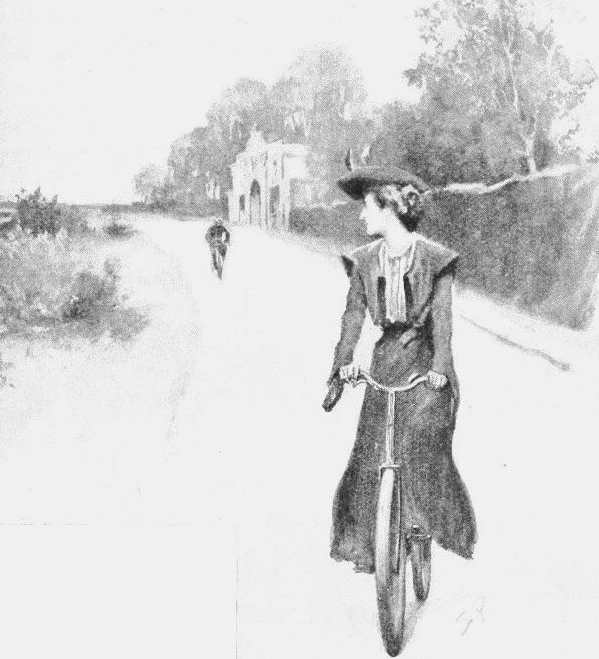
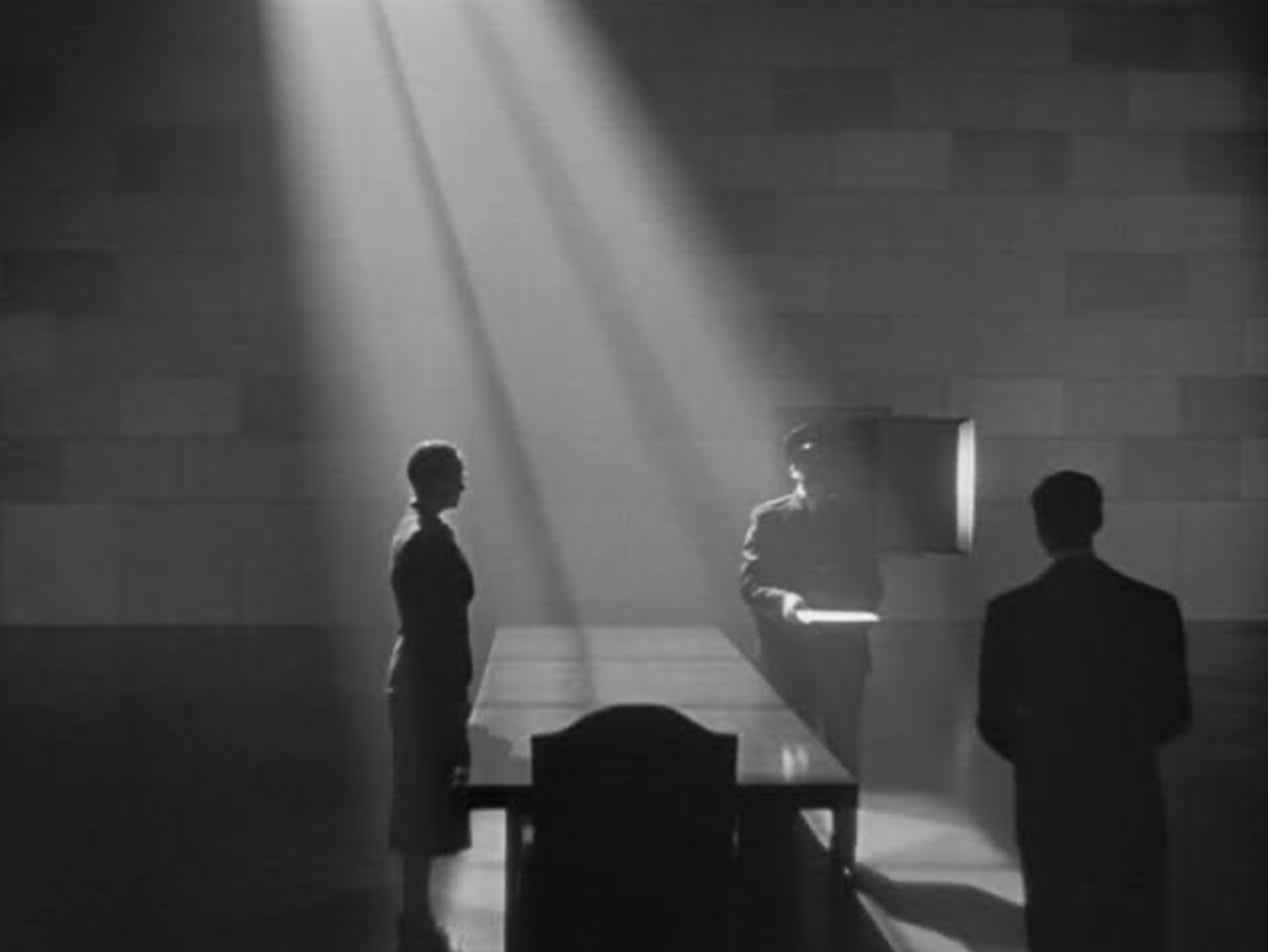

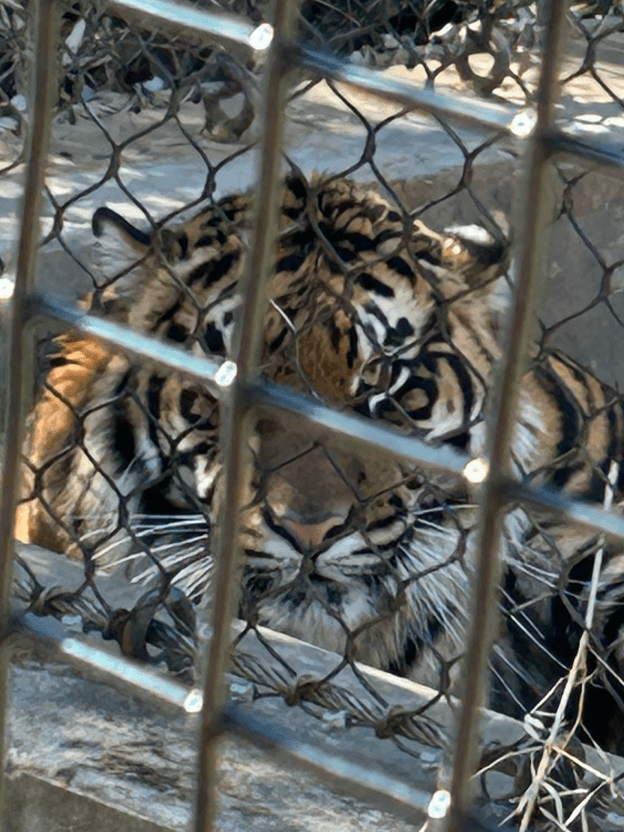
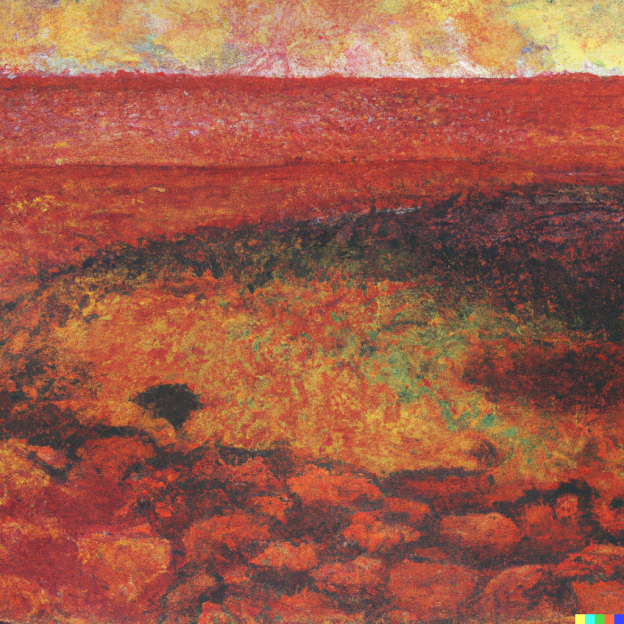
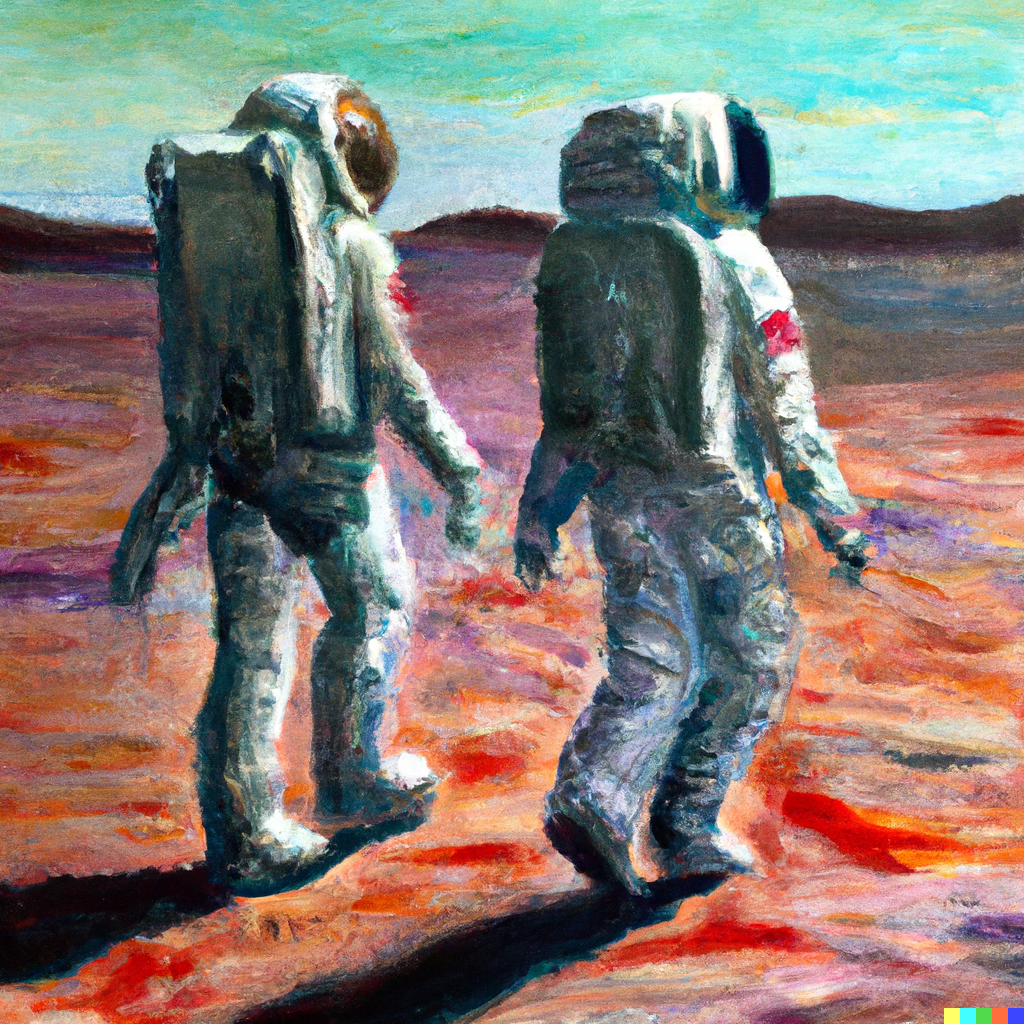
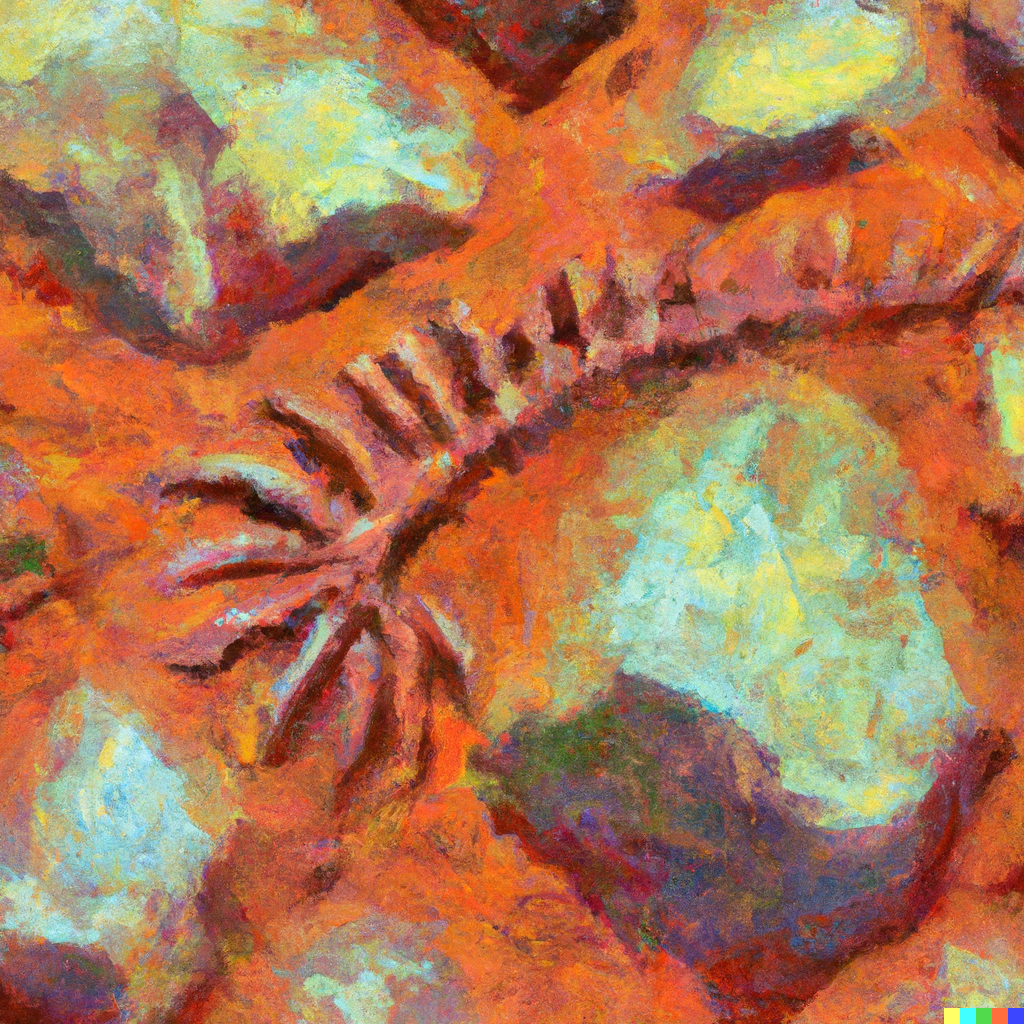
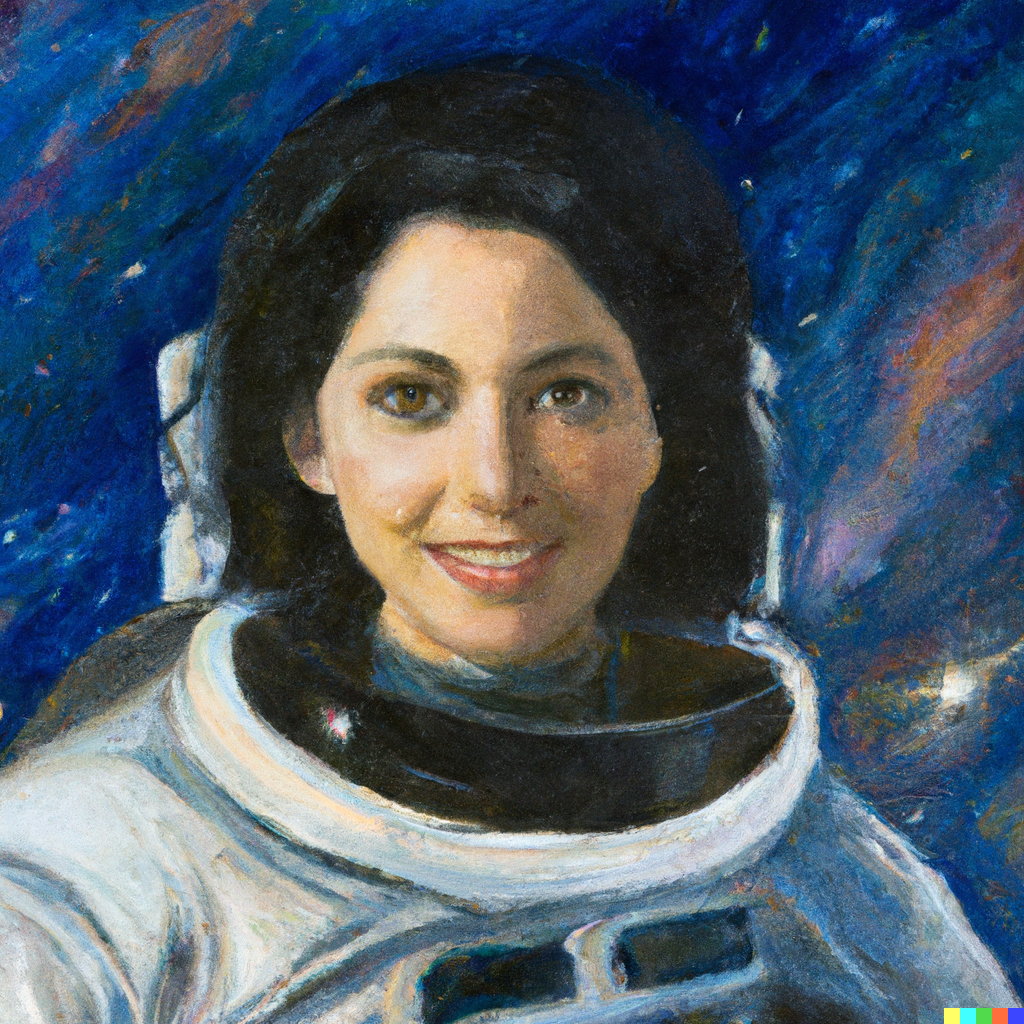
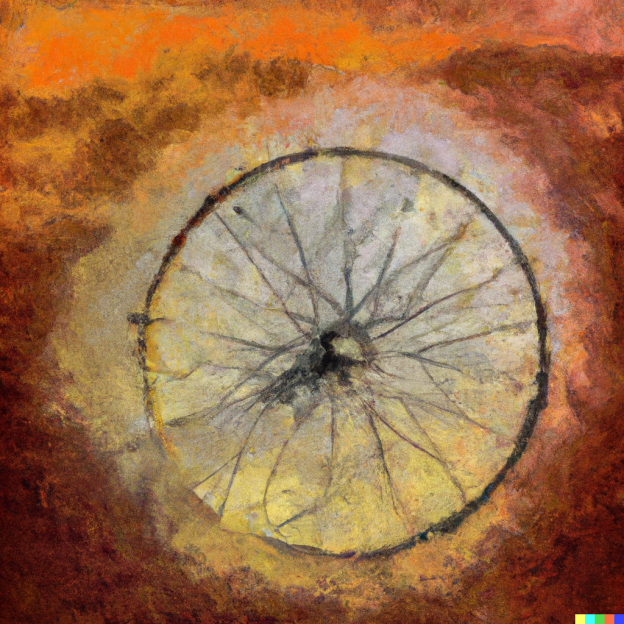


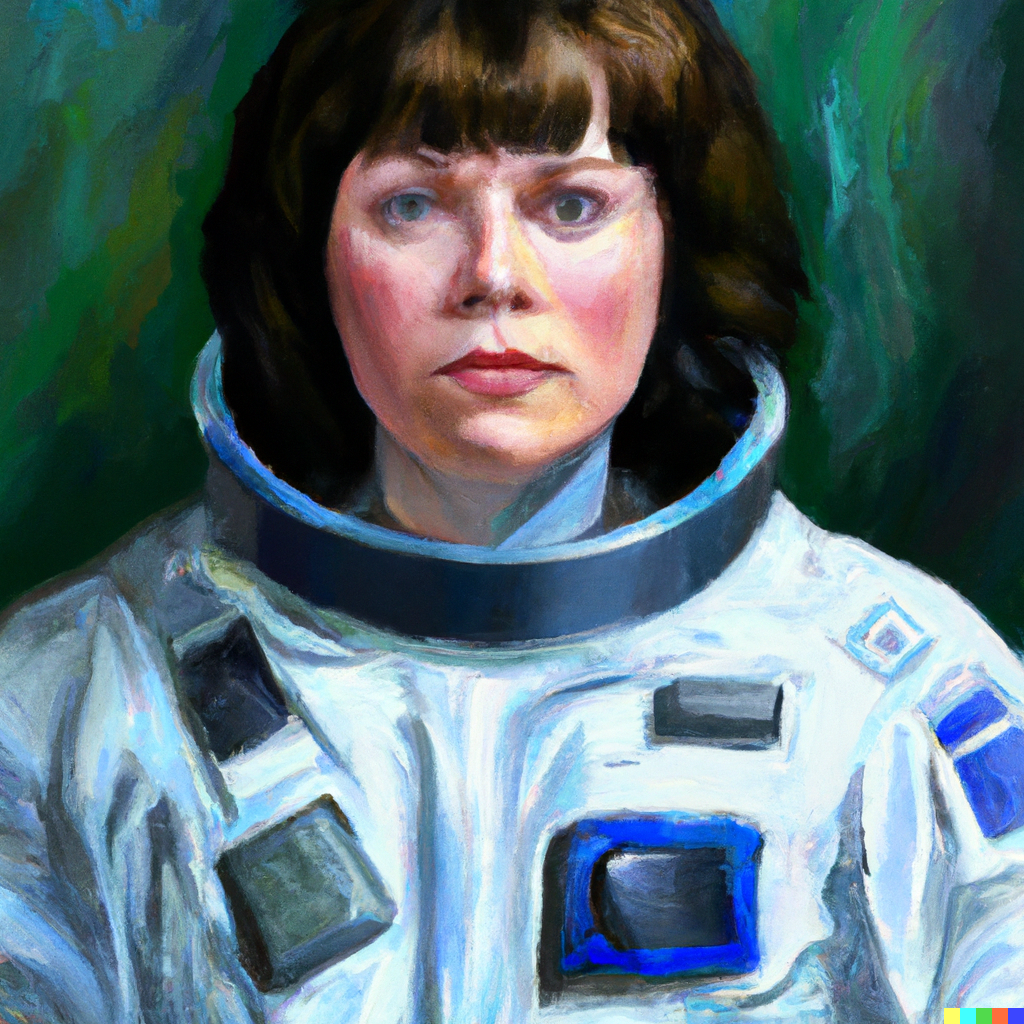
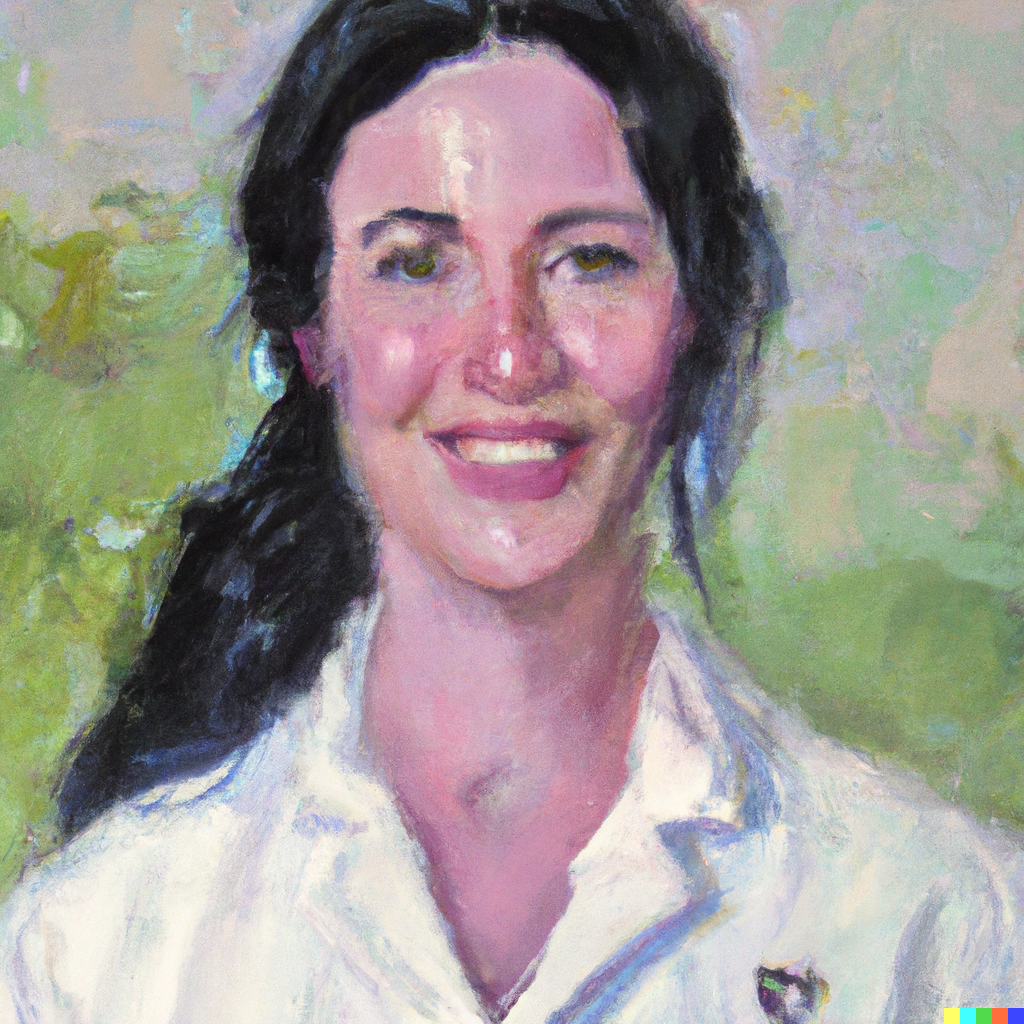
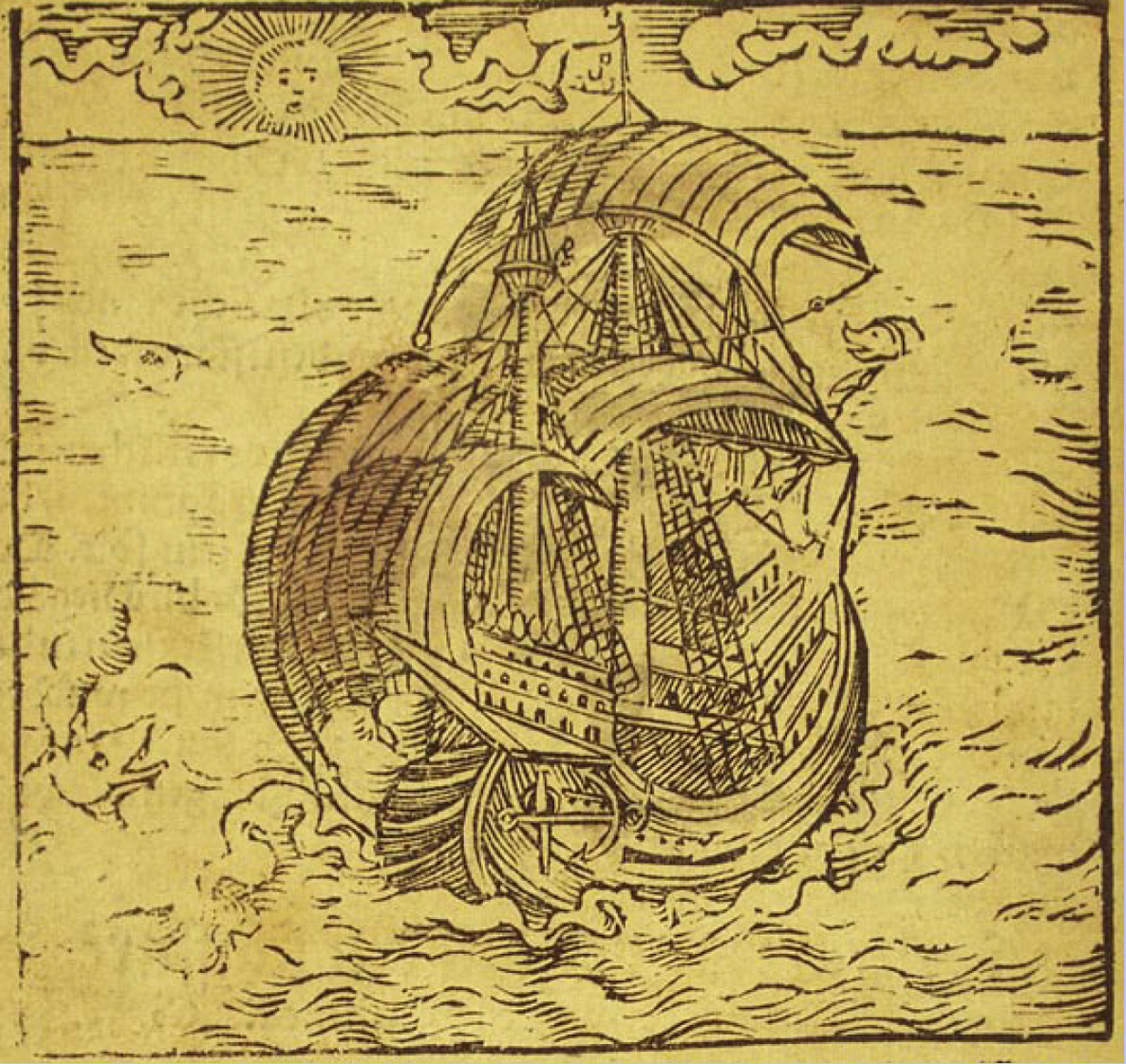


 Wednesday Blog by Seán Thomas Kane