Category Archives: Books

Physical Books or Electronic Books

Photo by Janko Ferlic on Pexels.com

Welcome to Season 2 of the Wednesday Blog Podcast!

There’s a Thomas Jefferson quote that has stuck with me since the first time I saw it in the room at the Library of Congress that houses his first donation to that institution: “I cannot live without books.” It’s something I think of from time to time, looking around the office here in my apartment at the tall bookshelves lined with volumes covering topics from astronomy to ancient literature in Latin and Greek to Catholic theology to history, politics, and fiction. I collect books, largely to read but also because I love the potential that books hold; all the stories they have waiting to be revealed page by page.

Over the last few years, I’ve found myself more and more gravitating towards electronic books on Kindle, Google Play, and all the academic e-book hosting sites that I use for my research and teaching. E-books are just easier to carry. I can have an entire library right there on my phone for me to choose from when I’m having dinner alone in a restaurant here in Binghamton or when I’m tired of listening to podcasts or reading magazines on a long flight. E-books also make stories more accessible. There’s a now rare novel written by the actor Andrew Robinson about his character Elim Garak from Star Trek: Deep Space Nine called A Stitch in Time that I often see people complaining about how hard to find it is in paperback. Yet I was able to download it in just a few minutes on Google Play and read it cover to cover in a few days. 

Kindle now even has a feature where if you have the book on their app and the recording of it on Audible you can listen to some segments of it when you’re driving and then your location in the e-book will update with your progress in the audiobook. I haven’t used it yet, there’s a biography I’m listening to now about the explorer and scientist Alexander von Humboldt (1769–1859) that I could probably also be reading on the Kindle app on my phone when I have a free minute during office hours or at dinner, but I’m also enjoying just listening to it while driving around the hills here in Broome County, New York.

As an author, at least with the three books I’ve self-published to date (all available on Amazon) I usually prefer people buy the paperback versions because I’ll get more in royalties out of those than out of the e-book copies. Still, as a reader I admit I would often choose the e-book on a given day over the paperback solely for the convenience.

One thought that keeps coming to mind for me returns me to my own childhood and those wonderful mysterious days spent in the small library that my parents collected in our house in Wheaton when I was little. That same library came with us down to Kansas City and consumed our then-unfinished basement. At one point we had probably around 10,000 books in that collection of all sorts and stripes. Today, though I also picture not only my younger self but my own future children, if I’m so lucky, and ask “if I choose to go with e-books over physical ones, will my children have the same experiences I had pulling the odd book from the shelf because it looks interesting and flipping through it?” Those experiences of lounging around just flipping through books as a young child was instrumental in making me who I am today. There are so many stories that I read that way. Even now I sometimes like going into a library just to wander and see what I’ll find. 

On a recent visit to the Bartle Library at my university I had a specific book in mind that I was looking for, Gerald of Wales’s 1188 book the Topography of Ireland, which has been useful for my dissertation. Yet after I found it, I noticed another book next to it that seemed intriguing. It was bound in a blue cover, and called the Annals of Connacht, the westernmost of the four ancient provinces of Ireland, my ancestors’ home province. I pulled it off the shelf and flipped it open, quickly figuring out how to navigate its pages. Soon then, I looked up first my ancestors’ old parish, Burrishoole in County Mayo, and secondly, I looked up my own family name, Ó Catháin, to see what was in there. Both Burrishoole and Ó Catháin had entries, the former was less insightful to me than the latter, for it turned out there was a guy with my exact name who lived in Connacht in the 1520s, another Seán mac Tomás Ó Catháin. Maybe he was an ancestor of mine, it’s possible even though there are big gaps in the records during the height of the colonial period.

I could have stumbled upon that same collection of annals online and have done just that many a time with old books such as the Annals of Connacht, yet it doesn’t have quite the same feeling of accomplishment as finding that book in the flesh, holding it in my hands. I’ve joked that I deal with my primal desire as a human to hunt in two ways: firstly I hunt for food in the grocery store, and secondly I hunt for books in the library. Yeah, I know, it’s pretty corny. And while hunting for books in a library surely wouldn’t compare to hunting for a living animal in a forest, matching your wits against its own, I can say that hunting for books online can be more frustrating than hunting for books in person. When on foot in a library all you really need to worry about is that the library’s catalog system is accurate, when online you also have to figure out how to communicate with the various computer systems that are making your e-book hunt possible. 

Earlier this year when I was searching for import records and ships logs from the French port of Rouen between 1500 and 1567 for my research I found myself dealing with a third layer of complexity: a computer system that can’t actually read the original 500-year old handwritten documents, meaning you just have to hope that whoever imported the document into the system typed enough information into the computer that you can find what you’re looking for. On that one count: the easier legibility of e-books over printed ones, the easier transmission of their stories and information, and the fact that we can now share knowledge around the globe as fast as our data streams will carry that information gives me good reason to prefer e-books. But still, I want my future kids, if I’m so lucky, to have that experience of pulling books from my shelves and wandering through them, discovering that same love of reading that I’ve had all these years.

The voice of Thomas Jefferson was provided by Michael Ashcraft, voice actor extraordinaire. You can learn more about his work by visiting his website here.

Fiction

This week, I want to explain how fiction is necessary for my survival.

I am in the business of writing serious, analytical, and factual accounts about the human experience. As a historian, that’s my job. I do write fiction as well, though I keep both as separate as the church and state are supposed to be in this country. Still, as much as I enjoy my work, as much as I like the feeling of getting my academic writings on paper and presenting them at conferences, when I’m looking for some fun reading, I usually turn to fiction. Fiction is fundamental to the human spirit, it allows us to dream, to imagine alternate possibilities, to envision possible futures.

At any given moment I’m usually reading 2 or 3 books for fun, normally there’s at least one sci-fi novel, maybe a memoir, and possibly something relating to natural history. I admit, 2 out of 3 of those are nonfiction, depending on how you understand the truth of that memoir, but if I had to choose between those three genres when I’m sitting alone in a restaurant at lunch or dinner or looking for something to read before bed, I’ll go for the fiction ahead of the others. I also tend to disagree with the trend of late that prefers dystopian fiction over anything else. There are so many of those stories out there, from the Ender’s Game books by Orson Scott Card, to the Blade Runner and Mad Max films, to even my old favorite Douglas Adams’s A Hitchhiker’s Guide to the Galaxy. I don’t like dystopia, and I don’t honestly understand how it could be enjoyable to read or watch a story talking about such a future. 

Rather, I prefer the opposite, utopian fiction, stories that offer us a vision of what our future could be like. I think that’s why I’ve been drawn to Star Trek since the pandemic began, and have now watched several of the TV series, a few of the films, and even read some of the accompanying novels. There’s something about a vision of humanity’s future as a contributing member of an interstellar community that really seems heartening to me, that as distant as that potential future seems now, we might well reach it someday. This is one area where my work and my favorite stories intersect; my historical research deals squarely with exploration, in my case mostly set in Brazil in the 1550s. In many respects, my research is a cautionary story of all the horrible things that the explorers fanning out from Europe did to the peoples they encountered. Normally, academic history books aren’t read by many people, and certainly there are only a few that get much public attention. So, I hope that if anyone eventually reads my work, they’ll recognize in it my efforts at warning our own generations and generations to come of the rocks and shoals that threaten any present or future explorer who seeks to venture out without harming others in the process.

So yes, my love of fiction does influence my work, but only indirectly. When it comes to my writing, when I need to refresh and rethink my work, I’ll turn to those same novels and bask in their eloquence and style. As a writer, as a dreamer, as an optimist, fiction is necessary to my survival.

Keeping Fiction Alive

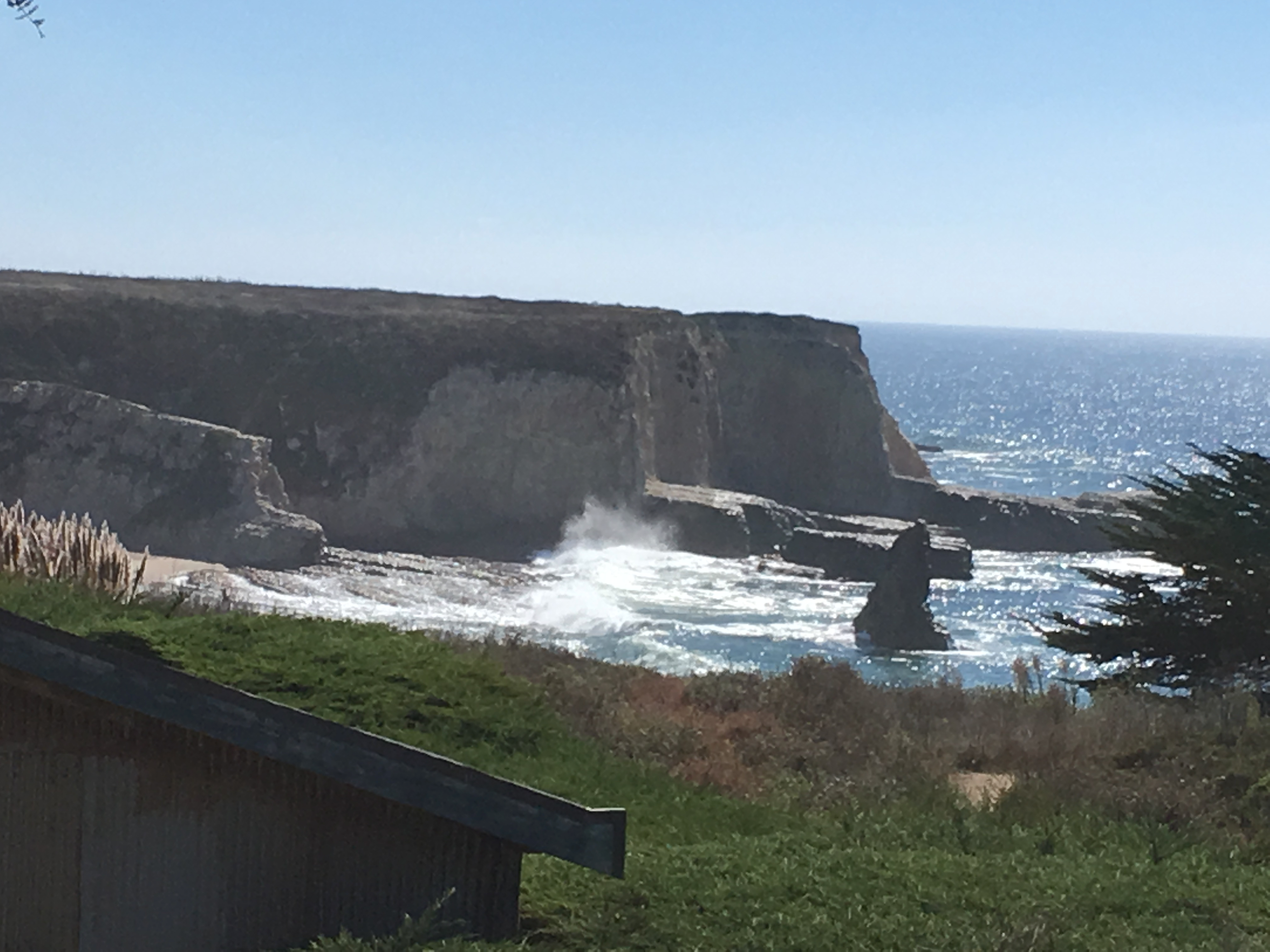
A picture I took of Shark Tooth Rock in Davenport, CA (13 October 2018)

A few years ago when I started working on my PhD here at SUNY Binghamton I arrived not only with a game plan in mind for getting this job done but with 4 chapters written of the sequel to my novel Erasmus Plumwood. That sequel, Plum in the Sun, follows Plumwood west to San Francisco where he’s started working on his dream job in a Silicon Valley company called Technophilia. The only problem is that when he arrives there he finds the job to be far from the dream he hoped it’d be, in particular because of a really awful boss named Don Basil who has it out for Erasmus.

I tried a few times to keep writing Plum in the Sun in my first semester in Binghamton but I found the task was a lot more difficult to do now that my mind was so squarely focused on the doctorate and setting myself up for success academically here. With that in mind I set the novel aside figuring I’d come back to it eventually. It’s only been in the last couple of months that I’ve started to think about working on it again, and while I’m certainly not going to do much of anything with it as I’m in the middle of the doctorate right now, I’m nevertheless beginning to think about working on that novel again.

The next chapter on the list to write is another of my fictionalizations of my own memories, replacing the real people who were with me in the moment with the characters populating this story. The basic premise of the chapter is that the two main characters, Erasmus Plumwood and his girlfriend Marie-Thérèse Merlinais, get more comfortable being together in California on a Sunday drive along the Pacific Coast Highway around Half Moon Bay, something my Mom and I did in October 2018 in what was one of my favorite days yet. I’m looking forward to describing the indescribable beauty of the redwoods and the coastline, the bird song and the feel of the sea breeze on my face.

But this is a story that I have to be in the right sort of mood to write. It’s not something I can do when I’m annoyed or tired or grumpy in any way, it has to be something I write when I’m in a really good mood, not all that different to how I was feeling on the day of. There’ll be some things that will be different between the real event and its fictionalized counterpart; for one thing we made that drive in October and the characters will do it in June, but considering that like it was for me it’ll be Erasmus and Marie-Thérèse’s first time seeing those sights I think my experience can still inform theirs even if I didn’t see it all in Summer.

I do intend to finish Plum in the Sun. If I’m being honest the plot and the characters are a lot stronger than the original book in what’s becoming a series. I was joking a few years ago with a friend that if I did make a series out of Erasmus Plumwood and Plum in the Sun then I might try and make it sound grandiose, if in a mocking way, and call it the Plumwoodiad. I do have a third book in the back of my head wrapping up at least this part of the lives of my characters, but considering I’m putting a dissertation ahead of Plum in the Sun on my writing assembly line, any third book in this Plumwoodiad is well further down the line and won’t be seen for a while.

So as I keep moving through my doctorate, I can’t help but smile when I think of what awaits me when I eventually do get to writing this chapter. It’ll be a wonderful few days spent intensely remembering that day and all I saw in one of the most beautiful parts of this country.

A Gift from St. Nicholas

‘Twas the morn of good Christmas and all through the house

All the creatures were stirring except for the mouse

The stockings were stuffed by the chimney with care,

by good St. Nicholas who lately was there.

The children ran down to the hearth two-by-two

Their parents behind with smiles too

And there next to the tree they found

a pile of presents, packages all around;

The children ran up and each took their own

As the parents saw a small pair of packages laid just so

But there were no toys nor games

No gifts within, but coal just the same

And Mom and Dad unwrapped theirs with dread

to see their coal lying in their hand’.

A note was found in Mom’s pack’

And there spoke St. Nick right back

“To you and many others this gift I give

a reminder of the year you’ve lived

for you wouldn’t wear a simple mask

to protect your kids and neighbors right back

And now 300,000 are dead, no thanks to you

so here’s this gift, a reminder new.”

Then Dad in a rage went to his truck

and took an arm from the rack;

he marched up to the North Pole

where many a grump stood also

and there they shot good St. Nick

right in the back;

“They had rights,” or so the talking head said

And now good St. Nicholas joined the COVID dead.

“Erasmus Plumwood” is now available!

Screen Shot 2018-09-10 at 22.45.56CDT

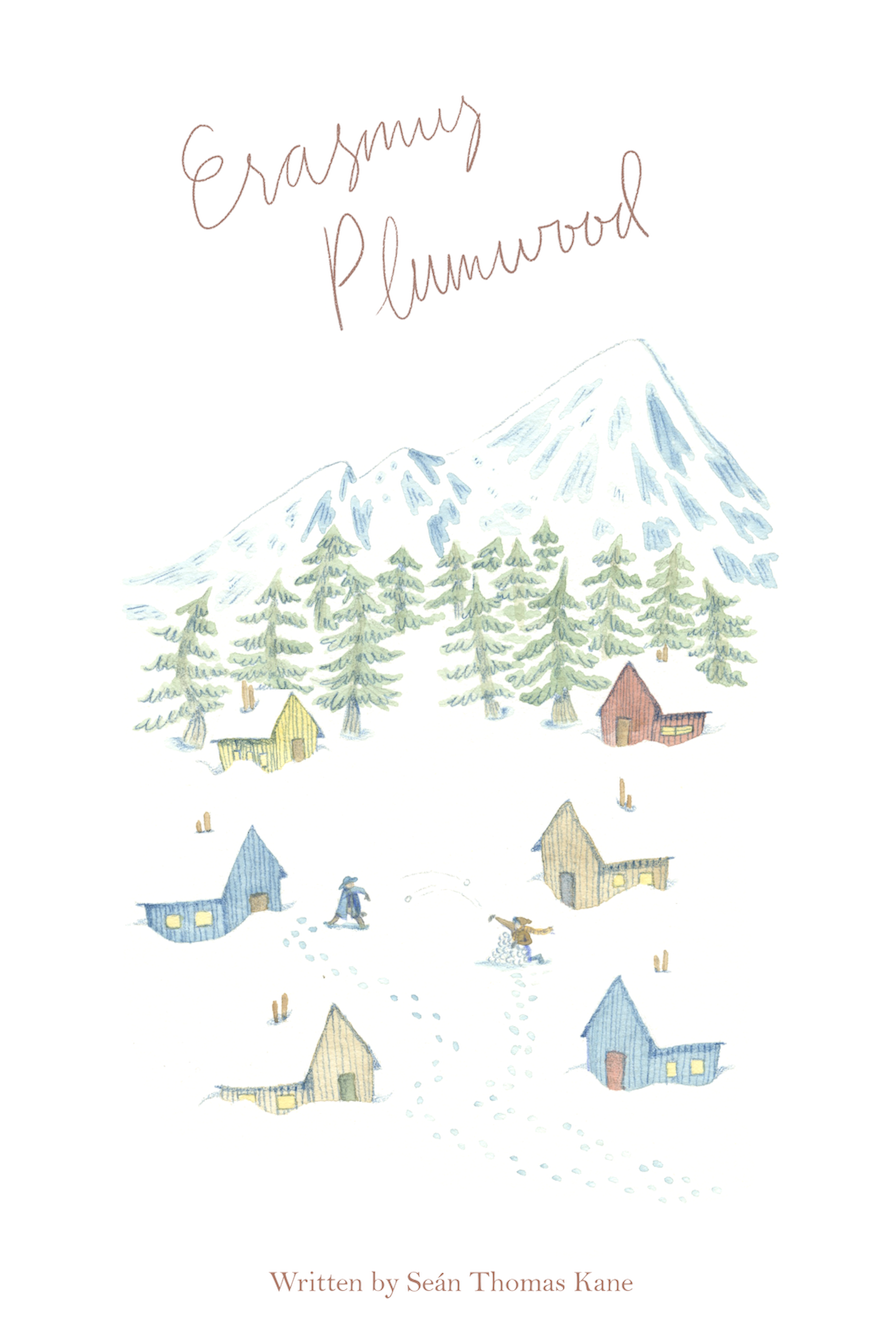
I am happy to announce that my latest book Erasmus Plumwood is now available for purchase on Amazon in both paperback and Kindle formats! You can purchase yours today by clicking on the book cover at the top of this article or by clicking here.

Coming Soon: “Erasmus Plumwood”

Screen Shot 2018-09-10 at 22.45.56CDT


Coming 20 November 2018: my new novel Erasmus Plumwood !

When new opportunities appear, two best friends decide to go on a vacation just before Christmas to celebrate. While there they learn a great deal about themselves and grow deeper in their friendship.

The cover artwork was created by my friend, the fantastic artist Emily Henebrey.

Erasmus Plumwood will be available on Amazon in paperback and on Kindle just in time for Thanksgiving and the Holidays. I will be announcing in person book signings in the coming weeks.

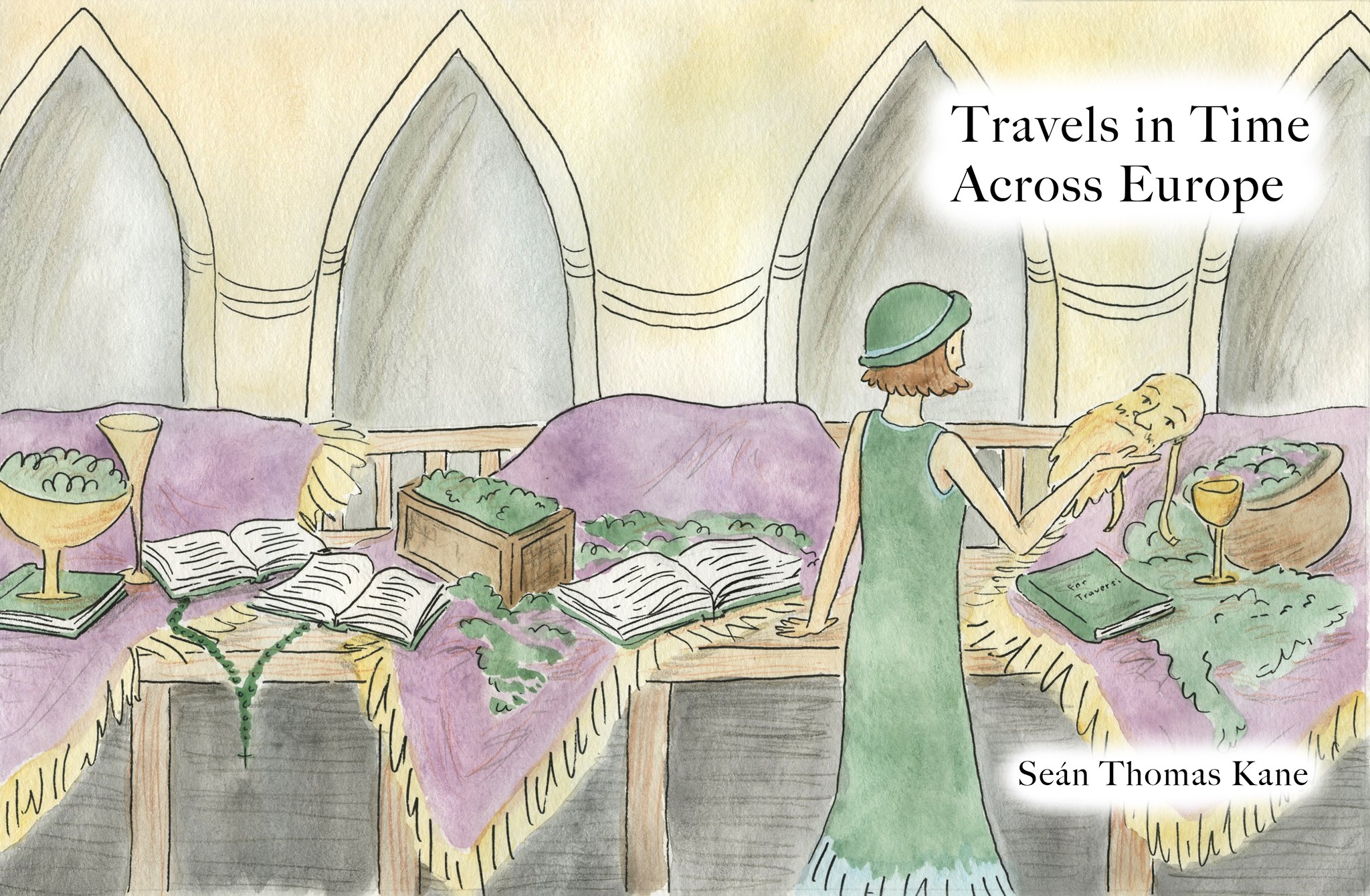
“Travels in Time Across Europe” is now available!

20664675_10213778819047319_3800166070242915045_n

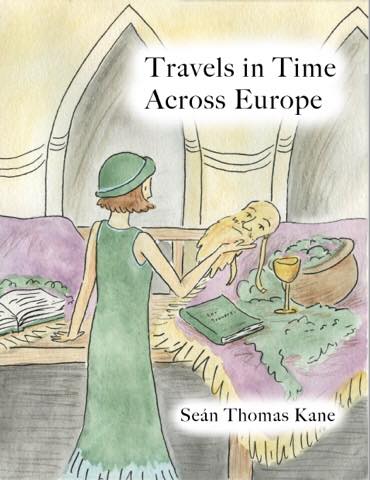
I am happy to announce that my latest book Travels in Time Across Europe is now available for purchase on Amazon in both paperback and Kindle formats! You can purchase yours today by clicking on the book cover at the top of this article or by clicking here.

“The Adventures of Horatio Woosencraft” is on its way!

Horatio Woosencraft front cover

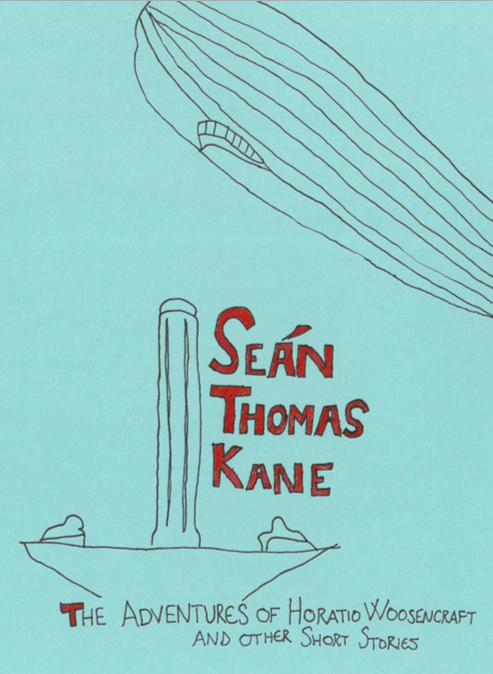
I am overjoyed to announce that you will be able to purchase copies of my first fiction book The Adventures of Horatio Woosencraft and Other Short Stories beginning this Friday, 18 August 2017 on Amazon! The book will be available in both paperback and Kindle editions.

In the meantime, I’ll be wrapping up work on Travels in Time Across Europe and preparing to record the companion audiobook (yes, you’ll have a chance to hear my strange accent for hours on end [it makes good listening for long road-trips, transoceanic flights, and extended waits in line at the DMV, doctor’s office, and on your commute home]).

Introducing “The Adventures of Horatio Woosencraft and Other Short Stories”

Horatio Woosencraft front cover

After a decade of writing, I have decided to release a collection of my short stories, composed between 2008 and 2017. I am happy to announce it will be available for purchase on Amazon starting in late August 2017 in paperback form to readers in Europe, and in the United States as well as to a global audience digitally on Kindle.

From the fictional Welsh immigrant detective Horatio Woosencraft who solves mysteries in an alternate-reality Kansas City to the glamour and adventure of the massive airship Phaëton and bewildering confusion of the characters in Abducted and Abandoned, this volume is sure to please. I have included my epic poem Caffydd, a tale of love and the daily struggle against evil with deep theological undertones in this volume as well. While it does not reflect my current theology quite as closely as it did when I wrote it in 2010, Caffydd still serves as a fascinating read, a vision of what might be.

Beyond the stories, this book includes many, many of the stories and ideas, the metaphors and hyperboles that I thought of through out my high school and undergraduate years. It reflects my interests in history, theology, linguistics, and the great Classical, Victorian, and Edwardian works of fiction that fill out my library.

The Adventures of Horatio Woosencraft and Other Stories will be available for sale in both paperback and Kindle formats on Amazon later this month, just in time for Halloween, any Autumn birthdays, and Christmas. Keep an eye on my website, Twitter, and the Adventures of Horatio Woosencraft and Other Stories Facebook page for further updates on the book.

Introducing “Travels in Time Across Europe”

20785758_320378948370801_6506869756429809_o

Artist: Emily Henebrey

After almost two years of writing and editing, my first book Travels in Time Across Europe is nearing completion. I am happy to announce it will be available for purchase on Amazon this coming Autumn in paperback form to readers in Europe, and in the United States as well as to a global audience digitally on Kindle.

From snow-capped Alpine peaks to the low coastlines of England, Finland, and Ireland, Travels in Time Across Europe recounts my adventures while living in London from November 2015 to August 2016. Within the day-to-day elements of the story, moments both humourous and pensive from my life, I have interlaid the histories of the places and peoples I visited. From crossing the Alps in the footsteps of Hannibal, Caesar, and Napoléon, to retracing the footsteps of my ancestors back to the towns and villages they left behind for new lives in America, this is a story of exceptional breadth.

On top of all of this are laid the realities of the times in which we live, the major political and cultural phenomena that have shaped this our current decade. As I wrote this book, I couldn’t help but watch as tumultuous turn after tumultuous turn of events reshaped the world that I have come to know so well. The uncertainty of 2015 and 2016 run throughout this book, an uncertainty that is anything but unprecedented, despite what the pundits may say; after all our history is full of tumult and precedent.

Travels in Time Across Europe will be available for sale in both paperback and Kindle formats on Amazon this Autumn, just in time for Christmas. Keep an eye on my website, Twitter, and the Travels in Time Across Europe Facebook page for further updates on the book.