Category Archives: Life

Coming Soon: “Erasmus Plumwood”

Screen Shot 2018-09-10 at 22.45.56CDT


Coming 20 November 2018: my new novel Erasmus Plumwood !

When new opportunities appear, two best friends decide to go on a vacation just before Christmas to celebrate. While there they learn a great deal about themselves and grow deeper in their friendship.

The cover artwork was created by my friend, the fantastic artist Emily Henebrey.

Erasmus Plumwood will be available on Amazon in paperback and on Kindle just in time for Thanksgiving and the Holidays. I will be announcing in person book signings in the coming weeks.

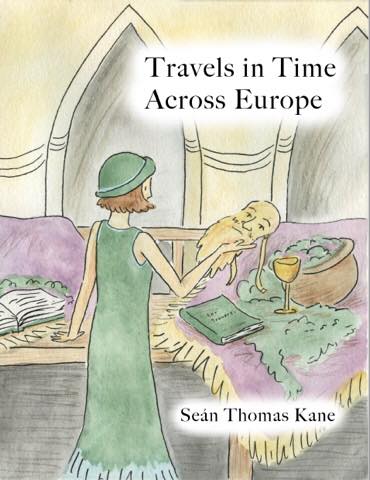
“Travels in Time Across Europe” is now available!

20664675_10213778819047319_3800166070242915045_n

I am happy to announce that my latest book Travels in Time Across Europe is now available for purchase on Amazon in both paperback and Kindle formats! You can purchase yours today by clicking on the book cover at the top of this article or by clicking here.

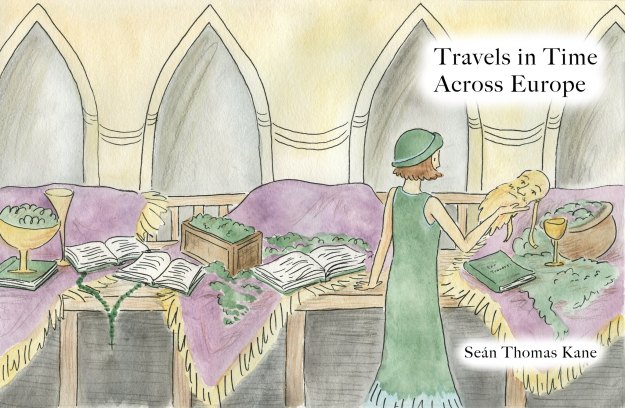
Introducing “Travels in Time Across Europe”

20785758_320378948370801_6506869756429809_o

Artist: Emily Henebrey

After almost two years of writing and editing, my first book Travels in Time Across Europe is nearing completion. I am happy to announce it will be available for purchase on Amazon this coming Autumn in paperback form to readers in Europe, and in the United States as well as to a global audience digitally on Kindle.

From snow-capped Alpine peaks to the low coastlines of England, Finland, and Ireland, Travels in Time Across Europe recounts my adventures while living in London from November 2015 to August 2016. Within the day-to-day elements of the story, moments both humourous and pensive from my life, I have interlaid the histories of the places and peoples I visited. From crossing the Alps in the footsteps of Hannibal, Caesar, and Napoléon, to retracing the footsteps of my ancestors back to the towns and villages they left behind for new lives in America, this is a story of exceptional breadth.

On top of all of this are laid the realities of the times in which we live, the major political and cultural phenomena that have shaped this our current decade. As I wrote this book, I couldn’t help but watch as tumultuous turn after tumultuous turn of events reshaped the world that I have come to know so well. The uncertainty of 2015 and 2016 run throughout this book, an uncertainty that is anything but unprecedented, despite what the pundits may say; after all our history is full of tumult and precedent.

Travels in Time Across Europe will be available for sale in both paperback and Kindle formats on Amazon this Autumn, just in time for Christmas. Keep an eye on my website, Twitter, and the Travels in Time Across Europe Facebook page for further updates on the book.

Nolan’s “Dunkirk” – An Abstract Tribute

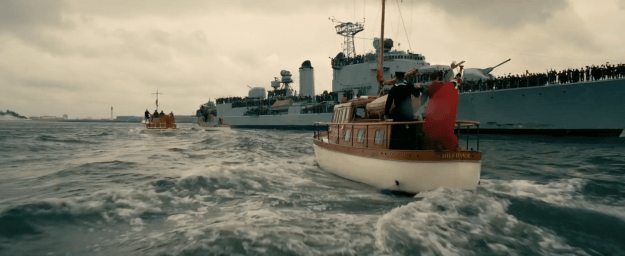
dunkirk-christopher-nolan-trailer-images-75

Credit: Christopher Nolan [found at Cinemavine.com])

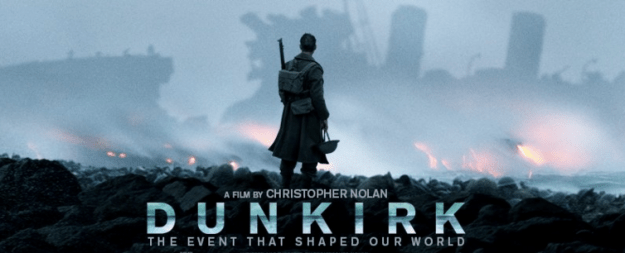
What I found especially gripping about Christopher Nolan’s latest film, a retelling of the Miracle at Dunkirk, was that each of the individual people in the story were not the main character. That role was filled by the seemingly indomitable human spirit, and will to survive and struggle ever onwards. Dunkirk might well be one of the most defining moments of the Twentieth Century for Britain, and quite possibly as well a crucial turning point for the whole world.

The film follows three main groups: the soldiers on the beaches, the sailors both civil and naval crossing the Channel, and the RAF in the air trying to keep the fighters and bombers of the Luftwaffe from wrecking further havoc to the men stuck at Dunkirk and the ships trying to ferry them to the safety of home, a mere 26 miles away. Though the plot is not in itself chronological, it nevertheless helps tie together each disparate group, connecting their experiences in a spiritual fashion as each come ever closer to the film’s climax.

For British and Commonwealth viewers this film will certainly reinforce that Dunkirk Spirit, that steely determination that even in the darkest of hours Britain and her sister countries will never surrender. I became quite emotional when, after witnessing the sense of doom the soldiers on the shore felt for a good hour, the hodgepodged fleet of little ships arrived in the waters off of Dunkirk. This moment, though one of the darkest hours in British history is also equally one of the most inspiring to have transpired in that island nation’s long story.

For American viewers this film should give us pause. In our present hour of immense internal divisions, of political unrest and civil discontent we should consider what it would mean for us as one people to come together for a cause we all knew to be necessary for the continued survival of our country and the liberty it’s Constitution assures. In this hour of great uncertainty we should be looking not to what divides us but what can unite us.

Hans Zimmer’s score is a welcome change from his usual set of loud brass, excessive strings, and choirs primarily singing “Ah” for far too many measures. While loud, this score adds to the energy of the film, and in a musical sense is largely understated. The music helps bring the viewer into the picture, onto the beach, aboard the small boats and naval ships, and in the cockpits of the Spitfires high above in the air. I really appreciated the echoes of Elgar’s Nimrod that played over the final scene as Britain and her forces came to rest aground again and prepare for the inevitable Battle of Britain to come.

Overall, I thoroughly enjoyed this film, and just a few minutes prior to sitting down to write this review I told my writing partner Noel that I have to go back and see this again soon. Dunkirk is a film that triggers both the conscious and sub-conscious, that calls upon one’s entire emotional and physical self. It is one of a number of films that are to me the new “talkies”; they address not only our visual and aural senses, but our emotional senses as well. I have a feeling there will be many more films like Dunkirk to come.

dunkirk-movie-trailer-christopher-nolan-screencaps-

Optimism and Belief

Cloud-line

In my life, there have been two things standing as constants: optimism and belief. I have embraced these two guiding principles, and striven in due course to live a better life as a part of the wider human community through them. For me, my faith as a Catholic and as a Christian is an inherently positive one; it is a faith in Resurrection, in Union with the Divine Essence, in the fulfilment of the circle and restoration of humanity to paradise.

Yet to allow this faith to persist I have found myself inherently optimistic, always expecting the best from people, and looking at even the darkest of situations with the hope that is required to believe in something greater than Reality. True, this is blind faith, something entirely counter to the principles of our scientific age, yet in the end is not blind faith equally necessary in a scientific setting? After all, we have yet to learn all that there is to know about nature, our sciences are as of yet unfinished in amassing the totality of reality. Therefore, if we are to accept science as an effective and prosperous measure of nature, then we must also accept that that measure is man-made and limited in its scope.

I see those things measured by science each and every day, and I am in awe of their wonder. I see how the Sun rises in the east and sets in the west, how the stars circle in the sky as the year passes. I hear the wind bristling through the leaves of the trees, and across the tall grass prairies. I have known what it means to be caught on the beach at high tide, and to be at the mercy of the awesome tempestuous power of lightning. Past generations might well have worshiped these forces of nature, seen them as gods like Zeus, Taranis, or Ukko, yet I see them as terrestrial, as natural, as real. The true force, the veritable essence to be worshiped is far greater than even the rolling thunder or bristling lightning.

In these circumstances I am reminded of the American hymn How Great Thou Art, yet in the smallest of moments too I am reminded of God’s coming to Elijah on the softest breath of wind in the cave. Divinity and the essence that made all that we know and love is so far beyond our own understanding, yet in that realisation I find my peace.

Often it can be said that I find my belief renewed through music, through that purest, most mellifluous of sound. Some of the most sacred moments of my life, the most moving moments in the story of my belief have come in moments of music, from operas like Mozart’s Die Zauberflöte to the Pilgrim’s Chorus in Wagner’s Tannhäuser to great orchestral outbursts of emotion as in Stravinsky’s Firebird and most all of Mahler’s symphonies; yet equally spiritually potent for me are the more recently composed naturalistic Mass settings that I sang with the Rockhurst University Chorus while an undergraduate student there from 2011 to 2015. Music has long been said to be the Voice of the Heavens, and certainly it has appeared to be so to me.

Yet what I find the most fulfilling to my belief in the Divine is humanity. In the Christian tradition we believe that humanity was “Created in the Image and Likeness of God.” For me, this means that our souls particularly were made in the Divine Image, but that our bodies also have Divine inspiration. When I see humanity, with all our faults, all our problems, all our pain and anguish, I can’t help but be swept off my feet in grief. Yet at the end of the day I always remember the old adage echoed by Little Orphan Annie, “Tomorrow will be a brighter day.”

I believe that one day that will come true, that one day all will be sorted out in our capitals, our courts, our executive palaces. I believe that one day we will march through our cities, not in protest or in anger, not out of anguish or to alleviate our suffering, but because we are celebrating that most essential characteristic of our humanity: liberty. I believe that someday all humanity will walk together, singing in unison, a multitude of voices, of languages, of cultures and creeds making one song. I believe in optimism, and I am optimistic about my belief.

Everyone Has a Place in the House of God

Courtesy of WCLKPhoto: WCLK-FM.
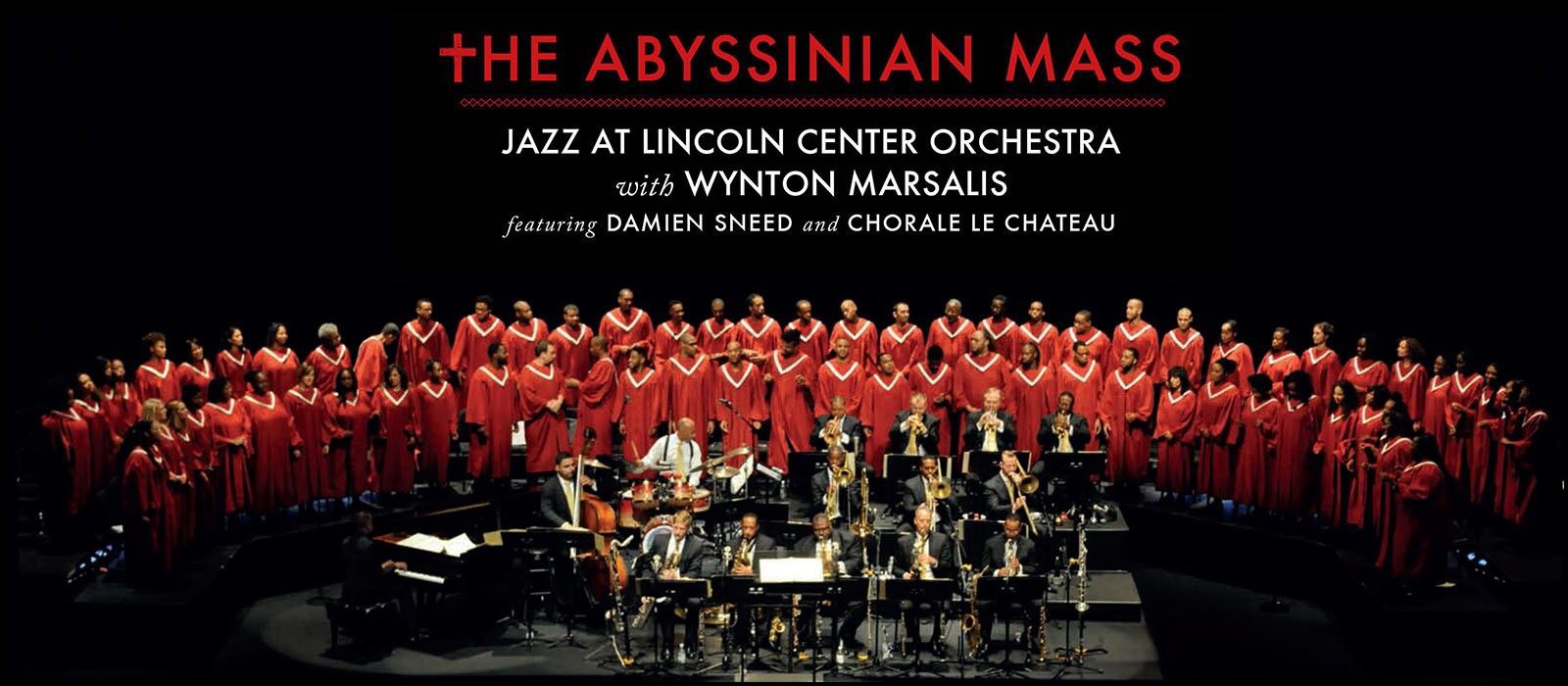
This evening while driving across Kansas on the way to a cousin’s graduation in Hays, I took the opportunity to listen to one of my favourite works of sacred music, Wynton Marsalis’ Abyssinian Mass. Performed by the Jazz at Lincoln Center Orchestra, led by Marsalis himself, and Le Chorale Chateau, conducted by Damian Sneed, the Abyssinian Mass is a thrillingly poignant work of sacred devotion to God.

One particular element of the Abyssinian Mass that stands out from most other Mass settings is the inclusion of a sermon, a lesson, taught by the minister at the Abyssinian Baptist Church in Harlem. The message, and following hymn, is simple: everyone has a place in the House of God. Everyone.

I have not written much on my faith of late in part out of my own annoyance for the obnoxiously vocal religious right in my own country and elsewhere around the globe. Those who preach a gospel of hate and hellfire give religion a bad name. My faith is founded on the belief, as a Catholic, that the Divine is inherently good and loving; that all evil exists solely out of the gift of free will, and the subsequent misguided decisions made by a variety of actors over the ages.

Yet though a Catholic I find that I cannot help but accept, and encourage those practises and beliefs in other traditions which are also founded on this same positive outlook on the Divine, this same understanding that God is Love. As this Protestant minister said, and as the choir sang, “Everyone has a place in the House of God!” Yes, yes, yes!

So then, I must beg the question, if all of us have a place in the House of God, if we share even this sole beautiful inheritance, then why do we constantly seek to find those things which divide us? Why do we continue to argue that one group, one people is greater than another? Why do we constantly stab ourselves in the back with jealousy, deceit, fear, and overthinking when we could be so kind to each other?

I say we try it out, we try being nice to one another. It may be a small thing, it may even be mildly unrealistic, but you never know it might just work.

Reflection on a Year Overseas

London – Eleven months and eleven days ago I moved from Kansas City, Missouri, USA to London, England. Eleven months and eleven days ago I left home and went on a great adventure that has forever changed the way I see myself, and the world. In the past I have said that one of the best ways to begin to know oneself is to understand the places from whence one comes. And, while time away has given me a greater appreciation for all the trappings and comfort of home, it has also given me the chance to explore some of the places from whence my own ancestors came: particularly in Ireland, in England, and in Finland.

As a historian, but perhaps more importantly as an American, this was a rare opportunity that very few of my fellow countrymen could ever hope to achieve. On the last Friday of May 2016, I quite possibly became the first descendant of my third great-grandparents, Juho Heikki and Anna Sophia Kuivaniemi, to return to their hometown of Rauma, Finland since 1879. On the other hand, I followed in the footsteps of my grandparents and was able to walk the roads and visit the town of Newport, County Mayo where my grandfather’s parents were born, and visit the nearby cemetery at Burrishoole Friary where the ancestors of so many of my relatives are buried. So many names from America are carved into those tombstones, yet here on the shores of Clew Bay they are in their original setting.

Yet perhaps most importantly over the past year I have had my beliefs, my understandings, my very philosophy of life and nature challenged time and again by friends and colleagues alike. I am eternally grateful to them all for those discussions, for those opportunities to think anew, opportunities which one day will lead me to act anew. Those beliefs, those views of mine which held water remain, while others have been left by the wayside, abandoned after much debate and discussion. I hope I am all the wiser for the people that I have met, and the great friendships that have been forged. We come from such different corners of the world, with different backgrounds, different views, different languages, yet respect abounds amongst us far more than contempt.

Next week I will at long last be returning home, to Kansas City, Missouri, in the heartland of the United States. I will return to the heat and humidity, and the allergies. Yet I will also be returning to my family, to many friends old and young. I am excited to be coming home once again, and looking forward to being surrounded by all those familiar things, sights, sounds, and smells. I did not realise it until I had been away, that even the softest sensory detail can be missed. Whether it be the sound of the wind whirling through the branches of the trees, or the familiar voices on NPR’s All Things Considered set to the backdrop of Kansas City at sunset, its streets filled with cars heading to and fro. In London I found that on winter nights, when the sky was clear and the street lamps glowed in a distinctly mechanical way, I missed hearing the familiar voice of Kai Ryssdal on Marketplace coming over the radio as I’d often hear at a similar time of night back home.

Yet I return to a country on edge, a country that has seen so much anguish, so much anger, and so much fear over the last year. The signs have been about for a while now. Since President Obama was elected in 2008 nearly every racist, closeted or not, has come out of the woodwork and ensured that the rest of us would have to hear their nonsensical cacophony rattling on. We could ignore racism as the rantings of the mad if it were not for the reality that words plant seeds, seeds sprout actions. Once again, around the world bigotry seems to be in fashion like it was in the 1920s and 1930s. There is always someone available for people to hate or fear. As Woody Allen put it in a recent interview with Catherine Shoard of The Guardian,

It’s in the nature of people to have someone to scapegoat. If there were no Jews in the world they would take it out on blacks. If no blacks, they’d move over to Catholics. No Catholics? Something else. Finally, if everyone is exactly the same, the left-handed people would start killing the right-handed people. You just need an other [on whom] to vent your hostility and frustration.

I know that bigotry has been around for a long time, and probably will still be around long after I’m dead, but I honestly did not really experience it until when I was at least around thirteen or fourteen. I remember some of the boys at school using the word Jew as an insult, which didn’t make sense to me, as I had always gotten along well with my Jewish friends and neighbours. I also never really had anything against African Americans, but after years of hearing from my classmates and friends that “Troost was dangerous,” I was less willing to go to the African American neighbourhoods east of Troost Avenue in Kansas City, MO. Subconsciously or not, I was accepting a racist ideology that I consciously abhorred.

Perhaps the best example of my reaction to bigotry comes from a strange experience that I had when I was fourteen, where an individual who I was working with at the time told me to my face, “I don’t like Catholics” knowing very well that I was a Catholic. I was shocked by this, not necessarily because he was saying that he didn’t like me because of my religion, but more so because his dislike for Catholics simply didn’t make any sense. Over the years as I have been exposed to a variety of opinions and ideas, and I have found myself adopting some similar views, whether it be a dislike for one particular nationality, or religion, or political philosophy, or a preference for a particular country over another. Yet each of these blanket opinions have been swiftly overturned as soon as I have met someone who fits into one of those categories.

How can I say that I hate someone or fear someone simply based upon their nationality, religion, politics, or even based upon the colour of their skin? It makes no sense. Bigotry of all kinds makes absolutely no sense!

I am proud of who I am. I am proud to be Seán Thomas Kane, or Seán mac Tómas Ó Catháin as it is in Irish. I am proud to have been born in Chicagoland, and to have lived most of my life in Kansas City. I am proud to be my parents’ son, and my grandparents’ grandchild, a nephew of my aunts and uncles, a cousin of my cousins, godson of my godparents, and a friend to all my friends. I am proud to be of Irish, English, Welsh, Finnish, Swedish, and Flemish descent. I am proud to be an American citizen. I am proud to have been a resident of the City of London for the past eleven months and eleven days. I am proud to be a historian, a writer, a filmmaker, an occasional musician and sketch artist. I am proud to be a Catholic.

But beyond all of these categories and more within which I fit, I am most proud, and most humbled to be human. We are all unique, we are all different, yes, as the crowd shouted up to Brian, “We are all individuals!” But most important of all is that we are all human. If we consider less what separates us and more what we have in common then surely we will be nicer to each other, and have better lives. If those in my country screaming against immigrants, African Americans, Muslims, Latinos, and all others considered what they have in common with the rest of us then surely they would think twice about their words and actions.

I am not proposing any sort of edifiable change, any sort of reform for our prisons, our city planning, our law codes, or our schools, all that will come next. What I am proposing is the essential necessity for any reform to happen. We must have a change of heart. We are all human.

TopGear and Revolution

In 1783, the Thirteen American Colonies were officially recognised as free and independent states by their former mother country, the United Kingdom. Initially, each of the thirteen states were autonomous to the extent that they were effectively separate countries, united only in a weak document called the Articles of Confederation. The power vacuum left with the departure of the British colonial authorities led to a worryingly unstable situation across all Thirteen American States. Stability in government was only restored with the Constitution of 1787, the binding document which created the Federal Government of the United States, effectively creating the system of government that has kept the United States relatively stable, despite one civil war, ever since.

A similar revolution has occurred in the BBC’s hit motoring show TopGear, with the departure of the old order, led by the trio of Jeremy Clarkson, Richard Hammond, and James May, who have gone to Amazon Prime Video. In their wake, the BBC has chosen a wide array of new hosts, led by Chris Evans, to take over one of their greatest hits. Having seen the first episode, Evans, American presenter Matt LeBlanc, and their fellow presenters, who frankly are more like corespondents than full time hosts, have truly put TopGear through a revolution.

The same old skeleton exists within, but the show itself is well removed from its predecessor. This new TopGear is like the Thirteen American States in the period of the Articles of Confederation; it is in a period of transition and still trying to figure out how to exist without its former presenters. Evans, LeBlanc, and the others have the same light hearted attitude to their work on TopGear that Clarkson, Hammond, and May had before, but at the moment it just does not seem to be as funny. With the former trio, I knew to expect that odd, somewhat nonsensical, at times pointless humour. As a result, I reviled in it, often with a big smile on my face for the entire hour long programme. With Evans, LeBlanc, et cetera, I laughed on occasion. Simply put, I am not familiar with these new hosts, and do not know what to expect.

Perhaps in a few weeks, once more of the current season of TopGear is broadcast, I will  be able to appreciate the new presenters, and new format better. At the moment, I am looking forward  to the first episode of The Grand Tour, Clarkson, Hammond, and May’s new programme, which will be released on Amazon Prime Video this coming Autumn. As to the next episode of TopGear: yeah sure, I’ll watch it. This new TopGear has undergone a revolution, but it still has a long way to go until it leaves the shadow of its predecessor and enter into its own spotlight.

“United Passions” a Decent Work of Fiction

The film United Passions was an interesting one to see. Unfortunately for the filmmakers and FIFA, the main financial backers of this film, the release of United Passions in the United States has coincided with the arrests of a number of high ranking officials at FIFA on corruption charges. In light of those arrests, it’s hard to look at a film such as United Passions in a positive light, considering its fairly uplifting portrayal of recently resigned FIFA President Sepp Blatter. But for many of us in Europe and North America, it can be hard to view Mr. Blatter, and his predecessors in a positive light. In this sense, United Passions has lost a significant amount of credibility despite barely being screened anywhere in Europe or North America. In fact, only ten cinemas are showing the film here in the United States.

However, the filmmakers made certain to include a brief preface, stating that United Passions is to be seen as a work of “dramatic fiction.” In short, it is an interpretation of events, but not an official history, certainly not an exact record of what happened. Critics have claimed that FIFA’s backing of the film forced the filmmakers to depict a more positive image of the world football federation, thus enforcing this film’s status as propaganda.

The declaration that this film is dramatic fiction makes sense when one considers the fact that British born-New Zealander Sam Neill was chosen to play former Brazilian FIFA President João Havelange, and Englishman Tim Roth was likewise chosen to play the aforementioned Mr. Blatter, a native of Switzerland. In my own opinion, had the filmmakers wanted this piece to be taken as a work of meticulous history, they would have cast a Brazilian to play Havelange and a Swiss actor to play Blatter.

However, as a work of fiction, I would certainly say that the filmmakers made good decisions in the realm of casting. Gérard Depardieu, who played FIFA’s third president Jules Rimet, Neill, and Roth were at the centre of the film, and did a pretty good job in their roles.

With all that said, some certainly do see this film as FIFA’s attempt to preserve the image and legacy of at least these three of its past presidents. As a viewer, I admired these figures attempts at making soccer a global affair, not just the sport of Europe. Perhaps this film’s biggest image problem comes from allowing its subject to also play the role of main financial backer.

The photography was very good, reflecting the style of camerawork that has become the norm in both French and British cinema. The sound was also well done. In cinematic terms, the biggest flaw with this film is its script, which was sometimes hard to follow, with frequent cases of bulky dialogue.

Overall, I would rate United Passions as being just another period piece. It’s nothing special, and when the time comes that those FIFA officials who already have been, and have yet to be arrested are put on trial, I have little doubt that this film will already be forgotten.

Mein bester Feind, a somewhat uncertain tale

This evening, when looking for something new to watch on Netflix, a four-year old tragic comedy, set during the Second World War, came up, Mein bester Feind, or in English My Best Enemy. To begin, I generally approach any sort of comedy involving the Holocaust with caution. Something as dreadful as the Shoah should not be made light of. That said, Mein bester Feind is a different sort of tale than your average comedy. I found it to be more of a pipedream about what could have been possible, had the right circumstances come into line. And yet, this combination of tragedy and comedy, of dark drama and Wodehouse-esque silliness was charming in a surreal sort of way. The Nazis in this film appeared comical in their greed for a priceless four-century old drawing by Michelangelo. Their greed was almost reminiscent of the Nazis in the wartime Three Stooges shorts. Here Larry, Curly, and Moe taking on Göring, Hitler, and “the rest of the gang” on the high seas of the Atlantic. In conclusion, if you want to watch Mein bester Feind, go ahead and watch it. But watch it with some caution. Then again, at least I got to practise my German a bit!