Category Archives: Life

“Rush”: Ron Howard’s F1 Masterpiece

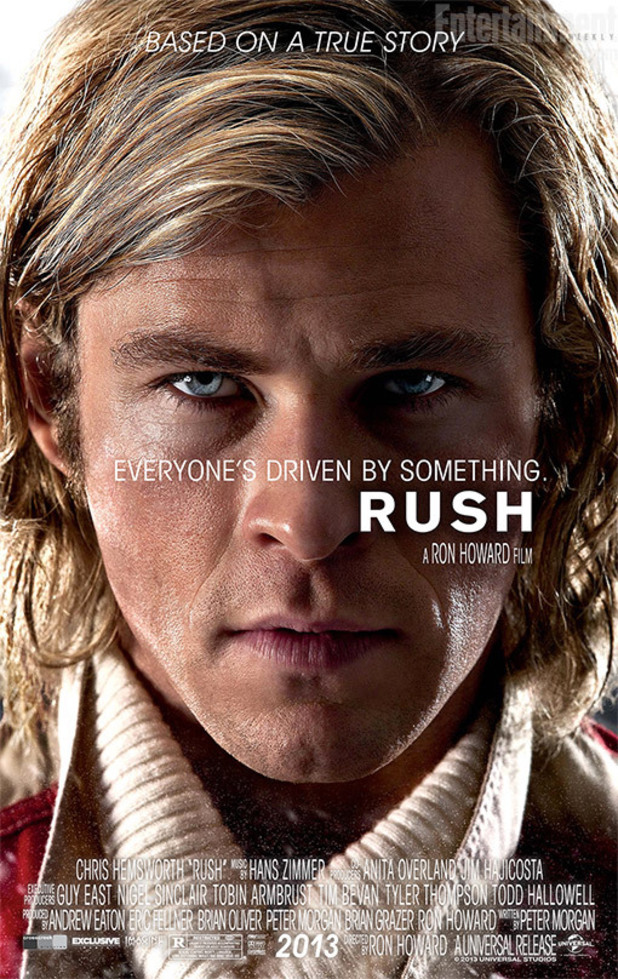
Kansas City – This afternoon, I went to see Ron Howard’s new film Rush with my parents at the AMC Ward Parkway 14 Cinema. I’ve been a lover of Formula 1 for three seasons now, since I was introduced to it by my Dad during the 2010 Belgian Grand Prix from Spa. Like the speed of this 2 hour film, my own F1 team support has changed quite a bit over the past few years, from initially supporting Renault F1 in 2010, to McLaren-Mercedes in 2011 and 2012, and now to Lotus-Renault in 2013. Of course, with the annual team shakeups, we’ll have to see where I end up come March, perhaps supporting the lads at Ferrari, perhaps staying with the Brits at either Lotus or McLaren.
Image

Anyhow, back to Rush. I really enjoyed this film from its start. To begin with, Howard is a master of painting his films with an extensive lavish palette of colour, from the blues and greens of that rainy 1 August 1976 at the Nürnburgring, home of the German Grand Prix, to an almost period ’70s look to the film from the more personal, more emotional scenes of the film. Being someone who is familiar with F1, I found the film quite rewarding in its ability to show another side to the sport that I’m not used to, from the top teams taking longer than 2.5 seconds for pit stops, to the pistons in the engine rising and lowering, to the roar of the engines starting at the waxing of each race, to the lack of Red Bull at the front of the starting grid, as is almost a given in the Age of Vettel.

The acting, with Chris Hemsworth as 1976 Champion James Hunt of Great Britain, and Daniel Brühl as his chief rival, 1975, 1977, and 1984 Champion Niki Lauda of Austria was also brilliant and quite believable. I personally was drawn more to Lauda than Hunt, as I, like the Vienna native, am a perfectionist in many respects, as my friends and family can relay. Hunt’s playboy lifestyle was in many ways his undoing, but also his way of coping with the stress of driving in a sport, which at the time took the lives of at least 2 drivers per season, a fact which has thankfully wained since the turn of the Millennium with further safety improvements on the cars.

I also loved Hans Zimmer’s soundtrack for the film. Of his past film work, I especially enjoy the soundtrack to King Arthur (2004). His style of composition seems strewn with heavy percussion, and sweeping Mahleresque melodies and thick, rebounding harmonies. As a musician in my own right, his music represents a modern style of cinematic composition that I aspire to for my own films.

Now, as with any film dealing with the life of James Hunt, or the history of F1 in the 1960s and ’70s, there’s going to be a lot of sex. I noticed there were a few comments regarding the extent that Hunt’s sex life is described in the film, as the commentator was rather unhappy with these scenes in particular. Here’s what I have to say: it’s a natural fact of life, and for someone my age it’s something to look forward to in the near future. Yes, I’m not a fan of the extent to which Hunt “slept around” with around 5,000 women, but at the same time I find it not healthy to demonise something which is a necessity. It’s like demonising sleep because we should be getting more done in line with that fine Protestant work ethic. There was a great sketch in A Bit of Fry and Laurie about a father complaining to his son’s headmaster for sex ed being taught at the son’s school, the father believing that his son “just sort of appeared one day.”
Image

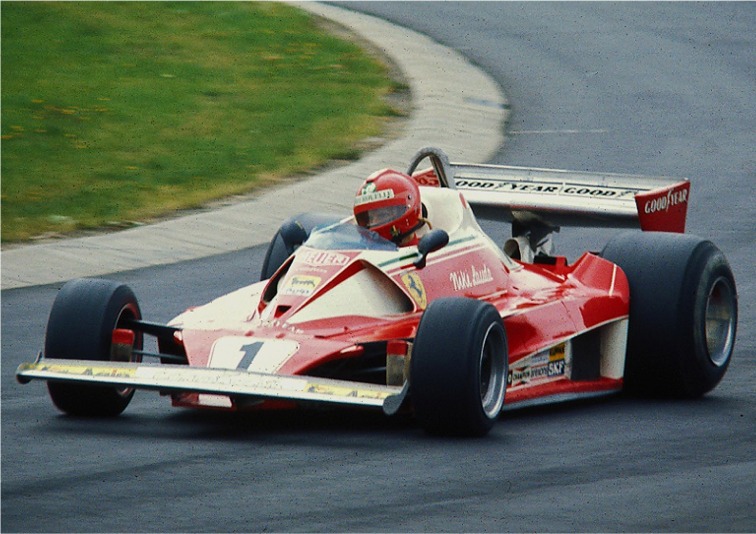
Lauda in practice at the 1976 German Grand Prix at the Nürnburgring.

Rush is a fantastic film about one of the greatest sports of all time. Both as a F1 fan, and as a filmmaker, I adored watching this film. It wasn’t your typical sport film, following the underdog who goes through some sort of trouble, and begins to rise in stance to a great athlete. I’m sorry, but haven’t we had enough of these Southern USA set civil rights era sport films yet? This film was not even in the same league as those, it has different aims, different goals. There’s no real cause being supported, no character who is rising up from great intolerance. But after being bombarded by so many of those films, I’m glad for a fun, champagne soaked, break. Rush gives the American audience that opportunity to go to a sport film, and especially if you’re not familiar with F1, a chance to not know the plot before the film starts.

Hopefully some of those who are finding F1 for the first time will tune in in a few hours at 01.00 Eastern for the Japanese Grand Prix live from Suzuka. The Niki Lauda of the 2010s, Sebastian Vettel, is on the verge of winning his 4th Formula 1 championship crown. Whether it be in Japan, India, Abu Dhabi, Texas, or Brazil, history soon could very well be made, just as it was in that fantastic rivalry between the Austrian and the playboy from the UK.
American Classical Music

Image

Courtesy of WGBY television.

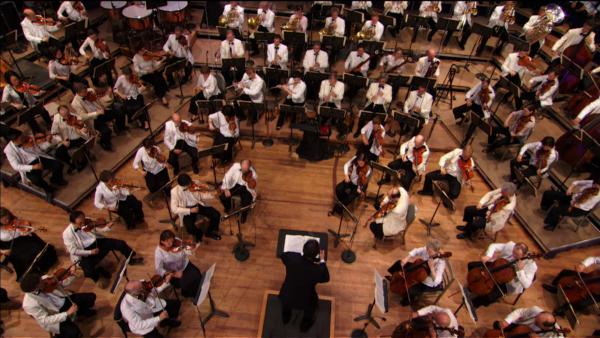
Kansas City – I can’t think of a better way of spending my last night at my parents’ house before returning to my townhouse tomorrow at Rockhurst than watching the Boston Pops’ 75th Anniversary concert at Tanglewood on PBS. So far, they’ve played Copland and Bernstein, two of this country’s greatest composers. Right now, they’re playing a suite from Bernstein’s On the Town.

George Gershwin, my favourite American composer.The odd thing is that when it comes to American classical music, I tend to think more of the various orchestras about the country, the New York Philharmonic, Chicago Symphony Orchestra, San Francisco Symphony, Boston Pops, and of course our fantastic Kansas City Symphony, just to name a few, than the composers who called this country home, or at least their birthplace. Quite honestly, there isn’t a single American composer in my top five list. That elite group consists of an Austrian, a few Frenchmen, and an Italian: Gustav Mahler (Austria), Giuseppe Verdi (Italy), Gabriel Fauré, Jean-Baptiste Lully, and Claude Deubssy (France). Even in the top ten, the Americans probably would only come in the bottom of those: W. A. Mozart (Austria), Ludwig van Beethoven, Richard Wagner (Germany), Sergei Rachmanioff (Russia), and George Gershwin (USA). Below Gershwin however do come a number of American composers; numbers 11-13 being Leonard Bernstein, John Williams, and Philip Glass.

So, why exactly then, being a classical music lover who has lived the majority of my nearly 21 years in the States, do I, along with many others, tend to prefer European composers over our home-grown cast of colourful characters? I think it could very well go back to the fact that this country, along with the rest of the Americas, were once colonies of Europe, and therefore surely not on par with Europe’s high culture! Also, the American Revolution certainly didn’t help win the hearts of my fellow monarchist music lovers back in Europe. There is a general disdain for all things American in regards to high culture. Just look at the luxury status of a Mercedes or my favourite, a Jaguar, compared to their price tag equals from Cadillac, Chrysler, and Lincoln among others. Another area that this can be seen is in Formula One, my favourite of all motor sports, which features a largely European cast of drivers (go Lotus!)

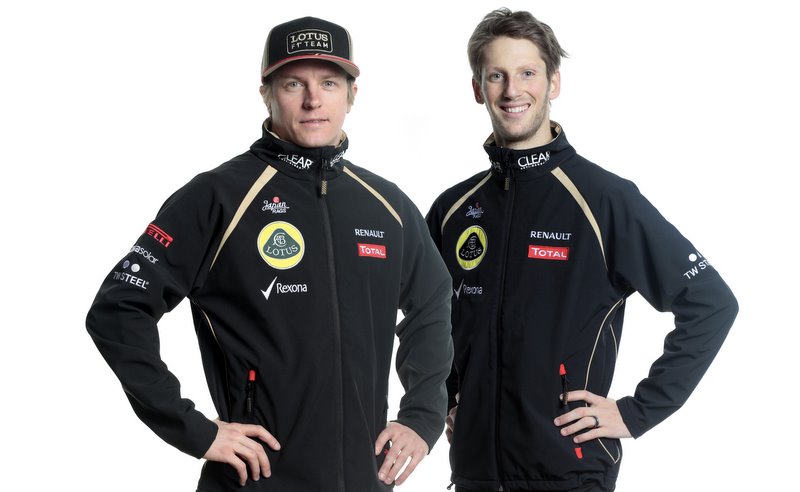
Kimi Räiikkönen and Romain Grosjean, the 2013 Lotus F1 drivers

Kimi Räiikkönen and Romain Grosjean, the 2013 Lotus F1 drivers. Courtesy of grandprix247.com

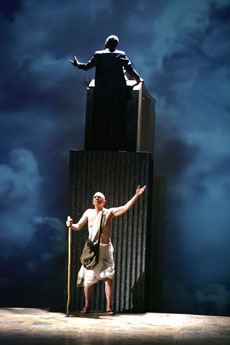
"Satyagraha", my favourite Philip Glass opera

“Satyagraha”, my favourite Philip Glass opera. Courtesy of the Metropolitan Opera, New York.

In this country we truly do have a great classical music tradition, with its own uniquely American flavour. I’d argue Broadway holds a similar place in American classical music that Gilbert and Sullivan holds in Britain. We don’t necessarily need to have grand operas of the same flavour as those that came out of Italy, France, Germany, Austria, and Russia. Our opera has a different flavour, a more, at least presently, popular flavour. Our opera buffa could be said to be Broadway, whilst our opera seria could be said to be works like those of John Adams, Philip Glass, and of course Gershwin’s Porgy and Bess and Bernstein’s West Side Story. Just like how in many a Verdi opera you can hear an all-too Italian flavour, for example the brass scales during the “Gran nuova! Gran nuova!” chorus in Rigoletto have always sounded quite Italian to my ears, so too West Side Story and most, if not all, of Gershwin’s major work has a distinctly American tone and texture to it. At the same time, because we are a nation of exiles, refugees, and immigrants, our composers have the flair and ability to write in the styles of many far distant lands, like Philip Glass in his Gandhi opera Satyagraha.

Tonight on PBS’ Great Performances, this testament to the power and uniqueness of American classical music stands firm, as both high art and popular art pieces are being performed side by side. When I started writing this entry, music that premiered on Broadway filled my parents’ living room, now it has been succeeded by the quietude of a Haydn Piano Concerto.

Until next time, tá!

My Redemption Song

Kansas City – One of my favourite songs on the Chieftains’ 40th Anniversary album Wide World Over is the Redemption Song by Ziggy Marley. It’s a song that has stuck with me since the so named Kings of Irish Music released it 11 years ago, as has the concept that music can redeem. My personal redemption song isn’t your average 4 minute 30 second piece, nor is it something written in the past 50 years. It’s Mahler’s Symphony No. 8.

Image

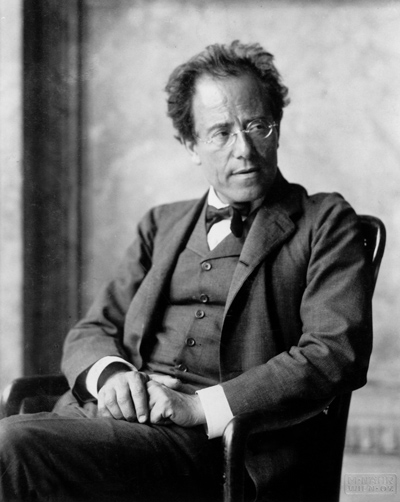
I first heard Mahler’s music on NPR’s Weekend Edition early one Saturday morning sometime in about 2009 or 2010. The San Francisco Symphony was making a series of recordings of all of the great Austrian composer’s symphonies. They played excerpts from his Symphony No. 6 on the air, but I avoided Mahler for years, despite my liking what I had heard on the air, because I was told that his music was “quite depressing.” It wasn’t until Summer 2011 that I bought my first Mahler album, the New York Philharmonic, Leonard Bernstein recording of the Symphony No. 1 and the Adagio from Symphony No. 10. I bought it specifically to take out into the fields on my iPod so I could have something to listen to whilst painting fences in the pastures. From then on, any chance I got to listen to some Mahler, I took it, attending every Mahler concert performed by the Kansas City Symphony since. It is a blessing of sorts to be living in Kansas City right now, because the KCS’ conductor Michael Stern is certainly one of this country’s great living Mahlerians.

Mahler’s 8th, demotically known as the Symphony of a Thousand is just that, a symphonic work in which my favourite of the Germanophonic composers pulls out all the stops and lets his very heart and soul sing. It begins with the Veni Creator Spiritus, a prayer commonly chanted around Pentecost in the Roman Catholic Church, my sort of spiritual lifelong home.

However, the real redemption comes in the second part (Movements 3 and 4). It is here that Mahler’s music takes on the story of the Redemption of Dr Faust. Contrary to M. Gonoud’s famous grand opera about the aforementioned doctor, in Mahler’s version, it could be said Faust is redeemed rather than falling back into sin. Whenever I listen to Mahler’s 8th, I always come out on the other end feeling empowered and eased, like I do when leaving the confessional or after spending time in the Adoration of the Blessed Sacrament. It’s a calming sort of thing, which is rather odd considering the symphony ends with a very loud and quite triumphant sound. This is one piece that, if I ever were to get into conducting, I’d love to conduct. And yet, it takes quite a bit more to conduct than your average piece of music.

So, on days when you’re not feeling quite up to your normal, when you’re stuck in that bunker on the bottom nine, why not find a good recording of Mahler’s 8th, or really any of his works (except perhaps the 6th, which is rather sad), and have a listen. It’s as close as you’ll ever get to hearing a man’s soul cry out in joy and peace.

Image

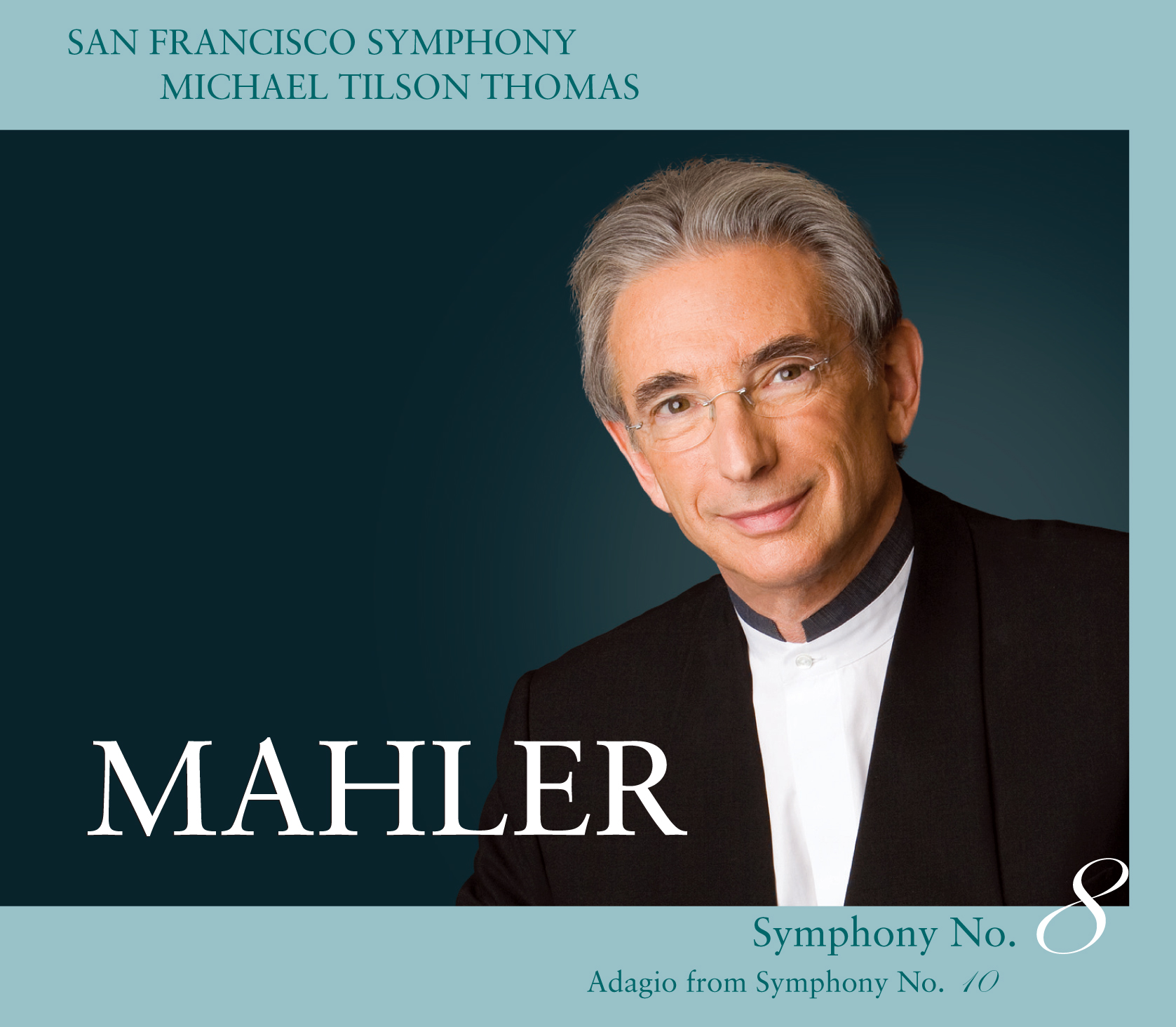
My personal favourite version is the San Francisco Symphony, Michael Tilson Thomas recording. It’s on iTunes.