Category Archives: Life

Tools and Eyes

This week on the Wednesday Blog, how we enhance our vision with innovation. — Click here to support the Wednesday Blog: https://www.patreon.com/sthosdkane


This week on the Wednesday Blog, how we enhance our vision with innovation.


When I was 5 years old, I remember one Spring afternoon as the Sun was beginning to set when my friends and I were still at our school in the Chicago suburbs out climbing on the playground. I was near the top of the play structure when I saw a car pull in and a woman climb out of the passenger’s seat. I recognized the car and the figure coming towards me and excitedly climbed down from my perch to greet my Mom, thinking she’d gotten off work early and was coming to pick me up at the end of the day. As I got closer to the woman, I was shocked to see it wasn’t my mother but someone else.

Two years later, during my first March in Kansas City we had state-mandated vision and hearing tests in school at which time I was sent home with a note for my parents that my vision was poor enough to require glasses. I got my first pair on 20 March 2000 at a shop in Oak Park Mall and have remained bespectacled every day since. It amazes me somewhat that I remember the day like that, or that I can remember it was a sunny 56ºF that day, yet there you go. I’ve probably gone through 20 or more pairs of glasses, or speclaí as they’re called in Irish, in the years since. For a while I was getting a new pair each year, though in recent years I’ve deferred that insurance benefit to use it only when I absolutely need new frames.

Still, one recurring feature of the quieter moments in my life since that sunny Monday just after the turn of the new millennium has been that my world changes each night when I set my glasses aside to sleep. For the longest while I would have dreams in which dimensions didn’t match my expectations––rooms that were long and slender and filled with cartoonish clutter, buildings that seemed comically curt in their width that I could surround them with the fingers of one hand, held up before my eyes.

These visions remained in my dreams alone until after our move to Kansas City. In those first bespectacled years I began noticing my dreams seemed to come to life before my own eyes on those nights when sleep evaded me, and I lay awake without my glasses for hours on end. Lights and colors seemed to blend in unfamiliar ways, echoes of things I knew from the daytime danced before my eyes when I should’ve been asleep, and shapes never were quite what they seemed.

Without my glasses, the eyes I use to behold all that I have known in these last 23 years, that reality seemed to burn away on whisps of air. I’d imagine the faces of people I knew into being before my eyes and see them in strange ways that my limited vision could allow. Yet throughout this process I found all of this strange, for I knew what these faces and places looked like. My eyes and my mind could not work together as they once did now that my eyes relied on lenses to see.

How then would we react if all the creations we’ve devised were taken from us and we were left with our natural abilities alone to survive? Without glasses, my world would be quite different. I would likely have known my parents’ faces differently than I do now. The course of my career is as much defined by my access to information thanks to the internet and computers as it is by what was available to me as a child in the early 2000s when I had a computer that was linked to a far less interwoven internet. How would we’ve handled the pandemic differently if we lacked the quick transportation between continents, let alone the ease of spreading information within our own countries to stay at home, wear masks, and such in 2020? Certainly, air travel helped spread the pandemic across the planet faster, yet to the rest I’m unsure what to say.

In the middle of the last decade, I grew so used to my transatlantic connections that seeing those largely stripped away in 2020 left me feeling this sense of isolation that reminded me of the incomplete interpretation of the world by my unspectacled eyes. I grew further and further distant from my old life and developed new attachments here domestically that I’d not noticed before. For one, I stopped watching Doctor Who in 2020 and started watching Star Trek, moving from a show produced in Wales to one in California (and now also Canada) as my main source of escapist entertainment. Now again, having physically returned to Britain, my mind keeps returning there during the quiet moments.Yet those memories are inherently incomplete, filtered by a vision begotten by wishful intent to return to something long left behind. Like my moments each night gazing out before I drift off to sleep on a scene lacking clarity yet filled with enough quirks to keep me focused, and yes entertained. After all, what are our memories for but to keep us company in those quiet moments, a sort of built-in cinema in which the documentary features are about our own pasts, the blockbusters those stories we create just for ourselves. Some of those will find their way onto paper and maybe out into the world for others to one day read. Without all of the tools we’ve created, those stories would take much longer to travel far, and would see their fullest life in their original telling for us alone.
Sixty Years

This week on the Wednesday Blog, recognizing the sixtieth anniversary of the assassination of President Kennedy. — Click here to support the Wednesday Blog: https://www.patreon.com/sthosdkane

This week on the Wednesday Blog, recognizing the sixtieth anniversary of the assassination of President Kennedy.


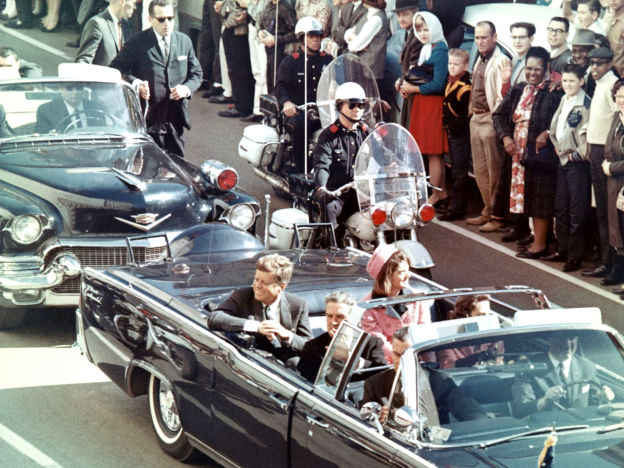
Bill Clinton was the first president who I can remember, and like many other millennials my perspective on the Presidency is shaped by his two terms in office. Yet beyond the immediate I always knew several other presidents: Lincoln (as I often write), Washington, Truman, and Kennedy. Of all of these, John Kennedy is the most complicated; he was the first Irish American Catholic to be elected to the White House and his picture was still pretty common in houses even into the turn of the millennium. His term is remembered most nostalgically of all the presidencies of recent memory for how short it was and abruptly it ended.

As much as I always knew who the Kennedy brothers were, I also knew that Dallas was the city where President Kennedy died. When I first visited in my adolescent years, I made a point of going to visit Dealey Plaza and see where it all happened. Every year on this day I find myself thinking of what happened there 29 years before I was born. It’s strange how much events that are relatively removed from my own lifetime still have such an impact on how I see things. For me the recent past still goes back to the turn of the twentieth century when the world that I was born into in the Midwest was being created. So, as far as the assassination of President Kennedy is from my own life, those 29 years still have never felt that distant.

Today, this particular anniversary is striking to me because it is becoming more distant. 1963 is now a full 60 years removed from our own time, and as I look ahead the middle of this century seems closer than I ever imagined before. The passage of time could well drive people to fear for their own mortality, and to a certain extent I find those thoughts enter my mind now and again. Yet when I worry about my future it’s less that I will lose something of myself with the passing years and more that the memories I’ve grown up hearing and those I’ve written for myself will become ever more remote from my lived experience.

For the last several years I’ve found myself caught by a faint memory of a sort of reddish glow. I’ve known it originated at some point in the early 2000s, about 20 years ago for those who are counting, yet beyond that I could only speculate. I figured there might’ve been some phase of interest in Renaissance Italy in the books or documentaries my parents were reading or watching around that time, yet I couldn’t remember any specifics. Then, several weeks ago, I remembered some faces along with that red glow and it occurred to me that what I’ve been longing for was a particular day, Thanksgiving Day 2003.

That year, my Kane grandparents and great-aunt Sr. Therese came down to Kansas City to attend my Webelo bridge-crossing ceremony when I graduated into the Boy Scouts. They patiently followed my parents and I around town, attending a weeknight fencing lesson of mine (I used to fence saber), and joining all of my maternal Kansas City relatives for Thanksgiving dinner at the farmhouse that my parents built. We lived on 34 acres of land in western Kansas City, Kansas and one thing we all miss about that house is the view to the west out the back windows. The sunsets were gorgeous. That Thanksgiving was a clear day with light clouds in the sky and as dinner was nearing completion, I remember sitting with my grandparents and Sister (that’s what we all called my great-aunt) in the living room with something on the TV, but our eyes were drawn to the sunset out the window.

The backside of our house was all one big room, to the right was the kitchen, in between the kitchen table, and to the left the living room, and in the kitchen, we had these beautiful imported red Italian wooden cabinets which my parents saw on This Old House and bought in a stall at the Merchandise Mart before we left Chicago. The beautiful shades of red that I remember are of the sunset shining off of those cabinets, a true marriage of nature and craft that I hope I will never forget.

My Kane grandparents and Sister are all gone now, the only ones in the room at the time that memory occurred who were alive when President Kennedy was killed, yet for all of us that moment marked our time as one of uncertainty. Now, as an adult I appreciated Jack Kennedy still, yet I would’ve rather voted for his younger brother Bobby. I see more of the nuance in those colors even when as a child on Thanksgiving 2003 all I saw was bright light that made me uncomfortable.

Sixty years isn’t that long, and yet to an extent it really is. Sixty years before President Kennedy’s assassination the country was recovering from President McKinley’s assassination, a bleak start to the twentieth century in a moment of triumph and seeming progress. It’s all about where we stand in the great cycle of years. I like the old adage that the Greeks saw time differently from us, that they stood looking towards the past with the future behind them. We don’t know what will happen in the future and our pasts and those of our parents and grandparents really shape our worlds in far greater ways than we can often imagine.


The End of an Era

This week on the Wednesday Blog, my perspective on the last century and a half as a time of tremendous change. — Click here to support the Wednesday Blog: https://www.patreon.com/sthosdkane

This week on the Wednesday Blog, my perspective on the last century and a half as a time of tremendous change.


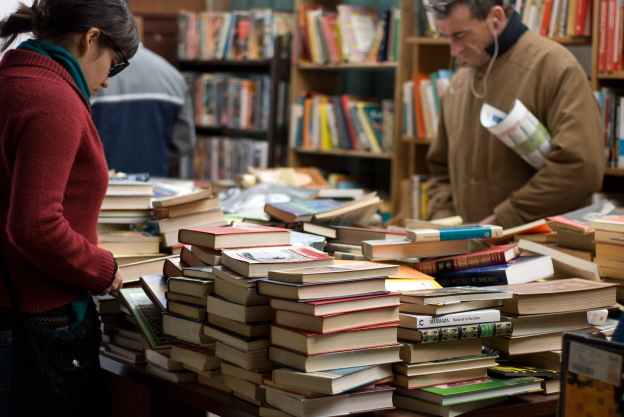
On my first day in London this October I walked from the British Museum, my first stop in the capital, to Charing Cross Road where I made my way into Foyles, my favorite bookstore in that city. Foyles has a wider variety of titles than I’ve seen in most bookstores, and especially titles that catch my attention time and again. I didn’t plan on walking out with a new book, and I stuck to that plan, yet I saw several books which I’ve since acquired in other ways since I got home (I do kind of feel bad about that.) I didn’t pack for this trip with new acquisitions in mind, leaving little room for anything new in my luggage.

Still, I loved wandering through the aisles and shelves of Foyle’s and catching up on the latest that the British publishing industry has to offer, five years after my last visit to that island. Here in the United States, I see some reviews of books printed in Britain, usually in the New York Times or through interviews on NPR, but by and large I’d cut myself loose from the British press that I read, listened to, and watched throughout my adult years. Unlike previous trips back to London, a city that became a home-away-from-home for me in 2015 and 2016, I felt like I’d missed a great deal and had a lot of new things to discover on this trip.

One book that caught my eye several times was Michael Palin’s new book Great-Uncle Harry: A Tale of War and Empire which tells the story of the author’s own great-uncle Harry Palin whose life saw the end of an era and the beginning of our own tumultuous time. Harry Palin was working on a farm on the South Island of New Zealand when Great Britain and its Empire entered the First World War in August 1914 and enlisted with the New Zealand Expeditionary Force, one-half of the famed Australian and New Zealand Army Corps (ANZACs). The elder Palin survived the Gallipoli Campaign and for a while on the Western Front until he died during the Battle of the Somme in 1916. 

Two weeks after seeing Great-Uncle Harry on the shelves of Foyles I was reminded of it by something else and bought a copy of the audiobook on Audible to listen to, read by the author, in the car on my way to and from the school where I currently work. The life and story of Harry Palin animated my drives to and from the school where I now work over the last two weeks and left me both inspired to think about the end of the nineteenth century, a period in our recent history that I’ve always been fascinated by, and horrified by what became in the twentieth century.

I chose to not study the end of the nineteenth century and turn of the twentieth century professionally because of the looming specters of the World Wars ever on the horizon of my memory of those moments in history. Harry Palin’s story reminded me of what I love about that period as much as at the end of his life what horrifies me about the experiences of his generation.

The world that existed in 1914 was one which had a continuity with the generations that came before it. There were some major shifts, the revolutions at the end of the 18th century and in 1848 come to mind, yet none of those in Europe were permanent. The needle of change wavered throughout the century leading up to the First World War. All of that changed as old institutions, which had long weathered the storms and basked in the sunshine of Europe’s history now collapsed under the tides of change released by the hands of their own officials. That war is perhaps the greatest example of hubris among any political leaders yet seen in our long history. Men who thought they could expand their empires, enhance their prestige and honor by waging war against each other instead lost their crowns and left millions dead in the wake of the conflict they unleashed.

When I read histories of this period, I often want to shout at the characters to look out, to be wary of what is coming; for in a Dedalian way I worry we can become too complacent and hawkish yet again. Our caution is well learned, now after a century which saw two world wars and countless other conflicts born from those furnaces. In the wake of the first war a great instability allowed for experimentation to occur. This is a natural thing, something I see in the Renaissance and Wars of Religion (the period which I study) yet in the context of the twentieth Century it marks something far darker. This experimentation in politics and economics led to a further world war in which the three new dominant ideologies –– communism, liberal democracy, and fascism –– collided. Out of it, fascism fell but not before taking millions with it, and a cold war simmered which defined the rest of the century.

In my own life, a further reduction in the formalization of conflicts has played itself out. Now instead of great armies facing off in large-scale battles like those known in the world wars, or even the proxy wars fought by the superpowers we see violence wrought through terrorism. The front lines are not so far away when the threat of violence, whether foreign or domestic could be around the corner. Our children practice for the possibility of an active shooter in our schools because such an incident has happened time and again, and I’ve internalized the reality that in my profession I’m likely to experience such an attack as long as I continue to teach.

I go to places like Foyles to get away from these worries and horrors, to discover new ideas and ways of looking at the world that I was previously unaware of. On this trip, it occurred to me several days before my return to London that I was left bereft of worries, a feeling of calm that I hadn’t felt in a very long time. It almost left me feeling a loss for something I’d long known. I chose to work on a time period further removed from the present to have a refuge in my work from the horrors of the recent past that shaped my world; yet this is still my world, our world, and for as many problems as it has there is a lot that I feel nostalgic for about the century now passed. Even as I write now in 2023 and will likely be remembered as a voice of the twenty-first century, I will always think of myself just as connected to the twentieth, in which I was born and during which a great many of my formative memories occurred.

It occurs to me now that as much as we live in a continuation of the new era born out of the First World War, perhaps the general crisis we find ourselves in now, from the wars my country fought throughout my teens and twenties to the climate crisis we now witness, is bringing us into an even newer era. I hope it will be better than the last, and that maybe this time we’ll find a way to live up to the highest ideals of our predecessors.


Standard Time

This week on the Wednesday Blog, I argue that we should stick to Standard Time — Click here to support the Wednesday Blog: https://www.patreon.com/sthosdkane

This week on the Wednesday Blog, I argue that we should stick to Standard Time.


I missed the switch to Daylight Savings Time this year as I was in Puerto Rico that weekend which doesn’t do the time change, meaning we went from being 2 hours ahead of home to just 1 on the night of our return journey. So, my usual annoyance at the transition to Daylight Savings Time, and the hour lost in the process, wasn’t as severe. Yet as we return to Standard Time after a long summer I have some thoughts about why we ought to stay where we are now.

It baffles me that “Standard Time” lasts only 5 months, though it doesn’t feel that long, while Daylight Savings Time, or Summer Time as they call it in Europe, lasts during 9 separate months from mid March through early November. Daylight Savings has effectively overrun the calendar, leading to the calls in March for us to permanently adopt DST as our new standard, year-round, time.

I had no major complaints with this proposal earlier this year, though I figured that Standard Time is probably closer to the natural solar time than Daylight Savings which fiddles with the clock like a crafty accountant. All that changed when I began to leave home before dawn for this new teaching job, and I found myself barely seeing the morning sun on most days. As we returned to Standard Time this week I’ve felt far happier leaving home in the early dawn hearing the birds whistling away in the trees, welcoming the new dawn as they do.

I may not feel quite as euphoric as Edvard Grieg’s “Morning Mood” from his Peer Gynt suite would evoke, yet I am much happier seeing that Sun high in the sky above me as I begin my day. So, let’s make Standard Time the default and eliminate Daylight Savings, as those two time changes each year cause such a bother.

I find that our cities have long been built to be seen more at night amid the glow of streetlights than during the daytime. We gain more evenings under their sway, more evenings too away from the city lights to gaze up at the stars high above us. I’m fine with the Sun setting so early in the evening. I’ve lived in cities where it sets far earlier than it does Kansas City in winter, and there’s something about that which evokes a sort of seasonal sense of nostalgia in me, a memory of Christmas and all the other midwinter holidays to come.

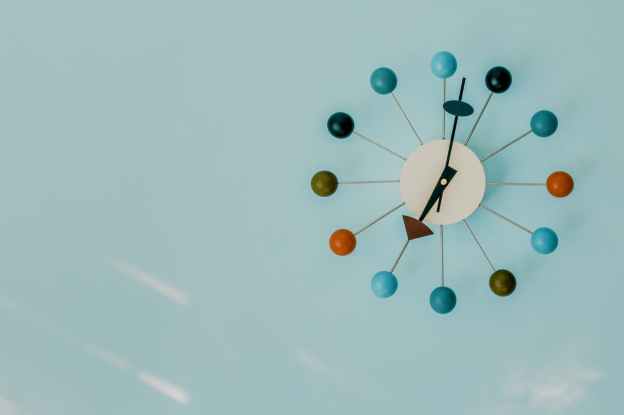
Standard Time is as close to our original local solar time as we’ll be able to get. Not that long ago, each city and town had its own time based on its own local noon. I’d rather have our clocks tick closer to that local noon than not. Consider this my vote.


The New Frontier

This week on the Wednesday Blog, I try to remember a story for this week that I came up with on Saturday while lost in a parking garage. — Click here to support the Wednesday Blog: https://www.patreon.com/sthosdkane

This week on the Wednesday Blog, I try to remember a story for this week that I came up with on Saturday while lost in a parking garage.

I will usually have a few ideas for the Wednesday Blog lying around in one of several repositories, including my memory of incidents that’ve happened within the last few days or weeks that might make for curious anecdotes for this weekly publication. This Saturday, while I was getting dinner on the Plaza on my way up to my evening shift at the Kauffman Center, I thought of one such idea that at the time seemed golden for this week. For some reason, walking back down the stairs from street level to where my car was parked underground, I found myself thinking about the first line of Captain Jean-Luc Picard’s opening monologue from Star Trek: The Next Generation, identical to the same line in Captain James Kirk’s monologue from the Original Series, “Space, the Final Frontier.” This idea of the frontier sticks with me because my own world here in the Midwest is so very new; where now there are tree-lined streets, parks, and fountains little more than a century ago was open prairie.

At the 1893 Columbian Exposition World’s Fair in Chicago, the American historian William Jackson Turner presented his famed Frontier Thesis, which argued that as of that moment the American frontier was well and truly closed; all land from Atlantic to Pacific was taken, bought, or occupied by some one or another. Turner, a historian at the University of Wisconsin-Madison, made this point to mark 1893 as a major turning point in American history from the age when our culture was defined by the endless frontier extending far out beyond the horizon to a distant and nigh mythic Pacific Ocean and towards a new world where the United States was an island unto itself, with travel from New York to San Francisco possible in a matter of days by rail. Today, of course, the same journey can be made in about 6 hours by plane, and for much of my life I’ve heard of Alaska as the new frontier and, like the two Captains of my favorite science fiction series, Space as the final frontier.

Yet I think there’s another frontier that bears consideration, one which is far more personal to each of us. I stand today looking at my own life and childhood with a great degree of nostalgia, and especially now that I am spending my days with students who are going through those same moments, I often want to connect with them by remarking about how I was doing this or that when I was their age. Yet, it is hard for me to reconcile that these people are living out their adolescent years in the early 2010s and not the early 2000s as I did. Their world is a new frontier for me, one that is far more digital, one that is far more interconnected, and one that is in many ways far more dangerous than my own.

I’ve long thought about how different things would be if I had children for them compared to my own life. If I were to have children this year in 2023, they would be in middle school in the early 2030s and graduate high school in 2041, a full 30 years after I did. This is almost equal to the same gap that I have with my parents, yet to me the cultural and technological differences between even today in 2023 with what I knew in 2011 are in some ways far greater than what I remember being around when I was little in the mid and late 1990s that my parents lived with in their teenage and young adult years in the 1980s. It is harder for me to understand some of this generation because my experiences are far more framed in the world that existed when I was born, and as much as I look forward to the futures that this century could hold, I still feel a close connection to the century that formed my own existence.

This is all a very linear way of thinking about time and even space. It could be that echoes of moments from my own past keep appearing in my present as I experience this new period in my life. The frontier of full-time employment has been reached, and I’ve chosen for the moment to cross its threshold into whatever its potentials may hold. I look back at my life from just a few months ago with some wistful longing for the days before I was constantly needing to be my best self, the days when I had plenty of time to get all of the things I need to complete done. There are always echoes in my memory which announce themselves in the present, from the way the sunlight shines nebulously in the sky on a morning after an overnight rain to the new takes on old hymns we sang in my elementary school Masses each week. I find myself remembering the people I knew and loved in my past and see a great deal of them in those I surround myself with now.

I hope that as I move further into this new frontier I will be glad to see what it has to offer, what ideas it will inspire in me, and how I can continue to grow, hopefully, to become the person who people will remember in centuries long after I and all those around me are gone when perhaps humans will have begun venturing out from our home planet to seek their own new frontiers deep in the void of Space.

Masks

This week on the Wednesday Blog, how we present ourselves to the world around us and in the mirror to our own reflections. — Click here to support the Wednesday Blog: https://www.patreon.com/sthosdkane

This Monday saw the twenty-second anniversary of the attacks on September 11th, 2001. I decided I’d talk about that day and the days and years that followed with my 8th grade U.S. History students as it most closely dealt with their own curriculum more than with anyone else who I’m teaching right now. I told them that to me 9/11 was the true beginning of the 21st century, rather than Millennium Night the year before. That’s because so much of this century has been defined for me by its violence, its chaos, and its terror. This compares to what I remember of the late 1990s as a time of peace, optimism, and wonder from my own childish eyes at the time. I saw the world as a little boy, not noticing most of the troubles or worries of the world, just gazing in awe and wonder at what was before me in the moment.

My early childhood wasn’t a time of blissful ignorance akin to the early moments in the story of Siddhartha Gautama, later known as the Buddha, who knew no suffering in his princely palace until his curiosity led him out onto the street and into the real world for the first time. I knew bad things happened, and that there were people misled into evil. I had seen the effects of death and had an idea of what it was, but none of these essences of our reality set themselves into that visceral sensation of knowing until after that sunny Tuesday morning when the world changed all around me, and I and my classmates in our third grade room on the upper floor of St. Patrick’s School in Kansas City, Kansas were unaware of it all, the great tempest brewing around us on that cloudless day.

Over the last few weeks on my drives to and from my new day job at another parochial school on the Kansas side of the border I’ve been listening to a new audiobook of Andrew Robinson’s A Stitch in Time, a novel following the life of Star Trek: Deep Space Nine‘s beloved Cardassian spy-turned-simple tailor Elim Garak. The audiobook is narrated by Robinson, who played Garak throughout DS9‘s original 1993-1999 run, much to the delight of fans of the show such as myself. I of course had already read A Stitch in Time, and its anthologized sequel the story “The Calling” which was published in 2003 in the delightful collection Prophecy and Change. Let me briefly digress from this week’s topic to say that as much as I loved reading and now listening to A Stitch in Time, Robinson’s “The Calling” remains for me the greatest sequel I have yet read for how beautifully it captures a sensation of peace and resolution coming to a people as maligned by their own poor decisions as the Cardassians.

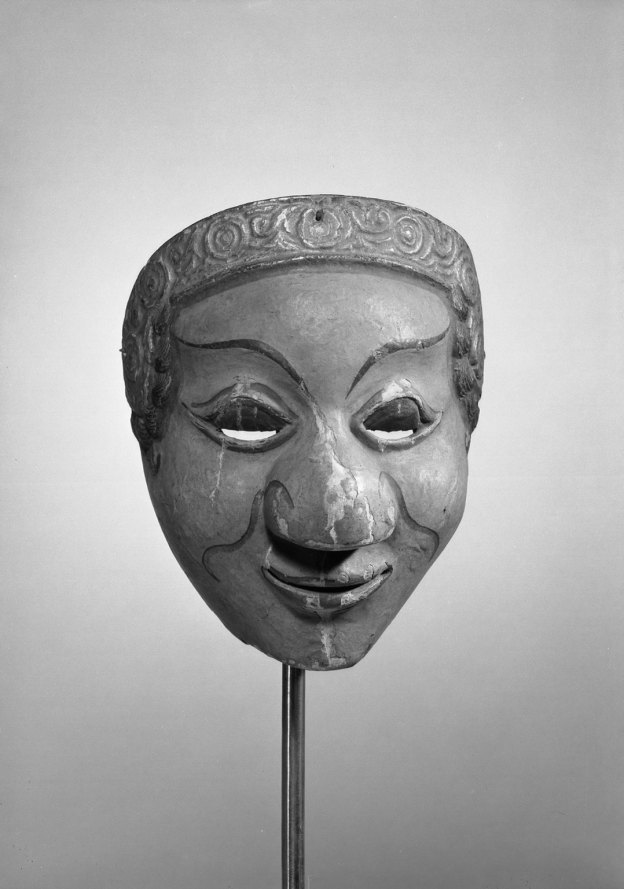
Many moments stuck out to me from A Stitch in Time, yet the pinnacle of these was Garak’s realization that everyone around him, himself included, regularly wears masks to hide their true intentions and weaknesses. These masks might be physical, like an ancient theatre mask or the famed half mask worn by Gaston Leroux’s Phantom of the Opera, but more often they are built in the wearer’s personality and projection to those around them. So, when I was trying to find a conclusion to my recollections about 9/11 this Monday, I thought of Garak and the masks. I told them that everyone wears them, everyone has something they highlight for all to see, and that beneath that mask of power, popularity, ferocity, clownery, or even awkwardness lies another person. That person may be self-conscious or afraid of showing their true face, or they may have just grown used to wearing that mask from a time when they were unsure how to face the world around them. Still, behind every emotion we express there lies another human being who like all of us was once born naked, exposed, powerless, and most importantly innocent of both good and evil.

To me, 9/11 was a moment of great tragedy for what we chose to do in its aftermath. The United States was quick to act in launching the largest manhunt in human history to capture and kill the leader of Al-Qaeda, Osama Bin Laden, and in the process to ensure that countries like Afghanistan under the Taliban would no longer be safe havens for terrorists. The enemy soon shifted, once a role filled by the Nazis and later by the Soviets, a role that had shifted without focus for some time now began to sharpen in relief towards terrorists, but not any old terrorist, only Muslim terrorists were the true enemy. The rage of America fed a deep Islamophobia which still burns bright within this country. Yet as that rage was noticed for its power it was quickly monetized and commercialized, utilized by those wishing for quick victories against their political rivals at home at the expense of compromise and civil discourse. The longest legacy of 9/11 was a new political era in American history driven by fear and hatred of the other, whether foreign or domestic.

The masks that Bin Laden and all those who use terror and fear to achieve their aims may seem powerful in the moment yet quickly crack under pressure from demands for justification. They do not seek to ensure passage to some blissful afterlife like the death masks or sarcophagi of the Egyptian mummies, but instead seek to do the greatest amount of harm to those in the way for the short term gains of greater terror among one’s enemies and greater publicity for one’s cause. To fight these masks, we adopted our own versions of them, donned visages painted red in our own rage, and forgot what each other’s faces beneath those masks looked like.

Beneath each mask lies another person, who fears their own weaknesses and searches often in vain for their strengths within the great dark forests of our fears. It is often hard for me to focus on all the things I’ve accomplished in my thirty years amid all those memories of embarrassment and pain, and this new job working with young people just learning how to fit into their own skin has helped me tremendously to be comfortable in my own as an adult and a sometimes leader. I tried to impart my deepest held belief on all of this in my last point about this week’s somber anniversary before moving onto Monday’s lessons; that we should never celebrate the death of those who have done evil things, for as evil as that person’s choices may have been they were still just another person behind a mask. Perhaps, that mask had become their face, engrained seething onto their skin until they could not remember the face beneath, until they could not see the child they once were, the innocence they once embodied. Theirs is a mask which they could still lower, a false vision of strength they could let go of, if only they didn’t fear the warm sunlight touching their face for the first time in so very long.

Community

This week on the Wednesday Blog, recollections of this past holiday weekend's activities at the Kansas City Irish Fest and beyond. — Click here to support the Wednesday Blog: https://www.patreon.com/sthosdkane

I had a realization this weekend when I was talking to some people who were friends of friends in the Kansas City Irish community: I don’t need to try to be someone else or to accentuate one part of my personality over any other part to fit in, I am who I am and the people around me accept me for it. Growing up I would see my friends and classmates make their name as the big baseball player or the dancer or as the Polish guy who could tell you everything you ever wanted to know about the thing, they were passionate in. For me, I filled several different roles from the history and geography nerd to the Irish guy in the room, to the Chicago kid living away here in Kansas City. Yet throughout all of it, I always felt the need to highlight one part of who I was over all the others in a given moment.

I often get annoyed when I see other people do this, when they talk about the same thing over and over again to no end and will catch myself doing the same thing. So, it is a relief and a moment of joy to realize that I don’t need to be that person, that I never needed to be that person. I’ve always been complicated and multifaceted in my interests, roots, and personality and I am the combination of all those things. 

This weekend saw my return to the Kansas City Irish Fest after five years away thanks to my time in Binghamton. I remembered the Fest being larger in the mid-2010s during my most recent visits, and this year my own participation was somewhat muted by outside circumstances of a new job and a general need to use the Labor Day weekend to rest after months at work on my latest dissertation draft. So, I found myself relieved to be surrounded by my own community, the Kansas City Irish community which is made up of long-time locals like my maternal family, recently arrived Irish immigrants, and transplants from other Irish communities across North America like my Dad and I. It was a moment when I felt like I was returning to something of the normal that I once knew before the pandemic and before I left for Binghamton that I had forgotten I missed.Still, the holiday weekend also saw another momentous occasion in the history of this city beyond the regular annual festivities in our community. On Friday, 1 September, the new aquarium at the Kansas City Zoo opened. I got to tour it with my parents on Labor Day, this Monday, and was awed at the achievement of all the people who conceived of the idea of building an aquarium at the Kansas City Zoo, and of all the people who built it including one of my uncles. This aquarium, while small compared to the Shedd in Chicago still offers a complete picture of life in the world’s oceans and seas from the deepest depths to the coastlines. I want to go back on a cold, snowy winter day when no one is at the Zoo and just wander the halls of the aquarium without all the people around and admire what was achieved in that building’s construction. Surely there will be scientists who will be inspired by that building to pursue careers in marine biology and oceanography. That alone makes me radiant with joy at the future that this our metropolitan community has as we continue to improve ourselves and open ourselves up to new worlds and ideas, and with each passing day to a great many more future possibilities.

The Guy

This week on the Wednesday Blog, some thoughts on what it means to be a man in 2023 inspired by Greta Gerwig's new film Barbie. Yes, there are a handful of mild spoilers. — Click here to support the Wednesday Blog: https://www.patreon.com/sthosdkane

This week on the Wednesday Blog, some thoughts on what it means to be a man in 2023 inspired by Greta Gerwig’s new film Barbie. Yes, there are a handful of mild spoilers.

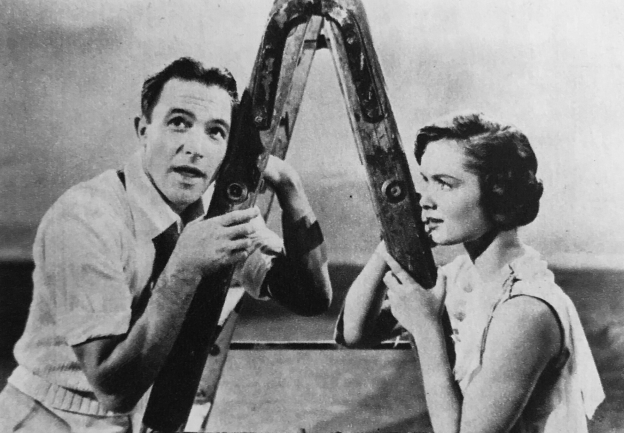
On Saturday I went to see the new and widely acclaimed Barbie film after many weeks of hearing glowing reviews. I was particularly caught by one review in the New York Times which discussed how a dance scene featuring multiple Kens, Barbie’s male companion, was reminiscent of and even nodding towards the work of the late great Irish American song and dance man Gene Kelly, one of my favorite actors. So, I went into this movie with that anticipation at seeing something approaching Mr. Kelly’s work again on the screen, and with a good humor about the whole experience knowing this is a film about a toy.

And yet as the film progressed it became clear that it was not just a film about a toy but a story about the roles which people hold in society as they are traditionally inspired and determined by their gender. It became clear to me that this film was both deep in its commentary and clever in its camp. I particularly loved the moments where the characters in speech more so than in action broke the fourth wall and joined the audience in the joke. Yet the core idea that there is a parallel world off the Pacific coast called Barbieland where the dolls created by Mattel live happy lives knowing what good they’ve brought to the human world is something with far older roots.

To me, this idea fit in with a sort of sense of Heaven, a land beyond our mortal imaginings where those who have made a good impact on the people around them end up and rest on their sunny laurels side-by-side with other do-gooders. The idea of a place where the streets are paved with gold, and where people go to be good neighbors fits too with the idealized image I admit to conjuring in my own imagination of California, especially on our darkest, coldest, and snowiest days here in the Midwest. I know all too well that this sunny dream is far from the reality of the Golden State or any other place on Earth, yet without that dream how can we bring such a place to life?

In the Barbie film, the characters that I felt were intended to be my proxies in the story were the Kens, Barbie’s doting male companions and besides the one Allan the only guys in Barbieland. To be honest though, none of the Kens really stood out to me as someone who I could recognize in myself. Sure, when I’ve had crushes or begun to feel affection for a particular woman, I’ve longed for her to notice me and signal that the affection is mutual, yet the idea that men ought to be like the Kens in the same way that each Barbie represents a different type of accomplished woman feels limiting to me.

I actually felt more of a connection to the one Allan in Barbieland because he at least could see what was going on around him, in part because of his isolation from everyone else. Michael Cena played the awkwardness of being the only person with a level of realization about the goings on around him that fits those of us who often watch the social scene unfold around them. What struck me most about the Kens was how extreme their swings were, from docile doting admirers of the Barbies to overacting and overcompensating defenders of patriarchy with a strange fascination for horses. Ryan Gosling’s Ken in particular seemed to draw a great deal of his character, especially when he took over Barbieland, from William Zabka’s character Johnny Lawrence in the Karate Kid franchise and most recently the wonderfully silly Cobra Kai series on Netflix. All the flaws of that hypermasculinity best characterized in the muscle-man action films of the 80s was visible in Gosling’s Ken, and this represents one image of the ideal American man which we still see in our society. He’s the kind of person who has the potential to gain power or high status in business yet lacks the depth and self-awareness to make him an emotionally mature adult.

I’ve known a lot of people like this, and in many ways, they are one side of the big spectrum of what I’d call the guy, the average American male. I’ve been thinking about writing something called The Guy for a while, and I may still go all the way and write a novel with that title describing an average man just trying to go about his life. To me, when I think of this guy, he’s somewhat of a cross between Harold Lloyd’s character in The Freshman (1925), or Robert Petrie on the Dick Van Dyke Show, or more recently Adam Scott’s character Mark Scout in the recent Apple TV series Severance. The guy is the straight man in his world, yet he could be the comic to those around him and not be in on the joke. He sees his life as not quite what he dreamed of but he appreciates what he has and dreams of better things. He might be in a relationship or married, he might be gay or straight, he could be of any ethnic or racial background, what’s important is that he knows who he is and has found a culture to make his own.

In some ways, I tend to think of myself as the guy. I certainly haven’t had a normal American story, I’ve traveled and am only now at 30 starting my first full-time job, yet in many ways I recognize that I have less control over the world around me than I’d like, and so I hang on to what I can and go with the flow. The guy relies on others, whether consciously or not, and appreciates being seen and heard, even if he may not be comfortable admitting it. The guy might like watching sports but isn’t necessarily an athlete. All around, the guy is the Illinois of American males, about as ordinary and run-of-the-mill as you could imagine with some interesting bits here and there in his life.

So, watching the Kens take the stage together in that Gene Kelly-inspired dance number at the end of Barbie, I got what they were trying to do, but they were all on such a far extreme end of being a guy from me that I had a hard time emotionally connecting with them. But then again, they represent the ideal American male in our popular culture, the popular guys in school who became the fraternity brothers in college and eventually the corporate executives in their careers. That’s not me, and I’m okay with that. I like it when I see other people accept that they don’t fit this ideal definition of manhood, yet I worry when some who do accept that fact then also lose interest in trying to better themselves, when they lose interest in becoming their own ideal self. That goal should never be forgotten for the sake of convenience. The best thing about the guy, above all else, is that in his finest moments he remembers to dream of better tomorrows, and will even find a way to make it happen. 

Our society needs guys like that to keep imagining a better future and how we can make that happen. They are the ones who Aaron Copeland honored with his New Deal era Fanfare for the Common Man. When I picture the guy in my mind, it is often in the style of the New Deal artists, the WPA painters whose murals decorate many public buildings across this country now 90 years after the New Deal began. Like all of Gene Kelly’s characters, the guy can dream, and will be remembered as a someone who makes those dreams come to life.

Mirrors

This week on the Wednesday Blog, how I've learned to deal with stage-fright and in some cases overcome it. — Click here to support the Wednesday Blog: https://www.patreon.com/sthosdkane

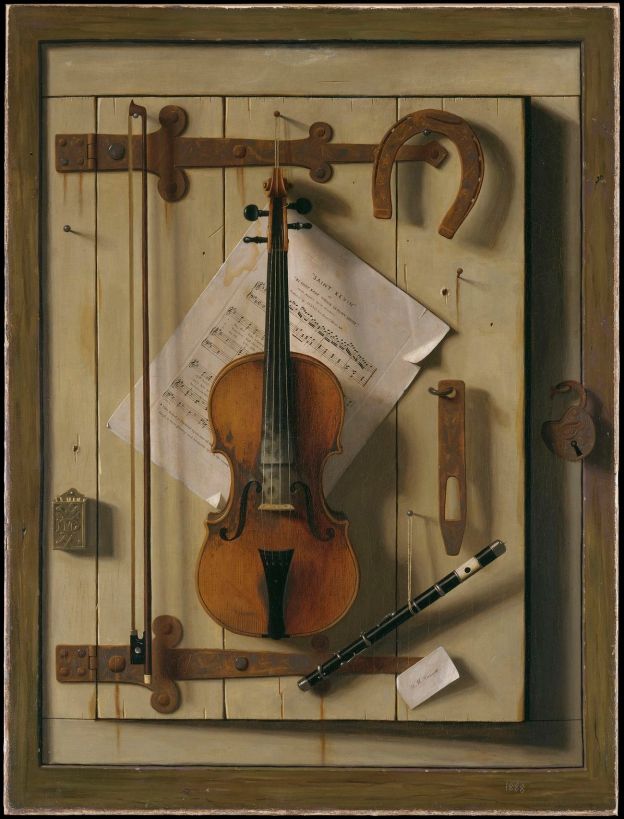
For a few years starting when I was thirteen, I took lessons in traditional Irish music from a good friend named Turlach Boylan who is quite talented on the flute, tin whistle, and mandolin and plays locally in sessions. I had potential but never really got there, in part because I didn’t practice as much as I should’ve, yet also in part because I kept running up against a sort of translucent wall of my own self-consciousness. After a while when we were both around during sessions, Turlach would invite me to come join the circle and play with the other musicians. I’d try but often when I’d hear someone else playing with me, I would burst into a big smile and have a very hard time playing my tin whistle with the group.

There’s something about playing an instrument with a group of people in such a loose and lively manner as in a trad session that has been hard for me. This week I read a story in Commonwealabout the joyous experience of all the craic that goes on in the trad sessions that the author, Commonweal‘s managing editor Isabella Simon, had joined in New York City. It made me think more that perhaps in that context my fear was less a shock at the fact that I was playing with other people but the worry that I’d mess things up, play the wrong note, or not know the jigs, reels, polkas, waltzes, and airs they were playing. As Ms. Simon wrote the talent of a session player is judged not in their virtuosity but “by whether the listeners are tapping their feet.” That clicked for me because that is how I approach teaching and lecturing, the expertise and skill that I exhibit in the classroom is a big part of the puzzle, yet it is one half of the whole picture which is best filled out by a comfort and ease with entertaining my audience and keeping them engaged.

I’ve found that difficult the last few days as I’m starting my new teaching job, sometimes I’m not sure my messages are getting across, especially when I have to shout over a room of excited students. Still, it’s not an unfamiliar lesson for me. One story I’m sure I’ve told on this blog before is about an icebreaker presentation that I gave in my Junior Year AP English class in high school, where our teacher asked all of us to bring in baby pictures of ourselves that she could hang up on the back wall of her classroom. When I got up to present my own picture, I let slip that I had considered bringing in a picture of a monkey to say that “I was a very hairy baby,” a line I think I partially stole (lovingly indeed) from Father Ted‘s milkman episode. Still, the picture I showed to the class was of a very large ancient tree on the grounds of Canterbury Cathedral with my Dad and I barely seen near the base sitting on a park bench. My classmates laughed at the whole routine, and I returned to my seat at the end of it feeling really good about myself; my fear that they’d all be laughing at me was avoided by telling the joke rather than being the joke.

In my teaching, I like to keep things loose, to have more of an improvisational style that changes to fit the room. That worked well at the university level and is kind of working here with the middle schoolers, but with more guidance from myself to make sure they’re doing what they need to be and getting the correct information about the day’s subject in the moment. I tend to not have the same kind of stage-fright that I used to, I can usually get up in front of a crowd and say what I need to, yet I do judge the room every time. There have been moments when I’ve started talking and I can immediately tell most of the people in the room either don’t care or actually are sitting there against their will. In those cases, I keep things brief. If I can play around with an audience though I’ll have more fun and will weave different stories together.

I love music, from the structured virtuosity of a fine orchestra like our own Kansas City Symphony to the fluid vitality of an Irish traditional session and all the great jazz in between. I love how it can express things that mere words could not annunciate. Yet where Irish music shines is in its ability to keep that conversation, no matter how joyous or sad, beyond one tune and into the next. In that moment the memories of generations of musicians can be heard, their voices echoed in the instruments and songs of their students which keep this rich tradition alive and well.

The lesson I’ve learned in all of this, which Ms. Simon’s story clarified for me, is that all life is a performance, and in the moments when I can relax and see past the mirror in my mind, I’ll be okay. In all the things I’ve tried for personal enrichment, from learning French and Irish to learning how to skate on ice after the Pyeongyang Olympics in 2018 to standing on stage in front of a full house, I’ll be okay as long as I don’t think about the fact that I’m putting myself out there too much, taking that risk of ridicule. My stage-fright will only ever be experienced by me and me alone. And at the end of the day if I’m comfortable with my own performance, if I play to the internal audience as well as the external, then I’ll be happy. To paraphrase something the gentlemen of the Monty Python troupe once said, “we only write jokes that we think are funny.” In those sessions, I’m playing not just for my own ear, but to be a part of a circle of friends united by our common musical language, at ease with each other’s company, rejoicing evermore in that fine moment.

In the Field

This week on the Wednesday Blog, how the pandemic made permanent somethings that were once reserved for fieldwork. — Click here to support the Wednesday Blog: https://www.patreon.com/sthosdkane

I never drank much water throughout the day in elementary school because our breaks were few and far between, and I didn’t want to have the discomfort of needing to leave the classroom on a regular basis. I followed much the same model through my high school years and into my time as an undergraduate, only really bringing water or tea with me to class when I was sick or if I was having lunch in the back of the room (I was a triple major, double minor for most of my college years after all). 

Things began to change when I moved to London and found myself in a sort of limbo between feeling like a resident and constantly being on the move from one place to another in that city. Having classes in different buildings several blocks apart; I started getting bottled water here and there. It wasn’t until I started my doctorate at Binghamton that I got a reusable water bottle to carry around with me from my office to my classes and just in general daily use. With the start of the pandemic a few months later, it became ever clearer that drinking more water than I’d traditionally done would help offer some protection from COVID-19, and all the other illnesses that I tended to catch seasonally from colds to the flu to occasional stomach bugs.

Today then, unless I’m home where I still drink out of a glass, I’m always carrying a bottle of water. This is something that I first really learned about over the summers when I was little when my parents and I would go out to a dude ranch in Pike National Forest. On our daily rides into the mountains everyone was encouraged to carry water. I usually carried an old fashioned round canteen, a style that I kept using by and large through my scouting years. It’s only been around the advent of the pandemic that I’ve stopped relying on hallway water fountains or vending machines and instead always carrying my own water with me.

This speaks to me of a normalization of things that once were reserved for fieldwork, travel, or moments when domestic answers to big questions weren’t as helpful. In the last few years, I’ve begun to buy more shoes of different styles, snow boots which inspired the hiking boots that I bought at first for a trip to the high desert of the Colorado Plateau and now wear when necessary, on muddy and icy days. I see it in how gym shoes and athletic clothing is now fairly ubiquitous as everyday wear. 

The boundaries which our society developed between compartmentalized situations and uses have slowly worn down, we’ve become less formal in many respects. All of this sped up with the pandemic when our domestic and public lives intersected in a time of work from home. These boundaries were helpful, I for one want to keep my work at my desk and save time every day to spend beyond its confines, yet there is also so much we can learn about ourselves if we allow the compartments of our lives to intersect and inspire each other.These days, it’s hard for me to leave home in the morning without my travel bottle in hand, filled to the brim, ready to go for the first bit of the day. I drink a lot of water now and have seen many of my allergy-related illnesses that I’ve experienced diminish in ferocity. Cheers!