Category Archives: Reviews

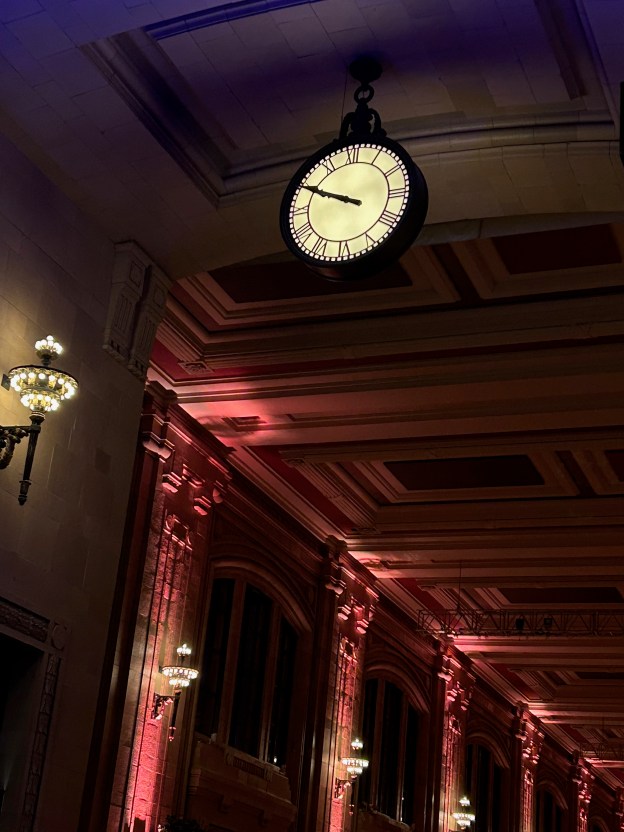
A picture of the great clock at Kansas City Union Station at night.

The Poetics of Finality

The Poetics of Finality Wednesday Blog by Seán Thomas Kane

This week, some words on endings.—Click here to support the Wednesday Blog: https://www.patreon.com/sthosdkane


This week, some words about endings.


On the morning of Flag Day, I went to the Linda Hall Library with my parents to see the classic 1951 science fiction film The Day the Earth Stood Still. I knew about this film, but this was my first time seeing it. Beside the story, what struck me most about this film was its tone, pacing, and overall character. After I finished my other two events of the day, the Plaza No Kings Rally where I watched the crowd of 11,000 people rally for democracy, and Mass that afternoon, I returned home tired yet eager to find that same tone. I went looking for it in Rod Serling’s classic series The Twilight Zone. Released between 1959 and 1964 in its first incarnation, this series had scared me a bit the previous times I’d sat down to watch an episode or two. It has an air of fear to it that is reminiscent of the reasons why I generally stay away from horror films. And yet on closer inspection, Serling’s stories tell something that is far less frightening than I first imagined because it’s a theme with which I’m all too familiar.

I came to indirectly know more about Mr. Serling when I moved to his hometown, Binghamton, New York, to undertake my doctoral studies in August 2019. His image isn’t all over town, but it’s a visible reminder of Binghamton’s history and place in the fabric of American culture. In fact, much of the stories that I’ve now watched in The Twilight Zone fit the character of that interior part of the Northeast where I lived from August 2019 to December 2022 quite well. In some ways, not too much of the built environment has changed from Serling’s day 60 years ago. Still, I noticed time and again how the optimism of that postwar era had faded. The same town was there, but some of the energy it once knew was long gone. Having lived my life to date in Chicago, Kansas City, and London, all cities with layers of history and memory, I’ve seen how the current generations have chosen to craft their own layer. 

London is a city that holds mementos to its ancient and medieval past while largely built in the form of its eighteenth, nineteenth, and twentieth century growth at the height of the British Empire. Yet today there are enough futuristic buildings and settings in the capital that it was used as a setting standing in for the space-age galactic capital of Coruscant in the latest Star Wars series Andor. I delighted in seeing familiar places from the Barbican Estate and Canary Wharf in the show.

Chicago has some of the same American character of Binghamton and the Northern states as a whole, a common history. Yet Chicago is the powerhouse of this country, the beating heart of our transportation network, the real crossroads of this nation. Where other industrial cities in the Great Lakes faltered in the 1970s, 1980s, and 1990s Chicago instead continued to power on for its sheer size and the diversity of its industry. Today, it has a very particular character which I believe makes it the most American city this country has to offer for its marriage of American settler culture and all the different indigenous, migrant, and immigrant communities that make America the patchwork of peoples in one great republic that it is.

Kansas City meanwhile saw more of the downturn for its smaller size and some of its traditional industries haven’t translated as well into the current information revolution. Kansas City once thrived as another great railway hub: the Gateway to the Southwest as the last major Midwestern metropolis along the Santa Fe Railroad as it drove across the prairies toward New Mexico, Arizona, and Southern California. Today, our interstate highways direct traffic through Kansas City more from Texas, Colorado, the Dakotas, Iowa, Minnesota, and points east than in the old northeast-to-southwest alignment of the rails. Recently while I was in downtown Kansas City, I remarked on how underwhelmed I felt visiting there for the first time after the business and thrill of going with my parents down to the Loop on weekends when we still lived in Chicago. Kansas City however has seen a renaissance of its own in the last twenty-five years that has filled in many of the gaps left by urban renewal and restored this city’s vitality. That more than anything else made my move to Binghamton a tremendous culture shock: going from a growing city to one that was a shadow of its former self struggling to invest in its future.

For every Twilight Zone episode there seems to be a fearsome unknown menace looming over the story; something that the character can perceive the effects of yet can’t quite see. Yet if there is any common thread to this menace it’s that it is a fear of the unknown. In the original pilot that launched the Twilight Zone, titled “The Time Element,” Serling’s rational psychoanalyst foil to the main character trapped in his dreams concludes through his logic that his dreams that he goes back in time from 1958 to Pearl Harbor on December 6th, 1941 could not be real because any incident that happened in this dreamed 1941, if real, would impact the patient as he lived in 1958. Yet reason is proven unequipped to address the irrational, how can it explain what it intrinsically is not? I’ve argued time and again here in the Wednesday Blog that this is where there exists room for belief in a life lived rationally. Still, having watched a fair number of Mr. Serling’s stories now, I think I can say something to this menace’s true character.

There is an intrinsic fear that comes with knowledge of seeing that we do have an ending. On a biological level, our bodies can only continue working for so long. We drift apart from our lives as they were in one moment or another, apart from friends who we admired and loved in a given moment, apart from jobs that consumed our waking and sleeping thoughts, apart from situations which challenged us to become better versions of ourselves. Yet, all those lived moments will continue on in our memory, at least for a time. I was stunned to find how well I could remember very particular moments of minute detail earlier this year when prompted by a sudden and wonderful realization about how I want to live in my life to come. Even the smallest of details that my senses perceived were there, locked away. The antidote to any fear is joy, and for me it was the most radiant joy I’ve felt in years which unlocked those memories for me of moments which led to that jubilation. Still, fear in moderation is a good counsel, a wise friend. It’s what makes me watch for traffic when I’m crossing the street here in Kansas City, or that advises me to make certain decisions over other ones at a very fundamental level to keep me alive. This is one interpretation of what the infamous tree in Genesisportended: that once humanity ate its fruit we would never again be able to be innocent from seeing flaws in the beauty of nature and in the beauty of ourselves.

Over the weekend then, I went to see the new Stephen King film The Life of Chuck starring Tom Hiddleston as Charles Krantz. I particularly grew to like young Chuck’s grandfather played by Mark Hamill. If I were to compare Stephen King’s writing to any other American storyteller of the last century it would be Rod Serling. Both tell stories of this same menacing fear. Yet in King’s Life of Chuck, the monster who’s revealed in the last scene is far more familiar, ordinary, and known to us all that I saw it less as a menace and more as a companion. There is intense poetry in both Serling’s Twlight Zone and King’s Life of Chuck around endings. They tell us that the finality of moments in our lives and of our lives all together give our lives greater meaning and purpose. I’ve found in the various projects and events I’ve helped organize that we get more done when we have goals we’re trying to achieve and a timeline by when we want to achieve those goals. I often work better when I have deadlines because if I begin to feel impatient at how long something might take, I know there’s an end date to look forward to. I feel that about little things but not the big ones, not the experiences that’ll one day make for good stories or about my life itself.

I for one don’t want to live forever, I worry that’d take some of the meaning out of my life. I would like to be remembered for my writing, for being a good person, for the history I research and leave for generations of graduate students to muddle through in their coursework. On a recent digital security Zoom call that I attended we were asked to search our names on several search engines and see what came up. Should there be anything we didn’t want searchable we could then get that removed. I was delighted to see that after my website, social media profiles, and various conference programs came page after page filled with essays published here on The Wednesday Blog. I suppose that’s one benefit of writing this weekly for the last four years: my thoughts written here will be remembered at least by the search engines. Yet I think the Wednesday Blog will have more meaning when I decide to set it aside and turn my staff to other facets of “my so potent art” to borrow from Prospero. Because then anyone who is curious enough to glance through these pages will be able to see them in their totality and know these essays are artifacts of the time when they were written in the early 2020s at a time of my life of doctoral study that feels so very close to ending.

This is not the last time you’ll hear from me on the Wednesday Blog, rather I’ve decided to end my weekly publication of this blog at the end of the current season. This is Season 5 of the podcast, or Book 6 of the blog itself. I feel that it’s had a wonderful run, and it’s been a great outlet for me while I’m biding my time as my career slowly begins. Yet now, I’ve got a lot more writing to do from new research papers to submit for peer-review to book reviews that it’ll be nice to take this off my docket. This is the 25th issue of this season, and I have a further 15 issues planned before the end. Thank you to all my readers over the last four years and all my listeners over the last three. I hope this will be an ending worthy of your curiosity.
The Versatility of Storytelling

The Versatility of Storytelling Wednesday Blog by Seán Thomas Kane

This week, how the same tools can be used to weave a variety of different stories. — Click here to support the Wednesday Blog: https://www.patreon.com/sthosdkane


This week, how the same tools can be used to weave a variety of different stories.


My favorite sorts of stories are the ones where I feel that I’ve gotten to know the characters and can relate to them on a personal level; that these characters are either real people who I’ll never meet or entirely fictional is beside the point. I often remember the stories I was reading, or watching, or listening to more than the experiences from my own life that surrounded new tellings of those stories. This potent relationship is heightened in moments when my own life is dull or foreboding, as in the height of the recent Pandemic when I passed the long days of isolation in my Binghamton apartment or at home in Kansas City watching and reading stories in the Star Trek franchise which I only really began to discover in February and March of 2020.

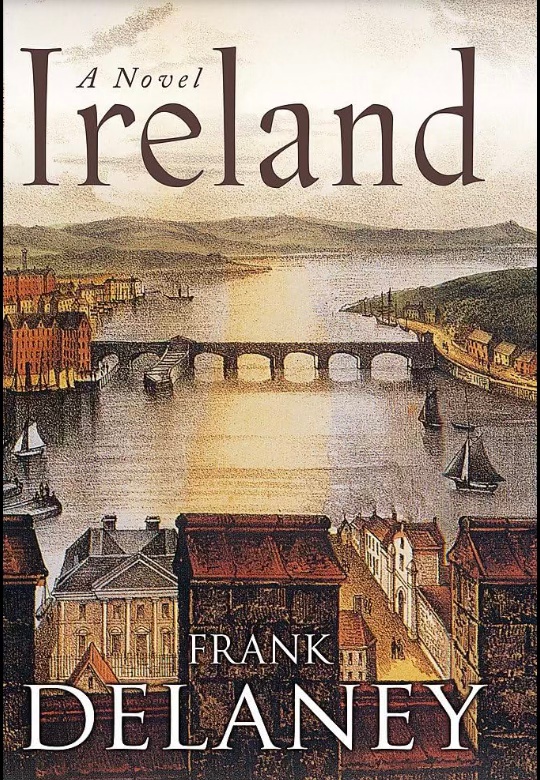
I wanted to be a storyteller from my youth. I read a book by the Irish journalist Frank Delaney called Ireland which followed a young man as he discovered his own passion for storytelling by listening to the seanchaí who often visited his family’s home. I began to write for myself around this time, though my efforts were focused more on poetry and plays at first. A decade ago, I built up the endurance to write a longer-form short story called “Abducted and Abandoned,” and around that time started writing what today is The Wednesday Blog. By the time I was working on my first master’s degree in 2015 and 2016 I’d begun writing a longer work, my book Travels in Time Across Europewhich I self-published in 2017. That one tells the stories I collected from my year living in London, stories of my own adventures traveling from the British capital to other cities across Europe. At the time I imagined that it could become a sort of valuable source for readers seeking to understand the world as it was in that last year before the Brexit referendum and the rise of Trumpism swept across Britain and the United States.

Dr. Olivia Stephens, the main character of “Ghosts in the Wind.”

Like the main character of Delaney’s Ireland, I too went to university to study history, to use my passion for storytelling, and as things came about, I’m now close to earning my doctorate in the field. Today, besides my efforts here with the blog I largely am just writing things related to my research. Alongside my dissertation I currently have one encyclopedia entry soon to be published, a book chapter and a scholarly article submitted for editing and am now writing another article related to my translation of André Thevet’s Singularitez. I still try to write the odd bits of fiction, like “Carruthers Smith’s Museum” which I released two weeks ago, or “Ghosts in the Wind” which I’m quite proud of. Yet I haven’t written anything to be acted in years. That’s striking to me, because my first big scribal efforts were for the stage and screen in my high school years. I do have an idea for a play that I might turn to someday in the next few years, yet even writing that here fills me with a sense of loss because it could well become another project that I’m excited about and have good ideas for yet don’t ever get to.

What I love most about writing for the stage and screen is that there’s a chance I’ll get to hear my words interpreted into lived experiences. Ideas that once only existed in my mind could be seen by many others played out before them and enlivened by the actors who utter those words & all the designers of sets, sound, lighting, props, effects, and music who flesh out that lived experience into something relatable and emotional in its truth. In short, to see my words brought to life in performance is to see a world created from what was once my thoughts, the smallest and most intimate of stages that I alone know.

To this end then, I am awed by the versatility of those storytellers who create these worlds in their performances. My erstwhile dissertation advisor Dr. Richard Mackenney, a man for whom I have the deepest respect and consider a friend, often talked about his own experiences on stage playing characters created by Shakespeare alongside many of the greats of the British theatre. In his lectures I saw a performance like any revival of King Lear or any of the Henrys or Richards that Shakespeare wrote. My own lecturing has taken on this same quality, yes at least in part in flattery, because I saw how he kept the rapt attention of most of the 150 or so students in the lecture hall with his art.

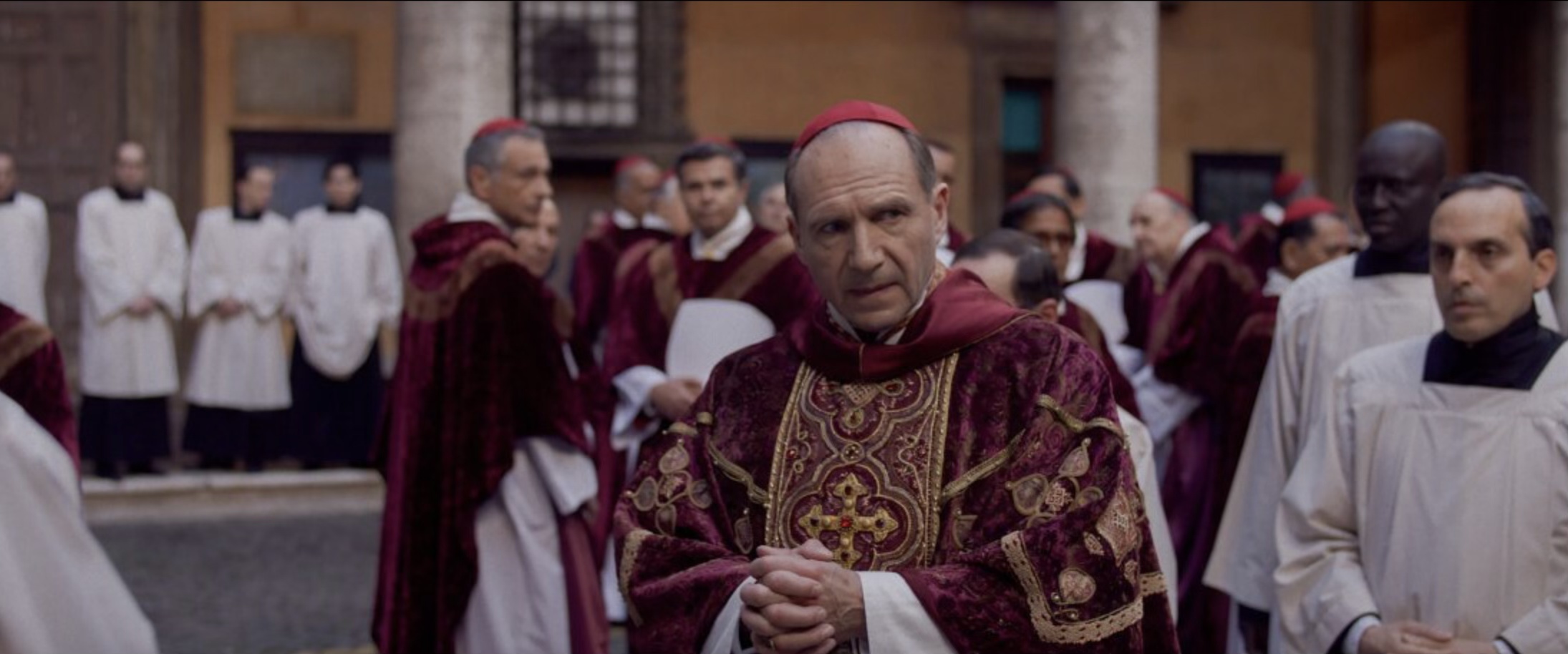
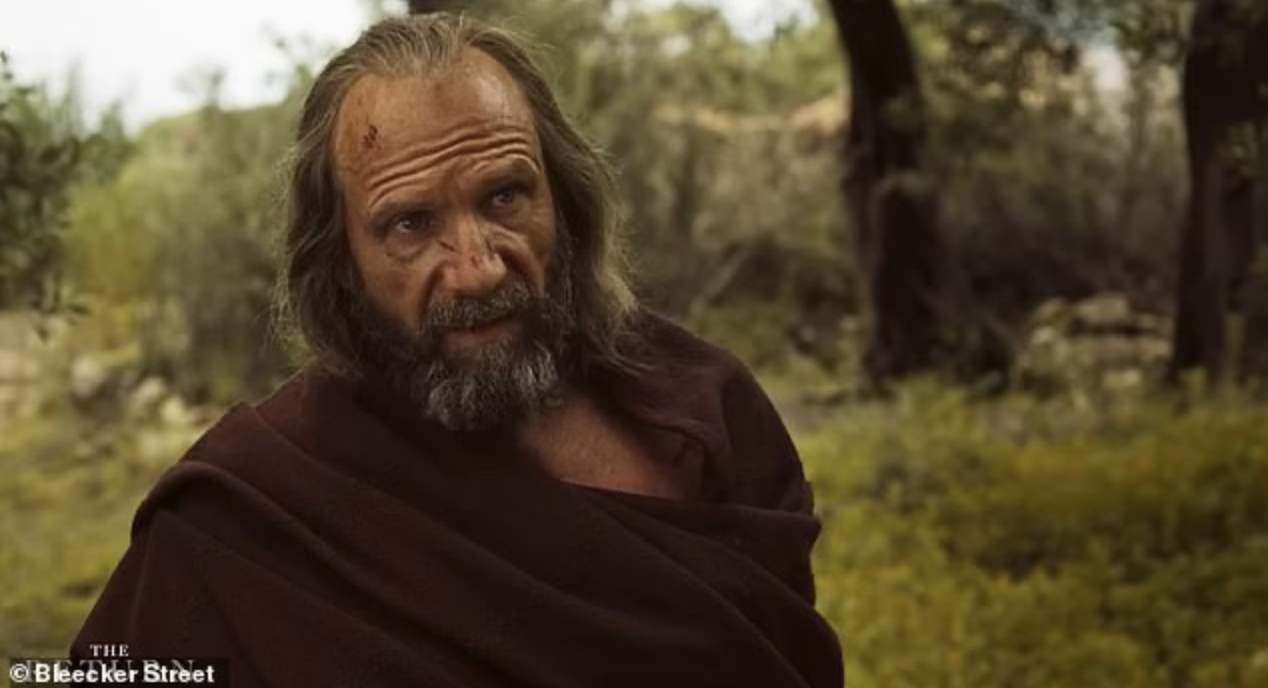
In recent weeks I had the pleasure to see the English actor Ralph Fiennes play two very different yet still akin parts in the films Conclave and The Return. In the former, Fiennes plays Cardinal Thomas Lawrence, the Dean of the College of Cardinals who is tasked with managing a papal conclave on the death of the Pope. In the latter, Fiennes returns to the screen a mere month after he appeared cassocked as an English cardinal this time dressed in rags as Odysseus returned to Ithaca after 20 years away at war against Troy. To see the same man inhabit two characters who on the surface could not be more distinct is a profound testament to the man’s mastery of his art. Both films are pieces of theatre imagined with the realism of a certain type of cinema that is more European than American, with less effects and a minimalist score that has its roots in the French New Wave. In the American context it’s reminiscent of the minimalism that we see in some of the television dramas produced recently for their streaming service by Apple.

I felt that I could instantly relate to Cardinal Lawrence in spite of his high office. The finest leaders I’ve met, whether cardinals and bishops or mayors, senators, and ambassadors are all people first and foremost. They acknowledge the trappings of their offices yet retain the everyman spirit that makes them relatable. I saw this in Cardinal Lawrence more than in many of the other characters who populate the halls of the Vatican in Conclave. That he is an English Catholic cardinal speaks to the post-Reformation moment in which we now live when the old sectarian wars of religion feel behind us and reflects on the Catholic Church in England and Wales that I know from my year living there and going to Mass in London. He speaks for a certain Anglophonic ideal that is democratic yet still upholding of tradition and custom.

Ralph Fiennes as Cardinal Thomas Lawrence and Odysseus, in performances which premiered within a month of each other.

Odysseus in contrast is a man who has seen much and endured much more than I ever hope to. His pain is written across his mostly silent face, and in this role, Fiennes says more with a tortured look than with words. That he only acknowledges his own identity verbally once in the film is telling. This is a man who fears that he won’t be the man that his family have waited for over these twenty long years that he was away. I can merely relate in that I’ve noticed time and again how my home and my city change each time that I’m away. On this most recent return of my own from Mérida on 10 November I was startled in the weeks that followed to see that the last vestiges of the long summer we had in this region at last faded away into a brief Fall before receding into the winter cold far sooner than I expected. Even more dramatic was the city I found on my return from London at the end of August in 2016. Kansas City wasn’t the same place it had been even 8 months before when I flew home for Christmas. There were plenty of stories I’d missed while I was away, one relative who’d been born and who I met for the first time at a far later date than any of her cousins in the youngest generation of my family. In that loss that comes with being far from home I can relate, yet in the pain he suffered and inflicted while he was away at war, I am thankful to lack that experience.

Yet the brilliant versatility of storytelling here expresses itself in Fiennes’s ability to say so much with so little about the war he fought and the trials he faced on his homeward voyage. Odysseus suffered for his efforts, and in his suffering, I see his humanity & feel that I can relate to him. At the end of the film, I felt that I got to know Odysseus for the man he’d become, and that in spite of the Bronze Age setting and the far looser garments, in a film whose costumes are marked by a combination of loincloth & cloak, than anything I would wear, I felt that I could see myself, my own humanity in that moment in time on the island of Ithaca in the second millennium BCE, perhaps the 12th century BCE as the polymath Eratosthenes of Cyrene (276–194 BCE) dated the fall of Troy to 1183 BCE.Where both Conclave and The Return succeed is in placing the lives of their characters in moments and settings which feel real. Odysseus’s Ithaca feels as lived in as Cardinal Lawrence’s Vatican, yet the former seems to be set in a far brighter and younger world with different morals and values than the darker and starker built world which succeeded it in the monumental edifices of the Vatican. Yet both are in my imagination places which I now have visited & seen, and both are places that I would recognize again if I ever returned to them in my memory of those films, or should I ever venture there in my own life to the Vatican or to the Ionian Islands and Peloponnese where the filmmakers created their vision of Ithaca. That stage is as lived in as any seemingly sparser platform that Shakespeare’s Muse might have evoked in Henry V; it is as alive as any other that can be imagined in our art.


On Pauses

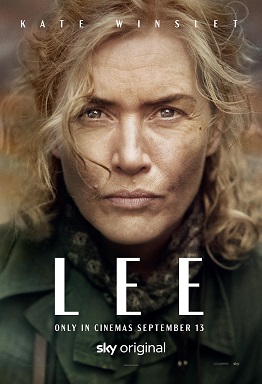
This week, some words about silence in communication. — Click here to support the Wednesday Blog: https://www.patreon.com/sthosdkane Photo: the poster for the new film "Lee" which is discussed in this episode.


This week, some words about silence in communication.


In my current job, one thing that is often challenging for new hires is learning how to operate our radios. In general, personal radios are the same no matter where you go, albeit with different features added to higher-end models like screens telling you which channel it’s tuned to. I found our radios to be one of the easier parts of the job to adapt to, I have experience working with radios from my time in the Boy Scouts for one. Yet I wish when teaching people how to use radios for the first time we would talk about how we communicate on a most basic level. We use all of our senses to communicate but especially our sight and hearing. 

Sound is the purest medium of communication for us humans: we talk with one another by emitting sounds from our mouths and receiving them with our ears. There’s a whole genre of performance these days called “spoken word” which annoys me because that’s the purest and most fundamental form of communication, let alone art, that we have. Rather, it should be called speakingtalking, or if you want to be fancier oratory. It’s only since we began to read silently that this distinction between speech and writing has grown. From what I remember hearing, the first significant reader to read silently was St. Augustine of Hippo, though that could be apocryphal.

Beyond sound there’s visual communication. In my job when we’ve talked about backup plans should our radios no longer be functional or useful I’ve suggested, perhaps a tad jocularly, that we should resort to semaphore flags, or some sort of similar if more rudimentary system. I have the semaphore Wuthering Heightssketch from Monty Python’s Flying Circus in mind when making this suggestion, but still, it’s always worth considering. In writing we are stuck having to express the full range of emotions and meanings in a manner that is limited by letters, words, and symbols on a physical surface. Emojis now help in more popular parlance to express the emotion behind our texts and social media posts, yet there again I often get annoyed when I see the bubbly and bucolic emojis used in places where they seem unfit, as though a contemporary expectation is that we all are using a string of emojis at the ends of our sentences because everyone else is doing it. I removed the emojis placed by default on a happy birthday message that Facebook suggested I send to a friend because they aren’t a necessary part of my communication. I use the period, or full stop for my non-American readers, at the ends of my texts because that’s how I end a sentence unless it’s interrogatory or exclamatory in nature.

As you can see, I have more to say about visual communication, especially the written word, because that is my own medium. I also dabble in photography, and have embraced Instagram for this reason, yet again I feel less need to take selfies everywhere I go because I can far more honestly demonstrate my presence in a place through writing. On my Instagram stories, I decided about a decade ago when I first opened my account that I would always format my captions with a highlighted blue background and white text as a way of saying, however subtly, to my readers that these are my words. I’ve kept to that, though this is the first time I’ve acknowledged that practice.

In either of these senses, hearing or sight, should we lack one we have to rely even more on the other to understand our surroundings and what others are trying to express. I’ve learned a hard lesson that my nonfiction writing benefits greatly from firm clarity over the opacity that I prefer as I unravel the story in my fiction. The same occurs when using radios: these are devices which allow an individual to communicate with others from a distance sight-unseen. The words we speak into our radios then need to be crystal clear for the people listening to understand what we are trying to say. I like to think of the mission controllers in Houston or Star City who have relayed intricate strings of numbers up to astronauts and cosmonauts beyond our planet to help them complete their missions and return home safely. It gives me a thrill to try to be that clear on my radio, and to be comfortable with that level of clarity when speaking into it.

Yet beyond these two senses, we have minds which are experiencing all of the things that our senses relay to it. We see more than just the messages other people display or transmit, and we hear more than just talk. Our minds are capable of parsing through all of this and making meaning out of it to orientate us in our lived worlds. This summer when I was back in London, I knew I was in a very public setting in close proximity to about 10 other people when I took the new Elizabeth line from the Docklands to the West End one Sunday afternoon, yet I also knew from experience and from seeing the people around me that no one would think anything if I pulled out the book I’d just bought, Michael Palin’s Erebus, and start reading it. Sure, everyone around me could see what I was reading if they wanted, but in that moment it was perfectly alright to do that because it was an unspoken part of life on the trains of the British capital that people pass the time by reading, so long as those readers don’t then share what they’ve just read with the strangers seated or standing about them.

On Friday afternoon last week, I went to one of the local cinemas to see the new film Lee staring Kate Winslet as Lee Miller, one of the great photographers and war correspondents of the last World War. I bought my ticket knowing it was going to be a stellar performance from Winslet, yet I was struck just as much by the dialogue as I was by the pauses written into the script. In one scene, one such pause propelled the story forward far more than any other moment in the whole film, connecting the postwar framing narrative together with the main story being told. That’s the beauty of theatre and film: it’s a medium where the written script is interpreted by actors who we see and hear, and so these two senses are unified to bring these characters and stories to life. This film, like its contemporary Freud’s Last Session which I saw earlier this year, had the feel of a play, and could probably work as such though the realism of Lee is that it takes the audience along with the photographer as she witnesses the destruction of Europe and the horrors committed by the Nazis in the wake of their fall from power in 1944 and 1945.

These silent moments are something that I find can be expressed more in my narrative writing, a style I usually use writing fiction, where I’m writing dialogue as well as the connecting tissue giving those words spoken by the characters their place in the world of the story. In real life we can express nearly as much with a look as we can with a word. This setting of Britain, Occupied France, and Germany in World War II is a potent one for telling stories, after all so many movies continue to be made about that war even as we move ever further from those years. I wonder if in the twenty-first century when we are so connected by our technology, how are our innate communicative abilities adapting to our newfound world? When I was little it was a big deal to see a copy of a foreign newspaper available for sale here in Kansas City; you could maybe buy a copy of the Sunday Times at Barnes & Noble in the magazine section, but they wouldn’t always have it available. Today though, we have people from all around the globe talking at once.

What is it we aren’t saying amid all the cacophonic chaos of our modern social media?


The Guy

This week on the Wednesday Blog, some thoughts on what it means to be a man in 2023 inspired by Greta Gerwig's new film Barbie. Yes, there are a handful of mild spoilers. — Click here to support the Wednesday Blog: https://www.patreon.com/sthosdkane

This week on the Wednesday Blog, some thoughts on what it means to be a man in 2023 inspired by Greta Gerwig’s new film Barbie. Yes, there are a handful of mild spoilers.

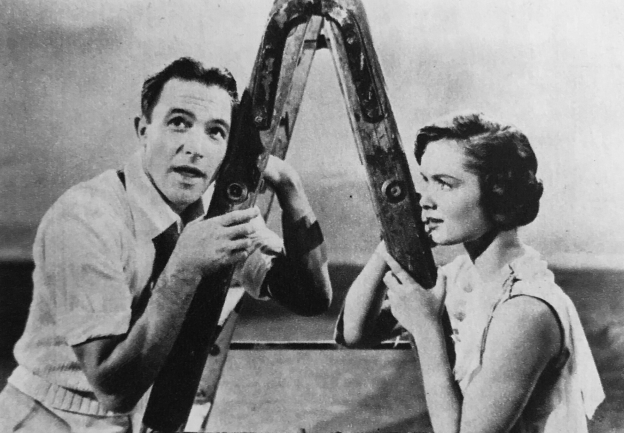
On Saturday I went to see the new and widely acclaimed Barbie film after many weeks of hearing glowing reviews. I was particularly caught by one review in the New York Times which discussed how a dance scene featuring multiple Kens, Barbie’s male companion, was reminiscent of and even nodding towards the work of the late great Irish American song and dance man Gene Kelly, one of my favorite actors. So, I went into this movie with that anticipation at seeing something approaching Mr. Kelly’s work again on the screen, and with a good humor about the whole experience knowing this is a film about a toy.

And yet as the film progressed it became clear that it was not just a film about a toy but a story about the roles which people hold in society as they are traditionally inspired and determined by their gender. It became clear to me that this film was both deep in its commentary and clever in its camp. I particularly loved the moments where the characters in speech more so than in action broke the fourth wall and joined the audience in the joke. Yet the core idea that there is a parallel world off the Pacific coast called Barbieland where the dolls created by Mattel live happy lives knowing what good they’ve brought to the human world is something with far older roots.

To me, this idea fit in with a sort of sense of Heaven, a land beyond our mortal imaginings where those who have made a good impact on the people around them end up and rest on their sunny laurels side-by-side with other do-gooders. The idea of a place where the streets are paved with gold, and where people go to be good neighbors fits too with the idealized image I admit to conjuring in my own imagination of California, especially on our darkest, coldest, and snowiest days here in the Midwest. I know all too well that this sunny dream is far from the reality of the Golden State or any other place on Earth, yet without that dream how can we bring such a place to life?

In the Barbie film, the characters that I felt were intended to be my proxies in the story were the Kens, Barbie’s doting male companions and besides the one Allan the only guys in Barbieland. To be honest though, none of the Kens really stood out to me as someone who I could recognize in myself. Sure, when I’ve had crushes or begun to feel affection for a particular woman, I’ve longed for her to notice me and signal that the affection is mutual, yet the idea that men ought to be like the Kens in the same way that each Barbie represents a different type of accomplished woman feels limiting to me.

I actually felt more of a connection to the one Allan in Barbieland because he at least could see what was going on around him, in part because of his isolation from everyone else. Michael Cena played the awkwardness of being the only person with a level of realization about the goings on around him that fits those of us who often watch the social scene unfold around them. What struck me most about the Kens was how extreme their swings were, from docile doting admirers of the Barbies to overacting and overcompensating defenders of patriarchy with a strange fascination for horses. Ryan Gosling’s Ken in particular seemed to draw a great deal of his character, especially when he took over Barbieland, from William Zabka’s character Johnny Lawrence in the Karate Kid franchise and most recently the wonderfully silly Cobra Kai series on Netflix. All the flaws of that hypermasculinity best characterized in the muscle-man action films of the 80s was visible in Gosling’s Ken, and this represents one image of the ideal American man which we still see in our society. He’s the kind of person who has the potential to gain power or high status in business yet lacks the depth and self-awareness to make him an emotionally mature adult.

I’ve known a lot of people like this, and in many ways, they are one side of the big spectrum of what I’d call the guy, the average American male. I’ve been thinking about writing something called The Guy for a while, and I may still go all the way and write a novel with that title describing an average man just trying to go about his life. To me, when I think of this guy, he’s somewhat of a cross between Harold Lloyd’s character in The Freshman (1925), or Robert Petrie on the Dick Van Dyke Show, or more recently Adam Scott’s character Mark Scout in the recent Apple TV series Severance. The guy is the straight man in his world, yet he could be the comic to those around him and not be in on the joke. He sees his life as not quite what he dreamed of but he appreciates what he has and dreams of better things. He might be in a relationship or married, he might be gay or straight, he could be of any ethnic or racial background, what’s important is that he knows who he is and has found a culture to make his own.

In some ways, I tend to think of myself as the guy. I certainly haven’t had a normal American story, I’ve traveled and am only now at 30 starting my first full-time job, yet in many ways I recognize that I have less control over the world around me than I’d like, and so I hang on to what I can and go with the flow. The guy relies on others, whether consciously or not, and appreciates being seen and heard, even if he may not be comfortable admitting it. The guy might like watching sports but isn’t necessarily an athlete. All around, the guy is the Illinois of American males, about as ordinary and run-of-the-mill as you could imagine with some interesting bits here and there in his life.

So, watching the Kens take the stage together in that Gene Kelly-inspired dance number at the end of Barbie, I got what they were trying to do, but they were all on such a far extreme end of being a guy from me that I had a hard time emotionally connecting with them. But then again, they represent the ideal American male in our popular culture, the popular guys in school who became the fraternity brothers in college and eventually the corporate executives in their careers. That’s not me, and I’m okay with that. I like it when I see other people accept that they don’t fit this ideal definition of manhood, yet I worry when some who do accept that fact then also lose interest in trying to better themselves, when they lose interest in becoming their own ideal self. That goal should never be forgotten for the sake of convenience. The best thing about the guy, above all else, is that in his finest moments he remembers to dream of better tomorrows, and will even find a way to make it happen. 

Our society needs guys like that to keep imagining a better future and how we can make that happen. They are the ones who Aaron Copeland honored with his New Deal era Fanfare for the Common Man. When I picture the guy in my mind, it is often in the style of the New Deal artists, the WPA painters whose murals decorate many public buildings across this country now 90 years after the New Deal began. Like all of Gene Kelly’s characters, the guy can dream, and will be remembered as a someone who makes those dreams come to life.

“Oppenheimer” and Sound

"Oppenheimer" and Sound Wednesday Blog by Seán Thomas Kane

This Monday, I went to see the new Christopher Nolan film about the life and work of J. Robert Oppenheimer, the leader of the team that invented the atomic bomb. —— Click here to support the Wednesday Blog: https://www.patreon.com/sthosdkane

This Monday, I went to see the new Christopher Nolan film about the life and work of J. Robert Oppenheimer, the leader of the team that invented the atomic bomb.

I have grown up in the shadow of the twentieth century; I was born near the beginning of its last decade and to a degree always knew much of the broad strokes of the century’s history in the United States. The first decade of my life was a time of optimism and hope, the Cold War had just ended a year before I arrived, life seemed to be good, and to me everything was a wonder to behold. I knew the story of how we got to that point, the broad strokes of American history more broadly and of the history of my home city of Chicago more particularly from as far back as I can remember thinking of such things. I knew a world where the threat of nuclear war was a thing in the past, a nightmare that never came to pass now that the Soviet Union had fallen, and America & the rest of humanity had survived the long nightmare of the Cold War.

In many ways, Christopher Nolan’s new film Oppenheimer tells that story that I grew up knowing, of American determination to overcome seemingly insurmountable obstacles with a can-do attitude that won this country its independence, the good guys our Civil War, and a transcontinental union of states that promised liberty, democracy, and peace to all who lived within it. In the years since of course I’ve learned the hard truths of this country’s history, all the people whose lives, hopes, and dreams were thrown by the wayside in the name of our national progress. I still believe in the dream of that progress, ever the optimist, yet that optimism is tempered by the realism that life in this country has never been fair or equitable for all of us. 

For all of the tropes of the great man that the film Oppenheimer plays with, it still tells a story of one man and his colleagues, his fellow theoreticians, engineers, and scientists working in a moment pushed along by the uniformed protectors of that progress to use their brilliance to craft something that could harness the pure energy of the Cosmos to be the ultimate weapon to end what was then the ultimate war imaginable.

Christopher Nolan is famous for his use of sound to tell his stories. Of all his films, the one that before Oppenheimer which touched me the most was Interstellar, which used the minimalist score composed by Hans Zimmer to describe what it might be like for humans to soar past our solar system and to far distant stars at sub-light speeds with little chance yet an enduring hope of returning home to the ones they loved ever again. I watched Interstellar on a transatlantic flight in January 2016 on the way back to London where I was then living from Chicago-O’Hare. That flight was entirely at night, thanks to the long winter nights in the Northern Hemisphere, and so for a few hours before we landed just before dawn at Heathrow, my entire world was Interstellar, which left my jet lagged mind far more confused than usual the rest of the day in my flat.

Zimmer’s score for Interstellar, in particular the great theme “No Time for Caution” pulses with the clockwork rhythm of time itself, a telling motif for a film all about the complexities of spacetime that a non-expert such as myself can hope to understand yet often fall short of grasping. In Oppenheimer there are rhythmic, chronic beats, there is a great pulse that underscores the most pivotal moments of the film, yet where Nolan uses sound itself, less so music, contributes to a compelling, and all-consuming story of the beginning of something with great promises of both wonders and terrors alike.

One of my new favorite music YouTubers talking about what makes Interstellar’s music so good.

I watched Oppenheimer in IMAX, though not on 70 mm film as no such cinemas within a 400 mile radius of Kansas City are showing it on anything but digital prints. Sitting where I was on the right-hand aisle, I perhaps got more of the sound from that side than the left, or the perfect sound that one would find in the center of the room; and in my humble opinion, most cinemas have their sound far too loud in general nowadays anyway. Yet I still felt awed by the way that the sound consumed everything else that I could feel, see, and yes hear when it fitted the story. This matched the great silences, not lead-ins to a horror jump scare, but meditations on the numinous echoes of something approaching the divine in the power wielded by that American Prometheus as Dr. Oppenheimer has been called.

In the Summer of 2016, a few months after that flight into the world of Interstellar, I traveled to Vienna, one of the most beautiful cities I’ve ever visited, and the first stop I made after arriving in the Innere Stadt was at the Haus der Musik, the second music museum I’d visited during my time in Europe after the Finnish Sibeliusmuseum in Turku. Yet unlike the Finns, this Viennese institution included an entire floor dedicated just to sound, the Klangsmuseum, where sound was visualized using colors on the walls. I began to connect ripples I’d seen all my life in water with the sounds I heard that day, which has proven useful. As I’ve gotten older, and my love for music to concentrate during the day has led me to use in-ear headphones more and more, my hearing has probably taken a slight dampening, leading to me not necessarily hearing less overall but instead noticing the vibrations of sound more and actually feeling sound in my body while I’m hearing it.

So, for me sound is not just something I experience with one sense, my hearing, but with my sense of touch as well. It’s one of the things that a live concert can give the listener that a recording can’t always provide. Whenever I hear a familiar opera in a theatre, I am usually struck a little unexpecting at the physical sound the timpani makes during the overture, and the way the sets creak and reflect sound back towards the singers and out to us the audience. I have learned how to judge without particular precision how far away a lightning strike is by listening for the gap before the thunderclap and the length that thunder echoes about the world around me as well as within me when it’s a particularly close one.

The world that Dr. Oppenheimer created felt removed for much of my life, for the man who said of himself “Now I am become Death, the destroyer of worlds” created a means of mass destruction which after 1945 has never been used in war. For much of my life, the threat of nuclear weapons seemed to be something consigned to a past when our ideologies kept us apart, spurred our distinct methods of innovation, and made enemies out of onetime uneasy allies. Yet today, as other powers rise to a level of strength and aggression that they could challenge the record of nuclear weapons, I’ve found myself worried about it in recent years for the first time in my life. I’ve found in my professional experience that it takes several attempts for a lesson to settle into the learner’s mind, it took me three tries to learn both Latin and Irish to really understand both languages and how they work. All this made Oppenheimer less a film about an event firmly in the past, something perfect to borrow a grammatical term for things that have happened and are in the past, but more something which tells an imperfect story of events with continuing resonances in the soundscape of our world today.

I may have grown up in the shadow of the twentieth century, yet I and my generation will have a great effect on the events of the twenty-first. I hope that we can learn the lessons of the century that came before us, and use Dr. Oppenheimer’s achievements not to create deterrents through the threat of mutually assured destruction but to establish human cooperation out of our mutual interest in surviving to live in a future to come.

“Casablanca” at 80

Today, I'm talking about the classic 1942 film Casablanca with my good friend Alex Brisson. Click here to support the Wednesday Blog: https://www.patreon.com/sthosdkane Today's episode features contributions from Alex Brisson (https://www.alexbrisson.com) and Michael Ashcraft (https://soundslikeashcraft.com). Thanks to both of them for their help making this week's episode!

Listen to this week’s podcast for a conversation about Casablanca with Alex Brisson


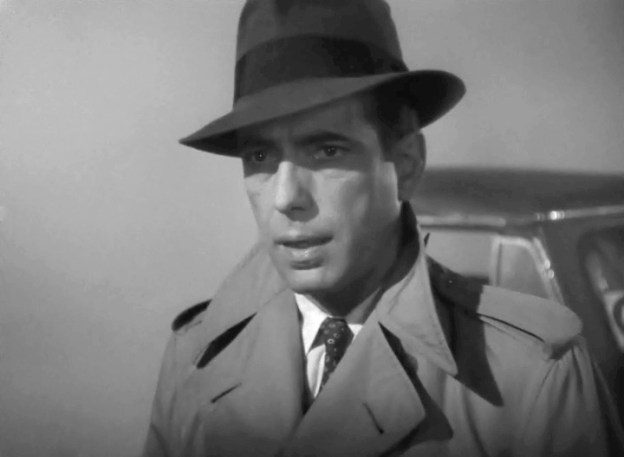
Few films have held our attention for as long as Casablanca, a romantic drama filmed at the height of the Second World War telling a story yearning for America to remember it’s passion and enter the fray against the forces of evil. The story, now well known, is about an American café owner, Rick Blaine, in the Moroccan city of Casablanca, then a French protectorate under the control of the Vichy government. Into his purely neutral life walks an old love interest, Ilsa Lund with her husband the resistance leader Victor Laszlo.

Everything that could be said about Casablanca has likely already been said. So, what I’m going to say here isn’t anything new, there really isn’t any intervention that I can make into this particular discussion as my fellow academics would insist every bit of writing make. So, I’m going to point out a few things that I thought of watching the film, subtextual themes that I hadn’t noticed the first time I watched it a few years ago. That time, I paired Casablanca with a delightful French film titled Que la lumière soit ! (Let There Be Light!) starring Hélène de Fougerolles. They were an odd pairing I’ll admit.

Casablanca is set in December 1941 on the eve of the Japanese attack on Pearl Harbor and America’s entry into the war. It’s the last hour in the limelight of an isolationist America, an America that still around but has been forced into the shadows by our country’s leading role in the postwar world. I nevertheless found it interesting that the opening credits placed Casablanca the city less as a Mediterranean, or rather Mediterranean-adjacent port, but rather as a city on the map behind the opening titles on the far northwestern corner of Africa. Casablanca is a gateway for those seeking to leave Europe either to the west across the water to America or south across the Sahara to the remaining Free French and British colonies in Africa. This makes it clear that Casablanca is distinct from Europe, it’s exotic when compared to the port of origin and the destination of the travelers waylaid in Casablanca.

Amid all of them one such traveler who’s made a slightly more stable living than most, accepting the circumstances of his complicated situation in isolation amid many others of the displaced appears Rick Blaine, who’s found stability in his café after losing stability in his life at the German invasion of Paris and Ilsa’s disappearance all on the same day. The film’s central conflict is Rick’s internal struggle between the isolationism he’s adopted since Ilsa left him and he ended up a saloon keeper in Casablanca and the passion he once felt for Ilsa in the last summer of the age of optimism in 1939. Now that Ilsa appears with Laszlo, the embodiment of the resistance to Nazi rule in Europe, Rick is confronted by his lost passion for that cause. Ilsa is a reminder of the passion for liberty he once felt that left him on the run from the Nazis in Paris where they met in the first place.As with the first time that I watched this film in 2021, I now find myself pondering the message of isolation vs. passionately standing up for the causes one believes in. I know people who are leaving this country to escape all the troubles we inflict on ourselves. I’ve thought of it myself, but there’s that stubborn passion in me that won’t give up on America. Rick’s isolationism shows us how we can let bullies march into our lives and dictate orders to us if we let them if we try to simply survive. That’s a fair way to live, I dealt with bullies in school and life by not reacting to them. But at some point, a person can only take so much pushing around, and I worry that today in America we’ve forgotten that fact. Rick’s turning point comes when the Nazi officers bully their way into controlling the voice of his café, Sam’s piano, to play a march of their own, Die Wacht am Rheinwhich was written in response to French efforts to annex the western banks of the Rhine in the 1840s, a moment a century before when France was the great power and Germany still divided among its princes. Laszlo tells the band to respond to this insult by playing La Marseillaise, not only the French anthem but an anthem for the struggle of the people against oppression everywhere. At that point, Rick is no longer an isolationist, America is no longer on the sidelines, but is tacitly helping the Allies, readying to cross the Atlantic in the words of French philosopher Bernard-Henri Lévy like an Aeneas returning to the aid of old Troy.


Metropolis

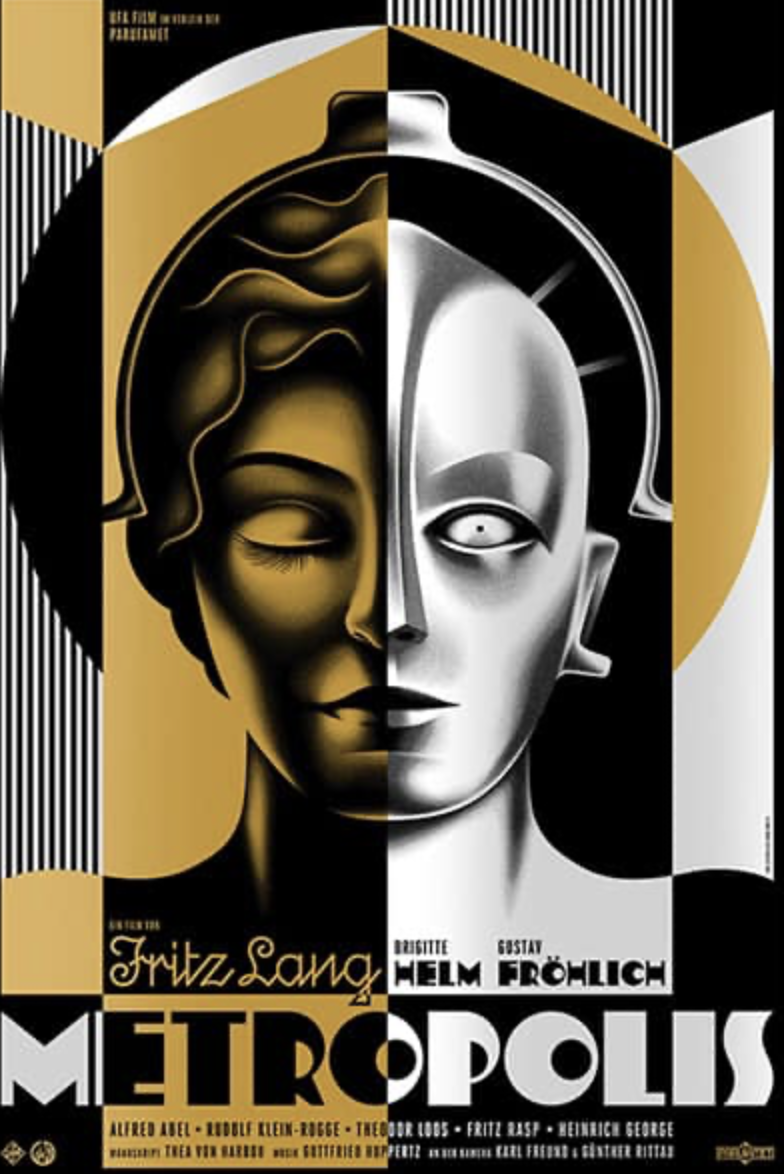
When I returned home to Kansas City about a month ago, I saw an email from the Nelson-Atkins Museum of Art that the Tivoli Cinema, which since 2020 has been housed in the Nelson’s auditorium, would be holding two showings of Fritz Lang’s 1927 silent masterpiece Metropolis. I jumped at the opportunity and immediately bought a ticket for the opportunity to watch this film on a big screen with an audience around me. So, this past Sunday afternoon I showed up for the matinee screening and was even more dazzled by the experience than I’d expected.

I had seen Metropolis once before when it was on Netflix about a decade ago. I remember feeling a bit wary of the film and its story when I first watched it that time. Now I know that watching a movie as monumental as this one on a screen as small as my laptop does a disservice to the whole experience. Metropolis was made to be seen on the big screen with a live orchestra, or at least a live organist, adding a whole extra dimension of music to this already vivid story. In the case of this weekend’s showings, Metropolis was accompanied by a 2010 recording of the original Gottfried Huppertz score performed by Berlin Radio Symphony Orchestra conducted by Frank Strobel. I’ve since played that recording again on iTunes while grading essays this week and have felt just as profoundly moved by it as I was in the theatre on Sunday.

It occurred to me while listening to that album again this week that as much as this score is a film score, listening to it on its own it feels far more like ballet music. In the past I’ve written about how I feel that ballet and silent film share similar characteristics born out of their mutual need for wordless expression to tell their stories. As I listened to Huppertz’s score without seeing the images in front of me I found myself thinking back to each particular scene in Metropolis as I’d seen them the day before. Yet in the moment as I sat in the third row of the Atkins Auditorium watching this spectacle unfold before me, I felt that Metropolis was more operatic than balletic in its very character. These were actors performing at a time when the quantity of film influences were far fewer on their lives thanks to the relatively recent invention of motion pictures, film at that point was only about 40 years old. 

In Metropolis I saw echoes of Wagner and Strauss as well as hints of the future, all the films and television shows that would follow it. There is a scene near the beginning of the film’s first act, the 45-minute prelude, where a shift change of the underground workers occurs that seemed strikingly similar to several scenes from the new Star Wars: Andor series released on Disney+ this Fall. Don’t worry, no spoilers here. There are many elements of Metropolis that certainly have been influential, look no further than the Machine-Man, the poster child of Metropolis that wreaks havoc on the city and nearly destroys it and all who live within it. There perhaps we see the ancestor of Doctor Who‘s cybermen, Star Trek‘s Borg, or Alicia Vikander’s character in Ex Machina.

In the last few days, I read in Variety that there’s a TV series remake of Metropolis in the works for Apple TV+. While I’m normally hesitant about remakes of classic films or shows, the new Star Trek: Strange New Worlds which sees the adventures of the original 23rd century USS Enterprise before it was captained by James T. Kirk, has made the idea more amenable to me, though that’s likely because Strange New Worlds does the whole reboot idea perfectly. I’m most curious to see how Apple TV+’s new Metropolis will depict the city of tomorrow. In 1927 Fritz Lang’s original film used the great art deco skyscrapers of New York built of brick and steel as his model. Will this new series seek to depict the sort of futuristic architecture that I’ve collected on my architecture Pintrest board, filled with gentle curves, evocative colors, and dramatic lines? That remains to be seen.

Metropolis was a gripping film to see, and while long, with some aspects perhaps a bit old fashioned to our tastes, notably the over-the-top heart-gripping that happens throughout that made the crowd around me laugh from time to time, it still has my attention caught even now a few days later. Silent films speak to us in a way that their talking counterparts created after 1927 simply don’t. They tell stories in different ways, adjusting their style to fit the technical limitations of their time. I’ve always been drawn to silent films for this reason, and perhaps I’m drawn to ballet for much the same reason. After all, Chaplin was as much a dancer as he was a slapstick comic. Metropolis is a testament to the time and place in which it was made, Weimar Germany in the 1920s. In Joh Fredersen, the master of Metropolis I see Henry Ford, both in his character and in his physical appearance. I see fears about extremism on all fronts, and a call for unity and dialogue in the face of anger. I wonder what the new Metropolis will be like?

Suspending Disbelief

I’ve always been someone who has a hard time focusing on the world around me in the immediate aftermath of leaving a cinema. The story played out before my eyes in rich and large visual colors and resounding about my ears in the surround sound systems used in modern cinemas is entrapping and beguiling to say the least. Every film I have ever gone to see, that I can remember, has been met by this same internal thought process as soon as the picture ends and I wander back out into the lobby. I imagine myself in the story, in its settings, walking and talking with its characters. I guess I’ve always been a bit of a day dreamer.

I’ve also been a storyteller for much of my life. Much of those energies that were once spent inventing fabulous fables of remote realities and fantasies in my youth are now often spent trying to think through my professional writing, both here at The Wednesday Blog and in my research. Still, I do like to daydream from time to time. I find it helps me focus on the good things in life. Those dreams are less extraordinary than they used to be, they are populated less by characters from the books and films I enjoy than by my own hopes for the future, however domestic and ordinary those hopes may be.

In recent months as I’ve allowed more of the dolor of our times creep into my thoughts, I’ve found my ability to daydream has become less and less pronounced. Maybe that’s what C. S. Lewis meant in The Last Battle when he said that of all the Pevensie children, the only one not to return to Narnia in its last days was Susan because she had grown up and didn’t believe in those stories anymore. Yet this fading ability to daydream has left me somewhat bereft. I find I’m less able to write when I can’t imagine a happy future. I’m less able to tell the stories I know both recent and quite ancient when I can’t imagine my own near and distant future. So, I hold onto that need for dreams, and do my best to keep that fire of my imagination alive despite the troubles of our time and the worries seemingly inherent in adulthood.

Over the last few weeks since I returned to Binghamton, I decided to watch a series of films that I loved as a child but hadn’t seen in full for at least a decade. Yet now with the extended editions of The Lord of the Ringson HBO Max I figured it’d be fun to see them again, and not only to remember them as I knew them years ago, but to relive those stories as an adult with everything that I know now guiding my eyes and ears through that modern epic. I often like to think of these sorts of stories that I enjoy, whether they be Tolkien’s legendarium or the near future of Star Trek, along the same general continuum of time and thought. Yet I quickly found myself asking the question, “how can these stories of a far distant past fit into what I know of the world and its origins?” The rational thinker in me posed a fundamental question about suspending disbelief.

So, how do I rationalize these stories of some ancient primordial past just before the dawn of human memory when we weren’t the only such people to walk this Earth? That after all is the setting of The Lord of the Rings, a time long lost when the Earth was young. There are plenty of old stories that tell of an age when humans lived alongside more supernatural creatures, whether they be the monsters and demigods of Greek mythology or the Tuatha Dé Dannán of the distant Irish mythic past. Tolkien set his stories in this same vein, they are a modern recreation of those old myths, those old epics & sagas that he loved so much. And those stories come from a different world than our own, one where the long history of the Earth cannot be explained by evolution or science, but where all things are created through divine music, described in the opening of Tolkien’s Silmarillion.

I for one do feel that there’s still a way to balance the old stories with the new. Our modern narrative for the creation of the Universe, of which the creation of the Earth and all life upon it is but a small verse, is yet another one of these stories. Yet among all the stories our modern one, our new one, is grounded in an understanding of the rational roots of Creation; it sings less of God and angels, supernatural spirits guiding the world into being, and more of Creation urging itself into existence through the very energy that burns at the heart of all things. I still think there’s room for these old stories in our new one, there’s room for us to acknowledge and embrace ancient interpretations of how we came to be in that we are richer for knowing what our ancestors thought and believed.

Tolkien’s stories are beautiful in their own way. They echo the great myths and sagas of the myriad cultures of Europe. They remind me of the Penguin translations of the old Irish myths that I read as a boy and could recite from memory today. Suspending disbelief allows us to let ourselves go from our lives, even for a few moments, and experience something incredible that we otherwise would not. 

As The Return of the King finished on the evening of Labor Day, I found myself wondering what different characters from the Star Trek series would think of The Lord of the Rings and its characters. What would Spock make of the elves and their similar anatomy to his own Vulcans? What would Worf make of the fierce warriors of Rohan steeped in their honor charging to certain death before the walls of Minis Tirith? What can I learn from these two different yet similar stories of people trying to make their world a better place? I think the answer lies in the question. I’m drawn to stories such as The Lord of the Rings and Star Trek because they offer hope even in the darkest of times. The Hobbits prove that even the smallest among us can save the world, and Star Trek offers us today a vision of a better tomorrow that may still come. And if I need to suspend disbelief, if I need to shake the scales of my worldly cynicism from my eyes in order to see those two hopeful lights in the darkest night, then it’s worth doing.

A Trek Among the Stars

I first started watching Star Trek a month before the first waves of the pandemic hit the U.S. early in 2020. I knew a fair bit about the characters of the different series and some of the overarching stories, so when Star Trek: Picard was released in February 2020 I figured I wanted to see what it was all about. Thus began the next two years of my life in terms of TV viewing. Since then, I’ve gone all in and seen the entirety of the first two seasons of Picard, with a third coming in February 2023, as well as all seven seasons of The Next GenerationDeep Space Nine, and Voyager, all four seasons of Enterprise, and what’s so far been released of Lower Decks, and Strange New Worlds. I’m now watching the original series, Star Trek starring William Shatner, Leonard Nimoy, and DeForest Kelly that aired between September 1966 and June 1969 on NBC.

Like with the other Trek series, I’ve found the characters relatable and enjoyable to watch. I’ve also found some of the futuristic settings and technologies depicted on the show inspirational to my own imagination as a storyteller. Yet I’ll freely admit I find this series harder to get excited about compared to the later Trek series released in the ’80s,’90s, and 2000s, perhaps because this original Star Trek sought to depict the future of the late 23rd century as the 1960s dreamed it might be, whereas the later series looked to the late 24th century as the ’80s, ’90s, and 2000s aspired it to be. Being a child of the ’90s and 2000s, that post-Cold War worldview fits my own far more closely than the background surrounding the Original Series during my parents’ childhood in the ’60s.

Still, when I do get into an episode of the first of these shows, I often find I do like the stories. They’re in the same spirit as other mid-century sci-fi shows that I’ve always admired like The Twilight Zone or the older William Hartnell era Doctor Who serials. What’s more, the vibrant colors used to light the sets of Star Trekalways catch my eye in a way that keeps me focused on the action of the story.

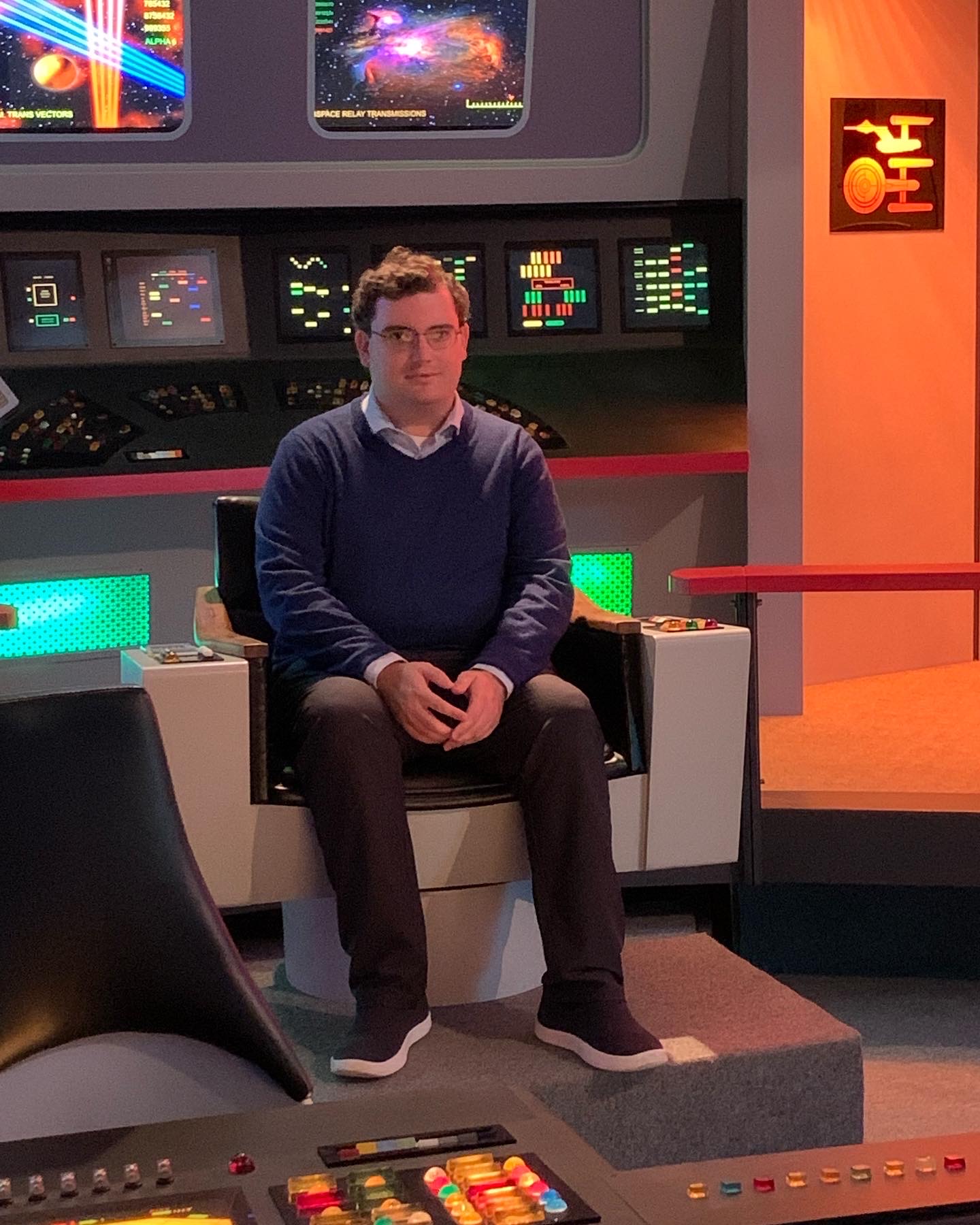
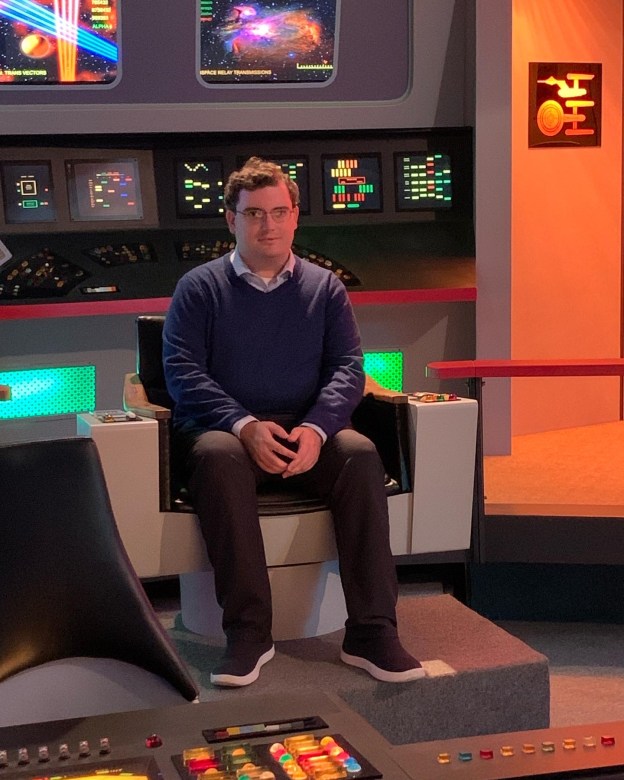
So, a few months ago when I learned there was a recreation of the sets of the Starship Enterprise in a building in Ticonderoga, New York, I knew I had to pay a visit. I arranged things with my good friend Alex Brisson, and we made a weekend trip out of it, visiting the Star Trek: The Original Series Set Tour around noon on Saturday, 17 September. The sets were built by a local guy named James Cawley, who interned on the production of Star Trek: The Next Generation at Paramount. Over the intervening years, the team in Ticonderoga have built with meticulous detail the sets of that original Enterprise as they appeared on the soundstages at Desilu Studios in the late ’60s. In many ways, the tour is both an opportunity for fans to experience walking on board the Enterprise as much as it is for film and TV buffs like myself to see what a TV set from the ’60s would have looked like.

When we walked on the bridge and saw all the stations set out in their circle, the captain’s chair in the center of the room, most of the people in our tour were hushed, a sense of respect among us. I got a chance to sit in the chair, as did everyone there, and I’ll admit the picture of me sitting there looks a fair bit deer-in-headlights as I couldn’t decide what to focus on with so much around me to see. For me, the original Trek isn’t necessarily the show that I prefer the most, that’d have to be Deep Space Nine with Next Generation and Voyager close behind it, but it spoke to a common thread in my life over the past two years as I’ve continued with my own work and studies while in the evenings taking an hour or two to watch another story set a few centuries down the line.

I think the thing that has kept me so interested in Star Trek is how aspirational it is. Unlike so many other futuristic films and shows out there, in the stories told here humanity has figured out how to get out of our cycles of violence and greed and work with the best parts of our nature to achieve the closest we could ever come to returning to Paradise here in our own mortal lives. They are stories that say, “no matter how bad things may be now, no matter how much the pandemic and all the other troubles that came out of it have become, there’s always hope.” 

I’ve always been one to trust in the fundamental goodness of humanity, it’s an idea that really does have some deep roots in my Catholic faith, as well as in my lived experiences. I’ve been fortunate to live the life I’ve led so far, in the places I’ve lived and with the people I’ve known, family and friends who I’ve loved. The seeds of a better future are laid in that fertile soil of hope. Had I grown up in the midst of the wars that my country waged over the last 20 years in Afghanistan and Iraq or in a country with less opportunities for success than my own, my worldview would likely be quite different. Yet if we are going to ever get out of this mire we’ve been in for so long, our adolescence as a species as Carl Sagan put it in his novel Contact, then we’ve got to let our hope for a better tomorrow guide us just as much as our cynicism and bad memories of past wrongs guide us now.

In the future that Star Trek depicts humanity finally begins to overcome our faults in the last half of the current century when first contact between humans and an alien species, in this case Vulcans, occurs. Our technology, and their helping hand (however hesitant it may be) moves humanity up from an age of nation states and superpowers battling each other for supremacy and resources on Earth and into a new age where humanity is one small island in the great ocean of Space, learning to live amid our galactic neighbors, and finally contributing to the creation of a Federation of Planets in the mid 22nd century that brings about a new Golden Age of sorts not just to us on Earth but to many other worlds floating in this cosmic sea.

It’s fiction, I’m well aware of that. It’s a collection of stories dreamed up by writers and showrunners over the past six decades that could very well remain stories in our cultural memory. But maybe there is some room for our future to be more peaceful, more prosperous, and more equitable than our present is or our past ever has been. In the decades since Star Trek first premiered in 1966 so many technologies inspired by the shows have become realities from tablets to personal communicators to now virtual reality taking the place of the holodecks and holosuites of the Next Generation, Deep Space Nine, and Voyager. I’ve been drawn to these stories because they came at just the right time for me. I began watching Voyager in the long dark winter of 2021 when I was preparing for my Comprehensive Exams. That winter, being so far from home and so isolated by the continuing pandemic, I found the story of a lone ship lost 70,000 light years from home to resound with my own situation. These are stories that laud curiosity and teamwork, and while just stories with the odd bizarre plot or weekly new alien with different nose ridges, they offer us a vision of what our world could be like.

Why not give that future a try?

The Artist

This week I'm reflecting on the 2011 Best Picture winner "The Artist" and introducing a new segment to The Wednesday Blog in an interview with my friend Alex Brisson about the film. Alex Brisson's website: https://www.alexbrisson.com Star Trek: The Original Siblings Podcast: https://stosibspod.buzzsprout.com Brissflix: https://www.alexbrisson.com/brissflix The musical interlude in this episode comes from "April Showers" recorded by Gene Rodimich's Orchestra in 1922. Listen to the full version here: https://freemusicarchive.org/music/Antique_Phonograph_Music_Program_Various_Artists/Antique_Phonograph_Music_Program_04072015/April_Showers_-_Gene_Rodemichs_Orchestra/

This Week: Alex Brisson joins me for a conversation about The Artist

Last week after finishing my daily Jeopardy! viewing I decided to turn to Netflix for the first time in a while and see what was on my watchlist that I hadn’t touched recently. Perhaps the inclination to turn to Netflix instead of my more frequent streaming services, notably Paramount+ and PBS, might well have been urged by the recent poor market performance of the streaming giant following its first poor quarterly performance in its history. Still, there are many wonderful shows and movies to watch on Netflix, and one in particular caught my attention. 

I first saw The Artist back in 2011 when it was playing in the theatres. I went with a group of friends from Rockhurst to see it at the now old Tivoli Cinema in the Westport neighborhood of Kansas City, and for whatever reason the people I went with decided we would get there about halfway into the film, something which annoyed me because this was one that I really wanted to see. We took our places in the back row of the theatre with about 40 minutes left in the 90-minute picture. I enjoyed what I saw but felt cheated at not getting to see the entire thing, and for whatever reason I never got around to going back to the Tivoli to see it again in full. So, when I saw it was on Netflix a few years ago now I saved it to my watchlist and then never got back to it. Therefore, last week when I saw The Artist would be leaving Netflix that very night, I decided to not overthink it for once and pressed play.

What followed was everything I hoped for. Longtime readers of this blog will know I’m a fan of silent films, old friends will remember I even made a few in high school, which honestly was as much due to the poor quality of the sound that my video camera could record at the time in the late 2000s and early 2010s. I’ve written in the past in this blog about how Charlie Chaplin’s The Gold Rush touched me and spoke to me of a loneliness I truly can relate to now in grad school, and I think that blog post speaks to the unspoken power of silent films to sing directly to human emotions through visual cues only. The visual metaphors that abound in The Artist are loud and clear, as if shouting from the rooftops, yet they are iconic in their heritage from the theatre and ballet, art forms that served as some of the roots of silent film itself.

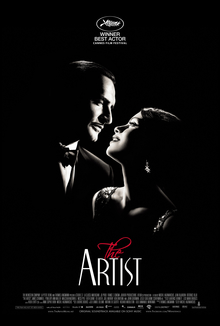
The Artist tells the story of a Douglas Fairbanks type of leading man, George Valentin, played artfully by Jean Dujardain, whose career playing the same mustachioed hero over and over again is eclipsed by the coming of sound in 1927. Into the scene walks the young extra Peppy Miller, played joyfully by Bérénice Bejo, whose own career takes off as Valentin’s descends. Valentin has many opportunities to maintain his triumph through the transition to sound, yet his fear of change and his pride make him tumble from the heights of stardom like Icarus at the roaring heat of the Sun’s rays melting the wax on his silent wings.

The film’s message is one of emotional turmoil in distress, Valentin falls as far as he can in life, almost to the grave itself, yet he continues to have people around him who love and care deeply for him. Among them first and foremost is Jack, his beloved dog and quite likely best friend, played terrifically by Uggie, a Parson Russell Terrier, who stayed with Valentin through thick and thin, even saving his life on the odd occasion. I want to pause for a minute here and acknowledge some of the discussion that was going on in 2011 about giving Uggie recognition for his work on The Artist, even perhaps an Honorary Oscar. One quote that made me do a spit take with laughter from a spokesman at the BAFTAs (British Academy of Film and Television Arts) was quoted in The Daily Telegraph as saying that Uggie wasn’t eligible because he wasn’t “a human being” and because of “his unique motivation as an actor was sausages.” I will say, I bet if we didn’t need to work for wages to survive there’d be many a person out there who might consider a good sausage a nice reward for a day’s work. Speaking of that, I need to add some brats to my shopping list …

Anyway, The Artist is special in that it was a silent film made 84 years after the development of talking pictures. It is also one of the few fully black-and-white pictures to be made in the last few decades. Another one of note that I quite liked was the 2020 David Fincher film Mank about Herman J. Mankiewicz and the creation of Citizen Kane in 1939 and 1940. As such The Artist is a silent film made with 84 years of extra technical know-how. From what I could tell as a silent film buff the creators of The Artist did a great deal to make it authentic to the period it sought to depict from the lighting to the camera angles, to the profound metaphors through set design, such as the moments when Valentin finds himself looking into mirrors and seeing what he’s become or the way in which the creators seemed to be using new yet old-looking ways of telling their story.

When sound does appear in The Artist it’s as if an alien invasion has commenced. George Valentin’s first contact with sound comes halfway through the film in the form of a series of defiant noises that terrify the silent star. Later though once comfortable with it the sound returns and becomes embedded in the world of The Artist as something ordinary and wonderful at the same time. 


This week I’m reflecting on the 2011 Best Picture winner “The Artist” and introducing a new segment to The Wednesday Blog in an interview with my friend Alex Brisson about the film.

Alex Brisson’s website: https://www.alexbrisson.com

Star Trek: The Original Siblings Podcast: https://stosibspod.buzzsprout.com

Brissflix: https://www.alexbrisson.com/brissflix

The musical interlude in this episode comes from “April Showers” recorded by Gene Rodimich’s Orchestra in 1922. Listen to the full version here.