Category Archives: Reviews

Books to Read: “The Fault in Our Stars” – Katherine Blanner

Katherine Blanner writes the Books to Read column for The Tern.

Katherine Blanner writes the Books to Read column for The Tern.

Every high school girl has a chick flick that they are obsessed with. It has transitioned from The Notebook to the Twilight saga, to The Vow, and now has become, undoubtedly, The Fault in Our Stars. John Green’s novel was published in 2012, dispersed evenly among the nerdfighter population and those simply seeking “feel good” books. It has recently become a film, enjoyed primarily by those who possess estrogen. All of the reviews of such a book have been positive, however, most discount for the true moral of the entire novel.

Briefly recall Aesop’s fables. Does not every story end with a lesson? These gems of knowledge, a take-away, if you will, plague every book, film, narrative, or even piece of music known to mankind, be it intentional or unintentional. This, again, is the case for The Fault in Our Stars (TFIOS). Examine first the novel itself. It is a pleasant little love story of a terminal, cancer ridden girl and a super hot smart boy with one leg. They meet on page four and instantaneously fall in love. Flirting prevails, they obsess over a book, meet a certain author, and then the boy dies. Every girl reading it cries.

I must admit to not being “every girl.” I did not find TFIOS a compelling novel that challenged my philosophical outlook on life, therefore I did not weep from its tragedy. However what I did find was a portion of John Green’s outlook on life. He is searching, just as we all are, to find purpose, happiness, and therefore meaning. In his novel, the love struck teenagers, a bit melodramatic and Romeo and Julietted, are dually searching for meaning. The struggle of cancer is so real, immediate, demanding, and tragic that it does become, in a sense, their religion. This is the meaning of their life, to get over cancer. Searching for more, Hazel and Augustus turn to a book, as many of us have in times of tragedies. However, theirs is not the inspired word of God, but rather a book that relates to them particularly well, “An Imperial Affliction.” This book becomes their bible.

Here is the end of their search for religion, in which they both are unfulfilled. It must be understood that this is reflective of John Green. However, Green rarely reveals his ideals of religion or theism, so it cannot be confirmed. Nevertheless, it can be assumed, from The Fault in Our Stars and his past works, that he is desiring of religion and coming up empty.
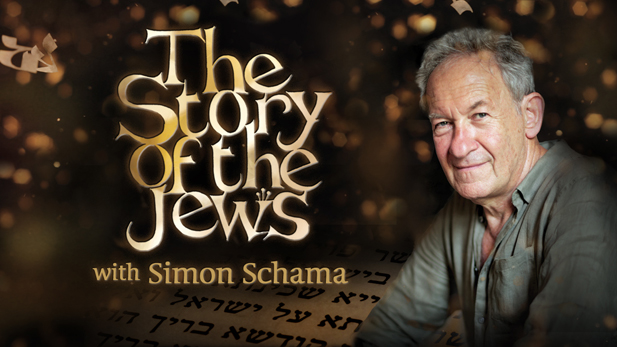

“The Story of the Jews”, Simon Schama’s Masterwork

Kansas City – When I first read that PBS would be broadcasting a new Simon Schama documentary, happy memories came to mind of his only pervious work that I have had the pleasure of seeing, The Power of Art. His latest documentary, which Andrew Anthony of The Observer also called “his greatest” was simply sublime storytelling. The series, which runs in 5 parts, covers Jewish history from the earliest instances in the archaeological record of there being a Jewish people in the Near East to the modern struggle of identity for those residing in Israel and Palestine, though where Israel ends and Palestine begins has been a matter of some confusion for a few generations now.

Image

Courtesy of the BBC.

As a historian-in-training I found Schama’s style of telling the story of his own people to be inspiring for my own goal of eventually telling the story of my own people, the Irish diaspora. Schama’s reasons for studying history as a profession, because “We are our story,” we are the source of the history that we, as historians, study. This is almost word for word my own chief reason for studying history. That is something that Schama seems to connect to with his latest documentary that many other historians fail to see, that history is nothing without being an inheritance from the past to the present. Schama’s way of telling the story of his faith made me, an Irish Catholic American, feel as though not only could I understand some elements of the Jews troubled history, with both of our peoples often being at the receiving end of some bigger power’s brutality, and with his frequent remarks on the Jewish sense of humour developed through centuries of oppression and exile. Yet, despite these, and many other, commonalities, the story that Schama tells is very much a Jewish one. The very fact that the Jews have made it through all they have is testament not only to the existence of God but also to the tenacity of the human will to survive.

Schama is at times whimsical bringing the viewer into his personal life at the synagogue and at the annual Seder, whilst at other points he brings the viewer into the darker, dolorous parts of what it means to be a European Jew in a community that is now a mere shadow of its former self. His visit to Lithuania, his family’s homeland, is one such moment. A particularly poignant point came when Schama proceeded to explain just how the Lithuanian Jews in a particular shtetl were rounded up, tortured, and killed en masse by the Nazis during the Holocaust. Likewise in its poignancy for me was the intense description that Schama used to conclude his telling of the story of the expulsion of the Jews from Spain by Queen Isabella, more famous today for sending Columbus to the Americas. He recounts how the Spanish king ordered his Christian subjects, “Not to harass or disturb the Jews in the process of packing up and selling off synagogues, and lands, and possessions. Get them out of here in peace and as quickly as possible, to which you want to say ‘How very considerate.'”

What sets Schama’s documentaries and books apart from many other historians is how dedicated to his work he has become. Especially in the case of The Story of the Jews, where Simon Schama invites us, the viewer, to join him on a journey into his own family history. It’s an invitation that I would highly recommend be accepted.

To watch Simon Schama’s The Story of the Jews online in the United States, please click on the following link.

Haifa Symphony Orchestra warms its audience’s hearts

Kansas City – Arriving at the Kauffman Centre this evening, I found myself pleasantly surprised at the choice of repertoire by this evening’s entertainment. Israel’s Haifa Symphony Orchestra as a part of the Harriman-Jewell Series performed a programme of Weber, Rachmaninov, and Tchaikovsky, which did a good job at exciting, and thrilling the audience with each passing note. Sadly, that audience was only at about half capacity, in large part due to the inclement weather in the form of snow that is currently falling upon a Kansas City unhappy at its presence.

Under the direction of Polish Maestro Boguslaw Dawidow, the orchestra made a resounding and fantastic proclamation of presence with their performance of Carl Maria von Weber’s Overture to Euryanthe. The music, which was quite striking of the period and art of its day, resounded about the hall, thrilling everyone who was there to listen.

The Weber was very well an overture for the brass and percussion, setting the stage for their spectacular performances in the second piece, Rachmaninov’s Concerto No. 2 in C minor, Op. 18. The orchestra was joined by excellent Israeli pianist Roman Rabinovich, whose talents at the piano are absolutely fantastic! I thoroughly enjoyed Rabinovich’s performance. His encores were equally thrilling, the former of which exhibited his prowess and the power of the music itself, which ended with the piano being forced back at the emotion of the piece itself as Rabinovich jumped up to take his closing bow. His performance of Andrew Lloyd Webber’s Angel of Music was quite charming, calling forth reminiscence of sweet memories.

Image

Helzberg Hall at the Kauffman Centre in Kansas City, tonight’s venue.

The second half was made of Tchaikovsky’s powerful Symphony No. 4, which began thrillingly, continued melodically and joyously in the second movement, danced through the third, and concluded with a bang in the fourth movement. Dawidow’s prowess as a conductor was quite well exhibited in this performance, in which his control and leadership of the orchestra was unlimited and omnipotent, like the music he conducted.

I was equally happily surprised by the two orchestral encores, the Theme from Schindler’s List and Sousa’s always happy Stars and Stripes Forever. The concert seemed themed at a mix of, “Well, we have tickets, might as well go,”, “They’re from Israel!”, and “Let’s enjoy the music.” After all, the latest reports from the motherland of Rachmaninov and Tchaikovsky have not been promising for peace. God willing, things will improve there.

In totality, I fully enjoyed tonight’s concert by the Haifa Symphony Orchestra, and I look forward to hearing them again in the future. If any members of the orchestra do read this review, I would just like to wish them good luck and safe travels out of Kansas City in the next few days.


“Son of God” – Appealing to its core audience

Kansas City – As a Catholic, whenever I think of the Life of Jesus the image of sitting in Mass when I was in 1st grade during the 1999-2000 school year springs to mind. Not only was the Church celebrating the new millennium, but also honouring the 2000th birthday of Jesus of Nazareth, at least according to the traditional calculation. For me, it still seems a bit odd to make a film about the Life of Christ, after all how does one find an actor to portray, well, the Son of God? In this way I do kind of agree with my Muslim friends and neighbours in using their arguments for not portraying Muhammad in art by saying that perhaps such a holy figure as Jesus should not be portrayed on film as He is God. However, Jesus was also a human being, and a fairly well-spoken one to boot, so in another way it does make good sense to depict his life on the screen.

Image

Diogo Morgado who plays Jesus. Courtesy of IMDb.com

To be brief, Son of God was not quite my cup of tea. I found myself laughing through much of the first half, between the corny dialogue, at times poor CGI, fairly unconvincing acting, and the fact that Jesus was wearing makeup. However, the film began to lose its serious tone when they introduced the characters by their modern English names. Yes, yes, I know, this film was made to be seen by the masses, much more so than Mel Gibson’s epic of 10 years ago, but at the same time it just sounds weird to hear a little boy running down a street in a small Jewish town shouting “It’s Jesus!” I feel that in this instance, as in any historical film, the best first step towards keeping the seriousness of the piece there is to keep the characters’ names the way they were in their lifetimes. So, rather than Jesus, call Him Yeshua (ישוע), or instead of referring to our narrator, St John the Evangelist, as “John”, why not call him Yovhann (יוחנן). I will say on that matter, that as an Irish speaker, referring to Jesus as Yeshua makes more sense as in Irish His name is Íosa. And while I’m on the topic of names, the whole “You are Peter, the rock, and upon you I will build my Church” loses its meaning when Simon Peter is referred to as Peter rather than Simon before that in the film. Also, I wasn’t aware that St Thomas was ginger until tonight. That must have made him stick out quite terribly during his mission in India.

My biggest complaint with the film is its directing. Firstly, we didn’t need the “hero shot” of Jesus and St Peter in the latter’s fishing boat just after making the big catch. After that is the repetition of captions whenever the scene changed to a different location. I think after the first time seeing the poor CGI overview of Jerusalem the viewer should be able to remember what they’re looking at, we don’t need reminding thereafter. Finally, there were some key elements of the Passion that were missing from this depiction: the Washing of the Feet, St Veronica fully enfolding Jesus’ face in her cloth, Jesus stopping to talk to the Women of Jerusalem, and the mixture of blood and water coming out of the wound pierced by the Holy Lance. Portuguese soaps actor Diogo Morgado gave a mixed performance as Jesus. Like the film itself, I found that his acting improved from when he arrived in Jerusalem on Palm Sunday.

On the other hand, Son of God does a good job appealing to its target audience: Protestant Americans. I saw a few episodes of the original History Channel miniseries The Bible from which much of the footage in Son of God comes, and have to say that I was turned off of the show quite quickly by the fact that every time a commercial break came, along with it was at least one, though often two, ads for Christian Mingle. Honestly, the show’s creators did a good job at avoiding any major sort of controversy in this film, which is more than I can say about the miniseries, but in the attempted avoidance, so much of the reality of first century Palestine were lost.

For example, I find it hard to understand why there had to be characters of every racial background, except East Asians, Pacific Islanders, and Amerindians in the film. If the director was that concerned with avoiding racial issues, why not just make all of the characters, um, I don’t know… Middle Eastern? Then again, it might concern the core audience that Jesus and the Disciples were from a region of the world that today is by majority Muslim. After all, the present must be taken into account when portraying the past. Oh, and don’t get me started on some of the oddities involved in the film’s Romans.

In the end, I’d say if you want to go see Son of God, then go see it. It is an interesting film, that has a unique take on the Life of Christ. However, the full heart-wrenching emotion of the Passion simply is not entirely there in this production, nor is the true majesty of just how fully human and fully divine Jesus was. If you want to see that full emotion, my recommendation would be to watch Gibson’s Passion of the Christ.

Netflix’s “House of Cards” comes into its own

Image

Don’t worry, there are no spoilers below.


Kansas City – A few weeks ago I published my first review of a “television” show. I find it amusing that my first TV review should be of the first big-budget show to be produced and broadcast by an online-only broadcaster. In January, I wrote about how the first season of Netflix’s House of Cards, starring Kevin Spacey and Robin Wright as Congressman Frank Underwood (D-SC) and his wife Claire, related to its British parent.

Like the country in which it is set, this new American House of Cards needed a while to set itself up as an independent show. However, with the start of Season 2, Netflix’s masterpiece of drama truly set itself apart from its roots in Westminster. I found the second season to be far more thrilling than the first. The speed by which the action moved, balancing the need for both quick and slow plot lines, was exhilarating. There were quite a few moments over the past fortnight that I found myself sitting forward in my seat, gasping “Did they just do that?” My first season mulligan of “Well, I know how the BBC version went” quickly became defunct and resoundingly out of place in this truly American drama.

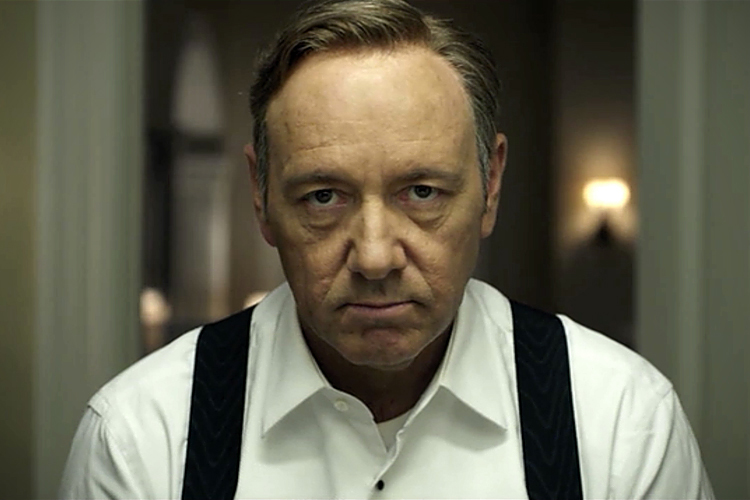
Image

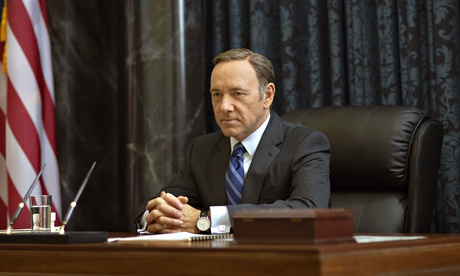
Kevin Spacey as Frank Underwood. Courtesy of “The Guardian”.

Spacey continues to refine and evolve in his role as Underwood, the epitome of the modern anti-hero, perhaps villain. He was able to balance out the ruthlessness and chessmanship of the political realm with the more mellow personal moments here and there throughout the season. I found myself amazed that even he as an actor going off of a script could keep up with the many twists and turns, the double and triple bluffs that lace the plot in such a fashion that they began to seem almost too fantastic for the politics of the reality (or at least I should hope, though perhaps naïvely, so).

Image

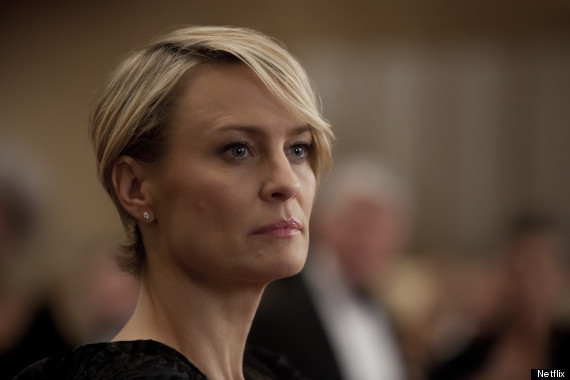
Robin Wright as Claire Underwood. Courtesy of “The Huffington Post”.

Complimenting her Golden Globe award from last month, Robin Wright’s performance as Claire Underwood continued to evolve just as much, if not even more than Spacey’s role as her husband. I found Claire much more likeable after a while in this season than I certainly did in Season 1, though the same characteristics that made me wary of her in the first season are certainly still present in her character. After seeing the second season, I find myself hoping, again perhaps naïvely, that Claire Underwood won’t turn out as Elizabeth Urquhart (the wife in the BBC series) did, as a sort of Lady Macbeth to counter Frank Underwood/Francis Urquhart’s Richard of Gloucester (Richard III).

Beyond the acting, the runaway golden winner here has to be the writers. Their work is truly a masterpiece of drama that certainly does a good job at expressing the emotions and desires of our time, especially in the political realm. Netflix’s House of Cards is a drama for our time, set in our time, featuring us, and calling upon us to ask ourselves how we feel about what we see in the mirror that the series offers the United States in 2014.

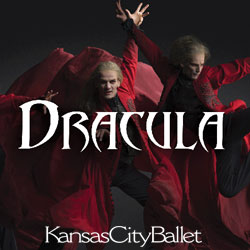
“Dracula” seduces Kansas City

Image

Courtesy of the Kansas City Ballet

Kansas City – Don’t worry about the title of this review, there are no vampires afoot in Kansas City to my knowledge. Rather, the Kansas City Ballet has released a different sort of vampire onto the theatregoing public. Their new production of Dracula, which opened to a nearly sold-out theatre at the Kauffman Center, was seducing and sumptuous to the fullest degree. From the fantastic modern score to the dancing to the special effects that are possible in such a new and decked out theatre as the Muriel Kauffman Theatre, Dracula is a sight to be seen. Now, I should make note that I am not typically one to go to ballet. My preference generally is opera, theatre, choral and orchestral concerts, and smaller recitals. However, the chance to see what sounded like a stunning production wasn’t one that I was going to miss.

Dracula the ballet is quite similar to Dracula the novel. Generally it is very faithful to the original book. I know the story of Dracula more from the historical context of Vlad Draculea, aka Vlad III of Walachia, a fairly bloody king of part of modern Romania who spent much of his reign fighting off the Ottoman Turks. It is often thought that Vlad Draculea was the original inspiration for the Dracula of fiction. The KC Ballet’s production does a fantastic job showing the differences culturally between the far more old-fashioned Dracula and the far more modern Jonathan Harker in one moment in Act I when Harker first meets the vampire. Dracula offers him a deep bow of welcome, which Harker returns with a handshake.

I found the occasional use of the voice to be perfectly fitting for where it was used. There may have been a few too many screams here and there, though at times with such a subject as this one can never truly know if the screams are coming from on stage or beyond. Anthony Krutzkamp excelled as Dracula, showing the gracefulness that would naturally come with such an elevated age. The two dancers who played Mina and Lucy, Molly Wagner and Laura Hunt respectively excelled at their roles, showing their prowess and flexibility with each moment that they were on stage. Ryan Jolicoeur-Nye (Harker) did a fantastic job in Act I in his dance with Krutzkamp (Dracula). I was left astounded at how well they were able to move together, how fluidly they could let their bodies work in unison as Dracula steadily drove Harker to insanity.

I recommend this production of Dracula to anyone who has the chance to see it. The ballet runs at the Kauffman Center this weekend (22 – 23 Feb) and next Thursday through Sunday (27 Feb – 2 Mar). See this link for more details.

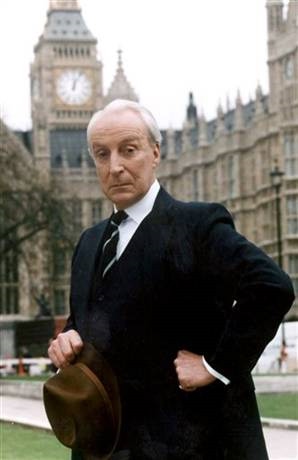
Washington and Westminster – Comparing both “House of Cards”

Image

Ian Richardson as Francis Urquhart.
Courtesy of the Wikimedia Commons.

Kansas City – It was funny to me that last night as I finished watching Season 1 of Netflix political drama House of Cards, one of its leading stars, Robin Wright, won the Golden Globe for Best Actress for her part in the hit series. I was first introduced to the Netflix series through its inspiration, it’s daddy so to speak: the BBC’s 1990 miniseries of the same name. The BBC’s version was based upon the novel by Michael Dobbs in a script adapted by Andrew Davies. It starred acclaimed Scottish Shakespearean Ian Richardson as Francis Urquhart, MP a Machiavellian Tory chief whip and is set in the years following the fall of Thatcher’s government in the 1990s.

I was first attracted to Richardson’s House in large part by the leading actor’s grandfatherly charm, which prevailed over his on-screen persona for the majority of the original BBC miniseries (it had two sequels, To Play the King, and The Final Cut). Also I am a bit preferential to the parliamentary system over its presidential counterpart, which added into my interest in the British series. Richardson’s Urquhart is a charming aristocratic MP, who feels cheated by the Conservative Party when he was not chosen as her successor for the leadership. What follows is a reign of vengeance that easily rivals that of Shakespeare’s portrayal of Richard III. In fact, another area in which I was drawn to the series was in the subtle, though sometimes verbal, references to Shakespeare, with Urquhart being based upon Richard III whilst his wife rings more true of Lady Macbeth.

Image

Kevin Spacey as Frank Underwood.
Courtesy of Salon Magazine.

In comparison Kevin Spacey’s Congressman Frank Underwood (D-SC) lacks the charm that Richardson so gracefully portrays. What the two characters do share is a dramatic penchant for ruthlessness and determination to do whatever it may be that is on their minds at any given moment. Thus far, considering that only half of the American version has been broadcast, I would say the character closest to their British original would have to be Doug Stamper (Michael Kelly), Underwood’s Chief of Staff. He shares many traits with Urquhart’s Junior Whip, Tim Stamper, MP (Colin Jeavons). Both are loyal at first to their superiors, but as time goes on Stamper, MP begins to see how truly evil Urquhart’s intentions are, a plot development which I will be sorry to see missing from the second season of Netflix’s rendition.

Likewise in the Netflix adaptation, I will say that thus far my favourite characters in the Netflix series are Congressman Peter Russo (D-PN), played by Corey Stoll, and his Chief of Staff and girlfriend, Christina Gallagher (Kristen Connolly). They seemed the most personable of the entire cast to me, and after all it’s nice after a while to find a love story that is very honest and quite beautiful in how human it really is. To counter this I was left rather confused by the relationship between Frank and Claire Underwood, the leading couple, who frankly (pun intended) seemed, perhaps more so than Francis and Elizabeth Urquhart (Diane Fletcher), like having Gen. Patton and Field Marshal Rommel living happily married together. Both characters are outwardly kind and considerate, but inwardly ruthless and willing to go to any lengths, yes any lengths, to see their goals achieved.

At the same time as Robin Wright was accepting her award in LA, I found myself mostly thankful that the first series of this all-too interesting show was at last over. One major complaint that I have about American television is that there can at times be too much of it. Consider that the average British season will run for about 6 to 8 episodes, whilst the average American one runs for about 10 to 20. After a while, especially in the context that I was watching it in, to review it in comparison to the BBC’s original, I found myself emotionally exhausted by the many bumps in the road that Netflix’s House of Cards has to offer. For a programme like this, 13 episodes per season is just too long to watch in as short a span of time as I did (in about half a week).

And yet, I am looking forward to seeing how Season 2 carries on the threads from Season 1, hopefully bringing them together for a good conclusion. In short, Netflix’s House of Cards is good in its own right, but I would still prefer to listen to Francis Urquhart’s asides mixed with a sense of laughter at the world than here Frank Underwood’s complaints and Machiavellian strategies on how he’ll make his next move.

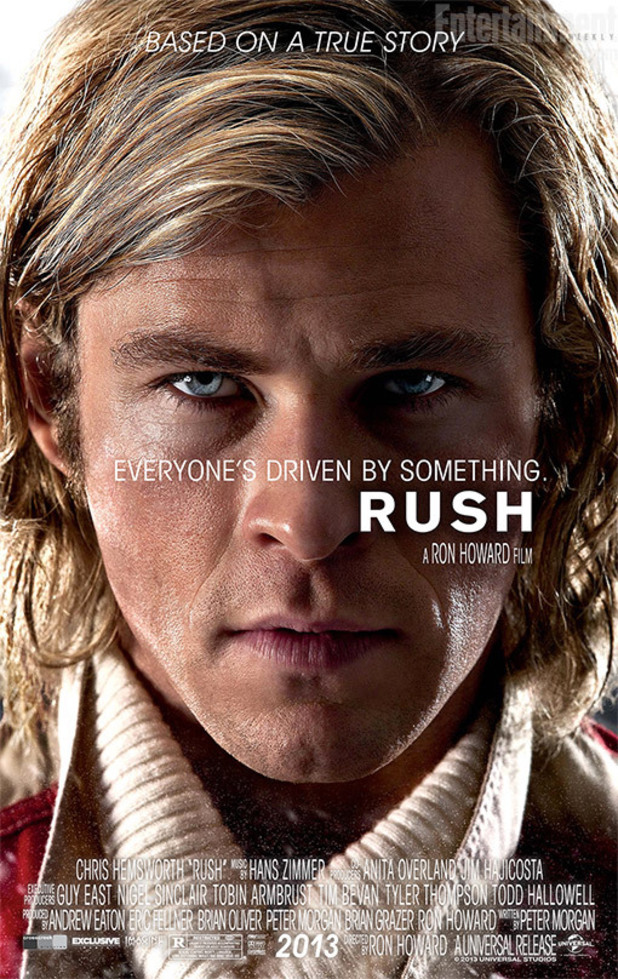
“Rush”: Ron Howard’s F1 Masterpiece

Kansas City – This afternoon, I went to see Ron Howard’s new film Rush with my parents at the AMC Ward Parkway 14 Cinema. I’ve been a lover of Formula 1 for three seasons now, since I was introduced to it by my Dad during the 2010 Belgian Grand Prix from Spa. Like the speed of this 2 hour film, my own F1 team support has changed quite a bit over the past few years, from initially supporting Renault F1 in 2010, to McLaren-Mercedes in 2011 and 2012, and now to Lotus-Renault in 2013. Of course, with the annual team shakeups, we’ll have to see where I end up come March, perhaps supporting the lads at Ferrari, perhaps staying with the Brits at either Lotus or McLaren.

Image

Anyhow, back to Rush. I really enjoyed this film from its start. To begin with, Howard is a master of painting his films with an extensive lavish palette of colour, from the blues and greens of that rainy 1 August 1976 at the Nürnburgring, home of the German Grand Prix, to an almost period ’70s look to the film from the more personal, more emotional scenes of the film. Being someone who is familiar with F1, I found the film quite rewarding in its ability to show another side to the sport that I’m not used to, from the top teams taking longer than 2.5 seconds for pit stops, to the pistons in the engine rising and lowering, to the roar of the engines starting at the waxing of each race, to the lack of Red Bull at the front of the starting grid, as is almost a given in the Age of Vettel.

The acting, with Chris Hemsworth as 1976 Champion James Hunt of Great Britain, and Daniel Brühl as his chief rival, 1975, 1977, and 1984 Champion Niki Lauda of Austria was also brilliant and quite believable. I personally was drawn more to Lauda than Hunt, as I, like the Vienna native, am a perfectionist in many respects, as my friends and family can relay. Hunt’s playboy lifestyle was in many ways his undoing, but also his way of coping with the stress of driving in a sport, which at the time took the lives of at least 2 drivers per season, a fact which has thankfully wained since the turn of the Millennium with further safety improvements on the cars.

I also loved Hans Zimmer’s soundtrack for the film. Of his past film work, I especially enjoy the soundtrack to King Arthur (2004). His style of composition seems strewn with heavy percussion, and sweeping Mahleresque melodies and thick, rebounding harmonies. As a musician in my own right, his music represents a modern style of cinematic composition that I aspire to for my own films.

Now, as with any film dealing with the life of James Hunt, or the history of F1 in the 1960s and ’70s, there’s going to be a lot of sex. I noticed there were a few comments regarding the extent that Hunt’s sex life is described in the film, as the commentator was rather unhappy with these scenes in particular. Here’s what I have to say: it’s a natural fact of life, and for someone my age it’s something to look forward to in the near future. Yes, I’m not a fan of the extent to which Hunt “slept around” with around 5,000 women, but at the same time I find it not healthy to demonise something which is a necessity. It’s like demonising sleep because we should be getting more done in line with that fine Protestant work ethic. There was a great sketch in A Bit of Fry and Laurie about a father complaining to his son’s headmaster for sex ed being taught at the son’s school, the father believing that his son “just sort of appeared one day.”

Image

Lauda in practice at the 1976 German Grand Prix at the Nürnburgring.

Rush is a fantastic film about one of the greatest sports of all time. Both as a F1 fan, and as a filmmaker, I adored watching this film. It wasn’t your typical sport film, following the underdog who goes through some sort of trouble, and begins to rise in stance to a great athlete. I’m sorry, but haven’t we had enough of these Southern USA set civil rights era sport films yet? This film was not even in the same league as those, it has different aims, different goals. There’s no real cause being supported, no character who is rising up from great intolerance. But after being bombarded by so many of those films, I’m glad for a fun, champagne soaked, break. Rush gives the American audience that opportunity to go to a sport film, and especially if you’re not familiar with F1, a chance to not know the plot before the film starts.

Hopefully some of those who are finding F1 for the first time will tune in in a few hours at 01.00 Eastern for the Japanese Grand Prix live from Suzuka. The Niki Lauda of the 2010s, Sebastian Vettel, is on the verge of winning his 4th Formula 1 championship crown. Whether it be in Japan, India, Abu Dhabi, Texas, or Brazil, history soon could very well be made, just as it was in that fantastic rivalry between the Austrian and the playboy from the UK.