Eight years ago, when I was a masters student in International Relations & Democratic Politics at the University of Westminster in London a question was posed in one of my first semester classes by the professor who asked “are we inherently good or bad?“ I raised my hand among the few in the room who argued that we are inherently good. That, at heart, we have evolved to trust one another, and to be kind, not only to our own tribe, our own community, but of those outsiders to whom we are in some way connected, as we are with our pets, or in human terms as we are with peoples from around the globe whom we come to meet on a personal level.
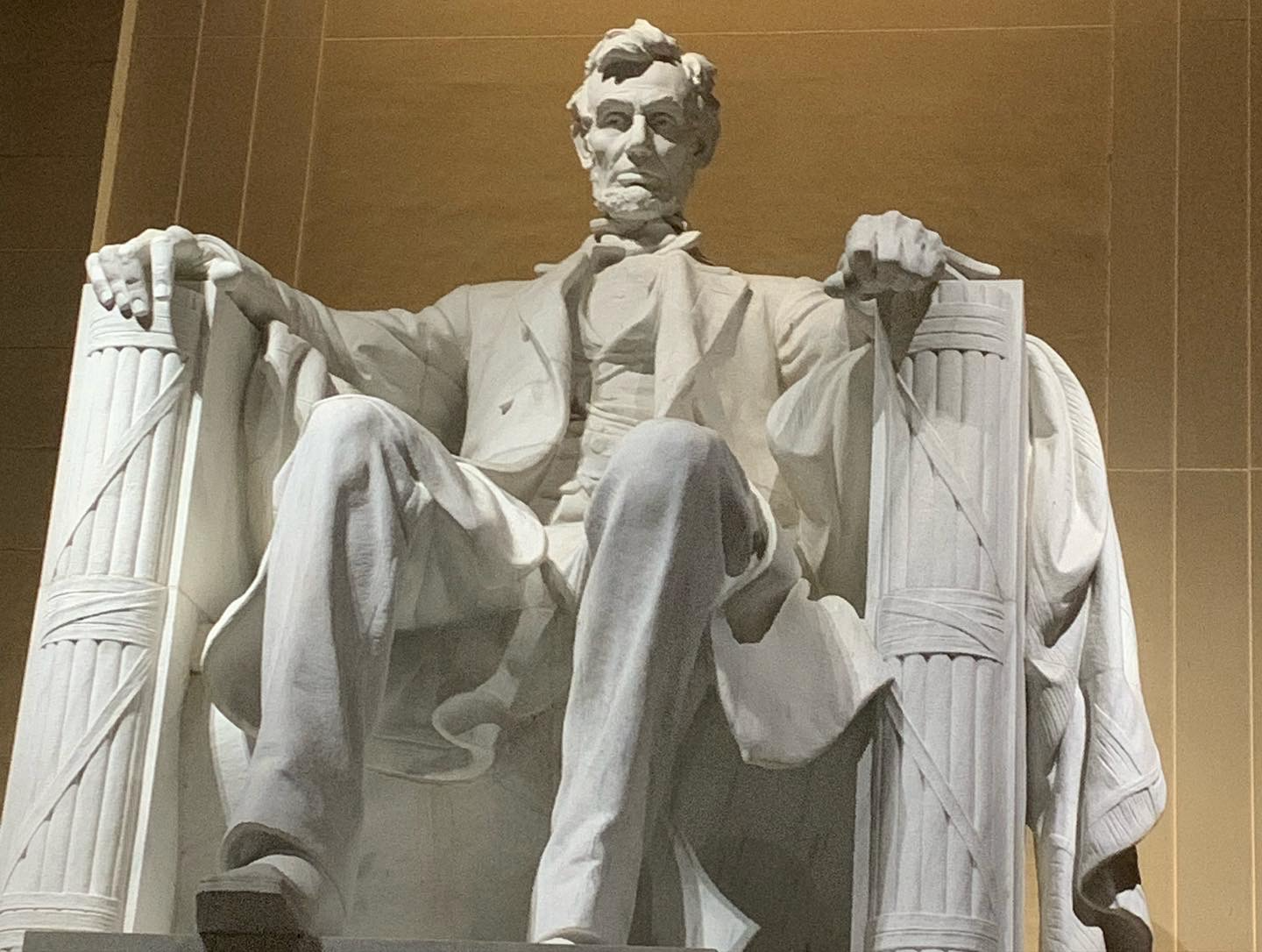
It occurs to me when thinking about some of the great and good figures in recent human history, and even going back several centuries, if not several millennia, that a great many of those figures were killed, their lives ended in acts of evil, in moments of malice. When President Lincoln gave his second inaugural address in March 1865, and called for us to “bind up the nations wounds” and to progress forward with the now immortal words that I have surely used on many occasions here on the Wednesday Blog,
“With malice toward none, with charity for all, with firmness in the right as God gives us to see the right, let us strive on to finish the work we are in, to bind up the nation’s wounds, to care for him who shall have borne the battle and for his widow and his orphan, to do all which may achieve and cherish a just and lasting peace among ourselves and with all nations.”
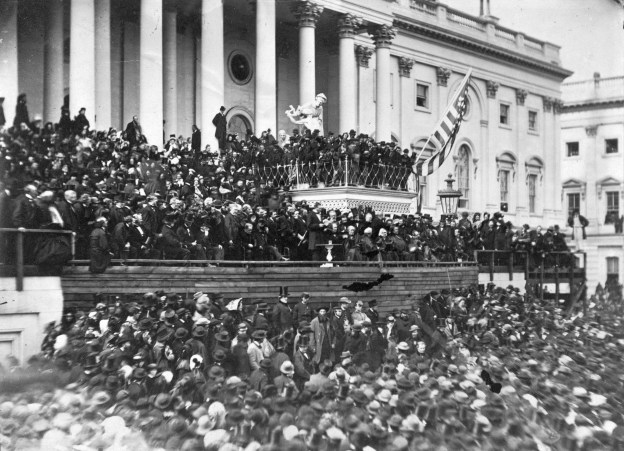
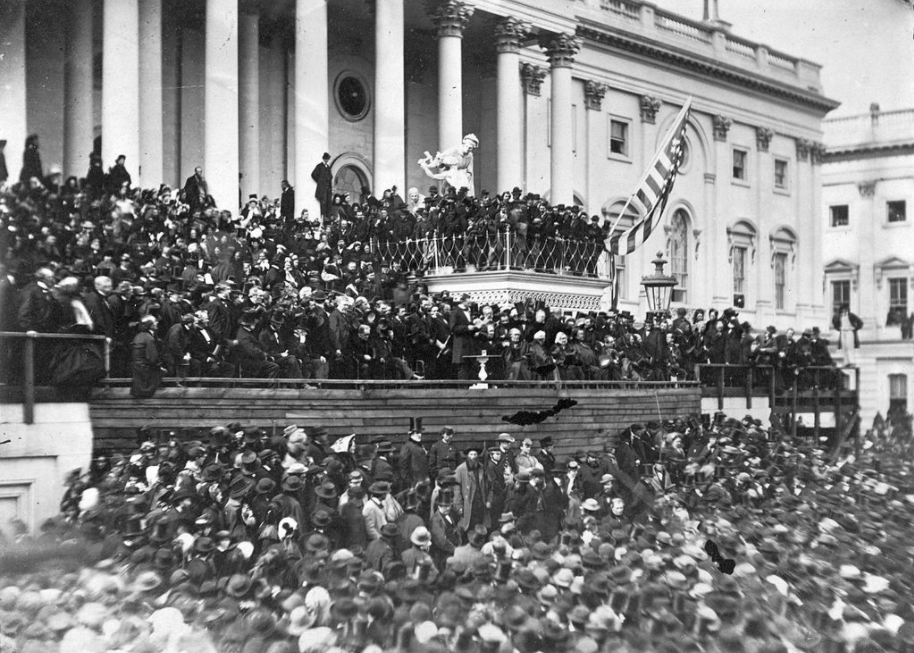
Yet there on the balcony above Mr. Lincoln in the famous photograph of his second inaugural address that depicts not only the president, but the crowd as well, one can just discern the face of John Wilkes Booth, the man who would assassinate Mr. Lincoln a little over a month later on Good Friday. Clearly then, Mr. Lincoln’s, message of reconciliation & reconstruction, not only of the nation’s infrastructure but also for the government to be more just, put pressure upon the nation’s heart to recognize that when we say all men are created equal that we mean everybody. Clearly that message didn’t resonate with his assassin. So where was the inherent goodness in John Wilkes Booth?
I think if we are to describe some innate human goodness to all of us, then we ought to recognize that it exists deep within us. We are like the strata that make up Earth’s geology, each layer representing a different age, era, or epoch in the long history of our planet in our own lives; our experiences with each passing moment add layers one atop the other, until as Aristotle wrote 23 centuries ago, we become truly wise through our lived experiences. So, our innate goodness must exist be deep within. I’m reminded of the line at the heart of the Return of the Jedi, the third film of the original Star Wars trilogy, in which Luke Skywalker tells everyone around him that he knows there’s still good in Darth Vader, despite all the evil that the fallen Jedi had committed. C.S. Lewis remarked in the final book of his Narnia series, that the eldest of the children who are the central characters in the Chronicles of Narnia, Susan, did not return to Narnia for the last battle, because she no longer believed in Narnia, for she had grown up and “put away childish things” to quote Saint Paul. Yet the best of us, or so our great allegories seem to tell us, have never really forgotten that childlike innocence, though some have never really been able to experience it, after all not everyone has the same happy childhood.
I believe that at the end of the day, the best way that we can truly find our goodness, our kind nature, is in the simple fact that at some point along the way we all want to be loved, and I would imagine for the most of us we all want to love others. I often wonder in the vein of Machiavelli‘s Prince if I do things out of a desire purely to love others, or out of a desire to make myself feel good, or out of a desire for others to love me? And which of these three is perhaps lesser than the others or is there a lesser and a greater, or are these three perhaps all equals? Is it okay to be selfish it for the right cause? I don’t know.
There certainly should be limits to vanity, I for one am not terribly fond of taking selfies, nor do I really care for watching videos of other people watching videos. Still, as many of the self-help people will say some degree of self-love is a good thing, and to paraphrase the old saying that appeared carved in the mantle above the great doorway at the ancient Library of Alexandria, “know thyself,” one should be able to love oneself before one truly begins to appreciate the people around them and by extension world in which they live. So perhaps it ultimately comes down to one’s environment if we live in a world where you’re taught that negative news and emotions and violence ought to be glorified then that’s the kind of stuff we are going to do. However, if we look at the world as a place full of beauty and wonder, and if we find a way to appreciate the great variety of humanity and nature at large and the incomprehensibility of the Cosmos, then I think we can truly begin to define ourselves by our inherent goodness again. What a wonder it is to be a part of our human family.
Words are at the center of all our political debates. They are at the center of our lives, the core of our existence. We would not exist as we do without words. Words have tremendous power to do good, to inspire people to achieve wonderous things, to rise above what they thought possible and make a better future. Yet words are also dangerous when poorly used. They can have the effect of destroying trust between people; they are capable of breaking up families and communities. Without common words we cannot have a common society.
I was struck last week reading in the New York Times how the protests following the recent Supreme Court ruling of Dobbs v. Jackson Women’s Health Organization were rephrased by the far right as an “Insurrection.” That is a word that has been far more justly levied at their own faction, whose actions on January 6th last year proved their lack of faith in a democratic society. Other words and ideas have been poisoned by the same fearmongers from Critical Race Theory to the Green New Deal. These are ideas and proposals that if considered in their true meaning have merit, yet any mention of them in the political square anymore will be met with the screaming banshees in the wings whose greatest weapon and sole power is the volume of their voices.
One such word which they have demonized by their own behavior, perhaps the most critical word to our democracy, is politics. It is taboo now to be political in a crowd when you don’t know everyone else’s own political views. A professional soccer team wearing practice shirts recognizing racial inequality is dangerously “politicizing” an otherwise family event. It’s curious to me because their own use of the word “political” has no bearing on the actual meaning of the word, nor on its origins.
The word political simply refers to the idea of the city, the polis in Greek. To be political is to be a citizen, an active member of society. To be political is to participate in government through voting, running for public office, and serving the people in the public sector. To be called political is one of the greatest honors anyone can bestow, for it means you care about something greater than yourself, you care about your community and want to contribute to its future.
In the ancient and medieval context, a citizen was far more particular of a person than today. The idea of universal suffrage is a modern thing, something that has been fought for down the generations and even still is being fought over today. Today though I believe the best way to describe a citizen is simply a person who wants to contribute to their own community. They need not have the papers conferring official legal citizenship in their country of residence, for even without those individual people can make a difference to their communities.
This is intolerable to those who demonize the word political. Why else would they make such an effort to poison an entire population against such an idea that at its core is meant to better their lives? It is intolerable to them because they know their views, as extreme as they are, are in the minority among their fellow citizens. There are generations of Americans who have come to recognize the benefits of democracy, and who have pushed us to improve upon those benefits already existing, that they might be extended to more and more people until eventually some day we may have true political equity.
Yet now, as has happened in every generation since the founding of the first English colonies on the East Coast 415 years ago the powerful voice of a small few who see democracy as a threat to their own interests has influenced the course of affairs in this country to the great detriment not only of we the American people but of humanity at large. I’m speaking of course of the West Virginia v. Environmental Protection Agency ruling made on the last day of the recent session of the Supreme Court. In that ruling the conservative majority declared that regulation should only be conducted through legislation. This means the President and any federal agency acting under the authority of the Presidency, even if acting in the best interests of the people they are sworn under oath to serve, have less ability to create broad regulations that are not expressly allowed under Acts of Congress.
The voices of a few who feel greater concern for their profits than they do for the future health of humanity and our home planet spoke up and were heard over the cries of the rest of us. I could say let’s trust in Congress to do their part now and legislate new regulations that will replace what was stripped from those executive orders revoked by the Court but those in Congress with the power to save us are also listening to that swansong of the soloists rather than the Dies Irae being belted by we, the chorus.
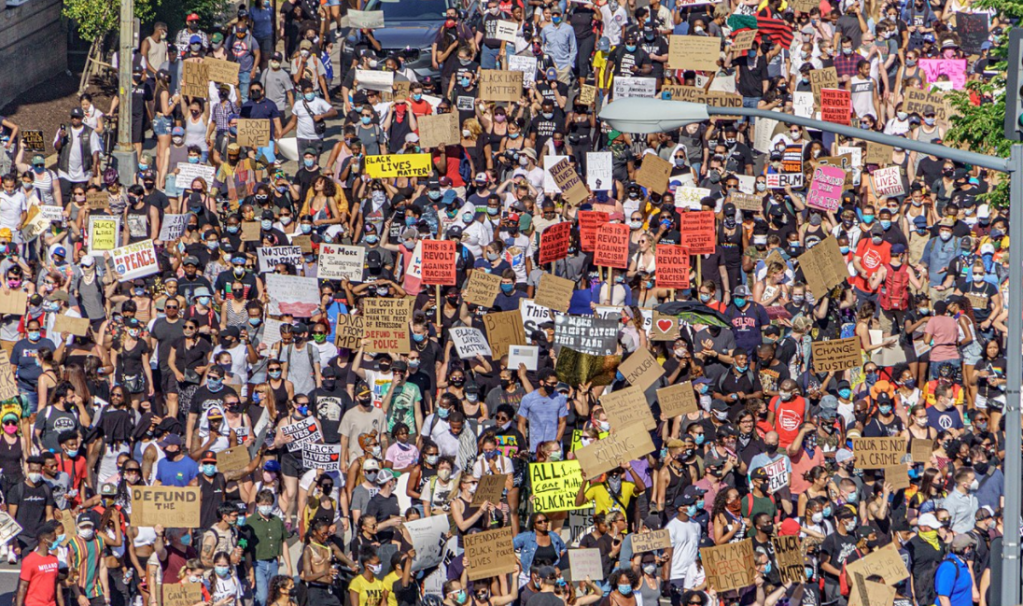
Our politics are in many ways broken by our extreme partisanship. It is this word, partisan that ought to be used when the far right uses the word political as a curse. We retreat into our slogans but don’t actually talk to one another. One side hears “Defund the Police” and the other “Law and Order” and neither leaves the table any better off. Rather, both parties find themselves far less willing to talk to the other, to find things in common with the other, to learn from each other. Once again, those fissures that threatened to make two countries out of one in that messy divorce of 160 years ago that left 6% of the population dead are beginning to show.
Do we really want to go down that path again? Do we really want to fall into such political disfunction that we cease to see each other as fellow citizens and instead as enemies? We have let the battle cry change from “E Pluribus Unum, Out of Many One” to “No Compromise”, leading us to rally ’round our own partisan flags to the detriment of our common threads. I want to cry out in pain every time I see the American flag used as a symbol by those who want to be exclusionary, by those who would see all it has stood for over these past centuries be replaced by the worst of our nature: by our greed.
2016 Super Tuesday Democrats Abroad Primary
As citizens of a democracy, we have a right to know, to understand, and to discuss these questions of who we were, who we are, and who we want to be. And, as citizens of a democracy, we do have the right to dissolve our democracy, to end the experiment that’s been running for so long. I recognize that our current federal system isn’t going to last forever, nothing does, yet I remain hopeful that when it does eventually take its leave that that system will be succeeded by something better, crafted by the wisdom and love of another set of founders inspired by the precedents set by the first, who will craft a new system with all the best traits of our own yet reimagined in such a way as to overcome the faults in our own today. Until then, we citizens are caretakers of this democracy. It’s a fragile gift passed down to us from our ancestors, which we get to treasure and improve as best we can so that when we pass it on to our descendants it will be in better shape than how we found it. Let’s do our duty.
The foundation of good government is good ethics, which I fully acknowledge can and are taught by many faiths and learned through religious teaching. The Golden Rule after all is in various forms the foundation of most major religions after the various commandments to love and honor God above all else. Those ethics –– treat others the way you would want to be treated, contribute to society in a positive way, build a better future for your children and their children to come, among others –– aren’t inherently tied to religion; they feature in many religious teachings but they themselves are not inherently religious.
A good society unbound by religion can also teach these morals. Some of the great humanists of the last century have proven that; great minds like Carl Sagan whose call to reflect on how we’re all residents of this one Pale Blue Dot in the vastness of Space. Like it or not, we all have to live together, and so our laws which govern our societies in a way that makes life better for all themselves ought to be built upon those same codes of ethics. It is possible for a society to legislate based on religion, to derive their laws from a common bond of faith. This has happened time and again in societies around the globe. Even in my own references to God exist in an otherwise secular republic.
Yet if laws are going to be written to dictate in a manner grounded in religious doctrine or the interpretation of everyday questions through one interpretation of religious doctrine then those laws must reflect the will of the whole society, not only one part of it. Show me a council of any type of scholars whether theologians, philosophers, economists, or historians where everyone has willingly and freely agreed on every issue of their own accord. I doubt there has ever been one in the long memory of humanity.
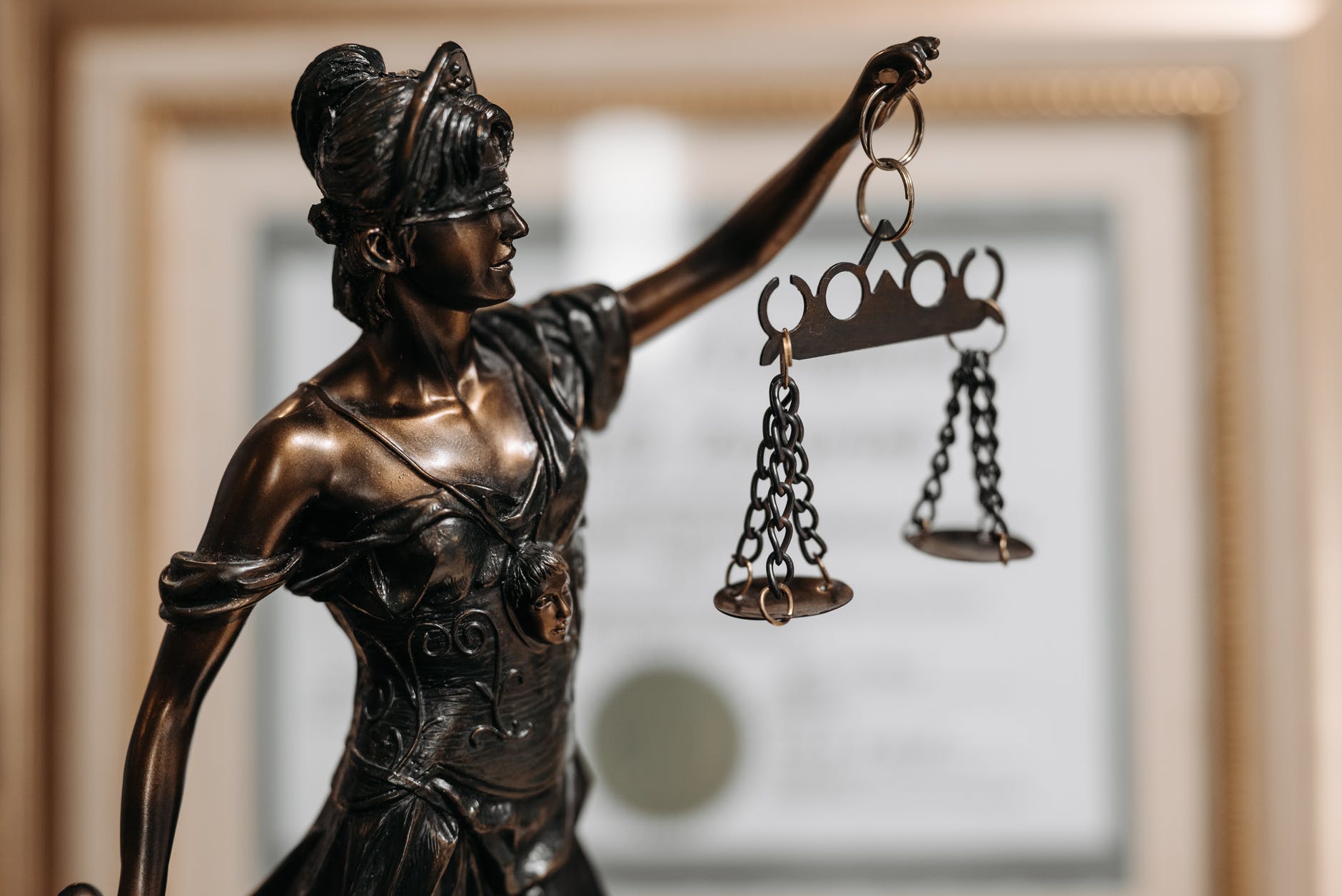
With that in mind any state which governs over a society made of a plurality of faiths should never legislate based on the teachings of one faith, lest they elevate that faith above all others. I left a religious social club in 2014 because they violated the core principle that in our country the church and the state should remain separate through their continued political fundraising and campaigning. A state cannot govern without the support and trust of the public in the blind justice of its institutions to craft, execute, and interpret the law in such a manner that is beneficial to the society as a whole.
A transgression of that trust would damage the reputation, the honor of the very institutions that form the foundations of this society. The wanton abandon of obligations and duties that come with high office is a great symptom for the corruption in our society today. Elected officials who have coopted their offices to support a narrow set of highly partisan campaigns at the detriment of their constituents who expect those they elected to be responsive to them and be their voice in the halls of power. A branch of government designed to be above the partisan fray that has dominated our legislatures since the Early Republic has too fallen into the mire, making decisions its members promised they would not make to overturn “the law of the land” as one such member said before the legislature in his confirmation hearings. Still, a profound conviction grounded in religion rather than civics has influenced two key rulings by that august body in the last week. Two rulings that prove how poorly the separation of Church and State is faring today in this country.
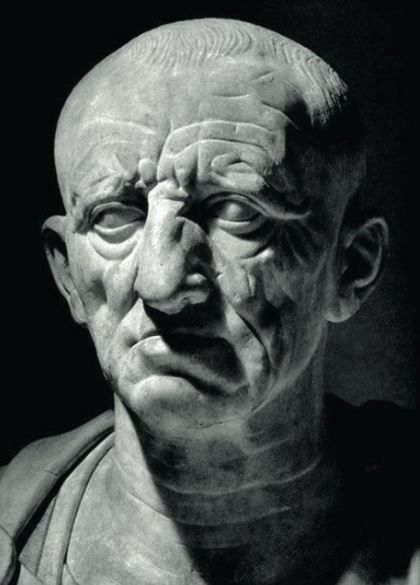
The support of these causes which drove the twin arguments forward to on the one hand expand the rights of the individual at the fatal expense of the society at large and on the other to deny the rights of the individual at the will of a few who after generations of single-minded clamoring like Cato the Elder before the Roman Senate that “Carthage must be destroyed” those particular rights are now revoked. Better options exist in other societies with other governments and other relationships between the Church and their states, yet here in a country so engorged by its own reflection that any action less than overt and aggressive nationalism is unpatriotic the power of the pulpit cannot be denied.
Cato the Elder
Carthāgō dēlenda est! | Carthage must be destroyed!
Cato the Elder (234–149 BCE)
Those other options, opportunities to improve our own quality of life in such a manner that the great debate at the heart of this affair would be resolved without any sweeping action to legislate prohibition as was done with alcohol a century ago. Still in our current state our bloated yet fragile national ego won’t allow for ideas to enter the narrative from beyond our borders lest we lower our guard and allow those distantly related bogeymen of Communism and Socialism to invade just as prior generations of proud Americans feared the influence of Papism and foreign interlopers.
Of all the songs from Handel’s Messiah the one that has always stuck with me the most is the aria sung by a female voice “If God be for us, who can be against us?” The chief issue at the heart of this stalemate in public discourse is that one side of the argument claims the blessings of Heaven behind their words, their actions, and their beliefs. To them anyone who opposes them opposes God, and the opponents of God are inherently wrong. Thus, there is no need for debate at all. I do believe that we humans have been fortunate from time to time to be able to interpret the Will of God, look no further than the Beatitudes or the Greatest Commandment uttered by the scholar of the law in answering his own question to Jesus in Luke’s Gospel,
“He said in reply, ‘You shall love the Lord, your God, with all your heart, with all your being, with all your strength, and with all your mind, and your neighbor as yourself.”
(Luke 10:27, NAB)
Are those public servants honored by the duty and responsibility to fulfill the obligations of their offices who legislate based on a very particular interpretation of the law of the land directed by their own personal religious beliefs truly doing service to the country in their actions? Are they truly acting out of love for their neighbor? This is a time when the durability of the institutions that form the bedrock of this society are being challenged in every direction both by those who see less need for democracy in their own self-interest and by those who seek to reform and revitalize those institutions to flourish for generations to come.
We must always act with an eye to the past that we build our generation on the precedents that have come before us, but with our mind turned toward the future that we today now build, that it will be a just and kind world for our descendants.
This week, how electric cars can contribute to the sanctions against the Russian government.
A few weeks ago, I released an episode about my first road trip in an electric car, and I was surprised to see that it topped the charts in terms of listener numbers for the next few weeks. Maybe it’s the topic, people just like electric cars. Maybe it was the picture I used that week of me looking like an executive standing in front of my Mom’s Tesla and a private jet at Kansas City’s Downtown Airport. Either way, you guys liked that one so here’s a sequel: Electric Cars, Part 2.
Today I want to talk to you about one idea I had of how we the United States, and our allies around the globe, can respond to Russia’s unprovoked invasion of Ukraine and move ourselves closer to carbon neutrality at the same time. Russia is one of the planet’s biggest oil producers, in fact I’d go as far as to say that oil is the backbone of Russia’s economy today, maybe not quite like Saudi Arabia or the UAE but on a similar vein. Here in the US, we’ve seen gas prices, which were already high, rise to levels unknown since the darkest days of the Great Recession. Gas prices here in Binghamton, New York range from $4.12 a gallon to as high as $4.35 a gallon right now. It’s likely that price is just going to keep rising, especially as our political leaders have decided to cut off Russian exports into the global petroleum market as a part of the wide-ranging sanctions levied against the Russian government and the ruling elite of that country in response to the Ukrainian War.
This morning I found myself thinking about the trips I have planned in the coming weeks. I knew that my usual $25 per tank of gas wasn’t going to get me nearly as far as I’m used to, and I’ve even gone as far as to cut some weekend day trips around Upstate New York and northern Pennsylvania from my schedule as a result of the rising fuel prices. Yet as I thought about my own trips I couldn’t help but smile at the thought of my Mom in her Tesla, one driver who wouldn’t be impacted by the rising fuel costs to the same degree. After all, Russia may be one of the great oil producers of our time but the electricity powering her Model 3 is locally sourced.
With this in mind I have a small suggestion: let’s use this moment of crisis globally and take the step to really begin transitioning wholesale our automotive industry from gas-powered cars to electric cars. We have the technology, which continues to improve day by day, and we know how to build the infrastructure for it, so why not take a moment of what could lead to great internal crises of long lines at the pumps and offer even greater incentives for people to trade in their internal combustion cars for EVs? We could even say it’s the humanitarian, or in the very American case that we like in this country the “patriotic thing” to do. The greatest innovations of our past have been born out of moments of crisis and trouble.
One big concern I know I’ll hear from the naysayers is that big oil won’t go for it, after all they have too much to lose in electric vehicles. To them I say, big oil would be idiotic to not see the potential in electric vehicles and start making the switch themselves. The easiest way for things to change is if we frame the change in dollars and cents, in profits. Greed, as a certain TV bartender would say, is the way to people’s hearts.
Of course, there are some issues with this particular idea. For one we have other shortages of raw materials needed to make the batteries and computers used in electric vehicles. And even then, the mining of those materials isn’t terribly green. In the short term though, one way we could begin to threaten the aggressors in Moscow with long term trouble would be to deny them their greatest source of wealth.
I for one look forward to the day when I won’t have to fill up gas on a weekly basis. The potential changes to how our society functions through the economic changes imposed by this switch to EVs, which guys is likely going to happen anyway, are likely to be one of the core things that define the current twenty-first century as distinct from the twentieth.
In this episode I talk about how FDR’s Four Freedoms from his 1941 State of the Union is pertinent to today.
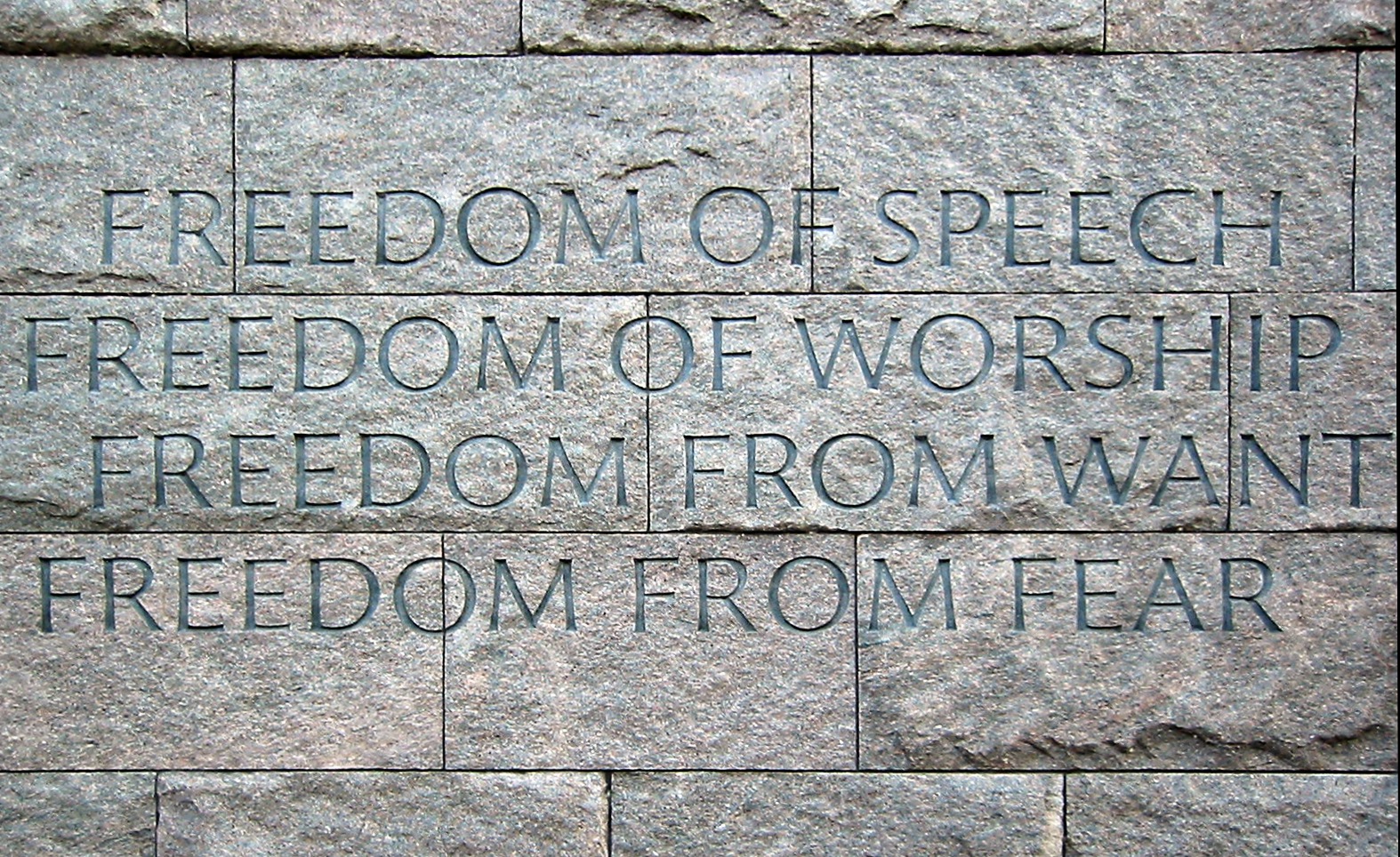
When I worked as a Teaching Assistant for the US History II class (1877-present) at the University of Missouri-Kansas City, the week that we’d discuss the Great Depression and the New Deal, I would always highlight President Franklin Delano Roosevelt’s Four Freedoms and spend a good deal of time discussing them, what they meant to Americans in the 1940s, and what they mean to us today. Chief among these for me has always been the most abstract yet primeval of these Four Freedoms: Freedom from Fear.
At the time he announced the Four Freedoms in his 1941 State of the Union Address, 81 years ago this week, FDR saw Freedom from Fear as “a world-wide reduction of armaments to such a point and in such a thorough fashion that no nation will be in a position to commit an act of physical aggression against any neighbor –– anywhere in the world.”
This spoke as profoundly to a world plunged into the worst war yet known in human history as it does to us today in a world where the instability of war has of late shown its face both in the form of terrorism and paramilitary attacks as well as in more conventional fighting around the globe. Yet now as I write this, headlines in the major papers and other prominent news outlets continue to warn of aggression from the likes of China or Russia against Taiwan and Ukraine, both conflicts that surely, we in the United States would be likely to involve ourselves in.
Yet beyond the terrible yet over-glorified world of weapons and war, I often think of this fourth freedom in other social contexts all the same. It saddens me, yet still doesn’t surprise me to know that now, nearly as distant from FDR’s presidency as Lincoln’s was from the Continental Congress, we still are a country that lives in fear of enemies both foreign and, yes, domestic as well. This cycle of fear has led to so many of our fellow citizens buying guns for self-defense, often in response to the frequent mass shootings and other homicides that are a wrathful shadow over our lives.
This cycle of fear has kept us indebted to our for-profit health insurance industry, without which we couldn’t afford to pay the medical bills that result from the healthcare that keeps us alive. I thank God that my employer has good quality health insurance, because honestly if I were given the choice of surviving or going into severe debt to pay for an emergency surgery or other procedure, I’d have to really think about that before making a decision. What value is there in life if you can’t really live because all your earnings are going to pay off not only your debt but also the interest on that debt?
Fear can drive us to achieve better things, to overcome our fears, yet it can also inspire us to do terrible things. Fear of the other, fear of difference, is the root cause of so many problems that beset our country and humanity at large. I study this in the context of how the idea of the savage was understood in Renaissance natural history in my professional capacity as a PhD candidate in history.
One of my favorite episodes of Star Trek: Voyager provides a clue as to how we could truly achieve the dream of this fourth freedom. In the second season episode “The Thaw” Captain Janeway and the crew of Voyager take on an AI that was created by the imaginations of a group of interstellar settlers who put themselves into cryogenic stasis for decades. That AI ended up manifesting itself as Fear itself and proceeded to terrorize the settlers and eventually the Starfleet officers from Voyager who enter the stasis chambers to try and deactivate it from the inside. At the end of the day, Captain Janeway herself confronts Fear and proceeds to give the best argument for power that I’ve ever heard; power only lasts if its authority is unchallenged. Fear only lasts if we are afraid. At the end of the day, the answer it seems is coming to terms with our own agency, our own ability to make decisions for ourselves.
We as the United States have become paralyzed by fear; there are reforms and changes we really should make but the people who could make them more often say it’s too dangerous to disrupt the status quo, to shake the foundations if only slightly. To quote another President, this time Mr. Lincoln from his 1862 “Annual Message to Congress”, “As our case is new, so we must think anew and act anew.” Times have changed, and with them the ways we deal with our government and its relationship with the people must change as well. We need universal healthcare; we need electoral reform that will fully protect the right to vote enshrined in the Voting Rights Act. We need to make the changes necessary in our educational system, policing, and in nearly every other facet of our society to tackle bigotry in every venomous form it takes. We need to rethink our immigration laws, unscramble them, welcome in people who want to become our fellow citizens, our friends, our neighbors, who want to contribute to our society by their presence within our borders.
Eventually, I dearly hope, we’ll finally achieve FDR’s fourth freedom. I look forward to a day when I, and everyone around me has nothing to fear. I’m a teacher, admittedly in higher ed rather than in K-12, but a teacher nonetheless, and here in the United States being a teacher means knowing that there’s always a chance someone is going to decide they need to attack the students, faculty, and staff at your school or university. In my classroom, while my first priority is to teach, in that situation my first priority is to ensure my students’ safety. I long for the day when I won’t have to worry about someone attacking my classroom, and frankly I know there’s a decent chance even if I don’t experience a school shooting firsthand that I’m likely to experience a lockdown because of one, and not just the frequent drills we did for school shooters when I was in high school.
We fear each other because we don’t trust each other, and a country comprised of citizens who are too afraid to trust one another is a country in peril. Everything that I said today could well be interpreted as a partisan statement. Think about that: fear itself has been weaponized for partisan purposes to such an extent that the few solutions to that fear are themselves inherently partisan, fundamentally political. What have we done to ourselves to get to this point?
To turn again to President Roosevelt, freedom from fear “is no vision of a distant millennium. It is a definite basis for a kind of world attainable in our own time and generation.” Make this my hope, my prayer even, that if my generation and the generations to follow are remembered for anything it’s at long last overcoming those innate human fears that have driven us since the first Cain of our legendary past cast their stones against their fellow humans.
In the podcast version of this post, the recording of FDR’s 1941 State of the Union Address, his “Four Freedoms Speech” comes from the Archives of the Franklin D. Roosevelt Presidential Library and Museum in Hyde Park, New York which is operated by the National Archives and Records Administration. I’d also like to thank my friend the immensely talented voice actor Michael Ashcraft for his giving life to President Lincoln’s words in this episode.
This week, I want to talk about some reasons that I see for why we Americans are so deeply divided. You can find the editorial by Charles M. Blow that inspired this episode here.
A few evenings ago, I read an editorial by the frequent New York Times contributor Charles M. Blow about what he called the first signs of the next civil war looming on the horizon. Blow’s argument boils down to the idea that today’s political actors on the right who accept our most recent former President’s Big Lie that the 2020 Election was somehow stolen are themselves inheriting rhetoric from former Vice President, and Senator from South Carolina John C. Calhoun. Calhoun has often been called the father of secession, the one who laid the rhetorical and political groundwork for eleven southern states to leave the Union in open rebellion, launching a Civil War in 1861, 11 years after Calhoun’s death, that would lead to around 720,000 American deaths. Just as today the Trumpist faction feeds on this Big Lie of their own creation, so too the secessionists of the nineteenth century made their fateful decision to embark on the conflict that my friend and fellow historian of Midwestern extraction Josh Kluever recently termed the “Treasonous Southern Enslavers’ Rebellion” on the basis of an even bigger lie, one that contends that there are varying degrees of humanity, some better than others, and that those degrees are understood on an arbitrary designation based on phenotype: distinctions in skin color.
If the Trumpist argument has any merit it’s that it’s a reaction to a sense that some Americans feel left behind by the dominant forces in our culture and society today. As much as being American implies that we are all one people, one culture, in the same way that old caesaropapist rhetoric would cry that under the banner of the emperor of the day there was “One God, One Emperor,” so too the idea that the United States is “one nation indivisible” makes it entirely evident that we are expected to be unified not only politically but culturally and socially as well. The great façade of this line from our Pledge of Allegiance is that we have never truly been “one nation” in any more of a sense than we share some common cultural and social bonds brought about in part through the spread of American dominance on this continent through westward expansion, phantom dreams of manifest destiny, and frequent generational rallying calls of “America First,” embodied in the idea of the melting pot that boils down all of us ethnic descendants of immigrants and makes us one common people: Americans. The South, in its misguided attempt at going it alone in the 1860s, has long recognized that it has a distinct culture from the rest of the country. We in the Midwest too are different from our cousins in the Northeast, even if we generally come from the same immigrant roots as our fellow Americans in New England or the Mid-Atlantic states. Then there’s the great gulf between the east and West, which falls somewhere in the Great Plains. During my recent visit to San Diego I mentioned to my family back in Kansas City that if any part of this country could even remotely think about successfully seceding from the Union it would be California, which is geographically so remote from the still largely eastern center of power and wealth in this country that as American as it does feel, it still seems foreign enough to my Midwestern senses as to be mistaken for a foreign country.
The greatest fault that our collective popular history has perpetuated is by smoothing out the surfaces of our past to make an easy to digest collective etiological story, a creation myth of this most artificial of countries born out of a series of settler colonies founded by the English in the seventeenth and eighteenth centuries on the Atlantic coast. Unlike the majority of countries around the globe, the United States is not a nation, it is a political collection of peoples living together in the same region of the globe. A nation is something far more ancient, its members share not only a common political leadership but common heritage going back centuries if not millennia. The purest examples of nationhood are countries like Iceland that have had little immigration to its shores, and thus a fairly stable population for generations.
Considering this, by my estimation there are few nations today, instead many countries, states which represent the interests of the peoples who live in those places. Those peoples are often either native to those areas or varying degrees of newcomers. Yet the degree to which people are either native or newcomer is itself vague, after all would the old Bay Staters be considered at this point after 400 years of settlement on the shores of Massachusetts Bay native to that part of the world? Or are they, like the descendants of the Ulster Scots who were brought to Ulster in the same century still relative newcomers to the places that they have called home for generations?
Here in the United States, we often highlight the English and Dutch colonial heritage of our country while demoting the French, Spanish, and Russian colonial heritages of other regions beyond the old Thirteen Colonies. Our holidays commemorating the colonial period, notably Thanksgiving, commemorate the founding of one English colony on Cape Cod, and even the history behind that commemoration is flimsy at best. It struck me when I was walking through the Museum of Us, San Diego’s renamed anthropology museum in Balboa Park, that the most basic understanding of “us” as the intended audience of the museum’s exhibits are Anglo-Americans. I feel a sort of secondary connection to this idea of “us” as Anglo-Americans, after all I have old colonial ancestry on my Mother’s side going back to seventeenth-century Connecticut, and eighteenth-century Maryland and Pennsylvania, but I see myself far more in light of my more recent and familiar status as a third-generation Irish American. What was especially profound about this particular definition of “us” in San Diego’s anthropology museum was that it was being used in a city that was founded not by the English or later American settlers but by the Spanish in 1769. Sure, there were exhibits that included the stories of the local indigenous peoples, notably the Kumeyaay, but they were always the object of focus not the subject describing the object. In the process of conquest by the United States during the Mexican-American War of the 1840s, not only were the Amerindians living in the West and Southwest subjugated and demoted to second-class citizens in their own home, so too were the Californios, Nuevomexicanos, and Tejanos, the descendants of the Spanish colonists who settled in their northernmost American colonies and would later become regional identities in a newly independent Mexico after 1821.
Similar patterns can be seen among the French of the Mississippi Basin; it’s noteworthy that Homer Plessy of Plessy vs. Ferguson fame was seen as a free person of color within the French and Spanish racial contexts, while to the Americans any hint of African ancestry deemed him to be legally black. If you want to understand why the fight for racial justice is so complex consider that firstly race is an artificial concept that was created to promote a colonial order of hierarchy, and secondly that out of these ideas of race entire notions of identity and community have developed that are very real, very powerful, and frankly beautiful. Just because I don’t feel any affinity for my legal identification as white doesn’t mean that my relatives, friends, and neighbors who identify as black aren’t in any way unjustified in being proud of being black.
Secessionist rhetoric had power in the nineteenth century because of how new the Union was. Remember how Lincoln introduced his Gettysburg Address, noting that he spoke “four score and seven years” after the Declaration of Independence from the British Empire was made in 1776. Speaking only 87 years after the conception of this idea of a country called America, populated by a people called Americans, it makes sense that some in the South would feel far closer to their identities as South Carolinians, Georgians, and Virginians among others. Yet it is interesting to me that the President of the Confederacy, Jefferson Davis, was born in Kentucky but served from Mississippi, both states that were created by the United States out of territories controlled by the Federal Government after the signing of the Federal Constitution in 1787. In short, Davis’s claim to some innate loyalty to his state before any loyalty to the Union was far less well founded than that of the father of secession, John C. Calhoun of South Carolina. I’ve written before about how I argue that the moment that the United States became more important than the individual states themselves was when the United States Congress began admitting new states to the Union west of the Appalachians that hadn’t existed before the Revolution. The first thirteen states created the Union, yet the Union created nearly every state that would follow its own founding, save a few holdouts with preexisting governments that elected to join the Union, whether by popular demand like Texas or by coup and minority rule like Hawaii.
Today though, secessionist rhetoric is less well founded on the idea that the states have some precedence over the Union and more on the idea that the power of the Union relies on the states’ and by extension the voters’ full faith in the credit and authority of the Union itself. No institution exists without that most fundamental level of trust that it can do what it sets out to do. Historically, governments have been able to hold power through a combination of force of arms and public support. This is at the heart of what Machiavelli argued about how a good prince ought to govern in the sixteenth century. The definition of what it means to be American is inherently exclusive, it relies on this identity created out of the twin foundation myths of Jamestown and Plymouth. Because of this we have seen a continual multigenerational struggle to expand that definition to become inherently inclusive, that it might embrace not only the English heritage of the oldest colonies that eventually contributed to the foundation of the United States but all the other identities, whether indigenous, colonial, or immigrant that best express the intricate mosaic of what it means to be an American.
If we do have a second civil war, whether on the battlefield or in the destabilization of the authority of the ballot box, it will be because we don’t recognize the interests and needs of our myriad of different Americans. I agree with Mr. Blow that the efforts of activists and politicians on the right in the last year to take control of government at the local level, whether on school boards or in local election boards, better reflects the true battleground of this second civil war. Yet I’d take that argument one step further and say that the fact that this focus has been so intent on assuming authority over the most local of political offices reflects more than anything else how at the local level we are still divided into our own nations, whether they be as Southerners, Northeasterners, Midwesterners, or Westerners, or whether it’s even more particular that we truly define ourselves by our towns and cities, or even by our neighborhoods and blocks. The homogenization inherent in the narratives constructed around being American over the last 245 years brews conflict with this hyperlocal level of identity that is inherent not only in we the American people, but in all humanity no matter who we are.
Over the last week I’ve read a number of editorials in the New York Times and Washington Post about the longterm implications of the January 6th attack, written by such a diverse group of political writers as the Jamelle Bouie and Robert Kagan, which argue that as close as we came to a full constitutional crisis, to an actual attempted coup, the events of this January can best be understood as a prelude to what might well happen in four years when the next Presidential election results are certified by Congress.
To say that this is a depressing reading topic is putting it mildly. The implications of Kagan’s essay and Bouie’s frequent editorials about January 6th and Trumpism reflect the very real fear that we may be seeing the greatest threat to American democracy since the Civil War playing out in front of us today. An October 2nd article by the New York Times Editorial Board makes an even clearer case, bringing in the new evidence brought to light by General Mark Milley about how serious that attack was to the stability of our global security presence, whose calls to his Chinese counterpart have struck a cord on how serious January 6th really was.
At the heart of all of these editorials and essays is one common theme. At this point in our history, 234 years after the Constitutional Convention, our republic has reached a point where many of its citizens, and notably many of its elected officials on all levels, have begun to put their party, and in particular their own political ambition, over their country. There is a clear path forward to ensure another January 6th doesn’t happen again, but the political will doesn’t seem to be there especially among Republican office holders. Robert Kagan, a political thinker with whom I generally disagree, makes a profound point in writing that Republican officials like Senator Mitt Romney of Utah, while opposing Trumpism in public, have continued to “balk” at the opportunity to actually do what is needed to preserve both the republic and our democratic form of government in the face of what is fast becoming the next great attempt by the Trumpists to subvert the electoral process.
I too am a party player. I’m a registered member of the New York Democratic Party, and yes while I have voted for a Republican candidate in one instance, I’ve otherwise solidly only voted Democrat. Generally too, I’d say the last Republican President who I would’ve considered supporting was President Eisenhower, though even then my vote would’ve gone for Stevenson in both 1952 and 1956. Looking even further back, the last Republican President I would’ve actively voted for would probably have been Theodore Roosevelt in 1904. All that said, as solidly Democratic as my voting record is, I vote on policy, not on party, and generally at this point in our history the Democrats in their own diversity of opinions tend to reflect my views better than the Republicans. There simply hasn’t been a Republican candidate since that one county commissioner who I voted for when I was 18 that I’ve actually agreed with more than their Democratic challenger.
I’ve been thinking a lot about how strong loyalties tend to be among certain groups, tribes, teams, companies, and parties in this country. It’s interesting to think about how we might be best friends with someone but we can’t talk about certain topics with them because of all the hot air that comes up whenever it’s mentioned. Different sports come to mind here. I can well remember what it was like being the only Cub fan surrounded by Cardinal fans on my floor in Corcoran Hall freshman year of college at Rockhurst. It also happened to be the last time to date that the Cardinals won the World Series. This fierce loyalty has played out in our politics too: people who are politically inclined are usually either Democrats or Republicans; they’ll vote blue or red and hardly ever switch to the other team. And when they do switch sides, is it a sign of being open to new ideas or of someone who can’t be trusted because they can’t be loyal? As long as we think of our political rivals as the enemy, our whole form of government is in danger of collapse. Democracy relies on compromise to survive.
Let’s take another angle on this. We Americans have an unusual devotion to our flag. You can drive from coast to coast and see American flags everywhere, not just outside government facilities, but in front of private businesses, and even outside people’s homes. Every time there’s a sporting event from little league to the majors we always start by standing up, hatless, with our hands on our hearts for the playing, or more often singing, of the national anthem. Whenever a veteran or their family is introduced as an “honor family” or something along those lines at that same event, everyone gives them a standing ovation, as they’ve deserved.
But how honest is a person’s patriotism when if you don’t stand for whatever reason you may have, or you begin to ask questions that are deemed unpatriotic and are harshly rebuked for not being as patriotic as you should be? How honest can a person be when they’re being threatened? I worry here that the obligatory nature of these mandatory public acts of patriotism are diluting what it really means to be patriotic, to love this country and its core ideals. I worry that making the act of being patriotic, of say unquestioningly supporting the military, making this sort of act of devotion something that is required of any good American citizen is dangerous because it eliminates critical thought and the opportunity to ask the necessary questions to make our country a better place and our political system better suited to our electorate. What’s more, I worry this forced, unquestionable patriotism opens the door to a future where it will not only be socially damaging to question the need for patriotism but even life threatening. Further, as we glorify the military as the one thing that can’t be questioned, we open the door for the military to be the only real authority in this country that would be accepted by both parties in the case of a full scale constitutional crisis.
I’m frankly glad that the Joint Chiefs didn’t send the National Guard or the Army into DC sooner on January 6th. Like the Roman Republic before us, our military’s headquarters, the Pentagon, lies across the river from our capital city, far enough away from the center of civilian political power that it can’t threaten it. As far as I’m concerned, the day when we do see tanks and soldiers rolling across the Arlington Memorial Bridge into the District will be our Rubicon. The die will be cast as it was for Caesar and his legions, and there will be no going back to the republic as we knew it.
I think the example of the Roman Republic is a good one to bring my main point home. We certainly aren’t at the point where we’ll have a Caesar coming to the rescue of the republic with the military backing him. But I do think our zealous devotion to political party, in many cases over the best interests of the country, the republic, and the people as a whole, is similar to the military reforms of Gaius Marius (c. 157–86 BCE) which led to the Roman legions becoming far more loyal to their generals than to the Roman Republic itself. This set the stage for the civil wars that would destroy their republic in Caesar’s time a few decades later. I can’t say who our Marius is, but it certainly seems that millions of Americans are now more loyal to individual politicians and the parties they lead than to the republic itself. The last time this happened our forbearers fought a brutal four-year Civil War. I can only hope that our leaders in Washington will have the courage and the honor to do the right thing and preserve both the Union and the representative government it has represented all these generations.
One of the best ways for any government or other institution to assert their authority over its followers, whether they be citizens, consumers, or believers, is through a degree of providing those followers with a higher purpose to aim for in their devotions. As Catholics, we strive for Salvation, Union with God, Heaven, or whatever you want to call it. As capitalist consumers, we seek our own wealth and prosperity, and by buying into this economic system, by clicking that yellow purchase button on Amazon, we hope that our accumulation of material goods will bring us one step closer to being that prosperous person. Yet as Americans, citizens of the United States, regardless of partisanship, we are taught from a young age to value the preservation and promotion of some of the core ideals, “life, liberty, and the pursuit of happiness,” as Jefferson put it.
With each of these institutions, there is always a need to establish a degree of devotion among their followers; with each, that devotion is something that was at one time new. In the political case of the American civic religion, we can easily trace the origins of that devotion back to our founding myths surrounding the American Revolution (1775-1783), when, as the story goes, a few brave colonists decided to value their freedom over loyalty to their distant king back in Great Britain. With this determination, they rebelled and declared their independence in July 1776. The Founding Fathers of the young republic that became the United States took on the mantle of apostles or saints, and over time the institutions of the republic became nigh sacrosanct: at the end of the day, the Constitution, the rule of law, and the fact that we live in a democracy became irrefutable testaments to that religion.
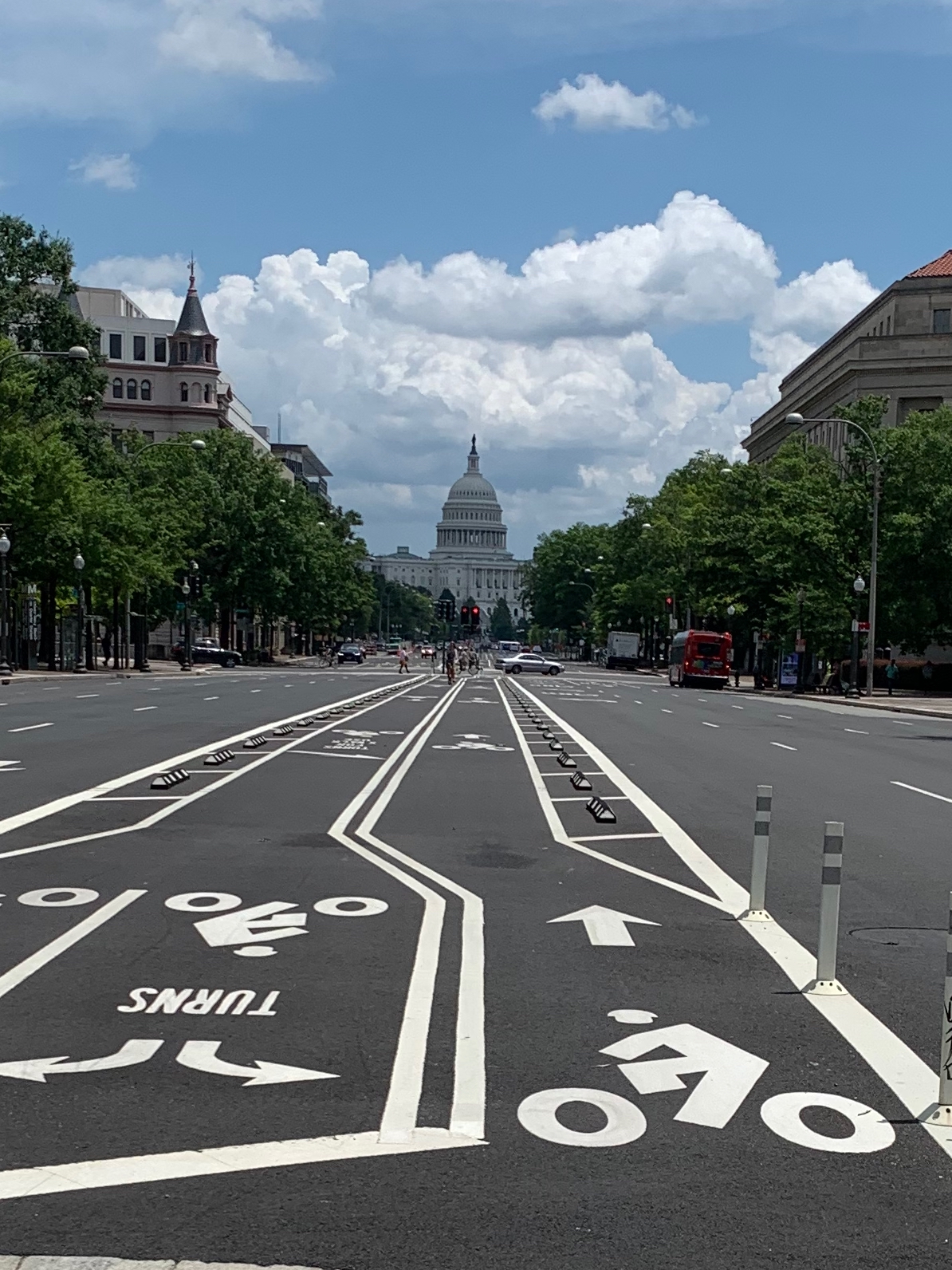
Whenever I am in Washington, D.C., and see the Capitol dome for the first time on that particular trip, I’m reminded of the scene from Frank Capra’s 1939 film Mr. Smith Goes to Washington, starring James Stewart in the title role. The naïve young senator, upon first seeing the Capitol dome from inside Washington Union Station is gobsmacked, and struck by the sight of seeing the St. Peter’s of his deep-rooted belief in the inherent goodness of our government by, for, and of the people. I admit, on my most recent trip to D.C. last week, while I was excited to see the Capitol as I crossed Pennsylvania Avenue, I couldn’t help but feel that as profound our civic religion remains, it nevertheless faced its greatest test in generations this January when the Capitol was attacked by supporters of the now former President on the day when Congress met to certify the results of the Presidential election.
It’s curious to me, because as much as people from both sides of the political divide tout their devotion to “freedom,” the meaning of that very abstract word seems to change depending on the moment. In the broadest sense, freedom is one’s ability to decide how to live one’s life; in the narrowest, freedom has been interpreted as justification to deny the same basic decency and liberty to others on the basis of one’s own biases. I could very well turn this weekly blog into a mouthpiece for all the libels I’d ever want to spin, and likely that sort of fear-mongering clickbait would increase my readership, but I like to think of myself as a nice guy, so in this outlet I refrain from those sorts of obscenities.
As with any other form of devotion, the American civic religion has its own enforcement, people who seem to make it their life’s mission to call out or track down heresies against the civic religion no matter the cost to themselves or their target. This is often realized most fully in the scare tactics used by some to keep their followers loyal to their particular version of the civic religion. Fear keeps people energized, fear of loss, fear of the other. While I will always stand and applaud at the ballpark when the obligatory salute to veterans occurs, I find it chilling that if I didn’t stand, if I didn’t salute the military, it could be damaging to me. The extreme literalness of some religious sects in this country has been carried over into the civic religion, all to the extent that it has been monetized and turned for profit in our devotion to the markets and the accumulation of wealth.
Heretic hunters often have their own faults, that’s where the sacrament of confession comes into play. As a Catholic, I believe that my sins are forgiven in the confessional, so long as I am truly repentant, truly sorry for where I’ve gone wrong. Of course it could be argued that I could then say I could do anything I wanted, so long as I went to confession afterward, but there the actions wouldn’t convert to real results, as I wouldn’t actually believe in the power of the sacrament. So too with our civic religion, as forcibly the heretic hunters may decry their opponents, their enemies as they might well call them, they themselves will always have faults of their own, sins of their own. If we are going to preserve this country, its civic religion, its belief in democracy and in a future where representative government is a strong and viable option, we need to recognize that everyone has problems, and that everyone deserves second chances.
So, as I walked across Pennsylvania Avenue last Thursday, my mind turned to the supporters of the former President who violated the most sacred temple of our civic religion on January 6. Many of the same individuals and organizations that pose as heretic hunters in this civic religion of ours were the same ones that promoted the Big Lie which drove that mob to break into the Capitol, and the rioters themselves, in that most extreme act of heresy against the civic religion, cast themselves as restoring the faith, restoring the power of the people over our government. They too deserve second chances, the opportunity to repent and return to the fold, but not without some penance for the crimes they committed.
If anything, the entire civic religion, built on myth as much as on the ideals of the Revolution, deserves a second chance. It seems increasingly clear to me that the civic religion, the United States as a political community united around our common Constitution, needs refreshing, both to address the shortcomings and wrongs of the past and present, and to reaffirm the foundational covenants of this country’s relationship with its people in a way more in line with the circumstances facing us today in 2021.
I’ve been thinking a lot lately about Lincoln’s Second Inaugural Address. I first heard perhaps the most famous and impactful line in any of his speeches as a child during the final episode of Ken Burns’s magnificent The Civil War documentary series. Spoken on 4 March 1865, a month before the end of the Civil War and a few days further removed from Lincoln’s assassination, the lawyer from Springfield, Illinois concluded his address calling on all Americans to feel “malice toward none,” and “charity for all.” After all the pain caused by the war, many of Lincoln’s goals still seeming far too distant from reality, he called on our forebearers to:
“strive on to finish the work we are in, to bind up the nation’s wounds, to care for him who shall have borne the battle and for his widow and his orphan, to do all which may achieve and cherish a just and lasting peace among ourselves and with all nations.”
Lately, I’ve wondered how best to categorize the year we’ve been living in. Could the upheaval of 2020, a combination of general public dissatisfaction with government, a global pandemic, and social and economic tensions boiling over after generations of bubbling, could all these combined be called a revolution of sorts? Could we be living through so consequential a time that in fifty or a hundred years, school children will place 2020 in the same column with the most recent global revolutionary years of 1989, 1968, 1918, 1848, 1789, and perhaps even 1776? I’ve also wondered, if we are living through a time which rhymes with Lincoln’s, are we in 1861, at the start of our national nightmare, or in 1865 at the moment of waking from that horror?
Yet when I think about Lincoln’s words again, one thing in particular strikes me. We are at our weakest as a country when we are divided. Today, when each side sees the other with such contempt, it’s hard to see how we could heal these divisions and sow back together these wounds that have cursed our country from its very inception with the conquest and colonization of this continent. Yet heal these divides we must. Someone is going to have to take the first step at reconciling the many factions and camps in this country, someone is going to have to reach across the chasm and offer a hand of friendship to someone on the other side. We need to learn to recognize the innate humanity in those we disagree with before we see their faults. We need to learn to grow past our hate.
Even a person who has committed the worst acts imaginable, people whose names live on in the darkest infamy, were still people like you and me. There are people out there who seek to divide us even further, to sow distrust among us until we are unable to bear the mere thought of one another anymore. Their power is fueled by our hatred, their lies take on the sense of truth only when so smelted by the fire of our hate. As long as we let our hate guide our actions and principles, as long as we make choices great and small based on that darkest emotion, they will win.
Listen to the voices that offer us a message of unity and hope, to the ones who offer us a future that doesn’t seem bleak, to the ones who offer solutions instead of just spewing bile and denouncing their rivals as the enemy. I fundamentally believe that all things are created good, if I know anything for certain, it’s that. Look at it this way, why would a God who wished for evil to be the only option give us free will? It is up to us to choose how we act and react, think and feel. Another thing that I fundamentally believe in is that it’s up to us to make our world as we want it. God made this reality, it’s up to us as citizens of this reality to decide its future.
True love, what many would say is the anthesis of hate, depends on free choices for survival. It’s up to us to decide which emotion our future will be shaped by: hate and its offspring distrust, fear, and bigotry, or love and its offspring hope, kindness, justice, and mercy. Let’s finish Mr. Lincoln’s work, and make 2020 the year when we began to at long last heal our nations wounds, care for each other as equals, and do what we must to earn that “just and lasting peace” for all of us, the oppressed and their erstwhile oppressor too. After all, if we leave even a single person behind, hate’s cold song will still be there for yet another generation to hear.
It’s up to us to live up to our forebearers’ visions and to build the foundations for our descendants’ dreams. Hope and pray for those visions and dreams all you want, but if you want them to come true, you and I, each and every one of us, must act on them.





 Wednesday Blog by Seán Thomas Kane