Category Archives: Politics

Equality under the Law

Words and phrases are powerful tools, and the emotions that we attach to particular words only begin to stick once certain actions are taken based upon the intent of those words. In the United States the debate over the issue of abortion has long been controlled by the social conservatives on the right. Predominately made up of Conservative Protestants and Catholics, this odd faction have united in their opposition to predominately two main issues: the rights of women to control their futures outside of the will of powerful men, and the rights of people to express their love beyond the traditional Judeo-Christian bounds of love between one man and one woman.

This odd couple has been successful in framing the abortion debate as one between those righteous who support the right of all who are conceived to be born, and thus declaring themselves to be Pro-Life. By declaring themselves, the anti-abortion factions, to be Pro-Life, they have categorically deemed their counterparts, those who support women’s abortion rights, to be little more than misguided homicidal individuals. To correct these tendencies towards abortion, the Pro-Life camp has advised women to let their pregnancy go through, and to protect the innocent life that comes out of the mother’s womb. The first of many ironies and issues with this is that the people in positions of power most likely to offer that advice are either men, or women who follow the advice of those men regardless of what might be best for themselves.

A number of years ago, while writing for Examiner.com’s Kansas City Catholic column, I published an opinion piece calling out the anti-abortion movement as not necessarily pro-life, but more simply pro-birth. After writing that article calling out the hypocrisy of people who are so adamant to protect the fetus, but are content with capital punishment, and who refuse to support “socialist” policies like universal healthcare, and matching the minimum wage to the living wage, among others, I actually received a fair number of threats from readers. Today, knowing and recognizing the infractions being committed against women’s rights by state legislatures from coast to coast, including my own state of Missouri, I cannot sit by silently and watch.

In this country we allow the most despicable of speech because if we limited one type of speech then all free speech would equally be threatened. In this country the same social conservatives who oppose abortion have argued that we cannot have even the most basic control on gun sales because it would threaten all rights to own guns. The bills being passed in the state legislatures, that will certainly be used to challenge the legality of the Supreme Court’s 1973 Roe v. Wade ruling are not just wrong, they are excessively so. They directly target a particular group of citizens based upon their biological sex and make it harder, if not nigh impossible to have a viable livelihood in a number of states. Like the recent set of voter ID laws that target minority voters, limiting their basic right of participation in government, these anti-abortion laws offend the very concept of equality under the law upon which the sociopolitical life of our country is built.

Earlier this week, when the Governor of Alabama signed that state’s bill into law, she expressly noted the religious undertones that have fueled the anti-abortion movement. As long as we have freedom of religion in this country, we cannot have any direct influence from any one religion upon our government at any level. If a law such as this anti-abortion law, which is openly influenced by the religious beliefs of the aforementioned Conservative Protestants and Catholics, becomes official, then the rights of all other people of faith in this country are infringed upon.

If we are going to allow one faith to be practiced freely, all other faiths must have the same protections. Yet it is counter to the very core of Christianity, a faith in a God of Charitable Love, to use our religion to restrict the rights of others. The malice that fuels these bills is a threat not only to women, but to everyone else in this country who doesn’t fit into the narrow vision of goodness that the anti-abortion crowd yearns for.
An Equal and Opposite Reaction

21733868_10214068171760956_1726168460_oOne of the fundamental maxims of physics is that “For every action there is an equal and opposite reaction.” For everything that is said or done something of equal vigour must be in order. By this logic then, for every fascist, far-right, or white supremacist threat to American society and we the American people there must also be an equal reaction by the far-left, by the Anti-Fascists as they have deemed themselves. Yet what good does the threat of violent action do? What is the point of bringing one’s guns to an anti-fascist protest? What is the point of eradicating the memory of all who have had some dirt upon their hands, who committed evils in their lives?
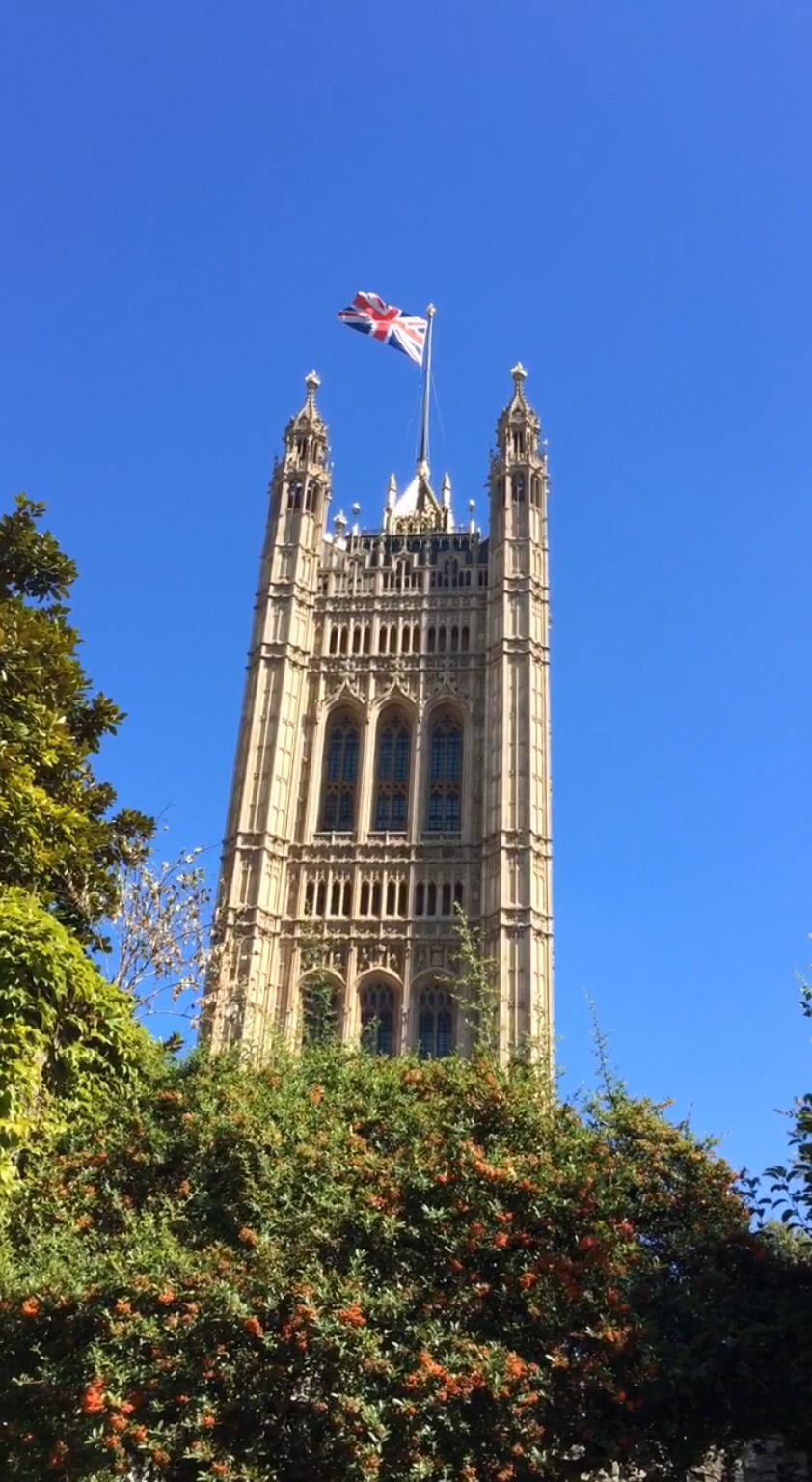
This moment, at the closing years of the second decade of the twenty-first century, is a moment of immense change, of tribulation not unfamiliar to our predecessors from a century prior. We are living through the waning hours of a period of unprecedented social change and extraordinary wealth for many in our society. We have witnessed a plethora of forces at work in their efforts to bend our society to their aims. Some have sought to bend the law in order to further their own wealth and prosperity to the detriment of others. Still more have fought against those egotists in the defence of the common good and the wellbeing of all.

Now, as we look ahead towards the last months of 2017 and the new year 2018 we are beginning to recognise as a society how uncertain our future is. We are realising that our children will probably not be better off than ourselves, that our generation as well will probably fall in economic standing in a way unseen in the past century. It is natural to react to this with fear, to curse the political, economic, and social systems that led us to this moment. But in our present culture we celebrate fear, overreaction, and anger far too much. We have accepted extreme behaviour on television as normal, and in so doing have accepted that same extremism into our own lives.

We have reached a moment in our history when both the right and left are afraid; afraid of losing what they have; afraid of each other. We have reached a moment when the politics of fear have duped millions into electing a man entirely unfit for the duties to which he is oath-bound to serve. We have reached a moment when lies are far louder than truths and accepted as real by sections of society.

We have reached a point where at long last the old Confederate sympathies are being brought into the light of day as racist echoes of a failed rebellion from 150 years ago. Yet the zeal of the most outspoken on the far-left has created its equal reaction to the zeal of the far-right. Both now have sizeable factions at their rallies who are armed, ready to fight.

Extremism in any form is unnatural and unhealthy. Yet in the current moment in American history it is the extremes of our society that are the most vocal. I cannot deny that our political system is flawed, it absolutely is. I cannot also deny that American capitalism favours the rich, that is how the playbook has been written. I would be an idiot to ignore that our society is rigged against anyone who is not male and of European descent, there is a racial hierarchy in this country that has existed since the colonial era. But I would be blind to also deny that we can change things for the better. We can fix our corrupted political system, we can rewrite the codes that govern our capitalism, we can stand up everyday for the rights of all in this country and day by day continue to chip away at those old biases. But we cannot do these things while we are taken hostage by the far-right and far-left of our society. We cannot fully achieve the great work of our society while our society is a hostage to the militant few willing to kill their fellow Americans in defence of their extreme convictions.

We must continue to march, to protest, to organise, and to vote. We must carry on the good work that our predecessors undertook in generations past. We can make this country a better place for our children and grandchildren and great-grandchildren to live in. But we must walk the middle road of moderation to do so.

We must understand the full consequences of our actions, we must learn from our history so that we do not make the same mistakes again. There are many who are opposed to the removal of the Confederate monuments because that is “erasing our history.” I disagree. By removing those monuments to a rebellious movement in our history, we are forcing the book closed on that chapter that has yet to settle. After all, we still see the way in which Americans continue to threaten one another with violence at the slightest hint of progressive reform. To make our society better for the next generations we must rid ourselves of this disease of extremism. We must show those who want violence that through peaceful debate we can achieve far greater things.

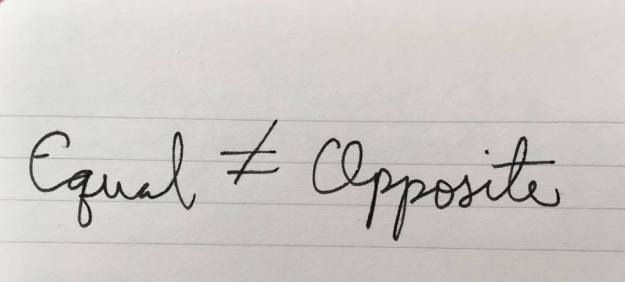
“For every action there is an equal and opposite reaction.” When the far-left responds to the far-right’s threats of violence with equal threats the far-left only continues that same cycle of violence. Consider that maxim again: “For every action there is an equal and opposite reaction.” Threats of violence may well be equal on both sides, but the threat of violence on the left is not opposite to the threat of violence to the right. It is not the positive to the right’s negative. Only peaceful protest, nonviolent refusal to play by their rules of violence can achieve that. Through peace and nonviolence we find our equal and opposite reaction. Let’s try it for once. You never know, it might just work.

Quantity over Quality

Screen Shot 2017-08-13 at 21.21.11

When we hear many politicians try to add weight to their arguments, they often will add references to their own lives, “I served in the Army for 20 years,” or “Having been a lawyer for 35 years.” In this way, they seek to promote their argument through the weight of what they possess. One of the most common that was used by Congressional Republicans in order to prove they are not misogynists like Trump was to bring their “wives and daughters” into their argument. This is a technique that I like to call rhetorical quantifying, a way of attempting to prop up a fairly weak, or entirely unoriginal argument by showing how one’s relates to the topic, whether it be through family, friends, acquaintances, or personal possessions.

 I’ll be completely honest; this tactic really annoys me. A valid argument will always be able to stand on its own without the help of some extra quantitative fluff. It doesn’t matter that Speaker of the House Paul Ryan is married to a woman, nor that he has a daughter, what matters is that his argument is valid. Yet what makes this tactic go by with so little press is that the general public has largely accepted it. People in all situations will attempt to bolster their position in a discussion, argument, or even a fight by trying to show how much better they are than someone else.

 On Saturday, at the height of the chaos unleashed by White Supremacists on Charlottesville, Virginia, a 20 year old from Ohio named James Fields drove his car into a crowd of counter-protestors killing one and injuring nineteen others. Upon hearing the news from reporters, his mother in the spur of the moment used this same technique pointing out that her son “had an African American friend.” While she was certainly in the early stages of processing all that her son had done, and the fact that he will quite possibly spend the rest of his life in prison, the way in which she attempted to counter his white supremacist actions by bringing his African American friend into the conversation shows the weakness of this argument. It does not matter that he was friends with someone who is not of European descent, what matters are his intentions and actions.

 Rhetorical quantifying rests heavily upon two particular issues, firstly the use of non-consequential evidence within an argument, that is mentioning one’s connection to a certain group of people or things in an attempt to bolster one’s argument and secondly the inherent possessiveness of quantifying. In regards to the argument itself, both issues are inevitably overshadowed by the fundamental reality that quantifying distracts from the main argument. A listener who should be paying close attention to a politician’s weak denial of misogyny is instead distracted by the sudden appearance of all of the female members of that politicians’ nuclear family.

 Rhetorical quantifying is just one of many tools a speaker can use to distract an audience away from a main point that might be rather unseemly. Though not as irritating as pivoting, an art form exhibited beautifully by Senator Al Franken on The Late Show on 1 August, rhetorical quantifying is a tried and true way to avoid answering the question and attempt to cover one’s tracks. Undoubtedly there will be those in Congress and in many state houses across the country that will use rhetorical quantifying to distance themselves from any of the white nationalist groups that partook in the rally this weekend in Charlottesville. Yet while they may gather together all of their connections to both religious and ethnic minority communities, these individuals will still be wolves in sheepskins.

 Rhetorical quantifying is a deceptive tool used to distract. Yet it is a deception that has become so commonplace we hardly notice it. We should consider our arguments carefully and consider whether what we say contributes or distracts from what we are arguing. In my book, rhetorical quantifying is a quasi-boastful tactic to be avoided at all costs.

Designing Cities for People

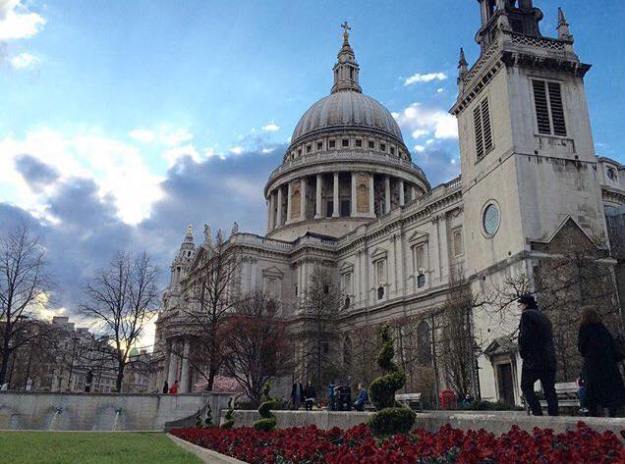
St Paul's at Sunset - April 2016

St Paul’s at Sunset

In older standards of measurement, the imperial mile (1.609 km) was not the longest measurement of distance available; the league filled that role instead. As I have understood it, one league is equal to the distance a person can walk in one hour. For me, that is around three miles, thus making 1 league equal to a decent distance for a nice morning stroll. In 2016 when I was undertaking my first Master’s degree, this one in International Relations and Democratic Politics, at the University of Westminster, I would occasionally decide to walk the league from the university on Regent Street back to my flat in the shadow of Fenchurch Street station on the eastern edge of the old Roman city.

The walk was quite pleasant, a stroll first down from the university to Oxford Circus, then eastwards along Oxford Street to Holborn, and then down High Holborn across the Holborn Viaduct and past the Old Bailey at Newgate, past St Paul’s and onto Cheapside, crossing in front of the Royal Exchange and Bank of England before continuing down Lombard Street and onto Fenchurch Street. At Fenchurch Street station, I would descend a short flight of steps leading towards St Olave’s Hart Street and under the station viaduct itself past the city walls and into my building on Minories.

What made this a nice walk was that I was able to see so much of the capital, everything from the imperial Edwardian grandeur of Regent Street to the new skyscrapers that are being built across the Square Mile to the east. It was an opportunity to experience London as so many had done so before, to get to know the metropolis by foot. In London this is something that can fairly easily be done, one can walk around the capital if one wants to. Sure, most of the suburbs are out of reach for the pedestrian, but with the well established system of underground and suburban railways, as well with the very thorough bus network, London is a city that a person can easily live in without owning a car, let alone riding in one on a daily basis.

When I moved back to Kansas City at the end of August 2016, I thought I would try at keeping up my walking, to walk the same ten miles each day. Yet that didn’t happen. Far from it, I found Kansas City to a.) be built largely for cars, and b.) with a climate far more harsh than the one I had known in London. As a result, not only did I not walk nearly as much as I had wanted, but I found myself hardly walking at all beyond going out of my parents’ house to get into the car and drive somewhere.

While my own lack of fortitude certainly is to blame in part for this sudden drop in my exercise, I also have to lay blame on the city planners here in Kansas City. This city, like so many others in the United States and Canada were designed, or re-designed, for motorists. In fact, it is illegal for a human being to walk in the street in Kansas City, Missouri; if you’re human, you have to stay to the sidewalks (pavements). The rest of the street is reserved for cars, buses, bicycles, vans, and trucks. We have built this city and so many others like it without the human touch that has made cities so universally human in nature.

For thousands of years, our ancestors have lived in cities that were not unlike the Central London; they were just big enough that an able-bodied person could walk from one end to another in about an hour. Cities were built with walking in mind, with the understanding that all of the basic necessities that a city offers should be within walking distance of each citizen’s home. Smaller medieval cities like Besançon in France, Canterbury in England, or Galway in Ireland are prime examples of this sort of pedestrian-focused urban planning.

“In fact, it is illegal for a human being to walk in the street in Kansas City, Missouri”

Here in the United States too there are some attempts at returning to this older model of having residential and commercial establishments within the same general area. Here in Greater Kansas City there are some newer developments that aspire to this goal. Two in particular that I visited this last Friday stand out to me as examples of how to undertake this task, and how not to do so. The latest pieces in the Town Center shopping complex, Park Place is an excellent example of such a development.

A set of winding, narrower streets lined by three and four story buildings, its street level fronts are filled with shops, restaurants, and some offices, while the upper levels are largely residential. In this way, one can live in a compact community, within which one does not necessarily need a car to get around. I first was able to experience Park Place two years ago when walking a 5K through the Town Center area. At that time Park Place was still under construction, yet even as a construction site it seemed vastly out of place when compared to its neighbours in the most arch-suburban of American counties, Johnson County, Kansas. What particularly makes Park Place odd, and in the end stunted in its growth and feasibility is that one has to have a car to access it. Sure, one could live within Park Place as a pedestrian, but going beyond its towering confines on foot can be a perilous exercise with traffic on the surrounding avenues averaging a speed of around 45 mph (72 km/h).

What Park Place does well is its compactness, including both commercial and residential in the same area. Another, equally new development a few miles south of Park Place ignores this principle of traditional urban planning, setting the residential aside from the commercial. This particular development is the fascinatingly misplaced Prairiefire complex on 135th Street in Leawood, Kansas. Another physically enormous complex, Prairiefire’s crown jewel is the Museum at Prairiefire, billed as Kansas City’s Natural History Museum, and an affiliate with the American Museum of Natural History in New York. While the Prairiefire Museum’s architecture is aesthetically beautiful, its size is much like the rest of the Prairiefire development: lacking long-term thinking.

My biggest problem with Prairiefire is the way in which its residential development is divided from its commercial sector by a massive concrete parking garage. Prairiefire was designed by a suburbanite intending to create their image of a compact urban community, albeit without ever having stepped foot inside of a traditional compact city. By splitting the residential from the commercial, they make it far less amenable to residents to take advantage of the shops, restaurants, and entertainment in the commercial side of the property. What’s more, the Museum at Prairiefire itself is deeply flawed in that it is not built with the ability to expand in mind. The current structure is small, built more like a community arts centre and less like a great temple dedicated to nature.

Our over-reliance on cars here in the United States is flawed at the utmost degree. Should there be a major energy crisis in the near future, the vast majority of our cities and states will find themselves paralysed, unable to function owing to the lack of oil to fuel our cars. Developments like Park Place and Prariefire might be able to last for longer, owing to their relative compactness compared to the more traditional suburban sprawl, yet their isolation amidst the sea of suburbia will soon find these two developments in the same situation as the traditional suburban developments.

Our cities must first and foremost be self-reliant; we must be able to grow our own food, and use our own renewable energy sources to power all aspects of our lives. Yet along side this if we are going to build smart, self-sufficient cities, we must build them more compactly, with ourselves in mind. Just consider, if you are suddenly without your car, and don’t have the option of taking public transport, how will you get around? You could certainly walk around your city, but that prospect is only truly viable if said city is designed for walking.

Today, I generally prefer using metric to the more traditional imperial standards of measurement, yet that most old-fashioned of imperial measures, the league, is one that should be maintained. It keeps us humans at the centre, and reminds us of our own physical limitations and abilities. When we consistently push ourselves far beyond those abilities, we endanger the stability of our societies, making any potential crisis even more disastrous.

Going forward from the U.K. General Election & Hung Parliament

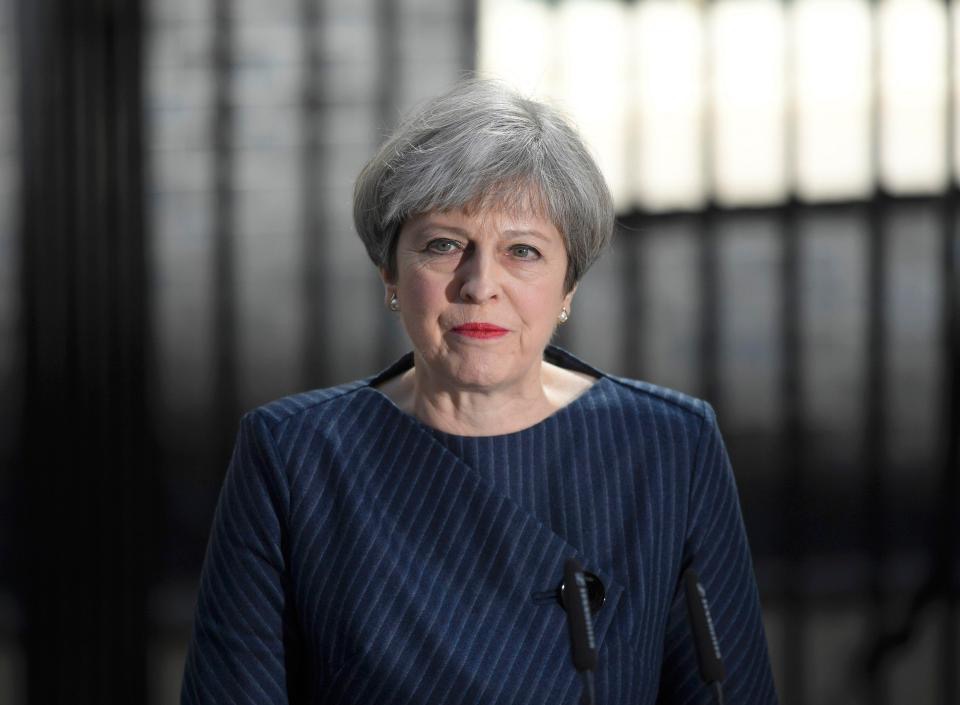
So here we are, Friday morning, the Sun already having risen over the United Kingdom, the Moon at its most brilliant over my home here in the American Midwest, and the results are in for the 2017 U.K. General Election. This election, called by Prime Minister Theresa May in an attempt to secure her majority in the Commons, was a victory for a number of parties: Labour, the Liberal Democrats, the Greens, and of course for joint BBC/ITV/Sky poll, which unlike its predecessors in the last U.S. election in November, the Brexit Referendum before that, and of course the U.K.’s 2015 General Election was actually fairly accurate.

Yet missing from this list of winners are some of the key players in British politics in recent years: some of the top brass at the Scottish National Party (S.N.P.), the U.K. Independence Party (U.K.I.P.), and of course Theresa May and the Conservatives. What was supposed to be a rousing victory for the Tories ended up being one of the biggest political mishaps of recent British electoral history, which is saying a lot considering in the last ten years we have seen the fall of New Labour, the Tory-Lib Dem coalition, the Milliband brothers, David Cameron, and the omnipresent Scottish Independence and Brexit referenda.

As of publication, 649 of the 650 constituencies have been declared, with the Conservatives leading at 318 seats, Labour in second at 261 seats, the S.N.P. In third with 35 seats, the Liberal Democrats in fourth with 12 seats, Northern Ireland’s two main parties the Democratic Unionists (D.U.P.) and Sinn Féin in fifth and sixth with 10 and 7 seats respectively, and finally the Welsh nationalist party Plaid Cymru in seventh with 4 seats and the Greens in eighth with 1 seat. This leaves the Conservatives in a bit of a pickle, sitting 11 seats shy of the 326 that they need to hold a majority in the House of Commons. Thus, with no dominant party, the United Kingdom officially, for the time being, has a Hung Parliament.

A Hung Parliament is that often most dreaded of moments in any parliamentary election when the results come back with no clear winner. Ideally it will result in the largest of the elected parties forming a coalition with smaller parties of a similar ideology to form a government. This happened in 2010 when that year’s U.K. General Election resulted in the leading Conservatives entering into a coalition with their historical rivals the Liberal Democrats to form the first coalition government since the Second World War.

Should the largest party be unable to form a coalition, let alone choose its leader, as may well be an issue this time around, the next largest party will have an opportunity to form a coalition government with its ideological neighbours. While a very rare occurrence, this would nevertheless prevent the potentially most unwanted eventuality from happening: a second round of the General Election.

So, with this in mind what should the two largest parties, the Conservatives (aka Tories) and their opponents Labour do to ensure that they can craft a government in their image?

The Conservative Prospect

Photo: The Sun

Reports from the BBC Election Night coverage have stated that Conservative Party leadership is in a state of disarray. They did not expect to perform so poorly in this election, and in hindsight it’s early calling (this election was due to be held in 2020) shines horribly on Tory leader and Prime Minister Theresa May. The first question for the Tories is whether or not they want Ms May to remain as leader of their party going forward from this election. Should the Conservatives cast a vote of no confidence in Ms May’s leadership, or should she resign, then the Conservatives will first have to sort out their own leadership before turning to the necessity of forming a coalition.

As to their coalition prospects, they have a fairly simple choice. Northern Ireland’s Democratic Unionist Party is a clear ally to the Conservatives. Not only that but the D.U.P. came out of Thursday’s election with 10 seats, their greatest ever victory in Westminster. Should they join the Conservatives in either a coalition government, or as a reliable junior partner it will increase the Conservative majority to 328 seats. The Tories will then need at least one more M.P., most likely an Independent, to join them in their coalition to have a full majority of 326 M.P.s.

All this said, a 1 seat majority is far less safe than what the Conservatives were hoping for when they had their breakfast on Thursday morning. They will have a hard three years ahead of them before the 2020 election when potentially they could lose even that slim majority to Labour and the Liberal Democrats.

The Labour Prospect

Photo: The Islington Gazette

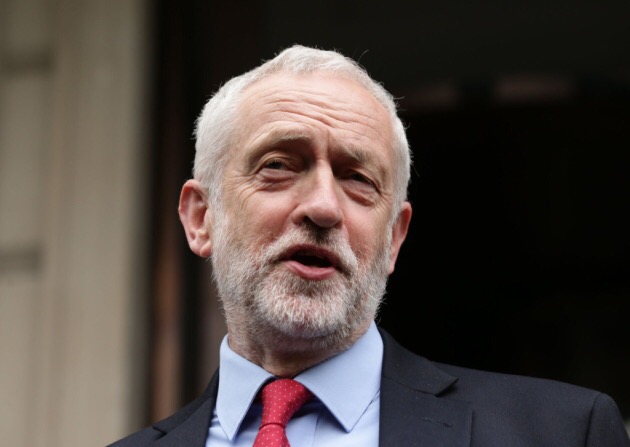
Labour is in a slightly more percarious position, yet after seven years of Conservative government under David Cameron and Theresa May they can see the potential, no matter how slim, to take this Hung Parliament to their advantage and form a slightly more diverse coalition government. With 261 seats, Labour is 65 seats short of the 326 needed for a majority. But whereas the Tories are limited in their allies, Labour has a wide range of centrist and centre-left parties to choose from.

In an ideal situation, Labour could seek to form a coalition with the S.N.P. (35), the Liberal Democrats (10), Plaid Cymru (4), the Greens (1), and the one Independent M.P. This would give Labour a coalition of 312 M.P.s, still 14 seats shy of the total needed for a majority. However with the current total from all but 1 constituency (Kensington), which voted Tory in 2015, it seems unlikely that that seat will go for Labour or one of its potential allies.

Labour may be able to form a minority government, but only if the Tories cannot form a majority government with the D.U.P. Yet like the potential Conservative coalition government with a 1 seat majority, a Labour minority government would have their work cut out for them for the next three years in the lead up to the 2020 General Election. Nevertheless, such minority governments have been successful in the past.

Conclusions

In the end, the 2017 General Election might well be called Theresa May’s folly; holding the snap election was her decision to make, and in the end she made it in April when the Conservatives had far higher polling numbers. What Theresa May did not take into account was a.) the reaction to Brexit, b.) the terror attacks in London and Manchester, and c.) the way in which Jeremy Corbyn and Labour would react to her campaign strategy, message, and tone, countering it with an equally potent and frankly more positive message for Britain.

At this point, I do not know what will happen in the next fortnight in Westminster, let alone who will occupy 10 Downing Street when the dust has settled from Thursday’s democratic festivities. All that I can say is that perhaps more than any other time in the last ten years has the U.K.’s General Election reflected events going on beyond its shores. Its unsure results is by far a sign of these most uncertain of times.


Edits: 9 June 2017 at 15:12 BST, 09:12 CDT: article updated to reflect current seat totals with 649 of 650 constituencies reporting.

Donald Trump and the slow death of American Federalism

US flag

Today the world was flabbergasted and disgusted with our President once again. This time it was not due to his bullish techniques for getting in the front of a group picture, nor his obscene rudeness towards our closest European allies, nor even his disregard for the basic fundamental principles that all humans deserve equal treatment and rights. Far from that, today Donald Trump decided, for whatever reason, to do away with the safety mechanism that would at least temper the oncoming tide of climate change and preserve the planet that we’ve called home for millions of years. But that does not seem to matter to Donald Trump, the human epitome of ego.

He does not seem to care that withdrawing from the Paris Climate Deal will have disastrous effects for all humanity for generations to come. All he cares about is that “America receive a fair deal.” He is a businessman who has never had to deal with the realities of the world; he is a man who has never been fit to serve as President, and frankly is even less fit to do so today.

Climate change is a very real and present danger to humanity, to all of us living on Earth. We have developed our civilisations, our industries, our technologies in a manner that until recently has had a careless attitude. We have raped the Earth of its natural riches, leaving its soils forever changed, its seas void of so much vibrancy and life, and its air thick and soupy with the fumes of our industrial might.

Eventually, in the long run, humanity will inevitably outgrow this our nest, but until that day comes in the future we are stuck here. For the time that we have left on Earth we must do our best to maintain it, to keep it fresh and clean. Anyone who has maintained their own house without the help of servants will know what it means to keep the house in order. Judging from his biography, and his attitude towards the rest of humanity, I doubt Donald Trump has ever been in our shoes.

I have found myself on a daily basis pronouncing my embarrassment at the President’s actions to friends both overseas and here within our borders. My shame at seeing that most self-serving of men occupying the People’s House is far beyond anything I have ever experienced.

Setting aside the climate for one moment, though to be honest that is nigh impossible to do, as everything else is reliant on the climate’s continued health and survival, there is one other more directly American issue at hand here. For the past four months, Donald Trump has done pretty much what he promised to do, to bring stark change to Washington; but the changes that have come about in his time in office have been hardly positive. For one thing the long standing norms of the American body politick are finding themselves being forcibly changed, in many respects against their will. States like California, New York, Massachusetts, and Illinois, long considered key supporters of federalism, in comparison with the likes of Texas, Arizona, Kansas, and most of the South, are now finding their long held faith in Washington to be suddenly, and dramatically unfounded.

What Donald Trump has done is nothing short of contribute to the process of nailing together the coffin of federalism in the United States. Our country has always been an odd fit, some parts more willing than others to play along with the idea of federalism. Trump, a New Yorker, has played into the hands of the anti-federalist extremists on both the left and right, particularly the Tea Party Republicans in Congress and in the respective State Capitols around the country. When the State governments choose to ignore the needs of all their constituents, instead focusing on the demands of a few, we the citizens look to the Federal Government to back us up and defend our rights. Yet now both a majority of State Governments and the Federal Government are controlled by the same faction within the Republican Party that has cried foul at the regulations set up by big government to ensure the continued prosperity of a majority of Americans.

Their self-serving agenda has seen that this country elect one of the least qualified Presidents in its history, and that this country’s legislative electoral process be so mangled that they the small-government “we serve ourselves” far-right Republicans will be mathematically guaranteed to win for many elections to come. Now the rest of us who are not being served by this narrow-mindedness amongst those in power are left to look to the lowest levels of our government, to our cities, for protection and aid. Cities like New York, Chicago, D.C., Boston, San Francisco, Los Angeles, Seattle, Portland, and Kansas City are our last refuge in this our darkest hour. For the time being, while the current faction of Republicans remains in charge of the rest of our government, we must rely on our big-city mayors and our city councils to do what they can to ensure our cities remain safe for American democracy and multiculturalism.

As a European American male, I am a part of the least threatened demographic in the country, yet as an American I am a part of the most threatened demographic of all; for when one American’s inalienable rights are threatened, then the rights of all the rest of us are threatened as well. The day when we return to saying otherwise is the day when we, the United States of America, the nation of immigrants, of opportunity, of possibility, will be the day when we lose our national spirit.

“We care for our own kind.”

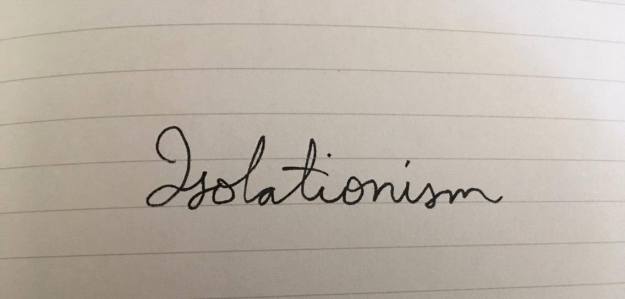
IsolationismWith a rise in nationalism worldwide, we have also seen a rise in isolationism from both the extreme right and extreme left. In my view, nationalism and isolationism are blood brothers, and will always go hand-in-hand. In fact, the only way in which an isolationist nationalist government would ever consider interacting with its neighbours would be either through coercion or full force of arms. This is the world that was seemingly far better known in a time now past, a time when it was far more likely for the likes of Germany, France, and Britain to go to war with each other rather than sit around the negotiating table and work out their differences peacefully. Today, in Western Europe and North America we have known this sort of negotiated peace since 1945. It is a peace that has led to my father and I never having had to go to war, unlike the generations before us.
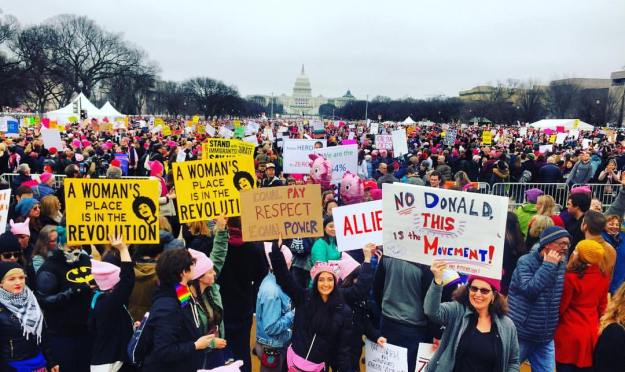
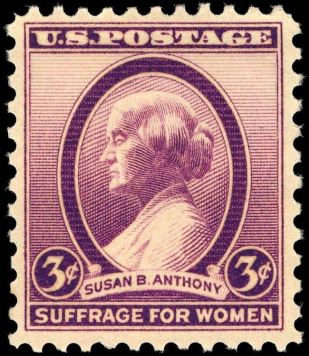
While the political structure established in the wake of the Second World War and expanded with the fall of the communist states in Eastern Europe, has led to unforeseen stability, prosperity, and international goodwill amongst its participants, the trials of the 2000s and 2010s have shaken that stability to its core. From the War on Terror launched by the United States in response to the Attacks of September 11th to the Great Recession, faith in liberal democracy and in capitalism are at an all time low.

I can’t blame those who do not trust the current political and economic systems, after all at least economically capitalism is structured to benefit most those with the most capital, leaving the rest to try and catch up. But when catching up to the wealthy is increasingly nigh impossible, it is understandable that some would be left dissatisfied with the system.

There is one effect of all this pain and negativity being felt around the world that can only have disastrous consequences for us all. I was reminded recently of an old saying, “We take care of our own kind” that one might have heard in generations past. With this comes the idea that we should stick to the social, political, religious, and ethnic groups to which we belong, that I as a middle class Irish American Catholic Democrat should not have anything to do with anyone who is not like me.

This is isolationism in its purest form, isolationism not on a national level but on a local house-by-house level. It means that I should sever all ties with my best friends, who are from Bulgaria, Finland, Venezuela, and Ecuador. It means that my neighbourhood, which is pretty well mixed between Protestants, Catholics, and Jews ought to be sorted out, and that each of us be given our own couple of streets to live on. It means that as a Democrat I should stay as far away from any Republicans, and that we should keep to ourselves so as to ensure we do not step on each other’s toes and cause any trouble.

I’ll be frank; I can’t possibly do any of that. I respect, admire, and in a way love my friends too much to send them packing, and my neighbourhood is better off because of its religious diversity. Furthermore, having seen the divisiveness of the 2016 election, I know all to well that if we Democrats do not talk with our Republican relatives, friends, and neighbours that we will not be able to heal the wounds of division that have wrecked our country so horribly.

But considering those words, “We take care of our own kind,” I am left thinking even more; and you know what, I think I can actually agree with this. It’s best to only care for people like you; it’s best to only be friends with people like yourself. The most optimal way to live one’s life is to solely live it with likeminded people around. After all, that way there won’t be nearly as much conflict within social groups. So yes, I’ll take care of my own kind, after all I’m human, and it is my duty as a human to care for the rest of humanity.

Isolation, and its bedfellow nationalism, serve no real purpose, and in the end are self-cannibalising; because isolationists forget that we do share that one common bond, our humanity, through which we can never fully cast each other asunder. So, let’s take better care of each other and get over that idea that our differences are bigger than what brings us together.

The Problem with our Politics

Embed from Getty Images

Political parties and politics do serve a purpose in the betterment and stability of society, no matter how unstable they may seem. A political party is a tool by which people of a common perspective can organise and promote their principles and philosophy with one voice. These parties in turn have the ability to take that philosophy to the pinnacle of government and power and propose it as policy, should said party be elected into office. Yet when party comes before public the political process shows signs of putridity and decay.

Today there are a variety of party systems in use around the globe; often they are organised based upon the number of parties they allow for. Here in the United States, the political process operates on a two-party system, yet throughout Europe most polities operate on a multi-party system. Likewise, in some states one will find a dominant party system, which is essentially a one-party state yet with the trappings of a two-party or multi-party state. Each system does justice to its respective society, as only that party system which adheres to the framework of its respective society can properly do justice to its public. Yet in some cases the frameworks set up in some cases generations ago to keep the wheels of government well oiled and turning have proven themselves to be susceptible to rust and degradation.

If anything is going to halt the Republican Party’s march towards dominance in all branches of the Federal Government, it will be this principle that politics unbounded from the public need will always be overwhelmed by the public will. If the Republicans want to maintain their overwhelming majority in the House of Representatives in the 2018 General Election, they need to cast astray the bull that they let into the china shop at 1600 Pennsylvania Avenue N.W. They must disassociate themselves from Trumpism and all its baggage. If the Republicans want to stay in power they should move swiftly with the transference of power from the current President towards the next guilt-free individual on the Order of Succession.

And yet, in a somewhat comical way, the House Republicans will most likely stand by their man to the bitter end. Like a pompous captain remaining aboard his sinking ship they will be submerged into the muck and mire that spreads from the current President like a virus. It certainly seems to me that that infection is too wide spread in the halls of power in Washington for any executive change to be made prior to November 2018. Perhaps then it is up to the Democrats to take the advantage and not only expel one of the greatest embarrassments to ever befall this country from that house across from Lafayette Square, but to also regain a more sizeable position in the House from which their own philosophy can shine.

The politics of the present are all too embittered by a bad case of food poisoning. Those in power more often than not seem poisoned by the power they wield, and the personal prosperity it proposes to offer. They have proven themselves to be far too unworthy of the position of public servant through their venomous guile, their lack of transparency, and their blatant disregard for the public will. If we are not careful, this poison could sink not only the current political parties, but the entire ship of state as well. The act of preserving the body politick is a duty not just of those in positions of power, but of all citizens, all persons with a vested interest in the continued goodwill and wellbeing of the body politick. It is just as much our responsibility to reform our political processes, as it is the responsibility of those in power.

If this reform is to be successful, it must be done without violence, but through discussion, debate, and dialogue. This reform must be on all levels and must include all individuals with a desire to take part. We must craft our political society in the image of the public that it serves; otherwise that political society will only grow to serve itself. Should that happen, we will be right back were we are now, and I doubt that would be anyone’s preferred outcome.

What is citizenship?

16179019_10210642139022398_8265398912556879037_o

Photo: Cole Gibson

In our present time of political upheaval around the globe, the central questions of any political society are once more in the foreground. Central to these is the question of what it truly means to be part of a political society, to play one’s part in this comedy we call politics. In most constitutional countries today, the citizen, the most basic piece in the larger puzzle that is the body politick, fulfils this role. What does it mean to be a citizen, and furthermore, what is citizenship, the state of being a citizen? Citizenship is an old concept, one that can be traced back to the earliest polities, from the Ancient Greek πόλις to the varying degrees of Roman citizen, through concepts of medieval subjecthood, to the Renaissance and modern understandings of citizenship within the Westphalian empires and nation-states that have been the norm in the West since the mid-seventeenth century.

Today our definitions of citizenship are primarily two-fold, founded upon both ius sanguinis and ius soli. Jus sanguinis is the understanding that one’s legal status as a citizen is based solely upon one’s ancestry, one’s blood. As an American citizen who has at times, and will certainly again, prefer to live overseas in the U.K., should any of my future children be born beyond the borders of the United States, they will automatically be United States citizens, having inherited that citizenship from me, their father. However, should they be born in the United Kingdom, the children of a permanent resident of that country, they will have also inherited British citizenship through ius soli, having been born on British soil.

These two sub-classifications of citizenship are straightforward enough, and reasonable means to define what makes a person a citizen. Yet a citizen is not just an individual who happens to have either been born in one country, born to a parent from a country, or who has resided in a particular country for an extended period of time. A citizen is also an active participant in their government. The chief way a citizen can partake in politics, can wield the power that comes with their citizenship, is through voting. Without the right to vote, citizenship is but a muted title, a lame duck of a word.

Here in the United States, the most fundamental definition of who can vote simply considers age and time spent in a particular state. In most cases, an American citizen can vote in their state if they are 18 years of age and have resided in that state for at least 90 days. Yet politicians who see their only hope of maintaining power resides in further limiting who amongst the citizenry can vote have begun to pass legislation restricting voting rights from a wide swath of citizens. In Missouri, a citizen must present a state issued ID card when arriving at their voting precinct, yet that state issued ID card can only be granted to the citizen by the state if that citizen can a.) prove their citizenship, and b.) prove their residency. In order to prove one’s citizenship, one either must present a valid birth or naturalisation certificate, or a valid U.S. Passport to the D.M.V. Furthermore; one must prove that one does live at one’s legal voting address. The latter can be arranged, through the presentation of a utility or car bill, or even a bank statement, yet the former is far more complicated to find, particularly if the citizen in question was born in another state.

These laws have been written to “combat voter fraud”, yet there has been hardly any such voter fraud anywhere in the United States in the past twenty years. What these entirely unnecessary laws do accomplish is to restrict voting rights to a select few, to a smaller portion of the population. This is one of many symptoms of our ailing democracy, of our democracy that is sickened and addicted to the power of the almighty dollar. The same politicians that have instituted these voter suppression laws are also the ones who stand to gain the most from having a smaller electorate. Their political power rests squarely on the broad shoulders of their own special interests, cemented through bribery and intimidation alike. This is why sensible gun control legislation has not passed in Congress, despite the string of mass shootings and domestic terror attacks that have plagued this country. This is why the United States does not lead the nations of the world in combatting climate change, in keeping to the standards set in the Paris Climate Agreement. This is why an entire generation of Americans are left in severe debt and often unable to find work upon earning their Bachelor’s degrees. This is why the House Republicans voted to take federal health insurance from 20 million Americans. The voice of the citizen has been overwhelmed by the voice of the special interest.

Our democracy is under threat of becoming a plutocratic oligarchy, a nation governed by a class solely defined by their wealth. Sure, any American can make it to the top, but so long as that American is of European descent, and is willing to do anything it takes to earn more money. The dignity of the citizen is being replaced by the pessimistic wolfish piracy of an unscrupulous few that never outgrew their days of playground bullying. We the citizens should continue to make ourselves heard, we must continue to protest, to march, to call our elected officials, to tweet them, to write to them, to visit their offices and make ourselves heard. But most importantly, come Election Day, we must go out and vote! Without our voting rights were are not citizens but merely voiceless sheep being led about at the whims of a small few.

If our democracies are going to make it through this present time of political upheaval, we the citizens of those democracies must ensure that our voices are not silenced, not muffled by the wealthy and powerful. A person who has nothing to their name, not even a penny, should still have the right to vote; after all that person is a citizen of the country they were born in. Whether we like it or not, we are all subject to the ebbs and flows of the political process. It is up to us to ensure we control that tide, lest it sweep over us and leave us for dead.

On the Defence of Universal Suffrage

voting-without-rights-leads-to-the-right-to-vote-photo-u1

The German comedian Henning Wehn once said, “Once one is an immigrant, and away from one’s home, one tends to become a bit more patriotic.” And boy, I can tell you this is true. Only after I moved to the United Kingdom did I learn to play the Star Spangled Banner on the piano. Yet at the same time, as an immigrant, or a resident foreign alien as I was officially known, I began to fully appreciate what it’s like to have no political rights. I didn’t have the right to vote, nor the right to petition my Member of either the British Parliament or the European Parliament. Though I was a member of British society, and resident of the City of London, in political terms I was without expression.

On the other hand here in the United States, in Missouri, I am a citizen. And as a citizen I know that I hold a big responsibility to my country, and to my state; the duty to play my part in our government at every election, to cast my ballot and offer my voice in favour of those candidates whom I see as most able to lead our society in public office. I learned from my experiences as a foreigner during the Brexit vote what it was like to be politically voiceless in a time of the utmost importance. I would not wish it on anyone, and dread the thought of the right to vote being further restricted here in our own country.

Yet that is what has happened, when through intrigue and misleading propaganda a majority of voters here in Missouri chose to approve a law which limits the right to vote through excessive Voter ID requirements. While the sentimental concerns of those crying wolf about voter fraud make a fine performance, they bear little credence from the realities of our electoral process. The individuals and factions who have cried foul on voter fraud are also the ones who will benefit the most from having a smaller electorate. They fear democracy because they know it will weaken their power, their status, despite the fact that it will help the rest of us out a great deal.

I long to live in a society where all people are respected, where equality is the watchword and happiness the means by which we measure the value of our lives. Since the election in November we have seen a rise nationwide in hate crime, a rise in racial tensions and religious violence. We have watched as the Democrats and Republicans have drifted ever further apart from each other and from the people at large. I hold a Master’s degree in Political Science, yet to be frank I hardly read the American political news anymore, it’s just too depressing. Each day as one bit of information or another comes through to me either via the papers that I read or over television or radio, I find myself evermore frustrated and wanting to act.

Here then is how we can surmount the latest obstacles placed in the way of our democratic process. We must act! We must take part in our government if it is to remain a democracy. A strong and stable democracy can only live, thrive, and survive if the people raise their voices and vote. Yet more than that we must protest, we must march, we must peacefully assemble and demand that our rights be respected, remind the politicians who are in it for their own interests that they too are citizens, just like us. They are responsible to us, to our needs, to our demands. This new Voter ID law is merely a roadblock, one which can be overcome in time through legislation, yet for now one which must be addressed and surmounted within the bounds of the law as it stands. We must find a way to turn this law, which is designed to curtail voting rights for some amongst us, into a mere bit of ink on paper, something so baseless in the realities of our state, and its laws that it cannot possibly be followed. Let’s play along by their rules, and bend them to our will. After all, a true democracy should follow the will of the people, not those in office.