Category Archives: Religion

Eclipse simulation using Stellarium

The Eclipse

This Monday, North America experienced its second total solar eclipse in the last decade. — Click here to support the Wednesday Blog: https://www.patreon.com/sthosdkane


This Monday, North America experienced its second total solar eclipse in the last decade.


I remember being over-the-moon excited when we began preparing for the Total Solar Eclipse in August 2017. Several weekends before the eclipse, my parents and I drove north from Kansas City into the path of totality to scout out possible places where we might travel on Eclipse Day to see the phenomenon for ourselves. Eclipse Day 2017 also happened to be my first day as a history graduate student at the University of Missouri-Kansas City. That morning a sudden summer thunderstorm rolled through Kansas City and as the day continued the clouds persisted in our skies. When the moment of totality arrived around 12:55 pm on 21 August, we watched it through darkened clouds and heard the birds and insects around us revert to their nocturnal states and songs.

I was excited to have experienced a total solar eclipse yet disappointed that I wasn’t able to see it. So, when the prospect of traveling for this week’s total solar eclipse appeared, I seriously considered going afield to Texas to observe it. That trip didn’t end up working out because of a series of scheduling conflicts, and so instead seeing that the cloud forecast across North America called for most places along the path of totality to be obscured, I decided to stay here in Kansas City and observe our partial solar eclipse. At its greatest extent, the April 2024 solar eclipse reached about 90.5% totality. I was able to see that extent, yet the feel of it was quite different than 100% totality from seven years ago. We were watching Everyday Astronaut and the Planetary Society’s live broadcast from the Society’s Eclipse-o-rama event in Fredericksburg, Texas while observing the eclipse here at home, and what they experienced was far more dramatic than what we observed. I do regret not travelling for this eclipse, yet at the same time in the circumstances as they fell, I’m glad I chose to stay home all the same.

This concept of an eclipse is one that speaks to me both astronomically, as a big space nerd, historically, and linguistically. Eclipses are phenomena that have made their mark on the psyche of more than just us humans, note how the birds began singing their twilight songs when the Moon passed in front of the Sun. I have never put much theological potency into eclipses because we have been able to predict their occurrences with increasing accuracy for generations now. Religion, in many ways, relies on our perceptions of things. Some see in an eclipse a threat to divine order in the Cosmos. This view reminds me of Mozart’s final opera, near to my favorite of his works, Die Zauberflöte (The Magic Flute) in which the Queen of the Night is defeated by Sarastro, the high priest of the Temple of the Sun. Sarastro proclaims victory for the good and right, singing: 

Die Strahlen der Sonne

Vertreiben die Nacht.

Zernichtet der Heuchler

Erschlichende Macht.

The rays of the sun

Drive away the night.

Destroyed  is the hypocrites’  

Surreptitious power.

(Source: Aria-Database.com, trans. Lea Frey)

Sarastro’s triumphant finale in Die Zauberflöte sung by Josef Greindl with the RIAS Symphonie-Orchester Berlin.

The divine hand is better seen in the wisdom of devising a manner to mathematically ascertain the revolutions of these celestial orbs, to borrow the title of Copernicus’s magnum opus, De revolutionibus orbium coelestium. In our ability to ascertain our surroundings, and to make sense of nature we see a loving design.

Still, knowledge of the movements of the Sun, planets, moons, and stars across our night skies have had their impact in our history. During his fourth voyage, on 1 March 1504, after 9 months stranded in Jamaica, Christopher Columbus (1451–1506) used his knowledge of eclipses from an almanac he brought with him written by the Castilian Jewish astronomer Abraham Zacuto (1452 – c. 1515) to inspire the Taíno caique of that part of Jamaica to give Columbus’s men food and provisions. Columbus wrote in his journals that he pointed at the Moon and told the Taíno that “God caused that appearance, to signify his anger against them for not bringing the food” to Columbus and his men.[1] Several years ago then, when discussing this story with a friend and fellow Renaissance historian, I decided to use the Stellarium astronomy program to simulate this lunar eclipse as Columbus and those with him in Jamaica saw it. Our ability to track the movements of these celestial orbs is good enough that our computers can show exactly what was visible in the night sky (baring any atmospheric data) at any moment in the past or future.

My simulation of the March 1504 Lunar Eclipse as seen from St. Ann’s Bay, Jamaica using Stellarium.

This ability to calculate the dates and locations of eclipses came in handy when researchers look at mentions of eclipses in ancient literature to seek to date the events of the stories. Plutarch and Heraclitus both argued that the Odyssey contains “a poetic description of a total solar eclipse,” which astronomers Carl Schoch and P.V. Neugebauer proposed matched an eclipse which occurred over the Ionian Sea on 16 April 1178 BCE, though a more recent article in the Proceedings of the National Academy of Sciences by Constantino Baikouzis and Marcelo O. Magnasco offer doubts concerning this proposition owing to the difficulty of finding exact matches in spite of centuries of the Odyssey‘s transmission through the oral tradition before it was written.[2] Still, that eclipses are so readily discernible and measurable with our mathematics speaks to the potential that they could be used to date moments long remembered only in heroic literature like Odysseus’s return to Ithaca in Book 20 of the Odyssey (20.356-57). In this effort, where others divine gods, we make tools out of the Sun and Moon to better understand ourselves.

The way we describe an eclipse speaks to our culture’s relationship with the phenomenon. Our Modern English word derives from the same word in Old French, which developed from the Latin eclīpsis, which in turn was borrowed from the Ancient Greek ἔκλειψις (ékleipsis), which comes from the verb ἐκλείπω (ekleípō)meaning to abandon, go out, or vanish.” Eclipse eclipsed the Old English word āsprungennes, which derives from the past participle of the verb āspringan, meaning “to spring up, to spread out, to run out, to cease or fail.” As an adjective, āsprungen meant that something was defunct or deficient, so perhaps this sense of an eclipse meant that it seemed for a moment as though the Sun had run out of energy and ceased to burn? Again, this speaks to the idea that nature had limits as humanity does, to an older understanding of nature from the perspective of a limited human lifespan. 

In Irish, there is the Hellenic word éiclips, yet there’s an older Gaelic word which means the same thing, urú. Now, usually students of the Irish language will learn of urú in the context of Irish grammar, an urú or eclipsis is one way that Irish handles both consonant clusters and situations when one word ends in a vowel and the following word begins with another vowel. So, in that sense the word gets eclipsed by this urú which preserves some of the integrity of the language. Yesterday’s eclipse then was less an urú focail (word eclipse) and more a urú gréine (solar eclipse). That both the Sun and the words we speak in Irish can be eclipsed makes this astronomical phenomenon all the more ordinary and measurable. 

We use this word eclipse beyond astronomy in many cases; it seems to me today that the old guard of the Republican Party has been eclipsed by an orange political pulsar whose violent rhetoric and chaotic behavior have eaten away at their party’s support in these last 8 years, not unlike a pulsar discovered by NASA’s Swift and Rossi X-Ray Timing Explorer satellites in 2007. An eclipse is something wonderous to behold yet ordinary in how readily we can predict when they will appear. They have given us a great deal of cultural qualifications that continue to influence how we see our world.

On Monday then, when the sky began to darken as the Moon passed in front of the Sun, I noticed that the color spectrum that I’ve always known began to change. Before my eyes the colors seemed to take on a sort of metallic glow, as if the light which illuminated them was shifting into a spectrum that seemed unnatural to the natural world I’ve known. The Sun is fundamental to how we understand the world around us. Its light is what illuminates our senses, and without it, or even with partial changes to its glow, we would find ourselves observing a very different world.


[1] Christopher Columbus, “The Fourth Voyage,” Select Letters of Christopher Columbus: With Other Original Documents Relating to the Four Voyages to the New World, trans. and ed. R. H. Major, (London: Haklyut Society, 1847), 226.

[2] Constanino Baikouzis and Marcelo O. Magnasco, “Is an eclipse described in the Odyssey?” Proceedings of the National Academy of Sciences 105, no. 26 (2008): 8823–8828, nn. 1, 12–14.


Leadership

I've long wondered about what kind of leader I want to be. This week a coalescing of those ponderings. — Click here to support the Wednesday Blog: https://www.patreon.com/sthosdkane


I’ve long wondered about what kind of leader I want to be. This week a coalescing of those ponderings.


Leadership is one of the great qualities which we yearn for today, particularly in this country agreement among our leaders on the same basic principles of democracy and integrity. We seek the same fundamental truths even while truth is far more diffuse a concept than ever before. To take the first step towards this restoration we need to begin talking to each other again and really work towards rebuilding our mutual understanding of who we are and what we want out of our Union.

Throughout my life I’ve looked up to certain types of leaders: a citizen like Abraham Lincoln, a unifier like Eleanor Roosevelt, and a servant like Pope Francis. Each of these figures took their own stands in their own circumstances of time and place and worked to their own ends, and in some respects they were successful. 

I’ve been humbled to serve as a leader at varying moments and in several capacities and my own efforts are often rewarded by how I can connect with the people around me. I make a point of working with people, of listening to their ideas and trying to incorporate them into something all of us working together can be proud of.

Today then, I want to present to you a paper that I wrote at the end of my time as a Master’s Student at the University of Missouri-Kansas City in November and December of 2018. I presented this paper “Erasmus’s Enchiridion militis Christiani and the Humanist Knight in early-sixteenth-century England” at the American Catholic Historical Association’s 2019 annual meeting, co-current with the American Historical Association conference at the old Stevens Hotel, now the Hilton, on South Michigan Avenue in Chicago on Friday, 4 January 2019. I hope this offers two visions of leadership from the Renaissance, one rooted in Erasmus’s Christian Humanism which hearkens towards the social justice-rooted morality of my own Catholicism, and from the realpolitik of Niccolò Machiavelli in his timeless book The Prince.


Erasmus’s Enchirdion militis Christiani (The Handbook of the Christian Knight) was one of the most popular books of its day in Western and Central Europe; translated into eight languages between 1519 and 1542. Its most popular and widely disseminated edition was that published by Johann Froben in Basel in 1518. The Enchiridion‘s enduring popularity throughout the first half of the sixteenth century is a testament to its relevance at a time when Europe was witnessing tremendous social and religious upheaval through the Reformations of Luther, Calvin, and Henry VIII. The Enchiridion was intended to be a guide for Europe’s many princes, kings, and lesser lords on how to be good moral rulers, how to be “soldiers of Christ” as the title states. Through this role as a guide for good governance, the Enchiridion can be seen as a Christian Humanist equivalent to Machiavelli’s The Prince as a guide in Renaissance political philosophy. In considering the Enchiridion‘s role as a book of political philosophy, this study will consider both the 1518 Froben edition[1], and the 1523 Alnwick manuscript[2], the earliest known English translation of the Enchiridion, from which all quotes derive.

Originally written in 1502, the Enchiridion was said to be inspired by an unpleasant evening that Erasmus experienced in the castle of a knight recorded as “John the German.”[3] The knight’s wife begged Erasmus to write a treatise offering her husband guidance on better manners, thus resulting in the Enchiridion.[4] While the Enchiridion was first published in 1503 by Maartens in Antwerp[5] it did not achieve widespread fame until its first publication by Froben in 1515.[6] The Enchiridion‘s philosophical inspirations come from a number of different sources, both Biblical and Classical, from Moses, Solomon, and David to Julius Caesar and his nephew Augustus to the heroes of the Iliad and the Aeneid. While this work takes great influence from Platonic philosophy, it nevertheless bathes Platonism in a deep bath of Christian theology before allowing it to enter into the main work.

As a work of Christian Humanism, the Enchiridion contains a thorough retelling of the many morality stories found in the Bible. It appears, through the wording of the Biblical quotes in Froben’s Latin edition, that Erasmus used his own revised translation of the New Testament throughout the Enchiridion, which had been published by Froben in its most widely read form in 1516.[7] Nevertheless, Erasmus draws just as heavily from the Old Testament, looking at Moses, David, and Solomon as good and worthy models for the Christian knight of his day. For Erasmus, a Christian ruler should follow closely the teachings of the Church and its Old Testament forbearers. Countering Machiavelli’s view that the two safest manners for a prince to control a population is to either “destroy them or reside there,”[8] Erasmus argued that it is a “grete obomynation … if a man forsake his fynge or theiss lorde [Christ].”[9] For Erasmus, temporal power was secondary to spiritual wellbeing, arguing later in the same chapter of the Enchiridion that the death of the soul is far more consequential than the death of the body, as the death of the soul “is extreme misery,”[10] even greater than bodily death. The key difference here is that Machiavelli wrote as a politician, while Erasmus set his words to paper as a theologian. 

The disparity between the political realities of early sixteenth century Italy and the theological expectations on morality at the same time are stark. Erasmus’s chief concern is the wellbeing of the soul, while Machiavelli’s is the accumulation of power and its subsequent preservation. Erasmus’s knight is a moralist, while Machiavelli’s prince is a pragmatist. Yet where Machiavelli’s vision of rulership is often shown as a testament to the various leaders in Italy during the Italian Wars, Erasmus’s shows the theological ideal of a Christian Humanist ruler, akin in character to Plato’s philosopher kings who should rule in a conjunction between “political power and philosophical intelligence.”[11] Both Erasmus and Machiavelli reference Moses as fine examples of leadership, the former spending the first chapter of his Enchiridion discussing Moses’s role as leader of the Hebrews and his loyalty to God’s will and light[12], while Machiavelli names Moses alongside Cyrus, Romulus, and Theseus as “the most excellent”[13] of princes. While Machiavelli considered striking Moses from this list because he was “a mere executor of things, that were made ordained by God,”[14] and thus less a prince in his own right and more a vassal for a Higher Power, he nevertheless respected Moses’s leadership of the Hebrews and saw him as an equal to Cyrus, Romulus, and Theseus through his deliverance of the Hebrews out of slavery.[15]

Erasmus’s Enchiridion makes great use of Platonic philosophy, referring back to the Athenian academic’s teachings time and again in his work. Erasmus noted in the fifth chapter of his Enchiridion, entitled “Off the dyusitue of affeccions” that Plato and the later Stoics both saw  “philosophy to be nothing else but a remembrance of Deth.”[16] Interestingly, in Froben’s 1518 Latin edition this line reads, “with nothing else [Plato] thinks Philosophy however to be a meditation of death.”[17] The differences in meaning between the words remembrance and meditation is striking. While they are synonyms, the former appears to have changed in meaning over the centuries, becoming today a manner of meditation about a person or event that takes place only after that person has died, while a meditation can happen when they are still living. For the translator of the Alnwick Manuscript, this difference does not appear to have been as profound, and by and large it would appear that, at least in that translator’s eyes, remembrance and meditation are a good pair of cognates. 

Machiavelli’s text looks at death as an inevitability and in many cases a means to an end, especially for men who “forget more quickly the death of the father than the loss of their inheritance.”[18] In Machiavelli’s view, while the living may mourn the dead, they celebrate in the riches left behind by the deceased and seek to improve their own fortunes off of the demise of their fathers. Machiavelli accepts that this degree of swift respect for the dead is tantamount to theft, yet he dismisses any degree of moral ambiguity by noting how common and easy the practice can be, writing, “it is always easy to find cause to take away property,” and “anyone who lives by theft will always find reasons to occupy the things of others.”[19] For Erasmus, death is a moment of great spiritual significance, one to be taken seriously in securing the sanctity of one’s soul; yet for Machiavelli, death is a moment of great personal significance, one to be taken seriously in securing one’s fortune and power from the deceased, whether they be one’s father or another.

If philosophy is merely a meditation on death, as Erasmus argued, then what is life but a march towards that inevitable fate and, if one is fortuitous enough, Heaven, which “is promysed to hym that fighteth swftely.”[20]The Humanist Knight, therefore, should strive to fight their battles with speed, and in doing so keeps in mind the prospect of eternal life in Heaven, and end the suffering of those whom they are fighting sooner. Fighting should only be a last resort, as the Humanist Knight should consider their moral and spiritual wellbeing before taking up arms against another. The promise of Heavenly reward drives the Humanist Knight, sending them into their world with the purpose of ensuring their own moral wellbeing and salvation. One’s soul should be “refresshed with manna from heven and with water that kame oute of the harde Rock,”[21] consuming the heavenly donation and fortifying oneself so that “neither strength neither hie / nor lowe : nor no other Creature shall seperat us from the love of god which is Christ [Jesus].”[22] In this sense, Erasmus argued that the rewards of mortal riches and conquests should not come before the spiritual rewards awaiting the Humanist Knight, faithful to Christ, in Heaven.

In contrast, Machiavelli argued in favor of prolonged war, if only to secure a prince’s authority over their own people and supremacy over their adversaries. A prolonged war, according to Machiavelli, is sometimes necessary to secure the authority of the prince against threats both foreign and domestic, and while one might lose some territory, or even some cities, as in the case of Philip V of Macedon, yet the loss of a few cities ranks lower as a threat to the stability and security of a prince’s power.[23] For Machiavelli, Philip V was a strong leader because he acted when others would have passively watched as events unfolded in front of them. He stands as a good example of the Machiavellian prince, as he was willing to make sacrifices of his cities and territories, their populations included, in order to preserve his power. In contrast, for Machiavelli a bad prince is one who loses “their principalities after so many years of rulership not because of fortune but because of their own sloth.”[24] The Machiavellian prince is an active ruler, directing their supporters on the ground with a tenacity that is matched in the Humanist Knight by the latter’s desire to ensure the purity of their soul, despite the devilish business of the titular Enchiridion, not only a handbook but also a hand dagger.

Both the Machiavellian Prince and the Humanist Knight have agency, the chief difference is in how they use it. For the Prince, their agency is best utilized through the fortifying of oneself and one’s possessions to weather any future assaults or other attempts at threatening the Prince’s standing. The Prince acts only to ensure the stability of their power and its continued vitality, standing on one’s own two feet rather than with the support of another. As Machiavelli wrote, the only sure way to preserve one’s power is through one’s own “virtue” or “power”, depending on the translation.[25] The use of the word virtù for both “virtue” and “power” in Italian is striking, showing the intense relationship between one’s morality and one’s authority. With virtue and power standing hand-in-hand, Machiavelli’s perspective comes clearer to light. He is writing not just as a pragmatist, but also as a political veteran of his times, advising princes how to seek virtue, much like Erasmus’s advice to the Humanist Knight, only Machiavelli’s idea of virtue is clothed in the unstable trappings of the Italian Wars that raged throughout his life and deeply affected the world of the Italian city states.

For Erasmus, virtue comes from God, and is shared by all humanity; thus, Erasmus writes to the Humanist Knight “thow shalt be able to do all thing in the power of God”[26] but in order to do this the Knight must “take hede that thow be a member of the body”[27] It is interesting here that the Alnwick manuscript translator of the Enchiridion does not conjugate thow shalt be as thow shalt art or thow shalt beest as was used in some dialects of Early Modern English. This particular pair of lines in the Alnwick manuscript do not match exactly the Latin in Froben’s edition, where in English the Knight can do all things “in the power of God” in Latin they will be able to achieve the same “in capite”, who is identified in the previous sentence as Christ. Two points can be taken from this, firstly that Early Modern English verb conjugations inherited the structures of their Germanic roots, moving the conjugation onto the modifiers as in German and Old English. Thus, the verb appears as thow shalt be rather than thow shall art, which mirrors this verb’s Modern descendant you should be. Secondly, the translator of the Alnwick manuscript rephrased and adapted the text to fit the expectations of an English-speaking audience, especially when translating from a language with more fluid word order like Latin to one with strict rules like English.

The relationship between the Humanist Knight and the Machiavellian Prince shows the diverging perspectives of Renaissance Humanists on both sides of the Alps. Whereas Italy was embroiled in war between rival city states supported by distant powers, fueling the pragmatic political philosophy of The Prince, the political structures of Northern Europe remained largely stable, with the old kings, princes, and magnates ruling over the continent. Erasmus’s Humanist Knight seeks power, but only through the blessing and support of God. Thus, the Humanist Knight must remain a moral and upright person, standing firm in the warm glow of God’s grace. While the Prince believes he will find victory through his own exploits and prowess as both a politician in the government of his principality, and as a commander on the battlefield, the Knight believes that victory is “putt hole in the handes of God and by hym in our handes.”[28] The greatest difference between the Knight and the Prince is their understanding of virtue. For the Knight this comes from God’s favor of one’s good deeds, while for the Prince it results from political stability. 

What can be seen in Erasmus’s Enchiridion and Machiavelli’s Prince are two very different views of the role of the ruler and the source of that ruler’s power. This reflects the differing political situations between Italy and Northern Europe in the early sixteenth century, when both authors were writing. Furthermore, when translated into English in the form of the Alnwick manuscript, the Enchiridion offers the modern reader not only an idea of what the ideal knight was for Erasmus and the manuscript’s translator through the translator’s interpretation of Erasmus, but also an image of the role of the faith in the promulgation of Humanist values amongst the English gentry and aristocracy in the first decades of the sixteenth century.


Thank you for bearing with an admittedly unusual Wednesday Blog this week. This idea began somewhat differently than it ended. I hope to return to this topic of leadership again and write about Pope Francis’s vision of the servant leader which I find quite compelling.


[1] Desiderius Erasmus, Enchiridion militis Christiani cum alijs quoru[m] Catalogum pagellae, (Basel: Johann Froben, 1518), http://www.mdz-nbn-resolving.de/urn/resolver.pl?urn=urn:nbn:de:bvb:12-bsb10164787-8.

[2] “A compendus tretis of the sowdear of Christ called enchiridion which Erasmus Roteradame wrote unto a certen courtear & Frende of his,” [1523], Additional Manuscripts, 89149, British Library, London.

[3] Anne M. O’Donnell, S.N.D., “Rhetoric and Style in Erasmus’s Enchiridion militis Christiani,” Studies in Philology, Vol. 77, No. 1: (Winter 1980), 26-49, at 30.

[4] Brian Moynahan, William Tyndale: If God spare my Life: A Story of Martyrdom, Betrayal, and the English Bible, (London: Abacus, 2003), 26-27.

[5] Judith Rice Henderson, “Language, Race, and Church Reform: Erasmus’ ‘De recta pronuntiatione’ and ‘Ciceronianus’, Renaissance and Reformation / Renaissance et Réforme, Vol. 30, No. 2: (Spring / Printemps 2006), pp. 3-42, at 8.

[6] Diane Shaw, “A Study of the Collaboration Between Erasmus of Rotterdam and His Printer Johann Froben at Basel During the Years 1514 to 1527,” Erasmus of Rotterdam Society Yearbook, Vol. 6: (1986), pp. 31-124, at 35.

[7] Erasmus, Novum Instrumentum omne, (Basel: Johann Froben, 1516), http://www.mdz-nbn-resolving.de/urn/resolver.pl?urn=urn:nbn:de:bvb:12-bsb11059002-1.

[8] Niccolò Machiavelli, Il libro del principe, (Florence: Bernardo di Giunta, 1532), 7a, http://catalogue.bnf.fr/ark:/12148/bpt6k852526w; the original Italian reads “tal che la più sicura a via è, spegnerle, ó habitarvi.”

[9] “A compendus tretis of the sowdear of Christ called enchiridion which Erasmus Roteradame wrote unto a certen courtear & Frende of his,” [1523], Additional Manuscripts, 89149 f.3v (1:140-141), British Library, London. In the Latin, “Quantus pudor, quanta penè publica humani generis execratio, cum à duce principe deficit homo?”

[10] “A compendus tretis,” BL Add. MS 89149 f.5v (1:235-6). In Froben’s Latin edition this reads as “At animam mori, infelicitatis extremæ est,” Erasmus, Enchiridion militis Christiani, (Basel: Froben, 1518), 6.

[11] Plato, Republic 5.473d in Plato in Twelve Volumes, Vols. 5 & 6 trans. Paul Shorey, (Cambridge, MA: Harvard University Press; London, William Heinemann Ltd., 1969) in the original Greek, δύναμίς τε πολιτική καὶ φιλοσοφία.

[12] “A compendus tretis,” BL Add. MS 89149 f.1v-f.9r (1:1-397); Froben’s: Enchiridion, 1-9.

[13] Machiavelli, Il libro del principe, 7b, “li più eccellenti.”

[14] Machiavelli, “E benché di Moisè non si debbe ragionare, essendo stato un’mero esecutore delle cose, che gli erano ordinate da Dio.”

[15] Machiavelli, “Era adunque necessario à Moise trovare il Popolo d’Israel in Egitto schiano, et opresso da gli Egittii: accioche quelli, per usare di servitù, se disponessino à seguirlo.”

[16] “A compendus tretis,” BL Add. MS 89149 f.28v (5:39-41)

[17] Froben’s Enchiridion, 30, “cum nihil aliud putat esse Philosophiam, cumque mortis meditationinem.”

[18] Machiavelli, Il libro del principe, 26a, “per che gli huomini dimenticano più tosto la morte del padre, che la perdita del patrimonio.”

[19] Machiavelli, “Di poi le cagioni del torre la robba non macono mai,” and “e sempre colui, che comincia à vivere con rapina, truova cagioni d’occupare quel d’altri.”

[20] “A compendus tretis,” BL Add. MS 89149 f.5r (1:208); Froben’s Enchiridion, 5, “Cœlum promittitur strenue pugnanti.

[21] Machiavelli, f.10v (2:114-115); Froben’s Enchiridion, 12, “quam esset manna cœlesti, et aqua de petra scatente refectus.”

[22] Machiavelli, f.18v (2:554-556); Froben’s Enchiridion, 20, neque fortitudoneque altitudo, neque pfundum, neque cretura alia, poterit nos se parare à charitate dei, quæ est in Christo Iesu.” This is a quote from Romans 8:38-39. The Greek original reads οὔτε δυνάμεις, οὔτε ὔφωμα, οὔτε βάθος οὔτε τις κτίσις ἐτέρα δυνήσεται ἠμᾶς χωρίσαι ἀπὸ ἀγάπης τοῦ θεοῦ τῆς ἐν Χριστῶ Ἰησοῦ. The Vulgate and Erasmus’s Novum Instrumentum differ in their translations of the Greek, in the Vulgate, neque fortitudoneque altitudo, neque profundum, neque cretura alia poterit nos separare a caritate Dei, quæ est in Christo Jesu” while in Erasmus’s NIOneque futuraneque altitudo, neque profunditas, neque ulla cretura alia, poterit nos separe a dilectione dei, quæ en in Christo Iesu”. The NASB translates this verse as “… nor powers, 39 nor height, nor depth, nor any other created thing, will be able to separate us from the love of God, which is Christ Jesus…” The NIO leaves out neque fortitudo, jumping from neque futura to neque altitudo.

[23] Machiavelli, Il libro del principe, 38.

[24] Machiavelli, “Per tanto questi nostri Principi; i quali molti anni erano sta ti nel loro Principato, per haverlo di poi perso; non accusino la fortuna, ma la ignavia loro.”

[25] Machiavelli, Il libro del principe, 38b, “Et quelle difese solamente sono buone, certe, et durabili; che dipendono da te proprio, et da la virtù tua.” 

[26] “A compendus tretis,” BL Add. MS 89149 f.8r (1:367); Froben’s Enchiridion, 9, “et omnia poteris in capite.”

[27] BL Add. MS 89149 f.8r (1:366); Froben’s Enchiridion, 9, “Tu modo cura ut sis in corpore.”

[28] “A compendus tretis,” BL Add. MS 89149 f.8r (1:373); Froben’s Enchiridion, 9, neuticibus à fortuna pendeat victoriased eaomnis in manu sita sit deiac per eum nostris quoquibus in manibus.”


Doubt

As we end 2023, I want to discuss doubt, one of the great drivers of my faith. — Click here to support the Wednesday Blog: https://www.patreon.com/sthosdkane

As we end 2023, I want to discuss doubt, one of the great drivers of my faith.


One might say that doubt is the opposite of faith, the absence of faith in fact. I thought this in my teenage years and believed with an abandon that grew from both invention and tradition. I grew up with an expectation of faith, that my belief would always permeate my life and that there would always be wonders unseen which I could aspire to know through faith. In high school we were often told that our faith would diminish as adults and that our worldview would shift as we moved further away from the secure halls of our younger years where belief was fostered through frequent prayers and service.

For much of my adult life I’ve taken that warning as a challenge and maintained my belief just as I’ve maintained my optimism. The faith that I developed became thus far less performative and far more innate. It was a faith drawn to seeking the goodness in people and ideas more so than proclaiming my beliefs out loud for all to hear. In fact, I tend to view less serious if equally personal devotions as more worthy of public adulation, my passion for the Chicago Cubs being chief among these causes. While not hiding the light of my faith I have still let it retreat more into private spaces where it could continue to grow.

In the last decade I’ve also come to doubt a great many things. The commanding voice of faith which we hear in public, trumpeted as it often is from a position of great authority, often feels hollow to me. I hear the words spoken and think of the actions that same voice takes, and of the limits they place on our society to accept the goodness of all, and I am left feeling evermore jaded and unwilling to play along. I am certainly not the same person I was a decade ago, like all things I have changed with the passing of time. Both faith and doubt have their place in this decade, both gave me their shared wisdom to find my place in their midst, and I feel affirmed in my beliefs because of it.

I have long believed in my own ability to do anything I set my mind to; there’s a part of me deep down that still hasn’t quite given up on my childhood dream to pitch for the Cubs even though I’ve hardly ever shown any athletic talent whatsoever (except for one day in 6th Grade.) This part of me is what convinced me to pursue a left field idea of broadening the teaching section of my C.V., yet in that effort I found my limits to be resolute. I sit here now, at the end of 2023 looking back on that storm which overtook my life in August exhausted by my efforts and feeling drained of all the passion I poured into that project.

Do I now doubt my abilities to broaden my horizons? I’m not sure. I’ve wondered for many years now what people meant when they described how promising youths grew into adults stuck in a current of nostalgia incapable of achieving that promise which with maturity they ought to have grown into. I see what they meant now, it’s a pool like the ones in the Ozarks that I canoed past as a Boy Scout in the first decade of this century. I could well lean in and let that pool consume me, right now I’d rather rest than carry on, yet as always, I have far too much to look forward to in the coming year to give up now. I promised myself many years ago that I would not give up, that I would not let myself fail at making something of my life, and if anything, my doubt has made that resolve only strengthen and grow.

I don’t like to brag, it’s one of those central parts of my upbringing that I’ve hung onto all these years in spite of everything the world has thrown at me. Still, I have accomplished a good deal over these past three-plus decades. In my four high school years alone, the years when I discovered my writer’s voice, I wrote fourteen plays and even dabbled with choral and orchestral composition. In my adult years I’ve branched out and written constantly. Perhaps my greatest accomplishment to date is that I’ve learned to pace myself, to write bits at a time and trust that I will find the energy to finish what I’ve started, even if isn’t in the same day, week, month, or year. The sequel to my novel Erasmus Plumwood is one such project that I started in 2019 and still have tucked away in my computer’s files and in the back of my mind. I know how Plum in the Sun is going to go, and how it will end, I’ve just been waiting now for four years for the right mood to write the next chapter which is so joyous in its tone that it needs an exuberant mind filled with childlike joy to write it.

When I started writing the Wednesday Blog, I didn’t figure it’d run for very long. Either through embarrassment or frustration or boredom I figured it’d be something I write for a few months, maybe a year, and that would be that. I’ve been keeping a running tally of these posts in a document called “Wednesday Blog Full Text” since I started it, with the pre-podcast posts and each season of the podcast as an individual book within the whole collection. What you are reading, or listening to, now is Chapter 30 of Book 4. The greatest trial of endurance for the Wednesday Blog came in these last few months when I barely had the time to write it or record it amid a constant, pulsating, Shostakovichian work schedule. Like the 4th movement of that Russian composer’s 5th Symphony, I came to feel as though the life within my body was holding on rather than directing the machinery of my days. Seeing my place to exit that brief phase of my life, and finally creating the time to rest during this Christmas season is something I am more convinced is the right thing than most other things I’ve yet done.Do I still doubt that I’m making the right decision today? Absolutely, I embrace the ever present doubts of my mind, for they will right my path amid all the bucolic and proud visions which will come to pass. Yet at least for this moment, writing now at the end of December at the end of 2023 and at the beginning of this next year in my life, I know I made a choice that was right for me.


St. Nicholas

This week on the Wednesday Blog, some words about St. Nick. — Click Here to support the Wednesday Blog: https://www.patreon.com/sthosdkane

This week on the Wednesday Blog, some words about St. Nick.


We find ourselves again in the last month of the year, at a holiday that I wasn’t aware of until elementary school. According to tradition, on the night leading up to the 6th of December, St. Nicholas will come around to everyone’s houses and leave presents in our shoes. I remember thinking that was an exciting idea at first but today I wonder about the sanitation of that, let alone the sanity of it as well. Then again, to quote the late, great Chico Marx “there ain’t no such thing as a sanity clause!” I always imagined St. Nicholas as a winter saint, in line with the old Green Man figure of folklore. So, for me this feast day is more about the beginning of Advent, of December, and of the Holiday Season than it is about the sainted fellow himself.

There are many elements which go into this season that conflate the ancient, medieval, & modern, the sacred & secular, the busy & serene. I feel as though my life has been caught in a whirling storm, a tempest raised by some staffed soul seeking to prove a point about the possible and limits of my own ability. I can now sit at peace with my own limitations and know that in spite of what might be seen as a failure is its own kind of success, a fulfilled experience across eighteen weeks that proved to me where my own road leads.

This Christmas, I find myself thinking as well about the remarkable Christmases past. Christmas 2012 stands out to me now. That year, I had my one and only experience sitting beside my grandfather Kane at the table as one of the adults. He told me stories about his own childhood and twenties that I hadn’t heard before. It’s been ten years now since he made the voyage to the great Christmas dinner in the sky, where I hope we’ll sit beside each other again someday. That promise of a future may well be the chief reason why I believe at all, for belief on its own is hard to justify. I look at the charming, gregarious, and quite vocal people I’ve spent my days with now for the last few months and think about all the Christmases to come they will know. Even as our roads come to their divergence, I smile thinking about them and all they will become.

These long December nights are a time when the ancient returns to life again in my imagination; when the dancing dreams of an idealized past reignites itself with the flames that inspired our modern electric lights which keep us comfortable amid the darkness. The early mornings still feel alien, and they are something I will not miss from this time now ending, yet the fact I could make that time my own is something I’m quite proud of.

All of this is to say that I have chosen to leave the school I am currently teaching at as of the end of this semester on Wednesday, 20 December. If you couldn’t tell, I don’t often know what the conclusion of these Wednesday Blog posts will be when I start writing them. St. Nicholas may be in my mind, yet life continues to catch my attention. I set out in July to see if I could teach middle school children, ages 11 to 14, and I’ve found the difficulties outweigh the tremendous successes. I’ve learned where my abilities lie and where I have room to grow. So, I now prepare to leave as I see the wind change on the eastern horizon. Like the staff-bearer, this role “I here abjure,” and leave it happy at the fortune of having held it if only for a while so best to speak the truth as I know it. This moment will one day be another person’s ancient history even as I now see the present moment; and when it is their history, I hope they will see all the interwoven vines and threads which connect this moment with its own historic foundations and see all the things that from it are yet to come.

Like St. Nicholas’s Day, these months serving as a teacher have touched on a great many historic rhymes, and I hope moments of it will live on as another one of my own Christmas memories.


Listen!

This week on the Wednesday Blog, I've decided to write about some of the advice I'm thinking about as I prepare to teach an entirely new age range in this new school year. — Click here to support the Wednesday Blog: https://www.patreon.com/sthosdkane

Some of my friends will talk about their favorite stories or even verses from the Bible. I never really have a favorite, the Song of Songs often comes to mind for the lyrical beauty of the verse, or there’s the Exodus story that captured my imagination as a child, aided by the powerful 1998 animated film The Prince of Egypt. At one point I joked it was the final line in the Book of Revelation merely for it just being the very end of the Scripture. A decade ago, in my New Testament Greek class at Rockhurst I wrote an essay on the original Koine Greek text from Luke’s Gospel where Jesus tells the people that the greatest commandment is to “love the Lord, your God, with all your heart, with all your being, with all your strength, and with all your mind, and your neighbor as yourself.” (quoting here from the English translation that I grew up with the New American Bible approved by the US Council of Catholic Bishops).

These days my own vision of my faith tends to reflect that same line from Luke’s Gospel, yet just as often I keep returning to a story of the Prophet Elijah waiting on the slopes of Mount Horeb to hear a message of Divine inspiration. In succession he feels a “strong, rushing wind” followed by an earthquake, and then a roaring fire. After all of these Elijah heard “a tiny whispering sound,” which he recognized as God’s presence. In all the cacophony of our world and the proclamations of truth with such a clamor that the voice grows hoarse, and the ears ache we often forget the simple beauty of just sitting and listening to nature, to ourselves, and to each other.

In my own experiences, one of the great messages I’ve felt has been “Listen!” uttered in an exclamatory yet soft voice. Nothing more than that, just “Listen!” It’s something that I try to do better today than I have in the past, and going into this new job teaching 10-14 year olds history and geography at one of the local Catholic schools, I am reminded more and more of the need to not only impart what I know about my subjects to my students but to cherish them, and demonstrate my care for them and their needs by listening to them and paying attention to what they need to succeed in my classroom. They will not grow as people if they aren’t given that attention and care by the people responsible for helping them along their way to adulthood.

I don’t remember as much as I’d like from my own middle school years, I’ve been trying to dredge up more of those memories as my work shifts from my home office to my classroom, to better judge my own actions and decisions based on what I loved that my middle school teachers did and on those things that I wish they’d have done better. In my university teaching I’ve endeavored to speak to each student in their own way, to reach them personally and ensure that they are thriving in my classes. My own university memories are far fresher, and continue to be written in fact, which makes that adaptation of the lessons that I was taught far easier. Here though, it’s been nearly 20 years since I started middle school, and so these students who I am now meeting have far less in common with me than I do with my 18 to 22 year old university students.

In my life to date I have often had to adjust my speech and style to be understood by the people around me. These have gone from more drastic shifts like speaking an entirely different language when I’m traveling to more subtle changes in adopting the words being used for one thing or another by the people I’m speaking with. I’m quite conscious of my own speech thanks in large part to my fascination with language and all its intricacies. 

One thing that still troubles me in English, my first language, is reading strings of letters aloud using the letter names rather than just pronouncing words. This is especially troublesome when I have to read my email address to someone over the phone. 99% of the time the person on the other end of the line misses half of the letters in my email address, leading me to prefer to use the NATO phonetic alphabet in this instance, yet for some people that doesn’t help in the slightest. Using the same vowel sound in the names of most of our letters the “ee” as I’d write it phonetically in English just doesn’t help. For one thing, we use that letter “e” yet when that letter is spoken in a regular word it rarely is pronounced “e.” So, as much as I try to ease communication with the people around me, I feel let down by the very language I speak.

In a more general fashion though we tend to not fully listen to each other for all the things each of us have to think and worry about on a given day. I get it too; I’ve got three jobs right now and a dissertation near finished. Yet I know how wonderful it feels when the people around me listen to me, so why would I not extend that same joy to the people who I’m with on a daily basis? One of my favorite aspects of that film The Prince of Egypt is that when Moses hears God’s voice in the burning bush the voice he hears is a variation on his own voice played by the actor Val Kilmer. We ought to listen to one another because that’ll give us enough pause to listen in general. There is so much there for us to hear.

And I dearly hope that we can grow out of what Carl Sagan called “our adolescence as a species,” as humans. Deep down, I do believe a lot of the problems and cataclysms we seem to be marching lock-step towards would be avoided if we just stopped and listened to each other.

Holy Week

It's Holy Week in Western Christianity (Catholicism and Protestantism), so some words about that. Click here to support the Wednesday Blog: https://www.patreon.com/sthosdkane

Some years I find Lent and the arrival of Easter just kind of happens without much ceremony or pomp. In our culture Christmas is the more notable holiday, the one that we travel for and take time off work for. Christmas is what defines our academic calendar, our Winter Break is essentially just the time we get off for Christmas and New Year’s. Yet theologically Easter is the more important of the two holidays.

This past Sunday during the Palm Sunday Mass at my local parish, I found myself deeply moved by the traditional recitation of the Passion Story from St. Matthew’s Gospel. From where I sat in the back row of the choir I could feel the trio of voices, two of our parishioners and our pastor, echoing off the walls of the church and moving about the packed congregation. I’ve been preparing for Holy Week a bit longer than usual this year because I’ve got a small part in the Masses on Palm Sunday, Holy Thursday, and during the Easter Vigil with the choir, so perhaps that contributed as well. Still, at a time when I’m unsure about my own faith in a way that would seem strange to my younger self a decade ago, Holy Week this year really does have a great deal of deeper meaning to me than I expected five weeks ago.

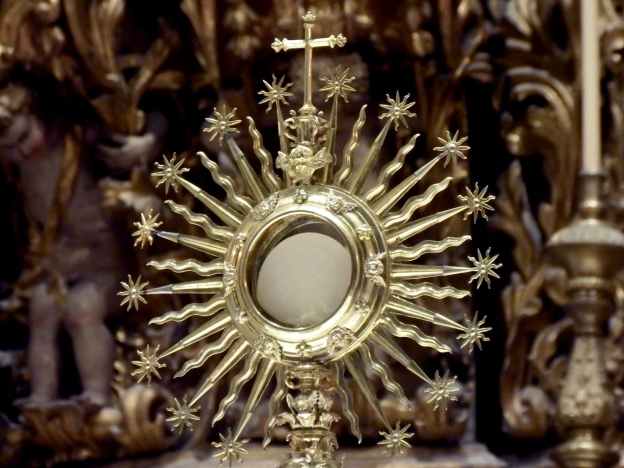
This week culminates in the Easter Triduum, three days of interconnected liturgies beginning on Holy Thursday with the commemoration of Jesus’s Last Supper, continuing on Good Friday with the Passion Service, and concluding at sunset on Holy Saturday with the Easter Vigil Mass. I’ve long found the Holy Thursday Mass to be my favorite, not just of the Triduum but of the entire year. For me, the mystery of the Eucharist is perhaps the most inspiring and compelling part of my faith that has continued regardless of the doubt and skepticism with which I’ve approached so many other aspects of reconsidering what I believe. One of the greatest lessons I ever heard in all my now 27 years of schooling was from Dr. Daniel Stramara, Professor of Theology at Rockhurst University, who explained that in the old Nicene Church of the Roman Empire, while in the Latin Rite the old Roman legalistic tradition persists in seeking answers to every question under the Sun, in the Greek Rite the prevailing opinion was open to mystery, to not having all the answers. I know I won’t really understand how “the biscuit turns into Jesus” to quote Craig Ferguson, one of my favorite comedians and all-time favorite late night host, yet that’s okay with me. It remains a mystery, and I trust in the long Tradition of our sacraments that there is deeper meaning in the Eucharist.

Good Friday was once described to me by my high school theology teacher Sebastian D’Amico as the one day of the year when we Catholics don’t celebrate, after all the Mass is a celebration of our faith. Good Friday is a somber day. Traditionally I’ve tended to attend the 3 pm Stations of the Cross service rather than the Passion Service later in the evening. The Stations of the Cross is a series of prayers which follow the path of Jesus from the Last Supper to the Crucifixion and eventually to the Resurrection that you’re taught very early on in Catholic school. Still, in the last decade I’ve probably returned for the Passion Service that evening on more occasions than not. Some years that service is so deeply moving, while in others I leave it feeling frustrated or downtrodden. I think of Good Friday as a sort of wild card in that way, it’s a day that has huge significance. It reminds me of other days in the year that mark the anniversaries of the deaths of relatives and loved ones, and historical figures who I have a great fondness for, curiously including President Lincoln who was shot on Good Friday 1865 of all days and died on the following morning on Holy Saturday.

With that segue Holy Saturday is a newer commemoration for me. I didn’t start going to the Easter Vigil Mass on an annual basis until just 2018 but have since found it a tremendously rewarding experience. The same mystery involved in the humble awe of Holy Thursday and the mournful remembrance of Good Friday trumpets itself on Holy Saturday in all the splendor of 2,000 years of liturgical tradition and precedent. I’m excited to serve my parish in this year’s Vigil Mass as one voice in the choir. 

The first of the nine readings said at that Mass always comes from Genesis 1, the Creation stories, which I will likely write about here in the Wednesday Blog at some point. I think of the Biblical Creation in the context of the opening verse of St. John’s Gospel, “in the beginning was the Word,” which with all its original Greek meaning also speaks to me of the idea that this vision of Creation first occurred through the voice, perhaps even as Tolkien wrote in his Silmarillion through song. Now of course, I don’t believe that the Universe was created in six days, I accept the idea of the Big Bang and cosmic evolution. There was a recent awe-inspiring episode of NOVA that talked about the raw energy that came before and propelled the Big Bang, which to me seems like a profound reflection of our own older traditional beliefs of the beginning, of Creation, though I’m not saying we can prove the existence of God, that again is best left to a whole separate week.

I’m looking forward to the rest of Holy Week this year, and I hope it will be a time of reflection and inspiration.

Ash Wednesday

Today is Ash Wednesday, the start of Lent. Some thoughts about that. Click here to support the Wednesday Blog: https://www.patreon.com/sthosdkane

In past years when I’ve written columns and devotionals around this time of year recognizing the beginning of Lent, they’ve been on some levels joking (I once referred to this season as the past tense of to lend) while on others they’ve been overly serious and solemn. There’s certainly room for both angles. This year, I feel a little less strongly moved by the whole experience, yes, I know we’re approaching a time of great meaning and purpose, yet in my mind that’s overwhelmed by the onset of what hopefully will be better Spring weather this week. 

As I’ve gotten older, I’ve found that the passing of the seasons impresses me differently than it used to. When I was first learning the names of the months and seasons in school, I noticed the changes quite profoundly. The first of each month was a moment of regard. Today though, month by month passes as one after another in a parade ever blending with its compatriots into one great cyclical mass of the year. I notice today more so the changing of the weather than I do the months or even the seasons. I notice the waves of warm air coming out of the southwest fighting against the cold air pushing down from the northwest. I notice now how each passing rain and snow leads either towards the warmth of summer or the cold of winter. For me the year is far more a day-by-day affair now than anything else.

So, where does that leave the liturgical year, the cycles around which my faith orbits? Honestly, I’m not sure. Perhaps because I had the opportunity to attend Catholic schools for much of my life the Catholic feast days and holidays stood out to me more at one time than they do now. The highest holy days, the Easter Triduum, Christmas, and of course the Irish feast days of Saints Patrick, Brigid, and Columcille stand out the most for me today, days when I can imagine my present moment lining up neatly with memories of my past and of the generations who came before me.

If Ash Wednesday has any potency for me today it’s in its reminder that we’re all mortal, and yes, at some point our lives are going to end. It’s a reminder of our limits, in body if possibly not in mind. I’ll go to Mass and get the ashes on my forehead as I’ve done for as long as I can remember, and yes, I’ll do the Catholic fasting (one large meal with two small meals, no meat), and I’ll likely be a bit grumpy about the whole affair. Ash Wednesday is a reminder of our lives on this Pale Blue Dot, to blend Carl Sagan’s humanism with Catholic theology. We’re all a part of this our home planet, forever tied to it, no matter how far we and our descendants might travel from its surface.A holy day like Ash Wednesday is a reminder of our worldliness, and how that world which we cherish and which we have helped build is as fragile, as mortal as we are. The ashes of the palm branches from last year’s Palm Sunday are from this same world that we are. It’s an honesty that can’t be beat or diluted, we are who we are. That’s what I’ve got this week.

St. Brigid’s Day

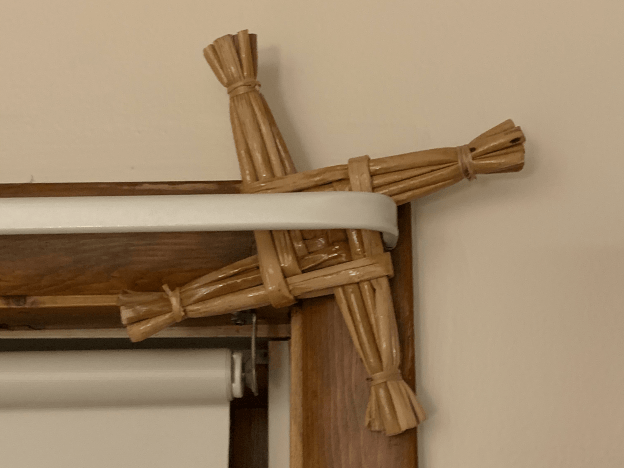
Among the saints are the Irish Trinity, Saints Patrick, Colmcille, and Brigid. These three were among the first Christian leaders and holy figures in the history of the Church in Ireland and remain centrally prominent today. This Wednesday, the first day of February, was once the ancient feast of Imbolc, which celebrated an ancient harvest goddess known as Brigid, whose patronage included wisdom, poetry, and healing. Brigid’s springs and wells remain sacred places today for how the deity was incorporated into Irish Christianity through the person of Saint Brigid, perhaps a real holy woman named for the goddess who converted in those first generations after St. Patrick’s arrival, or perhaps a reinterpretation of the goddess herself into a saint.

Either way, I don’t honestly mind. St. Brigid represents for me the continuation of the oldest of rituals, the most ancient of memories, into the modern day. Her feast marks the beginning of Spring according to tradition, a time of year which I do yearn for with how cold it’s been here in Kansas City of late. My own faith is open to the reality that it has a variety of sources, both biblical and traditional. In my lifetime I’ve heard here and there of efforts either by the Vatican or by other Catholic authorities to soften the devotions of certain saints deemed mythic, like St. Brigid, St. Barbara, or St. Christopher. I get where they’re coming from, after all who’s to really say if these people ever lived? I for one can’t prove it. Yet I disagree with this assessment because there are truths about life and nature we can learn from saints like Brigid.

The one catch about honoring a saint like Brigid who is so tied to Ireland and the environment of that island country is that some of these traditions don’t entirely make sense here in America. To say that Spring begins at the start of February is laughable here in the Midwest. The forecast today calls for highs of 36ºF (2ºC) and lows of 16ºF (-9ºC), far from Springtime temperatures that would be expected for the first day of Spring. True, we have had some nice days of late, days when I’m comfortable walking around without a hat or gloves, but they’re becoming fewer as January ends and February begins. I hope that February will see warmer temperatures return, heading into what might be a lovely March. But enough of the weather, to my point I find it hard to follow some of these traditional understandings of saints from back in Europe because the world of the Americas is different enough to make the experience of trying to say “Spring’s begun” when it’s snowing laughable.

Perhaps a better way to think of St. Brigid’s Day as an Irish American is to consider it as one of the last winter holidays which began with Advent in December. These winter festivities are marked by their sense of mystery, earned through the long dark nights this time of year and all the unknown things that can go on when the Sun remains down for longer hours and so much of our native wildlife sleeps in their burrows. St. Brigid’s Day means the winter is coming to its climax, and soon will fade into the first whisperings of Spring with its rains and lush greenery. If St. Brigid’s Day is the beginning of the end of Winter, then St. Patrick’s Day is the beginning of the height of Spring, a time when here in Kansas City sure it could snow, but it could also be warm and comfortable for parades under the Spring Sun. So, to all my listeners who feel like commemorating the story of St. Brigid, Lá Fhéile Bhrigid shóna daoibh! Happy St. Brigid’s Day!

Belief & Science

Photo by Felix Mittermeier on Pexels.com

I often stop myself mid thought when considering questions of truth to ask whether I believe in something or know of something. The distinction here is rather simple, knowledge is founded upon evidence, upon scrutiny & careful consideration of the facts of a case. Belief on the other hand is more of a gut feeling, it’s something we can discern but never really know until that feeling is backed up by fact-based evidence. Of all the forms of knowledge we have yet devised perhaps the most precise and useful is science, or rather the Scientific Method, which is fundamental to understanding the most innate truths of our world.

Both belief & science are built on a certain degree of faith. If the hard facts found in scientific inquiry are the bricks used to construct a house for our collected wisdom built up over every generation, then faith is the mortar that keeps those bricks together. You have to have faith in your senses, in your reasoning, and in the methods and tools you use to come to your scientific conclusions. Similarly, faith is necessary to believe, faith in an idea, in a hope, yes even in a dream of eternity. I’ve been using the English for these ideas so far, but now I think it might be useful to dive into the Latin, which will give us a better idea of how these concepts of belief, science, and even faith, interact in our Modern English.

In Latin the verb crēdō fits my own understanding of belief best. This verb refers to the action of believing and trusting in something, for belief is inherently an active thing. This verb is the origin of our English word creed, and in fact is the opening word of the Latin version of Nicene Creed. Something is credible because it can be believed, and so perhaps there is a certain degree of belief necessary and inherent in science whose facts and statements have enough credit to be considered irrefutable.

Science is itself an English adaption of the Latin word scientia, which had its origins in the Late Roman Republic as an abstract noun referring to the present active participle sciēns, a form of the verb sciō meaning “to be able to,” or “to know,” or “to understand.” Sciō is a practical sort of knowing, it refers to a manner of knowledge that can be tested, reviewed, and proven. Science relies on these proofs to survive and flourish, yet moreover science relies on the tools used to know being credible in their utility. You wouldn’t use a dull knife to cut meat, let alone blunted senses or scientific instruments to prove the fullness of our perceivable reality.

I have a deep admiration for many of the great scientific thinkers of the last few generations, and frequently mention the likes the great public science educators as Drs. Carl Sagan, Neil DeGrasse Tyson, and my generation’s favorite science teacher Bill Nye as people whose curiosity and intellect I look to for inspiration. It is striking then that someone like me who does believe in God, who is a practicing Catholic, would be so admiring of thinkers who themselves are profoundly atheistic in their worldview. I understand where they’re coming from, the existence of God cannot be proven through science, that is an indisputable fact, and to say otherwise would likely diminish the power and vitality of my own faith. I don’t mind that God cannot be proven real or otherwise, for the simplest summation of God in Christian theology as I was taught it, largely coming from the Latin Catholic and Greek Orthodox perspectives, is that God is a paradox. God can only really be approached through belief, through the hope that one might be doing things as some original Creator hoped things would turn out, because in my tradition Free Will is something fundamental to Creation.

I think of God in terms of a Divine Essence, certainly not physical let alone personal in a way that we as humans could fully understand a guy sitting across a table from us. I wonder then can we say that we knowGod, for knowledge relies on those same proofs born out of scientific inquiry? I’m not sure there, and I hesitate to talk about a personal relationship with God because how does one really go about talking to or feeling for someone who can’t be discerned by our methods or means? In the end, if God exists, as I believe, then it relies on that same belief, guided by faith, in Latin fidēs, a word that can also mean reliance, trust, confidence, or a promise that the thing you believe in, whether it be the accuracy of the Webb telescope to find for us the rings of Neptune in greater detail than ever before seen, or in the existence of a God who created all things at some moment deep beyond the furthest reaches of our known past.

I used to think that one could place God’s act of creation at the moment of the Big Bang, after all the image of a great explosion fit neatly with a certain idea of an outpouring of Divine Love, caritas in Latin, that is so central to the writings of many of the mystics of the Church. Yet now using scientific measures our experts have determined that the Big Bang was caused by an eruption of pure energy that had built up before the beginning. It makes me wonder whether we will learn more about those earliest moments as time goes on, whether today’s and tomorrow’s cosmologists will find new truths determined by their own proofs of what might well have happened when all matter in our Universe was compressed into a minute area of tremendous mass.

It seems fair to me to argue then that the moment of Creation did take place, and that at some point our own abilities as humans, all our own wisdom, ingenuity, and cleverness, will reach its limit. Thankfully our scientific tools have yet to reach that limit, and I doubt that limit will be reached in a good long while. It is in our nature as humans to continue pushing the boundaries of our knowledge, first beyond the campfires our ancestors gathered around on the long cold nights of the Last Glacial Period which ended somewhere around 11,700 years ago, then as we learned to plant crops and live sedentary lives, building villages, towns, and later cities where we settled. 

As our ancestors continued to develop their societies, they continued to fill in the edges of what became their maps, pushing the edges of what they came to call Terra incognita (unknown land) further and further out to the periphery until 500 years ago the disparate human family was reconnected through our ingenuity and technology transforming the oceans that were once barriers into bridges which we today can cross with ease. In the last seventy years those boundaries have begun to be pushed upward and outward from our home planet and into the stars beyond. We are explorers driven by our desire to understand the unknown, to see over the next horizon. Yet at the core of all that exploring we have continued to explore ourselves, to look within and ask deep questions about who we are not just as physical beings made of flesh, blood, and bone but as individuals, personalities each distinct from the rest. It is this exploration of the self that continues to drive our desire for some greater truth than we can know, a memory of a Creator who began our long and winding story as a species billions of years even before we ourselves evolved into the species we are today, Homo sapiens, discerning humans.

In times now past our ancestors often turned to belief rather than science to answer their questions, to find truths behind the mysteries they faced in their lives. Ideas of monsters, magic, and spirits out for good or ill were born from that worldview. Today, many of those same phenomena could be readily explained using the tools that our sciences have provided, yet still there are limits to our reason, for there are limits to what we as rational beings are capable of. The fullness of God as I believe in such a Divine Essence is beyond that reasoning, something reliant on my belief supported by my faith, my reliance in the possibility of the wisdom that such a Word, to borrow from St. John’s Gospel, promises. That belief is far from scientific, yet it is reinforced by my faith that we as humans can make sense of the reality into which we exist through our own tools, our Scientific Method.

Church and State

Photo by Pavel Danilyuk on Pexels.com
This week, a message for the present moment for the future prosperity of the country.

The foundation of good government is good ethics, which I fully acknowledge can and are taught by many faiths and learned through religious teaching. The Golden Rule after all is in various forms the foundation of most major religions after the various commandments to love and honor God above all else. Those ethics –– treat others the way you would want to be treated, contribute to society in a positive way, build a better future for your children and their children to come, among others –– aren’t inherently tied to religion; they feature in many religious teachings but they themselves are not inherently religious. 

A good society unbound by religion can also teach these morals. Some of the great humanists of the last century have proven that; great minds like Carl Sagan whose call to reflect on how we’re all residents of this one Pale Blue Dot in the vastness of Space. Like it or not, we all have to live together, and so our laws which govern our societies in a way that makes life better for all themselves ought to be built upon those same codes of ethics. It is possible for a society to legislate based on religion, to derive their laws from a common bond of faith. This has happened time and again in societies around the globe. Even in my own references to God exist in an otherwise secular republic. 

Yet if laws are going to be written to dictate in a manner grounded in religious doctrine or the interpretation of everyday questions through one interpretation of religious doctrine then those laws must reflect the will of the whole society, not only one part of it. Show me a council of any type of scholars whether theologians, philosophers, economists, or historians where everyone has willingly and freely agreed on every issue of their own accord. I doubt there has ever been one in the long memory of humanity.

With that in mind any state which governs over a society made of a plurality of faiths should never legislate based on the teachings of one faith, lest they elevate that faith above all others. I left a religious social club in 2014 because they violated the core principle that in our country the church and the state should remain separate through their continued political fundraising and campaigning. A state cannot govern without the support and trust of the public in the blind justice of its institutions to craft, execute, and interpret the law in such a manner that is beneficial to the society as a whole.

A transgression of that trust would damage the reputation, the honor of the very institutions that form the foundations of this society. The wanton abandon of obligations and duties that come with high office is a great symptom for the corruption in our society today. Elected officials who have coopted their offices to support a narrow set of highly partisan campaigns at the detriment of their constituents who expect those they elected to be responsive to them and be their voice in the halls of power. A branch of government designed to be above the partisan fray that has dominated our legislatures since the Early Republic has too fallen into the mire, making decisions its members promised they would not make to overturn “the law of the land” as one such member said before the legislature in his confirmation hearings. Still, a profound conviction grounded in religion rather than civics has influenced two key rulings by that august body in the last week. Two rulings that prove how poorly the separation of Church and State is faring today in this country.

The support of these causes which drove the twin arguments forward to on the one hand expand the rights of the individual at the fatal expense of the society at large and on the other to deny the rights of the individual at the will of a few who after generations of single-minded clamoring like Cato the Elder before the Roman Senate that “Carthage must be destroyed” those particular rights are now revoked. Better options exist in other societies with other governments and other relationships between the Church and their states, yet here in a country so engorged by its own reflection that any action less than overt and aggressive nationalism is unpatriotic the power of the pulpit cannot be denied.

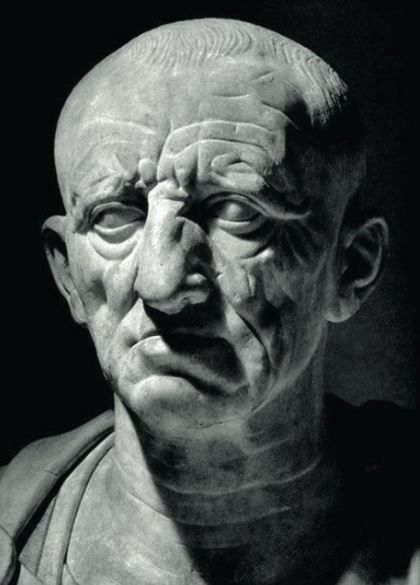
Cato the Elder

Carthāgō dēlenda est! | Carthage must be destroyed!

Cato the Elder (234–149 BCE)

Those other options, opportunities to improve our own quality of life in such a manner that the great debate at the heart of this affair would be resolved without any sweeping action to legislate prohibition as was done with alcohol a century ago. Still in our current state our bloated yet fragile national ego won’t allow for ideas to enter the narrative from beyond our borders lest we lower our guard and allow those distantly related bogeymen of Communism and Socialism to invade just as prior generations of proud Americans feared the influence of Papism and foreign interlopers.

Of all the songs from Handel’s Messiah the one that has always stuck with me the most is the aria sung by a female voice “If God be for us, who can be against us?” The chief issue at the heart of this stalemate in public discourse is that one side of the argument claims the blessings of Heaven behind their words, their actions, and their beliefs. To them anyone who opposes them opposes God, and the opponents of God are inherently wrong. Thus, there is no need for debate at all. I do believe that we humans have been fortunate from time to time to be able to interpret the Will of God, look no further than the Beatitudes or the Greatest Commandment uttered by the scholar of the law in answering his own question to Jesus in Luke’s Gospel, 

“He said in reply, ‘You shall love the Lord, your God, with all your heart, with all your being, with all your strength, and with all your mind, and your neighbor as yourself.”

(Luke 10:27, NAB)

Are those public servants honored by the duty and responsibility to fulfill the obligations of their offices who legislate based on a very particular interpretation of the law of the land directed by their own personal religious beliefs truly doing service to the country in their actions? Are they truly acting out of love for their neighbor? This is a time when the durability of the institutions that form the bedrock of this society are being challenged in every direction both by those who see less need for democracy in their own self-interest and by those who seek to reform and revitalize those institutions to flourish for generations to come. 

We must always act with an eye to the past that we build our generation on the precedents that have come before us, but with our mind turned toward the future that we today now build, that it will be a just and kind world for our descendants.