Category Archives: Science

Close Encounters of the Three-Toed Kind

Close Encounters of the Three-Toed Kind Wednesday Blog by Seán Thomas Kane

This week, introducing my research into the introduction of the three-toed sloth to European science in the 1550s. I'll be giving a public talk about my work at the Kopernik Observatory and Science Center in Vestal, NY on Friday, 29 April 2022 at 8 pm Eastern, 7 pm Central. You can find a link to the YouTube broadcast here: https://youtu.be/70lJ0NmT8Kw Also here's a link to the Kopernik Observatory's website: https://www.kopernik.org

You’ve heard me talk at length about a fair number of topics on this podcast, and those of you who have been reading my blog now for the 60 straight weeks that I’ve been writing it will perhaps know parts of me a bit better than some. This week I want to talk to you about something that’s personal yet also professional, it’s the project I’m staking my career on at this early stage––my dissertation. The big document I’m writing now is called “Trees, Sloths, and Birds: Brazil in Sixteenth Century Natural History.” It tells the story of how those three groups––the trees, sloths, and birds––were introduced to European natural history by a French cosmographer named André Thevet (1516–1590) in his 1557 book The Singularites of France Antarctique. It’s been a fun project to write so far after years of research and nearly a year of fighting to get it approved. At the moment, I have the first two chapters written and the next two, the sloth chapters, in the works.

So, naturally this seemed like a good time to stand up in front of a crowd and announce my intent to study the history of the natural history of sloths to all the world. This Friday, 29 April, at 8 pm Eastern I’ll be giving a public talk about my sloth research called “Close Encounters of the Three-Toed Kind: How Unknown Life was Named in the First Age of Exploration”. I’ve got to admit, I’m going out on a big limb here, and not lazily or slowly either. On Friday evening I’ll be introducing not only my research about the three-toed sloth’s role in cementing the strangeness of American zoology in European eyes but arguing for the recognition of what we today call the Age of Exploration, the period that began when Columbus stumbled on the Bahamas in 1492, as in fact the First Age of Exploration. The reason for this is straightforward: 61 years ago, humanity entered a Second Age of Exploration at the moment when the first human left the Earth’s atmosphere and entered Space beyond. Yuri Gagarin’s monumental first spaceflight is a moment that ought to be marked as the beginning of a new age in the human story, one where we began to move, however slowly, towards venturing out of our home and into our planetary neighborhood at the very least, our stellar neighborhood in the long run.

I don’t think it’s anachronistic to say the way Thevet and his contemporaries understood the sloth in 1555 and 1556 is similar to how we might well understand life that’s new to us that our explorers in the coming years might well encounter on other worlds. In Thevet’s time the Americas, these continents, were seen as an alien world by the Europeans, it was as foreign, as strange as they could imagine. In their efforts to make sense of what they saw and who they encountered in those first generations of contact the European explorers often either gave names familiar to them to that American life they encountered, as with the sloth, or they adopted local indigenous names for the life of these continents, as in the case of many of the local peoples they met. All of the states in my home region, the Midwest, bear indigenous-derived names, largely drawn from the names of local peoples who the French encountered and traded with during the seventeenth and eighteenth centuries.

The main theme of my talk will be about the meaning of names, their importance and intrinsic value to the named and the one doing the naming. In the first fifty years of its inclusion into European natural history the three-toed sloth went by several names. Thevet first recorded it in 1557 as the haüt, a Middle French phonetic spelling of the Tupinambá name for the creature, itself derived from the sloth’s cry which Thevet described as like “the mournful sigh of a small child.” Haüt also appeared in Conrad Gessner’s entry for the sloth in his 1567 Thierbuch, a German translation of his History of Animals, first published in Latin before Thevet’s visit to Brazil in the 1550s. Yet Gessner himself gave the sloth a more scientific name, Arctopithecus, meaning “bear-like ape” out of an effort to identify it by its physique, or how at least Thevet described its physique in his writing and a woodcut of the animal in his Singularites. Another French writer, Jean de Léry (1536–1616) who visited Brazil after Thevet left in 1556 and 1557 called the animal a Hay, with a closer phonetic spelling to the modern . Yet it was the Portuguese who first called this animal a sloth, namely the Spanish Jesuit missionary St. José de Anchieta (1534–1597), whose letters to his Jesuit superiors describe the animal as a preguiça in Portuguese, a sloth in English.

Another epithet Thevet gave to the sloth in his 1575 book the Universal Cosmography referred to it as “the animal that lives only on air” because during the 26 days that he kept one in captivity he never saw it eat or drink. Therefore, in Thevet’s logic, the sloth must only nourish itself on the air surrounding it. How Thevet didn’t realize the animal was probably terrified from being brought indoors, and likely was starving and dry for thirst baffles me. Still, the idea that Thevet believed he had found an animal in this alien world of America that “lives only on air” meant that the sky was truly the limit for the possibilities of American life. Thevet’s own Twilight Zone contributed to the groundwork for the notion of alien worlds that persisted in speculation and fiction into the present day, beyond the bounds of his own Age of Exploration, which I might argue ended with the competing Amundsen and Scott expeditions to the South Pole in 1911, or perhaps with the gradual end of the old colonial empires over the last century. So, if you’re in the Southern Tier of New York this Friday and want to hear me talk about sloths come up to the Kopernik Observatory and Science Center in Vestal, New York. The talk begins at 8 pm on Friday, and if the skies are clear, as hopefully they will be, we should have some wonderful opportunities for some stargazing after I wrap up my show. And for those of you who are listening from afar you can watch me take the stage live on YouTube. The link is in the show notes.

Electric Cars, Part 2

This week, how electric cars can contribute to the sanctions against the Russian government.

A few weeks ago, I released an episode about my first road trip in an electric car, and I was surprised to see that it topped the charts in terms of listener numbers for the next few weeks. Maybe it’s the topic, people just like electric cars. Maybe it was the picture I used that week of me looking like an executive standing in front of my Mom’s Tesla and a private jet at Kansas City’s Downtown Airport. Either way, you guys liked that one so here’s a sequel: Electric Cars, Part 2.

Today I want to talk to you about one idea I had of how we the United States, and our allies around the globe, can respond to Russia’s unprovoked invasion of Ukraine and move ourselves closer to carbon neutrality at the same time. Russia is one of the planet’s biggest oil producers, in fact I’d go as far as to say that oil is the backbone of Russia’s economy today, maybe not quite like Saudi Arabia or the UAE but on a similar vein. Here in the US, we’ve seen gas prices, which were already high, rise to levels unknown since the darkest days of the Great Recession. Gas prices here in Binghamton, New York range from $4.12 a gallon to as high as $4.35 a gallon right now. It’s likely that price is just going to keep rising, especially as our political leaders have decided to cut off Russian exports into the global petroleum market as a part of the wide-ranging sanctions levied against the Russian government and the ruling elite of that country in response to the Ukrainian War.

This morning I found myself thinking about the trips I have planned in the coming weeks. I knew that my usual $25 per tank of gas wasn’t going to get me nearly as far as I’m used to, and I’ve even gone as far as to cut some weekend day trips around Upstate New York and northern Pennsylvania from my schedule as a result of the rising fuel prices. Yet as I thought about my own trips I couldn’t help but smile at the thought of my Mom in her Tesla, one driver who wouldn’t be impacted by the rising fuel costs to the same degree. After all, Russia may be one of the great oil producers of our time but the electricity powering her Model 3 is locally sourced.

With this in mind I have a small suggestion: let’s use this moment of crisis globally and take the step to really begin transitioning wholesale our automotive industry from gas-powered cars to electric cars. We have the technology, which continues to improve day by day, and we know how to build the infrastructure for it, so why not take a moment of what could lead to great internal crises of long lines at the pumps and offer even greater incentives for people to trade in their internal combustion cars for EVs? We could even say it’s the humanitarian, or in the very American case that we like in this country the “patriotic thing” to do. The greatest innovations of our past have been born out of moments of crisis and trouble.

One big concern I know I’ll hear from the naysayers is that big oil won’t go for it, after all they have too much to lose in electric vehicles. To them I say, big oil would be idiotic to not see the potential in electric vehicles and start making the switch themselves. The easiest way for things to change is if we frame the change in dollars and cents, in profits. Greed, as a certain TV bartender would say, is the way to people’s hearts. 

Of course, there are some issues with this particular idea. For one we have other shortages of raw materials needed to make the batteries and computers used in electric vehicles. And even then, the mining of those materials isn’t terribly green. In the short term though, one way we could begin to threaten the aggressors in Moscow with long term trouble would be to deny them their greatest source of wealth.

I for one look forward to the day when I won’t have to fill up gas on a weekly basis. The potential changes to how our society functions through the economic changes imposed by this switch to EVs, which guys is likely going to happen anyway, are likely to be one of the core things that define the current twenty-first century as distinct from the twentieth.

Natural History

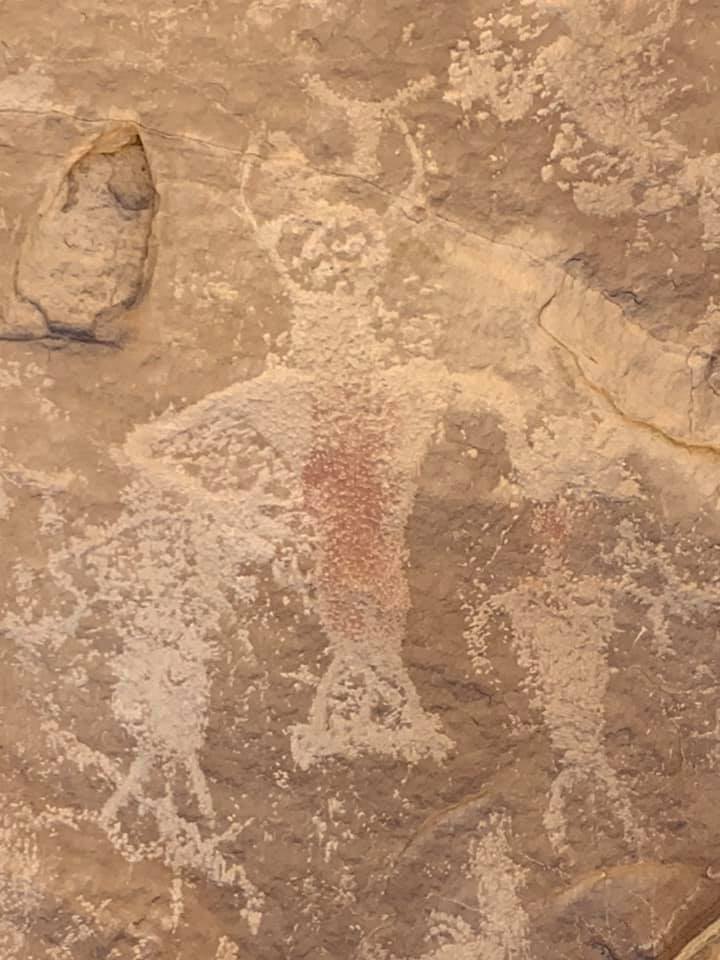
Fremont culture petroglyphs, Dinosaur National Monument. Photo by the author.
This week, I'm thinking about how we humans fit into the structures of natural history.

There’s a big problem with a lot of older anthropology exhibits in natural history museums around the globe, namely that they were built in the last two centuries often using either old and out of date information about the peoples they seek to describe, or like the old bronzes depicting the variety of humanity in the Musée de l’Homme in Paris, they were inherently racist to begin with.

Museums like San Diego’s anthropology museum have sought to rectify this with rebrandings and reorganizations. The museum in question, located in the California Tower building in Balboa Park, has recently renamed itself from the Museum of Man to the Museum of Us. Others like the Musée de l’Homme in Paris have worked to reassess how they display older historic anthropological exhibits like those old bronzes, so that today their primary message is one of “this is how people used to think, but not how we think anymore.” They’ve gone from being scientific teaching tools to historical artifacts.

There needs to be a very fine balance between lumping individual ethnicities with the rest of the natural world and actually considering humanity as a whole as part of nature. We are, after all natural beings, no matter how far we try to remove ourselves from nature with the edifices of civilization we’ve built up around ourselves. In case you’re wondering, this is a pretty central theme to the dissertation that I’m writing. In older generations, the idea of “natural humanity” was inherently understood to mean different peoples who were less civilized than others. It was used in the idea of the savage as a means of demeaning and describing the native peoples of the Americas following the beginning of the Columbian Exchange in 1492 (borrowing a term from one of my favorite historians, Alfred Crosby, here).

I’ve often thought of the world natural as being something good. Natural, or organic, food often tastes far better than the processed stuff. Natural soaps and such are less likely to harm our bodies. There’s even a style of music that I’ve called “natural” before, but only to myself. The liturgical music written by the St. Louis Jesuits, or the album Adiemus by Karl Jenkins would fall into this category.

So, if we’re natural beings, why then shouldn’t we be included in the kaleidoscope of life studied under the big tent of natural history? I for one have developed my own professional career from being an intellectual historian of the Renaissance to being a historian of late Renaissance natural history. That means I study natural history texts written between 1550 and 1600, in particular those which introduced new species from the Americas to audiences in Europe. At the time, natural history was closely related to another field called Cosmography, which while originally a theological study of the Cosmos had by the Renaissance become essentially the study of everything natural and human under the Sun. The first great proto-encyclopedias of our own modern age were descendants of the cosmographies of people like Sebastian Münster and my own focus of study, André Thevet (1516-1590), whose Cosmographie Universelle (1575) basically sought to describe everything, and yes I mean everything, that he knew about.

Today, we live at a turning point in human history. It seems like the last vestiges of the post-World War II order are finally beginning to break off, letting whatever the current century will bring be hatched from that shell born of the last century. Every century’s generations live in the shadows of their forebearers and have to figure out how to deal both with the benefits and the problems those generations left them. So, for us today talking about natural history we have the terrible realities of racism and bigotry which cloud this field and all its constituent studies. I do think humanity ought to be considered a part of natural history, ought to be studied like any other animal, but if we are going to speak of ourselves in those sorts of terms then it ought to do it in the same language across the board for all humanity, recognizing that we are all equal.

Today though, even more than any other time in our past, humanity has a critical role in the future of nature, and the stories that will be told someday in natural history. We’ve entered the beginnings of a new geological epoch, the Anthropocene, when we are the greatest influencers on the natural order of things. I’m seeing this in how many natural history and science museums have extensive exhibits on climate change, and even the handful of older ones on human biology, like my personal favorite at the Natural History Museum in London. We can try to ignore our part in shaping life on Earth, but at the end of the day as much as we’ll ignore it, we’ll end up like the proverbial unicorns who missed the boat. At that point, we will fall victim to our own pride, to our own endless thirst for more raw materials until the nature we need to survive has been stripped away. Human history has always been a part of natural history. Perhaps that’s a key to solving our current crises and all potential crises in the future: we must reckon with nature and our place within it.

Electric Cars

This week, I'm talking about my first road trip in an electric car. For my sources see: [1] 7-Eleven Corporate, "7-Eleven Charges Forward with Installation of 500 Electric Vehicle Ports by End of 2022, Providing Convenient Charging Options that Drive a More Sustainable Future," (1 June 2021), https://corp.7-eleven.com/corp-press-releases/06-01-2021-7-eleven-charges-forward-with-installation-of-500-electric-vehicle-ports-by-end-of-2022-providing-convenient-charging-options-that-drive-a-more-sustainable-future [2] Statista, "Number of 7-Eleven Stores in the United States from 2017 to 2020," (July 2021), https://www.statista.com/statistics/1130946/number-of-7-eleven-stores-us/

Last week I got the opportunity to ride along with my parents in my Mom’s Tesla on a cross-country road trip for the first time. We traveled across Missouri the 3.5 hours from Kansas City to St. Louis to visit relatives, many of whom we hadn’t seen in nearly 2 years because of COVID. When they were first looking at buying an electric car it was understood that because of battery range limitations those vehicles would make good city cars but wouldn’t be nearly as good for any long trips between cities. So, when Tesla announced their Model 3 would have an option for a 300-mile range and would be priced low enough that they could be more likely to be affordable in the long term, my Mom jumped at the opportunity. In many ways, while the electric car market was quietly growing before Tesla, with models like the Nissan Leaf driving the way forward, Tesla has in its own way revolutionized the speed at which electric cars are growing in the American automotive market.

In ideal conditions, at 248 miles, St. Louis is within the range for the Model 3 to make it without stopping to recharge. That said, generally it’s a good idea to stop and recharge in the middle. Yet as much as Tesla has revolutionized electric cars, the batteries are still susceptible to range fluctuations depending on the weather. In this case, we left Kansas City on a blistering cold day, and were lucky to make it as far as the supercharger at a Holiday Inn on the eastern side of Columbia, MO where we could recharge. Superchargers have the benefit of fast charging; it only takes 30 minutes or so for the batteries on a Model 3 like ours to fully recharge at a supercharger. Still, the idea that we were making a “refueling stop” that would take longer than 5 minutes, my usual stop length when I’m driving my Mazda, seemed a little bizarre. Still, the rare moment where we didn’t really have anything to do gave us the opportunity to stand around and chat.

Developments are being made in terms of making electric car charging stations more common across the country. 7-11 announced in June 2021 that they were beginning the process of installing charging points at 250 of their 9,522 stores in the United States. Meanwhile, cities like Kansas City, MO have long had partnerships with their local power companies to provide electric car charging stations at businesses and institutions throughout the city. Going forward, I think it would be well within the best interests of gas station chains like QuikTrip, BP, Speedway, Shell, or Mobil to invest in electric car charging at their locations around the US and globally.

In my own case, I plan on my next car being electric, whether that’s in five years or seven. I currently drive a 2014 Mazda 3, a wonderful sporty car that has proven itself time and again on my long drives between Kansas City and Upstate New York four times a year over the last four years. As much as I love that car, I fully recognize the need to move off fossil fuels and internal combustion in favor of vehicles and other transportation modes that aren’t as harmful to our environment. Thus, my interest in an electric car.

While my ideal would see the United States moving toward more public transit, better electrified rail networks, including a national high-speed rail system, and less car ownership all around, we live in a country rebuilt after the Great Depression and World War II with the car in mind. Here in Kansas City, I’m lucky to live in a neighborhood that is walkable, and that has regular bus service to Midtown and Downtown. I could conceivably even take the city buses as far as KCI Airport and not worry about driving up there at all, though the way the local public transit system is currently set up, connecting buses is more challenging than it needs to be.

As it stands, the US is going to remain a car-dependent country. Better to drive cars that are more sustainable, quieter, and safer. Progress means we continue innovating and moving forward. Let’s do it in electric cars!

How Space Exploration Can Unite Us

How Space Exploration Can Unite Us Wednesday Blog by Seán Thomas Kane

In this episode I argue that we should consider Space exploration as a way of uniting humanity around a common cause in what otherwise is a time when we seem far more divided.

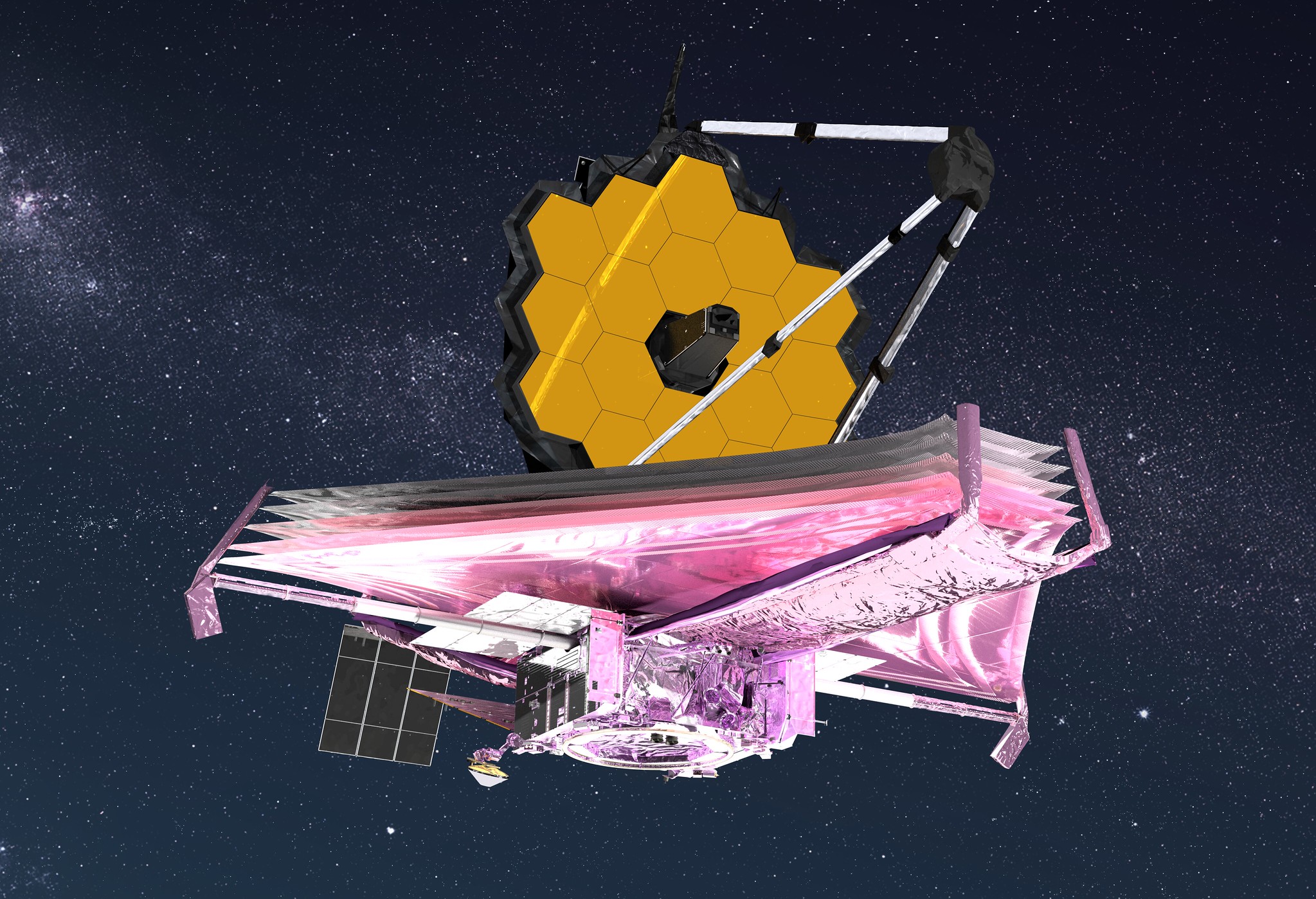
My Dad woke me up just before 6 am on Christmas morning to watch the long-anticipated launch of the James Webb Space Telescope (JWST) from the European Space Agency’s spaceport in French Guiana. Over the past few months, I’d heard and read a great deal about Webb, the engineering behind it, and the mission it has been sent on to travel to the Lagrange 2 point about 1 million miles, or 1.5 million kilometers, from Earth. Once there, Webb will serve as our newest set of eyes on the stars and planets far removed from our own. It will even be able to detect the chemical composition of the atmospheres of distant exoplanets, which could provide us with far better leads than ever before to finding life on distant worlds.

In this last week of 2021, during the Christmas season, a generally happy time of the year, I’ve got to admit there are a lot of problems facing us that are sure to dominate the year to come. The COVID pandemic continues and has recently flooded humanity with a new wave powered by the omicron variant, leaving us scared and worried during the holiday season. The tensions that have boiled over in the last few years in this country, social unrest born out of decades of dissatisfaction, disenchantment, and the pressures of our lives in this Second Gilded Age have brought we Americans closer to the brink than we’ve been in quite some time. Globally, we can’t bring ourselves to do enough to combat climate change, the greatest existential threat humanity has yet faced. Still, the familiar tempo of the drumbeats rises quicker and quicker as the Ukrainians prepare for a potential invasion from Russia, and tensions continue to simmer in the waters between China and Taiwan. Both of these regional wars could well draw my country, the United States, and our allies in, cycling further and further until that simmering pot comes to a boil in the form of another world war.

Meanwhile civil wars, famines, and the other children of fear torment people around the globe in nearly every country, some worse than others. The 2020s have thus far proven to be one of the darkest decades in recent memory, with many of its woes being fruits born from the troubles of the 2010s, 2000s, and the century prior.

Yet alongside all of this, I still have hope that we, humanity, will see ourselves through these threats, that somehow, someway we’ll survive as we have now for so long. It’s interesting to me how the same story, human history, can be told in so many different ways. I was brought up learning the story of human progress, of ingenuity and invention from the Promethean discovery of fire to the digital age in which we now live. It’s a story that has a happy ending, that believes we will eventually overcome our sins and the ghosts that have haunted our waking days as much as our dreams of a better tomorrow. The question I’m left with now, as an adult prone to daydreaming rather than a child without a responsibility to make something of myself, is how do we achieve that future? How do we make tomorrow better than today or all the yesterdays in our collective memory ever have been?

I suggest we look to the potential of what Webb can tell us about the Universe around us. We are after all made of stardust, as Carl Sagan was famous for saying, and at the end of the day it is to that stardust that we will return. The exploration of Space has the potential to be truly revolutionary to our story. If done right, it could be the catalyst that pushes our boulder over the hill, letting us the eternal Sisypheans we are, out of the Hadean turmoil we’ve been in for as long as we can remember. By realizing we are not alone in the Universe, that there are others out there who like us have struggled and fallen time and time again yet still found the strength within them to rise up and build civilizations in their own images, to leave legacies for others to remember them by. We have the potential to overcome our troubles: war, hunger, poverty, ignorance. Let’s set those drums aside and sit down and talk to one another, get to know one another, and learn from each other. Let’s realize that we’re more alike than different, no matter who we are, where we’re from. We may speak different languages, and by extension think in slightly different ways, we may have different incentives for our actions, but at the end of the day we’re all still human.

On the Sunday of Christmas weekend, a date I know as St. Stephen’s Day, I read a thoughtful editorial in the Washington Post by the conservative columnist George Will called “National conservatives and racial identitarians have a common enemy: Individualism”. While I didn’t agree entirely with his argument, and while in general Mr. Will and I only agree on a small number of things (in particular our mutual love of baseball) the main thesis of this column made good sense to me, that here in the United States individuality and the ability of the individual to express their self has fallen by the wayside in many circles in favor of a degree of collective identity on both sides of the political spectrum. The focus has fallen so much on what divides us that we’ve lost sight of how we are really so alike. 

We are all Scrooges as long as we stay in our camps and refuse to venture out into the no man’s land between them. There are past wrongs that need to be delt with, crimes that have yet to be punished, I would be naïve to deny that. At the same time, we need something to bring us together, to break these circles of violence that have been carried out since the time immemorial, embodied in stories like the primordial Fall from Paradise described in the Abrahamic religions. At this point, it’s fair to say we’re in a time when revolutions and counterrevolutions born out of a spirit of vengeance are far more in vogue than any belief in a common humanity. Yet through the fog of war that we allow the dragons of our imagination to breathe out into our world, there are still those among us who send missions beyond Earth with hopes that knowledge will broaden our horizons and increase our knowledge of not only the Universe around us but of ourselves as well. This Second Age of Exploration offers us the chance to unite around a common purpose of bettering ourselves, of elevating humanity above that fog and into a new age in our history when we can achieve all those lofty ideals we continue to set ourselves from each generation to the next.

Summer 2021 Podcast Recommendations

With the last weeks of the Summer break from the Academic Year coming to an end, I thought it would be fun to offer those of you who still read these posts a few podcast suggestions that I regularly listen to throughout the week. These may do a decent job at giving you a general idea of my own interests as they stand at the time of writing.

Planetary Radio

I first found this podcast in early 2020 just before the current pandemic began, and have made it a regular staple of my weekly radio and TV diet. It’s something that I make a point of listening to, if not on its usual Wednesday release, then by the end of the day on Thursdays. Hosted by Mat Kaplan, this is the official podcast of the Planetary Society, a space advocacy organization of which I am a proud member.

Planetary Radio, new releases every Wednesday.

A People’s History of Kansas City

A People’s History of Kansas City is always a wonderful solution for homesickness. I first started listening to it during my first year in Binghamton, I believe in early 2020. Some of my fondest memories listening to this podcast are of the time I was driving back to Binghamton from Albany Airport down I-88 (NY) and listening to a gripping story about the Guadalupe Centers here in KC, or more recently when on the way to and from a Royals game I listened to a couple episodes about Disney’s Kansas City roots and the post-contact history of the Missouria, the people for whom the Missouri River and the State of Missouri are named. I always look forward to hearing an episode of A People’s History, and occasionally even hearing people who I know personally get interviewed on this show (it helps being a historian).

A People’s History of Kansas City is off for the Summer.

Real Humans by Gina Kaufmann

Staying with the Kansas City, and KCUR, theme for a minute I want to suggest Gina Kaufmann’s latest project, Real Humans. It’s a shorter podcast, the episodes rarely seem to go over 20 minutes, but it addresses ordinary people here in KC and how the world we’re living in is impacting their lives. I’ve enjoyed what I’ve heard of this new 2021 release so far, and am looking forward to more stories brought by the host of KCUR’s old 10 am show Central Standard.

Real Humans by Gina Kaufmann, new episodes on Sundays

Star Talk Radio

I’ve been a fan of Dr. Tyson’s for a while now, having first really heard about him in my undergraduate Astronomy class at Rockhurst. This is essentially a radio version of his talk show that aired for a while in the mid-2010s on National Geographic’s cable channel. Essentially it’s Dr. Tyson and his friend Chuck Nice discussing whatever the topic of the week is with their guest. It’s admittedly been harder to get engaged in this podcast than others, but it’s a good one nonetheless.

Star Talk Radio, new episodes premiere on Mondays at 18:00 CT/19:00 ET.

Mission: Interplanetary

I think I first subscribed to this podcast either during PlanetFest this past February or during this year’s Yuri’s Night celebration in April. Either way, this has become one of my favorites for the interesting topics involving human Space exploration that are covered in each episode. The hosts, astronaut Cady Coleman and scientist & author Andrew Maynard are a lot of fun to listen to on either a long drive or a long walk around the neighborhood.

Mission: Interplanetary, off for the Summer. New episodes expected this Fall.

Ologies with Alie Ward

Ologies has topped most of the Apple Podcast charts this Summer and for good reason. I first found it one afternoon this Spring after a fun visit to the Helzberg Penguin Plaza at the Kansas City Zoo when I decided I wanted to find a podcast about penguins. Lo and behold, Ologies had an episode entitled “Penguinology,” with an expert in those antarctic sea birds, and from that point on I was hooked. I’ve really enjoyed listening to the various guest experts on this show, and while it’s a longer one it makes for good listening when you have a free 90 minutes to spare.

Ologies with Alie Ward, new episodes on Tuesdays.

Overheard at National Geographic

Overheard is a podcast that I found fairly early on in my current run of frequent podcast-listening, which all largely began with A People’s History and Planetary Radio. I’ve been a subscriber to National Geographic Magazine for quite a while now, and when I saw that Nat Geo had a podcast I figured it’d be a good one to listen to. At first it was hard to get engaged with it, the early stories I heard weren’t ones that I was all that interested in, but more and more I’ve come to really enjoy it. A recent episode involved that I loved an anthropological study of surviving Nahua-speaking communities in Mexico. Overheard has gone from being one that I’d occasionally listen to to a show that I look forward to every week.

Overheard at National Geographic, new releases on Tuesdays.

Sidedoor

From one Washington scientific institution to another, Sidedoor is a podcast from the Smithsonian that I only found a little over a month ago after my day trip to D.C. to visit a special exhibit at the Smithsonian American Art Museum (SAAM) about Alexander von Humboldt (1769-1859). Sidedoor has so far had really engaging stories that I’ve thoroughly enjoyed, and it’s inspired me more than ever to make it back to D.C. to visit the collections that get a mention on the podcast, in particular an upcoming special exhibit at the old Arts & Industries Building called Futures that sounds like it’ll be really neat.

Sidedoor, new episodes every Tuesday resuming in the Fall.

Gates McFadden InvestiGates: Who do You Think You Are?

One big change in my life that came about the same time as the start of the pandemic was my decision to try watching Star Trek again. I started this time with Picard and have since moved onto The Next Generation, Deep Space Nine, and am currently watching Voyager as well as the new episodes of Lower Decks. Considering a good portion of my free time tends to be spent watching Trek, after all there’s so much to praise about those shows and films, I’ve been on the look out for a good Trek podcast to listen to on a weekly basis. So, when I read on Twitter that The Next Generation‘s own Gates McFadden (Dr. Crusher) would be launching a podcast where she interviewed her fellow Trek stars, I figured I’d give it a go. To be honest I’ve really enjoyed listening to a pair of friends who I know for their performances on screen talk for an hour, or sometimes two, about their lives.

Gates McFadden InvestiGates: Who do you think you are?, new episodes on Wednesdays.

Conclusion

As you can see, I’ve got a lot of different podcasts that I tend to listen to on a weekly basis, and yeah I make time for them. There are a number of other ones that I’m looking in to, notably the Sisters in Strange podcast co-hosted by my cousin Chelsea Dunn and the Star Trek: The Original Siblings podcast co-hosted by my good friends Alex and Sami Brisson, the latter of which I’ll get to once I actually watch the original Star Trek series.

I’ve even considered providing narration of these blog posts as a sort of podcast, a service which is an option if I ever decide to give it a go. At the moment though I’m happy to just have people read what I’ve decided to write about.

Stargazing and the Future

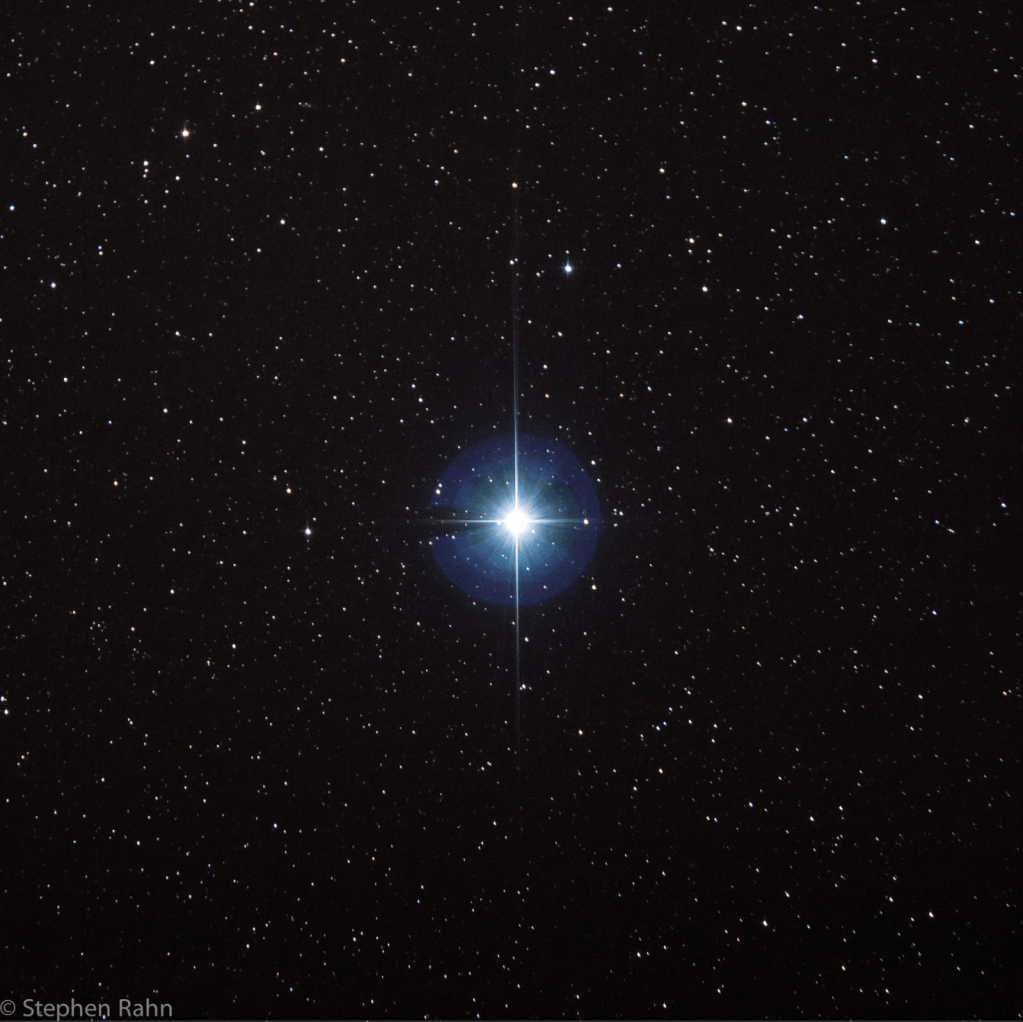
Vega, photo by Stephen Rahn.

For some reason, whenever I spend time at night outside stargazing, I find myself thinking about how timeless the experience is. How I could be anywhere on the Earth and still probably be able to see at least some of the same stars up above me in the night sky. It’s a beautiful and humbling thought, but as much as the starlight itself often takes years to reach the Earth, so too I find myself thinking in those moments about how in years to come, I may well be able to see the same old sight. Yet then, in ten or twenty years when, if I’m lucky enough to be a parent, I might be sitting out on a hillside somewhere looking up in the night sky with my kid or kids, I’ll be seeing light that might well have left those stars at the time I’m writing this now.

The whole concept of light years, that the light of distant stars takes years to travel to Earth, and that one can measure distance in light years, is such a neat way to understand things, let alone a beautiful correspondence between space and time, in what tends to now be called spacetime. One of my favorite stars, Vega, is 25 light years away, meaning the light from Vega that I saw that night recently overlooking the Green River in Dinosaur National Monument left that star when I was 3 years old, right at the beginning of my consistent memories. Like a postcard stuck in a long delivery loop, a postcard sent in 1996, that light which glowed from Vega’s face reached my vision as a memory of a time now seeming well past.

When the light glowing from Vega’s surface today, in 2021, is seen by stargazers here on Earth, in 2046, I will be 54, living a life built on the memories of 2021, just as much as it will be on the more distant echoes of 1996, yet I’ll be as much the same person yet still very different from who I am today. Who knows what thoughts and context will go through my mind then, ideas that will be descendants of those that crossed my mind a few weeks ago when I sat back in the high desert and stared up at Vega well into the night.