Category Archives: Sport

On October Baseball

This week, a great celebration commences in our national pastime. — Click here to support the Wednesday Blog: https://www.patreon.com/sthosdkane


This week, a great celebration commences in our national pastime.


Several years ago, near the start of the podcast version of my Wednesday Blog, I wrote two of my favorite stories in this continuing publication of mine about my love for baseball at the beginning of the 2022 season. I seem to remember even playing a poor rendition of Take Me Out to the Ballgame on the digital keyboard provided on GarageBand, where I do all my recording and editing. Don’t worry, I’m not planning on doing that again.

Today, I want to write instead about my joy at how this postseason is beginning. The 2024 season had plenty of potential for my beloved Chicago Cubs and my adopted second-favorite team the Kansas City Royals, and while the Cubs didn’t quite make it far enough to earn a wild card spot, the Royals did in spite of themselves. This is being released on the morning of Game 2 of the Wild Card series, following a 1-0 Royals win in Baltimore against the Orioles. So, should the Royals win again today they will advance to face the Yankees, a matchup that brings to mind the stories my Mom likes to tell of watching the Royals teams of the ‘80s face up against the Bronx Bombers in the American League playoffs.

Meanwhile in the National League the team that excites me the most in these Wild Card series is the San Diego Padres, a perennial favorite of the last four years to win the World Series. Their resounding 4-0 win at home over the Atlanta Braves last night in Game 1 proved to be a good alternative to the Vice Presidential Debate that was occurring at the same time from CBS News’s headquarters in New York. You might think it odd that someone as politically engaged as me would choose to watch a ballgame over a debate, and yes, I started the 8 pm hour watching Governor Walz of Minnesota and Senator Vance of Ohio face off on CBS, but as soon as the first question concerning the increasing odds of war between Israel and Iran occurred, I decided to seek some escapism.

There are a lot of things that we all are worried about today, and with good reason. Whereas for most of my life I’ve looked to the future with eagerness, today I’m scared about the future and what we are doing to ourselves. Over the weekend, I watched an episode of the PBS documentary series In Their Own Words about Jim Henson in which he said his inspiration for creating his 1980s children’s television show Fraggle Rock was to make something that could inspire world peace. To paraphrase the visionary creator of the Muppets, Henson believed the best chance we have at solving our problems is to speak to the youth who aren’t already jaded by the weariness of life and are more willing to imagine a good future. He spoke to the inner child in all of us, a part of me that I’ve found slinking back from the foreground as the world seems evermore scary and dangerous.

Even when I don’t have a team in the playoffs, and let’s face it as a Cub and Royal fan that’s most years, I still religiously watch the baseball playoffs because I love this sport. It’s the sport my parents introduced me to as a kid watching Sammy Sosa, Kerry Wood, and the great Cubs of the late ‘90s and early 2000s skirt so close to the glory of winning the World Series in 1998 and 2003. It’s the one sport that I played with even the remotest success. It’s a sport that I shared with generations of my family that I understood, and today it’s a nice antidote to the weekends of American football, which let’s face it I get but still don’t really understand. Baseball is one of those core things that makes me feel more American, and one of the parts of American life that I missed the most when I lived in England.

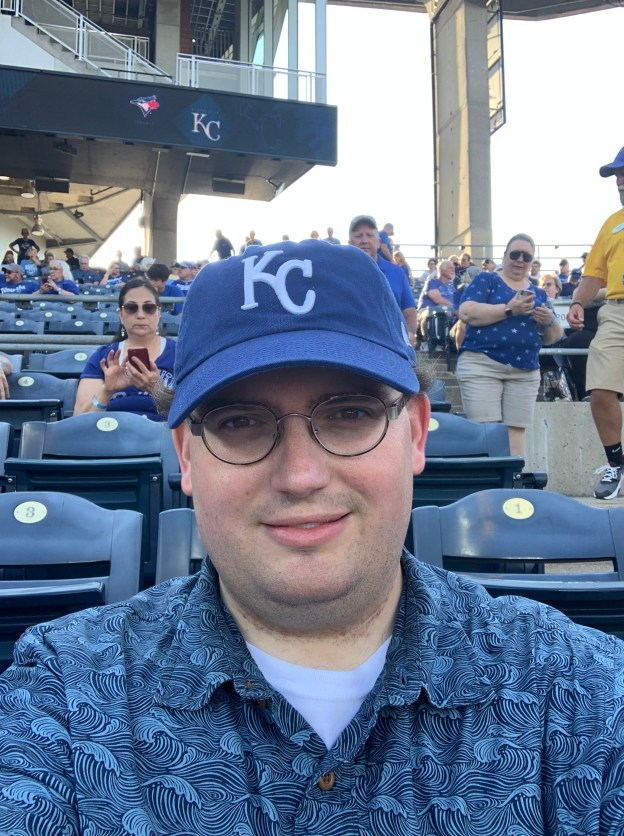
Locally here in Kansas City I feel that the Royals have lost some of their connection with the community in the wake of their failed bid to get a renewal on the stadium sales tax here in Jackson County, which would help them to fund a new stadium along Truman Road in the Crossroads neighborhood. I was one of those voters on the fence who wanted to support a downtown stadium but were really unhappy with the plan they laid out and repeatedly changed in the days and weeks leading up to the vote. Since the playoffs began, I found it harder to put on my Royals hat when going out. I’m having a hard time putting my faith in an organization that doesn’t seem to want to trust the city it represents. I hope this Royals playoff run, 10 years after their monumental and near triumphant 2014 run will revive some of that jubilation that I felt in Kansas City that year. I remember during the World Series that year driving down 47th Street in the Plaza and nearly everyone out walking down the sidewalks was wearing Royal blue jerseys and hats, and I even saw Commissioner of Baseball Bud Selig’s motorcade parked outside the Classic Cup Café at 47th and Central. I want to feel that kind of community spirit again in Kansas City, where the team and the city are open with each other and working together in a productive manner.

So, who am I picking to win the World Series this year? Well, even though we’re down to the last handful of teams, and even though I have a horse in the race this time around, it’s still too hard for me to say. I want the Royals to win again, that’s for sure, though were they not playing against the Orioles I’d be excited for Baltimore’s chances this year. In the National League though it’s a two horse race for me between the Dodgers and the Padres. While Los Angeles has one of the greatest baseball players of our time – Shohei Ohtani – on their team, the Padres have been red hot in the second half of the season, and I stand by my long held claim that the weekend I spent in San Diego in 2021 was one of the best I’ve had in the last few years. What I want to see most is amazing baseball that makes me want to watch the guys on the field play more and more and more; and by the end of this month to long for March and Spring Training.

Writing this tells me one thing for certain: even when I’m trying to celebrate something I love as much as baseball, the muddied waters of the world still appear, yet even then I remain hopeful of better tomorrows.


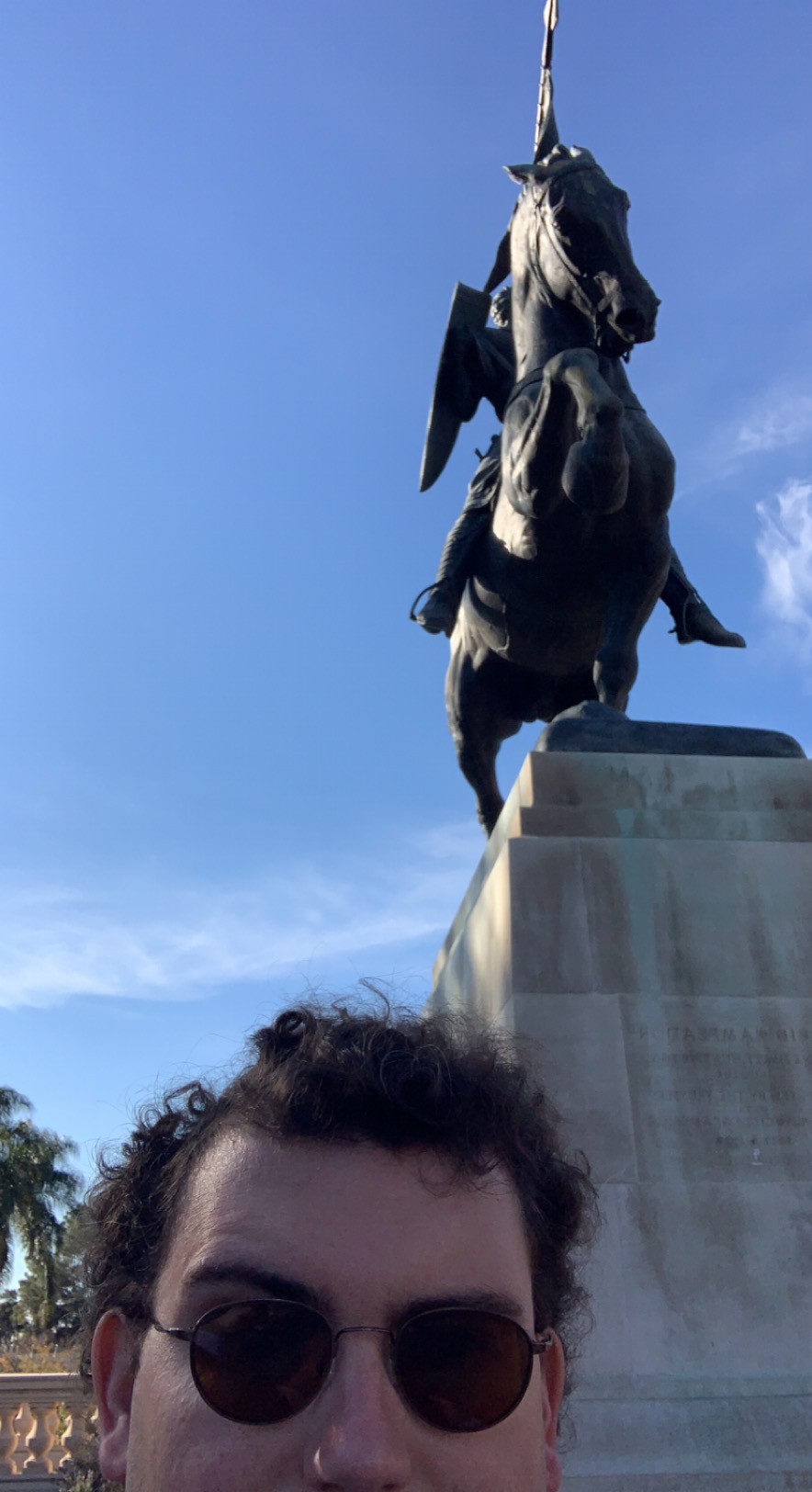
A selfie I took beneath the statue of El Cid in Balboa Park’s Plaza de Panama in San Diego on Halloween 2021.

Olympic Optimism

In celebration of the last few weeks of the Summer Olympics in Paris, I want to write to you about the optimism that the Olympics embody. — Click here to support the Wednesday Blog: https://www.patreon.com/sthosdkane


In celebration of the last few weeks of the Summer Olympics in Paris, I want to write to you about the optimism that the Olympics embody.


I’m an optimist at heart. I think that’s what has gotten me through these last 10 years of graduate school, and what keeps me going through the hard times we find ourselves in. Every two years, my optimism is renewed by the staging of the Olympic Games, summer and winter. Each Olympiad resides in my memory in its own different way, the character of the host city and the joy of the individual athletes shining through the broadcast of the games. Here in the U.S., the Olympics are actually the one big thing that I think of when I watch NBC, while Rio 2016 was a rare Olympiad that I missed most of being in London at the time with the events at odd hours for Europe. The Olympics reinforce that optimism that we humans can truly work together for our mutual betterment. We have the potential to grow beyond what Carl Sagan called “our adolescence as a species” dominated in the last two centuries by nationalism, division, war, and genocide toward a better future where societies work for the betterment of all.

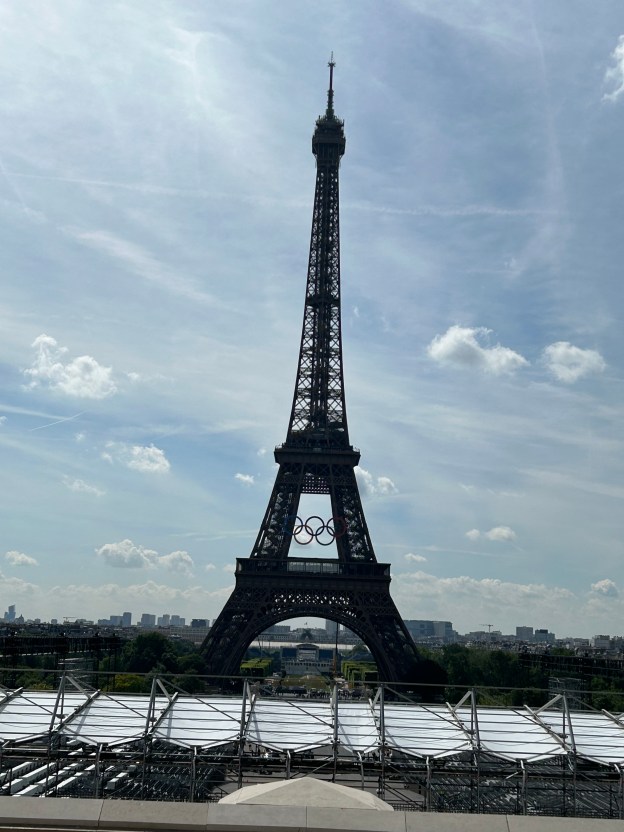
This year, I was in Paris a short while before the games began and got to see aspects of the Olympiad in preparation. The rings were mounted on the north face of the Eiffel Tower in early June when I visited the Musée national de la marine at Trocadéro, and all around the city the lavender-colored placards advertising directions to Olympic venues were hung in the metro. It gave me a sense of what it might be like to be in this city a few weeks later when the games began. Paris is a city which has such a long history of both oppression and liberation that it speaks better than many others to the collective human experience. It truly was a wonderful city for this Olympiad to be held at a time of tremendous pessimism and conflict around our globe.

I set up alerts on the Paris Olympics app on my phone for Team USA and Team Ireland, and for several specific events which I wanted to follow, especially the Fencing, I was a saber fencer in my pre-teen years for a while. While I wanted to support my own national team and the national team of my ancestral homeland, I still cheered on whoever was competing at a given moment. I like to say often that it’s better to have a wide margin of victory when I have a team in the competition: I’d rather see my Cubs win by 5 or 6 runs than by 1 run in a late season or playoff game. Yet, when I’m happy to see the competition itself and see these athletes perform their best on a stage watched by billions, I love seeing a tight race. For me then, as much as I love seeing Team USA march into the Opening Ceremony, or in this year’s case float down the Seine on their boat as the second-to-last to launch from Pont d’Austerlitz, I love even more the moment when the national flags join together and march toward the podium following the Olympic flag. All nations united in a common cause empowered by their hope and joy.There’s a song that was composed for the Rugby World Cup, which is just as pertinent here, World in Union, set to Holst’s Jupiter theme from The Planets which ought to be sung here too. The idea that every two years we all can join together, for several weeks, and form that very same world in union is what fuels my optimism that our days of division and strife are impermanent. I recognize the realists who say that we need to focus solely and whole-heartedly on the trials of our time, the wars and oppression happening in our midst; yet we should also keep this hope in mind that we might one day grow beyond war and beyond feeling the need to oppress each other. There should be as many diplomats and negotiators offering a chance at peace as there are soldiers carrying on the fight because at the end of any war there will be peace again, and the form that that peace takes will determine if any other wars will follow on.


Civic Pride

In a week of great triumph for my city and impactful announcements, some words on civic pride. — Click here to support the Wednesday Blog: https://www.patreon.com/sthosdkane


In a week of great triumph for my city and impactful announcements, some words on civic pride.


A city is as vibrant as the people who make it, and those who build on its strong foundations do well to recognize their forebearers. Cities are at the core of our concept of civilization, the city is the star about which a system of suburbs, exurbs, and ever more distant rural communities revolve. This has been true since antiquity, when the first human settlements were established for the mutual benefit of those who lived within them. Our cities today exist for similar reasons. It’s easier to live close to the places you work, eat, and play. It’s safer to live surrounded by like-minded people who in the best of circumstances will come together when a crisis emerges.

Cities are extensions of humanity; they can be organic in how they grow and function. The cancer and rot we’ve seen grow in our bodies that pose the greatest medical struggles today, mirrors the decay we’ve see in our cities in the last 70 years with urban renewal projects that removed vibrant urban life for new modes of living which prioritized distant suburbs and cars traveling far faster than one can walk in order to better connect our sprawl.

Our cities can find common passions in their livelihoods, civic pride in the things a city is known for making, and within the last 170 years in our professional sports. A central part of my love for my original hometown of Chicago comes from my memories as young boy in the suburbs of that city during the Bulls’ historic second threepeat and the Cubs wonderous 1998 season. Here in Kansas City the passion for our local teams, the Chiefs, Royals, Sporting, and the Current, is one common bond that runs throughout this city and its metropolitan region. We may agree on little else, but Kansas Citians agree on their passion for their teams.

This week then, Kansas City finds itself amid two pivotal moments in its recent history. On Sunday night the Kansas City Chiefs won their third Super Bowl in the last five years. This was also their second consecutive championship. As Quarterback Patrick Mahomes said in his post-game press conference, “the Kansas City Chiefs are never underdogs.” This success for the city’s football team remains in stark contrast to the Chiefs of my childhood. They made a playoff run during my first year living here, yet I remember listening to their early knockout defeat on the radio around New Year’s 2000. On the day that this is released, the Chiefs will parade down Grand Boulevard through Downtown & the Crossroads surrounded by what will surely be crowds of 1 million or more.

On Tuesday of this week, perhaps hoping to ride on the celebratory mood, the Kansas City Royals, this city’s Major League Baseball team, announced nearly 5 months late their choice for a new stadium site to replace the 52 year old Kauffman Stadium located next to the Chiefs’ Arrowhead Stadium in the eastern suburbs. In September of last year, the Royals had announced two preferred stadium sites, one on the east side of downtown along the east loop where Interstate 70 and US-71 round the urban core, and the other in North Kansas City across the Missouri River from Downtown in suburban Clay County.

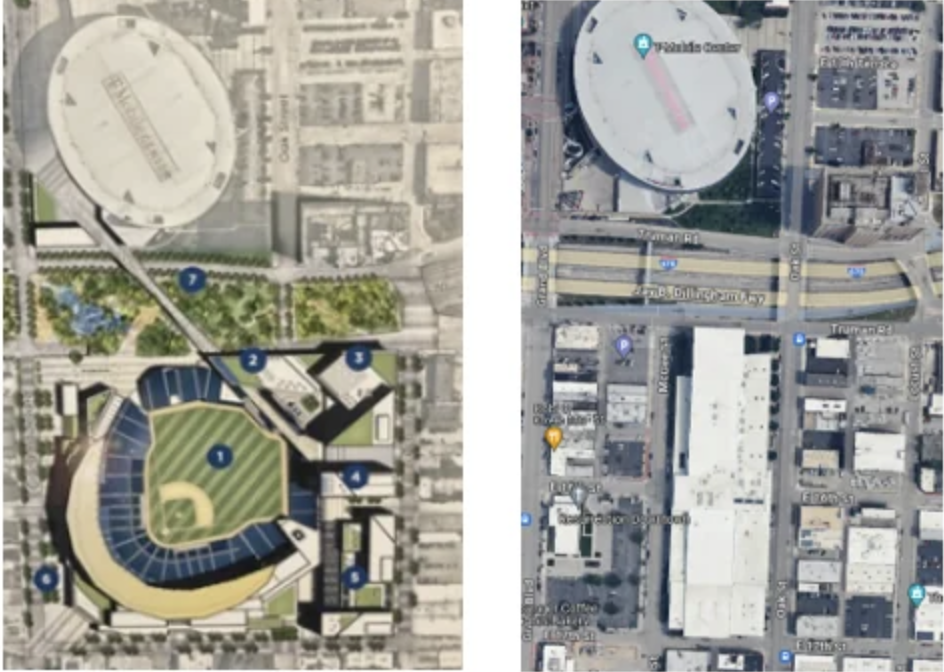
By the time the official announcement was released the rumors of what the announcement would hold had already been circulating for a good 12 hours, and to the bafflement of many, the delight of some, and the dismay of more the team announced they’d chosen a third site now occupied by the Kansas City Star Pavilion and a host of small businesses bounded by Truman Road on the north, Locust Street on the east, 17th Street on the south, and Grand Boulevard on the west. This site would be conveniently located next to the local indoor arena, the T-Mobile Center, where Kansas City’s hypothetical professional basketball and hockey teams would play. The proposed stadium would also connect to a park that is in the planning to be built over Interstate 670 on the south loop, which would continue to run beneath the park and new stadium.

A city needs to balance the causes of all of its constituents, each organ working in its own manner with minimal conflict between them. The proposed site of this stadium brings out clear and obvious conflict with local small businesses, Crossroads neighborhood residents, and the transportation grid of this city. I support the south loop park project which would cover Interstate 670 and better connect the Crossroads with Downtown, yet by that proposal Walnut Street and Grand Boulevard would be blocked by the park, which was fine before a baseball stadium was proposed to go there. The stadium proposal blocks Oak Street, a vital, if less used artery which runs along the east side of Downtown and the Crossroads connecting to Gillham Road in Midtown and eventually Rockhill Road at the Nelson-Atkins Museum of Art and Holmes Road on the east side of Brookside, my neighborhood.

The proposed stadium also displaces many vibrant local businesses that are located within its proposed footprint and will likely displace further local businesses in the surrounding blocks with a large new stadium dropped in the middle of their neighborhood. To me, it seems as though the team went out of its way to choose a third option which would disrupt as much of this city’s urban life as possible. With that in mind, I’m inclined to vote no on the question of whether we, Jackson County residents should renew the 3/8th-cent sales tax that’s on our April ballot in order to keep the Royals from building a stadium at this site.

Yet, I’m not opposed to a downtown stadium. I’m merely opposed to this proposed final location for the downtown stadium. I would prefer the City of Kansas City include questions on the April ballot asking municipal residents whether we’d prefer this location or the location on the east side of Downtown, which was the team’s original preference in Kansas City, Missouri. That location is currently occupied by parking lots rather than local businesses. It won’t require the demolition of a few vibrant blocks of urban life like the Crossroads location would. The one downside to the eastern location is that it is further away from the Streetcar line, the Power and Light District, and the T-Mobile Center. Yet spectators attending games at the current stadium walk further as it is often than they would in that situation.

At the end of it all, considering the history of teams that do not get their way with public funding for new stadiums, I worry that the current ballot question will not serve local residents in the best way possible. We stand to lose a great deal if the 3/8th-cent ballot question doesn’t pass, as both the Royals and the Chiefs have signaled their intent to look beyond Jackson County for new homes without that funding. While I expect the Chiefs to stay in Kansas City, I have my doubts about the Royals. 

While all this is going on here, back in Chicago the White Sox and Bears organizations are also pressuring the City of Chicago and suburban municipalities for options for new stadiums as well. The Bears were all set on a northwestern suburban location in Arlington Heights until new pressures there have led them within the last week to muse about demolishing historic Soldier Field in favor of a new stadium in the old one’s southern parking lot along Burnham Harbor. Meanwhile, last week the White Sox released designs for a new stadium located 1 mile west of Soldier Field at an empty lot between Clark Street to the east, the South Branch of the Chicago River to the west, Roosevelt Road to the north, and 16th Street to the south. Over the summer when the White Sox initially found lukewarm reception for their own stadium rebuild, their leadership mused about either leaving Chicago for the suburbs or even going to Nashville.

My worry about the Royals, then, is that if they don’t get their way with the City of Kansas City, they’ll either move to North Kansas City, which would be all right but not ideal in my book, or worse out of town all together to a booming market like Nashville, Portland, or Austin. This city is proud of its teams, proud of its people, and proud of its local character. Let’s have clearer communication between all the parties involved in as momentous a decision as this new Royals Stadium as we can.I want to see a downtown stadium, just not on the site being proposed. One piece of the report from KCURthat bugged me more than others was that the Royals were unconcerned about the parking situation around their proposed stadium in the Crossroads because “as existing parking downtown can accommodate fans who drive to games.” This says to me they see all the expansive parking lots that remain in the Crossroads as permanent features of the area, and not temporary eyesores from a time when we thought it good to carve out our urban cores for the sake of suburban development. It says to me that the Royals organization wants to operate in the urban core but not be a part of the community.


Following Up

I write these blog posts on Mondays and Tuesdays, and after writing this one yesterday afternoon I’ve since read more about the project. To put it simply: I don’t know what I think about this project. One glaring issue I still have is that Royals organization has a website for their new stadium but I couldn’t find it on Google. Rather, I found it linked in a Reddit post. All of the information I have comes from KCUR, KSHB, KCTV-5, and the Kansas City Star, as well as other individuals on Reddit and X (formerly Twitter). One Reddit user posted a side-by-side comparison of the proposed stadium and the current site.

Courtesy of u/acparks1 on Reddit

I’m still disappointed that the Royals are choosing a site that is presently occupied, and that in their FAQ they rely on current surface parking lots that dot the Crossroads for future game-day parking when we should be looking at redeveloping those lots and building garages to handle downtown parking.

Yet, I drove through this area yesterday evening on the way to a Fat Tuesday party, and I can see how they could make this site work. I still have many reservations about this project, but this morning, I don’t oppose it. I’m not issuing a retraction for several reasons: my original argument still stands on some of these issues, the podcast was already published at midnight, and I don’t have a backup plan. If anything, I want to make it clear how there are benefits and detriments to this plan. I wish the Royals site would acknowledge the impact their plan will have by closing Oak Street and displacing the businesses on the 1600 and 1700 blocks of Walnut, McGee, and Oak Streets, and again I wish they would discuss building more compact parking options than the swaths of surface parking that remains a blemish on our urban core.

I’m not happy about this blog post because I want to offer you a clear argument. Yet in this instance I’m not sure I can, there are too many factors involved. If we were looking at a spectrum with 0 as complete opposition and 100 as complete support, when I wrote the original blog post on Tuesday afternoon I was at a 35 or 40, still opposed to this project but not vehemently so. Now, I’m closer to a 55 or 60, supportive of it yet still quite cautious about what it could hold for our city.

Draft at the Station

Last Friday, I took Amtrak's Missouri River Runner from Independence to Kansas City's Union Station to see how the NFL Draft was affecting public transit in & around the Station. Click here to support the Wednesday Blog: https://www.patreon.com/sthosdkane

The following post is a transcript of the audio from the podcast episode this week. I strongly advise you listen to this one rather than just reading it. Thank you, and enjoy!

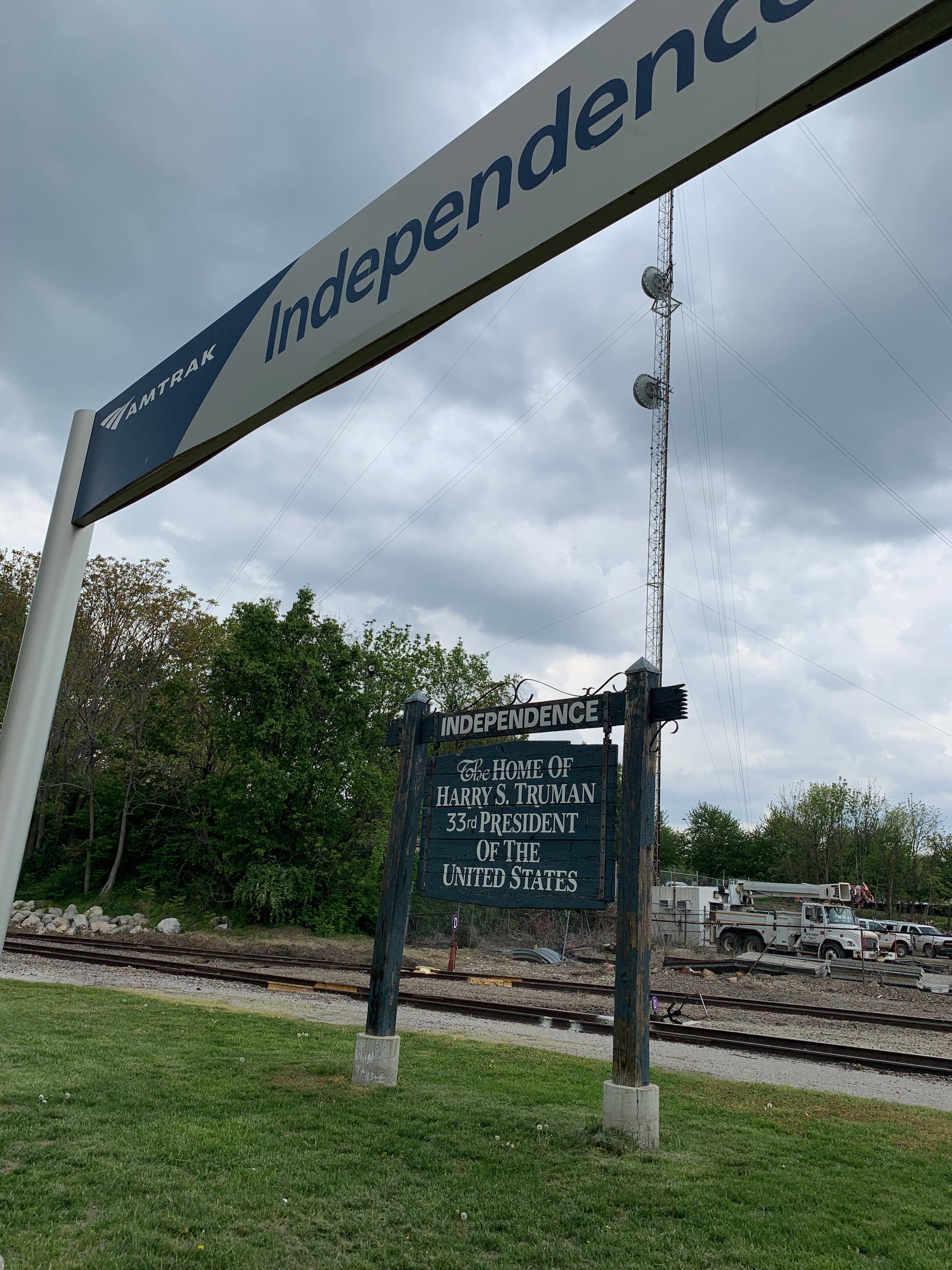
Independence, Missouri: hometown of President Truman.

“I’m at Independence Station, the only person here, the station house is locked, looks like it’s been abandoned for a while. I’m about 50 minutes early for my train, nothing here, no seats. We’ll see how this adventure goes!”

That was on Friday, 28 April 2023 just after 12:30 pm on a cloudy but calm day in Independence, Missouri, one of the eastern suburbs of Kansas City. I got a ride out there so I could try taking Amtrak’s Missouri River Runner service into Kansas City’s Union Station located just south of Downtown. Normally, arriving at Union Station is a moment of awe and wonder at the grandeur of that Beaux Arts station, built in 1914, one of the great reminders of the time when trains were the fastest and most comfortable way to cross North America. Last weekend though Union Station hosted the NFL Draft, a big event where all 32 professional teams in the top American Football league on the planet gather to pick who among the top prospects from the college teams across the U.S., they want to offer contracts to and invite to start their professional careers with those teams. That about sums it up. I’ve known about the Draft for most of my life and have so far spent the better part of the past thirty years not caring about it.

This year though is different, the Draft has landed squarely in the center of my city. Union Station has been a stage for many important moments in my life, from my first volunteer job at the Kansas City Irish Center back in 2006 to the place where I began several trips back to my original hometown of Chicago onboard Amtrak’s Southwest Chief to birthday lunches and dinners at Pierpont’s and Harvey’s and even a date. So, for me it feels personal to have that most public of spaces be taken over for the biggest, richest, pro sports league in the country for the whole weekend.

“It’s now begun to rain. Some church bells ringing. According to the Amtrak app the train is about 10 minutes out from Lee’s Summit, which is about 20 minutes down the line from here further to the southeast. Here I am, hiding underneath the overhang of the roof of this station that’s still deserted.”

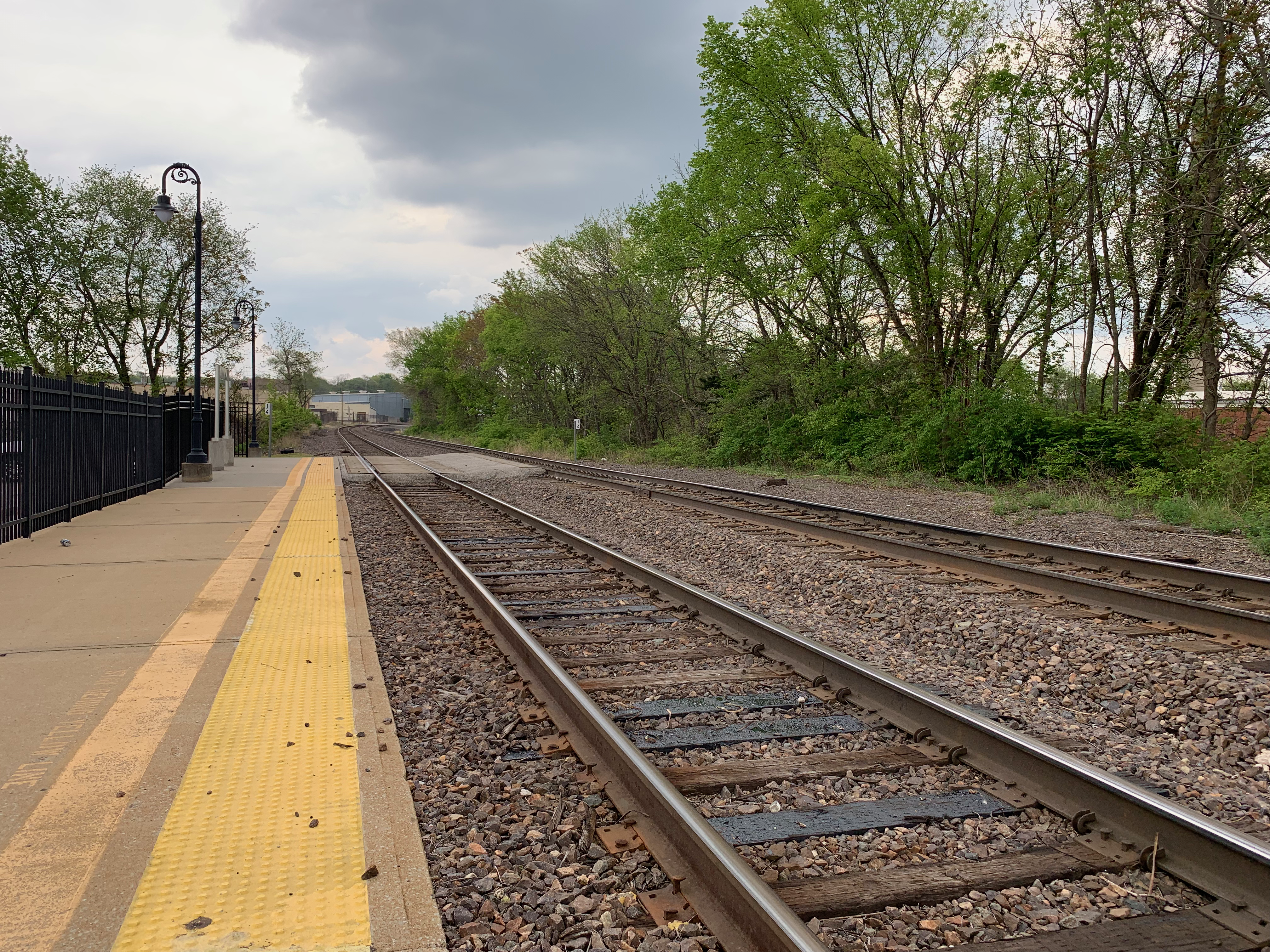
An empty platform under a gray sky.

As I waited a long Union Pacific freight train passed by the station on the further of the two tracks in front of the platforms. [train recording] It was carrying carriage upon carriage of double-stacked cargo containers that had come from one of the many ocean ports to the south and east of Kansas City, marked with the logos of a number of different cargo shipping companies including the Taiwanese Evergreen Group, whose container ship got stuck in the Suez Canal last year. At this point I was joined by a Salvadorean trainspotter who came down to the platform to take some videos of the train. We talked for a few minutes, or rather spluttered back and forth not speaking each other’s languages. I really need to properly learn Spanish one of these days.

“I happened to just meet a rather friendly Salvadorean gentleman who’s here for a conference. Charming. Oh, my Spanish is so terrible, and using French didn’t help. Train’s on time now, should be here in about eight minutes.”

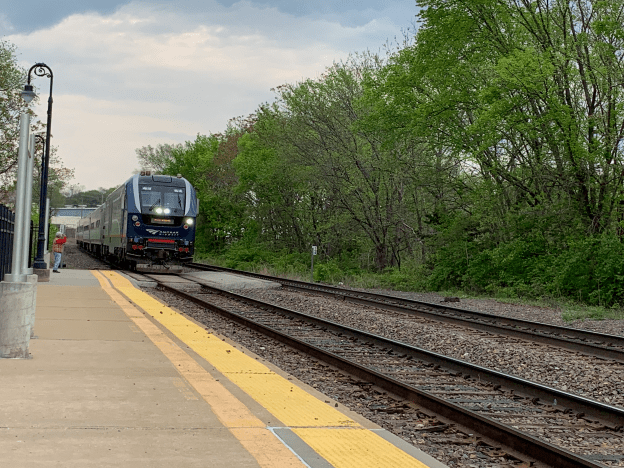
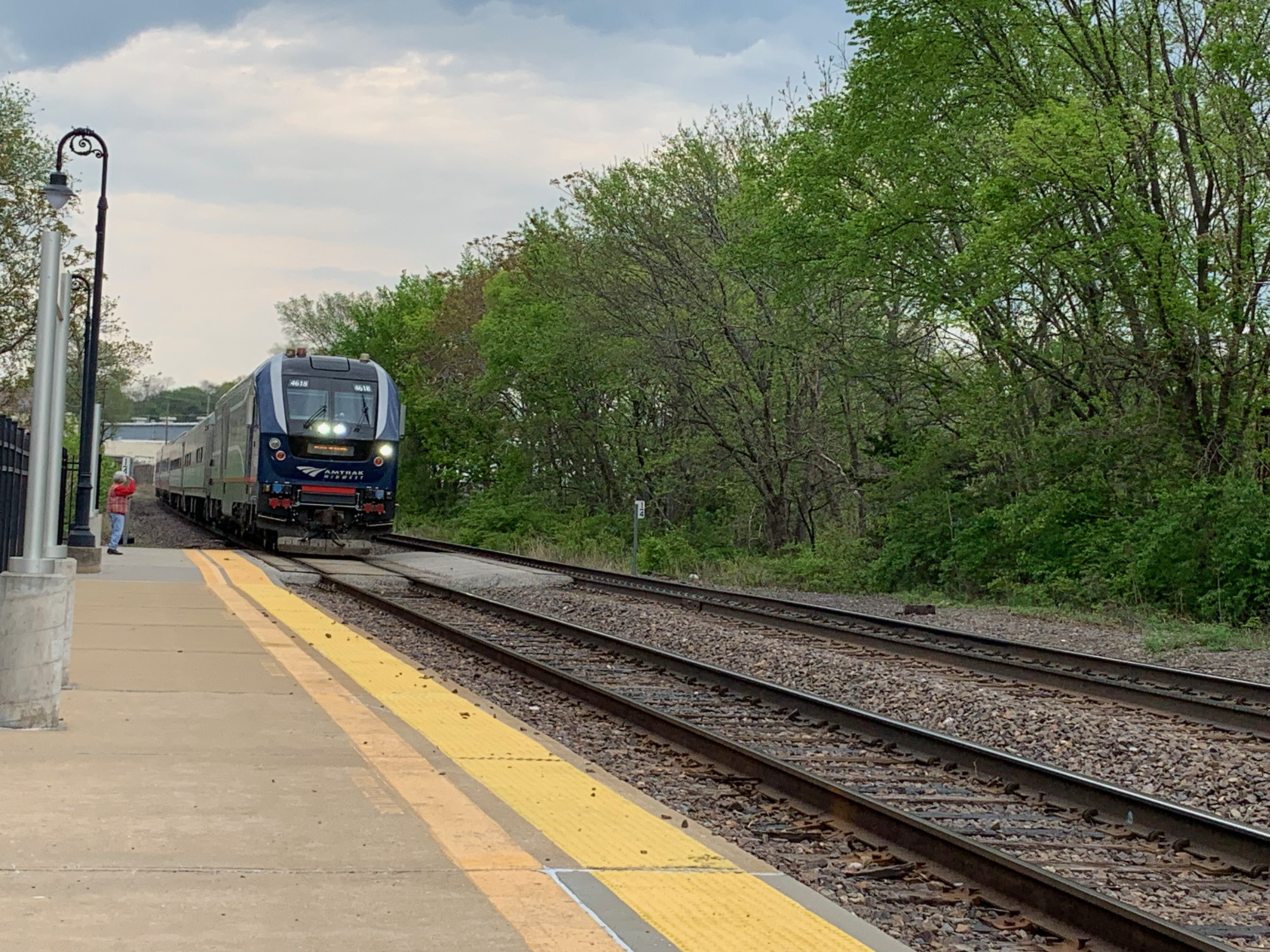
Those eight minutes turned into 10 minutes as the River Runner arrived at 13:30 rather than 13:26, which by my book is alright when it comes to Amtrak delays.

[Sound of the Missouri River Runner arriving in Independence]

The Missouri River Runner approaches!

I let a handful of passengers disembark before telling the conductor my name, which he recognized from his passenger list, and boarded. The best thing about Amtrak’s service is even in coach on these state-run smaller services the seats really are quite comfortable. Plus, if you just want something to eat to keep you going, you’ll be able to find something in the café car. I was so thankful to buy a bag of really salty chips in there, my lunch for the day. There were probably about 30 other people on the train, most of them traveling into Kansas City from points east in Missouri, but some were on board going to the Draft.

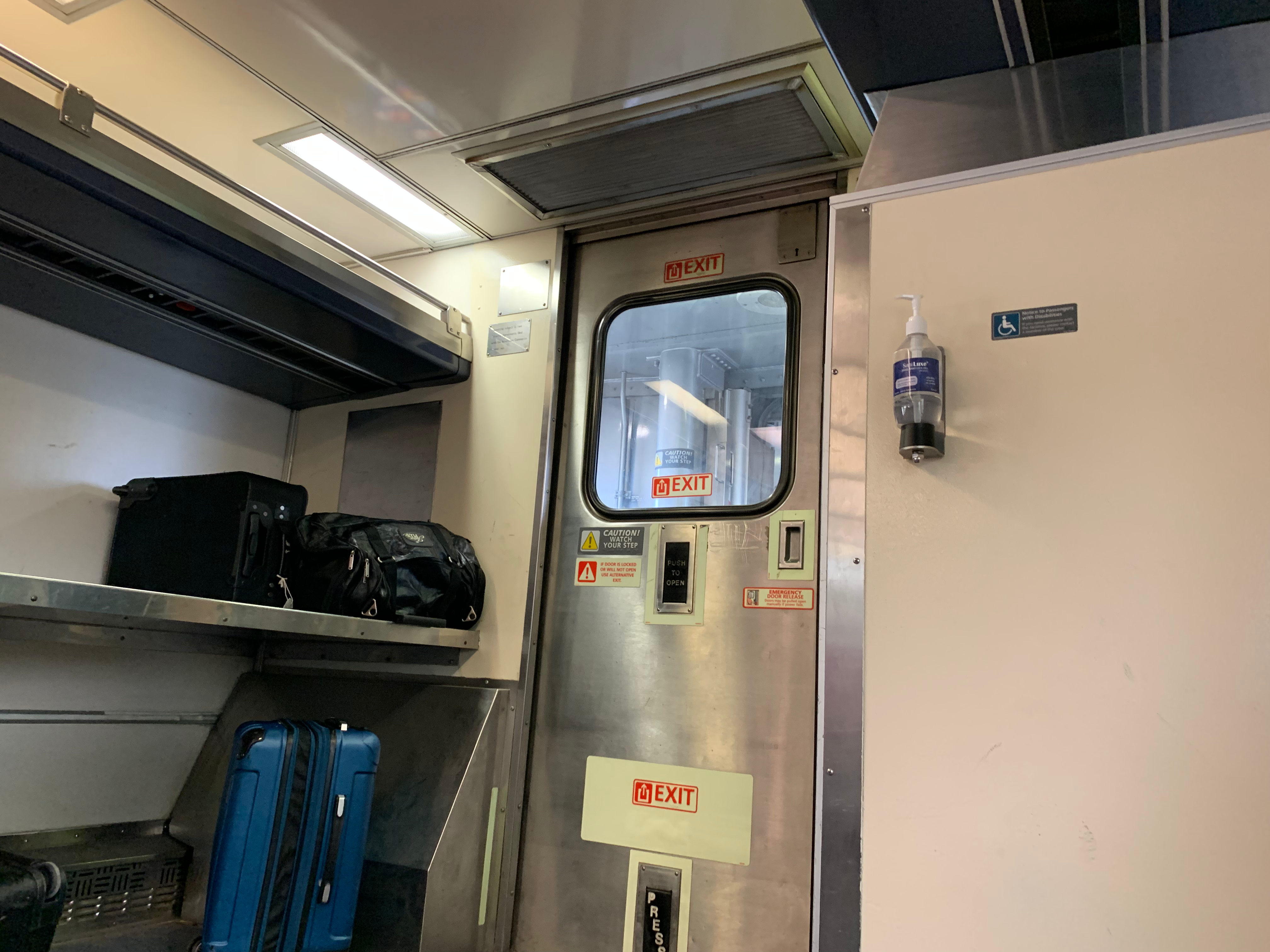
On board the River Runner in coach class.

[Missouri River Runner ambient noise]

This meant that once we arrived at Union Station 20 minutes later, the passengers who disembarked were a good mix of excited at seeing the station taken over by the NFL and frustrated that the station was closed off for its original use, to welcome rail travelers into Kansas City.

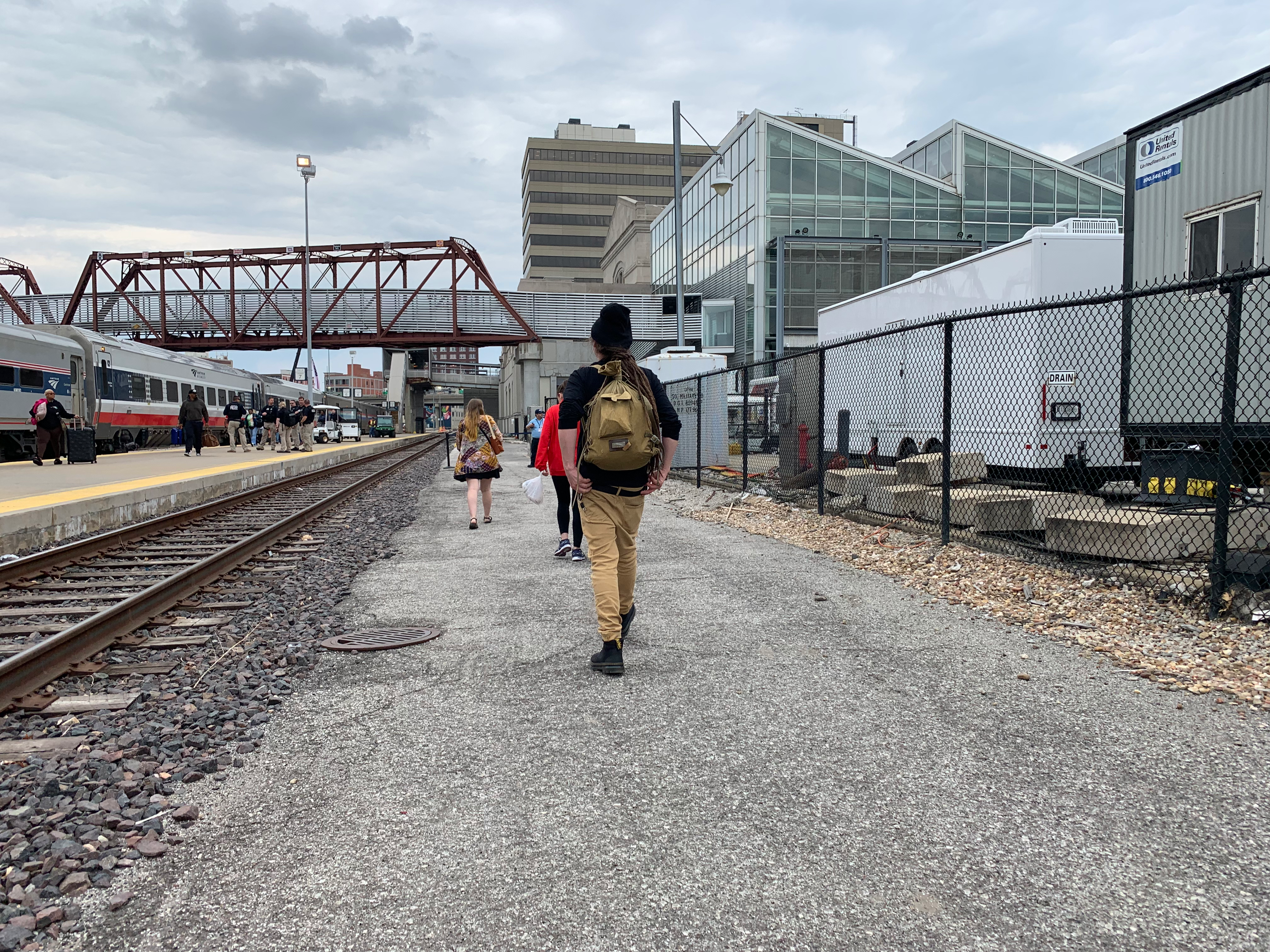
The Amtrak platform at Union Station was occupied by a force of about 10 Homeland Security officers, who stared at us emotionless as we disembarked. We were directed by the Amtrak conductors to walk down the platform towards its western end and then to use a gate in the fence separating the railyard from the parking lot beyond. In that parking lot were more Homeland Security officers, stern faced and resolute. They didn’t need to tell anyone not to cross them or try to enter the station, it was pretty clear that wouldn’t be received lightly. Despite the emails that Amtrak sent out every so often in the days before the trip about how the arrival procedure would go there was still some confusion among the passengers as to where we were being taken. I tried to help, having studied the plans as thoroughly as I could to make sure I did what I needed for this trip to happen without a hitch.

Arriving at Union Station walking from the platform to the shuttle trolley party bus

“Well, it’s going to 25th St, it’s south of here, it’s going down here, past Broadway, and to the left.”

Amtrak Police officers then guided us towards a set of shuttles, in fact trolley party buses, that would take us to the drop off point at 25th and Jefferson, one block west of the IRS building’s Broadway entrance.

At this point, I should say that this whole idea began a few months earlier. I thought about going to the Chiefs’ Super Bowl Rally in February by train, catching the River Runner either in Lee’s Summit or Independence, again just to see what would happen when it got to Union Station, but on that cold, windy February Wednesday I forgot all about it and took the Main Street Max bus downtown with my Dad. On our return trip we got stuck in Midtown for a good two hours waiting for a southbound Main Street bus to pass us. A part of the plan, and the risk, of this Friday’s adventure would be seeing whether the Ride KC city buses would be running on schedule & on route or even running at all.

This time, I’d done more of my homework, so I knew if the buses weren’t running on time or at all, which in my experience as a former bus commuter in Kansas City is sometimes possible, I could be home in around 2 hours on foot. Sure, it’s a 6 mile walk south from 25th Street to my home in Brookside, but I had my best gym shoes on and lots of water available if needed.

Thankfully, I only had to wait for about 10 minutes before a southbound Main Street Max bus arrived at the stop on Broadway at 25th Street. I didn’t get any audio of this, my goal was to get on board and not be left behind or somehow make what was turning out to be the best possible situation into one that I’d come to regret.

I boarded my bus at 14:15 and was at my local stop without any trouble or problems. All that remained was a delightful walk home through the tree-lined streets of Brookside listening to the birdsong and fountains in my neighbors’ front yards.

[Audio from my walk home from the bus]

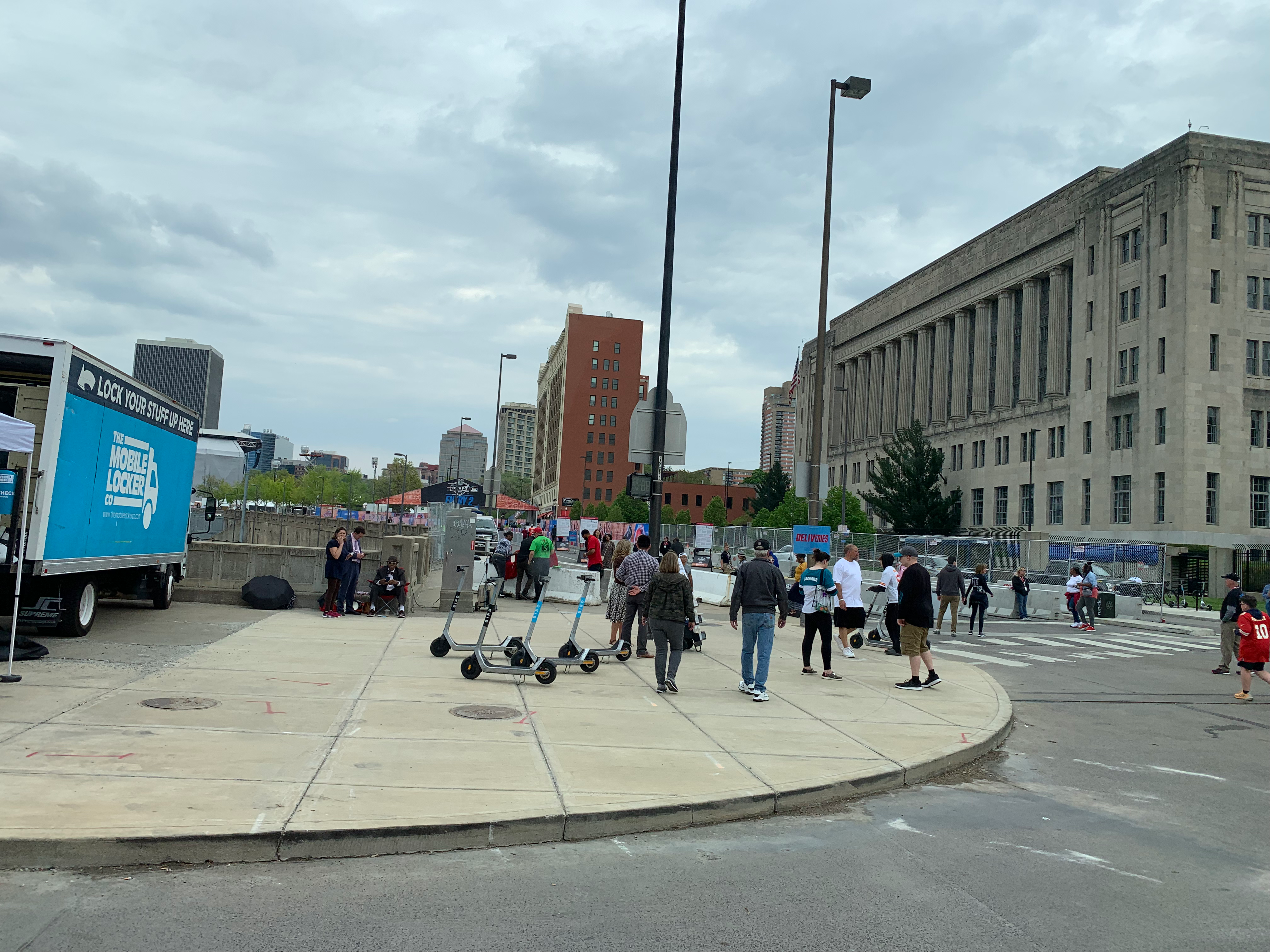
So, as it turned out, things worked out. One big difference I noticed between today and the Super Bowl rally a few months ago was the crowd control on Pershing Road and around Union Station all together was much stronger. I guess I could put it down to the NFL paying for stricter security than the City of Kansas City did, plus I read a story earlier this week that KCPD still owes the 350 officers who worked and managed the crowds during the Super Bowl Parade & Rally their overtime pay 73 days later. Not having thousands of people, myself included, walking down the middle of Pershing Road and Broadway to try to get out of that crowd that some have numbered up to 1 million people at the Super Bowl Rally really helped keep traffic flowing, and keep the public transportation network moving.

Far less chaotic on Pershing Rd. during the NFL Draft than it was during the 2023 Chiefs Super Bowl Rally.

I’m still frustrated, as were many of my fellow Amtrak passengers, that the Union Station organization sees itself less as a transportation hub, which the station was built for, and more as a big center for the city and a tourist attraction. I like all the things that Union Station has to offer, yet I think it would be better for our city if we increased our focus on the rail services that the station was built for and improved those services to be more frequent, and more useful for everyone in this metro. I’m glad that I chose to take a train into the station rather than try to get a train out of the station during the NFL Draft, for while I was able to disembark on the platform and board my city bus to go home all in the course of 20 minutes, the departing passengers were told to be at the platform 2 hours before their trains left, and were given trailers to wait in or else they’d have to sit outside in folding chairs with few amenities to speak of. It’s a solution, but it’s not great.

So, I’d consider Friday’s adventure to be a success. Truly, the only part of it that didn’t quite go to plan was my decision to leave home when I did, it took me far less time to be driven to Independence Station than I thought it would. Otherwise, I’m surprised to say it all worked. Would I do it again? Sure.

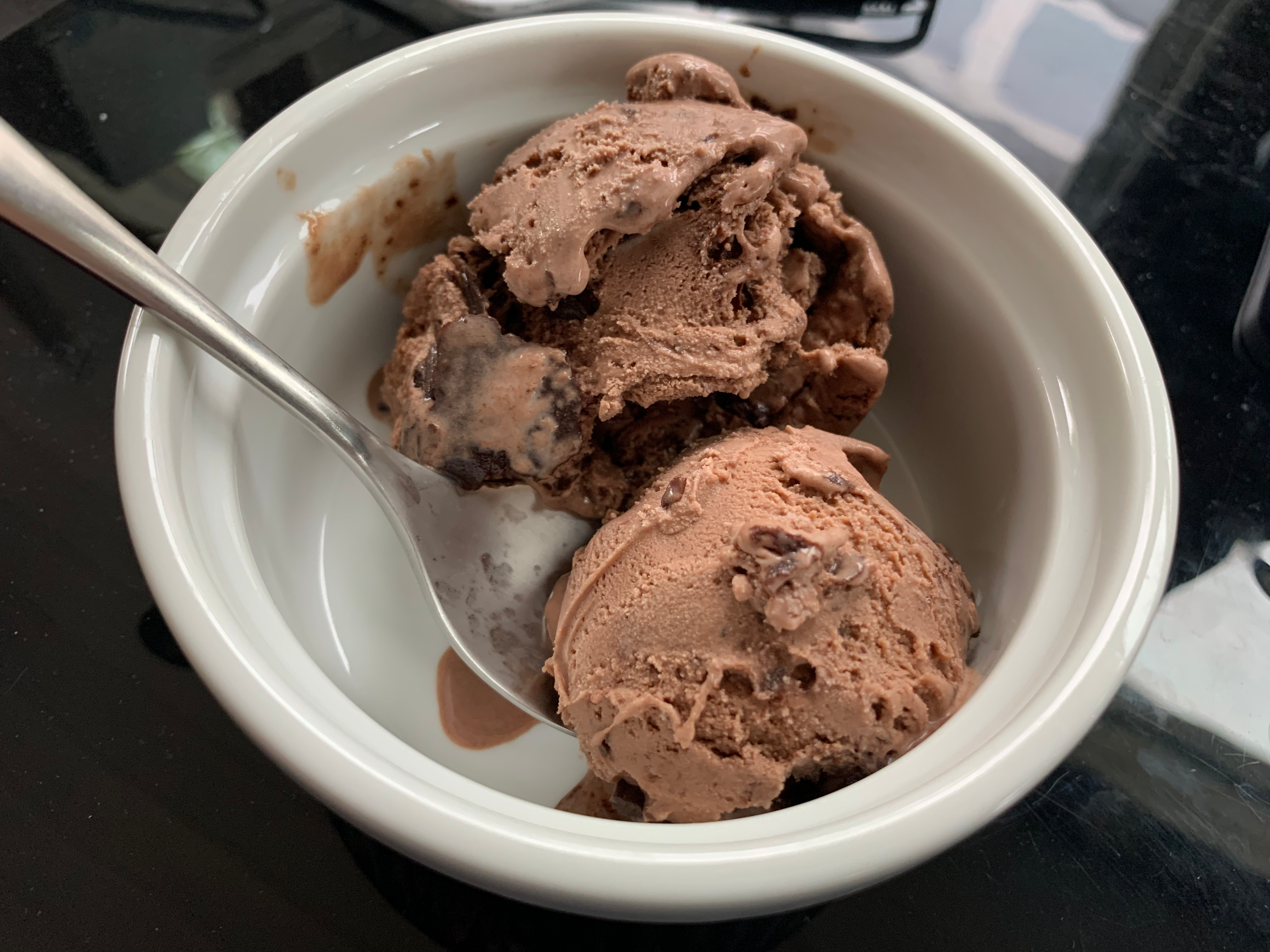
Some celebratory chocolate mudslide ice cream from the Tillamook Dairy in Oregon after the adventure was at an end.

Bad Practices in Baseball Broadcasting

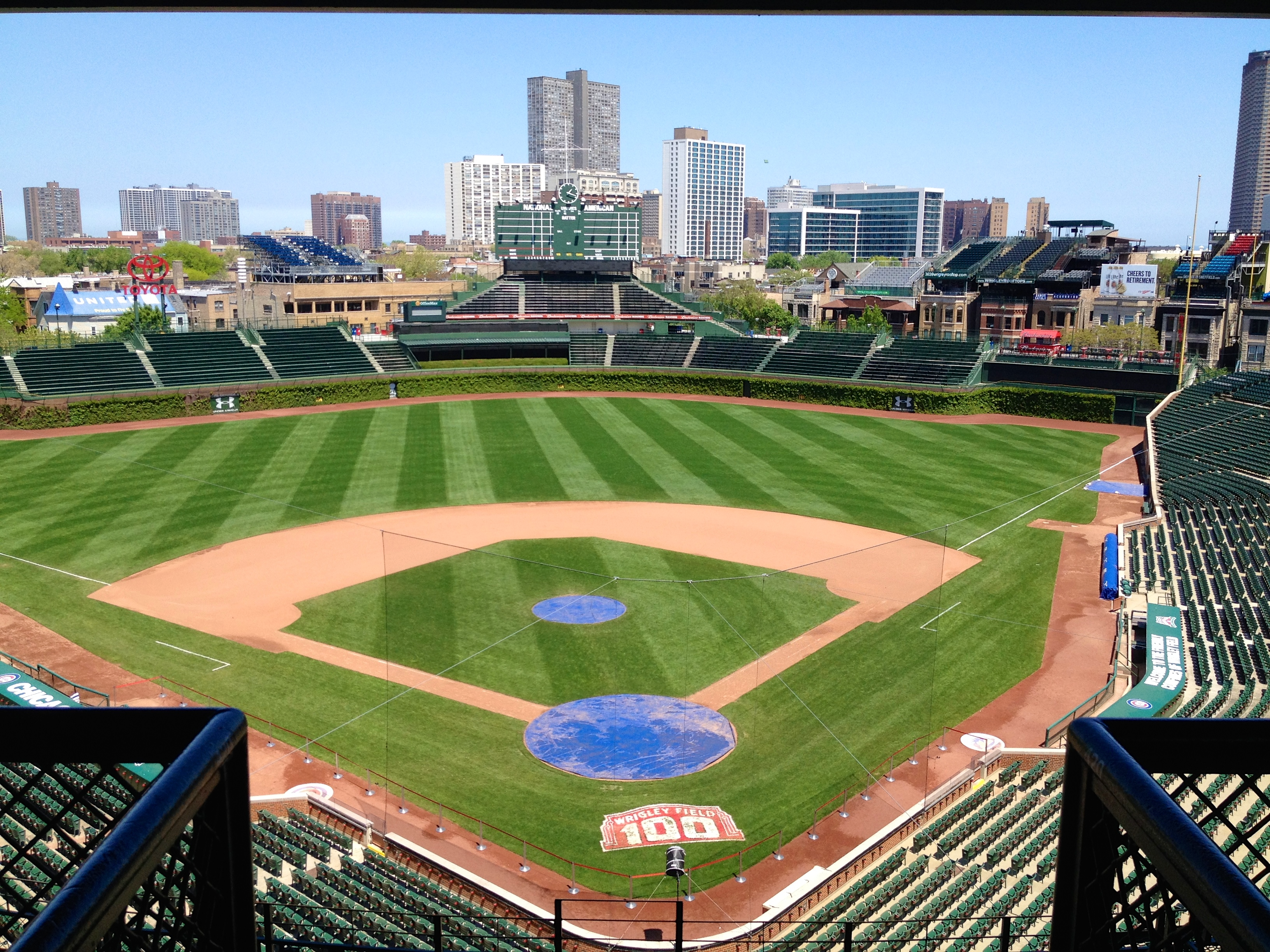
Wrigley Field from the press box.

Bad Practices in Baseball Broadcasting Wednesday Blog by Seán Thomas Kane

This week, how baseball broadcasting today is a tale in what not to do. All musical performances included are my own.

As you’ll have gathered from last week’s episode, I’m a big baseball fan. I always have been, and probably always will be. Baseball was the first sport I watched as a kid, the first I played (Kindergarten T-Ball), and the one that I have spent the most time watching both in the stadium and at home on TV. Growing up in the 90s and 2000s baseball was one of a handful of things that were just normal to have on the TV or the radio during the day in the background. No matter which major league city you were in, the local team or teams would probably be on the airwaves on any given Spring or Summer afternoon or evening. 

As a lifelong Cub fan, I was lucky after my parents & I moved to Kansas City in June 1999 to be able to still watch the Cubs live on WGN’s national superstation. Those broadcasts became one real big constant in my young life, something I even introduced to my cousins on occasion during those long summers in the early 2000s when I spent the day at their house. They were all Royals fans first and foremost, but I distinctly remember one particularly exciting game from Wrigley when we all were buzzing with excitement in front of the TV watching an especially close day game, cheering & celebrating when the Cubs won with a walk-off home run in the bottom of the 9th.

That all began to change in the early 2010s when baseball began to move from the ubiquitous over-the-airwaves channels to special sports channels that you either got through your cable package or that were only available at special request. The Cubs left WGN in 2015, and one of my last day-to-day links with my original hometown went with the last of those broadcasts. I didn’t notice it at first, in September 2015 I moved across the water to London to do a master’s degree in International Relations and Democratic Politics at the University of Westminster, and only rarely got to see baseball at the odd American restaurant in the British capital. When I returned to the U.S. the following year the Cubs were almost always on MLB Network or any of the other regular baseball broadcasters, mostly ESPN and Fox Sports. It was 2016, the year when the drought was finally lifted (see last week’s episode for an emotional recounting of the night of Game 7). In the following years I was able to see the Cubs fairly regularly on national TV, and the Kansas City Royals, my favorite American League team on the local Fox Sports Kansas City broadcasts on a daily basis, but as the 2010s ended all that began to change yet again.

Around the same time as the beginning of the pandemic in this country in March 2020 the news broke that Fox was selling their Fox Sports division as a part of the Disney acquisition of 20th Century Fox. The Federal Trade Commission ruled that Disney couldn’t control Fox Sports and ESPN, that’d be a monopoly, so Fox Sports was up for grabs to the highest bidder. That bidder turned out to be Sinclair, America’s shadiest right-wing owned media conglomerate, the Hearst of the 21st century, the true Charles Foster Kane. I wasn’t happy from the beginning about this; Sinclair had been caught red handed making their local news anchors read a prepared statement that sounded way too much like propaganda for my liking, and nearly anything they touched seemed to be weaponized to benefit their own ideals and mission. So, when Sinclair announced that the Fox Sports naming rights had been sold to Bally’s, the casino chain, I wasn’t totally surprised. One thing to get out of the way: I’m fine with legalized sports betting, I’m just annoyed with how gaudy and grotesque its advertising often tends to be, and frankly I don’t want any part in it. What frustrated me the most was that as a part of the deal Sinclair decided to get greedy, as robber barons are known to do, and raise their rates to the point that Fox Sports, now Bally Sports, was cut from most TV providers’ channel listings, especially from streaming TV providers like YouTube TV and Sling. For the first time in my life, I couldn’t watch baseball, whether the Cubs or the Royals, on local TV.

I recognize that this isn’t a serious societal problem on its own. Having professional baseball off the airwaves for a good portion of the population isn’t going to cause people to starve or to lose their homes or their jobs; it isn’t a matter of public education or human rights. Compared to those problems this is insignificant. Culturally though, in a country that is largely isolated from the global sports market, baseball remains our national past-time. It’s something that developed as our country grew, a sport that came into its own after the Civil War with teams that have existed as long as some communities in this country have. My own Chicago Cubs have an old heritage in professional baseball dating back to around 1870. They joined the National League at its founding in 1876 and have stuck around in the same city ever since. For the first 30 to 40 years professional baseball was seen by spectators in the stands and reported on in the newspapers. In the next few decades with the invention of radio it was broadcast around the country alongside sports like boxing to homes and businesses from Atlantic to Pacific. Following World War II it began to be seen on TV screens, with greats like Jack Brickhouse calling games from the press box at Wrigley Field. Some of my fondest memories of baseball are the most mundane ones, like the times I’d sit in my grandparents’ kitchen watching the Cubs with my grandmother, or the summer evenings in recent years when my parents and I would sit around in our living room in Kansas City watching as the Royals played fun small ball, outwitting heavy-hitting teams with their base running, base stealing, and excellent fielding. Memories like those are what companies like Sinclair are burying deep in the ever-receding past.

A year ago, Sinclair announced they’d have a streaming service ready to go for the 2022 baseball season called Bally Sports+ (because every streaming service is called “so and so +” for some reason). The report said it would cost around $23 a month, or $184 per baseball season, including Spring Training and the playoffs (March-October). This would cater to people like me who don’t have traditional cable packages, owing to their exorbitant prices around $80-120 a month, and would fill the void that Sinclair themselves created to gouge the market during the 2020 and 2021 seasons. Well, Spring Training has begun for 2022 and Bally Sports+ is nowhere in sight. I was lucky enough on Monday afternoon this week to catch a Royals Spring Training game against the Angels but that feels more like a chance encounter than a solid resolution to the problem.One potential solution would be to build off the legal exception that the 1922 Supreme Court Case Federal Baseball Club v. National League made for Major League Baseball to be exempt from the Sherman Antitrust Act, the very act which opened the door for Sinclair to buy Fox Sports over Disney’s objections. In the present case, I’d argue that baseball is an exception to the rule because it’s a deep-rooted part of American culture. As such it ought to be available to watch over-the-air, exempt from any special cable or streaming packages, exempt from being hogged by the greedy arms of broadcasting conglomerates like Sinclair. Unlike the NFL, baseball’s closest competitor, Major League Baseball’s season doesn’t lend itself well to having an all-national broadcast schedule. We’re talking about 24 weeks between April and the end of September with 162 games being played by 30 teams, or 2,430 games in a season. A solely national broadcast system like the NFL’s simply wouldn’t work for the MLB. Instead, local broadcasts should be prioritized, and broadcasting companies should be incentivized to put the viewers first. The alternative, if baseball isn’t easy for people to watch on a regular basis, is for the sport to decline in popularity, something that hurts companies like Sinclair anyway. I only hope that Sinclair’s executives realize it’s to their benefit to let people watch baseball at a fair price.

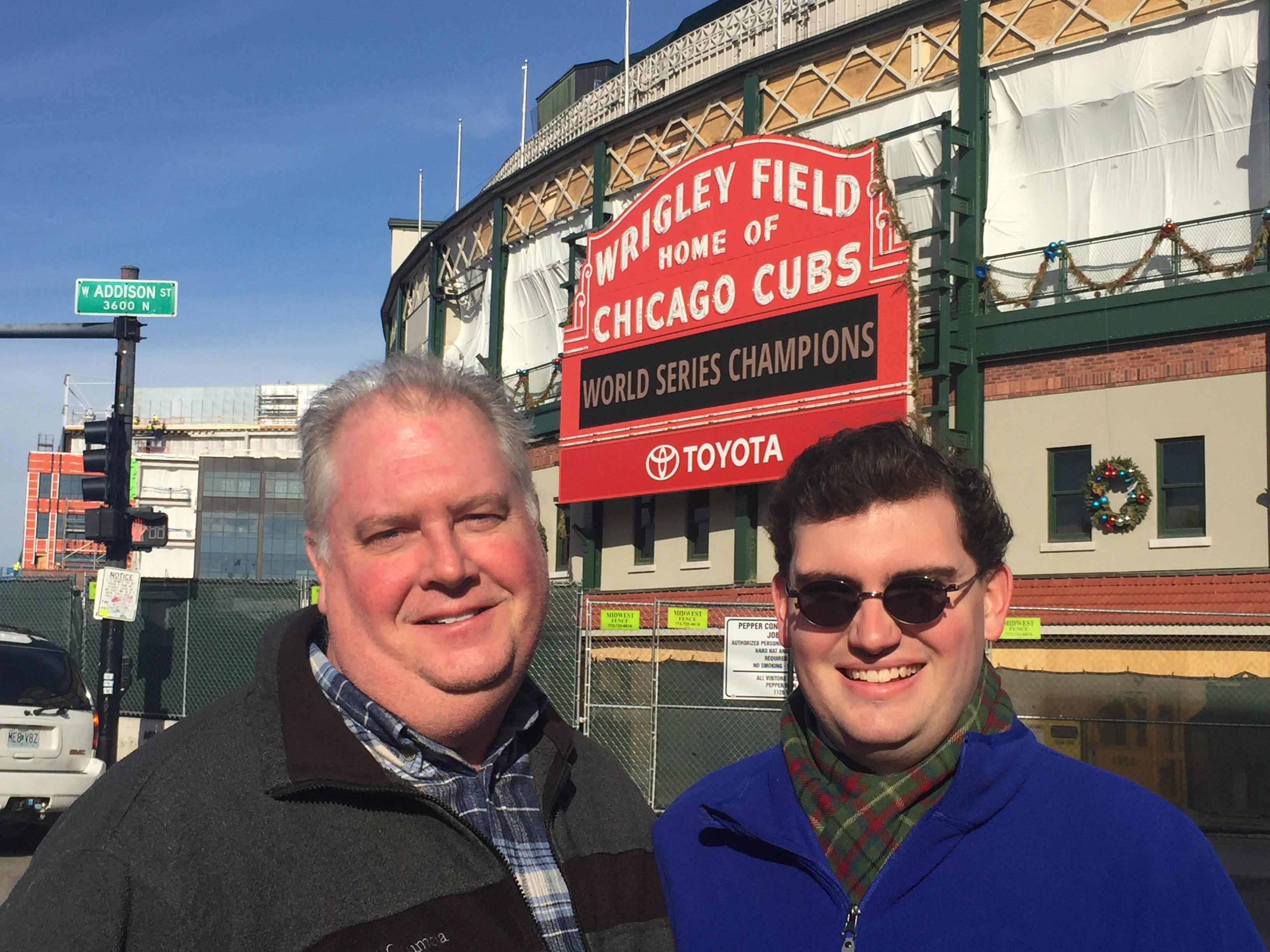
My Dad and I in front of the Wrigley Field Marquee in December 2016

Baseball is Back

Jon Lester pitching against the White Sox in 2015.
This week, a celebration of baseball's triumphant return and one small complaint about a rule change.

This past Thursday afternoon I listened to the latest episode of the Sidedoor at the Smithsonian podcast talking about the history of the song Take Me Out to the Ballgame and the Seventh Inning Stretch, one of the most American of rituals out there. It’s the moment in a baseball game when the entire stadium stands up and sings about going out to the ball game, eating cracker jacks, and peanuts of course as well. In the last 20 years following Take Me Out to the Ballgame usually we will also sing God Bless America, because that’s what we do in this country.

In the aftermath of listening to that podcast episode I began to think about how I might like to go see a ball game this Spring, but with the Major League Baseball lockout I knew I needed to find another outlet to see baseball, excluding the majors and probably the minor leagues as well. So, I looked at college ball. I was going to buy a ticket to a game or two of the Binghamton Bearcats Division 1 Men’s Baseball Team, my own university’s team. I still plan on doing so, however in the process of going to buy those tickets I saw the wonderful news that the lockout had been resolved and was going to end. Major League Baseball would be returning for the 2022 season with some changes to the rules.

Plenty of bloggers, columnists, and people on the radio have complained about different aspects of the rules. I want to add my voice to once specific area: the introduction of a universal designated hitter rule. This means that the National League will no longer have the distinction of having pitchers that bat alongside all the other players. Now National League teams too will have Designated Hitters like the American League has had for a while now. I’ve got to say I’m not terribly happy about this. For the longest time I’ve always preferred the National League’s way of doing things. In my own humble opinion, my own entirely amateur, spectator opinion, standing atop my soap box way out in the bleachers, some of the best ball games we’ve ever seen have been pitchers’ duels. Where it’s back and forth, back and forth two amazing pitchers on either side striking out almost everyone, letting in a few pop flies but very few runs. Those games often finally finish, perhaps miraculously with one pitcher getting a hit off of another pitcher and batting in a run. 

Even better, there was Game 3 of the 2016 National League Divisional Series between the Chicago Cubs and the San Francisco Giants out in California. Madison Bumgarner was pitching for the home team and Jake Arrieta for the visitors, my beloved Chicago Cubs. Bumgarner to this point was unbeatable. He was the darling of everyone in San Francisco and especially Fox Sports commentator Joe Buck. He was unbeatable until Arrieta looked him in the eye that night and with two men on swung for the fences and got a three-run home run. He cracked the façade of the unbreakable Madison Bumgarner for the first time in the playoffs. The Cubs would go on to win that divisional series, and then they’d win the National League Pennant over the Los Angeles Dodgers and on a stormy night in Cleveland at the beginning of November they won their first World Series since 1908 on a night when I prayed more decades of the rosary than I’ve ever prayed before in my life.

Having pitchers bat allow for games like that to happen, allow for moments like that to happen. They allow for the opportunity for the most dramatic of finishes to take places, of pitchers taking the game into their own hands and becoming the hero of the day. On the other hand, so many major league pitchers are terrible batters that if you don’t have a really dramatic grandiose situation like Arrieta’s home run in Game 3 let’s say then at the very least it’s going to be a quick out, meaning it speeds the game up. Designated hitters are fun to watch, they’re sluggers after all, but the more fun kind of baseball is small ball, it’s the singles and the doubles, the base hits, not the home runs. The home runs and grand slams are exciting but it’s more exciting to see the team work together and strategize to earn runs over a couple of at bats, that’s the most fun kind of baseball out there.

So as much as I’m happy to see Major League Baseball return, to see the 2022 season after a long lockout, after the greed of the ownership was made plain and clear for all to see, and even though I have many other grievances alongside the universal DH rule I’m happy to see the season starting so soon. I do have other problems with professional baseball today, notably how Bally Sports continues to be the Scrooge of baseball broadcasting here in the Midwest, keeping their televised games off most peoples’ TVs out of the same greed that kept the lockout going so long. I hope this will be a good season for my beloved Chicago Cubs as well as for my adopted second team the Kansas City Royals. And if not, well, let’s just hope for a good year of baseball.

Episode Untitled, or Humanity and What We Can Do About It

Episode Untitled, or Humanity and What We Can Do About It Wednesday Blog by Seán Thomas Kane

This week, an attempt at trying to suggest how we humanity can be better humans.

I had a grand piece planned out for this week: how we should come to notice our common humanity more, which I outlined while I was watching the Opening Ceremony of the Beijing Olympics last Friday, but the script that it turned into isn’t something I’m very proud of. It’s too American, too focused on capitalism setting us free, when really that hasn’t happened for millions if not billions of people around this planet. So, I’m writing this with no real goal in mind, just hoping it’ll go somewhere that I can record it and send it out to the twelve of you who listen to my podcast and the other handful of you who read my blog.

I’ve got to say, it’s hard coming up with something new every week. Sometimes when I’m on top of things I’ll have a running list of topics that I want to cover, and slowly make my way down that list. The intended post for this week fit into that model pretty well. But, whether it’s because of sleep deprivation, forgetfulness, or whatever else, I can’t remember where I put that list, so here we are ladies and gents! The big thing I wanted to get across in this week’s intended episode is that we really don’t need enemies, we don’t need rivals or there doesn’t need to be a battle between good and evil. All that builds community, sure, but it also builds mistrust and leaves us poorer in the long run. 

My beloved baseball team (Go Cubs) has a long-standing rivalry with our neighbors downriver, the St. Louis Cardinals, and while that rivalry has sometimes spilled over into actual brawls on the field it’s just a sports rivalry at the end of the day. Except that it’s grown beyond just being a sports rivalry. Rivalries like that can grow into actual hatreds, actual animosity, and that, ladies and gents, is what leads to us having full scale enemies. It’s silly, but it’s also human nature to follow the crowd, and if that crowd tells us to hate then that’s probably what we’ll end up doing.

So, what’s the point of me telling you this? Is it that hate is inherent? Nope. Is it because I made a commitment to write one of these things every week? Yep, and I’m going to make each one count. We follow the crowd, but we don’t necessarily have to follow bad advice. If we take the time to sit down and learn from each other, if we’re honest with each other we can probably solve our problems. The trick is actually meaning it. That’s something I’ve learned through all the toughening my skin’s gone through over the years that I’ve been in grad school, as jaded as I could easily become, every day I still need to remind myself what it is I care about, and why I keep doing what I do. 

If there’s anything I’d like to see happen in my time on this marble rolling around in the sky it’s some cooperation among us humans. Like the commentators at the New York Times did this weekend, I do tend to roll my eyes whenever I heard John Lennon’s song “Imagine” play during the Olympics opening ceremony. It’s lost its impact after the umpteenth time it’s been played in stadiums and games put on by dictators and bullies, in a moment of global solidarity that’s always co-opted into one big marketing campaign for some corporation or another. But as long as those guys listen to Lennon’s words, that’s John, not Vladimir, maybe we will achieve that world where there’s no war, no suffering, no hunger, and where everyone knows how to read.

The Olympics Return

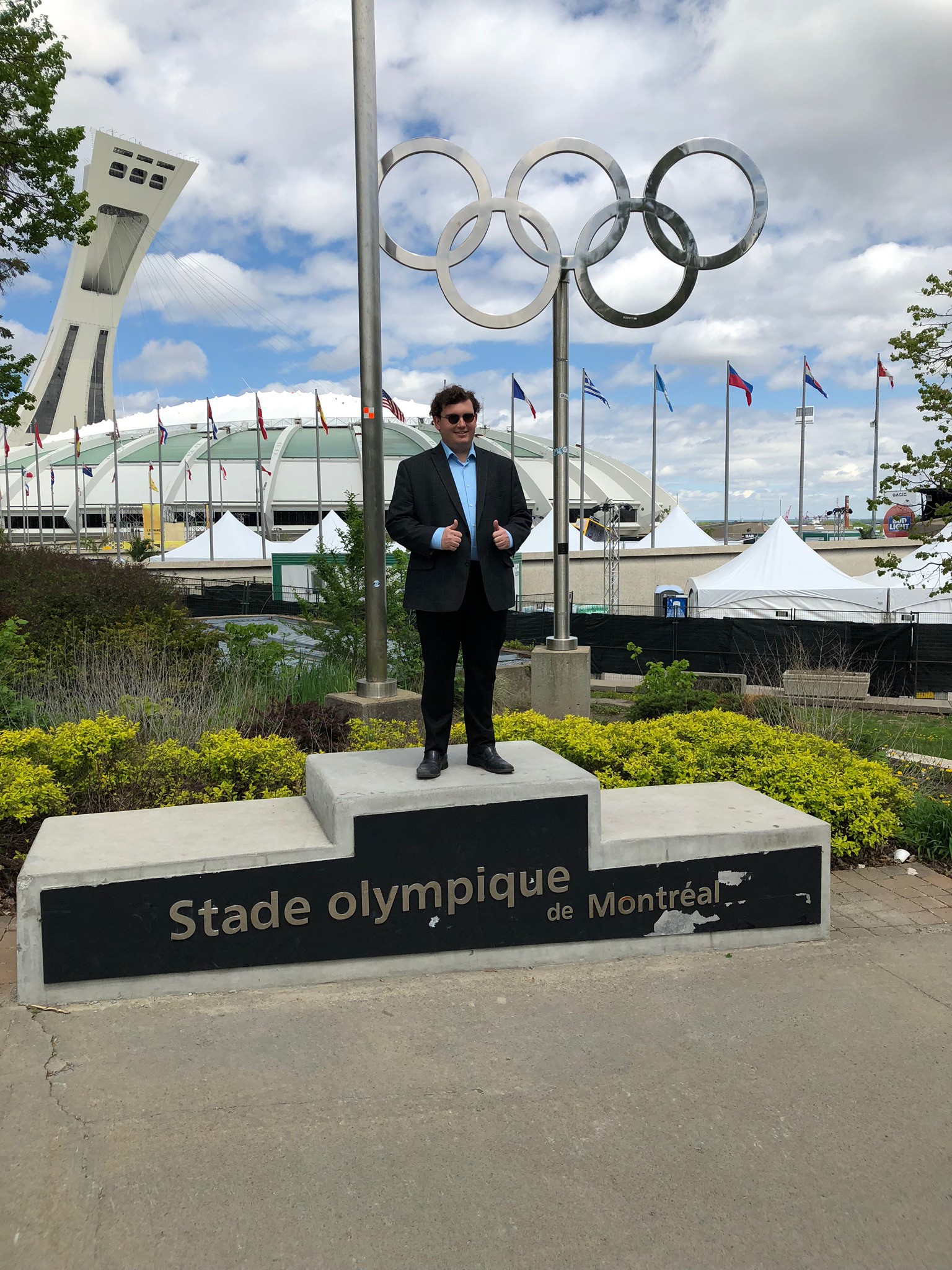
From my visit to the Stade olympique de Montréal in 2019

As surely nearly everyone reading this knows, the Olympics are back on after a year-long delay due to the ongoing pandemic. And the many, many people who have argued that the games should’ve been cancelled because of COVID have a pretty solid case, if I’m being completely honest. The best I can tell is that the games went on largely because of the financial loss that Tokyo and the International Olympic Committee (IOC) would lose, let alone all of the national broadcasters and corporate sponsors, if the games had ended up being called off. Marketplace’s report on the costs related to holding the games placed the estimated cost of the current Olympiad in Tokyo “at around $35 billion,” a figure substantially higher than the most recent Summer Olympics five years ago in Rio ($13 billion).

Still, while I can’t help but agree with the naysayers, that bringing the globe’s top athletes to one city, the capital of a country with very low COVID vaccination rates, was a bad idea all around, I’m still enamored with the games like I am every time that they occur. The first Olympics that I can remember, the one that caught my attention and never gave up, was Sydney 2000. As a young seven year-old living on the edge of Kansas City, I loved everything about the Olympics, from the amazing opening ceremony, to how clean the facilities looked, to the gobsmacking talent of the athletes themselves, the ones who make the Olympics the spectacle they are every time around. That year I can particularly remember the diving events more than anything else; diving remains one of my favorite Summer Olympic sports because of it.

By the time the Winter Olympics came around in 2002, hosted by Salt Lake City, I was excited to see the circus begin all over again. Only this time, it’d be in my own country, albeit a good two-days drive west of home. At about the same time as the Salt Lake games, I even enrolled in a local fencing school, thinking that maybe someday I might even make it up to that stage of competition. My days in the saber competitions were fairly brief, though recently I’ve wondered if maybe the foil would’ve been a better fit for me. It’s been interesting watching each Olympiad in the intervening decades: as a child I got to look up to the Olympians of the Sydney, Salt Lake, Athens, Turin, Beijing, and Vancouver games, while by the time London came around in 2012, I suddenly found myself the same age as most of the athletes.

In the years since, with Sochi, Rio, Pyeongchang, and now Tokyo, I’ve found an even greater appreciation for the Olympics watching as an adult. I don’t really expect I’ll ever end up competing in any Olympic event, at 28 I’m likely past my prime in most categories, but I still enjoy sitting back and watching hours of competition each evening, and being awestruck at the skill of these top athletes in their respective sports.

If anything, I really hope the IOC can figure out the big issues wracking the games, from the corruption, to the high cost of hosting, to issues of doping scandals, and return these games to being purely 16 days focused on the individual athletes and their talents. Any global sporting event is going to be a massive revenue source for broadcasters and corporate sponsors, so while I may raise an eyebrow every time one of the athletes from my country comes on the screen talking about their favorite sandwich from Subway, I usually dismiss it as just something they’ve got to do to be able to afford to compete at this level.

Proposals have been made in the last couple of years to have permanent Olympic host cities, say a rotating set of cities that could take turns hosting the games. Dr. Dave Amos, an Assistant Professor in the Department of City & Regional Planning at Cal Poly in San Luis Obispo, CA made a pretty good argument for this in 2018 on his excellent urban planning YouTube channel City Beautiful.

In his video, Amos argues that there should be 6 cities designated permanent hosts of the Games, with the Summer and Winter Olympics rotating between those 6. For the Winter Games they are Calgary, Turin, and Pyeongchang, while for the Summer Games they are Rio de Janeiro, Cape Town, and Sydney. Honestly, the argument makes a lot of sense, and would be a good solution to the problem of cost and how useful Olympic venues become following their run in the spotlight, as those six cities’ venues would be reused every few years.

I like the idea, though one of the big draws for me every time is getting to see the events in a different city. I’m loving the opportunity to learn a bit more about Tokyo and Japan in general this time around, just as I found myself reading quite a bit more about Pyeongchang and South Korea three years ago during the last Winter Olympics. I’m hoping, for example, to be able to be in LA during the 2028 Summer Olympics, I’d love at least once to see the games in person, to not only immerse myself in the Olympics as I can watching them on TV, but to be there in person surrounded by the whole experience. I imagine it’s similar to going to an F1 race instead of just watching it on TV. The race itself is better on TV, honestly, but the fan experience alone is worth the trip.

Still, if the IOC ends up choosing a permanent host city, or a set of permanent host cities, I’ll be excited to see who they choose, and will undoubtedly begin daydreaming about making the trip out to see the Olympics in person there someday. For now though, I’m content to sit in front of the TV and spend an evening watching the events in Tokyo from afar.

The Dream Has Come True

Embed from Getty Images

Unlike most things in my life, I cannot pinpoint a specific moment, date, or even year when I was first cognisant of being a Cubs fan. That is one part of my life that seems to have always been there. I was born in December 1992 in suburban Chicagoland to a father from the North Side, specifically from Rogers Park and a mother from Kansas City, MO, yet with North Side roots from her Swedish American grandmother, and life long White Sox fan, from Andersonville. In 1992, the Cubs finished fourth in the National League East with a 78-84 record below Pittsburgh, Montréal, and St. Louis and a ways above the New York Mets and their rivals in Philadelphia.

By that time there had been at least three different sides of my family who had settled in Chicago, primarily on the North Side. My Swedish-born third great-grandfather Victor Larsson Lindblad, an ancestor of my mother, was in Chicago by the time of the 1871 Fire, having settled in Andersonville. Ten years later, on my father’s side, my second great-grandfather John Newman settled in Chicago, where he married his wife Frances in 1892, and where their eight children were born between 1893 and 1908. At the turn of the Twentieth Century my grandmother Mary Lou’s grandparents and father moved to Chicago, eventually making their way up to the North Side as well. Finally, in 1914 my great-grandfather Thomas Keane arrived from Ireland (his surname would change to Kane in 1917), initially living on Superior across from the Cathedral, and later moving to Argyle and finally Rogers Park with his wife, my great-grandmother who came to Chicago in 1920. If any one city were said to be the cradle of my family in America, it would have to be Chicago.

I vaguely recall my grandparents mentioning the 1945 World Series. My grandfather was only 15 at the time, while my grandmother was a mere 13 when that incident with the goat took place at Wrigley Field. I never heard them talk about it, presumably it was either too superstitious for good Irish Catholics like themselves, or just a sore subject. That said, out of the two of them my Grandma was the big Cubs fan. As a young child when I was visiting them in their suburban condo, I would often be with her in the kitchen while she cooked watching the Cubs on her small TV, the rabbit ears fully extended to catch the signal from WGN. My Dad recalled how she would more often than not be in attendance at Wrigley on Ladies’ Days with so many other North Siders to cheer on our team. Even as she neared the end of her life, and her health began to go, she would ask for the Cubs game to be put on the TV in her room.

In the summers, my parents and I would go out on Lake Michigan on a sailboat that they co-owned named The Arctic Tern. Our most frequent destination would be a point along the lakeshore that had a good view of Wrigley Field. There we would tune our radio to WGN and listen to Ron Santo and Pat Hughes calling the game. 1998 was one of the biggest years of my childhood in the world of sport: the Bulls concluded their final threepeat, and the Cubs made it into the playoffs for the first time in my life. That was an electric summer, one when the Cubs made headlines for both their pitching and their hitting. While I still have the Tribune‘s poster honouring Sammy Sosa’s record 66 home runs that season, I can remember far better Kerry Wood’s 20 strike out game on May 6 against Houston. What a year that was!

Embed from Getty Images

1998 may stick out so well in my memory thanks to what happened the following year. In June 1999 my parents and I left Chicagoland, moving onto a farm in Kansas City, KS. To say that that was a nutty idea would be accurate. Despite now being 500 miles away, we could still watch the Cubs most days on Superstation WGN, and continued to closely follow our team, despite now slowly gaining a new allegiance to the Kansas City Royals. The funny thing about being both a Cubs and a Royals fan is that it is remarkably easy to support both teams, after all they hardly ever play against each other. Nevertheless, my position has always been that the Cubs will come first, ahead of the Royals in my book.

In the Summer of 2000 I had just finished First Grade and was playing Coach Pitch baseball on the aptly named Pied Piper Pest Control Team at the Wyandotte County Sports Association fields in Kansas City, KS with a bunch of my classmates from St Pat’s School. At about the same time there was a TV commercial that kept appearing during the shows that my cousins and I would watch that showed a young boy using a big baseball bat, either coloured red or blue, and suddenly gaining the talent and strength of either Mark McGwire of the Cardinals or Sammy Sosa of the Cubs. I can tell you one thing for certain about that May, I really wanted that bat, because as the new kid at school I needed every opportunity I got to impress. Plus, as a 7 year old Cub fan how could I not want to be able to hit the ball like Sammy Sosa? To put it simply, I never got the bat, and probably for the better as I only ever hit the ball once in my entire one-season career as a left fielder for the Pied Piper Pest Control coach pitch team.

By the time the Cubs began getting hot again in 2003 I was used to watching them play from afar. That Spring I actually attended my first game at Wrigley Field on 23 April 2003, a monumental day in my life, yet one that I remember as being slightly boring and long. We sat in the bleachers, far enough away from home plate that it was very hard for me to see anything that was going on there. The Cubs ended up losing that game that few probably remember to the Padres 2-0. As 2003 progressed it seemed more and more likely that the Cubs were on fire and ready for another playoff run. Sure enough, in their 128th season the Cubs won National League Central with an 88-74 record.

Embed from Getty Images

That Fall was one that I will never, never forget. In the Divisional Series the Cubs faced off against the Atlanta Braves, a strong team, yet one whom the Cubs beat 3 games to 2 at Turner Field. As the Pennant race came along, I was more excited than I had been in years for the Cubs, who now faced the Florida Marlins. The Marlins seemed like a surmountable team, one that the Cubs could take. To me, the Cubs were nigh invincible, the team that was destined to win the 2003 World Series, to end the 95 year drought. I was always so excited to see Sammy Sosa, Moises Alou, Aramis Ramírez, Kerry Wood, Mark Prior, and Matt Clement take to the field. My Dad would tell so many stories about the great Cubs of 1969, of Ernie Banks, Ron Santo, and Billy Williams; how they electrified Chicago with their fun style of play, and how they led the National League until the last moments of the Pennant race. Like the ’69 Cubs, the ’03 Cubs were equally electric, but fell short of their goal. Some blame Steve Bartman for putting the team off of their mojo, but as far as I’m concerned, the tension of the moment got to the guys on the field, and the Cubs collapsed back into obscurity for the next couple of years.

Embed from Getty Images

As time has gone on, players have come and gone. Sammy Sosa left the Cubs with only a little controversy in 2004. For a while in the late 2000s Derek Lee seemed like the top guy on the field at Wrigley, his prowess as a baseball player taking him so far as to be referred to as “General Lee” on more than one occasion by my fellow Wheaton native James Belushi during WGN’s broadcasts of the “Chicago Civil War,” aka the annual Cubs-Sox Series. Lee left the Cubs in 2010, but not before playing a roll in the next big playoff run, this time in 2008. It was the centenary of the last Cubs World Series victory. Surely the stars were properly aligned, surely the saints and angels in Heaven were pulling for the words “World Series Champions” to be emblazoned on the Wrigley Field Marquee. Surely this was our year. With the hopes of millions on their shoulders, the 2008 Cubs did all they could but were swept by the Dodgers in 3 games in the Divisional Series. I finished 2008 less focused on the world of sport than on my Sophomore Year in High School, which was ongoing at the time with all its exuberant fun.

As the 2010s started up, my focus, like that of many Cubs fans switched towards Hockey, as the Chicago Blackhawks began their dynastic series of Stanley Cup victories. I had just returned from Dublin in June 2010 when Patrick Kane (no known relation) scored the winning goal in overtime of Game 6 against Philadelphia. 2011 marked the first season without Ron Santo doing the commentary on WGN Radio, a huge loss in my book. In 2012, Kerry Wood retired from professional baseball, having returned to the Cubs the year prior to finish his career back in the Friendly Confines. In 2013 the Blackhawks won their second of three Stanley Cups thus far in the 2010s. I found out the good news a few hours later when I woke for class in London where I was on a three-week summer study abroad course.

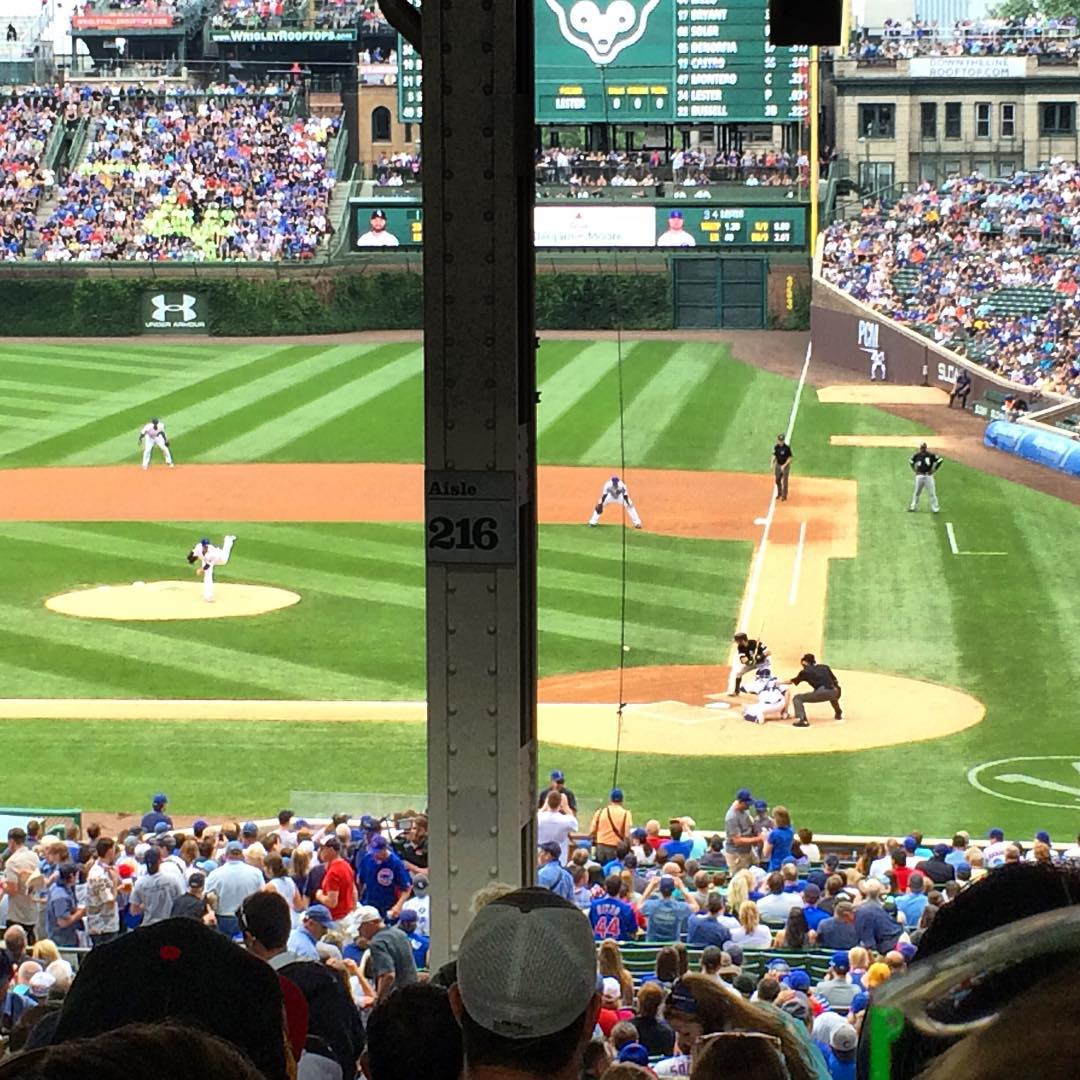
2014 and 2015 were years dominated in my house by the Kansas City Royals, who after 29 years of being fairly unannounced in Major League Baseball stunned the country by beating Oakland in the thrilling 2014 Wild Card Game, silencing the A’s top ace, Jon Lester, early in the game. The ’14 Royals went on to the World Series, but lost out to the San Francisco Giants in Game 7 leading to heartbreak for many here in Kansas City. 2015 saw a revival amongst many of the “smaller” MLB teams, including the Cubs who powered their way through the season, having acquired Lester from the A’s in the offseason. My Dad and I were lucky enough to get to go up to Chicago on 11 July to see the Cubs play the White Sox, whose starter Chris Sale outdid Lester, leading the South Siders to a 5-1 victory.
lester-cubssox-2015

Jon Lester pitching against the White Sox. Photo: Seán Kane

In September 2015 I left home and moved to London, missing out on the playoff excitement, which was greater than any other year for my family as both the Cubs and Royals had made it past the regular season. The Cubs came into the playoffs as the second wild card, finishing the regular season in 3rd place 3 games behind St. Louis and 2 games behind Pittsburgh. In the Wild Card Game, led by Jake Arrieta’s pitching, the Cubs ploughed through the Pirates in Pittsburgh in the ’15 Wild Card Game, leading to a memorable attack by baseball bat on a water cooler in the Pirates dugout. In the Divisional Series, the Cubs fulfilled one of the life-long dreams of most fans, especially those of us alumni of Rockhurst University, whose student body has traditionally been primarily made up of St. Louisians. Despite being 4,000 miles away, and unable to watch the game on TV in England, I saw the final few innings as the Cubs easily trounced their longtime rivals the St. Louis Cardinals at Wrigley Field. After years of supporting the underdog, I couldn’t help but smile. The joy of ’15 was quickly extinguished however, as the Mets came through and left the Cubs behind in a 4 game sweep on their way to the World Series. The Royals had fared better, having beaten Houston and Toronto in their drive to retain the American League Pennant. They met the Mets in the World Series, winning the crown for Kansas City in extra innings in Game 5 at Citi Field in Queens. I sat at my desk for the entire four hour fifteen minute game, watching the pixilated images being transmitted from my parents’ house in Kansas City.

As the 2016 season came around, I had a feeling that this could be the year. Every morning from March onwards, as soon as I would wake up in my basement flat in Central London, I would check the Cubs score on my phone, and as the months passed things only got better. By the time I returned home to the U.S. at the end of August 2016, it was clear that the Cubs would be in the playoffs yet again, and even clearer that they would go into playoff baseball with the best record in the Major Leagues. I watched the National League Wild Card Game between San Francisco and the New York Mets quietly from the upper level of an Italian restaurant near the Moscone Center in San Francisco, keeping an eye on who would be the ones that the Cubs would face in the Divisional Series. After a marathon Wild Card Game that saw a stellar pitcher’s duel between San Francisco’s Madison Bumgarner and New York’s Noah Syndergaard, the Californians won out with a three-run home run in the ninth inning.

The Divisional Series saw another round of amazing pitchers’ duels, this time between the likes of Jon Lester and Johnny Cueto in Game 1, and Jake Arrieta against Madison Bumgarner in Game 3. The Cubs moved past San Francisco after four games, and looked south towards the Los Angeles Dodgers who beat the Washington Nationals in their series 3 games to 2 in their Divisional Series. Like the Giants, the Dodgers are one of the best teams in the National League, and always a fun team to watch. As the Cubs took them on I couldn’t help but be thoroughly impressed by the Dodgers. Game 6 of the series, played at Wrigley Field, turned into one of the greatest nights of my life. It was the night when, in 2 hours 36 minutes the Chicago Cubs went from being the team who hadn’t won a Pennant since “the year we dropped the bomb on Japan” to National League Champions. It was a night like no other, a night when to so many millions of us it truly seemed possible that our team, our Chicago Cubs were truly capable of winning the World Series.

Embed from Getty Images

The Cubs might have seemed destined to win the 2016 World Series, after 108 years of waiting, but they had a major road block in their way. While the Cubs had lit up the National League all summer long, Cleveland had seen a resurgence, taking the American League by storm and silencing all opposition, beating David Ortiz and the Boston Red Sox 3 games to none, and the red hot Toronto Blue Jays 4 games to 1. Both Cleveland and Chicago came into the World Series with all the momentum they would need to win it all. In the end, it came down to endurance. I watched all seven games in a dreamlike state of mind, joking that this must be some sort of existential crisis for the natural order of things, after all this World Series wasn’t between a heavy weight like the Giants and Yankees, nor between the Red Sox and Cardinals. This was a World Series between Chicago and Cleveland, two flyover teams. We had not won a World Series since 1908, they had not won one since 1948. All that that did was give this series more umph, to make it a World Series for the Ages.

While I and many others just wanted a nice and tidy victory to cap off the World Series for the Cubs, the game had more twists and turns than anyone could have expected. From the Cubs giving up a 5-1 lead in the fifth, to Rajai Davis’ two-run home run that tied things up in the eighth at 6-6, I frankly was saying more Rosaries than anything else. Just when things seemed bleakest for the Cubs, when they had lost their momentum, and at least to some that goat was getting in the way again, the Heavens opened up, and the game was stopped for rain. 17 minutes later and the Cubs started over, taking things from a 6-6 tie in the 9th to a stunning 8-7 victory in the 10th. As it happens, the 2016 League MVP, Ben Zobrist had been with the Royals in ’15 for their World Series run. Now not only had he won two World Series in the same number of years, but he lived the dream of all Cubs fans, being a lifelong fan who had helped the Cubs win the World Series.

Embed from Getty Images

In the aftermath of the night of 2 November 2016 I was left speechless, in a state of jubilant shock. All my life, all my Dad’s life, all my grandparents’ lives we had waited for this to happen. For over a century the North Side of Chicago had waited to raise the World Series Banner once more at Wrigley Field, to stand before the world and cheer on our team, no longer just another easy team to beat. To me, it seemed fitting that the Cubs would win the World Series on All Souls’ Day of all days. For now, we have the best team in baseball, and today when they bring the Commissioner’s Trophy home to Wrigleyville they will surely do so in front of a crowd of millions. Wednesday night I actually found the view of the Cubs celebrating on the field in Cleveland to not have the emotional power that I expected to have. Instead, that power was with the fans who had gathered at the corner of Clark and Addison outside Wrigley Field. And as the screen on that famed Marquee changed to the words “CUBS WIN!” and “WORLD SERIES CHAMPIONS” the roar of the North Side could surely be heard around the world.

As 2016 comes to a close, and 2017 stands on the horizon, the Chicago Cubs have a new future in store. They could well continue to be a winning team for a few more years, so long as this current roster stays at Wrigley. I also have a new future, though perhaps a nostalgic one, as I prepare to leave Kansas City to undertake the work for my Doctorate. On my list are two universities back in my hometown, two institutions that, should I be accepted, would give me the chance to return to Chicago and cheer on the Cubs as I always have, albeit from not nearly as far away. The past is certainly a good thing to remember, but it is the present in which we live, and the future to which we are going. Today, as the Sun shines, and my Win flag flies at my door, I can’t help but look back at the Cubs of yesteryear, of their three World Series Championships: 1907, 1908, and 2016. But all the same, I can’t help but gaze into the future, when perhaps I, or my descendants, will get to celebrate another Cubs World Series victory. The Dream has come true.

Embed from Getty Images

“United Passions” a Decent Work of Fiction

The film United Passions was an interesting one to see. Unfortunately for the filmmakers and FIFA, the main financial backers of this film, the release of United Passions in the United States has coincided with the arrests of a number of high ranking officials at FIFA on corruption charges. In light of those arrests, it’s hard to look at a film such as United Passions in a positive light, considering its fairly uplifting portrayal of recently resigned FIFA President Sepp Blatter. But for many of us in Europe and North America, it can be hard to view Mr. Blatter, and his predecessors in a positive light. In this sense, United Passions has lost a significant amount of credibility despite barely being screened anywhere in Europe or North America. In fact, only ten cinemas are showing the film here in the United States.

However, the filmmakers made certain to include a brief preface, stating that United Passions is to be seen as a work of “dramatic fiction.” In short, it is an interpretation of events, but not an official history, certainly not an exact record of what happened. Critics have claimed that FIFA’s backing of the film forced the filmmakers to depict a more positive image of the world football federation, thus enforcing this film’s status as propaganda.

The declaration that this film is dramatic fiction makes sense when one considers the fact that British born-New Zealander Sam Neill was chosen to play former Brazilian FIFA President João Havelange, and Englishman Tim Roth was likewise chosen to play the aforementioned Mr. Blatter, a native of Switzerland. In my own opinion, had the filmmakers wanted this piece to be taken as a work of meticulous history, they would have cast a Brazilian to play Havelange and a Swiss actor to play Blatter.

However, as a work of fiction, I would certainly say that the filmmakers made good decisions in the realm of casting. Gérard Depardieu, who played FIFA’s third president Jules Rimet, Neill, and Roth were at the centre of the film, and did a pretty good job in their roles.

With all that said, some certainly do see this film as FIFA’s attempt to preserve the image and legacy of at least these three of its past presidents. As a viewer, I admired these figures attempts at making soccer a global affair, not just the sport of Europe. Perhaps this film’s biggest image problem comes from allowing its subject to also play the role of main financial backer.

The photography was very good, reflecting the style of camerawork that has become the norm in both French and British cinema. The sound was also well done. In cinematic terms, the biggest flaw with this film is its script, which was sometimes hard to follow, with frequent cases of bulky dialogue.

Overall, I would rate United Passions as being just another period piece. It’s nothing special, and when the time comes that those FIFA officials who already have been, and have yet to be arrested are put on trial, I have little doubt that this film will already be forgotten.