This past week I was in San Juan, Puerto Rico for the annual meeting of the Renaissance Society of America.
Click here to support the Wednesday Blog: https://www.patreon.com/sthosdkane
Puerto Rico is an island caught between two waves, one originating in Spain and radiating throughout the Americas, the other originating in the United States whose influence is out of place here yet established enough to be present beneath the surface. I was uncertain what I’d find here amid the palm trees and verdant greenery, the bustling streets and amid the lives of 3 million people who have seen tremendous troubles over the recent past. After a week here I’m still unsure of some questions I came to this island pondering: what would be best situation for the Puerto Ricans themselves, what is it that they generally want of their relationship with the United States, and how can I, an Estadounidese, contribute positively to answering these questions?
It is strange for me spending time in a place like Puerto Rico. I’m familiar with travelling overseas, leaving the comforts of my Midwestern home for distant shores in Europe, but this week was my first spent in Latin America. What’s more, this was also my first time traveling to one of the US territories that are a part of the United States but lack full representation within our federal government. On Saturday, I texted my friend the political journalist Luis Eduardo Martinez that it was strange for me, an Irish American, to be the colonizer in someone else’s homeland when the most central tenant of our Irish American culture and identity is that we are the descendants of exiles who sought refuge from British colonialism in our own ancestral homeland. I felt uncomfortable in San Juan knowing that while I was in the United States, I was still a guest whose presence was perhaps not entirely welcomed considering that the American conquest of Puerto Rico in 1898 came at a moment when arguments for Puerto Rican independence from Spain were growing and quite outspoken.
At the end of the day this question of whether Puerto Rico’s status as a Commonwealth, or Free Associated State in Spanish, of the United States among its territories should change, either towards independence or towards statehood must be decided by the Puerto Ricans themselves. All we in the 50 states can and should do is encourage that decision be undertaken democratically, so it reflects the will of the Puerto Rican people and not just their leaders. I’ve been a bit more glass-half-empty of late, so while I was here on a working vacation, I still found these questions weighing on my thoughts for much of the trip.
When I learned the Renaissance Society of America would be meeting in San Juan this March, I invited my parents to come along with me. We were also joined by one of my best friends from Binghamton, the Italian historian of Italian-Ottoman trade relations in the Adriatic, Marco Alì Spadaccini, who joined us a few days later. Initially we were going to stay in a Marriott property within walking distance of the conference location, the Caribe Hilton, but in between the initial planning and when things finally were booked at Christmas, rooms at that hotel were quite a bit more expensive. So, I ended up finding a couple places on AirBnB around the Caribe Hilton in Santurce and Old San Juan and proposed each of them to my parents and Marco. The one we picked, a large apartment on Calle de San Francisco near la Fortaleza, the governor’s palace in the heart of Old San Juan turned out to be a wonderful decision. I’m writing this now listening to the tropical birds chirping away as the Sun sets on our final evening here in San Juan, in a fine old, terraced room with a balcony looking out over the street, palm trees in view, street cats prowling below.
San Juan is not the oldest city I’ve spent time in by far; when they were building my basement flat on the edge of the old walled City of London, they found a Roman grave dating to the start of the second century CE. Still, it is the oldest city on this side of the Atlantic that I’ve yet visited. At the time of writing this I haven’t left the Islet of San Juan in nearly a week, and if I lived here, I probably could spend most of my life on this islet here in the old city. It is a beautiful place with vibrant buildings painted many colors and blue cobblestone streets that tend to be run by pedestrians more than drivers, unlike our Midwestern cities, San Juan was built at a time before cars when we were all still pedestrians. The sound of joyous music ringing from bars and restaurants in the evenings did a great deal to cheer me up.
Old San Juan’s history is one of the great draws for me. It makes sense that the Renaissance Society of America would hold their conference in a city such as this that was built during the Renaissance. Names that I’ve known for as long as I can remember like Ponce de Leon come to life in this city, where he and his family built their home, the Casa Blanca on a hill just to the north of where I stayed along the western edge of the city walls. To the north of Casa Blanca stand the mighty fortresses of San Felipe el Morro and San Cristóbal who guarded San Juan for centuries from attackers sailing into Puerto Rican waters from the open Atlantic to the northeast. El Morro is impressive in the sheer scale of its battlements, which reminded me of some of the citadels that Vauban built for Louis XIV in France that I’ve visited in Besançon and Lille, and of Fort Ticonderoga on Lake Champlain in Upstate New York. San Cristóbal is a younger fort, its construction largely took place between 1766 and 1783 under the supervision of a couple of Irish nobles exiled into Spanish service named Alejandro O’Reilly and Tomás O’Daly. Still, San Cristóbal is impressive in its scale and in its continued use by the Spanish Army and later the US Army through the Second World War.
Of all the things I’ve done in the last week here in Old San Juan perhaps my favorite has been simply wandering this city’s streets, seeing both the busy shops and restaurants, walking by local places crowded with Puerto Ricans cheering on their team in the World Baseball Classic, yet even more wonderful were my wanderings down Calle del Sol, Calle de la Luna, and around the Casa Blanca along the old city’s residential streets. I often find myself thinking when I travel about whether I could live in the place I’m visiting. In general, as much as I’ve enjoyed this week in San Juan, I’m not sure it would be a place where I could settle down full time. Yet walking along these residential streets I did find the idea becoming more appealing. Still, while I hear it’s going to be quite cold this week in Kansas City, I am looking forward to getting back home.
Cosmos comes to English from Ancient Greek, where it referred to a sort of order in nature, the opposite of Chaos. This meaning stuck into the medieval period in works like the twelfth-century philosopher Bernardus Silvestris’s Cosmographia. In the Renaissance, the period I study, a science called cosmography developed in Europe as a way of making sense of all the worlds the explorers setting out from Portugal, Spain, France, and England were encountering. Still later, in the early nineteenth century the German scientific polymath Alexander von Humboldt named his greatest work, the five volume book Kosmos, which sought to describe the totality of nature as he and his colleagues had observed throughout his long lifetime. Today, Cosmos speaks to something far exceeding the Earth in scale, it’s the observable Universe with a potential for even more that we presently don’t know to be included under that cosmic umbrella.
A term like Cosmos is important because it helps us understand how we make sense of everything around us. I feel like I can imagine the entirety of the Universe but I’m sure if I saw an artistic rendering of the visible Universe, I’d feel like I was seeing a new face. This weekend as I was on my way west back to Kansas City through Chicago, the two cities I’ve called home over these past thirty years, I found my perspective shifting away from that of the stranger in the Northeast to one of familiarity and comfort back in my own native Midwest again. Arriving in Chicago I was delighted to realize I didn’t need the GPS in my car anymore, I knew exactly where I was in a place so vividly familiar to me. The same can be said for the rest of my drive west of Chicago, everything was familiar and wonderful to see.
My own Cosmos then, the order that keeps my life together, is built with Midwestern sentiments and expectations. Something that made life in New York difficult for me was how the customs there are at least somewhat different from what I’m used to. Even in these last few weeks there I still had to remind myself it wasn’t intentional rudeness when people I knew wouldn’t acknowledge me, let alone smile and say “hi” when we’d walk past one another, it’s just the impersonality of life in a place that has never really become familiar to me.
In these last three years I’ve now stretched my world out further, filling in many of the gaps of my own experience here in North America with trips to nearly all of the major cities on the East Coast and to Montréal and Toronto. I now know so many of the highways that link the Midwest & Great Lakes with the east. I found myself thinking about how as a child living in the Chicago suburbs that my family never took road trips east out of Chicago to Michigan, Indiana, or Ohio, nor north to Wisconsin. Instead, whenever we traveled it was west to St. Louis, Kansas City, and Denver further afield. Thus, the ways heading east were new to me as I drove along them this weekend, the easy drive on I-94 from Detroit to Chicago being one such example.
I’ve known many people who define themselves by where they’re from, for good or ill. There have been plenty who are loud and proud supporters of their hometown baseball team, and others who use their origins as an excuse to be unkind to the people around them. Over these last three years I had moved into a state of mind where my own origins were somewhat more dormant, sure I had all sorts of art up on the walls in my apartment celebrating both Chicago and Kansas City, and I’ve interchangeably worn my Cubs and Royals hats, but I’d begun to think of myself more as a person who can shift between places and communities, a skill that I needed to develop in Binghamton. Yet upon my return first on Saturday to Chicago and then on Monday to Kansas City I found all those old emotions and memories flooding back.
One of the parts of the Christmas story that I always remember is that St. Joseph had to go to Bethlehem from Nazareth to participate in the census because that’s where he was born. I am who I am just as much because of the places I’ve grown up in and the people I’ve lived among as the experiences I’ve had as an individual trying to make things work over these last three years alone in a lonely valley far from home. Home is a word of tremendous significance for me, it’s the place where I feel the most comfortable, the safest, and the most appreciated. For much of my life I’ve seen both Chicago and Kansas City as my home. It’s a sentiment I’ve reinforced this weekend on my first visit to the city of my birth since the pandemic began. Were I to say I have a “homeland,” Lake Michigan would remain its eastern boundary, the Great Plains beyond Kansas City its western. That is the heart of my Cosmos.
Over this last weekend I went to the Twin Cities for the annual meeting of the Sixteenth Century Society. Their conference, always held over Halloween Weekend, was referred to by one attendee on Twitter as “history camp” and that’s certainly one feeling I got out of the experience. I attended to present my own research into how three-toed sloths were initially compared to monkeys in how they were described in the works of the sixteenth-century naturalist Conrad Gessner (1516–1565), who got his sloth information from the guy at the center of my research, André Thevet (1516–1590). Looking at the world as a sloth historian means there’s always a lot of work to do, but there also always seems to be plenty of time for naps. Not a bad life, eh?
I’ve always been a frequent traveler from my earliest days. Growing up I was very familiar with air travel; I’ve got to say I miss those old phones they used to have in the back of the center seat in each row. So, traveling as an adult is a bit of a continuation of something I’ve enjoyed throughout my life, only more so on my terms. I’ll book a first or business class seat from time to time if I get the chance, as in my trip home a month ago, but perhaps the biggest thing I’ve gotten down is a routine for travel. I don’t have a “go bag” necessarily, but I have gotten the packing down to maximum 30 minutes for most trips.
These last few years in Binghamton have made travel a bit more complicated than any of my previous trips leaving from Chicago, Kansas City, or London. Binghamton has a local airport, but with only 1 flight per day at the moment to Detroit, a flight that is pretty expensive on most days, so it’s not my first choice. Rather, over the last three years I’ve driven at least an hour to either Scranton, Syracuse, Albany, Newark, or last weekend to LaGuardia to fly to that trip’s destination further afield. I’ve gotten used to the 3 hour drives between Newark and Binghamton, though there are times that I’ll wish I’d flown to a closer airport, especially after my one long haul transatlantic flight that got into Newark after 9 pm, seeing me return to Binghamton at midnight after flying 8 hours from Germany.
I learned early on in the Boy Scouts that what you pack you have to carry, no matter how far that hike will end up being. Because of this, I’ve learned to travel light. My biggest suggestion here is figure out how many clothes and shoes you really need to bring on a given trip. In my own case I’ll usually have the total number of travel days + 1 of underclothes, with a couple shirts, trousers, and sweaters that I can rotate through over a 3 or 4 day trip, and one pair of shoes which I’ve found are better carried in a tote bag separate from the backpack where everything else is, that way when I arrive my clothes don’t smell like my gym shoes. If necessary, as in this conference trip or the family funeral I flew home for last month, I’ll usually wear the suit I intend to wear for the big event (my panel or the ceremony) on the plane, that way it’s not getting wrinkled in my bag. On this trip to the Twin Cities, I did bring a winter coat, folded compactly into my bag alongside all my other clothes and toiletries in that bag. It turned out to be useful to bring that coat, even though it wasn’t ever really cold while I was on the ground in Minnesota (a rare thing), as I was able to put on that coat instead of the suit jacket on several occasions when I wanted to go explore the area, as in my afternoon visit to the Bell Museum’s dioramas across the river from Downtown Minneapolis.
A mammoth at the Bell Museum
The same logic applies to any souvenirs I might want to bring back with me. Anything I buy on the ground has to return in my bag that was already fairly full upon arrival. With this in mind the only new things I returned with were a stack of receipts for funding purposes, some notes from my panel, the conference program, and a printed version of the script for my presentation. I didn’t buy any souvenirs this time around at any of the museums, nor any other knick-knacks while I was there. Again, anything I have with me upon leaving has to either be left behind or carried in my bag for the entire return trip.
That return trip ended up being 15.5 hours long. I was traveling with my good friend Marco Ali’ Spadaccini from the History Department here at Binghamton, and we initially were set to wake up on our return travel day, Halloween, at 3:30 am Central to catch our 7:00 am flight. The first catch appeared when our first flight from MSP to Chicago-Midway was cancelled without any notice as to why. So, at 3:30 am we discovered we were instead leaving Minnesota on an 8:55 am flight to St. Louis. I wasn’t able to go back to sleep, thus starting my own travel clock then at 3:30 am. After getting an Uber to MSP Airport we caught our first flight on time and landed a few minutes early at St. Louis’s busy Lambert Field, where we had a quick hour connection to our flight to LaGuardia. That plane also arrived in New York a few minutes early, which meant in the end after our 3.5 hour drive from LaGuardia back to Binghamton through the Catskills, I returned to my apartment at 7:00 pm instead of 7:30 or 8:00 pm like I had predicted.
At this point I’m used to long travel days, it’s become more of a common thing for me in recent years coming to Binghamton, but even returning to Kansas City can be a taxing experience with the frequent need for connections going into an airport that as of now doesn’t host an airline hub. On this trip Marco and I considered traveling to Minneapolis by train and by car, both would’ve taken longer than flying, though Apple Maps’ estimated drive time was only 90 minutes longer than what it actually took us to fly between MSP and LaGuardia and then drive from Queens up to Binghamton. By train the trip would’ve taken us 30 hours with one connection between the Lake Shore Limited and the Empire Builder in Chicago, but the real kicker to that idea was the $3,000 price tag for two sleeper tickets roundtrip. Flying became the most economical option, and in the end, it was better that I was only fully focused on driving for a good 4 hours getting to LaGuardia rather than a full 17 hours trying to drive the entire route to the conference hotel in Minneapolis.
This was my last fly-away trip from Binghamton, the last in a long line of such trips that I’ve taken since arriving here in August 2019. I think back to one of my first, the trip 3 years ago this weekend to the Sixteenth Century Society Conference in St. Louis, when on the return journey I had a 4 hour connection at O’Hare. That day was the first time that I really felt like a business traveler rather than a guy off on another adventure. It’s a feeling I got throughout this trip too.
I had a restless night on board the Auto Train, from the flashing lights to my right as the curtains in my roomette with the rocking of the train, to the audible voices in the corridor beyond, to the frequent bumps and lurches on the rails. Still, after about 7 hours I decided to get up, shower, and get dressed for the day ahead. I had breakfast in the dining car as we crossed the James River and rolled through Richmond, Virginia. That capital city was radiant in the morning sun.
Crossing the James River.
At 9:30, a good half-hour ahead of schedule, we pulled into the northern terminus of the Auto Train in Lorton, Virginia, a suburb of Washington, DC nestled in the hills near the Potomac. I stepped down onto the platform soon after, collected my car, and drove into the Virginia morning bound for my main stop of the day. Virginia is one of the two oldest English colonies in North America, founded in 1607 with the establishment of Jamestown. The Puritans of New England, better known as the Pilgrim Fathers, didn’t arrive until 13 years later in 1620. Whereas the Puritans established a theocracy in the North, here in the South the Virginians established a plantation society focused on wealth and farming.
The plantations of Virginia inspired the culture and social order of the rest of the South down into the present. In some ways, these plantations are akin to the ranches of the Southwest and haciendas of the old Spanish colonies because they are all focused on the same overarching thing: using the land for its profits.
It was one such plantation that I was driving towards that morning as I passed Fort Belvoir, Mount Vernon, the home of the first President of the United States: George Washington. I’ve spent a lot of time in DC compared to the rest of the East Coast, but in all those trips I’ve never made it out to Mount Vernon, largely because I haven’t had a car on most of those trips to make the journey, or because I just couldn’t fit it into a busy schedule. So, upon seeing how close the Auto Train station in Lorton is to Mount Vernon I knew I had to fit a stop in.
Mount Vernon.
Mount Vernon sits on high ground overlooking a bend in the Potomac about 15 miles downriver from Washington, DC. The mansion house itself was first built by Washington’s father Augustine Washington in 1734 on land that the Washington family had owned since 1674. George Washington began inheriting parts of the estate in 1754 before becoming its sole owner in 1761. The image of himself that he most wanted to be remembered by, that of Farmer George, is best realized there at Mount Vernon, which has been carefully and diligently restored to its appearance in 1799, the year of Washington’s death, by its current owners the Mount Vernon Ladies’ Association.
Washington’s Tomb.
Arriving on the grounds I first made my way towards Washington’s tomb, wanting to see as much of the outdoor things to see there in the morning before the afternoon heat index well over 100ºF set in. At one point there was talk of burying Washington in the crypt beneath the rotunda of the US Capitol building, yet ever the one to avoid grandiosities Washington instead insisted on being buried in a new vault on Mount Vernon, the place he loved more than any other. His tomb is fittingly simple, a vault with an iron gate in which he and his closest family are buried. Outside of it are two obelisks which mark the graves of other Washington relatives who died in the 19th century. A short walk from Washington’s grave is another memorial marker, this one honoring the enslaved African Americans who worked on Mount Vernon. Both were somber sights to behold, the former a tomb of a man who did so much in his day to establish the precedents of our government still in place, the latter a marker of horrendous evils inflicted by that same man upon those who he relied on.
One of the great highlights for me was that afternoon when I took a guided tour of the Mount Vernon mansion, a Palladian structure that has been often used as a model for many later neo-colonial buildings to the point that the layout and interiors seemed almost familiar to me. In some respects, it reminded me of the big farmhouse that I grew up in from the front hall to the social rooms on the ground floor, which in my old house were largely all one big room, to the formal dining room off to the side. On the upper level the idea of having guest bedrooms is something that was very real to me, as we had more sleeping space for guests in that farmhouse than we had for ourselves, though there was only 1 guest bedroom in the place. On the upper level I saw the room where Washington died, restored according to a painting from the 1830s that used eyewitness testimony to be accurate to how the room had looked 30 years before.
After the deaths of George and Martha Washington and their immediate relatives Mount Vernon fell into disrepair, owing in part to changes in the plantation economy and soil exhaustion in those well-settled parts of Virginia. I was touched to learn how the estate was honored and protected by both sides during the Civil War, being one of maybe only a handful of places considered neutral. This saved and preserved Mount Vernon from meeting the same fate as many of its peers throughout the South which were often burnt and ransacked by the passing armies.
I left Mount Vernon after a good 6 hour visit and made my way northwest across northern Virginia to my hotel for the night near Dulles Airport. In general, when it comes to a bigger city like DC, if I have my car with me, I usually prefer to find hotels that are outside of the center but close to a train or metro line so that I can leave my car in a park-and-ride for the day and go into town, while not having to pay downtown hotel or parking rates. I had some ideas of going into DC on this trip, perhaps to visit the National Zoo, but ended up choosing not to, instead staying out near Dulles both that evening due to exhaustion from travel and the poor sleep the night before, and out of an eye for budgetary frugality.
The following day I did make one tourist stop at the National Air and Space Museum’s Udvar-Hazy Center, a massive hangar near Dulles that houses the Smithsonian’s impressive aircraft and spacecraft collection. There’s an old Air France Concorde in there, as well as the Enola Gay, the B-29 that dropped the atomic bomb on Hiroshima on 6 August 1945. The Space Shuttle Discovery is also housed there, in its own wing of the hangar surrounded by other spacecraft, including John Glenn’s Friendship 7, and a collection of German, American, and Soviet rockets. They even have Chuck Yeager’s Glamorus Glennis, a Bell X-1 in which Yeager became the first human to break the sound barrier in 1947, traveling at Mach 1. I wandered around these feats of human ingenuity and engineering so excited to see each and every one of them. But I knew I needed to be moving again, back on the road north, hopefully to make good time in reaching that night’s hotel.
I left Dulles at around 13:30 that afternoon, driving around the western and northern sides of the Capital Beltway to I-95 and aiming my car northeast along that great artery of the Interstate system that parallels the Atlantic coast from Miami to Maine. Today though I would only be passing through four states, Virginia, Maryland, Delaware, and Pennsylvania. As I was driving through Baltimore, taking the Fort McHenry Tunnel under Baltimore Harbor, I decided to adjust my route a bit and not go straight to my hotel in suburban Philly but instead to make a stop at Pat’s the King of Steaks in South Philadelphia because “it’s on the way.” I made it to Pat’s just after 5 pm, as the glow of the evening sun seemed to be like twilight as it shone between the old brick buildings around the intersection of S. 9th St, Wharton St, and E. Passyunk Ave.
Provelone without
The last time I was in Philadelphia in October 2019 I made my first visit to Pat’s after it was suggested to me as the best option for a cheesesteak by the park rangers at Independence Hall. I found it to be as good as I was told, a wonderful steak sandwich that was one of the easiest meals I’d yet found to order. In my case, I get the “Provolone without,” that is a provolone cheesesteak without onions. On this visit I was happy to be able to have Pat’s again after the pandemic kept me from traveling throughout the East for much of 2020 and 2021. These sorts of steak sandwiches, invented by working class immigrants and their children in the big old cities like Chicago and Philly are a real wonder for American cuisine. I’d compare the influence of the cheesesteak to that of the Italian Beef, a Chicago invention that is more slowly expanding in reach beyond that lakeside metropolis to be known and loved throughout the US.
While waiting at a traffic light near the old docks on Columbus Boulevard, I looked off towards the banks of the Delaware River at the great wharf buildings that were once the beating heart of that city’s international trade. It was through one such building that my 2nd great-grandfather Edward Maher arrived in this country in 1878, receiving an honorable discharge from the British Merchant Navy in which he had served for several years. Though I don’t know which wharf or which dock was the one that witnessed his arrival in America, I felt that the sorry pair I spied that evening in their faded grandeur could well serve as proxies for the spot where that one of my own ancestors first set foot on these shores.
The idea to stop at Pat’s on the way into Philly was good from a geographic perspective, but as soon as I’d left Pat’s and made my way back onto I-95, I quickly found that from a time and traffic perspective that it wasn’t my finest moment. I crawled through Philly that evening, making it to my overnight hotel after an hour of bumper-to-bumper traffic. By then I was just as exhausted as the night before, and not in the mood to try or do anything fancy. So, I sat down on the sofa in my hotel room, turned the TV to WHYY (Philadelphia’s PBS station) and spent the evening watching Nature and NOVA, two of my favorite shows on the air.
The next morning, I woke early, and quickly packed up my things, checking out of the hotel by 8:45. I made it to the 9:10 train at the Norristown Transportation Center with a good 15 minutes to spare, enough time to buy a new Key Card, the local transit smart card issued by SEPTA (the Southeastern Pennsylvania Transportation Authority) and boarded the regional service bound for the Center City. The plan that day was pretty simple: I wanted to visit the Academy of Natural Sciences, my favorite stop on my last trip to Philly in 2019, and then get back out to my car in Norristown to begin the last leg of the trip with a drive up to Binghamton. As luck would have it, nothing went wrong with the trip that day. I made it into Philly by 10:00 am, and walked from Suburban Station to the Academy in good time, arriving about 5 minutes after they opened their doors for the day.
The Dinosaur Hall.
The Academy of Natural Sciences is, in my humble opinion, the best natural history museum in the East. When it comes to natural history museums, I’m especially fond of the dioramas, the displays of taxidermied animals on naturalistic backdrops, of which the Academy has plenty spread out across 3 floors. Their dinosaur collection is smaller than either the American Museum in New York or the Smithsonian’s in Washington, but when it comes to dioramas Philly has them both beat in how they’re laid out and how intimate they seem. This is especially true compared to the ones in New York where the rooms are so dark that it almost feels hard to really get an appreciation for the animals on display. My two favorite natural history museums in the US are my “home museum” the Field Museum in Chicago, and the Denver Museum of Nature and Science, both of which ought to be the poster children, or better yet the type species of American natural history museums in how they set the standard that other museums ought, in again my humble opinion, to follow.
While I was at the Academy, I noticed there was a film crew in the dinosaur hall. I looked to see who was on camera and was surprised to find it was British documentary filmmaker Dan Snow. My general rule when running into famous people is to treat them like anyone else, give them their space, and don’t disrupt what they’re doing. How would you feel if you were working, and some random guy walked up to you and started chatting? I later had a very short but pleasant exchange with him on Twitter about seeing him there. Nice guy.
I wandered around the halls of the Academy of Natural Sciences for a good two hours, just soaking all of it in. When I first agreed to come to Binghamton for my PhD, one of the big things I agreed to myself was that I’d take advantage of being so close to so many wonderful cities with astounding museums to visit as many of them as I could. Because of the pandemic I haven’t been able to be as thorough at that promise as I would’ve wanted, but I’m confident in the future as I find my way into better jobs that I’ll be able to afford the odd weekend trip to see places such as this.
From the Academy I went down into the subway under Market Street and took the trolley to 30th Street, exiting at Philadelphia’s grand Amtrak terminal, where I had a quick lunch of a chicken teriyaki bento box and looked into how to get back to my car in Norristown. I could either wait an hour and catch the same train I took that morning back out to the suburbs, or I could take a timelier route on Philly’s L and interurban services and get there far sooner. Naturally then, I chose the latter, returning to the subway to catch the L to 69th Street, where I transferred to the Norristown High Speed Line, a 13.4 mile (21.6 km) interurban that runs by, among other things, Villanova University. So, at 12:40 I found myself back in my car in the Norristown Transportation Center’s garage, quickly writing out some postcards and setting my navigation system to take me north to my final stop on this Longest Commute, my place of work itself, Binghamton, New York.
The last leg of the trip was the shortest, a mere 2.5 hours between Norristown and Binghamton along the Northeast Extension of the Pennsylvania Turnpike (Interstate 476) to the northern edge of the Wyoming Valley just outside of Scranton and then a quick jump up Interstate 81 and across the New York border to the Susquehanna valley and Binghamton. I finally arrived at my apartment at 4:30 pm on Thursday, 11 August, a full 14 days after leaving home.
Elements of this trip have been in the back of my head for a while. Over the past few years, I’ve considered driving back to Binghamton via DC or Philly, having usually done so via Cleveland or Pittsburgh. There are places in all these cities that I’ve wanted to see for a long time, wishes that my younger self had that I’m finally fulfilling. This longest commute took me through 14 states (Missouri, Illinois, Kentucky, Tennessee, Florida, Georgia, South Carolina, North Carolina, Virginia, Maryland, Delaware, Pennsylvania, & New York). The trip in full saw me travel 3,022 miles (4,863 km) across much of the Midwest, South, and Northeast of this country.
So, that’s it. That’s the story. To those of you who have been listening and reading over the last 3 weeks, from the bottom of my heart thank you, thank you, thank you. This episode, no. 39, marks the end of Season 1. I started The Wednesday Blog on a whim one morning after a sleepless night in March 2021 after I decided I wanted to write something personal and non-academic for a change. At the time I said I’d stick with it as long as it was fun and not tedious. Well, that first run of 38 blog posts set the stage for the podcast, which I started on another whim after dinner one night in November 2021. About halfway through the first season of the podcast, I decided I’d call the season over after a max of 40 episodes, to try and keep things even with the number of blog posts I published before the podcast started. So, here we are. I hope “The Longest Commute” has been as fun for you to hear as it was for me to experience and later write.
On Sunday morning, 31 July, I awoke to my first sights and sounds of the Emerald Coast. This particular stretch of Florida’s Gulf Coast along Santa Rosa Island and Choctawhatchee Bay is famous for its rich green waters and white sandy beaches. The sight of the bay out my window was one of the first reminders of where I was, that I was not in fact back home in Kansas City nor in that modern hotel room in Nashville. No, I was now in the Gulf Coast, the southern seaboard, of the United States.
I spent the better part of the first day on our balcony attending to a series of morning Zoom calls, before heading out to the beach around lunchtime. In preparation for the beach, I replaced my usual slip-on shoes and black socks for a pair of brown leather sandals that I bought for a day-long float trip down the upper reaches of the Colorado River back in the Summer of 2018. Still, I retained my usual khaki trousers and summer golf shirt, lest I move entirely out of the realm of comfort.
I quickly found that I had arrived at the beach well after much of the seashore fun had passed. The majority of my relatives had had their fun in the ocean waters that morning and were now returning to their rooms to beat the worst of the afternoon sun. So went most of that week in Destin. I found myself caught up in my own over-thinking more than in enjoying the moment, and never did go for that swim in the ocean that everyone kept talking about. The complexity of the idea left me hesitant and wandering that far from a place where I could dry off and change back into my normal clothes without potentially expanding the reach of the ocean or its sandy shores even further was my limit.
A dolphin cow and her calf swam up next to our boat.
On Monday I boarded one of two pontoon boats that carried the 24 of us from my family who made the trip to the seaside and traveled from Destin Harbor out to an apparently famous local haunt called Crab Island. I imagined it would be a large rock tethered to the ocean floor that would be just big enough to be a curiosity for all the tourists flocking to the emerald waters there and was pleasantly surprised to find that Crab Island was actually a shallow part of the bay which allowed for people to walk with ease through the water without much risk of drowning. As with my thoughts on Sunday, I did not join in the aquatics and remained firmly on the boat, but I still enjoyed the time out on the water.
That evening several from our group went to a local pub in the area called McGuire’s that reportedly has some of the best steaks in the country. I considered it but ended up trying their bangers and mash, which were so wonderfully memorable. While I was there, I participated in an unusual custom local just to that establishment of signing dollar bills and stapling them to the walls of the pub. In my own case, my dollar bill was signed “Bhí Seán Ó Catháin anseo, 1 Lúnasa 2022.” After the fact I kicked myself realizing I forgot a key part of the verb, which should have been written “Bhí Seán Ó Catháin anseo é, 1 Lúnasa 2022.” Still, should you be in the area and want to see it, my dollar bill is likely there stapled onto the lid of a very large barrel (I thought of it as a hobbit door) in the room behind the gift shop.
My dollar bill at McGuire’s Pub in Destin, FL.
On Tuesday I got to experience the power of the thunderstorms that build up on the Gulf of Mexico. Most of Tuesday the skies remained cloudy and gray, with various stages of rain from sprinkles to showers falling down on the barrier island that we were staying on. The island in question is the easternmost reaches of Santa Rosa Island, a long and skinny barrier island stretching from Pensacola Harbor in the west to Destin Harbor in the east. Yet as a great many cases in this country’s long history longstanding naming conventions couldn’t be allowed to get in the way of a good marketing opportunity, and in 1950 at the urging of a local developer the eastern 1/3rd of Santa Rosa Island was transferred from Santa Rosa County to Okaloosa County and renamed Okaloosa Island, the name you can buy on keychains, t-shirts, and tag on your Instagram stories when you visit.
We stayed in a beach resort on Okaloosa Island called Destin West. The resort is split between a bayside horseshoe and a beachside block. Our condo in the middle of that bayside horseshoe was a 7th floor penthouse with a neat rooftop balcony that provided marvelous sunrise and sunset views over both the Gulf of Mexico and Choctawhatchee Bay. What’s more, I was delighted by the visions of the night sky that flickered into view each night from that rooftop. On Sunday night my parents and I ventured up onto our rooftop and spent a good hour gazing up at the stars. The sky was first illuminated by the pinpoint of light that is Arcturus, roughly 36.7 light years distant from Earth. Thereafter we gazed up, me laying in a sun-bathing chair, as more and more stars greeted us as the light of our Sun faded further below the western horizon. My Dad and I saw an even better view of the night sky a few hours later when we wandered down to the beach to try and get some wave recordings for this podcast, seeing then the band of the Milky Way arc over our heads in all its nebular glory.
I’m sad to report the wave recordings came out as static. I guess I needed a better microphone.
The other great highlight from the week in Destin was all the time I got to spend with my family: parents, cousins, aunts, uncles, grandparents, and the young children of my cousins. Many of you are listening or reading this week, and I hope this makes my appreciation for all of you very clear. On Tuesday night, I went out on the town with some of my cousins, going towards Destin’s Harborwalk where we enjoyed some of the local music, some good food and drink, and for several of my kin a nice jump off a perfectly good tower. A few days later I returned with more relatives, this time parents and kids included, and got to rediscover that Harborwalk all over again in the daytime.
One of the more fascinating experiences that I had while on the Emerald Coast was visiting first the Native American mound located in downtown Fort Walton Beach, and secondly a sea turtle conservation center in Navarre Beach. The mound was likely built around 850 CE by a people identified archeologically as the Pensacola Culture (fl. 1100–1700). The mound builders in Fort Walton Beach were among a wider culture of mound builders extending throughout the interior of North America called the Mississippian Culture who dominated the Mississippi Basin from around 800 to 1600. Among the most famous Mississippian mounds is Cahokia, located just across the Mississippi from St. Louis in Illinois, which remains one of the top archeological sites I still want to visit. The Mississippians mysteriously disappeared just before the arrival of the Europeans in North America without much certainty as to why. I for one would love to learn more about them.
The Navarre Beach Sea Turtle Conservation Center has a lot in common with many a local science center that I’ve visited, including Broome County, NY’s Kopernik Observatory. It’s staffed by locals who clearly are not only dedicated to the center’s mission but are also themselves keeping the lights on, and it seems to be a focal point of a local advocacy message within the community. The Gulf Coast is home to a wide range of animals and plants, among which are several species of sea turtles. We got to see one green sea turtle named Sweet Pea who lives in the pool located inside the Conservation Center. Sweet Pea was found in Gulf Shores, Alabama with fishing wire stuck far down her throat and wrapped all around her body. In the veterinarians’ efforts to save her they ended up having to amputate one of her front legs, and she’s also missing a piece of her shell, but now she lives a happy life in her pool. Sea turtles are increasingly threatened by human activities along the coast, including fishing, littering, and the use of white flashlights on beaches at night which keep the sea turtles from laying their eggs in the sand out of fright. This is one area where sea turtle conservation and astronomy intersect, as in both cases red flashlights are far better to use than white or blue ones, as red is a cooler color and less blinding to the eyes of either a human or, clearly, a sea turtle.
Sweet Pea the Green Sea Turtle.
Over the last few days of my time in Destin I got to know the roads leading out of that resort town quite well, volunteering to drive a parade of relations to the local airport for their own flights home. On Friday morning, 5 August, I made my own departure from Destin, driving north toward Interstate 10 which I took east. I first stopped in Tallahassee, the state capital, with the sole intention of seeing the Florida State Capitol and then returning to the highway to finish my drive southeast to Orlando. As it turned out, I ended up getting lunch at a local Whataburger, refueling, and making a very brief stop at the State Capitol to photograph it, resulting in an hour delay in Tallahassee. This pushed my arrival in Orlando back from late afternoon to early evening, yet that was only the first delay.
One of the things I noticed foremost about driving on Florida’s highways is how aggressive the drivers in the Sunshine State are. In the Midwest if the speed limit is 70 mph the traffic might flow at around 75-79 mph, yet here with a similar 70 mph speed limit the traffic was staying steady if forceful at a grander 85 mph. I quickly caught on and kept up with the traffic, finding I was getting cut off and being honked at less by the locals and tourists alike, and after a few hours of driving I merged off I-10 and I-75 and onto Florida’s Turnpike, a tollway which runs northwest to southeast across Central Florida and then down the Atlantic coast until terminating near Miami. I was excited to see what this turnpike would be like, as every state tends to like to give their tollways their own particular flair. Massachusetts for one has grand signs arching over their turnpike at every service plaza, and Illinois––the state of my birth––used to have a network of toll oases that were glass bridges over the tollways, most of which are now gone, though they’ve kept the very large circular oasis building on I-88 in DeKalb. Florida’s Turnpike proved to be about as overstated as I expected, with its grand service areas that were advertised nearly once every mile.
I wasn’t planning at stopping at any of them but ended up pulling over at the first one I came across because of a warning sign I saw almost as soon as I’d merged onto the turnpike: “All lanes blocked at US-27 due to wreck, find alternate route.” I checked my map and confirmed that US-27 was between where I was and Orlando. So, I turned to my car’s navigation system and found an alternate route that would take me off the turnpike before the wreck and back on again just after it. “Great!” I said, pulling back onto the highway. It was only a half an hour later when I was pulling off the turnpike and onto my alternate route that I began to realize how frustrating this would be, as that alternate route took me from a 70 mph highway onto a series of rambling backroads that led to the northernmost suburbs of Orlando where farm traffic mixed with the Mercedes and Volvos going to and from the new neighborhoods and resorts that were being built in those farm and swamp lands.
Finally, finally after another hour of meandering through the backroads of Central Florida I returned to the turnpike well past the wreck that had shut down “Florida’s Main Street” and into one of Central Florida’s famous summer thunderstorms. Now, I’m from Tornado Alley so I know a thing or two about thunderstorms, but I can swear to you now that these Florida thunderstorms are nothing like the ones that build up off the eastern face of the Rockies and rain down on the Great Plains. Oh no, these are tropical downpours that build up as the cold Atlantic air meets the warm Gulf air over Central Florida, itself a barely-above-sea-level peninsula and proceeds to dump all the water the heavens can muster onto anyone below. It reminded me of what the Ferengi on Star Trek: Deep Space Nine say about the rains on their home planet Ferenginar, “No, it never rains, it only pours!” As a matter of fact, the hyper-profit hungry Ferengi may well be a good model for understanding Florida, or what I saw of Florida, a state that has a noticeable government bureaucracy (just look at all the tollways around Orlando) but maintains a strong “Survival of the Fittest” attitude about life. I even argued on multiple occasions during my time in the state that they ought to change their state motto to that: “Florida, the Sunshine State. Survival of the Fittest.” The remainder of my time in Florida was marked by the threatening clouds of its immense thunderstorms.
I stayed in the tourist area south of downtown Orlando near International Drive with the idea that if I was close to a couple major highways, I’d be able to get to my two main destinations on that part of the Longest Commute easier. Still, I was overjoyed to discover that I was effectively staying in a part of town that could be called Chicago South, for no sooner had I gotten there than I realized there was a new Portillo’s location just a few minutes’ drive from my hotel. For those of you who aren’t aware, Portillo’s is a chain of Chicago restaurants serving local favorites from the city of my birth like Chicago hot dogs, Italian beef sandwiches, Maxwell St. Polish Sausages, Italian Sausages, as well as burgers, salads, and Mrs. Portillo’s famous chocolate cake. And yeah, I may have eaten there a few times while I was in the area, seeing as I haven’t gotten back to Chicago since 2020 yet.
On Saturday, 6 August I decided to go into Orlando and see what there was to see in a city famous for its theme parks that wasn’t actually in a theme park. I was kind of interested to go to Disney World again, 25 years after my last visit at the age of 4, in large part because there was a rumor (I could never confirm it) that they have a toco toucan (Ramphastos toco), which is the one that’s at the center of the action in Chapters 5 and 6 of my dissertation. Yet with all that said it turns out that the Orlando theme parks are far too expensive to visit on a TA stipend, especially when you’re just going as an individual and not with a significant other or a group. So, instead I went to visit my two usual haunts in a new city: the local science museum and the local art museum.
A vertical farming demonstration
The Orlando Science Center is located in a large round building on the edge of a city park that was built in the 1990s. It houses a lot of wonderful science exhibits aimed at introducing children to the main topics of the STEM fields, and it’s clear the children of Orlando get a lot out of that museum, which is wonderful. The one hall that I spent a fair bit of time in, the one hall that was the closest to what I’ve come to expect in a science museum, was the dinosaur hall, where a series of casts of famous fossils were found, including a cast of Stan the T. Rex. That said, I was out of the Orlando Science Center in just over 30 minutes, having seen pretty much the entire place. Thankfully, my ASTC membership got me in there for free.
From the Science Center I decided to walk across the park to the Orlando Museum of Art, a pretty building set into the far edge of the park from the Science Center. I paid my admission fee and began to stroll around their limited galleries, finding one on Ancient American art especially fascinating, but the rest of it, a collection of contemporary art from around Florida, was not really my style. I do love some types of contemporary art, especially contemporary architecture and the smooth lines that evoke it in paintings and sculpture, but I’m not as fond of the imperfections that seemed to be glorified in the art on display in that museum. It’s just not my taste. A bit let down by that experience, on the walk back to the car I searched on my phone for another museum I remembered seeing when I was researching this trip, and while I thought I found it I instead ended up at the art museum on the beautiful campus of Rollins College, one of the top liberal arts colleges in the South, and somewhere based on what I read and saw of the place I wouldn’t mind teaching at someday, perhaps.
The main reason why I chose to go to Orlando was to use that city as a launching off point for a day trip east to the Kennedy Space Center at Cape Canaveral. Some of my earliest memories are of pictures from the Apollo program and of the space shuttles in books and on TV. Those of you who have read and listened to the Wednesday Blog (thank you!) will know that I’m a space nerd. So, when I heard we were doing a family trip to Florida, I first looked up how far our vacation spot was from the Cape.
I arrived at the Kennedy Space Center’s Visitor Complex at 8:15 am, a full hour and 15 minutes before the gates opened, which meant I was also one of the first in line to go through those gates when they did open at 9:30 am. The opening of the Visitor Complex every day is announced by the playing of the national anthem over the PA system, in a rousing and triumphal manner that proved to be a sign of things to come. I began my tour of the KSC by catching the tour bus to go out to the Apollo-Saturn building a few miles northeast from the main Visitor Complex near the Vehicle Assembly Building, where NASA’s spacecraft are put together and stored before launch) and launchpads 39A and B where both the Apollo missions of 1969–1972 and the Artemis missions of my generation have and will launch from. At the time that I visited, 7 August 2022, Artemis 1 was housed inside the Vehicle Assembly Building awaiting its launch to orbit the Moon. The launch window is scheduled for 29 August at the earliest, a few days after this episode is scheduled to be released. So, fingers crossed that it works!
In the Apollo-Saturn building I got to see a mockup of the Apollo mission control, a Saturn V rocket, and an inspiring half-video, half-staged performance telling the story of Apollo 11’s landing on the Moon in the summer of 1969. I found all the videos that greet you when you enter each building at the KSC to be quite triumphant and grandiose in their tone and music. It’s actually quite fun, though a bit jarring in our current climate of division and fear in this country.
A Saturn V rocket in the Apollo-Saturn Building.
The building I liked the most was the Atlantis building, which houses the Space Shuttle Atlantis and honors the space shuttle and ISS programs all together. As much as Apollo and Sky Lab were the space programs of my parents’ youth, so the Space Shuttle and ISS were the space programs of my youth. It was quite moving for me to finally see a space shuttle up close, and the feelings of bitter sadness that I felt when the shuttles were retired in 2011 returned ever so slightly. I was almost moved to tears seeing the memorials in that building dedicated to the Challenger and Columbia crews who lost their lives in 1981 and 2003 respectively. Many people in my parents’ generation have said that they stopped watching space launches after Challenger broke up upon liftoff, and as for myself I can remember when the news bulletin came in on NPR announcing that Columbia had broken up upon reentry into the atmosphere on that warm Sunday, 1 March 2003.
The Space Shuttle Atlantis
My Dad and I were out in the fields on our farm, doing what I can’t remember, and he kept the radio running in his truck that time. As I heard the news I remember looking up to the south and seeing a jet trail far up in the sky. Now, I know that Columbia broke up over Texas, not Kansas, but in my memory that jet trail was Columbia in its last moments. It’s a memory that will always stick with me.
After a nice lunch in the Cosmic Café, I returned to my touring, visiting the Mars building to see the end of an inspiring video telling us “The first human to walk on Mars is living among us today!” with a NASA employee up on the stage pointing out into the audience saying proudly “and that person could be one of you!” I for one am curious about the idea of going up into Space, maybe someday I’ll do it, but for now I don’t think I’m healthy enough for it. From there I walked over to the new Gateway building, which houses a collection of new and newly proposed spacecraft from NASA’s commercial partners including SpaceX, Boeing, and Lockheed Martin, among others. One example from a company whose name I can’t remember was an expandable space habitat which at its full size is 3-storeys tall and can serve as a home, workplace, and laboratory for the astronauts onboard whether in orbit, in transit, or on the surface of another world.
My final stop at the KSC was in the Heroes building, an exhibit which honors the NASA and allied astronauts who have ventured up into Space over the last 60 years beginning with the Mercury 7. The building culminates with the NASA Astronaut Hall of Fame, at the center of which stands a fine statue of astronaut Alan Shepard, the first American to leave our home planet in 1961.
I left the Kennedy Space Center at 3 pm, a good 6 hours after I first passed through the entry gates, having fully enjoyed my day. The one thing, after leaving and now writing about that experience that I wish I’d done is bought a pack of NASA themed playing cards that were for sale in the gift shop.
The following morning, I was up at 9 and out of my hotel by 10:45 for one of the most memorable legs of any trip to date. I was leaving Florida not by road but by rails. At 12:30 I had the Mazda Rua loaded onto the car-carriers attached to the rear of the Auto Train and boarded it myself at 15:30, sitting happily in my sleeper compartment, my roomette, when we pulled out of Sanford, Florida at 5 ‘o clock that evening. I enjoyed the complimentary dinner service in the dining car, choosing the Amtrak Signature Flatiron Steak with green beans and a baked potato, along with a starter salad with Newman’s Own Light Italian dressing, a dinner roll, and a glass of Chardonnay. The 3-course meal was finished off with a slice of cheesecake, a sign of where I was headed, back to the Northeast after an overnight stop in the DC area.
I fell asleep on the night of Monday, 8 August somewhere in southern South Carolina to the gentle sound of the rails beneath me, the soft swaying of the Superliner sleeper car an old and comfortable feeling to me, having experienced it a handful of times on the Southwest Chief between Kansas City and Chicago. Sleep came late, with dreams of an old Mozart tune floating in my head. “Bona nox …”
Over the last 3 years I have driven between Kansas City and Binghamton, New York twelve times, that adds up to around 15,600 miles of driving in total. It’s a lot of time on the road, and in the last few weeks I’ve begun to think of this period in my life as my Years of Wandering, a period when I have been practically migratory in how I’ve moved across the country so often. Surely at this point the postal workers in Binghamton and Kansas City recognize my name for how frequently I’m asking my mail to be forwarded from one address to another. Still, I am in a far better position professionally today than I was after my first master’s degree in 2016. And looking ahead now, the future really is bright for me. I’ve got a lot of opportunities over the horizon.
With all this in mind, I woke up at the reveille of my 06:45 alarm on Friday, 29 July 2022, as is usual, and ruminated on a strange dream I had been having involving, people singing the Internationale while making strange hand gestures and being overly polite, all as a part of a protest over fish. Must’ve been the wine the evening before. Regardless, I woke up that morning knowing exactly what I needed to do: it was time to strip my bed, start my regular morning routine, and begin packing up the car for the next Long Drive East.
To date this drive is the earliest I’ve ever left to return to Binghamton for the Fall semester. Its predecessor in that record was the original Long Drive East on 1 and 2 August 2019, after which I decided I would never again make that trip so early in August again. I intended to keep that promise, even through the period of 14-day quarantines in 2020, yet here I was, on the 29th of July packing the car for the Long Drive East, a drive that would end in a muggy humid valley in Upstate New York that feels about as far from home as it could be while still being in the Lower 48. So, after a quick breakfast of sourdough French toast, scrambled eggs, and hash browns with some friends, I left home at 10:00, bound for my first refueling stop in St. Louis.
The normal Long Drive East has four refueling stops, one every four hours. Typically, they are St. Louis, Indianapolis, Columbus, and Erie. That is if I take the fastest out of the possible 10 different routes. In this instance, I intended to keep to form and barrel my way across Missouri without stopping between Kansas City and St. Louis, so as to get the trip off to a strong start, and maybe to make better time at my overnight stop. But, as things have happened so often this summer, the first day of the trip didn’t quite go to plan. Rather than making it all the way to St. Louis without stopping I decided midway across the state to make a lunch stop in Columbia, home of Mizzou (the University of Missouri to the rest of humanity not from the Midwest). Already by that point I was beginning to feel pretty tired, and knew I needed at least a few minutes of a break. With that in mind, I made an early stop, and shrugged it off, opening the door for even more unscheduled stops over the rest of the trip to come.
This particular Long Drive East was different from every other one that I’ve done over the past few years. Sometimes, I might include a day or two of sightseeing along the way, as an extra bribe to myself to go through with driving so far for so long. The last time I did that was in January 2020 when I stopped in Pittsburgh for a couple days to see the Carnegie Museums. In the years since I’ve allowed myself half-day stops here and there, like at the Cleveland Museum of Natural History in August 2021. In all of those occasions I rarely detoured from the general Great Lakes region that lies between the Great Plains where Kansas City blooms and the Appalachians where Binghamton is nestled among those low mountains along the banks of the ancient Susquehanna River.
This time I was taking a long way around, not exactly what I’d call “the long way around”––that would be driving to Binghamton via Alaska––instead, I planned to return to Binghamton via the South, the one region of the country (besides Alaska and Hawaii) that I’ve spent the least amount of time in. Why would I add an extra 1,430 miles (2,301.36 km) to my route just to do a bit of sightseeing? Family, that’s why. This year my family decided to hold a reunion in Destin, Florida, a small resort town on the Emerald Coast of the Gulf of Mexico that lies about halfway between the larger Northern Florida cities of Pensacola and Panama City.
Of the 24 of us who went to Destin this Summer about half made the trip by air along various routes, while the other half of us drove. I decided from the first moment I started planning this trip that I wanted to stick to the interstates as much as possible, seeing as I memorized most of those over years of staring at maps during road trips as a kid between Chicago and Kansas City. Most of the drivers chose to take a slightly faster route on US Highways through the Ozarks stopping overnight in Memphis and Tupelo, Mississippi (Elvis’s two hometowns). In my case, my goal for the first night was Franklin, Tennessee, a suburb south of Nashville along I-65. So, naturally as I drove across Missouri, I was repeating from time to time the general route I was following on that first day: I-70, I-64, I-57, I-24, I-65. As long as I kept those numbers in mind, I knew I’d make it to Franklin eventually.
I arrived in St. Louis around 13:30, about 2 hours later than I usually would on a Long Drive East. Granted, I also left Kansas City 2 hours later than usual, choosing that wonderful breakfast at Eggtc. over the typical simpler breakfast at home or the quick sandwich & doughnuts that I’d normally pick for such a trip. In the days before I left, the St. Louis area had been badly flooded by heavy rains, with some places in St. Charles County even seeing a foot of rain (30 cm) fall in the course of a day. The reports showed homes inundated, metro stations submerged beneath 21st century ponds, and highways deep under water. I was concerned that the aftereffects of the flooding might close some of the highways I needed to take, particularly I-70 in St. Charles County and I-64 across St. Louis County and City, but thankfully it was smooth sailing the entire way to the Arch.
I crossed the mighty Mississippi on the Poplar Street Bridge and left Missouri behind for the second state, the state of my birth, Illinois. Now the thing to say about Illinois from the start is that as much as it is the state of my birth, there is a tremendous difference between Chicago and the rest of Illinois, just as there is between any metropolitan area and the rural countryside in between across the United States. So, as much as I do kind of feel at home even there in Southern Illinois, it’s still not exactly the same as the place that I still call my original home a couple hours’ drive to the north of St. Louis. This trip marked the first time I drove southeast out of St. Louis on I-64, which is the main road between St. Louis and Louisville, continuing on from there eventually to Richmond and Hampton Roads, Virginia. I was only on I-64 for a short time, little more than an hour, when in Mt. Vernon, Illinois I left that east-west route and turned south on I-57, a highway I usually encounter in Effingham, Illinois, to head towards the furthest reaches of that state of my birth, to a place I’d long heard of and wondered about.
When I was 5 or 6 my parents bought a beautiful cloth-bound hardcover photographic atlas of the United States that was probably a special millennium edition. I remember the inside cover had a photo of a mountain climber scaling an ice-covered cliff on one of the mountains either out in the Rockies or up in Alaska. But as I drove through the southernmost reaches of Illinois, what came to mind the most was the photo of the Fall colors in Shawnee National Forest, which covers 280,000 acres (1,100 km2) of woodlands near the confluence of the Ohio and Mississippi Rivers. As a child, I always was amazed that there was a national forest in Illinois, I had only ever encountered national forests out in Colorado, and so to me that meant they must be truly wild places with great mountains and old trees and lots of animals. Shawnee National Forest certainly has some hills, the Ozark and Shawnee Hills to be precise, but the years since has tempered my initial surprise through time spent in the national forests of the Appalachians.
I crossed the Ohio at Paducah, entering the Commonwealth of Kentucky. I last visited Kentucky in September 2018 when I attended the Midwest Conference on British Studies at an Embassy Suites in Lexington. My experience of the state this time was largely the same as that time, only I’m happy to report I-24 is far less potholed than I-75 was the last time I drove it between Cincinnati and Lexington. I crossed Kentucky quickly, I-24 crosses only 93 miles in that state before entering Tennessee. While in Kentucky though I did see the first big dark clouds that marked the latest round of flooding, this time not in St. Louis but in Eastern Kentucky.
As I left Kentucky for Tennessee, I began to enter a far hillier area that makes up the northern rim of the Nashville Basin, a great bowl surrounding the state capital. Traffic picked up as I descended into the bowl, reaching the I-24/I-65 junction north of Downtown Nashville. Back in Kansas City I had chosen to enter the address of the top site on my tourist list in Nashville into my navigation system, and so I left I-65 early of my hotel for Centennial Park and the Nashville Parthenon. This building is a full-scale replica of the original Parthenon located on the Acropolis in Athens. I arrived at 19:00, sadly a few hours after the interior had closed to visitors, and thus could not enter the building. Nevertheless, I gazed in wonder at the reliefs and ornate ceilings of the porticoes and stoas.
After a quick stop at the Parthenon, I made an even quicker stop at the Tennessee State Capitol, wanting to avoid the ire of the state police for spending too long on their property, and by that point having been on the road for a full 9 hours, I really needed to get to my hotel to sleep. With those two stops in Downtown Nashville done, I returned to I-65 and made quick work of the drive south to Franklin.
The following morning, I woke with my 06:45 alarm and staggered upright after the usual vivid and surreal dreams. There were images of me in quick step striding my way across a white sand beach on the Gulf Coast, dressed in a full business suit beneath the midday Sun. In my left hand my briefcase, my right hand raised aloft trying to catch some phantom bus that was due to roll onto the shore. Riding atop my head was my cat, Kitty, lazily lunging on my scalp as if unconcerned by the precariousness of her position.
I remembered what I had to do and quickly got ready for another day of driving. While the first day had taken me along roads I knew all too well, this day would pass along many roads I’d only ever looked at on the map. I left my hotel in Franklin at 08:00, stopping for a quick breakfast before turning my attention once more to I-65 and the continuing road south. The Tennessee hills glowed in the morning Sun, their green cover of foliage marking the southern end of the great Appalachian Mountains that I knew well in New York.
I made quick progress along I-65 to the Alabama border and soon found myself facing a Saturn IB, a NASA rocket built in Huntsville, Alabama. I pulled over into the Alabama Welcome Center parking lot and briskly walked over to the base of the rocket to take some pictures before returning to my own chariot for its continuing voyage rocketing ever southward toward far greener shores.
Alabama struck me as in some ways old fashioned, in other ways brilliant, as in how they included the mile markers on each bridge, a great way of calculating distances as I crossed the Heart of Dixie. After about an hour I entered the great valley where Birmingham was built, the largest city by far in the state. In Birmingham I began to truly notice that I was moving southward as I crossed over Interstate 20.
Here in the US, the Interstate highways are numbered in an ingenious way to help navigation: east-west highways are even numbered with the lower numbered highways in the south and higher numbered in the north, and north-south highways are odd numbered, with the lower numbered in the west and higher numbered in the east. Thus, with Interstates 5 and and 8, San Diego is the 0/0 point of the Interstate system, while Boston with its Interstates 95 and 90 is the exact opposite. There are some exceptions to the rule (I’m looking at you, I-99 in central Pennsylvania and New York), but by and large it’s a rule that’s followed nationwide. So, when I saw the signs for I-20, I knew I was making progress, especially when I started the trip in Kansas City on I-70.
Birmingham seemed like an interesting place, and while I didn’t stop there this time, I wouldn’t be entirely opposed to having a conference there in future years, if that happens. Nevertheless, I passed it on by and continued south toward my first waypoint of the day in the state capitol Montgomery. Yet after leaving Birmingham I was baffled to be stopped by bumper-to-bumper traffic that had occurred for no apparent reason. I sat in the southbound lanes crawling behind semis, RVs, boats on trailers, pickup trucks, and suburban soccer mom tanks (aka minivans) with every state’s license plate imaginable adorning their rear bumpers. The heavy traffic continued for the rest of the day’s drive until I reached the Gulf Coast late that afternoon.
I reached Montgomery just before noon and drove straight to the main site I wanted to visit. The National Memorial for Peace & Justice opened in April 2018 to much press. A review at the time from The Washington Post’s Philip Kennicott called it “one of the most powerful and effective new memorials created in a generation.” I read all about it when it opened, and even looked into how I could travel to Montgomery to visit it. When I did arrive, I wasn’t disappointed. The memorial honors the African American victims of racially motivated lynchings that took place between the end of Reconstruction in 1877 and the beginning of the Civil Rights movement in the 1950s. The memorial is made up of a series of 805 hanging rectangular steel pillars representing each county where an African American was lynched in this country during that 73-year period. I was quiet walking up to the memorial, stunned by the sight of it. I knew what to expect, but I didn’t really grasp the power of that vision until I actually saw it in the flesh. How such racially motivated terror was, and frankly remains so common in this country is sickening.
My eyes stayed wide as I gazed first at the pillars that hung along the entry to the memorial and then slowly turning upward as I walked down into the heart of the site, a trench that was dug deep into the ground like some vast communal grave into which all these tormented souls were buried. Some of these pillars have been taken down from their original places aloft and placed on the ground in a series of rows like in a cemetery, those that have are the ones that represent counties that have established their own memorials to mourn those who were murdered this way locally. My own home county––Jackson County, Missouri––was included among those that have erected their own memorials, in our case to a man named Levi Harrington who was murdered on 3 April 1882 on a bridge in the West Bottoms. In June 2020 the monument in question was thrown down the cliffs on the western side of Quality Hill soon after its installation by several unnamed individuals. At this moment of writing, I can’t remember if it was replaced and fixed.
I left the memorial and drove into downtown Montgomery hoping to find lunch and make a stop at the Alabama State Capitol. Yet of all the things that could be confounding the parking situation was what kept me from making more than just the one stop on the capitol grounds. Every parking meter I stopped at had a red “Expired” sign waving like a most unwelcoming of flags before me. So, I decided the best place to risk getting ticketed for illegal parking was the State Capitol itself.
The Alabama State Capitol has a checkered history in my book. On 22 February 1862 it was the scene of the inauguration of Jefferson Davis as President of the Confederate States. While I was taking pictures of the capitol building’s white façade a guard walked over to me and asked, “You should get pictures of the statues as well, like Jefferson Davis over there?” I turned to the guard and quickly replied, admittedly without thought, “I don’t take pictures of traitors.” Alabama to me is the South personified, it was home to the first capital of the Confederacy, and the heart of the old Jim Crow South that perpetuated the evils of the old Southern way of life for generations after they were defeated in battle by the Northerners and Midwesterners. I myself didn’t have any ancestors who fought in the Civil War, they were all either too old or too young for the draft, but I do remember hearing stories of the anger towards the South in the younger generation that lived through that war, whose lives were scarred by the horrors of a war fought over the elites of one half of the country’s inability to consider an entire group of people as anything more than property. This is the reason why I’ve generally avoided the South, especially Alabama, which to me is the beating heart of that infernal system.
I left Montgomery and continued ploughing my way ever southward toward the coast. I followed I-65 for another 90 minutes of steady traffic until turning off and onto a series of smaller country roads at the town of Georgiana, birthplace of Hank Williams (1923–1953) one of the most influential country singer-songwriters of the last century. From there the road took me ever deeper into the hardwood swamp forests and bogs of southern Alabama, typified by the woods of Conecuh National Forest. As I drove through the forest the first sign that I had entered Florida was that the highway name had switched from an Alabama state highway to a Florida one. Naturally at that point I lost my data signal and briefly lost navigation and communication on my car’s computer.
But after a good 15 minutes it all began to return as I left the thick forests of the far northern reaches of the Florida Panhandle and crossed over I-10, better known in California as the Santa Monica Freeway. After another 20 minutes I was in Fort Walton Beach approaching Destin with seemingly nearly everyone else from the Midwest and Deep South. The streets of Fort Walton Beach were packed to the gills, leading to the last mile of the drive taking a full 20 minutes to complete. Regardless, I was now in sight of the Gulf of Mexico, the second arm of the Atlantic I had driven my car, the Mazda Rua, to. It was surely the beginning of a beautiful relationship.
This week, I want to tell you about a trip I took last weekend to Washington, D.C.
Links:
The Smithsonian's Futures Exhibit: https://aib.si.edu/futures/
The Planetary Society's Sailing the Light documentary premiere live stream: https://youtu.be/NnKsHlV1NhA
Of all the cities in the east, Washington remains my favorite. It’s place at the emotional heart of our republic, the center of the Union that my lifelong hero President Lincoln fought to preserve, makes me yet another Mr. Smith every time I return to the capital. This week I made such a trip back to some of my favorite museums, some powerful monuments, and some good weather after months of cold and snow in Upstate New York. I decided that I wanted to make my trip a bit of an adventure and chose to drive down from Binghamton rather than fly, an easier option. This led me to an occasionally tense journey down Interstates 81 and 83 through Pennsylvania and Maryland to the BWI Amtrak station where I decided to leave my car for the weekend, figuring it’d be better to not try to drive and park in the District if possible.
Arriving in D.C. on the Acela, currently this country’s fastest passenger train, something the train nerd in me specifically chose to do, I had a similar arrival to Jimmy Stewart’s Mr. Smith at Union Station, its high vaulted ceilings designed by Chicago’s own Daniel Burnham over a century ago. Unlike Smith I didn’t see the capitol dome from the station, instead looking downward trying to find the nearest metro station to get to my hotel.
Seeing the monuments at night is always a special treat. As elegant as they are in the daytime, and some like the Vietnam Memorial are better seen under the Sun, there’s a special artistry in seeing the work of sculptors and architects illuminated with floodlights. That’s how I saw the Washington, Lincoln, and MLK Memorials, lit up solemnly. Mr. Lincoln and Dr. King looked as though they were great titans of antiquity in the glow of their memorials’ lights.
At this time in our history, Lincoln’s struggle to save the Union and end slavery in this country once and for all seems all the more present. In the week since my last post (episode for those listening) the Russian military has invaded Ukraine. I alluded to those threats last week, but now threats have become a living nightmare for the Ukrainian people and a great storm cloud over the rest of Europe that threatens to engulf all of humanity. How do we embrace the true and righteous words of Mr. Lincoln to do the right thing and feel no evil towards others, even those like President Putin who have so brutally attacked their neighbors? I don’t have an answer to that question yet, nor am I certain that I ever will. But today’s feast, Ash Wednesday for us Catholics, fits well into this narrative as an annual reminder “Remember you are dust, and to dust you shall return.”
I spent a good deal of time on Saturday in several of the Smithsonian museums, returning to the Natural History Museum that I visited in July to double check a label for a sloth for my dissertation, and revisiting an old favorite in the Asian Art Museum. I also visited the American History Museum for the first time in over a decade and enjoyed it quite a bit more. The previous time in 2011 it seemed to be sparse in actual history, yet this time I could notice the nuance in the stories it told in the objects on display in what little space it had available.
The most insightful museum visit though was to the Futures exhibit currently housed in the Arts and Industries Building on the south side of the Mall next to the Smithsonian Castle. This exhibit, which asks visitors to imagine how our future could be a sign of human life improving offered a much needed antidote to the troubles of the world. There were examples of carbon-neutral and renewable building techniques and materials, electric cars, air taxis, and hyperloops. There was a new model of a space suit that was far less bulky than those used by astronauts today and a model of Light Sail 2, a spacecraft sent into orbit by the Planetary Society, a space advocacy organization of which I’m proud to say that I’m a member. There is no one future but many for us to choose from. It’s up to us to determine how we want our future to be written, to be designed, to be imagined.
The National Mall is the emotional heart of this country. It speaks to me of generations of memory, passion, and possibility. On this trip as well though I could imagine myself there in the future, introducing the next generation and later generations to come to that heart, to the ideals and hopes and dreams of this republic. Now at the end of my 20s, my visits to the capital mean something different to me than they did in the last decade. They represent my own future, its infinite possibilities, and how I might be able to do my part, however small it may be, to influence and improve upon our experiences.
Last week I got the opportunity to ride along with my parents in my Mom’s Tesla on a cross-country road trip for the first time. We traveled across Missouri the 3.5 hours from Kansas City to St. Louis to visit relatives, many of whom we hadn’t seen in nearly 2 years because of COVID. When they were first looking at buying an electric car it was understood that because of battery range limitations those vehicles would make good city cars but wouldn’t be nearly as good for any long trips between cities. So, when Tesla announced their Model 3 would have an option for a 300-mile range and would be priced low enough that they could be more likely to be affordable in the long term, my Mom jumped at the opportunity. In many ways, while the electric car market was quietly growing before Tesla, with models like the Nissan Leaf driving the way forward, Tesla has in its own way revolutionized the speed at which electric cars are growing in the American automotive market.
In ideal conditions, at 248 miles, St. Louis is within the range for the Model 3 to make it without stopping to recharge. That said, generally it’s a good idea to stop and recharge in the middle. Yet as much as Tesla has revolutionized electric cars, the batteries are still susceptible to range fluctuations depending on the weather. In this case, we left Kansas City on a blistering cold day, and were lucky to make it as far as the supercharger at a Holiday Inn on the eastern side of Columbia, MO where we could recharge. Superchargers have the benefit of fast charging; it only takes 30 minutes or so for the batteries on a Model 3 like ours to fully recharge at a supercharger. Still, the idea that we were making a “refueling stop” that would take longer than 5 minutes, my usual stop length when I’m driving my Mazda, seemed a little bizarre. Still, the rare moment where we didn’t really have anything to do gave us the opportunity to stand around and chat.
Developments are being made in terms of making electric car charging stations more common across the country. 7-11 announced in June 2021 that they were beginning the process of installing charging points at 250 of their 9,522 stores in the United States. Meanwhile, cities like Kansas City, MO have long had partnerships with their local power companies to provide electric car charging stations at businesses and institutions throughout the city. Going forward, I think it would be well within the best interests of gas station chains like QuikTrip, BP, Speedway, Shell, or Mobil to invest in electric car charging at their locations around the US and globally.
In my own case, I plan on my next car being electric, whether that’s in five years or seven. I currently drive a 2014 Mazda 3, a wonderful sporty car that has proven itself time and again on my long drives between Kansas City and Upstate New York four times a year over the last four years. As much as I love that car, I fully recognize the need to move off fossil fuels and internal combustion in favor of vehicles and other transportation modes that aren’t as harmful to our environment. Thus, my interest in an electric car.
While my ideal would see the United States moving toward more public transit, better electrified rail networks, including a national high-speed rail system, and less car ownership all around, we live in a country rebuilt after the Great Depression and World War II with the car in mind. Here in Kansas City, I’m lucky to live in a neighborhood that is walkable, and that has regular bus service to Midtown and Downtown. I could conceivably even take the city buses as far as KCI Airport and not worry about driving up there at all, though the way the local public transit system is currently set up, connecting buses is more challenging than it needs to be.
As it stands, the US is going to remain a car-dependent country. Better to drive cars that are more sustainable, quieter, and safer. Progress means we continue innovating and moving forward. Let’s do it in electric cars!
Late last week moving into Labor Day weekend I realized later than most at SUNY Binghamton that we not only had the long weekend off but also Tuesday and Wednesday for Rosh Hashanah, the Jewish New Year. I guess I didn’t expect we’d be in class for two weeks and then suddenly out for nearly an entire week. In any case, I knew I wanted to make the most out of the extended break, so I decided I was going to go on at least a couple day trips around the Southern Tier of New York and the Finger Lakes just to the north of here.
On Saturday then, feeling frustrated by staying too long in my apartment on such a beautiful day I got in the car and decided to drive up towards Ithaca following what I knew of the local geography and state highway system without plugging directions into my car’s navigation system. I eventually made it to the shores of Cayuga Lake, and proceeded to drive north up the western shore of the lake thinking I’d try reaching the top and take the interstates back down to Binghamton.
After Saturday, I’d hoped I could get out again on Monday or Tuesday and take another multi-hour drive, give myself some time to see the beautiful scenery of this part of the country, and enjoy a few hours of a good podcast or audiobook. I ended up staying in Binghamton on Sunday and Monday, wanting to avoid most of the holiday weekend crowds, with the goal of waking up on Tuesday and getting on the road early with no destination in particular in mind.
Still, after spending the morning in my apartment doing some much needed cleaning I finally got on the road around 13:00 EDT. This time I did set a route into the navigation system to a town I’d wanted to visit since the first time I drove by the signs on I-86 pointing to it when I moved here in August 2019: Watkins Glen. The drive was scenic and uneventful, lots of small towns and country roads. I listened to Stephen Fry’s book Heroes, his retelling of the Labors of Heracles took up the entire afternoon’s drive.
When I arrived in Watkins Glen I quickly found a parking spot across the street from Watkins Glen State Park, my destination for the day, and made my way into the park’s main gate. Watkins Glen is home to one of a number of spectacular waterfalls that mark the furthest reach of the glaciers that dug the Finger Lakes into the New York landscape during the last Ice Age, only unlike Taughannock Falls outside of Ithaca the gorge that lies at the heart of Watkins Glen State Park is far narrower and honestly an impressive feat of engineering by the people who made it a tourist attraction at the turn of the last century.
I decided to take the Gorge Trail and see where it led. Running at 1.5 mi (2.4 km) the Gorge Trail is the main attraction of the park. Its high narrow walls make the place seem otherworldly, like something that might be fitting among the tales of the Greek heroes retold in Stephen Fry’s books. It was awe-inspiring and a little frightening at the same time. The trail is made up of an elongated stairway rising up the gorge to its conclusion at a set of 150 stone steps leading to the Upper Entrance to the park called Jacob’s Ladder. I hiked the entire route from the main entrance up to the top of Jacob’s Ladder. Along the way I was dazzled by the amazing power of all the ice and water that carved out that gorge over millions of years.
This was my favorite part of the Gorge Trail.
In the first half of the hike I took a fair number of pictures and videos that I figured I’d post onto my Instagram and Facebook after I’d left the park. I didn’t stop to look at what I’d captured, as much as I want to take pictures and videos of these places I visit, more than anything else I want to experience those places in the moment that I’m there. Selfies in particular are rare among my pictures; I care less about showing that I’m somewhere than showing the people who happen to see my pictures what I got to see.
After hiking back down to the main entrance on the far easier 1.1 mi (1.8 km) long North Rim Trail with a friendly couple from the Binghamton area I got back in the car and drove back to Binghamton, figuring I’d look at those pictures once I was back in my apartment and could really focus on them alone. 90 minutes later once I was back at my desk I looked through them, picked out 4 videos and a handful of photos and initially posted them to Instagram. One video that I chose to be the first of the lot, the cover picture as I see it, ended up getting posted to Instagram as a reel. I think at the time I intended it to go up as a longer video file that I could share onto my Instagram story and it’d play automatically instead of just showing a preview frame like videos uploaded as regular Instagram posts tend to do.
I posted everything and turned to Facebook, making a fairly similar update for my family and friends who tend to follow me on that platform. Yet as the videos were uploading to Facebook I kept noticing my phone lighting up with updates from Instagram at a dizzying pace. In the first 3 minutes that reel I’d posted had gotten 40 “likes.” I texted one of my best friends (and a frequent reader of this site) to tell her what was happening, and in the process of typing and sending the message another 45 “likes” appeared. In the next minute the total number rose from 85 to 280.
As I went into the notification settings in the Instagram app to see if I could reset things so my phone battery wouldn’t be drained too quickly by so many updates so quickly the number of “likes” rose over 300. By the time I finally went to bed around 23:00 the total was at 350. At the time of writing this post that number stands at 368.
Normally a post of mine might top out at around 40 “likes” that are often from the same people. Occasionally the things I post on Facebook will top out around 100 similar reactions, as Facebook now has more than just the like button, but nothing in my experience with social media can compare with the reaction to that Instagram reel of a pan shot across the gorge at a particular placid spot. I know for the people who are actively trying to get lots of reactions and “likes” to their social media posts that the 368 that mine received might seem insignificant, but to me it’s something to write home about.
I don’t particularly expect people to view the things I post on social media. I think it’s interesting that this particular reel has a lower than average reaction from my usual viewers. As far as I’m concerned even though this Instagram reel went as close to viral as anything I’ve ever posted on the internet, I see it as a happy accident, something that speaks more so to what the video showed than anything about me personally. Sure some of the people who “liked” that reel might subscribe to my Instagram account and follow future things I post, but either way it’s not something that’s going to change how I use that platform or social media in general. If anything the speed at which the “like” count on that reel grew seemed funny to me in the moment.
In any case if I were to try to use Instagram to promote the really important things that I make, my writing, I’d need at least 10,000 followers to activate the feature that’d allow me to add links to outside webpages to my Instagram stories. It’s one reason why I think this blog has such a steadily low readership: the place where the majority of my audience interacts with me is also a place where I can’t promote this blog or anything else I write lest I direct my audience to the “link in bio.”
Social media can serve a good purpose in my life: it’s a way that a small fish like me can make myself known for the things I do. It can have a lot of downsides too, the amount of spam subscriptions I see on my Instagram account can be gobsmacking. I’ve also got some pretty sour memories of experiences with Facebook from my high school years as well that lurk in the background, but now in my late 20s as much as I may notice what the trolls might have to say, for now I’ve been lucky not to have been harassed enough to spoil the utility of the platform for me.
Click the Instagram logo above to view my archived Instagram story from this trip.
Introduction
The morning after our stargazing, my Dad and I packed up our belongings and took our places in the Mazda for the 170 mile drive west to Salt Lake City. I was feeling exceptionally better after the visit to the Vernal Urgent Care the day before, the medicines they’d prescribed turned out to do the trick of minimizing my sneezing from a rate of one sneeze a minute to more like one sneeze every thirty minutes. Still, as we left the dusty streets of Vernal, I couldn’t help but feel like we were moving out into a place that’d be even more unfamiliar to me.
The Salt Lake Valley isn’t the biggest metropolitan area between the Rockies and the Sierras, that’d be Phoenix, but it certainly holds its own weight as a major cultural and economic center for the region. The gravitational pull of Salt Lake could be felt throughout our time in Utah, it is to the Beehive State what New York City is to the Empire State, though I admit I never heard any Utahns call it “the City” like New Yorkers tend to do. We made our way west along US-40 across the Uinta Basin out of Vernal towards the Uintah and Ouray Reservation, home to the Northern Ute, and the Wasatch Range beyond.
The landscape remained very dry, brownish in color, and was marked by scrub bushes and other smaller foliage, sparsely placed to use as little water as possible in such a dry place. The American West is in the middle of what’s been called a megadrought, meaning that water levels throughout that half of the continent are well below where they normally should be, and have been for years now. While there weren’t signs nexts to the sinks in our hotel rooms advising us to use less water like I’ve seen before in California, the low water levels in some of the reservoirs that we passed were worrying signs of the impacts that the changing climate has already had on life in that region.
As we made our way further west, the landscape began to become mountainous again. Unlike the Front Range on the outskirts of Denver and Colorado Springs, the Wasatch Range that splits the great population centers of the Salt Lake Valley with the rural landscape of the Uinta Basin to the east pose a tremendous barrier to travel and development. I knew that Salt Lake sat in a valley between two mountain ranges, but was totally unprepared for the extreme difference in altitude that we ended up experiencing as we drove into Park City and closer towards Parleys Canyon, the pass through which I-80 enters the Salt Lake Valley.
Salt Lake City
The first I think I’d ever heard about Salt Lake, or Utah in general, was as a young Bulls fan in the late 1990s when the Utah Jazz were frequent NBA Finals rivals of my hometown team. Later, in 2002, I got to see a lot more of Salt Lake and Utah during the Winter Olympics that were held in that city, but beyond sport I frankly didn’t know nearly as much about the Beehive State as I did about its eastern neighbor Colorado. In more recent memory, Real Salt Lake, Utah’s MLS team, has been a consistent rival for Sporting Kansas City, even playing against Sporting in the MLS Cup back in 2013, and when Kansas City’s women’s soccer team’s ownership group fell apart in 2017, the NWSL moved the franchise out to Utah where they became the Utah Royals. Only this year, 2021, did that franchise get moved back to Kansas City following ownership issues in Salt Lake.
Knowing about the region’s sporting credits may provide one sense of local awareness, but in any city it can never provide the full picture. Salt Lake however isn’t any regular city. As the home of the the Church of Jesus Christ of Latter-day Saints (the LDS or Mormon Church), Salt Lake is also tremendously important within that world, something I was keenly aware of as we arrived in that valley and first caught sight of the skyscrapers of its downtown core, soaring high above the Mormons’ holiest spot, Temple Square.
I’d booked us into a brand new Courtyard hotel in the suburb of Cottonwood Heights to the southeast of downtown. While the Vernal hotel turned out to be a step nicer than the Denver one, this hotel was substantially nicer than either of those. Primarily built as a hotel for the ski resorts in the neighborhood, the building was practically deserted when we got there on that afternoon in early June. Unlike the far higher 14ers of the Colorado Rockies, there wasn’t any snow left atop the highest peaks of the Wasatch Range. Instead of winter sports, most people who we encountered on the trip seemed, like us, to be traveling for the sake of travel itself, to get out of the house after a year of pandemic shutdowns and quarantines.
Over the previous year, as I’d planned out the still nigh mythical Great Western Tour, I’d also found other ways of getting that travel itch taken care of, through travel shows on TV and regular videos about all sorts of things on YouTube from the parts of the country I wanted to visit. In particular, in the last few years I’ve been a frequent viewer company profile and business history videos from channels like CNBC. One of these was for the Southern California burger chain, In-n-Out, which I’d discovered had expanded beyond the Sierras into, among other cities, Salt Lake.
As funny as it sounds, one of my goals of the trip was to have at least one meal at In-n-Out, to try and redeem the chain after my admittedly poor experience having lunch at one of their San Francisco locations back in 2016. Once we’d moved our luggage into the hotel room, I suggested lunch to my Dad, noting that there was an In-n-Out only a few minutes drive from there. He agreed with the idea and we got back into the car and drove deeper into the suburban sprawl. I have to say as good as the food was, I was shocked at how affordable it all was. We’ll see how far east that chain expands in the long run, I’d be happy to have one or two here in Kansas City eventually.
We spent most of the first afternoon in Salt Lake there in the hotel. I needed to do laundry, and we were both tired of driving. Plus, with a US men’s soccer match against Costa Rica that afternoon, I was hoping to spend at least part of the day watching the contest on ESPN. Our second big foray from the hotel that day was for dinner, which ended up taking us past two completely full restaurants before we found a Persian restaurant in a strip mall nearby, our first time trying that country’s cuisine. It turned out to be a wonderful meal, spent in a relatively quiet restaurant far from the busy tourist destinations near the ski slopes.
That evening, while I had hoped I might watch some local TV, I ended up spending most of the time reading, studying if you will, for the next day’s adventures. We’d planned on going into Downtown Salt Lake, in particular visiting Temple Square, and I didn’t feel comfortable doing so without at least some basic knowledge about Mormonism and the history of the LDS Church in Utah.
The Salt Lake Temple
This is by no means an exhaustive study of Mormonism, or anything of the sort, but as best as I was able to make sense of it, the Latter-day Saints, as they prefer to be called, see their church as the fulfillment of Christianity through the aid of modern prophets in a tradition begun in the early nineteenth century Great Awakening with Joseph Smith (1805–1844), their founder. The LDS often found the communities where they settled in the East and Midwest to be unwelcoming to them, the Governor of Missouri even called up the militia to drive the LDS from the state. As a result, they continued westward until arriving in the Salt Lake Valley under the leadership of Smith’s successor, Brigham Young (1801–1877). This has led to Utah in general but Salt Lake in particular having a very distinct culture compared to the rest of the West, with the region around I-15 in and surrounding Utah being frequently called the Mormon Corridor.
Coming from a Catholic background, the best analogy I could think of for understanding the significance of the Salt Lake Temple and Temple Square surrounding it is the Vatican, as it is both the spiritual and administrative heart of their church, and more generally their world. There’s an old idea, one which I actually study, that American things are somehow more juvenile than Old World things. You can hear it in Churchill’s famous “We shall fight them on the beaches” speech, with the “New World coming to the rescue of the Old.” I think at its core, the fact that our societies as they exist today in the Americas are quite new settler colonial societies does feed into this idea, but by extension it’s meant that American things, New World things, often have been looked down upon in a Eurocentric perspective.
As a Catholic, a member of a very Old World form of Christianity, this is certainly something that makes sense in considering some of the reasons why Mormonism has been so badly looked down upon in general by the rest of society in the United States. That said, Christianity in this country is a complicated mix of old world churches, Catholicism, Lutheranism, and Orthodoxy in particular (immigrant churches) standing alongside those Protestant churches, the Episcopalians, the Methodists, the UCC, the Baptists, and the AME Church, that have roots in Europe, largely in Britain, but have been so thoroughly Americanized in the centuries since independence as to be equally foreign to their European counterparts. In this mix stands the Church of Jesus Christ of Latter-day Saints, a church born in the United States that grew up on the frontier of American society, a community that’s always been a bit of an odd one out alongside its peers.
We drove into Downtown Salt Lake, and after finding parking, made our way up to Temple Square. Unfortunately, the complex was under extensive seismic renovations to ensure the buildings’ stability up to a 7.3 earthquake on the Richter scale. Nevertheless, we were able to walk around the outside of the complex and find an open footpath leading to the courtyard in front of the Temple, where we were able to stop and look at the building up close. Purported to be based in design after Solomon’s Temple in Jerusalem, it’s an impressive building, clad in quartz monzonite, its spires seem to represent the permanence of the LDS in Utah. Near the Temple stands another building of immense significance in the history of silent film, the old Hotel Utah, now the Joseph Smith Memorial Building, where in late 1920 Charlie Chaplin completed cutting his classic film The Kid. He had to smuggle the reels out of California where his first wife was demanding them as her property in their divorce trial.
From Temple Square we returned to the car and left the Salt Lake Valley for the Utah Olympic Center high up in the Wasatch Range over Park City. The center, home to a number of ski slopes, as well as a few ski jumps that lead in the summer months into a swimming pool well placed on the edge of a cliff, hosts two museums in its visitors center. On the lower level is a museum dedicated to skiing in Utah, while the upper level hosts a nostalgia-trip of a museum holding relics of the 2002 Winter Olympics. While I enjoyed seeing the ski stuff on the lower level, not being a skier myself I found it less engaging than the Olympic memorabilia on the upper level.
The Salt Lake Olympics were the first winter games I can remember watching nearly in full. There was something about them being in the US, even if they were over a thousand miles away in a state I’d at that time never been to, that made those games feel like they were on my own home turf. It was especially interesting to me seeing how the uniforms and sportswear has changed over the years, how the speed skaters’ garb has become even more aerodynamic, allowing for today’s skaters to beat the records of 20 years ago time and again, or how much the US hockey sweaters haven’t changed all that much, the same old trusty look for the same old team that as long as I’ve been watching can beat the Russians but always seems to come up short against the Canadians. Ugh, Canada.
From the Olympic Center we returned to the Salt Lake Valley and drove to the campus of the University of Utah, where we made a stop at the Natural History Museum of Utah in the 10 year old Rio Tinto Center. Of the natural history museums I’ve visited here in the US, this one in Salt Lake has proved to be the most forward thinking in the way they display their exhibits, owing in large part to the youth of their building. The building itself reminded me a bit of the newer sections of the Royal Ontario Museum in Toronto, which opened to the public in 2007. In terms of the exhibits themselves, I was especially impressed by how regional in focus they were. Sure, you had your dinosaur highlights, your Tyrannosaurus Rex and your Triceratops, but so many of the fossils on display were less famous dinosaurs that were quarried in Utah, itself one of the great fossil states. On top of this, the museum dedicated an entire floor of exhibit space to Utah’s native peoples, the Shoshone, the Goshute, the Ute, the Paiute, and the Navajo.
Leaving the museum, on my Mom’s suggestion, we drove west across the valley to the Great Salt Lake itself. She told us there was a Great Salt Lake Visitors’ Center that we could stop at that’d tell us more about the lake itself, and after a drive we came to a building that looked like it might be a visitors’ center. As it turned out, we’d stopped at the Saltair concert venue, a little ways to the east of the visitors’ center, but while parked there, we left the car and walked a half-mile out onto the dried lake bed until we reached the salty water. I was surprised at the strong smell of the salt lake, which frankly wasn’t something I should’ve been surprised by, after all it is a salt lake, and should smell of salt. From the water we walked back to the Mazda and made our way westward along lakefront, figuring we’d run into a visitors’ center eventually, that or we’d start rounding the lake. Once we did find the visitors’ center, we were surprised to find how close we’d actually gotten to it on foot.
The dried up bed of the Great Salt Lake
By that point, sunset was coming fast, and we decided to head back to the hotel and figure out the next day’s drive from Salt Lake to Grand Junction. As tough as the last two longer drives had been, no matter which route we took on this one it’d be harder than anything else we’d done yet. By interstate, Salt Lake and Grand Junction are connected by I-15 and I-70. This involves a 110 mile stretch of I-70 in south-central Utah without any services, and while the Mazda can usually travel around 300 to 320 miles on a tank of gas, the idea of driving so far without places to stop or people who could help should we break down gave us pause. The other route was I-15 to Provo and then US-6 diagonally southeast toward Green River, Utah. This route would be quicker, and go through more towns with gas stations and other services, but it involved a 120 stretch of winding mountain highway that has been called one of the most dangerous in the United States. Naturally then, we chose the second route.
All things were going well for the first part of the drive until we left I-15 in Provo and made our way into the mountains on US-6. It was as we were passing through Spanish Fork, a pass in the Wasatch Range, that we began to see the emergency UTDOT signs warning that US-6 was closed ahead due to a wildfire. The megadrought was a big part of the cause, as was a lightning strike more particularly. I suggested we turn around and head back to I-15, take the long way around on the interstate and trust that we’d have the foresight to not run out of fuel in that 110 stretch of highway without services. Dad, who was driving, decided to keep going ahead, and soon we made it to the detour around the fire, which took us and countless semis, RVs, and other vacationers onto a winding backroad that was hardly wider than a cowpath. This continued for a good eight miles, until we came to a backup just beneath the place where the fire itself was burning on the mountainside. We waited for a good 20 minutes as the northbound traffic cleared, before we continued on our way out of harm’s way and toward I-70.
The Bear Fire
The Deserts and the Plateaus
While we’d spent a fair amount of time in the high deserts around Vernal, that didn’t compare to the far harsher deserts around the Utah crossroads town of Green River. Situated on I-70 at the intersection with US-6 and US-191, Green River seems a bit of a misnomer for a town in such a dry place as this. And yet, through it flows the Green River itself, the great lifeblood of eastern Utah, over whose banks further upstream we’d spent an evening stargazing in Dinosaur National Monument just earlier that week.
Typically in a river system, the longer river will bear the more prominent name. This is why we usually talk about the Mississippi River Basin rather than the Ohio or Arkansas River Basin, or why the Green River is usually seen as a tributary of the Colorado River which flows from the Colorado Rockies down through the deserts and canyons of the Intermountain West until what’s left of it after thousands of miles of dams and agriculture trickles into the Gulf of California on the eastern side of the Baja California peninsula. That said, hydrologically the Green River is longer than the Colorado River, it just happens that because of some politicking by an early 20th century congressman from Colorado’s western slope that the then named Grand River was renamed the Colorado River and recognized as the main river of that drainage basin. Naturally the congressional delegations from Utah and Wyoming objected.
The desert in Utah
As we drove along I-70 across Utah, the landscape changed from a scene of brown soil and low shrubs to one of yellowish white sandy ground, with little to no greenery around, the desert as one might romantically imagine it. We stopped after a while at a rest area at the top of a hill, and took a few minutes to experience the environment, the atmosphere of this most alien of settings for us. Coming from the Midwest, the usual color palette that nature provides us is filled with greens and brightly colored flowers. Kansas City is a metropolis set on the prairie but filled with trees. In contrast to this, the desert we now crossed seemed harsh to our eyes, yet at the same time there was an element of beauty to it all the same.
With a higher speed limit of 80 mph, we quickly made our way across Utah and back into Colorado, the Welcome to Colorful Colorado sign a welcome sight and a reminder of what one might call familiar ground closer to home. We were still west of the Rockies, in a part of the state that neither of us knew terribly well; still a good four hours drive away from the familiar confines of metropolitan Denver. The Colorado border quickly brought our next stop onto the horizon, Colorado National Monument.
A series of canyons, buttes, and mesas to the south of Grand Junction, Colorado National Monument is quite easily the most impressive natural site we visited on this trip. Established as a national monument by President Taft in 1911, the main road leading through it, the aptly named Rimrock Road, was carved into the landscape in the 1930s as a New Deal project. That 24 mile stretch of pavement proves to be one of the most scenic of scenic routes we could’ve ever taken to get to a hotel, and well worth the extra night on the drive east. The views reminded me of the prologue scene from Indiana Jones and the Last Crusade, or any number of other movies or shows set at the turn of the last century, when the West was just beginning to be incorporated into the tourist’s America.
At the monument’s main visitors’ center we stopped and went for a mile hike out on the cliff edge, stopping at various points to look over the precipice at the deep canyon below. Years ago, my parents had bought a photo print of Colorado National Monument with the mesas to the north behind Grand Junction. That image had been up on the wall for most of my life, first in their house in Wheaton, then on the farm in Kansas City, KS, and now in their current house in Kansas City, MO. Only recently had it come down for whatever reason, yet as we made our way through that monument, we kept looking for that view that was in the picture. Surely it’d be out there somewhere. Whether we found it or not remains to be seen, but certainly of the places we’ve visited on this trip, Colorado National Monument will be one that we’ll return to.
The High Rockies
We considered going back up the switchbacks into the monument that evening to give the stargazing a second go, but ultimately decided against it, instead choosing to go find dinner. The next morning came quickly, and after some time watching the Saturday morning shows on CBS, we returned to I-70 and continued the journey eastward back into the Rockies. Denver is nominally only about 4.5 hours east of Grand Junction, but for drivers like us who are less used to that sort of terrain, we ended up taking far longer to get to that evening’s destination. It wasn’t for any poor traffic or poor navigating on our part, but rather for the fact that we had one last day left on the trip and wanted to use it as best we could.
I’d been thinking for a while that a neat way to cap this particular western tour would be a drive up to the top of Mt. Evans, whose summit boasts the highest paved road in the United States at 14,271 ft (4350 m). We’d driven up it once before in 2005, arriving at the summit in the middle of an afternoon thunderstorm, but hadn’t made a return visit since. That said, when I looked at road conditions that morning, I found that entry passes to the road had been fully booked for the day, and so spent the first two hours of the drive trying to come up with another detour, one that would provide the adventure we were looking for.
Leaving the deserts of the western slope, we soon entered the narrow winding course of the Glenwood Canyon, aptly called one of the crown jewels of the Interstate Highway System. At the heart of the canyon is the Colorado River, flowing swiftly westward over rapids frequented by whitewater rafters. I-70 was built then to the north of the river, with a walking/cycling trail between the eastbound lanes of the highway and the river’s roaring current. At certain points when the canyon reaches its narrowest, the westbound lanes rise above the eastbound lanes along the canyon wall, proving just how difficult it was to extend the interstate this far into the Rockies.
After the Glenwood Canyon, the road rises up to crest the Vail Pass at 10,666 ft (3251 m). While I haven’t gotten terrible altitude sickness for a long time, driving up this pass was one moment when I did seriously consider it on the trip. We stopped at a rest area at the top, alongside countless other travelers, most of whom wanted to take in the sights at such a high altitude, let alone of the remaining snowpack on the tops of the nearby fourteeners. While standing around there in the Sun looking at a paper map of the state given to me at the Colorado Welcome Center in Burlington a week before, I tried to find some scenic routes we could take east in to Denver that would be just long enough to give us something neat to see and do besides just drive on I-70, but not too long as to wear us out before the 8 hour drive the following day across Kansas.
Eventually, we decided to leave I-70 at Frisco, and head south on CO-9 through Breckinridge before continuing over the Hoosier Pass into Park County. From there, we drove to US-285, turning east towards Denver in the high altitude yet wide open South Park Valley around Fairplay. We stayed on US-285 until the small crossroads of Grant, where we turned north on a small narrow road that led us along a series of creeks and streams up to the Guanella Pass (11,669 ft / 3557 m) over the crest of a range just to the west of Mount Evans and down another series of switchbacks towards the old silver mining settlement of Georgetown, which lies along I-70’s path.
The drive from Grant to Georgetown proved to be well worth the 2 hour detour. The views were breathtaking to the nth degree, the road, which was well traveled by many others who like us were getting away from the business of the interstate and the cities, seemed to be an attraction in itself. Along the way we saw the majority of the wildlife we’d seen on the trip, a number of herds of bighorn sheep who spent their days grazing the high mountain grasses along the road. Our descent into Georgetown was marked by the long line of cars and the equally pungent smell of their brakes as our vehicles descended from the pass into that town.
From Georgetown we made our way back into Denver, through the metropolis and out to our last overnight stop at a hotel near Denver Airport. I figured it’d be better on our final day’s drive if we started on the east side of Denver, to avoid most of that city’s traffic, thus speeding up the journey even further. That evening we joined some friends for dinner near the hotel, before a quick night’s sleep.
The following morning, as we awoke to prepare to make the 600 mile drive east to Kansas City, I kept thinking about how different the landscapes we’d been in were from one another. On Friday we’d driven across different shades of desert, on Saturday through the high Rockies, and now on Sunday we’d be crossing the Great Plains, an entirely different shade of golden brown compared to what we saw in the high deserts of Utah and Colorado. As we sped east on I-70, I kept my eyes on the side-mirror next to my seat, looking out first as the hazy mountains receded over the horizon and later as the high clouds that surrounded their tallest peaks slowly began to recede as we moved eastward around the curve of the Earth. To my amazement, I only lost sight of those clouds rising high over the Rockies once we were 40 miles into Kansas just past the town of Brewster.
Conclusion
This has been a wonderful trip, something I’d hoped to do for a long time. As an adult, I’ve been able to experience many of the things I saw as a child over again, visiting cities like Denver and driving through the Rockies, that I’d done so often on summer vacations. Yet now as an adult, I’m able to appreciate these sights far better than before, and to marvel at how wonderful it is that I’ve been able to visit them. While there were still things I wanted to do that we didn’t get to do on this trip, and while I’m left wondering what more I could see and do in the Mountain West, all of this leaves me with a sense of excitement at what the future could hold.
My greatest hope is that that future will prove to be just as pleasant an experience as this week on the road was. In total, we drove 2,652 miles (4268 km) over 8 days. At its western end, this trip took us within a day’s drive of all of the major American cities on the Pacific coast, while throughout we never really strayed too far from either of the major cities we visited, Denver and Salt Lake. It’s amazing to me that we could really be so close to both and yet in so remote of places throughout the week. As Midwestern as Kansas City is, its relative isolation to its neighboring cities, the closest Omaha and St. Louis are 3 and 4 hours away by car respectively, provide this city with a closer experience to its western counterparts than to those in the East, certainly in the Northeast.

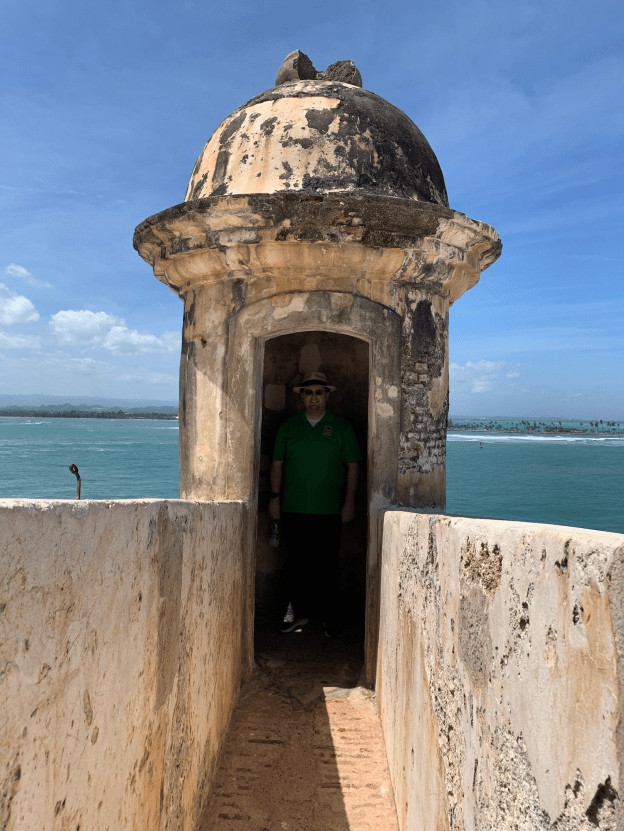

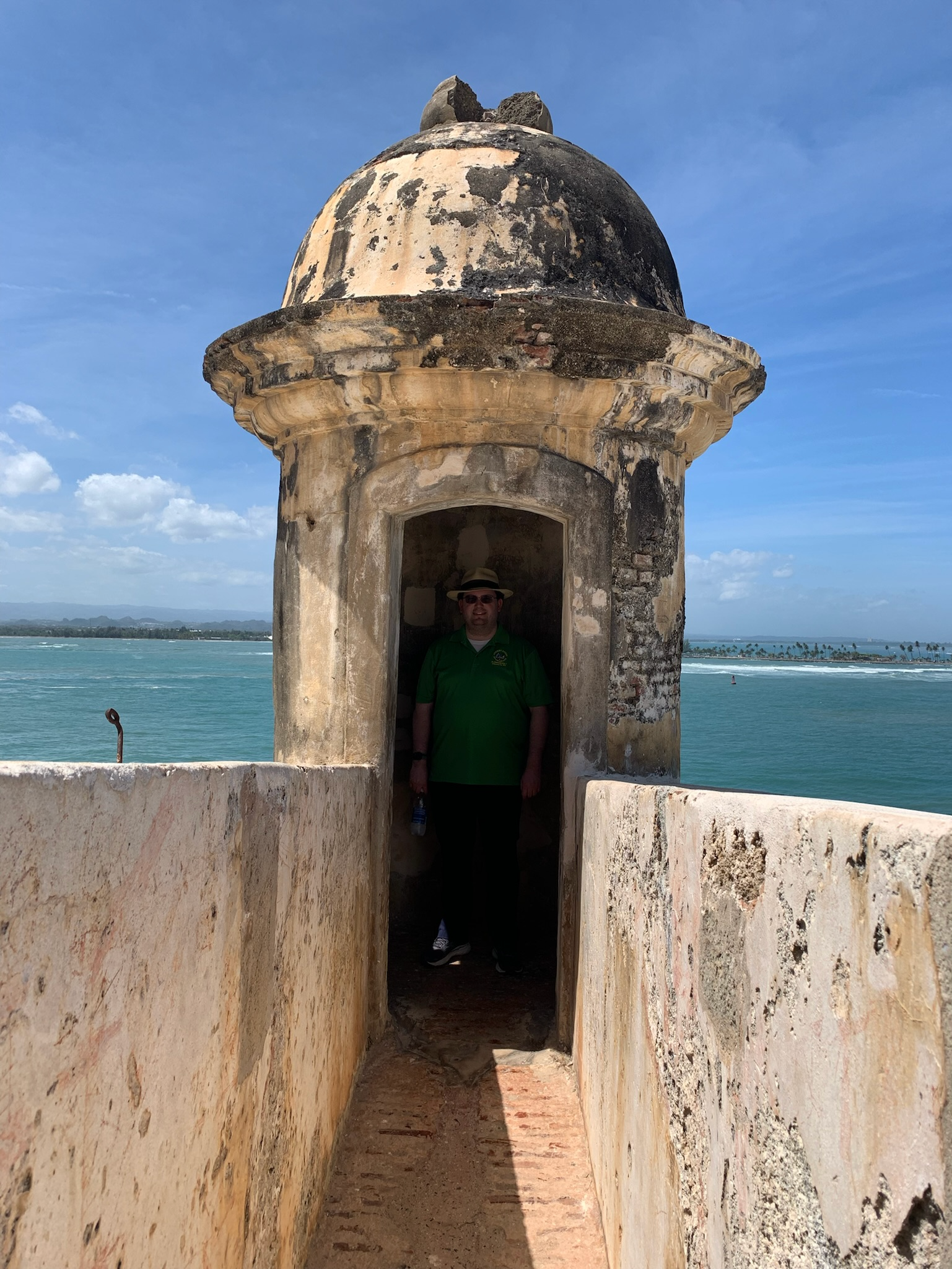
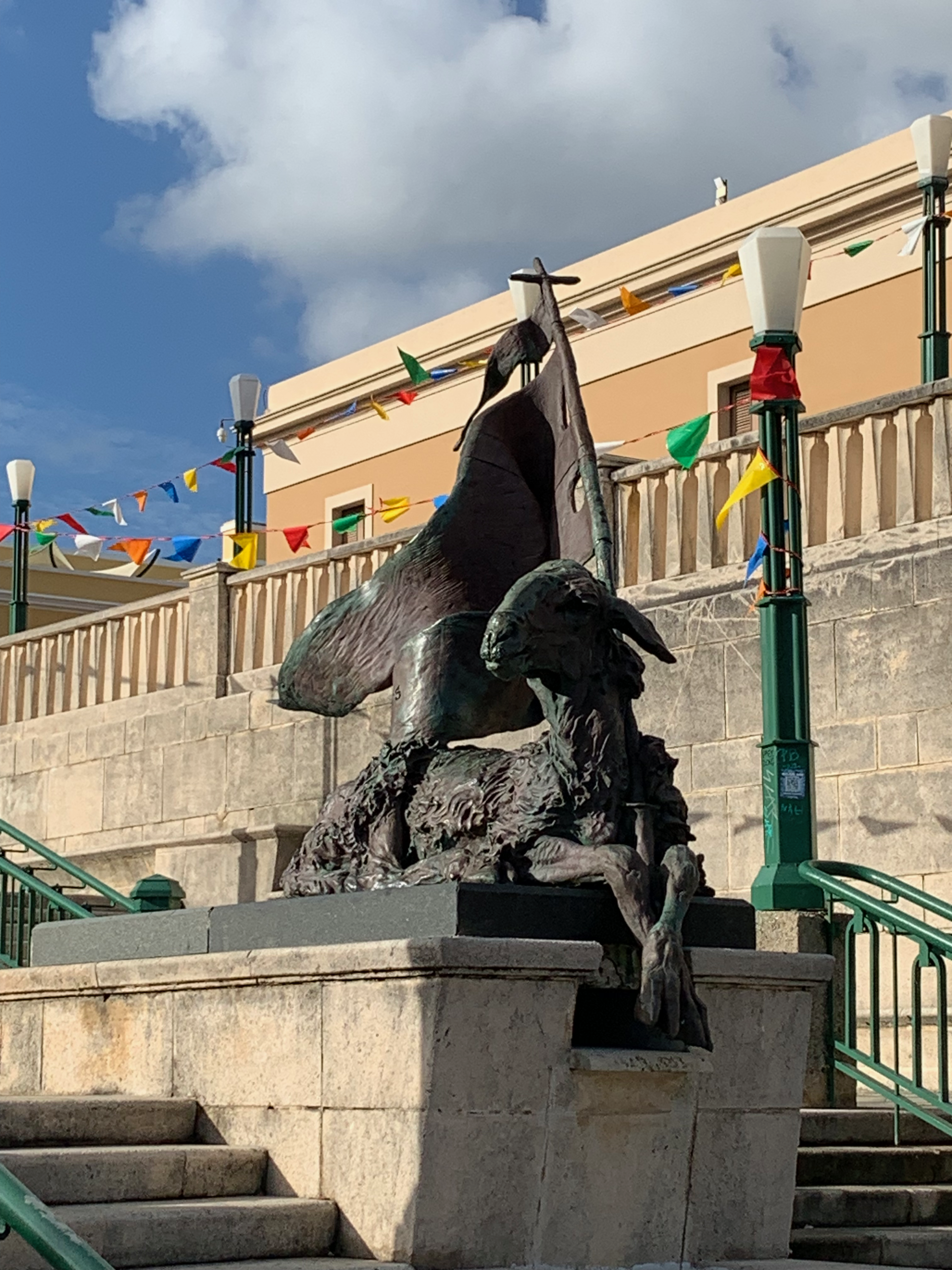
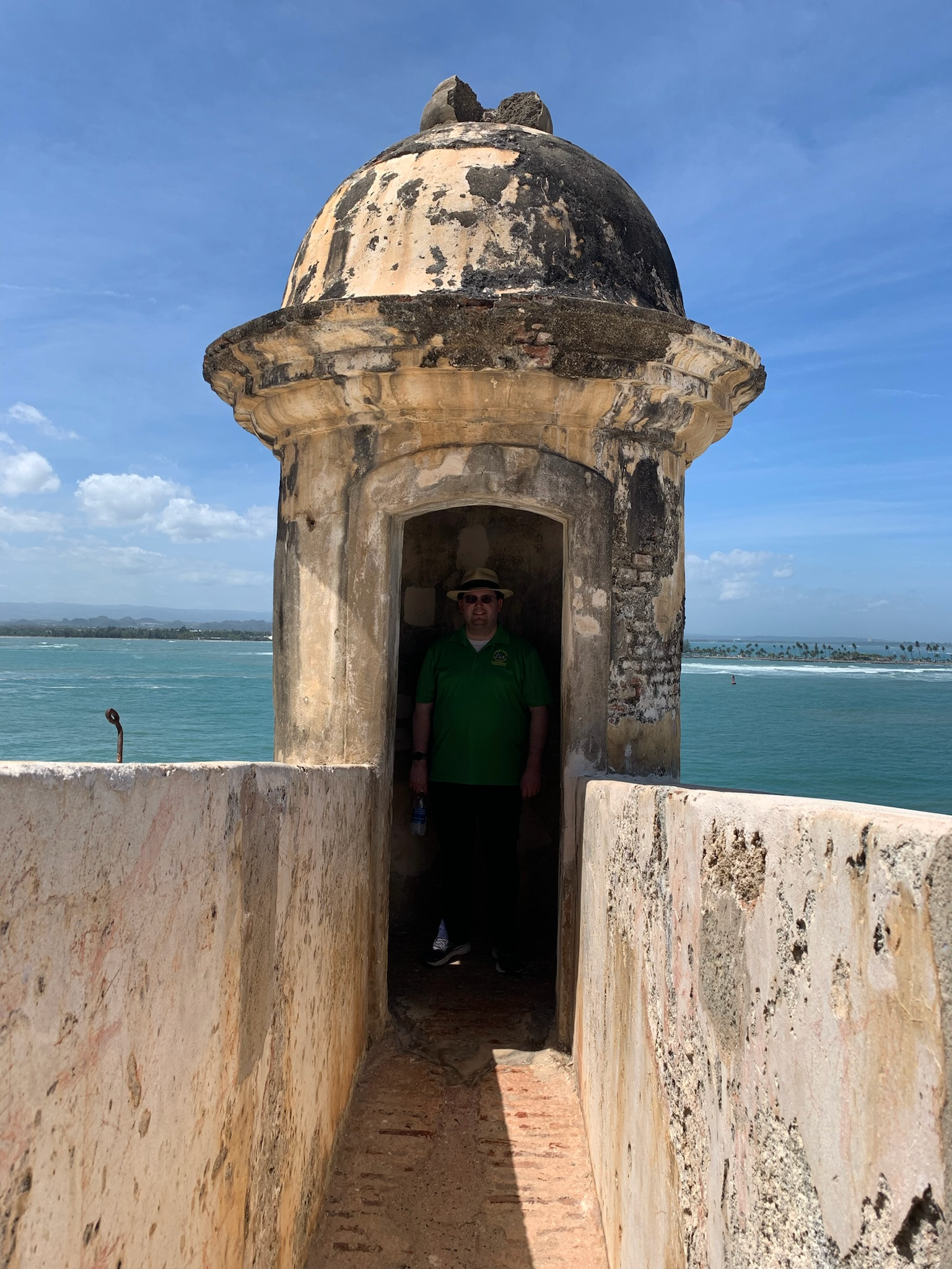
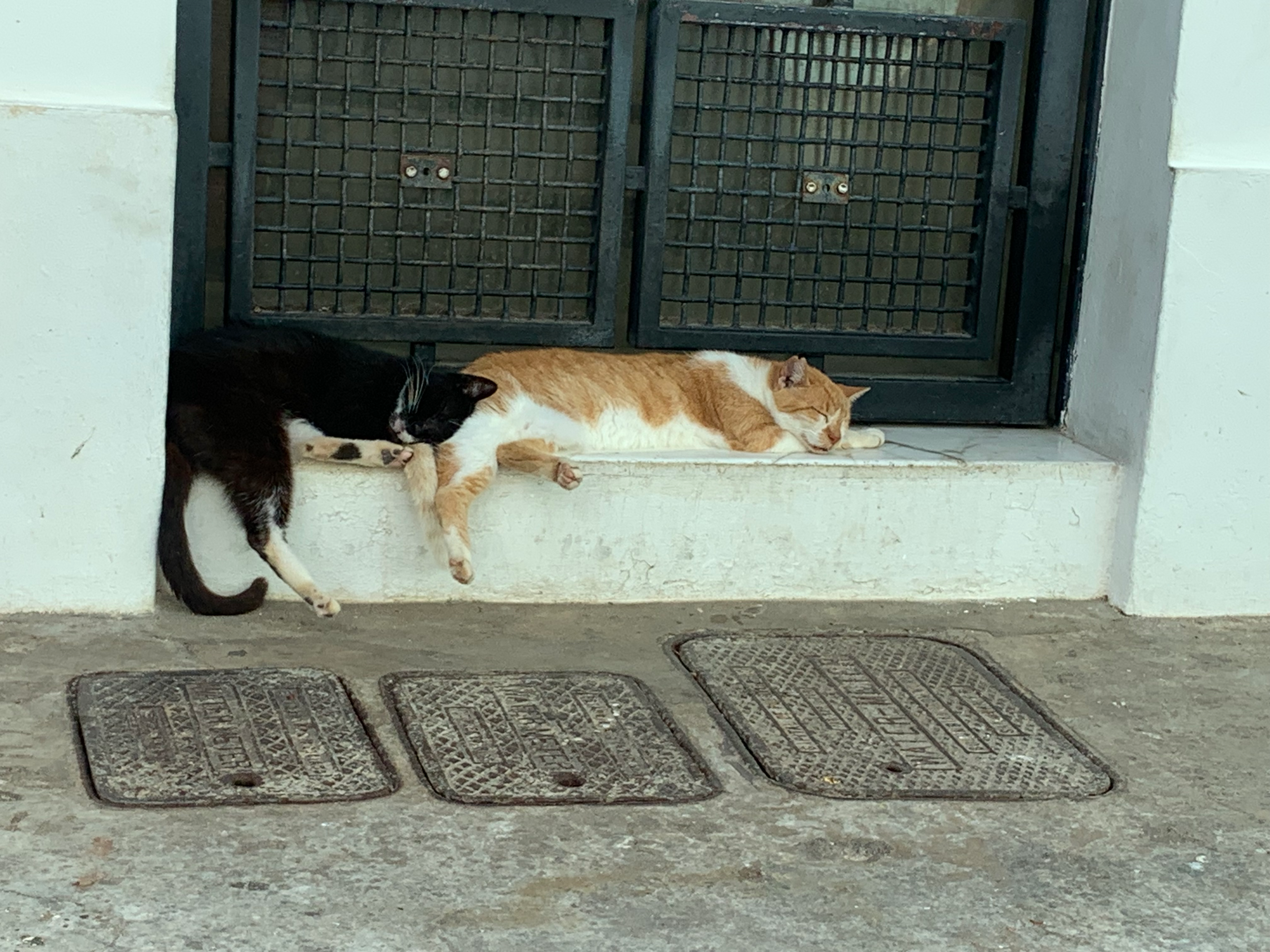
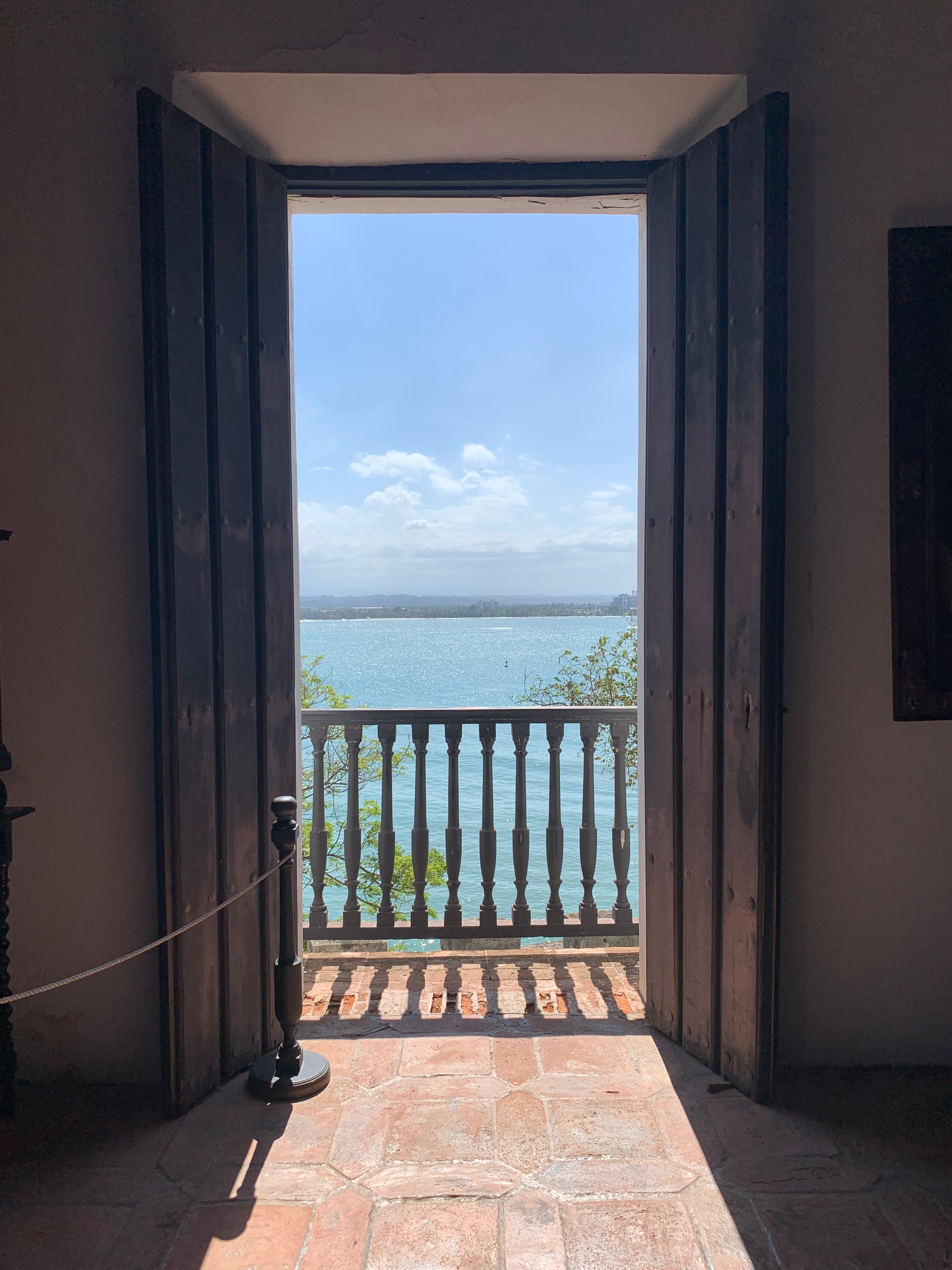
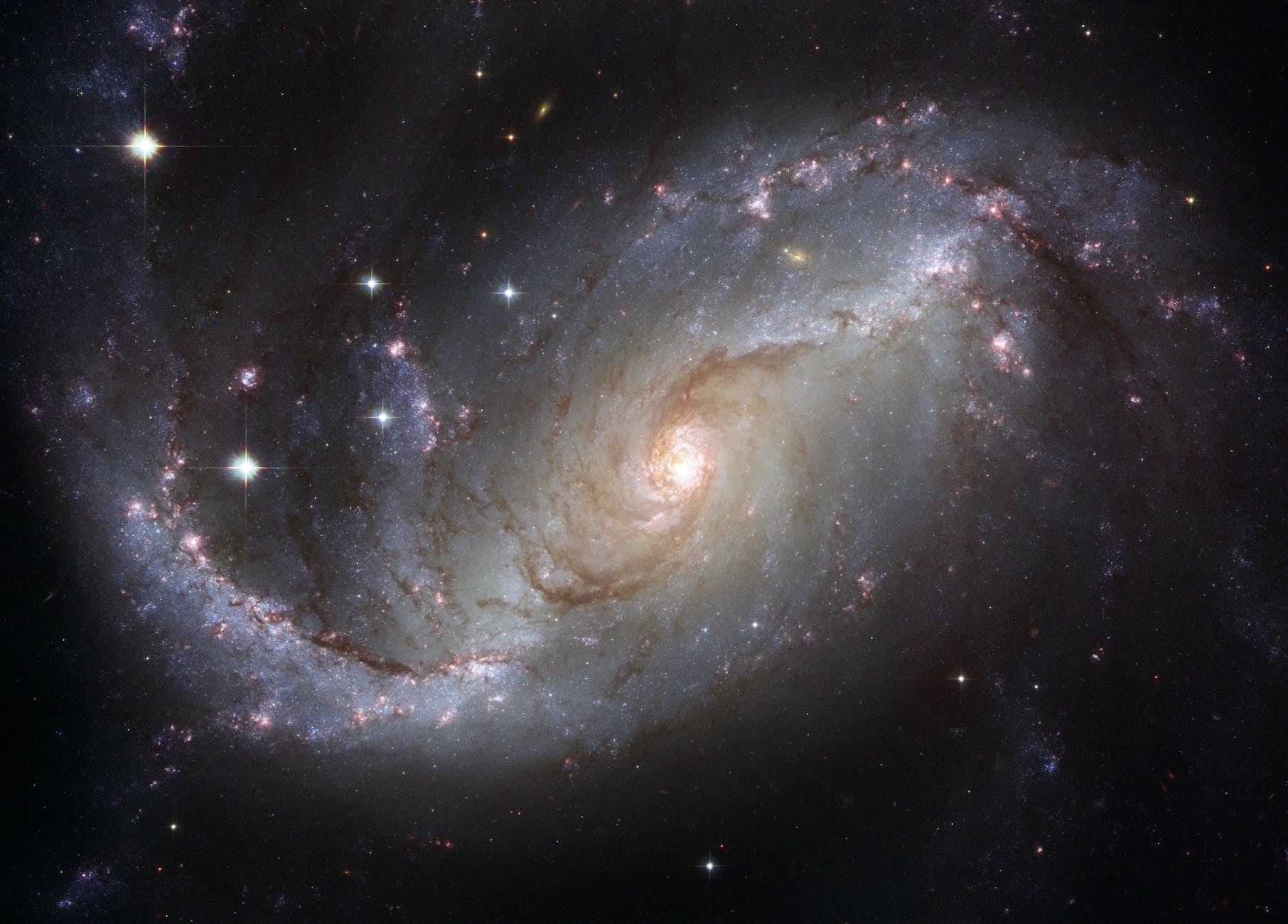
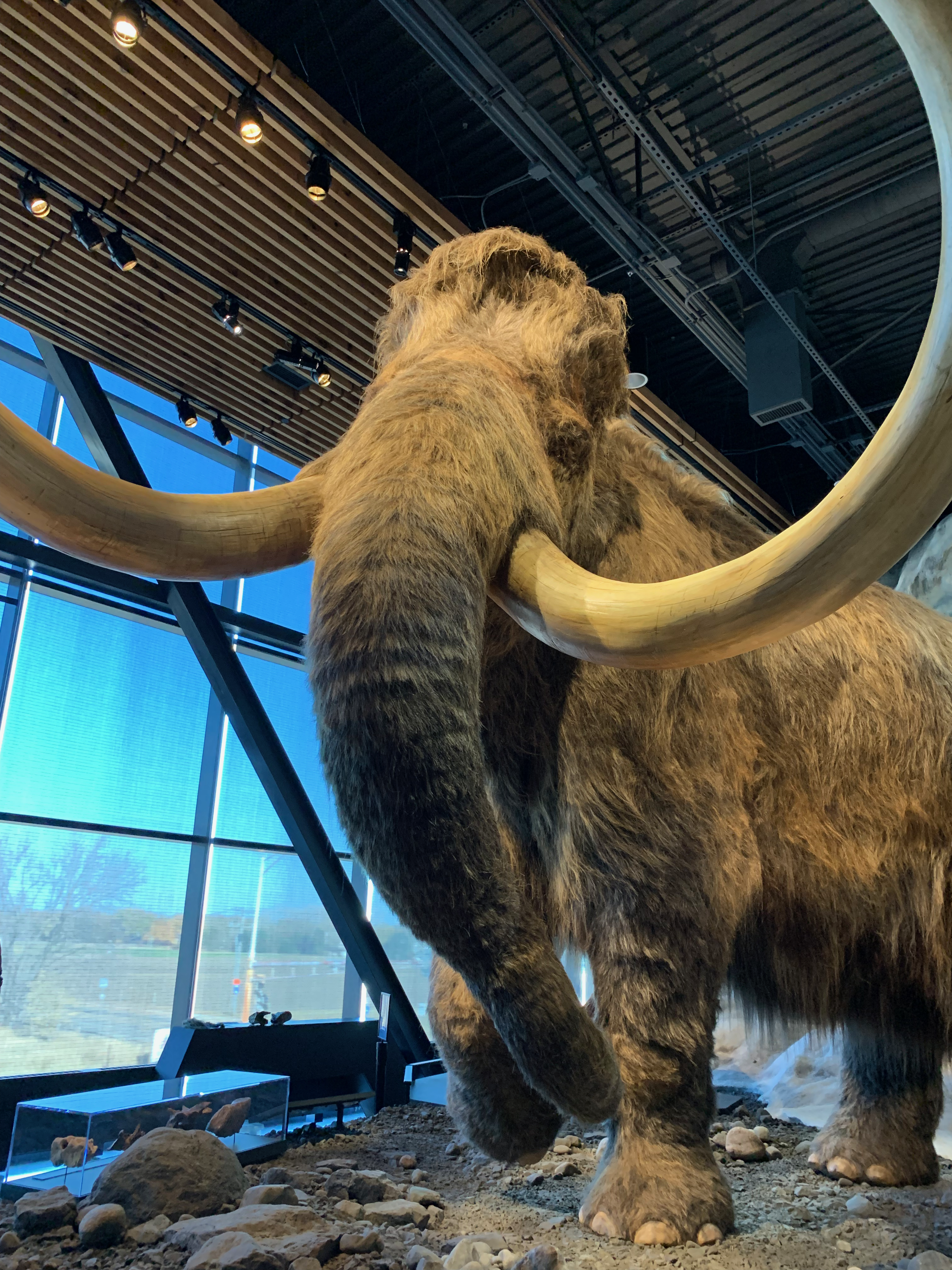

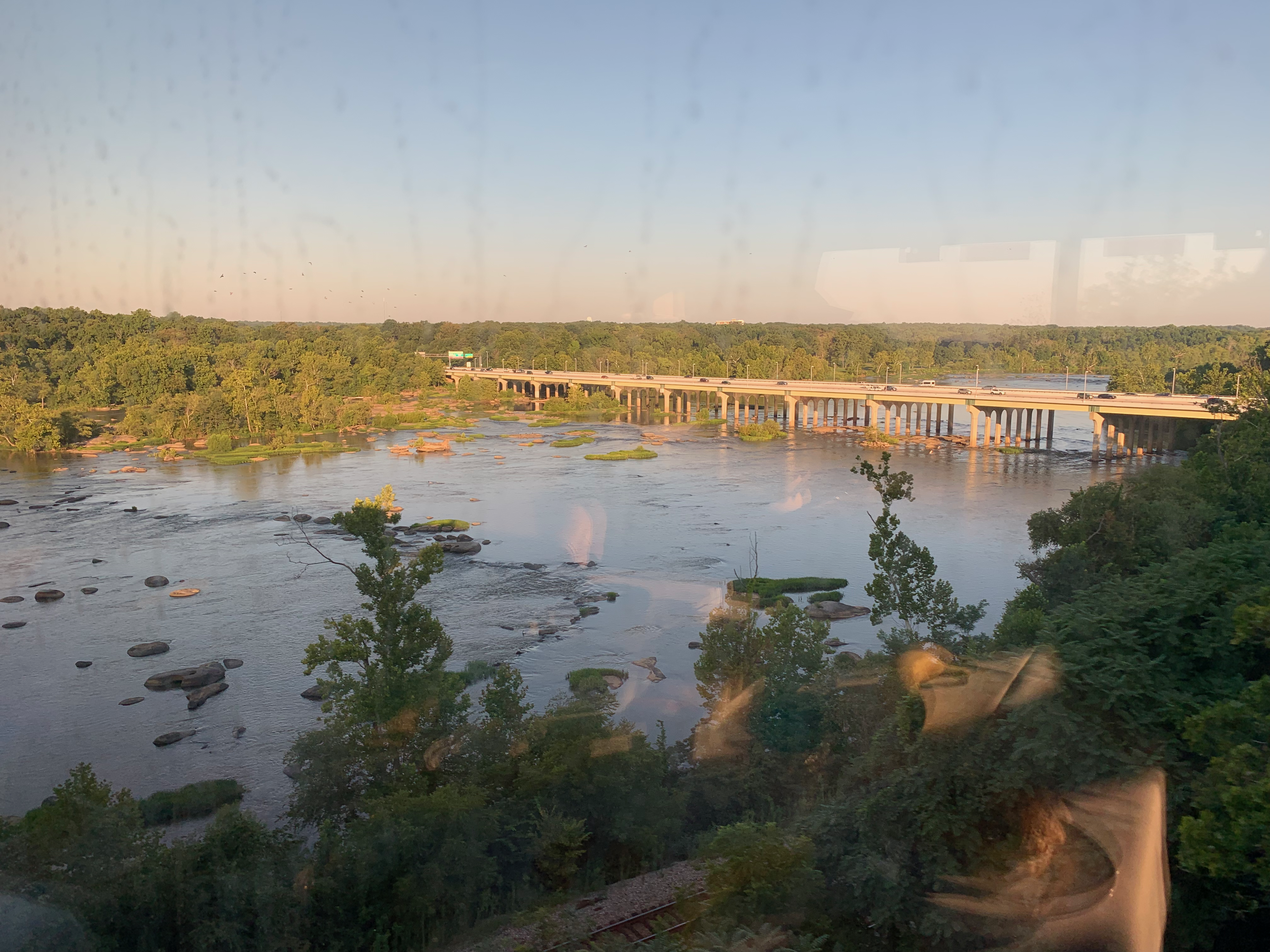
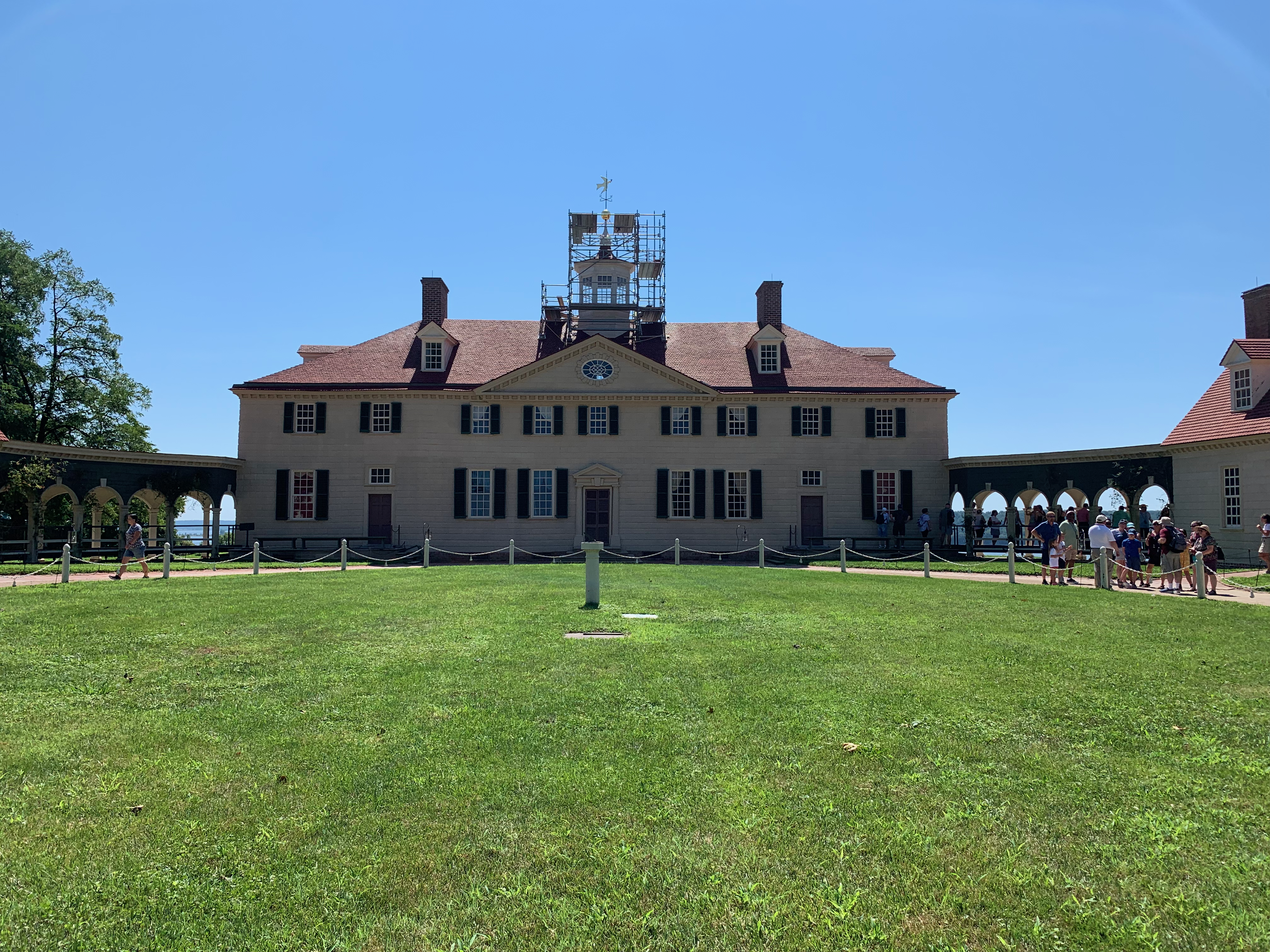
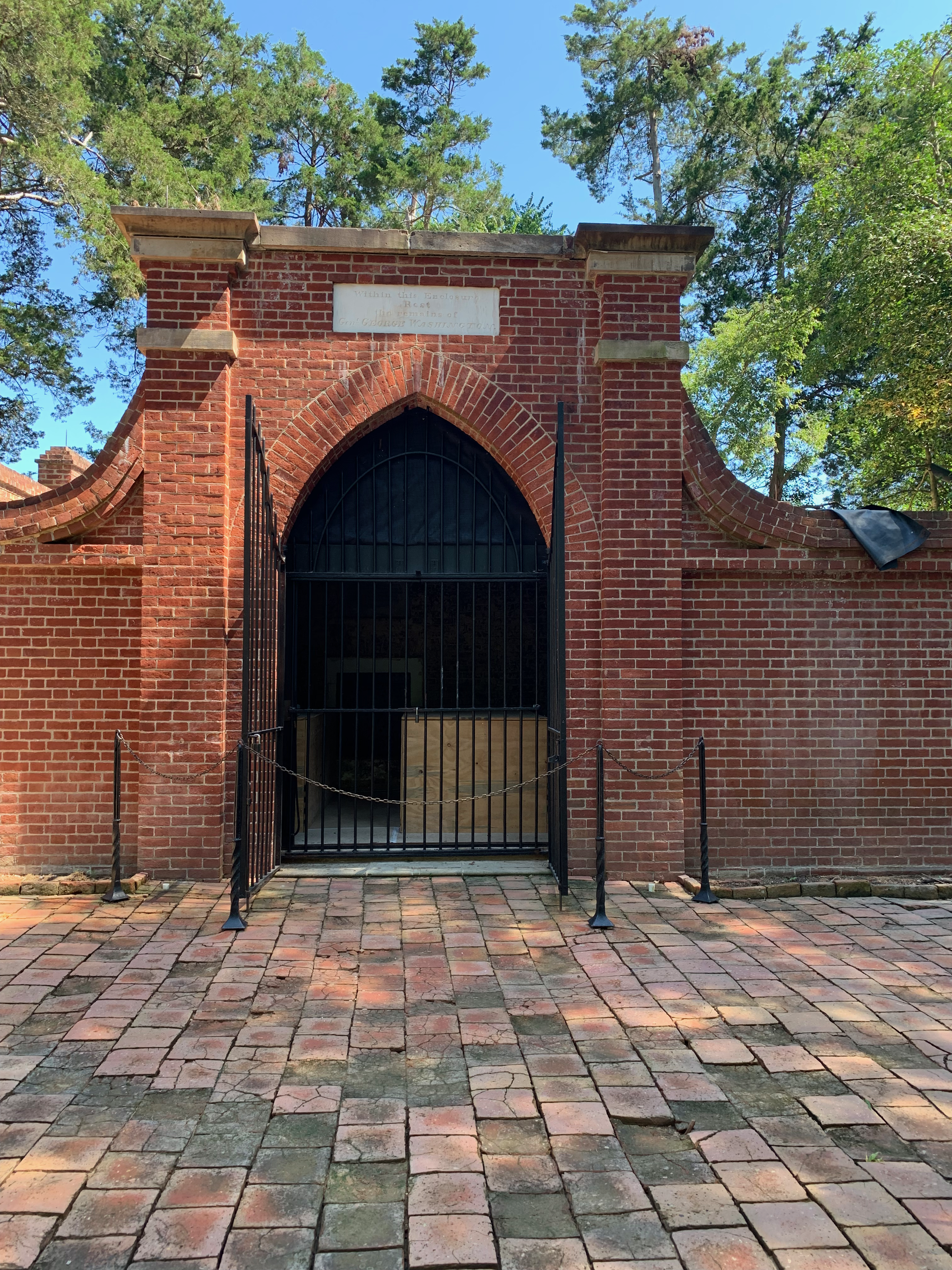
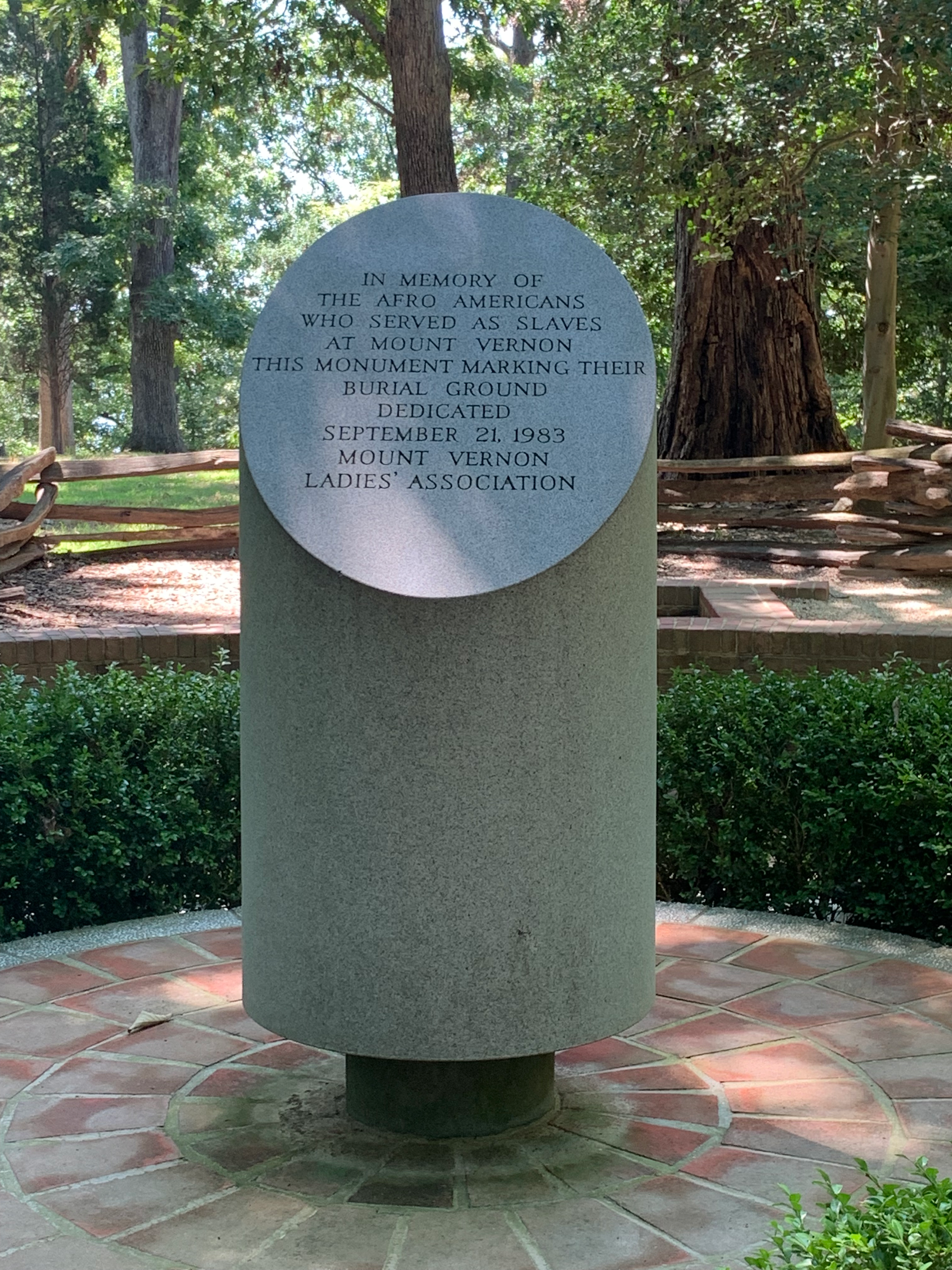
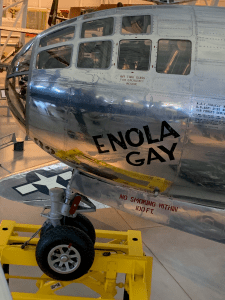
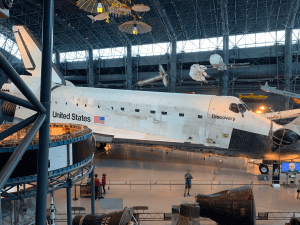
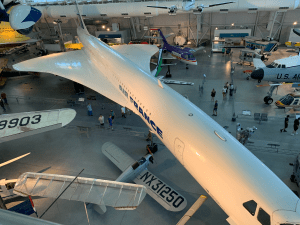
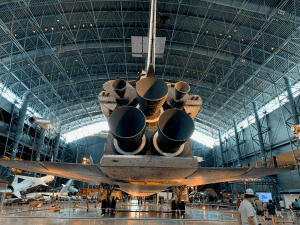
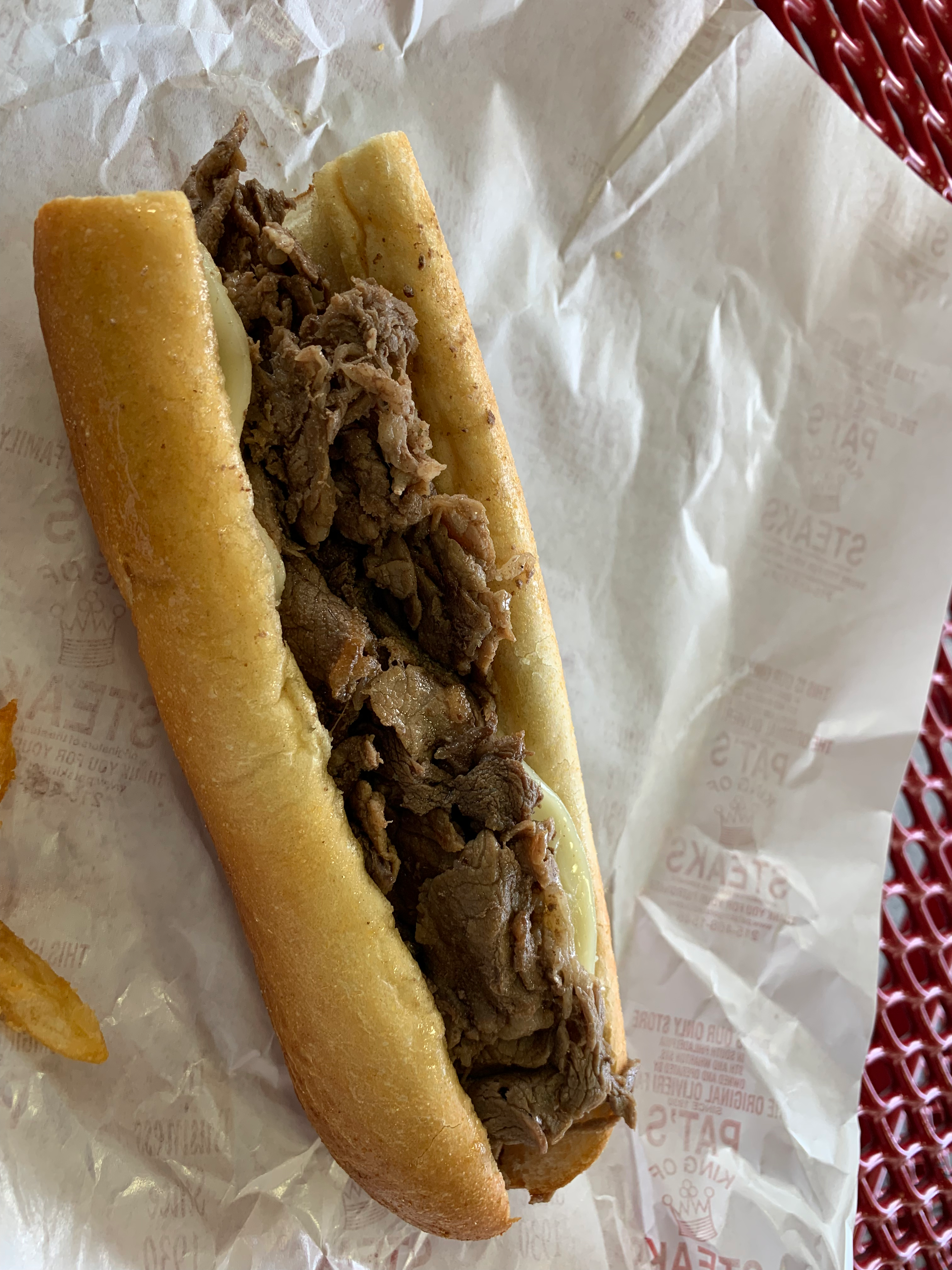
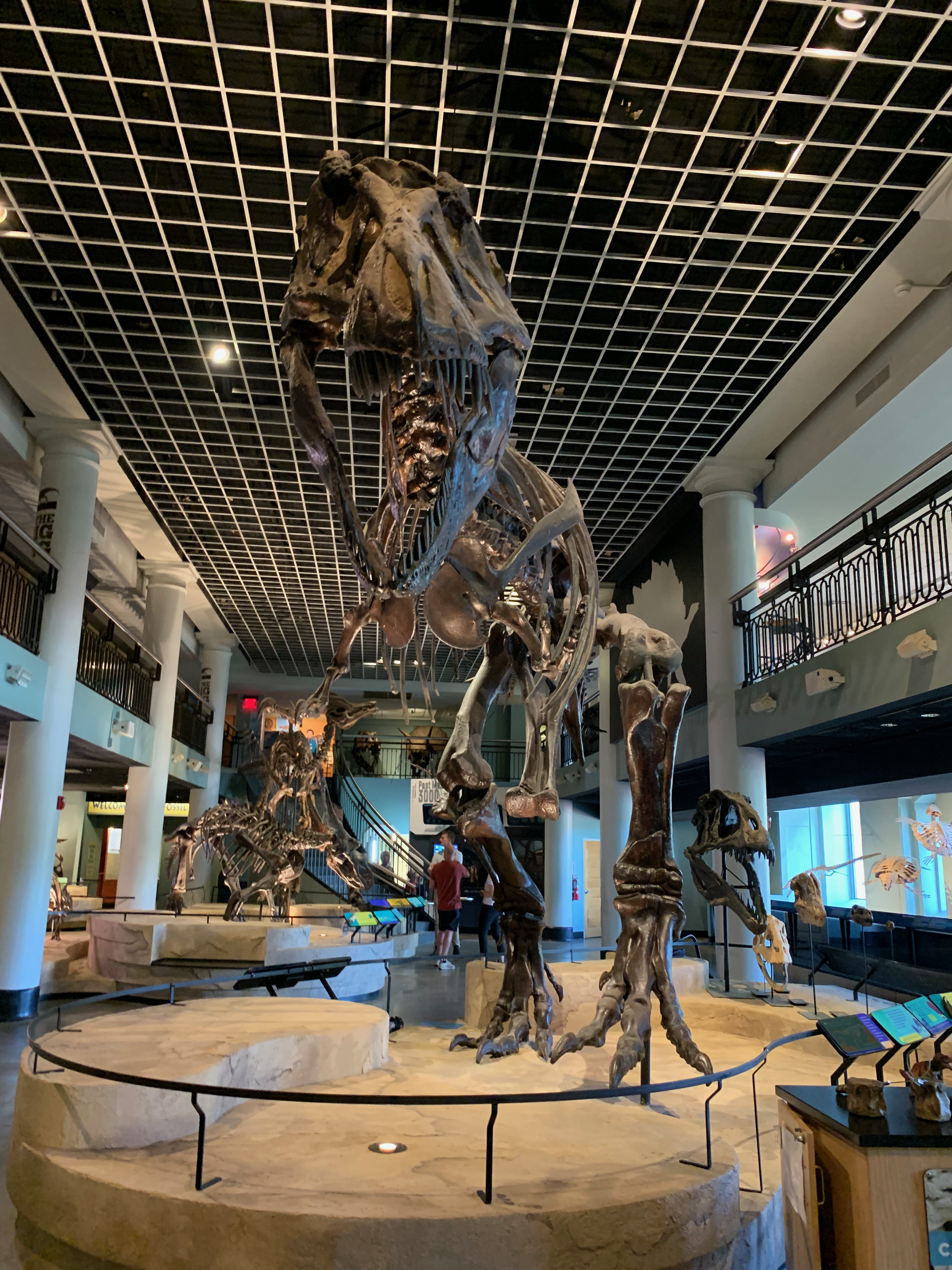
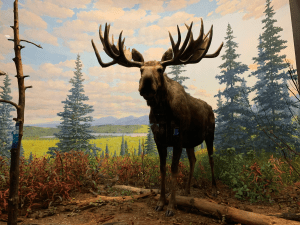
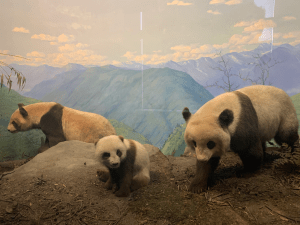
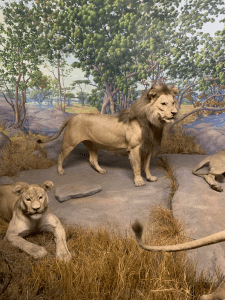
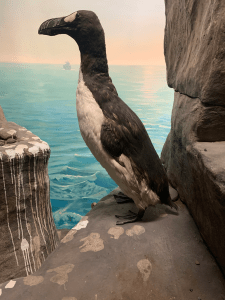
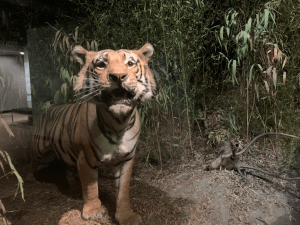
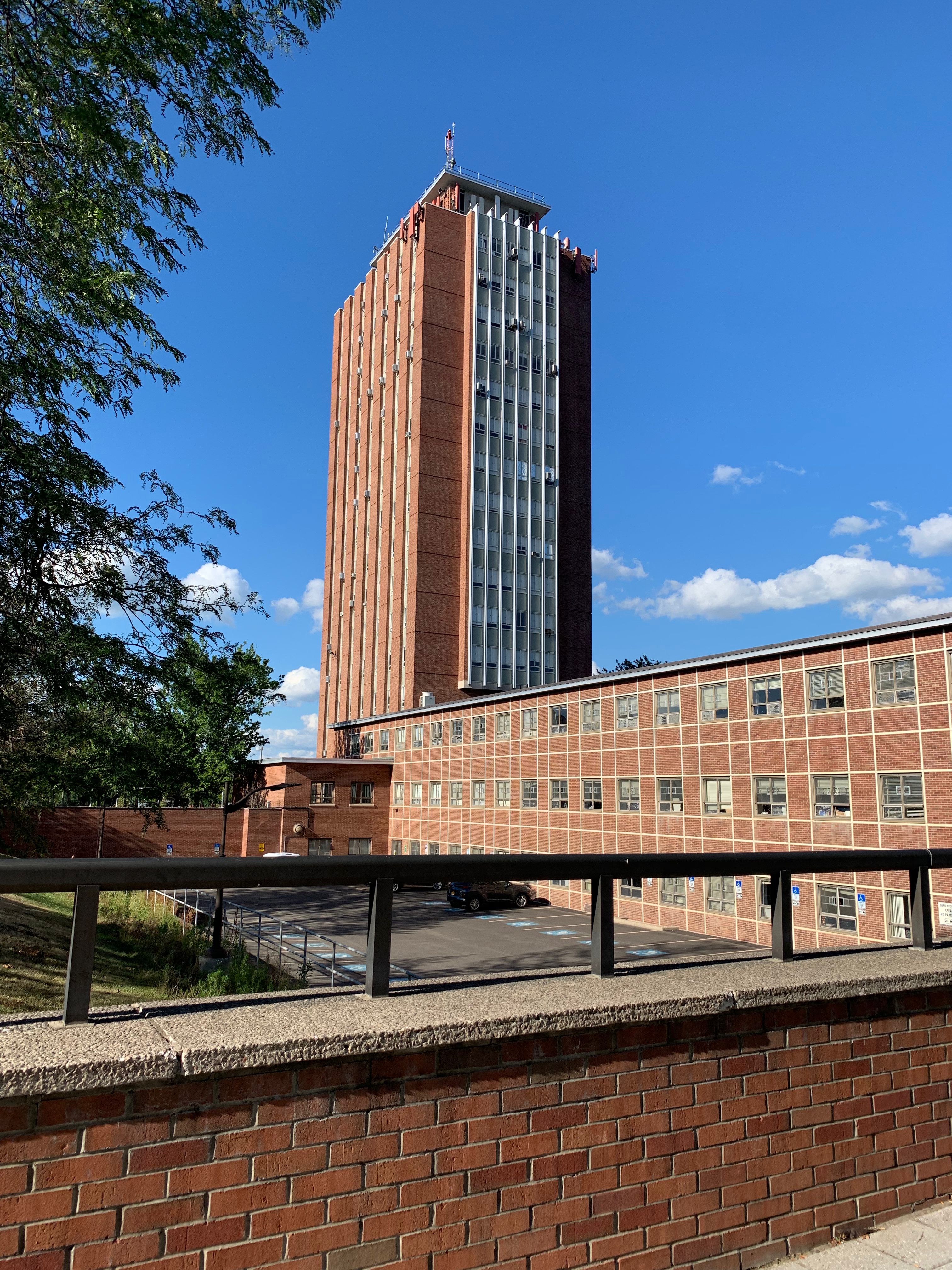
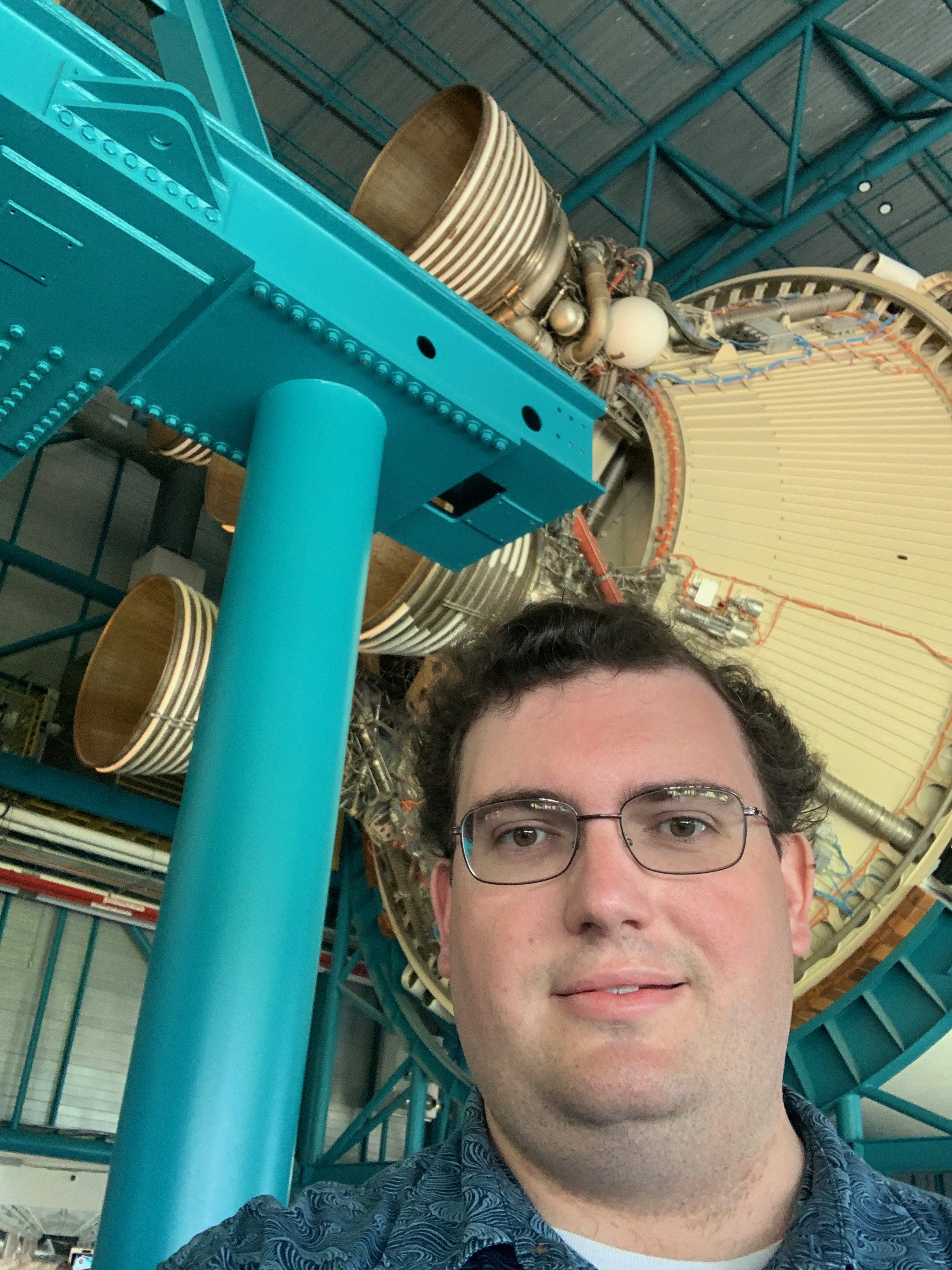
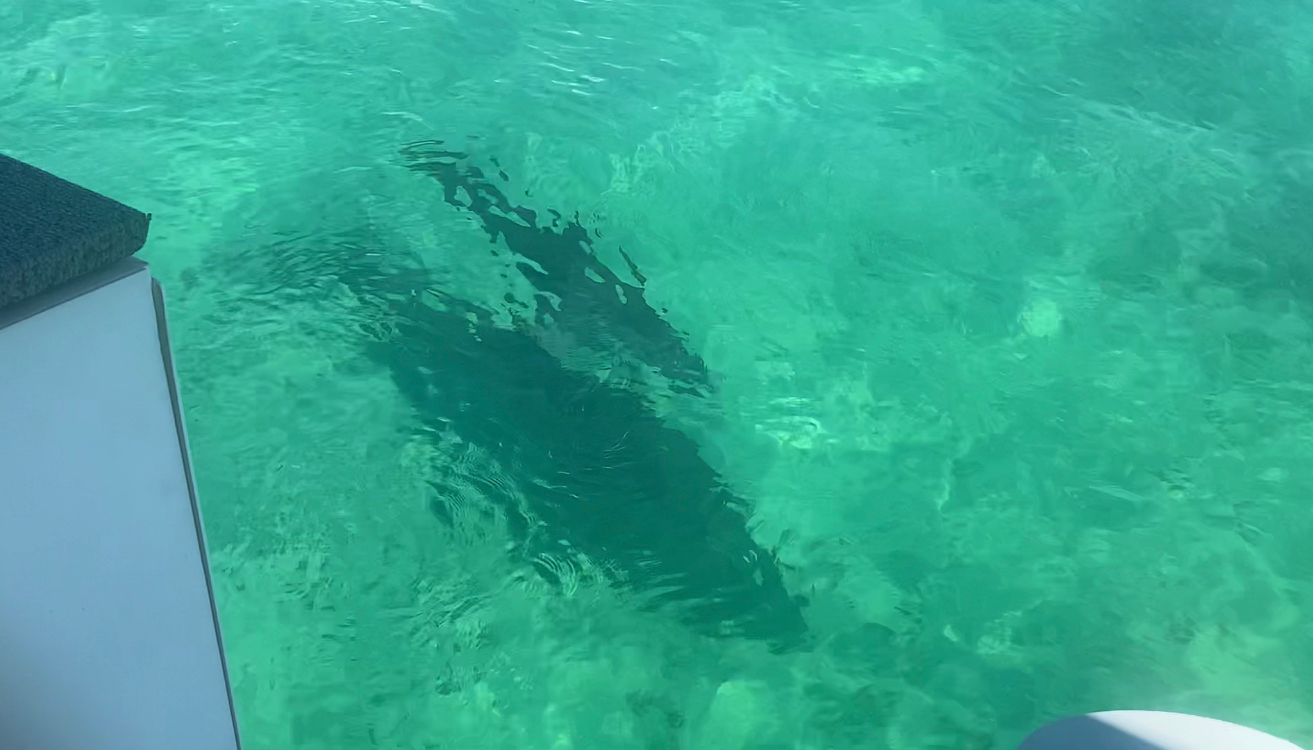
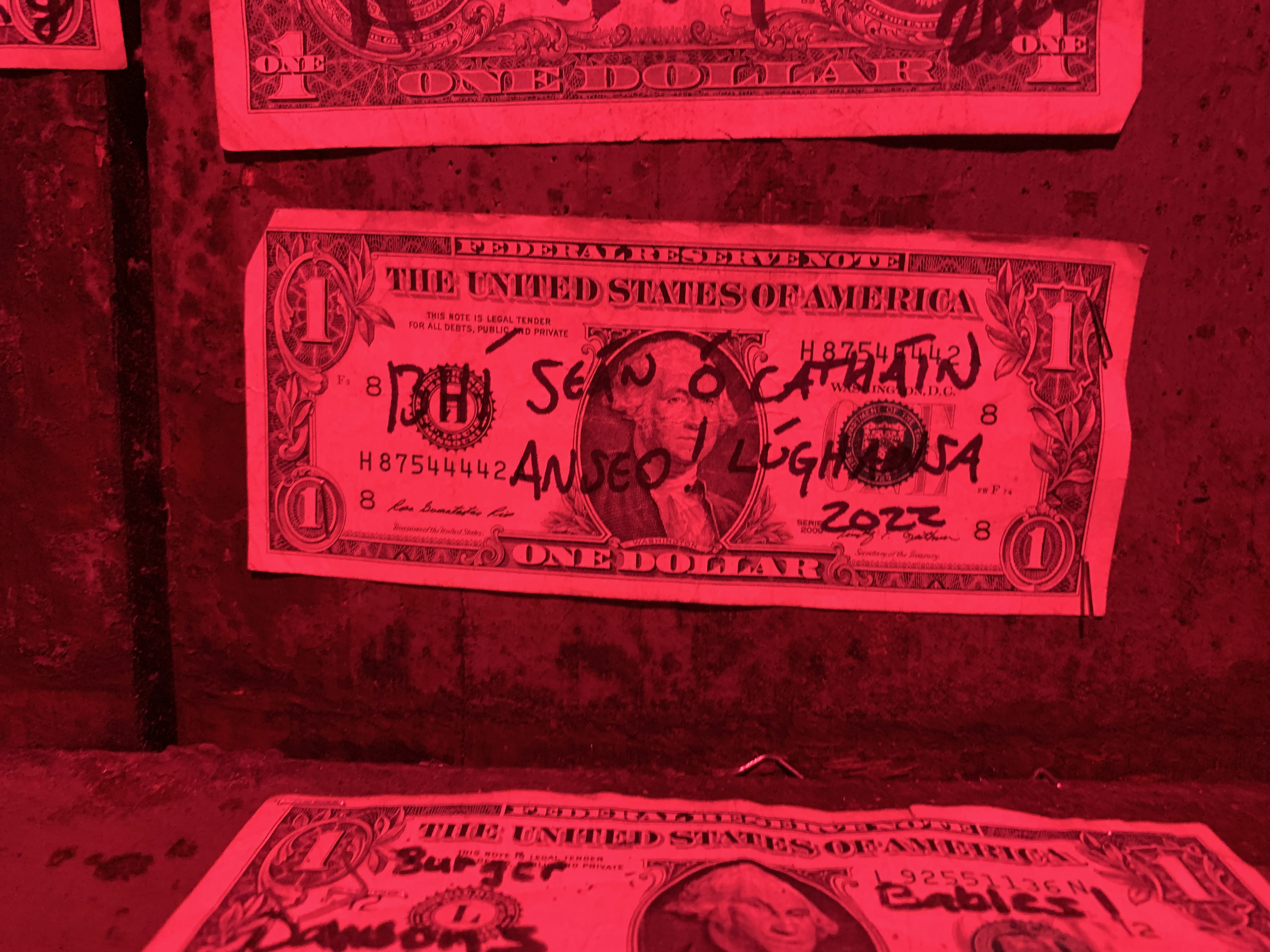
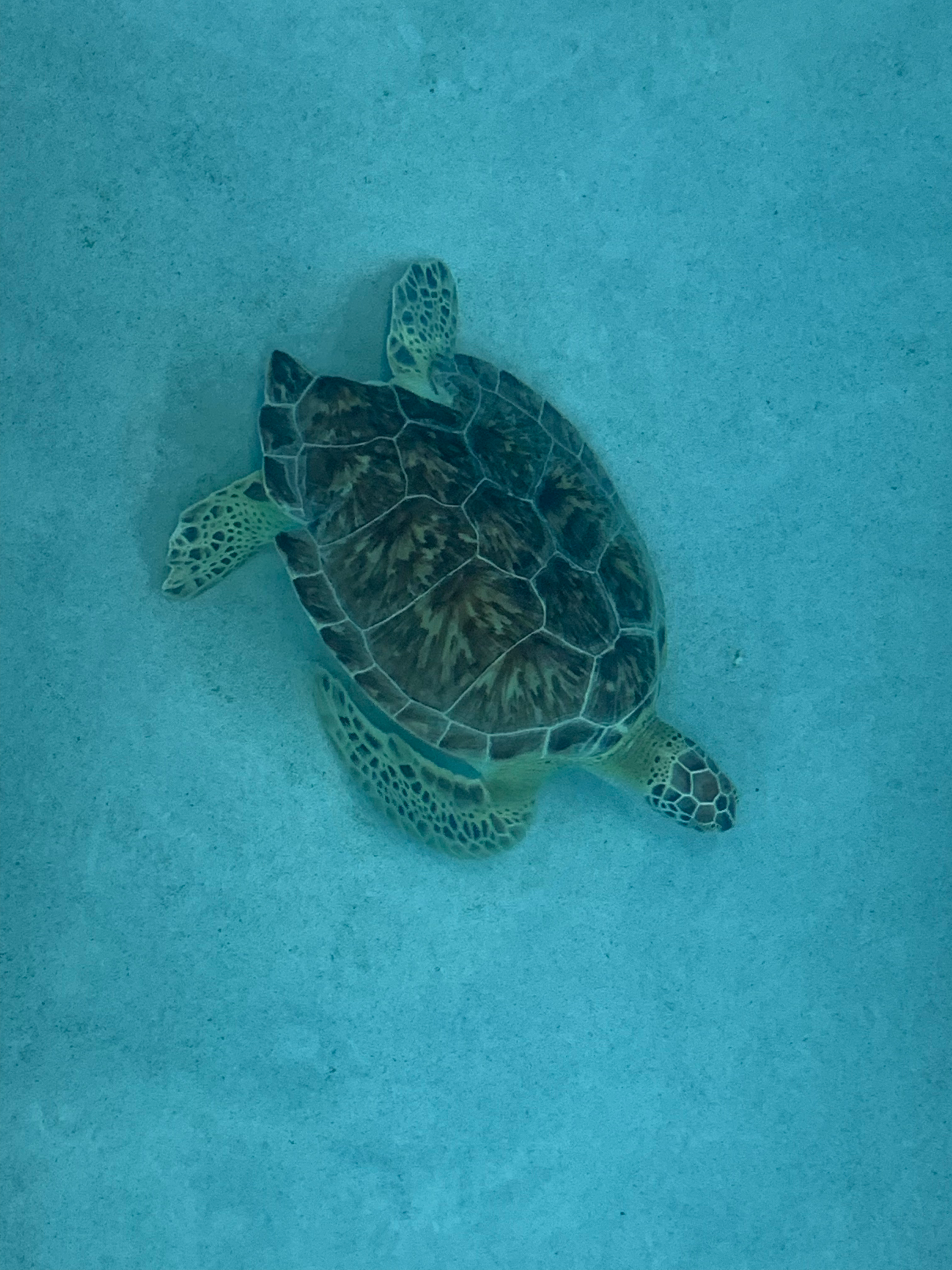

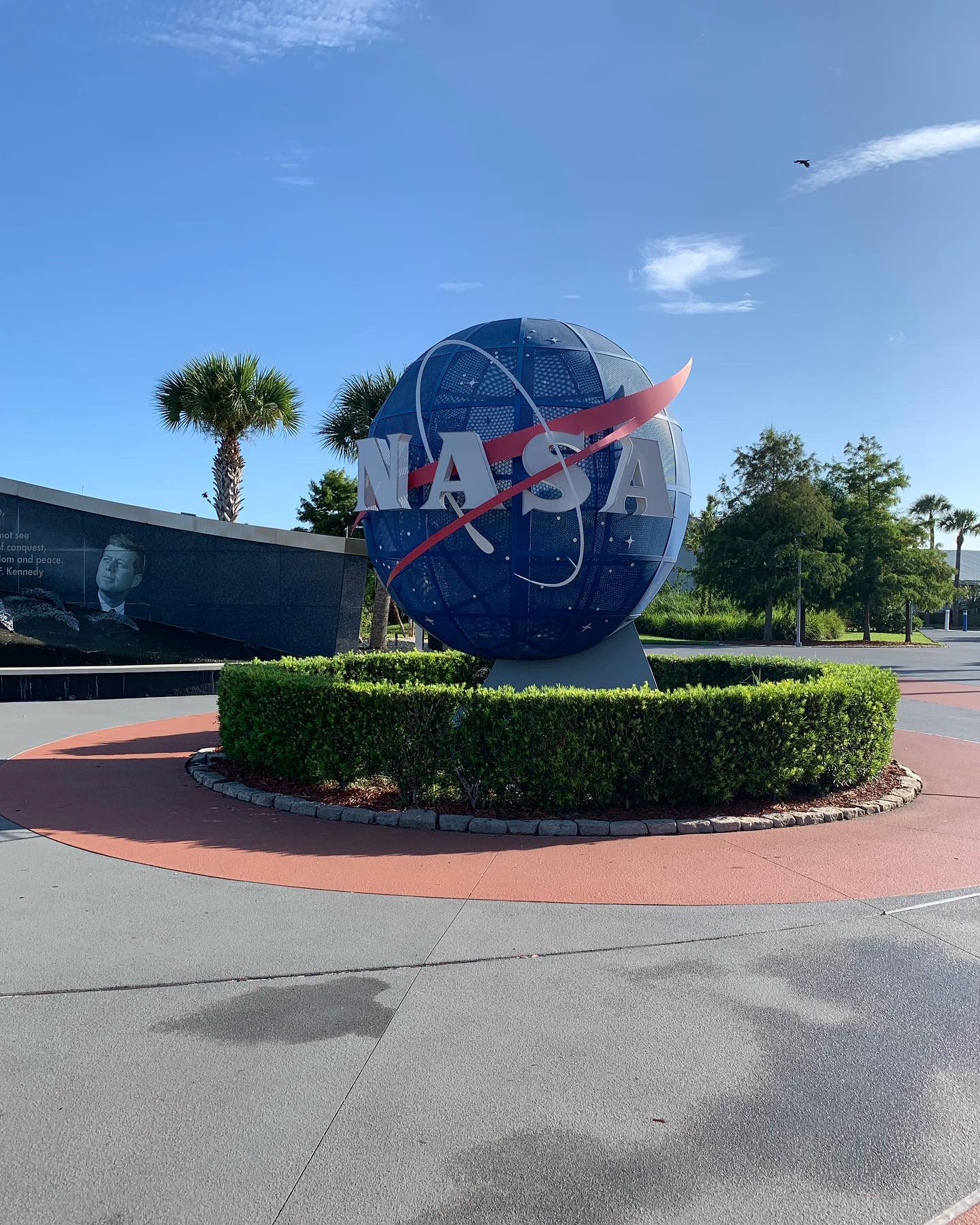

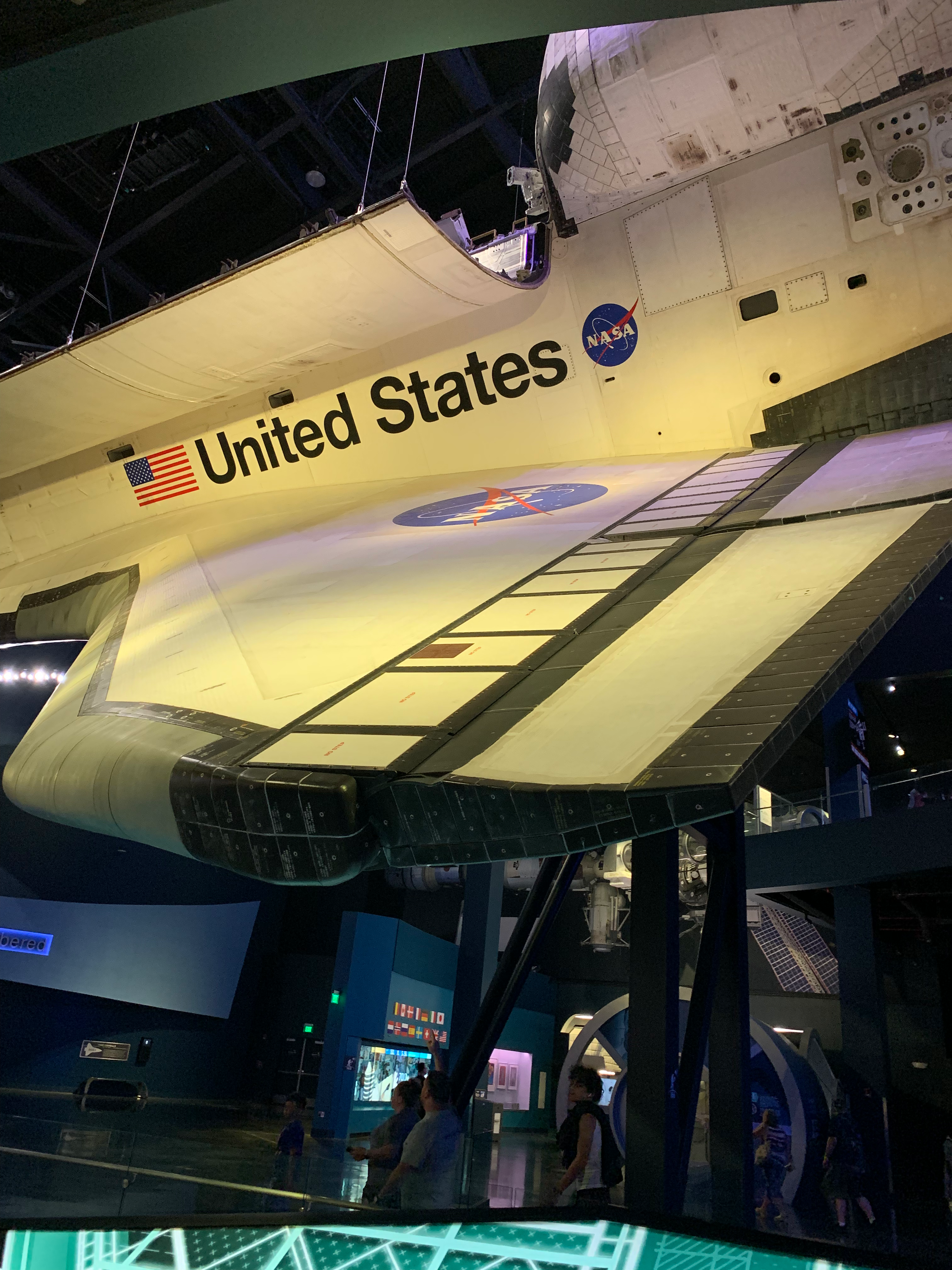
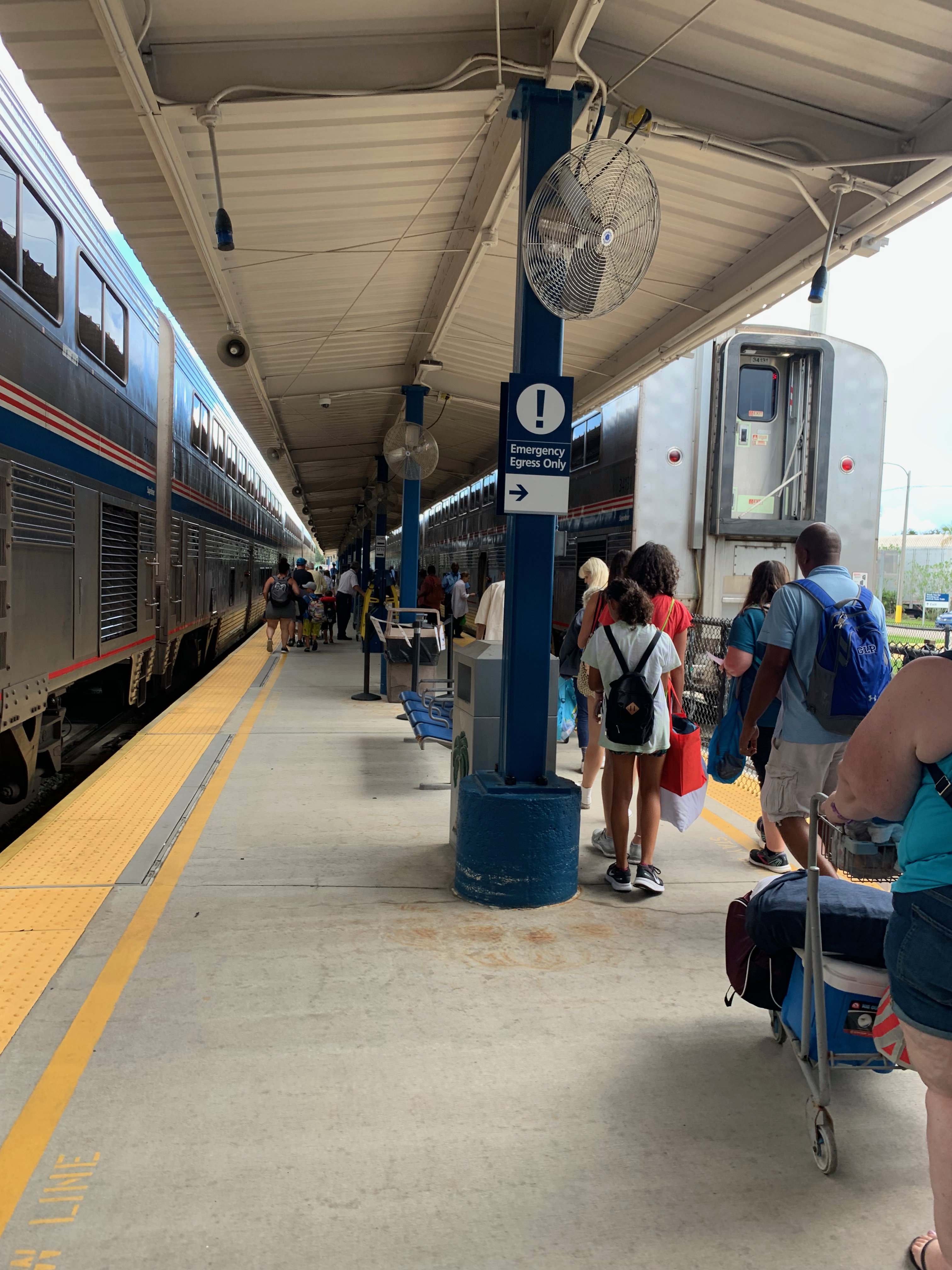
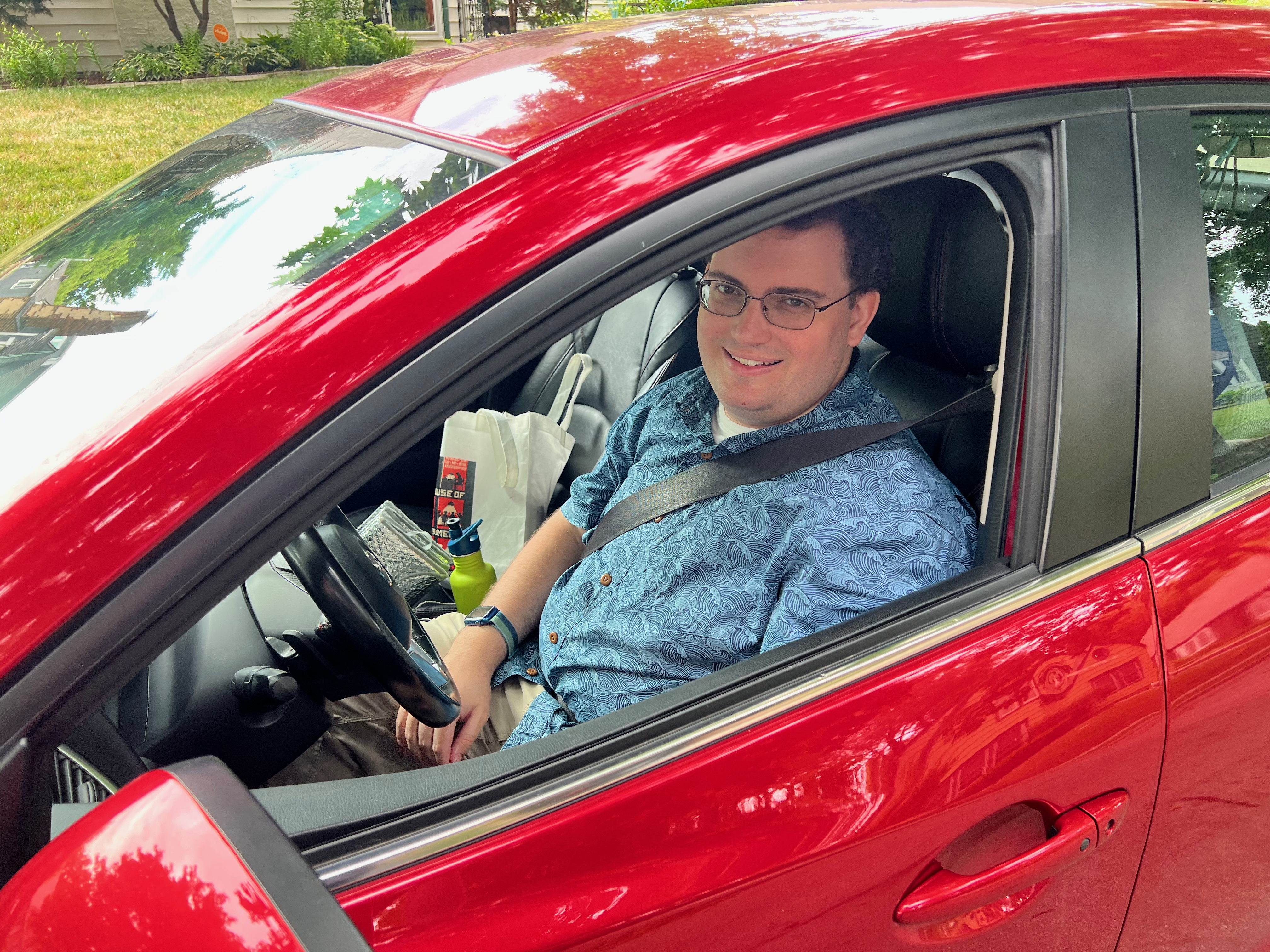
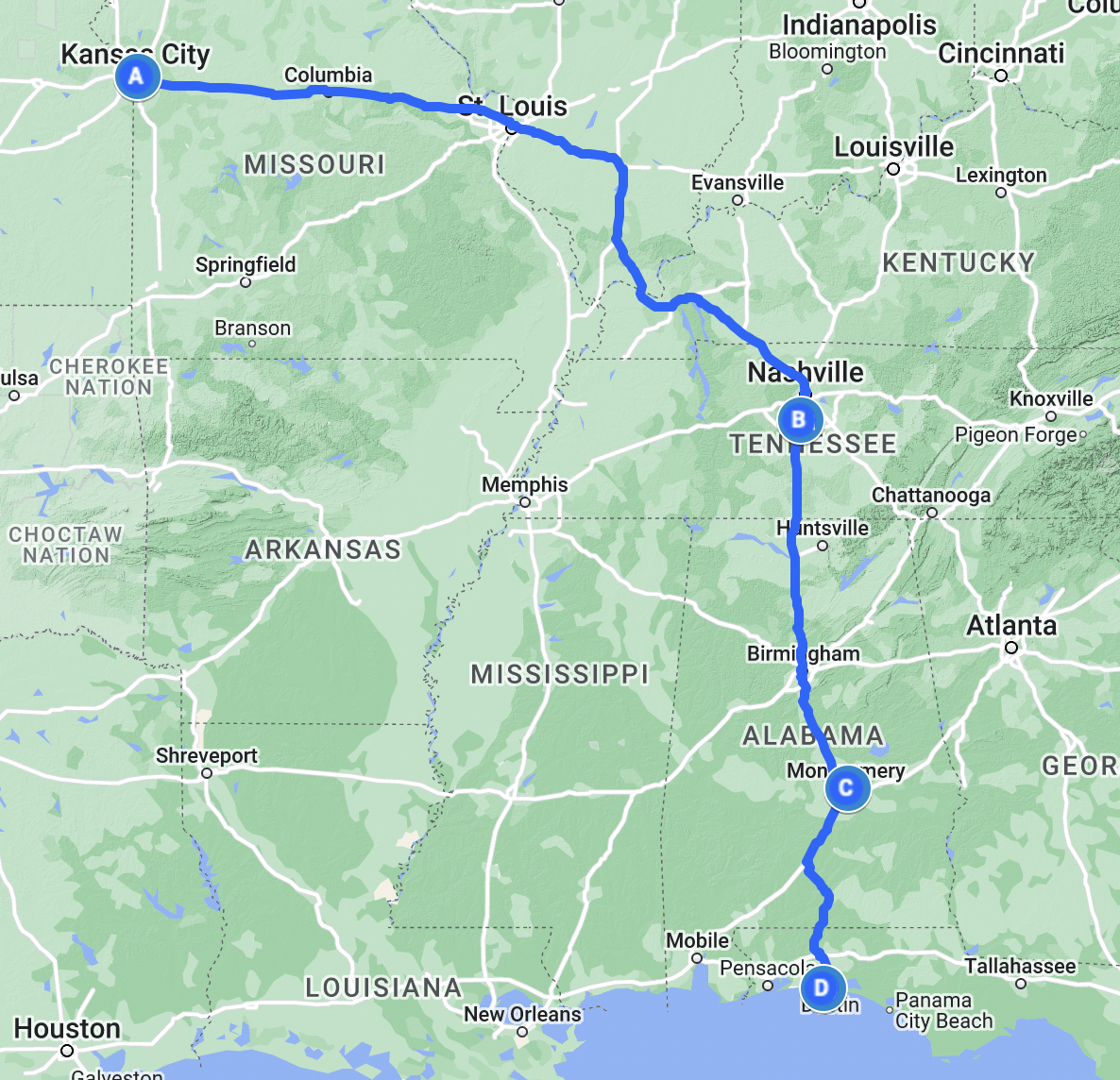
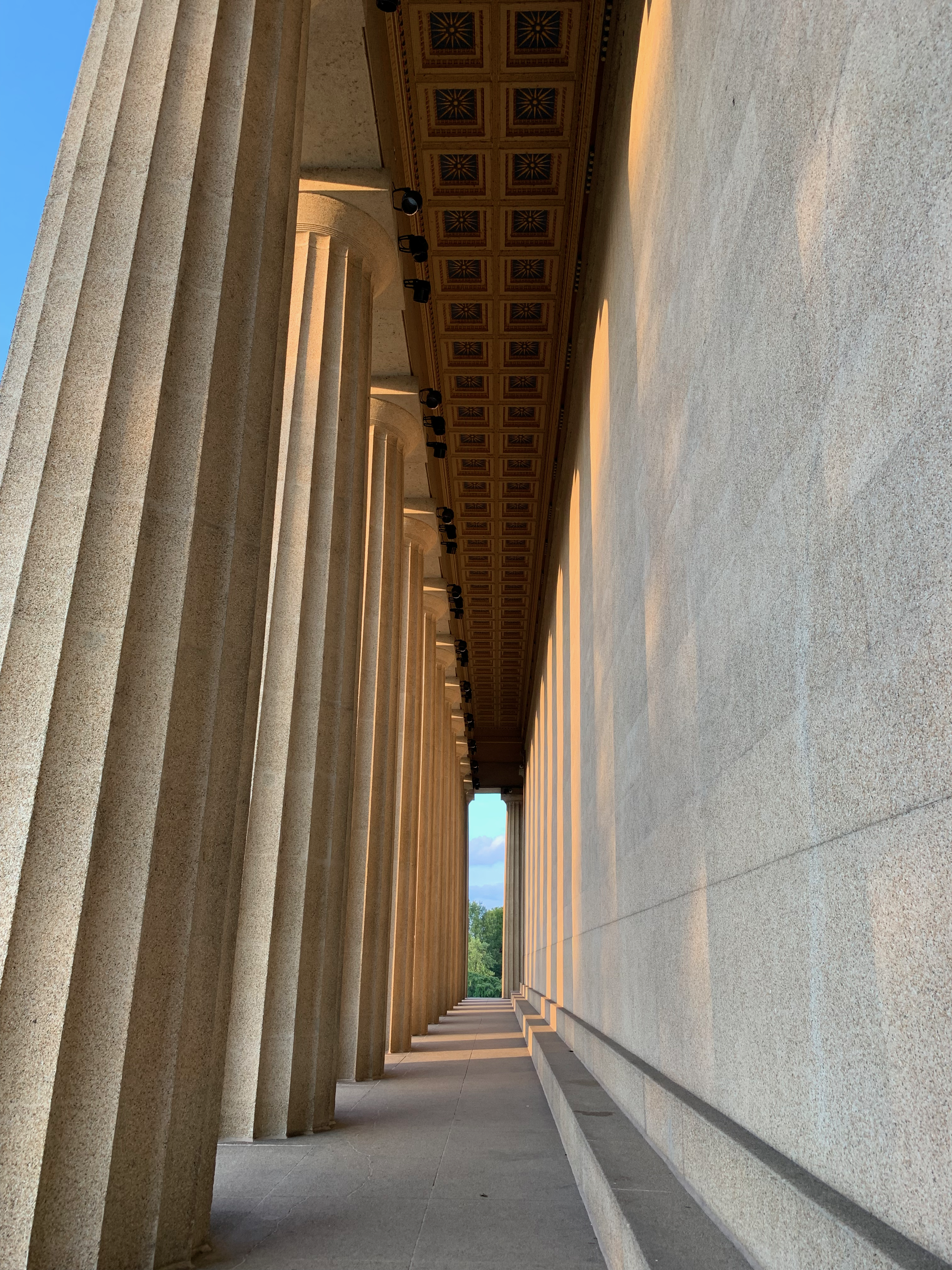
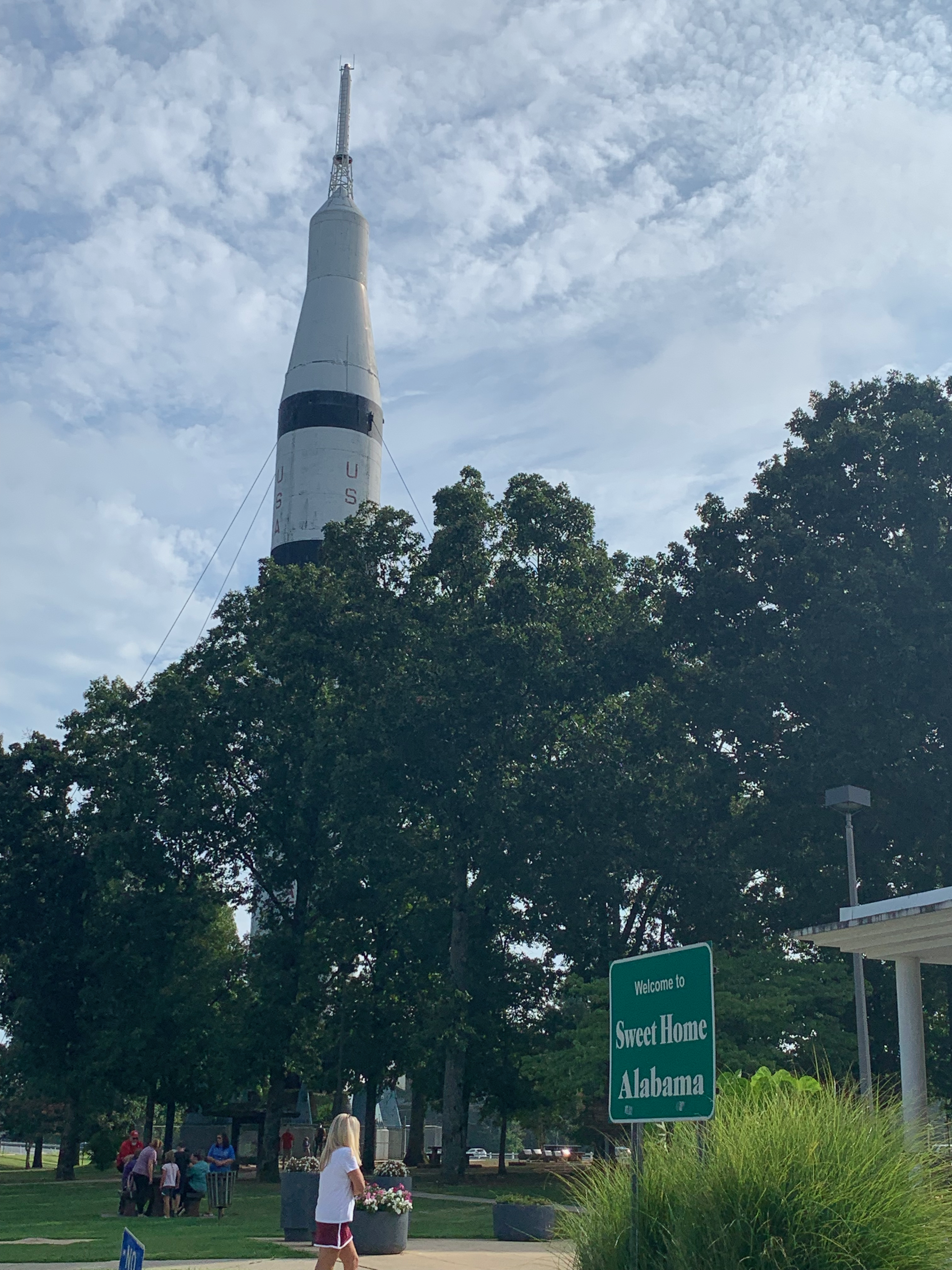
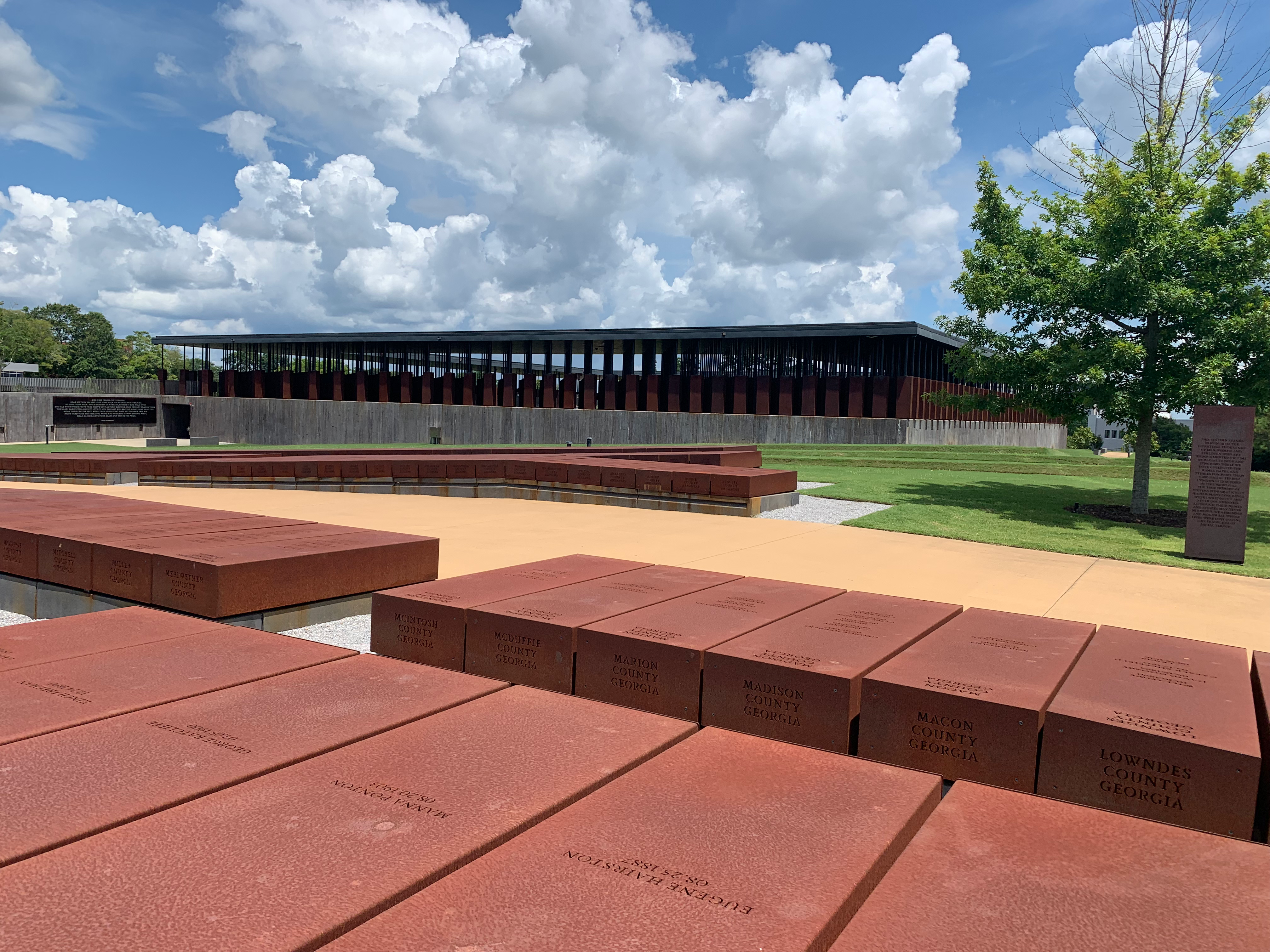
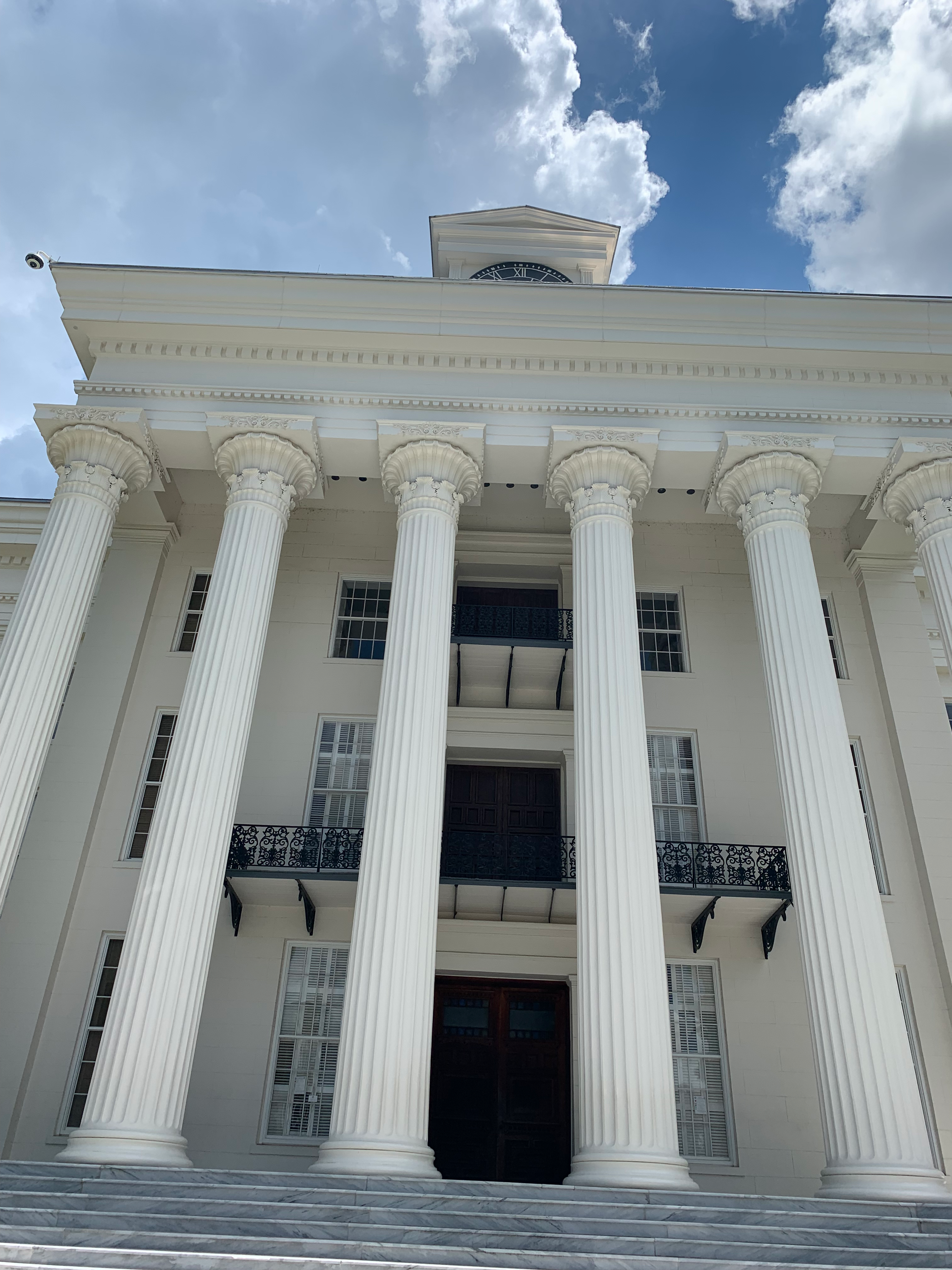
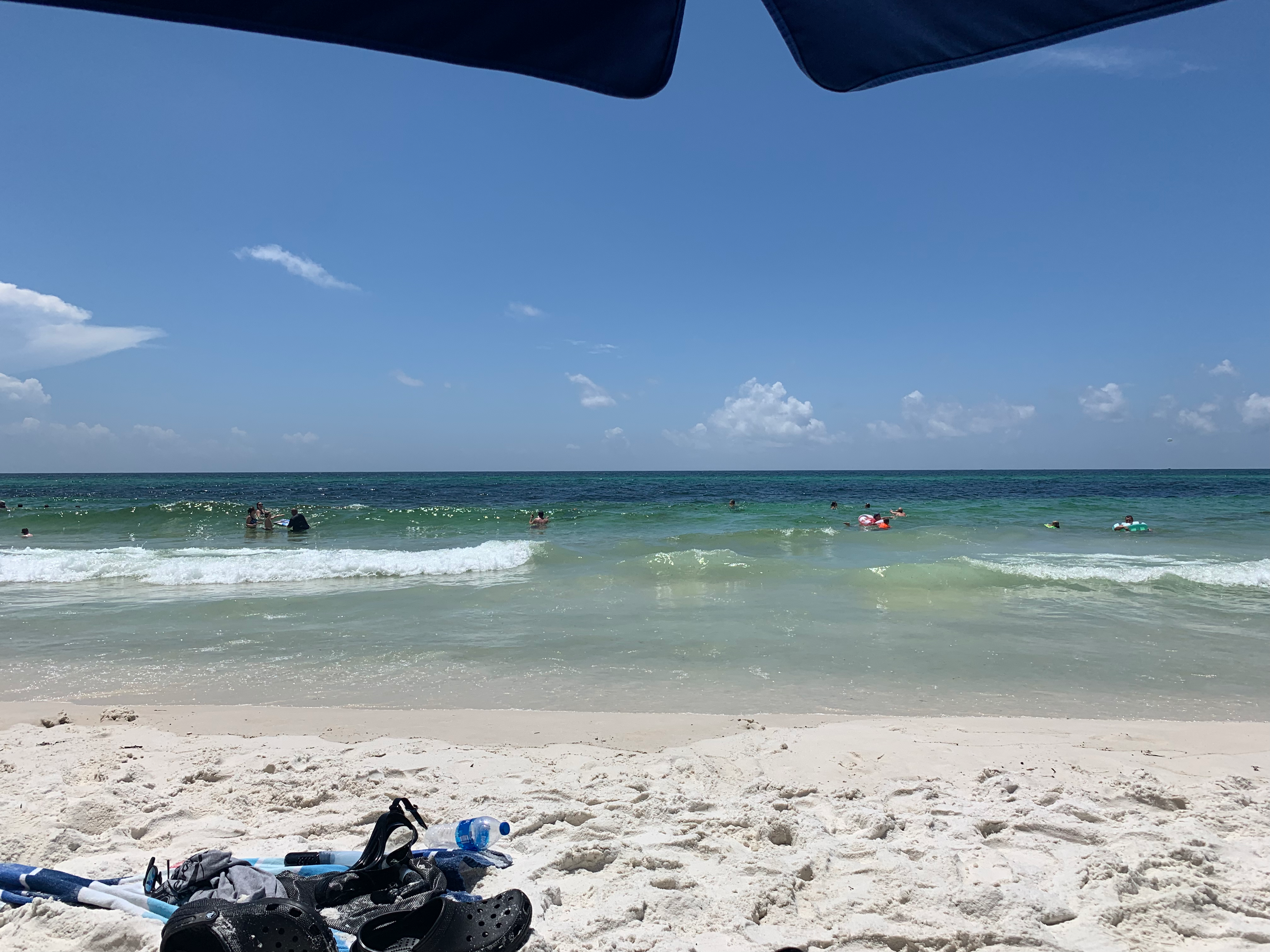
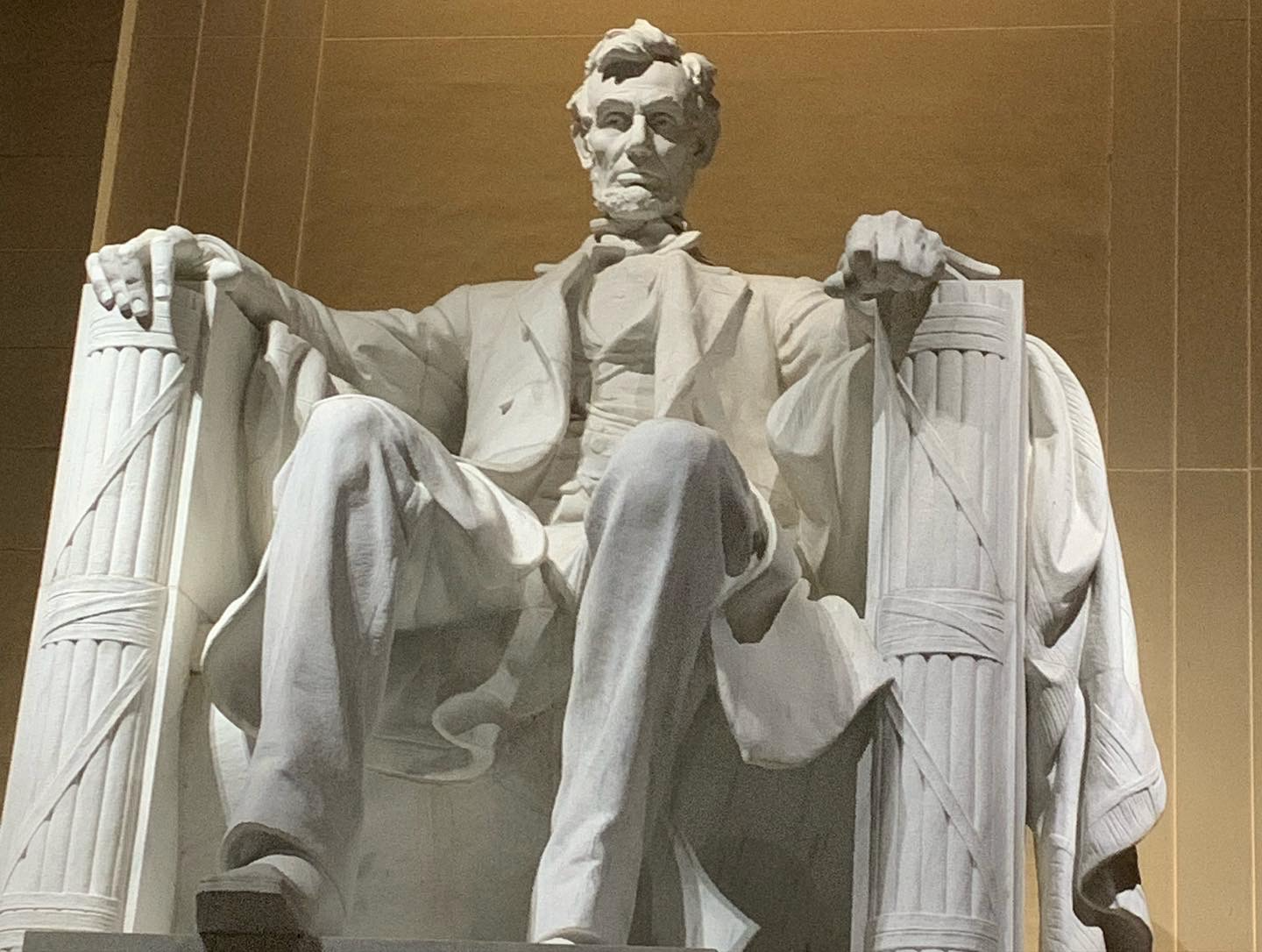


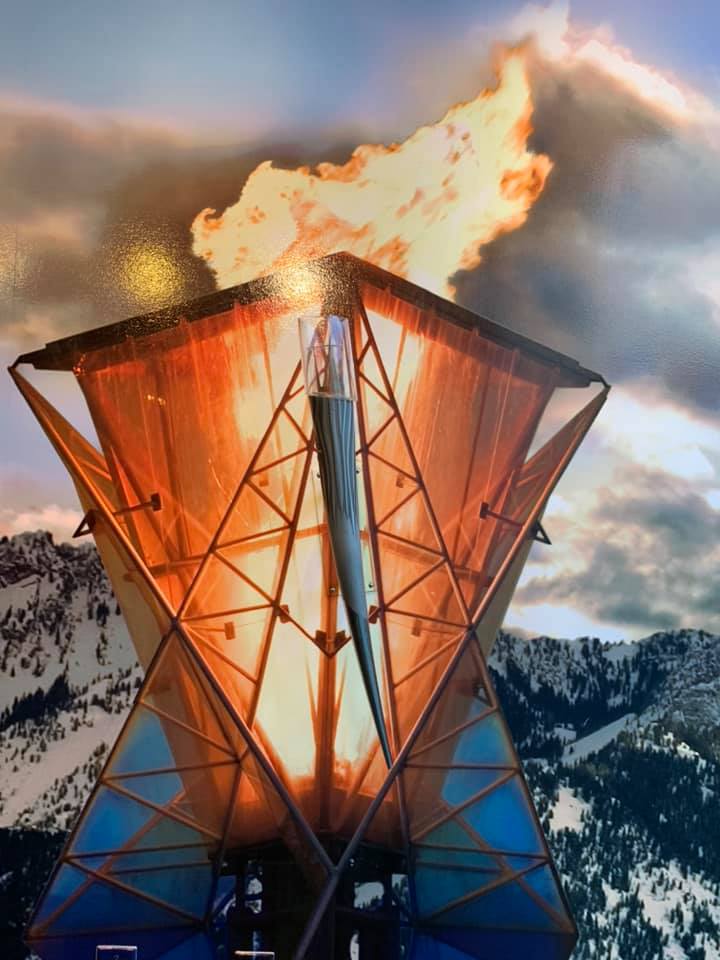
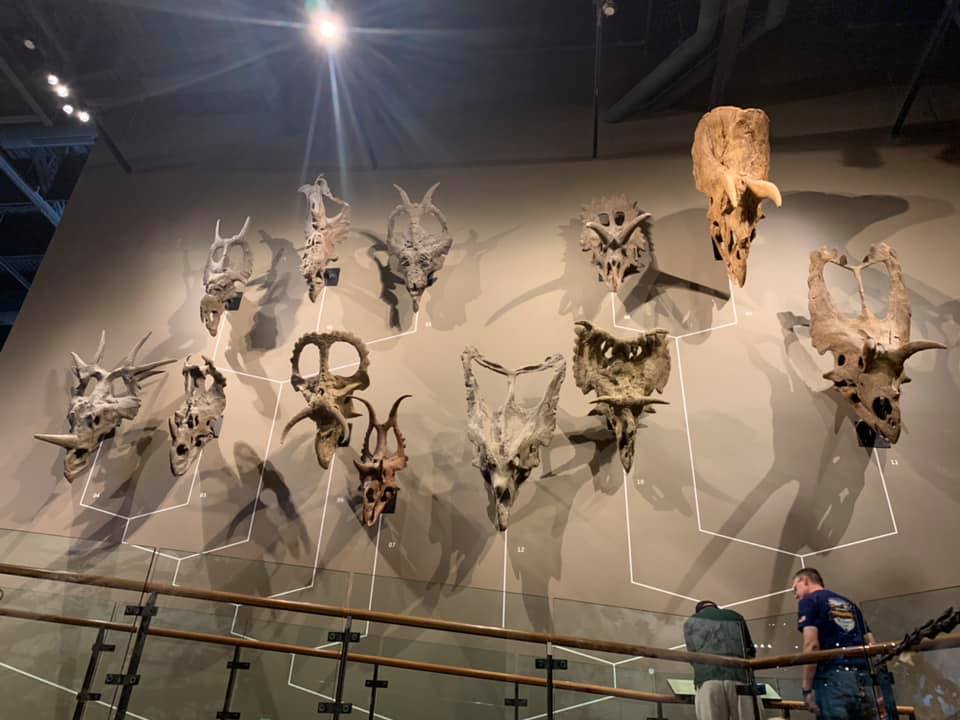
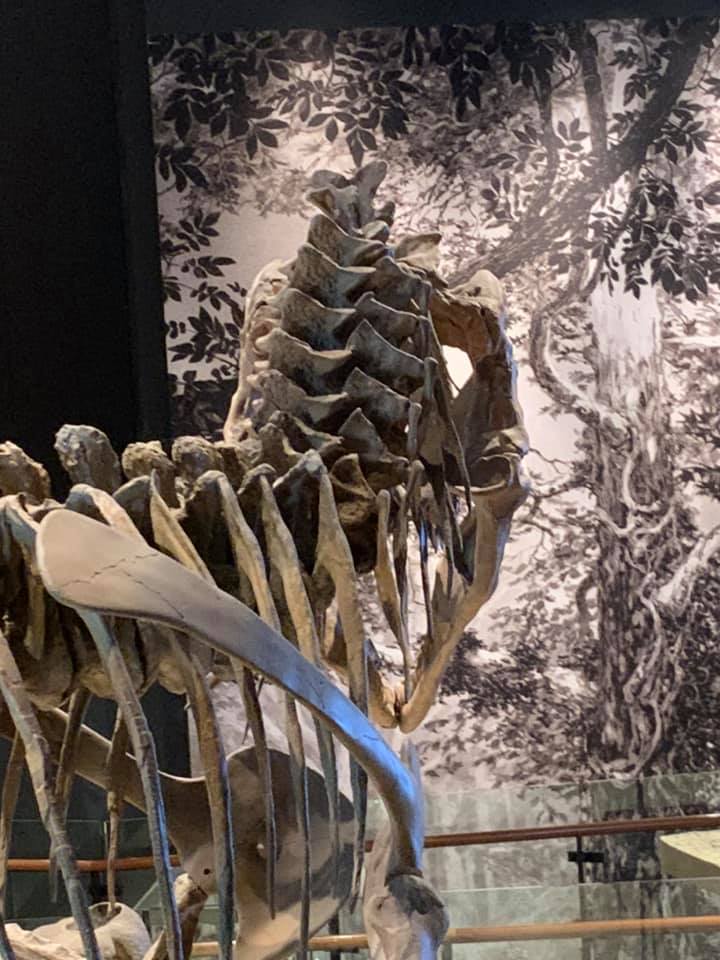
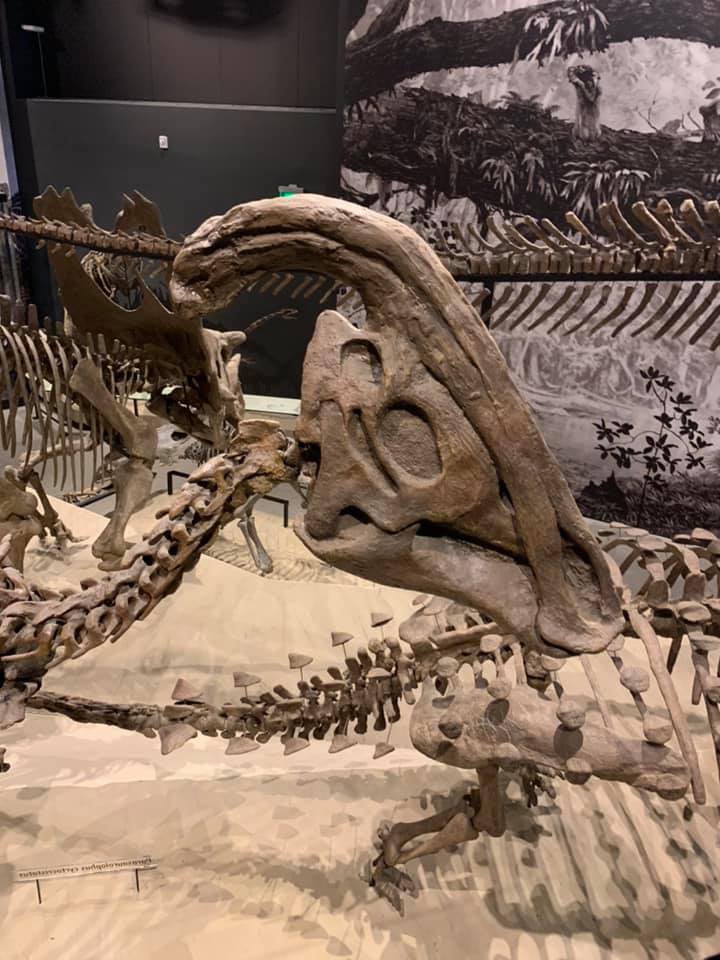
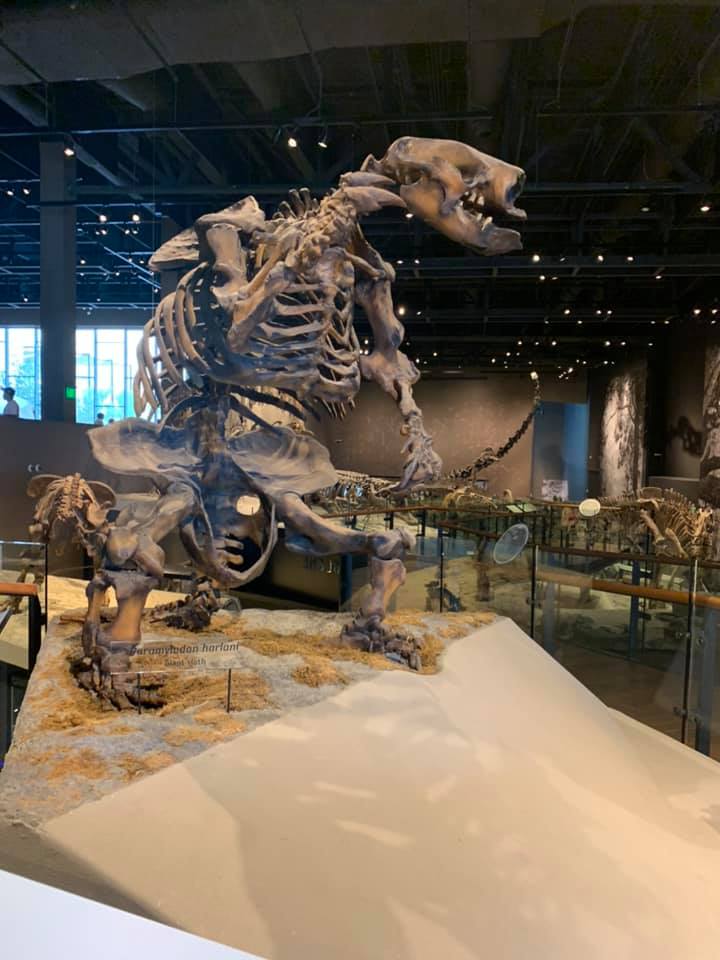
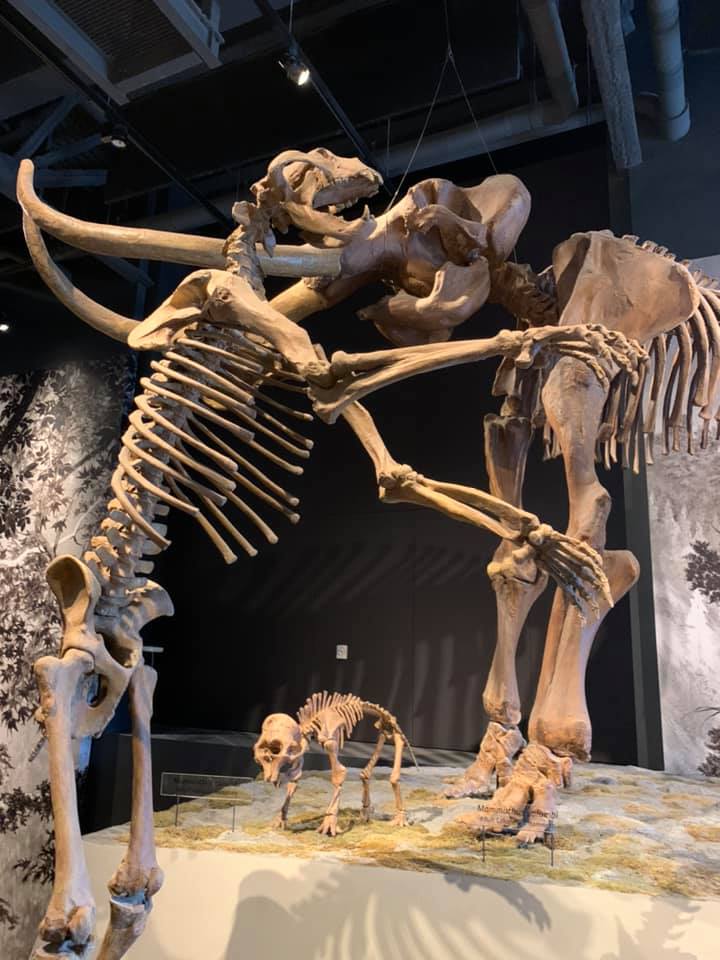
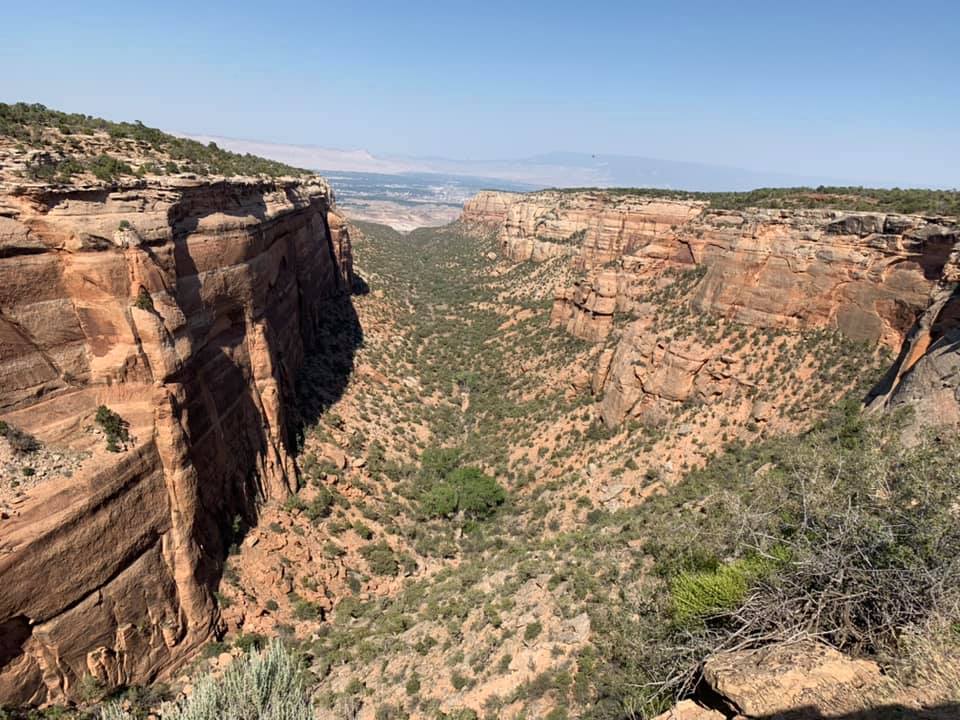
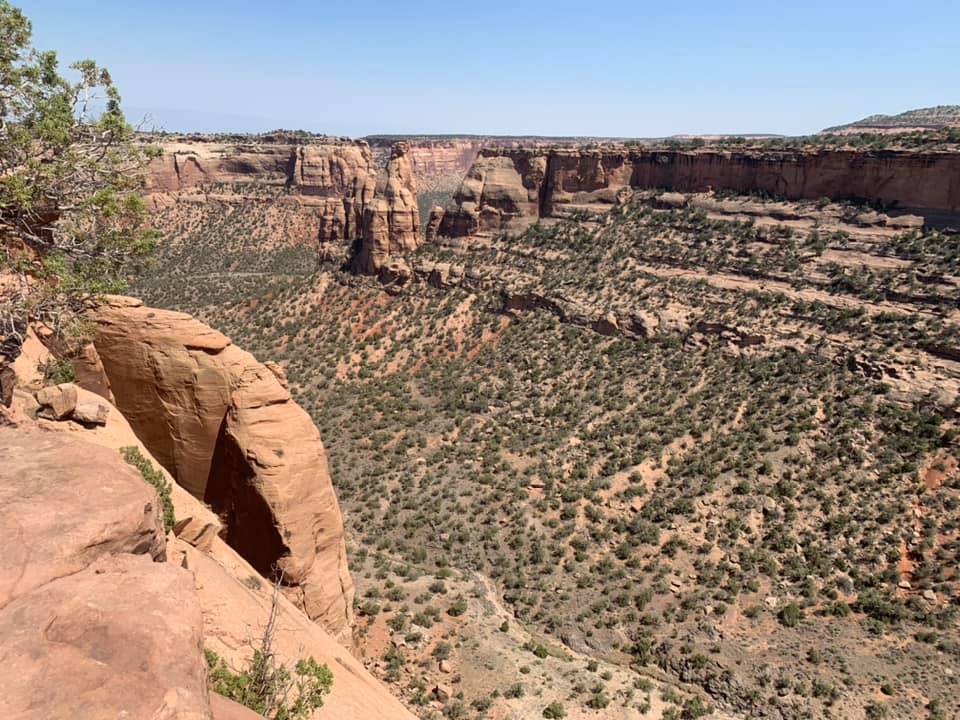
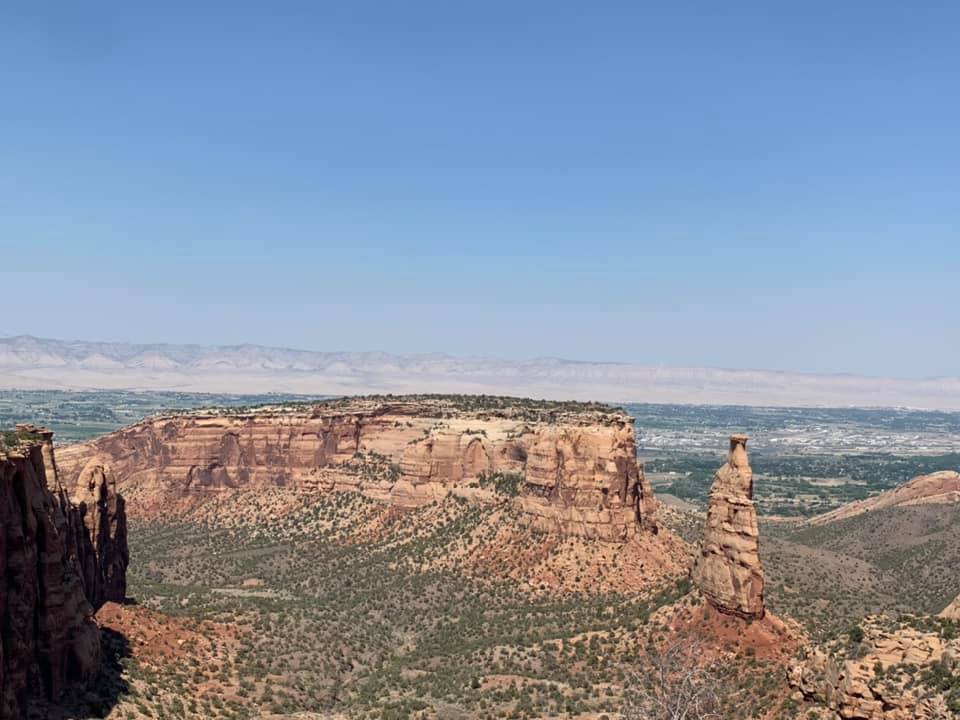
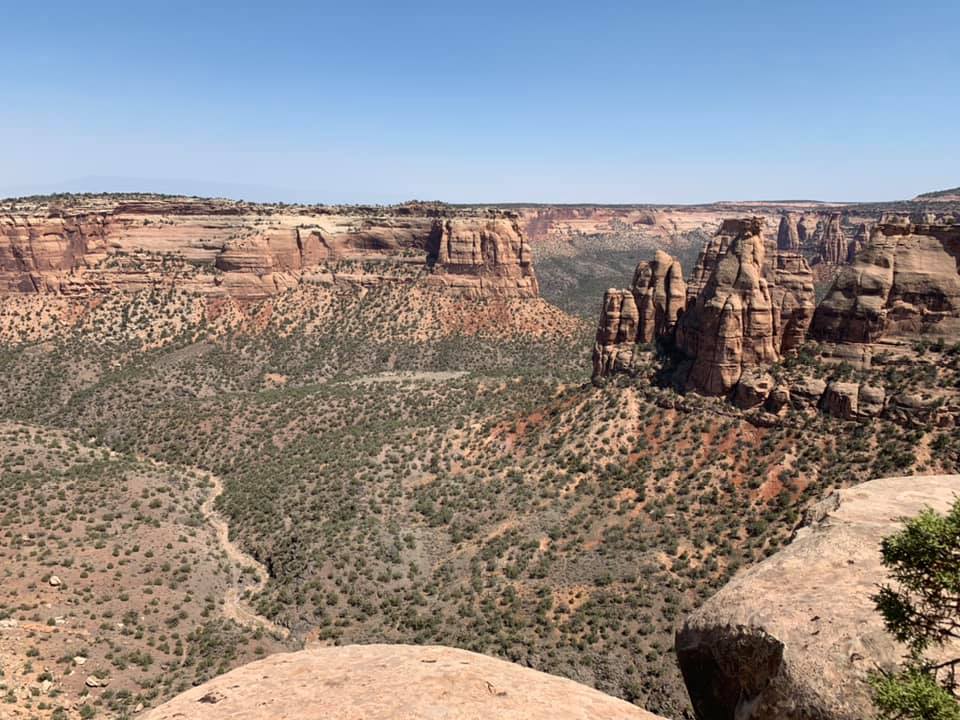
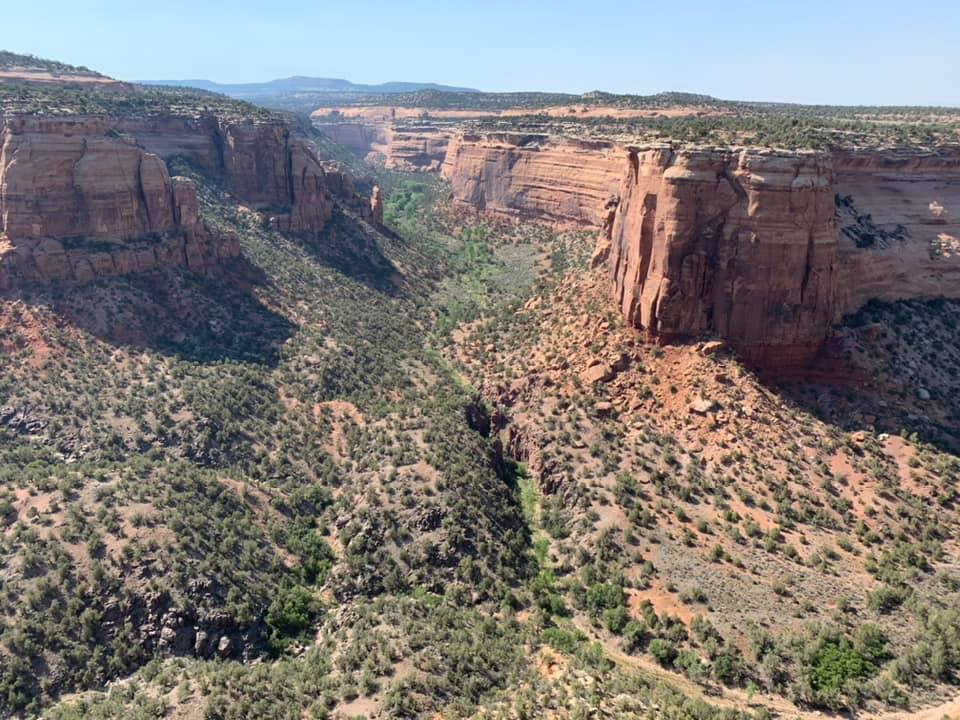
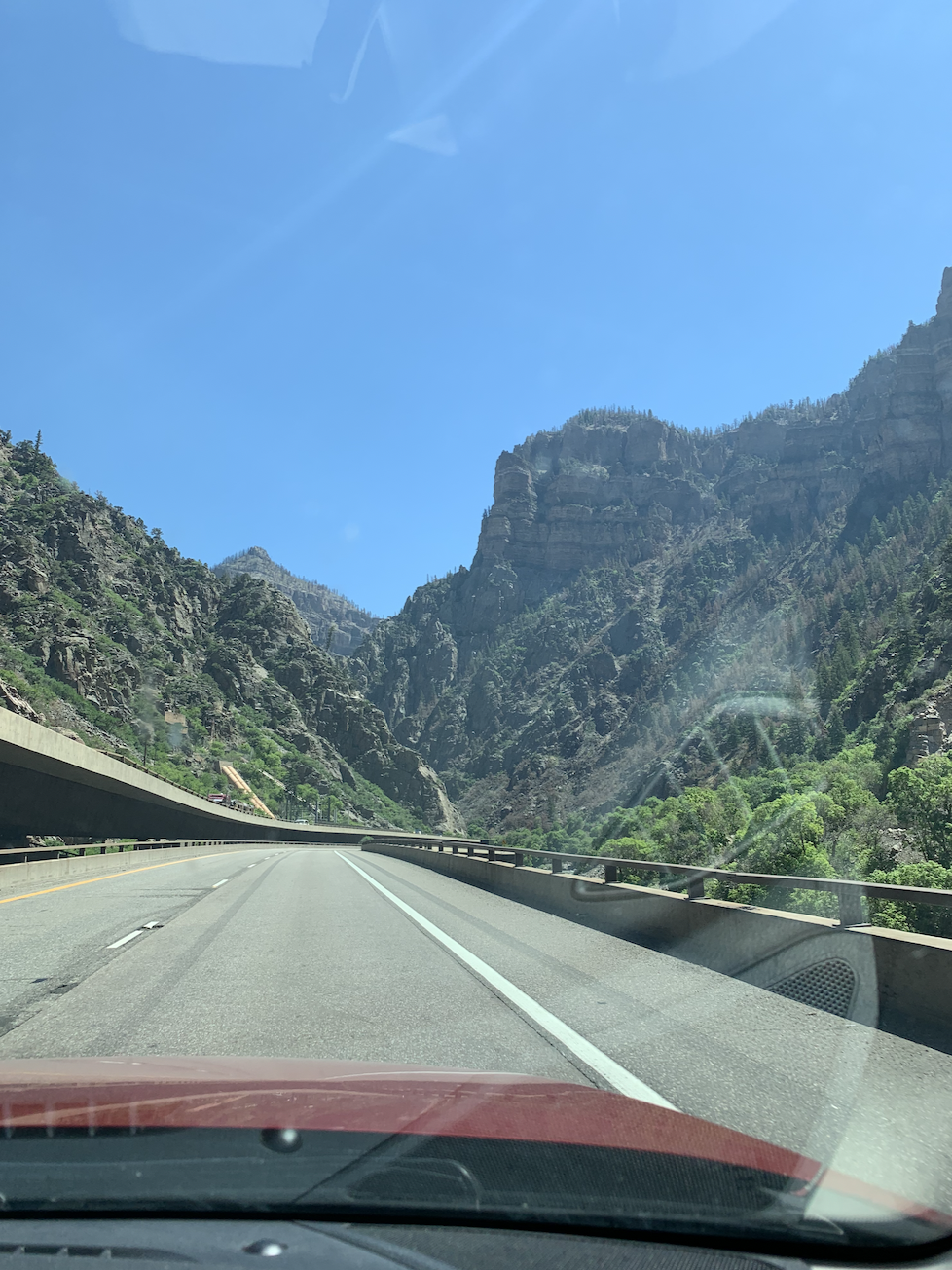
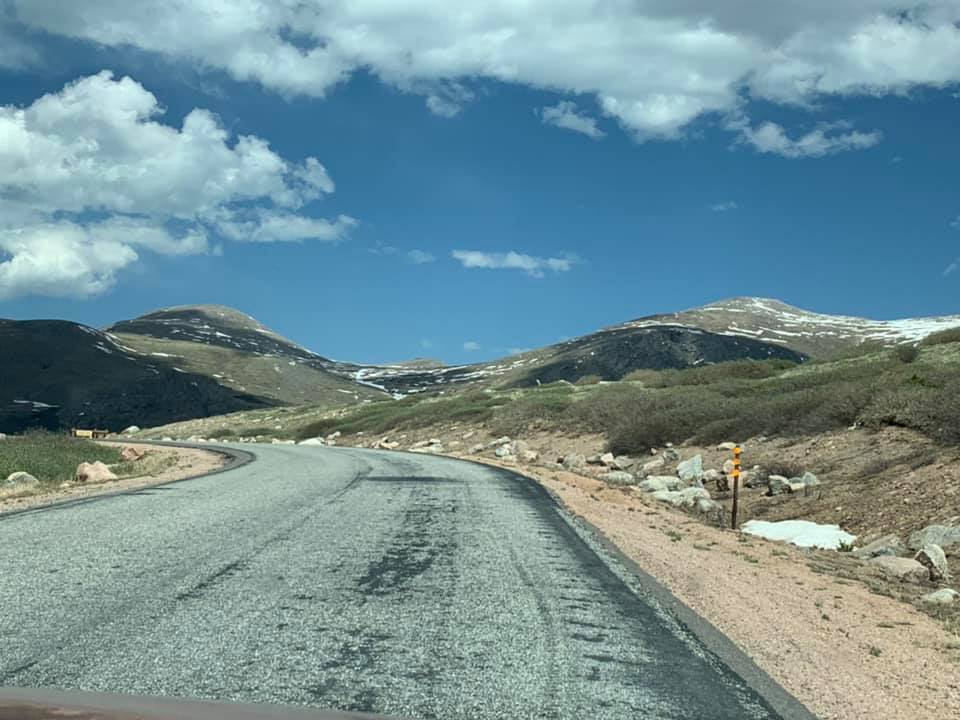
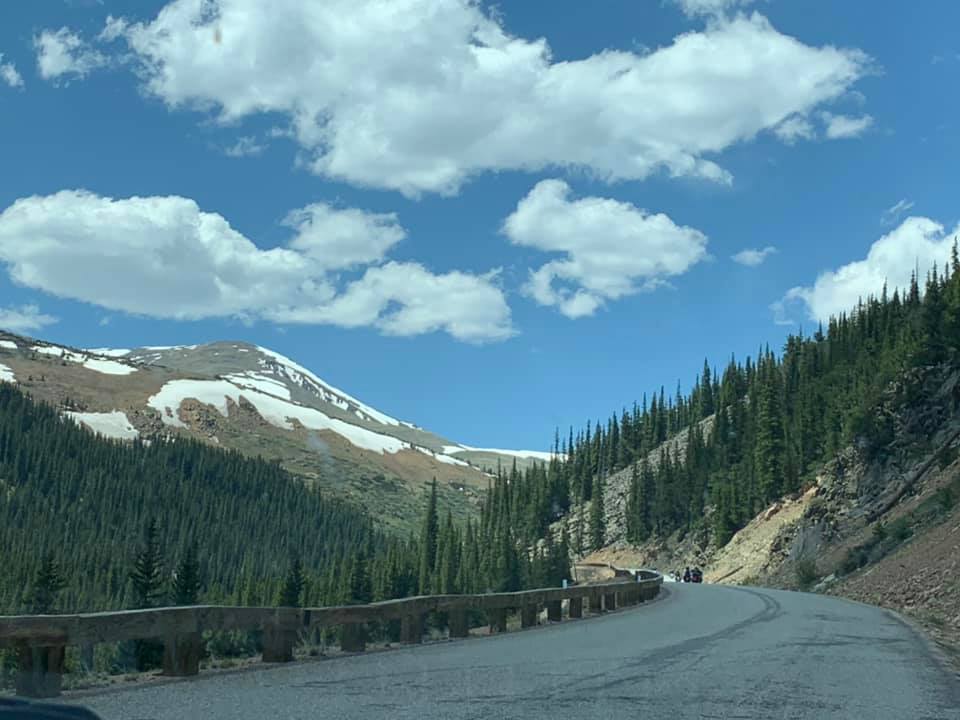
 Wednesday Blog by Seán Thomas Kane