This Monday, I went to see the new Christopher Nolan film about the life and work of J. Robert Oppenheimer, the leader of the team that invented the atomic bomb.
——
Click here to support the Wednesday Blog: https://www.patreon.com/sthosdkane
This Monday, I went to see the new Christopher Nolan film about the life and work of J. Robert Oppenheimer, the leader of the team that invented the atomic bomb.
I have grown up in the shadow of the twentieth century; I was born near the beginning of its last decade and to a degree always knew much of the broad strokes of the century’s history in the United States. The first decade of my life was a time of optimism and hope, the Cold War had just ended a year before I arrived, life seemed to be good, and to me everything was a wonder to behold. I knew the story of how we got to that point, the broad strokes of American history more broadly and of the history of my home city of Chicago more particularly from as far back as I can remember thinking of such things. I knew a world where the threat of nuclear war was a thing in the past, a nightmare that never came to pass now that the Soviet Union had fallen, and America & the rest of humanity had survived the long nightmare of the Cold War.
In many ways, Christopher Nolan’s new film Oppenheimer tells that story that I grew up knowing, of American determination to overcome seemingly insurmountable obstacles with a can-do attitude that won this country its independence, the good guys our Civil War, and a transcontinental union of states that promised liberty, democracy, and peace to all who lived within it. In the years since of course I’ve learned the hard truths of this country’s history, all the people whose lives, hopes, and dreams were thrown by the wayside in the name of our national progress. I still believe in the dream of that progress, ever the optimist, yet that optimism is tempered by the realism that life in this country has never been fair or equitable for all of us.
For all of the tropes of the great man that the film Oppenheimer plays with, it still tells a story of one man and his colleagues, his fellow theoreticians, engineers, and scientists working in a moment pushed along by the uniformed protectors of that progress to use their brilliance to craft something that could harness the pure energy of the Cosmos to be the ultimate weapon to end what was then the ultimate war imaginable.
Christopher Nolan is famous for his use of sound to tell his stories. Of all his films, the one that before Oppenheimer which touched me the most was Interstellar, which used the minimalist score composed by Hans Zimmer to describe what it might be like for humans to soar past our solar system and to far distant stars at sub-light speeds with little chance yet an enduring hope of returning home to the ones they loved ever again. I watched Interstellar on a transatlantic flight in January 2016 on the way back to London where I was then living from Chicago-O’Hare. That flight was entirely at night, thanks to the long winter nights in the Northern Hemisphere, and so for a few hours before we landed just before dawn at Heathrow, my entire world was Interstellar, which left my jet lagged mind far more confused than usual the rest of the day in my flat.
Zimmer’s score for Interstellar, in particular the great theme “No Time for Caution” pulses with the clockwork rhythm of time itself, a telling motif for a film all about the complexities of spacetime that a non-expert such as myself can hope to understand yet often fall short of grasping. In Oppenheimer there are rhythmic, chronic beats, there is a great pulse that underscores the most pivotal moments of the film, yet where Nolan uses sound itself, less so music, contributes to a compelling, and all-consuming story of the beginning of something with great promises of both wonders and terrors alike.
One of my new favorite music YouTubers talking about what makes Interstellar’s music so good.
I watched Oppenheimer in IMAX, though not on 70 mm film as no such cinemas within a 400 mile radius of Kansas City are showing it on anything but digital prints. Sitting where I was on the right-hand aisle, I perhaps got more of the sound from that side than the left, or the perfect sound that one would find in the center of the room; and in my humble opinion, most cinemas have their sound far too loud in general nowadays anyway. Yet I still felt awed by the way that the sound consumed everything else that I could feel, see, and yes hear when it fitted the story. This matched the great silences, not lead-ins to a horror jump scare, but meditations on the numinous echoes of something approaching the divine in the power wielded by that American Prometheus as Dr. Oppenheimer has been called.
In the Summer of 2016, a few months after that flight into the world of Interstellar, I traveled to Vienna, one of the most beautiful cities I’ve ever visited, and the first stop I made after arriving in the Innere Stadt was at the Haus der Musik, the second music museum I’d visited during my time in Europe after the Finnish Sibeliusmuseum in Turku. Yet unlike the Finns, this Viennese institution included an entire floor dedicated just to sound, the Klangsmuseum, where sound was visualized using colors on the walls. I began to connect ripples I’d seen all my life in water with the sounds I heard that day, which has proven useful. As I’ve gotten older, and my love for music to concentrate during the day has led me to use in-ear headphones more and more, my hearing has probably taken a slight dampening, leading to me not necessarily hearing less overall but instead noticing the vibrations of sound more and actually feeling sound in my body while I’m hearing it.
So, for me sound is not just something I experience with one sense, my hearing, but with my sense of touch as well. It’s one of the things that a live concert can give the listener that a recording can’t always provide. Whenever I hear a familiar opera in a theatre, I am usually struck a little unexpecting at the physical sound the timpani makes during the overture, and the way the sets creak and reflect sound back towards the singers and out to us the audience. I have learned how to judge without particular precision how far away a lightning strike is by listening for the gap before the thunderclap and the length that thunder echoes about the world around me as well as within me when it’s a particularly close one.
The world that Dr. Oppenheimer created felt removed for much of my life, for the man who said of himself “Now I am become Death, the destroyer of worlds” created a means of mass destruction which after 1945 has never been used in war. For much of my life, the threat of nuclear weapons seemed to be something consigned to a past when our ideologies kept us apart, spurred our distinct methods of innovation, and made enemies out of onetime uneasy allies. Yet today, as other powers rise to a level of strength and aggression that they could challenge the record of nuclear weapons, I’ve found myself worried about it in recent years for the first time in my life. I’ve found in my professional experience that it takes several attempts for a lesson to settle into the learner’s mind, it took me three tries to learn both Latin and Irish to really understand both languages and how they work. All this made Oppenheimer less a film about an event firmly in the past, something perfect to borrow a grammatical term for things that have happened and are in the past, but more something which tells an imperfect story of events with continuing resonances in the soundscape of our world today.
I may have grown up in the shadow of the twentieth century, yet I and my generation will have a great effect on the events of the twenty-first. I hope that we can learn the lessons of the century that came before us, and use Dr. Oppenheimer’s achievements not to create deterrents through the threat of mutually assured destruction but to establish human cooperation out of our mutual interest in surviving to live in a future to come.
This week, adding onto last week's release about my work as a translator, I'm discussing my view on how language ought to be personalized.
—
Click here to support the Wednesday Blog: https://www.patreon.com/sthosdkane
This week, adding onto last week’s release about my work as a translator, I’m discussing my view on how language ought to be personalized.
About this time every year I’ve been releasing a blog post about my interest in and continued study of the Irish language. In past years I’ve talked about how I came into this period of studying Irish knowing bits and pieces of it, but without the comfort of speaking or reading it regularly, and later how I appreciate the meaning of how the structure of Irish gets its ideas across. This year, I want to talk about how I feel my own personal use of the Irish language has taken on its own form, or idiolect, and why that’s the case.
A few weeks ago, I found several books on the regional variations in Irish through my university’s e-book catalog. It struck me that these linguists had found such common generalizations of Irish sounds when spoken, or rather attempted, by native English speakers who don’t have much experience with Irish itself. The frequent “ch” sound as in leathanach, or page, gets hardened from a ch to a k, while the slightly less frequent “dh” in dha, or two things, gets turned from a dh into a g. The best way I can describe this dh sound is it sounds to me like a French r that’s rolled further back in the throat.
I read these examples of Anglicizations of Irish phonetics and could see, or rather hear, where they were coming from. Yet in my own case I’ve always tended to either make these sounds as we’re taught in class, or to soften them, with the ch becoming a h and the dh joining the other sound spelled “dh” as something along the lines of a ya. I suppose the authors of that book were using native speakers of Hiberno-English as their test subjects, something that I am not. I speak American English, more specifically a blending of the western end of Inland Northern American English (aka Great Lakes English) and Midland American English. Plus, when it comes to other languages I’m most often exposed to, French and Spanish, I’ve found a good deal of the phonetics of those languages to be rather easy to adopt. So, my own idiolect, my own way of speaking Irish would be a tad different from the norm because I don’t speak the expected standard of English.
Going forward, I wonder if it would be more helpful, should I ever get the opportunity to teach Irish here in the United States, if I adopted some of these slightly easier to pronounce sounds and taught those, alongside the traditional Irish ones, would that change the ways my students spoke the language? It’s certainly possible, yet on the other hand like how I adapted Irish to fit the comforts of my own speech perhaps they would find ways to make the language their own as well.
At the end of the day, these ch and dh sounds are two of many that make Irish its own, that give it the spirit and the character that keeps it true to its origins and history. I for one love that I’ve figured out how to make these sounds, and how to speak this language to an intermediate level now as an adult. It means a lot to me to speak the language of so many of my ancestors, to keep that vehicle for thoughts, ideas, and stories alive.
Over the last three years I have consistently worked in the background of my dissertation research and all the other things I’m doing, including this blog, on translating one of my dissertation’s most important primary sources from Middle French into Modern English. That book, André Thevet’s Les Singularitez de la France Antarctique was initially published in 1557 and then translated into English only 11 years later in 1568 by a man named Thomas Hacket. However, since 1568 Hacket’s translation has been the only one that English-speaking readers wanting to explore Thevet’s Singularites have had available to them.
There are some partial translations out there, most notably Roger Schlesinger and Arthur Stabler’s 1986 book André Thevet’s North America: A Sixteenth-Century View, yet Hacket’s remains the only full translation into English. So, not only is the work I’ve been doing helpful for my own research, yet it is also groundbreaking in reopening that dusty door that leads into Thevet’s life and work for a great many English-speaking readers and scholars. It’s my hope that people find my translation of The Singularites of France Antarctique both useful and fascinating to read, as it offers a window into a worldview that in some cases makes sense while in others appears far out of place in our own world.
I have always had a fascination with and love for languages. As long as I can remember I’ve had memories, and many of those memories are of long hours engrossed in one language or another, like many of my relatives taking watches apart to see how they work I often do the same with language, learning how each grammar and mode of thinking developed in a common lineage and dialogue with its neighbors and relations. My own language studies began with Latin, which I first tried to learn 20 years ago as a 10 year old, though it wasn’t for another four years until I started high school at St. James Academy that I really began to understand what I was looking at. Around the same time, I also started studying Irish in the evenings at the Irish Center of Kansas City. Both languages are ones that I still study, and enjoy reading, speaking, and writing.
In the years since, I’ve learned French to a level that when I’m there I can go about my life in France without using English. Translating Thevet’s Singularites has really helped with that, as three years of intense reading of his Singularites really gave me a strong impression on how French, albeit in an older form, works. One of the big differences with my translation of the Singularites is that I took a lot of time to consult page-by-page several modern Portuguese translations of his work published in 1978 by Eugenio Amado and in 2018 by Estêvão Pinto. Thanks to their common Latin heritage, and to the general use of Spanish around me for much of my life, I find reading Portuguese and Spanish to not be very difficult at all.
There are languages out there which I can read, and to a degree write in, but cannot speak very well. Portuguese and Spanish fall into this group, as does Ancient and Modern Greek. I studied Classical and Koine Greek, two ancient variants, in high school and college at Rockhurst, yet I just don’t have the training or experience with either forms of Greek to be as comfortable or confident in Greek as I’d like. Eventually, I do want to spend the time to learn Ancient Greek as well as Biblical Hebrew, yes at some point I’d like to study the Bible in the way that I’ve studied the works of the humanists from the fifteenth and sixteenth centuries.
I’ve also here and there studied Bulgarian, Mandarin Chinese, Māori, and Egyptian Hieroglyphs. Again, all of these came out of pure curiosity on my part, and while I’m unable to speak the first three or properly read the latter, I do know a thing or two about each. Thanks to my work with Bulgarian, I can read the Cyrillic alphabet, and I do remember a few things, though I haven’t used any of it in quite a while. During the opening ceremony of the Beijing Winter Olympics last year, I ran through what I could remember from my Mandarin Chinese class in the Spring semester of 2017, and found that I still had the pronouns, some verbs, and a handful of nouns, which was more than I expected. In past years I’ve found I can make out text in various Polynesian languages because of the time I spent in 2014 and 2015 learning about how Māori works. Egyptian Hieroglyphs are another animal. I found my curiosity with Ancient Egypt reignited in the Summer of 2019, and pursued the task of learning how to read this most ancient of script with a passion. I can make out some characters, and I remember a fair bit about how the various forms of the Ancient Egyptian language fit in with its Coptic descendants.
Last week, I found myself reading about the Coptic language and its various dialects. I was most interested in how older pharaonic Egyptian place names and terms had survived the millennia into the Coptic that persists today in Egypt and among the Coptic diaspora. It struck me how because the Coptic alphabet is modeled after Greek, I could read most Coptic words, and where there were unfamiliar letters all I needed to do was look to the Demotic script used alongside the more formal Hieroglyphs, and I’d find the source of those letters. Each of these languages are vehicles for the perspective of a particular people at a particular time and place in the long human story. They allow us to get closer to understanding how other people see their own world, and their place in it.
Thevet often referred to his own people as “Christians” and less frequently as “our Europe.” He lived at a time when the older idea of Christendom––comprising of Syriac, Greek, and Latin churches that traced their roots back to classical antiquity––began to fade away with the triple influences of the collapse of the last vestiges of the Roman Empire in Constantinople, the Protestant Reformations, and the beginning of the First Age of Exploration. This Christendom steadily became known in the sixteenth century as Europe, and eventually with the establishment and flourishing of transoceanic European settler colonies as the West. Reading Thevet’s works, looking through his eyes, I now understand how he saw his own world at least a little better.
This week, the Wednesday Blog is coming out a day early in honor of our Independence Day.
—
Click here to support the Wednesday Blog: https://www.patreon.com/sthosdkane
I am certainly not an expert on the American Revolution, though I am a recipient of its fruits, my life one small result of its effects. The revolution echoed a time in our past when people of all classes in thirteen of the British colonies along the East Coast took up arms to defend what they saw as their inalienable rights against the forces of an overbearing imperial power. The union that came out of the revolutionary generation between those colonies, then independent states, and now federally united in one country is a testament to the marriage of idealism and realism in politics which proclaims that all of us can participate in our government, and moreover have a right and a duty to do so.
Our history has seen this country’s fortunes ebb and flow between prosperity and adversity. There are times when the United States has seen its great successes echo optimism and others when our internal divisions, sown from even before the Revolution, find division among us yet again. In the last twenty years we’ve seen ourselves into a deep abyss in which our factions and parties have driven us further apart from one another than we have seen in a good while. Bad news sells far better than good news. Many of our stories, both ancient and modern, have told of how fear is a quick and easy source of power and strength. Yet at the end that fear will only last for so long, and those who sought to use it will be left powerless and afraid.
I’m saddened this Fourth of July to look at our country and see just how forlorn our dreams have become amid the churning fury of all our rage. There are many victims in our country, victims whose lives over generations were torn apart by the greed, vice, and rage of others who sought power over them. I’m saddened to see how the symbols of all the hope and aspiration that this country represents are being used today by those who seek to exclude many of us from this country’s full bounty.
America truly is a country of near limitless possibility. We have so much potential as a country made up of an infinite diversity of people in infinite measures whose common roots only stretch back a few generations. Lin Manuel Miranda put it well in his musical Hamilton when he called this country a “great unfinished symphony” for there is so much about our culture that remains unwritten, in our future compared to other older societies. We certainly share a common heritage with those older societies, yet by our own geographic isolation and breadth we Americans have forged our own path divergent from that heritage.
I believe that so many of the problems we face today are born out of deep mistrust leading us to refuse to talk with one another, let alone listen to one another. Amid all the troubles of the present moment a bright future awaits us for my generation and Generation Z behind us are proving to be more active in our civic life, more willing to go out and vote, more concerned for the future than prior generations have as a whole seemed to be. There are proposals out there to reform society in order to fix many of the great problems that continue to plague us, reforms that probably could work, if only they were considered by those in power.So, on this Independence Day, I invite you to not only look to the past, to the Revolution and the Founding Fathers, but to look to the future as well, to all that we may yet accomplish in this young century.
The Header Image on this Week’s Post is of the RMS Carmania, which carried my great-grandfather to America in April 1914.
A few weeks ago, when I visited Mount Carmel Bluffs and the Motherhouse of the Sisters of Charity of the Blessed Virgin Mary (known more commonly as the BVMs) in Dubuque, Iowa I was struck at how even though it had been 8 years since my last visit and 14 years since the last time I was there for a family funeral, the memory of those relatives, my great-aunt Sr. Therese Kane in particular, still lived on in the sisters who came up to us throughout the day telling stories of times now long past and all the people they knew who lived in those moments. It had been so long since I’d seen Sr. Therese that it felt strange to still call her “Sister” as we all did in the Kane family when she lived.
That visit to Dubuque was in honor of Sister and my grandfather’s cousin, Sr. Mary Jo Keane, who died in April only a few weeks after having moved into her community’s retirement facility called Mount Carmel Bluffs. At her wake I noted to the attending sisters, relatives, and friends that she was one of the very last in my family who knew her parents’ generation who came to Chicago from County Mayo in the first half of the last century. Moreover, she was the very last person living who attended my great-grandfather Kane’s funeral in 1941, the last one who could tell some of the stories she heard as a child of life in Mayo at the end of centuries of colonial rule.
At Sister’s funeral lunch in 2009 I remember hearing Sr. Mary Jo, my grandfather, and their cousin Fr. Bill McNulty telling these stories about their parents, some of which I had never heard before then, of how hard it was for them to come to America, and of the trouble they faced in Ireland that led to their immigration. Some of these stories were still in the air at Sr. Mary Jo’s funeral lunch, told by my cousin Rosemary, yet as that first generation born in America leaves us so too their stories begin to fade away.
In the last week I slowly began to acknowledge the news of the lost submersible Titan which left St. John’s in Newfoundland for the wreck of the RMS Titanic and upon its descent beneath the surface was never seen again. At first, I acknowledged it was happening yet didn’t pay the story much heed, yet as my parents began to give it more attention and talk about it over dinner, I slowly started paying attention more. The Titan‘s mission to take tourists down to the remains of the Titanic 2.5 miles (3.8 km) beneath the surface of the North Atlantic is as much an act of nostalgia as any pilgrimage or historical tour can be. For $250,000 passengers were brought to the ocean floor to see the great ship as it rests slowly decaying away with the passage of time. I’ll admit the idea of seeing it for myself is intriguing, though even before the Titan was reported lost at sea, I doubt I’d ever take that opportunity to visit the Titanic.
One disaster resulted from fascination in another disaster. The sinking of the Titanic is a curious event for me because it is just on the horizon of what I consider recent events to my own life. Many of the last survivors––who themselves were old enough to remember the event––died around the time I was born, 80 years after the ship sank into the cold North Atlantic. What’s more, the generation of young immigrants in their 20s and 30s who left Ireland for America at the time of its sinking included my Kane great-grandparents who arrived in this country in 1914 and 1920 respectively. The Titanic followed the same course that my great-grandfather’s ship the RMS Carmania sailed between Cobh (then called Queenstown) and New York two years later in April 1914, and there is a point in my mind where it’s clear that had circumstances been different, had he sailed at age 20 instead of age 22, he very well could’ve been on the Titanic.
It’s always been strange to me to talk with people for whom recent memory is far shorter. When I started teaching at Binghamton University I expected my students, all New Yorkers, would have more vivid memories of 9/11 or perhaps had families who were directly involved, yet these students could tell me little about it, saying they were either too young or had not been born yet when the attacks took place 22 years ago. I think to my own early childhood, to my understanding of world events as the happened right before my birth in December 1992, and I at least have known a fair deal about events like the 1992 Presidential Election or the Fall of the Soviet Union in August 1991 for most of my life. I thank an insatiable curiosity and old Saturday Night Live re-runs for much of what I know about those events. Still, for most of my childhood memories of people who lived in the nineteenth century persisted, and so for me my great-grandfather Thomas Kane, who died 51 years before I was born, feels today closer than might be expected of someone who was born 100 years before me.
On Monday night this week I found myself diving deep down rabbit holes reading about Titanic survivors. It’s rather morbid to say that someone’s sole distinction is that they’re the last Titanic survivor of a certain demographic, that’s certainly something I’d have trouble being proud of. My reading led me to the story of an Englishwoman named Millvina Dean, who was a 9-week old infant at the time of the sinking, who was on her way to Kansas City with her parents to start a new life here on the prairies.
The Washington Postreported in 1997 on the completion of her long voyage when “85 years after setting out for Kansas City” she finally arrived here to meet cousins long separated by the waters of the Atlantic. The article in question mentioned where her uncle who the Dean family was planning on staying with lived, on Harrison Street, leading me to old city directories to see where on Harrison. The most likely address is at the corner of Harrison St. and Armour Blvd. on the eastern side of Midtown near where many of my maternal Donnelly relatives lived in the 1910s. Ms. Dean herself died in May 2009, I remember reading about her death when it happened; and on the centenary of the sinking of the Titanic, I noticed the date come and go. There was a story that weekend on CBS This Morning, yet for me the main emotion was a strange feeling of an event which had always been there in the edge of memory of the people I knew fading ever further into the distance, less a lived event that my relatives read about in the papers when it happened and more a historical event.
In time all our lives will reach that threshold, our memories recorded will survive as relics of people, places, and moments long past, and those that were only spoken or thought yet never written down will fade away. There is so much I wish I knew about the immigrant generation in my family, I’ve seen pictures, heard stories, been told I look like my great-grandfather Kane in a striking way, yet beyond those things I’ve never really known them. We are fortunate in our time to have so many audio and video recordings of our world, to an extent that our memories will hopefully survive long after we are all gone. The democratization of these technologies is a gift, it means that when future generations want to yearn for the early 21st century they will have the cornucopia of our recorded memories to relive. For older generations, we are left with visions of the past defined by movies, talking and silent alike, which the New York Times columnist Maureen Dowd wrote about this week, her own father almost boarded the Titanic on his Atlantic Crossing from Ireland. Like the French anthropologist Claude Lévi-Strauss seeking the most remote of peoples in Brazil, to get an idea of what first contact was like in 1500, we are left with less recognition of the spirit behind these historical events the further they move away from us, until in a tragic ending to our story they are ancient history to us.
This week, in honor of Bloomsday, how reading Joyce helped prepare me for my doctorate.
—
Click here to support the Wednesday Blog: https://www.patreon.com/sthosdkane
Last Friday was the annual commemoration of Bloomsday. 16 June 1904 was the date when all of the action in James Joyce’s 1922 episodic novel Ulysses takes place. Bloomsday is named for the main character, the sometimes hapless Leopold Bloom who fits perfectly into the wider scope of Irish main characters who may want things to go one way but often find their life taking ever weirder and sometimes darker turns. It reminds me of An Béal Bocht.
I’ll fully admit, I’ve never read Ulysses through the entire way before. I’ve seen the stage adaptation that they used to put on that the Irish Center of Kansas City a handful of times and have participated here and there in the day-long reading of Ulysses at the same cultural center, but to date I’ve never actually sat down and tried to read this work from cover to cover. For one thing, Ulysses evades expectations of literary formalities and standards. For another, a fair bit of the text really only makes sense when read aloud. And finally, because of several scenes it was banned here in the United States for a while, a nod to the puritan roots of our American culture.
So, on Friday I went over to Rainy Day Books, the finest local bookstore I’ve stepped foot in, located just across the border in Fairway, Kansas, to buy a copy of Ulysses for myself. My goal on Friday was to record an Instagram reel of me reading my favorite passage from the novel, a scene with an ever increasingly ridiculous list of foreign dignitaries attending the Ascot Gold Cup, which took place on the same day as the story at large. Yet, the eccentricity of Ulysses befuddled me enough that I ended up choosing a different passage from Part II’s Episode 12, “Cyclops” in which an ancient hero wearing a leather belt adorned with the portraits of a series of Irish heroes is described. Again, this series of Irish heroes steadily becomes more ridiculous as it goes on. As a matter of fact, I’ll read this passage for you now:
Joyce’s Ulysses makes far more sense when read aloud than if read silently, a style of reading that was pioneered in the 5th century CE by none other than St. Augustine of Hippo no less. It’s a far older style of literature that way, something which gives it an air of antiquity that I for one appreciate a great deal. This is also something that I find regular among my primary sources for my dissertation, books which were written for a very different audience who lived 450 years ago in France. In my case, I often find reading those aloud gives me the greatest clarity of what they’re actually trying to say. My translation of André Thevet’s 1557 book The Singularities of France Antarctique is one such book that is best read in full voice, and I have a feeling when I go through and edit my translation that I’ll have to soften some of the eccentricities of my initial interpretation of Thevet’s text, or at least that’s what I’ve been finding as I incorporate it into my dissertation.I find Joyce’s writing daunting, a proper challenge, yet still something that is immensely relatable to my own way of thinking about writing. I love his fluid use of adjectives to describe his characters, they bring even the most marginal of figures to life in a way that echoes down the last century to the present moment. Now, 119 years after Leopold Bloom’s eventful day in Dublin, and 101 years after Joyce’s first edition was published in one volume under the title of Ulysses, there’s a connection to that story which continues to live on for me.
This week I'm discussing what the word "classical" means to me in musical as well as historical and political terms.
—
Click here to support the Wednesday Blog: https://www.patreon.com/sthosdkane
During my high school years in Kansas City, I would often listen to either NPR or 1660 AM, the local classical music station, on my 30 minute drive south to St. James Academy. In those years I continued to embrace Classical Music, especially opera, as an art form that remains a particular passion of mine, even to the point of several ill-fated attempts at composing.
Still, it strikes me that our term classical has a rather complicated set of meanings and uses. In the musical sense, it’s used to refer to the most highbrow of our genres, the rare musical tradition that still sees performances of music composed within the last 400 years rather than the decade-based music that usually makes the Pop and Rock charts. Classical Music tends to embrace the trappings of old European and American elite while also providing a gateway for the rest of us to enter that refined space and hear the radiant melodies and harmonies that have been the soundtrack for generations.
I began to explore Classical Music in my middle school years, like many Americans my introduction to this wide scope of music was through jazz and Gershwin’s blending of the classical and jazz orchestras. I’ve been wanting to write a blog post all about my appreciation for Gershwin’s music, though my continuing uncertainty regarding copyright law has kept me from ever publishing it or trying to record a podcast version of it. From Gershwin I jumped backwards to Mozart, Beethoven, and the other big names before settling both in the Baroque world with Lully and in the realm of the Romantics with the likes of Johann Strauss II, Verdi, Wagner, and Mahler. Today, I still love the music from all of those composers, yet I’m also drawn to more recent works written by the likes of Debussy, film music that fits in the 20th Century late Romantic tradition embodied by Prokofiev and the German film composer Gottfried Huppertz, who longtime Wednesday Blog readers and listeners will remember is the composer of the score for Fritz Lang’s 1926 science fiction film Metropolis.
In the last couple of years, I’ve returned to my first unwitting introduction to classical music through the film music of the likes of John Williams and Elmer Bernstein and found myself drawn to electronic-classical compositions of Vangelis, which inspired the theme for the Wednesday Blog, and the choral classical-crossover albums of Christopher Tin and 2022’s The Moons Symphony written by Amanda Lee Falkenberg. I’ll gladly spend an afternoon listening to Jerry Goldsmith’s themes for the various Star Trek series and Mr. Williams’s compositions for Star Wars as much as I’ll choose to hear a Mozart piano concerto or Bernard Lallement’s Missa Gallica.
I’ve long thought that classical music saw its greatest innovation in the last century when its venue diversified from the concert hall alone to include the sweeping compositions that breathe life into films. Film music to me fits in the long tradition of ballet music. This comes out of the great silent film tradition of a century ago which reached its zenith in the late 1920s with epics like the original Ben-Hur and Phantom of the Opera films as well as with Metropolis and the other great German expressionist films. Sound film took some of the storytelling need off of the music as now the characters on screen could too be heard, yet the power of music in film was already clear. I relish the chance to hear the Kansas City Symphony perform a concert of film music, because even when it’s disassociated from the pictures that score was originally created to accompany that score often holds up on its own as a concert piece.
It is interesting then to consider that within the world of Classical Music the term “classical” generally only refers to a short span of musical composition within the long history of the wider “classical” genre. The Classical Period in music matches up with the Neo-Classical Period in art, architecture, and literature that ran from around 1750 to 1820. This period includes great composers like Gluck, Haydn, Mozart, Beethoven, and Schubert, all of whom worked in Vienna the beating heart of Europe’s music industry in this period. Yet by this definition the word classical implies a separation from the present, clear limits to its scale and span, and an air of antiquity.
In many other contexts the term classical refers to the far older Classical Antiquity of European History, the centuries during the height of Greek and later Roman civilization from around the 8th century BCE to the 5th century CE. When I write about the classics in my work, I am most often referring to people and ideas conceived during this 13-century long span of time. The classical fathers of Western philosophy––Socrates, Plato, and Aristotle––continue to be required reading in modern philosophy studies, while Aristotle and Pliny the Elder have a foundational role in my own discipline in the History of Natural History. Those two, Aristotle and Pliny, were central influences for the naturalists who defined the Americas in the sixteenth century, people like the focus of my dissertation André Thevet, as well as Gonzalo Fernández de Oviedo and José de Acosta who both wrote natural histories of the Spanish Americas, and Conrad Gessner & Carolus Clusius whose works were written about distant worlds from the comfort of their own homes back in Europe.
Classical is a tricky word because it can be interpreted as something which is removed from common life. It stands apart from popular things because of its high status. I’m often struck by the adoption of mannerisms and norms from the classical music world in popular music, there was one concert I attended nearly a decade ago where the musicians on stage went from dancing in circles playing their violins to suddenly, briskly, taking chairs and sitting in a neat orchestral row in them as though playing the part yet ever with a wink and a nod about it. There has been a general loosening of expectations and normalities in our culture, a sort of reaction to the manners of past generations. I tend to see our present moment as responding to the norms of the 1980s and 1990s, politically we are in a period of unstable transition from the Reagan Conservativism and Clinton centrism of the 80s and 90s, though that needle continues to move forward in time and it does feel now that American conservativism and liberalism now seems to be working in response to the policies of the Bush and Obama Administrations as our youngest generation of voters now were born after the Millennium. I’m happy to see more classical musicians on social media releasing short videos of their performances, rehearsals, and daily practice for all to see. That’s one way for the classical to remain vibrant in the present moment. Still, it worries me that today in 2023 classical and jazz tend to be the exception in popular performance compared to pop, rock, and country.
Concerns have been raised lately over the risk that the increasing artificial intelligence of our computers poses to humanity. I think the risk truly lies in who teaches these computers and what they are taught.
—
Click here to support the Wednesday Blog: https://www.patreon.com/sthosdkane
Concerns have been raised lately over the risk that the increasing artificial intelligence of our computers poses to humanity. I think the risk truly lies in who teaches these computers and what they are taught.
There have been stories of humans striving for divine heights for millennia, whether it be Icarus flying too high as the wax of his wings melted in the Sun’s rays, or Dr. Frankenstein creating life from the remains of the dead only to find his creation a terror because it couldn’t find a home in human society. In more recent generations stories of cyborgs like Darth Vader, the Borg, and the Cybermen have shown the horrors that augmenting the human body with mechanical parts could bring, especially if those augmentations overwhelm the human.
Many of these risks bear resemblance to the countless stories in our history of people who were raised to fear rather than to love. Darth Vader is merely a tragic figure in a mask lacking most of his limbs without all the anger, hate, and rage that boiled inside that suit sinking the man deep within the façade of Vader so that his climb out, his redemption took the greatest of effort and over two decades to achieve. A central fear over artificial intelligence is in how narrow-minded computers traditionally tend to be. They are machines that run on binary code, 0s and 1s, which allow every one of their decisions to be narrowed down to an up or down choice. There’s little nuance in that, nuance that distinguishes the human from the machine.
In the last few years our machines have gotten far better at interpretation and understanding hints of nuance. What started as humorous easter eggs embedded into virtual assistants created by Apple, Amazon, Google, and Microsoft like answers to riddles or references to the Hitchhiker’s Guide to the Galaxy have become the minute personalization of service provided by the newest generation of artificial intelligences, notably those developed by Microsoft’s Open AI, the creators of Chat GPT. I was unsurprised to see that Chat GPT could devise information for me regarding very particular subjects like André Thevet (1516–1590), the focus of my dissertation, or about the Ancient Order of Hibernians, the largest Irish Catholic fraternal order in the United States of which I am a member. Yet what struck me was the speed at which Chat GPT learned how to communicate and relay ideas. No longer was there a bias towards English and several other languages as has been the case with the other AI text generator Google Translate; Chat GPT was able to answer questions I asked it in Irish, and when I pressed on further in the Connacht dialect that I speak it replied in the same.
I am cautious about using artificial intelligence without due process or consideration of the ramifications. I want the things I write to be my own, without much bias from a computer beyond the fact that nearly everything I write today is typed on a computer rather than written by hand. This reminds me of how our very understanding of language is technologically influenced from the start. Without the technologies we and our ancestors developed over thousands of years our languages would exist orally, spoken and sung, heard, yet not read. The very word language comes from the Latin lingua, which has a very close sibling word dinguameaning tongue, not unlike how in English an older synonym for language is tongue itself. This distinction is pressing for me because much of the ancient history of my Irish Gaelic ancestors was only written down centuries after the fact, rendering those stories from the ancient epics prehistoric in the eyes of the historical method. I recognize their view: after all many of the characters in epics like the Táin Bó Cuailnge are thought to be personifications of ancient gods and goddesses, Queen Medb in particular. I still bristle a bit in frustration at hearing that, especially when an explanation I wrote of the anglicization of my family name from Ó Catháin to Kane was referred to as a “prehistory” by one fellow academic. Without the technology of the written word there is little precedent that we would find acceptable to distinguish one people’s history from another people waiving it off as mere prehistoric myth.
Still, artificial intelligence remains central to my life and work today from my ability to interface with the computer in my car vocally to the spell check that doesn’t care for the handful of Irish names in the previous paragraph telling me to rework those. Over the last three weeks readers of the Wednesday Blog will have seen a series of images that I created using Open AI’s image generator DALL-E 2. I once had more skill as a sketch artist, but have long since fallen out of practice, in part due to the discouragement of an art teacher years ago. So, rather than try to create all these images myself with paper, pencil, and watercolors I instead decided to see what an artificial intelligence could do. I asked DALL-E 2 to create images in the style of Claude Monet (1840–1926), the French impressionist painter whose works I deeply admire that depicted all of the main characters as well as several of the settings on Mars. Those images came to embody “Ghosts in the Wind” in a way that I’m quite pleased with.
The fears that many of the leaders in artificial intelligence have been speaking of lately reflect as much the potential that their creations hold as in the worry that our own long history poses. We have seen time and again as technologies are created and twisted for destructive purposes. This call for caution is very much warranted in that long lens, yet I think behind it is a concern that there are enough people or powers out there who would want to use artificial intelligence to further their own ends to the detriment of everyone else. Many of the beta canon explanations for the Borg lie in genetic experimentation with nanotechnology injected into organic tissue that overwhelms the organic and through a collective hive mind dreams up a desire to assimilate all other organic life. Whether we’re looking at that emerald tinted nightmare or at the vision of a computer that will only stop its program once it’s played all the way through, we need more safeguards against both the human inclination towards chaos that will continue to influence A.I., and against the resolute binary inclination towards order of the machines. As the moral of Fritz Lang’s 1927 film Metropolis––the first great science fiction film to ask about artificial intelligence––says: the mediator between the head and the hands must be the heart.
Season 2 Finale: This week, the conclusion of "Ghosts in the Wind" as Dr. Olivia Stephens and her team make a groundbreaking discovery on Mars.
—
Click here to support the "Wednesday Blog": https://www.patreon.com/sthosdkane
The Peregrine spent the two hour flight out to the source abuzz with active anticipation. The crew of four knew how much was riding on the results of this journey. Olivia kept her eyes on the monitor that showed their distance from the source, worried that everything she’d staked her career on was about to go up in a great cloud of dust like the carbon traces she’d chased all the way from Earth. “Still, something’s out there,” she kept thinking, “Something’s out there.”
“We’re approaching the source,” Anneli announced to the crew, “Prepare for landing.”
Every urge in her body wanted to make Olivia jump from her seat and go stand behind Anneli as they landed but she knew that wasn’t safe for any of them. Instead, she stayed in her place and buckled up. This time they boarded the Peregrine in their E.V. suits and as they approached the landing coordinates they merely needed to lock and seal their helmets. All four dutifully did so after one last lecture from Lieutenant Commander Quillen about how this mission would be closely watched by every allied space agency back on Earth and so needed to be conducted in the best manner possible. Olivia looked across the way at her fellow scientists Dr. Rosalind O’Brien the chemist and sometimes geologist, and Dr. Viola Penelope, M.D., whose medical knowledge was backed up by enough biology expertise to keep all the Elysians occupying the base alive and well enough to complete their missions and return home to Earth when their time came. Both were as determined as Olivia to see this mission through, whatever the outcome, and if possible, to prove conclusively that there had once been life on Mars.
Anneli and Jo sat at the front of the shuttle, the Finn at the helm and the American in the co-pilot’s seat monitoring the shuttle’s engines and structural integrity. The Martian weather had begun to change again, ever fickle as it was, to which end neither they nor the meteorologists in Elysium or back on Earth could determine yet. Jo earned a scolding stare from Quillen when she quipped that the forecast of “it could either be the biggest dust storm we’ve ever experienced or nothing at all,” was “just like our daily forecast in Kansas City.” Durante laughed at that, as did Viola, Jim, Anneli, and Olivia. The engineer’s shrugging can-do attitude was what Olivia appreciated most about her. Jo McGonigle knew weird things could happen at any moment that would throw a mission right off track, but she was ready for whatever nature, humanity, or technology threw at her.
Olivia soon felt the landing gears descend and make contact with the ground below. “Elysium, this is Peregrine, we have landed at the source of the dust storm. Proceeding to disembark and collect further samples,” Anneli said into her radio.
“Peregrine, this is Elysium, you are cleared to egress,” came the call back from base.
“Jim’s voice” Olivia thought.
Olivia and the team unbuckled themselves and stood from their seats, making their clumsy way to the rear of the shuttle where a ramp lowered that led them out to the surface. Olivia led the way as usual, after all she was in command of this mission. Anneli was the most qualified security officer, but she also was needed to fly the Peregrine back to base if anything happened to them. So, Olivia was the one who led them outside.
The first thing she noticed was the haze that glowed over the sunshine, blocking some of the light that would’ve been helpful in closely analyzing anything on the surface that matched the carbon traces they were looking for. Rosalind and Viola shortly followed Olivia down the ramp, while Jo and Anneli stayed aboard, monitoring the on-board sensors and keeping things ready for launch should any of that ever-considered trouble arise. Olivia pulled out her tablet and began following the carbon sensor forward and to the left, turning to pass the shuttle until the three scientists were visible to Anneli and Jo from the forward windows. They continued walking for another 200 meters until the sensor stopped calling for forward motion.
Olivia & Rosalind walking on the surface in Terra Cimmeria.
Olivia took in a deep breath and looked down at the rocks below her. There wasn’t too much sand that she was slowed down by it, it wasn’t as though she were walking on a beach, the sand covering her feet. Instead, she found just enough that she began to try to move some away as she took steps about. The sensor in her tablet clearly showed the carbon was right below her. She turned to Rosalind, “Do you have the brush?”
“Yes,” came the reply over their comms. Rosalind was carrying a bag of tools. She set it on the ground half-a-meter away from Olivia and pulled out a paleontologist’s brush, “Here it is, Olivia.”
“Thanks,” she replied, taking the brush in her gloved left hand, and letting herself kneel down onto the ground, a challenging task in her E.V. suit, yet something she’d practiced enough times in Houston, on the Moon, and here on Mars that it wasn’t as much of a challenge as she still expected it to be. Olivia began brushing around where the carbon sensor was beeping and began to see more of the dust move.
“Are you seeing anything?” Viola asked, leaning to get a better look.
“Careful, you’re blocking my light,” Olivia replied. Viola stepped away and around, so she wasn’t eclipsing the Sun.
“There’s something there,” Rosalind peered from the side opposite Viola, on her knees as well next to Olivia.
Olivia kept brushing away as the rockface began to reveal itself further and further. At first, she thought she saw the impression of some ancient water or water ice reveal itself with a spindly impression, but that later gave way to something more defined, for there wasn’t just one spindle but several that kept growing in number. “They’re connected together!” she shouted through the comms, “Look at this! There’s some sort of a central core to it!” She seemed to have uncovered the entirety of the rock’s surface and saw what looked like something, though frankly she wasn’t sure what she was seeing yet at all. “What would you call it, Viola?” Olivia asked.
“Well, it looks like a complex structure, um, those could be the branches or spines of a plant, or they could be the limbs of an animal coming off of its main body, like some sort of arthropod.”
The fossil
“What do you think, Rosalind?”
“I’ve never seen anything like it, I just don’t know what it could be.”
“Olivia, you better get your samples and pictures as quickly as you can, that haze is a dust storm after all. This whole place is going to be flooded soon,” Jo said over the comms from the Peregrine.
“How long do we have?” Olivia asked.
“An hour at best before it hits us, but that’s as long as the wind doesn’t pick up any further to the east.”
“Got it, we’ll get what we need and be out of here,” Olivia said. She turned to Rosalind and Viola, “Okay, can we get an etching of this?”
“Not in this wind,” Rosalind replied.
Olivia turned to the northeast and noticed the wind was picking the dust up more than it had just a minute before. If she couldn’t get an etching to study, then she’d have to get a few pictures. She pulled out her camera and began snapping, but no sooner had she extracted the device then the dust began to get into the camera and damage its gears. She knew she should’ve left this camera back in the lab, but it was a gift from her father, a hobbyist with old analog film cameras. She thought he’d be so proud to know the first photograph of an alien lifeform was taken with his camera. She put it back in its bag and turned to Rosalind, “Give me a shovel, we’re taking this fossil with us.”
“Understood, Doctor.” Rosalind turned back to the bag and grabbed the shovel out of it, unfolding it and letting some of the dust fall away from it as she did so. She handed the shovel to Olivia who set it on the ground next to her and began to brush away more dust to reveal any seams that might show her where this fossil finished, and the other rocks began. She just noticed a crack when Anneli’s voice sounded over the comm, “I need to start the engines if we’re going to keep them dust free enough to take off.”
“Understood, we’ll be back on board in just a minute,” Olivia said as she began to work at that crack with the shovel. The fossil began to slowly pry away from the other rocks and Olivia removed the shovel from one side turning it towards the far side of the fossil, trying her best to force it free. It began to move, but the cracks started to creep closer to the thing encased inside of it, too close for anyone’s liking. “Go back to the first side and see if you can get underneath it,” Rosalind hurriedly suggested. Olivia obliged, returning to the first side. She was able to get the lip of the shovel underneath the rock and slowly, gently, over what seemed to everyone involved on the ground and in the Peregrine to be well over an hour yet what was merely five minutes free the fossil from the rockface.
Olivia held the fossil up in the Martian air, gently placing her gloved hands beneath it. She turned to Viola, “place the bag around my hands.” Viola obliged with a carefully handled thick plastic bag, which was then placed into a rectangular box big enough for the fossil to fit into. “Okay, Peregrine, we’re coming back in,” Olivia said, as she held the fossil gently ahead of her, “like a pizza box” she thought, catching herself laughing.
“What’s so funny?” Viola asked walking beside her.
“We put the first evidence of Martian life into a glorified carry-out box,” Olivia replied. The three scientists stopped at the foot of the Peregrine‘s ramp and laughed, looking at each other.
Viola put her hand on Olivia’s arm and leaned in with her belly laugh before Rosalind shouted, “No, stop! You could damage it!”
Viola stood upright, looking down at the box in Olivia’s hands, “Sorry,” she said, looking up into Rosalind’s eyes, a big smile on her face, “Let’s get this thing back to base.”
They ascended the ramp, which quickly closed behind them. Olivia took her seat first, “Viola, could you buckle me up? I’m not putting this box down until we get back to the lab.”
“You’ve got it,” came the reply as Viola gently moved the seat belts around Olivia’s outstretched arms and buckled her in. She returned to her seat across the shuttle and sat, buckling herself next to Rosalind who was already ready to go. “Alright, Anneli, get us out of here!”
“Elysium, this is the Peregrine, we’re ready for launch and on our way back,” Anneli called out over the comms.
“Get in the air now, Captain, you’re almost out of time, that wind is really picking up out there!” Jim shouted over the comms.
Anneli engaged the vertical thrusters, and the Peregrine took flight, turning in a gentle but assertive arc and heading back towards Elysium.
“Can we outrun the storm?” Olivia asked.
“At our usual speed, no,” Jo said, “but I’ve got our fuel efficiency up to 105%, which should get us into the shuttle bay just in time before the storm hits Elysium.”
The Peregrine raced ahead, far and fast, making the return trip 30 minutes quicker than usual and landing into Shuttle Bay 1 with a minute to spare before the dust hit the bay doors that closed as soon as the Peregrine was clear.
Olivia waited for the pressurization light to turn green and she nodded to Viola whose hands went to the locks on her helmet, “No, I need to get this to the lab, just unbuckle me.” Olivia commanded, a rare order from her that Viola followed without question. Now released, Olivia ran out of the Peregrine, her crew following after her and towards the shuttle bay doors where Durante, Quillen, and Jim were waiting. “Move, move!” Olivia shouted, running straight for the doors which glided open upon sensing her presence. The command crew stood aside as she passed, still in her E.V. suit. “Follow me to the science lab!” she shouted as she turned left and headed around the circle quicker than she’d ever moved before in that suit. Some residents were in the corridor as she passed, quickly moving out of the way to let the sudden appearance of the suited astrobiologist through. She turned left at her lab’s door and ran in, setting the box down on the center table and stepping back, unlocking, and removing her helmet, gloves, and then reaching back to press the button that would unzip the rest of her suit. It fell to her feet revealing her jumpsuit as Durante, Quillen, Jim, Anneli, Jo, Viola, and Rosalind entered the room together, the Peregrine crew out of breath for their own E.V. suit run. “Lock the door behind you, Rosalind,” Olivia gave one more command, she hoped it’d be her last of the day. The lock sounded.
Olivia’s Lab
“Okay, Doctor, what’ve you got?” Durante asked.
“Something.”
“Something?” Quillen asked, eyebrow raised.
“Yeah, something,” Olivia said, taking the lid from the box and pulling the bag out of it, placing it gently on the desk. “I’m just not sure what that something is yet.”
Durante looked down at the fossil that lay on the desk, the soft light glowing from underneath the opaque surface gave the fossil a sort of sanitized feel, like something brought in from out in the open for the first time. “Do you have pictures of it where you found it?” he asked.
“Yes, I need to get them developed, but I got a few,” Olivia replied.
“Developed?” Jim asked.
“Yeah, I decided to take my Dad’s old camera out there with me, take some film pictures of it.”
“Did you use flash?” Jo asked.
“Of course not, that would’ve damaged the fossil.”
“So, it’s a fossil, then?” Quillen puzzled over it, a look of genuine curiosity crossing her face.
“It seems to be one. I need to do more work on it. Can we talk about this with command in the morning?” Olivia asked, “There will be silence from this lab to everyone from here until I’ve got your go-ahead.”
“You do your research, figure out what this is in two hours. I want an answer by 14:00. You got back fast enough we might be able to send something back to Earth about this once the storm passes,” Durante said, “Good luck!” he turned, taking one last look at the fossil, and heading out the door.
Quillen followed, but Jim held back for another moment staring down at the fossil before him. “You did it, Olivia, you found the proof!” he looked up at her, eyes watery, a glowing smile on his face.
“Thanks, Jim,” she was still shocked at the moment she found herself in and so couldn’t say more. He turned and left, letting the door close behind him.
Silence filled the room as Anneli, Jo, Rosalind, and Viola walked up to the table from each side and looked down at it. “Things were moving so fast down there on the surface it feels like we haven’t been introduced yet,” Viola said.
“Well, before it really introduces itself, we need to figure out what it is,” Rosalind replied.
“Any initial thoughts?” Olivia asked.
“Well, let’s get a digital photo of it and put that into a search engine, see what comes up,” Jo suggested.
Olivia turned to her fallen E.V. suit and pulled the tablet out of its pocket, aiming it above the fossil and snapping a photo of the rock below. “Running a search on the image now,” she announced. Several suggestions came up, but one seemed closest to this in the fossil record, “has anyone ever heard of Hallucigenia?” she asked.
“That’s a sort of worm from the Cambrian Period, right?”
“The what?” Jo asked.
“The Cambrian Period was the first period of the current eon in Earth’s geologic history. I think it started around 530 million years ago and ended 485 million years ago,” Olivia replied.
“Close, it started 538 million years ago,” Rosalind corrected.
“Thanks,” Olivia nodded to her colleague.
“So, you’re saying this fossil resembles that Hallucigenia that existed on Earth over 400 million years ago?” Viola asked.
“Yes, though I doubt it’s necessarily related, after all life on Earth had 4 billion years to evolve after planetary formation. Life on Mars would’ve already been well and truly extinct by then. The Martian Noachian Period corresponds to Earth’s Hadean and Archean Eons, which ended 1.9 billion years before the Cambrian Period began,” Rosalind explained.
“So, not only is this the first alien life ever discovered,” Olivia began, “it’s also the oldest lifeform ever discovered.”
“What have we done?” Viola asked.
“We’ve changed how we understand the very nature of life itself,” Anneli said, looking down at the fossil, “there are so many things we don’t know that could still be out there.”
“We need to go back out there, to search further, see what more we can find!” Olivia shot back, the excitement was all-consuming. She hurried over to her E.V. suit on the floor and took the camera case from its belt, pulling out her father’s old film camera from within and raising it to her eye, opening the shutter and snapping a photograph of the fossil.
Jo looked up at Olivia who stood there staring at the fossil, camera absent mindedly being fiddled with in her hands, “You got it, the photo. That could be the one on the front page of every newspaper, every television station, every news site on Earth.”
“I, I don’t know what to say, what to do,” Olivia stammered, she felt her confidence drain away, “could it really be possible? Is this really an alien?” She looked down at her feet, “what do we need to do to confirm that this fossil is real, Dr. O’Brien?”
“If we can date the carbon molecules then that’ll be a start, but radiocarbon dating has rarely been used on fossils that predate the end of the Cretaceous 66 million years ago, so I don’t know if it’d work.”
“What else?” Olivia asked sharply. When no answer came, she added, “We need options to prove that this is a genuine Martian fossil.”
Rosalind spoke up again, “Well, Martian geology is dated using impact crater density, so what we can say for sure is the area where we found this fossil, Terra Cimmeria, has more impact craters than other areas. There’ve been geological charts of Mars that show that area’s rocks are definitely Noachian in origin for almost eighty years now, so we have proof that the rocks in that area date to the Noachian.”
“I think we need to go back out there and find another fossil to confirm this theory.”
“That dust storm will have covered the entire source area in meters of debris by the time it’s safe to go back out there,” Viola sighed.
“Then we need to try radiometric dating, though we don’t have that equipment here at Elysium,” Rosalind offered with some reluctance.
“So, in order to prove it we need to contact people on the outside, but in order to get clearance to contact people on the outside we need definitive proof first,” Olivia said, tapping her left index finger to her lips, her thumb and middle fingers resting on her chin as she paced about the lab. “Rosalind, what can you do in your own lab here at Elysium?”
“I can try radiocarbon dating a small piece of the rock around the fossil, though I don’t know what we’ll find. Most carbon is hard to date after the lifeform has been deceased for around 60,000 years.”
“Do it, go get your tools and collect your sample. We need something more to show to command at 14:00.”
“I’ll go get that drill now,” Rosalind replied, turning, and running out the lab door. Her own lab was two doors down still in the Science Section, but she nevertheless felt a strong sense of urgency, after all everyone’s careers hung on this discovery. Collecting a dental drill that she used on rocks she returned to the fossil and began working, taking a small sliver of the rock edge off, and letting it fall into a vial that Olivia had provided. The extraction done she turned back to the corridor and returned to her lab, extracting the sample with a pair of tweezers, and putting it onto a petri dish, into which she released several drops of a liquid scintillator which combined with the carbon to convert it to benzene, drawing out the carbon-14 from the sample which she could then attempt to date.
After an hour Rosalind returned to Olivia’s lab. Jo was looking at some of Olivia’s equipment, no doubt trying to increase its efficiency and range, while Anneli sat by the door, unsure of how she, their pilot, could help. Rosalind and Olivia were sitting at her desk analyzing pictures and negatives they’d taken of the fossil intently. Rosalind announced her presence by clearing her throat, then saying “I’m sorry, the carbon is too old to date using radiocarbon dating.”
Olivia turned from the monitor and looked at the fossil from across the room, the weariness of the whole experience showed on her face. “Okay, if that’s what we have to do then let’s go to Command and tell them.” She rose and walked over to the door. “Rosalind, Viola, could you come with me?” The scientists obliged, Viola joined Olivia and Rosalind at the door. Olivia turned to Anneli and Jo, “The rest of you, please stay here with the fossil. Let no one but us into this room, understood?”
“Understood,” Anneli said, finding a purpose for her at this stage in the mission. She would guard the fossil, the only known evidence of life from another planet from the rest of Elysium Base until Olivia returned with a decision about its next steps.
Olivia walked with Rosalind and Viola into the Command Console and approached Quillen, “We have results we need to share with Commander Durante.”
“You’re thirty minutes early,” Quillen replied, looking Olivia in the eye. The two women were the same height and shared a common determination to see their missions through.
“It’s urgent, Commander,” Olivia said with all the strength her tired voice could muster.
Quillen turned, waving them forward, “This way.” She led the trio into Durante’s office where he sat reading something on his monitor that made him frown.
Durante looked up, leaning forward in anticipation, “Dr. Stephens, what have you found?”
“Commander, the fossil is too old to be accurately dated with the equipment that Dr. O’Brien has here at Elysium, but based on the geological dating of the surrounding area where it was found in Terra Cimmeria, we argue that it is in fact a Noachian fossil and is at least 3.7 billion years old.”
“That’s something at least then,” Durante replied, leaning back in his seat. “Dr. O’Brien, your radiocarbon dating didn’t work?”
“No, sir. Radiocarbon dating is less accurate if a sample is more than 60,000 years old. The time scale is off the charts, this fossil is too old to be dated using that method. However, radiometric dating will be more accurate, and is far more likely to confirm the age of the fossil. If it is Noachian then it could be contemporaneous with the earliest known life yet found on Earth, which dates to the Archean Eon, but those are microorganisms that are dwarfed by the complexity of this fossil.”
“So, Martian life was more evolved than Earth life?” Quillen asked.
“Is that genuine curiosity I’m hearing, Quillen?” Durante asked, looking up at where she stood to his right.
“Skeptical curiosity. Martian geological chronology isn’t as defined as Earth’s. We still just don’t know enough about how old the rocks on this planet are, thanks to this same problem that O’Brien is bringing up.”
“Then what do you want to do about this fossil, Dr. Stephens?”
“Sir, we need to take it back to Earth to have it radiometrically dated. It can stay in an allied government lab under tight security. We don’t have to announce why one of my team is going home early, whoever it is will have a sudden need to return––”
“They’re too ill to remain on Mars, perhaps?” Viola suggested.
“Yes, and they need to return for better medical care. The work on the fossil will take whoever goes back out of the public eye for long enough to recover before the news breaks back home.”
“Finally, you’re thinking less like a scientist and more like a strategist, Stephens,” Durante said, leaning further back in his chair and putting his hands behind his head. “Alright, it’s your fossil, so you’re the one going home. The Australians are going back in four months. I’ll alert Jack Collins, their mission commander, that you’re coming along for the ride.”
“Jo will be on that flight too,” Olivia said, smiling at the thought of getting a ride home with her friend from Opportunity III.
“Jo?” Durante asked, “Oh, yes McGonigle, the JPL Engineer. Yeah, that works out pretty nicely, doesn’t it.”
“It’s settled then,” Quillen said, “I’ll adjust your mission parameters and put you on the Endeavour heading home.”
“Thank you, Commander. This discovery means the world to me,” Olivia smiled meekly, her energy restored however slightly by the commander’s decision to let her return to Earth with the fossil.
“Go to your team, Doctor,” Durante said gently, “And give them a well-earned rest. In the meantime, we need to keep that fossil in your lab with limited access. I’ll have McGonigle install added security measures so only your team will have badge access to the lab. No one goes in or out without your approval, and that includes command staff.”
“Thank you, sir,” Olivia replied, nodding, and turning to walk out of the Command Console. Jim was standing at his station, waiting expectantly to hear what she had to say. She turned to him as she walked past and whispered, “I’m taking it home.”
~
That evening in their quarters Olivia lay back in her bunk while Viola, Rosalind, and Jo chatted away about everything they’d discovered. By this point word of the fossil had spread throughout the base, no secret was safe in a place so small as Elysium anyway, that Commander Durante had to make an announcement over the P.A. system to everyone there that Olivia’s lab would only be accessible to her team, and everyone else was to stay clear of it. He posted several security officers in four shifts outside her lab, day & night. She’d get used to the idea of having a guard standing outside. Still, she found herself drifting off to sleep, the stress and weariness of it all had worn her down more than usual. It really had been a long day. Yet one thing that Viola said from across the way in her bunk caught her attention just enough for her to open her eyes and listen, “Olivia’s going to be famous though, I mean we all are, but she’s the one who came all this way to look for it, who tracked it down, and who found it. The first alien life we’ve ever known! When she announces the results, she’ll be on TV, in books, the whole nine yards!”
“Maybe,” Olivia said, pulling back her bunk’s curtain just enough to see Viola’s face, “But at the end of the day I’m still just a scientist. I don’t care for the fame, hell, I don’t even think I want it. I came here to prove a theory, and so far, it’s still just a theory. Who knows whether we’ll be able to radiometrically date it. No one’s ever tried that on a Martian rock before.”
“It’s still a new frontier, Olivia. Something to be proud of.”
Olivia thought of her brother’s kids, going to school telling their friends that their aunt the astronaut had actually found an alien on Mars. Well, a dead alien, but an alien, nonetheless. She smiled, closed her eyes, and drifted off to a much earned sleep. The rocky ground of Terra Cimmeria filled her imagination, and she saw it begin to turn back in time, to fill with liquid water, until she herself was submerged beneath the waves. Then there before her the fossil broke free of the rock into which its remains had been encased billions of years before and began to swim about in the waters of this its prehistoric ocean home. She had found it, had traced a ghost on the wind and found its grave on this rocky planet six months from home.
This week, the story continues as Dr. Olivia Stephens settles down on Mars with her colleagues at Elysium Base, making new friends and continuing her search for evidence of past Martian life.
—
Click here to support the Wednesday Blog: https://www.patreon.com/sthosdkane
All images included in this story were produced using DALL-E 2, an Open AI service.
Act 3
“Hi Mom, Dad, Seb, I’m on Mars!” Olivia said to the camera in her new office in the science lab of Elysium Base. She had set herself up with a base computer as soon as she cleared the initial arrival medical scans and began recording a message home. By now the half an hour communication lag had passed and surely her parents as well as everyone else on Earth would’ve had the chance to see the images of their landing and to hear her own celebratory cry over the comms. Olivia blushed thinking about it, “Neil Armstrong had his ‘It’s one small step for man, one giant leap for mankind’ when he first set foot on the Moon almost 90 years ago, and now Dr. Olivia Stephens, Canada’s leading astrobiologist greets Mars with a chipper ‘I made it!'”
Olivia looked at the monitor and imagined her parents receiving the message, their faces glowing with joy. “Mars is quite a different place,” she continued, turning to look out the window of the science lab. The vista was filled with a clear sky and red soil as far as the eye could see. In the distance Elysium Mons rose majestically over the plains surrounding it. “You should see the big mountain here,” Olivia said to the monitor, “Elysium Mons is bigger than anything we’ve got on Earth by a long shot. There are something things about being out here that you just can’t believe until you’ve arrived, and seeing a 12,600 meter tall volcano is one of them. Imagine it on Earth, it would dwarf Mount Everest, and yet it’s just outside my office!”
The monitor chimed at her, her personal calendar reminding her of an appointment she had with the base commander. “I need to go,” she said, looking hurriedly at the screen, “I love you all so much! And I can’t wait to see you here on the screen soon. Bye!” she ended the recording and sent it out, beginning its half-hour journey through Space back to Earth, where it would be picked up and forwarded onto her parents in Toronto. She looked at the digital clock on her desk, it was just after noon there at Elysium Base and just after 13:30 back in Toronto. She hoped she wouldn’t confuse her own local EPT for Elysium Planitia Time with her native EST for Eastern Standard Time for however long she ended up staying there on Mars.
She was due in the command center for an arrival briefing, scheduled to start then at exactly noon local time, meaning she was late for her first assignment on Mars. “Great!” she thought, moving away from her desk and rushing to the lab door. Elysium Base was one of a newer generation of Martian bases that had such refinements as automatic sliding doors, like the ones all of its residents had known from science fiction, so it was a tad disconcerting for Olivia at first getting used to not having to open the door she was passing through, yet so far she hadn’t run into a less cooperative one. The corridor beyond the lab was angled slightly, connecting the disparate labs, offices, mess halls, and quarters throughout the modular base. Each piece of Elysium Base had been brought separately from Earth, and while most of it was 3-D printed there on site, several pieces retained older building styles that saw their components brought piece by piece from Earth and reassembled here on Mars. She figured that command wouldn’t be too difficult to find, after all it was in the center of Elysium, an octagonal structure that had been the first to appear on the Martian surface twenty years before. Still, she knew she had to walk a ways around the exterior ring corridor before she’d reach a tube that would take her in towards command.
Each module she passed had its own particular function. Beyond her own astrobiology lab were laboratories devoted to geology, climatology, chemistry, and stellar cartography. The science section was then on the outside of Elysium, along the northeastern quadrant of the base with imposing vistas of Elysium Mons out their windows. The location of Elysium Base was chosen in the late 2020s and early 2030s because it had been the landing site of the earlier InSight Rover that arrived on Mars on 26 November 2018 and thus NASA knew what to expect of the local geography and environment. Walking along the interior tube made of metal with glass windows she could see the other portions of the base proceed closer and closer together until they all converged on the panopticon that was the Command Console. At her arrival there were forty people living and working at Elysium Base, each from a four-person crew that had launched from Earth at some point in the last five years. With the arrival of Olivia’s Opportunity III the European crew of Metis Vwould be returning home. Olivia had read through the schedule of her first day on planet, this briefing would serve as the base commander’s welcome to Jim, Anneli, Jo, and her, and that evening’s dinner would mark the farewell of the Metis V crew, commanded by Isabella de Orellana, the Spanish astronaut who made history by being one of the first to take a crew in a Mars buggy around Elysium Mons and into Utopia Planitia looking for a way to easily mine into the surface to reach that region’s underground ice. Reaching the command module’s doors she stopped herself from striding through as she had every other doorway, this being the command module after all. Instead, she pressed the button next to the door that sounded a chime.
“Somebody’s ringing the bell,” she could hear an incredulous voice say from behind the door. It opened and an officer from the command staff stood there with an eyebrow raised at the situation. “Can I help you?”
“I’m Dr. Stephens, here for the command briefing,” Olivia said somewhat sheepishly, realizing she didn’t need to ask permission to enter.
“You’re the new scientist from Opportunity III, right?”
“Yes.”
“This way,” the officer turned and began walking back into the central operations ring, a series of stations surrounding a central table that had a digital map of Mars on it. Olivia caught the snickering glances of the command crew surrounding her, at their stations, all bemused at the idea that she thought she needed to ask permission to enter, something no one with scheduled permission ever did. “Your crew is meeting with Commander Durante in his office,” the officer gestured towards the glass-walled room on the far side of the command console, slightly elevated from the rest of the module. “You might want to chime here though,” she laughed, watching as Olivia cautiously approached the commander’s office where she could see Jim, Anneli, and Jo sitting with a gray haired man behind a desk. The commander looked up, caught Olivia’s eye, and gestured for her to enter.
“You must be Dr. Olivia Stephens!” he burst with joy, standing to greet her as she entered through the sliding doors, “Welcome to Elysium Base. Please, take a seat, we were just getting to know each other a little better.”
Commander Nick Durante
“Olivia,” Jim said, looking towards the new arrival as she took her seat next to Jo, “let me introduce Nick Durante of NASA, the current Commander of Elysium Base.”
“It’s a pleasure to meet you,” Olivia said, nodding as she sat, smiling with relief at the warm welcome.
“I heard about your work on microbes in water ice, promising stuff,” Commander Durante said taking his seat again while turned toward Olivia.
“My colleagues back on Earth think they might have a breakthrough in that area soon.”
“So now you’re moving from water ice to dust, you really think there might be something out there?” he asked, his hands raised, fingers forming a triangle. His index fingers rose to meet his upper lip.
“I’m not sure what I’ll find if anything, Commander, but I guarantee you I won’t give up until I’ve exhausted all of my options.”
“Well, you’ve got three years here to try every trick you can think of.” Durante turned from Olivia to Jim who sat furthest to the left, “Jim, you’ll be taking over for me next year once my mission is over, I’m not sure what I think about a Space Force man taking over from a sailor like me, but I want to have you here in the command console learning the ropes of running this base. Captain Korhonen will shadow my security chief, Lieutenant Barras, until his tour out here is up in a year.”
“Understood,” Anneli replied.
“I think I can do this job,” Jim looked around Durante’s office, “about as well as any Navy man can.”
Durante laughed, “Yeah. Now, as for our engineer, Ms. McGonigle, your mission is likely going to be shorter than anyone else’s from Opportunity III. You’re here to repair the Odyssey Rover, get it back up and running, perhaps even improve its efficiency, and that’s it. Any suggestions you have for the improvement of this base would also be welcome, just say the word. You’re the first rover engineer we’ve had up here, which is honestly surprising.”
Colonel Jim King
“I’m honored, Commander, to be here and ready to work,” Jo said, beaming with excitement.
“Have you worked in a spacesuit before?” Durante asked.
“I ran some drills back at JPL and at Johnson when we did our orientation,” Jo replied. Olivia remembered that orientation, Jo did a fair job maneuvering in her bulky spacesuit, though she still found it difficult to lay down on her back and crawl under the rover safely without someone standing there to help her down, let alone get back up again afterwards. “But it’ll be different here with the Martian gravity,” she continued confidently, “so I want to run a few more drills before I get to work to make sure I can fix the rover with minimal assistance.”
“Good on you,” Durante smiled, “but remember no one goes beyond the base’s walls alone. We don’t need any one person going missing out there without any trace of where they’ve gone. Their footprints could well disappear with that wind, as Dr. Stephens here knows all too well, so even if you alone fix Odyssey, you’ll have another engineer there with you to help.”
“Okay,” Jo replied feeling somewhat bruised, “but I need to review the person who’s going out with me, see if they can do the job.”
“You have a week to review the other engineers’ records, but you’re going out there next Friday,” Durante looked at his monitor, “the 28th.”
“Understood,” Jo affirmed, “I’ll be ready.”
“Alright, well, you have your missions to complete. Good luck, and please don’t hesitate to call if you need to. I’ll probably see you in the mess,” Durante ended the briefing, rising from his chair with the four sitting on the opposite side of his desk. They turned and filed out the sliding doors and into the command console’s central room again.
“Colonel King,” the officer who led Olivia into command approached the four, “I’m Lieutenant Commander Quillen, Commander Durante’s executive officer, if you’ll follow me, I’ll take you to your station. Same goes for you, Captain Korhonen.”
Lieutenant Commander Quillen
The two followed Quillen as she led them around the command console. Olivia noticed Anneli stopping at a station occupied by a dark-haired man wearing French and European flags on his shoulder, Lieutenant Barras, before Jim found his place at Quillen’s station at the center table overseeing the operations of the entire base.
“I think that just leaves us,” Jo said meekly, standing beside Olivia outside Durante’s office door. “Have you been to your quarters yet?”
“No, I went straight to my lab to send a message home.”
“Come on, I’ll show you where we’re sleeping,” Jo said, leading Olivia out a door adjacent to the one she entered through. They left command and walked down a corridor that extended at a 45 degree angle out from the one that led to the science section. “Crew quarters are located along the northern perimeter of the base. They’ve got us as neighbors. I think your bunk is below mine.”
“Sounds good,” Olivia replied, “I was worried I’d have to get to know an entirely new neighbor after six months.”
Jo laughed, “It’s interesting being here now. With all the changes coming to the Mars programs and Elysium Base I hear they’re considering offering crew quarters that are proper rooms, not just bunks along the corridor.”
Olivia knew about the bunks; it’d be like her time on the Moon. If there was anything she really missed while she was up there it was the privacy of her own room. She had that here, but in her lab rather than in her bunk, but at least she had a place where she could get away from everyone else. “So, with Jim & Anneli staying behind does this mean that Opportunity III‘s mission is over? After all, it got us here.”
Jo looked into Olivia’s eyes, “I guess so. We can still wear our Opportunity III patches on the station, but I’m going back with the Australians in six months, so I suppose we’re just Elysians now.”
“Elysians, what a fine field we’re in here. Do you think Achilles would approve?”
“I mean, what better place for a great warrior than on Mars?” Jo offered.
“It’s no garden of paradise, that’s for sure.”
They left the arterial corridor and entered the perimeter corridor, turning right and finding a series of bunks built into the walls of the passage, two levels on each side. The names of the occupants could be found by each bunk. “They were ready for us when we got here,” Jo said, leading Olivia two-thirds of the way down the corridor to a set of bunks that seemed less lived in than the others. “Here we are!”
Olivia looked at the bottom bunk and saw her name, “Olivia Stephens, Ph.D., C.S.A.” written on a sign next to it. Above it was Jo’s bunk, labeled “Josephine McGonigle, M.S., J.P.L.” She looked across the corridor for their neighbors and saw two unfamiliar names “Viola Penelope, M.D., N.A.S.A” in the top bunk and “Rosalind O’Brien, Ph.D., E.S.A.” in the lower bunk. Out of the top a voice suddenly called out, “Jo McGonigle, is that you?!”
Jo and Olivia turned to see a rosy face beaming with joy poking out from the drawn curtains of the bunk. “Viola!”
Viola rose from her bunk still in her pajamas and the two friends hugged.
“Viola, this is my friend Dr. Olivia Stephens from Toronto, we arrived together this morning on the Opportunity.”
“Dr. Stephens, I’ve heard so much about you,” Viola said, offering her new friend a hug.
“Please, call me Olivia,” was the surprised reply, “um, how do you two know each other?”
Dr. Viola Penelope, M.D.
Jo laughed, “We went to high school together back in Kansas City. I left home for engineering and Viola stayed home and went to med school.
“What kind of medicine do you practice?” Olivia asked.
“Back home I’m a family physician, but up here I’m the local doctor for every cut, scrape, or depressurization that I get called upon for.”
“Good for you, that’s quite the task,” Olivia was impressed at Viola’s duties.
“Thanks, what an opportunity though, to spend a few years out here on Mars!” Viola segued, “I hear you’re out here looking at that dust storm. Something about broken down fossilized carbon fragments?”
“That’s the theory, if I follow the dust storm back to its source, I’ll be able to find where the carbon came from and possibly then evidence of what it came from too.”
“Or who,” Viola added, letting the awkward silence spread between the three of them standing there in the corridor.
“I can’t guarantee anything,” Olivia replied cautiously. She didn’t want to get her hopes up, let alone anyone else’s hopes up either.
“Well, I’m excited no matter what you and your team find,” Viola replied, turning to look back at her bunk. “I’m needed in sickbay in 30 minutes, thought I’d get a nap in after lunch. It’s good to see you again Jo, I want to hear everything you have about home. Good to meet you, Olivia, let’s talk some more!” Viola turned, drew a pair of boots out of the shelf that pulled out from beneath her bunk, pulled them up over her feet and made her way along the corridor away from where Olivia & Jo had come toward sickbay.
“She’s nice,” Olivia said, smiling at Jo.
“One of my best friends back home,” Jo replied, “I love what I do but it’s people like Viola who I miss the most moving away to California.”
“Well, you’ve got six months to catch up with her.”
Jo pushed herself up into her bunk, its sterile features needed a bit of work to feel like home to her, which meant logging into the bunk’s monitor and pulling up Odyssey‘s designs. “She never stops working” Olivia thought, though that reminded her she needed to meet the rest of the science team.
“Thanks for showing me here, Jo,” Olivia began, “I should be getting back to my lab. I need to brief the science team on our mission.”
Jo waived from her bunk, “see you in the mess for dinner later, 18:00!”
Olivia turned and started down the curved corridor past the arterial tube that she’d taken to the bunks from command and towards the science section once again. Like Jo she was there to do a job, and while she didn’t want to get anyone’s hopes up, she was sure she’d find something out there amid all that dust.
~
Act 4
“So, you want to take a shuttle,” Quillen repeated back what Olivia had requested.
“Yes, it’ll be the easiest and safest way to follow the dust trail back to its source. It’s all the way out in Terra Cimmeria over 1,000 km away.”
“The shuttles are for security and medical uses only, your science team will need to follow it on land with a buggy,” Quillen’s air of authority sounded the end of discussion.
“Who do you want on this team again?” Durante asked.
“Dr. Penelope, Captain Korhonen, and Jo McGonigle.”
“A proper Ride of the Valkyries,” Jim used the same joke he’d made countless times on board the Opportunity.
“Why those three?” Quillen asked, clearly bemused at Olivia’s entire mission.
“Dr. Penelope is familiar with the DNA sequences of carbon-based life. I want her to test any samples we collect with her tablet. Captain Korhonen will be able to protect us should we encounter any trouble, and McGonigle is the best engineer we have here. Her mission is done, the Odyssey rover is not only back up and running but is operating at 150% of its efficiency standards set when it left Earth. She’ll be helpful in this buggy if we need to improvise a way to get back.”
“Good, you can have all three, if they agree to come along. Dr. Reed will take over for Dr. Penelope in her absence.”
“Thank you, Commander.”
“Get your team back in one piece, and if you have to camp out there overnight be sure to radio back where you are and how far you think you are from the source of that dust storm.”
“Understood, sir.”
“Good, then go get your team ready.”
Olivia left Durante’s office with a spring in her step. Instead of making her usual b-line out of the command console towards the science section she went around the bend to where Anneli stood at her station, “Captain, could I have a moment? she asked.
“What do you need, Doctor?”
“I’m looking for a security officer to come with me on my wild dust chase. Care to come along?”
Anneli smiled, and leaning in muttered, “Sounds more fun that standing around this console all day.”
“Glad to hear it. Meet me in my lab at 19:00 tonight.”
Olivia left command through the tube that led to the bunks, walking past all the rows as she’d done for the last month to where Jo and Viola sat together on their opposite bunks, Viola’s legs dangling down so that her heels rested against the top of Dr. O’Brien’s bunk while Jo sat cross-legged.
“So?!” Viola asked, “are we going?”
“Yes, and Anneli is coming along.”
“In a shuttle?” Jo asked, nigh begging.
“No, in a buggy, Lieutenant Commander Quillen wouldn’t part with one of the shuttles for scientific purposes.
“Even when those scientific purposes could be the discovery of past life on Mars!”
“Even then. They’re for medical and security purposes only.”
“Hang on a minute,” Viola said. She went to her monitor and called Durante.
The Commander’s face soon appeared in the screen. “How can I help you, Doctor?”
“Nick, are you serious about us not using a shuttle?”
“That’s Lieutenant Commander Quillen’s decision.”
“And not only does Lieutenant Commander Quillen report to you but I say this is a good medical use of a shuttle.”
“Explain.”
“It’s preventative medicine. Should one of us be injured or worse out there, we’ll have our pressurized shuttle to retreat to, and it’ll be far quicker for us to return to the base in any case.”
“Good point, Doctor. Alright, tell Dr. Stephens that you can have your shuttle. Take the Peregrine. You leave at 07:00 tomorrow.”
“Thanks, Nick. I owe you one.”
“And don’t you forget it!” he winked, ending the communication.
Viola turned from the monitor in Olivia’s science lab towards her colleagues, “Alright, let’s go see what’s out there.”
“Lead the way, Viola, you know this place better than I do,” Olivia replied, making her way to the door which slid open to let the four out into the corridor and onto their expedition.
They walked in the opposite direction from the bunks, toward the southern side of Elysium’s rounded outer corridors where the shuttle bays had been built. Pieces of Elysium had been constructed with 3-D printers, a more efficient method of construction that had been theorized as possible decades before but only really proven practical on Mars. After passing 115 degrees around the outer ring, they arrived at Shuttle Bay 1 where the Peregrine sat waiting. It had been on standby, one of the regulations of the Elysium Treaty that governed the operations of the base stipulated that at least one shuttlecraft needed to be ready to launch at any moment in case of accident or emergency.
The Peregrine
“Can I help you?” the officer in charge of the shuttle bay asked, approaching the crew as they entered through the sliding doors.
“We’re here to take the Peregrine out on a mission, per Commander Durante’s orders,” Viola announced.
“There are no launches scheduled,” the officer said, looking at his tablet to confirm.
“The commander just issued the orders a few minutes ago, perhaps you should check with him,” Anneli added, encouragingly yet forcefully.
The officer turned back to his monitor and called the Command Console. He stood there waiting for a few moments before Commander Durante’s face appeared on the screen.
“How can I help you, Lieutenant Zollmann?” the Commander asked.
“I have Captain Korhonen, Drs. Penelope & Stephens, and Ms. McGonigle here saying they have orders to take the Peregrine out on a mission. There’s nothing on the schedule, sir.”
“That’s right, Lieutenant, I just added it to the schedule. Last minute change of mission plan. Is the Peregrineready for launch?”
“Yes, sir. It’s on standby now.”
“Good, then tell the crew that they are cleared to board and launch,” Durante commanded.
“Understood, sir,” Zollmann said as the transmission ended. He turned to the crew waiting expectantly, “Well, it seems you are cleared for launch. Have a safe flight.”
“Thank you, Lieutenant,” Olivia said, as Anneli led Jo and Viola onboard. Olivia followed, taking one last look around the shuttle bay.
“Find your seats and strap in, this could be a bumpy ride,” Anneli said, taking the helm.
Olivia saw Jo and Viola were already seated and buckled, ready to go in the parallel seats that ran along the sides of the Peregrine facing each other. Olivia took a seat next to Jo facing Viola. “All ready to go whenever you are, Anneli,” she shouted up to the helm.
“Understood,” came the reply before Anneli activated the radio, “Shuttle Bay 1, this is the Peregrine, we are ready for launch.”
“Opening the bay doors,” came Zollmann’s voice over the radio.
A claxon sounded in the shuttle bay as it depressurized with the opening of the overhead shuttle bay doors. This was one of the first such shuttle bays built for vertical take-off and landing, and likely the way things would go in the future.
Anneli slowly began to lift the Peregrine off the bay floor and let it rise out into the Martian air where the wind sounded on the bulkheads surrounding the crew. She then engaged the forward engines and set off, looping around Elysium Base once to head in a southwesterly direction while Olivia checked her own data which was providing coordinate information to the helm directly for navigation controls.
They flew further from Elysium than they could have gone in a day by buggy, following the ghostly trail of a dust storm that blew across Elysium Planitia a full Earth year ago. After two hours of flight Olivia noticed changes in the chemical signatures the Peregrine’s sensors were reading. “I think we found it,” she said, waking up Viola who had dozed off and rousing Jo from her own study of the shuttle’s schematics. “Carbon traces in the rocks ahead. 550 km further to the south. Do you see that on your readings, Anneli?”
The Finn looked down at the monitor built into the helm controls, “I see it, Doctor. That looks promising, I’ll begin descent now, we can get a closer look.”
Olivia felt the shuttle begin to turn its nose downward, toward the red hue of the Martian surface again. Flying over it at 5,000 feet, just high enough to get a good view of the surface yet low enough to be able to track the chemical traces with her sensors, Olivia was reminded of her childhood flights in her cousin’s propeller plane over the Golden Horseshoe and as far north as Lake Simcoe. There, unlike the higher altitudes flown by commercial jets, there was far more influence from the weather to be felt.
“How close can you land to the traces?” Olivia asked.
“I can get us right on top of them, if you’d like,” Anneli said, aligning the craft downward as she spoke.
“100 meters will do nicely,” Olivia said, “Once we land, everyone needs to suit up, E.V. suits out there, got it?”
“Understood,” Viola replied.
“Can do,” was Jo’s answer.
“Yes,” said Anneli.
“Good. Anneli, what’s our ETA?”
Olivia felt the craft gently touch down on the ground.
“Now,” came the reply.
Olivia looked around; Viola was quieting a subtle laugh. “Alright, let’s suit up,” Olivia commanded.
The four of them moved quickly to the lockers in the back of the shuttle, and donned their extra vehicular suits that would protect them from any solar radiation and the lack of oxygen outside, sealing their helmets which activated the internal oxygen flow, and after ten minutes they were descending the ramp from the shuttle and walked out under the Martian sunshine. It was colder than Olivia expected, colder than it looked. Still, she didn’t waste long but began walking forward southeast following the traces in the sand as her scanner kept beeping louder and with ever more frequency until at last it transformed into a steady pitch.
Olivia looked down as best she could in her suit, which had a big collar keeping many of her life-support systems functioning. There were impressions in the rock at her feet, she held her tablet up to them and had the sensors read the carbon molecules in the rock. “Carbon,” she whispered.
~
“All the evidence points to it being the remains of a fossilized carbon-based life form!” Olivia shouted, exasperated at what had now become a two hour debriefing upon her return.
“You don’t need to raise your voice with us, Dr. Stephens,” Durante said, coolly.
Jim and Lieutenant Commander Quillen sat on either side of the base commander as he questioned the returning science team leader. She had looked to Jim, the one of these three she’d known the longest, for some sign of compassion but he seemed shocked into silence by what she’d said she’d found in the rocks near the origin of the dust storm. Evidence of past Martian life.
“Any claim like this needs verification, you can’t just go telling people outside of this base what you found out there without peer review,” Quillen chided sternly, “and yet that’s exactly what you did as soon as the Peregrine returned. Do you realize what headlines are running rampant back on Earth right now?! ‘Little Green Men found in Martian dust!’It’s the last thing we need.”
“Commander,” Durante said, quieting his executive officer. “She’s right, Doctor. You should have waited to have a second expert confirm your findings before sending any transmission home about them.”
Olivia was incensed, “but how am I going to keep funding my mission up here, how am I going to convince the allied space agencies to send another astrobiologist out here if I’m not able to tell them what I’ve found? All I did was send a message back to my lab in Toronto telling them that I’d made progress.”
“You shouldn’t have said anything,” Quillen’s words were icy cold.
Olivia felt betrayed. Only a few hours had passed since Durante had gladly granted them access to the Peregrine rather than follow Quillen’s suggestion that they take a buggy all the way out there. It had likely saved their lives when they went further out by air than they could’ve returned by land before nightfall. She turned to Jim, “Colonel, Jim, what do you think?”
Jim raised his eyes towards Olivia, she saw tears in them, “I’m sorry, Olivia, but this time they’re right. You should’ve waited.”
“So, what does this mean for my mission? For Elysium Base?”
“It means hearings back on Earth, Congressional hearings in Washington, parliamentary investigations in Brussels, London, Ottawa, Canberra, and Tokyo. It means the next time Elysium’s budget needs to be renewed by each national government that some will see us as nothing more than alien hunters looking for the next tabloid story,” Quillen shot back.
“And what if my claims are proven true?”
“Then they will be explained in the best possible way for the most people to understand the facts of the matter back on Earth. We want to avoid the discredit you could face for making wild unproven claims. Would you agree with a paper published in your field yet in a non-peer-reviewed journal?” Durante asked.
Olivia’s cheeks burnt red in embarrassment, “No. I would do my best to confirm the results.”
“And that’s all we ask of you, Dr. Stephens,” Durante sighed.
“I understand, but trust me, I only sent the message to fellow professionals who have the discretion that you expect. They wouldn’t leak it, they just wouldn’t!”
Quillen took a tablet from Durante’s desk and handed it over to Olivia. Not a word was spoken, yet the screen said all. It was a social media thread, from an account that looked like it came from someone who worked at the university where Olivia’s team was based:
“Evidence found of extinct Martians in fossil record! I’ve seen it fresh from Mars!
$10 million and I’ll let the media publish these pictures!”
“Do you know who that is?” Durante asked. Olivia scrolled up to the top of the social media feed and saw the username Toronto Alien Hunter. She recognized it immediately, knew who it was, and how single-minded the poster was about finding proof that aliens had once existed.
“Yes, I do. And so does my team back in Toronto. Let me talk to them,” she headed off another protest from Quillen, “with your supervision if you’d prefer. And in the meantime, maybe I can have Dr. O’Brien run a preliminary analysis of the carbon samples we brought back. She’s a chemist, and sure, astrobiology isn’t her specialty, but she’ll be able to compare these carbon traces to ones found in terrestrial fossils.”
“That’ll work,” Jim said, “I think it’s a fair option, Commanders.”
“Alright, but after this one transmission to your people in Toronto I need complete radio silence from you until we have proof either way. Understood?” Durante commanded.
“Yes, Commander.”
Olivia set up the connection back to Earth there in Durante’s office with the base commander, Quillen, and Jim looking from off camera.
“Hi, Andy, there’s been a situation involving the Toronto Alien Hunter, you know who I mean. He saw my last message telling you I had found possible evidence of past Martian life forms in some carbon traces at the source of the dust storm out here and he’s started posting about it on social media. I need you to talk to him, get him to take those posts down. Find a way to get him on our side this time, okay? It’s imperative that we get this fixed before the message spreads too widely beyond his conspiracy circles.” She looked over at Durante, “In order to manage the messaging I need to focus on confirming my results with some of the other scientists out here. Do what you can to double-check my claim based off the last message I sent, whether it makes sense. I’m pretty sure of it, but for something this important I want to be more than just pretty sure. I’ll be in touch soon, I hope.”
She ended the recording and sent it out. The 16 minute journey it would take to Earth meant there was still 16 minutes of more possible damage from the post, any replies to it, or any other posts one of her more confrontational students will have made since then.
“So, this Andy knows who the Toronto Alien Hunter is?” Jim asked.
“Yes.”
“And you won’t tell us who he is because…?” Quillen questioned.
“Frankly, Commander, because he’s a young man who has a lot of wild ideas about the universe but he’s brilliant and has a lot of potential. If possible, I want him to realize what trouble he’s in without provoking him into thinking anyone’s after him and making things even worse.”
Durante nodded, “Your compassion is laudable, Doctor. But if he doesn’t back down, we and our superiors will need to know who he is. In the meantime, if we need to, we can request that your government or the site he posted these claims on, shuts down his access to his account.”
“I don’t want to censor him, no matter how outlandish the things he’s saying may be,” Olivia protested.
“So, what do you think it might be? How sure are you of your findings?” Jim asked.
“I saw what I saw, there were traces of fossils out there.”
“At the end of the rainbow?” Durante asked, a slight smile coming to his lips.
“You could say that,” Olivia shot a brisk laugh.
“Ghosts in the wind,” Jim said, staring off into the distance.
“What’s that, Colonel?” Durante asked.
“That’s what Olivia’s found, the remnants of life, long gone life. And she was brought there by the dust that was blown off of them, fossils worn down by centuries of strong winds that blew particles away so far that in her lab on Earth, Olivia and her team took notice, like a message sent from well beyond.”
“Were they floral or faunal?” Durante asked.
“It’s too soon to tell. I need to examine the photos I took more closely in my lab first,” Olivia said, her hands fidgeting with impatience.
“I think we’ve kept the good doctor long enough, eh Colonel?” Durante asked.
“No harm was intended; no foul should be awarded.”
“Commander, what do you think?”
Quillen looked sternly straight into Olivia’s eyes, “If you’re wrong then I want you to go back out there and double check the fossils themselves. Bring them back even. If you’re right, however, then everything will have changed. Everything back to Genesis. So, you’d damn well better be sure before you even so much as say anything to anyone not assigned to your team.”
“In that case, then do you mind reassigning Dr. O’Brien to my team?” Olivia asked Durante and Quillen.
“Yes, she’ll work with you until you have a verifiable result, but we need her working on her own mission as well as soon as you’re able to let her go.”
“Understood,” Olivia said. She wanted to get up and leave Durante’s office, but after the lecture she’d just had from the base commander and in particular his second-in-command she didn’t feel like she could budge and risk any further ire.
Durante recognized this, offering a curt “Dismissed,” to which Olivia rose, turned, and walked straight out of command and down the tube that led to the science section. When she opened the door to her lab, she found four people waiting in there, images strewn across the monitor in the top of the central table. She felt like crying but instead strode in and said to every last one of them at once, Anneli, Jo, Viola, and her bunk neighbor Dr. Rosalind O’Brien, “okay, let’s get to work.”
The Crew of the MSS Peregrine
Dr. Olivia Stephens, Ph.D.Engineer Jo McGonigle, M.S.Dr. Viola Penelope, M.D.Dr. Rosalind O’Brien, Ph.D.Captain Anneli Korhonen
“I’ve tested the samples further,” Viola began, walking to the table at the center of the lab, “and they are conclusively carbon traces that we found.”
“So, it’s the right material,” Olivia replied, “how can we improve the efficiency of our microscope?”
“Well, what we’ve got here in Elysium is the best you’ll find anywhere,” Jo said. “Sorry to disappoint,” she added seeing the surprise on the three faces facing her.
“We could take a shuttle back out there and spend more time at the source,” Anneli suggested. “Commander Durante will be more readily able to justify letting us take a shuttle this time with the reputation of the whole Elysium program in the balance here.”
“What do you think?” Olivia asked Viola.
The doctor thought about it, “I think Durante is less opposed to any of this than Quillen is. She’s the one we have to really look out for.”
“Okay, so it’s 21:30 now, let’s call Durante again, see if we can get permission to take the Peregrine out in the morning,” Olivia said, walking to her desk where she activated her monitor and began a call to Durante’s office.
The screen was soon filled by the commander’s image, he clearly had just returned to his desk on his way out the door to take this call. “Any progress, Doctor?” he asked wearily.
“Commander, we’ve done all we can with the few samples we were able to retrieve today. We have the coordinates of the source and with your permission can take the Peregrine back out there in the morning at sunrise to collect better samples.”
“Be ready to go at 07:00, good night, Doctor.” The transmission ended as quickly as it began.
“This had better work,” Jo said, looking at the group.
“I have a feeling it will,” Olivia replied, turning to her team. “Alright, we have 9.5 hours until we leave, so Anneli and Jo, I want you out there in the shuttle bay working on improving the Peregrine‘s sensors and seeing what you can do to increase the range and scope of any equipment we can take out on the ground with us.”
“Understood,” Anneli replied.
“Can do,” Jo responded.
“Be sure to give yourselves time to sleep, okay. Anneli, you’ll have the helm, so I need you alert tomorrow. Return to quarters no later than 23:30, understood?”
“Yes, Doctor.”
“Good,” she said, watching the officer and engineer leave the lab. Olivia turned to Viola and Rosalind, “Now, can you stay here with me for a few hours, I want to work out what it is we’ll do once we get to the source.”
“Sure, are you thinking of collecting more chemical traces?” Viola asked.
“I think we need to collect whatever we can, even whole rocks if needs be.”
“I’m not foremost a geologist, more a chemist,” Rosalind began, “but I’ll do what I can out there. Are you thinking we’ll be bringing back fossils?”
“I don’t know how to describe what we’ll find out there,” Olivia pondered aloud. She looked Rosalind in the eye, “honestly, this is a new frontier in science.”



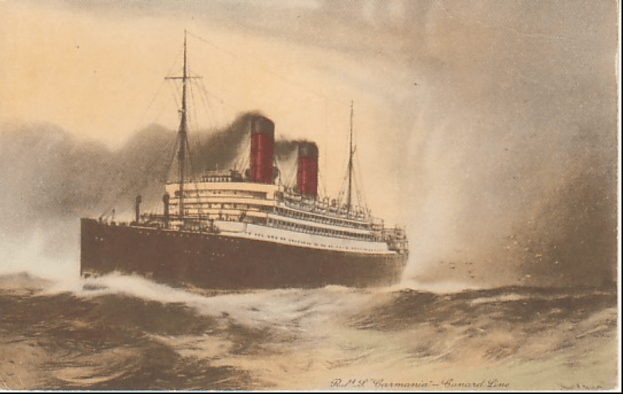
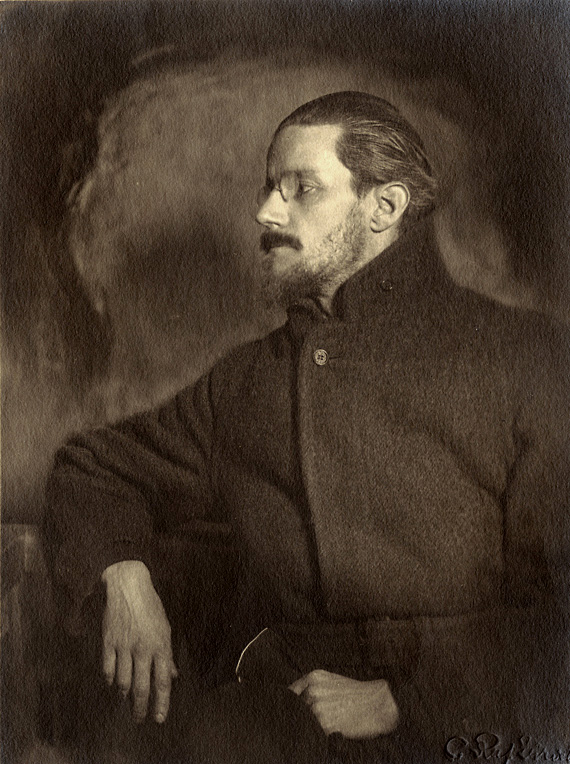
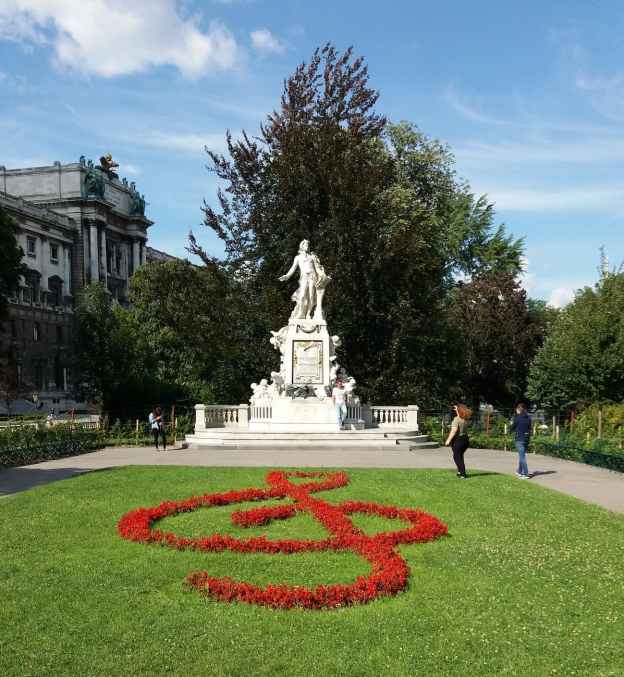

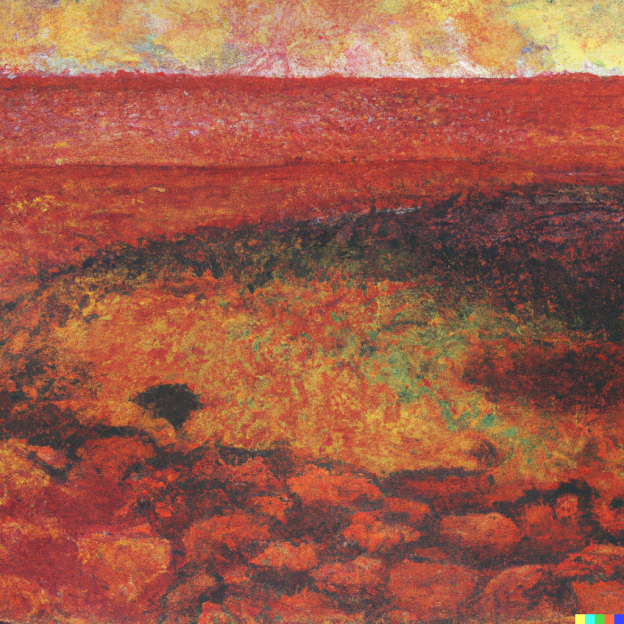
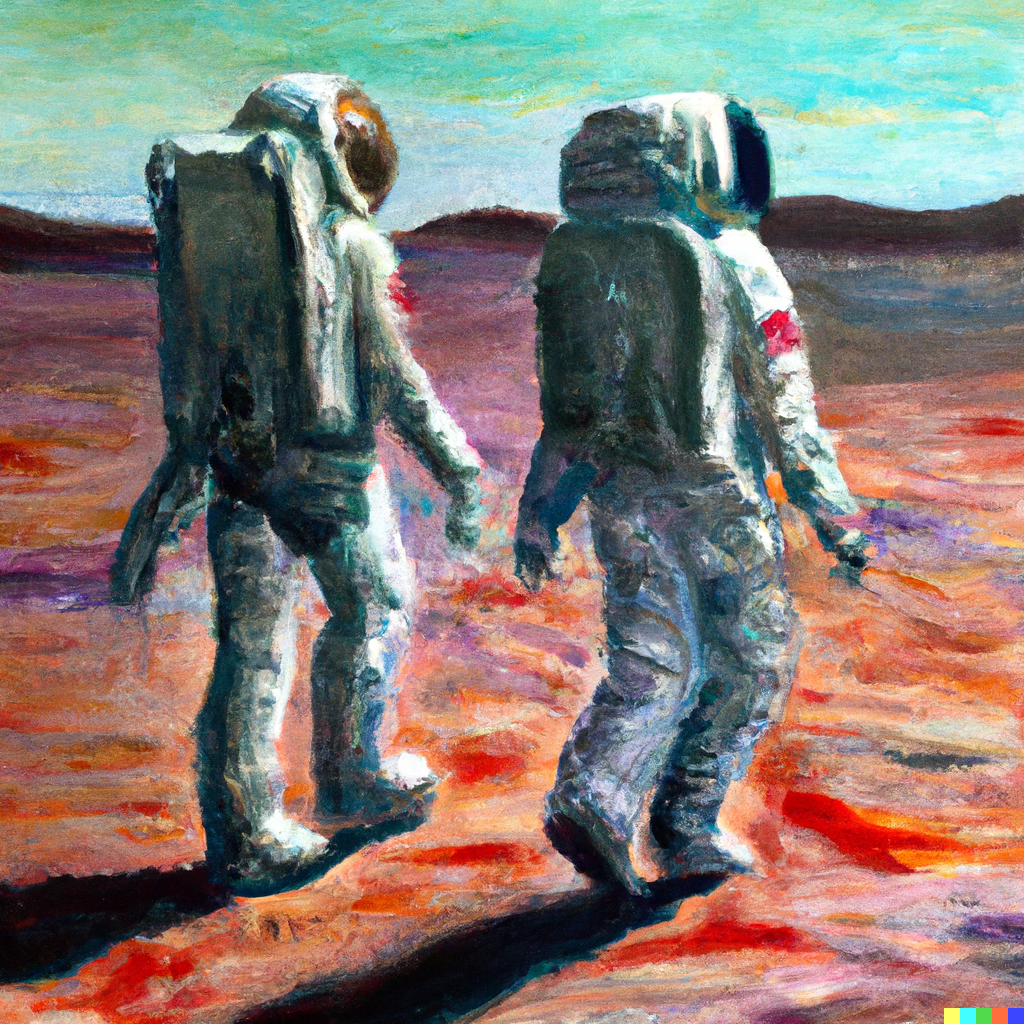
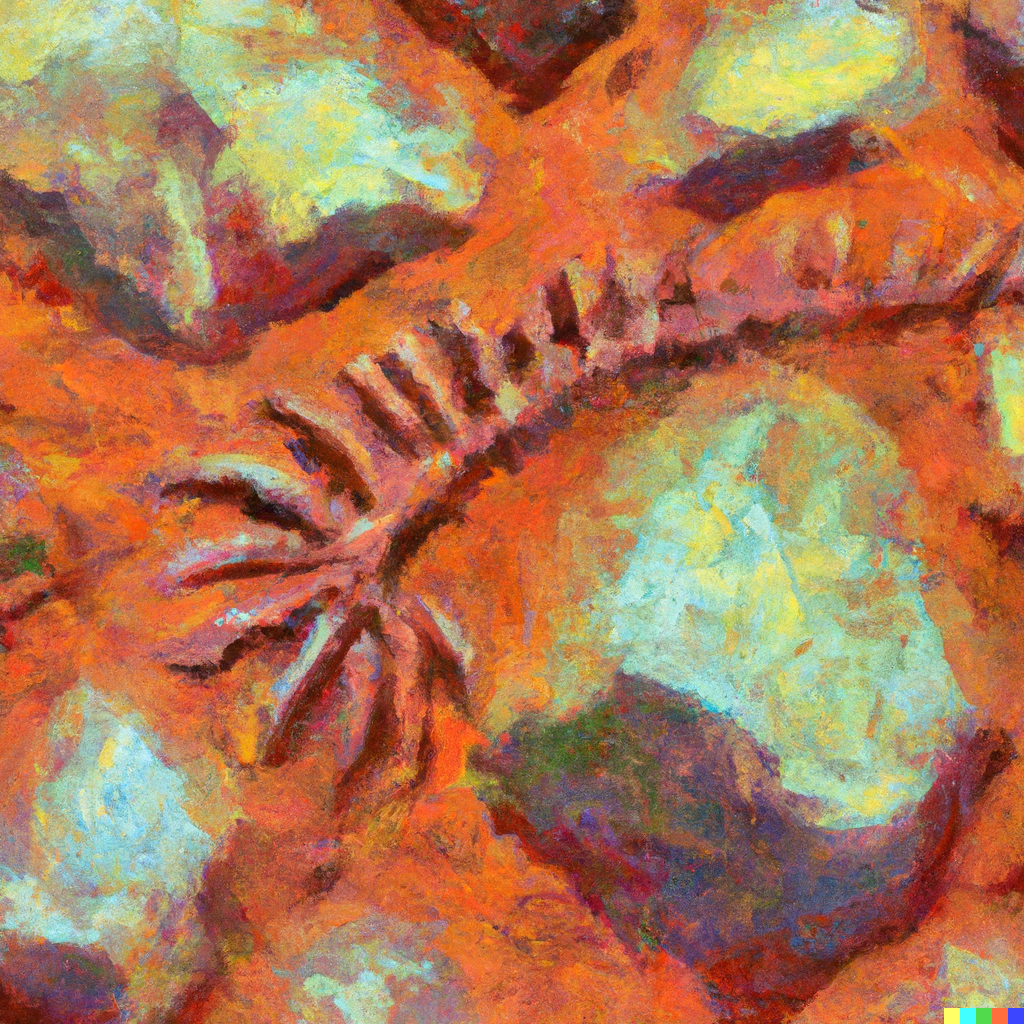
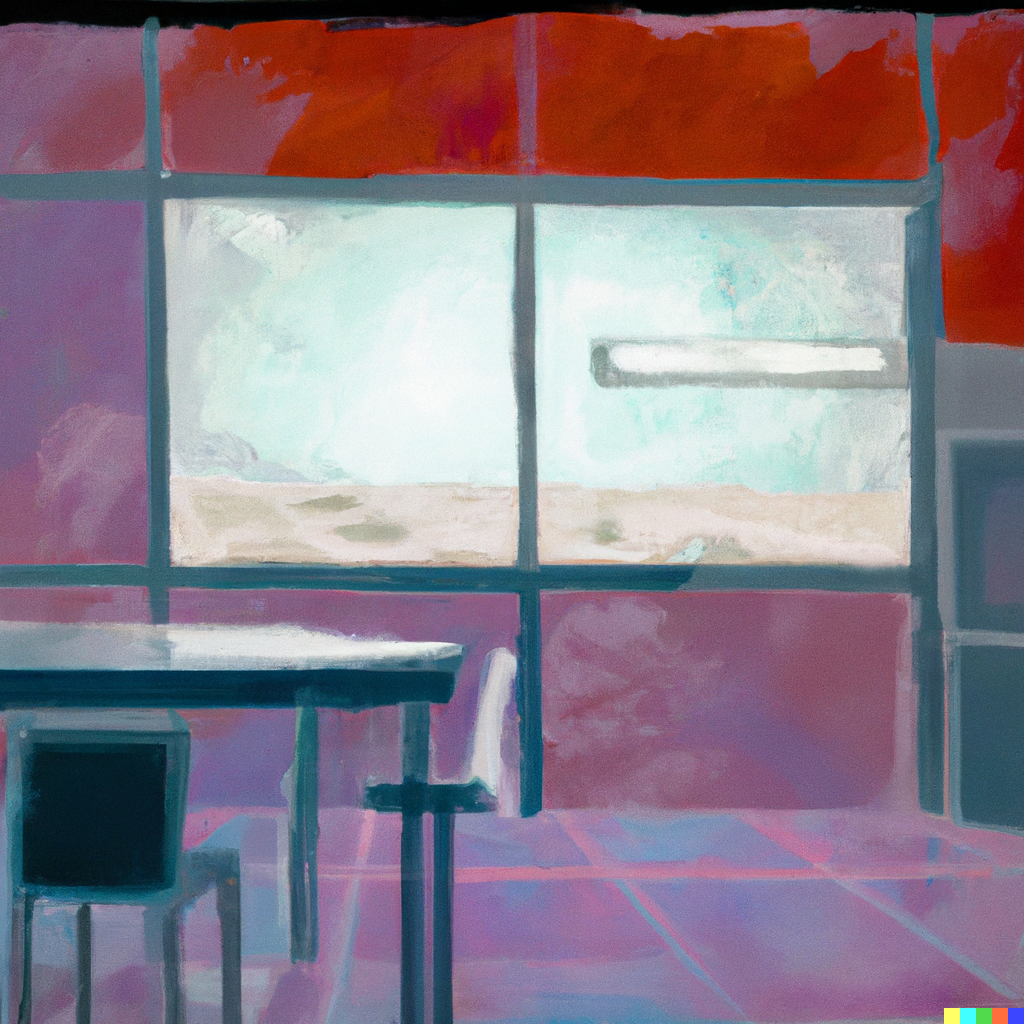
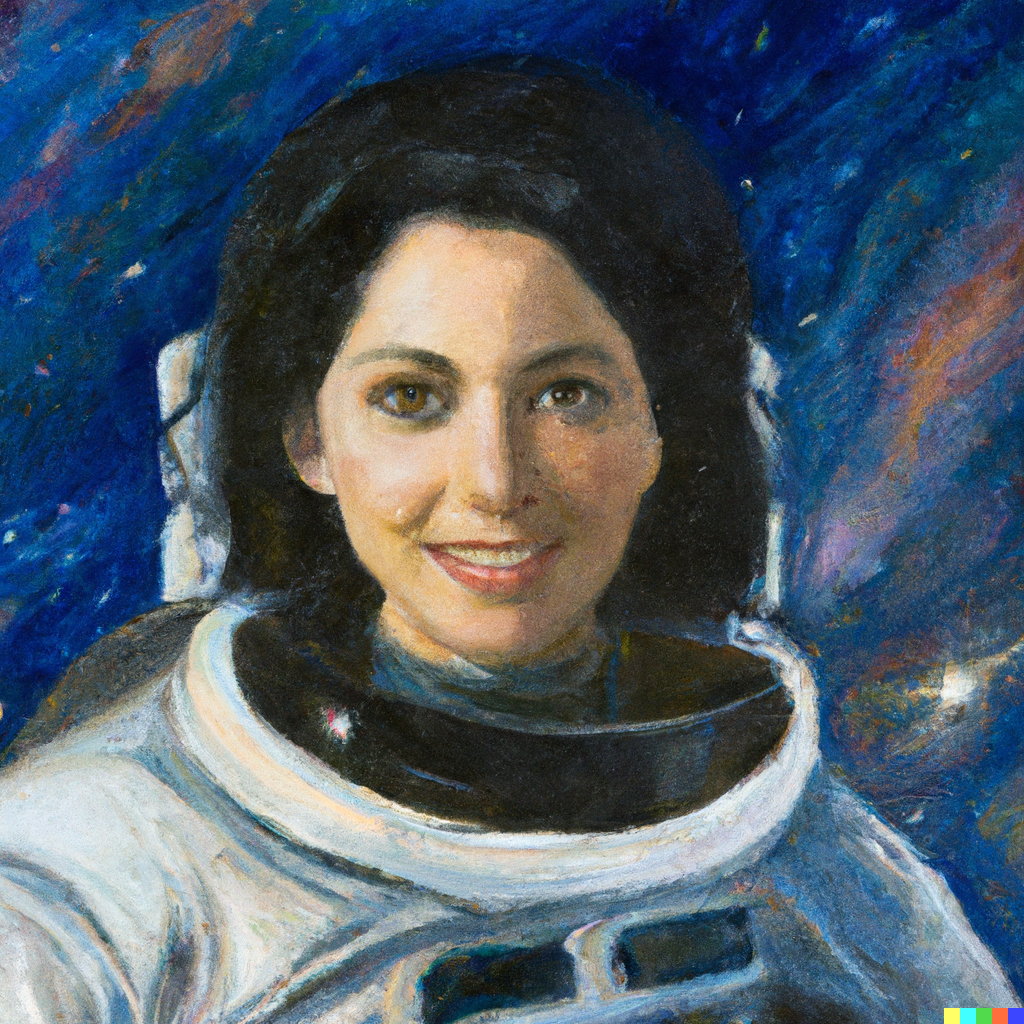
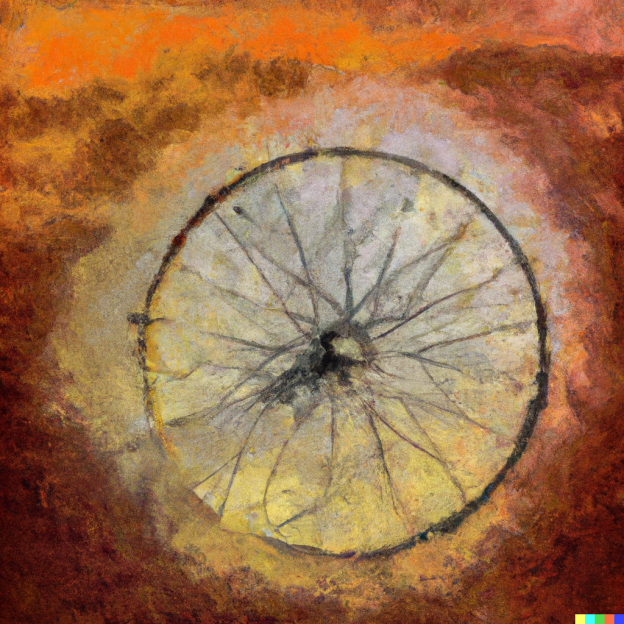


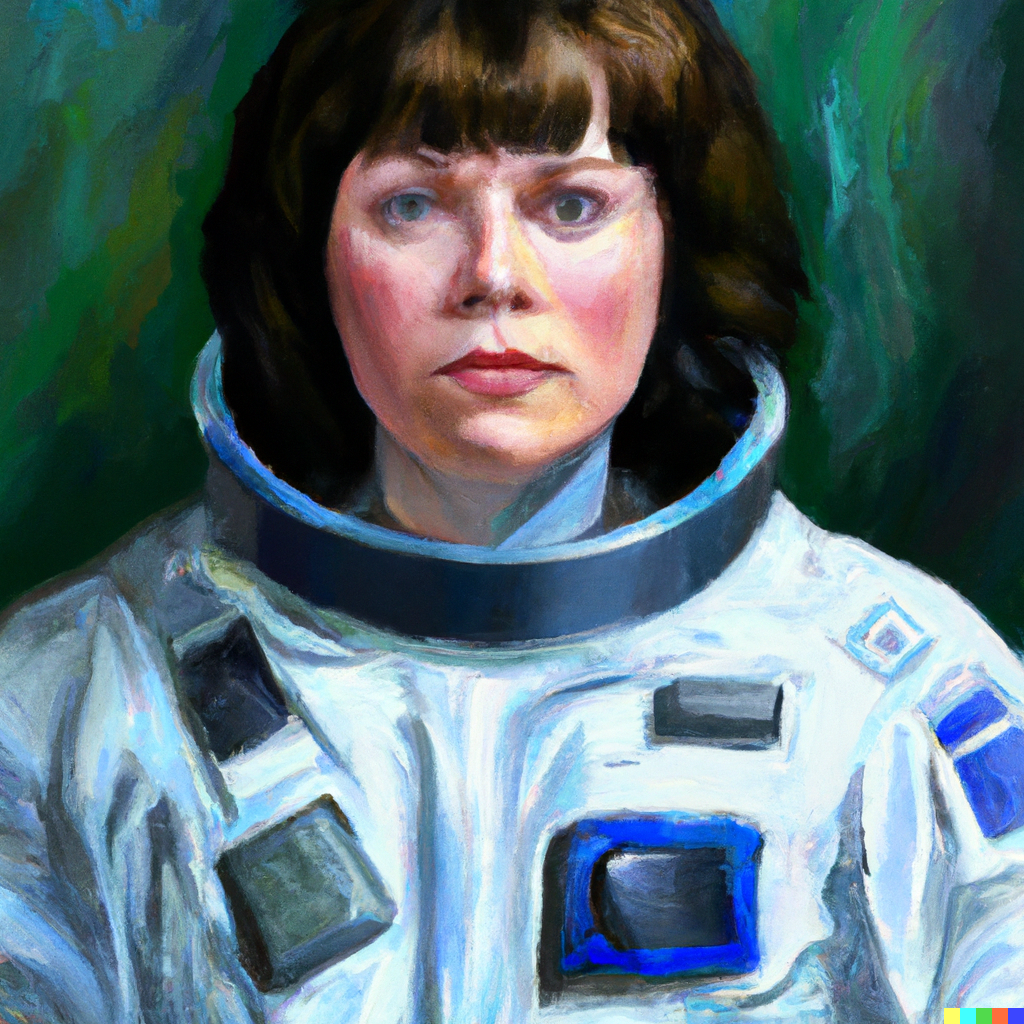
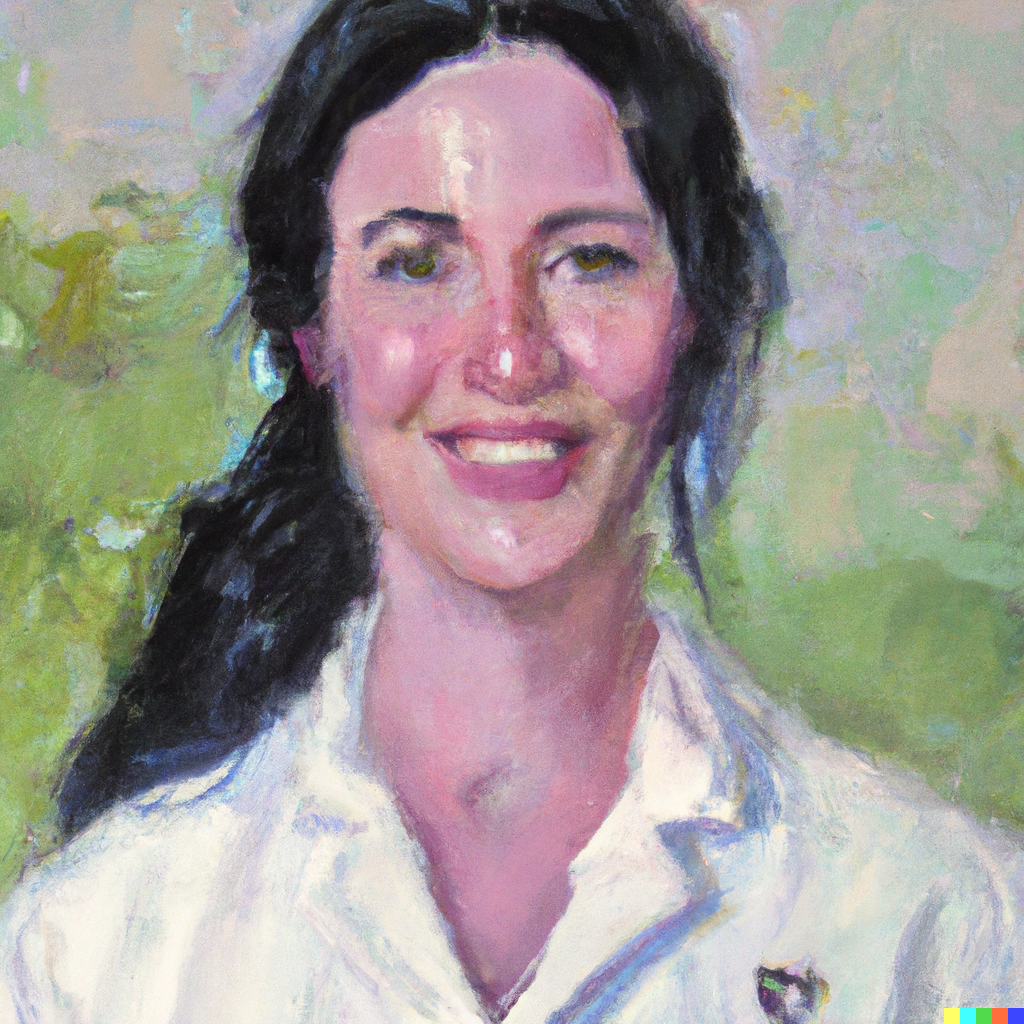
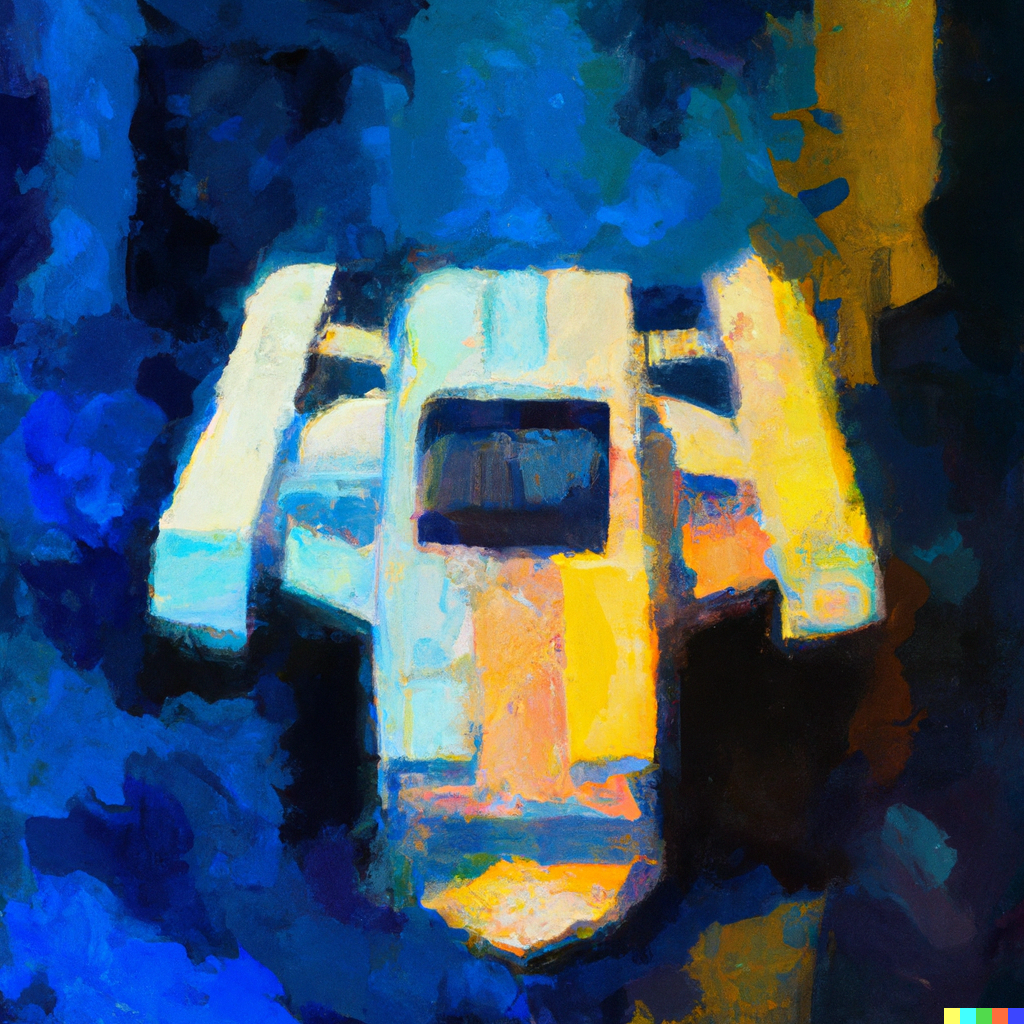
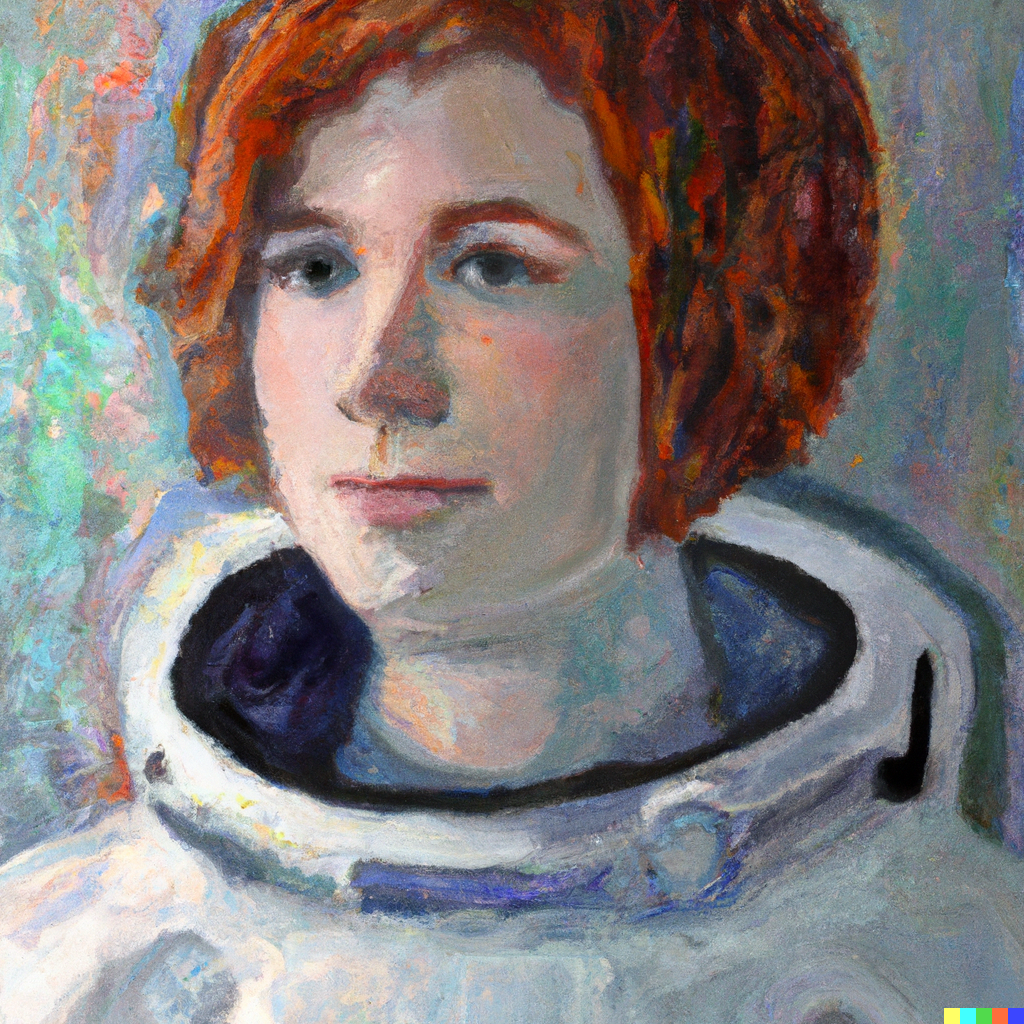
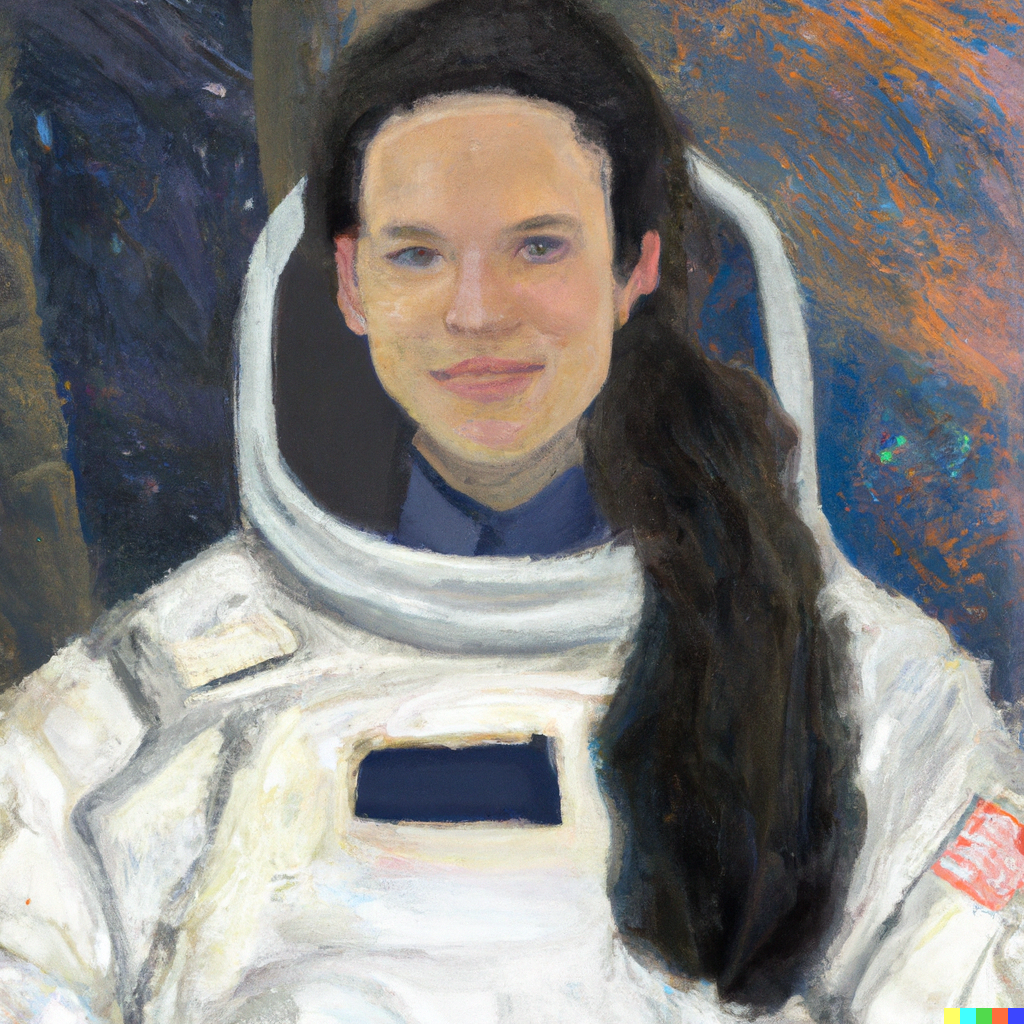
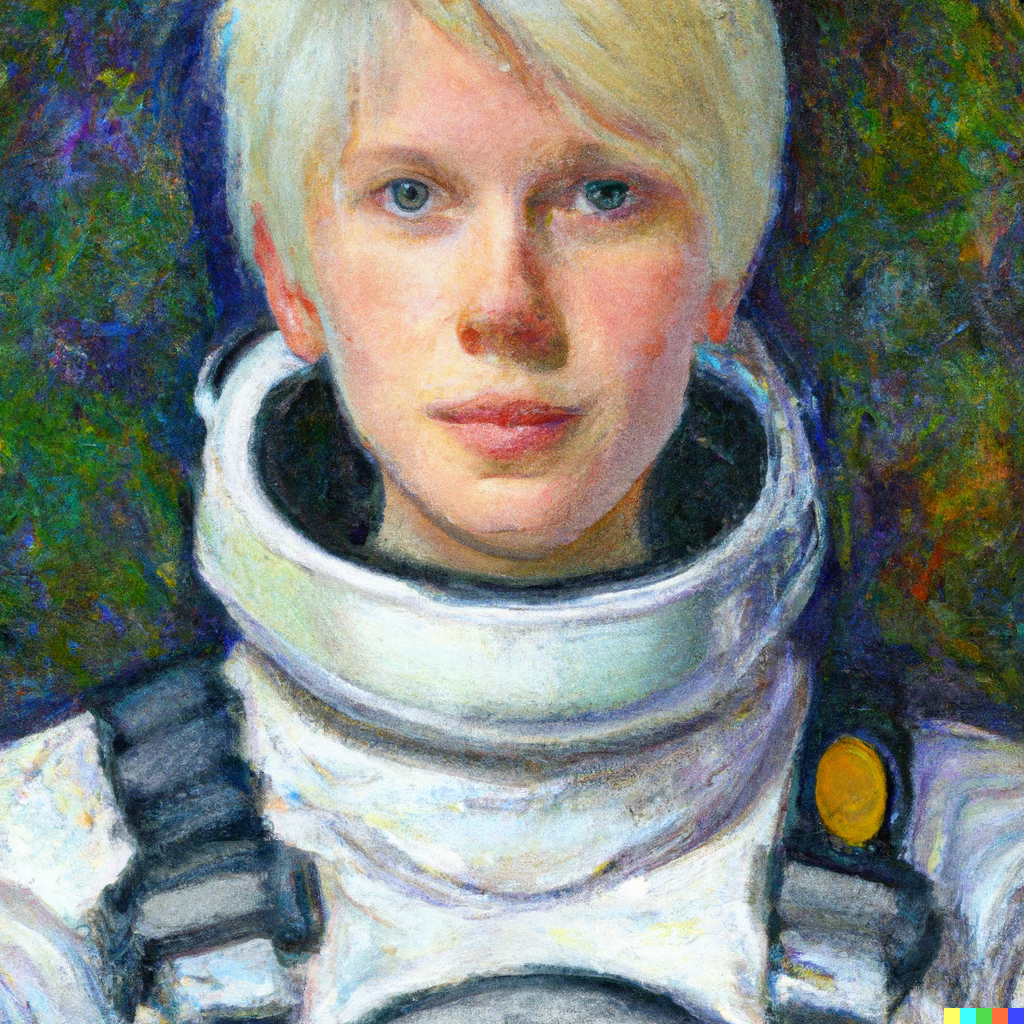
 Wednesday Blog by Seán Thomas Kane