Category Archives: Wednesday Blog

In Praise of my Favorite Latin Verb

In Praise of my Favorite Latin Verb Wednesday Blog by Seán Thomas Kane

Today, I'm talking about a particularly versatile Latin verb that I'll admit I'm rather fond of: mittō. Click here to support the Wednesday Blog: https://www.patreon.com/sthosdkane

I first started studying Latin when I was fourteen, a high school freshman at St. James Academy. Over the next four years I studied Latin with Bob Weinstein, then the St. James Latin teacher, and even took a year of Ancient Greek with him as well. In those years I got a good foundation in Latin, though I’ll admit I didn’t learn as much as I wanted, in part thanks to my own immaturity at the time. In the years since I’ve been able to connect more of these concepts in my thinking about the language, now on my third round of studying it. I often like to say that there are certain languages which I feel I can inhabit, that are so familiar and comfortable to me that I feel empowered to read, speak, write, and even think in them on a regular basis. These four are English, my native language, Irish my ancestral language, French, the language I fell in love with in college, and Latin, my original language of study in school.

Honestly, it took me until my third round studying Latin to really get the hang of today’s verb of note: mittō. Its full dictionary entry, laying out its principal parts are mittō, mittere, mīsī, missum. Looking at these four we can see the utility of this verb, which in its most basic meaning I’d translate mittō as “I send.” It means to send, but it also includes other types of sending like dispatching, releasing, or extending a hand, yielding, bringing out, attending, and dedicating a book, among many others. To say that one verb has so many meanings, so many actions it represents seems a bit of a stretch to me, but if you only think of a language by taking its parts out of place and analyzing them individually of the rest of the language, you’ll find you’re getting a different picture than you would if you considered the whole thing in one go.

Mittō has a great many descendants in English. Just looking at that 1st person present active form (mittō) we can see emit, intermittent, omit, permit, remit, submit, transmit, and everyone’s favorite cat name mittens. Frommīsī and missum we get all of the mission words, words like intermission, missile, omission, permission, promise, remission, and transmission. 

Even the word Mass as in the Catholic liturgy comes from mittō. It originated in the phrase Īte, missa est, which I’ve always heard as “Go, the assembly is dismissed” though I think of it more in line with the phrase “the Mass has ended” that you hear at the end of every liturgy. Missa in that phrase comes from missiō, a 3rd declension Latin noun meaning sending or dismissal, which itself has roots in our old friend mittō. One thing of interest regarding the name of the Mass is that the Latin word Missa is the origin of a great many names for the liturgy in the Romance and Germanic languages as well as the Polish msza. Yet in Irish the Mass is called Aifreann, which comes instead from the Latin verb participle offerendus, essentially translating as offering. The same Latin word is the origin of the name for the Mass in all of the other Celtic languages, though Welsh and Breton today call it an offeren and an oferenn respectively.

I decided to write about mittō this week because it keeps coming up in stuff as I find myself going about my work. I like versatility, the idea that we can look to something as particular as a verb like mittō to find the source for so many concepts and ideas. Language is the way we understand the world around us. It’s one of the first things in most creation myths that the humans do, they look about and start naming things. Those names transmit information about the object to people whether in earshot or in other worlds through writing. In our own day we are pushing the limits of mittō and its descendants by sending data back and forth to our furthest out exploratory spacecraft, from the Voyagers on the edge of the Solar System to the Perseverance Rover on Mars to the International Space Station in orbit. All of that data gets submitted back to each craft’s mission control here on Earth for further analysis.So, here’s to mittō, one of my favorite Latin verbs.
St. David’s Day

Today, is the Welsh National Holiday, the Feast of St. David. Click here to support the Wednesday Blog: https://www.patreon.com/sthosdkane

As Irish as my name is, I’m still very much an American, and a central part of this country and its population is the fact that we are all a mix of different ethnicities and races. There are competing visions of American diversity. There’s the melting pot of assimilation which sees new immigrants enter the pot and get boiled down until they blend in with everyone else to rise from the water newly minted Americans. Then there’s my favorite, the salad bowl which sees us as a healthy mix of different cultures, heritages, and traditions that come together to create something new whose history and roots stretch deep into a variety of different soils from around the human world.

My own salad bowl is made up of English, Swedish, Finnish, Flemish, and Welsh parts as well as an Irish majority. It means that when I think of indigeneity as a universal human concept I’m left wondering where I might be considered indigenous. I’ve been to several of my ancestors’ hometowns in Ireland and Finland and while they were lovely places, I was very much the tourist there, a stranger in a somewhat strange land. I felt even more foreign over these last three years spent living and working in Upstate New York, a place where I couldn’t quite get the pulse of the people and never fit in with their way of living.

I knew little of my Welsh heritage until one Sunday in November 2002 when my Aunt Mary Ruth, who was then doing a teaching exchange in England at Canterbury’s Christ Church University took my parents and I up to Surrey to meet our distant Welsh cousins, my cousin Glenys and her husband Cyril along with their children Carys and Gareth. I wasn’t quite sure what to make of the whole situation at first but quickly found them welcoming and genial. Glenys’s grandfather was a younger brother of one of my 3rd great grandfathers, making us 2nd cousins 3 times removed. By the time I met her she had retired from her work as a science teacher and devoted herself to her family and her beloved garden. We kept in touch after that by mail, she sent me lots of stuff about Wales, its history, and culture, and so I began to think of my Welsh heritage as an integral part of who I am. It takes knowing someone with a common passion for something to really embrace it, and that passion is something Glenys instilled in me.

I didn’t visit the house in Surrey again for another decade, next returning in June 2013 when I was in London for a study abroad session at my graduate alma mater the University of Westminster. Ten years made a huge difference, everyone had grown older, wiser, and in my case I left them a little kid and returned in my early 20s. Glenys told me many stories on that visit about her own life, her connections with her American cousins, some of whom I know and others I’ve yet to meet, and of course about Welsh culture. I even made an effort to learn Welsh at one point, what little I remember has proven useful to my Irish studies.

Glenys always talked with a smile about St. David’s Day, the 1st of March, when Welsh pride is at its height. It reminded me somewhat of the celebrations I grew up with a few weeks later on St. Patrick’s Day but with a different set of memories baked into the celebrations. Each year then, as March arrived, I’d think of her, Cyril, Carys, and Gareth and occasionally even write a letter wishing them well. In the last decade we’ve begun to communicate digitally more, Gareth even is one of my regular readers here on the Wednesday Blog, and with each passing year when I’d think about making a trip over to London one part of it would always be to pay Glenys and family a visit.So, I was saddened to hear how her health was failing over the past few years and then a few weeks ago to receive the news from Gareth that she’d died. Glenys was one of a kind, a true joy of a person to meet. She touched so many lives both among her students, her community, her friends, and those of us in her extended family. With this in mind I thought for this St. David’s Day I’d use my soapbox here to remember her.

Ash Wednesday

Today is Ash Wednesday, the start of Lent. Some thoughts about that. Click here to support the Wednesday Blog: https://www.patreon.com/sthosdkane

In past years when I’ve written columns and devotionals around this time of year recognizing the beginning of Lent, they’ve been on some levels joking (I once referred to this season as the past tense of to lend) while on others they’ve been overly serious and solemn. There’s certainly room for both angles. This year, I feel a little less strongly moved by the whole experience, yes, I know we’re approaching a time of great meaning and purpose, yet in my mind that’s overwhelmed by the onset of what hopefully will be better Spring weather this week. 

As I’ve gotten older, I’ve found that the passing of the seasons impresses me differently than it used to. When I was first learning the names of the months and seasons in school, I noticed the changes quite profoundly. The first of each month was a moment of regard. Today though, month by month passes as one after another in a parade ever blending with its compatriots into one great cyclical mass of the year. I notice today more so the changing of the weather than I do the months or even the seasons. I notice the waves of warm air coming out of the southwest fighting against the cold air pushing down from the northwest. I notice now how each passing rain and snow leads either towards the warmth of summer or the cold of winter. For me the year is far more a day-by-day affair now than anything else.

So, where does that leave the liturgical year, the cycles around which my faith orbits? Honestly, I’m not sure. Perhaps because I had the opportunity to attend Catholic schools for much of my life the Catholic feast days and holidays stood out to me more at one time than they do now. The highest holy days, the Easter Triduum, Christmas, and of course the Irish feast days of Saints Patrick, Brigid, and Columcille stand out the most for me today, days when I can imagine my present moment lining up neatly with memories of my past and of the generations who came before me.

If Ash Wednesday has any potency for me today it’s in its reminder that we’re all mortal, and yes, at some point our lives are going to end. It’s a reminder of our limits, in body if possibly not in mind. I’ll go to Mass and get the ashes on my forehead as I’ve done for as long as I can remember, and yes, I’ll do the Catholic fasting (one large meal with two small meals, no meat), and I’ll likely be a bit grumpy about the whole affair. Ash Wednesday is a reminder of our lives on this Pale Blue Dot, to blend Carl Sagan’s humanism with Catholic theology. We’re all a part of this our home planet, forever tied to it, no matter how far we and our descendants might travel from its surface.A holy day like Ash Wednesday is a reminder of our worldliness, and how that world which we cherish and which we have helped build is as fragile, as mortal as we are. The ashes of the palm branches from last year’s Palm Sunday are from this same world that we are. It’s an honesty that can’t be beat or diluted, we are who we are. That’s what I’ve got this week.

Author vs Writer

Today, on Chiefs Parade Day, I thought it'd be interesting to consider the distinctions between an author and a writer. Click here to support the Wednesday Blog: https://www.patreon.com/sthosdkane

Recently I noticed when someone referred to a guy as “the author of x”, in my mind I thought about what it means that they were called “the author” and not “the writer.” This whole question came to me considering that in Irish, I’d introduce myself with “Is staraí agus scríbhneoir mé,” or rather “I’m a historian and a writer,” and the same goes in French « Je suis historien et écrivain, » yet in neither context would I introduce myself at a party as “I’m an author.” Both words have their origins and similar yet separate meanings in every language, and that distinction is worth noting.

Author comes to us from the Latin auctor via Old French autor, it’s a cognate of the modern French auteur. The Irish version of this, údar also comes from the Latin auctor, demonstrating that the core idea of an author may well have spread northwards with the Romans. On the other hand, writer is an inherently English word, a writer is most fundamentally someone who writes. I like words that make their function this clear, words that are built off of the verb that they accomplish. When I’ve thought about trying to emulate Tolkien’s work it’s been less to create my own massive legendarium of fantasy literature and more to devise new ways of understanding the world through constructed languages like his own Quenya and Sindarin. In those thought experiments one of the key principles, I’ve wanted to address is crafting a language where there is a relatively small vocabulary because every word is a stem upon which one adds grammatical endings to make it a noun, adjective, verb, or adverb, or to include prepositional elements to it. This is something you see in older languages like Latin with its declensions and conjugations or in Finnish with its 14 noun cases. So, these simplest of English words like writer that demonstrate what they do as efficiently as possible are among my favorites.

Author too in its Latin origins was a word like writer. An auctor is someone who increases or nourishes their object (augeō in Latin). In classical literature the story comes from the muses, In the Loeb translation Ovid began his Metamorphoses acknowledging “my mind is bent to tell” the stories that will follow, for “ye gods, for you yourselves have wrought the changes, breathe on these my undertakings, and bring down my song in unbroken strains from the world’s very beginning even unto the present time.” (Met. 1.1.1–4) Shakespeare picked up on this in his reading and began Henry V with the chorus uttering the line 

            “O, for a muse of fire that would ascend

            The brightest heaven of invention!” (Henry V, 1.0.1–2.)

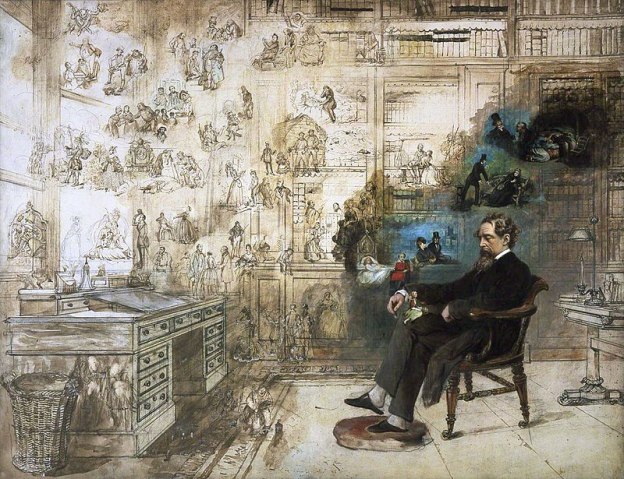
In my mind an author is both someone who has received inspiration for their work and an active participant in the creation of those works. There is a wonderful print of Dickens dreaming at his desk with all his myriad of characters he nourished into existence in his stories floating about him. I sometimes wish that this is the way that I’ll be remembered, as a storyteller who crafted so many lives that while they only exist in my writings therein is encapsulated a little world, an imagined reality all its own. In this act of creation, I am an author, but I am also a writer, for it’s my job to translate these worlds from my imagination onto paper where others can experience these characters’ lives.

A writer is a craftsman busy in their workshop devising new ways of getting information across. They could be writing serious factual information, reports of the events of the modern world, or setting the scene of stories more fantastical than anyone before could’ve imagined. I think of Dr. Franklin in his printing shop as the archetypal writer his sleeves rolled up hard at work, a stark contrast to the image of Dickens asleep in his chair dreaming of his many creations. Yet we rarely have authors without writers anymore, they are of course more often than not the same person, still in older times there were stories that existed without the written word. The Gaelic file tradition which I hope my own stories can be worthy heirs to is one such form of authorship beyond the boundaries of the written word.

So perhaps I don’t like to introduce myself as an author because of the world-building implications of authorship. Day-to-day I am a writer, a craftsman of words, scrawled onto paper, typed into a computer, and printed onto the page. I am an author of some stories, there are characters you’ve met here on the Wednesday Blog like Dr. Noël Felix and Captain Amelia Daedalus from a few weeks ago. I hope to get back into writing more fiction again in the coming months and years, to telling those kinds of stories. Yet perhaps because my authorship is so much more personal than my craftsmanship as a writer, I am left preferring to keep my creations closer to my chest and instead hold my craft out for all the world to see.


“Casablanca” at 80

Today, I'm talking about the classic 1942 film Casablanca with my good friend Alex Brisson. Click here to support the Wednesday Blog: https://www.patreon.com/sthosdkane Today's episode features contributions from Alex Brisson (https://www.alexbrisson.com) and Michael Ashcraft (https://soundslikeashcraft.com). Thanks to both of them for their help making this week's episode!

Listen to this week’s podcast for a conversation about Casablanca with Alex Brisson


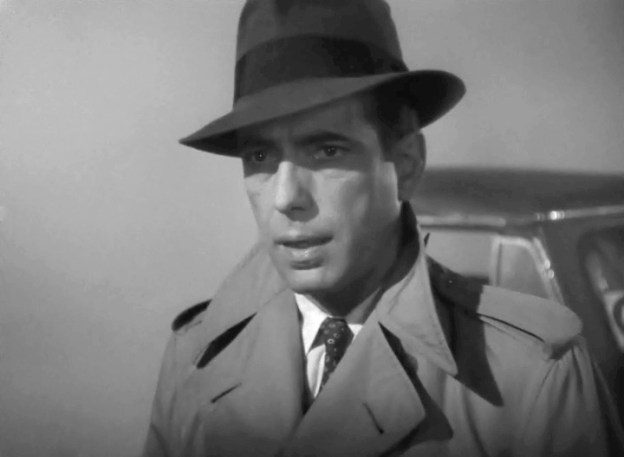
Few films have held our attention for as long as Casablanca, a romantic drama filmed at the height of the Second World War telling a story yearning for America to remember it’s passion and enter the fray against the forces of evil. The story, now well known, is about an American café owner, Rick Blaine, in the Moroccan city of Casablanca, then a French protectorate under the control of the Vichy government. Into his purely neutral life walks an old love interest, Ilsa Lund with her husband the resistance leader Victor Laszlo.

Everything that could be said about Casablanca has likely already been said. So, what I’m going to say here isn’t anything new, there really isn’t any intervention that I can make into this particular discussion as my fellow academics would insist every bit of writing make. So, I’m going to point out a few things that I thought of watching the film, subtextual themes that I hadn’t noticed the first time I watched it a few years ago. That time, I paired Casablanca with a delightful French film titled Que la lumière soit ! (Let There Be Light!) starring Hélène de Fougerolles. They were an odd pairing I’ll admit.

Casablanca is set in December 1941 on the eve of the Japanese attack on Pearl Harbor and America’s entry into the war. It’s the last hour in the limelight of an isolationist America, an America that still around but has been forced into the shadows by our country’s leading role in the postwar world. I nevertheless found it interesting that the opening credits placed Casablanca the city less as a Mediterranean, or rather Mediterranean-adjacent port, but rather as a city on the map behind the opening titles on the far northwestern corner of Africa. Casablanca is a gateway for those seeking to leave Europe either to the west across the water to America or south across the Sahara to the remaining Free French and British colonies in Africa. This makes it clear that Casablanca is distinct from Europe, it’s exotic when compared to the port of origin and the destination of the travelers waylaid in Casablanca.

Amid all of them one such traveler who’s made a slightly more stable living than most, accepting the circumstances of his complicated situation in isolation amid many others of the displaced appears Rick Blaine, who’s found stability in his café after losing stability in his life at the German invasion of Paris and Ilsa’s disappearance all on the same day. The film’s central conflict is Rick’s internal struggle between the isolationism he’s adopted since Ilsa left him and he ended up a saloon keeper in Casablanca and the passion he once felt for Ilsa in the last summer of the age of optimism in 1939. Now that Ilsa appears with Laszlo, the embodiment of the resistance to Nazi rule in Europe, Rick is confronted by his lost passion for that cause. Ilsa is a reminder of the passion for liberty he once felt that left him on the run from the Nazis in Paris where they met in the first place.As with the first time that I watched this film in 2021, I now find myself pondering the message of isolation vs. passionately standing up for the causes one believes in. I know people who are leaving this country to escape all the troubles we inflict on ourselves. I’ve thought of it myself, but there’s that stubborn passion in me that won’t give up on America. Rick’s isolationism shows us how we can let bullies march into our lives and dictate orders to us if we let them if we try to simply survive. That’s a fair way to live, I dealt with bullies in school and life by not reacting to them. But at some point, a person can only take so much pushing around, and I worry that today in America we’ve forgotten that fact. Rick’s turning point comes when the Nazi officers bully their way into controlling the voice of his café, Sam’s piano, to play a march of their own, Die Wacht am Rheinwhich was written in response to French efforts to annex the western banks of the Rhine in the 1840s, a moment a century before when France was the great power and Germany still divided among its princes. Laszlo tells the band to respond to this insult by playing La Marseillaise, not only the French anthem but an anthem for the struggle of the people against oppression everywhere. At that point, Rick is no longer an isolationist, America is no longer on the sidelines, but is tacitly helping the Allies, readying to cross the Atlantic in the words of French philosopher Bernard-Henri Lévy like an Aeneas returning to the aid of old Troy.


St. Brigid’s Day

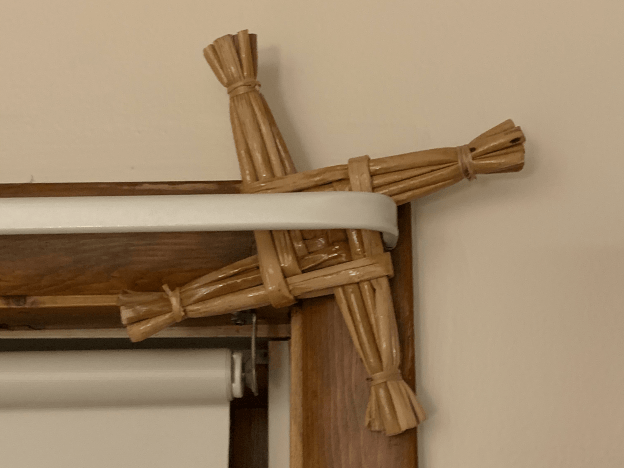
Among the saints are the Irish Trinity, Saints Patrick, Colmcille, and Brigid. These three were among the first Christian leaders and holy figures in the history of the Church in Ireland and remain centrally prominent today. This Wednesday, the first day of February, was once the ancient feast of Imbolc, which celebrated an ancient harvest goddess known as Brigid, whose patronage included wisdom, poetry, and healing. Brigid’s springs and wells remain sacred places today for how the deity was incorporated into Irish Christianity through the person of Saint Brigid, perhaps a real holy woman named for the goddess who converted in those first generations after St. Patrick’s arrival, or perhaps a reinterpretation of the goddess herself into a saint.

Either way, I don’t honestly mind. St. Brigid represents for me the continuation of the oldest of rituals, the most ancient of memories, into the modern day. Her feast marks the beginning of Spring according to tradition, a time of year which I do yearn for with how cold it’s been here in Kansas City of late. My own faith is open to the reality that it has a variety of sources, both biblical and traditional. In my lifetime I’ve heard here and there of efforts either by the Vatican or by other Catholic authorities to soften the devotions of certain saints deemed mythic, like St. Brigid, St. Barbara, or St. Christopher. I get where they’re coming from, after all who’s to really say if these people ever lived? I for one can’t prove it. Yet I disagree with this assessment because there are truths about life and nature we can learn from saints like Brigid.

The one catch about honoring a saint like Brigid who is so tied to Ireland and the environment of that island country is that some of these traditions don’t entirely make sense here in America. To say that Spring begins at the start of February is laughable here in the Midwest. The forecast today calls for highs of 36ºF (2ºC) and lows of 16ºF (-9ºC), far from Springtime temperatures that would be expected for the first day of Spring. True, we have had some nice days of late, days when I’m comfortable walking around without a hat or gloves, but they’re becoming fewer as January ends and February begins. I hope that February will see warmer temperatures return, heading into what might be a lovely March. But enough of the weather, to my point I find it hard to follow some of these traditional understandings of saints from back in Europe because the world of the Americas is different enough to make the experience of trying to say “Spring’s begun” when it’s snowing laughable.

Perhaps a better way to think of St. Brigid’s Day as an Irish American is to consider it as one of the last winter holidays which began with Advent in December. These winter festivities are marked by their sense of mystery, earned through the long dark nights this time of year and all the unknown things that can go on when the Sun remains down for longer hours and so much of our native wildlife sleeps in their burrows. St. Brigid’s Day means the winter is coming to its climax, and soon will fade into the first whisperings of Spring with its rains and lush greenery. If St. Brigid’s Day is the beginning of the end of Winter, then St. Patrick’s Day is the beginning of the height of Spring, a time when here in Kansas City sure it could snow, but it could also be warm and comfortable for parades under the Spring Sun. So, to all my listeners who feel like commemorating the story of St. Brigid, Lá Fhéile Bhrigid shóna daoibh! Happy St. Brigid’s Day!

Human Goodness

This week I'm considering the fundamental question of whether we are inherently good or bad. Click here to support the Wednesday Blog: https://wednesdayblog.org/patreon.com/sthosdkane

Eight years ago, when I was a masters student in International Relations & Democratic Politics at the University of Westminster in London a question was posed in one of my first semester classes by the professor who asked “are we inherently good or bad?“ I raised my hand among the few in the room who argued that we are inherently good. That, at heart, we have evolved to trust one another, and to be kind, not only to our own tribe, our own community, but of those outsiders to whom we are in some way connected, as we are with our pets, or in human terms as we are with peoples from around the globe whom we come to meet on a personal level.

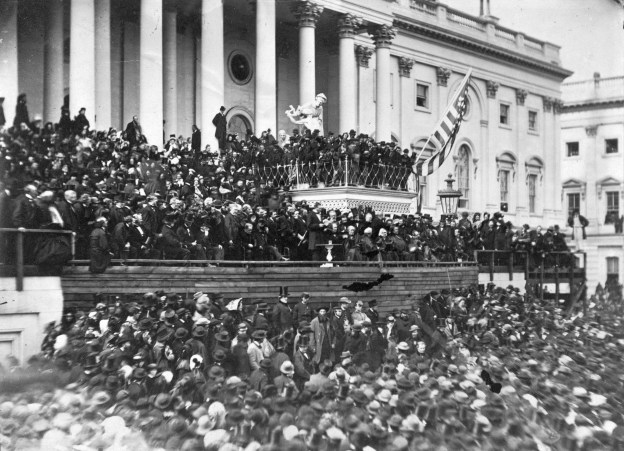
It occurs to me when thinking about some of the great and good figures in recent human history, and even going back several centuries, if not several millennia, that a great many of those figures were killed, their lives ended in acts of evil, in moments of malice. When President Lincoln gave his second inaugural address in March 1865, and called for us to “bind up the nations wounds” and to progress forward with the now immortal words that I have surely used on many occasions here on the Wednesday Blog

“With malice toward none, with charity for all, with firmness in the right as God gives us to see the right, let us strive on to finish the work we are in, to bind up the nation’s wounds, to care for him who shall have borne the battle and for his widow and his orphan, to do all which may achieve and cherish a just and lasting peace among ourselves and with all nations.” 

Yet there on the balcony above Mr. Lincoln in the famous photograph of his second inaugural address that depicts not only the president, but the crowd as well, one can just discern the face of John Wilkes Booth, the man who would assassinate Mr. Lincoln a little over a month later on Good Friday. Clearly then, Mr. Lincoln’s, message of reconciliation & reconstruction, not only of the nation’s infrastructure but also for the government to be more just, put pressure upon the nation’s heart to recognize that when we say all men are created equal that we mean everybody. Clearly that message didn’t resonate with his assassin. So where was the inherent goodness in John Wilkes Booth?

I think if we are to describe some innate human goodness to all of us, then we ought to recognize that it exists deep within us. We are like the strata that make up Earth’s geology, each layer representing a different age, era, or epoch in the long history of our planet in our own lives; our experiences with each passing moment add layers one atop the other, until as Aristotle wrote 23 centuries ago, we become truly wise through our lived experiences. So, our innate goodness must exist be deep within. I’m reminded of the line at the heart of the Return of the Jedi, the third film of the original Star Wars trilogy, in which Luke Skywalker tells everyone around him that he knows there’s still good in Darth Vader, despite all the evil that the fallen Jedi had committed. C.S. Lewis remarked in the final book of his Narnia series, that the eldest of the children who are the central characters in the Chronicles of Narnia, Susan, did not return to Narnia for the last battle, because she no longer believed in Narnia, for she had grown up and “put away childish things” to quote Saint Paul. Yet the best of us, or so our great allegories seem to tell us, have never really forgotten that childlike innocence, though some have never really been able to experience it, after all not everyone has the same happy childhood.

I believe that at the end of the day, the best way that we can truly find our goodness, our kind nature, is in the simple fact that at some point along the way we all want to be loved, and I would imagine for the most of us we all want to love others. I often wonder in the vein of Machiavelli‘s Prince if I do things out of a desire purely to love others, or out of a desire to make myself feel good, or out of a desire for others to love me? And which of these three is perhaps lesser than the others or is there a lesser and a greater, or are these three perhaps all equals? Is it okay to be selfish it for the right cause? I don’t know. 

There certainly should be limits to vanity, I for one am not terribly fond of taking selfies, nor do I really care for watching videos of other people watching videos. Still, as many of the self-help people will say some degree of self-love is a good thing, and to paraphrase the old saying that appeared carved in the mantle above the great doorway at the ancient Library of Alexandria, “know thyself,” one should be able to love oneself before one truly begins to appreciate the people around them and by extension world in which they live. So perhaps it ultimately comes down to one’s environment if we live in a world where you’re taught that negative news and emotions and violence ought to be glorified then that’s the kind of stuff we are going to do. However, if we look at the world as a place full of beauty and wonder, and if we find a way to appreciate the great variety of humanity and nature at large and the incomprehensibility of the Cosmos, then I think we can truly begin to define ourselves by our inherent goodness again. What a wonder it is to be a part of our human family.

Phaëton: A Short Story

It hung over the streets and steeples of Kansas City like a great dark cloud, the many neighborhoods and suburbs looking up at it in awe. It had been said by some that the airship Phaeton was over a mile from bow to stern, but many could not believe such a craft could ever take to flight. And yet here it was, towering over nearly half a million pairs of eager eyes, who looked up at her underside with a mix of fear and wonder. All were running out into the streets to behold the sight, businessmen and artists, cabbies peering from within their charges and clergy praying to their God at such a magnificent sight. There were scholars and vagabonds, sportsmen and aviators, soldiers, sailors, and marines on leave, politicians and pensioners, inmates and the invalid all looking upward at the great edifice in the sky. From 33rd to 54th, the city was clouded by the shadow of Phaeton, the greatest wonder ever built by human hands.

         Out of his home on 55th near Main, still in his slippers ran Noël Felix, a lecturer on transportation and public efficacy at the University of Kansas City. He was in awe of the sight that rose high above his home, the great sign of humanity’s technological achievements, which only a decade prior had been considered too fantastical to even be allocated probability within the modern imagination. “He’s done it!” cried Noël, “Captain Daedalus’ ship flies!” It was certainly an amazing start to a quiet Lenten Friday.

         Alongside the lecturer, out in 55th Street, the many residents of the neighborhood clamoured and shouted praises to the world-renowned Captain Daedalus. It was said that he was the first person to land on both poles without stopping to refuel, the first to bring much needed humanitarian aid to the people of North Korea, the first to arrive on the summit of Mount Everest from above rather than below. Daedalus was by far the most renowned figure of his time.

~

There was a certain air about him, he did seem both kind and boastful, but not to much more than a degree expected of a man who was the conqueror of the last great terrestrial trials facing an adventurer. He had been welcomed with fabulous balls and galas in every city he visited. No less of a welcome would he receive upon arriving in the Paris of the Plains, whose artistry and musicianship were renowned throughout the world. In the great hall of the Performing Arts Centre, a great ball was held in Daedalus’ honor in the evening of 31 March 2012, the Saturday following his arrival. All the great figures of the Metro were invited, the rich and famous along with those of high moral and social regard as well.

Nöel had spent the greater part of the day allocating a good evening suit for the occasion, for he was not often accustomed to wearing black tie. He arrived in the Arts Centre to hear some light chamber music being played by the house orchestra; largely at this point it was Mozart and Haydn. Upon arrival he was presented to the mayor, Edward Johnson, who had personally invited all of the guests. “Welcome, Mr. Felix,” he said, shaking the lecturer’s hand, “I trust your father is well?”

“He is,” replied Noël with a polite smile, “he sends his regards to you and your wife.”

“That’s very good of him,” said Mayor Johnson as he turned to converse with Walter Gregson, the famed industrialist and philanthropist. Noël gave a slight bow to the mayor and then turned and walked about the great hall. He was dazzled by the beautiful brilliance of the hall, its amazing use of glass, steel, and marble to allow for light to flood through its great open chasm that stood between the theatre that was home to the opera and ballet, and the concert hall that was home to the orchestra.

He began to walk up the stair that led to the mezzanine level of the concert hall, observing the beautiful blue shades that surrounded him. It felt as though he were walking on an aquatic azure cloud, which rang with the beauty of the music from the hall below. The swirling sounds of the strings and woodwinds mesmerized Noël, and he leaned against the wall, his breath becoming the chief function of his body, as he let the music consume his senses. The very nature of the sounds that flooded into his metaphysical soul through the all-too physical existence of the ear were enough to make even the hardest of hearts relish in the exuberance and beauty of this nearly angelic artistry.

Noël had always loved Mozart, but his life had taken him far from his youthful aspirations of soaring high above the mundane in a realm of celestial beauty, far down to laboring over improving the roads and railways of America, forming what he hoped would be a better infrastructure for posterity. And yet, despite his career bearing him amongst those who are all too fond of cynical pessimism, he retained some degree of his youthful optimistic imagination, a trait which had earned great accolades for the once time pianist turned civil engineer.

Suddenly, the music picked up, a trumpet sounded in one of the higher galleries that led to the highest levels of the theatre. All eyes turned towards the grand staircase that led up to the hall from the foyer below. Noël rushed to the edge of the balcony on which he stood, peering down as a figure robed in finery processed up the stair to Mayor Johnson, whose smile beamed all the way up to where Noël watched.

His heart pounded with excitement, as he rushed down the stair to the hall, pushing his way through the mob, to the head of the stair where the adventurer stood. Though he recognized the sounds of many voices about him, he understood not any verbal expression that erupted from his fellow Kansas Citians. His eyes were on the place where stood the subject of an entire world’s admiration.

The Mayor caught sight of Noël, and called to him, allowing for many members of society to steadily push the little lecturer forward, many out of a deep desire to be in his position, others simply euphoric at that historic moment in their city’s history. All seemed like a daze to Noël, like a lifetime of impressionistic fog covering his eyes, the sounds of the applause and personalities about him muffled, the music slowed, yet his own heartbeat taking center stage in this symphony of the present moment. The light about him seemed to dim as well, as he moved ever forward, to the one whom he admired most. His every thought bent on little more than his plausible reactions to the introduction that was certainly coming closer with every step.

Suddenly he was at the top of the stair, standing next to the Mayor looking headlong into his idol’s eyes. “Noël Felix, may I present Captain Amelia Daedelus.”

Noël was amazed: before him stood Daedelus, not the wizened man that he had long thought, but a beautiful woman, with the steely determination of any great name from the history of humanity. He bowed low, “Captain,” being the only word his tongue could emit.

“Mr. Felix,” she replied, with a fine mezzo-soprano voice, “it is an honor to meet you.” As she walked forward into the throng, she turned to look once more at Noël, whose face by this point was a fine shade of red. She winked, then turned and walked on.

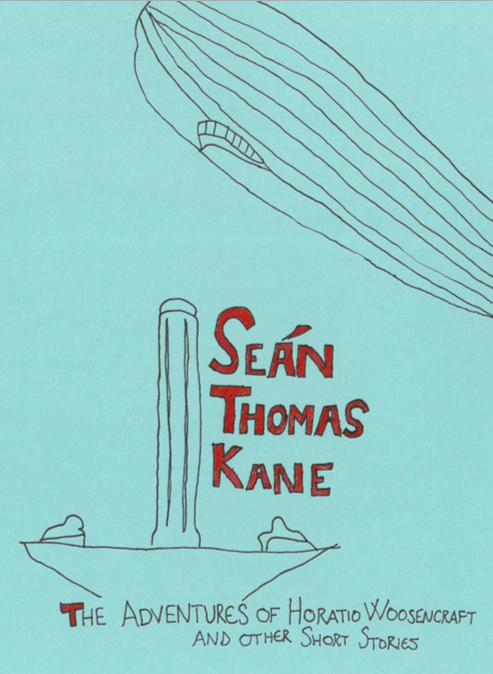
To read more stories like this, please consider purchasing a copy of my book The Adventures of Horatio Woosencraft and Other Short Stories

Metropolis

When I returned home to Kansas City about a month ago, I saw an email from the Nelson-Atkins Museum of Art that the Tivoli Cinema, which since 2020 has been housed in the Nelson’s auditorium, would be holding two showings of Fritz Lang’s 1927 silent masterpiece Metropolis. I jumped at the opportunity and immediately bought a ticket for the opportunity to watch this film on a big screen with an audience around me. So, this past Sunday afternoon I showed up for the matinee screening and was even more dazzled by the experience than I’d expected.

I had seen Metropolis once before when it was on Netflix about a decade ago. I remember feeling a bit wary of the film and its story when I first watched it that time. Now I know that watching a movie as monumental as this one on a screen as small as my laptop does a disservice to the whole experience. Metropolis was made to be seen on the big screen with a live orchestra, or at least a live organist, adding a whole extra dimension of music to this already vivid story. In the case of this weekend’s showings, Metropolis was accompanied by a 2010 recording of the original Gottfried Huppertz score performed by Berlin Radio Symphony Orchestra conducted by Frank Strobel. I’ve since played that recording again on iTunes while grading essays this week and have felt just as profoundly moved by it as I was in the theatre on Sunday.

It occurred to me while listening to that album again this week that as much as this score is a film score, listening to it on its own it feels far more like ballet music. In the past I’ve written about how I feel that ballet and silent film share similar characteristics born out of their mutual need for wordless expression to tell their stories. As I listened to Huppertz’s score without seeing the images in front of me I found myself thinking back to each particular scene in Metropolis as I’d seen them the day before. Yet in the moment as I sat in the third row of the Atkins Auditorium watching this spectacle unfold before me, I felt that Metropolis was more operatic than balletic in its very character. These were actors performing at a time when the quantity of film influences were far fewer on their lives thanks to the relatively recent invention of motion pictures, film at that point was only about 40 years old. 

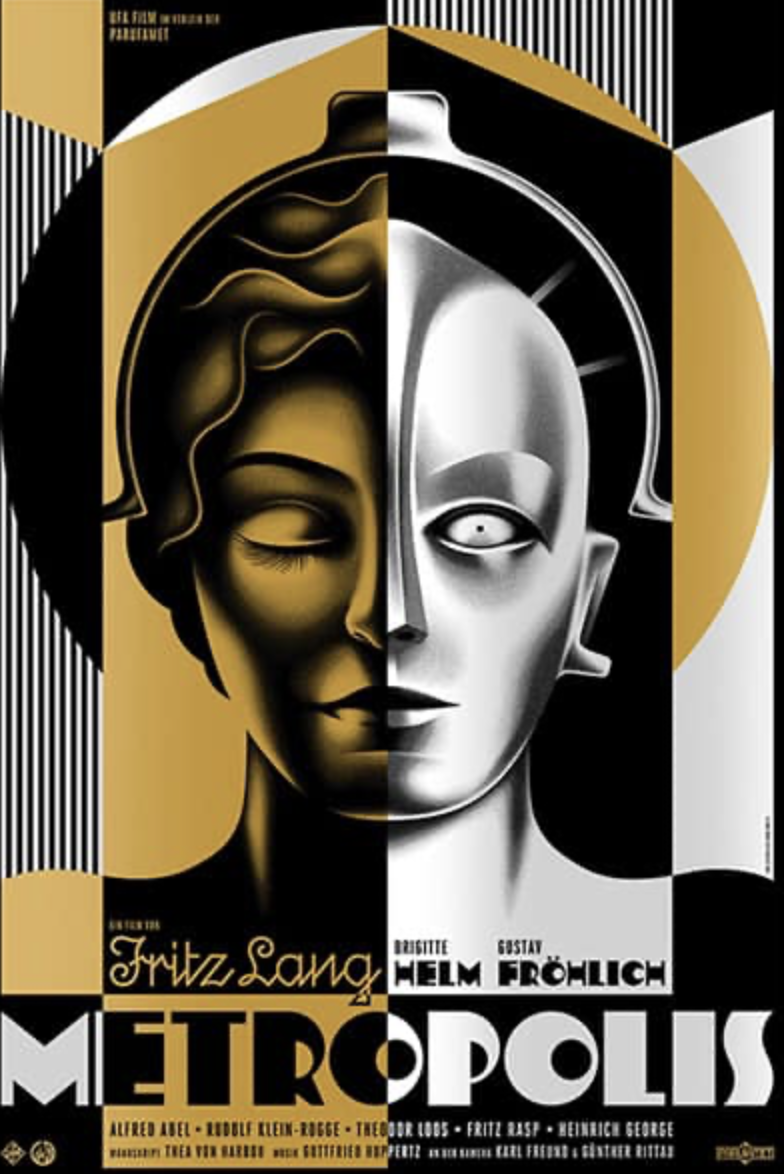
In Metropolis I saw echoes of Wagner and Strauss as well as hints of the future, all the films and television shows that would follow it. There is a scene near the beginning of the film’s first act, the 45-minute prelude, where a shift change of the underground workers occurs that seemed strikingly similar to several scenes from the new Star Wars: Andor series released on Disney+ this Fall. Don’t worry, no spoilers here. There are many elements of Metropolis that certainly have been influential, look no further than the Machine-Man, the poster child of Metropolis that wreaks havoc on the city and nearly destroys it and all who live within it. There perhaps we see the ancestor of Doctor Who‘s cybermen, Star Trek‘s Borg, or Alicia Vikander’s character in Ex Machina.

In the last few days, I read in Variety that there’s a TV series remake of Metropolis in the works for Apple TV+. While I’m normally hesitant about remakes of classic films or shows, the new Star Trek: Strange New Worlds which sees the adventures of the original 23rd century USS Enterprise before it was captained by James T. Kirk, has made the idea more amenable to me, though that’s likely because Strange New Worlds does the whole reboot idea perfectly. I’m most curious to see how Apple TV+’s new Metropolis will depict the city of tomorrow. In 1927 Fritz Lang’s original film used the great art deco skyscrapers of New York built of brick and steel as his model. Will this new series seek to depict the sort of futuristic architecture that I’ve collected on my architecture Pintrest board, filled with gentle curves, evocative colors, and dramatic lines? That remains to be seen.

Metropolis was a gripping film to see, and while long, with some aspects perhaps a bit old fashioned to our tastes, notably the over-the-top heart-gripping that happens throughout that made the crowd around me laugh from time to time, it still has my attention caught even now a few days later. Silent films speak to us in a way that their talking counterparts created after 1927 simply don’t. They tell stories in different ways, adjusting their style to fit the technical limitations of their time. I’ve always been drawn to silent films for this reason, and perhaps I’m drawn to ballet for much the same reason. After all, Chaplin was as much a dancer as he was a slapstick comic. Metropolis is a testament to the time and place in which it was made, Weimar Germany in the 1920s. In Joh Fredersen, the master of Metropolis I see Henry Ford, both in his character and in his physical appearance. I see fears about extremism on all fronts, and a call for unity and dialogue in the face of anger. I wonder what the new Metropolis will be like?

Belief & Science

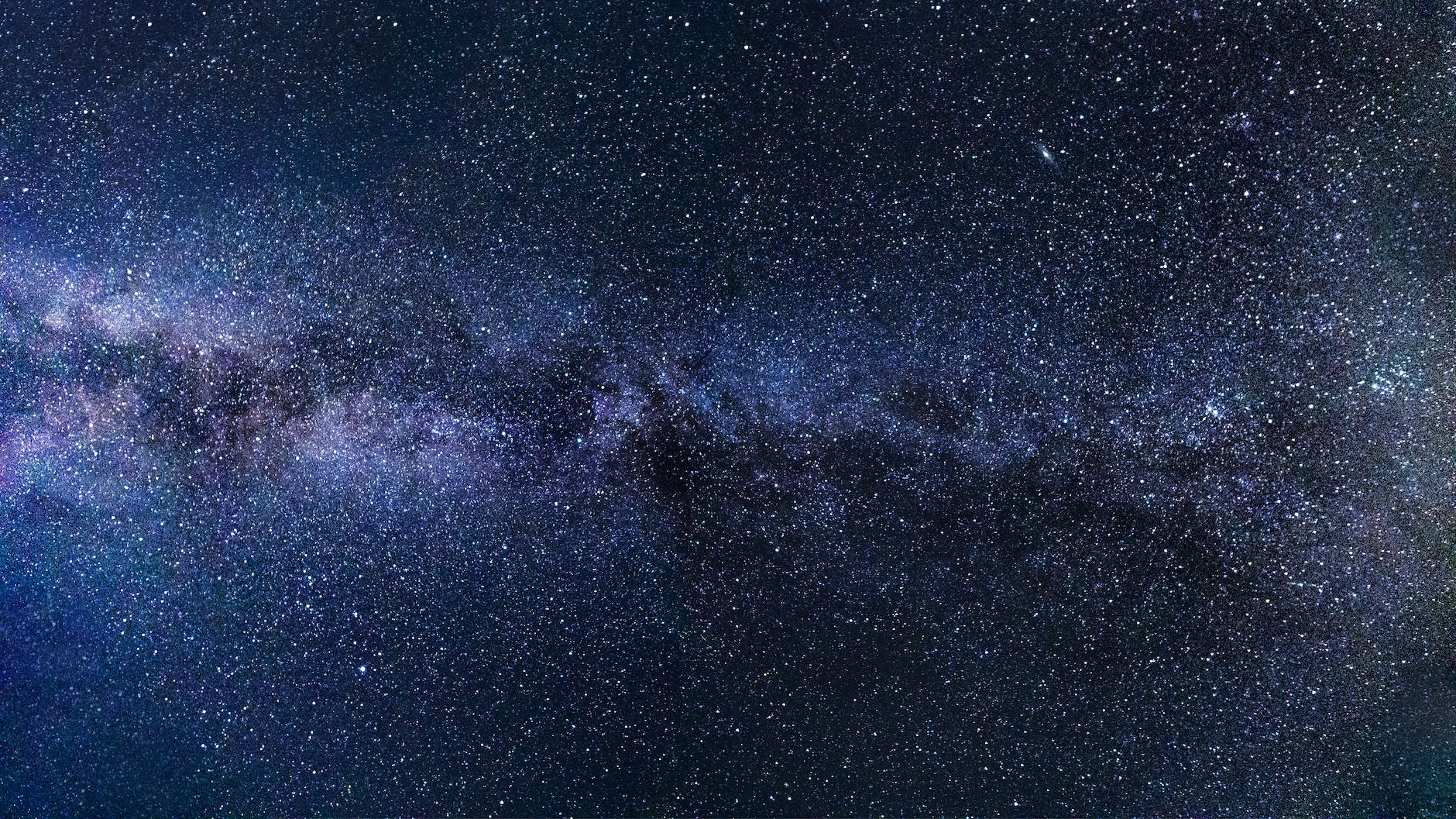
Photo by Felix Mittermeier on Pexels.com

I often stop myself mid thought when considering questions of truth to ask whether I believe in something or know of something. The distinction here is rather simple, knowledge is founded upon evidence, upon scrutiny & careful consideration of the facts of a case. Belief on the other hand is more of a gut feeling, it’s something we can discern but never really know until that feeling is backed up by fact-based evidence. Of all the forms of knowledge we have yet devised perhaps the most precise and useful is science, or rather the Scientific Method, which is fundamental to understanding the most innate truths of our world.

Both belief & science are built on a certain degree of faith. If the hard facts found in scientific inquiry are the bricks used to construct a house for our collected wisdom built up over every generation, then faith is the mortar that keeps those bricks together. You have to have faith in your senses, in your reasoning, and in the methods and tools you use to come to your scientific conclusions. Similarly, faith is necessary to believe, faith in an idea, in a hope, yes even in a dream of eternity. I’ve been using the English for these ideas so far, but now I think it might be useful to dive into the Latin, which will give us a better idea of how these concepts of belief, science, and even faith, interact in our Modern English.

In Latin the verb crēdō fits my own understanding of belief best. This verb refers to the action of believing and trusting in something, for belief is inherently an active thing. This verb is the origin of our English word creed, and in fact is the opening word of the Latin version of Nicene Creed. Something is credible because it can be believed, and so perhaps there is a certain degree of belief necessary and inherent in science whose facts and statements have enough credit to be considered irrefutable.

Science is itself an English adaption of the Latin word scientia, which had its origins in the Late Roman Republic as an abstract noun referring to the present active participle sciēns, a form of the verb sciō meaning “to be able to,” or “to know,” or “to understand.” Sciō is a practical sort of knowing, it refers to a manner of knowledge that can be tested, reviewed, and proven. Science relies on these proofs to survive and flourish, yet moreover science relies on the tools used to know being credible in their utility. You wouldn’t use a dull knife to cut meat, let alone blunted senses or scientific instruments to prove the fullness of our perceivable reality.

I have a deep admiration for many of the great scientific thinkers of the last few generations, and frequently mention the likes the great public science educators as Drs. Carl Sagan, Neil DeGrasse Tyson, and my generation’s favorite science teacher Bill Nye as people whose curiosity and intellect I look to for inspiration. It is striking then that someone like me who does believe in God, who is a practicing Catholic, would be so admiring of thinkers who themselves are profoundly atheistic in their worldview. I understand where they’re coming from, the existence of God cannot be proven through science, that is an indisputable fact, and to say otherwise would likely diminish the power and vitality of my own faith. I don’t mind that God cannot be proven real or otherwise, for the simplest summation of God in Christian theology as I was taught it, largely coming from the Latin Catholic and Greek Orthodox perspectives, is that God is a paradox. God can only really be approached through belief, through the hope that one might be doing things as some original Creator hoped things would turn out, because in my tradition Free Will is something fundamental to Creation.

I think of God in terms of a Divine Essence, certainly not physical let alone personal in a way that we as humans could fully understand a guy sitting across a table from us. I wonder then can we say that we knowGod, for knowledge relies on those same proofs born out of scientific inquiry? I’m not sure there, and I hesitate to talk about a personal relationship with God because how does one really go about talking to or feeling for someone who can’t be discerned by our methods or means? In the end, if God exists, as I believe, then it relies on that same belief, guided by faith, in Latin fidēs, a word that can also mean reliance, trust, confidence, or a promise that the thing you believe in, whether it be the accuracy of the Webb telescope to find for us the rings of Neptune in greater detail than ever before seen, or in the existence of a God who created all things at some moment deep beyond the furthest reaches of our known past.

I used to think that one could place God’s act of creation at the moment of the Big Bang, after all the image of a great explosion fit neatly with a certain idea of an outpouring of Divine Love, caritas in Latin, that is so central to the writings of many of the mystics of the Church. Yet now using scientific measures our experts have determined that the Big Bang was caused by an eruption of pure energy that had built up before the beginning. It makes me wonder whether we will learn more about those earliest moments as time goes on, whether today’s and tomorrow’s cosmologists will find new truths determined by their own proofs of what might well have happened when all matter in our Universe was compressed into a minute area of tremendous mass.

It seems fair to me to argue then that the moment of Creation did take place, and that at some point our own abilities as humans, all our own wisdom, ingenuity, and cleverness, will reach its limit. Thankfully our scientific tools have yet to reach that limit, and I doubt that limit will be reached in a good long while. It is in our nature as humans to continue pushing the boundaries of our knowledge, first beyond the campfires our ancestors gathered around on the long cold nights of the Last Glacial Period which ended somewhere around 11,700 years ago, then as we learned to plant crops and live sedentary lives, building villages, towns, and later cities where we settled. 

As our ancestors continued to develop their societies, they continued to fill in the edges of what became their maps, pushing the edges of what they came to call Terra incognita (unknown land) further and further out to the periphery until 500 years ago the disparate human family was reconnected through our ingenuity and technology transforming the oceans that were once barriers into bridges which we today can cross with ease. In the last seventy years those boundaries have begun to be pushed upward and outward from our home planet and into the stars beyond. We are explorers driven by our desire to understand the unknown, to see over the next horizon. Yet at the core of all that exploring we have continued to explore ourselves, to look within and ask deep questions about who we are not just as physical beings made of flesh, blood, and bone but as individuals, personalities each distinct from the rest. It is this exploration of the self that continues to drive our desire for some greater truth than we can know, a memory of a Creator who began our long and winding story as a species billions of years even before we ourselves evolved into the species we are today, Homo sapiens, discerning humans.

In times now past our ancestors often turned to belief rather than science to answer their questions, to find truths behind the mysteries they faced in their lives. Ideas of monsters, magic, and spirits out for good or ill were born from that worldview. Today, many of those same phenomena could be readily explained using the tools that our sciences have provided, yet still there are limits to our reason, for there are limits to what we as rational beings are capable of. The fullness of God as I believe in such a Divine Essence is beyond that reasoning, something reliant on my belief supported by my faith, my reliance in the possibility of the wisdom that such a Word, to borrow from St. John’s Gospel, promises. That belief is far from scientific, yet it is reinforced by my faith that we as humans can make sense of the reality into which we exist through our own tools, our Scientific Method.