When I returned home to Kansas City at the beginning of December, I was pleased to be able to go outside without a scarf or a hat. For at least those first two days it was pleasant here, with temperatures in the 40s and 50s Fahrenheit. I got pretty lucky with my own long drive west being during such a warm spell. The only snow I saw was in Michigan along I-94. Even in Chicago, a city famous for winter snow, I found only rain. So, when I first read that we were expecting a surge of Arctic winds to descend south down the Great Plains into the United States from Canada around Christmas, I, like everyone else, braced for the impact.
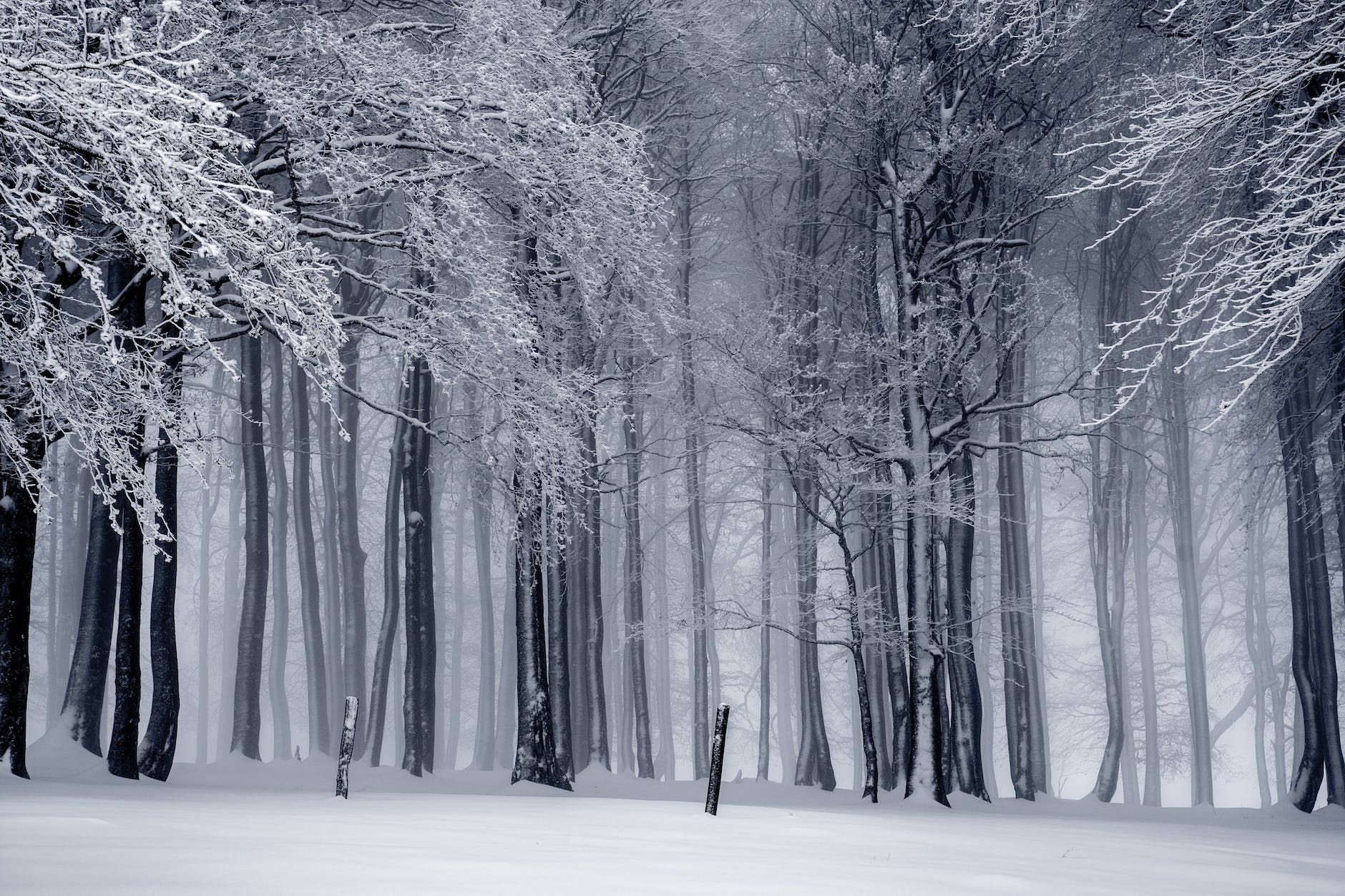
The worst of the cold began to arrive here on Wednesday, 21 December, with temperatures that night reaching below 0ºF and wind chills well into the negative double digits with the cold bottoming out around -35ºF (-37ºC). Things didn’t really improve for a while just yesterday we started to see regular temperatures above freezing again. At first, I thought this storm was going to miss the Northeast, that it was something we’d have here in the Midwest, but as the week went by I watched as the storm moved across the continental radar first in a southeasterly direction across the Midwest giving what turned out to be a mere glancing blow to Kansas City, before turning northeast with the influence of Gulf and Atlantic winds and heading straight up the East Coast.
Now, as I write this the City of Buffalo and its suburbs remain buried under feet of snow with nearly 30 dead. Air travel remains broken down across the Midwest and East, and journalists & meteorologists alike are calling this one “the storm of the century.” It proves that for all our technology and innovations, we remain subject to the whims of the weather. On a normal day someone with enough income could conceivably commute by air from one region of this country to another for work, perhaps not on a daily basis but certainly on a weekly one. Yet when extreme cold and blinding snow such as this barrel across North America we’re at its mercy.The funny thing about the last week is that looking ahead to the next few days things are supposed to greatly improve. Not only are we in Kansas City forecasted to rise out of our current frozen state but our temperatures are apparently supposed to climb back up into the high 50s Fahrenheit, warm enough for a nice walk in the park without a scarf, warm enough for some rain to wash away at least some of the snow and salt that’s making our streets and sidewalks dangerous to pass. Maybe that’s a good sign for 2023, that the new year will arrive to better weather than 2022 is leaving behind.
Yesterday, December 20th, I celebrated my 30th birthday. It seems strange to me to be thinking about my thirties as here and now, rather than something in the perhaps not so distant future, yet here they are. One story that comes to mind about the thirtieth birthday is the time when Julius Caesar found himself standing in front of a statue of Alexander the Great when the Roman general was himself 30. He found himself weeping at the thought of how little he had accomplished at that point compared what to the Macedonian king and conqueror of much of the known world had done by the age of 30.
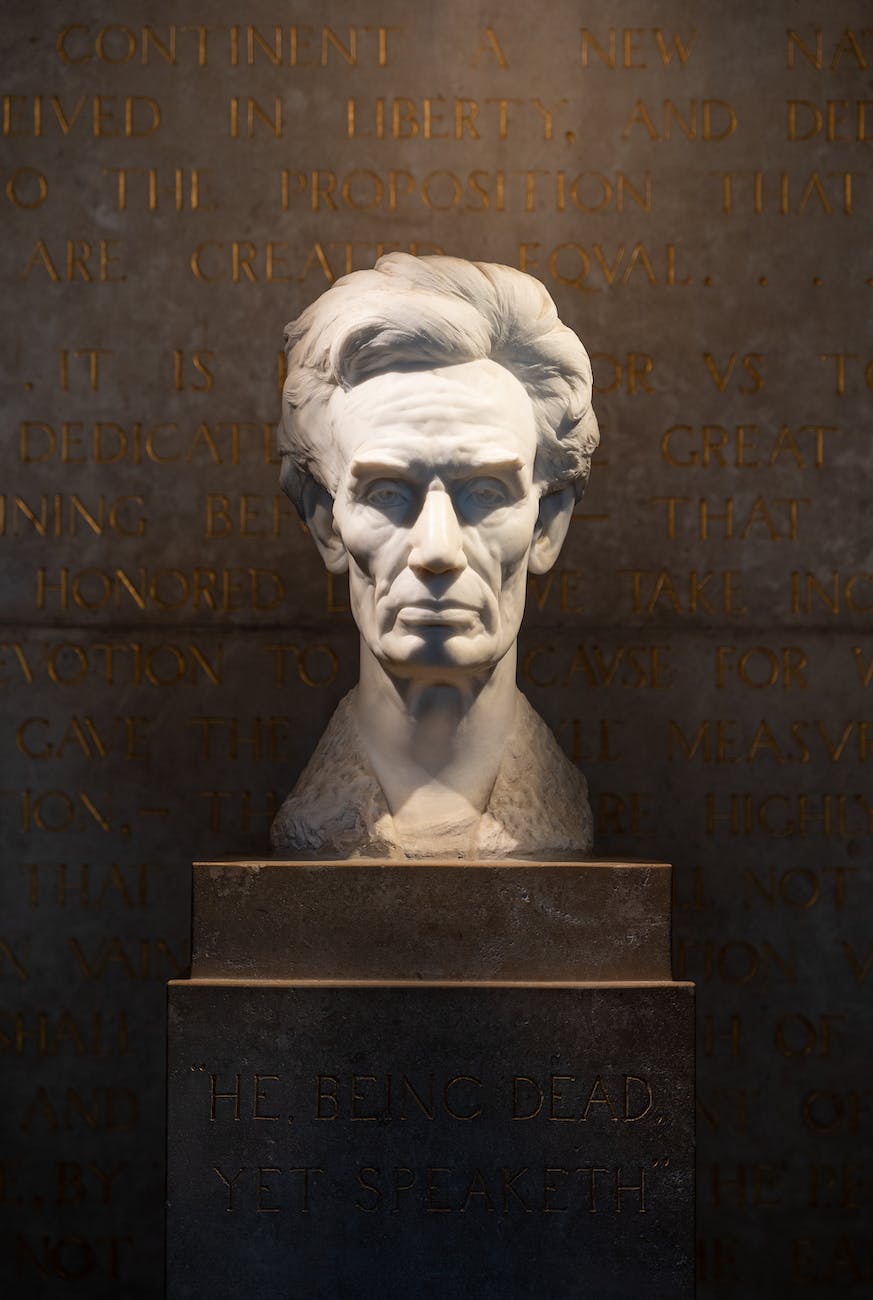
I for one don’t care as much for conquest or war, I’d rather avoid both and live peacefully, yet I still had my own moment of reflection just a few days ago at the tomb of the man who I have on some occasions referred to as my “patron saint” in the American civic religion.
Last week, on my move back to Kansas City, I stopped in Springfield, Illinois to pay a visit at the Lincoln Tomb. It’s one such monument that I’ve visited a handful of times before, but never before this time have I been alone with the Lincolns in the building. We are at a moment in our history when things seem to rhyme with Lincoln’s day, when we Americans are divided against one another to such an extreme not seen in these last 160 years. Lincoln has always been a sort of patron saint for me in our American civic religion, someone who I looked up to as a boy in the Chicago suburbs over twenty years ago, and so in this visit I found myself asking him to guide our leaders today, to offer them wisdom to “bind up the nation’s wounds” as he endeavored to do.
In a day as now when the loudest voices nearly drown out all the rest in our public discourse we need more quiet people, like Lincoln, to step up and speak out. I have tried in my own way both in public and in the Wednesday Blog to do this but have felt inadequate to the task and unheard by society at large. I worry today that we have lost sight of the need for balance in our lives, a drive for excess, loud colors, and garish noise contributing to the cacophony which makes maintaining our great society more difficult with each passing day. We ought to remember the common humanity that binds us together and “confidently hope that all will yet be well.”I hope these next years of my fourth decade will be good ones, that all the dreams of personal and professional accomplishments will be realized, and that we may again have a time of unity, and perhaps peace, in this country and around the globe.
Cosmos comes to English from Ancient Greek, where it referred to a sort of order in nature, the opposite of Chaos. This meaning stuck into the medieval period in works like the twelfth-century philosopher Bernardus Silvestris’s Cosmographia. In the Renaissance, the period I study, a science called cosmography developed in Europe as a way of making sense of all the worlds the explorers setting out from Portugal, Spain, France, and England were encountering. Still later, in the early nineteenth century the German scientific polymath Alexander von Humboldt named his greatest work, the five volume book Kosmos, which sought to describe the totality of nature as he and his colleagues had observed throughout his long lifetime. Today, Cosmos speaks to something far exceeding the Earth in scale, it’s the observable Universe with a potential for even more that we presently don’t know to be included under that cosmic umbrella.
A term like Cosmos is important because it helps us understand how we make sense of everything around us. I feel like I can imagine the entirety of the Universe but I’m sure if I saw an artistic rendering of the visible Universe, I’d feel like I was seeing a new face. This weekend as I was on my way west back to Kansas City through Chicago, the two cities I’ve called home over these past thirty years, I found my perspective shifting away from that of the stranger in the Northeast to one of familiarity and comfort back in my own native Midwest again. Arriving in Chicago I was delighted to realize I didn’t need the GPS in my car anymore, I knew exactly where I was in a place so vividly familiar to me. The same can be said for the rest of my drive west of Chicago, everything was familiar and wonderful to see.
My own Cosmos then, the order that keeps my life together, is built with Midwestern sentiments and expectations. Something that made life in New York difficult for me was how the customs there are at least somewhat different from what I’m used to. Even in these last few weeks there I still had to remind myself it wasn’t intentional rudeness when people I knew wouldn’t acknowledge me, let alone smile and say “hi” when we’d walk past one another, it’s just the impersonality of life in a place that has never really become familiar to me.
In these last three years I’ve now stretched my world out further, filling in many of the gaps of my own experience here in North America with trips to nearly all of the major cities on the East Coast and to Montréal and Toronto. I now know so many of the highways that link the Midwest & Great Lakes with the east. I found myself thinking about how as a child living in the Chicago suburbs that my family never took road trips east out of Chicago to Michigan, Indiana, or Ohio, nor north to Wisconsin. Instead, whenever we traveled it was west to St. Louis, Kansas City, and Denver further afield. Thus, the ways heading east were new to me as I drove along them this weekend, the easy drive on I-94 from Detroit to Chicago being one such example.
I’ve known many people who define themselves by where they’re from, for good or ill. There have been plenty who are loud and proud supporters of their hometown baseball team, and others who use their origins as an excuse to be unkind to the people around them. Over these last three years I had moved into a state of mind where my own origins were somewhat more dormant, sure I had all sorts of art up on the walls in my apartment celebrating both Chicago and Kansas City, and I’ve interchangeably worn my Cubs and Royals hats, but I’d begun to think of myself more as a person who can shift between places and communities, a skill that I needed to develop in Binghamton. Yet upon my return first on Saturday to Chicago and then on Monday to Kansas City I found all those old emotions and memories flooding back.
One of the parts of the Christmas story that I always remember is that St. Joseph had to go to Bethlehem from Nazareth to participate in the census because that’s where he was born. I am who I am just as much because of the places I’ve grown up in and the people I’ve lived among as the experiences I’ve had as an individual trying to make things work over these last three years alone in a lonely valley far from home. Home is a word of tremendous significance for me, it’s the place where I feel the most comfortable, the safest, and the most appreciated. For much of my life I’ve seen both Chicago and Kansas City as my home. It’s a sentiment I’ve reinforced this weekend on my first visit to the city of my birth since the pandemic began. Were I to say I have a “homeland,” Lake Michigan would remain its eastern boundary, the Great Plains beyond Kansas City its western. That is the heart of my Cosmos.
A year ago, I decided on a whim to turn my weekly blog into a podcast. I’m a bit late on the blogging game, and I always knew the podcast likely wouldn’t be one of the most popular out there, but despite all that I knew one thing for sure: it would be fun to make. I quickly found the audio editing enjoyable, and after the first couple weeks decided to keep things up, to add new elements into the recordings, and see where this would take me.
Now, one year in I’ve recorded 415 minutes of the podcast, according to Spotify, or 6 hours, 55 minutes. That’s enough to listen to for the last couple days of driving during my Longest Commute this August, or enough to get you west across Kansas on I-70 from Kansas City with an extra 50 minutes of podcasts to spare for those first flat miles in Colorado. It’s a big milestone for a project that survives depending on how much fun I’m having with it. Each week I know I could end this show, even end the Wednesday Blog all together, if I’m tired of it.
I think the reason why I keep this going is because I enjoy getting to write about something other than history every week. It could be as mundane a topic as highway signs or as personal a story as how I ended up working in Binghamton, NY. For the longest while I found it funny that the top rated episode by listener numbers was “Episode Untitled, or Humanity and What We Can Do About It,” which has had 34 plays to date. Currently, “Episode Untitled” ranks ninth in the standings, just above this summer’s excited reflections on the launch of Artemis I and below my episode on “Suspending Disbelief”, and the necessity for imagination to keep our lives fresh and exciting.
I was surprised to see “The Longest Commute” perform so poorly overall. While the first episode is ranked at seventh, “Part 3” sits at 28th and “Part 2” at 34th, well below my estimates. This trio of episodes, which I used to end the first season of the podcast, were inspired by the pair of blog posts I wrote in June 2021 about my trip with my Dad across Colorado and Utah, both of which performed extraordinarily well both with my usual readers and with members of the public who found them through WordPress and Twitter. So, the fact that “The Longest Commute, Part 2” ended up only getting 18 listeners is disappointing, but something I’ve learned from.
My two lowest played episodes, two that I really hoped would get more listeners are “Vote!“, the first Wednesday Blog Tuesday Special released a month ago on Election Day, and “How Space Exploration Can Unite Us,” which I released following the launch of the James Webb Space Telescope (JWST) last December. Even my February 2022 episode “Patience” only got 10 plays, and sits at 51st in the rankings. I’ve learned to be patient with these listener numbers, whether it be with the disappointment with the longer episodes that I put a lot of work into, like “The Longest Commute” or the shorter ones like June 2022’s episode “Kitty,” which at 67 plays is currently ranked at the top of the most played episodes of the show. And, of the episodes with musical interludes and bonus songs, you’ve seemed to like “S’Wonderful” the most at 46 plays with my two baseball episodes “Bad Practices in Baseball Broadcasting” (21 plays) and “Baseball is Back” (20 plays) ranked 27th and 29th respectively.
I’ve begun to incorporate guest voices into the podcast, from the voice of dead presidents, the talented actor Michael Ashcraft, to my good friend Alex Brisson who joined me to talk about the 2011 silent movie The Artist this Spring. This is something I want to do more, in the long run I have an idea for an expanded Wednesday Blog format where this weekly editorial would remain at the center of the show, but there’d also be a weekly musical interlude and a conversation included for a 30 minute episode. We’ll see how or when that’ll happen.
I want to thank you, my audience, for listening in over this last year. While most of you (74%) have been here in the United States, there has been a steady and growing listenership elsewhere around the globe. I’ve had a fair number of listeners in Ireland (9%) and the United Kingdom (4%), with the odd listener here and there in France, India, Tanzania, Canada, and Saudi Arabia. Most of you seem to be finding the podcast through the Wednesday Blog website, though I’ve got a fair number of listeners tuning in elsewhere. Anchor tells me there are 23 people in my audience, two less than the average size of my classes here at Binghamton University.
I’ve been surprised and excited to hear passing mentions of The Wednesday Blog from friends who haven’t come up in any of the analytical data, people who’ve read or listened to this. There’s a small group of friends, and my parents, who I send this to each week, and who have given me good feedback each time, but then there’s those of you who I don’t know but deeply appreciate who listen to this podcast and read this blog. I hope I can keep this going for you guys for a while yet.
I’m at a rather fun point in my doctoral studies. Today, I get to spend my days working on my dissertation and serving as a Teaching Assistant for a class. In my TA duties here at Binghamton, I’ve been assigned two sections of 25 students each, so when they submit essays, I find myself grading 50 of those in the course of a few days. It’s a lot of work, and in the moment the grading inspires a variety of emotions in me, from joy at a wonderfully written essay to disappointment at one that could’ve done better with just a little more effort.
One of the greatest boons to my work as a teacher is that now, after 12 years in college and 27 years overall as a student, I’ve finally made sense of how to write an essay. This word, used so often in academic writing, never really clicked for me. I knew I was supposed to write a research paper that had a introduction, body, and conclusion, but never really got the structure my teachers and professors were going for beyond that. It took my own transition from student to teacher for me to really understand that an essay is an extended argument.
It also took for me to start studying Renaissance French Humanism and Natural History for me to really understand the origins of the essay with Michel de Montaigne’s 1580 book of Essays, where the term originated. These were reflections on a variety of topics, from children’s education to cannibalism and everything in between. My own Wednesday Blog is in some ways a nod to Montaigne in format. Montaigne’s essays sought to describe his world as he saw it and understood it, in all its rich detail and complexity.
In the academic essays that I write, from the quick 3 to 5 page papers I used to write for my undergrad history classes at Rockhurst to my dissertation, which in many aspects is itself a long essay, all have the same core structure and spirit. Yes, at its barest bones the essay is made up of an introduction, body, and conclusion, but there’s so much more rich detail to a good essay than just that.
This semester it really occurred to me that the introduction ought to be made up of three main things: something to catch the reader’s attention, a thesis statement laying out the essay’s argument, and a brief summary of the main points with some context in the existing literature included if you’re writing on a graduate or professional level. Any of my colleagues reading or listening to this will either find their eyes are glazing over here or are instead laughing that I only really figured this out this late in the game as I was writing my dissertation.
The body is more than just the main points of the essay, it’s the real meat of the work, the rich quotes and analyses of the sources, the connections made to other works in all their intricate splendor, the quotable lines that help the essay stick in the reader’s memory and look forward to reading more of your work in the future. I still would say though that the thesis remains more important than the body, after all the body isn’t going to make sense without a strong central argument, a beating heart at the core of the entire work. I often tell my students this and have even begun advising them to underline their thesis statements to help them keep that heart in mind as they continue to flesh out the rest of their written creation.
Finally, there’s the conclusion. It’s a summary of the main points of the essay, a restating of the thesis with the memory of the body fresh in the reader’s mind. The conclusion is a chance to leave your reader with a really strong impact from your essay, something to find them wanting more.
For a while now I’ve often thought of the essay as a form functioning for scholarship and literature as the symphony functions for music. In both cases there are different styles and methods of elevating the pure form into an art that reflects the writer or composer’s personality and craft, that leaves the audience feeling something different, something that they can best describe as emblematic of that work’s author. In symphonic music there are clear distinctions between the classical composers like Haydn & Mozart and the romantic composers like Beethoven & Brahms. Sometimes, the best way to end an essay is to borrow an idea from the romantic symphonies and even the romantic operas of composers like Gounod and Wagner: let the main themes finish and then have a sigh to really round things off. If you listen to the finale of Wagner’s Götterdammerung, you’ll hear this very sigh, as if all the energy built up in the composition over the last few hours is nearly extinguished but has one last breath. If you can write an essay like that then bravo.
I’m writing this in the midst of an extensive round of edits to my dissertation, going line by line making corrections, clarifications, and all around tightening down my work until it really just elevates the core form of my thesis. In the last year since I started writing this dissertation, I’ve learned a great deal about how to do this job, and I hope I will in future avoid some of the great pitfalls that I’ve caught myself up in time and again in my studies.If you’re a fellow academic, or interested in academic writing, I highly suggest you go listen to my friend Kate Carpenter’s podcast Drafting the Past, which is all about the process of writing history. It’s a wonderful service to the profession that Kate’s doing. Enjoy your week!
I was 27 when I arrived here in Binghamton at the start of August 2019. I made a big move out here, with immense help from my parents, and set up shop in a good-sized one bedroom apartment that’s remained my sanctuary in this part of the country ever since. I’d wanted to continue my education up to the PhD since my high school days, and it’s a plan I’ve stuck with through thick and thin. After a false start in my first attempt to apply to PhD programs in 2016, which led to two wonderful years working on a second master’s in History at the University of Missouri-Kansas City (UMKC), I applied again, now far better positioned for a PhD program and ended up here through the good graces and friendly insight of several people to whom I’m quite grateful.
Arriving in Binghamton though I found the place very cold and quite lonely. In recent months I’ve begun to think more and more about getting rid of some of my social media accounts only to then remember that Facebook, Instagram, and Twitter were some of my greatest lines of communication with friends and family back home in Kansas City and elsewhere around the globe throughout these last three years. That first semester was tough, very tough, and while the second semester seemed to get off to a good start it was marked by the sudden arrival of the Coronavirus Pandemic and the end of my expectations for these years in Binghamton.
I spent about half of 2020 and 2021 at home in Kansas City, surrounded by family and finding more and more things to love about my adopted hometown with each passing day. When I was in Binghamton it was to work, in Fall 2020 to complete my coursework and in Spring 2021 to prepare for my Comprehensive Exam and Dissertation Prospectus defense. I still did a good deal of the prospectus work at home rather than here, though the memories of those snowy early months of 2021 reading for the comps here at this desk where I am now always come to mind when I’m in this room.
As the Pandemic began to lessen in Fall 2021 and into the start of this year, I found myself in Binghamton at a more regular pace. There was something nice about that, sure I wanted to be home with my family, but I also felt like I was getting a part of the college experience of going away for a few years to study that was reminiscent of the year I spent working on my first MA at the University of Westminster in London. I started to venture further afield in the Northeast again, traveling to Boston, New York, Philadelphia, Baltimore, and Washington again. When I first decided to come here one of the things, I decided was I’d take the opportunity of being in the Northeast to see as much of this region as possible.
2022 saw another transition, I wasn’t in one of the newer cohorts in my department anymore. Now, in Fall 2022 I’m one of the senior graduate students. It’s a weird thing to consider, seeing as it felt like 2020 and 2021 evaded the usual social life of the history graduate students here, thanks to the ongoing pandemic. I also began to look more seriously at my future, applying for jobs in cities across this country, and even looking again at some professorships, something I doubted for a while would be an option for me. If there’s anything about life that I’ve learned over the past three years spent here, it’s that you always need to have things beyond your work to look forward to. Whether that be a long walk in the woods on the weekends or a day trip to somewhere nearby, or even the latest episode of your favorite show in the evenings. Doing this job without having a life beyond it is draining.
For me the best times here in Binghamton were in Fall 2021 and Spring 2022 when I truly began to feel like I had a place here that I’d made my own. I was confident in my work, happy with how my TA duties were going, and really enjoying my free time as I began to spend my Friday evenings up at the Kopernik Observatory and Sundays at the Newman House, the Catholic chapel just off campus. I was constantly reading for fun as well, something I’d lost in 2020, even falling behind with the monthly issues of my favorite magazines National Geographic and Smithsonian. There were many weeknights I’d spend out having dinner alone reading natural history, science fiction, anthropology, and astronomy books.
It’s interesting looking back on myself from six years ago when I was in London, the months that summer when I decided I wanted to get back into history after a year studying political science. My motivations were to earn a job working at one of the great museums I’d spent countless hours in during that year in the British capital. While I studied for my MA in International Relations and Democratic Politics, I was still spending my free time looking at Greek and Roman statuary and wandering the halls of Hampton Court or watching the hours of history documentaries on BBC 4 in the evenings. And now that I’m back in History as much as I do appreciate and love what I do, I find my free time taken up by science documentaries and books.
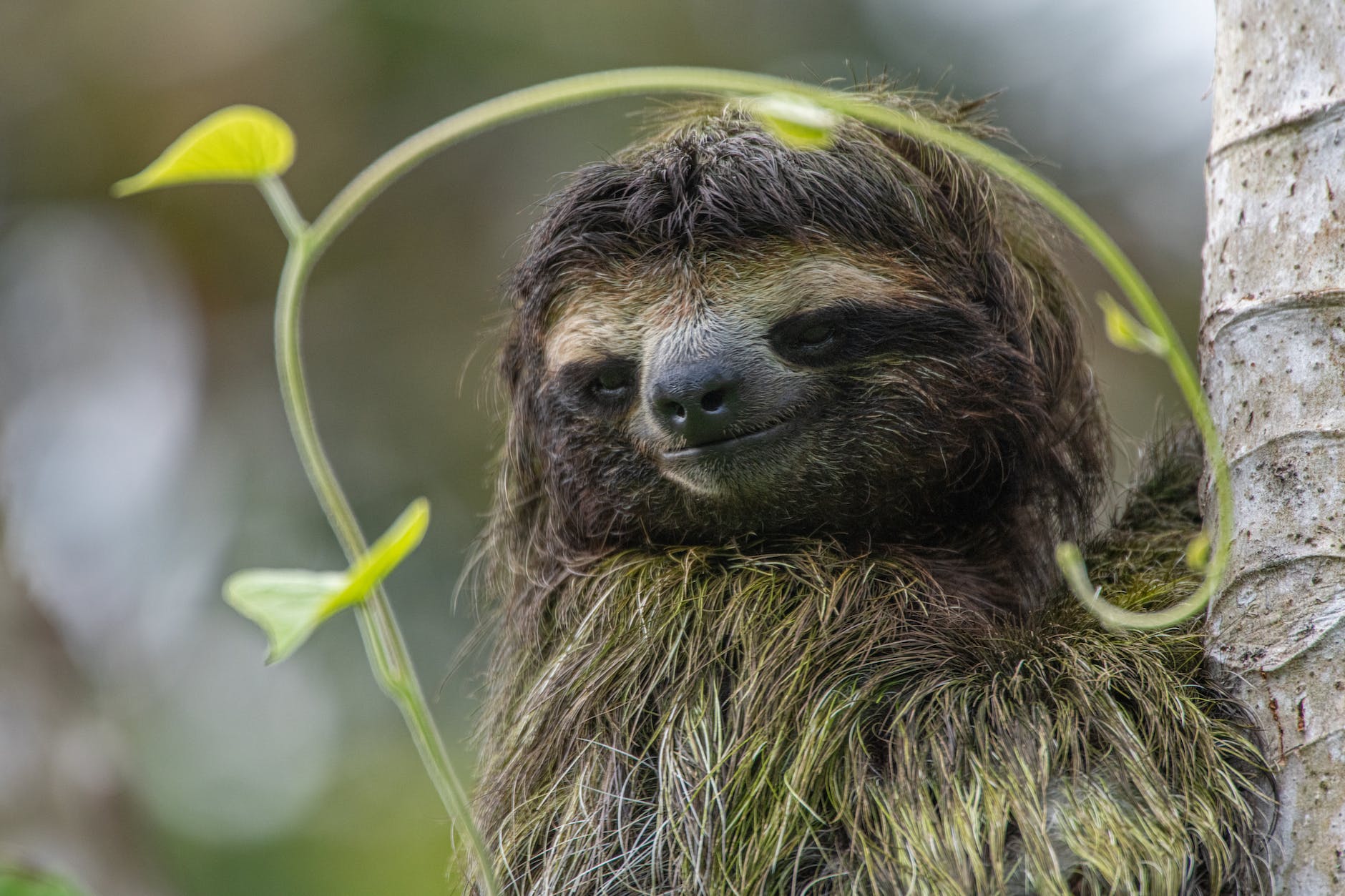
It’s important if you do want to get your PhD in the humanities and social sciences to figure out why it is you want to do this before you start. Have a plan in mind, have a big research question in mind, and focus your attentions onto that question. My own story has many twists and turns from an interest in my early 20s in democratic politics to a brief dalliance with late republican Roman history before settling into the world of English Catholics during the Reformation. I ended up where I am today because of another series of events that led me to moving from the English Reformation to the French Reformation, and from studying education to natural history. So, here I am, a historian of the development of the natural history of Brazil between 1550 and 1590, specifically focusing on three-toed sloths. In a way there are echoes of all the work I’ve done to date in what I’m doing now, thus as particular as this topic is it makes sense in the course of my life as a scholar.
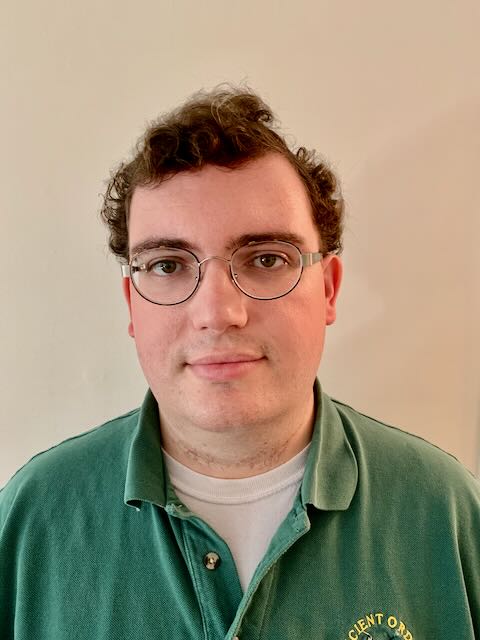
A month from now will be my 30th birthday, a weird thing to write let alone say aloud. My twenties have been a time of exploration of both the world around me and of myself. When I look at my photo on my Binghamton ID card, the best way to describe my appearance would be grumpy yet optimistic. Just as I was a decade ago, a sophomore in college, so now I am today, looking ahead to the next decade with excited anticipation of what it’ll bring, and hopeful that all the work I’ve done in this decade will find its reward in the next.
I was born on a snowy day in December 1992 in the Chicago suburbs, and over the past 30 years my life has been marked by the cyclical changes between warm and cold months. The winters often stand out more than the summers, perhaps because winter snow is always more of an event than a really scorching hot day in July. As I’ve gotten older, I’ve come to wish for snow less and less, certainly the incentive of a snow day is mostly absent now but also snow means I’m responsible for shoveling my sidewalks and driveway, something which I’ll do but don’t wish for.
In the last few days, we haven’t had any accumulation, the ground is still too warm, but the flakes falling on my head have been enough of a warning of things to come. Last year it occurred to me that there’s a pattern to how the seasons change and how the weather gets colder over the fall months. Late Summer here in North America is often stormy with the Atlantic hurricane season at its height and changing temperatures causing seasonal rains and occasionally thunderstorms across the continent. Each successive rain has its own small change on the overall temperature, first it’ll be steamy and hot after a rain in August, then as September progresses there’s a cool spell after each rain, until finally in October there’s that climactic storm that pushes the temperature enough that once the cool spell ends the temperature doesn’t rise again to its summer highs, instead settling now into a much cooler Winter low.
Here in Binghamton that final storm that did the trick was the remnants of Hurricane Nichole which reached this valley on Friday morning bringing moderate to heavy rains from the south that sat over this valley for much of the day. That evening the skies remained too cloudy for stargazing up at my usual Friday haunt, the Kopernik Observatory, and since the clouds have only faintly parted to reveal radiant sunshine. It took until Sunday afternoon for the temperature to fall enough for the steady flickering rain to freeze and become first sleet and then snow. Winter’s arrival is likely to be for the season now, it got this cold a few weeks ago before warm winds blew in from the southwest convincing me to lose my sweaters for a day in favor of my short sleeved shirts, but that last gasp of warmth wasn’t going to last.
There are things about Winter that I admire and look forward to. The conviviality of Summer is replaced by the twinkling celebrations in the long dark nights around Christmas and New Year’s, born from ancient mystery and ritual yet vibrant in its modernity. For the moment I’m still getting used to the Sun setting around 4:30 pm, still grumbling about it. The darkness of our Winter nights is bearable because we always know it’s temporary, the long summer days will eventually return, and with them all the nostalgia fueled memories of the glories of summers now past.
I am a Historian of the History of Natural History, or a Stáir ar Stáir an Nádúir in Irish. This means that I study how animals and plants were understood by naturalists in the past, in my case during the mid-1500s, or what I like to call the Late Renaissance. Central to all of this is the fact that the animals I study are all from the Americas, so they were brand new to the French and Swiss naturalists whom I study. In a sense then, natural history seeks to provide a history on human terms for nature. It seeks to bring something so vast as nature down to our level and make it familiar.
In my research this story focuses on the maned sloth (Bradypus torquatus), a species of three-toed sloth that’s native to the Brazilian Atlantic Forest. It was first recorded in a work of natural history by the Frenchman André Thevet in his 1557 book The Singularities of France Antarctique. Thevet has become famous in the history of natural history for using local names for local animals, rather than calling it a “sloth” he called it a “haüt“, his rendering of the local Tupinambá name. To me this is critical to understanding the History of Natural History, for while you could look at an animal and call it a “sloth” because it moves very slowly another option is to turn to the people who’ve lived alongside it for generations and ask them what they call it. This is what Thevet did.
Last week I got the chance to spend a couple days down in New York City, during which time I wanted to pay a visit to the American Museum of Natural History, arguably one of the preeminent institutions dedicated to the study of nature in this country. It’s a nice enough place, though I’ll admit the exhibits tend to be a bit dated now in 2022. Still, the American Museum offers a good foundation for the layout of such museums around the country. Like its Chicago counterpart, the Field Museum, my favorite such museum, the American Museum has sections focusing on Zoology, Paleontology, Botany, Astronomy, and Anthropology. It seeks to be an encyclopedia of nature in one big building on the edge of Central Park, something it does quite well.
What has struck me the most over the last few years of choosing to visit natural history and science museums in every city that I visit is how all of them try to tell the same story, a history of nature from the Big Bang down to the present. The Field Museum does a wonderful job of capturing this in their Deep Time exhibit, the place where you can find the dinosaurs, in that it begins with that first primordial burst of energy that got everything started and it ends with a wall showing all the species that have gone extinct already in our current age alongside a ticker counting the number of species currently going extinct. We model our natural history on our own history, and frankly our own history is one bookended by a lack of life, whether it be before we exist or after we’ve died.
It’s important that we understand the fact that our perspective is born entirely out of our own experiences. So, we understand the course of time as a linear and finite thing. Past generations have thought of trees and plants as animated creatures like us, while today we recognize they are living if perhaps not as sentient as we animals are. Many among us have understood nature through faith, prescribing that energy which drives all creation to a Creator, a Divine Essence as I like to call the most paradoxical and incomprehensible. (One of these days maybe I’ll release an episode all about the idea and promise of God.)
Thevet understood the sloth to be “most deformed” because of its strange shape and notable slowness. To his perspective it wasn’t a normal creature, natural to its own world yes, but not normal as he understood normal. We still today describe things that are “normal” or “ordinary” as things that we find familiar and comforting. I do it just as much as the next person (see the episode two weeks ago about cultural homogenization). In moderation this is a good thing, it allows us to formulate a baseline, a control, against which we can better understand the unusual and extraordinary around us. The beautiful thing about Nature is as much as our science has made great progress in seeking to describe and understand it, there’s always more out there for us to learn about.
I’m going to leave it there this week. If you haven’t noticed, my voice is failing me today. Let me finish with the thing that I myself will eventually want written as my epitaph (however many decades away that is): stay curious.
Over this last weekend I went to the Twin Cities for the annual meeting of the Sixteenth Century Society. Their conference, always held over Halloween Weekend, was referred to by one attendee on Twitter as “history camp” and that’s certainly one feeling I got out of the experience. I attended to present my own research into how three-toed sloths were initially compared to monkeys in how they were described in the works of the sixteenth-century naturalist Conrad Gessner (1516–1565), who got his sloth information from the guy at the center of my research, André Thevet (1516–1590). Looking at the world as a sloth historian means there’s always a lot of work to do, but there also always seems to be plenty of time for naps. Not a bad life, eh?
I’ve always been a frequent traveler from my earliest days. Growing up I was very familiar with air travel; I’ve got to say I miss those old phones they used to have in the back of the center seat in each row. So, traveling as an adult is a bit of a continuation of something I’ve enjoyed throughout my life, only more so on my terms. I’ll book a first or business class seat from time to time if I get the chance, as in my trip home a month ago, but perhaps the biggest thing I’ve gotten down is a routine for travel. I don’t have a “go bag” necessarily, but I have gotten the packing down to maximum 30 minutes for most trips.
These last few years in Binghamton have made travel a bit more complicated than any of my previous trips leaving from Chicago, Kansas City, or London. Binghamton has a local airport, but with only 1 flight per day at the moment to Detroit, a flight that is pretty expensive on most days, so it’s not my first choice. Rather, over the last three years I’ve driven at least an hour to either Scranton, Syracuse, Albany, Newark, or last weekend to LaGuardia to fly to that trip’s destination further afield. I’ve gotten used to the 3 hour drives between Newark and Binghamton, though there are times that I’ll wish I’d flown to a closer airport, especially after my one long haul transatlantic flight that got into Newark after 9 pm, seeing me return to Binghamton at midnight after flying 8 hours from Germany.
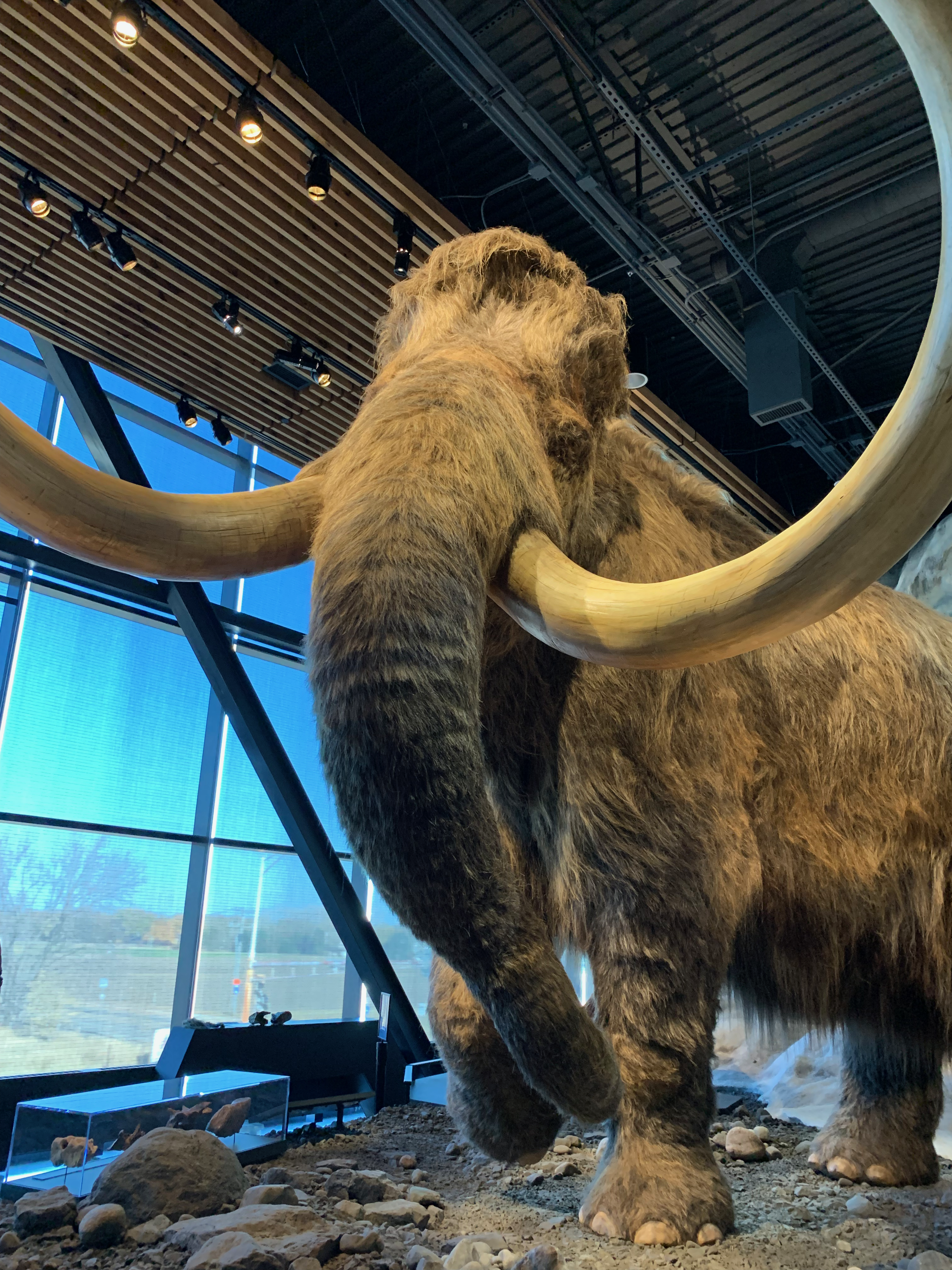
I learned early on in the Boy Scouts that what you pack you have to carry, no matter how far that hike will end up being. Because of this, I’ve learned to travel light. My biggest suggestion here is figure out how many clothes and shoes you really need to bring on a given trip. In my own case I’ll usually have the total number of travel days + 1 of underclothes, with a couple shirts, trousers, and sweaters that I can rotate through over a 3 or 4 day trip, and one pair of shoes which I’ve found are better carried in a tote bag separate from the backpack where everything else is, that way when I arrive my clothes don’t smell like my gym shoes. If necessary, as in this conference trip or the family funeral I flew home for last month, I’ll usually wear the suit I intend to wear for the big event (my panel or the ceremony) on the plane, that way it’s not getting wrinkled in my bag. On this trip to the Twin Cities, I did bring a winter coat, folded compactly into my bag alongside all my other clothes and toiletries in that bag. It turned out to be useful to bring that coat, even though it wasn’t ever really cold while I was on the ground in Minnesota (a rare thing), as I was able to put on that coat instead of the suit jacket on several occasions when I wanted to go explore the area, as in my afternoon visit to the Bell Museum’s dioramas across the river from Downtown Minneapolis.
A mammoth at the Bell Museum
The same logic applies to any souvenirs I might want to bring back with me. Anything I buy on the ground has to return in my bag that was already fairly full upon arrival. With this in mind the only new things I returned with were a stack of receipts for funding purposes, some notes from my panel, the conference program, and a printed version of the script for my presentation. I didn’t buy any souvenirs this time around at any of the museums, nor any other knick-knacks while I was there. Again, anything I have with me upon leaving has to either be left behind or carried in my bag for the entire return trip.
That return trip ended up being 15.5 hours long. I was traveling with my good friend Marco Ali’ Spadaccini from the History Department here at Binghamton, and we initially were set to wake up on our return travel day, Halloween, at 3:30 am Central to catch our 7:00 am flight. The first catch appeared when our first flight from MSP to Chicago-Midway was cancelled without any notice as to why. So, at 3:30 am we discovered we were instead leaving Minnesota on an 8:55 am flight to St. Louis. I wasn’t able to go back to sleep, thus starting my own travel clock then at 3:30 am. After getting an Uber to MSP Airport we caught our first flight on time and landed a few minutes early at St. Louis’s busy Lambert Field, where we had a quick hour connection to our flight to LaGuardia. That plane also arrived in New York a few minutes early, which meant in the end after our 3.5 hour drive from LaGuardia back to Binghamton through the Catskills, I returned to my apartment at 7:00 pm instead of 7:30 or 8:00 pm like I had predicted.
At this point I’m used to long travel days, it’s become more of a common thing for me in recent years coming to Binghamton, but even returning to Kansas City can be a taxing experience with the frequent need for connections going into an airport that as of now doesn’t host an airline hub. On this trip Marco and I considered traveling to Minneapolis by train and by car, both would’ve taken longer than flying, though Apple Maps’ estimated drive time was only 90 minutes longer than what it actually took us to fly between MSP and LaGuardia and then drive from Queens up to Binghamton. By train the trip would’ve taken us 30 hours with one connection between the Lake Shore Limited and the Empire Builder in Chicago, but the real kicker to that idea was the $3,000 price tag for two sleeper tickets roundtrip. Flying became the most economical option, and in the end, it was better that I was only fully focused on driving for a good 4 hours getting to LaGuardia rather than a full 17 hours trying to drive the entire route to the conference hotel in Minneapolis.
This was my last fly-away trip from Binghamton, the last in a long line of such trips that I’ve taken since arriving here in August 2019. I think back to one of my first, the trip 3 years ago this weekend to the Sixteenth Century Society Conference in St. Louis, when on the return journey I had a 4 hour connection at O’Hare. That day was the first time that I really felt like a business traveler rather than a guy off on another adventure. It’s a feeling I got throughout this trip too.
One of my favorite YouTubers is J.J. McCullough, a Vancouver-based political columnist for The Washington Post who creates videos discussing topics of culture, politics, and society here in North America. In the summer he made a video discussing the topic of cultural homogenization, of how all cities here in the US and Canada tend to have a fair number of similar things going on. It’s a thesis that I agree with, though with some hesitancy.
I for one am happy with this idea that you can go to any major city in these two countries today and generally feel rather familiar with your surroundings. It’s why I’ll often prefer to stay in chain hotels over smaller super-local B&Bs or even use Air BnB or VRBO when I’m traveling. I like the fact that I know what to expect in a hotel room from the generic furniture to having the same soaps and shampoos to having the same set up with the TVs. When I travel, I’m not traveling to spend my time in a hotel, rather I want that consistency as somewhere I can return to and feel familiar in after a day of going around a city that I may not know quite as well.
Likewise, on the long drives I’ve done four times a year for the past 3 years between Kansas City and Upstate New York, I’ve often mentioned along the way that I feel at home in the suburbs of the various cities I tend to stop in. In particular, my usual overnight hotel in Columbus felt quite familiar, in part thanks to its modern décor and highly suburban surroundings, far more so than Binghamton, NY where I’ve been working on my PhD. This has led me to often remark that leaving Columbus is like leaving the familiarity I’ve come to know and appreciate in the urban Midwest as I head into the Appalachians of New York.
The biggest difference here that I’ve noticed between Binghamton and the other American cities I’ve lived and worked in––Chicago & Kansas City––is that Bing has had a rougher recent economic history than either of the two. While Chicago was able to survive the decline of older industries in the Great Lakes Region, aka the Rust Belt, through its sheer size and the diversity of its economy, and while Kansas City has had a renaissance of its own in the last twenty years to the point that it is today a thriving, growing metropolis with ever increasing opportunities, Binghamton has never really had the size or the economic diversity to stay as strong throughout the bad last few decades of outsourcing jobs and closing down old factories in some of these older towns and cities in the Northeast. There are some hints of this continental North American culture here in Binghamton and in Broome County more broadly, just look at the national chains that line Vestal Parkway, but in its current state I argue that this city has far more in common with the other old industrial centers of the Northeast, particularly in New York and Pennsylvania that have seen their main industries move away within the last 40 years than it does with the broader North American culture.
Still, there are moments when I’ll be driving around suburban Broome County where I’ll find myself remarking how similar the houses are to some of the older Cook County suburbs of Chicago, albeit built in a valley surrounded by what the US Geological Survey calls “small mountains.” I myself am a child of the western DuPage County suburbs of Chicago, and after moving grew up on the far western edge of Kansas City, Kansas, whose older neighborhoods to the east are equally similar in their character and in the age of the buildings to some places here in Binghamton, Johnson City, and Endicott.
In seeing those similarities I’m seeing the broad cultural trends of a century ago. Just as today there are particular architectural styles that are in fashion across this continent, from the renovation of old urban industrial buildings into lofts to the big glass buildings that mark the styles of the later 2000s and into the 2010s, a time when after the worst of the Great Recession had passed, I do think in retrospect we’ll say was a time of optimism, however short it ended up being.
In the media I consume, I’ve often found it interesting that I’ll prefer to watch the national evening news broadcasts over the local news. In my own case I’m a PBS Newshour guy, and there’s something about watching that broadcast that I know millions of other people around the U.S. are also watching, and that it’s coming from a studio in in the Virginia suburbs of D.C. (a place I know very well), that makes me feel like I’m a part of a wider community. The same goes for watching Jeopardy! every weeknight. It’s a show that I know a big number of people watch from all living generations, and it’s 30 minutes a day when I can feel like I’ve got something in common with all of them. I don’t otherwise watch much popular TV, and when I do watch shows that’ll catch the headlines like the recently released Lord of the Rings: The Rings of Power, I often have to ignore those same headlines and subreddits for how negative they often become. In those moments, that hour a week, I want to enjoy the story and not be caught up in what other people might think about it.
Our world is built on mass-production in every sense of the word. We wouldn’t be able to sustain the lifestyles we lead, nor our current population, without industrialization. So, while I will go on a limb and try out the local cuisine when I’m traveling, whether that’s crab cakes in Maryland or the breakfast burritos in Austin, I still like to see what my usual staples are like in a given place. I’ll freely admit to preferring to get a burger or pizza or chicken when I’m doing overnight stops in cities in part because after a day of traveling, I don’t want to be as adventurous, yet also because I can use that baseline, that control, to see how they do the same sorts of meals in a given restaurant in one city and compare it to all the others I’ve tried that in. In some cases, like at Mr. Bartley’s Burger Cottage in Cambridge, Massachusetts it was a wonderful choice, in others like at many of the places I’ve ordered burgers at higher altitude in the Rockies, it’s been a poor choice seeing as I’m less of a fan of well-done beef.
Yet with all this mass-production it strikes me as funny that we often have our very particular ways of distinguishing ourselves, from monograms to those new Facebook avatars, that are themselves mass-produced. I first started seeing this style of monogram, one large letter surrounded by two smaller letters, when I was in college. They often became near logos for the people who used them, yet those very personal symbols were themselves created from templates and used by millions of other people. I did the same thing with the logo for this podcast, which I chose out of a set of templates as a matter of convenience when I was creating it, my own meager attempts at making a logo had all been rejected by Anchor’s formatting.
When it comes to some of the very local sayings that J.J. mentioned, like the often-heard Kansas Citian remark, “if you don’t like the weather just wait five minutes,” it’s something I’ve also heard in many other cities. When I moved to London, I found that our North American customs surrounding weather & seasons made a lot more sense there. The dates when we demarcate our seasons, Winter & Summer starting at the solstices, Spring & Fall at the Equinoxes, makes sense in Europe. It doesn’t make sense here in North America where the weather fluctuates dramatically within a given day. Even now, I’m wearing short sleeves on a 66ºF (19ºC) day in Upstate New York and watching the leaves now past their Fall peak begin to be blown off the trees by the impending winter air. Last week, by comparison, I was wearing thick wool sweaters, wool socks, with a coat, hat, and gloves when outside. Our weather makes a lot more sense when you think of it continentally, after all no one place is entirely separated from everywhere else in North America when it comes to the weather. The snow that strikes the Dakotas one day could well fall in the Mid-Atlantic States a day or two later.
I love Kansas City, and Chicago, the two cities I consider to be my hometowns. I love the things they do that are different from other cities, like Chicago’s hot dogs, Italian beef, and deep dish, or Kansas City’s barbecue. They are the two cities where my own experiences, and my family’s American experience has played out, both in their old urban neighborhoods and in the postwar suburban sprawl where I grew up. I appreciate all the things they have in common, things which they share with much the rest of the metropolitan cities of North America. That’s what’s made places like St. Louis, Denver, Columbus, Indianapolis, suburban Maryland & Virginia, and even Toronto feels like a place where I could settle down. I’ve heard Toronto referred to as a cleaner version of Chicago. It’s what’s made the big merging metros of the Northeast––Philly, New York, and Boston––feel less foreign to me than the cities that lie between them and the Midwest.
I’m happy that we have so much in common in this time when we seem so set on dividing ourselves into parties and camps constantly at odds with each other. Our commonalities demonstrate how much we depend on one another.






 Wednesday Blog by Seán Thomas Kane