Category Archives: Wednesday Blog

Bad Practices in Baseball Broadcasting

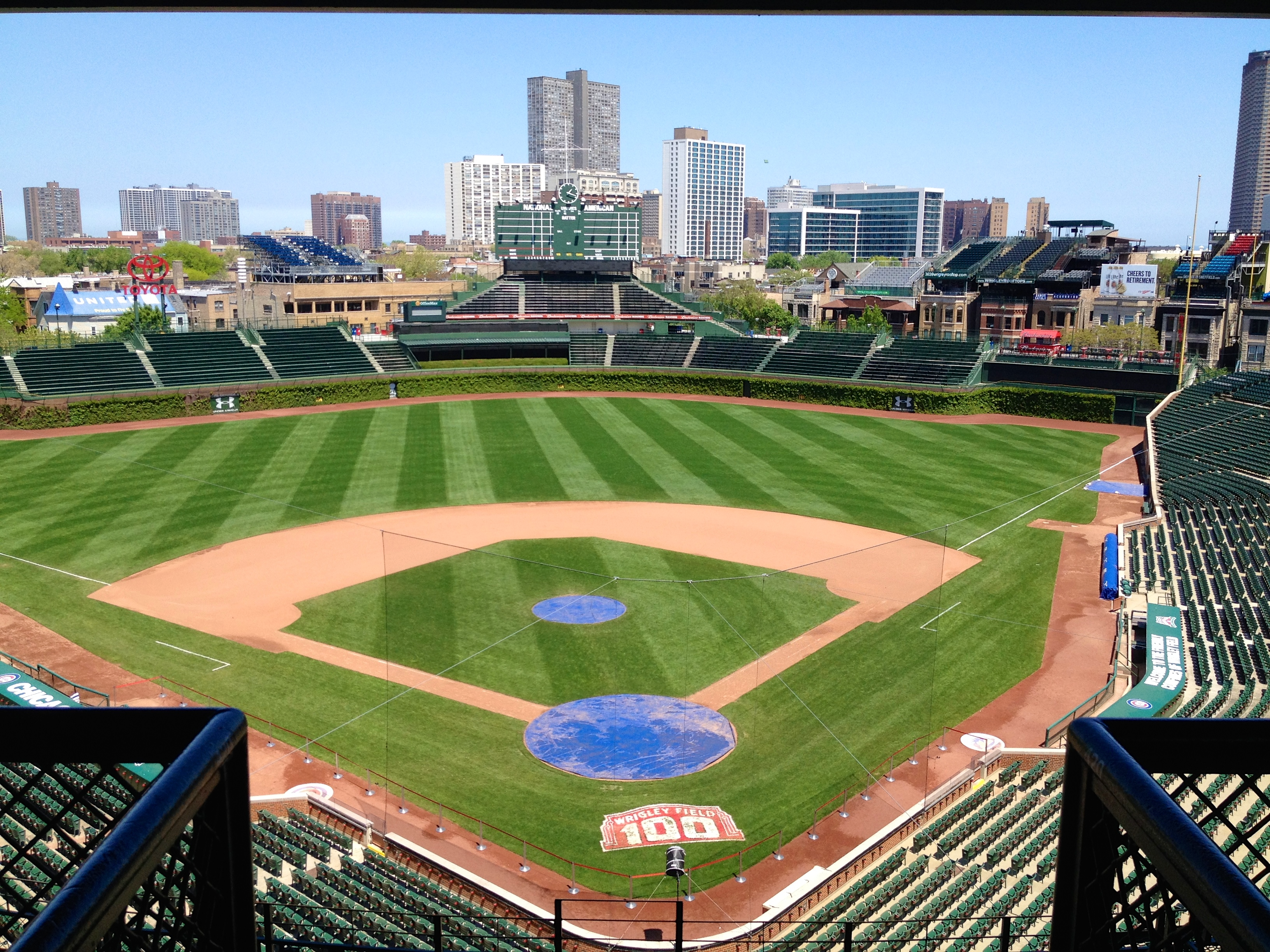
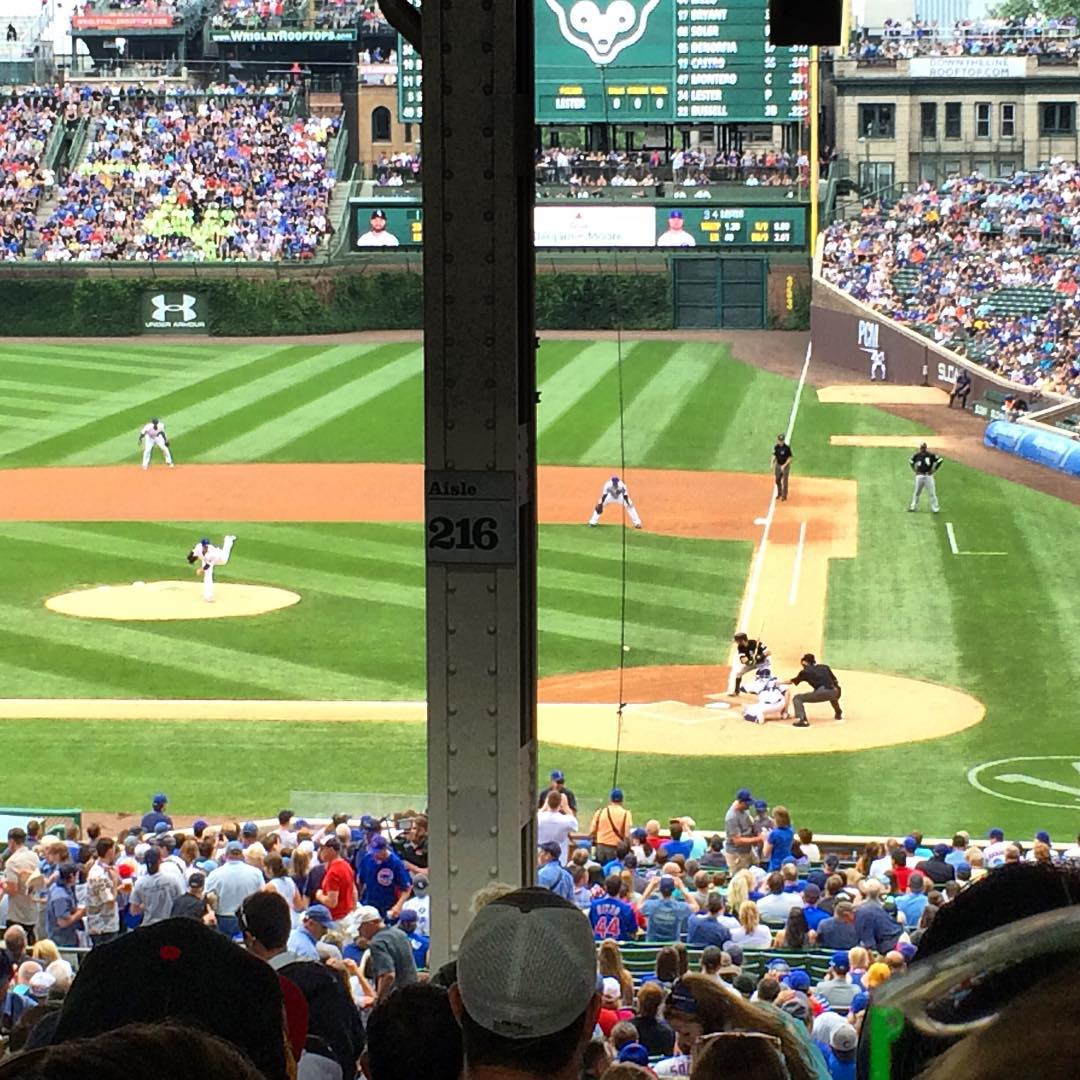
Wrigley Field from the press box.

Bad Practices in Baseball Broadcasting Wednesday Blog by Seán Thomas Kane

This week, how baseball broadcasting today is a tale in what not to do. All musical performances included are my own.

As you’ll have gathered from last week’s episode, I’m a big baseball fan. I always have been, and probably always will be. Baseball was the first sport I watched as a kid, the first I played (Kindergarten T-Ball), and the one that I have spent the most time watching both in the stadium and at home on TV. Growing up in the 90s and 2000s baseball was one of a handful of things that were just normal to have on the TV or the radio during the day in the background. No matter which major league city you were in, the local team or teams would probably be on the airwaves on any given Spring or Summer afternoon or evening. 

As a lifelong Cub fan, I was lucky after my parents & I moved to Kansas City in June 1999 to be able to still watch the Cubs live on WGN’s national superstation. Those broadcasts became one real big constant in my young life, something I even introduced to my cousins on occasion during those long summers in the early 2000s when I spent the day at their house. They were all Royals fans first and foremost, but I distinctly remember one particularly exciting game from Wrigley when we all were buzzing with excitement in front of the TV watching an especially close day game, cheering & celebrating when the Cubs won with a walk-off home run in the bottom of the 9th.

That all began to change in the early 2010s when baseball began to move from the ubiquitous over-the-airwaves channels to special sports channels that you either got through your cable package or that were only available at special request. The Cubs left WGN in 2015, and one of my last day-to-day links with my original hometown went with the last of those broadcasts. I didn’t notice it at first, in September 2015 I moved across the water to London to do a master’s degree in International Relations and Democratic Politics at the University of Westminster, and only rarely got to see baseball at the odd American restaurant in the British capital. When I returned to the U.S. the following year the Cubs were almost always on MLB Network or any of the other regular baseball broadcasters, mostly ESPN and Fox Sports. It was 2016, the year when the drought was finally lifted (see last week’s episode for an emotional recounting of the night of Game 7). In the following years I was able to see the Cubs fairly regularly on national TV, and the Kansas City Royals, my favorite American League team on the local Fox Sports Kansas City broadcasts on a daily basis, but as the 2010s ended all that began to change yet again.

Around the same time as the beginning of the pandemic in this country in March 2020 the news broke that Fox was selling their Fox Sports division as a part of the Disney acquisition of 20th Century Fox. The Federal Trade Commission ruled that Disney couldn’t control Fox Sports and ESPN, that’d be a monopoly, so Fox Sports was up for grabs to the highest bidder. That bidder turned out to be Sinclair, America’s shadiest right-wing owned media conglomerate, the Hearst of the 21st century, the true Charles Foster Kane. I wasn’t happy from the beginning about this; Sinclair had been caught red handed making their local news anchors read a prepared statement that sounded way too much like propaganda for my liking, and nearly anything they touched seemed to be weaponized to benefit their own ideals and mission. So, when Sinclair announced that the Fox Sports naming rights had been sold to Bally’s, the casino chain, I wasn’t totally surprised. One thing to get out of the way: I’m fine with legalized sports betting, I’m just annoyed with how gaudy and grotesque its advertising often tends to be, and frankly I don’t want any part in it. What frustrated me the most was that as a part of the deal Sinclair decided to get greedy, as robber barons are known to do, and raise their rates to the point that Fox Sports, now Bally Sports, was cut from most TV providers’ channel listings, especially from streaming TV providers like YouTube TV and Sling. For the first time in my life, I couldn’t watch baseball, whether the Cubs or the Royals, on local TV.

I recognize that this isn’t a serious societal problem on its own. Having professional baseball off the airwaves for a good portion of the population isn’t going to cause people to starve or to lose their homes or their jobs; it isn’t a matter of public education or human rights. Compared to those problems this is insignificant. Culturally though, in a country that is largely isolated from the global sports market, baseball remains our national past-time. It’s something that developed as our country grew, a sport that came into its own after the Civil War with teams that have existed as long as some communities in this country have. My own Chicago Cubs have an old heritage in professional baseball dating back to around 1870. They joined the National League at its founding in 1876 and have stuck around in the same city ever since. For the first 30 to 40 years professional baseball was seen by spectators in the stands and reported on in the newspapers. In the next few decades with the invention of radio it was broadcast around the country alongside sports like boxing to homes and businesses from Atlantic to Pacific. Following World War II it began to be seen on TV screens, with greats like Jack Brickhouse calling games from the press box at Wrigley Field. Some of my fondest memories of baseball are the most mundane ones, like the times I’d sit in my grandparents’ kitchen watching the Cubs with my grandmother, or the summer evenings in recent years when my parents and I would sit around in our living room in Kansas City watching as the Royals played fun small ball, outwitting heavy-hitting teams with their base running, base stealing, and excellent fielding. Memories like those are what companies like Sinclair are burying deep in the ever-receding past.

A year ago, Sinclair announced they’d have a streaming service ready to go for the 2022 baseball season called Bally Sports+ (because every streaming service is called “so and so +” for some reason). The report said it would cost around $23 a month, or $184 per baseball season, including Spring Training and the playoffs (March-October). This would cater to people like me who don’t have traditional cable packages, owing to their exorbitant prices around $80-120 a month, and would fill the void that Sinclair themselves created to gouge the market during the 2020 and 2021 seasons. Well, Spring Training has begun for 2022 and Bally Sports+ is nowhere in sight. I was lucky enough on Monday afternoon this week to catch a Royals Spring Training game against the Angels but that feels more like a chance encounter than a solid resolution to the problem.One potential solution would be to build off the legal exception that the 1922 Supreme Court Case Federal Baseball Club v. National League made for Major League Baseball to be exempt from the Sherman Antitrust Act, the very act which opened the door for Sinclair to buy Fox Sports over Disney’s objections. In the present case, I’d argue that baseball is an exception to the rule because it’s a deep-rooted part of American culture. As such it ought to be available to watch over-the-air, exempt from any special cable or streaming packages, exempt from being hogged by the greedy arms of broadcasting conglomerates like Sinclair. Unlike the NFL, baseball’s closest competitor, Major League Baseball’s season doesn’t lend itself well to having an all-national broadcast schedule. We’re talking about 24 weeks between April and the end of September with 162 games being played by 30 teams, or 2,430 games in a season. A solely national broadcast system like the NFL’s simply wouldn’t work for the MLB. Instead, local broadcasts should be prioritized, and broadcasting companies should be incentivized to put the viewers first. The alternative, if baseball isn’t easy for people to watch on a regular basis, is for the sport to decline in popularity, something that hurts companies like Sinclair anyway. I only hope that Sinclair’s executives realize it’s to their benefit to let people watch baseball at a fair price.
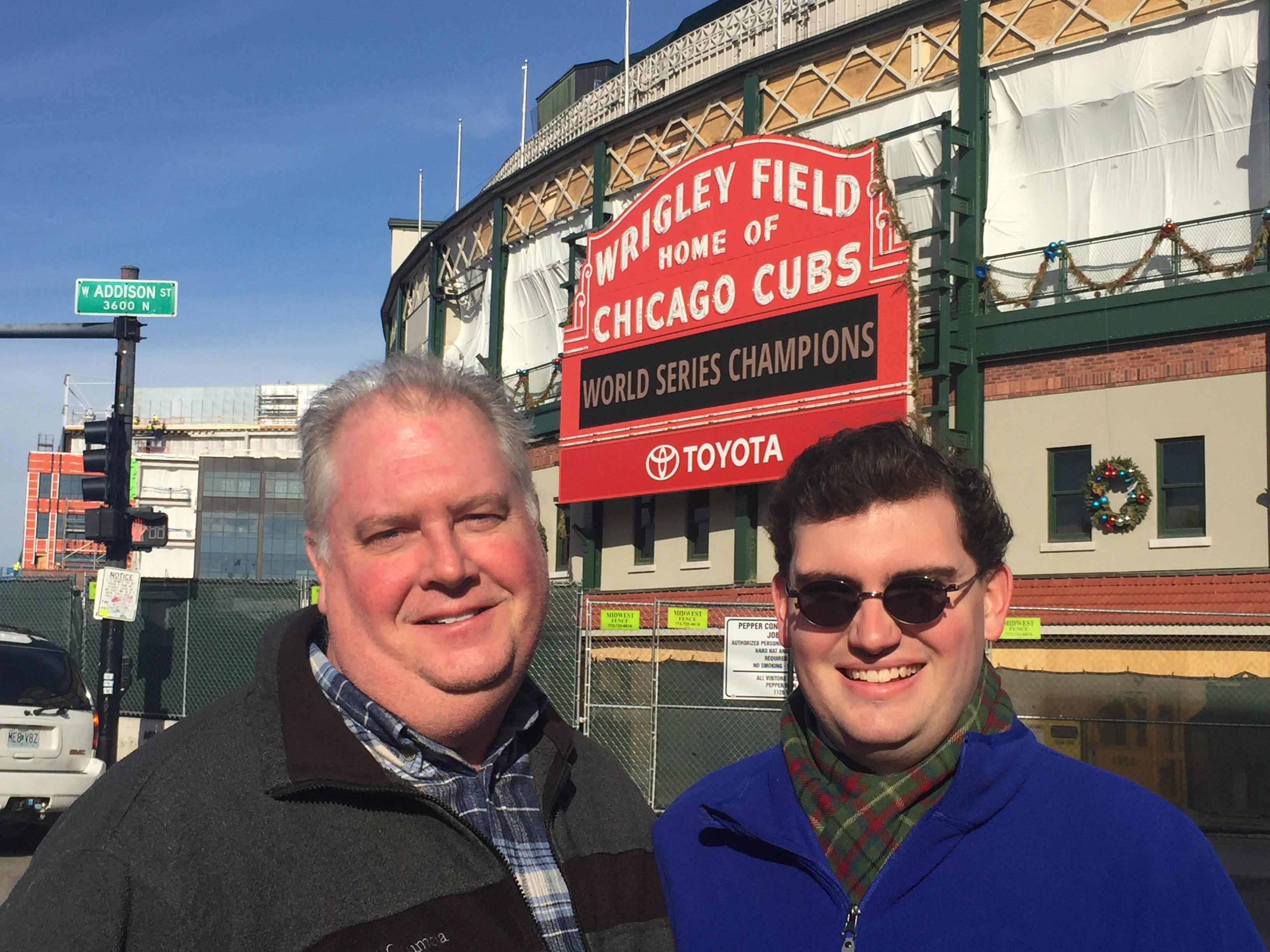
My Dad and I in front of the Wrigley Field Marquee in December 2016

Baseball is Back

Jon Lester pitching against the White Sox in 2015.
This week, a celebration of baseball's triumphant return and one small complaint about a rule change.

This past Thursday afternoon I listened to the latest episode of the Sidedoor at the Smithsonian podcast talking about the history of the song Take Me Out to the Ballgame and the Seventh Inning Stretch, one of the most American of rituals out there. It’s the moment in a baseball game when the entire stadium stands up and sings about going out to the ball game, eating cracker jacks, and peanuts of course as well. In the last 20 years following Take Me Out to the Ballgame usually we will also sing God Bless America, because that’s what we do in this country.

In the aftermath of listening to that podcast episode I began to think about how I might like to go see a ball game this Spring, but with the Major League Baseball lockout I knew I needed to find another outlet to see baseball, excluding the majors and probably the minor leagues as well. So, I looked at college ball. I was going to buy a ticket to a game or two of the Binghamton Bearcats Division 1 Men’s Baseball Team, my own university’s team. I still plan on doing so, however in the process of going to buy those tickets I saw the wonderful news that the lockout had been resolved and was going to end. Major League Baseball would be returning for the 2022 season with some changes to the rules.

Plenty of bloggers, columnists, and people on the radio have complained about different aspects of the rules. I want to add my voice to once specific area: the introduction of a universal designated hitter rule. This means that the National League will no longer have the distinction of having pitchers that bat alongside all the other players. Now National League teams too will have Designated Hitters like the American League has had for a while now. I’ve got to say I’m not terribly happy about this. For the longest time I’ve always preferred the National League’s way of doing things. In my own humble opinion, my own entirely amateur, spectator opinion, standing atop my soap box way out in the bleachers, some of the best ball games we’ve ever seen have been pitchers’ duels. Where it’s back and forth, back and forth two amazing pitchers on either side striking out almost everyone, letting in a few pop flies but very few runs. Those games often finally finish, perhaps miraculously with one pitcher getting a hit off of another pitcher and batting in a run. 

Even better, there was Game 3 of the 2016 National League Divisional Series between the Chicago Cubs and the San Francisco Giants out in California. Madison Bumgarner was pitching for the home team and Jake Arrieta for the visitors, my beloved Chicago Cubs. Bumgarner to this point was unbeatable. He was the darling of everyone in San Francisco and especially Fox Sports commentator Joe Buck. He was unbeatable until Arrieta looked him in the eye that night and with two men on swung for the fences and got a three-run home run. He cracked the façade of the unbreakable Madison Bumgarner for the first time in the playoffs. The Cubs would go on to win that divisional series, and then they’d win the National League Pennant over the Los Angeles Dodgers and on a stormy night in Cleveland at the beginning of November they won their first World Series since 1908 on a night when I prayed more decades of the rosary than I’ve ever prayed before in my life.

Having pitchers bat allow for games like that to happen, allow for moments like that to happen. They allow for the opportunity for the most dramatic of finishes to take places, of pitchers taking the game into their own hands and becoming the hero of the day. On the other hand, so many major league pitchers are terrible batters that if you don’t have a really dramatic grandiose situation like Arrieta’s home run in Game 3 let’s say then at the very least it’s going to be a quick out, meaning it speeds the game up. Designated hitters are fun to watch, they’re sluggers after all, but the more fun kind of baseball is small ball, it’s the singles and the doubles, the base hits, not the home runs. The home runs and grand slams are exciting but it’s more exciting to see the team work together and strategize to earn runs over a couple of at bats, that’s the most fun kind of baseball out there.

So as much as I’m happy to see Major League Baseball return, to see the 2022 season after a long lockout, after the greed of the ownership was made plain and clear for all to see, and even though I have many other grievances alongside the universal DH rule I’m happy to see the season starting so soon. I do have other problems with professional baseball today, notably how Bally Sports continues to be the Scrooge of baseball broadcasting here in the Midwest, keeping their televised games off most peoples’ TVs out of the same greed that kept the lockout going so long. I hope this will be a good season for my beloved Chicago Cubs as well as for my adopted second team the Kansas City Royals. And if not, well, let’s just hope for a good year of baseball.

Electric Cars, Part 2

This week, how electric cars can contribute to the sanctions against the Russian government.

A few weeks ago, I released an episode about my first road trip in an electric car, and I was surprised to see that it topped the charts in terms of listener numbers for the next few weeks. Maybe it’s the topic, people just like electric cars. Maybe it was the picture I used that week of me looking like an executive standing in front of my Mom’s Tesla and a private jet at Kansas City’s Downtown Airport. Either way, you guys liked that one so here’s a sequel: Electric Cars, Part 2.

Today I want to talk to you about one idea I had of how we the United States, and our allies around the globe, can respond to Russia’s unprovoked invasion of Ukraine and move ourselves closer to carbon neutrality at the same time. Russia is one of the planet’s biggest oil producers, in fact I’d go as far as to say that oil is the backbone of Russia’s economy today, maybe not quite like Saudi Arabia or the UAE but on a similar vein. Here in the US, we’ve seen gas prices, which were already high, rise to levels unknown since the darkest days of the Great Recession. Gas prices here in Binghamton, New York range from $4.12 a gallon to as high as $4.35 a gallon right now. It’s likely that price is just going to keep rising, especially as our political leaders have decided to cut off Russian exports into the global petroleum market as a part of the wide-ranging sanctions levied against the Russian government and the ruling elite of that country in response to the Ukrainian War.

This morning I found myself thinking about the trips I have planned in the coming weeks. I knew that my usual $25 per tank of gas wasn’t going to get me nearly as far as I’m used to, and I’ve even gone as far as to cut some weekend day trips around Upstate New York and northern Pennsylvania from my schedule as a result of the rising fuel prices. Yet as I thought about my own trips I couldn’t help but smile at the thought of my Mom in her Tesla, one driver who wouldn’t be impacted by the rising fuel costs to the same degree. After all, Russia may be one of the great oil producers of our time but the electricity powering her Model 3 is locally sourced.

With this in mind I have a small suggestion: let’s use this moment of crisis globally and take the step to really begin transitioning wholesale our automotive industry from gas-powered cars to electric cars. We have the technology, which continues to improve day by day, and we know how to build the infrastructure for it, so why not take a moment of what could lead to great internal crises of long lines at the pumps and offer even greater incentives for people to trade in their internal combustion cars for EVs? We could even say it’s the humanitarian, or in the very American case that we like in this country the “patriotic thing” to do. The greatest innovations of our past have been born out of moments of crisis and trouble.

One big concern I know I’ll hear from the naysayers is that big oil won’t go for it, after all they have too much to lose in electric vehicles. To them I say, big oil would be idiotic to not see the potential in electric vehicles and start making the switch themselves. The easiest way for things to change is if we frame the change in dollars and cents, in profits. Greed, as a certain TV bartender would say, is the way to people’s hearts. 

Of course, there are some issues with this particular idea. For one we have other shortages of raw materials needed to make the batteries and computers used in electric vehicles. And even then, the mining of those materials isn’t terribly green. In the short term though, one way we could begin to threaten the aggressors in Moscow with long term trouble would be to deny them their greatest source of wealth.

I for one look forward to the day when I won’t have to fill up gas on a weekly basis. The potential changes to how our society functions through the economic changes imposed by this switch to EVs, which guys is likely going to happen anyway, are likely to be one of the core things that define the current twenty-first century as distinct from the twentieth.

National Mall

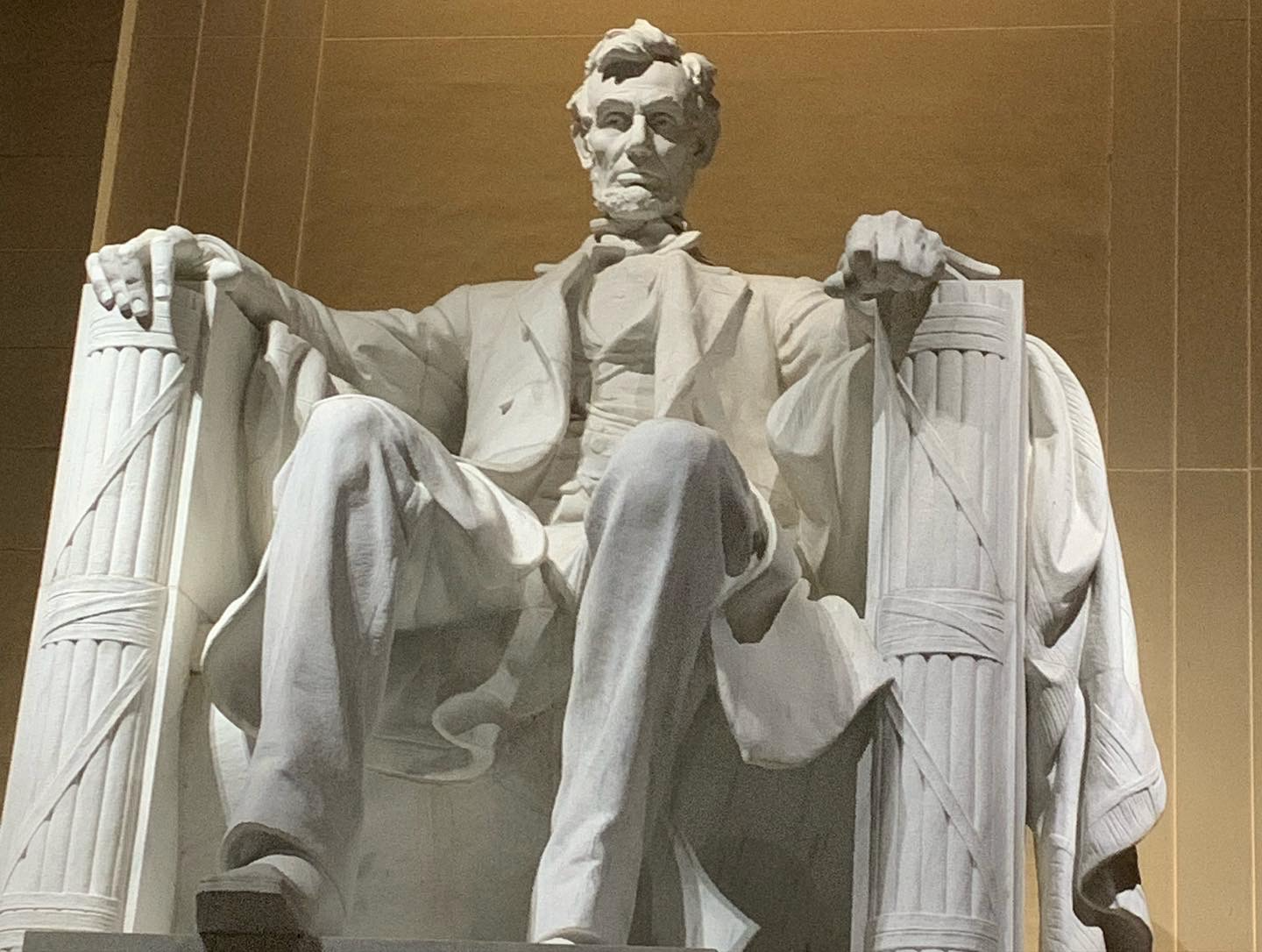
Mr. Lincoln
This week, I want to tell you about a trip I took last weekend to Washington, D.C. Links: The Smithsonian's Futures Exhibit: https://aib.si.edu/futures/ The Planetary Society's Sailing the Light documentary premiere live stream: https://youtu.be/NnKsHlV1NhA

Of all the cities in the east, Washington remains my favorite. It’s place at the emotional heart of our republic, the center of the Union that my lifelong hero President Lincoln fought to preserve, makes me yet another Mr. Smith every time I return to the capital. This week I made such a trip back to some of my favorite museums, some powerful monuments, and some good weather after months of cold and snow in Upstate New York. I decided that I wanted to make my trip a bit of an adventure and chose to drive down from Binghamton rather than fly, an easier option. This led me to an occasionally tense journey down Interstates 81 and 83 through Pennsylvania and Maryland to the BWI Amtrak station where I decided to leave my car for the weekend, figuring it’d be better to not try to drive and park in the District if possible.

Arriving in D.C. on the Acela, currently this country’s fastest passenger train, something the train nerd in me specifically chose to do, I had a similar arrival to Jimmy Stewart’s Mr. Smith at Union Station, its high vaulted ceilings designed by Chicago’s own Daniel Burnham over a century ago. Unlike Smith I didn’t see the capitol dome from the station, instead looking downward trying to find the nearest metro station to get to my hotel.

Seeing the monuments at night is always a special treat. As elegant as they are in the daytime, and some like the Vietnam Memorial are better seen under the Sun, there’s a special artistry in seeing the work of sculptors and architects illuminated with floodlights. That’s how I saw the Washington, Lincoln, and MLK Memorials, lit up solemnly. Mr. Lincoln and Dr. King looked as though they were great titans of antiquity in the glow of their memorials’ lights. 

At this time in our history, Lincoln’s struggle to save the Union and end slavery in this country once and for all seems all the more present. In the week since my last post (episode for those listening) the Russian military has invaded Ukraine. I alluded to those threats last week, but now threats have become a living nightmare for the Ukrainian people and a great storm cloud over the rest of Europe that threatens to engulf all of humanity. How do we embrace the true and righteous words of Mr. Lincoln to do the right thing and feel no evil towards others, even those like President Putin who have so brutally attacked their neighbors? I don’t have an answer to that question yet, nor am I certain that I ever will. But today’s feast, Ash Wednesday for us Catholics, fits well into this narrative as an annual reminder “Remember you are dust, and to dust you shall return.”

I spent a good deal of time on Saturday in several of the Smithsonian museums, returning to the Natural History Museum that I visited in July to double check a label for a sloth for my dissertation, and revisiting an old favorite in the Asian Art Museum. I also visited the American History Museum for the first time in over a decade and enjoyed it quite a bit more. The previous time in 2011 it seemed to be sparse in actual history, yet this time I could notice the nuance in the stories it told in the objects on display in what little space it had available.

The most insightful museum visit though was to the Futures exhibit currently housed in the Arts and Industries Building on the south side of the Mall next to the Smithsonian Castle. This exhibit, which asks visitors to imagine how our future could be a sign of human life improving offered a much needed antidote to the troubles of the world. There were examples of carbon-neutral and renewable building techniques and materials, electric cars, air taxis, and hyperloops. There was a new model of a space suit that was far less bulky than those used by astronauts today and a model of Light Sail 2, a spacecraft sent into orbit by the Planetary Society, a space advocacy organization of which I’m proud to say that I’m a member. There is no one future but many for us to choose from. It’s up to us to determine how we want our future to be written, to be designed, to be imagined.

The National Mall is the emotional heart of this country. It speaks to me of generations of memory, passion, and possibility. On this trip as well though I could imagine myself there in the future, introducing the next generation and later generations to come to that heart, to the ideals and hopes and dreams of this republic. Now at the end of my 20s, my visits to the capital mean something different to me than they did in the last decade. They represent my own future, its infinite possibilities, and how I might be able to do my part, however small it may be, to influence and improve upon our experiences.

Pride

This week, a bit about humanity's greatest asset, and our greatest fault.

Of all the emotions that we can feel, pride is the one that seems to be the most complicated. It can be one of the greatest emotions a person will feel in their life. Pride can also be something that drives us to do terrible things. Pride mixed with fear makes fertile ground for bigotry, nationalism, and unfounded ideas of superiority over others. The very idea of the Other, something which my research deals with in part, is drawn from a prideful root. By this thinking we identify ourselves by our difference from others. 

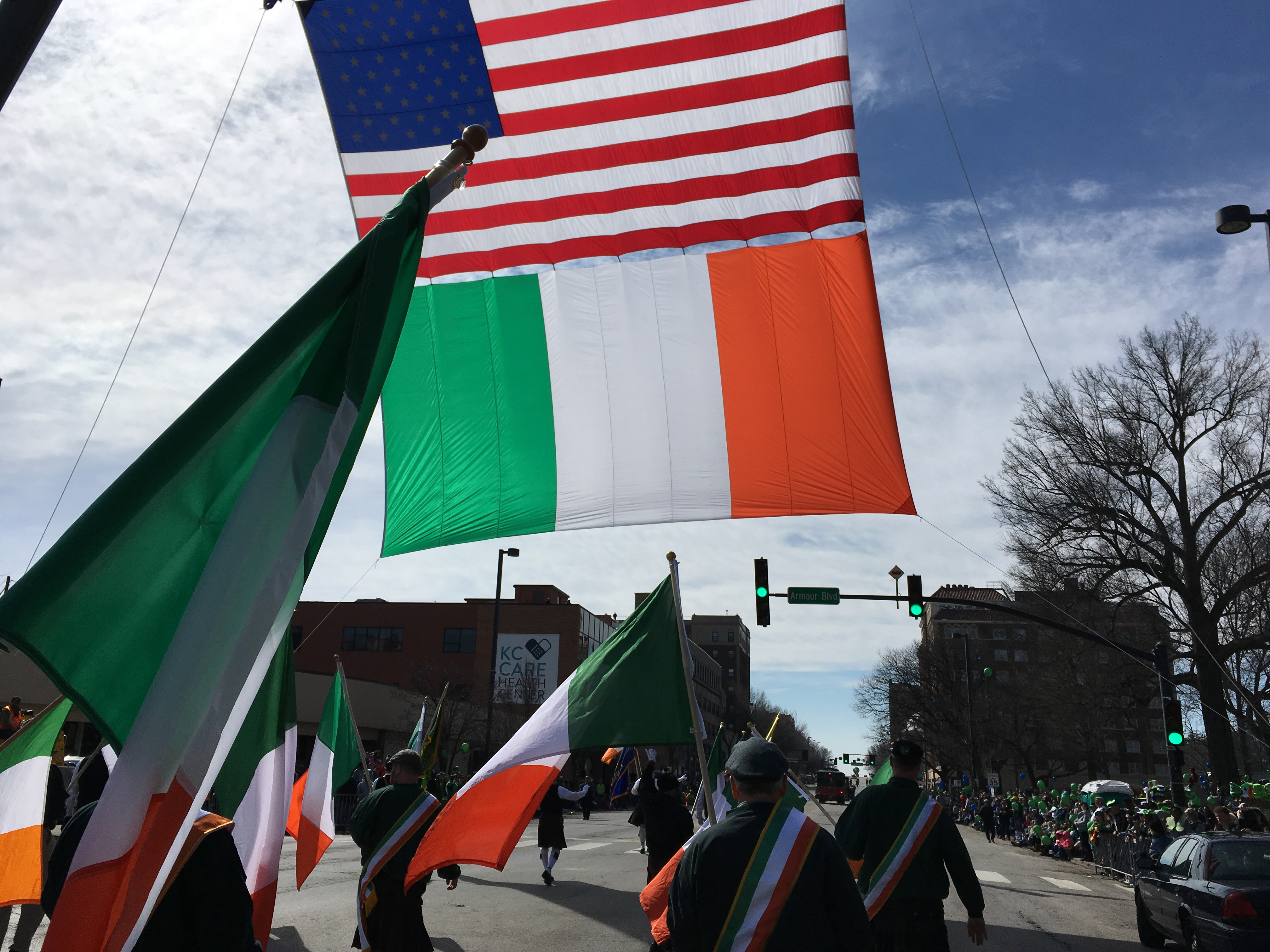
Here in the United States, we pride ourselves on being the “land of the free and home of the brave.” That line in our national anthem is diluted by the fact that we’ve never fully achieved the first part of it: we aren’t the most free or the most democratic society out there anymore, and for many Americans this society isn’t free. Still, we have ideals like these emblazoned in our national mythos, so that’s a step in the right direction. Our pride as Americans, drawn from our collective mythology, helps conceal the innate problems that have existed since the beginning of our colonial societies four centuries ago.

Pride can drive us to do terrible things. It can make us feel like we have a right to things that rightfully aren’t ours. In past generations rallying cries of national superiority led to the worst wars in human history, and even still the worst genocides and atrocities in human history. Pride gives us the false hope that we can act regardless of society, regardless of right, regardless of the consequences. It can give us the fodder to challenge the autonomy of neighbors and wreck lives in the process. Generally, we’ve begun to move past some of these outcomes of our prideful nature; wars of territorial conquest are far less common than they were even a century ago, but that ghoul still haunts the thoughts of those who see in it opportunity.

Pride can also drive us to do wonderful things, to embrace the progress and well-being of humanity. It has driven us to seek scientific advancement, to embrace change for the benefit of all. Pride in our common humanity has allowed us to truly begin to see ourselves as one common species, divided by nationality, language, and culture sure, but less so than ever before. Pride in my work is one of the things that keeps me plodding forward with my dissertation, knowing that what I’ve written so far is something I can be proud of, and hoping that the final product will be equally worthy.

If there is anything that we should be cautious of though it is the pride that convinces us that we are already at the summit of human achievement. The pride that says our methods and technology can determine the reality of all things as they exist now is just as troublesome as the argument that all that could be revealed to humanity, like a book turning page by page, has been revealed, and we find ourselves now at the end of that book. I strongly disagree with this, these ideas that are fueled by our pride more than anything else, that say we are at the culmination of our achievement. Each generation in their own turn does reach that culmination, in their own time, but to mistake one generation’s sum for humanity’s only holds us back. I hope we have many more generations of exploration ahead of us, exploration not only of ourselves and this planetary ecosystem of which we are intrinsically a part, but of the greater Cosmos beyond our orbit as well.

As we go forward our pride will continue to evolve with our experiences. That pride in human achievement that I mentioned a little bit ago has the potential to evolve into a new sort of bigotry that is human supremacy rather than white supremacy or any of the worst cases of nationalism today. We need to be cautious as we are proactive and remember that, as President Lincoln said, “as our case is new, so we must think anew, and act anew.” With every change in circumstance our methods of understanding those new circumstances needs also to change to fit the moment in question.

It’s naïve of us to think we know everything, to think we have all the answers. That is the fun part of living, getting to learn new things, to make mistakes, and to grow from them. And that is something I’m proud of.

Patience

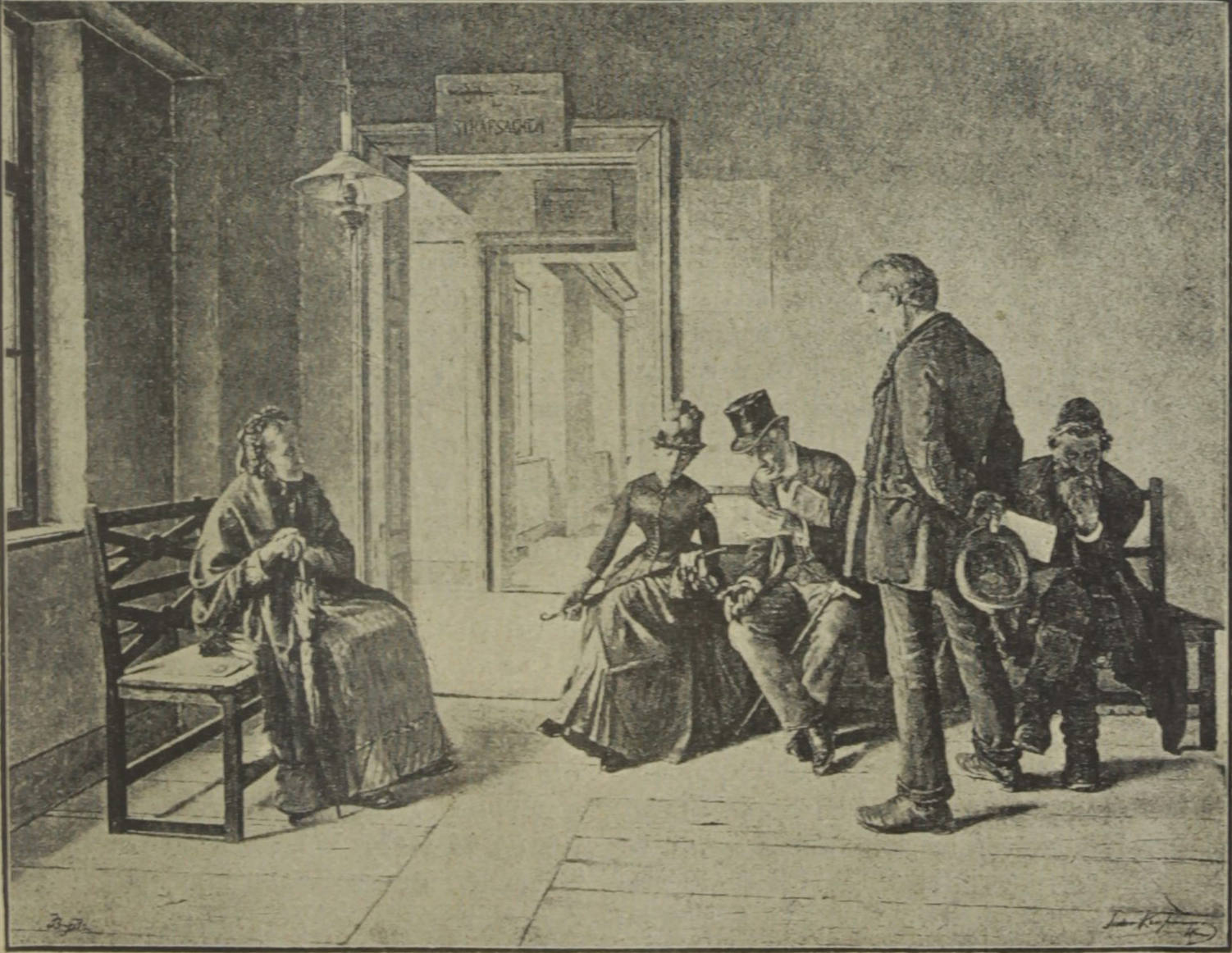
Isidor Kaufmann (1853–1921), “Waiting room at the Court”, 1888
This week, how I've learned that patience really is a virtue.

I’ll freely admit that I’m a pretty impatient guy. I feel the most rewarded when I’m able to solve problems quickly and efficiently, and throughout my life I’ve never really enjoyed dealing with things that are long term questions. As I’ve gotten older though my impatience has mellowed out, I’m more willing now to let myself take a day to relax and think rather than trying to force myself to write a page a day or read a book in an afternoon.

In the last few years, with this global pandemic, it’s really begun to occur to me that there is far more outside of my control than within it, a lot more that I simply can’t do anything about. Sure, I’m not naïve enough to think I could single-handedly stop the looming war clouds hovering over Ukraine or solve the climate crisis. Those are big problems that are going to be solved by a whole host of people likely over generations of hard work. And even in my own work as a historian, and especially as a teacher, I’ve come to learn that as much as I’d like my students to follow directions to the letter, the best I can do is make sure those directions are clear and concise and then let them go down the road I’ve laid. They’re adults after all, it’s up to them how they want to perform in my classroom.

At this moment in my work, I’m writing my doctoral dissertation. The working title is “Trees, Sloths, and Birds: Brazil in Sixteenth-Century Natural History”. It’s a bit of an odd ball of a topic, a combination of many different topics, ideas, and fields that I’ve been interested in from childhood. As of today, I have one out of six of my chapters written, and I’m glad to be in the position I am. But looking ahead at the second chapter, the next one I’m going to start writing in the next week, I’ve got to admit it’s daunting to imagine how I’m going to make it work. And that’s the key to this project and every project any of us will ever attempt; we have to be able to imagine doing it before we actually do it. So, now in my doctoral studies, I’ve learned the benefit of professional patience.

Today is one of those days when I intended to get more done than I actually have. I did make a very loose outline of the chapter I’m about to start writing, with some questions about which order the sections should go in, and I’ve made some headway in coordinating the primary and secondary sources I’m using in my thinking about this chapter. Unlike Mozart in Peter Shaffer’s play Amadeus, I don’t have a fully written draft of this chapter already done in my mind, just waiting to process through my hands and the keyboard into the word processor on my computer. Instead, I’ve got a loose collection of ideas, and an understanding that in a little while, whether it be hours, days, or weeks, I’ll start crafting those into sentences and paragraphs.

That’s my writing process today. It’s less about the mad dash to the finish, and more a leisurely stroll through different interrelated ideas that I’ve got until they’ve come together in a convincing argument that I’m willing to send around to those interested parties. Patience is a virtue, and while I’m thinking through what this chapter will look like, I’m happy to sit and wait for a good result, knowing that eventually it too will pass.

Episode Untitled, or Humanity and What We Can Do About It

Episode Untitled, or Humanity and What We Can Do About It Wednesday Blog by Seán Thomas Kane

This week, an attempt at trying to suggest how we humanity can be better humans.

I had a grand piece planned out for this week: how we should come to notice our common humanity more, which I outlined while I was watching the Opening Ceremony of the Beijing Olympics last Friday, but the script that it turned into isn’t something I’m very proud of. It’s too American, too focused on capitalism setting us free, when really that hasn’t happened for millions if not billions of people around this planet. So, I’m writing this with no real goal in mind, just hoping it’ll go somewhere that I can record it and send it out to the twelve of you who listen to my podcast and the other handful of you who read my blog.

I’ve got to say, it’s hard coming up with something new every week. Sometimes when I’m on top of things I’ll have a running list of topics that I want to cover, and slowly make my way down that list. The intended post for this week fit into that model pretty well. But, whether it’s because of sleep deprivation, forgetfulness, or whatever else, I can’t remember where I put that list, so here we are ladies and gents! The big thing I wanted to get across in this week’s intended episode is that we really don’t need enemies, we don’t need rivals or there doesn’t need to be a battle between good and evil. All that builds community, sure, but it also builds mistrust and leaves us poorer in the long run. 

My beloved baseball team (Go Cubs) has a long-standing rivalry with our neighbors downriver, the St. Louis Cardinals, and while that rivalry has sometimes spilled over into actual brawls on the field it’s just a sports rivalry at the end of the day. Except that it’s grown beyond just being a sports rivalry. Rivalries like that can grow into actual hatreds, actual animosity, and that, ladies and gents, is what leads to us having full scale enemies. It’s silly, but it’s also human nature to follow the crowd, and if that crowd tells us to hate then that’s probably what we’ll end up doing.

So, what’s the point of me telling you this? Is it that hate is inherent? Nope. Is it because I made a commitment to write one of these things every week? Yep, and I’m going to make each one count. We follow the crowd, but we don’t necessarily have to follow bad advice. If we take the time to sit down and learn from each other, if we’re honest with each other we can probably solve our problems. The trick is actually meaning it. That’s something I’ve learned through all the toughening my skin’s gone through over the years that I’ve been in grad school, as jaded as I could easily become, every day I still need to remind myself what it is I care about, and why I keep doing what I do. 

If there’s anything I’d like to see happen in my time on this marble rolling around in the sky it’s some cooperation among us humans. Like the commentators at the New York Times did this weekend, I do tend to roll my eyes whenever I heard John Lennon’s song “Imagine” play during the Olympics opening ceremony. It’s lost its impact after the umpteenth time it’s been played in stadiums and games put on by dictators and bullies, in a moment of global solidarity that’s always co-opted into one big marketing campaign for some corporation or another. But as long as those guys listen to Lennon’s words, that’s John, not Vladimir, maybe we will achieve that world where there’s no war, no suffering, no hunger, and where everyone knows how to read.

Examen

Photo by Tony Wills CC BY-SA 3.0
This week, a bit of Jesuit word play. Photo by Tony Wills CC BY-SA 3.0

I’m proud to say that I’m Jesuit educated, I earned my Bachelor’s in History and Theology with minors in French and Philosophy from Rockhurst University in Kansas City. My time at Rockhurst was one of the most formative periods in my life, a time when I feel like I really did grow into the adult I’ve become from the teenager that I was when I arrived for move in day my Freshman Year. One of the great things that the Jesuits promote is self-awareness, understanding how we exist amid the Cosmos, how we are who we are. A daily exercise of this sort of self-awareness is the Examen, a meditation devised by St. Ignatius of Loyola, the founder of the Jesuits, almost 500 years ago now.

I’ve tried doing the Examen at different points in my life, pausing during the day, most often before bed, to reflect back on the day I just lived, the highs and the lows, and offering my gratitude for all of those experiences. Naturally though there are distractions all around, whether my phone announcing new messages or the sound of a dog barking outside, or even my own thoughts about what it is I’m actually trying to do. The word examen stuck out to me yesterday, I know it as the French word for an exam, and I had a sneaking suspicion that it was originally a Latin word, after all it has that classic Latin prefix ex- included.

When I turned to my favorite Latin dictionaries, I found sure enough that the word exāmen is of Latin origin, coming from a combination of the prefix ex- and the verb agō meaning “I drive”, with the -men suffix added to render exagō a noun. Thus, exagmen becomes exāmen. Still, the meaning of this word, or rather its particular uses strike me as amusing. It is not only an examining of conscience in the Jesuit sense, but also a means of balancing something. Yet there’s a third meaning that came up, exāmen has been used to refer to exāmen apium, a swarm of bees.

At first, I’m not entirely fond of the idea of an examination of conscience having anything in common with a swarm of bees; perhaps there’s some lingering misgivings from my own childhood experiences being stung by bees (both occasions were my fault). Still, the idea that the Latin name for a group of bees, like how we might say a flock of birds or a herd of bison, would be an exāmen is curious to me. It seems as though the idea is that when we do examine our consciences, or when we consider something as fully as possible, we ought to be able to get into every little crevice of that question like a swarm of bees can.

This phrase exāmen apium is used by a number of ancient Roman authors, yet in every moment while that phrase literally means a swarm of bees it often seems to herald bad omens, whether it be a swarm of bees appearing on a standard or on the statues of an emperor or in the middle of a market. So, how can we interpret this to be more than just an odd Roman connection between bees and Jesuit meditations? Think of what might be the best thing to do after getting such an omen; rather than stand idly by and let “fate” take its course, why not instead stop, and think about what you have done to receive such a warning, and what you can do to change how things are going? One of the great disservices that our civilization’s heritage has given to us is a belief in fate, that things are decided and there’s nothing we can do to fix them. Nothing could be further from the truth! It’s up to us to examine our lives and figure out where we’ve gone wrong, and then to do the hard thing and fix our problems.

That is what at the end of the day the Examen means to me. It’s an opportunity to become a better version of myself, a reassessment that, when I don’t forget about it, happens every day.

Fiction

This week, I want to explain how fiction is necessary for my survival.

I am in the business of writing serious, analytical, and factual accounts about the human experience. As a historian, that’s my job. I do write fiction as well, though I keep both as separate as the church and state are supposed to be in this country. Still, as much as I enjoy my work, as much as I like the feeling of getting my academic writings on paper and presenting them at conferences, when I’m looking for some fun reading, I usually turn to fiction. Fiction is fundamental to the human spirit, it allows us to dream, to imagine alternate possibilities, to envision possible futures.

At any given moment I’m usually reading 2 or 3 books for fun, normally there’s at least one sci-fi novel, maybe a memoir, and possibly something relating to natural history. I admit, 2 out of 3 of those are nonfiction, depending on how you understand the truth of that memoir, but if I had to choose between those three genres when I’m sitting alone in a restaurant at lunch or dinner or looking for something to read before bed, I’ll go for the fiction ahead of the others. I also tend to disagree with the trend of late that prefers dystopian fiction over anything else. There are so many of those stories out there, from the Ender’s Game books by Orson Scott Card, to the Blade Runner and Mad Max films, to even my old favorite Douglas Adams’s A Hitchhiker’s Guide to the Galaxy. I don’t like dystopia, and I don’t honestly understand how it could be enjoyable to read or watch a story talking about such a future. 

Rather, I prefer the opposite, utopian fiction, stories that offer us a vision of what our future could be like. I think that’s why I’ve been drawn to Star Trek since the pandemic began, and have now watched several of the TV series, a few of the films, and even read some of the accompanying novels. There’s something about a vision of humanity’s future as a contributing member of an interstellar community that really seems heartening to me, that as distant as that potential future seems now, we might well reach it someday. This is one area where my work and my favorite stories intersect; my historical research deals squarely with exploration, in my case mostly set in Brazil in the 1550s. In many respects, my research is a cautionary story of all the horrible things that the explorers fanning out from Europe did to the peoples they encountered. Normally, academic history books aren’t read by many people, and certainly there are only a few that get much public attention. So, I hope that if anyone eventually reads my work, they’ll recognize in it my efforts at warning our own generations and generations to come of the rocks and shoals that threaten any present or future explorer who seeks to venture out without harming others in the process.

So yes, my love of fiction does influence my work, but only indirectly. When it comes to my writing, when I need to refresh and rethink my work, I’ll turn to those same novels and bask in their eloquence and style. As a writer, as a dreamer, as an optimist, fiction is necessary to my survival.

Natural History

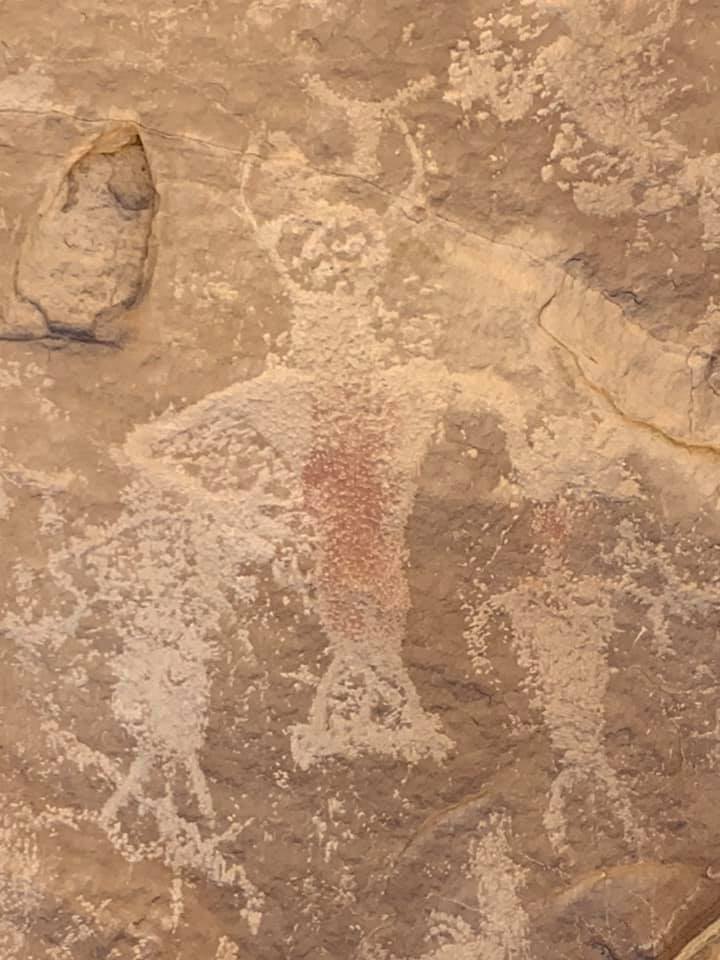
Fremont culture petroglyphs, Dinosaur National Monument. Photo by the author.
This week, I'm thinking about how we humans fit into the structures of natural history.

There’s a big problem with a lot of older anthropology exhibits in natural history museums around the globe, namely that they were built in the last two centuries often using either old and out of date information about the peoples they seek to describe, or like the old bronzes depicting the variety of humanity in the Musée de l’Homme in Paris, they were inherently racist to begin with.

Museums like San Diego’s anthropology museum have sought to rectify this with rebrandings and reorganizations. The museum in question, located in the California Tower building in Balboa Park, has recently renamed itself from the Museum of Man to the Museum of Us. Others like the Musée de l’Homme in Paris have worked to reassess how they display older historic anthropological exhibits like those old bronzes, so that today their primary message is one of “this is how people used to think, but not how we think anymore.” They’ve gone from being scientific teaching tools to historical artifacts.

There needs to be a very fine balance between lumping individual ethnicities with the rest of the natural world and actually considering humanity as a whole as part of nature. We are, after all natural beings, no matter how far we try to remove ourselves from nature with the edifices of civilization we’ve built up around ourselves. In case you’re wondering, this is a pretty central theme to the dissertation that I’m writing. In older generations, the idea of “natural humanity” was inherently understood to mean different peoples who were less civilized than others. It was used in the idea of the savage as a means of demeaning and describing the native peoples of the Americas following the beginning of the Columbian Exchange in 1492 (borrowing a term from one of my favorite historians, Alfred Crosby, here).

I’ve often thought of the world natural as being something good. Natural, or organic, food often tastes far better than the processed stuff. Natural soaps and such are less likely to harm our bodies. There’s even a style of music that I’ve called “natural” before, but only to myself. The liturgical music written by the St. Louis Jesuits, or the album Adiemus by Karl Jenkins would fall into this category.

So, if we’re natural beings, why then shouldn’t we be included in the kaleidoscope of life studied under the big tent of natural history? I for one have developed my own professional career from being an intellectual historian of the Renaissance to being a historian of late Renaissance natural history. That means I study natural history texts written between 1550 and 1600, in particular those which introduced new species from the Americas to audiences in Europe. At the time, natural history was closely related to another field called Cosmography, which while originally a theological study of the Cosmos had by the Renaissance become essentially the study of everything natural and human under the Sun. The first great proto-encyclopedias of our own modern age were descendants of the cosmographies of people like Sebastian Münster and my own focus of study, André Thevet (1516-1590), whose Cosmographie Universelle (1575) basically sought to describe everything, and yes I mean everything, that he knew about.

Today, we live at a turning point in human history. It seems like the last vestiges of the post-World War II order are finally beginning to break off, letting whatever the current century will bring be hatched from that shell born of the last century. Every century’s generations live in the shadows of their forebearers and have to figure out how to deal both with the benefits and the problems those generations left them. So, for us today talking about natural history we have the terrible realities of racism and bigotry which cloud this field and all its constituent studies. I do think humanity ought to be considered a part of natural history, ought to be studied like any other animal, but if we are going to speak of ourselves in those sorts of terms then it ought to do it in the same language across the board for all humanity, recognizing that we are all equal.

Today though, even more than any other time in our past, humanity has a critical role in the future of nature, and the stories that will be told someday in natural history. We’ve entered the beginnings of a new geological epoch, the Anthropocene, when we are the greatest influencers on the natural order of things. I’m seeing this in how many natural history and science museums have extensive exhibits on climate change, and even the handful of older ones on human biology, like my personal favorite at the Natural History Museum in London. We can try to ignore our part in shaping life on Earth, but at the end of the day as much as we’ll ignore it, we’ll end up like the proverbial unicorns who missed the boat. At that point, we will fall victim to our own pride, to our own endless thirst for more raw materials until the nature we need to survive has been stripped away. Human history has always been a part of natural history. Perhaps that’s a key to solving our current crises and all potential crises in the future: we must reckon with nature and our place within it.