Category Archives: Wednesday Blog

Defining Ourselves Regionally

In the last couple weeks since the UN released their new and ominous climate report I’ve been reading quite a bit about how climate change is going to impact my own home region and city. More often than not I tend to feel let down by the data available as for the United States it tends to be organized by state. So, instead of reading about how climate change is going to impact the Kansas City Metro I usually am left reading reports about its potential impacts on the States of Kansas and Missouri as a whole. While this is somewhat helpful as it narrows down the data from a national level to at least focusing on my local region, it becomes increasingly unhelpful the closer into the details I try and investigate as the climate is hardly uniform across both Kansas and Missouri.

I think this complication in how we think about ourselves and our regional identities is in large part due to how we so thoroughly organize our societies here in the United States into our 50 states, the District of Columbia, and the overseas commonwealths and territories. Metropolises like Kansas City don’t fit comfortably into these state-based regions as they straddle interstate borders. Think through a list of the major metropolitan cities in the United States, how many of them straddle interstate borders like Kansas City? This tends to be a factor more in the East and Midwest than the West where the borders tends to reflect the regional geography better than in the West where they are based on abstract lines of latitude and longitude (see the rectangularity of Colorado and Wyoming).

At the time when the United States was first formed as a federal republic in the late 1780s these borders effectively reflected what had been the borders between neighboring colonies and later effectively semi-autonomous republics and commonwealths. The idea of urban sprawl, let alone suburban development, was in its infancy. Cities could only be as large as a person could cross them by foot or carriage. Yet thanks to industrialization and a booming population the great cities of this country have spread far and wide from their original boundaries. There is a good argument to be made that the westernmost suburbs of New York today are located in Northeastern Pennsylvania.

We should really begin to think of our country not as a collection of states defined solely by their geographical boundaries but instead as a collection of metropolises defined by their sprawl and common culture. I believe the best maps to describe the population of the United States today are those that depict either regional media markets, such as the counties where the local TV and radio broadcasts come from a specific city, or those that show general spheres of cultural influence.

A map of the US media markets

All of this is fully impacted by each metropolis’s local climate. Kansas City is Kansas City in part because of its varied weather and four seasons, and by the fact that unlike much of Kansas to the west that Kansas City actually gets a decent amount of rain. So when I read that the climate “in Kansas” or “in Missouri” is going to do X or Y I’m left frustrated because our climate in Kansas City is vastly different from the climate of Goodland or Dodge City as it equally is from that of St. Louis or Ste. Genevieve. I suggest we begin to really start thinking of our country in this manner that’s more accurate to the population and density.

For me, having lived on both the Kansas and Missouri sides of the metro, I see myself as a Kansas Citian well before I’ve ever thought of myself as a Kansan or a Missourian. The same can be said in regards to my original hometown in the Chicago suburbs: I always felt more a part of the greater Chicago Metro than I ever did feel any connection to the rural parts of Illinois beyond the suburban sprawl. The continuing pandemic has only increased my sense of a metropolitan identity with how profoundly the state government in Missouri let its citizens down in not fighting but actually aiding and abetting the spread of the pandemic throughout the state.

Yesterday I did find a Kansas City-specific climate change report published by the Mid-America Regional Council. In it the evidence points to a likely conclusion that Kansas City will move by the end of this century from its current situation of being on the borderline between a humid continental climate and a humid subtropical climate to being fully within the bounds of the latter. As a humid subtropical city, we will have more rainfall per year, with hotter summers and milder winters. Less snow, sure, but more summer days when it will be too hot and humid to be outside.

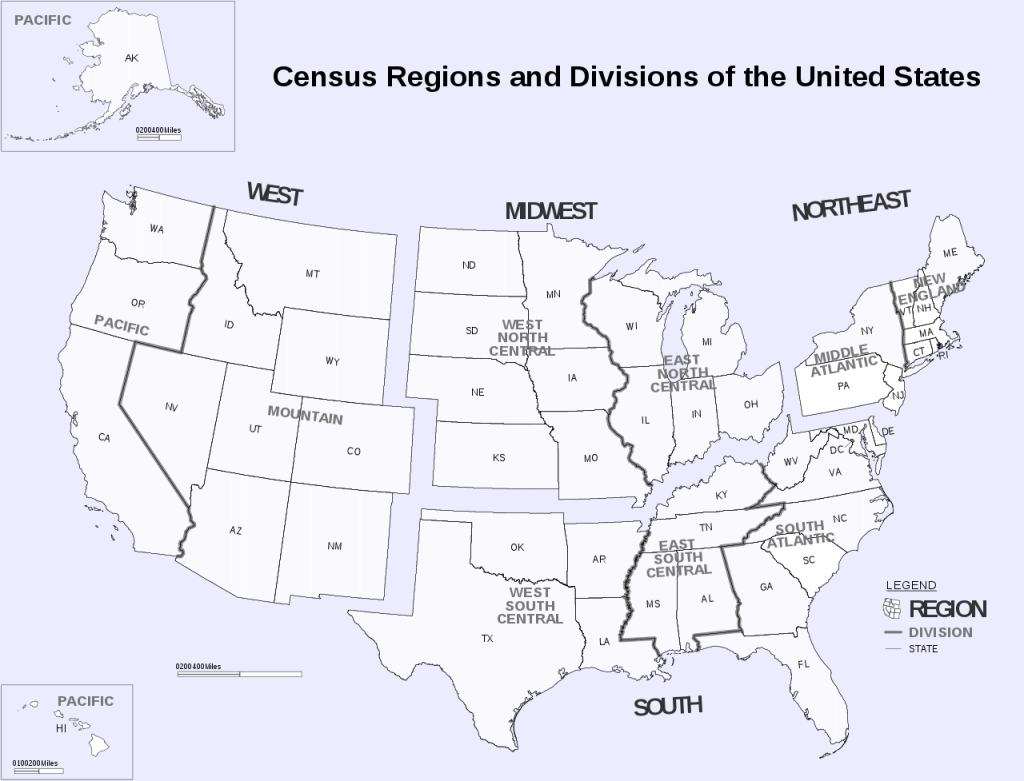
One aspect of this report that wasn’t stated that I think needs to be considered: if Kansas City is going to have a hotter and more humid climate, then surely the cities and states further to the south (Arkansas, Louisiana, Oklahoma, Texas) will see their climates transition to a point that they will be unbearable for many people. To me this seems to indicate that Kansas City will become a destination for many climate refugees from the West South Central census region, meaning our current metropolitan population of 2.34 million is only a shadow of what we might end up happening.

Summer 2021 Podcast Recommendations

With the last weeks of the Summer break from the Academic Year coming to an end, I thought it would be fun to offer those of you who still read these posts a few podcast suggestions that I regularly listen to throughout the week. These may do a decent job at giving you a general idea of my own interests as they stand at the time of writing.

Planetary Radio

I first found this podcast in early 2020 just before the current pandemic began, and have made it a regular staple of my weekly radio and TV diet. It’s something that I make a point of listening to, if not on its usual Wednesday release, then by the end of the day on Thursdays. Hosted by Mat Kaplan, this is the official podcast of the Planetary Society, a space advocacy organization of which I am a proud member.

Planetary Radio, new releases every Wednesday.

A People’s History of Kansas City

A People’s History of Kansas City is always a wonderful solution for homesickness. I first started listening to it during my first year in Binghamton, I believe in early 2020. Some of my fondest memories listening to this podcast are of the time I was driving back to Binghamton from Albany Airport down I-88 (NY) and listening to a gripping story about the Guadalupe Centers here in KC, or more recently when on the way to and from a Royals game I listened to a couple episodes about Disney’s Kansas City roots and the post-contact history of the Missouria, the people for whom the Missouri River and the State of Missouri are named. I always look forward to hearing an episode of A People’s History, and occasionally even hearing people who I know personally get interviewed on this show (it helps being a historian).

A People’s History of Kansas City is off for the Summer.

Real Humans by Gina Kaufmann

Staying with the Kansas City, and KCUR, theme for a minute I want to suggest Gina Kaufmann’s latest project, Real Humans. It’s a shorter podcast, the episodes rarely seem to go over 20 minutes, but it addresses ordinary people here in KC and how the world we’re living in is impacting their lives. I’ve enjoyed what I’ve heard of this new 2021 release so far, and am looking forward to more stories brought by the host of KCUR’s old 10 am show Central Standard.

Real Humans by Gina Kaufmann, new episodes on Sundays

Star Talk Radio

I’ve been a fan of Dr. Tyson’s for a while now, having first really heard about him in my undergraduate Astronomy class at Rockhurst. This is essentially a radio version of his talk show that aired for a while in the mid-2010s on National Geographic’s cable channel. Essentially it’s Dr. Tyson and his friend Chuck Nice discussing whatever the topic of the week is with their guest. It’s admittedly been harder to get engaged in this podcast than others, but it’s a good one nonetheless.

Star Talk Radio, new episodes premiere on Mondays at 18:00 CT/19:00 ET.

Mission: Interplanetary

I think I first subscribed to this podcast either during PlanetFest this past February or during this year’s Yuri’s Night celebration in April. Either way, this has become one of my favorites for the interesting topics involving human Space exploration that are covered in each episode. The hosts, astronaut Cady Coleman and scientist & author Andrew Maynard are a lot of fun to listen to on either a long drive or a long walk around the neighborhood.

Mission: Interplanetary, off for the Summer. New episodes expected this Fall.

Ologies with Alie Ward

Ologies has topped most of the Apple Podcast charts this Summer and for good reason. I first found it one afternoon this Spring after a fun visit to the Helzberg Penguin Plaza at the Kansas City Zoo when I decided I wanted to find a podcast about penguins. Lo and behold, Ologies had an episode entitled “Penguinology,” with an expert in those antarctic sea birds, and from that point on I was hooked. I’ve really enjoyed listening to the various guest experts on this show, and while it’s a longer one it makes for good listening when you have a free 90 minutes to spare.

Ologies with Alie Ward, new episodes on Tuesdays.

Overheard at National Geographic

Overheard is a podcast that I found fairly early on in my current run of frequent podcast-listening, which all largely began with A People’s History and Planetary Radio. I’ve been a subscriber to National Geographic Magazine for quite a while now, and when I saw that Nat Geo had a podcast I figured it’d be a good one to listen to. At first it was hard to get engaged with it, the early stories I heard weren’t ones that I was all that interested in, but more and more I’ve come to really enjoy it. A recent episode involved that I loved an anthropological study of surviving Nahua-speaking communities in Mexico. Overheard has gone from being one that I’d occasionally listen to to a show that I look forward to every week.

Overheard at National Geographic, new releases on Tuesdays.

Sidedoor

From one Washington scientific institution to another, Sidedoor is a podcast from the Smithsonian that I only found a little over a month ago after my day trip to D.C. to visit a special exhibit at the Smithsonian American Art Museum (SAAM) about Alexander von Humboldt (1769-1859). Sidedoor has so far had really engaging stories that I’ve thoroughly enjoyed, and it’s inspired me more than ever to make it back to D.C. to visit the collections that get a mention on the podcast, in particular an upcoming special exhibit at the old Arts & Industries Building called Futures that sounds like it’ll be really neat.

Sidedoor, new episodes every Tuesday resuming in the Fall.

Gates McFadden InvestiGates: Who do You Think You Are?

One big change in my life that came about the same time as the start of the pandemic was my decision to try watching Star Trek again. I started this time with Picard and have since moved onto The Next Generation, Deep Space Nine, and am currently watching Voyager as well as the new episodes of Lower Decks. Considering a good portion of my free time tends to be spent watching Trek, after all there’s so much to praise about those shows and films, I’ve been on the look out for a good Trek podcast to listen to on a weekly basis. So, when I read on Twitter that The Next Generation‘s own Gates McFadden (Dr. Crusher) would be launching a podcast where she interviewed her fellow Trek stars, I figured I’d give it a go. To be honest I’ve really enjoyed listening to a pair of friends who I know for their performances on screen talk for an hour, or sometimes two, about their lives.

Gates McFadden InvestiGates: Who do you think you are?, new episodes on Wednesdays.

Conclusion

As you can see, I’ve got a lot of different podcasts that I tend to listen to on a weekly basis, and yeah I make time for them. There are a number of other ones that I’m looking in to, notably the Sisters in Strange podcast co-hosted by my cousin Chelsea Dunn and the Star Trek: The Original Siblings podcast co-hosted by my good friends Alex and Sami Brisson, the latter of which I’ll get to once I actually watch the original Star Trek series.

I’ve even considered providing narration of these blog posts as a sort of podcast, a service which is an option if I ever decide to give it a go. At the moment though I’m happy to just have people read what I’ve decided to write about.

Heat Wave

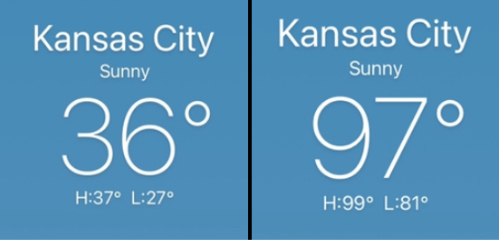
It’s hot again here in Kansas City. At the time of writing the current air temperature is 36ºC (97ºF) with a heat index of 45ºC (113ºF) and a humidity measuring at 55%. Like I said, it’s hot again here in Kansas City. And while August is usually the hottest month of the year here in the Midwest, and while thankfully we aren’t dealing with the horrific wildfires that are burning up the Mountain West and Pacific states, it’s still hot here on the prairies.

The thing about this heat that makes it more unusual to me than our regular summer heat waves is the fact that based on a UN climate report that was published earlier this week this sort of heat is going to be the norm in places like Kansas City in the coming decades, and to be honest we have only ourselves to blame. As warm as it is here it must be even worse further to the south right now in Texas and beyond the Rio Grande in Mexico and Central America. Our summer discomfort bodes even worse for the people who live in places where 35ºC+ temperatures in the summer are the norm because when our weather gets that hot theirs is bound to get even hotter.

It makes me wonder then how will this impact our winters? In the last decade we’ve seen harsher winters with more formidable blizzards and snowfall here in Kansas City than I can remember in my own relatively short lifetime. Will our summers get hotter and our winters cooler? Or will the summer heat mean our temperature cycles won’t fall quite as far as they have? For the record low temperature that I’ve experienced here has been -26ºC (-15ºF), though thankfully I was away in comparably balmy yet snowy Upstate New York when the temperature dropped even lower than -26ºC (-15ºF) this past February during the storms that knocked out power to Texas and by extension most of the Great Plains.

I’m not terribly fond of this sort of heat, and yes there is a difference to dry heat compared to this wet heat (take that pun where you will). When I was on a road trip with my Dad driving across the deserts of the Colorado Plateau in western Colorado and eastern Utah in June I got to experience this same temperature, 36ºC (97ºF) in a very dry climate, and it was actually a pleasant experience. Would I want to live out there in the deserts near Moab and Green River? Probably not. But if a KCUR article today about a local group of triathletes is correct, as KCUR usually tends to be, the human body can adapt rather well to extremes in temperature. I’ve tried to take the opportunity to go out and walk earlier in the mornings when the temperature is still in the high 20s, low 30s C (around 80ºF), which has certainly helped me cope with the few times I’ve needed to go outside during the height of the afternoon when as it happens I’m writing this post.

I guess the best answer I can give now is that we’ll adapt. We’ll adapt both in realizing we have to shift towards renewable energy sources ASAP or risk our very survival as a species, and we’ll adapt to the new climate that we ourselves have created, for better or worse. While it’s been fairly obvious for a while I’d say the new UN Climate Report is rightfully the herald of the Anthropocene, the latest geological epoch in Earth’s history. It’s an epoch when the greatest impact upon the balanced and complex ecosystem of our planet has been transformed and impacted the most by us and our industriousness. We’ve created our bed, now it’s time to sleep in it, and make sure the feathers don’t fly out of the mattress and pollute the entire bedroom floor. That cleanup would be practically impossible.

The End of Handwriting?

I still remember my first ever school assignment. It was in March 1999, my second semester of Kindergarten. The job was to learn how to write the number “1”, which in the U.S. is normally just written like a vertical line (|). I didn’t listen to all of the instructions, and brought my work back to my teacher, who was flabbergasted to see I had written slashes (/) across the page. It was not only my first assignment, but also my first F. Now, 22 years and eight schools/universities later, it’s interesting to me to look back at the early years in my life when I was learning to write my letters, first in print, and later starting in second grade in cursive.

I grew to be fairly proud of my handwriting, for how fluid it steadily became, but especially for how much it seemed to reflect back on my own personality. Yet in the last few years I’ve found myself writing things by hand far less than ever before, and since starting my first MA in London six years ago, handwritten notes have become a hassle to transport back and forth to Kansas City.

For me, of any of the essential skills I learned in my elementary school years, cursive was the one that seemed the most validating. Everything official, proper, or grown-up that I knew about that wasn’t printed by a press or typed on a computer was written in cursive. I even tried to emulate my favorite cursive handwriting, that being Thomas Jefferson’s on the Declaration of Independence, which after seeing it on the wall in so many classrooms over the years was almost as familiar an image to me as any classic and often replicated picture, like George Washington Crossing the Delaware or the shot of Sammy Sosa hitting a home run that I had up on my bedroom wall as a kid (Go Cubs!)

As a result of my interest in emulating that older style of cursive, I quickly moved past the standard style of cursive script that we were taught at my parochial school, the D’Nealian style, with its regimented curves and extra humps on the n and m, to something that was all my own, yet still mostly legible for my teachers, except of course for when I tried reintroducing the old long s character among the double-s in my handwriting, making Congress appear as it did in the 18th century as Congreſs. I was quick to decide that it was better to keep the long-s out of homework, lest it lose me credit, and use it for fun though.

When I started my college years, now a full decade ago, my experience with handwriting seemed to undergo a sort of flowering. I quickly found that I could remember more information if I hand-wrote it, and developed a very particular style of note-taking that was entirely my own. What’s more, I insisted on taking all of my notes on a type of yellow legal paper that worked perfectly for what I was trying to do. In 2010 and 2011, at the end of my high school years, I’d expanded my writing to include the Greek and Cyrillic alphabets, and often found it fun to try and write down names and other important notes in English but using those alphabets rather than the usual Latin one, just to see how things would work out.

Over the four years that I was an undergrad, and briefly during my two years working on my History MA at UMKC (2017-2019), I used this system to its fullest extent, and really grew to enjoy the process of putting the ideas being discussed at the front of the room down on paper, always imagining that someday I’d go back and look at those notes. In all honesty, I actually have done that from time to time, but usually when I’m looking for something specific in those notes.

My experiences moving across the water to do my first MA at the University of Westminster in International Relations and Democratic Politics (2015-2016) spelled the first end for my use of handwritten notes. I took my yellow legal paper with me, but as I discovered, it seemed less useful to take regular notes in my classes when I wasn’t being graded on the material covered in the lectures, and overall any documents I created while in London would have to be brought back with me to Kansas City when I finished my degree there. That simple need to conserve space, and the benefit of having a computer that’s perfectly capable of recording writing made my handwritten note taking fairly untenable.

Today, as I’m working on my doctorate, I still occasionally take notes by hand, though usually only in the form of edits to typed documents and even more specifically only when I’m in Kansas City where I have easy access to a printer. Like my experience in London, the need for the things I’m taking back and forth across the eastern half of the U.S. to fit in my Mazda means that it’s more helpful if I don’t have a big set of file folders full of handwritten notes in tow. Plus, today I have everything filed away digitally on my computer, meaning every set of notes I have on a specific book or a specific article, or on a lecture I heard is easy to find with my computer’s search tools. Today, if I can have a book or an article available for me to digitally take notes on it, then I’ll take that option a thousand times over having the physical paper document or paperback in front of me any day.

I don’t know how much I’ll use my handwriting in the future, now that I don’t use it for work. I’ve never been too fond of writing my fiction by hand either, it usually takes much longer than typing it, and my thinking through a story often happens much faster than my hands can write with pen and paper. I still try to send handwritten letters and cards to people when I can, though again when the ease and utility of computers and smartphones is brought into the discussion it quickly becomes evident that any “snail mail” is almost as much of an antique as using an old fashioned typewriter; while those older technologies work, they fall short of the efficiency of the new in many ways.

So, is this the end of handwriting for me? Maybe. I certainly think cursive should still be taught in schools, but I concede the fact that my own experience has shown that with the rise of so much still fairly new digital technology, including every device that you are reading this on, has made a fair deal of handwritten communication redundant.

The Olympics Return

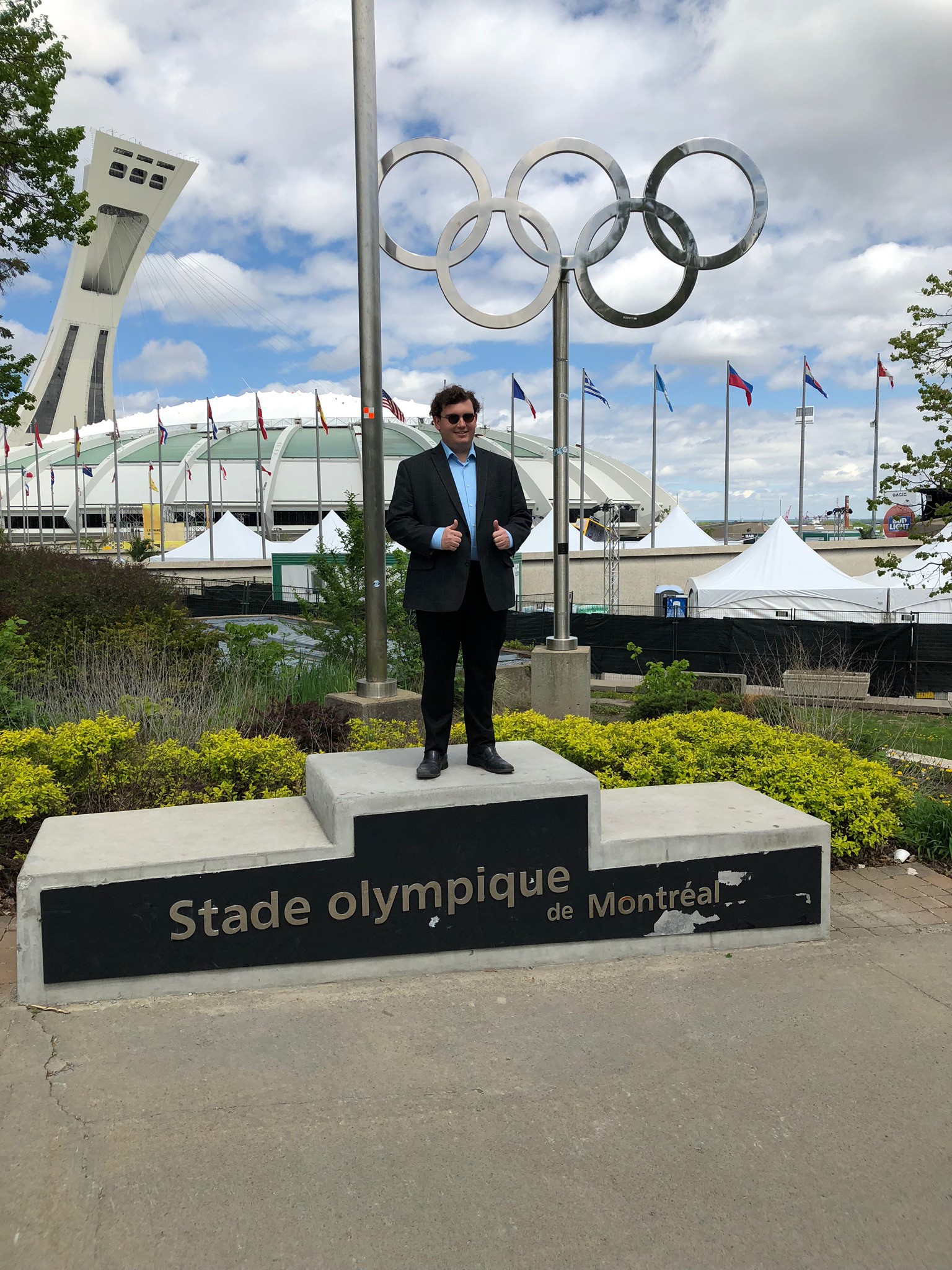
From my visit to the Stade olympique de Montréal in 2019

As surely nearly everyone reading this knows, the Olympics are back on after a year-long delay due to the ongoing pandemic. And the many, many people who have argued that the games should’ve been cancelled because of COVID have a pretty solid case, if I’m being completely honest. The best I can tell is that the games went on largely because of the financial loss that Tokyo and the International Olympic Committee (IOC) would lose, let alone all of the national broadcasters and corporate sponsors, if the games had ended up being called off. Marketplace’s report on the costs related to holding the games placed the estimated cost of the current Olympiad in Tokyo “at around $35 billion,” a figure substantially higher than the most recent Summer Olympics five years ago in Rio ($13 billion).

Still, while I can’t help but agree with the naysayers, that bringing the globe’s top athletes to one city, the capital of a country with very low COVID vaccination rates, was a bad idea all around, I’m still enamored with the games like I am every time that they occur. The first Olympics that I can remember, the one that caught my attention and never gave up, was Sydney 2000. As a young seven year-old living on the edge of Kansas City, I loved everything about the Olympics, from the amazing opening ceremony, to how clean the facilities looked, to the gobsmacking talent of the athletes themselves, the ones who make the Olympics the spectacle they are every time around. That year I can particularly remember the diving events more than anything else; diving remains one of my favorite Summer Olympic sports because of it.

By the time the Winter Olympics came around in 2002, hosted by Salt Lake City, I was excited to see the circus begin all over again. Only this time, it’d be in my own country, albeit a good two-days drive west of home. At about the same time as the Salt Lake games, I even enrolled in a local fencing school, thinking that maybe someday I might even make it up to that stage of competition. My days in the saber competitions were fairly brief, though recently I’ve wondered if maybe the foil would’ve been a better fit for me. It’s been interesting watching each Olympiad in the intervening decades: as a child I got to look up to the Olympians of the Sydney, Salt Lake, Athens, Turin, Beijing, and Vancouver games, while by the time London came around in 2012, I suddenly found myself the same age as most of the athletes.

In the years since, with Sochi, Rio, Pyeongchang, and now Tokyo, I’ve found an even greater appreciation for the Olympics watching as an adult. I don’t really expect I’ll ever end up competing in any Olympic event, at 28 I’m likely past my prime in most categories, but I still enjoy sitting back and watching hours of competition each evening, and being awestruck at the skill of these top athletes in their respective sports.

If anything, I really hope the IOC can figure out the big issues wracking the games, from the corruption, to the high cost of hosting, to issues of doping scandals, and return these games to being purely 16 days focused on the individual athletes and their talents. Any global sporting event is going to be a massive revenue source for broadcasters and corporate sponsors, so while I may raise an eyebrow every time one of the athletes from my country comes on the screen talking about their favorite sandwich from Subway, I usually dismiss it as just something they’ve got to do to be able to afford to compete at this level.

Proposals have been made in the last couple of years to have permanent Olympic host cities, say a rotating set of cities that could take turns hosting the games. Dr. Dave Amos, an Assistant Professor in the Department of City & Regional Planning at Cal Poly in San Luis Obispo, CA made a pretty good argument for this in 2018 on his excellent urban planning YouTube channel City Beautiful.

In his video, Amos argues that there should be 6 cities designated permanent hosts of the Games, with the Summer and Winter Olympics rotating between those 6. For the Winter Games they are Calgary, Turin, and Pyeongchang, while for the Summer Games they are Rio de Janeiro, Cape Town, and Sydney. Honestly, the argument makes a lot of sense, and would be a good solution to the problem of cost and how useful Olympic venues become following their run in the spotlight, as those six cities’ venues would be reused every few years.

I like the idea, though one of the big draws for me every time is getting to see the events in a different city. I’m loving the opportunity to learn a bit more about Tokyo and Japan in general this time around, just as I found myself reading quite a bit more about Pyeongchang and South Korea three years ago during the last Winter Olympics. I’m hoping, for example, to be able to be in LA during the 2028 Summer Olympics, I’d love at least once to see the games in person, to not only immerse myself in the Olympics as I can watching them on TV, but to be there in person surrounded by the whole experience. I imagine it’s similar to going to an F1 race instead of just watching it on TV. The race itself is better on TV, honestly, but the fan experience alone is worth the trip.

Still, if the IOC ends up choosing a permanent host city, or a set of permanent host cities, I’ll be excited to see who they choose, and will undoubtedly begin daydreaming about making the trip out to see the Olympics in person there someday. For now though, I’m content to sit in front of the TV and spend an evening watching the events in Tokyo from afar.

Understanding the Classics to Understand Ourselves

I’m writing this having just read a stirring article in Commonweal by Cathleen Kaveny, a professor of law and theology at Boston College, on the merits of reading St. Augustine’s Confessions in the original Latin. Professor Kaveny’s article was in response to Princeton’s Classics department’s much noted decision to cut the requirement for its undergraduate majors to prove proficiency in Latin and/or Ancient Greek in order to earn their degrees. I’ve had a number of discussions with friends and colleagues about that particular decision, being a current student of Latin myself, and an off-again-on-again student of Classical and Koine Greek. While I personally haven’t yet read Augustine in the original Latin, in part from a personal dislike for what I perceive as the grumpiness of St. Augustine’s writings (of the early Church Fathers I prefer St. Gregory of Nyssa), I can relate to the thrill and benefit of reading these texts in their original languages.

A page from my copy of Ovid’s Ars Amorita

There’s something lost in the translation of any text. English, for all its excessive complexity, lacks the imperfect tense for verbs, meaning that when I am trying to express an idea in any of the languages my sources are written in that uses imperfect verbs, I’m often left struggling to find a really good clear way of expressing that the action is in the past but not quite completed. Think about particular words or phrases in English that sound like other words; the planet Uranus has a funny name depending on how you pronounce it, but that relation between the seventh planet and your posterior anatomy is lost if you try to translate it into practically any other language.

Beyond just understanding literature as its authors intended, the study of Latin and Ancient Greek is critically important to understanding the origins of our civilization, however problematic that word may well have become. The civilization of the peoples whose cultural origins are drawn from Europe, both eastern and western, derive in their origins from the ancient civilizations of the Greeks and the Romans. Those cultures, those powers, those memories have had such a profound and lasting influence on our world today that it would be profoundly shortsighted to stop teaching about them to such a detailed level as many programs do. Our political systems have their origins at least in part in the Classical World, modern representative governments can draw some of their lineage from the democracy of Athens as well as from the Roman Republic.

Generation after generation following the fall of the Western Roman Empire tried in their own way to set themselves up as the heirs of Rome, from Theodoric and the Ostrogoths based at Ravenna in the fifth century CE through Charlemagne and his successors the Holy Roman Emperors in the German-speaking lands north of the Alps, to the Tsars of Russia, the revolutionaries of France, and the founders of the United States. I once wrote in my book Travels in Time Across Europe that to me, Paris today feels as close to what I’d imagine an idealized vision of Rome during the height of the Republic would’ve been like two thousand years ago. The symbols of those governments, particularly of the Roman Republic and the later Roman Empire, remain so present in so many aspects of our world today.

I study the history of French natural history texts written in the second-half of the sixteenth century right at the tail end of the Renaissance that began in Florence in the late fourteenth and early fifteenth centuries. The whole idea of a renaissance is that it was a period when classical culture, literature, architecture, politics, and philosophy saw a revival, a rebirth as is the etymology of the word “renaissance” itself. Advocates of this “renaissance” at the time saw themselves as rekindling the light of the classical world, of restoring the course of what at that time was beginning to be understood as European (aka Western) civilization.

The accidental realization that the Americas existed in 1492 thanks to Columbus resulted in one of the greatest changes in the history of humanity, the opening of the Atlantic and the beginning of permanent contact between the peoples of the Americas and those of Eurasia and Africa. It’s because of this that I prefer not to refer to our civilization as “Western” or “European,” but rather as an Atlantic civilization. It is still the descendant of the civilization of Christian Europe, itself a descendant of the older Mediterranean civilizations of Greece and Rome, but since 1500 our civilization has been profoundly altered by its encounters with civilizations beyond Europe’s waters.

I concede that many of the worst aspects of our Atlantic civilization, from colonialism to slavery can trace some of their origins back to the Greeks and Romans, and that ideas like Manifest Destiny here in the United States have been argued to have drawn influence from older ideas like Rome’s right to rule the world, but even in the historical periods when these claims were being made they were incredibly flimsy. That said, of any problem today, one cannot tie modern ideas of race back to the classical world, as our ideas about race didn’t really begin to develop until 1500; it’s development in the Americas is a central theme to my research.

All this said, we need to understand our history to understand who we are and how we got here, and to do that we need to understand the classical foundations upon which our civilization has been built. The best way to understand those foundations is to be able to read the books they left behind in their original languages. Since the Renaissance we’ve remained generally in the same steady period of knowledge about the classical past; in fact one could argue that the beginnings of all modern fields of research can draw their origins back to the humanists of the Renaissance who sought to revive the sciences of the classical past. Language barriers speak more so to the problems with our education system in general than to anything else. Language education isn’t prioritized in this country, where assimilation and Americanization have been the standards for generations; we come to expect schoolchildren to only know American English because anything else would be unpatriotic. Even if a student comes into a Classics program with a foundational knowledge of one of the Romance languages, in this country likely Spanish, they’ll have a way into beginning to understand Latin. There are strong connections between languages as much as there are between cultures of different ages, we just have to know where to look.

Want change? Make it profitable

This week I’ve decided to write a poem. Writer’s block has determined it’s not quite the right time for me to try and express my thoughts on this topic or any topic in full sentences. Enjoy!

Change is going to come

eventually, or so we hope.

But if it is to come

then it must be for everyone.


So, how do we make such potential possible?

Simple, indeed.

Make that change profitable

and what makes the markets sing

So too will change it bring.


A change has to come

eventually we’ll figure things out,

but if we really want change,

we’re going to have to admit

that someone’s going to make a profit off of it.

The American Civic Religion

One of the best ways for any government or other institution to assert their authority over its followers, whether they be citizens, consumers, or believers, is through a degree of providing those followers with a higher purpose to aim for in their devotions. As Catholics, we strive for Salvation, Union with God, Heaven, or whatever you want to call it. As capitalist consumers, we seek our own wealth and prosperity, and by buying into this economic system, by clicking that yellow purchase button on Amazon, we hope that our accumulation of material goods will bring us one step closer to being that prosperous person. Yet as Americans, citizens of the United States, regardless of partisanship, we are taught from a young age to value the preservation and promotion of some of the core ideals, “life, liberty, and the pursuit of happiness,” as Jefferson put it.

With each of these institutions, there is always a need to establish a degree of devotion among their followers; with each, that devotion is something that was at one time new. In the political case of the American civic religion, we can easily trace the origins of that devotion back to our founding myths surrounding the American Revolution (1775-1783), when, as the story goes, a few brave colonists decided to value their freedom over loyalty to their distant king back in Great Britain. With this determination, they rebelled and declared their independence in July 1776. The Founding Fathers of the young republic that became the United States took on the mantle of apostles or saints, and over time the institutions of the republic became nigh sacrosanct: at the end of the day, the Constitution, the rule of law, and the fact that we live in a democracy became irrefutable testaments to that religion.

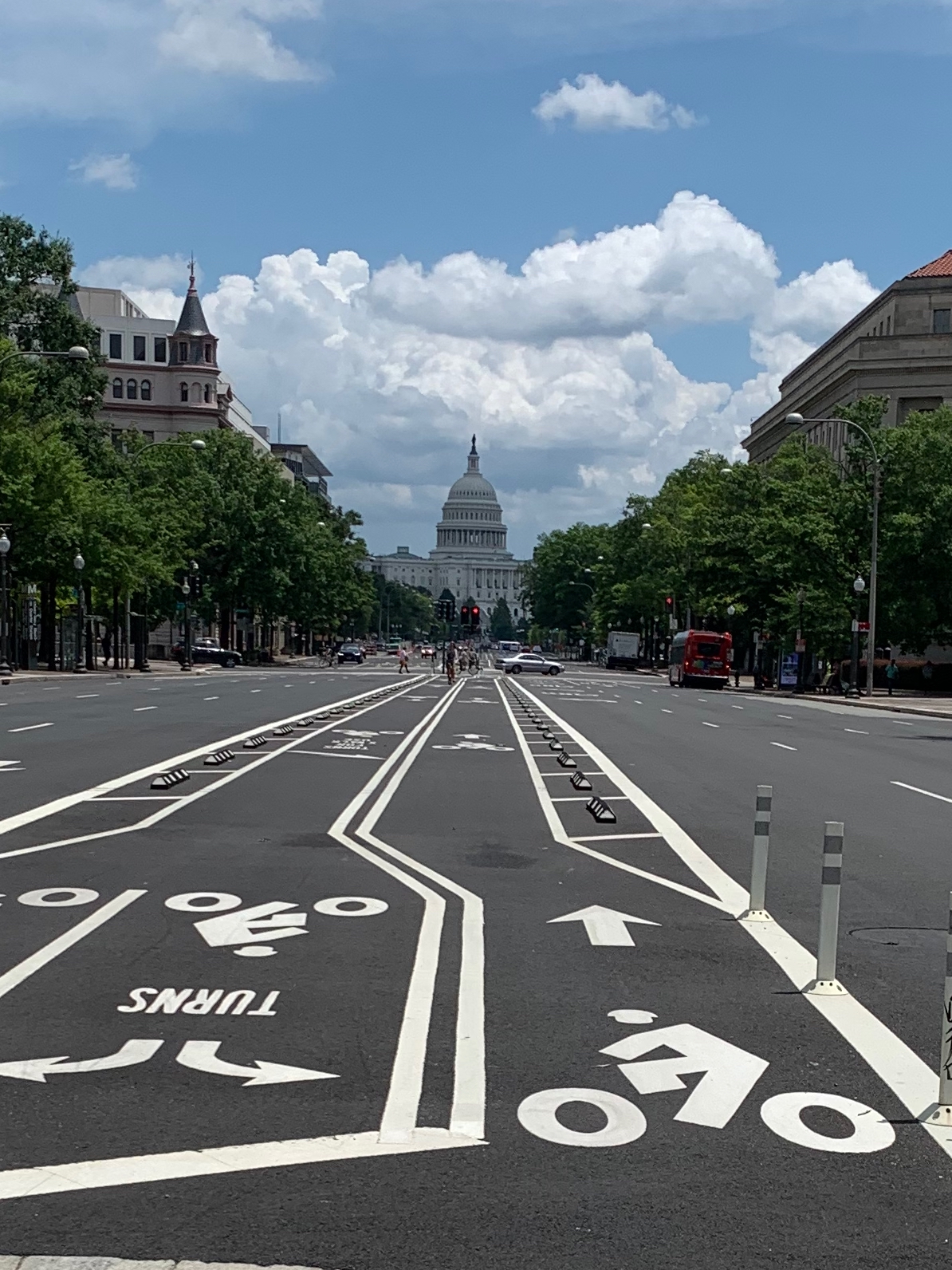
Whenever I am in Washington, D.C., and see the Capitol dome for the first time on that particular trip, I’m reminded of the scene from Frank Capra’s 1939 film Mr. Smith Goes to Washington, starring James Stewart in the title role. The naïve young senator, upon first seeing the Capitol dome from inside Washington Union Station is gobsmacked, and struck by the sight of seeing the St. Peter’s of his deep-rooted belief in the inherent goodness of our government by, for, and of the people. I admit, on my most recent trip to D.C. last week, while I was excited to see the Capitol as I crossed Pennsylvania Avenue, I couldn’t help but feel that as profound our civic religion remains, it nevertheless faced its greatest test in generations this January when the Capitol was attacked by supporters of the now former President on the day when Congress met to certify the results of the Presidential election.

It’s curious to me, because as much as people from both sides of the political divide tout their devotion to “freedom,” the meaning of that very abstract word seems to change depending on the moment. In the broadest sense, freedom is one’s ability to decide how to live one’s life; in the narrowest, freedom has been interpreted as justification to deny the same basic decency and liberty to others on the basis of one’s own biases. I could very well turn this weekly blog into a mouthpiece for all the libels I’d ever want to spin, and likely that sort of fear-mongering clickbait would increase my readership, but I like to think of myself as a nice guy, so in this outlet I refrain from those sorts of obscenities.

As with any other form of devotion, the American civic religion has its own enforcement, people who seem to make it their life’s mission to call out or track down heresies against the civic religion no matter the cost to themselves or their target. This is often realized most fully in the scare tactics used by some to keep their followers loyal to their particular version of the civic religion. Fear keeps people energized, fear of loss, fear of the other. While I will always stand and applaud at the ballpark when the obligatory salute to veterans occurs, I find it chilling that if I didn’t stand, if I didn’t salute the military, it could be damaging to me. The extreme literalness of some religious sects in this country has been carried over into the civic religion, all to the extent that it has been monetized and turned for profit in our devotion to the markets and the accumulation of wealth.

Heretic hunters often have their own faults, that’s where the sacrament of confession comes into play. As a Catholic, I believe that my sins are forgiven in the confessional, so long as I am truly repentant, truly sorry for where I’ve gone wrong. Of course it could be argued that I could then say I could do anything I wanted, so long as I went to confession afterward, but there the actions wouldn’t convert to real results, as I wouldn’t actually believe in the power of the sacrament. So too with our civic religion, as forcibly the heretic hunters may decry their opponents, their enemies as they might well call them, they themselves will always have faults of their own, sins of their own. If we are going to preserve this country, its civic religion, its belief in democracy and in a future where representative government is a strong and viable option, we need to recognize that everyone has problems, and that everyone deserves second chances.

So, as I walked across Pennsylvania Avenue last Thursday, my mind turned to the supporters of the former President who violated the most sacred temple of our civic religion on January 6. Many of the same individuals and organizations that pose as heretic hunters in this civic religion of ours were the same ones that promoted the Big Lie which drove that mob to break into the Capitol, and the rioters themselves, in that most extreme act of heresy against the civic religion, cast themselves as restoring the faith, restoring the power of the people over our government. They too deserve second chances, the opportunity to repent and return to the fold, but not without some penance for the crimes they committed.

If anything, the entire civic religion, built on myth as much as on the ideals of the Revolution, deserves a second chance. It seems increasingly clear to me that the civic religion, the United States as a political community united around our common Constitution, needs refreshing, both to address the shortcomings and wrongs of the past and present, and to reaffirm the foundational covenants of this country’s relationship with its people in a way more in line with the circumstances facing us today in 2021.

Languages

Of any one of my talents, the one that I tend to pride myself in the most is my ability to pick up languages fairly easily. I listen for the patterns, for words that may sound familiar, and gradually piece together what the speaker or author is trying to say. I have a number of stories involving me fumbling through having to speak languages foreign to me, whether it be the time I accidentally said “no” in Finnish when I mean to say “eh?” as in asking the flight attendant to repeat her question, or the time when I tried to tell a pair of Flemish men I didn’t need to see a doctor after falling down a flight of stairs at the train station in Welkenraedt in eastern Belgium. My solution there, by the way, was to merge the German “Ich bin gut” with what little I knew of Dutch, coming up with “Ik bin gut.” Regardless of how accurate it was to the situation, the fumbled line in my attempted Flemish worked, and kept the medical attention at bay.

The first language I learned to speak was English, American English, centered on the Midwestern cities that I’ve called home, Chicago and Kansas City. I’ve often yearned for small signs here or there of linguistic peculiarities in my own speech, and in the ways my family and friends speak. While many of the most evident signs I’d hope would appear haven’t shown, we aren’t terribly distinctive in how we speak, pretty standard American to be honest, the potential that we could have some regionality in our speech certainly makes the foundations for a good story.

I wouldn’t really begin to learn other languages until I was 14, when I began taking classes in Irish, the language of the majority of my ancestors. I’ve always wanted to be fluent in Irish, to speak the language which I feel is the closest to the beating heart and origins of my community. Based on Census data, my great-grandparents’ generation among my Kane ancestors, the ones who came over from Mayo a century ago, were the last ones who likely had some Irish. That multigenerational gap in our ability to read, write, speak, and think in our ancestral language reflects the degree to which we’ve become American with each generation, to which we’ve given up the cóta of the coasts of Clew Bay and embraced our new urban Midwestern American nature to its fullest.

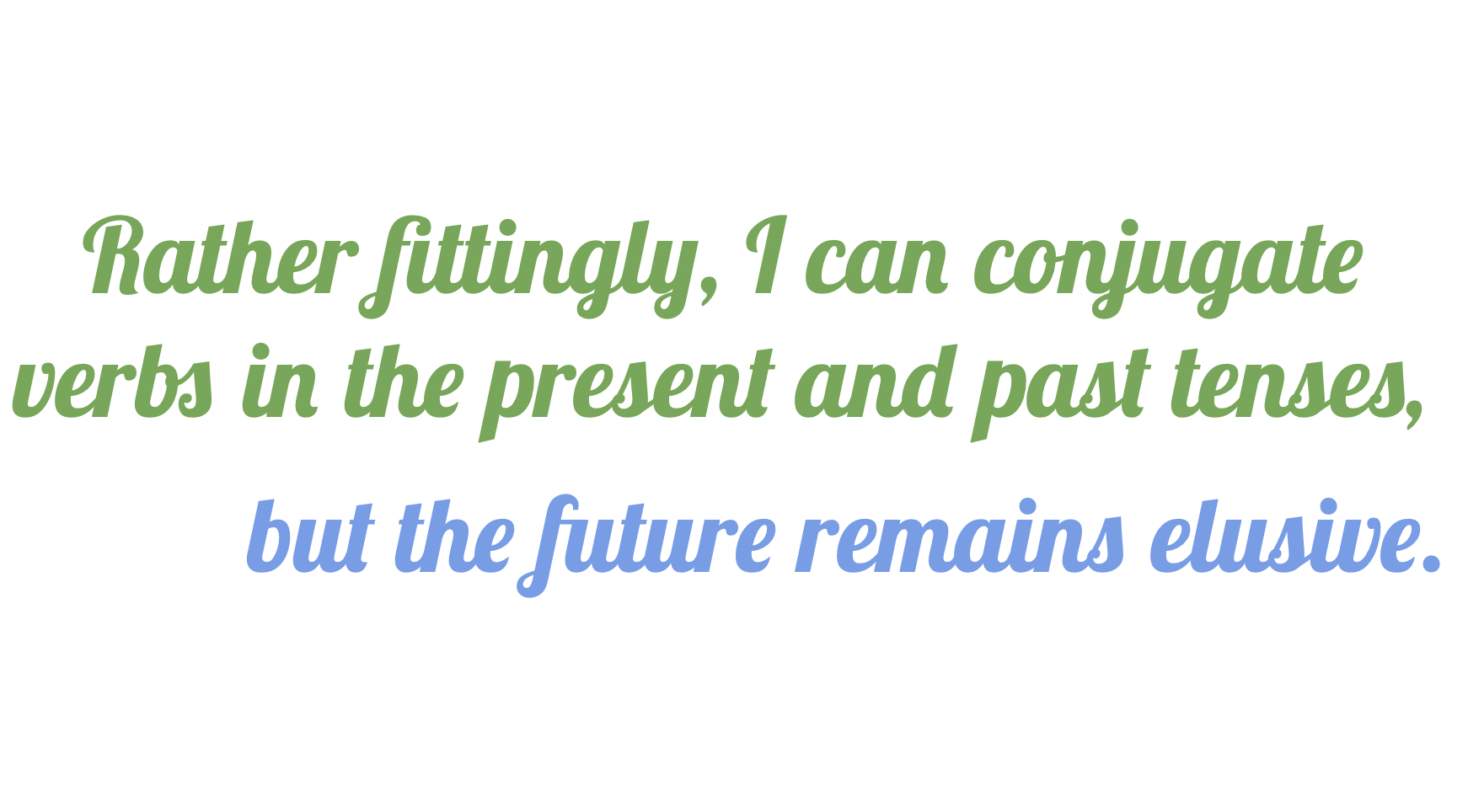
Today, I can do somethings in Irish; rather fittingly I can conjugate verbs in the present and past tense, but the future remains elusive. I use my limited Irish in some contexts, when she was still alive I’d talk to Noel in Irish, saving that language so dear to my heart for my dearest of friends. In the meantime, I’ve focused on other languages: I’m now on my third attempt to properly learn Latin, thankfully as I hope my previous post made clear, third time’s a charm. I’ve also spent a great deal of effort and time learning French, with enough comfort to the extent that I built my PhD dissertation’s source material around the availability of French sources that I could. I’ve spent time studying German and Italian, Ancient Greek, and Egyptian Hieroglyphs. I’ve studied my other ancestral languages, Welsh, Finnish, and Swedish, as well as a little more Flemish after my railway station tumble.

I once wrote a sentence in Irish that I thought expressed how I think about the language, how many of us the descendants of European immigrants spread across this continent may well equally think of their ancestral languages. Is ár dteanga an glór ár n-anama í. “Our language is the voice of our soul.” As best I can tell, it’s grammatically correct, and to me it has deep meaning. As long as we understand and remember our ancestral languages, the deep and intricate contexts of so many aspects of our familial manners and ways of life will stay alive. Even in the whisper of an ethnic memory that comes in preserving our names, the many Irish Americans named Patrick, Molly, Colleen, Brendan, Aidan, or Seán, we can see a hint of the Irish language alive today.

If I am able to truly become fluent in Irish, and I hope I’ll be able to dedicate the time and energy to do so in the long run, I hope my contribution to the language will reflect our times, that as truly it will recognize the efforts of generations past, my Irish will be the language as it is spoken in the twenty-first century, with recognition of the international nature of the language deeply rooted in the native soil from whence all Irish Americans’ ancestors came. I hope deeply, as an American cousin, that my efforts to continue my studies will reflect the respect and admiration I feel for the modern, progressive people my Irish cousins have become.

Stargazing and the Future

Vega, photo by Stephen Rahn.

For some reason, whenever I spend time at night outside stargazing, I find myself thinking about how timeless the experience is. How I could be anywhere on the Earth and still probably be able to see at least some of the same stars up above me in the night sky. It’s a beautiful and humbling thought, but as much as the starlight itself often takes years to reach the Earth, so too I find myself thinking in those moments about how in years to come, I may well be able to see the same old sight. Yet then, in ten or twenty years when, if I’m lucky enough to be a parent, I might be sitting out on a hillside somewhere looking up in the night sky with my kid or kids, I’ll be seeing light that might well have left those stars at the time I’m writing this now.

The whole concept of light years, that the light of distant stars takes years to travel to Earth, and that one can measure distance in light years, is such a neat way to understand things, let alone a beautiful correspondence between space and time, in what tends to now be called spacetime. One of my favorite stars, Vega, is 25 light years away, meaning the light from Vega that I saw that night recently overlooking the Green River in Dinosaur National Monument left that star when I was 3 years old, right at the beginning of my consistent memories. Like a postcard stuck in a long delivery loop, a postcard sent in 1996, that light which glowed from Vega’s face reached my vision as a memory of a time now seeming well past.

When the light glowing from Vega’s surface today, in 2021, is seen by stargazers here on Earth, in 2046, I will be 54, living a life built on the memories of 2021, just as much as it will be on the more distant echoes of 1996, yet I’ll be as much the same person yet still very different from who I am today. Who knows what thoughts and context will go through my mind then, ideas that will be descendants of those that crossed my mind a few weeks ago when I sat back in the high desert and stared up at Vega well into the night.