For most of my adult life I never really thought that I’d ever own my own house whether through the pure economics of trying to buy a house in the neighborhoods that I like here in Kansas City or in the other cities I’ve applied for jobs in. There have been the odd moments though when homeownership seemed within reach, as a sort of mirage just on the edge of my vision. In these instances, the circumstances that would’ve allowed me to buy a home faded away, yet by getting that taste of the possibility of it this future still feels probable.
The arguments for homeownership are financial, having a stake in the local economy through your home value, and aspirational of having control over your future in this fortress that you can truly make your own. To every man his castle, right? I do have ideas for a dream home, ways I’d decorate it, ways I might even add onto it. There are ways that I could modernize one of the century old homes here in Brookside to be more energy efficient, to run on renewable power, and to feel futuristic for even the 2020s. I want to have lots of color in my home, whether in patterned tilework or in the art that I’d hang on the walls. I also want to have a room set aside as a library for the practicality of needing to store all my books, yet also as a place to work.
There are days when I still sometimes think about the houses I considered buying. Now it’s as if I’m remembering the memory of these places where I was thrilled to imagine myself living. That hope at the heart of all of this is what keeps me engaged and actively trying to move my career forward. Today, writing this it’s hard to imagine me owning a house as my professional life continues to exist in its malaise waiting for things to happen. I’d rather not be so rooted in one place as the potential for my life to wander from place to place is too good to let pass by.
To this end, Jennifer Denbow, a Professor of Political Science at Cal Poly, San Luis Obispo made a very strong case for renting or even condo ownership in her recounting of her family’s struggles to buy a home in their city in an article in the February 2025 issue of Commonweal. I usually don’t underline text in magazines, the better to preserve the physical artifact for someone else to read. Yet in this instance, I was drawn to Professor Denbow’s affirmation that living in a multifamily development allows the “building of community and solidarity,” something much needed today. The investment here is in the community itself, less in the property which can drive individuals to support restrictive housing policies which keep the housing stock low and house prices high.
In my experience the reality of this community and solidarity depends upon the people living in close proximity with one another. I knew many of my fellow tenants in my building in London, yet I knew them far better than I did my downstairs neighbors in Binghamton. In London we had more in common, all of us were students––a mix of undergrads and postgrads––and all of us were new to that city and learning about it as we lived in it together. The same could be said for my dormmates at Rockhurst and during my summer study abroad session at Westminster. We became fast friends through our mutual situations and interests. This common bond is necessary if any solidarity is to be achieved.I suppose homeownership for me is one of those standards of American life that wavers in and out of range for me. I might buy a house or a condo someday, but it’s never been a guarantee. I know the sorts of places that I like in the cities where I want to live. Where the next year or two will take me remains uncertain.
How distractions can be beneficial or detrimental, from a certain point of view.—Click here to support the Wednesday Blog: https://www.patreon.com/sthosdkaneI recommend you now listen to: On PausesA link to the WBEZ Chicago story referenced in this episode.
How distractions can be beneficial or detrimental, from a certain point of view.
On February 21st, a story appeared on the WBEZ Chicago website with reactions to Illinois Governor J.B. Pritzker’s proposal to restrict cellphone use in all public and charter school classrooms. Mine was the first generation of students to have access to cellphones, and from day 1 it was a noticeable distraction for everyone in the room when someone brought their phone to class. Whether looking at the teacher who was trying to do their job in spite of a new topic to chide students over, or to the other students who see that one of their fellows is challenging the classroom’s authority so brazenly, to the student carrying the phone who now had a ready means of ignoring the teacher and missing out on the lesson, phone use is a problem for all.
In all honesty, I’ve been that student from time to time. In some classes it wasn’t a cellphone as much as it was a computer or a tablet that distracted me from the lesson or lecture at hand. In other cases, it was the unavoidable glow of the screen in the row in front of me shopping for shoes or looking at Spring Break trip ideas that drew my attention away from the topic at hand. Looking back, I recognize a noticeable drop in my attention and focus when these technologies began to enter the classroom, just as I notice now how I stopped reading nearly as many books once I discovered YouTube.
The idea of the distraction is often subjective; sure, in the classroom the student is supposed to be paying attention to the instructor, yet beyond that setting what are all the trappings of life but distractions from other facets which to varying degrees we ignore? This isn’t inherently a bad thing. Considering how troubled our times are fast becoming I have made a point of trying to find happy things to look at every day, and in some instances, I send these along to friends who I hope will benefit from smiling at something no matter how inconsequential.
In WBEZ’s report on student reactions to the Governor’s proposal to ban phones from classrooms the reactions were mixed. Some reactions speak to concerns about staying in touch with parents during the school day, especially in case of safety issues. I understand this point, it speaks to the reality that we’ve allowed ourselves to live in an increasingly dangerous society, and to that danger we need resources to mitigate it all while ignoring the underlying problems. We can distract ourselves from addressing gun violence, yet the shootings will continue all the same.
In my own experience the best classroom settings were those where the students either were mature enough to not pull their phones out in class or where they didn’t have their phones with them at all. In a recent substitute teaching job, I found that I was not only competing with student apathy toward following a sub’s instructions but that I also had to compete with students watching all manner of videos on their phones from Netflix and YouTube to TikTok, Instagram, and Snapchat. I simply can’t compete with these bright screens, and as most schools don’t inform their substitutes of any school policies (which allows students to abuse those policies when a sub is in the room), I’m at a tremendous disadvantage in that position.
Today, as I write this blog post I have one conference presentation I need to write and an article submission that I need to revise. The former needs to be done in the next month and the latter by June 1st. In short: I have things I need to be doing right now, yet I can be more flexible with these extended deadlines and keep the Wednesday Blog going for another week. This publication of mine may seem like a sort of distraction to some of my colleagues, yet I feel it is a tremendous opportunity for me to write about topics that I have ideas about which my research doesn’t cover. After I write and record this blog post I will take full advantage of the good weather today (sunny with a high of 65ºF / 18ºC) and go for a long walk this afternoon. After that, I might look at these two projects again. As I said earlier in this paragraph: I have time to wait on both of them.
Returning to the topic at hand: whereas in my teenage years I found it empowering to have a school-issued laptop which I could use in class, today I yearn more for the days before that technology became so accessible to me for the sole reason that I could focus more on the moment at hand. Perhaps the greatest distraction that we’ve created for ourselves is our indefatigable busyness that keeps us moving at full speed whenever we’re awake. We fear boredom because we haven’t allowed ourselves to spend enough time surrounded by the silence that it brings. I wrote about this in October in the context of pauses in the dialogue of the Kate Winslet film Lee. I don’t know if I have any suggestions for systemic change this week, merely advice that each of us ought to look at what we think is most important for our lives and our enrichment. We only have so much time around, so the best thing we can do is to use it wisely.
This week, talking through three terms I’ve historically had trouble understanding: epistemology, ontology, and teleology.—Click here to support the Wednesday Blog: https://www.patreon.com/sthosdkane
This week, talking through three terms I’ve historically had trouble understanding.
A major turning point in my life came at the end of 2014 when I decided to drop my philosophy major to a minor and not take the final class that I needed to complete that major. The class in question was Continental Philosophy, and it remains one of those decisions that I regret because it closed some doors for me in the long run even while it seemed like a reasonable decision in the short term. A year later, now working on my master’s degree in International Relations and Democratic Politics at the University of Westminster, I was reminded daily that I really should’ve just taken that last class because so much of what we were studying was based in continental philosophy.
I initially pursued a triple major in History, Philosophy, and Theology and a double minor in French and Music at Rockhurst University. I was quite proud of the fact that up to that point in my seven completed semesters at Rockhurst that I’d been able to juggle those three majors and the two minors while still having an active and fulfilling social life on campus. I went into Rockhurst with several vague ideas of what I might want to do with these degrees when I was finished; notably I remember both considering doing a Ph.D., likely in History, and possibly going from Rockhurst either into the Jesuit novitiate or into a diocesan Catholic seminary to become a priest. The first four years of Catholic seminary is comprised of that philosophy bachelor’s degree, so it felt like a good idea to undertake that at Rockhurst and keep the door open.
Now ten years after I would’ve finished my undergraduate with that philosophy degree, I realize that even as I continued to consider holy orders that I may well have properly begun to close that door in my early twenties, not feeling that the priesthood was the right fit for me in spite of what many people have said. Even then, most of the other professions that I’ve considered have been shrinking in one way or another in my lifetime. It feels here as in so many other aspects of my life that I was born at a high point in our society’s capacity to consider the arts, humanities, and even the sciences and that as I’ve gotten older that capacity has diminished time and again. Even while I continue to be frustrated to remain in these wilderness years, I nevertheless continue to learn and to grow in my understanding of what is possible for me to do in my career.
In the last seven years I’ve reasserted myself as a historian first and foremost, settling into the Renaissance as my period of study in late 2017 and gradually shifting from considering the history of Englishwomen’s education to the history of translation to now the history of natural history. Yet all of these disciplines lie under the common umbrella of intellectual history. My manner of writing the history I craft tends to speak toward French notions of mentality and perception, while the economics I still occasionally encounter in my work speak to Max Weber’s notions of capitalism as a broader Cross-Channel enterprise including Brittany and Normandy alongside England, Picardy, Flanders, and the Dutch Republic. I’m beginning to try out a new method of writing history that draws on the natural sciences to better understand the animals and other natural things described by my Renaissance cosmographers and natural historians.
Amid all of this, three words continue to appear, three words which I have often had trouble remembering their meaning. These three are epistemology, ontology, and teleology. In spite of my training in Ancient Greek, I still have trouble keeping these three apart. They represent three central tenants of philosophy which help make sense of how we understand things. It may not sound like the strongest topic for a riveting podcast episode, but for those of you listening bear with me.
Descartes’s tomb, photo by the author.
Epistemology is the theory of knowledge. It distinguishes things which are justified from mere opinions. This theory of knowledge considers propositions about facts, practices which form knowledge, and familiarity with an object thus allowing the subject to know it. This word episteme in Greek (ἐπιστήμη) translates into English as both knowledge and science. Science itself is a word which at its core refers to knowledge, for the root Latin verb sciō means “to know.” We know for instance that we exist because we can recognize our existence, in Descartes’s famous words “I think, therefore I am.” I made a point of visiting Descartes’s tomb in the Abbey Church of St. Germain-des-Prés when I was in Paris in October 2023 because so much of my own philosophy is Cartesian in its origins. I reject the principle that we could be living in a simulation on the grounds that based on what we can know and perceive we are not inclined to accept such a suggestion.
The second of these words is ontology, a branch of metaphysics dealing with the nature of being. This word derives from the present participle of the Greek to-be verb εἰμί. I stand by my assertion that the life we are living is real because we can recognize it in large part because the best explanation that I’ve found for the course our history has taken is reliant on us having the freedom to decide the courses of our own lives. This free will explains how a society can seem to take steps backward even while the chaos those retreats cause is to the society’s detriment. The method which I am developing in my research to understand the nature of historical animals using modern scientific research is ontological in character. I can test if this method will work by applying it to particular individual animals who appear in the historical record and determining their true character by a process of eliminating candidate species until the animal’s own species is determined. In this search for the nature of these animals I hope to prove that the historical past, before the development of the scientific method in the seventeenth century, is valuable to the natural sciences as a means of understanding the longer-term nature of other animals during the period in which human influence upon nature was growing toward the Anthropocene which we find ourselves in today.
I like to think of ontology in the linguistic context of how the copular to be verb appears in our literature. Think, for instance, of how God is identified in the Bible. In the story of the burning bush, the Divine is referred to as “I Am that I Am,” or rather the purest expression of existence. For this reason, when I was an undergraduate in my theology major, I began to refer to God as the Divine Essence owing to the root of essence in the Latin copular verb. English recognizes a far wider set of states of being than does Irish. Where in English I might say “I am sad,” in Irish I would say “sadness is upon me,” or “Tá brón orm.”
The third of these words is teleology. This is the explanation of phenomena in terms of their purpose rather than the manner of their invention. Τέλος (telos) is the Greek word for an end, an aim, or a goal. The purpose of something’s existence then is at focus here. I do question this idea that we have a specific purpose in life, perhaps because mine has not gone quite how I expected. In my Catholicism, the most teleological concept we retain is the idea of a vocation either to holy orders, marriage, or to the single life. The teleology at play here speaks to some sense of destiny which I feel stands in opposition to our free will. Perhaps there is some purpose to life, at its initial conception in the first moments that matter began to form in the void that became our Universe, yet I do not believe that I can perceive any intended influence beyond the flick of the first domino at the Big Bang. We may not even be sure that the Big Bang was the beginning of everything, after all there had to be energy to build up to cause such a tremendous explosion in the first place. In a theological view I would point to the Incarnation of Jesus as an example of telos in our history, I am a Catholic after all. My lingering question is where should that theological teleology interact with the other ways of knowing?
I’ve written here before about my view that belief and knowledge are two distinct yet interrelated things. One must believe in one’s senses to know, yet there are things in which one can believe without knowing which one cannot know without believing. The prime example of this is God; “I believe in One God,” it’s something I say every week at Mass in the Creed, “Credo in unum Deum,” in the Latin original of our Roman Missal. Yet God alone is a tremendous challenge to know because God is both paradoxical and far greater than the extent of my knowledge. For this reason, we had the Incarnation, as we recite in the Creed:
“I believe in one Lord Jesus Christ,
The Only Begotten Son of God,
Born of the Father before all ages.”
For God to be knowable God needed to come down to our human level in the person of Jesus, God the Son. This was Jesus’s telos, to be known, to be heard, and as we believe restore faith in God and cleanse humanity of original sin. Here there is a collision of belief and knowledge, where something clearly happened about 2,000 years ago because a new profusion of faith occurred, beginning in Judaea and spreading around the Mediterranean World in the Roman Empire and beyond to become Christianity. That new religion adapted to fit the cultures it encountered, so as to be more acceptable to its new converts. Today that collision continues in the Eucharist, the most sacred of all seven sacraments, in which we Catholics alongside our Orthodox brothers and sisters believe that God becomes flesh again in the sacramental bread and wine. Can we know that it happens? Not by any scientific measure, yet something does happen. That something is perceptible through belief, and it is the Great Mystery of the Faith that has kept me in the Catholic Church in spite of the ecclesiastical politics and divisions of our time.
My Irish Gaelic ancestors understood Christianity in their own way, aspects of which survive into the present day. That collision of belief and knowledge looks to some lingering folk belief, or superstition if you will, that I’ve inherited of particular days in the calendar when the worlds of the living and the dead could collide. We see this most pronounced in the old Gaelic calendar on Samhain, which developed through Catholicism into Halloween, the Day of the Dead, and All Souls’ Day around the beginning of November. I see All Saints’ Day fitting into this as well, after all the Saints are our honored dead all the same. Likewise, Bealtaine, the celebration of the coming of Summer at the beginning of May is also the Catholic celebration of the Crowning of Mary, something I attended at Rockhurst on several occasions.
What in all of this can I actually know? I know the stories that have survived from before St. Patrick and the coming of Christianity to my ancestors 15 centuries ago, even if those stories are Christianized in some way or another. I know this just as much as I know that Jesus existed in the first century CE because there are effects of these stories in the lives and histories that are remembered down the generations. If these stories have any teleology, it’s to teach us lessons about life that our ancestors learned so that we might not have to face the same trouble all over again. The folly of humanity is that we are resistant to having a clear purpose or end to our aims. Through our free will we know that there are always many options to choose between.I don’t know if I made the right choice in dropping that philosophy major at the last moment. In many respects, it was a poor decision. I learned from that experience and many others in my early life to stick with things until their conclusion. This learning is something that has been tested to grow beyond mere opinion through belief into something that is verifiable. When I look at my prospects in my doctoral program, I always decide to stick with it because I don’t yet know what my prospects will be like once I’ve earned it, something that I do know having 2 master’s degrees and a bachelor’s degree to my name. I have gained a great deal of epistemic experience through all these memories that have informed the nature of my character. Yet where they lead I cannot say, for the purpose of my life is something I continue to decide day by day.
This week, how numbers are both a universal language and symbols representing deeper meaning.—Click here to support the Wednesday Blog:https://www.patreon.com/sthosdkane
This week, how numbers are both a universal language and symbols representing deeper meaning.
Consider, if you will, what meaning a number holds if unaffixed to an object for calculation or counting? What does six mean if disassociated from the rest of its sentence? Some numbers are recognizable for their meanings due to the broader cultural connotations held by those definitions. A learned reader who sees 3.14 written on a page will recognize that as the first three digits of the value of π, yet without the decimal a Midwesterner will recognize 314 as the telephone area code for the City of St. Louis. Similarly, while 23 holds significance as Michael Jordan’s jersey number to millions if not billions of us who remember the greatest Bull play around the millennium, to others 23 is just another prime number.
Numbers in themselves can only exist beyond the abstract if they account for something. The life is blown into the Music Man’s best known song by the “76 Trombones”; Professor Harold Hill’s exhortation to the people of River City, Iowa would’ve fallen flat if he called on them to raise the funds and enthusiasm for “76” alone. Perhaps the patriotic connotation of that number, 1776 was the year of this country’s birth, might’ve stirred some hearts, but a number alone cannot bring a parent to tears quite as well as hearing their child blow the life out of a trombone for the first time.
It generally annoys me to hear numbers be used with minimal context. I don’t always know what the speaker is referring to when I hear a given number, and in that instance while mathematics may be the universal language the way we use it requires greater linguistic framing. Language can readily transform numbers that otherwise would be subordinated into defined objects of their own. Consider the penny; on the one hand it is merely 1/100th of a dollar in this country or 1/100th of a pound in the U.K. Yet a penny saved is a penny earned, and if Poor Richard’s maxim is to be believed a penny in itself is something beyond its diminutive status in hard currency. The value of the penny has shrunk a tremendous amount in the last century to the point that for the last quarter-century it’s cost the U.S. Mint more to make an individual penny than the value of the penny itself.
The penny is in a less stable place today because of inflation and our society’s transition toward digital currency. How often do you see products priced at 1¢ in stores anymore? With all electronic payments for things, no coins or banknotes are needed to complete the transaction. The unfortunate incident of coming up a few pennies short when paying for something is no longer a problem unless your card is denied. Yet for the cash-users among us losing the penny means they can no longer aim for exactness when paying for things. If a product is priced at $4.99 and you give the cashier a $5 bill you won’t get that penny back. I’d probably shrug it off, but still, I’d feel a twinge of unfulfillment and a residual sense that that shop now owes me money, even if it’s practically worthless. There lies the one great flaw in this plan: the penny is so ingrained in our culture; it’s been one of our coins since independence and even before then pennies go back to Charlemagne’s denarius (thus why in pre-decimal Britain and Ireland the penny was abbreviated d.) The Carolingian denarius of the 8thcentury CE was in turn borrowed from the Roman denarius which was introduced during the Second Punic War (218-201 BCE). So, the penny has been around far longer than most other coins we use here in the United States, and its name transcends this country where it represents 1 cent. The penny still gets used in Britain as the 1 pence coin, there even that word pence is another plural which is synonymous with our pennies.
My photo of the Ha’penny Bridge from August 2016.
In older songs and stories, we still remember when the penny was valuable enough to be subdivided into ha’pennies, or half a penny. At that time, the British penny was worth 1/240th of a pound, in a pre-decimal system that was replaced in 1970 with the current pound-pence system. Dublin’s Ha’penny Bridge is named for the tolls that used to be collected to cross it. Even smaller denominations of the pre-decimal pound such as the farthing (1/4d.), and half farthing (1/8d.) were also minted. Clearly then the penny had more value in the past than it does today. I was struck when I moved to London in 2015 how you could still find goods for sale in the groceries priced less than £1, especially bread. That is almost unheard of in my own country anymore. I think this also speaks to a broader transition in the way we think away from older pre-decimal systems toward ones that work better for computers. After all, the primary method by which we interact with numbers anymore is through our computers who tend to do most all of the calculations for us.
One effect of that shift is that fractions now feel less practical. I was taught fractions in school well before being taught about decimal places in what now feels like one of these pre-decimal holdovers. To an extent I still think in fractions, perhaps thanks to our continued use of the quarter (1/4th) among the coins of the US dollar or the weighing of meat in fractions of a pound. Fractions on their own require that they represent a portion of another number, they cannot exist independently. ¾ is three-quarters of something, yet again here context is key. A musician will look at that fraction and read it as ¾ time, or a 3 beat measure where the quarter note gets the beat. Yet again there: this refers to a quarter note. That musical note may be the default note that gets played, with the ascending and descending scales of note length from that point, yet it still is ¼ of the length of a whole note. I love how in English we’ve mixed Latin and Germanic terms together to describe quarters, halfs, wholes, and such. This word quarter is Latin in origin, coming from the ordinal number fourth in that language: quartus. A quarter then is a fourth of an object.
I remember learning my fractions in school, and I still use them a great deal in my daily life. They’re practical when I know the total number of objects I’m dealing with and when I need to subdivide those objects to ensure maximum efficiency or spread. If I have 4 slices of bread left and I know I won’t be able to make it out of the house for a day or so because of snow, I’ll portion those slices out, so I don’t run out until I have the next loaf in hand. For tangible things that exist in the physical world comparing them as fractions (that is dividing the portion by the whole) helps me understand the numbers I’m dealing with.
Yet again, the quotient produced by that division, the result of that fraction is almost always written in decimals. I think of decimals as a product of the development of the metric system in the late eighteenth century. They are fundamentally more rational, and easier to program into a computer. Rather than asking a computer to translate from the more human fraction one can instead speak to the computer in its own language and let it do its computations faster and more efficiently. Today then, I use decimals far more than fractions. What’s more, each decimal number can exist independently of any other figure. 0.25 is simply 0.25, it’s not inherently a quarter of something else. When I see that price tag of $4.99 in the shop, I think of it as just a hair below $5, and am willing to hand over a $5 bill despite that being worth more than the product I’m buying. If I get my penny back or not is less of a concern, after all in this decimal mindset the penny is almost worthless, so what’s the bother if I lose a few cents here or there? Consider that sentence again though: a penny is a cent, or 1 percent of a larger number, namely $1. Even here when contemplating the penny as 1 cent or $0.01 it is still 1/100th of a dollar. Sure, eventually losing those pennies in every transaction will add up, but it’s going to take long enough that it doesn’t register as a problem for me.
Percentages are another sort of number that’ve grown in importance in my thinking in recent years. We mostly encounter percentages in tipping these days. There’s a tender balance here between tipping a percentage digitally or a whole dollar depending on the initial value of the bill of sale. When doing my own mental math, if I get a rough idea of what 20% of something will be I might decide to round up to the nearest whole dollar when writing a tip on a receipt. Yet those tip screens we see at nearly every business changes the dynamic slightly. Instead of leaving room for that rounding up they offer us the exact sum of 20% of the total bill down to the nearest cent. There’s something lifeless yet efficient about this. This is a number to be sure, yet it represents something human and social that ought to be seen in that light rather than just numerically.Mathematics is the purest language, it’s the one most often looked to as a solution for how we might communicate with other intelligent life who surely wouldn’t know how to speak any of our human languages. Yet all numbers are infused with emotion and have a myriad of deeper meanings than the sum of their parts. In balancing budgets, we could just look at the numbers and cut where seems fitting, yet there is always a human side to every budget line. Each cut is something taken away from someone, a potential line of funding removed that otherwise would’ve contributed to someone’s livelihood and helped them make something new and exciting. Numbers can and do reflect people, and they always have. They can exist in both the abstract as just numbers and the real as representations of people and objects. More often than not, we see them in the latter context. The mathematician is warranted to consider the human in their calculations, lest they clip one cent too many and leave too many of us people without the values we need to survive and thrive in this world we’ve built for ourselves.
This week, I discuss how my experience working with genealogy databases helped prepare me to be a professional researcher.
—
Click here to support the Wednesday Blog: https://www.patreon.com/sthosdkane
This week, I discuss how my experience working with genealogy databases helped prepare me to be a professional researcher.
One of the things that struck me about the history that I liked to read as a child was that few of my own ancestors’ names appeared in those books. I remember sitting up late at night in my elementary school years reading these fifty or sixty year old children’s histories of the Vikings and the Romans and imagining the illustrations to life. I could convince myself that I could hear, even on the softest level, the oars of the longships pushing with the current of the Thames as the ropes that tied their sterns to the pillars of the old Roman London Bridge grew taught. I’d return to my regular school day the following morning, to Mass and eight hours of classes introducing me to everything from basic mathematics to orthography and English grammar to music, yet when we had our hour in the school’s library the books I knew to search for were the histories.
My elementary school, St. Patrick’s in Kansas City, Kansas, was founded in 1949 and most of the history books dated from the late ‘40s and early ‘50s, by modern standards they were historical artifacts in themselves. Moving forward I didn’t have access to the same kind of library after my middle school years, my high school had a “media center” that functioned like a library, yet I never remember finding books to read there. So, one of the first places that I went on arriving at Rockhurst University in August 2011 was the upper floor of the Greenlease Library to wander around with my new friends and see what books lived there. I made great use of that library during my four years at Rockhurst, and before the pandemic continued to occasionally check books out with my alumnus privileges.
Yet when I was probably 8 or 9, on one trip back to Chicago my grandmother Mary Lou Kane gave me a book about Irish folklore, and I began to hear stories about my family’s history from her and other relatives. I’d known our ancestors were Irish for as long as I could remember, I was 7 when my grandfather’s aunt Catherine McDonnell died; she was one of the last immigrants and probably the last native Irish speaker in our family. Just before my 10th birthday on a trip to England I met my Welsh cousins who introduced me to that side of my maternal family. We kept in contact writing letters back and forth every now and again.
This all led to my formal introduction to genealogy when I was 13. At that point I talked my way into starting as a volunteer at the institution then known as the Irish Museum and Cultural Center, now the Irish Center of Kansas City. The director at the time thought I was 16 but let me stay after I showed I could be responsible. There were days where I was the only one in the little office we had in the lower level of Union Station, and among my responsibilities was to help the frequent visitors with genealogy questions about their own Irish ancestors. I became familiar with the different genealogical databases around then and steadily built up a good knowledge of where to look for what sorts of records and had the occasional success finding a long-lost relative for someone. I continued volunteering at the Irish Center until around my 19th birthday, when now an undergraduate at Rockhurst with a growing list of clubs on top of my three majors and two minors I stopped volunteering at the Irish Center.
I’ve had a fair bit of luck with researching my own family history. My own database is built upon the work of several relatives on both my paternal and maternal sides who did a lot of the initial research. What I’ve done is to fill in some of the gaps and to elaborate on the circumstances of these people’s lives. This has come into handy here and there, I was fortunate enough to visit the building where my Finnish 4th great grandfather worked as the town judge in the southwestern port town of Rauma in the mid-nineteenth century. Moreover, my Dad wouldn’t have his Irish citizenship through descent were it not for the research done by myself and several others that helped find his grandparents’ birth certificates.
My one genealogy position as an adult that I undertook was as a volunteer in the genealogy reading room of the National Archives’ Kansas City regional office. I regularly attended to this position for a good year and a half while I was beginning my M.A. in History at UMKC. It was fun at times, though in many other occasions it could become quite dolorous as the cases I was often presented with were unsolvable or restricted in some ways or another. I left that position as my work at UMKC began to grow, around the time I started writing my second M.A. thesis in fact.
All this research that I’ve undertaken for myself and others in genealogy helped prepare me for my work as a professional historian where so much of what I do is search through databases looking for archival sources that will offer the glimpses into the past that I need to write my work. At some point once I feel confident that I’ve done enough historical research to earn my first professorship I intend to turn to the boxes of family papers collected by long-time Wednesday Blog reader Sr. Mary Jo Keane, one of my grandfather’s cousins, whose research is the foundation of what I know about my paternal family in Mayo. When she died, I took those boxes with me with the intention of writing some sort of family history like the one she intended to write in her last years.
We often talk in the historical profession about history from below as one of the newer genres of history-writing. I’ve liked this idea since I first heard about it, and in some sense, I’ve tried writing from the perspective of the animals which are at the heart of my professional research to varying success. Genealogy is often history from below because as much as we may hope to find some famous ancestor––at one point Ancestry.com claimed to prove my relations to several famous people––it really ought to be a recognition of who our family has been in the generations that we can still find. It is a supplement to memory even as that living memory of our past fades. At Kane family funerals I would often learn something new about the immigrant generation in my family, my great-grandparents, that would explain their lives just a bit more. Those stories turn these people from just being figures on paper into memories that have some of the color and life of those illustrations in my childhood history books. I want to know more about my family’s past to understand how I fit into our world today with its progress and troubles all the same. In the first half of the last century that generation lived through world wars, the Irish War for Independence and Civil War, the Great Depression, and a global pandemic. And through it all they took the bold step of leaving home and starting a new life for our family in Chicago. That life was the one I was born into at the end of the last century, and even after my parents & I moved to Kansas City that life in Chicago still forms the bedrock of my life and perception of things today. None of this would be nearly as personal or as impactful if I knew nothing about the ancestors I never met. It’s thanks now to all this research in genealogy that they live on in my memory today.
This week, some thoughts on the divestment of our social media attention and why I choose to use different platforms for different sorts of messages.
—
Click here to support the Wednesday Blog: https://www.patreon.com/sthosdkane
Photo of the author by Hariprasad Ashwene, 2024.
This week, some thoughts on the divestment of our social media attention and why I choose to use different platforms for different sorts of messages.
I’ve been an active social media user since May 2008 when I created my Facebook account at the young age of 15 years old. I remember not being sure what to expect from Facebook when I opened my account, yet my Mom opened her own account at the same time as me and we jumped into it together. I see the big turning point in my time on Facebook as 9 October 2016, the night of the 2nd Presidential Debate that year. Leading up to 2016 I’d gotten a reputation among many friends that was voiced by my London flatmates in 2015 that if they wanted to get an idea of what was going on they’d look at my Facebook to see what news stories I’d posted that day. Yet after that second debate, I noticed a significant drop off of people who were interacting with my posts about the news, and in the years since the overall interaction level hasn’t picked up again since even as I’ve connected with more people on that website.
Today I have 10 social media accounts on Facebook, Twitter,[1] Instagram, LinkedIn, Reddit, YouTube, Mastodon, Threads, Snapchat, and BlueSky. I also have 8 professional accounts of a similar vein to social media on Research Gate, Academia.edu, the Knowledge Commons, BE Press, and on the fora hosted by the Linnean Society, History of Science Society, and the American Historical Association. Traditionally, my professional and personal social media activity was shared on the same accounts; I’d post about the Cubs and my research on Twitter, a longtime home of academia online, yet in the past year I’ve begun to rework things a bit. Today, I use BlueSky for my professional social networking within academia.
Facebook feels like the daily broadsheet of my online presence; it’s my original foray into social media and where I have 17 years of posts up and online. Yet today Instagram is where I am most active socially. There’s been a notable migration of my fellow millennials away from Facebook toward Instagram in the last decade, and whereas readership of my Facebook is restricted to my Facebook friends only I’ve allowed my Instagram profile to remain open to the public. This probably caused me some trouble when I was teaching the middle schoolers in the Fall 2023 semester, and today many of them still regularly view my Instagram stories. What I decided to do was rather than censor myself and limit their access to my Instagram, I would instead take a more curatorial role and be mindful of what I shared on my Instagram stories, making sure it was appropriate and thought-provoking for them. My Snapchat account is the most limited of all my social media accounts: I only accept connection requests from relatives and a very small number of friends there. I still occasionally browse Reddit, especially the Star Trek subreddits, but in the last 6 months I found it was becoming less enjoyable to read and today I only really open that app when I need to do something but am not in the mood to read a book or a magazine. Meanwhile, I’ve only recently begun feeling comfortable posting comments to YouTube videos, I had a handful of very bad experiences doing this in my early years of public comment fora on sites like that of the Kansas City Star and Trip Advisor where I learned quickly that a lot of people take the anonymity of the Internet as permission to be uncivil.[2] As with any place for public comment whether online or in the real world, I try to keep to the principle of only saying something if I feel it’ll contribute to the conversation.
As for the newcomers: like many others I opened a Mastodon account in 2022, and like many others I quickly found Mastodon to be unnecessarily confusing and haven’t opened the app in at least a year. Threads holds some potential in my mind, though like Mastodon I barely use it. I opened my BlueSky account in November 2024 when I was at the History of Science Society conference in Mérida described in Season 4 of the Wednesday Blog, and began connecting with other academics. I decided from Day 1 to cultivate my Blue Sky account as a purely professional account without any hobbies or personal anecdotes. This has limited how much I use the app, though I do use it on occasion.
On the topic of the Wednesday Blog I have an automatic distribution set up with Facebook, LinkedIn, and Threads, and I manually post each week’s blog post on Instagram and Twitter. Because this isn’t necessarily an academic venture I don’t promote this publication on Blue Sky. There’s also a Wednesday Blog Patreon, which you can join for $5 per month!
One of the big conversations of today is whether to close our social media accounts as the corporations who own these sites are increasingly accepting the problems they cause in our society, in the lived world, yet have dropped the mask of caring and continue their play for greater profits bare-faced and defiant in exposing themselves. In the aftermath of the 2024 Presidential Election I saw an immediate flood of false information appear on my Twitter account, which I wouldn’t have noticed if it didn’t appear among the silent notifications that I get daily over that app from the Kansas City office of the National Weather Service, and the handful of academics and other people I follow who are still on Twitter. With the recent announcement by Meta––the owners of Facebook, Instagram, and Threads––that they would cease their work with third-party fact checkers so as not to upset the new President caused a flood of comments about people dropping their profiles on Meta’s social media sites in protest. I haven’t seen as much false information on there yet, thought I expect it will appear.
I for one have considered shutting down most of my social media profiles off and on since 2016, because I understand and generally agree with all my friends and relatives who’ve done just that. Yet while I see a tremendous utility in these social media sites in allowing me to stay in touch with friends and relatives near and far, I see a far better reason to keep these accounts active: I will not be intimidated into silence by their shifting interest in the public good. I often hear the response to the suggestion that we can still have a reasoned debate between people who disagree being that it’s just not possible with how polarized we are today. That polarization is in large part thanks to social media for pushing forward the loudest and most outrageous voices of today just as the yellow journalists of a century ago did the same.
I had many a Facebook argument in my first decade on the platform, and in some cases, they were the primary way that I ended up interacting with people who I knew from school, college, or beyond on the site. I established a simple rule for comments on my profile: I will only delete a comment, “unfriend” someone, or block another account if they intentionally insult myself or someone else who they are communicating with in the comments on my profile. To date I’ve only blocked two other users. I believe we ought to respect differences of opinion when they are based in fact & reason and that as much as social media has been a tool of disinformation so too we can use it to inform and counter the outright lies being spread on these sites.
Social media truly shrank the globe for me and myriad others. Before I began using Facebook in 2008 while I would watch news broadcasts from beyond the U.S., particularly from the BBC on PBS and BBC America, I still was mostly reliant on handwritten and typed letters being sent by air mail to communicate with anyone beyond this country. Now, I keep in regular communication with friends & relatives on every permanently inhabited continent. I’ve been fortunate to stay in touch with some dear friends of mine who I haven’t seen in nearly a decade or more because of how our lives have led us apart; that contact has been sustained and fulfilled through social media.
Let me conclude with a note of data security. I would rather keep all of my social media accounts active because the risk present in someone else or a bot recreating an account in my name is great enough that I don’t want to risk it. I’ve cultivated this garden, and now I don’t want to see it wither. I’d rather use the tools owned by these corporations that actively support forces, ideas, and people who I disagree with in order to circumvent their power over me. I know that their websites aren’t necessary for me to live, even if they’ve grown to become such an ordinary part of my daily life. Yet I continue to use them as an act of self-expression standing for the ideals that I believe in: curiosity, honesty, hope, and optimism.
This week, looking ahead to the next 25 years here are three things that I hope we see become ordinary things by 2050.
—
Click here to support the Wednesday Blog: https://wwww.patreon.com/sthosdkane
This week, looking ahead to the next 25 years here are three things that I hope we see become ordinary things by 2050.
Last week I started the New Year off in this publication with a reflection on the technologies that I remember looking forward to in the first quarter of the twenty-first century. Today then, I want to look ahead to the next quarter, to the years leading up to 2050. On New Year’s Day of that year, I will be 57 years old, well into my career with hopefully a good wind in my sails from successes and contributions to society in the decades previously built upon the work that I am doing now. Perhaps by then I will watch the New Year’s ball drop in Times Square with my wife and children to be, though that’s one dream that remains more elusive to imagine than any professional triumph. 2050 feels like a strange milestone to me, in part because 1950 feels far more tangible to me growing up surrounded by people who were beginning their own lives in that middle decade of the twentieth century. Yet as much as I feel a bond to the century of my birth, my own legacy will likely be numbered among the figures of the current century rather than the last.
Our century has tremendous potential to be one of the most consequential in the long history of humanity. We’ve already seen dramatic changes in the first 25 years which have defined the break in our current moment from the century we left at the millennium from new wars and economic recessions to the COVID-19 pandemic and dramatic advances in technology and global interconnectedness. A significant cause for discomfort in this century is the rift between those who see globalization as a threat to individual, local, regional, and national identity and the increasing interconnectedness of our world. At the beginning of this century the easiest and most affordable way for us in the United States to be in touch with relatives in Britain and Ireland was by letter, whether handwritten or typed, and sent by air mail to arrive within the next two weeks at its destination. We could place international phone calls, I remember doing this in early 2001 when my Mom was in London on a business trip, but those were far more expensive. The expense of international calling over regular phone networks remains an annoyance, yet today we have other options of placing voice and video calls over the internet that have existed since near the beginning of the century which fill this role.
The increasing ease of global communication is one clear sign of the advances of this century that I applaud. Just before writing this, I spent a delightful hour watching a live public lecture from the Linnean Society of London over Zoom in which I was able to pose a question in the Q&A box that was read by the moderator at her desk nearly 7,000 km across the Atlantic and answered soon after by the speaker. Throughout my undergraduate I often heard the maxim that I should earn my doctorate in the country in which I wish to teach, yet the little islands of national academies that we’ve built in the last two centuries are fast growing into each other’s back gardens to the extent that in my experience there isn’t so much an American and a Canadian academy but a North American academy which also has close links with the republics of letters in Britain, Ireland, and across Europe with more disparate connections in East Asia, Australia, and New Zealand or even South Africa. I’ve yet to present at any conferences on the far side of the Pacific though I have attended conferences held at the Universities of Auckland and Sydney over Zoom that were held the following day, or thanks to the disparity of time zones late in the evening here in North America.
The lecture in question
Yet again, these are technologies which already exist and even if they have room for improvement, they fit better into that first of these two entries about the technological innovations of the twenty-first century that I am most excited by. This week then, I intend to discuss three technologies which I hope will see fruition in the next 25 years that would have a noticeable influence on all our lives for the better. All three of these technologies are already being developed, and in some cases merely need implementation here on this continent as they already are elsewhere. We seem to be in a moment of reaction when the parking brake is firmly grasped in the hands of those who fear any further forward motion on the part of our society whether for their own portended loss of power or their general fear of the unknown. Both are understandable, yet as Indiana Jones learned in his last great challenge in The Last Crusade there comes a point in life where each of us needs to take a leap of faith and trust in ourselves and our future.
The first of these three technologies which I’ve read a great deal about in the last several years and which is proven in a laboratory setting is the use of nuclear fusion to create a new source of energy and ideally power to keep our lights on. One great worry I have among many others about the incoming administration which will take office next week in this country is that they will slow or even stop the construction of new renewable energy facilities: solar and wind farms in particular without any significant scientific foundation for that decision. We ought to be developing ways that solar panels can be integrated into the shingles and tiles atop our roofs so that they aren’t an extra addition to any edifice. Likewise, wind farms in places like the deserts, the Great Plains, and off our coasts (ideally still out of sight of the beachgoers) where the wind is strongest and most usable would help to eliminate our use of fossil fuels including natural gas and coal which are still in use in parts of this country.
A drawing of the ITER Tokamak and integrated plant systems now under construction in France. CC by 2.0 Oak Ridge National Laboratory.
The prospect of nuclear fusion to be downsized from its current necessary laboratory dimensions to something that can be implemented on a local level in cities and towns around the globe is what I look forward to most. The effects of human influenced climate change are well and visible around us. Look no further than the extreme shifts in weather year round, or the prolonged droughts across much of this continent. Look at the winter wildfires that burned around Boulder, Colorado and west of Kansas City in Central and Western Kansas in December 2021. Look at the wildfires burning down neighborhoods in the Los Angeles area today! We need renewable and clean energy sources that will continue to power our civilization if we’re going to survive in this brave new world that we’ve created for ourselves. We’ve already reached the threshold of a 1.5ºC increase in mean global temperatures, and we only seem to be letting things get worse. I’m reminded of the beginning of the story of the Flood in Genesis and how “the wickedness of human beings was on the earth” and “[corrupted] the earth” itself. Are we not doing the same thing by not wedding our continued innovation and progress with a heart for preserving the Earth that has nurtured us to which we too contribute? If we can develop technologies from our own invention which will cultivate a stronger relationship with the rest of nature on this planet in whose cradle we evolved as every other living thing we today know did then what are we doing?
Secondly, one of my great passions outside of academia is the promotion of high speed rail here in the United States. The YouTuber Alan Fisher recently released a video which spells out the utility of high speed rail as a realized technology in contrast to the fantasized options like the Hyperloop that caught our national attention several years ago and even resulted in a thorough study by the State of Missouri to build a hyperloop line between Kansas City, Columbia, and St. Louis. I’ve had my fair share of experiences on high speed rail in Europe and having that option alongside air travel would go a long way to building a far more equitable society in this country. Today, unless you choose to drive the 3.5-4 hours it takes to get between Kansas City and St. Louis, you have the choice of 2 daily flights on Southwest, 2 daily trains on the Missouri River Runner, or 8 daily bus services provided by Greyhound and Flix Bus. While the flight itself is quite short, rarely more than 45-50 minutes from takeoff to landing though including travel to & from each airport and waiting time this option grows closer to 4-5 hours in length. Meanwhile, the train takes 5.5-6 hours and the bus usually 4.5 hours to cross the state. With high speed rail we could certainly cut the travel time either along the Missouri River Runner or a new route along the I-70 corridor with one intermediate stop in Columbia for a service that could well be faster and more convenient than driving. The Missouri state high speed rail proposal from the High Speed Rail Alliance, of which I am a member, calls for 10 daily roundtrip services between KC and St. Louis at least making it possible for residents of either city to make day trips to the other, something that is very difficult to do by any option today.
The Eurostar hall at St Pancras International in London. Photo by the author, 2016.
In Kansas we have a more tangible possibility for high speed rail thanks to the work of a YouTuber who goes by the channel name Lucid Stew. He released a video this summer theorizing what a High Plains HSR line between Denver and Kansas City would look like. The total travel time largely following I-70 would take 3.5 hours compared to the 4 hours it takes to fly between the two cities with airport transfer times included. There are currently on average 7 flights per day between these two cities offered by Frontier, Southwest, and United and there is at least 1 daily bus between the two cities. The drive across Kansas is a dull one, the Great Plains really do get to seem flat once you get west of Salina until essentially the Denver Airport exit. I remember falling asleep in the passenger seat on my last drive from Denver back to Kansas City in June 2021 in a trip featured in the Wednesday Blog two-parter “Sneezing Across the West” and dreaming that there was a high speed train running between the two cities that ran frequently enough (a minimum of 10 trips per day each way) that allowed your average Kansas Citian the opportunity to get off work on a Friday afternoon and go spend the weekend in Denver or up in the Rockies with enough time to come back on Sunday evening to make the start of business on Monday. It was one of those dreams that really sat with me, and made me wonder whether it could be possible to build this line in the future? I think the key feature that would make this happen would be if it were the primary transcontinental link between a Midwestern high speed rail network centered around Chicago and the easternmost node in a Western network that included lines reaching as far as the Pacific Ocean. While it’s far less likely that most travelers would take high speed rail from Kansas City to Los Angeles, San Francisco, Portland, Seattle, or Vancouver, we should still think on a continental scale because there could be travelers leaving from Denver who might want to make that trip, putting the High Plains HSR line into the broader North American network.
The Southwest Chief in Kansas City, photo by the author 2023.
I for one would gladly take a high speed train to Chicago over flying or driving. I already enjoy taking the Southwest Chief, though I was lucky the last time I took it that we arrived on time. Our current passenger rail network is hampered by the lack of enforcement of the federal law which says that Amtrak should have the right of way over freight, yet the host freight railroads now run trains so long that it’s much harder to manage Amtrak schedules in the face of mile-long freight trains that take up much more of the space along these lines. This is a problem for both the long distance routes like the Chief, which runs on BNSF tracks between Chicago and Los Angeles, as it is for the state-sponsored routes like the River Runner which runs on the old Missouri Pacific line now owned by Union Pacific. With the same sorts of amenities as the current trains, the option for private compartments (roomettes, rooms, and bedrooms), sleeper capabilities, a fully stocked dining car, and the observation & café car, I’d happily spend a couple hours more traveling by train on a high speed line between Kansas City and Chicago via St. Louis rather than take the more direct, if slower, route on the Chief. It seems more likely that the Missouri River Runner will get the high speed upgrade than the Southwest Chief because it’ll serve more people: the Southwest Chief’s primary metropolitan areas east of the Great Plains are Kansas City and Chicago alone. If we had an express train that ran just between those two cities along the Chief route that could be another good option that’d cut the journey down from 7 to closer to 5 hours.
RideKC’s Streetcar service at Union Station, photo by the author 2016.
All of this would need to be complimented by better public transportation on the regional, metropolitan, and local levels. We will soon see the opening of the southern extension of the Kansas City Streetcar down Main Street from Union Station (23rd Street-ish) to UMKC (51st Street). This will get the Streetcar right to the top of my neighborhood, Brookside, and just within reach that I will probably begin to take it when I’m going downtown for work or a day out. Yet our local transit agency, RideKC, needs to expand bus service south of 51st Street now to feed people onto the extended streetcar line. Currently we have 20 minute frequencies on the Main Street Max line south of the Country Club Plaza (47th Street), which have been the case since the Max line opened in 2005. I for one want to see at least 10 minute frequencies all the way to Waldo (75thStreet) if not even further south to 85th Street or even to the I-435 loop around 103rd Street. This is a problem that needs to be addressed nationwide. I firmly believe that no one in an urban or suburban area should live further than a half a mile from a transit line, whether that be a bus, streetcar, light rail, metro, or regional rail. When I worked at the Nativity Parish School at 119th Street and Mission Road in Leawood, Kansas the closest bus line to the school was the 57 bus stop at the intersection of Minor and Wornall Roads just north of Avila University (Minor Road becomes 119th Street at State Line Road, aka the Kansas-Missouri border). The walk from there to the school is 2.1 miles (3.38 km) in length and according to Google would take about 45 minutes to complete and while there’s a sidewalk for most of the way on the north side it does end at the property of the Church of the Nazarene just 528 feet shy of the border. Here the pedestrian can cross the street and continue on the south side of the street, but that’s not always the safest prospect on what is a fairly major street on both sides of the border.
In Kansas City we need more streetcar lines and a robust regional rail network that can connect the disparate suburbs together as a supplement for our existing highway network. Thinking about this over the weekend I came to the thought that perhaps if we had a strong enough passenger rail network it could leave more space on the highways for freight traffic which already makes up a fair share of the interstate network’s users. Here if we had a system of through services connecting at Union Station on the tracks of the Kansas City Terminal Railway (KCTR) we could have north-south routes running from St. Joseph to Gardner or Lee’s Summit that would connect points in between including KCI Airport, suburbs in the Northland, Downtown, and neighborhoods and suburbs on the southwest and southeast sides of the urban core. Likewise, an east-west line ought to run as far west as Topeka and as far east as Grain Valley or beyond along the I-70 corridor would do a great deal to connect this region.
I’ve digressed a great deal here about transportation, and rail in particular. So, let me finish with something that’s on a smaller scale yet seems to be growing into something far more robust. In the last decade 3D printing has really developed into a new art form that has a great deal of utility to offer. My parents have developed a hobby of 3D printing with both uses. I’m quite proud of the one print that I’ve completed with my Mom’s help. Just before Christmas we made an old World War I biplane with red filament leading to my declaration that this year the Red Baron would be visiting the Baby Jesus in our manger scene. I’ve seen newer models of cars and trucks, the Ford Maverick in particular, which have interior parts that are 3D printed.
The Red Baron biplane as it appeared when it finished printing. Some assembly required. Photo by the author, 2024.
In October 2016, NASA launched Phase 2 of its 3D printed habitat challenge to see what could be designed as homes “where future space explorers can live and work.” One of the problems to be solved here is that for every kilogram of mass which is carried into Space whether for a Lunar or Martian destination the spacecraft will need to carry more fuel. So, why not bring lighter materials that can be assembled on arrival? The advent of 3D printing technology will allow this to happen with the understanding that the technology will continue to advance in the coming years as the Artemis program brings humanity back to the Moon in the 2020s and 2030s and a future program takes astronauts to Mars for the first time. I don’t know if we’ll see humans on Mars by New Year’s 2050. It’s possible, but with all the delays that the Artemis II launch has faced it seems like the days of rapid-fire launches from the Apollo era are more a distant memory than a part of the present moment.
The Tiki Taco Surf & Turf Burrito, not 3D printed. Photo by the author, 2024
Other innovations in 3D printing stand as challenges to be faced: ghost guns made from 3D printed parts are a new threat to public safety, and the fact that these filaments are largely plastic concerns me from an environmental standpoint. I’m curious however about the prospect of 3D printed food. A long term vision I have for this technology is that it may lead to some sort of device like the replicator we see on Star Trek, and should my preference for beef over other meats become unsustainable and too expensive for me to continue in the next 25 years then I’d be open to considering an artificial alternative that is less taxing on the Earth and its environment alongside eating other meats: bison, chicken, lamb, and pork as well as the varieties of seafood. Yet with this last one there’s the problem of over-fishing. By any natural measure we in Kansas City shouldn’t have as easy access as we do to saltwater fish, shrimp, and the like. I’ve recently discovered the surf & turf burrito at Tiki Taco, a Kansas City Cali-Mex chain with 3 locations. This burrito’s main ingredients are shrimp, steak, with either rice or fries and several other fillings, and yes, I do love it. Yet again, if cattle produce more methane than is safe for our climate and if industrial shrimping is bad for the long term viability of shrimp populations and the oceans in general, shouldn’t we look for alternatives, even ones that have their origins in laboratory experiments?
Finally, I don’t quite know what to make of advances in artificial intelligence quite yet. The means in which it’s become most visible in our lives is through crafted sentences and generated images. I’ve seen some examples of good AI and many of AI that is obviously computer generated. I freely admit to using an AI program, DALL-E 2, to create the images I used in my story “Ghosts in the Wind” from the Season 2 finale, and again I used a separate AI program to create the portrait of Carruthers Smith which appears at the top of my story “Carruthers Smith’s Museum” and its follow-up appendix. I’ve taken advantage of the vast database behind Chat GPT to confirm it’s not aware of more secondary sources in projects where I’m less familiar with the scholarship, a sort of streamlined version of the databases I’ve used throughout my career to find peer-reviewed articles and books. Yet I have too much pride in my own scribblings to use an AI program to write for me. If I want to find a fancier way of saying something, I’ll turn to my trusty thesaurus instead and decide for myself which of the synonyms I like best.
I do think we can find examples of computerized systems that work well to enhance the lived human experience of all three of these technologies. Computers with human supervision will be one of the better ways of monitoring nuclear fusion reactors to ensure their safe operation. Driverless trains already operate in cities like London and Paris, and while it’s disconcerting when you first board the front carriage of a DLR train or a Line 1 train in their respective cities you get used to it. On a less labor-pinching model using automatic train signaling systems and AI driven algorithms to determine schedules and monitor bus & train maintenance will help streamline things. Meanwhile in the world of 3D printing the flaws in current printers certainly can be ironed out with assistance from artificial intelligence to build things in regular patterns and to warn the operators if the machinery involved needs to be fine-tuned or replaced. As a comparison: Teslas have sensors in each wheel which keep track of individual tire pressures. These sensors are accessible on the central display screen. My own Mazda Rua has similar sensors, but they don’t differentiate between each of the four tires and so there’s the one light that will illuminate when there’s a problem. To find which tire has the low pressure I need to leave my car and check each one manually, which really isn’t a problem, yet it’s become an annoyance on my long drives when I’ve had to stop repeatedly to check tire pressures because of the poor quality of road surfaces on our older highways in this country.
As I’m writing this, I’ve been watching the notifications pop up on my computer from new emails coming in. A recent software update from Apple introduced Apple Intelligence to my computer, and now I get brief summaries of each email as they arrive. This means that the pop ups appear a second or two slower than before, and so if I’m not busy as I often check the email before the pop up appears. However, one that did appear while I was finishing the last paragraph announced several new books for sale at a local bookshop. One category of these was “Dystopian fiction.” I for one don’t care for dystopias, I’d rather spend my days thinking of utopias. Sure, the word utopia is St. Thomas More’s way of saying “nowhere is perfect,” but isn’t the human ideal that we’re foolhardy enough to strive for things that seem impossible only to find we actually got close to making those things happen?
Today, high speed rail is slowly being developed in this country. The Central Valley leg of the California High Speed Rail line between Los Angeles and San Francisco continues its slow march, even as its detractors try to see it shut down. At the same time, Brightline West’s efforts to build a separate high speed line between the eastern LA suburb of Rancho Cucamonga and Las Vegas seems more likely to open in this decade. Once we see those lines open in California, will the rest of the country begin to take notice and start planning their own high speed lines? By the time we reach the middle of the century it’s possible our energy sources will come from nuclear fusion generators as well as solar and wind farms, hydroelectric dams like the ones around Niagara Falls, and some as yet unknown or unfamiliar technologies that will help our civilization to progress further in communion with nature rather than in contrast to it. This could well be done using the descendants and successors of our current 3D printers. This technology will likely be instrumental in the establishment of the first permanent human settlements on the Moon and Mars and could prove just as useful here at home. Maybe the interiors of those trains will largely be made from 3D printed materials and parts not unlike the prefabricated houses that’ve been built now for generations. I remember seeing a news story in 2019 or 2020 about a company building prefabricated homes that didn’t require air conditioning because of strategic window placement near the roofline which allowed for the wind to naturally cool the space.
There are a great many prospects to look forward to in the next 25 years, and I hope come New Year’s 2050 that we will be living on a far healthier planet and will have worked through the gridlock that keeps us held back today. I hope that 2050 will beckon in a happier time in a way that 2025 doesn’t seem to be.
This week, to begin Season 5, I discuss some hopes of mine for the first quarter of the twenty-first century through reflections on three things that I imagined might be possible twenty-five years ago.
—
Click here to support the Wednesday Blog: https://www.patreon.com/sthosdkane
This week, to begin Season 5, I discuss some hopes of mine for the first quarter of the twenty-first century through reflections on three things that I imagined might be possible twenty-five years ago.
25 years ago, I was a young boy of 7 when I witnessed the ringing in of the New Year 2000 in my Aunt Jennie’s living room. I was a new arrival here in Kansas City, having only lived here for close to six months, and surrounded by people and places that were fairly new to me. The end of the twentieth century was a significant turning point in my life. It meant that I would be a part of the first generation to grow to adulthood in the third millennium of the current era. Despite this I’ve always felt drawn to the 1990s as the decade when I planted my roots and began to seek out an understanding of my world and what might lie beyond.
I remember throughout the day sitting in front of the television set watching several things, including my first viewing of Star Trek: The Next Generation, whichever channel it was showed “The Best of Both Worlds” Parts 1 and 2. Yet they also cut to the new year’s celebrations in cities around our planet. I remember seeing the fireworks go off atop the Sydney Harbour Bridge and later along the Thames. At 11 pm our time we watched the ball drop in Times Square, and then again, an hour later the networks rebroadcast that ball drop for us living in the Central Time Zone. We stayed the night with my Aunt Jennie and cousins Chelsea and Isabella and then drove north to Smithville, Missouri on the morning of New Year’s Day to buy a new sofa before returning to the farm my parents bought the previous summer where we were still building our house. That winter we lived in a 10-foot long trailer that had to be moved into the farm’s barn in the winter to keep it from blowing over in the high winter winds. This way at least we could be on the build site so my parents could be around to oversee the entire process of our house being built. The only other thing of note from New Year’s 2000 was that it was the last time I visited the town of Smithville until February 2019 when I gave a public lecture at the Smithville branch of the Midcontinent Public Library system. I’ve since made the trip to that northern Kansas City suburb once more in April 2024 in a vain effort at seeing the Northern Lights when I could’ve stayed home and seen them perfectly well in the city.
As New Year’s 2025 approached this year then I began to reflect on my memories of New Year’s 2000. In all honesty it was the first New Year’s that I can remember staying up for, let alone my first New Year’s in Kansas City. It’s one holiday that I’ve continuously celebrated in this city ever since. Yet what I’ve been thinking about more is what I was reading at the time about future technologies that were just around the corner. On a recent episode of the Startalk podcast hosted by Dr. Neil DeGrasse Tyson of the Hayden Planetarium in New York and Comedian Chuck Nice they interviewed Dr. Charles Liu, a professor of astrophysics at the City University of New York, Dr. Tyson talked about how the most futuristic thing that he looked forward to from the original 1960s Star Trek series were the videophones that they used. I too remember an entry in one of my childhood factbooks that I loved reading around the millennium which included one of these as one of the great up and coming technologies. While we may not have landline telephones with video capabilities like that entry suggested our portable smart phones all largely have this very function. The funny thing about it is that I rarely use FaceTime on my iPhone. Looking at my call logs the last FaceTime videocall I made was in March 2024 when I was excited to show off the room upgrade that I got in a hotel in the Chicago Loop to my parents. We’d stayed at that same hotel together several years before in the week between Christmas and New Year’s and had half the space for the three of us that I had in this room on my own.
I tend to make more videocalls on my computer over Zoom, FaceTime, WhatsApp, or Facebook Messenger and very rarely over Skype which Zoom largely replaced in 2020. Zoom has become the de facto videocall platform for many of us, especially in professional contexts. I even use Zoom to record lectures thanks to its screen sharing features. I do wish the technology could improve further though. It would be great to have an easier way to have the camera be set up higher so that it’s not looking up at me but instead straight-on or slightly downward. While an aesthetic preference it also speaks again to the old Star Trek ship-to-ship on screen communications seen in all of the series. Star Wars’s holographic communications would be an even neater step forward, and while I remember seeing a story about how the French left-wing leader Jean-Luc Mélenchon used holography in his bid in the 2022 French presidential election and another that ABBA is touring again in holographic form the technology still seems to be far from ubiquitous enough to be a regular form of communication.
An Air France Concorde at the Stephen F. Udvar-Hazy Center of the Smithsonian National Air and Space Museum near Dulles Airport in Virginia.
Another technology that I remember dreaming about in 2000 that was in active commercial use then yet has lain dormant for most of the quarter-century since is supersonic flight. The Concorde last flew in 2003 thanks to its extreme cost and the fatal crash at Paris-Charles de Gaulle Airport in 2000. Yet I remember my Mom often saying that she wanted to cross the Atlantic at least once on a supersonic jet. While there are many aspects of the in-flight experience on your average transatlantic flight that I enjoy, I do actually enjoy the food and movies in economy for the most part, I certainly wouldn’t mind a quicker jump across the water to Europe. The average supersonic flight between New York and London or Paris was 3.5 hours compared to the 7 hours it tends to take on subsonic aircraft. That’s closer to the travel time for a flight from the Midwest to Southern California today. Looking at supersonic aviation now and the promises of companies like Boom at restoring supersonic flight to commercial service, I’m hopeful that I’ll be able to someday fly on one of these planes. In the short term I’m more hopeful that Kansas City might finally get a nonstop service to one of the European capitals in time for our hosting duties in the 2026 FIFA World Cup. On my last return trip from Paris to Kansas City via Washington-Dulles while I enjoyed a great many aspects of the flight I do remember a growing sense of annoyance at how long it takes to get to Kansas City from Europe when compared to most other American cities our size and larger.
Finally, at the turn of the millennium one of my favorite TV shows was the natural history program Eyewitness co-produced by the publisher Doring Kindersley, Oregon Public Broadcasting, and the BBC. Surprisingly for how influential it’s been, I haven’t written about Eyewitness on the Wednesday Blog yet. This program brought the factual book series of the same to life for its viewers and set the stories of life, the universe, and everything it told in a computer-generated space it called the “Eyewitness Museum” which acted in some ways like a physical museum yet in many others with unusual camera angles and hallways it was entirely an edifice of the mind. I remember loving this series because it gave me the space to imagine and wonder at nature, the world, and human history in a manner which few other programs have done. I remember hoping that I could visit such a museum sometime in my life, and in some ways I’ve done that time and again. Many of the cultural artifacts in the program are on display at the Victoria & Albert Museum in London, and when it comes to the animals & plants on camera it’s well and truly on display in natural history museums around the globe that I’ve gotten to visit.
I rediscovered Eyewitness again in my early twenties when DK began uploading the episodes onto YouTube. By that point I’d already been making videos of my own for nearly a decade, and rewatching this old show from the ‘90s I was inspired to try to frame the material I wanted to describe in videos and in my teaching in a similar minimalist fashion on a blank white background with the object of my videos and lectures taking front and center. As it turns out, white is a much harder color on the eyes so in 2019 I switched to a light blue which I continue to use. My former students will certainly be quite familiar with my blue slideshows that form the core of my teaching materials. Those old Eyewitness episodes disappeared from YouTube in Fall 2023, in fact the last time I watched any of them was when I showed one to my seventh graders as part of their World Geography class.
Yet when thinking about the Eyewitness Museum itself the technology exists today that the viewer could tour that structure through virtual reality headsets. I still haven’t tried one of those on yet, at first from what I understood they didn’t fit over glasses, yet I’m curious about what potential they may hold for both education and entertainment. It would be fascinating to use such a headset to wander through that labyrinth of galleries famous for their all-white surfaces and see everything they hold.The last twenty-five years did not meet our expectations in many respects. Paul Krugman’s final editorial for the New York Times published on 9 December 2024 speaks to the loss of our millennial optimism in the face of 9/11, the Wars in Afghanistan & Iraq, the Great Recession, and all the other crises that have crashed on the rocky shores of our world. Where for a while we thought we might have fine sandy beaches that heralded a prosperous, safe, and happy future now we have fearsome cliffs which act as much as walls defending our “scepter’d isles” as limits to the possibilities of things in our world. I feel a dissonance in my own life with the world we live in because I am still an optimist, and still dream of things that we could do, new monuments to that optimism we could build, and like the Irish quarrymen brought to a young Kansas City in the nineteenth century by Fr. Bernard Donnelly, the founder of the Kansas City Irish community, ways in which we can break down those cliffs and build a city of fountains and gardens in its place. I’ll write more about all of this next week in a reflection on what I hope we will see realized in the next quarter of the twenty-first century. By the time we reach New Year’s 2050, I will be 57 years old, far from the young boy who watched humanity ring in the third millennium in what was for him a new city in a new time full of hope.
Season 4 Finale: This week, to celebrate Christmas I’ve decided to write a bit about naming conventions that I’ve come across, and to explain why I use my full name professionally.
Nollaig shona daoibh | Merry Christmas!
—
Click Here to Support the Wednesday Blog: https://www.patreon.com/sthosdkane
Season 4 Finale: This week, to celebrate Christmas I’ve decided to write a bit about naming conventions that I’ve come across, and to explain why I use my full name professionally.
In American culture middle names have a bad reputation. They’re most famously used in our childhoods to scold us, and in adulthood they most often appear in legal matters. A writer naming non-descript American characters John Booth or Lee Oswald might get away with it but include their middle names Wilkes and Harvey and you have two of the most notorious assassins in American history. Most accused or convicted murderers in our legal system tend to be known in the press by their full names: first, middle, and last. There’s an odd cadence to it when these people are identified by the police or the courts. It’s one of the more common times when middle names get used.
I go by my full name professionally. On my website, in my email signature, and in every conference program and academic publication that I’ll ever appear in I’m identified as Seán Thomas Kane. Trust me, I didn’t intend to draw any connection between myself & the men mentioned in the last paragraph who killed two Presidents who I’ve always looked up to. In my case, the use of my middle name has a different sort of significance. In my extended family I often get called Seán T., in part because I have many relatives who are named Thomas, one of whom goes by T. among the family. Whether intentional or not, my parents gave me one of the most traditional Irish names they could have. Irish names are traditionally patronymic, meaning the person is so-and-so, son or daughter of so-and-so, descendant, son, or daughter of so-and-so. Those last names (or surnames if you aren’t American) that begin with O’ refer to families who are descended from a specific person who lived centuries ago. The ones that begin with Mc however are Anglicizations of the Irish word mac, meaning “son” of a specific person who lived centuries ago. My father’s name is Thomas, so in Irish my name is Seán mac Tomás, or Seán, son of Thomas. Kane is an Anglicization, or better an English phonetic rendering of the Irish name Ó Catháin, pronounced two different ways depending on where you’re from in Ireland (for those reading this, listen to the podcast to hear those two pronunciations.) Cathán was a more common Irish given name in the Early Middle Ages and derives from the word cath meaning battle.
This was in the back of my mind when I decided to start going by my full name professionally. It was 9 March 2016 and I had a few hours without much to do while waiting for a car to pick me up at Lyon-Saint-Exupéry Airport on my way to the eastern French city of Besançon, the capital of the Franche-Comté region and a city which Caesar mentioned in his book about the Gallic Wars (De Bello Gallico 1.38). That cold and rainy Wednesday in March there was a national railway strike in France and I ended up booking a back seat of a Renault Clio driven by a Frenchwoman who spoke little English alongside two other Frenchwomen who again spoke little English from Saint-Exupéry Airport outside of Lyon to Besançon, a good 4 hour drive. Right before they arrived though, I was on Facebook posting an update about my trip and thinking about how I wasn’t entirely sold on sticking with Seán Kane as my name professionally, after all when you search Seán Kane on Google you get a fair handful of results. There on Facebook I noticed that my friend Luis Eduardo Martinez, a fellow graduate student in International Relations and Democratic Politics at the University of Westminster, and a gentleman who I consider a good friend to this day, used his middle name professionally. I felt inspired and changed my name on my Facebook profile from Seán Kane to Seán Thomas Kane then and there standing in the airport parking lot.
Where the last paragraph took place.
This proved to be even more advantageous when the Renault carrying the three Frenchwomen arrived as the driver stepped out and proved that the way Seán is spelled makes little sense to a monolingual French speaker. I remembered when I started studying French at Rockhurst University and we chose French names to use in class how I immediately was discontented with being called Jean alone, as I’d rather be called Jean-Thomas because that’s essentially a French translation of my name coming from Irish. So, I suggested that she call me “Seán-Thomas” which was heard as “Jean-Thomas.” Et voilà, that’s how it all got started. For the record: the Irish name Seán is in fact just an Irish spelling of the twelfth century Norman French pronunciation of that French name Jean, which is also the source of the English name John. You can hear the connections better in an English accent than in my own American one where the oh sound in John has shifted closer further forward in the mouth.
This wasn’t the first time I’d changed my name on my Facebook profile. For a while in high school, I went by my Irish name, Seán Ó Catháin, and that was the name on my early membership cards with the Ancient Order of Hibernians. Yet as much as I was inspired by the Gaelic revival and wanted to do my part to restore our ancestral language, I found that it was impractical to use in America and that deep down I do identify more with Kane than Ó Catháin because that’s the name my grandparents, my dad, and most of my paternal relatives use. Kane itself began as a misspelling by the U.S. Army draft sergeant processing my great-grandfather Thomas Keane when his number was drawn in 1918. He enlisted and served as an artilleryman in France and eventually became an American citizen as Thomas Kane because the sergeant told him if he wanted that first e added back into Keane on his papers he would have to go back to the back of the line and start the process over again.
So, to answer a question I often get in Kansas City: no, I’m not related to any other Kanes in this city except my Dad, and in fact outside of my Dad and his brother’s family all of my living paternal relatives who share our family name on either side of the Atlantic spell it Keane. I suppose I could change mine back to that one, I suspect my granddad’s cousin and longtime Wednesday Blog reader Sr. Mary Jo Keane would’ve approved of that, yet at this point the name dispute feels moot especially considering the Keane spelling only goes back another generation or two to about the 1850s before which in the official British government records written in English my great-grandfather’s great-grandfather’s name was written as Thady Caine. In Irish his name would’ve been Tádhg Ó Catháin, and we know he spoke Irish as his first language. So, what was his name? I’m honestly not sure.
I like how different naming conventions reflect different cultures in their own ways. Our Irish patronymic system is really more Gaelic than Irish, after all it’s the same system that’s used by our Scottish Gaelic speaking cousins and it mirrors a very similar system used in Welsh. In fact, my Welsh ancestors’ family name was Thomas, which derives from the Welsh ap Tomos. Fitting, eh?
When I teach about the Vikings I like to bring up the Norse patronymic system too and explain that Leif Erikson (as we call him in English) was actually Leifr Eiríksson in Old Norse, and that following this tradition as it’s today practiced in Iceland were I born there, or should I someday immigrate to that island republic I’d probably start going by an Icelandic version of my name: Jón Tómasson, dropping the Ó Catháin/Kane family name all together in regular use there to better fit Icelandic society while still retaining it outside of Iceland. I see this as similar to how patronymics are used in Russian, where Tolstoy’s tragic character Ivan Ilyich is known by his first and middle name and not by his first and family names Ivan Golovin as we’d do in the English-speaking world. There, for the record, Seán mac Tomás would translate as Иван Томасaвич (Ivan Tomasavich).[1] In a hypothetical blending of cultures where Irish speakers interacted more with French speakers in North America than with English speakers I could see our patronymic system developing into the French system of having double names, thus why when I still published a French translation of my C.V. I would write my name as Seán-Thomas with the hyphen which I don’t use in English.
Another set of naming systems that I’ve encountered that I appreciate are those originating on Iberia where the family names of both the mother and father are included. My same friend Luis Eduardo Martinez’s full name, and the name I first read when I met him in September 2015 is Luis Eduardo Martinez Mederico. In this Spanish naming custom, his father’s family name appears first followed by his mother’s family name. This is opposite to the Portuguese where the maternal family name precedes the paternal one. So, in the Spanish custom my name would be Seán Thomas Kane Duke, while in the Portuguese custom it would be Seán Thomas Duke Kane. My parents and I actually refer to our family as the Duke-Kane Family, and we’ve joked about what my life would’ve been like if I’d been given both family names at birth in that order. I often conclude that including the East Yorkshire name Duke alongside Kane would’ve made me sound more English.
Then there are the professional names like Smith or Miller. These derive from the first bearer’s profession, so Jefferson Smith had an ancestor somewhere in the distant unwritten past of that Frank Capra film’s imagination who was a blacksmith. Today, on Christmas, we celebrate someone who has such a name, that being Jesus. I get annoyed with my fellow Americans who see “Christ” as Jesus’s last name because it’s not a name at all but a title in the first stage of becoming a name. This name as we understand it ought to be written in English as Jesus the Christ, from the Greek Ἰησοῦς Χριστός through the Latin Iesus Christus, but that word Χριστός is merely a Greek translation of the Hebrew word māšiah (מָשִׁיחַ), which again is usually rendered in English as Messiah, the name of Handel’s most famous oratorio and what Brian certainly wasn’t (he was a very naughty boy.) This is a kingly title, fitting with our view in Christianity of Jesus as priest, prophet, and king appears most prominently this time of year in the Feast of Christ the King, something we celebrate in the Catholic Church at the Liturgical New Year, which was 24 November this year.
Jan van Eyck’s depiction of Christ the King from the Ghent Altarpiece (1426)
A brief digression here: this past Feast of Christ the King I learned that the official name of the day is the Solemnity of Our Lord Jesus Christ, King of the Universe. While that last title might sound overly grandiose in the twenty-first century it actually comes from Ancient Mesopotamia, where the most powerful monarchs of those city states as far back as Sargon of Akkad (r. c. 2334–2284 BCE) claimed this as their imperial title: šar kiššatim, which actually meant King of Kish, the primate of all Mesopotamian cities and according to the older Sumerian King List it was the first city to crown its kings following the Great Flood. So, in essence this title places Jesus, a humble carpenter who was incarnate as God the Son as the true “King of Kings (forever, and ever) and Lord of Lords (for ever and ever)” to quote from the Handel.
Now, back to that rendering Christ as Jesus’s last name. In his lifetime, Jesus was known as Jesus of Nazareth, and in earlier times Christians were known as Nazarenes (Acts 24:5). This word is still used to describe Christians in Hebrew in the form notsrí (נוֹצְרִי) and in Arabic with naṣrāniyy (نَصْرَانِيّ). Thus, he was known more by a locator name than by a last name in the modern American sense. Furthermore inJohn’s Gospel, St. Philip referred to Jesus as “Jesus, son of Joseph, from Nazareth.”[2] So, in the culture in which Jesus was born he would’ve been known most fully in this way rather than with any last name that we may recognize. It’s important to remember that Jesus’s ministry took place 2,000 years ago, and contrary to some popular belief he didn’t speak English. English wasn’t even a language then, though an older form of Irish was around, just probably not heard as much in Galilee or Judaea.
So, let me conclude with the bits that seem to have started as identifiers that came at the end of people’s names before there were family names in the sense that we use them today. These are often locators of where the person in question was from. In the case of Leonardo da Vinci, da Vinci merely refers to the fact that Leonardo was born in the Tuscan commune of Vinci. These particles of place tend to denote nobility in some names, see the French, Spanish, and Portuguese de, the Italian de’ and di, and the German von. However, I see the utility in having this locator in someone’s name to make it clear that even though they’re a Booth they’re not related to every other Booth around. That way a random John Booth living in 1865 would’ve had less trouble because of his more infamous counterpart’s scheming that Good Friday. I’d ask though, in my own case whither would such a locator in my name identify? Where would it refer to? Would it stick just with me, saying that my original hometown is Wheaton, Illinois, so I’d be Seán Thomas Kane of Wheaton? Or would it go back to the origins of my particular Kane/Keane/Caine/Ó Catháin family in the Derryhillagh townland outside of Newport, County Mayo, in Ireland? In Irish the way this would be written would either be with a different Irish preposition ó (yep, there are at least two of these), or with the preposition as. In my Irish as I speak it, I say as in this context more than ó, as in to say “Is as Meiriceá mé,” or “I am from America.”
We don’t do these in Irish names, in part because of our patronymic system which does a fine job on its own. Sometimes when I’m writing stuff in Latin and I want to adopt the style of the Renaissance humanists who I read in my research I’ll try to Latinize my name with one of these locators, rendering my hometown of Wheaton, Illinois by using the name of the Roman goddess of what, Ceres, and essentially making a town name from there. Thus, Wheaton becomes Ceresia. The tricky thing is that when I’m translating my name into Latin, something that was done in academia more into the nineteenth century but is almost never done today, I have a conundrum of whether to start from Kane or from Ó Catháin. I for one don’t like how a Latinized Kaniussounds, so instead I do go from Ó Catháin and use Cahanius, or Ioannes Thomae Cahanius Ceresius in full.
Names are important, and they say as much about the person who bears them as the people who named that person and the culture to which they belong. I’ve played around with my own name a fair bit, as you’ve seen. Today I’m more used to being called Seán-Thomas in French than in English, though the latter has happened more and more. I’ve even noticed that people have started calling me Thomas seeing that name and recognizing it faster than they do Seán, especially with the fada on the a. I smile and acknowledge them, after all I’m happy to be mistaken for my Dad. Looking forward, should I be fortunate enough to name my own children I’ll say these two things: first I’m not the one who’ll be pregnant with them for nine months, so I shouldn’t get first call on their names, and second there’s that Irish tradition that offers a simple answer to this conundrum. Will my first-born son be named Thomas as well then? Yeah, maybe. We’ll have to wait and see how this poorly named lifetime membership with one of the dating apps works out for me. I certainly hope I’m not putting my name out there for the rest of my life, though you can bet I’ll be using that lifetime membership joke for as long as I can.
[1] NB: I’m using Russian as the example here because that’s the one I’m more familiar with. No political inclinations toward the Kremlin in their invasion of Ukraine are intended.
This week, for my birthday I want to write to you about my belief in all of us and how democracy remains our best hope.
—
Click here to support the Wednesday Blog: https://www.patreon.com/sthosdkane
This week, for my birthday I want to write to you about my belief in all of us and how democracy remains our best hope.
One of those great efforts with which human history is concerned is the question of what our original nature was at our beginning and if and how we have changed that nature. The French anthropologist Claude Lévi-Strauss’s notion of the primitive as “closer to humanity’s origins” and living in a state without the societal and technological innovations “that obscure their nature” evokes this original nature, what in Christianity is called our original sin, or biologically our evolved state as a particular form of bipedal mammals among other lifeforms.[1] The seeming natural state of human societies until very recently has been toward forms of monarchy and aristocracy, the Tory Party in Britain today still refers to itself as the natural party of government because they descend through many generations from the old Cavaliers who supported Charles I and the aristocrats in the Parliaments of the Stuart and Georgian centuries who opposed the liberal reforms of the Whigs. Here in the United States, our own whiggish political tradition sees its modern manifestation in the old establishment wing of the Republican Party, also known as the Grand Old Party or G.O.P., whose founders in the 1850s included former Northern members of the Whig Party once led by our own aristocrats, men like Henry Clay and John Quincy Adams in the early republic.
Yet those same men stood for something beyond just preserving their own aristocratic power within their own society. These American Whigs and their Republican and Democratic successors aspired to a high ideal of human nature that entrusted power in the hands of the many rather than in those of a few or the one. Dr. Heather Cox Richardson recently wrote in her Letters from an American about how the Secessionists who dragged this country into our Civil War in 1860 and 1861 were trying to assert their own aristocratic vision of the republic that would benefit the few at the disregard of most and the expense of the many. As James J. Sheehan reminded us in his essay in the December 2024 issue of Commonweal, Tocqueville wrote that the chief difference between the source of power in an aristocracy or a monarchy, or their corrupted forms oligarchy and a tyranny, and the source of power in a democracy is that “despotism may govern without faith, but liberty cannot.”[2] The despots rely less on our trust in their rule, and in many of the cases we see today they sew discontent in government, the economy, and for all of us with each other in order to assert their authority and keep hold of power.
Democracy is a far harder thing to keep, as Dr. Franklin knew well. The inclusion of more and more people complicates any organization, yet it also allows that organization to better reflect all involved. Democracy requires the efforts of all of us to survive; if left unwatered and unnourished by each generation it will wither and die like any other flower or fruit on the vine. Throughout my life, I’ve looked to heroes in our history from Lincoln, Mandela, Óscar Romero, Popes Francis and St. John XXIII, to people closer to my own life. What all of them have in common is a desire to improve the lot of humanity, and in the case of Lincoln and Mandela to promote democracy in their homelands. When I look ahead and worry about what might be coming in these next four years, I often wonder if I would be safer, happier, healthier, and living a more fulfilled life elsewhere in another country where I can leave the troubles of my own behind. Yet I remember these heroes, MacDonagh and MacBride, and Connolly and Pearse, my great-grandfathers who fought in the two World Wars, the dreamers and optimists who organized and marched non-violently for civil rights here in America and in Ireland too, and looking again at our own day I pause. This is our time to make life better for our successors while we live to overcome the long winter of fear before us. If I left now, could I look those heroes of mine in the eye when my time ends?
I believe in democracy because it is the best form of government we’ve yet imagined. I believe in representative government because I would rather have a say in my neighborhood, my city, my county, my state, and my country than not. I believe in democracy because I believe in humanity and that all of us can make something better if only we believed in ourselves and in each other. I believe that before that original sin there was original grace, original goodness; that before the first frown there was the first smile; that before the first thoughts of lust there were thoughts of love. I believe in democracy because I need to believe that I will have a future, that all the things which I’ve done in these last 31 years are building up to something which will, in Bill Nye’s words, “change the world,” no matter how small that change may be. To do any of this, to see any of this goodness in our hearts, to believe in ourselves again we need to be willing first to acknowledge our faults and second to forgive ourselves and put in the effort to make our lives better. For all our technology and our ever increasingly complicated ways of life, we are still the same humans as our ancestors living in Lévi-Strauss’s primitive manner. We retain the same bodies and souls. Because of this, we can build a future for our posterity in a spirit of grace, compassion, and optimism that would make the heroes of old proud.
[1] Claude Lévi-Strauss, From Montaigne to Montaigne, trans. Robert Bononno, (Minneapolis: University of Minnesota Press, 2019), 25.
[2] James J. Sheehan, “Democracy and Its Discontents,” Commonweal, December 2024, 13.



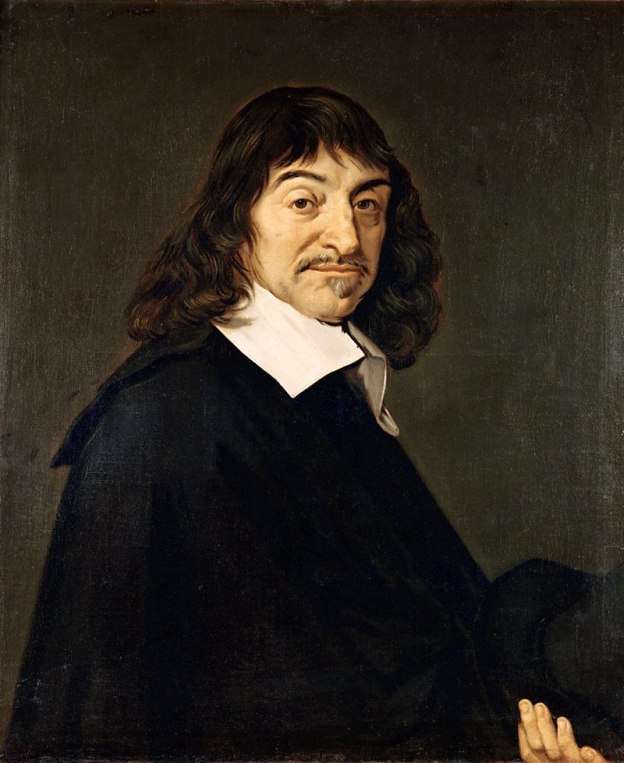
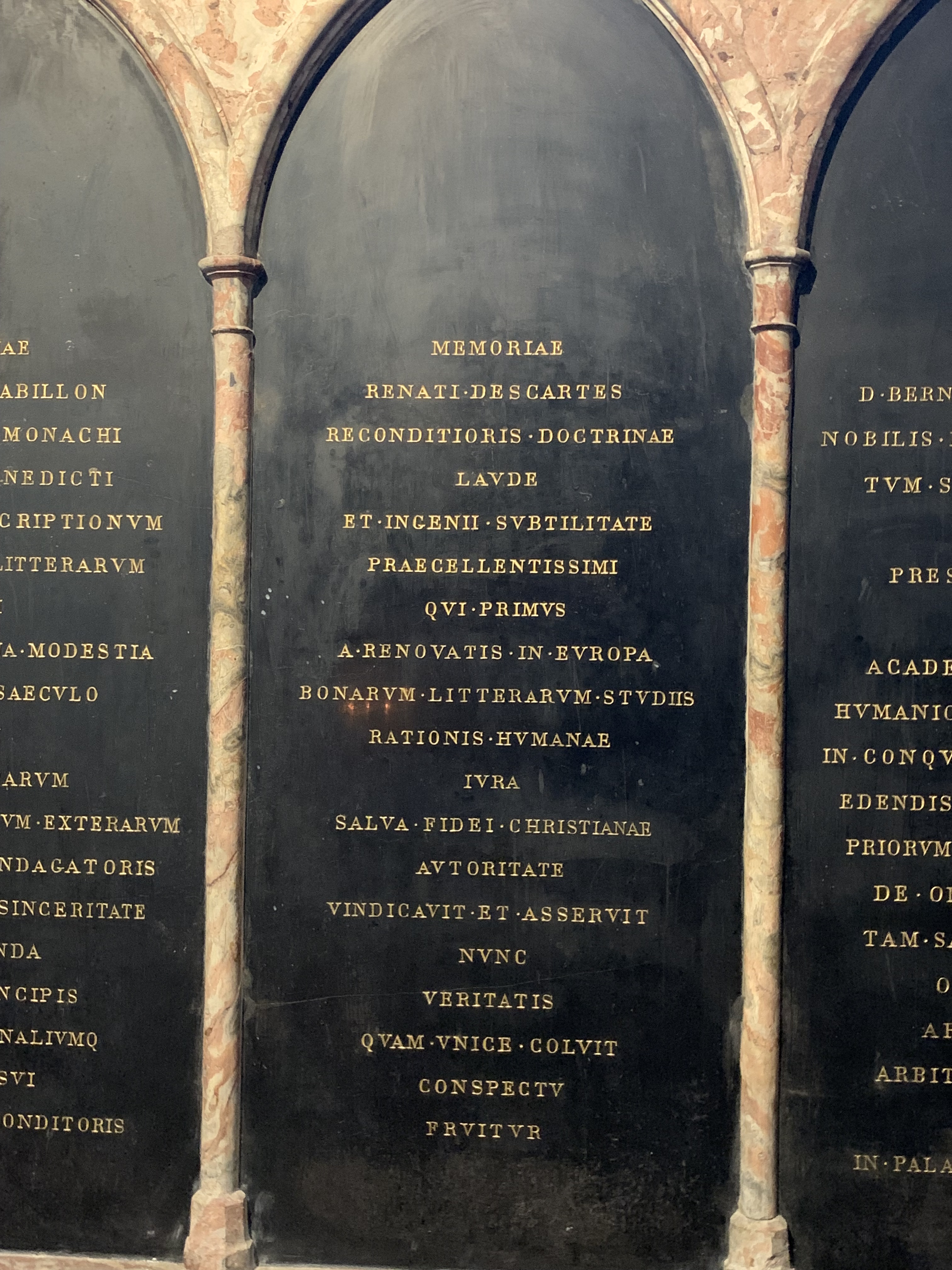
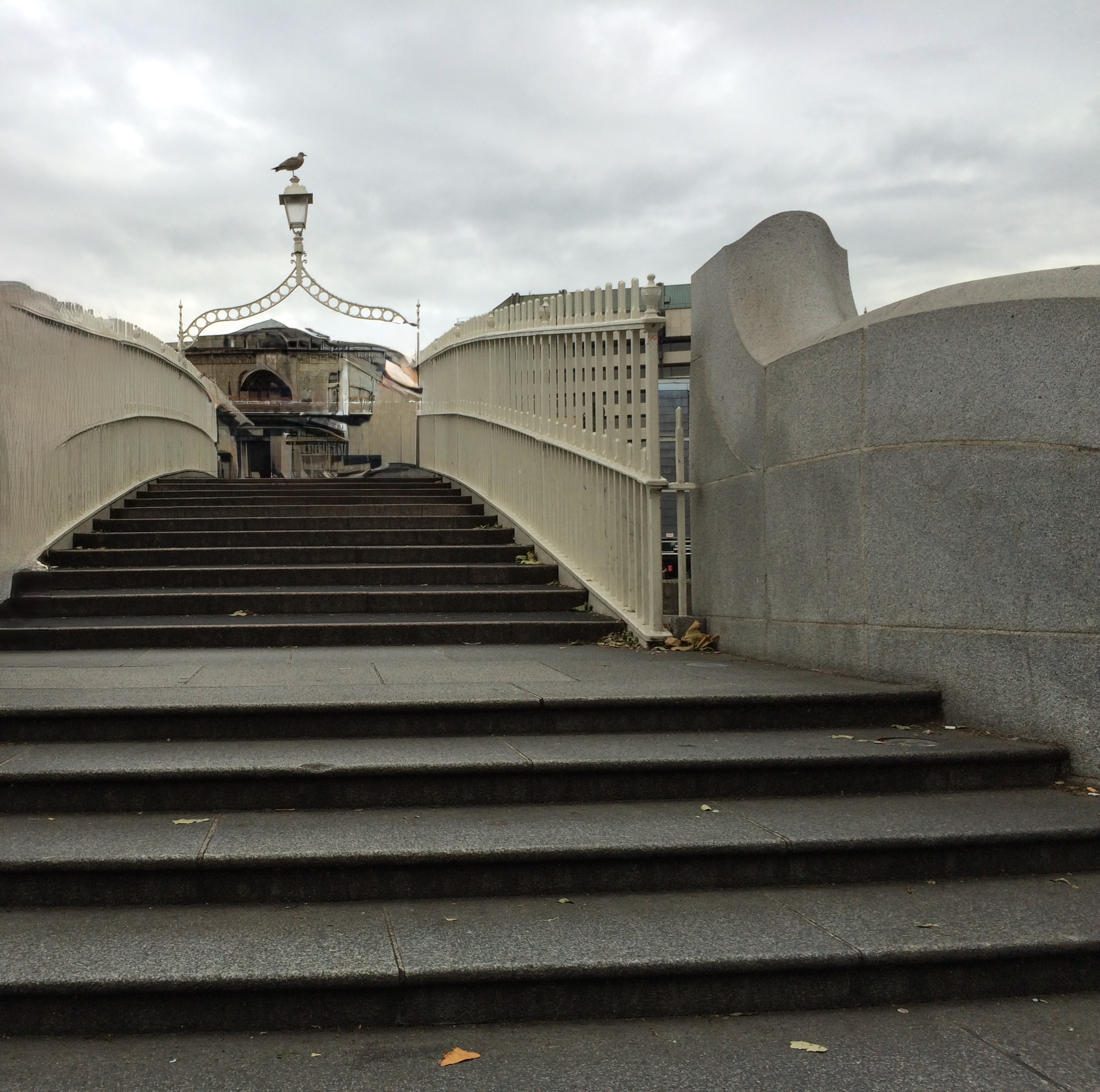
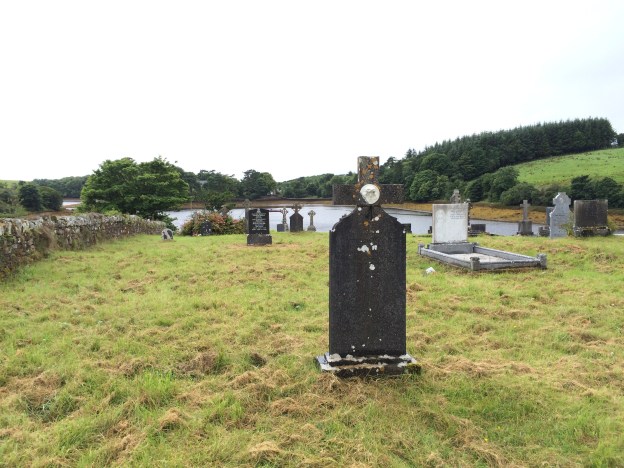
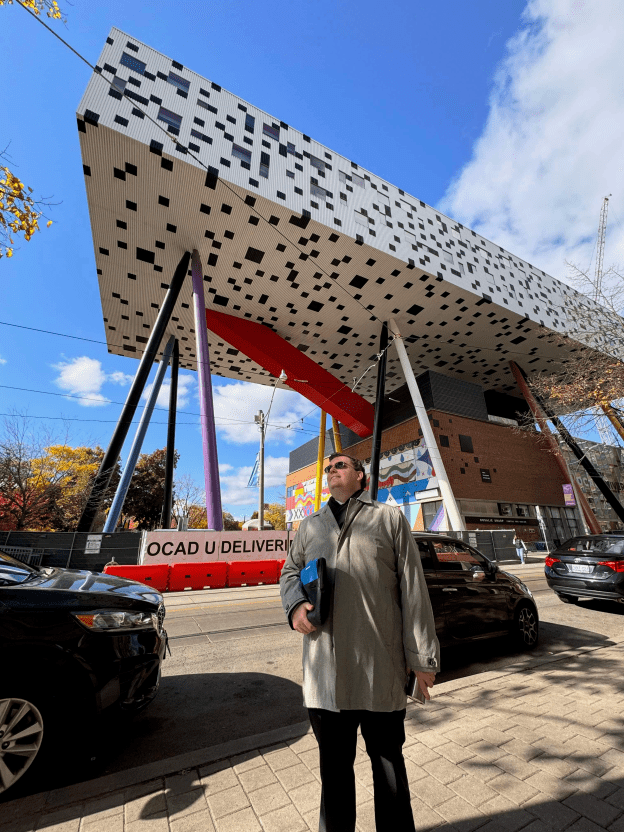
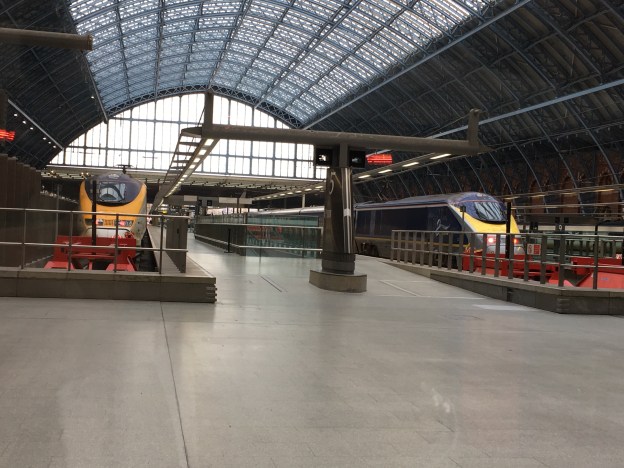

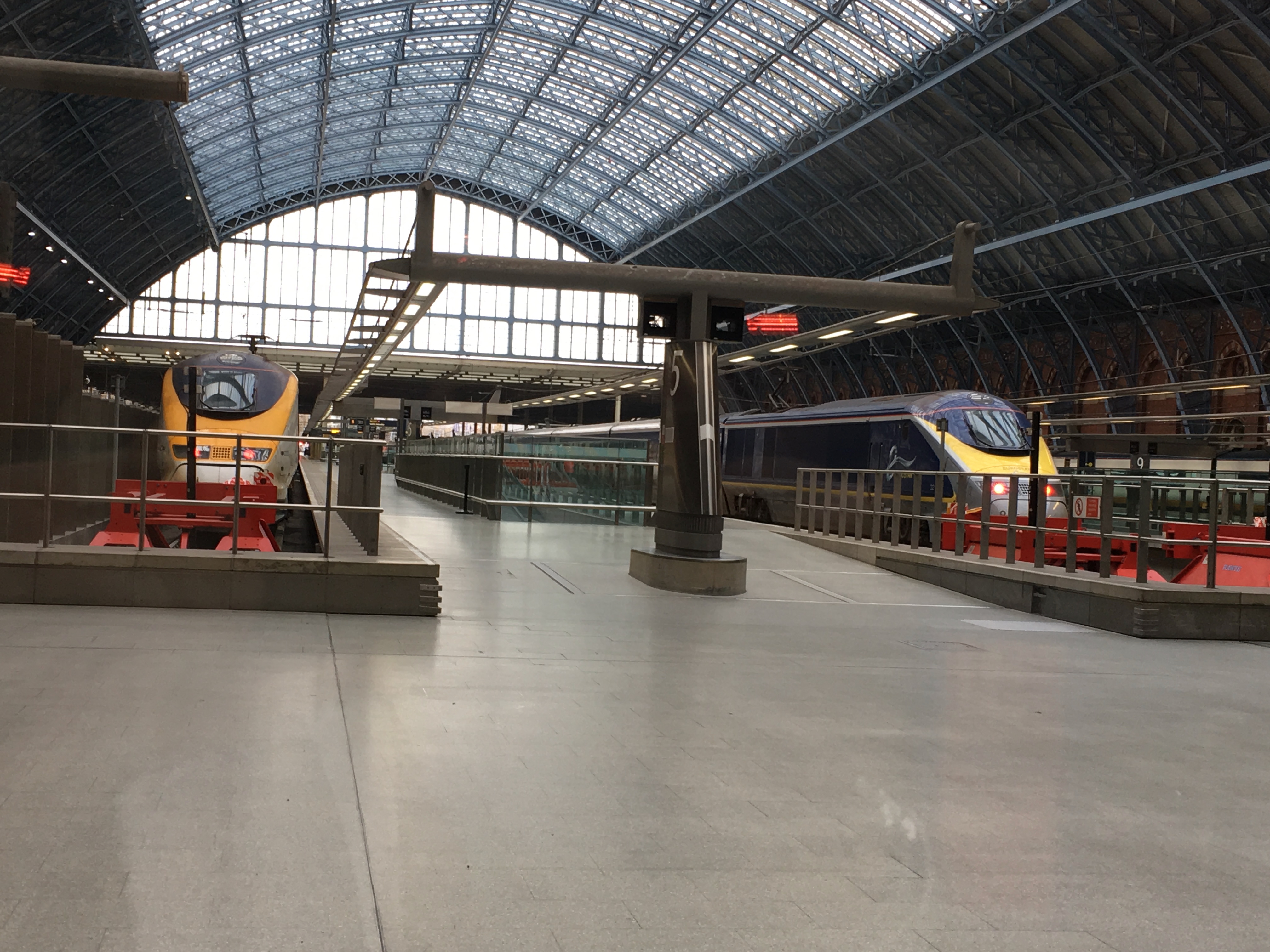
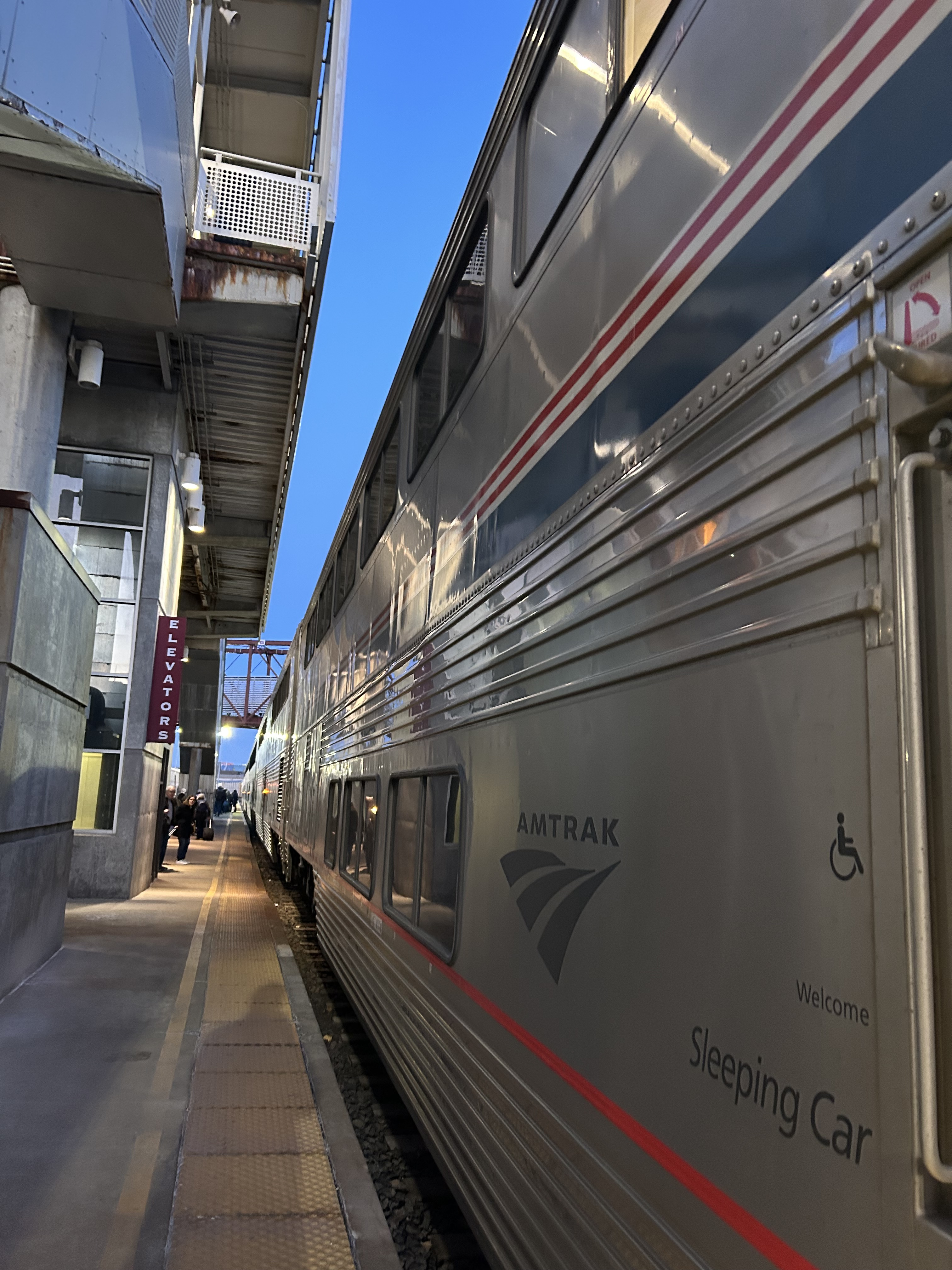
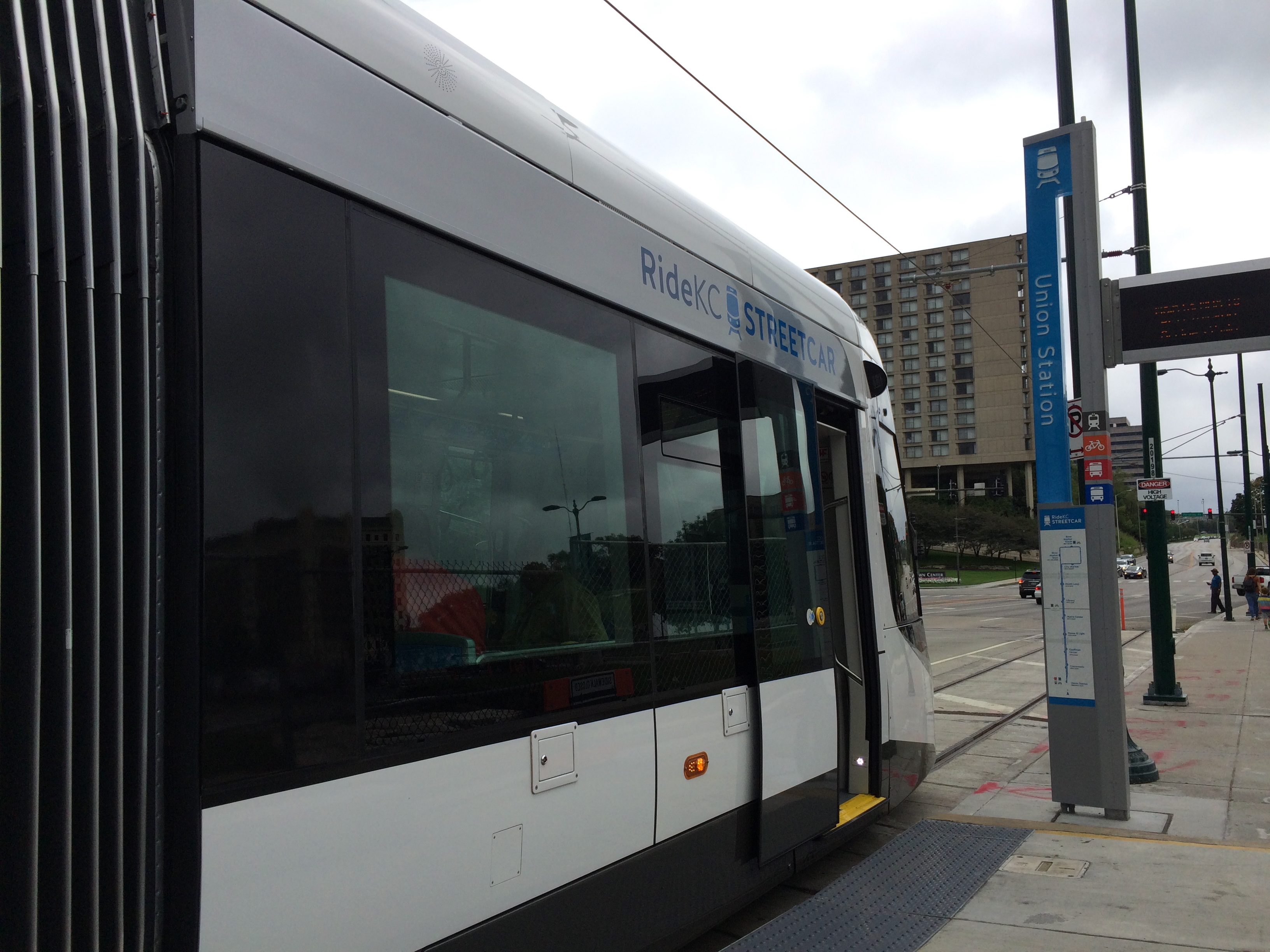

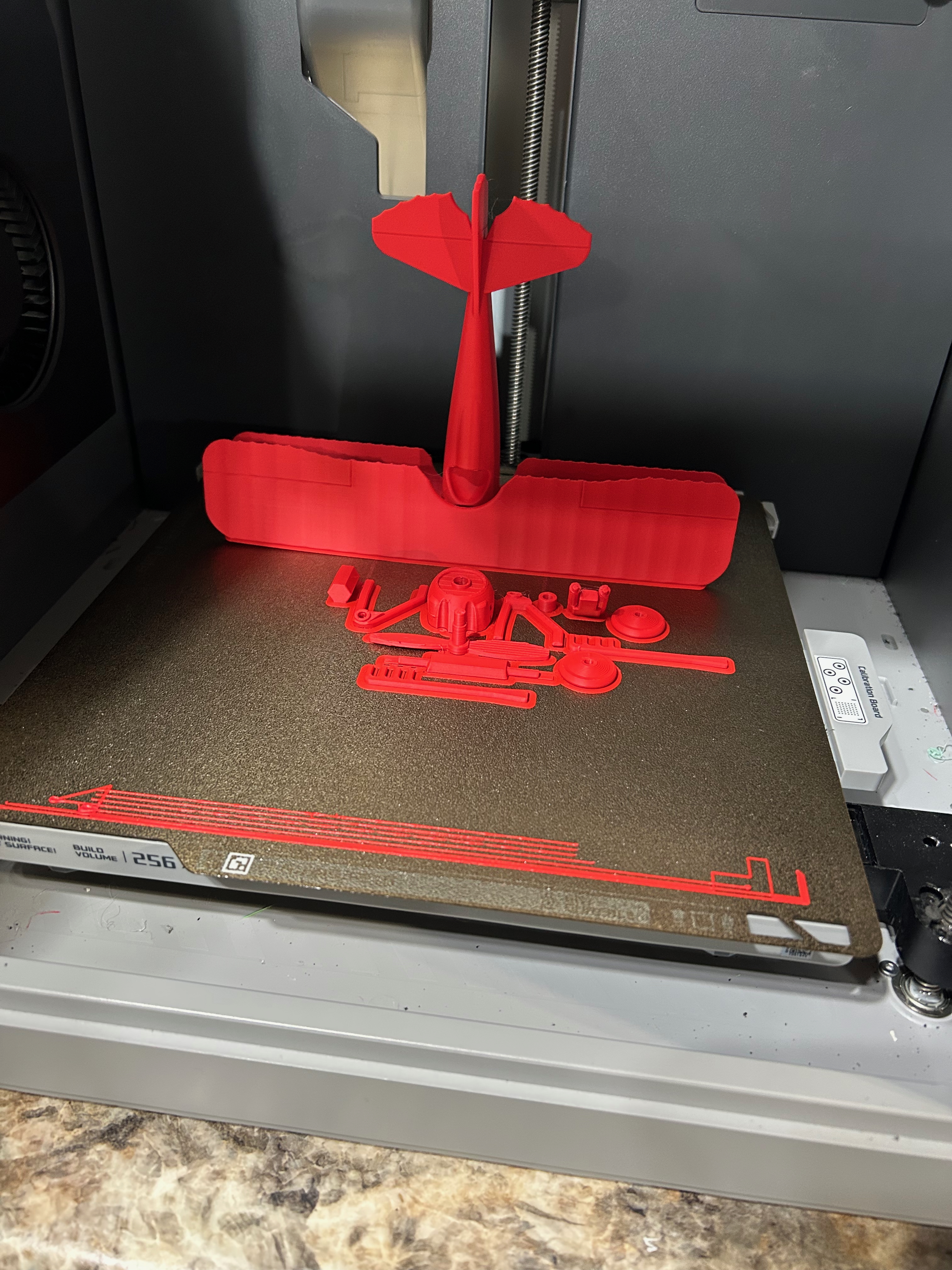
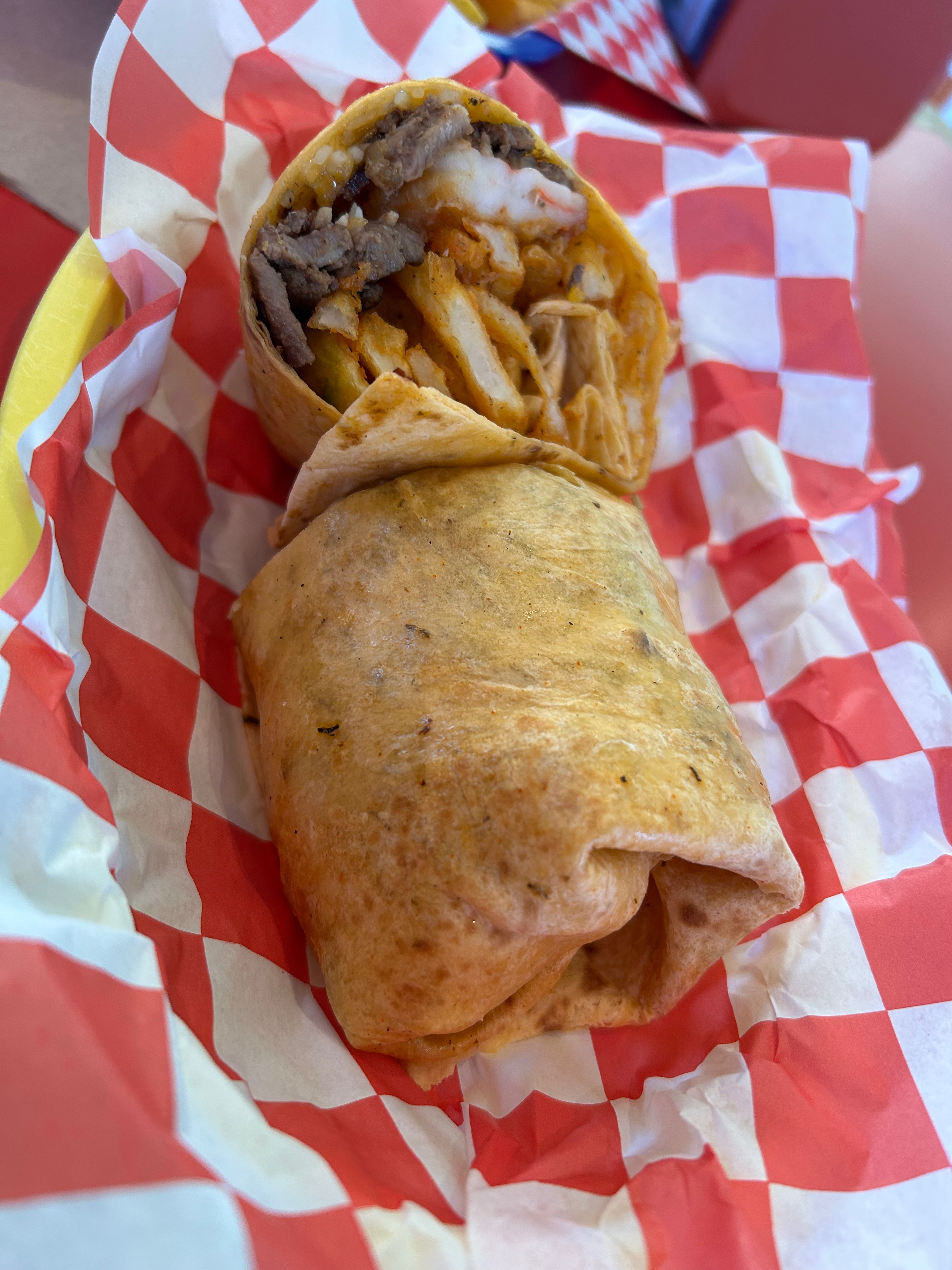
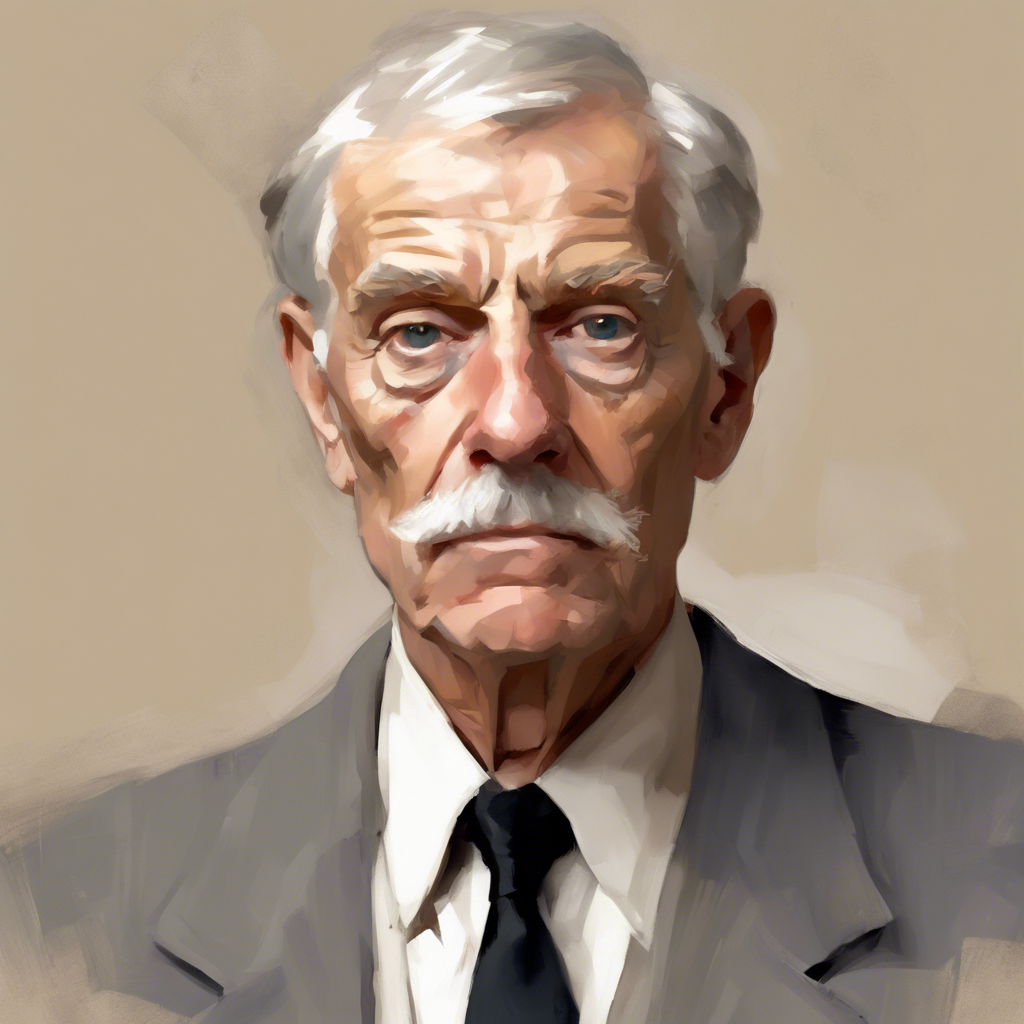
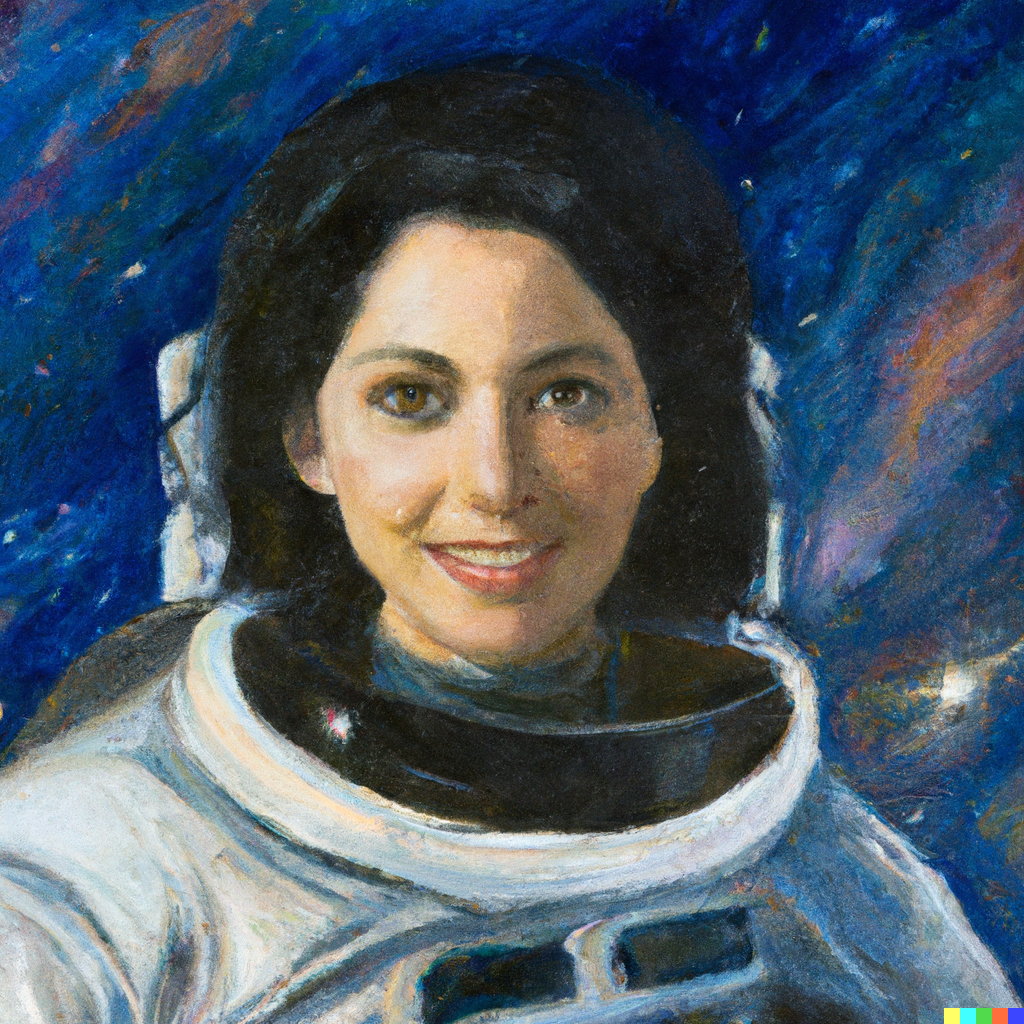


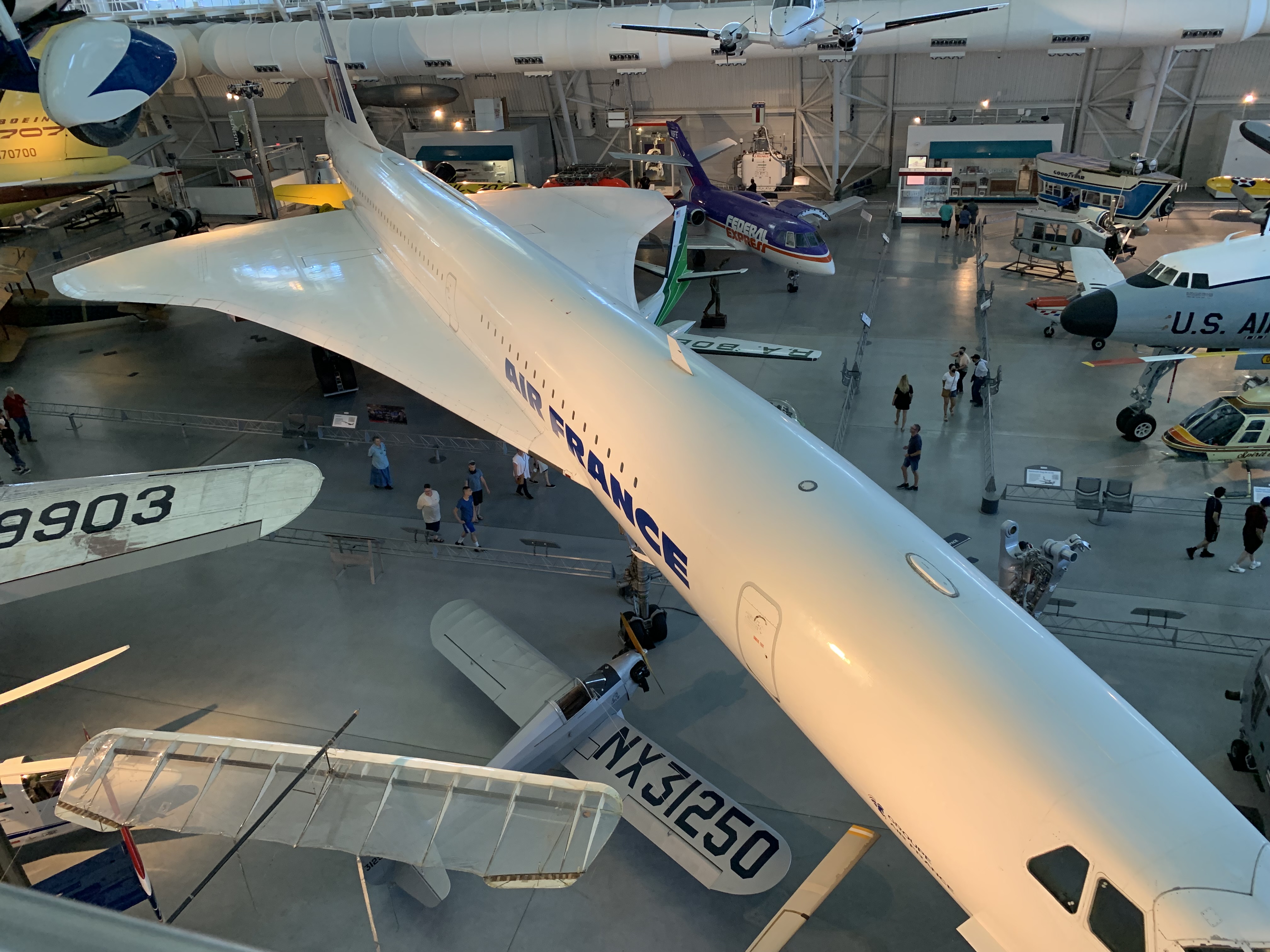



 Wednesday Blog by Seán Thomas Kane