This week, a great celebration commences in our national pastime.
Several years ago, near the start of the podcast version of my Wednesday Blog, I wrote two of my favorite stories in this continuing publication of mine about my love for baseball at the beginning of the 2022 season. I seem to remember even playing a poor rendition of Take Me Out to the Ballgameon the digital keyboard provided on GarageBand, where I do all my recording and editing. Don’t worry, I’m not planning on doing that again.
Today, I want to write instead about my joy at how this postseason is beginning. The 2024 season had plenty of potential for my beloved Chicago Cubs and my adopted second-favorite team the Kansas City Royals, and while the Cubs didn’t quite make it far enough to earn a wild card spot, the Royals did in spite of themselves. This is being released on the morning of Game 2 of the Wild Card series, following a 1-0 Royals win in Baltimore against the Orioles. So, should the Royals win again today they will advance to face the Yankees, a matchup that brings to mind the stories my Mom likes to tell of watching the Royals teams of the ‘80s face up against the Bronx Bombers in the American League playoffs.
Meanwhile in the National League the team that excites me the most in these Wild Card series is the San Diego Padres, a perennial favorite of the last four years to win the World Series. Their resounding 4-0 win at home over the Atlanta Braves last night in Game 1 proved to be a good alternative to the Vice Presidential Debate that was occurring at the same time from CBS News’s headquarters in New York. You might think it odd that someone as politically engaged as me would choose to watch a ballgame over a debate, and yes, I started the 8 pm hour watching Governor Walz of Minnesota and Senator Vance of Ohio face off on CBS, but as soon as the first question concerning the increasing odds of war between Israel and Iran occurred, I decided to seek some escapism.
There are a lot of things that we all are worried about today, and with good reason. Whereas for most of my life I’ve looked to the future with eagerness, today I’m scared about the future and what we are doing to ourselves. Over the weekend, I watched an episode of the PBS documentary series In Their Own Words about Jim Henson in which he said his inspiration for creating his 1980s children’s television show Fraggle Rock was to make something that could inspire world peace. To paraphrase the visionary creator of the Muppets, Henson believed the best chance we have at solving our problems is to speak to the youth who aren’t already jaded by the weariness of life and are more willing to imagine a good future. He spoke to the inner child in all of us, a part of me that I’ve found slinking back from the foreground as the world seems evermore scary and dangerous.
Even when I don’t have a team in the playoffs, and let’s face it as a Cub and Royal fan that’s most years, I still religiously watch the baseball playoffs because I love this sport. It’s the sport my parents introduced me to as a kid watching Sammy Sosa, Kerry Wood, and the great Cubs of the late ‘90s and early 2000s skirt so close to the glory of winning the World Series in 1998 and 2003. It’s the one sport that I played with even the remotest success. It’s a sport that I shared with generations of my family that I understood, and today it’s a nice antidote to the weekends of American football, which let’s face it I get but still don’t really understand. Baseball is one of those core things that makes me feel more American, and one of the parts of American life that I missed the most when I lived in England.
Locally here in Kansas City I feel that the Royals have lost some of their connection with the community in the wake of their failed bid to get a renewal on the stadium sales tax here in Jackson County, which would help them to fund a new stadium along Truman Road in the Crossroads neighborhood. I was one of those voters on the fence who wanted to support a downtown stadium but were really unhappy with the plan they laid out and repeatedly changed in the days and weeks leading up to the vote. Since the playoffs began, I found it harder to put on my Royals hat when going out. I’m having a hard time putting my faith in an organization that doesn’t seem to want to trust the city it represents. I hope this Royals playoff run, 10 years after their monumental and near triumphant 2014 run will revive some of that jubilation that I felt in Kansas City that year. I remember during the World Series that year driving down 47th Street in the Plaza and nearly everyone out walking down the sidewalks was wearing Royal blue jerseys and hats, and I even saw Commissioner of Baseball Bud Selig’s motorcade parked outside the Classic Cup Café at 47th and Central. I want to feel that kind of community spirit again in Kansas City, where the team and the city are open with each other and working together in a productive manner.
So, who am I picking to win the World Series this year? Well, even though we’re down to the last handful of teams, and even though I have a horse in the race this time around, it’s still too hard for me to say. I want the Royals to win again, that’s for sure, though were they not playing against the Orioles I’d be excited for Baltimore’s chances this year. In the National League though it’s a two horse race for me between the Dodgers and the Padres. While Los Angeles has one of the greatest baseball players of our time – Shohei Ohtani – on their team, the Padres have been red hot in the second half of the season, and I stand by my long held claim that the weekend I spent in San Diego in 2021 was one of the best I’ve had in the last few years. What I want to see most is amazing baseball that makes me want to watch the guys on the field play more and more and more; and by the end of this month to long for March and Spring Training.
Writing this tells me one thing for certain: even when I’m trying to celebrate something I love as much as baseball, the muddied waters of the world still appear, yet even then I remain hopeful of better tomorrows.
This week, to conclude a month of chaos I interviewed environmental journalist Ben Goldfarb about his book Eager: The Surprising, Secret Life of Beavers and Why They Matter.
—
Click here to support the Wednesday Blog: https://www.patreon.com/sthosdkane.
Links
Ben Goldfarb's Website: https://www.bengoldfarb.com
NOAA Fisheries, "Oregon Beavers Engineer Better Fish Habitat, More Fish," 14 July 2016.
Popular Science, "From the Archives: Do Beavers Rule on Mars?", 6 May 2022.
Harvest Public Media, "The Midwest and Great Plains are gearing up for water fights fueled by climate change", 3 Sep 2024.
Photo Credit: Beaver in the Pipestone Creek, Pipestone National Monument, Minnesota. Photo: Gabe Yellowhawk. Public Domain. Learn more here.
STK: This is a really fascinating book, I have to say.
STK: I was reading something back in June that was talking about the idea of the Homo faber where we should identify ourselves by our ability to build and to imagine solutions to get out of our problems. I read that and said, “that’s what beavers do to, right?” So, the premise of this one is what is the difference between humans and beavers?
STK: When you talked in the book here about the restoration of beaver dams on Bridge Creek in Oregon; could this be a model for a clearer for how humanity could adapt to cohabitate with the rest of nature?
BG: Yeah, I think so. The situation in Bridge Creek and other places like that is that humans are building beaver dam analogues to help beavers flourish. When we wiped out several hundred million beavers over several centuries in North America, we made it harder for beavers to recolonize, so when you have a healthy beaver-rich stream they are pooling that water up and pushing it out onto the floodplain. When the beavers disappear there’s nothing to cool or check the water, streams then cut through the sediment on the bottom, and they turn into these miniature canyons or ravines. That’s a hard place for beavers to recolonize because the stream is trapped in its place and that’s where these human-built beaver dams come in because we can knock some big wooden posts into the stream bed and weave some willows in there and build some stability. It’s not as good as what the beavers do but it’s a starter dam that they can come in, build off of, and advance. So, these beaver dam analogues are like beaver kick starters, and they allow them to recolonize places where they otherwise couldn’t colonize. And to your point, I think we’ve spent hundreds of years in North America making life harder for beavers in many ways, mostly by killing them directly, and this is a way that we’re making life a little bit easier for them. You can apply this model onto many other wildlife restoration projects like wildlife crossings, or the planting of oyster reefs or salt marshes. These are things which work with ecosystems rather than against them.
A beaver dam on Bridge Creek in Oregon. Photo: NOAA Fisheries, Public Domain. Learn more here.
STK: Yeah, I know they talk here about the butterfly gardens that give them a place to land and such when they migrate.
We’re the species that created the grid system whereas beavers have their own idea of fluid stability. What would you say to that?
BG: We as a species are obsessed with linearity and if Homo faber is a construction species or an infrastructure species as some historians have put it. Linear features are what we construct: highways, railroads, power lines, fiberoptic cables, just look at our crop furrows. Beavers create what looks to us like chaos, there’s water ponding up everywhere with trees dying all over the place, and there’s sediment muckiness that smells a bit. This looks to us like fluid chaos, and I think we need to recognize that those kinds of beaver-modified or beaver-influenced systems are first the historical rule rather than the exception at the time of European arrival, but more important that those beaver systems are profoundly healthy as ecosystems compared to our infrastructure which are destructive to nature. We kill more than 1 million animals per day in the U.S. alone with our cars, whereas beavers create infrastructure that is highly beneficial to other animals from salmon and trout to waterfowl to moose and amphibians. It’s hard to name a species that doesn’t benefit from beavers at some point in its lifecycle.
STK: Beavers seem to have a human attitude to modifying the landscape. It reminds me of theories of terraforming other worlds. André Thevet described how on his way back to France from Brazil in 1556 most places hadn’t been colonized yet except how the island of Haiti was transformed by the Spanish into Hispaniola, “Little Spain,” in part by the influx of pigs they brought. So, this idea of terraforming in astrobiology seems pertinent here. You have a quote here, “We are a nation of floodplain dwellers and farmers, drawn to river valleys yet intolerant of riparian anarchy.” So, are we hostile to beavers because they challenge our sense of order?
BG: Right, the whole terraforming thing is funny because there was a story in, I believe Popular Science, in the 1930s that posited that beavers dug out the canals on Mars . So, that idea that beavers are world-makers have been applied to other planets as well. I think it’s instructive to think of the ways that beaver dams and human dams both impact the landscape, especially here in the West where I live. Every single river has a colossal mega dam on it, and those dams are immense, and they create enormous, consolidated reservoirs and they take a diverse and distributed approach to building ponds. Each of those ponds are only an acre or so, but they store more water in the landscape. You think about what the future of solar energy looks like, we’re on track to build giant industrial solar farms in the California desert when we could put a panel on every roof and opting for this more distributed and dispersed approach to power generation. That’s another interesting thing that beavers teach us: the value of the energy and strength of these distributed systems rather than the hyper-centralized systems that we tend to favor out of some misguided love of efficiency.
STK: Yeah, I just read this morning that our local NPR station was reporting that there’s a bill being proposed in the Missouri Assembly to ban water exportation from Missouri to the western states anticipating that Colorado, Utah, Arizona, et cetera are going to ask for our water eventually. It’s interesting to see that, we have the Missouri River here and the Mississippi River is on the eastern side of the state, and the Missouri floods at least once a year because they release the dams from the Dakotas that get all of the snowmelt and that floods down here typically. The Missouri is very heavily managed by the Army Corps of Engineers to the point that it’s faster than it used to be, but you know, it still floods.
Kansas City, Missouri’s Riverfront Walk along the Missouri River. Photo by the author.
BG: Look, the Missouri is one of the most hydrologically modified rivers in the U.S., and it’s certainly up there, and look at the catastrophic impacts it’s had most prominently on the Pallid sturgeon, and it speaks to the impact of human infrastructure being catastrophic for nature whereas beaver ponds are the world’s greatest fish production system. Trout and salmon grow exponentially faster in beaver ponds. The Missouri is like the Colorado River, one of those rivers that was incredibly full of sediment, “too thick to drink, too thin to plough,” so by damming the Missouri we changed water flows and sediment flows as well, and I think the beavers show us what a healthier and more beneficial relationship with sediment looks like. Beavers are capturing sediment as a resource which allows them to push more water onto the floodplain; they’re managing sediment better than we are in a lot of cases.
STK: Yeah, we actually saw one a couple of weeks ago on a Sunday morning crossing I-29 in Downtown Kansas City near the river, and it flopped itself over the barrier to get off the highway. I’m hoping there isn’t too much of a fall there, it’s all brush there. It was neat to see. We’re heavily redeveloping the riverfront now, so there’s going to be a lot more people up there were previously it was [among other things] an industrial waste dump by the railroads and such.
STK: I like what you said in the ninth chapter of this book when you were over in the U.K., and I’ve thought for a long time living here in Kansas City, my neighborhood was built here 100 years ago, and there weren’t trees here before they built this neighborhood, and all of the streets are named after colonial New Englanders. I’ve said then to people offhand that the developer tried to make this area a little New England, and as William Cronon wrote, New England was built out of the forests there as a new form of England. So, I wonder there, were you getting toward saying that we could look to Britain for the inspiration for American ecological policies, and secondly that the end goal of unlimited development would be how Britain is today?
BG: Yeah, to me one of the really striking things about visiting the U.K. for the book was how biologically improvised Britain and Ireland are today, and how fortunate we are to have the wildlife here in the U.S.: we have wolves, bison, and moose which were all species that once existed there that were annihilated there. And fortunately, here in the U.S. we were colonized recently enough, and we have enough rugged and inaccessible topography to allow these animals to be conserved, and we’ve done enough wildlife reintroductions here in a way that the U.K. is just beginning to get around to with beavers, and lynx someday. So, visiting made me feel extremely grateful for everything we’ve hung onto in the U.S., and beavers are one of those organisms of an animal in the Lower 48 that we pushed to the brink of extinction, but enough beavers survived up in Canada that we were able to use reintroduced beavers from Canada and some that hung on in Yellowstone National Park to reintroduce beavers on a wide-scale here in the U.S. Beavers today aren’t as ubiquitous as they were at their peak, not by a long shot so maybe we take them for granted a little bit and have beavers in the landscape.
When I went back to England a year later on my book tour, I got to go on a nature walk where we saw beavers doing their thing and people were in tears with joy at seeing these beavers who had been eliminated from the landscape in the 1600s. It’s sort of like seeing the Loch Ness Monster, they’re these giant rodents with their paddle tails and they cut down trees with their teeth to build walls. They’re objectively these cool, bizarre, magical critters, and it was cool to be reminded of that in the U.K. where people are seeing this part of their natural heritage return to the landscape, while meanwhile they hang out in Downtown Kansas City, or Downtown Seattle, or in the Bronx River. It was a good reminder to appreciate our wildlife in general and beavers specifically.
Note that webbing. Photo by the author.
STK: Yeah, I lived in London for a year doing my first Master’s, and you’d see some nature in the parks. I was fascinated looking at the webbing on some of the duck’s feet in St James’s Park where they’ve been protected because that’s been a part of the Palace for 300 years. But if you really wanted to see nature, you’d watch Naturewatch on BBC 1 on weekday mornings.
STK: So, has colonization forever changed beavers? Are they a different animal than they were 400 years ago?
BG: That’s a good question, and I think that ecologically and biologically they’re not. You could take a beaver from the 1300s and plop him down in modern North America and he’d do his thing and build dams and create ponds. They’ve survived so much over the last handful of centuries creating the kinds of landscapes you’d have seen before colonization. I went to Voyageurs National Park in Minnesota where these animals are protected from trapping and the landscape is conducive to beaver dam building, and there were dams that were 1000 ft long and 15 ft high, and I thought it was this great glimpse into pre-colonial America and what this would’ve looked like. These animals are the same but what’s changed is our relationship with beavers where before we perceived them as commodities that we extracted on an industrial scale to make hats. In the 20thcentury beavers began to be protected a little bit, and their populations began to increase, but all of a sudden, they were coming into conflict with humans and flooding our roads and cutting down our apple trees and flooding our irrigation ditches, and so we now see them less as commodities and more as pests. So, we still kill tens if not hundreds of thousands of beavers in the U.S. per year for causing conflict when we’re the nuisance species more than they are, they were here first. So, we need to transition out of the commodity phase and out of the pest phase and into the symbiotic phase where we harness all of the ecological benefits that these animals provide for us. Their ponds filter out water pollution and create oases against drought and prevent wildfires in some cases, especially in the West. They provide incredible fish & wildlife habitat and mitigate flooding in New England. Their value is immense beyond measure and we need to recognize that and treat them as ecological partners in conservation. Indigenous people in North America had that approach. The Blackfeet didn’t kill beavers but saw them as sacred because they created water holes to help other species. Respecting and honoring beavers isn’t new to western science, we just need to rediscover what native people knew for millennia.
STK: Are you working on any big projects now?
BG: I’m working on a book about fish, about fish as ecological engineers putting my beaver hat back on. Fish as drivers of human movement and culture over the course of our species’ own history and all the ways in which we lost fish from our lives and landscapes. I’ve always loved fish, both as quarry (I’m an angler) and as beautiful special specimens, like beavers they’re both concealed by the opacity of water.
BG: I look forward to coming back and joining you when that’s out in, I don’t know, 2056!
STK: Yeah, I’ve got a couple of books that I hope will come out before 2030 hopefully.
BG: Yeah, cool, I look forward to reading about three-toed sloths in human history.
This week, I address news that the latest version of ChatGPT will help with your math problems.
—
Links:
New York Times, 12 Sep. 2024, Cade Metz, "OpenAI Unveils New ChatGPT That Can Reason Through Math and Science."
Eddie Burback, 1 Sep. 2024, "AI is here. What now?" YouTube.
This week, I address news that the latest version of ChatGPT will help with your math problems.
I’ve used ChatGPT on occasion, mostly to test the system and see what it will do if I prompt it about very particular things. What does it know about André Thevet (1516–1590), or about the championship run of my beloved Chicago Cubs from the 80s, the 1880s that is. I even asked it questions in Irish once and was startled to see it reply with perfect Irish grammar, better than Google Translate does. I’ve occasionally pulled up my ChatGPT app to ask about the proper cooking temperatures of beef, pork, or chicken rather than typing those questions into Google, and in one instance I used it to help me confirm a theory I had based on the secondary literature it had in its database for a project I was writing. The one thing that I would’ve expected ChatGPT to be best at from the start are logical questions, especially in mathematics.
There are clear rules for math, except that in America it’s singular in its informal name while in Britain it retains its inherent plurality. As much as I acted out a learned frustration and incomprehension when posed with mathematical questions in elementary, middle, and high school, I appreciate its regularity, the way in which it operates on a universal and expected level. Many of the greatest minds throughout human history have seen math as a universal language, one which they could use to explain the world in which we live and the heavens we see over our heads. The History of Science is as much a history of knowledge as it is the history of the development of the Scientific Method, a tool which has its own mathematical regularity. All our scales and theorems and representations of real and unreal numbers reflect our own interpretation of the Cosmos, and so it is logical that an advanced civilization like our own (if I may be so bold) would have developed their own language for these same concepts which are inherent in our universe. Carl Sagan took this idea to a fuller level in his novel and later film Contact, in which the alien signal coming from Vega is mathematical in nature.
Often, the lower numbers are some of the easiest words in a language for learners to pick up on. The numbers retain their similarities in the Indo-European languages to the extent that they were used as early evidence that the Irish trí, the English three, and the Latin trēs are related to the Sanskrit trī (त्रि)and the Farsi se (سه.) The higher the numbers go the more complicated they get, of course. An older pattern in Irish which I still use is to count higher numbers as four and fifty or ceathair is caoga, which is similar to the pattern used in modern German, and something that appears far more King James Bible in English. I love the complexity of the French base-twenty counting system, where the year of my birth, 1992, is mille neuf cent quatre-vignts douze, or one thousand nine-hundred four-twenties and twelve. Will the Belgian and Swiss word nonante to refer to the same number as quatre-vignts-dix ultimately win out in the Francophonie? Peut-être.
I was surprised to read in the New York Times last Friday that the latest version of ChatGPT called OpenAI o1 was built specifically to fix prior bugs that kept the program from solving mathematical problems. Surely this would be the first sort of language that one would teach a computer. As it turns out, no. Even now, OpenAI o1’s mathematical capabilities are limited to questions posed to it in English. So, as long as you have learned the English dialect of the language of mathematics then you can use this computer program to help you solve questions in the most universal of languages.
It reminds me of the bafflement I felt upon first seeing TurnItIn’s grammar correction feature, the purple boxes on TurnItIn’s web interface. For the uninitiated, TurnItIn is the essay grading and plagiarism detection system that most academic institutions that I’ve studied and taught at in the last 15 years use as a submission portal. I was proud to program into my Binghamton TurnItIn account several hotkeys that would allow me to save time retyping the same comment on 50 student essays every time they had a deadline. Thousands of essays later I can squarely say these hotkeys saved my bacon time and time again. Like legal documents, especially the medieval and early modern kind that I’ve read and written about in my studies, they are formulaic and expectable in their character.
The same goes for math: even with the basic understanding that I have (I only made it as far as Algebra II) the logic when explained well is inherent in the subject. Earlier in my doctoral studies, beginning in 2020, my two-sided approach to developing my own character and intellect beyond my studies came in the form of first signing up for Irish classes again, and second picking up where I left off with my mathematical studies in college and trying my hand at a beginner physics course. I’m sad to say I really haven’t had the time to devote to this mathematical pursuit as much as I would like. Perhaps I will be able to work it in someday, alas I also have to eat and sleep, and I’ve learned my attention will only last for so long. I too, dear reader, am only human.
Yet this is something where Open AI o1 differs from the average bear, for it is decidedly not human. How would we try to successfully communicate with a non-human entity or being when we have no basis for conversation to start with? The good thing about o1 and other AI programs is these are non-human minds which we are creating in our own image, ever the aspirant we are wrestling with the greater Essence from beyond this tangible Cosmos we inhabit. We can form o1 and its kind in the best image of our aspirations, a computerized mind that can recognize both empathy and logic and reflect those back to us in its answers to our questions. In the long run, I see o1’s descendants as the minds of far more powerful computers that will help our descendants explore this solar system and perhaps even beyond.
From the first time I saw it in work, I saw in ChatGPT a descendant of the fictional computers of Starfleet’s vessels whose purpose in being is to seek out new life and new civilizations and to boldly go where no one has gone before. Perhaps that future where humanity has built our utopia in this place, our planetary home, will be facilitated by AI. Perhaps, if we use it, build it, and train it right.
That said, the YouTuber Eddie Burback made a video several weeks ago about how he has seen AI put to use in his daily life in Los Angeles. In it, from the food delivery robots to his trips in several self-driving Waymo cars (manufactured by Jaguar), to his viewing of several AI films, Burback concluded that AI at this moment in 2024 is a net negative on human creativity and could remove more of the human element from the arts. I have seen far more AI generated images appear on my Instagram and Pinterest in the last year. I like Eddie’s videos, they may be long, but they are thorough and full of emotion, heart, and wit. They do a great service to their viewer at taking a long look at the world as he perceives it. I see much of the same thing, yet as the good Irish Catholic Cub fan that I am, I hold out hope that what today seems impossible to some: AI used morally and for the future improvement of our species and our advancement out of this adolescence in our story may still happen. I believe this is possible because I believe in us, that once this Wild West phase of the new Information Age settles down, we will see better uses of our new technologies develop, even as they continue to advance faster, higher, and stronger with each passing day.
This week, some moderation in Maverick’s “need for speed.”
I’ll admit that I have never seen Top Gun nor the recent sequel. My best familiarity with the film is that I once had dinner at the Kansas City Barbeque restaurant on Harbor Drive in San Diego where they filmed one of the scenes in that film. At the time I was living in Binghamton, NY and out west for the 2021 meeting of the Sixteenth Century Society and excited to see somewhere named “Kansas City Barbeque” in walking distance of my meetings. The sauce had a vinegary feel to it. Still, that “need for speed” that Tom Cruise’s character Maverick appears to have in the film is something that I can get in some regards.
I’ve been driving for close to twenty years now. When I was little I always wanted to drive the family car. To put a stop to this pestering, my Mom said, “You can drive when you can see over the wheel and reach the pedals at the same time.” Well, that happened when I was ten, and I quickly moved from being in the trailer with my Dad while we bailed hay in the summers on the farm we moved to in Piper, Kansas to driving the truck. It was one of the first really smart things I ever did. I got my learner’s permit when I was 14, my restricted driver’s license when I was 15, and my full driver’s license when I was 16 on St. Stephen’s Day 2008.
In those first few years that I was licensed I, like many teenagers, was thrilled at being able to drive fast. I learned to drive on highways before learning to drive on narrower city streets and country lanes, as I was driving daily between our farm and my high school, St. James Academy, a 30 minute journey south along K-7 on the western edge of Greater Kansas City. I have many stories from those early years driving that surely will make good blog posts in future, so I won’t tell all of them here. I learned early how to drive with greater caution in ice and snow, and in one instance did slide off a highway interchange ramp going from I-635 southbound to I-35 southbound in icy conditions. All the same, I got a sense of thrill from driving.
And yet, I wasn’t one who liked road trips all that much, something which changed out of necessity when I started making my 14 long drives east & west between Kansas City and Binghamton between August 2019 and December 2022. These long drives changed how I drive, and made me highly aware of what my car, which I’ve lovingly named the Mazda Rua, because it’s a red Mazda 3, does in certain circumstances. One of the greatest feelings when driving is when I get the sense that I can control the motions of my car with only the slightest movements, and when there’s a sense of connection between my thoughts and my car with my arms and hands as the conduits for that connection. In Binghamton, especially when I was teaching online and didn’t have many places to go to get out of my apartment, I would take long drives in every direction, just driving as far as I felt like I wanted to in a day and turning around. In one instance I made it east on I-86 (NY-17) as far as Hancock, NY in the Upper Delaware Valley, while in another I drove up the western shore of Cayuga Lake almost to the New York State Thruway at which point I decided to turn around and return to Binghamton for the night. I’d spend this time on the road listening to podcasts or audiobooks and exploring the world around me in ways I otherwise wouldn’t have done. I now know a great deal more about the Southern Tier and Finger Lakes than I ever would’ve otherwise simply by spending a weekend day driving around seeing what’s out there.
I’ve always known the speed limit to be more of the mark at which traffic tends to go, a number to aim for yet ideally not cross too much. Here in Kansas City, it felt reasonable to drive maybe 5 mph (8 km/h) over the speed limit but not much more than that. When I arrived in New York State, I was told by people I met there that it’s normal to go 10 mph (16 km/h) over the speed limit, and so I tried my best to keep up with the pace of traffic. It was even worse during my Longest Commute when while driving in Florida along I-10, I-75, and Florida’s Turnpike from Destin to Orlando when the traffic was moving closer to 20 mph (32 km/h) over the speed limit, and again I felt the need to keep up if only for my own safety. What struck me the most was that after the Pandemic the average pace of traffic in Kansas City has risen to 10 mph over the posted speed limit not only on the highways but in some cases on the larger city streets as well. I followed along at first, trying not to be run off the road by the more aggressive drivers tailgating me the entire way on Southwest Trafficway from Westport Road to 31st Street, for example, yet I knew that even then I would not have the reaction times I wanted and needed to be able to stop for the odd jaywalking pedestrian or animal, or other obstacle that fell into the street. Like that time a couple of years ago when I was driving on I-470 out to Lee’s Summit when I had to dodge a sofa that fell out of the back of a truck in the middle lane.
This stands in stark contrast to my experiences in other countries where the speed limits are adhered to as they are posted. As much as approaching a roundabout at 70 mph (112.65 km/h) in Milton Keynes was startling to say the least, the fact that my friend who was driving kept strictly to the national speed limit (and was driving a Tesla that has the breaking ability to slow down enough to make it to that roundabout) was a relief, if a bit of an anomaly in my driving experience. In some instances the posted speed limits don’t always make sense to me. In 2010, I was walking down a road in Gleann Cholm Cille, County Donegal, where the posted speed limit was 80 km/h (50 mph), which seemed far too fast for the width of the road in question. Now having driven in Canada, it seems even more silly considering the 401 Freeway which is the main highway in Ontario has a posted speed limit outside of cities and work zones of 100 km/h (62 mph). In what way does it make sense then for an old bóthar, a proper country cow-path in Donegal, to have a speed limit that’s only just lower than one of the highest trafficked highways in Canada?
All of this got me thinking about how I drive here in America, and after I returned from this summer’s European tour, I found myself spending less time pressing down the accelerator and more time coasting; less time aiming for 30 or 35 mph (48 or 56 km/h) and more time enjoying and observing the neighborhoods around me, safely breaking for pedestrians, and not hitting animals.
On August 31st, the California Senate passed Senate Bill 961 which will require all new vehicles model year 2030 and beyond to have technology installed which will alert drivers if they are going more than 10 mph (16 km/h) over the speed limit. How this alert will function––an alarm bell, a verbal warning from the car’s computer, a vibration in the steering wheel, a slight electric shock to the hands––remains uncertain. Yet this bill made the national news because, like Wisconsin’s seatbelt requirement passed in 1962, it presages any federal legislation on the same speed limit technology. I know many people will be upset or angry about this legislation and will say that speeding is their right as an American, or whatever they will. I am in favor of the idea yet uncertain about the execution. For one, the 10 mph warning line ought to take local conditions into account, is the traffic around you going faster than 10 mph over the speed limit, and for all of us who will likely not be driving new model cars in 2030, how long until this law has such widespread effect as to be practical? Until earlier this year my Dad was driving a 1962 Ford F100 truck as his everyday car. My Mazda Rua is now 10 years old, yet it has always had a built in feature in the navigation system that will warn me I’m crossing the speed limit by turning the white speed limit sign on the screen red.
With all that I’ve written here about slowing down on the city streets, I still would probably drive faster on highways on intercity long drives, within reason of course. Today I don’t drive on the highways much, in fact I have a knack for actively avoiding the highways most of the time and taking the city and suburban street grid wherever I need to go in Jackson and Johnson Counties. Anywhere beyond that and I’ll usually have to get on a highway to at least cross the Missouri or Kansas Rivers. My point is that the circumstances of driving really will always depend on the moment in which I’m in. Here on my street, I’m happy to drive closer to 15 mph (24 km/h) instead of the 25 mph (40 km/h) speed limit. Perhaps the best we can do short of installing technology in cars that will slow them down to the speed limit, is doing the European thing of installing speeding cameras along all of our highways, roads, and streets which will send tickets by mail to anyone caught speeding. Here in Kansas City, Missouri our red light cameras were turned off in 2015 after the Missouri Supreme Court ruled them to be a privacy violation. These camera systems wouldn’t require officers writing tickets on the side of a busy street or highway. All that said, I don’t feel optimistic that the nigh libertarian political climate of either Kansas or Missouri will go for this.
That then leaves our speeding up to the individual drivers collectively creating a speed for the flow of traffic. I could say that this will help at least keep vehicles moving at roughly the same speed which will in turn keep everyone involved safe, but that again ignores the full impact of the human factor, my interpretation of chaos theory which I wrote about last week. At the time of writing, chaos might well be the best adjective for describing the streets and highways of Greater Kansas City. And that is proof, dear reader, that leaving the speed up to the individual drivers isn’t going to work.
This week, some animalistic thoughts.
Photo credit: Fighting African Elephants in Stanley Field Hall. Taxidermy by Carl Akeley . 41411 is on the left with two tusks and its trunk is raised. 41410 is on the right, with one tusk. (c) Field Museum of Natural History – CC BY-NC 4.0
—
Click here to support the Wednesday Blog: https://www.patreon.com/sthosdkane
I wonder if the reason why we take our children to zoos and natural history museums to see the animals is because there’s a deep sense where we recognize our own animality? I still go to these places today, to revel in the same sense of wonder I felt at spying the animals, living and dead, that grace the halls and paths of these scientific institutions. For me and many others these are places where we were first introduced to wild things when we too were wild in our own way.
On Tuesday morning I made one of my regular visits to the Kansas City Zoo, to enjoy a cool late summer morning, and yes to see the animals who live there. I’ve come to appreciate more elements of these zoo visits the older I’ve gotten, where before I might love to see the lions and imagine them in the hunt; today, I admire the power, strength, and grace of their forms, and their wisdom at sleeping for nearly 20 hours per day. On this visit the African elephants were out on a morning buffet run through their long enclosure, while families and zookeepers gazed on from the footpaths that line the west side of the elephant enclosure. We didn’t stay long at the elephants on this visit, instead watching them as we passed by. These animals are intelligent and powerful and reflect some of the noblest values we cherish in our fellow humans in their own way.
Perhaps that is why we seek after collecting other animals and housing them in zoos while living or in museums after they are dead. Jay Kirk’s biography of Carl Akeley (1864–1926), the father of American taxidermy, described how on 24 June 1910, while on a collecting expedition for the American Museum of Natural History in Kenya and Uganda, Akeley was taken by surprise by a great bull elephant.[1] Akeley had the distinct impression that he “was being hunted as well, and was now engaged in a mortal contest with this bull.”[2] In the furor of the moment the safety of his rifle caught, after which he threw it aside and grabbed hold of one of the elephant’s tusks “as it lanced past him with the force of a sharpened swinging log.” Akeley held on between the two tusks as the elephant “plowed him into the ground,” and gored off part of his face, breaking enough of his body to convince the Kikuyu porters who joined his expedition 14,000 feet up Mount Kenya that he was dead.[3] Thankfully, Akeley wasn’t dead, and by the end of the expedition had gathered enough mammals to begin building his African Hall of Mammals at the American Museum of Natural History in New York where many generations of visitors have learned about these species in the century since.
I see an educational purpose to zoos and museums; they allow us to view these animals up close where otherwise we would have to travel to their native habitats or watch nature documentaries of their lives. These are places where the city dweller can explore the natural world in a controlled and comfortable manner. We demarcate ourselves from the rest of nature by our inventions and our buildings and our tool-use, yet other animals have been seen to do all these things in their own way. What sets us apart perhaps is that we build worlds meant only for ourselves in which we expect other species to exist on our terms. My parents didn’t buy new rugs for their house until after our last two pets, Noel the shih-poo and Kitty the American shorthair cat both died of old age, knowing that those two and our other dogs, cats, horses, goats, ponies, and even a turtle were going to do what they needed to when and where they needed to.
The same goes for these animals living in zoos: today they have enclosures that seek to mimic their native habitats, and to keep them busy and engaged in the thrill of life even while in captivity. Where once they were kept in cages, now they are housed in enclosures. The good people of Kansas City therefore are able to see Sumatran tiger, Red pandas, and Orangutans all in the same general vicinity of each other in the Asian zone of the Kansas City Zoo with minimal risk to life or limb. I say minimal because for all the efforts to contain the natural ways of these animals, we still have the human factor to consider.
In the last week I’ve read a fair bit on chaos theory, first devised by meteorologist Edward Lorenz in the 1960s to describe seeming anomalous elements in weather patterns. Lorenz defines chaos as having a “sensible dependence” which is inherently deterministic by its sensibility.[4] Chaos “appears to involve chance,” which can be statistically estimated, yet those results are mere estimates.[5] One might say that the size of the human species alone, all 8.2 billion of us, would be enough data points to fulfill the conditions for chaos. Yet even then, there is a finite number which can be calculated, so even the uncertainty of the human factor in building environments for safe encounters between the rest of nature and ourselves for the mutual benefit of all is not uncertain enough to fulfill the need for an infinitely large sample size required for chaos to exist.[6]
Perhaps then, the best way to try to quantify the roots of chaos in the human factor would be to attempt to quantify the countless thoughts of we 8.2 billion humans? I imagine it like filling Stanley Field Hall at the Field Museum in Chicago and the balcony galleries above it to just beyond the fire code maximum capacity and then trying to count the number of thoughts each individual there might have in a given moment. In order to safely move those people out of the building to avoid overcrowding you not only would need to coax each individual to move in such an unsafely large crowd, but you’d need to keep all of those individuals calm and compliant to avoid a panic and stampede. At the end of the day, we are all humans, and humanity is inherently animalistic. A chaotic system is one dependent less on external factors, the fire marshal on a bullhorn directing the crowd out the north and south doors, and more on interior changes in initial conditions.[7] External changes then are predictable, while the human consciousness remains a wonder and a liability in situations when too many of us are in the same place at the same time. It’s a real wonder that the 2016 Cubs World Series Parade, which saw 5 million of us humans gather along the route from Wrigley Field down to Grant Park, didn’t result in any casualties or fights. I’ve argued before that this event is a sign of the inherent benevolence of the human spirit, and that we evolved with good intentions first and foremost.
Here though we’re moving from my philosophical interpretation of a branch of mathematics into matters of theology; and that doesn’t feel like an appropriate direction to take this, so I am avoiding matters of faith this week. When done right our museums and zoos allow us to learn about the rest of nature at a distance, a safe distance for both ourselves and everyone else. With all I’ve read in the last few weeks about polar bears, I’d rather just view them at the zoo, or the standing bears frozen in taxidermic eternity behind glass at the Field Museum. They might appreciate meeting me in life during their summer fast, though that’s entirely irr-elephant.
This week, I take you along on an investigation I undertook recently into a family heirloom from World War II.
—
Click here to support the Wednesday Blog: https://www.patreon.com/sthosdkane
This week, I take you along on an investigation I undertook recently into a family heirloom from World War II.
Of all the bad things that came out of the flood which struck my family home two weeks ago, there were several intriguing finds in old boxes, chests, and crates that hadn’t been opened in several years. Two days after the flood, I finally got around to opening my Donnelly great-grandparents’ blanket chest, which held most of the surviving physical records of their lives. It was deeply dolorous to lose these pieces of their memory, and to know that while we will have photographs of these artifacts going forward, most of the artifacts themselves were ruined by the sewage that flooded into our basement.
One of these artifacts that caught my eye was an album of United States Defense Savings Bond Stamps dating from likely 1942. These were printed for civilians to purchase and collect 25¢ stamps which they could then turn in after the war at their local post office for savings bonds which could then accrue value over time. My great-grandmother Ruth Donnelly bought this stamp album when she was living in Glendale, Arizona where my great-grandfather was stationed when the Imperial Japanese Navy attacked Pearl Harbor. He was a cavalryman, just a few years out of Rockhurst College, my alma mater as well. When the war began, the U.S. Army decided to not send the cavalry overseas with their horses, seeing how poorly the Polish Cavalry fared against the German Wehrmacht in 1939, and being too tall to serve in the tank corps he was reassigned to the infantry.
I’ve often wondered what it was like for my Donnelly great-grandparents when he was away in the Army during both World War II and Korea. When I used to volunteer at the Kansas City Irish Center at its old location in the lower level of Union Station, I’d often find myself in that grand old building later in the evening and would walk up into the great hall and think about them there when he deployed. That was during my high school years when the Afghanistan and Iraq Wars were at their height and reports & stories of deployments, reunions, and the planes returning fallen servicemen and women were a frequent fixture on NPR and on the morning & evening news.
Of all the artifacts that we recovered then, I decided it would be good to see if I could turn in the stamps my great-grandmother, or G.G. as my cousins & I called her, for anything today. Surely, over 80 years they would have gained some monetary value. My first stop was to my local bank branch, where I took them to the counter and with a smile explained my unusual visit. The tellers who were working that afternoon gathered at the window to look at the album, having never seen its kind before. One read the fine print and suggested that I needed to go to the local post office first and see if the Postal Service still would collect these stamp albums in exchange for savings bonds. After all, if the coins and bills of the U.S. Dollar don’t expire, then why should this stamp album that could be exchanged for savings bonds expire?[1]
With this in mind, I drove from my bank branch to the nearest post office and joined the queue. The postal clerk there was just as surprised to see this album as the bank tellers were. She had never seen an album like this before and suggested I should go to the Kansas City Main Post Office at Union Station where there might be some veteran postal workers who would have possibly exchanged these albums for savings bonds near the turn of the millennium. That made sense to me, and following the trail further I drove downtown to Union Station. At the moment there is a major exhibition from the Walt Disney Company honoring the studio’s centenary, so Disney music is echoing from the loudspeakers all around the building where once they would have announced arriving and departing trains. The Main Post Office moved about 20 years ago across Pershing Road to its current place in Union Station after the old post office building was converted into the Kansas City IRS regional offices.
My last visit to the Main Post Office for more than just buying stamps or dropping off letters was in the hot summer of 2012 when I got my passport photo taken there. It was at the same time that the Opening Ceremonies of the Summer Olympics were underway in London, though they weren’t televised live in the U.S., instead being shown in primetime later on NBC. I always laugh when I look at that passport photo: I wore a suit and tie and between the over-exposure of the image and the buckets of sweat on my face I looked quite silly.
This visit to the Main Post Office was greeted by the same voice of surprise from the clerk as the three other people who I’d taken this album to so far. I explained what I knew about it, that it was likely 80 to 82 years old, and that I wanted to see if the stamps inside could be exchanged for savings bonds still. I opened it to show the clerk that my G.G. had only collected $2 worth of stamps, so it wasn’t a full album. He wasn’t sure what was the best answer and retreated to the offices behind the counter, returning a few minutes later with the name, address, and phone number of a stamp auction house in town that I could consult for a better answer.In short, I could not exchange these stamps for savings bonds anymore. The people who would know how to do that were long since retired from the Postal Service. After three stops, I was ready to hear this, and returned home, where I called the auction house and spoke with its owner. He explained that these stamps have some collectable value, but nothing of any real significance. At the end of the day, while the capitalist in me was disappointed, I was overall pleased with the result of this research. I called my grandmother to tell her the news, saying that this stamp album would make a nice keepsake for future generations to find again, and if this Wednesday Blog is also lost, to research again. Who knows, maybe in another century it might end up on Antiques Roadshow.[2]
In the last week, I’ve learned about the impermanence of things after a flood struck our house.
—
Click here to support the Wednesday Blog: https://www.patreon.com/sthosdkane
In the last week, I’ve learned about the impermanence of things after a flood struck our house.
I had just finished writing last week’s blog post titled “Olympic Optimism” when I started to hear the beeping noises around our house. This usually was a sign that the power was being tripped in some place, or that one of our smoke or carbon dioxide detectors needed new batteries. I checked outside, it’d been raining for a while so perhaps the power lines behind our house had suffered some damage. Seeing nothing in the back, I turned to my left toward the door to our basement garage and opened the door.
Our garage tends to flood anytime there’s a heavy rain, but it will barely be enough water to cover the soles of our boots. Still, it’s often enough water to require work cleaning up the mess. We live in an old house; it’s century mark will come in two years, and the stone walls of our basement garage, common for houses here in Kansas City built through the middle of the last century, tend to seep water when it rains like that. This time though, there was something different about the water that I saw, for it could not have rained so much as to produce a flood some 8 inches deep to the point that the car charging in our basement was partially submerged. I shouted to my Mom, who was finishing her lunch as we prepared to go out for the afternoon, and she came over to me quickly at the sound of concern in my voice. The sight of it all gave me a sort of thrill at first, as I thought about how dramatic this all looked.
I gently walked down several steps, not touching the water itself as I was sure there could be live wires submerged in that pond. I looked past the car and saw our trash and recycling bins on their backs floating in the surf. The entire basement was submerged, no part of it beneath that 8 inch mark was dry. I returned up the stairs, and went into my room where I kept a pair of snow boots that rise to a bit below the knee, and laced those up, figuring they were better than my usual shoes and went out onto our block to see what the damage was elsewhere.
As it turned out, the entire block on our side of the street had flooded. The city engineers arrived a while later and confirmed that the water main which they had replaced a year before had broken and flushed all of this sewer water into our basements on the downhill side of the block. The further down the hill, the worse it got. When we have disasters like this on my block, we develop a sense of solidarity. I remember the microburst of high winds, thunder, and rain in Spring 2018 that struck our street and toppled many of the trees on this block, crushing several cars beneath them, and causing considerable damage all around. We all banded together, and even some friends from neighboring blocks came to ours, as we learned which guys in which houses kept chainsaws handy. This time, we frequently wandered into the street at the same time, conferring how the damage looked in each other’s basements. There were other houses that had it a lot worse than us, for one our driveway neighbors’ basement was finished until this flood. Yet it wasn’t a difference between mopping up an inch of water in ours compared to several inches in theirs.
The damage from this flood was severe, destroying nearly everything that was on the floor. Thankfully, as of writing the car was deemed to be safe by its manufacturer, but so many other things were lost in the flood. Some of the last physical memories of my Donnelly great-grandparents were lost as my great-grandfather’s blanket chest partially flooded. I took photos of all the pictures we had to throw out, my eyes were the last ones to look upon the originals. Hereafter, we will have my digital copies, but it’s still not the same experience. My Dad lost plenty of power tools that he had collected over the last three decades and beyond. Many of my Mom’s personal mementos, her crafting goods, and gardening tools were lost as well. There was an old heavy wooden side table that my Dad bought in college which was ruined, and some wooden stools that I remembered from our first years in Kansas City that were also deemed unsafe. I found camp photos from my Boy Scout years in the 2000s that needed to be thrown away, all ruined by the flood.
In the days after I found myself drained of energy, beleaguered by a sense of uncertain loss. All of these things, I suppose, were tangible memories that I expected would survive until their materials degraded. We historians are able to study far older objects than the ones lost in this flood because they have survived long after their makers have returned to dust. Just two months ago, I was sitting in the Department of Manuscripts at the Bibliothèque nationale de France’s Richelieu building in Paris holding a volume that contained André Thevet’s handwritten translation of the Travels of Benjamin of Tudela. For the first time in the five years that I’ve studied Thevet, I got to feel paper on which he wrote his own name, on which the impressions of his hand and his thoughts could be seen. Thevet himself is long gone, his tomb in the Convent des Cordeliers likely destroyed during or after the French Revolution, yet there in that grand room I was able to touch something he touched, something upon which he left a part of himself with his words and ideas.
Any hope of experiencing that with these objects left by my great-grandparents, grandparents, parents, and by my younger self that were on the lowest level of storage in our basement are now gone. The experience spoke to me of the impermanence of the physical world, how as Persephone said to Orpheus in the Jim Henson retelling, “everything dies.” This past weekend, I found myself yearning for my childhood again, hoping that I might restore in my mind some of the memories of these artifacts that they might imprint themselves in my thoughts before my memory of them slips away. I could remember how those two wooden stools, light brown in color, felt when I sat on them for too long doing my homework or during meals. I could remember taking that camp photo with the couple hundred other Scouts from around Greater Kansas City and beyond, and how we all gave at least a half-hearted effort at the official photo before giving our all at the silly picture to come. The flood widened the gulf between this present time and all those things which embodied the memories of my past and my family’s past going back to the turn of the Twentieth Century. It made 2024 feel far more removed from 1924 than I’ve yet felt.The one good thing to come out of this flood, if anything, is that we can start anew and learn from the mistakes that led to such widespread damage this time. I expect there will be a next time, that same water main breaks at least once a year, though this is the first time it flushed sewage into our basements. I suspect we will not store anything on our basement floor ever again. Everything will be raised off the floor by at least 10 inches or more. I even suggested installing metal ramps strong enough to hold the car so that it too would never be susceptible to a flood like this again. That is the way of things: we are a reactive people; we see a problem and we don’t prioritize it until it hurts us. I wish we could be more proactive and avoid more of these problems, yet the trials and tribulations of life require that we learn from our experiences, and how can we measure the good moments of life if we haven’t experienced the bad?
In celebration of the last few weeks of the Summer Olympics in Paris, I want to write to you about the optimism that the Olympics embody.
—
Click here to support the Wednesday Blog: https://www.patreon.com/sthosdkane
In celebration of the last few weeks of the Summer Olympics in Paris, I want to write to you about the optimism that the Olympics embody.
I’m an optimist at heart. I think that’s what has gotten me through these last 10 years of graduate school, and what keeps me going through the hard times we find ourselves in. Every two years, my optimism is renewed by the staging of the Olympic Games, summer and winter. Each Olympiad resides in my memory in its own different way, the character of the host city and the joy of the individual athletes shining through the broadcast of the games. Here in the U.S., the Olympics are actually the one big thing that I think of when I watch NBC, while Rio 2016 was a rare Olympiad that I missed most of being in London at the time with the events at odd hours for Europe. The Olympics reinforce that optimism that we humans can truly work together for our mutual betterment. We have the potential to grow beyond what Carl Sagan called “our adolescence as a species” dominated in the last two centuries by nationalism, division, war, and genocide toward a better future where societies work for the betterment of all.
This year, I was in Paris a short while before the games began and got to see aspects of the Olympiad in preparation. The rings were mounted on the north face of the Eiffel Tower in early June when I visited the Musée national de la marine at Trocadéro, and all around the city the lavender-colored placards advertising directions to Olympic venues were hung in the metro. It gave me a sense of what it might be like to be in this city a few weeks later when the games began. Paris is a city which has such a long history of both oppression and liberation that it speaks better than many others to the collective human experience. It truly was a wonderful city for this Olympiad to be held at a time of tremendous pessimism and conflict around our globe.
I set up alerts on the Paris Olympics app on my phone for Team USA and Team Ireland, and for several specific events which I wanted to follow, especially the Fencing, I was a saber fencer in my pre-teen years for a while. While I wanted to support my own national team and the national team of my ancestral homeland, I still cheered on whoever was competing at a given moment. I like to say often that it’s better to have a wide margin of victory when I have a team in the competition: I’d rather see my Cubs win by 5 or 6 runs than by 1 run in a late season or playoff game. Yet, when I’m happy to see the competition itself and see these athletes perform their best on a stage watched by billions, I love seeing a tight race. For me then, as much as I love seeing Team USA march into the Opening Ceremony, or in this year’s case float down the Seine on their boat as the second-to-last to launch from Pont d’Austerlitz, I love even more the moment when the national flags join together and march toward the podium following the Olympic flag. All nations united in a common cause empowered by their hope and joy.There’s a song that was composed for the Rugby World Cup, which is just as pertinent here, World in Union, set to Holst’s Jupiter theme from The Planets which ought to be sung here too. The idea that every two years we all can join together, for several weeks, and form that very same world in union is what fuels my optimism that our days of division and strife are impermanent. I recognize the realists who say that we need to focus solely and whole-heartedly on the trials of our time, the wars and oppression happening in our midst; yet we should also keep this hope in mind that we might one day grow beyond war and beyond feeling the need to oppress each other. There should be as many diplomats and negotiators offering a chance at peace as there are soldiers carrying on the fight because at the end of any war there will be peace again, and the form that that peace takes will determine if any other wars will follow on.
This week, how it’s good to pause and notice the ways we supersede older things with the new while benefiting from the old all the same.
—
Click here to support the Wednesday Blog: https://www.patreon.com/sthosdkane
This week, how it’s good to pause and notice the ways we supersede older things with the new while benefiting from the old all the same.
One thing I seek to understand the most about the Irish language is how different external influences have changed the language. I first learned the word nádúr before learning dúlra. Both words mean the same thing on a broad level: they both refer to the concept of nature. Yet nádúr comes from the Latin nātūra with the early medieval monks. It was an import to Ireland that arrived with Christianity and the Latin alphabet, a Roman concept of nature that perhaps fits better in the classical sense of civilization than the Gaelic model which was highly developed around forts and homesteads rather than cities or towns. I’ve often challenged my students to consider that while civilization at its core refers to cities, the ways in which it has developed around the globe differ in their own methods.
Take, if you will, the different origins of writing. Whereas our own Latin alphabet derives from a Mediterranean sphere of the written word whose roots trace back to Egyptian hieroglyphs, the history of writing in East Asia goes back to the earliest forms of writing in ancient China on the oracle bones. In the countries whose writing systems derive from this Chinese source, they still largely use logographic or syllabic forms of writing while there is a greater diversity of form among the descendants of these old Egyptian hieroglyphs. We, the Greeks, and Cyrillic writers, have devised alphabets in which both consonants and vowels are written out. Other cultures that have adopted this Mediterranean tradition of writing only write the consonants, as in Arabic and Hebrew. Still others have syllabic systems in which individual written characters represent a syllabic sound: a consonant and vowel combination.
Each system is equal in its utility, and each represent the diversity of human experiences with their own worlds. They are each their own response to a common question. So it is with nātūra and dúlra, one is a Latin way while the other a Gaelic one. Nature, in this Latin perception is quite monolithic and abstract in my view; I’m thinking of Lucretius’s book De rērum nātūra, or On the Nature of Things, whose title I’ve surely ripped off a good many times in the last fifteen years. We can talk about nature this and nature that, yet we need further context to properly understand what is meant by nature. It could be a reference to the non-human world, places untouched by civilization. That certainly fits the Renaissance perception of nature which I study. Or it could stand in for instinct and feeling. My Instagram feed was filled earlier this week with videos of people who have pet panthers and tigers for some reason. Sure, they may seem like big, cute kittens but unlike domesticated cats (Felius cattus) these animals don’t have generations of domestication and breeding to be willing to live around humans like their smaller distant cousins do. So, pets they may be, but they are still pets that could, and quite likely will, rip your face off if given the chance.
What I like about dúlra is that it comes from another Irish word, dúil, which is a very abstract concept in English yet specific in that it refers to the most fundamental aspects of one’s nature. Dúil can be used to refer to the elements of one’s existence, or to a creature as something created. In English we have several words that all generally refer to other fauna: there’s animal, the most common one which has the Latin anima meaning “spirit” at its core, creature, which sounds slightly more menacing yet at the same time speaks to the thing’s nature as a created being, and finally beast which comes into English through French from the Latin bēstiawhich implies a strong sense of danger in its name. These three words offer a gradient of distinction from humanity, and even a scale by which we humans have judged each other. Dúil then fits closer to the English word creature in the sense that a creature is created and is constituted of elements which allow it to exist.
Are these elements then immutable, or can they change with their experiences? There is a story in the March/April 2024 issue of Smithsonian Magazine by conservation journalist Ben Goldfarb about the negative impacts that roads are having on the forests of the American West. In many places roads were the forward guard of civilization, along those roads came the hunters and loggers, the miners and sightseers all of whom transformed these forests to better fit that classical view of a civilized and maintained wilderness that isn’t truly wild. Today, Goldfarb writes, in the contiguous United States “it is impossible to travel further than 22 miles (35 km) from the nearest road.” Think about that for a moment: in the Lower 48 states, which occupy an area of 3,119,884.69 mi2 (8,080,464.3 km2), you can’t go very far from running into a road. I’ve often noticed how if you look at a road map of the 48 states you’ll see how tightly packed the roads are in the eastern half of the country, and once you go out further west they are still there but often more in a clear grid pattern. Goldfarb describes how Idaho’s Nez Perce-Clearwater National Forests have a road density which exceeds that of New York City even.
These roads then are not natural to the landscape, and those which were built on older Native American footpaths and trade routes are now so widened and imprinted upon the landscape as to make them less thoroughfares through the woods and more barriers for the denizens of the woods going straight through their home turf. Think of Arthur Dent’s exasperation at waking up in his comfortable English house to find a bulldozer outside his front door ready to pull the house down to build a bypass. The same goes for the bears and birds and deer and all the other wild things that live in this continent’s forests.
Roads often stand for a level of sophistication and civility which hearkens back to the Romans, whose roads famously all led to Rome. Like the Roman coloniae which reshaped the great forests of Northern and Western Europe two millennia ago, our own settlements changed this continent in a way which better reflects the aspirations of one society seeking to assert their sense of civility and right upon all others they encounter. Roads are tangible symbols of empire which aid the movement of goods and people from one place to another. They tie this continent together in its most fundamental way, before the railways or airways brought us even closer together. Yet Goldfarb makes a good point: at what cost have we strung these ribbons of highway across the North American continent?
The suggestion which Goldfarb describes is pulling out less used roads, old timber roads no longer operated by the companies who built them, and letting the wilderness restore itself. At first, I was hesitant to support this cause, after all how else would I, a city guy, be able to venture out west into the woods to see nature and admire the wonders of the Rockies? Yet as I read his article which features conservationists in Idaho and Montana, I began to see his point. These roads are destructive, and perhaps the better way to see nature, to experience dúlra in its fullness on this continent is to pull out some of these more remote roads, let the brush take over again, and force any would-be visitors to hike in and out. Let it be a reminder that whenever we are in that world that we are guests in someone else’s house.
In the coming weeks, I hope to write more about this question of mine of what exactly makes us human? What is the dúil at the core of our existence? And how can we understand our own dúil, our own essence, in a way which coexists with all other life rather than living above all others as some sort of self-appointed superior? Perhaps that famous line in the Book of Genesis where God commissions Adam and Eve as stewards of the Earth ought to be understood not as “having dominion over nature” but “tending to the balance of nature.” As humanity becomes more urbanized, as civilization becomes more city-orientated, perhaps we will see the land around our cities return to the wild. The Australian mammalogist, paleontologist, environmentalist, conservationist, explorer, and science communicator Tim Flannery argues this could be the case. To conclude his book Europe: A Natural History, Flannery describes a future around 2100 where most of Europe’s human population live in cities and the open land between them has been turned into wildlife reserves, national parks, and restored to its primeval forests. As long as we can assure that our food supplies, fresh drinking water, and sanitation persist if not improve, and that overcrowding doesn’t become too much of a problem in these cities then I have little issue with this idea.
It is interesting to me that even in the context of the word dúlra there is a clear distinction between that and humanity, that dúlra represents the essence of the non-human world, something far less orderly than what we’ve created. It doesn’t necessarily follow laws in the same manner as nātūra, laws whose order can be discerned with careful examination. There is something pure to the chaotic origins of life in this word dúlra, and that’s something I appreciate.
This week, some words on two books about exploration that I’ve read this summer: Hampton Sides’s The Wide Wide Sea, and Michael Palin’s Erebus.
—
Click here to support the Wednesday Blog: https://www.patreon.com/sthosdkane
This week, some words on two books about exploration that I’ve read this summer: Hampton Sides’s The Wide Wide Sea, and Michael Palin’s Erebus.
I may well be one of a few millennials who regularly watch CBS Sunday Morning. I remember finding it a comforting and calming way to start Sunday when I was little, and now that they publish the stories from each week’s broadcast on YouTube, I tend to watch the program there. So, in April I was excited to see a storyabout Captain Cook was airing on the program. It was an interview with Hampton Sides, an award winning non-fiction writer whose new book The Wide Wide Sea tells the story of Cook’s third and final voyage into the Pacific which left England just days after the thirteen of Britain’s American colonies declared their independence, only returning home again four years later. On this voyage, Cook’s ships the HMS Resolution and HMS Discovery became the first European ships to reach the Hawaiian Islands, where Cook would meet his own demise in February 1779.
I’ve been fascinated by Cook’s voyages for a long time now; his was one of the great explorers whose names I’ve known since childhood. The notion of exploration is intrinsic to our American culture, as a settler society, and Cook’s third voyage was the last time that any of our countrymen participated on a British voyage of exploration as British subjects. Sides makes note that Dr. Benjamin Franklin lobbied his colleagues to provide Cook’s expedition special immunity, and if needed to provide them with safe passage as they conducted their business for the betterment of the scientific knowledge of all humanity. Cook’s voyages have a troubling legacy as they were the forebearers of the later colonists, merchants, and missionaries whose ships soon plied the waters of the Pacific from Arctic to Antarctic. We can learn a great deal then from Cook’s expeditions in how best to interact with other worlds, and what to avoid doing.
I started reading this book on my flight in June from San Francisco to London; I knew I wanted to bring this book with me even though it’s quite large and heavy, there was something about it that struck me as fitting for this trip. I began referring to it as the “Captain Cook Book” with the pun fully intended and when not watching Citizen Kane and The Donut King on that 11 hour flight I opened Hampton Sides’s new book and took in the story of the last full measure of one of the great explorers of the last age of exploration.
When I arrived in London, I tried to visit museums that I hadn’t walked through on my last trip in October. One of these was my old favorite, the National Maritime Museum in Greenwich. When I lived in the British capital in 2015 and 2016, I often would wander southeast towards Greenwich and take in the baroque architecture of the Old Royal Naval College, now the University of Greenwich, and explore the National Maritime Museum’s exhibits on the colonial and exploratory history of the British. This time, I was surprised to find the museum under renovation, and so the main entrance that faces toward the Thames was closed. Instead, I entered through the back of the building. Yet where I was left wanting more in past visits, this time I was pleasantly surprised at how the galleries were set up to tell the story of Britian’s maritime past. I acknowledged the portraits of Cook in the ground-floor Pacific gallery; yet I was more thrilled to see several uniform coats worn by Lord Nelson, including the coat he wore on his last day at the Battle of Trafalgar in 1805. Even more so, I loved seeing relics from the British Antarctic and Arctic expeditions which included Cook’s third voyage.
The Arctic held an appeal for British navigators because they hoped they might find the fabled Northwest Passage above the top of North America, which would be a quicker route for ships to reach China and Japan without passing through the Spanish and Portuguese controlled waters of South America and the fearsome currents and winds of Cape Horn on Tierra del Fuego at the bottom of South America. Martin Frobisher’s three expeditions to the Arctic between 1576 and 1578 were among the first English voyages to the region in search of the famed passage. Frobisher is known to have brought with him the 1557 second French edition of André Thevet’s Les Singularitez de la France Antarctique and Thomas Hacket’s 1568 English translation of that book The New Founde Worlde, or Antartike on at least one of his Arctic voyages. This, dear reader, is the book that I’ve translated as The Singularties of France Antarctique. (More there to come).
With the Arctic and Antarctic on my mind as I finished my tour of the galleries, I wandered into the gift shop, as one does, and saw they had copies of Michael Palin’s book Erebus, a history of the HMS Erebus which sailed to within both polar circles in the 1830s and 1840s only to disappear in the Arctic ice in the mid-1840s under the command of Sir John Franklin. When this book was first published in 2018, I remember being intimidated by the subject: I knew about the Erebus and her sister-ship the HMS Terror, yet in my mind this sounded more like a history written as a horror novel than anything else, and I’m not one for horror. So, I waited until this sighting of it to buy a copy. I started reading it later that afternoon while taking the Elizabeth line from Canary Wharf back into Central London to Bond Street and was immediately engrossed in the story.
There’s something funny to me about the settings where I start reading books: they become as much a part of my experience and memory of reading those books as the stories themselves. I began reading Judith Herrin’s history of Byzantium on the DLR in mid-summer 2016, and to this day when I glance at it on my shelves or when I’ve taught about Constantinople and the Eastern Roman Empire, I will think not only of that book but also of the DLR elevated line going into Tower Gateway station. In this instance, Palin’s Erebus is connected for me with the darkened-purple hue of the lighting in that Elizabeth line train as we rushed beneath Central London toward the West End.
Now with both books in hand, I proceeded to change my strategy for how I’d read them: I decided that as long as the course which Cook took between 1776 and 1779 mirrored the course that James Clark Ross, captain of the Erebus on its Antarctic expedition between 1839 and 1843, I would go back and forth between each book chapter-by-chapter. That lasted until about Tasmania, where the Erebus first encountered Sir John Franklin, then Lieutenant Governor of the colony, and where Cook and his men had a jolly shore leave before their monumental and historic crossing of the Pacific. What struck me most was how similar these stories felt despite the 70 year gap between their visits to Tasmania. By the time Ross and his crew arrived in Hobart in August 1840, sails were beginning to give way to steam as the main propulsion of ships, and when Erebuswas refitted for its Arctic expedition under Sir John Franklin in 1845, the ship was given an engine from a steam locomotive from the London and Greenwich Railway to help propel it forward into the polar north.
After the two books diverged in their stories I set aside Michael Palin’s Erebus for a while until I finished Hampton Sides’s The Wide Wide Sea, wanting to experience his retelling of Cook’s third voyage in its fatal fullness before reading Palin’s retelling of Franklin’s fateful and more mysterious Arctic expedition. This happened around the 16th of July, a mere six days after Hampton Sides gave a talk here in Kansas City about The Wide Wide Sea. As I switched gears from Cook to Franklin, I listened to as many podcasts as I could find about Cook’s third voyage from our local NPR interview with Hampton Sides in conjunction with his talk, to Melvyn Bragg’s episode of In Our Time from BBC Radio 4 about Captain Cook.
I then picked up Michael Palin’s book again and set off with him in the wake of the Erebus and Terror on their voyage north past the Orkneys and Greenland and into the Canadian Arctic. I came into these chapters with a different sort of prior knowledge about this expedition. On 2 September 2014, the CCGS Sir Wilfrid Laurier, a Canadian icebreaker, sent north by Parks Canada to search for the lost Erebus and Terror discovered one of the ships which a month later was confirmed to be Erebus. I remembered just before moving to London watching an episode of NOVA on PBS about the search, which after reading another article about this expedition in either National Geographic or Smithsonian earlier this year I watched again. So, now instead of a horror-themed history book, I found Palin’s chapters about the Arctic expedition to be a familiar and tragic history of an expedition gone awry.
It struck me in particular that the majority of the last section of his book is devoted to the aftermath of Erebusand Terror’s disappearance entering Baffin Bay in August 1845. Palin told the story as it was uncovered by British and American expeditions sent north to find the lost ships in the 1840s, 50s, and 60s. From all that I’ve read and watched about this voyage, it is likely that we will learn more of what truly happened to Erebus, Terror, and their crews in the coming years as more evidence is found in Nunavut, the Canadian territory in whose waters the ships sank.
There is something to be said for how my fascination for exploration has informed my professional life. While I style myself a historian of Renaissance natural history, I am equally focused on exploration, for it was the explorers whose eyewitness accounts first described the animals about which I write. I’ve even considered trying out a voyage of my own just to see what an oceanic crossing by sail is like. What brings both of these books into being in my imagination is that both authors have experienced the places they’re describing and have spent copious time in the archives and libraries and talking to people connected even across the generations to those whose experiences they seek to describe. They truly bring these stories to life. They allow the reader to explore a world now fading, and perhaps even to see how close we are today to Cook, Ross, Franklin, and all their fellow explorers who lived in centuries now gone.



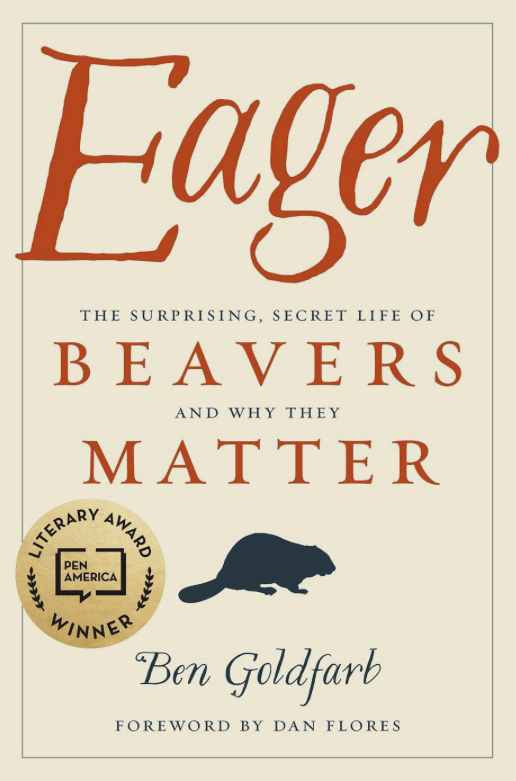
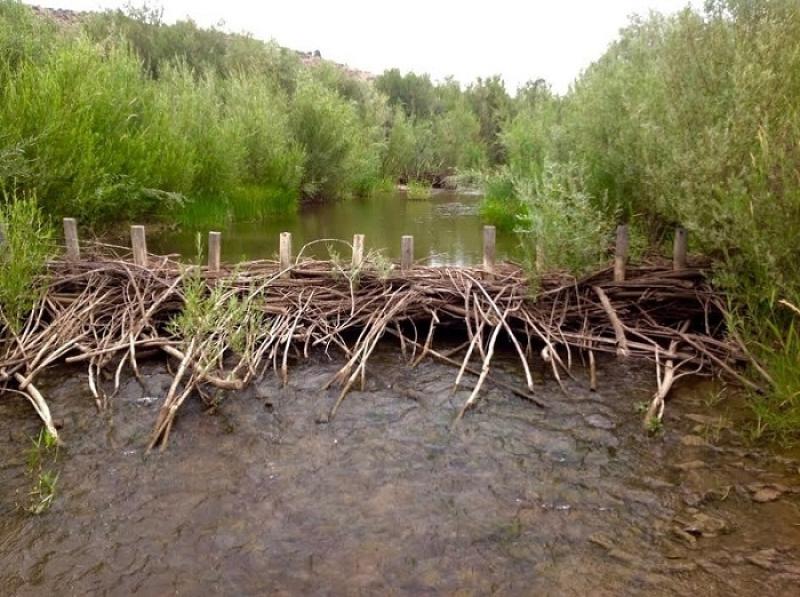
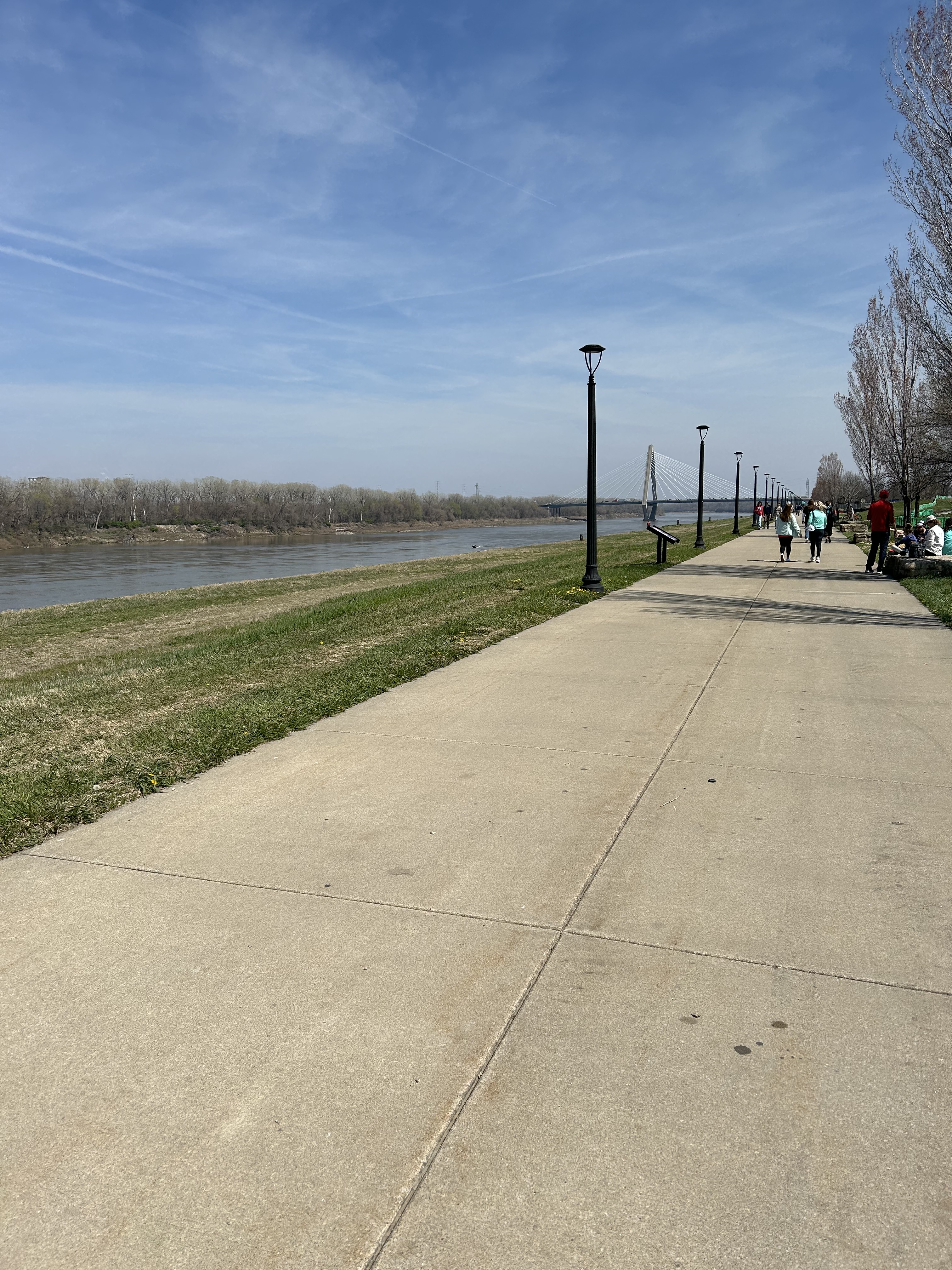
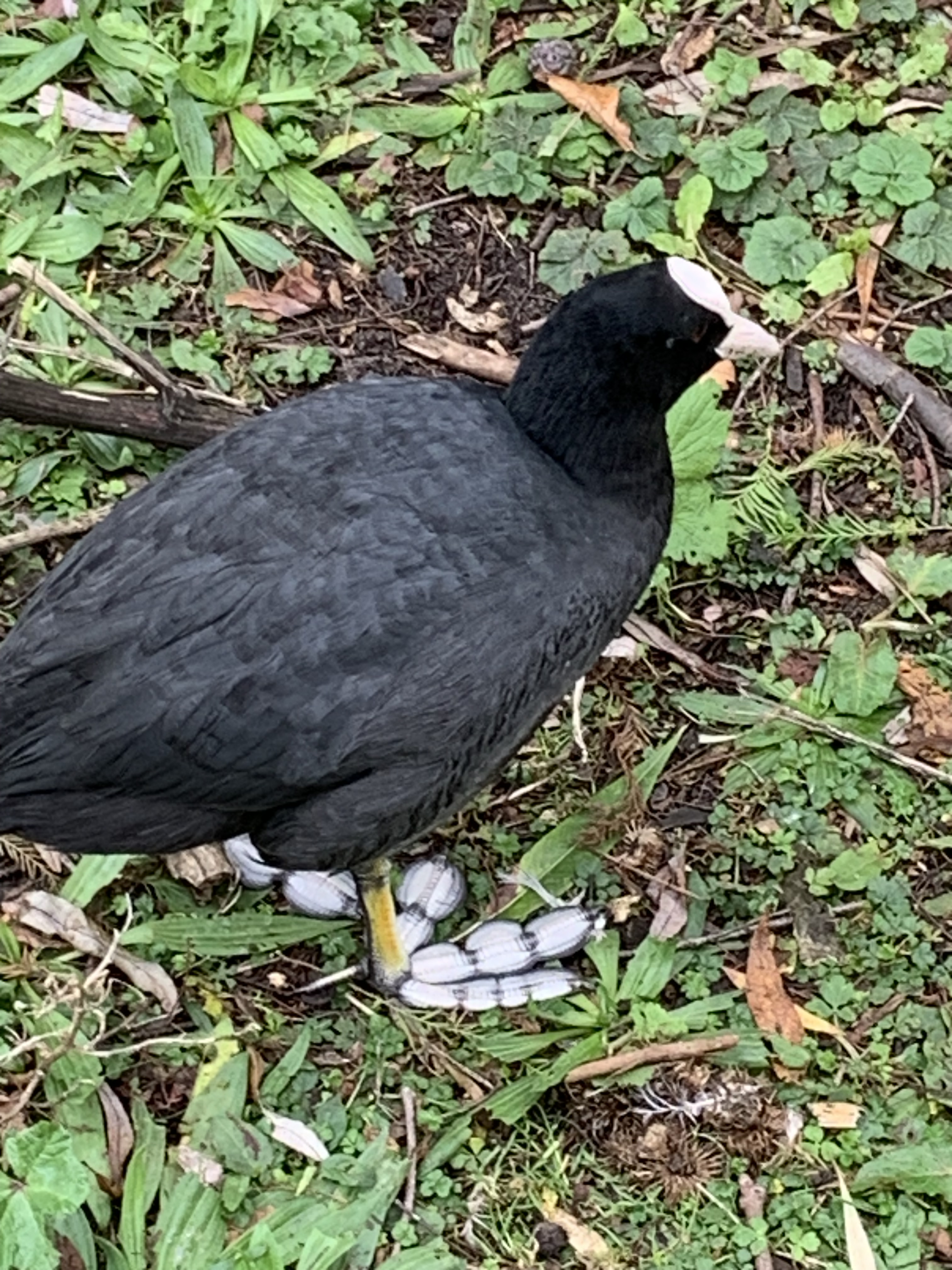
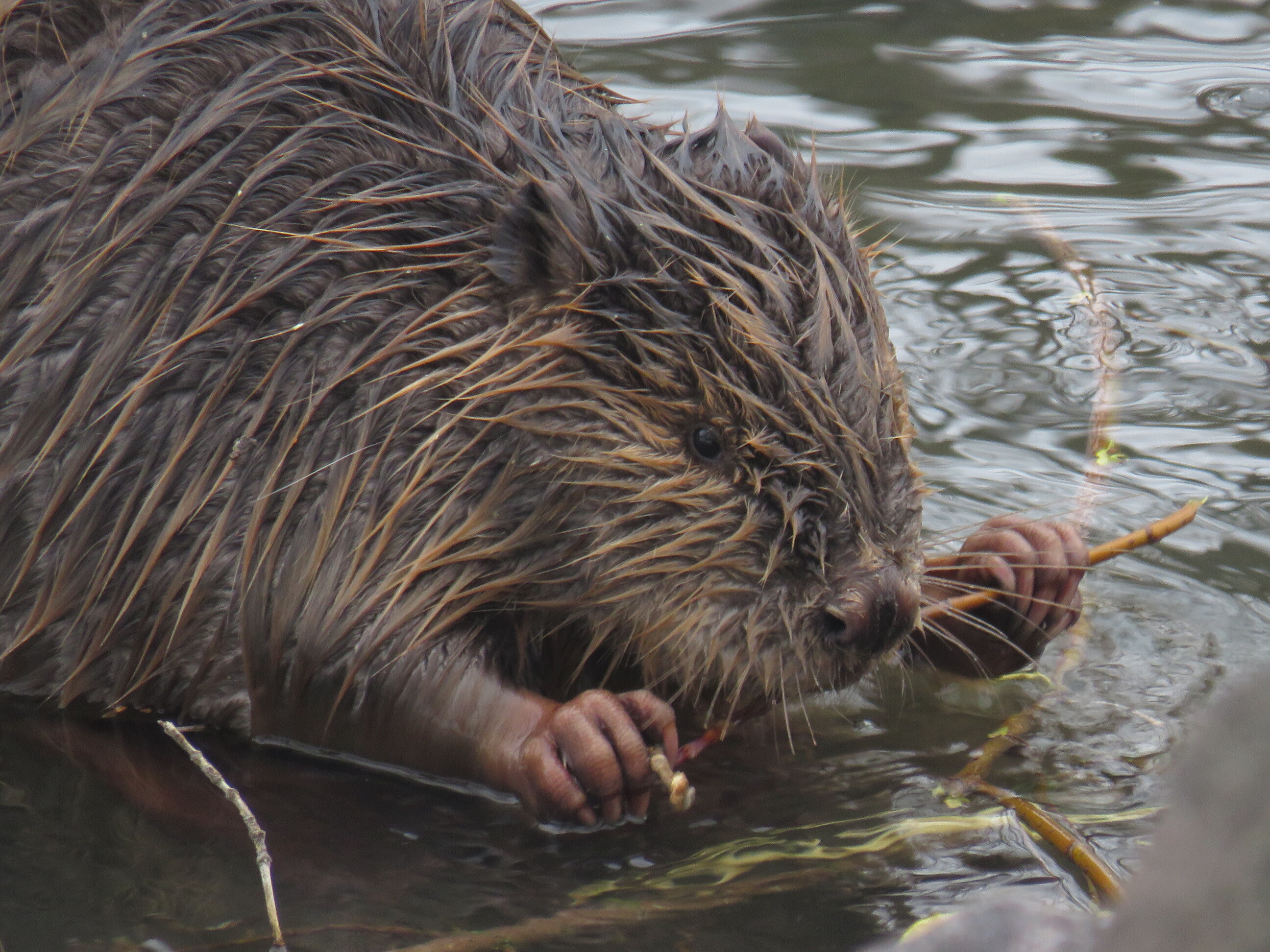


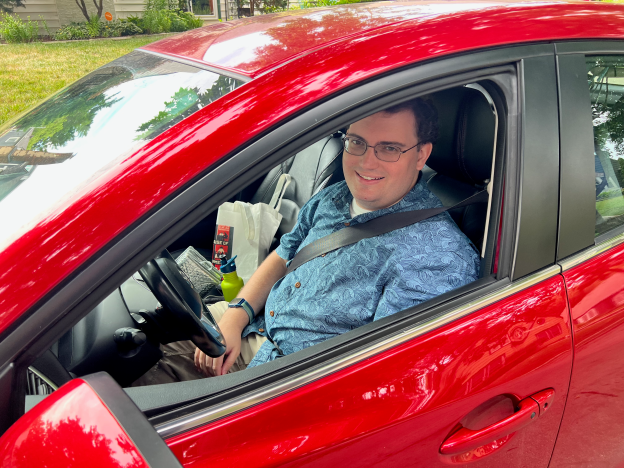
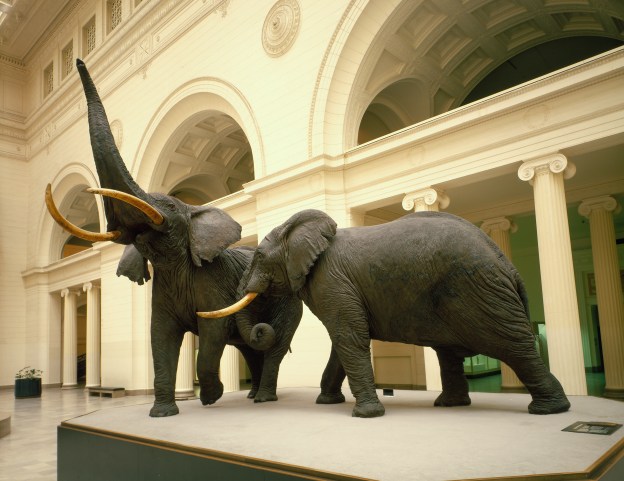
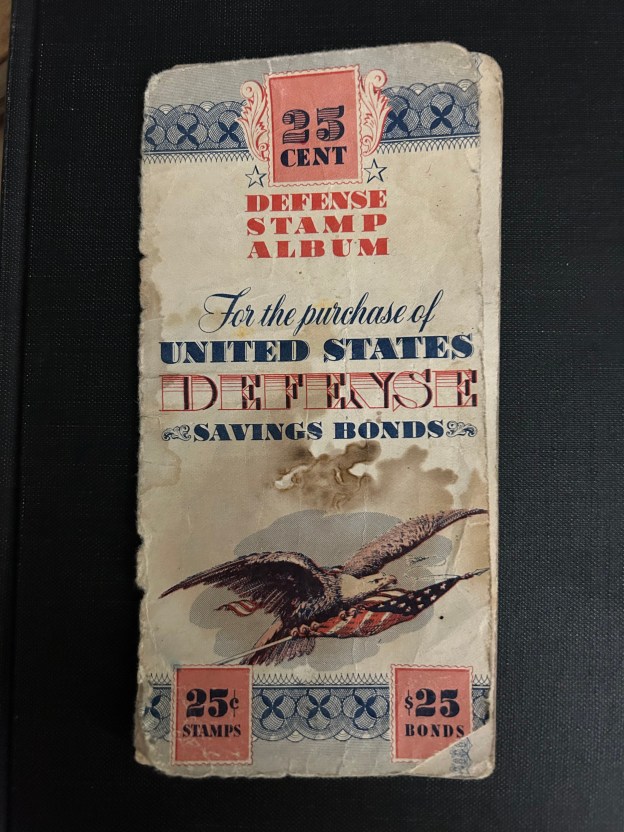
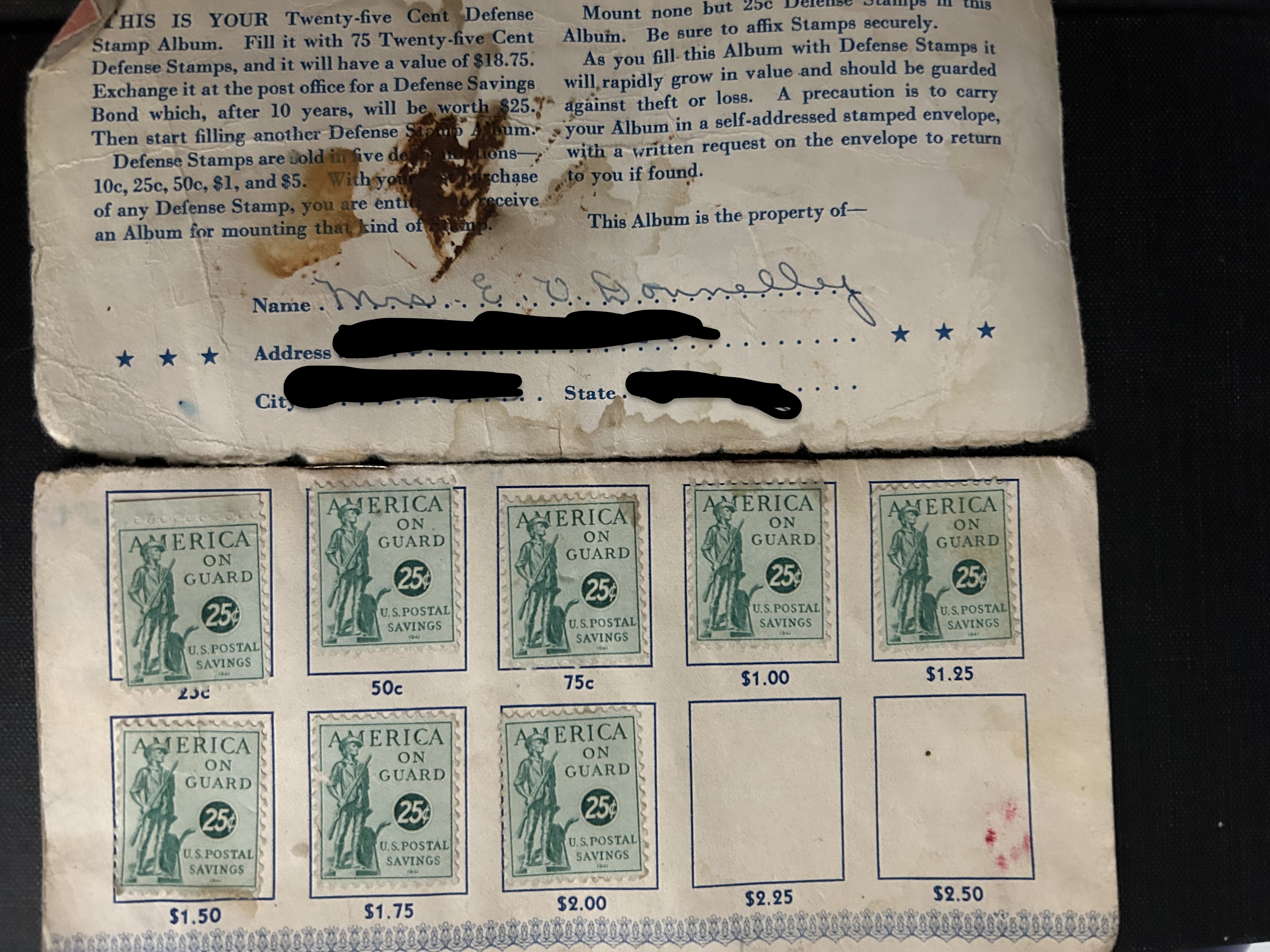


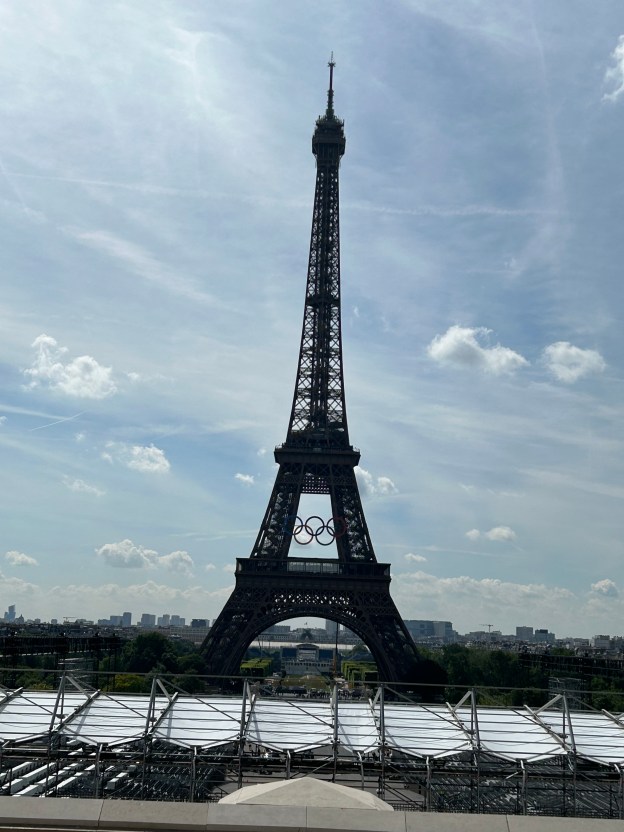
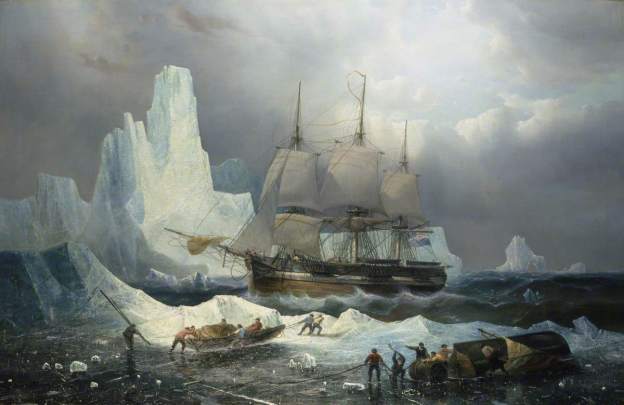
 Wednesday Blog by Seán Thomas Kane