

On Skepticism – Wednesday Blog by Seán Thomas Kane
This week, I express my dismay at how fast time seems to be moving for me of late and how it reflects the existence of various sources of knowledge in our world.
I first noticed the passage of time on my tenth birthday, that is to say I remember remarking on how from that day on for the rest of my life, I would no longer be counting my years in single digits. I remember distinctly the feeling of surprise at this, a sense that I could never go back to my earliest years. That was especially poignant for me as those first six years lived in the Chicago suburbs held a nostalgic glow in my memory then as they do now. In those early years I felt that time moved slowly; I remember once as a kid I fretted over a 3 minute cooking timer, worrying that I would be unable to stand there and watch the flame over which I was cooking eggs for a full 3 minutes. Today that sounds silly, yet I believe it is vital to remember how I felt all those years ago lest I lose my empathy with my past self or anyone else I may encounter with similar concerns over things I see as minute.
Soon after my tenth birthday, I found a new method of getting through things that I found tedious or even odious to endure. I realized that if I tricked myself into enjoying the moment that the tedium would pass by quicker than if I wallowed in my annoyance and misery. Perhaps there was a degree of pessimism in this realization: that the good moments don’t seem to last as long as the bad ones in my recollection of things, or that it’s in fact easier to remember the bad more than the good. This is something I’ve been struggling with lately, that when I find my thoughts sinking to these depths of my greatest uncertainty and grief that I need to remind myself of all the good in my life. Time seems to move faster today than it did before. The days fly by more than linger, and there’s always something new or old that I need to do. I’ve long thrived on work, a trait I inherited from my parents. Often my happiest days are those spent dedicated to a specific task; those days are made happy by my sense of accomplishment once the task has progressed or even is done. I’ve learned to accept that good things won’t often be finished in a day. I’ll push myself instead to do as much as I feel I can do in the span of a day and see where that leaves me when I go to bed at night. With the new introduction to my dissertation this meant that it took me 9 days to write all 105 pages of it. This is one of those times where I feel that I’m on a roll and in my writer’s paradise when I can write and write and write and not run out of ideas to commit to paper.
Yet I worry about that quicker passage of time because I feel that there are less things that I’m able to do in a given day than I would like. I sacrifice rest sometimes in order to see a project to completion, or I choose to try and find a balance between my work and the rest of my life only to see one side, or another overwhelm its counterpart leaving me feeling unfulfilled when I retire for the night. I do worry that the time I’m afforded is limited, and that I’m not going to do everything I want to undertake. There are plenty of things I want to write, so much I want to say, yet so little time in a given day to say it. I’m still young, just a few weeks over halfway to my 33rd birthday. I have this lingering feeling that there’s so much that I want to do with the life I have and an indeterminate amount of time with which to do those things. Am I content with what I’ve done with my life so far? Yes. Is there so much more I want to do? Absolutely.
I suspect this shock at time moving faster is my own realization of my mortality. Everything has a beginning and an end, the mystery lies in not knowing either terminus directly. How many of us can remember our own birth? I certainly can’t. By the same token we can’t necessarily interview the dead after they’ve shuffled off this mortal coil because, in the words of Dr. McCoy, they’re dead. Thus, we remain doubters of our own mortality, our limits. I often hear older friends talk about how the young feel invincible and immortal and make mistakes which reinforce that sentiment of invincibility all while, if they’re particularly bold or just unlucky, asserting their mortality with a sudden abandon. Our doubts are aimed at established sources of knowledge, authorities to whom we feel no particular duty to abide even if we begrudgingly accept their precepts out of bare necessity. I see enough people every day ignore pedestrian crossing lights even though they are there on the city’s authority to protect us pedestrians when crossing the streets that we’ve abdicated to vehicles. It usually leaves me at least frustrated at the ignorance of the driver, at most even angry when I’ve gotten close to being hit by such an ignoramus.
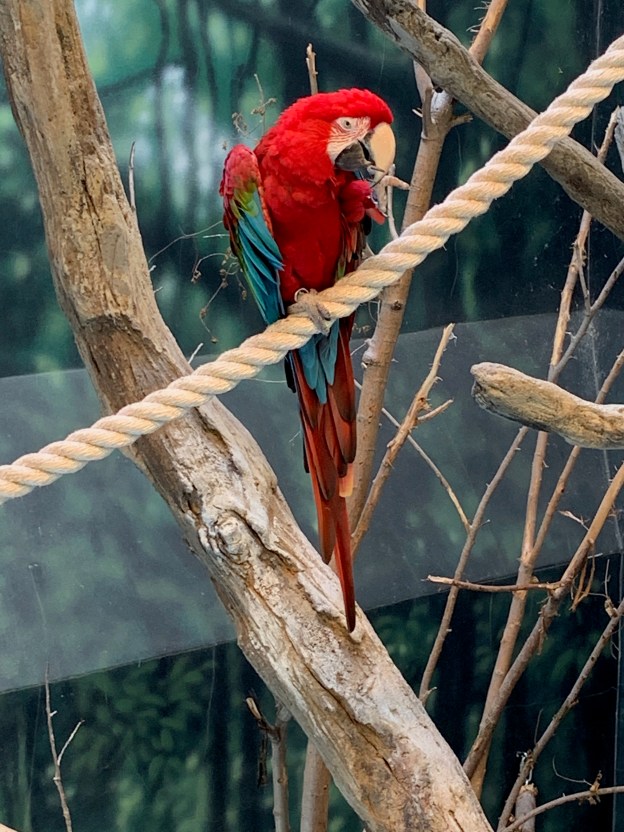
Skepticism is a significant marker in Renaissance studies as a transitional element from the classically inspired scholarship of the fifteenth and sixteenth centuries into the empirical knowledge-making that traditionally we’ve said was emblematic of the Scientific Revolution. I have many colleagues who are working now on disproving the existence of that Scientific Revolution; I admire that cause and yearn to read what they’re writing even though one of my stock courses to teach is called “the Scientific Revolution: 1500-1800.” Ada Palmer calls Michel de Montaigne, in some ways the inspiration for my Wednesday Blog, “the avatar of this moment” when skepticism became a driving force in Renaissance thought.[1] I argue in my dissertation that the American experience drove the course of skeptical thought in the Renaissance; all the things which André Thevet called singular in the Americas represented a dramatic break from classical standards of knowledge which required a new epistemology to explain them.[2] The key here is that we should never be complacent that our current knowledge is all there is to know, after all a well-lived life is a life spent learning. I’m skeptical about many things and have a drive to continue learning, to continue exploring. Curiosity hasn’t killed this cat yet.[3]I find then that my time is best spent in pursuit of this knowledge, and as much as one can learn alone in the solitude of their study reading and thinking quietly to oneself like a monk, it is far better to learn in communion with others. Since the pandemic began, I’ve grown particularly fond of Zoom lectures, webinars, and workshops as much for the expertise on show as for the community they build. Even if we only communicate through these digital media I still look forward to seeing these people, to experiencing that one part of life with them. We learn so that we might have richer experiences of our own lives, so that we might find comfort in our knowledge, so that we might, in Bill Nye’s words, “change the world.” In the time that I have afforded to me I want to learn more than anything else, to learn about the people around me, about our common heritage, about what our future may hold, and about myself. If I can do that, then when I am “no more, cease to be, expired and gone to meet my maker, become a stiff, bereft of life and resting in peace” I’ll be content in my leave-taking. Hopefully unlike the dead parrot they won’t nail me to my perch like Bentham’s auto-icon which greets knowledge-seekers in the South Cloisters of University College London, though that could be a rather humorous way to go.
[1] Ada Palmer, Inventing the Renaissance: The Myth of a Golden Age, (University of Chicago Press, 2025), 603.
[2] If this word epistemology leaves you confused, have no fear, for my own benefit as well I wrote a blog post explaining this word alongside two of its compatriots. “Three Ologies,” Wednesday Blog 6.6.
[3] Meow.
 Wednesday Blog by Seán Thomas Kane