


To Gaze into the Past – Wednesday Blog by Seán Thomas Kane
Historians like me spend our working days trying to understand past generations, to see their worlds through their eyes and to interpret that world in a way that’s understandable to our modern audiences. I for one would love to see the sloths that my dissertation focuses on as they lived in their own time and place 467 years ago. Better yet, I would love the opportunity to sit down and chat with such greats as Abraham Lincoln, Benjamin Franklin, Eleanor Roosevelt, or Hypatia of Alexandria just to hear these great minds of their own times speak as regular people without all the pretenses, titles, and theories that we frame their lives within our histories.
Unfortunately, as far as I know the time machine hasn’t been successfully built yet, and time travel even by slingshoting an object around a sun hasn’t been attempted yet. Give it a few centuries, maybe. My conversation with Mr. Lincoln will have to wait. Yet there are ways we can gaze back into the past that are possible today. If you’re reading or listening to this at night go outside and look up at the stars and see what you can find up there. Maybe even use a star chart app on your phone to figure out which stars you’re looking at. Once you’ve done that see how many light years distant they are from us on Earth. That light took quite some time to reach us, meaning that that light left those distant stars years, decades, or even centuries or millennia ago.
Last summer I wrote about my profound sense of awe at gazing up towards the light radiating out from the star Vega while sitting on the rim of the Split Mountain Canyon in the Utah side of Dinosaur National Monument. What struck me most was that Vega is 25 light-years away from Earth, meaning that that light left that star when I was still a small child in a moment of my life I look back on quite fondly. What’s more, I knew I could return to the same spot 25 years later in 2046 with my children, if I’m so lucky in the future, and show them the light that left that star on the night when I went up there with my Dad back in 2021.

The same idea is central to how we ought to understand the immensity of space. Einstein is responsible for the development of the idea of spacetime, that time itself is a dimension alongside the others we might already recognize. I often think about this when I’m daydreaming, imagining observing the passage of time in a very small scale by watching the light move across the walls of a room however slowly as the day goes by. This past Halloween evening I sat with a fellow sixteenth-century historian in San Diego’s Waterfront Park and looking out towards San Diego Harbor to the west stared at the sunset as it seemed to almost faintly radiate up and down as it slowly set below the horizon. In that moment I knew I could begin to understand the passage of time just as I learned at a young age to comprehend the passage of space in the form of physical objects moving across the landscape, like cars driving along an open highway.
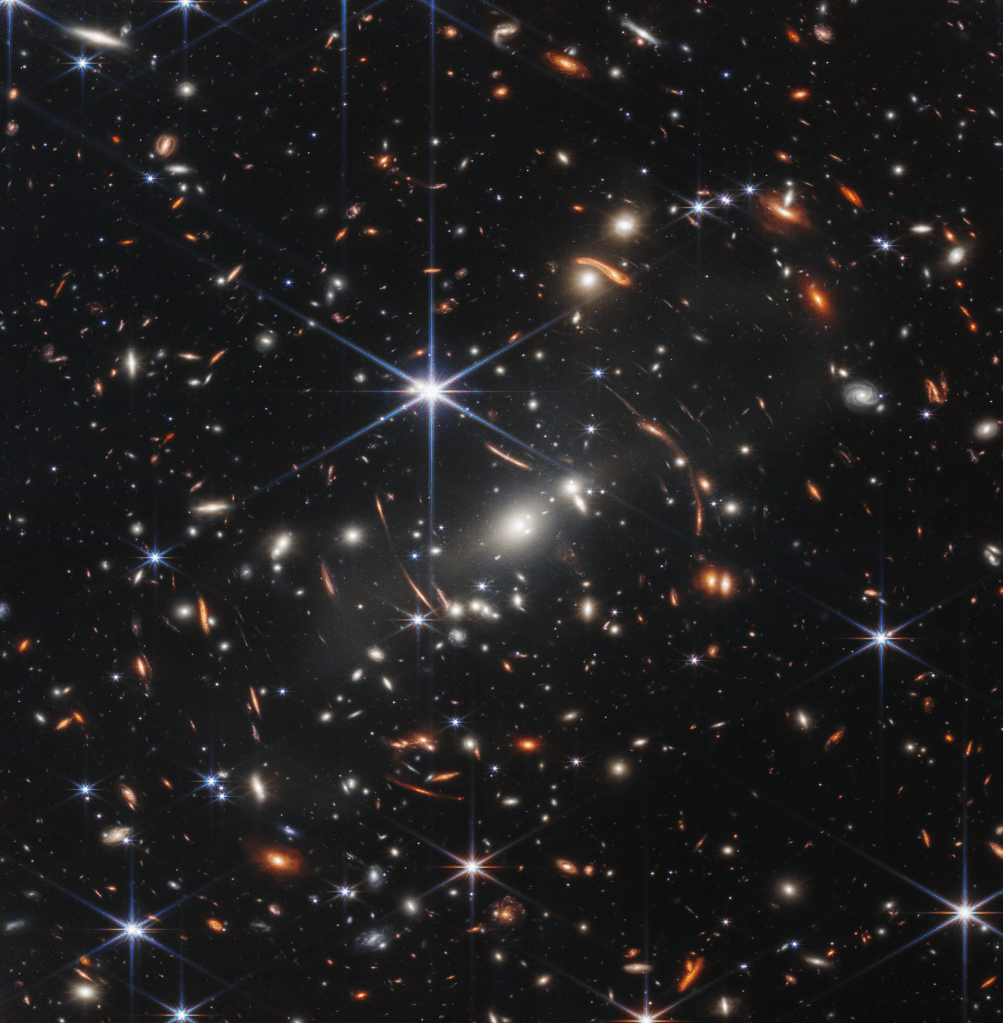
So, this week’s breaking news from NASA Goddard of the reveal of the first five images taken by the James Webb Space Telescope out in orbit of the Earth was a profoundly beautiful moment for me. Webb captured our first images of galaxies as they existed a mere 4.6 billion years ago. Those same galaxies could look very different today, yet their light has only just reached us across the vastness of Space. That image, Webb’s First Deep Field, was released on Monday evening by the White House after NASA offered a preview of the five images to the President and Vice President. Lucky them!
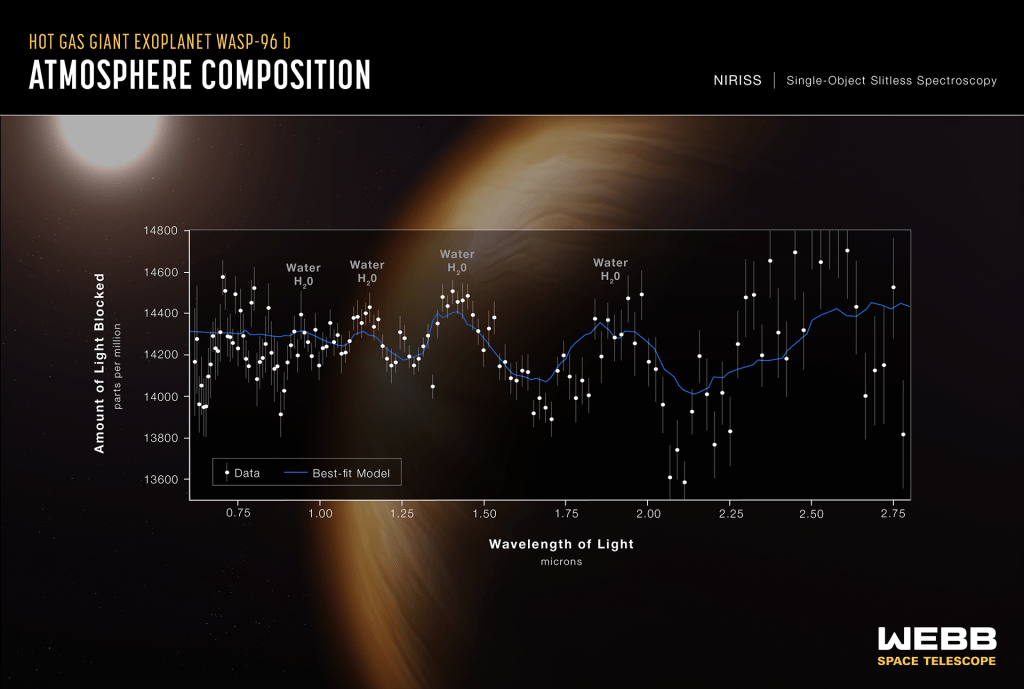
As profound as that deep field is, I was struck more by the potential offered by another one of Webb’s images, the second image released to the public which shows the atmospheric composition of an exoplanet called WASP-96 b, which is about 1,120 light-years from Earth. WASP-96b’s atmosphere confirms the presence of water on that planet’s surface, a sign of potential life on that planet’s surface. This is the part of Webb’s mission I’m the most excited about, its potential to help us in our endeavors to find out whether we’re alone in this vast Universe of ours, or if we’re one planet among many populated and teeming with intelligent, thinking, and innovative people.
I can’t help but mention the picture, which is probably my favorite on an aesthetic level, that being the image of the “Cosmic Cliffs” of the Carina Nebula, a stellar nursery located roughly 7,600 light-years distant from Earth. The vibrant colors of the Carina Nebula even unseated Thomas Wilmer Dewing’s 1904 painting The Lute from the coveted role of my computer’s background, at least for now. A closer nebula to Earth, the Southern Ring Nebula, was also photographed. This time though instead of a stellar nursery this nebula surrounds a dying star in its cloudy sphere. Even more profound are the quintet of galaxies captured by Webb from some 290 million light-years away, old enough that its light was contemporaneous with the end of the Carboniferous Period and beginning of the Permian Period here on Earth, well before even the evolution of the first dinosaurs.
On a side note: the Carboniferous room in the Evolving Planet exhibit at the Field Museum remains my favorite room in that collection; I’ve always loved those trees.
The images released by the Webb team and broadcast Tuesday from NASA Goddard represent 25 years of combined efforts from a whole host of scientists and engineers at space agencies around the globe working together to achieve a common goal. By expanding our knowledge of the universe around us we are also demonstrating to ourselves and our descendants that it is possible to work across national divides, to achieve common goals. When we do pull ourselves out of our current string of interrelated crises and societal problems it will be because we’ve finally decided to work together as one humanity for the betterment of all of us.
We have an opportunity now to gaze into the past, to see light coming from stars that may well have died long ago. Yet with their light memories of their existence remains. With that light we’re reminded not only of what once was both out there and here on our home planet, but also of what could be in our future, of a time when maybe we will explore further afield, spread out from our home not as conquerors but as explorers. Stay curious.
 Wednesday Blog by Seán Thomas Kane