This week, I discuss some of the things which are common to all of us, problems we all share, and why I think we ought to look at solving those problems.—Click here to support the Wednesday Blog: https://www.patreon.com/sthosdkane
This week, I discuss some of the things which are common to all of us, problems we all share, and why I think we ought to look at solving those problems.
I don’t rest much these days, there’s so much I have on my mind from my work to my hopes for my life to the state of our world boiling in tumult around us. I sleep, yet I rarely feel rested when I awaken. I suspect it’s worse on those mornings when I’m pulled awake from the middle of a dream, that is from REM sleep into my waking reality. Perhaps this is the same for you if you’ve noticed it. This morning was one such occurrence and I’ve been tired throughout the day, even drifting off to sleep midday while watching the Cubs game and later riding in the backseat of my family’s car to an event. These days, I have a lot on my plate, and as one of my best friends pointed out to me recently, I’m probably due for a vacation of at least a week in length. When I have the time and the money to do so I’ll probably slip away somewhere as suggested.
I’ve always thought that the more technologically advanced our society becomes the better life will be for we humans who crafted these machines and machine intelligences which are the hallmarks of our civilization today. I suspect many, if not all, of you would both agree and disagree on some level with this statement. Life is easier on some counts, yet we still haven’t found a way to relieve the burden of human labor through invention. This is one of many universals we all have in common, one of many things we can look to and nod at as signs of our humanity. We all struggle in our own way, and we all have things we love and fear. I think at the core of our problems today is the desire to divide us into camps armed to the teeth to defend their own circle from the other circles out there in the fog of doubt. How often I’ve worried about nothing when someone doesn’t respond to a message, email, or letter when the person on the other end was simply busy! We all dream, don’t we? In our waking moments as well as in our sleep we dream about the life we want to have in our future. There does lie a difference between those who see those dreams as blueprints for what they can create and those who merely see these dreams as figments of an overactive imagination. Yet that difference can be overcome with enough courage and determination to see a better tomorrow.
I do believe that we all want to be happy, the question lies in what we each believe on our own terms will make us happy. In America, a country with capitalism so deeply baked into our collective consciousness, happiness is often quantifiable in dollars and cents. I went to college with a lot of people who chose their majors out of a conviction that their happiness would come if they became rich. I also know other people who are happy with quiet, unassuming lives. In my case I know I am capable of doing great things, of making an impact on our society, and I want to do all that. Yet as I’ve grown, I’ve found that what makes me happiest is being comfortable in my living, having choice in what I do and who I live my days with, and always seeking new knowledge and even wisdom from time to time. I know I need to earn my keep to do these things, something I’m presently not doing, yet as I often say when I’m feeling especially dour about the current state of my life at 32: I have many long years ahead of me, let’s take one step after another to get to that point of comfort that I seek.
Another universal emotion for humanity is fear; in fact, it’s one of the most powerful emotions we can feel. I know fear well, as Captain Kathryn Janeway of the Starship Voyager said to an embodiment of Fear in one of the finest episodes of Star Trek: Voyager, “I’ve known fear, it’s a very healthy thing most of the time. You warn us of danger, remind us of our limits, protect us from carelessness. I’ve learned to trust fear.” Fear is a seed of knowledge, yet hope is the fertilizer needed for wisdom to flower. We’ve been fed so much fear by one camp of all others that it is nearly all we hear today. Yet that fear lacks the depth which is needed for true societal growth to occur. The power of the fearmongers will remain brittle and fragile until at long last it crumbles again as it always does.
So, let me ask you this: what would it be like if we let our guard down even for a few moments and talked with one another about the things we have in common? What if we lowered our banners proudly proclaiming our camps and sought out the universal ground upon which we all stand? At the end of this time of change, whenever whatever is coming next is settled, we’re going to have to do just this. We will need to talk with one another and recognize our common humanity. What’s more, we will have to learn not only to talk with one another but listen to one another again. I’ve been in meetings in the last few months where I certainly could’ve contributed my own thoughts about the state of things, yet I’ve found it far better to be attentive to the people there with me and hear what they have to say. Often, we have similar concerns and similar hopes in kind. To do any of this takes a tremendous amount of courage but not anymore than we’ve mustered in the past. I’ve seen it after big storms when people help dig each other out of the damage. You may ask, “Why would we care about our neighbors if we don’t even know them well?” That question is simple: you do it because it’s the right thing to do.
There was a series of television commercials several years ago which purported to show a potentiality where it was normal to prefer pain or trouble over pleasure and comfort. I wonder if we aren’t in fact living in that world where we accept the pain and trouble because we can’t work up the courage to face that pain and trouble and find solutions to remedy it? Take for instance the trouble we go to in the United States to travel between our cities: we put up with uncomfortable day or multiday long road trips or quick yet rickety short-haul regional flights because we’ve dismissed the potential of trains to connect our smaller and larger cities together. Last month, I drove up to Chicago in the backseat of my Dad’s small pickup truck and returned home in a sleeper class roomette on Amtrak’s Southwest Chief. I appreciate the ride back to the city of my birth, yet the benefits of having more legroom, being able to walk about the train, lounge access in Chicago, and complimentary service in the dining car can only be outweighed by the convenience of being able to choose when I want to leave my origin and arrive at my destination by car, especially when as of now there’s only one direct train per day in each direction between Chicago and Kansas City.
We can use particular answers to solve universal problems, if only we have the courage to consider those particularities. I worry today that we may be short on the courage to solve our most universal of problems, the rot at the heart of our civilization that we’ve too long ignored until it’s oozing there right before our eyes. A house with rot in its foundation will eventually fall and crumble into ruin. Can we face our own rotting foundations before we lose what is most universal, what we most love and appreciate about our lives? Or can we do what we know to be right, what we know we must, and begin the process of rebuilding to craft a better version of the old edifice of our civilization, a more equitable edifice indeed, for our posterity to enjoy?I’ll leave you with those questions, because often the best conclusion to any essay ought to be the provocation of more queries rather than definitive answers.
This week, looking ahead to the next 25 years here are three things that I hope we see become ordinary things by 2050.
—
Click here to support the Wednesday Blog: https://wwww.patreon.com/sthosdkane
This week, looking ahead to the next 25 years here are three things that I hope we see become ordinary things by 2050.
Last week I started the New Year off in this publication with a reflection on the technologies that I remember looking forward to in the first quarter of the twenty-first century. Today then, I want to look ahead to the next quarter, to the years leading up to 2050. On New Year’s Day of that year, I will be 57 years old, well into my career with hopefully a good wind in my sails from successes and contributions to society in the decades previously built upon the work that I am doing now. Perhaps by then I will watch the New Year’s ball drop in Times Square with my wife and children to be, though that’s one dream that remains more elusive to imagine than any professional triumph. 2050 feels like a strange milestone to me, in part because 1950 feels far more tangible to me growing up surrounded by people who were beginning their own lives in that middle decade of the twentieth century. Yet as much as I feel a bond to the century of my birth, my own legacy will likely be numbered among the figures of the current century rather than the last.
Our century has tremendous potential to be one of the most consequential in the long history of humanity. We’ve already seen dramatic changes in the first 25 years which have defined the break in our current moment from the century we left at the millennium from new wars and economic recessions to the COVID-19 pandemic and dramatic advances in technology and global interconnectedness. A significant cause for discomfort in this century is the rift between those who see globalization as a threat to individual, local, regional, and national identity and the increasing interconnectedness of our world. At the beginning of this century the easiest and most affordable way for us in the United States to be in touch with relatives in Britain and Ireland was by letter, whether handwritten or typed, and sent by air mail to arrive within the next two weeks at its destination. We could place international phone calls, I remember doing this in early 2001 when my Mom was in London on a business trip, but those were far more expensive. The expense of international calling over regular phone networks remains an annoyance, yet today we have other options of placing voice and video calls over the internet that have existed since near the beginning of the century which fill this role.
The increasing ease of global communication is one clear sign of the advances of this century that I applaud. Just before writing this, I spent a delightful hour watching a live public lecture from the Linnean Society of London over Zoom in which I was able to pose a question in the Q&A box that was read by the moderator at her desk nearly 7,000 km across the Atlantic and answered soon after by the speaker. Throughout my undergraduate I often heard the maxim that I should earn my doctorate in the country in which I wish to teach, yet the little islands of national academies that we’ve built in the last two centuries are fast growing into each other’s back gardens to the extent that in my experience there isn’t so much an American and a Canadian academy but a North American academy which also has close links with the republics of letters in Britain, Ireland, and across Europe with more disparate connections in East Asia, Australia, and New Zealand or even South Africa. I’ve yet to present at any conferences on the far side of the Pacific though I have attended conferences held at the Universities of Auckland and Sydney over Zoom that were held the following day, or thanks to the disparity of time zones late in the evening here in North America.
The lecture in question
Yet again, these are technologies which already exist and even if they have room for improvement, they fit better into that first of these two entries about the technological innovations of the twenty-first century that I am most excited by. This week then, I intend to discuss three technologies which I hope will see fruition in the next 25 years that would have a noticeable influence on all our lives for the better. All three of these technologies are already being developed, and in some cases merely need implementation here on this continent as they already are elsewhere. We seem to be in a moment of reaction when the parking brake is firmly grasped in the hands of those who fear any further forward motion on the part of our society whether for their own portended loss of power or their general fear of the unknown. Both are understandable, yet as Indiana Jones learned in his last great challenge in The Last Crusade there comes a point in life where each of us needs to take a leap of faith and trust in ourselves and our future.
The first of these three technologies which I’ve read a great deal about in the last several years and which is proven in a laboratory setting is the use of nuclear fusion to create a new source of energy and ideally power to keep our lights on. One great worry I have among many others about the incoming administration which will take office next week in this country is that they will slow or even stop the construction of new renewable energy facilities: solar and wind farms in particular without any significant scientific foundation for that decision. We ought to be developing ways that solar panels can be integrated into the shingles and tiles atop our roofs so that they aren’t an extra addition to any edifice. Likewise, wind farms in places like the deserts, the Great Plains, and off our coasts (ideally still out of sight of the beachgoers) where the wind is strongest and most usable would help to eliminate our use of fossil fuels including natural gas and coal which are still in use in parts of this country.
A drawing of the ITER Tokamak and integrated plant systems now under construction in France. CC by 2.0 Oak Ridge National Laboratory.
The prospect of nuclear fusion to be downsized from its current necessary laboratory dimensions to something that can be implemented on a local level in cities and towns around the globe is what I look forward to most. The effects of human influenced climate change are well and visible around us. Look no further than the extreme shifts in weather year round, or the prolonged droughts across much of this continent. Look at the winter wildfires that burned around Boulder, Colorado and west of Kansas City in Central and Western Kansas in December 2021. Look at the wildfires burning down neighborhoods in the Los Angeles area today! We need renewable and clean energy sources that will continue to power our civilization if we’re going to survive in this brave new world that we’ve created for ourselves. We’ve already reached the threshold of a 1.5ºC increase in mean global temperatures, and we only seem to be letting things get worse. I’m reminded of the beginning of the story of the Flood in Genesis and how “the wickedness of human beings was on the earth” and “[corrupted] the earth” itself. Are we not doing the same thing by not wedding our continued innovation and progress with a heart for preserving the Earth that has nurtured us to which we too contribute? If we can develop technologies from our own invention which will cultivate a stronger relationship with the rest of nature on this planet in whose cradle we evolved as every other living thing we today know did then what are we doing?
Secondly, one of my great passions outside of academia is the promotion of high speed rail here in the United States. The YouTuber Alan Fisher recently released a video which spells out the utility of high speed rail as a realized technology in contrast to the fantasized options like the Hyperloop that caught our national attention several years ago and even resulted in a thorough study by the State of Missouri to build a hyperloop line between Kansas City, Columbia, and St. Louis. I’ve had my fair share of experiences on high speed rail in Europe and having that option alongside air travel would go a long way to building a far more equitable society in this country. Today, unless you choose to drive the 3.5-4 hours it takes to get between Kansas City and St. Louis, you have the choice of 2 daily flights on Southwest, 2 daily trains on the Missouri River Runner, or 8 daily bus services provided by Greyhound and Flix Bus. While the flight itself is quite short, rarely more than 45-50 minutes from takeoff to landing though including travel to & from each airport and waiting time this option grows closer to 4-5 hours in length. Meanwhile, the train takes 5.5-6 hours and the bus usually 4.5 hours to cross the state. With high speed rail we could certainly cut the travel time either along the Missouri River Runner or a new route along the I-70 corridor with one intermediate stop in Columbia for a service that could well be faster and more convenient than driving. The Missouri state high speed rail proposal from the High Speed Rail Alliance, of which I am a member, calls for 10 daily roundtrip services between KC and St. Louis at least making it possible for residents of either city to make day trips to the other, something that is very difficult to do by any option today.
The Eurostar hall at St Pancras International in London. Photo by the author, 2016.
In Kansas we have a more tangible possibility for high speed rail thanks to the work of a YouTuber who goes by the channel name Lucid Stew. He released a video this summer theorizing what a High Plains HSR line between Denver and Kansas City would look like. The total travel time largely following I-70 would take 3.5 hours compared to the 4 hours it takes to fly between the two cities with airport transfer times included. There are currently on average 7 flights per day between these two cities offered by Frontier, Southwest, and United and there is at least 1 daily bus between the two cities. The drive across Kansas is a dull one, the Great Plains really do get to seem flat once you get west of Salina until essentially the Denver Airport exit. I remember falling asleep in the passenger seat on my last drive from Denver back to Kansas City in June 2021 in a trip featured in the Wednesday Blog two-parter “Sneezing Across the West” and dreaming that there was a high speed train running between the two cities that ran frequently enough (a minimum of 10 trips per day each way) that allowed your average Kansas Citian the opportunity to get off work on a Friday afternoon and go spend the weekend in Denver or up in the Rockies with enough time to come back on Sunday evening to make the start of business on Monday. It was one of those dreams that really sat with me, and made me wonder whether it could be possible to build this line in the future? I think the key feature that would make this happen would be if it were the primary transcontinental link between a Midwestern high speed rail network centered around Chicago and the easternmost node in a Western network that included lines reaching as far as the Pacific Ocean. While it’s far less likely that most travelers would take high speed rail from Kansas City to Los Angeles, San Francisco, Portland, Seattle, or Vancouver, we should still think on a continental scale because there could be travelers leaving from Denver who might want to make that trip, putting the High Plains HSR line into the broader North American network.
The Southwest Chief in Kansas City, photo by the author 2023.
I for one would gladly take a high speed train to Chicago over flying or driving. I already enjoy taking the Southwest Chief, though I was lucky the last time I took it that we arrived on time. Our current passenger rail network is hampered by the lack of enforcement of the federal law which says that Amtrak should have the right of way over freight, yet the host freight railroads now run trains so long that it’s much harder to manage Amtrak schedules in the face of mile-long freight trains that take up much more of the space along these lines. This is a problem for both the long distance routes like the Chief, which runs on BNSF tracks between Chicago and Los Angeles, as it is for the state-sponsored routes like the River Runner which runs on the old Missouri Pacific line now owned by Union Pacific. With the same sorts of amenities as the current trains, the option for private compartments (roomettes, rooms, and bedrooms), sleeper capabilities, a fully stocked dining car, and the observation & café car, I’d happily spend a couple hours more traveling by train on a high speed line between Kansas City and Chicago via St. Louis rather than take the more direct, if slower, route on the Chief. It seems more likely that the Missouri River Runner will get the high speed upgrade than the Southwest Chief because it’ll serve more people: the Southwest Chief’s primary metropolitan areas east of the Great Plains are Kansas City and Chicago alone. If we had an express train that ran just between those two cities along the Chief route that could be another good option that’d cut the journey down from 7 to closer to 5 hours.
RideKC’s Streetcar service at Union Station, photo by the author 2016.
All of this would need to be complimented by better public transportation on the regional, metropolitan, and local levels. We will soon see the opening of the southern extension of the Kansas City Streetcar down Main Street from Union Station (23rd Street-ish) to UMKC (51st Street). This will get the Streetcar right to the top of my neighborhood, Brookside, and just within reach that I will probably begin to take it when I’m going downtown for work or a day out. Yet our local transit agency, RideKC, needs to expand bus service south of 51st Street now to feed people onto the extended streetcar line. Currently we have 20 minute frequencies on the Main Street Max line south of the Country Club Plaza (47th Street), which have been the case since the Max line opened in 2005. I for one want to see at least 10 minute frequencies all the way to Waldo (75thStreet) if not even further south to 85th Street or even to the I-435 loop around 103rd Street. This is a problem that needs to be addressed nationwide. I firmly believe that no one in an urban or suburban area should live further than a half a mile from a transit line, whether that be a bus, streetcar, light rail, metro, or regional rail. When I worked at the Nativity Parish School at 119th Street and Mission Road in Leawood, Kansas the closest bus line to the school was the 57 bus stop at the intersection of Minor and Wornall Roads just north of Avila University (Minor Road becomes 119th Street at State Line Road, aka the Kansas-Missouri border). The walk from there to the school is 2.1 miles (3.38 km) in length and according to Google would take about 45 minutes to complete and while there’s a sidewalk for most of the way on the north side it does end at the property of the Church of the Nazarene just 528 feet shy of the border. Here the pedestrian can cross the street and continue on the south side of the street, but that’s not always the safest prospect on what is a fairly major street on both sides of the border.
In Kansas City we need more streetcar lines and a robust regional rail network that can connect the disparate suburbs together as a supplement for our existing highway network. Thinking about this over the weekend I came to the thought that perhaps if we had a strong enough passenger rail network it could leave more space on the highways for freight traffic which already makes up a fair share of the interstate network’s users. Here if we had a system of through services connecting at Union Station on the tracks of the Kansas City Terminal Railway (KCTR) we could have north-south routes running from St. Joseph to Gardner or Lee’s Summit that would connect points in between including KCI Airport, suburbs in the Northland, Downtown, and neighborhoods and suburbs on the southwest and southeast sides of the urban core. Likewise, an east-west line ought to run as far west as Topeka and as far east as Grain Valley or beyond along the I-70 corridor would do a great deal to connect this region.
I’ve digressed a great deal here about transportation, and rail in particular. So, let me finish with something that’s on a smaller scale yet seems to be growing into something far more robust. In the last decade 3D printing has really developed into a new art form that has a great deal of utility to offer. My parents have developed a hobby of 3D printing with both uses. I’m quite proud of the one print that I’ve completed with my Mom’s help. Just before Christmas we made an old World War I biplane with red filament leading to my declaration that this year the Red Baron would be visiting the Baby Jesus in our manger scene. I’ve seen newer models of cars and trucks, the Ford Maverick in particular, which have interior parts that are 3D printed.
The Red Baron biplane as it appeared when it finished printing. Some assembly required. Photo by the author, 2024.
In October 2016, NASA launched Phase 2 of its 3D printed habitat challenge to see what could be designed as homes “where future space explorers can live and work.” One of the problems to be solved here is that for every kilogram of mass which is carried into Space whether for a Lunar or Martian destination the spacecraft will need to carry more fuel. So, why not bring lighter materials that can be assembled on arrival? The advent of 3D printing technology will allow this to happen with the understanding that the technology will continue to advance in the coming years as the Artemis program brings humanity back to the Moon in the 2020s and 2030s and a future program takes astronauts to Mars for the first time. I don’t know if we’ll see humans on Mars by New Year’s 2050. It’s possible, but with all the delays that the Artemis II launch has faced it seems like the days of rapid-fire launches from the Apollo era are more a distant memory than a part of the present moment.
The Tiki Taco Surf & Turf Burrito, not 3D printed. Photo by the author, 2024
Other innovations in 3D printing stand as challenges to be faced: ghost guns made from 3D printed parts are a new threat to public safety, and the fact that these filaments are largely plastic concerns me from an environmental standpoint. I’m curious however about the prospect of 3D printed food. A long term vision I have for this technology is that it may lead to some sort of device like the replicator we see on Star Trek, and should my preference for beef over other meats become unsustainable and too expensive for me to continue in the next 25 years then I’d be open to considering an artificial alternative that is less taxing on the Earth and its environment alongside eating other meats: bison, chicken, lamb, and pork as well as the varieties of seafood. Yet with this last one there’s the problem of over-fishing. By any natural measure we in Kansas City shouldn’t have as easy access as we do to saltwater fish, shrimp, and the like. I’ve recently discovered the surf & turf burrito at Tiki Taco, a Kansas City Cali-Mex chain with 3 locations. This burrito’s main ingredients are shrimp, steak, with either rice or fries and several other fillings, and yes, I do love it. Yet again, if cattle produce more methane than is safe for our climate and if industrial shrimping is bad for the long term viability of shrimp populations and the oceans in general, shouldn’t we look for alternatives, even ones that have their origins in laboratory experiments?
Finally, I don’t quite know what to make of advances in artificial intelligence quite yet. The means in which it’s become most visible in our lives is through crafted sentences and generated images. I’ve seen some examples of good AI and many of AI that is obviously computer generated. I freely admit to using an AI program, DALL-E 2, to create the images I used in my story “Ghosts in the Wind” from the Season 2 finale, and again I used a separate AI program to create the portrait of Carruthers Smith which appears at the top of my story “Carruthers Smith’s Museum” and its follow-up appendix. I’ve taken advantage of the vast database behind Chat GPT to confirm it’s not aware of more secondary sources in projects where I’m less familiar with the scholarship, a sort of streamlined version of the databases I’ve used throughout my career to find peer-reviewed articles and books. Yet I have too much pride in my own scribblings to use an AI program to write for me. If I want to find a fancier way of saying something, I’ll turn to my trusty thesaurus instead and decide for myself which of the synonyms I like best.
I do think we can find examples of computerized systems that work well to enhance the lived human experience of all three of these technologies. Computers with human supervision will be one of the better ways of monitoring nuclear fusion reactors to ensure their safe operation. Driverless trains already operate in cities like London and Paris, and while it’s disconcerting when you first board the front carriage of a DLR train or a Line 1 train in their respective cities you get used to it. On a less labor-pinching model using automatic train signaling systems and AI driven algorithms to determine schedules and monitor bus & train maintenance will help streamline things. Meanwhile in the world of 3D printing the flaws in current printers certainly can be ironed out with assistance from artificial intelligence to build things in regular patterns and to warn the operators if the machinery involved needs to be fine-tuned or replaced. As a comparison: Teslas have sensors in each wheel which keep track of individual tire pressures. These sensors are accessible on the central display screen. My own Mazda Rua has similar sensors, but they don’t differentiate between each of the four tires and so there’s the one light that will illuminate when there’s a problem. To find which tire has the low pressure I need to leave my car and check each one manually, which really isn’t a problem, yet it’s become an annoyance on my long drives when I’ve had to stop repeatedly to check tire pressures because of the poor quality of road surfaces on our older highways in this country.
As I’m writing this, I’ve been watching the notifications pop up on my computer from new emails coming in. A recent software update from Apple introduced Apple Intelligence to my computer, and now I get brief summaries of each email as they arrive. This means that the pop ups appear a second or two slower than before, and so if I’m not busy as I often check the email before the pop up appears. However, one that did appear while I was finishing the last paragraph announced several new books for sale at a local bookshop. One category of these was “Dystopian fiction.” I for one don’t care for dystopias, I’d rather spend my days thinking of utopias. Sure, the word utopia is St. Thomas More’s way of saying “nowhere is perfect,” but isn’t the human ideal that we’re foolhardy enough to strive for things that seem impossible only to find we actually got close to making those things happen?
Today, high speed rail is slowly being developed in this country. The Central Valley leg of the California High Speed Rail line between Los Angeles and San Francisco continues its slow march, even as its detractors try to see it shut down. At the same time, Brightline West’s efforts to build a separate high speed line between the eastern LA suburb of Rancho Cucamonga and Las Vegas seems more likely to open in this decade. Once we see those lines open in California, will the rest of the country begin to take notice and start planning their own high speed lines? By the time we reach the middle of the century it’s possible our energy sources will come from nuclear fusion generators as well as solar and wind farms, hydroelectric dams like the ones around Niagara Falls, and some as yet unknown or unfamiliar technologies that will help our civilization to progress further in communion with nature rather than in contrast to it. This could well be done using the descendants and successors of our current 3D printers. This technology will likely be instrumental in the establishment of the first permanent human settlements on the Moon and Mars and could prove just as useful here at home. Maybe the interiors of those trains will largely be made from 3D printed materials and parts not unlike the prefabricated houses that’ve been built now for generations. I remember seeing a news story in 2019 or 2020 about a company building prefabricated homes that didn’t require air conditioning because of strategic window placement near the roofline which allowed for the wind to naturally cool the space.
There are a great many prospects to look forward to in the next 25 years, and I hope come New Year’s 2050 that we will be living on a far healthier planet and will have worked through the gridlock that keeps us held back today. I hope that 2050 will beckon in a happier time in a way that 2025 doesn’t seem to be.
Last week, I returned to Chicago, this time on a business trip to attend a conference, and on the way took time to slow things down and enjoy the lived experience.
—
Click here to support the Wednesday Blog: https://www.patreon.com/sthosdkane
Last week, I returned to Chicago, this time on a business trip to attend a conference, and on the way took time to slow things down and enjoy the lived experience.
On Wednesday last week I boarded Amtrak’s Southwest Chief at Kansas City Union Station bound for Chicago. This visit to the metropolis of my birth was less for family affairs and instead for business. I spoke on Friday at the Renaissance Society of America’s conference at the Palmer House Hotel about how toucans were seen by sixteenth-century French merchants as economic commodities first and foremost. It was an unusual topic, but one that fluttered enough feathers in the organizers to earn me a travel grant from the RSA and a matching grant from my own History Department back in Binghamton to cover about half of my overall expenses for the trip.
In recent months, as I’ve had this trip and all the other ones planned in 2024 in mind, I’ve found myself growing evermore tired of being in constant contact with people near and far. Our technology allows us to make wonders, and to inspire ourselves to newer and greater heights with those wonders, yet I’ve found myself asking more lately how much we really ought to rely entirely on our technology? Every so often throughout the year I will find myself with a physical book, whether a paperback or a hardcover, that seems appealing, and I’ll stop and read. I used to read constantly.
When I was in elementary school my grandparents gave me their 1979 World Book Encyclopedia set that had gone through several moves with them over the years. That year, feeling the effects of insomnia for the first time that I can remember in my life, I often stayed up late in my room reading these encyclopedia volumes. My parents eventually gave that set away, admittedly now the knowledge contained in them is 45 years out of date, it still showed Jimmy Carter as the sitting President, yet I remain forever grateful for that gift in all its thousands of pages. I can still remember the smell of those books in particular, and the charming and sometimes funny black-and-white pictures they contained.
Later, when I was in middle school I read several large and complex books in a row, including Thomas Kinsella’s translation of the Táin Bó Cúailnge, an Irish epic set 2,000 years ago, and Frank Delaney’s book Ireland: A Novel, which my Dad bought for me at a Hudson’s in O’Hare on the way back from another trip up to Chicago to see family during my eighth grade year. Perhaps the last of these memories of endless hours reading for fun was in preparation for the release of the last Harry Potter book, the Deathly Hallows, when I read the other 6 books in 3 days.
All of this changed when I started high school. I chose St. James Academy for two main reasons: they offered Latin as a foreign language, and they offered MacBooks for all of their students. With easier internet access than ever before and the creation of YouTube around that time, I found myself hooked reading more things online and watching videos. Today, I’m often more likely to open YouTube on my computer during some downtime than I am to pull up a book on my phone. I’ve gone through waves of enjoying reading books on my phone here and there, yet these are again just waves.
I spoke to my friend, Carmelita Bahamonde, who I’ve known now for over a decade since we met as undergraduates at Rockhurst University. She gives up her social media accounts every year for Lent, and now during Holy Week is nearing the end of that technological fast for its 2024 occurrence.
Seán: “I worry that because it’s how I connect with so many people professionally, and cousins in Europe and across the United States, that it’ll minimize how much I’m in touch with them.”
Carmelita: “Yeah, I do, and I do take time off during Lent, yet I take it further, so the longest I’ve gone was to the end of June and start of July. It’s hard to keep that up.”
Seán: “June or July! That’s a long time to keep that up.”
Carmelita: “Yeah, the first time I did it I think I made it through May, and I came back for my Masters, and I decided this was something to come back for.”
So, when I saw that I could afford to purchase roundtrip sleeper tickets on the Southwest Chief for this trip, I jumped at the opportunity to not only enjoy the best that Amtrak’s western services have to offer, but to also enjoy 7 hours of disconnection from my technology. I spent those 7 hours reading Megan Kate Nelson’s book Saving Yellowstone about the first federal expeditions to the Yellowstone Basin, the building of the Northern Pacific Railroad, the decline of the Lakota’s autonomy, and the foundation of Yellowstone National Park. I brought two other books, three magazines, and all the books downloaded on my phone with me on this trip, figuring I’d have a fair bit of time to read. (On the return trip, rather than reading the materials I brought with me I ended up reading a book I bought in Chicago at the Field Museum’s bookstore by Jay Kirk called Kingdom Under Glass: A Tale of Obsession, Adventure, and One Man’s Quest to Preserve the World’s Great Animalsabout Carl Akelely, the first Taxidermist-in-Chief at the Field Museum. I’m going off script here to say how wonderful it is.)
Seán: “And, I know people who have very full and happy and lovely lives and they’re not on social media, so it’s not necessary to be on it. Yet, it seems that’s how people connect nowadays, right?”
Carmelita: “Yeah, though I only post happy, lovely things, even when I’m at my lowest. So, I always see that so and so is travelling, and man I’m falling behind this year. Yet I wonder how much over time they’ve been doing this year that they can do that?”
Beyond even disconnecting to read, I feel a pull towards stepping back a bit from my complete adoption of all of this technology. I see myself looking more at the screens before me than at the world around me. A friend recently pointed me toward a book which considers that the decline in recreational bowling leagues in this country can be tied to an overall decline in a communal spirit and a deconstruction of our bonds of trust, which have contributed to the current sense of mass isolation, fear, and mistrust which have contributed in turn toward our present political paradigm. I haven’t read this book yet, to be clear, yet I see how the premise works. I love coming to conferences like the RSA to experience the community that these events foster. There are people here who I met last Fall at the Sixteenth Century Society Conference in Baltimore or last March at the 2023 RSA in Puerto Rico. I’ve had the opportunity to tell people here how much I appreciate their work, and to talk a bit about my own, to hear the affirmations that I so often miss in my daily life about the actual research I do.
Carmelita: “Yeah, you have both positives and negatives, you get to connect with family and peers who are far away, yet you also can lose yourself in our technology.”
We could certainly meet remotely using our technology to foster connections, yet those bonds would be far less strong than they are now that we’ve met and know some more about each other. Our technology allows us to instantaneously talk with people whole continents and oceans away, even to the astronauts orbiting our planet on the International Space Station. It has allowed us to even communicate with our furthest satellites that have reached far beyond where any human has gone before. Yet those connections are proxies for the real, physical connections we inherently desire by our basic evolutionary biology. I have trouble sometimes overcoming my own shyness in public settings, I certainly felt that at certain points on this trip, at times I’ve found conferences unbearable because I don’t feel up to talking to people I don’t already know, even when I’ve read and enjoyed their work. I do feel I would be more comfortable in these situations if I were less technologically connected and more connected to the human.
Seán: “What are some alternatives to social media that you’ve found useful?”
Carmelita: “I still have [Facebook] Messenger on my phone, so I use that to stay in touch with people. I sent a message this year to my friend in the Netherlands to say ‘Hey, just to let you know I’m taking my yearly break from social media,’ and she said ‘hey, no problem,’ and she’ll continuously text me and send me things, and my parents will show me things on social media if they’re really necessary. The people who, like you, really want to stay in touch will do so, and I really appreciate that.”
Seán: “It speaks to Robin Dunbar, who’s a primatologist and sociologist, who wrote about this idea called Dunbar’s number where there’s this maximum number that a human can have in their social circles, and I think it really speaks to that culling of that number. I’ve probably got 1700 friends on Facebook, and excluding family which is 30-40 people, there might be 10 people who I stay in touch with, and you’re one of them.”
Carmelita: “Yeah, and you are too. And I’ve actually had people reach out to me in the past and say ‘Hey, I haven’t seen anything from you, are you actually alive?’ and I’ll reply, ‘Hey, yeah I’m actually kind of better!'” (laughs)
My roomette on the Southwest Chief on the way up to Chicago.
I admire my friends and family who can give up some of this technology for extended periods of time. There are things to appreciate about the connectedness our technology provides to be sure, I appreciate seeing the social media posts of those who I care most deeply about, yet within that outer circle there are the few who I see on a daily basis, and I wonder how much I really pay attention to them, or them to me, with these screens in front of us all the time?
It strikes me that more often than not, when I’m mindlessly scrolling through YouTube on a given evening at home, I’m often finding the same music as I had the evening before, listening to the same songs or variations of those songs over and over again. Those songs evoke certain emotions for me, emotions tied to dreams and memories both. Yet I ought to really be focused on the people around me, for as much as our creations may have achieved a sense of immortality with their technological life spans far outpacing our own, those whom I love will only be with me for so long.
Carmelita: “It feels like if you didn’t post it, it didn’t happen; and so last year I went on a family trip, and at the end of the year I didn’t have any pictures and it feels like it didn’t happen, so that’s why I appreciate my social media. Yet like you said earlier today, you don’t have to post everything.”
There ought to be a balance between connection and relief, between all our noise and the silence, which is an acquired taste to be sure, yet is beautiful in its own way. I appreciate the assistance that my technology can provide in my work; it is far easier to do my research using PDF copies of these sixteenth-century books than having to rely on quickly written notes made during a rare research trip to a distant library. When I did my first research trip as an undergrad in 2013 to the Library of Congress, I actually took handwritten notes of the books I read. I quickly realized it was far more efficient to take notes by computer, to type things out at 70 words per minute than to write them by hand in my elegant if at times slow cursive script. This has meant that in the 11 years since I’ve found myself writing by hand less and less, even perhaps risking the loss of the art of penmanship, and calligraphy (if I may be bold to call it that).
Seán: “What’s the underlying purpose of posting? Is it self-gratification, is it to say ‘look what I did!’ is it say ‘look at how cool I am,’ or something like that? I always try to think of the underlying reasons for what I do.”
Carmelita: “I once had a friend who asked me why I post everything, and I said ‘well, I wanted to post pictures of this trip,’ and I think it’s a good way to show what I’m doing to more distant family who I haven’t seen in twenty years. I do sometimes wonder, ‘is this for showing off?’ I don’t like to post things that are show-offy. Several years ago, I got a promotion at work and I wanted to post about it but I sat on it for a while and ended up deleting it because I can’t brag, and so it is a double-edged sword, because you don’t want to brag but you should at the same time. It comes down to perspective: who do you want to know about your successes? Graduating from my Masters, I wanted everyone to know, ‘hey, look I worked my butt off!’ but a trip to Disney isn’t something for everyone to see.”
Let me close with this: I could have all the efficiency in the world with my computer and smart watch and smart phone and voice-activation software in my car and my headphones that connect wirelessly to my other devices so I can talk and take notes on my phone at the same time. I can learn so much from watching all the videos anyone has ever made on a subject and imagine wonders I might never otherwise consider with the invention of film, television, and the videos we upload to the internet. Yet none of it is as rewarding or as joyous as seeing a friend smile, and feeling the warmth of our interaction in that one specific moment in which we are living. Perhaps we need a little more of our human nature in our lives after all.
Seán: “Let me ask you one final question and then we’ll get back to lunch here, this meatball sandwich is giving me a look: do you think technology makes us more or less human? If you think about how we originally evolved in our nature as humans, as Homo sapiens, as wise people, as learned people, and yet do our creations diminish our base humanity if we’re too focused on them?”
Carmelita: “I think it depends on what you post on social media and if you’re fake about them. We talk about influencers who post amazing photos but are broke because of it, then it’s not worth it. Social media allows us to stay connected, and that’s a wonderful thing. So, as long as you’re being true to yourself then that’s the key.”
Seán: “Excellent, I like the connection between philosophy and real life there.”
Last Friday, I took Amtrak's Missouri River Runner from Independence to Kansas City's Union Station to see how the NFL Draft was affecting public transit in & around the Station.
Click here to support the Wednesday Blog: https://www.patreon.com/sthosdkane
The following post is a transcript of the audio from the podcast episode this week. I strongly advise you listen to this one rather than just reading it. Thank you, and enjoy!
Independence, Missouri: hometown of President Truman.
“I’m at Independence Station, the only person here, the station house is locked, looks like it’s been abandoned for a while. I’m about 50 minutes early for my train, nothing here, no seats. We’ll see how this adventure goes!”
That was on Friday, 28 April 2023 just after 12:30 pm on a cloudy but calm day in Independence, Missouri, one of the eastern suburbs of Kansas City. I got a ride out there so I could try taking Amtrak’s Missouri River Runner service into Kansas City’s Union Station located just south of Downtown. Normally, arriving at Union Station is a moment of awe and wonder at the grandeur of that Beaux Arts station, built in 1914, one of the great reminders of the time when trains were the fastest and most comfortable way to cross North America. Last weekend though Union Station hosted the NFL Draft, a big event where all 32 professional teams in the top American Football league on the planet gather to pick who among the top prospects from the college teams across the U.S., they want to offer contracts to and invite to start their professional careers with those teams. That about sums it up. I’ve known about the Draft for most of my life and have so far spent the better part of the past thirty years not caring about it.
This year though is different, the Draft has landed squarely in the center of my city. Union Station has been a stage for many important moments in my life, from my first volunteer job at the Kansas City Irish Center back in 2006 to the place where I began several trips back to my original hometown of Chicago onboard Amtrak’s Southwest Chief to birthday lunches and dinners at Pierpont’s and Harvey’s and even a date. So, for me it feels personal to have that most public of spaces be taken over for the biggest, richest, pro sports league in the country for the whole weekend.
“It’s now begun to rain. Some church bells ringing. According to the Amtrak app the train is about 10 minutes out from Lee’s Summit, which is about 20 minutes down the line from here further to the southeast. Here I am, hiding underneath the overhang of the roof of this station that’s still deserted.”
An empty platform under a gray sky.
As I waited a long Union Pacific freight train passed by the station on the further of the two tracks in front of the platforms. [train recording] It was carrying carriage upon carriage of double-stacked cargo containers that had come from one of the many ocean ports to the south and east of Kansas City, marked with the logos of a number of different cargo shipping companies including the Taiwanese Evergreen Group, whose container ship got stuck in the Suez Canal last year. At this point I was joined by a Salvadorean trainspotter who came down to the platform to take some videos of the train. We talked for a few minutes, or rather spluttered back and forth not speaking each other’s languages. I really need to properly learn Spanish one of these days.
“I happened to just meet a rather friendly Salvadorean gentleman who’s here for a conference. Charming. Oh, my Spanish is so terrible, and using French didn’t help. Train’s on time now, should be here in about eight minutes.”
Those eight minutes turned into 10 minutes as the River Runner arrived at 13:30 rather than 13:26, which by my book is alright when it comes to Amtrak delays.
[Sound of the Missouri River Runner arriving in Independence]
The Missouri River Runner approaches!
I let a handful of passengers disembark before telling the conductor my name, which he recognized from his passenger list, and boarded. The best thing about Amtrak’s service is even in coach on these state-run smaller services the seats really are quite comfortable. Plus, if you just want something to eat to keep you going, you’ll be able to find something in the café car. I was so thankful to buy a bag of really salty chips in there, my lunch for the day. There were probably about 30 other people on the train, most of them traveling into Kansas City from points east in Missouri, but some were on board going to the Draft.
On board the River Runner in coach class.
[Missouri River Runner ambient noise]
This meant that once we arrived at Union Station 20 minutes later, the passengers who disembarked were a good mix of excited at seeing the station taken over by the NFL and frustrated that the station was closed off for its original use, to welcome rail travelers into Kansas City.
The Amtrak platform at Union Station was occupied by a force of about 10 Homeland Security officers, who stared at us emotionless as we disembarked. We were directed by the Amtrak conductors to walk down the platform towards its western end and then to use a gate in the fence separating the railyard from the parking lot beyond. In that parking lot were more Homeland Security officers, stern faced and resolute. They didn’t need to tell anyone not to cross them or try to enter the station, it was pretty clear that wouldn’t be received lightly. Despite the emails that Amtrak sent out every so often in the days before the trip about how the arrival procedure would go there was still some confusion among the passengers as to where we were being taken. I tried to help, having studied the plans as thoroughly as I could to make sure I did what I needed for this trip to happen without a hitch.
Arriving at Union Station walking from the platform to the shuttle trolley party bus
“Well, it’s going to 25th St, it’s south of here, it’s going down here, past Broadway, and to the left.”
Amtrak Police officers then guided us towards a set of shuttles, in fact trolley party buses, that would take us to the drop off point at 25th and Jefferson, one block west of the IRS building’s Broadway entrance.
At this point, I should say that this whole idea began a few months earlier. I thought about going to the Chiefs’ Super Bowl Rally in February by train, catching the River Runner either in Lee’s Summit or Independence, again just to see what would happen when it got to Union Station, but on that cold, windy February Wednesday I forgot all about it and took the Main Street Max bus downtown with my Dad. On our return trip we got stuck in Midtown for a good two hours waiting for a southbound Main Street bus to pass us. A part of the plan, and the risk, of this Friday’s adventure would be seeing whether the Ride KC city buses would be running on schedule & on route or even running at all.
This time, I’d done more of my homework, so I knew if the buses weren’t running on time or at all, which in my experience as a former bus commuter in Kansas City is sometimes possible, I could be home in around 2 hours on foot. Sure, it’s a 6 mile walk south from 25th Street to my home in Brookside, but I had my best gym shoes on and lots of water available if needed.
Thankfully, I only had to wait for about 10 minutes before a southbound Main Street Max bus arrived at the stop on Broadway at 25th Street. I didn’t get any audio of this, my goal was to get on board and not be left behind or somehow make what was turning out to be the best possible situation into one that I’d come to regret.
I boarded my bus at 14:15 and was at my local stop without any trouble or problems. All that remained was a delightful walk home through the tree-lined streets of Brookside listening to the birdsong and fountains in my neighbors’ front yards.
[Audio from my walk home from the bus]
So, as it turned out, things worked out. One big difference I noticed between today and the Super Bowl rally a few months ago was the crowd control on Pershing Road and around Union Station all together was much stronger. I guess I could put it down to the NFL paying for stricter security than the City of Kansas City did, plus I read a story earlier this week that KCPD still owes the 350 officers who worked and managed the crowds during the Super Bowl Parade & Rally their overtime pay 73 days later. Not having thousands of people, myself included, walking down the middle of Pershing Road and Broadway to try to get out of that crowd that some have numbered up to 1 million people at the Super Bowl Rally really helped keep traffic flowing, and keep the public transportation network moving.
Far less chaotic on Pershing Rd. during the NFL Draft than it was during the 2023 Chiefs Super Bowl Rally.
I’m still frustrated, as were many of my fellow Amtrak passengers, that the Union Station organization sees itself less as a transportation hub, which the station was built for, and more as a big center for the city and a tourist attraction. I like all the things that Union Station has to offer, yet I think it would be better for our city if we increased our focus on the rail services that the station was built for and improved those services to be more frequent, and more useful for everyone in this metro. I’m glad that I chose to take a train into the station rather than try to get a train out of the station during the NFL Draft, for while I was able to disembark on the platform and board my city bus to go home all in the course of 20 minutes, the departing passengers were told to be at the platform 2 hours before their trains left, and were given trailers to wait in or else they’d have to sit outside in folding chairs with few amenities to speak of. It’s a solution, but it’s not great.
So, I’d consider Friday’s adventure to be a success. Truly, the only part of it that didn’t quite go to plan was my decision to leave home when I did, it took me far less time to be driven to Independence Station than I thought it would. Otherwise, I’m surprised to say it all worked. Would I do it again? Sure.
Some celebratory chocolate mudslide ice cream from the Tillamook Dairy in Oregon after the adventure was at an end.
I had a restless night on board the Auto Train, from the flashing lights to my right as the curtains in my roomette with the rocking of the train, to the audible voices in the corridor beyond, to the frequent bumps and lurches on the rails. Still, after about 7 hours I decided to get up, shower, and get dressed for the day ahead. I had breakfast in the dining car as we crossed the James River and rolled through Richmond, Virginia. That capital city was radiant in the morning sun.
Crossing the James River.
At 9:30, a good half-hour ahead of schedule, we pulled into the northern terminus of the Auto Train in Lorton, Virginia, a suburb of Washington, DC nestled in the hills near the Potomac. I stepped down onto the platform soon after, collected my car, and drove into the Virginia morning bound for my main stop of the day. Virginia is one of the two oldest English colonies in North America, founded in 1607 with the establishment of Jamestown. The Puritans of New England, better known as the Pilgrim Fathers, didn’t arrive until 13 years later in 1620. Whereas the Puritans established a theocracy in the North, here in the South the Virginians established a plantation society focused on wealth and farming.
The plantations of Virginia inspired the culture and social order of the rest of the South down into the present. In some ways, these plantations are akin to the ranches of the Southwest and haciendas of the old Spanish colonies because they are all focused on the same overarching thing: using the land for its profits.
It was one such plantation that I was driving towards that morning as I passed Fort Belvoir, Mount Vernon, the home of the first President of the United States: George Washington. I’ve spent a lot of time in DC compared to the rest of the East Coast, but in all those trips I’ve never made it out to Mount Vernon, largely because I haven’t had a car on most of those trips to make the journey, or because I just couldn’t fit it into a busy schedule. So, upon seeing how close the Auto Train station in Lorton is to Mount Vernon I knew I had to fit a stop in.
Mount Vernon.
Mount Vernon sits on high ground overlooking a bend in the Potomac about 15 miles downriver from Washington, DC. The mansion house itself was first built by Washington’s father Augustine Washington in 1734 on land that the Washington family had owned since 1674. George Washington began inheriting parts of the estate in 1754 before becoming its sole owner in 1761. The image of himself that he most wanted to be remembered by, that of Farmer George, is best realized there at Mount Vernon, which has been carefully and diligently restored to its appearance in 1799, the year of Washington’s death, by its current owners the Mount Vernon Ladies’ Association.
Washington’s Tomb.
Arriving on the grounds I first made my way towards Washington’s tomb, wanting to see as much of the outdoor things to see there in the morning before the afternoon heat index well over 100ºF set in. At one point there was talk of burying Washington in the crypt beneath the rotunda of the US Capitol building, yet ever the one to avoid grandiosities Washington instead insisted on being buried in a new vault on Mount Vernon, the place he loved more than any other. His tomb is fittingly simple, a vault with an iron gate in which he and his closest family are buried. Outside of it are two obelisks which mark the graves of other Washington relatives who died in the 19th century. A short walk from Washington’s grave is another memorial marker, this one honoring the enslaved African Americans who worked on Mount Vernon. Both were somber sights to behold, the former a tomb of a man who did so much in his day to establish the precedents of our government still in place, the latter a marker of horrendous evils inflicted by that same man upon those who he relied on.
One of the great highlights for me was that afternoon when I took a guided tour of the Mount Vernon mansion, a Palladian structure that has been often used as a model for many later neo-colonial buildings to the point that the layout and interiors seemed almost familiar to me. In some respects, it reminded me of the big farmhouse that I grew up in from the front hall to the social rooms on the ground floor, which in my old house were largely all one big room, to the formal dining room off to the side. On the upper level the idea of having guest bedrooms is something that was very real to me, as we had more sleeping space for guests in that farmhouse than we had for ourselves, though there was only 1 guest bedroom in the place. On the upper level I saw the room where Washington died, restored according to a painting from the 1830s that used eyewitness testimony to be accurate to how the room had looked 30 years before.
After the deaths of George and Martha Washington and their immediate relatives Mount Vernon fell into disrepair, owing in part to changes in the plantation economy and soil exhaustion in those well-settled parts of Virginia. I was touched to learn how the estate was honored and protected by both sides during the Civil War, being one of maybe only a handful of places considered neutral. This saved and preserved Mount Vernon from meeting the same fate as many of its peers throughout the South which were often burnt and ransacked by the passing armies.
I left Mount Vernon after a good 6 hour visit and made my way northwest across northern Virginia to my hotel for the night near Dulles Airport. In general, when it comes to a bigger city like DC, if I have my car with me, I usually prefer to find hotels that are outside of the center but close to a train or metro line so that I can leave my car in a park-and-ride for the day and go into town, while not having to pay downtown hotel or parking rates. I had some ideas of going into DC on this trip, perhaps to visit the National Zoo, but ended up choosing not to, instead staying out near Dulles both that evening due to exhaustion from travel and the poor sleep the night before, and out of an eye for budgetary frugality.
The following day I did make one tourist stop at the National Air and Space Museum’s Udvar-Hazy Center, a massive hangar near Dulles that houses the Smithsonian’s impressive aircraft and spacecraft collection. There’s an old Air France Concorde in there, as well as the Enola Gay, the B-29 that dropped the atomic bomb on Hiroshima on 6 August 1945. The Space Shuttle Discovery is also housed there, in its own wing of the hangar surrounded by other spacecraft, including John Glenn’s Friendship 7, and a collection of German, American, and Soviet rockets. They even have Chuck Yeager’s Glamorus Glennis, a Bell X-1 in which Yeager became the first human to break the sound barrier in 1947, traveling at Mach 1. I wandered around these feats of human ingenuity and engineering so excited to see each and every one of them. But I knew I needed to be moving again, back on the road north, hopefully to make good time in reaching that night’s hotel.
I left Dulles at around 13:30 that afternoon, driving around the western and northern sides of the Capital Beltway to I-95 and aiming my car northeast along that great artery of the Interstate system that parallels the Atlantic coast from Miami to Maine. Today though I would only be passing through four states, Virginia, Maryland, Delaware, and Pennsylvania. As I was driving through Baltimore, taking the Fort McHenry Tunnel under Baltimore Harbor, I decided to adjust my route a bit and not go straight to my hotel in suburban Philly but instead to make a stop at Pat’s the King of Steaks in South Philadelphia because “it’s on the way.” I made it to Pat’s just after 5 pm, as the glow of the evening sun seemed to be like twilight as it shone between the old brick buildings around the intersection of S. 9th St, Wharton St, and E. Passyunk Ave.
Provelone without
The last time I was in Philadelphia in October 2019 I made my first visit to Pat’s after it was suggested to me as the best option for a cheesesteak by the park rangers at Independence Hall. I found it to be as good as I was told, a wonderful steak sandwich that was one of the easiest meals I’d yet found to order. In my case, I get the “Provolone without,” that is a provolone cheesesteak without onions. On this visit I was happy to be able to have Pat’s again after the pandemic kept me from traveling throughout the East for much of 2020 and 2021. These sorts of steak sandwiches, invented by working class immigrants and their children in the big old cities like Chicago and Philly are a real wonder for American cuisine. I’d compare the influence of the cheesesteak to that of the Italian Beef, a Chicago invention that is more slowly expanding in reach beyond that lakeside metropolis to be known and loved throughout the US.
While waiting at a traffic light near the old docks on Columbus Boulevard, I looked off towards the banks of the Delaware River at the great wharf buildings that were once the beating heart of that city’s international trade. It was through one such building that my 2nd great-grandfather Edward Maher arrived in this country in 1878, receiving an honorable discharge from the British Merchant Navy in which he had served for several years. Though I don’t know which wharf or which dock was the one that witnessed his arrival in America, I felt that the sorry pair I spied that evening in their faded grandeur could well serve as proxies for the spot where that one of my own ancestors first set foot on these shores.
The idea to stop at Pat’s on the way into Philly was good from a geographic perspective, but as soon as I’d left Pat’s and made my way back onto I-95, I quickly found that from a time and traffic perspective that it wasn’t my finest moment. I crawled through Philly that evening, making it to my overnight hotel after an hour of bumper-to-bumper traffic. By then I was just as exhausted as the night before, and not in the mood to try or do anything fancy. So, I sat down on the sofa in my hotel room, turned the TV to WHYY (Philadelphia’s PBS station) and spent the evening watching Nature and NOVA, two of my favorite shows on the air.
The next morning, I woke early, and quickly packed up my things, checking out of the hotel by 8:45. I made it to the 9:10 train at the Norristown Transportation Center with a good 15 minutes to spare, enough time to buy a new Key Card, the local transit smart card issued by SEPTA (the Southeastern Pennsylvania Transportation Authority) and boarded the regional service bound for the Center City. The plan that day was pretty simple: I wanted to visit the Academy of Natural Sciences, my favorite stop on my last trip to Philly in 2019, and then get back out to my car in Norristown to begin the last leg of the trip with a drive up to Binghamton. As luck would have it, nothing went wrong with the trip that day. I made it into Philly by 10:00 am, and walked from Suburban Station to the Academy in good time, arriving about 5 minutes after they opened their doors for the day.
The Dinosaur Hall.
The Academy of Natural Sciences is, in my humble opinion, the best natural history museum in the East. When it comes to natural history museums, I’m especially fond of the dioramas, the displays of taxidermied animals on naturalistic backdrops, of which the Academy has plenty spread out across 3 floors. Their dinosaur collection is smaller than either the American Museum in New York or the Smithsonian’s in Washington, but when it comes to dioramas Philly has them both beat in how they’re laid out and how intimate they seem. This is especially true compared to the ones in New York where the rooms are so dark that it almost feels hard to really get an appreciation for the animals on display. My two favorite natural history museums in the US are my “home museum” the Field Museum in Chicago, and the Denver Museum of Nature and Science, both of which ought to be the poster children, or better yet the type species of American natural history museums in how they set the standard that other museums ought, in again my humble opinion, to follow.
While I was at the Academy, I noticed there was a film crew in the dinosaur hall. I looked to see who was on camera and was surprised to find it was British documentary filmmaker Dan Snow. My general rule when running into famous people is to treat them like anyone else, give them their space, and don’t disrupt what they’re doing. How would you feel if you were working, and some random guy walked up to you and started chatting? I later had a very short but pleasant exchange with him on Twitter about seeing him there. Nice guy.
I wandered around the halls of the Academy of Natural Sciences for a good two hours, just soaking all of it in. When I first agreed to come to Binghamton for my PhD, one of the big things I agreed to myself was that I’d take advantage of being so close to so many wonderful cities with astounding museums to visit as many of them as I could. Because of the pandemic I haven’t been able to be as thorough at that promise as I would’ve wanted, but I’m confident in the future as I find my way into better jobs that I’ll be able to afford the odd weekend trip to see places such as this.
From the Academy I went down into the subway under Market Street and took the trolley to 30th Street, exiting at Philadelphia’s grand Amtrak terminal, where I had a quick lunch of a chicken teriyaki bento box and looked into how to get back to my car in Norristown. I could either wait an hour and catch the same train I took that morning back out to the suburbs, or I could take a timelier route on Philly’s L and interurban services and get there far sooner. Naturally then, I chose the latter, returning to the subway to catch the L to 69th Street, where I transferred to the Norristown High Speed Line, a 13.4 mile (21.6 km) interurban that runs by, among other things, Villanova University. So, at 12:40 I found myself back in my car in the Norristown Transportation Center’s garage, quickly writing out some postcards and setting my navigation system to take me north to my final stop on this Longest Commute, my place of work itself, Binghamton, New York.
The last leg of the trip was the shortest, a mere 2.5 hours between Norristown and Binghamton along the Northeast Extension of the Pennsylvania Turnpike (Interstate 476) to the northern edge of the Wyoming Valley just outside of Scranton and then a quick jump up Interstate 81 and across the New York border to the Susquehanna valley and Binghamton. I finally arrived at my apartment at 4:30 pm on Thursday, 11 August, a full 14 days after leaving home.
Elements of this trip have been in the back of my head for a while. Over the past few years, I’ve considered driving back to Binghamton via DC or Philly, having usually done so via Cleveland or Pittsburgh. There are places in all these cities that I’ve wanted to see for a long time, wishes that my younger self had that I’m finally fulfilling. This longest commute took me through 14 states (Missouri, Illinois, Kentucky, Tennessee, Florida, Georgia, South Carolina, North Carolina, Virginia, Maryland, Delaware, Pennsylvania, & New York). The trip in full saw me travel 3,022 miles (4,863 km) across much of the Midwest, South, and Northeast of this country.
So, that’s it. That’s the story. To those of you who have been listening and reading over the last 3 weeks, from the bottom of my heart thank you, thank you, thank you. This episode, no. 39, marks the end of Season 1. I started The Wednesday Blog on a whim one morning after a sleepless night in March 2021 after I decided I wanted to write something personal and non-academic for a change. At the time I said I’d stick with it as long as it was fun and not tedious. Well, that first run of 38 blog posts set the stage for the podcast, which I started on another whim after dinner one night in November 2021. About halfway through the first season of the podcast, I decided I’d call the season over after a max of 40 episodes, to try and keep things even with the number of blog posts I published before the podcast started. So, here we are. I hope “The Longest Commute” has been as fun for you to hear as it was for me to experience and later write.
On Sunday morning, 31 July, I awoke to my first sights and sounds of the Emerald Coast. This particular stretch of Florida’s Gulf Coast along Santa Rosa Island and Choctawhatchee Bay is famous for its rich green waters and white sandy beaches. The sight of the bay out my window was one of the first reminders of where I was, that I was not in fact back home in Kansas City nor in that modern hotel room in Nashville. No, I was now in the Gulf Coast, the southern seaboard, of the United States.
I spent the better part of the first day on our balcony attending to a series of morning Zoom calls, before heading out to the beach around lunchtime. In preparation for the beach, I replaced my usual slip-on shoes and black socks for a pair of brown leather sandals that I bought for a day-long float trip down the upper reaches of the Colorado River back in the Summer of 2018. Still, I retained my usual khaki trousers and summer golf shirt, lest I move entirely out of the realm of comfort.
I quickly found that I had arrived at the beach well after much of the seashore fun had passed. The majority of my relatives had had their fun in the ocean waters that morning and were now returning to their rooms to beat the worst of the afternoon sun. So went most of that week in Destin. I found myself caught up in my own over-thinking more than in enjoying the moment, and never did go for that swim in the ocean that everyone kept talking about. The complexity of the idea left me hesitant and wandering that far from a place where I could dry off and change back into my normal clothes without potentially expanding the reach of the ocean or its sandy shores even further was my limit.
A dolphin cow and her calf swam up next to our boat.
On Monday I boarded one of two pontoon boats that carried the 24 of us from my family who made the trip to the seaside and traveled from Destin Harbor out to an apparently famous local haunt called Crab Island. I imagined it would be a large rock tethered to the ocean floor that would be just big enough to be a curiosity for all the tourists flocking to the emerald waters there and was pleasantly surprised to find that Crab Island was actually a shallow part of the bay which allowed for people to walk with ease through the water without much risk of drowning. As with my thoughts on Sunday, I did not join in the aquatics and remained firmly on the boat, but I still enjoyed the time out on the water.
That evening several from our group went to a local pub in the area called McGuire’s that reportedly has some of the best steaks in the country. I considered it but ended up trying their bangers and mash, which were so wonderfully memorable. While I was there, I participated in an unusual custom local just to that establishment of signing dollar bills and stapling them to the walls of the pub. In my own case, my dollar bill was signed “Bhí Seán Ó Catháin anseo, 1 Lúnasa 2022.” After the fact I kicked myself realizing I forgot a key part of the verb, which should have been written “Bhí Seán Ó Catháin anseo é, 1 Lúnasa 2022.” Still, should you be in the area and want to see it, my dollar bill is likely there stapled onto the lid of a very large barrel (I thought of it as a hobbit door) in the room behind the gift shop.
My dollar bill at McGuire’s Pub in Destin, FL.
On Tuesday I got to experience the power of the thunderstorms that build up on the Gulf of Mexico. Most of Tuesday the skies remained cloudy and gray, with various stages of rain from sprinkles to showers falling down on the barrier island that we were staying on. The island in question is the easternmost reaches of Santa Rosa Island, a long and skinny barrier island stretching from Pensacola Harbor in the west to Destin Harbor in the east. Yet as a great many cases in this country’s long history longstanding naming conventions couldn’t be allowed to get in the way of a good marketing opportunity, and in 1950 at the urging of a local developer the eastern 1/3rd of Santa Rosa Island was transferred from Santa Rosa County to Okaloosa County and renamed Okaloosa Island, the name you can buy on keychains, t-shirts, and tag on your Instagram stories when you visit.
We stayed in a beach resort on Okaloosa Island called Destin West. The resort is split between a bayside horseshoe and a beachside block. Our condo in the middle of that bayside horseshoe was a 7th floor penthouse with a neat rooftop balcony that provided marvelous sunrise and sunset views over both the Gulf of Mexico and Choctawhatchee Bay. What’s more, I was delighted by the visions of the night sky that flickered into view each night from that rooftop. On Sunday night my parents and I ventured up onto our rooftop and spent a good hour gazing up at the stars. The sky was first illuminated by the pinpoint of light that is Arcturus, roughly 36.7 light years distant from Earth. Thereafter we gazed up, me laying in a sun-bathing chair, as more and more stars greeted us as the light of our Sun faded further below the western horizon. My Dad and I saw an even better view of the night sky a few hours later when we wandered down to the beach to try and get some wave recordings for this podcast, seeing then the band of the Milky Way arc over our heads in all its nebular glory.
I’m sad to report the wave recordings came out as static. I guess I needed a better microphone.
The other great highlight from the week in Destin was all the time I got to spend with my family: parents, cousins, aunts, uncles, grandparents, and the young children of my cousins. Many of you are listening or reading this week, and I hope this makes my appreciation for all of you very clear. On Tuesday night, I went out on the town with some of my cousins, going towards Destin’s Harborwalk where we enjoyed some of the local music, some good food and drink, and for several of my kin a nice jump off a perfectly good tower. A few days later I returned with more relatives, this time parents and kids included, and got to rediscover that Harborwalk all over again in the daytime.
One of the more fascinating experiences that I had while on the Emerald Coast was visiting first the Native American mound located in downtown Fort Walton Beach, and secondly a sea turtle conservation center in Navarre Beach. The mound was likely built around 850 CE by a people identified archeologically as the Pensacola Culture (fl. 1100–1700). The mound builders in Fort Walton Beach were among a wider culture of mound builders extending throughout the interior of North America called the Mississippian Culture who dominated the Mississippi Basin from around 800 to 1600. Among the most famous Mississippian mounds is Cahokia, located just across the Mississippi from St. Louis in Illinois, which remains one of the top archeological sites I still want to visit. The Mississippians mysteriously disappeared just before the arrival of the Europeans in North America without much certainty as to why. I for one would love to learn more about them.
The Navarre Beach Sea Turtle Conservation Center has a lot in common with many a local science center that I’ve visited, including Broome County, NY’s Kopernik Observatory. It’s staffed by locals who clearly are not only dedicated to the center’s mission but are also themselves keeping the lights on, and it seems to be a focal point of a local advocacy message within the community. The Gulf Coast is home to a wide range of animals and plants, among which are several species of sea turtles. We got to see one green sea turtle named Sweet Pea who lives in the pool located inside the Conservation Center. Sweet Pea was found in Gulf Shores, Alabama with fishing wire stuck far down her throat and wrapped all around her body. In the veterinarians’ efforts to save her they ended up having to amputate one of her front legs, and she’s also missing a piece of her shell, but now she lives a happy life in her pool. Sea turtles are increasingly threatened by human activities along the coast, including fishing, littering, and the use of white flashlights on beaches at night which keep the sea turtles from laying their eggs in the sand out of fright. This is one area where sea turtle conservation and astronomy intersect, as in both cases red flashlights are far better to use than white or blue ones, as red is a cooler color and less blinding to the eyes of either a human or, clearly, a sea turtle.
Sweet Pea the Green Sea Turtle.
Over the last few days of my time in Destin I got to know the roads leading out of that resort town quite well, volunteering to drive a parade of relations to the local airport for their own flights home. On Friday morning, 5 August, I made my own departure from Destin, driving north toward Interstate 10 which I took east. I first stopped in Tallahassee, the state capital, with the sole intention of seeing the Florida State Capitol and then returning to the highway to finish my drive southeast to Orlando. As it turned out, I ended up getting lunch at a local Whataburger, refueling, and making a very brief stop at the State Capitol to photograph it, resulting in an hour delay in Tallahassee. This pushed my arrival in Orlando back from late afternoon to early evening, yet that was only the first delay.
One of the things I noticed foremost about driving on Florida’s highways is how aggressive the drivers in the Sunshine State are. In the Midwest if the speed limit is 70 mph the traffic might flow at around 75-79 mph, yet here with a similar 70 mph speed limit the traffic was staying steady if forceful at a grander 85 mph. I quickly caught on and kept up with the traffic, finding I was getting cut off and being honked at less by the locals and tourists alike, and after a few hours of driving I merged off I-10 and I-75 and onto Florida’s Turnpike, a tollway which runs northwest to southeast across Central Florida and then down the Atlantic coast until terminating near Miami. I was excited to see what this turnpike would be like, as every state tends to like to give their tollways their own particular flair. Massachusetts for one has grand signs arching over their turnpike at every service plaza, and Illinois––the state of my birth––used to have a network of toll oases that were glass bridges over the tollways, most of which are now gone, though they’ve kept the very large circular oasis building on I-88 in DeKalb. Florida’s Turnpike proved to be about as overstated as I expected, with its grand service areas that were advertised nearly once every mile.
I wasn’t planning at stopping at any of them but ended up pulling over at the first one I came across because of a warning sign I saw almost as soon as I’d merged onto the turnpike: “All lanes blocked at US-27 due to wreck, find alternate route.” I checked my map and confirmed that US-27 was between where I was and Orlando. So, I turned to my car’s navigation system and found an alternate route that would take me off the turnpike before the wreck and back on again just after it. “Great!” I said, pulling back onto the highway. It was only a half an hour later when I was pulling off the turnpike and onto my alternate route that I began to realize how frustrating this would be, as that alternate route took me from a 70 mph highway onto a series of rambling backroads that led to the northernmost suburbs of Orlando where farm traffic mixed with the Mercedes and Volvos going to and from the new neighborhoods and resorts that were being built in those farm and swamp lands.
Finally, finally after another hour of meandering through the backroads of Central Florida I returned to the turnpike well past the wreck that had shut down “Florida’s Main Street” and into one of Central Florida’s famous summer thunderstorms. Now, I’m from Tornado Alley so I know a thing or two about thunderstorms, but I can swear to you now that these Florida thunderstorms are nothing like the ones that build up off the eastern face of the Rockies and rain down on the Great Plains. Oh no, these are tropical downpours that build up as the cold Atlantic air meets the warm Gulf air over Central Florida, itself a barely-above-sea-level peninsula and proceeds to dump all the water the heavens can muster onto anyone below. It reminded me of what the Ferengi on Star Trek: Deep Space Nine say about the rains on their home planet Ferenginar, “No, it never rains, it only pours!” As a matter of fact, the hyper-profit hungry Ferengi may well be a good model for understanding Florida, or what I saw of Florida, a state that has a noticeable government bureaucracy (just look at all the tollways around Orlando) but maintains a strong “Survival of the Fittest” attitude about life. I even argued on multiple occasions during my time in the state that they ought to change their state motto to that: “Florida, the Sunshine State. Survival of the Fittest.” The remainder of my time in Florida was marked by the threatening clouds of its immense thunderstorms.
I stayed in the tourist area south of downtown Orlando near International Drive with the idea that if I was close to a couple major highways, I’d be able to get to my two main destinations on that part of the Longest Commute easier. Still, I was overjoyed to discover that I was effectively staying in a part of town that could be called Chicago South, for no sooner had I gotten there than I realized there was a new Portillo’s location just a few minutes’ drive from my hotel. For those of you who aren’t aware, Portillo’s is a chain of Chicago restaurants serving local favorites from the city of my birth like Chicago hot dogs, Italian beef sandwiches, Maxwell St. Polish Sausages, Italian Sausages, as well as burgers, salads, and Mrs. Portillo’s famous chocolate cake. And yeah, I may have eaten there a few times while I was in the area, seeing as I haven’t gotten back to Chicago since 2020 yet.
On Saturday, 6 August I decided to go into Orlando and see what there was to see in a city famous for its theme parks that wasn’t actually in a theme park. I was kind of interested to go to Disney World again, 25 years after my last visit at the age of 4, in large part because there was a rumor (I could never confirm it) that they have a toco toucan (Ramphastos toco), which is the one that’s at the center of the action in Chapters 5 and 6 of my dissertation. Yet with all that said it turns out that the Orlando theme parks are far too expensive to visit on a TA stipend, especially when you’re just going as an individual and not with a significant other or a group. So, instead I went to visit my two usual haunts in a new city: the local science museum and the local art museum.
A vertical farming demonstration
The Orlando Science Center is located in a large round building on the edge of a city park that was built in the 1990s. It houses a lot of wonderful science exhibits aimed at introducing children to the main topics of the STEM fields, and it’s clear the children of Orlando get a lot out of that museum, which is wonderful. The one hall that I spent a fair bit of time in, the one hall that was the closest to what I’ve come to expect in a science museum, was the dinosaur hall, where a series of casts of famous fossils were found, including a cast of Stan the T. Rex. That said, I was out of the Orlando Science Center in just over 30 minutes, having seen pretty much the entire place. Thankfully, my ASTC membership got me in there for free.
From the Science Center I decided to walk across the park to the Orlando Museum of Art, a pretty building set into the far edge of the park from the Science Center. I paid my admission fee and began to stroll around their limited galleries, finding one on Ancient American art especially fascinating, but the rest of it, a collection of contemporary art from around Florida, was not really my style. I do love some types of contemporary art, especially contemporary architecture and the smooth lines that evoke it in paintings and sculpture, but I’m not as fond of the imperfections that seemed to be glorified in the art on display in that museum. It’s just not my taste. A bit let down by that experience, on the walk back to the car I searched on my phone for another museum I remembered seeing when I was researching this trip, and while I thought I found it I instead ended up at the art museum on the beautiful campus of Rollins College, one of the top liberal arts colleges in the South, and somewhere based on what I read and saw of the place I wouldn’t mind teaching at someday, perhaps.
The main reason why I chose to go to Orlando was to use that city as a launching off point for a day trip east to the Kennedy Space Center at Cape Canaveral. Some of my earliest memories are of pictures from the Apollo program and of the space shuttles in books and on TV. Those of you who have read and listened to the Wednesday Blog (thank you!) will know that I’m a space nerd. So, when I heard we were doing a family trip to Florida, I first looked up how far our vacation spot was from the Cape.
I arrived at the Kennedy Space Center’s Visitor Complex at 8:15 am, a full hour and 15 minutes before the gates opened, which meant I was also one of the first in line to go through those gates when they did open at 9:30 am. The opening of the Visitor Complex every day is announced by the playing of the national anthem over the PA system, in a rousing and triumphal manner that proved to be a sign of things to come. I began my tour of the KSC by catching the tour bus to go out to the Apollo-Saturn building a few miles northeast from the main Visitor Complex near the Vehicle Assembly Building, where NASA’s spacecraft are put together and stored before launch) and launchpads 39A and B where both the Apollo missions of 1969–1972 and the Artemis missions of my generation have and will launch from. At the time that I visited, 7 August 2022, Artemis 1 was housed inside the Vehicle Assembly Building awaiting its launch to orbit the Moon. The launch window is scheduled for 29 August at the earliest, a few days after this episode is scheduled to be released. So, fingers crossed that it works!
In the Apollo-Saturn building I got to see a mockup of the Apollo mission control, a Saturn V rocket, and an inspiring half-video, half-staged performance telling the story of Apollo 11’s landing on the Moon in the summer of 1969. I found all the videos that greet you when you enter each building at the KSC to be quite triumphant and grandiose in their tone and music. It’s actually quite fun, though a bit jarring in our current climate of division and fear in this country.
A Saturn V rocket in the Apollo-Saturn Building.
The building I liked the most was the Atlantis building, which houses the Space Shuttle Atlantis and honors the space shuttle and ISS programs all together. As much as Apollo and Sky Lab were the space programs of my parents’ youth, so the Space Shuttle and ISS were the space programs of my youth. It was quite moving for me to finally see a space shuttle up close, and the feelings of bitter sadness that I felt when the shuttles were retired in 2011 returned ever so slightly. I was almost moved to tears seeing the memorials in that building dedicated to the Challenger and Columbia crews who lost their lives in 1981 and 2003 respectively. Many people in my parents’ generation have said that they stopped watching space launches after Challenger broke up upon liftoff, and as for myself I can remember when the news bulletin came in on NPR announcing that Columbia had broken up upon reentry into the atmosphere on that warm Sunday, 1 March 2003.
The Space Shuttle Atlantis
My Dad and I were out in the fields on our farm, doing what I can’t remember, and he kept the radio running in his truck that time. As I heard the news I remember looking up to the south and seeing a jet trail far up in the sky. Now, I know that Columbia broke up over Texas, not Kansas, but in my memory that jet trail was Columbia in its last moments. It’s a memory that will always stick with me.
After a nice lunch in the Cosmic Café, I returned to my touring, visiting the Mars building to see the end of an inspiring video telling us “The first human to walk on Mars is living among us today!” with a NASA employee up on the stage pointing out into the audience saying proudly “and that person could be one of you!” I for one am curious about the idea of going up into Space, maybe someday I’ll do it, but for now I don’t think I’m healthy enough for it. From there I walked over to the new Gateway building, which houses a collection of new and newly proposed spacecraft from NASA’s commercial partners including SpaceX, Boeing, and Lockheed Martin, among others. One example from a company whose name I can’t remember was an expandable space habitat which at its full size is 3-storeys tall and can serve as a home, workplace, and laboratory for the astronauts onboard whether in orbit, in transit, or on the surface of another world.
My final stop at the KSC was in the Heroes building, an exhibit which honors the NASA and allied astronauts who have ventured up into Space over the last 60 years beginning with the Mercury 7. The building culminates with the NASA Astronaut Hall of Fame, at the center of which stands a fine statue of astronaut Alan Shepard, the first American to leave our home planet in 1961.
I left the Kennedy Space Center at 3 pm, a good 6 hours after I first passed through the entry gates, having fully enjoyed my day. The one thing, after leaving and now writing about that experience that I wish I’d done is bought a pack of NASA themed playing cards that were for sale in the gift shop.
The following morning, I was up at 9 and out of my hotel by 10:45 for one of the most memorable legs of any trip to date. I was leaving Florida not by road but by rails. At 12:30 I had the Mazda Rua loaded onto the car-carriers attached to the rear of the Auto Train and boarded it myself at 15:30, sitting happily in my sleeper compartment, my roomette, when we pulled out of Sanford, Florida at 5 ‘o clock that evening. I enjoyed the complimentary dinner service in the dining car, choosing the Amtrak Signature Flatiron Steak with green beans and a baked potato, along with a starter salad with Newman’s Own Light Italian dressing, a dinner roll, and a glass of Chardonnay. The 3-course meal was finished off with a slice of cheesecake, a sign of where I was headed, back to the Northeast after an overnight stop in the DC area.
I fell asleep on the night of Monday, 8 August somewhere in southern South Carolina to the gentle sound of the rails beneath me, the soft swaying of the Superliner sleeper car an old and comfortable feeling to me, having experienced it a handful of times on the Southwest Chief between Kansas City and Chicago. Sleep came late, with dreams of an old Mozart tune floating in my head. “Bona nox …”

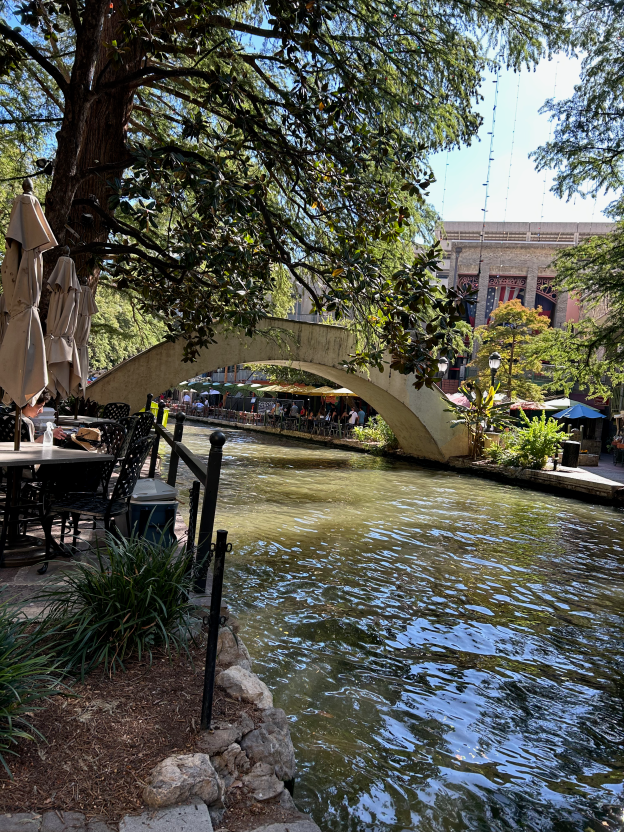

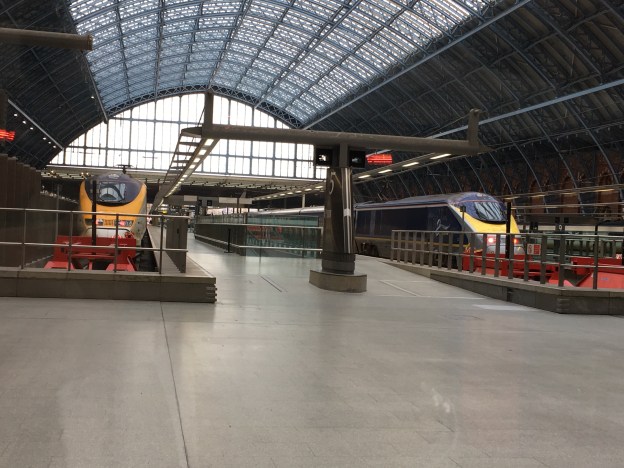

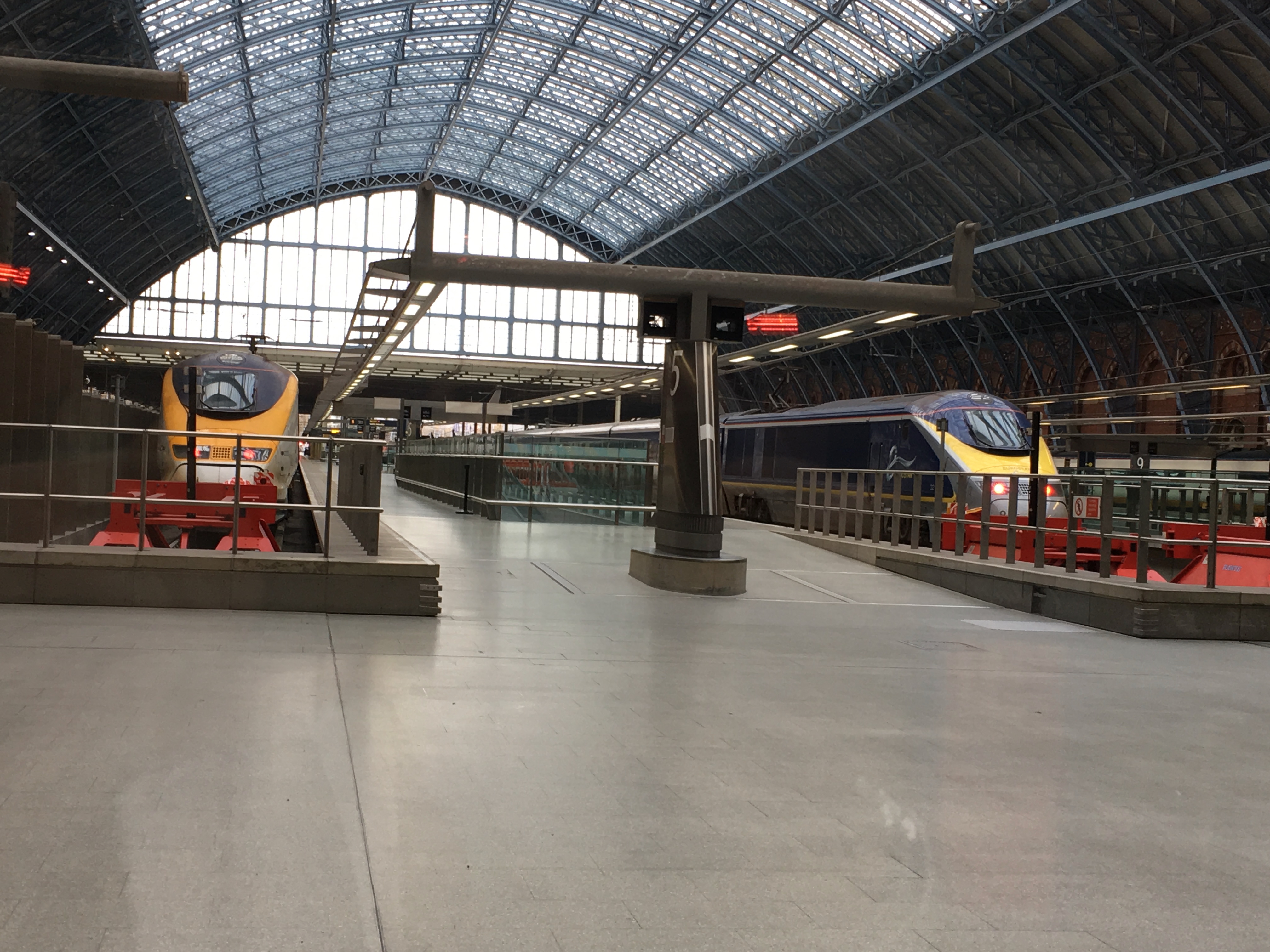
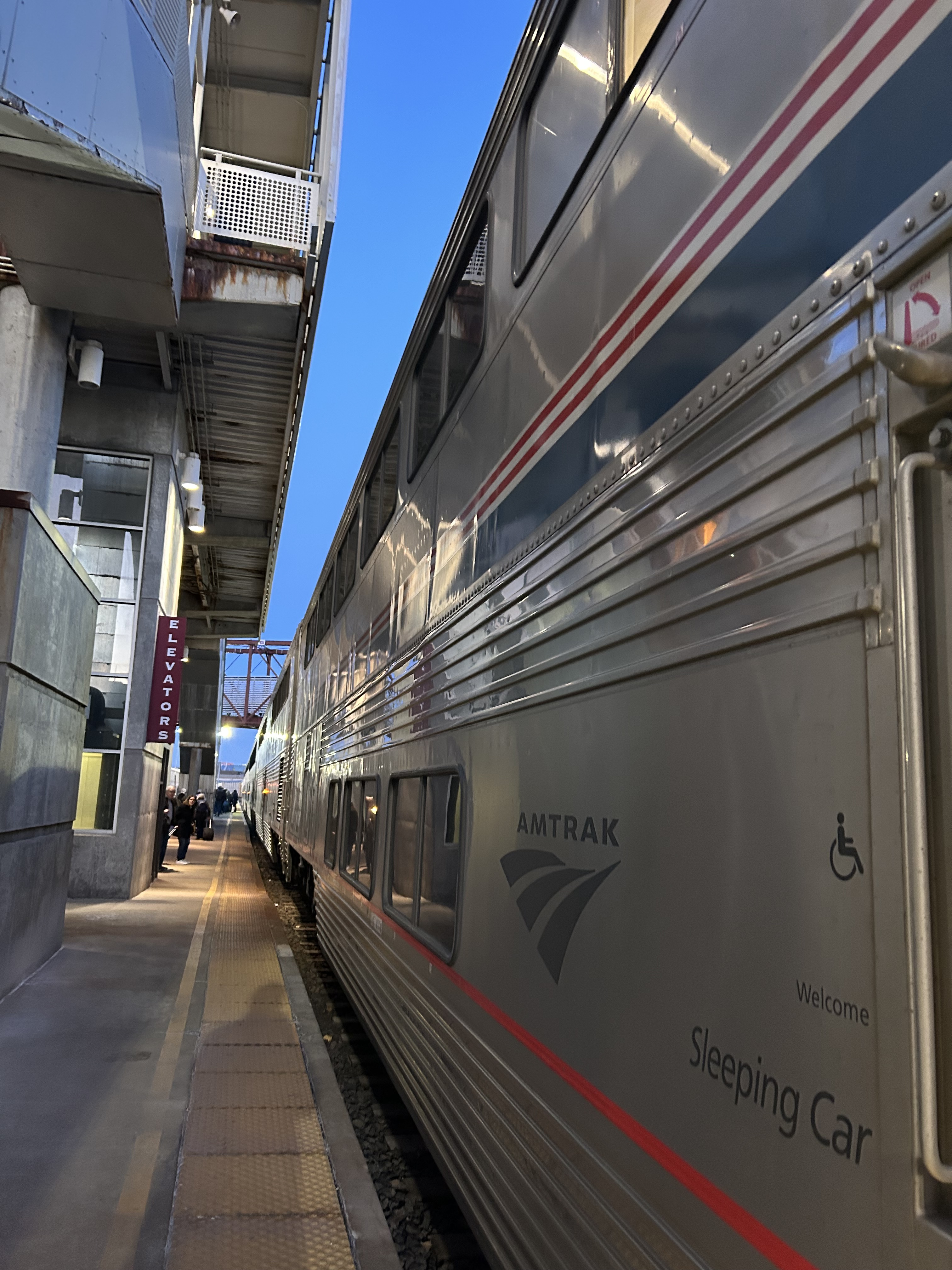
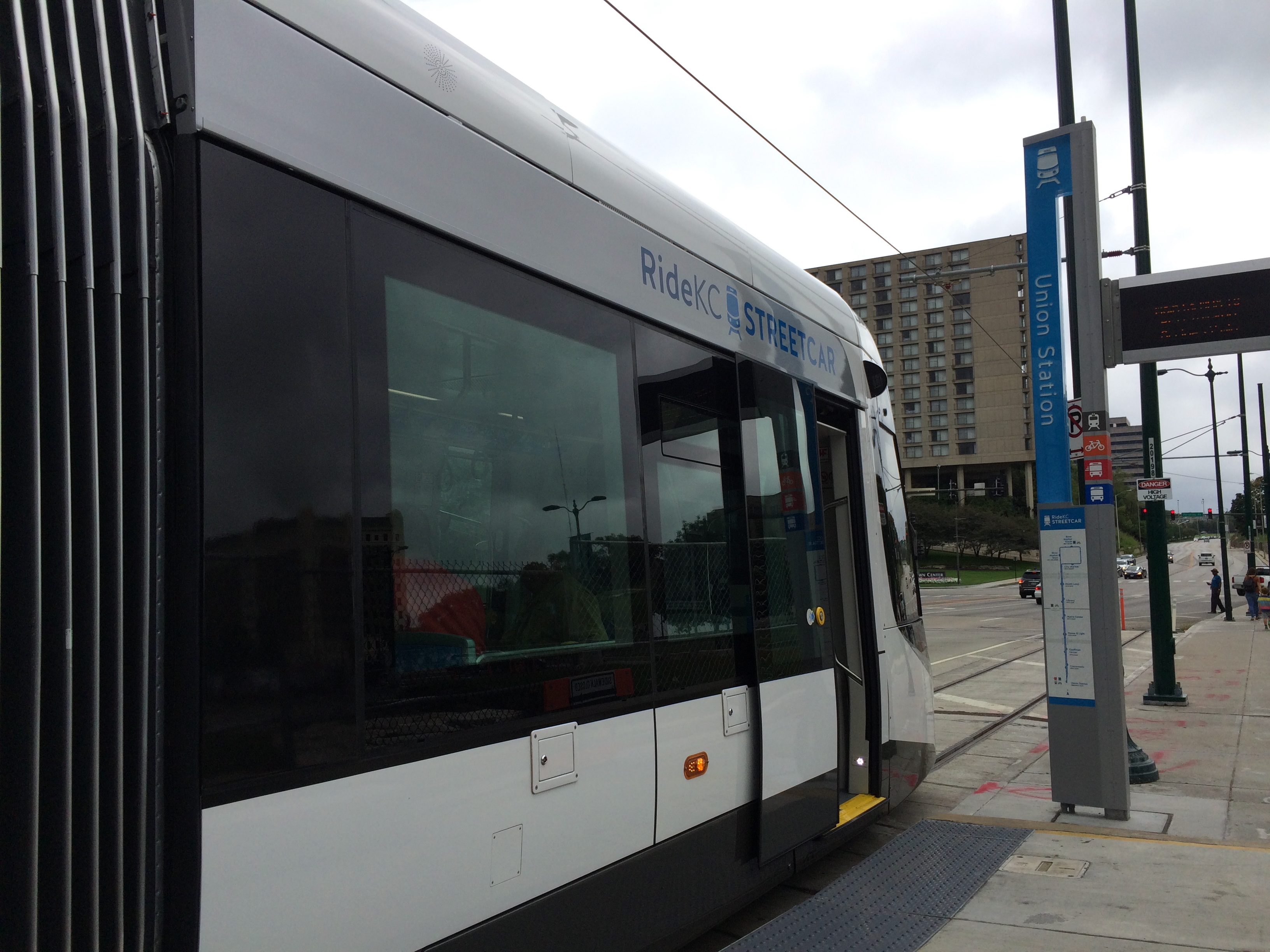

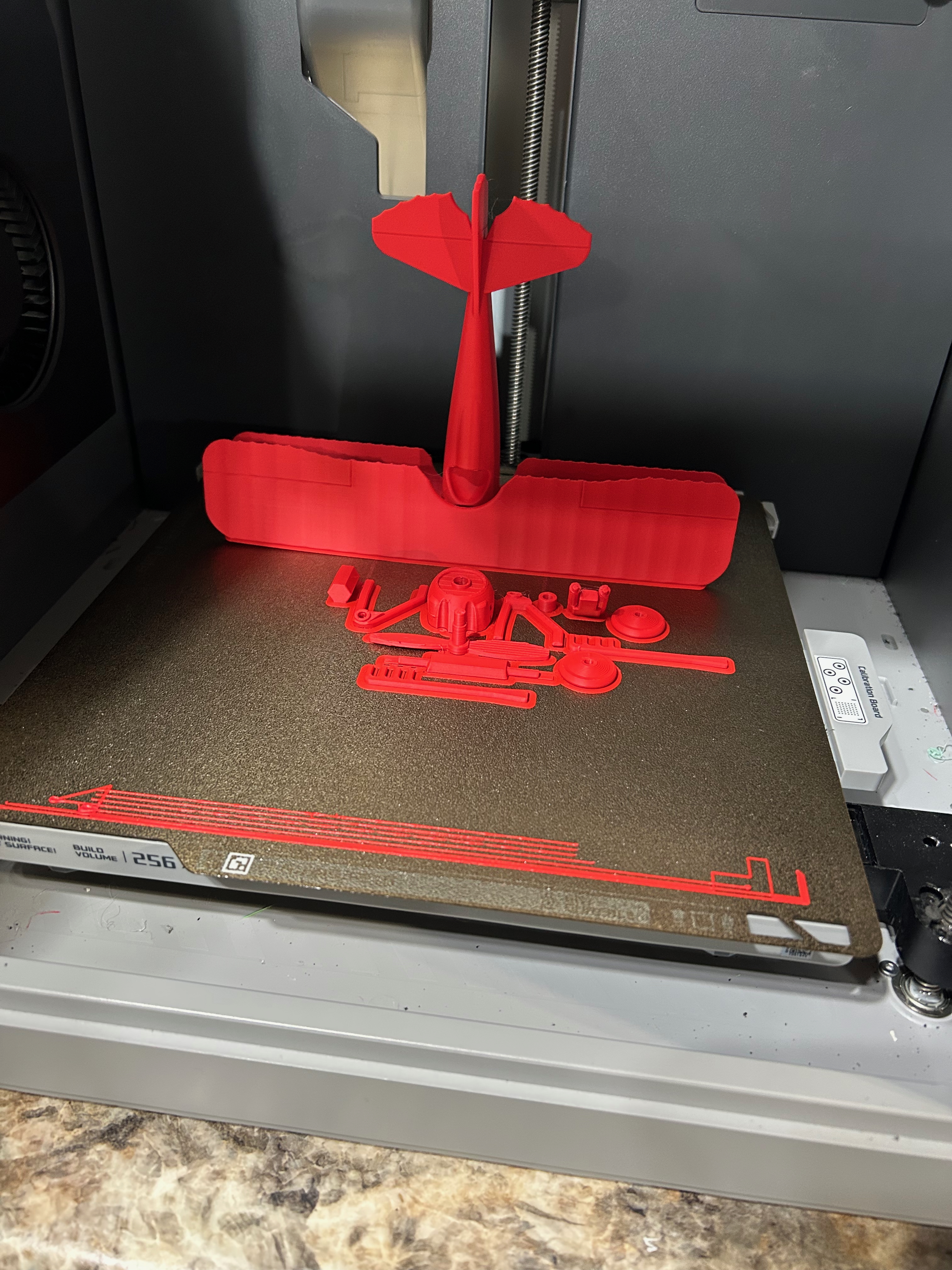
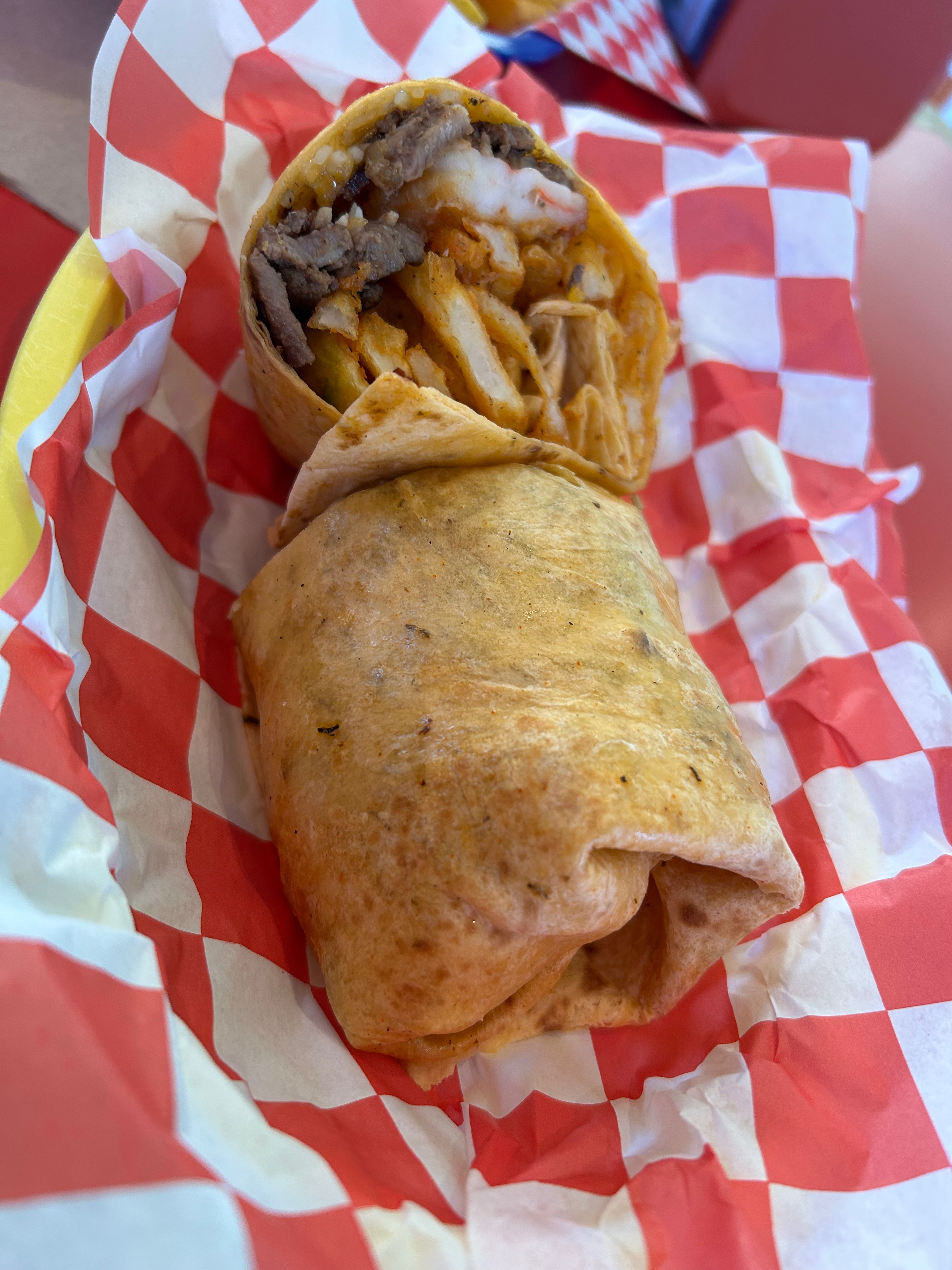
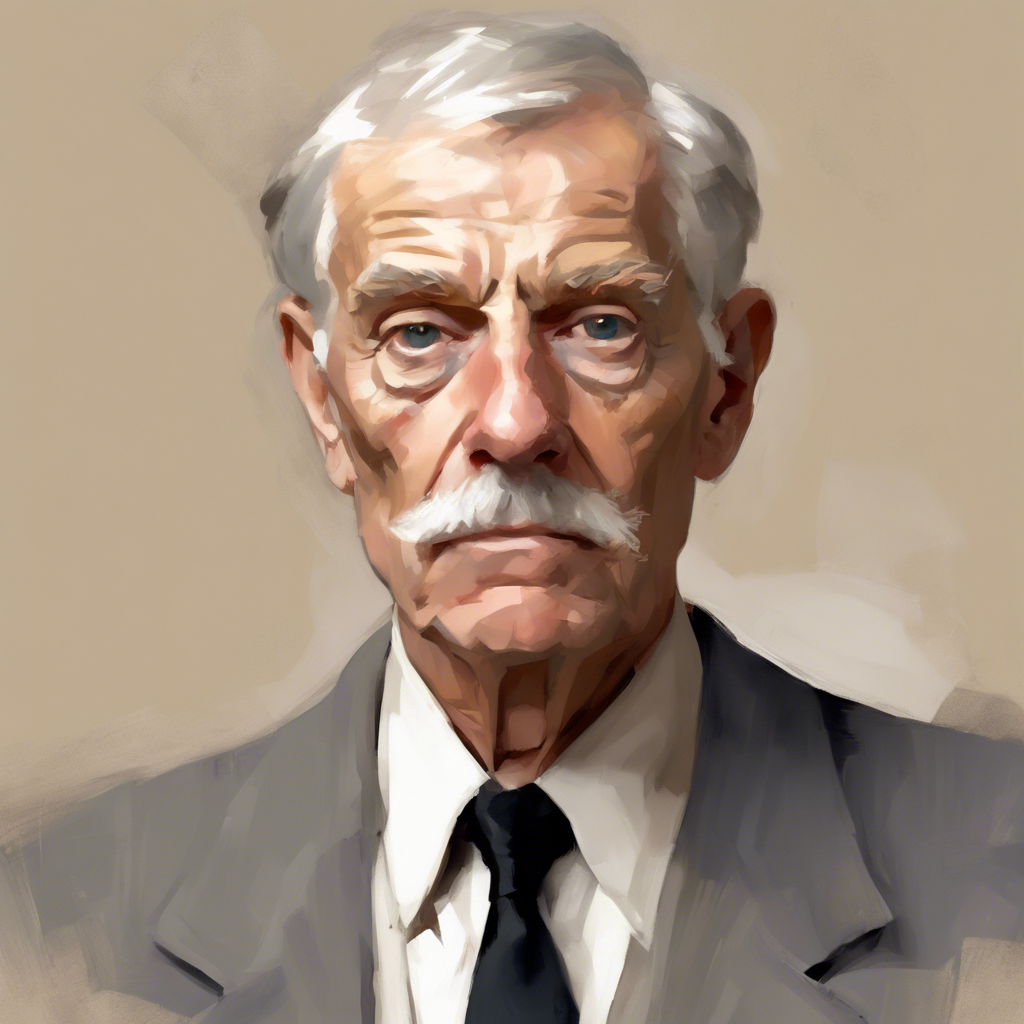
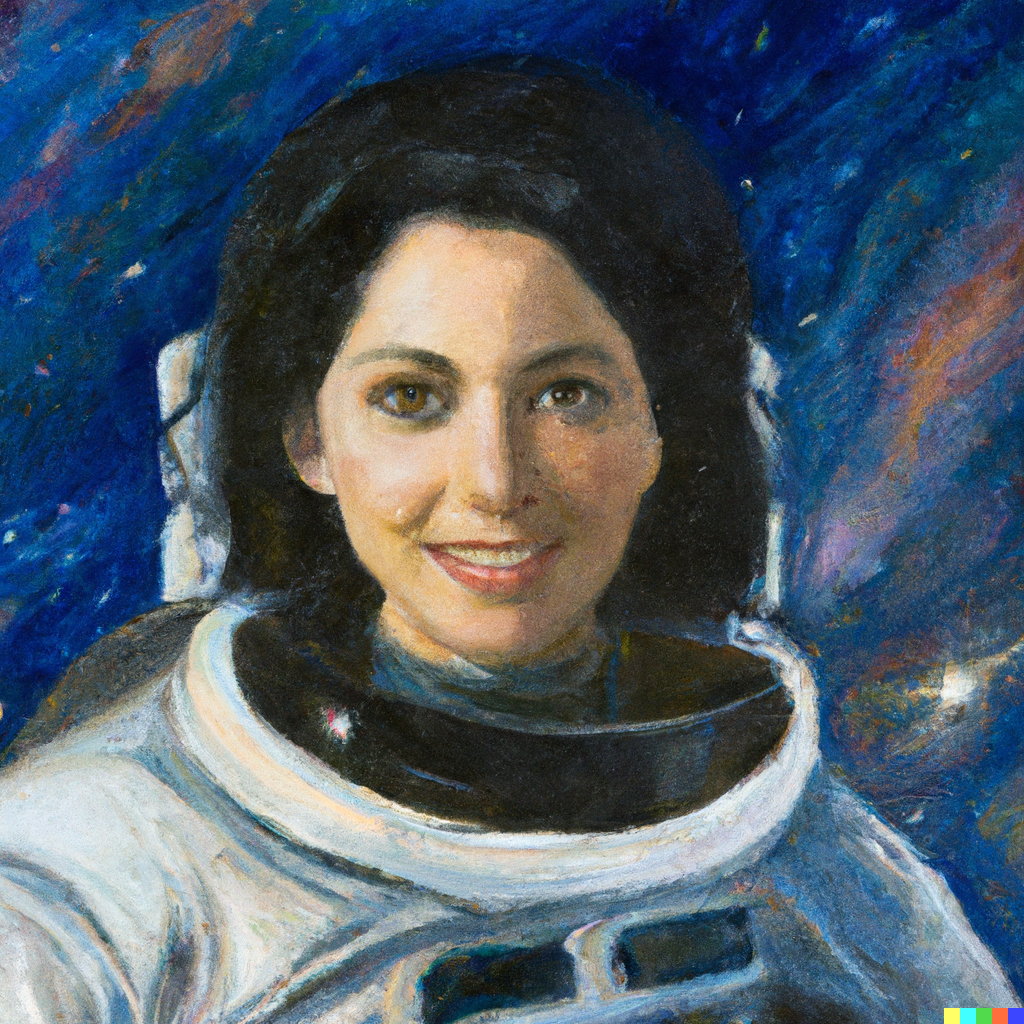
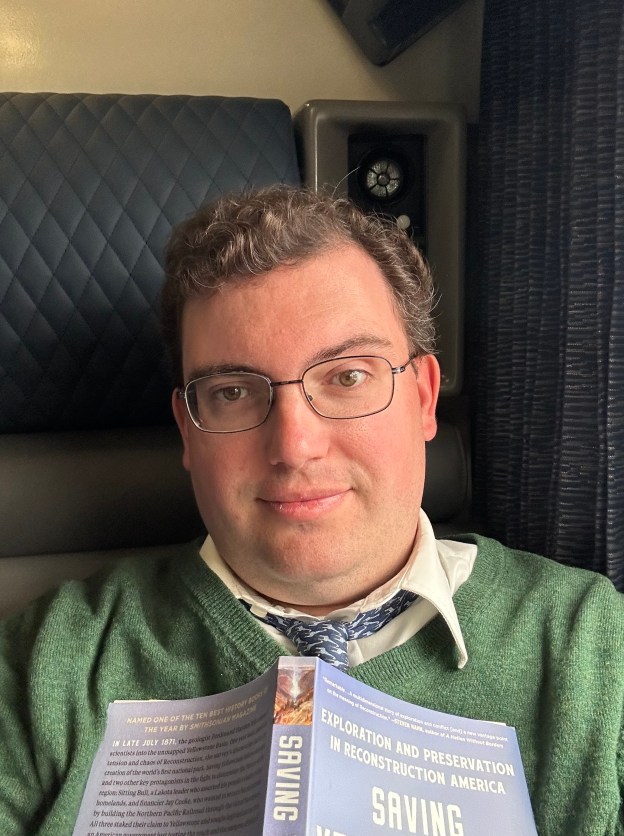
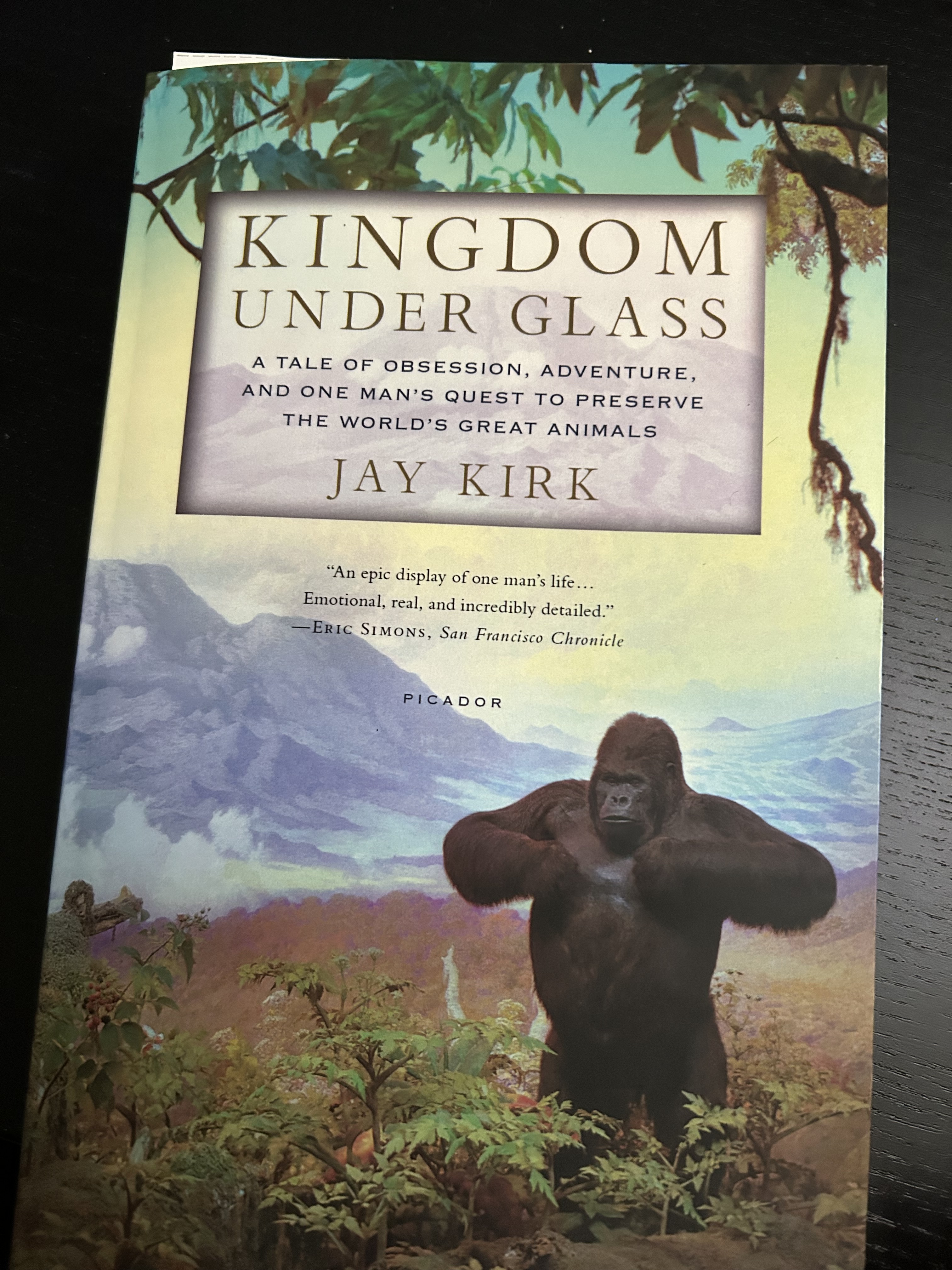

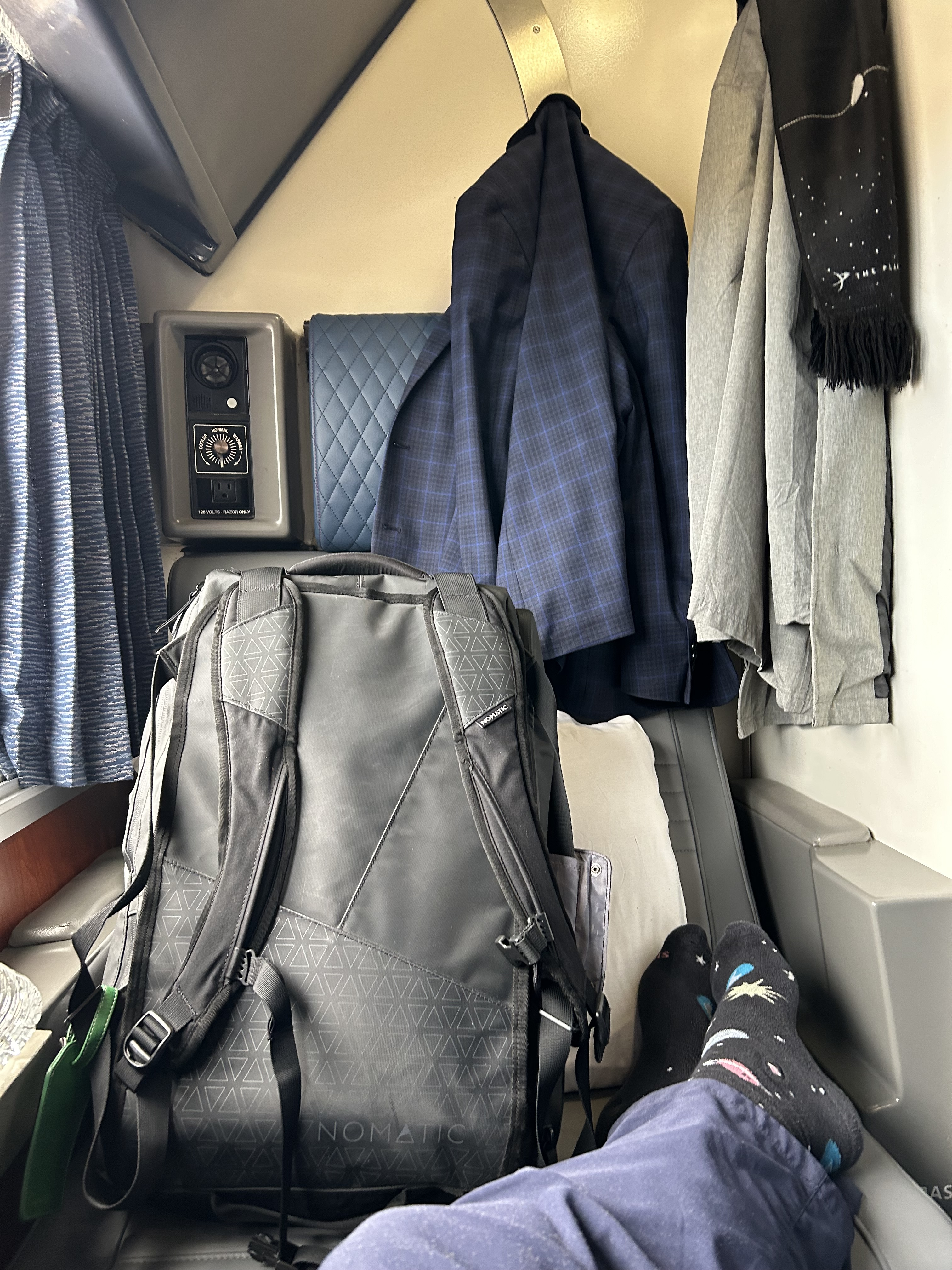
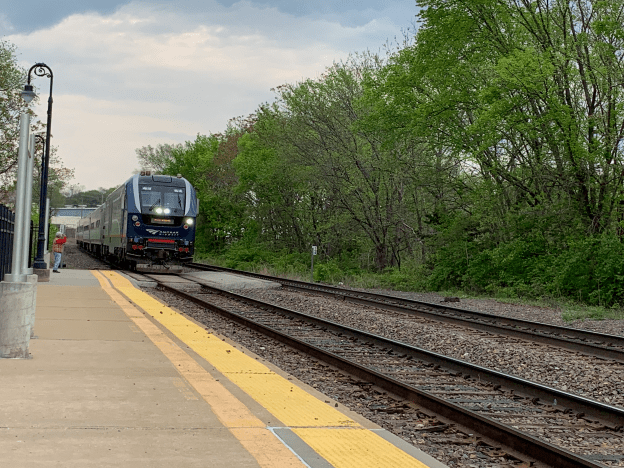
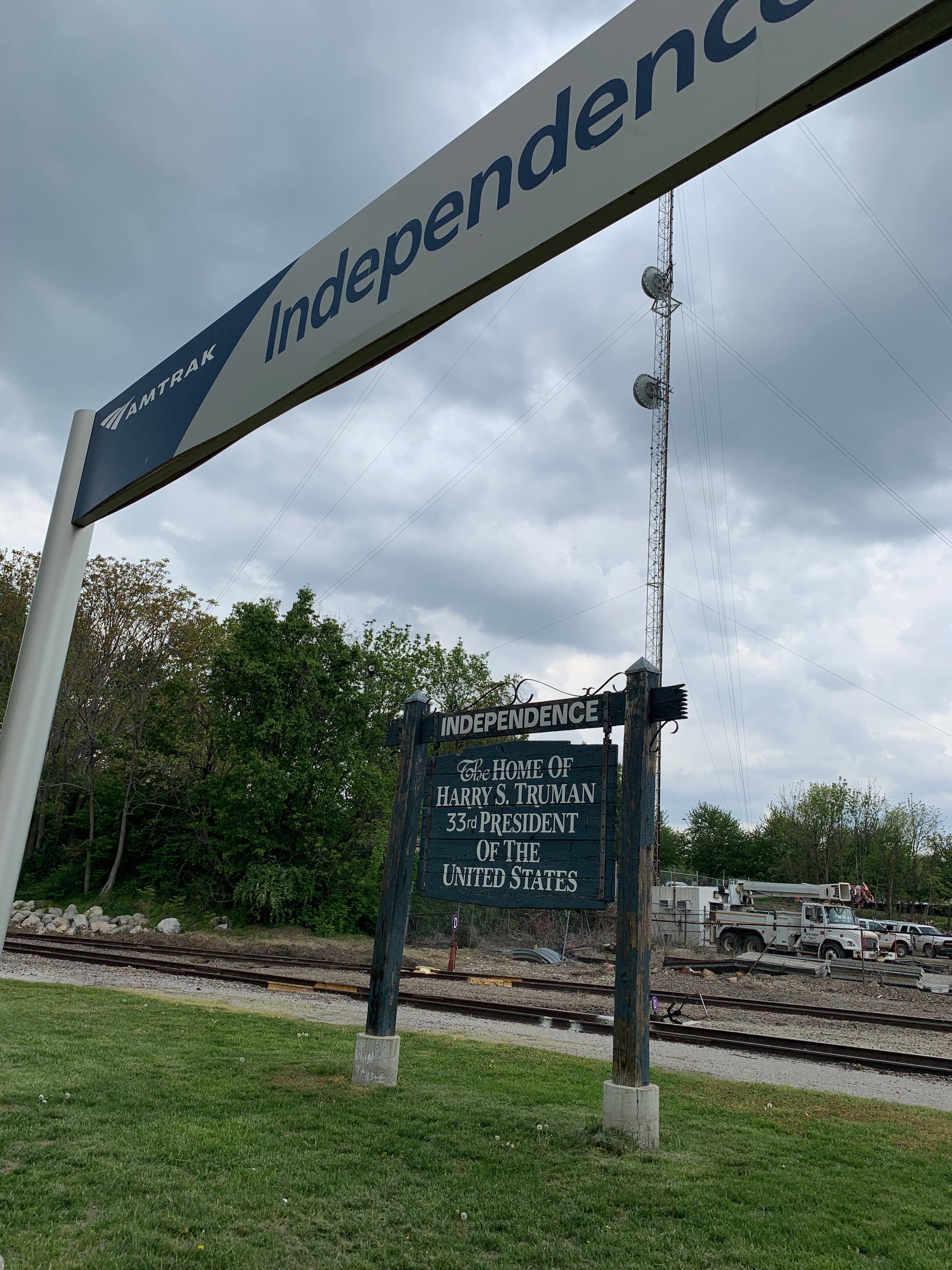
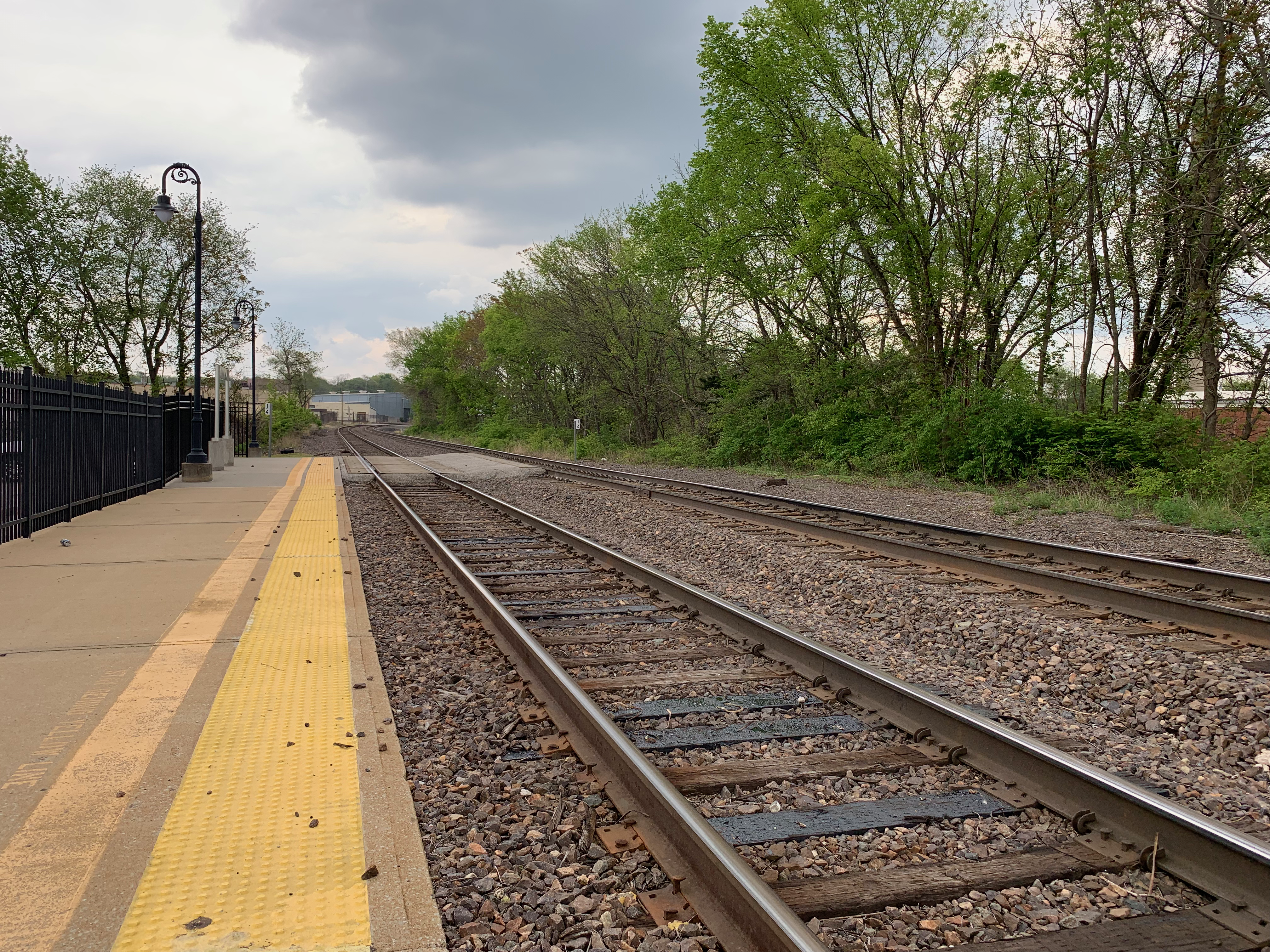
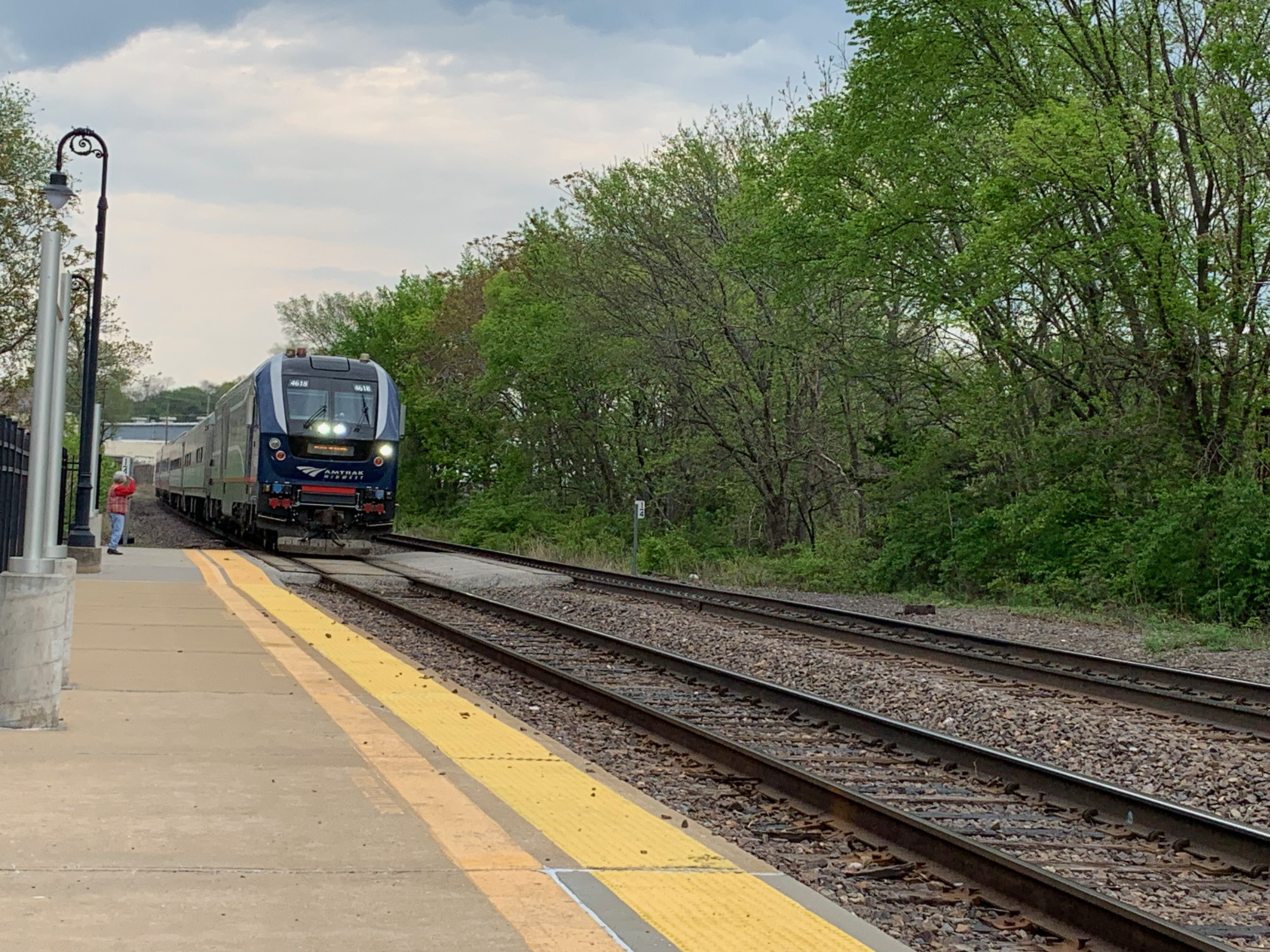
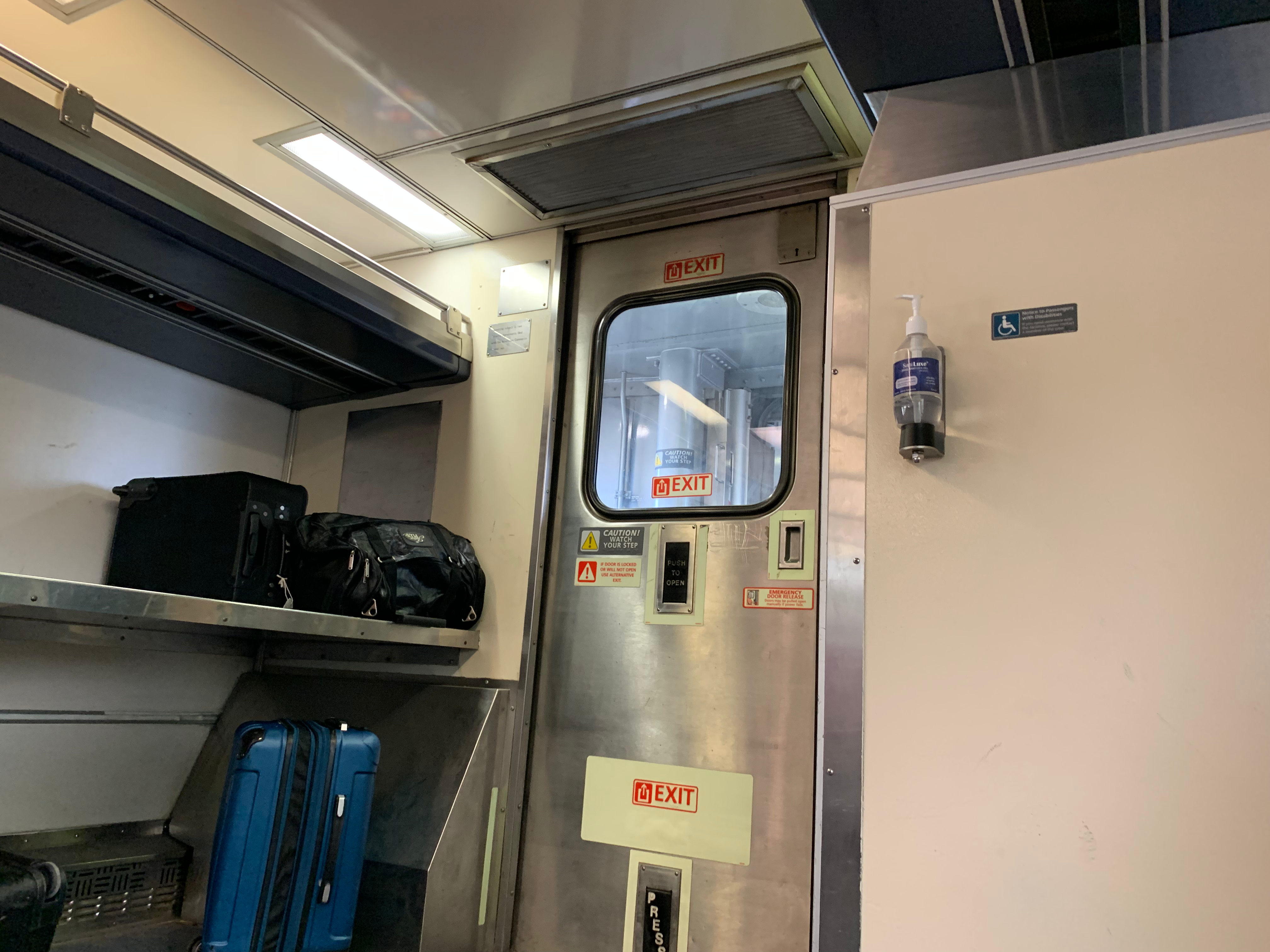
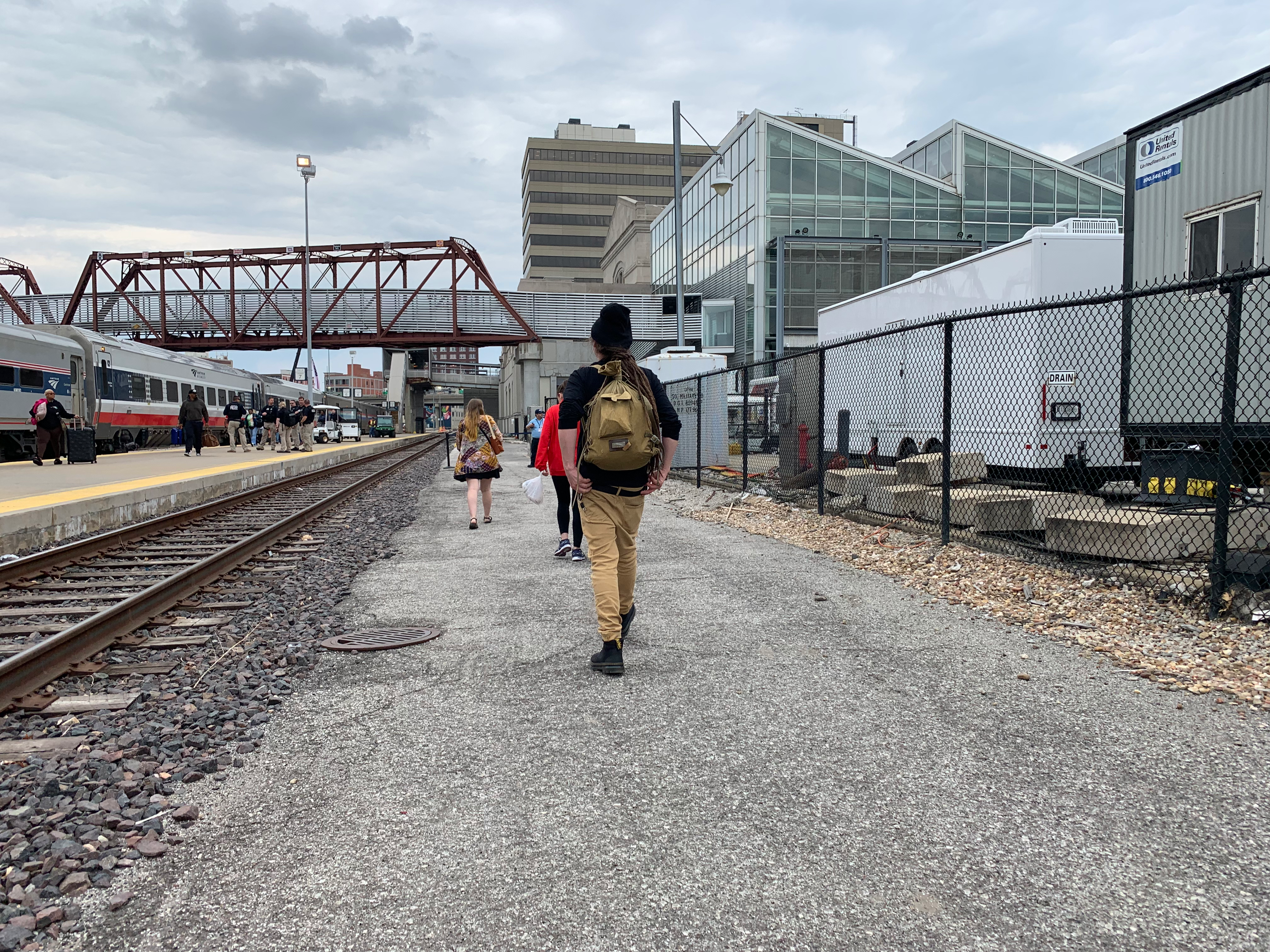
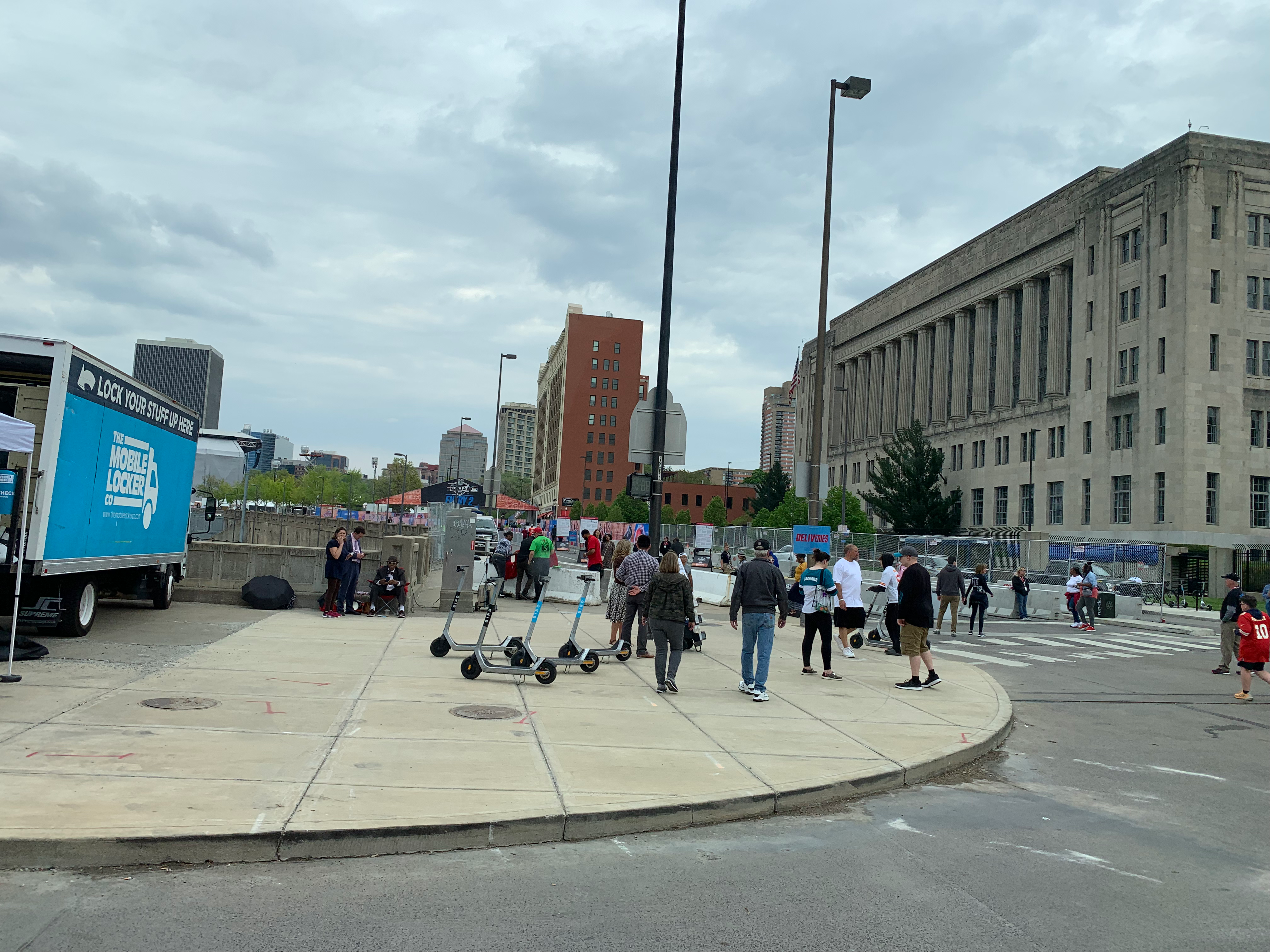
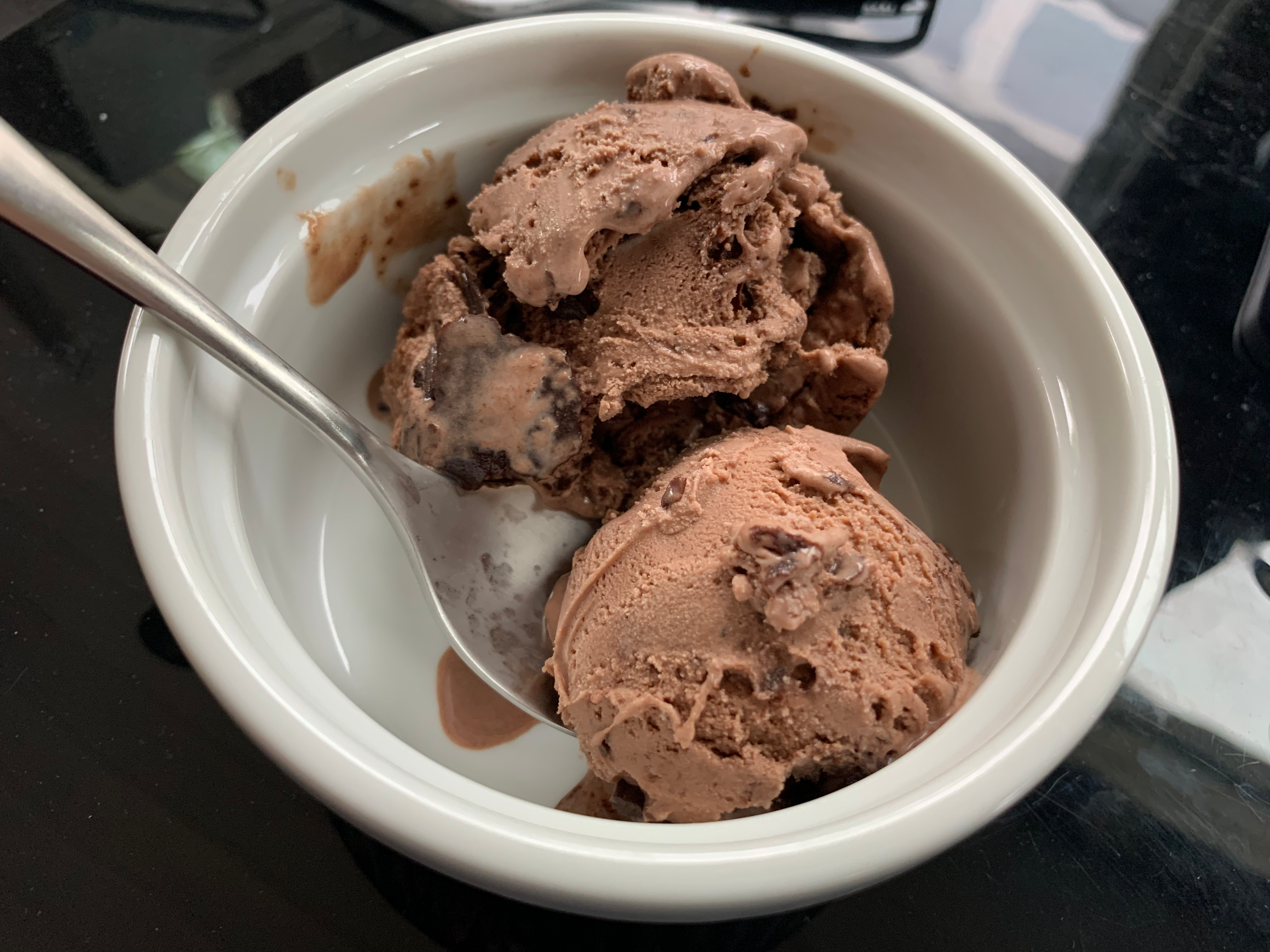

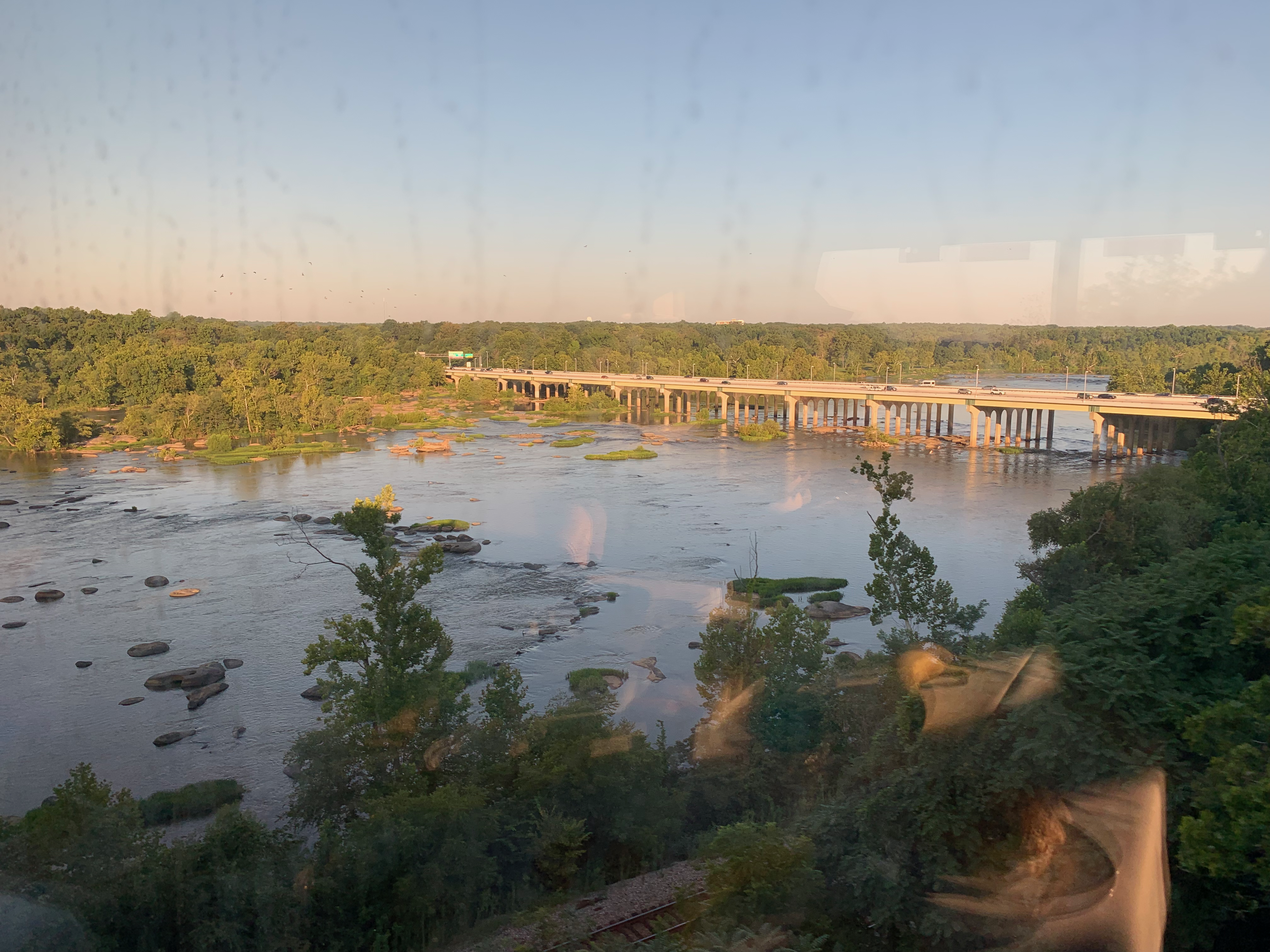
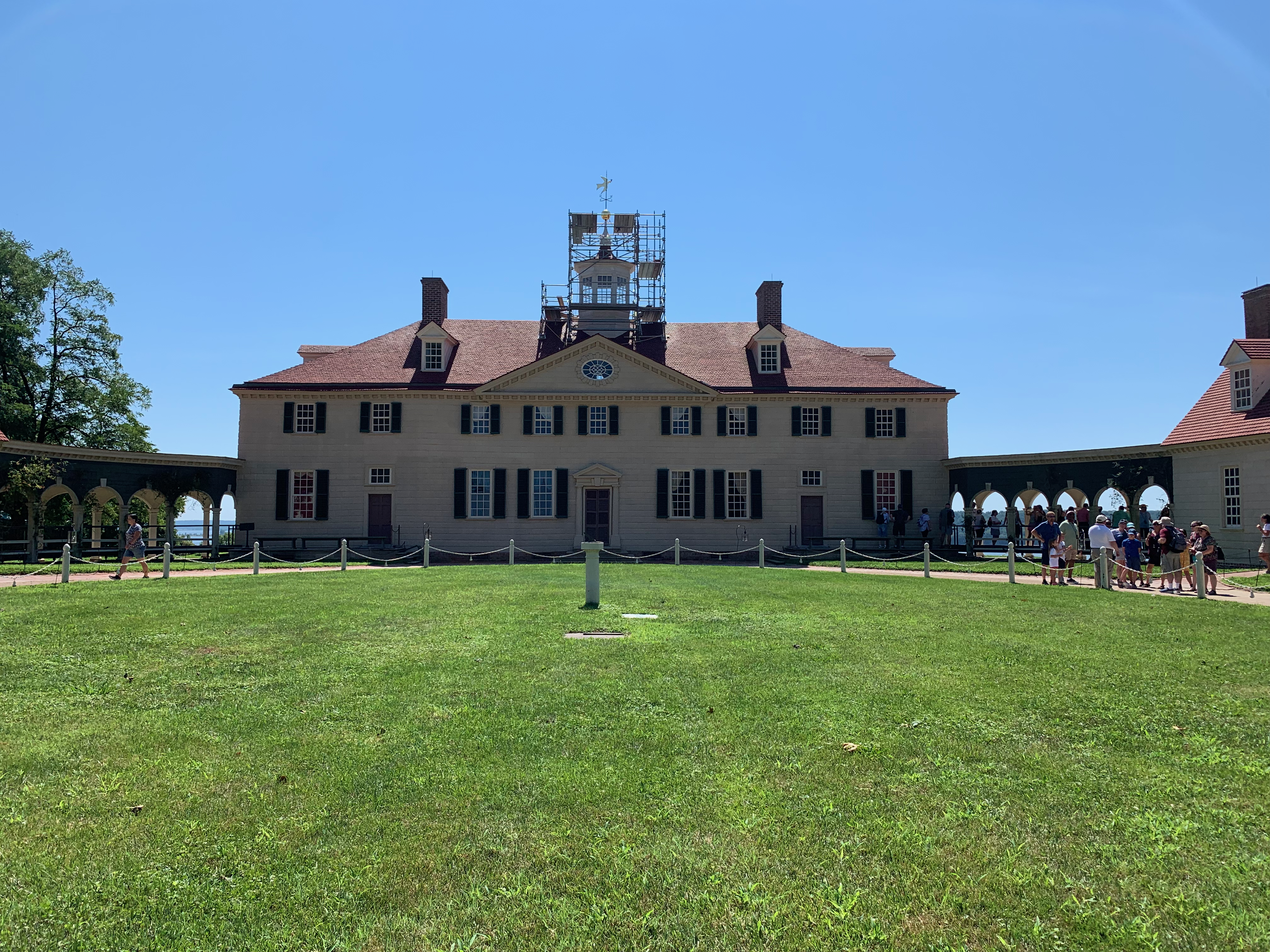
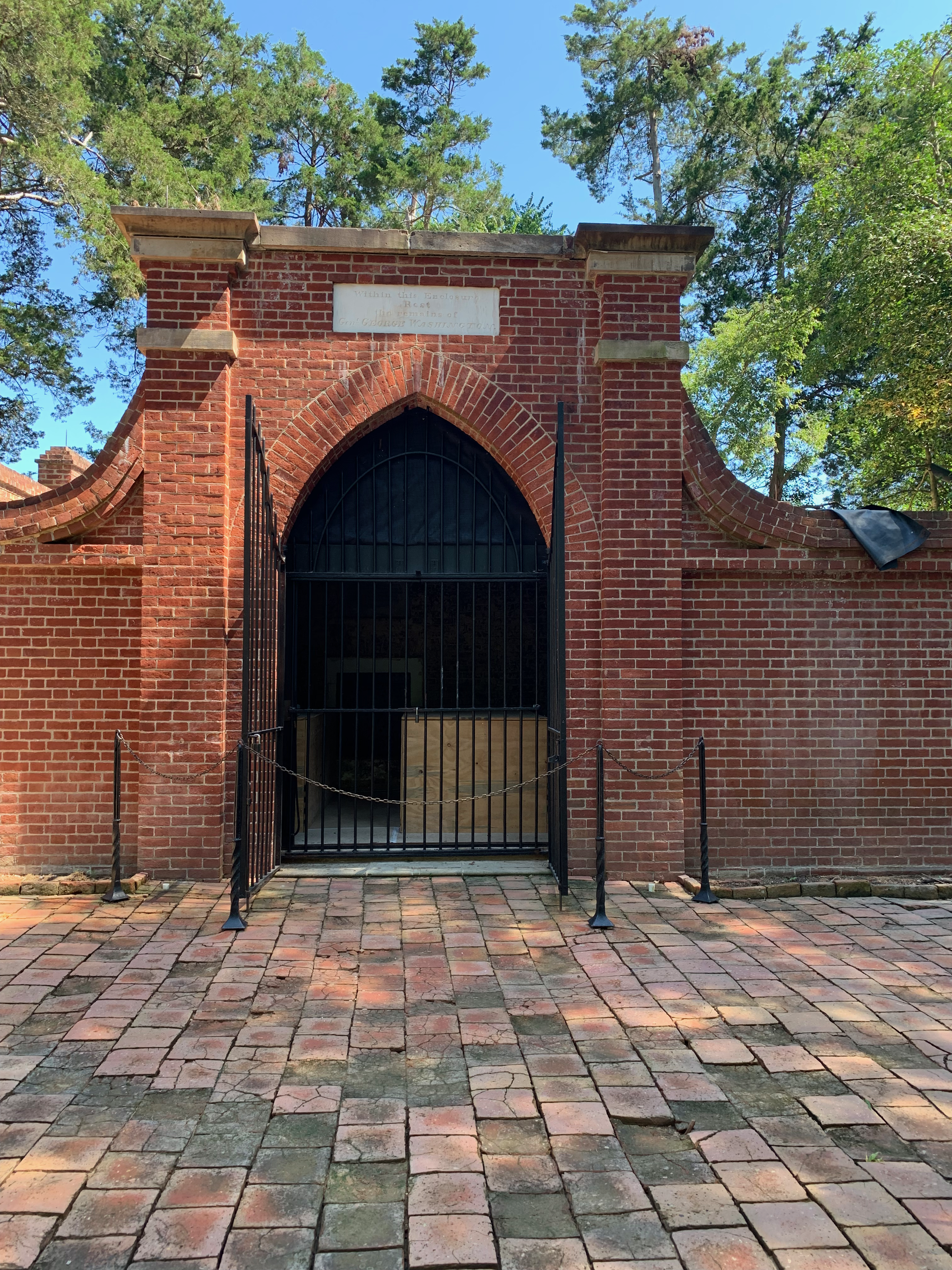
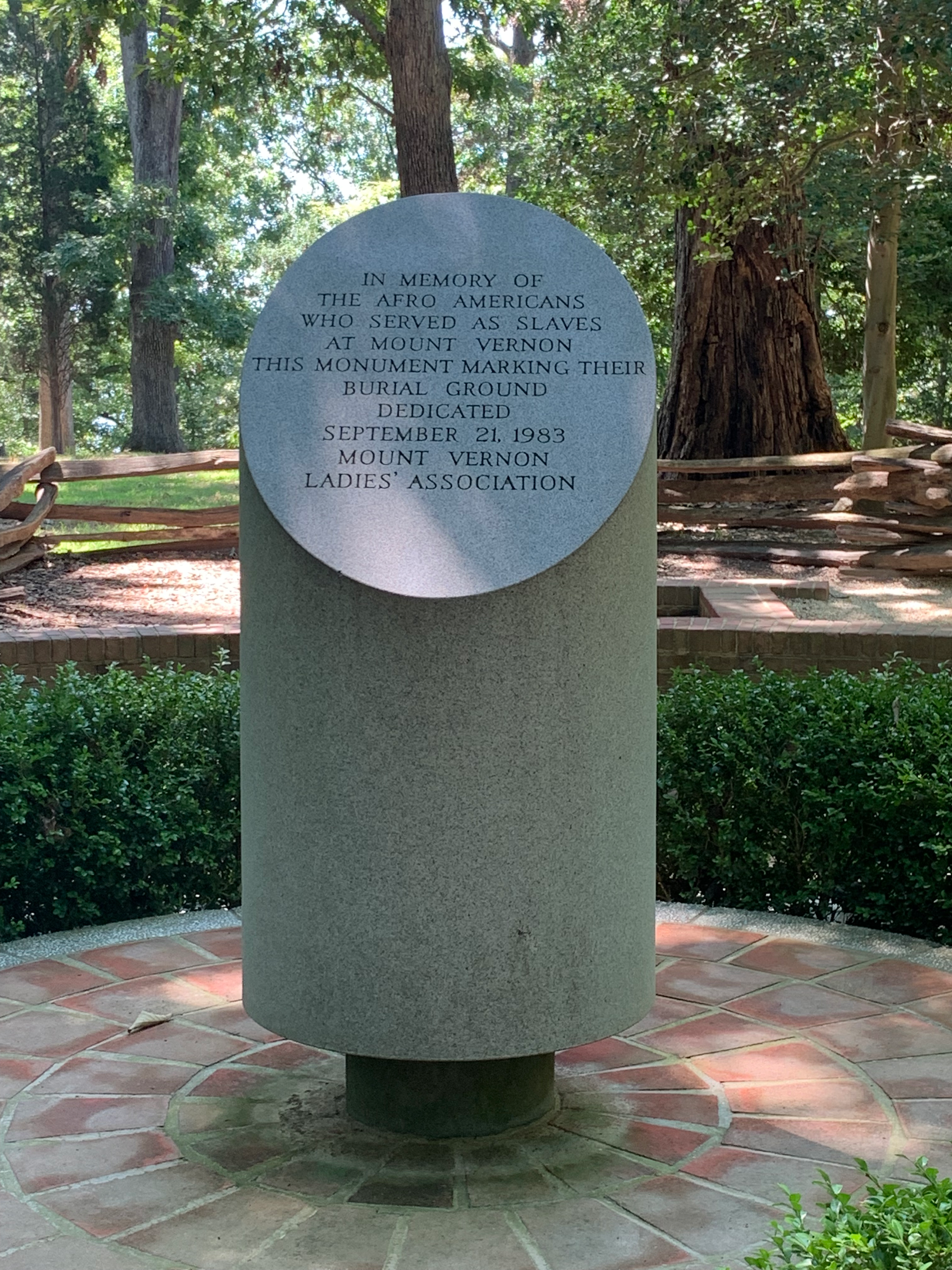
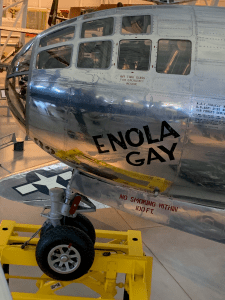
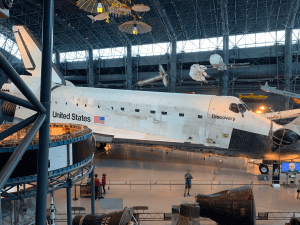
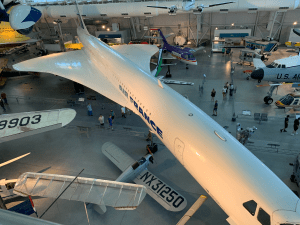
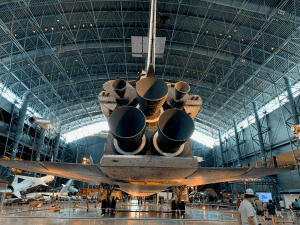
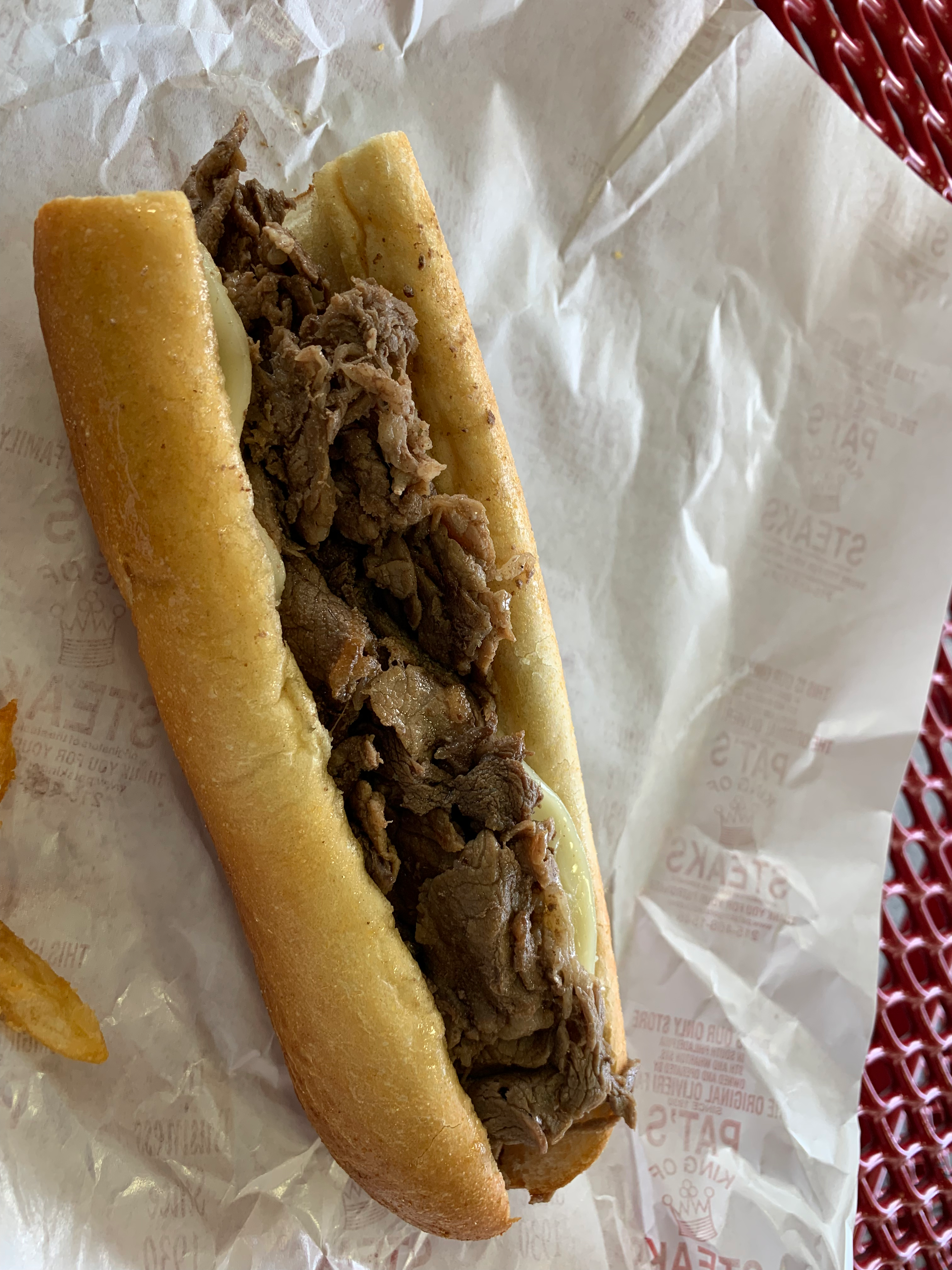
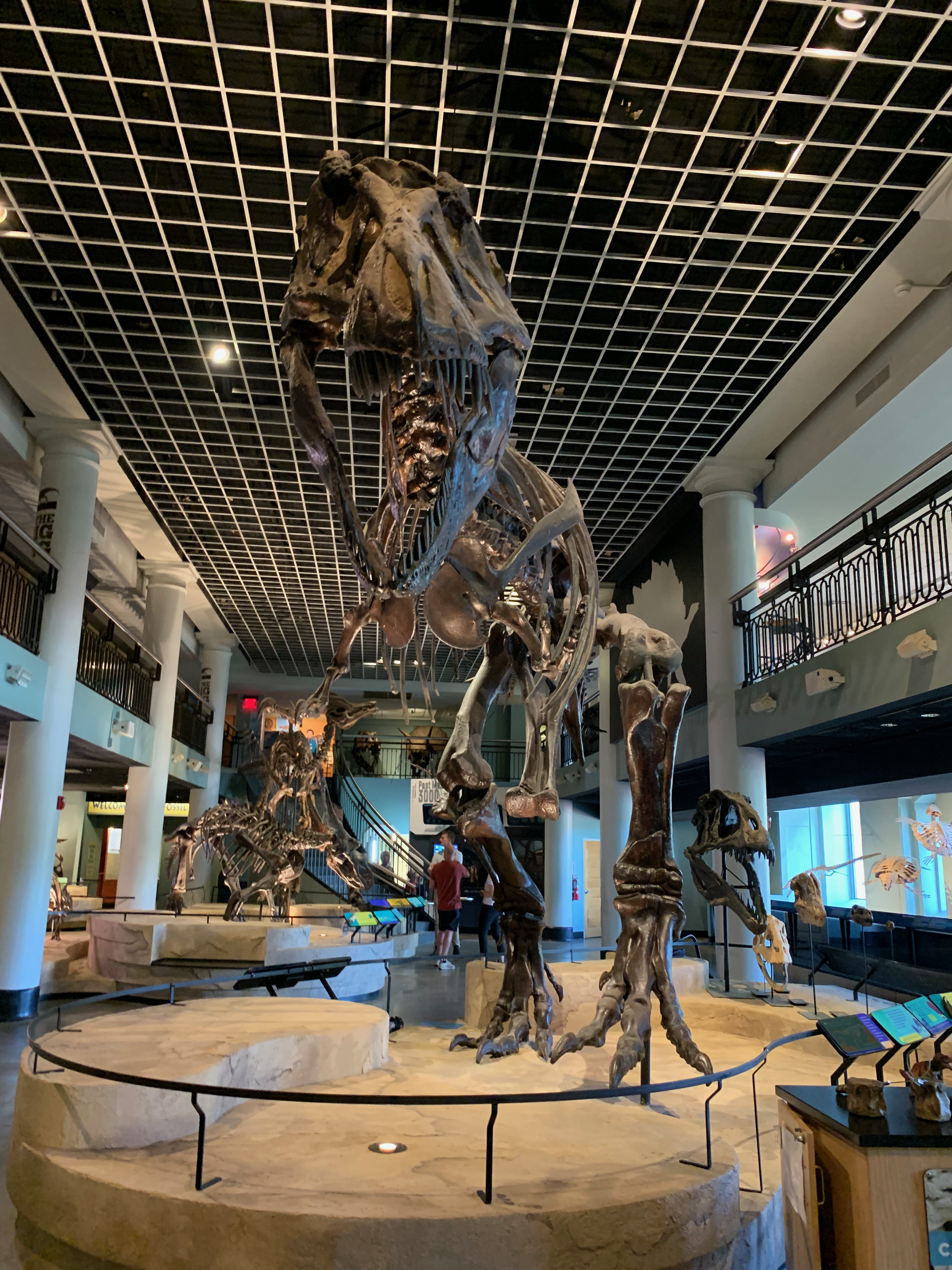
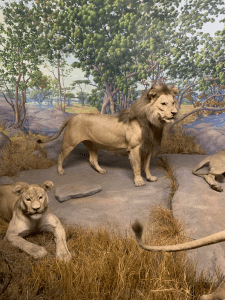
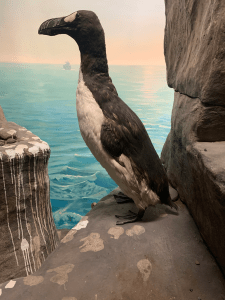
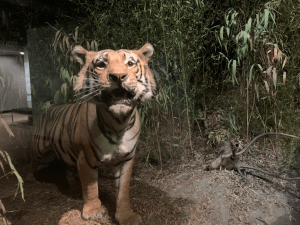
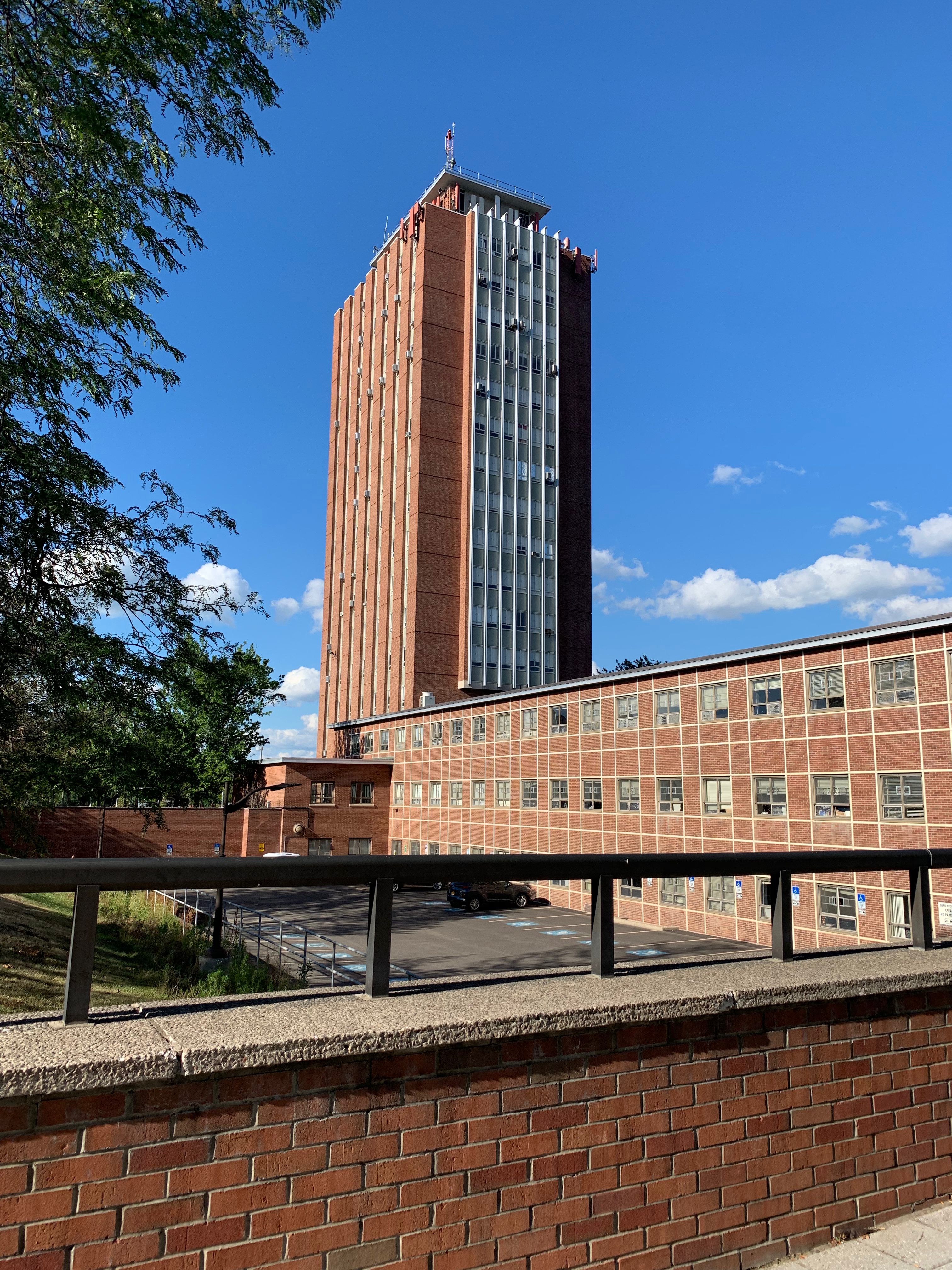
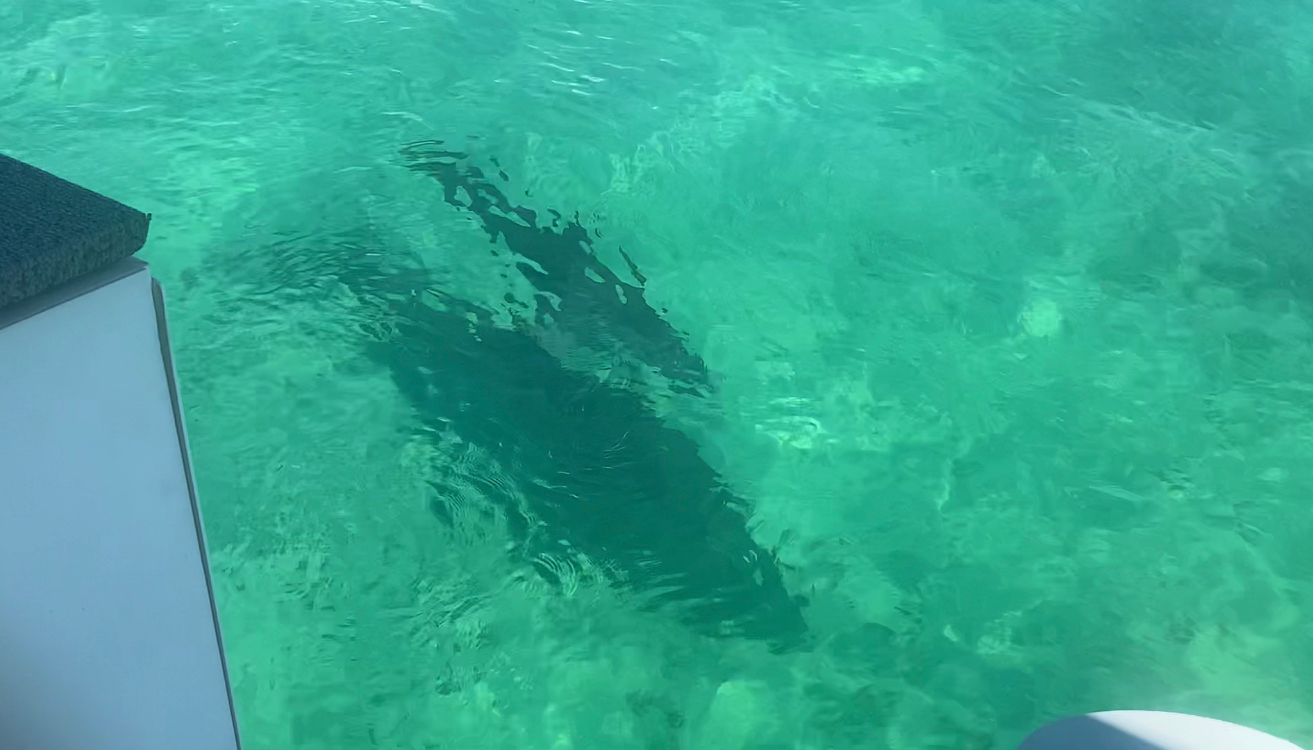
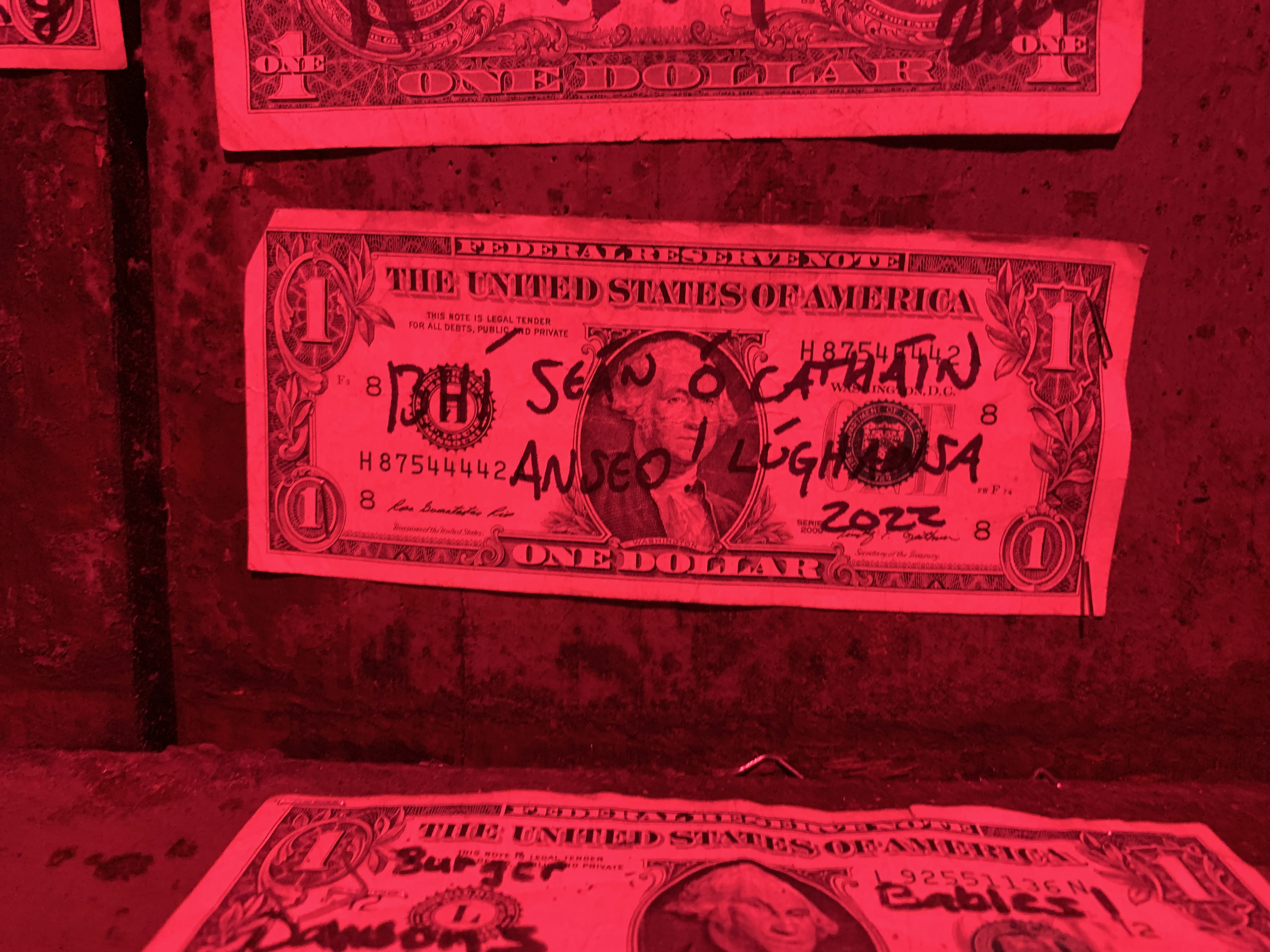
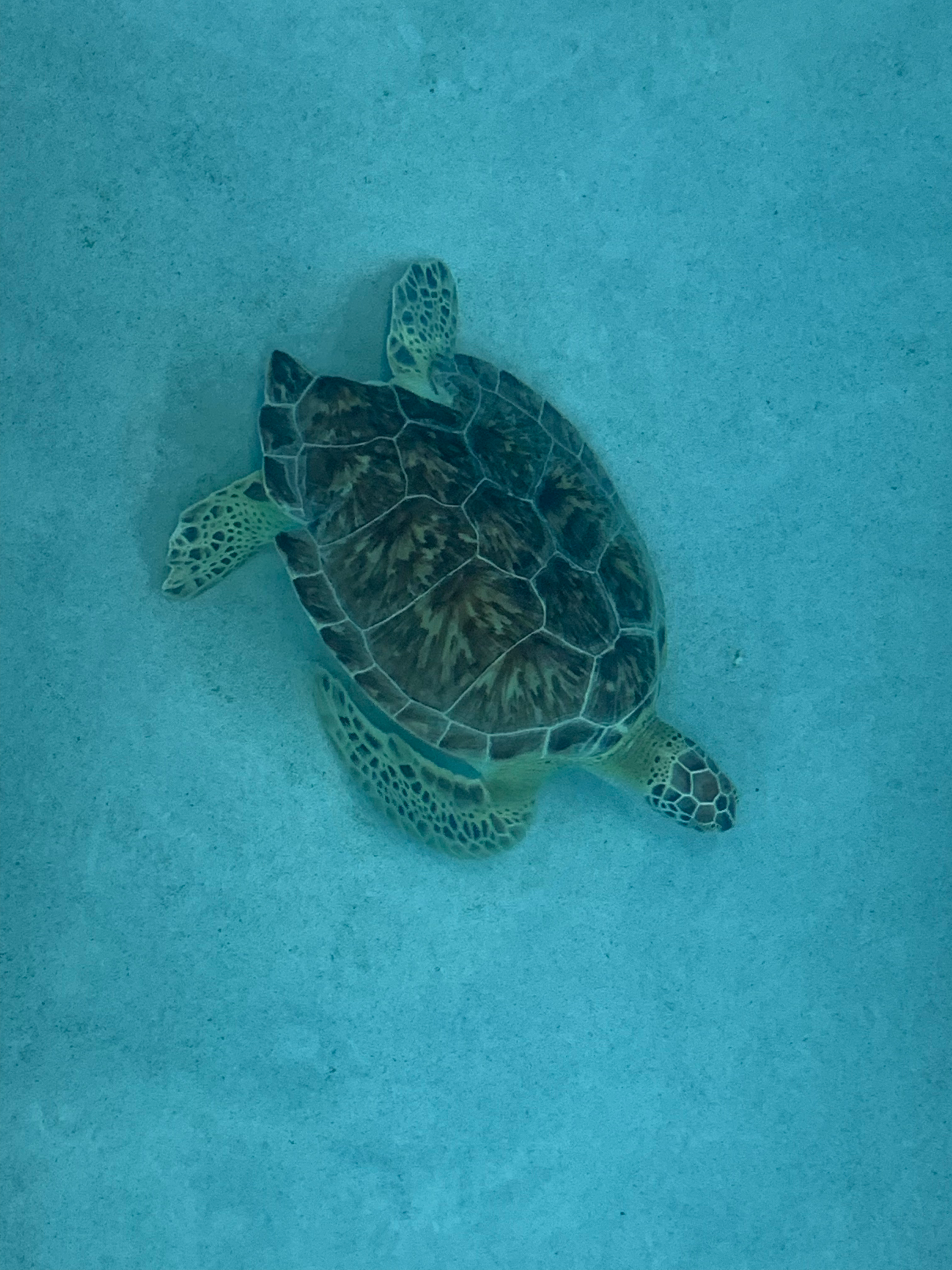

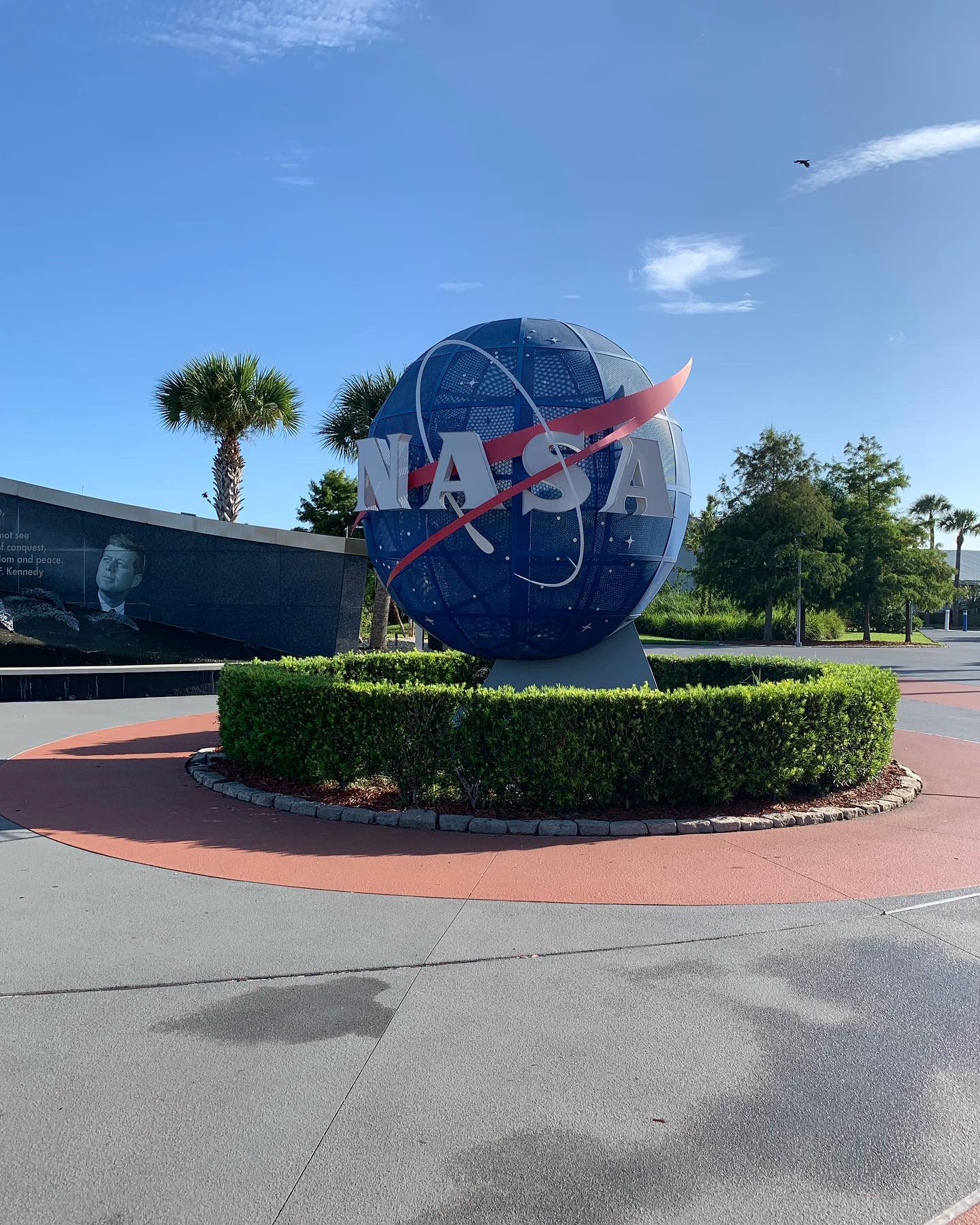

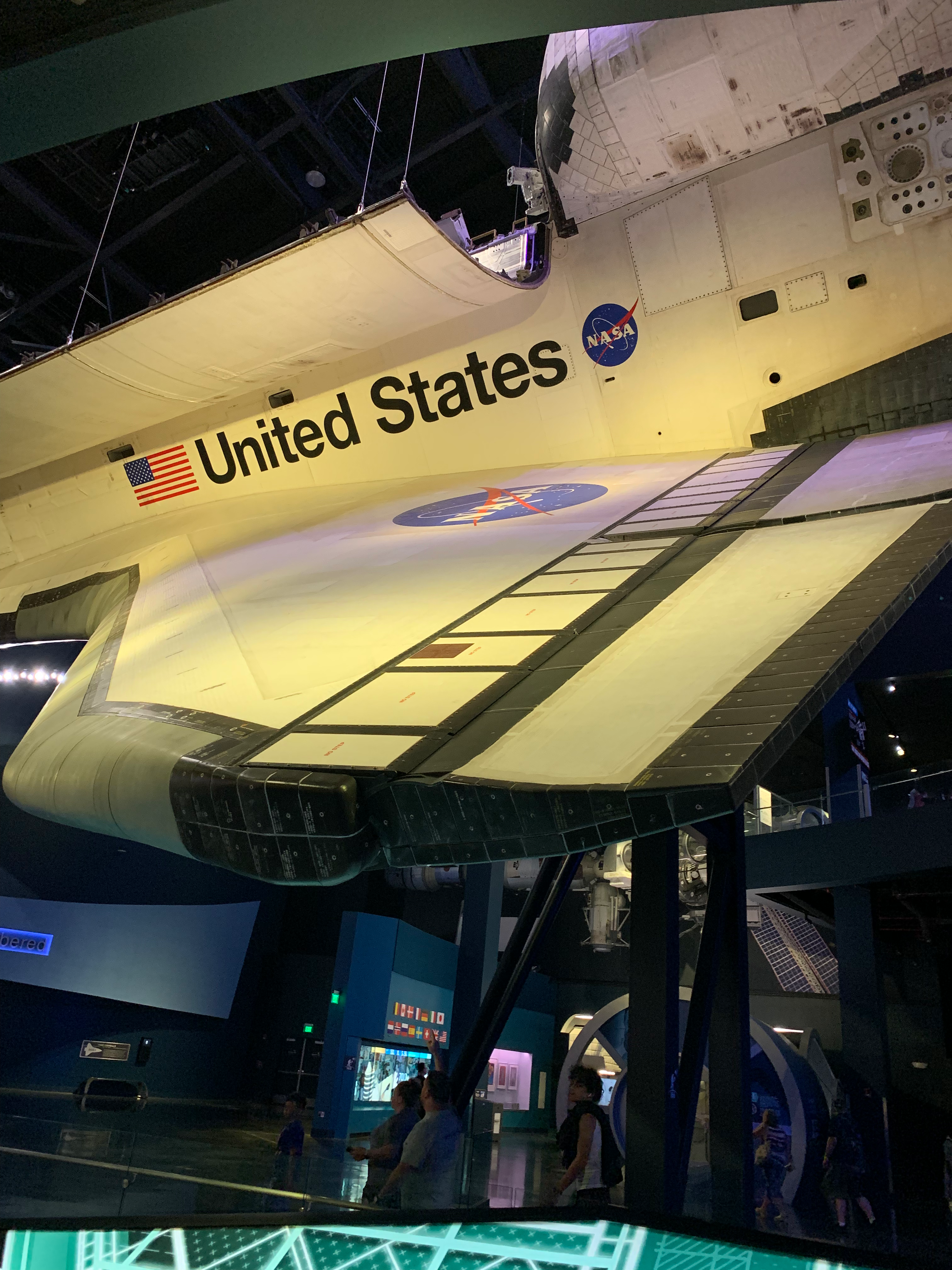
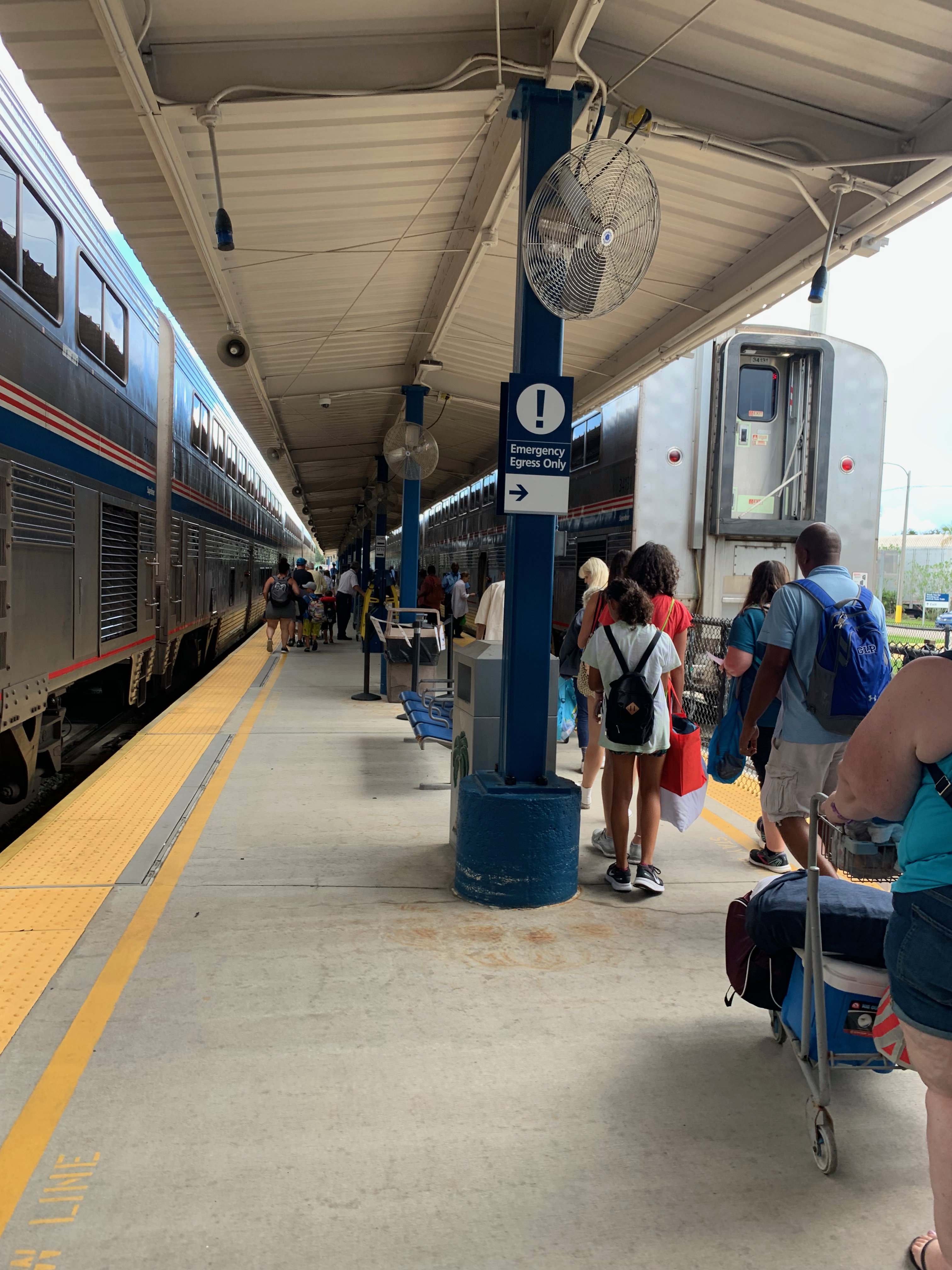
 Wednesday Blog by Seán Thomas Kane