This week, a few words about the trip I just completed to London and Paris.
—
Click here to support the Wednesday Blog: https://www.patreon.com/sthosdkane
This week, a few words about the trip I just completed to London and Paris.
If there’s anywhere in Europe, I’ve visited more than anywhere else it’s London and Paris.
When I was eight my Mom took me on a two week tour of those two cities which I found to be life changing for how they opened my eyes to a far wider world than what I’d previously known. My fascination for European history began on that trip; it’s a fascination that I’ve made into my career. I remember that February she put a “Learn French” cassette tape on while our family was driving through the hills of northwestern Illinois from Chicago to visit relatives at Mount Carmel, the Motherhouse of the Sisters of Charity of the Blessed Virgin Mary in Dubuque. I still think of that evening, watching the sunset over those hills, as the moment when I was first introduced to French, a language that I have come to define a great deal of my brand as a historian, writer, and translator by.
I remember thinking after our return from Paris in June 2001 that before that trip when I thought of what I was most excited about it was the Space Shuttle, dinosaurs, cowboys, and American history. Yet after that trip, while still thrilled by these things they still felt dulled somewhat by a new passion for medieval castles and far older history than what we had in our young republic. What’s funny to me about this is that these same thoughts returned in the days before I left for Europe. While normally Memorial Day wouldn’t have as much of an impact upon me, I think it’s pairing this year with the 80th anniversary of D-Day left me far more profoundly moved with pride in our republic, and what our people have accomplished across these generations. I returned to Europe then in much the same mindset that I had when I first visited London and Paris 23 years before, albeit with those 23 years of experience framing my thoughts.
London remains a home-away-from-home for me, having lived there for a time. Some of the optimism I remember feeling in that city in 2015 and early 2016 seemed to be renewed, if slightly, by the prospect of the upcoming General Election which will likely see a change in the governing party for the first time since 2010. I arrived there not entirely wanting to cross the Atlantic on June 6th. I always feel a hint of fear when I travel, especially overseas; this has been magnified since the pandemic when international borders were closed and for years afterward travel remained severely limited. The thought of being stranded somewhere away from my family leaves me shuddering, and has given me more pause when considering travel since 2020. Still, the flights, trains, lodgings, and some museum visits booked, I left home on the morning of June 6th and flew west to San Francisco, where I caught my transatlantic flight on United to Heathrow.
Why go west to go east? I tend to use my miles to fly international, and it was 30,000 miles cheaper to fly through San Francisco than my usual connections in Chicago, Newark, or Washington, or even through Toronto on Air Canada. Like last time, I felt a renewed sense of welcome when I arrived in London, and throughout my stay with friends in the Home Counties, I knew that this remained a place where I could build myself a home if the opportunity or need arose. One key difference from my last trip in October was that I was less concerned with visiting every single place I wanted to see from my time living there. I didn’t feel that desperation or passion to see and do everything that I’ve long known. Rather, I was content to be there again, and to enjoy what I was able to see and do. I prioritized seeing special exhibits at the museums alongside the permanent collections and was thrilled to visit the Tropical Modernism Architecture and Independence exhibit at the V&A, an exhibit on birds at the Natural History Museum, and two exhibits at the British Museum.
The first of the British Museum exhibitions spoke to the initial field of study I wanted to pursue after finishing my MA in International Relations and Democratic Politics at the University of Westminster. It followed the life of a Roman legionary during the reign of Trajan, and provided a full introduction to the legions and auxiliaries of the Roman Army during the height of the Empire. In 2016, when I chose to return to History from Political Science, I wanted to study the expansion of Roman citizenship to provincial subjects either after the Social War during the late Republic or during the reign of Caracalla when in 212 CE the emperor extended citizenship to all free men in the Roman Empire. That initial interest eventually led me to where I am today studying the natural history of the Americas in the Renaissance, by admittedly a circuitous route. The second British Museum exhibition was closer to what I study today in its chronology as it covers the life and works of Michelangelo Buonarroti (1475–1564). It was inspiring to see his own self-portrait gazing out at us visitors, and to see his letters and sonnets in his own hand on paper there in the exhibit gallery.
After a weekend in London, I traveled south to Paris for a conference on collecting in early modernity that was held at the École des Hautes Études en Sciences Sociales (the School for Advanced Studies in the Social Sciences) in their building on Boulevard Raspail in the 6th Arrondissement. The building in question is important in the historical profession as it is where the French Annales school has been based since 1947, the Annalistes being quite influential in introducing new methods and theories of studying history to the profession globally in the postwar years. There, I presented my research into the provenance of two Tupinambá ritual artifacts today housed in the Musée du Quai Branly, also in Paris, which were likely brought to France by André Thevet in 1556 as gifts from the Tupinambá leader Quoniambec (d. 1555).
I’d intended to use the majority of my time in Paris to work in the various departments of the Bibliothèque nationale de France and Archives nationales to look at some sources I didn’t have online access to, but instead in the months leading up to the trip I was able to find and request several of these documents be emailed to me, while others were restricted due to their poor physical condition. As a result, I only viewed one document, Thevet’s 1553 French translation of the Travels of Benjamin of Tudela, a 12th century Sephardic traveler who toured the Mediterranean. I spent a lovely morning sitting in the ornate Department of Manuscripts in the BNF Richelieu site reading and photographing Thevet’s translation. It was the first time I’d ever seen Thevet’s handwriting in person and gotten somewhat of an unscientific sense of the man himself between the lines. Looking at the folios, I had a sense of familiarity in a man who started with elegant pen-strokes which with each turn of the page became quicker and impatient. The last significant work that I wrote out by hand, a play I wrote in 2011 titled The Poet and the Lamb, had the same feel to it. I enjoyed writing it by hand, but it proved to be more of a burden than the art I intended it to be when I eventually typed it all out after all.
My theory is that considering Thevet took the time to translate Tudela’s travels into French, all 56 folios (112 pages) of it, that he likely modeled his own Mediterranean travel account La Cosmographie de Levant and his later Atlantic travel account Les Singularitez de la France Antarctique on aspects of Tudela’s work. I found my efforts at reading his Tudela translation were aided by my deep knowledge of the Singularitez, which I’ve translated into English. Thevet has a particular style and verbiage that you get to know after translating an entire book of his, a project that for the first draft alone took me three years to complete.
Without any other archival visits scheduled, I spent the rest of the week enjoying a few days of life in Paris. I visited several museums each day, wandered about the city from bakery to bakery (it’s not just a joke I tell about the bakery crawl being my favorite type of walk), and looking around bookshops selling both general titles, specialized academic titles, and several antique bookshops selling volumes largely published in the 18thand 19th centuries, though there were several I browsed through printed in the 17th century.
All around, this was a pleasant trip. When I returned home to the United States on Bloomsday, the holiday commemorating Leopold Bloom’s day about Dublin on 16 June 1904, I was left with an unsettling feeling that both in climate and in history that I fit in better in Europe than in America. For one, none of the muscular or joint pains I often feel walking around Kansas City are present when walking similar distances in either London or Paris. For another, the pace of life and the dearth of car dependency is certainly better all-around than how we’ve built our cities and lives here in the United States. I’d happily take the bus around town at home, if the temperature dropped below 90ºF (32ºC) during the day, and if the bus schedule worked with my own.
In these two cities I’ve grown to become much of the guy who I am today. This was my sixth visit to Paris, and a return to an old hometown of mine in London once again. In them, to draw the Dickens analogy out further, I’ve seen some of the best of times, and yes some of the worst of times, yet I’ve learned now to go with the flow, to not worry too much, and to embrace the opportunity to travel to these places. Travelling has made our world far smaller than ever before, so that the 4,500 miles (7,242 km) between Kansas City and Paris seem not as far as it really is. After all, before aviation it would’ve taken close to 10 days to travel between these two cities, whereas now it’ll take only a day.
Over the last week, I've been thinking about the standards we define to cast a model of normality, or in an older term normalcy. This week then, I try to answer the question of what even is normal?
—
Click here to support the Wednesday Blog: https://www.patreon.com/sthosdkane
Over the last week, I’ve been thinking about the standards we define to cast a model of normality, or in an older term normalcy. This week then, I try to answer the question of what even is normal?
One of the great moments of realization in my life to date was when it occurred to me that everything we know exists in our minds in relation to other things, that is to say that nothing exists in true isolation. The solar eclipse I wrote about last week was phenomenal because it stood in sharp contrast to what we usually perceive as the Sun’s warmth, and a brightness which both ensures the longevity of life and can fry anything that stares at it for too long. So too, we recognize the people around us often in contrast to ourselves. Everyone else is different in the ways they walk, the ways they talk, the ways they think and feel. We are our own control in the great experiment of living our lives, the Sun around which all the planets of our solar system orbit.
There is a great hubris in this realization, as a Jesuit ethics professor at Loyola said to my Mom’s class one day, in a story she often recounts, no one acts selflessly, there’s always a motive for the things we do. That motive seems to be in part driven by our desire to understand how different things work, how operations can function outside of the norm of our own preferences or how we would organize them. I might prefer to sort the books on my shelves by genre, subgenre, and then author; history would have its own shelf with the history of astronomy in its own quadrant of that shelf and Stillman Drake’s histories of Galileo set before David Wootton’s Galileo: Watcher of the Skies. Yet, at the same time I could choose to add another sublevel of organization where each author’s titles are displayed not alphabetically but by publication date. So, Stillman Drake’s Two New Sciences of 1974 would be placed before his 1978 book Galileo At Work.
This shelving example may seem minor, yet one can find greater divergence in book sorting than just these small changes here or there. My favorite London bookseller, Foyle’s on Charing Cross Road, was famous for many decades for the eccentricities of organizing the books on their shelves by genre, yet then not by author but by publisher. This way, all the black Penguin spines would be side-by-side, giving a uniform look to the shelves of that establishment. It is pleasant to go into Foyle’s today and see on the third floor all the volumes of Harvard’s Loeb Classical Library side-by-side with the Green Greek volumes contrasting with the Red Roman ones on the shelves below. Yet to have books organized by publisher when the average reader is more interested in searching for a particular author seems silly. Yet that was the norm in Foyle’s for a long time until the current ownership purchased the business.
Our normal is so remarkably defined by our lived world. In science fiction, bipedal aliens who have developed societies and civilizations are called humanoid, in a way which isn’t all that dissimilar from how the first generations of European explorers saw the native peoples of the Americas. André Thevet wrote in his Singularitez, the book which I’ve translated, that the best way he could understand the Tupinambá of Brazil was by comparing them to his own Gallic ancestors at the time of Caesar’s conquest of Gaul in the first century BCE. Even then, an older and far more ancient normal of a time when he perceived that his own people lived beyond civilization was needed to make sense of the Tupinambá. The norms of Thevet’s time, declarations of the savagery of those who he saw as less civilized for one, are today abnormal. Thus, our sense of normal changes with each generation. For all his faults and foibles, Thomas Jefferson got that right, in a September 1789 letter to James Madison, Jefferson argued that “by the law of nature, one generation is to another as one independent nation to another.” Thus, the norms of one generation will both build upon and reject those of their predecessors.
At the same time that we continue to refer to the aliens of fiction in contrast to ourselves, we have also developed systems of understanding the regulations of nature that build upon the natural world of our own planet. The Celsius scale of measuring temperatures is based on the freezing point of water. At the same time, the Fahrenheit scale which we still use in the United States was originally defined by its degrees, with 180 degrees separating the boiling (212ºF) and freezing points (32ºF) of water. the source of all life on our own planet and a necessary piece of the puzzle of finding life on other planets. I stress here that that water-based life would be Earthlike in nature, as it shares this same common trait as our own. So, again we’re seeing the possibility of other life in our own image. Celsius and Fahrenheit then are less practical as scales of measurement beyond the perceived normalcy of our own home planet. It would be akin to comparing the richness of the soils of Mars to those of Illinois or Kansas by taking a jar full of prairie dirt on a voyage to the Red Planet. To avoid this terrestrial bias in our measurements, scientists have worked to create a temperature scale which is divorced from our normalcy, the most famous of these is the Kelvin scale, devised by Lord Kelvin (1824–1907), a longtime Professor of Natural Philosophy at the University of Glasgow in Scotland. Kelvin’s scale is defined by measuring absolute 0. Today, the Celsius and Fahrenheit scales are both officially defined in the International System of Units by their relations to the Kelvin scale, while still calculating the freezing point of water as 0ºC or 32ºF.
In this sense, the only comparison that can be made between these scales comes through our knowledge of mathematics. Galileo wrote in his 1623 book Il Saggiatore, often translated as The Assayer, that nature, in Stillman Drake’s translation, “cannot be understood unless one first learns to comprehend the language and interpret the characters in which it is written. It is written in the language of mathematics, and its characters are triangles, circles, and other geometrical figures.”[1] I love how the question of interplanetary communication in science fiction between humanity and our visitors is often answered mathematically, like the prime numbers running through Carl Sagan’s Contact which tell the radio astronomers listening in that someone is really trying to talk to them from a distant solar system. There one aspect of our own normalcy can act as a bridge to another world’s normalcy, evoking a vision of a cosmic normal which explains the nature of things in a way that would have made Lucretius take note.
I regret that my own mathematical education is rather limited, though now in my 30s I feel less frustration toward the subject than I did in my teens. Around the time of the beginning of the pandemic, when I was flying between Kansas City and Binghamton and would run out of issues of the National Geographic and Smithsonian magazines to read, I would sit quietly and try to think through math problems in my mind. Often these would be questions of conversions from our U.S. standard units into their metric equivalents, equivalents which I might add are used to define those U.S. standard units. I’ve long tried to adopt the metric system myself, figuring it simply made more sense, and my own normal for thinking about units of measurement tends to be more metric than imperial. That is, I have an easier time imagining a centimeter than I do an inch. I was taught both systems in school, and perhaps the decimal ease of the metric system was better suited to me than the fractional conversions of U.S. Standard Units, also called Imperial Units for their erstwhile usage throughout the British Empire.
In his campaign for the Presidency in 1920, Republican Warren G. Harding used the slogan “Return to Normalcy.” Then and ever since, commentators have questioned what exactly Mr. Harding meant by normalcy. I think he meant he wanted to return this country to what life had been like before World War I, which we entered fashionably late. I think he also meant a return to a sort of societal values which were more familiar to the turn of the twentieth century, values perhaps better suited to the Gilded Age of the decades following the Civil War which in some respects were still present among his elite supporters. I remember laughing with the rest of the lecture hall at the presentation of this campaign slogan, what a silly idea it was to promise to return to an abstract concept that’s not easily definable. Yet, there is something comforting about the idea of there being a normal. I’ve looked for these normalcies in the world and seen some glimpses of it here or there. Perhaps by searching for what we perceive as normal, we are searching within our world for things we have crafted in our own image. We seek to carry on what we have long perceived as works of creation, the better to leave our own legacy for Jefferson’s future generations to use as foundations for their own normal.
[1] Galileo Galilei, Discoveries and Opinions of Galileo, (Garden City, NY: Doubleday Anchor Books, 1957), 238.
Over the last three years I have consistently worked in the background of my dissertation research and all the other things I’m doing, including this blog, on translating one of my dissertation’s most important primary sources from Middle French into Modern English. That book, André Thevet’s Les Singularitez de la France Antarctique was initially published in 1557 and then translated into English only 11 years later in 1568 by a man named Thomas Hacket. However, since 1568 Hacket’s translation has been the only one that English-speaking readers wanting to explore Thevet’s Singularites have had available to them.
There are some partial translations out there, most notably Roger Schlesinger and Arthur Stabler’s 1986 book André Thevet’s North America: A Sixteenth-Century View, yet Hacket’s remains the only full translation into English. So, not only is the work I’ve been doing helpful for my own research, yet it is also groundbreaking in reopening that dusty door that leads into Thevet’s life and work for a great many English-speaking readers and scholars. It’s my hope that people find my translation of The Singularites of France Antarctique both useful and fascinating to read, as it offers a window into a worldview that in some cases makes sense while in others appears far out of place in our own world.
I have always had a fascination with and love for languages. As long as I can remember I’ve had memories, and many of those memories are of long hours engrossed in one language or another, like many of my relatives taking watches apart to see how they work I often do the same with language, learning how each grammar and mode of thinking developed in a common lineage and dialogue with its neighbors and relations. My own language studies began with Latin, which I first tried to learn 20 years ago as a 10 year old, though it wasn’t for another four years until I started high school at St. James Academy that I really began to understand what I was looking at. Around the same time, I also started studying Irish in the evenings at the Irish Center of Kansas City. Both languages are ones that I still study, and enjoy reading, speaking, and writing.
In the years since, I’ve learned French to a level that when I’m there I can go about my life in France without using English. Translating Thevet’s Singularites has really helped with that, as three years of intense reading of his Singularites really gave me a strong impression on how French, albeit in an older form, works. One of the big differences with my translation of the Singularites is that I took a lot of time to consult page-by-page several modern Portuguese translations of his work published in 1978 by Eugenio Amado and in 2018 by Estêvão Pinto. Thanks to their common Latin heritage, and to the general use of Spanish around me for much of my life, I find reading Portuguese and Spanish to not be very difficult at all.
There are languages out there which I can read, and to a degree write in, but cannot speak very well. Portuguese and Spanish fall into this group, as does Ancient and Modern Greek. I studied Classical and Koine Greek, two ancient variants, in high school and college at Rockhurst, yet I just don’t have the training or experience with either forms of Greek to be as comfortable or confident in Greek as I’d like. Eventually, I do want to spend the time to learn Ancient Greek as well as Biblical Hebrew, yes at some point I’d like to study the Bible in the way that I’ve studied the works of the humanists from the fifteenth and sixteenth centuries.
I’ve also here and there studied Bulgarian, Mandarin Chinese, Māori, and Egyptian Hieroglyphs. Again, all of these came out of pure curiosity on my part, and while I’m unable to speak the first three or properly read the latter, I do know a thing or two about each. Thanks to my work with Bulgarian, I can read the Cyrillic alphabet, and I do remember a few things, though I haven’t used any of it in quite a while. During the opening ceremony of the Beijing Winter Olympics last year, I ran through what I could remember from my Mandarin Chinese class in the Spring semester of 2017, and found that I still had the pronouns, some verbs, and a handful of nouns, which was more than I expected. In past years I’ve found I can make out text in various Polynesian languages because of the time I spent in 2014 and 2015 learning about how Māori works. Egyptian Hieroglyphs are another animal. I found my curiosity with Ancient Egypt reignited in the Summer of 2019, and pursued the task of learning how to read this most ancient of script with a passion. I can make out some characters, and I remember a fair bit about how the various forms of the Ancient Egyptian language fit in with its Coptic descendants.
Last week, I found myself reading about the Coptic language and its various dialects. I was most interested in how older pharaonic Egyptian place names and terms had survived the millennia into the Coptic that persists today in Egypt and among the Coptic diaspora. It struck me how because the Coptic alphabet is modeled after Greek, I could read most Coptic words, and where there were unfamiliar letters all I needed to do was look to the Demotic script used alongside the more formal Hieroglyphs, and I’d find the source of those letters. Each of these languages are vehicles for the perspective of a particular people at a particular time and place in the long human story. They allow us to get closer to understanding how other people see their own world, and their place in it.
Thevet often referred to his own people as “Christians” and less frequently as “our Europe.” He lived at a time when the older idea of Christendom––comprising of Syriac, Greek, and Latin churches that traced their roots back to classical antiquity––began to fade away with the triple influences of the collapse of the last vestiges of the Roman Empire in Constantinople, the Protestant Reformations, and the beginning of the First Age of Exploration. This Christendom steadily became known in the sixteenth century as Europe, and eventually with the establishment and flourishing of transoceanic European settler colonies as the West. Reading Thevet’s works, looking through his eyes, I now understand how he saw his own world at least a little better.
This week I'm discussing what the word "classical" means to me in musical as well as historical and political terms.
—
Click here to support the Wednesday Blog: https://www.patreon.com/sthosdkane
During my high school years in Kansas City, I would often listen to either NPR or 1660 AM, the local classical music station, on my 30 minute drive south to St. James Academy. In those years I continued to embrace Classical Music, especially opera, as an art form that remains a particular passion of mine, even to the point of several ill-fated attempts at composing.
Still, it strikes me that our term classical has a rather complicated set of meanings and uses. In the musical sense, it’s used to refer to the most highbrow of our genres, the rare musical tradition that still sees performances of music composed within the last 400 years rather than the decade-based music that usually makes the Pop and Rock charts. Classical Music tends to embrace the trappings of old European and American elite while also providing a gateway for the rest of us to enter that refined space and hear the radiant melodies and harmonies that have been the soundtrack for generations.
I began to explore Classical Music in my middle school years, like many Americans my introduction to this wide scope of music was through jazz and Gershwin’s blending of the classical and jazz orchestras. I’ve been wanting to write a blog post all about my appreciation for Gershwin’s music, though my continuing uncertainty regarding copyright law has kept me from ever publishing it or trying to record a podcast version of it. From Gershwin I jumped backwards to Mozart, Beethoven, and the other big names before settling both in the Baroque world with Lully and in the realm of the Romantics with the likes of Johann Strauss II, Verdi, Wagner, and Mahler. Today, I still love the music from all of those composers, yet I’m also drawn to more recent works written by the likes of Debussy, film music that fits in the 20th Century late Romantic tradition embodied by Prokofiev and the German film composer Gottfried Huppertz, who longtime Wednesday Blog readers and listeners will remember is the composer of the score for Fritz Lang’s 1926 science fiction film Metropolis.
In the last couple of years, I’ve returned to my first unwitting introduction to classical music through the film music of the likes of John Williams and Elmer Bernstein and found myself drawn to electronic-classical compositions of Vangelis, which inspired the theme for the Wednesday Blog, and the choral classical-crossover albums of Christopher Tin and 2022’s The Moons Symphony written by Amanda Lee Falkenberg. I’ll gladly spend an afternoon listening to Jerry Goldsmith’s themes for the various Star Trek series and Mr. Williams’s compositions for Star Wars as much as I’ll choose to hear a Mozart piano concerto or Bernard Lallement’s Missa Gallica.
I’ve long thought that classical music saw its greatest innovation in the last century when its venue diversified from the concert hall alone to include the sweeping compositions that breathe life into films. Film music to me fits in the long tradition of ballet music. This comes out of the great silent film tradition of a century ago which reached its zenith in the late 1920s with epics like the original Ben-Hur and Phantom of the Opera films as well as with Metropolis and the other great German expressionist films. Sound film took some of the storytelling need off of the music as now the characters on screen could too be heard, yet the power of music in film was already clear. I relish the chance to hear the Kansas City Symphony perform a concert of film music, because even when it’s disassociated from the pictures that score was originally created to accompany that score often holds up on its own as a concert piece.
It is interesting then to consider that within the world of Classical Music the term “classical” generally only refers to a short span of musical composition within the long history of the wider “classical” genre. The Classical Period in music matches up with the Neo-Classical Period in art, architecture, and literature that ran from around 1750 to 1820. This period includes great composers like Gluck, Haydn, Mozart, Beethoven, and Schubert, all of whom worked in Vienna the beating heart of Europe’s music industry in this period. Yet by this definition the word classical implies a separation from the present, clear limits to its scale and span, and an air of antiquity.
In many other contexts the term classical refers to the far older Classical Antiquity of European History, the centuries during the height of Greek and later Roman civilization from around the 8th century BCE to the 5th century CE. When I write about the classics in my work, I am most often referring to people and ideas conceived during this 13-century long span of time. The classical fathers of Western philosophy––Socrates, Plato, and Aristotle––continue to be required reading in modern philosophy studies, while Aristotle and Pliny the Elder have a foundational role in my own discipline in the History of Natural History. Those two, Aristotle and Pliny, were central influences for the naturalists who defined the Americas in the sixteenth century, people like the focus of my dissertation André Thevet, as well as Gonzalo Fernández de Oviedo and José de Acosta who both wrote natural histories of the Spanish Americas, and Conrad Gessner & Carolus Clusius whose works were written about distant worlds from the comfort of their own homes back in Europe.
Classical is a tricky word because it can be interpreted as something which is removed from common life. It stands apart from popular things because of its high status. I’m often struck by the adoption of mannerisms and norms from the classical music world in popular music, there was one concert I attended nearly a decade ago where the musicians on stage went from dancing in circles playing their violins to suddenly, briskly, taking chairs and sitting in a neat orchestral row in them as though playing the part yet ever with a wink and a nod about it. There has been a general loosening of expectations and normalities in our culture, a sort of reaction to the manners of past generations. I tend to see our present moment as responding to the norms of the 1980s and 1990s, politically we are in a period of unstable transition from the Reagan Conservativism and Clinton centrism of the 80s and 90s, though that needle continues to move forward in time and it does feel now that American conservativism and liberalism now seems to be working in response to the policies of the Bush and Obama Administrations as our youngest generation of voters now were born after the Millennium. I’m happy to see more classical musicians on social media releasing short videos of their performances, rehearsals, and daily practice for all to see. That’s one way for the classical to remain vibrant in the present moment. Still, it worries me that today in 2023 classical and jazz tend to be the exception in popular performance compared to pop, rock, and country.
Concerns have been raised lately over the risk that the increasing artificial intelligence of our computers poses to humanity. I think the risk truly lies in who teaches these computers and what they are taught.
—
Click here to support the Wednesday Blog: https://www.patreon.com/sthosdkane
Concerns have been raised lately over the risk that the increasing artificial intelligence of our computers poses to humanity. I think the risk truly lies in who teaches these computers and what they are taught.
There have been stories of humans striving for divine heights for millennia, whether it be Icarus flying too high as the wax of his wings melted in the Sun’s rays, or Dr. Frankenstein creating life from the remains of the dead only to find his creation a terror because it couldn’t find a home in human society. In more recent generations stories of cyborgs like Darth Vader, the Borg, and the Cybermen have shown the horrors that augmenting the human body with mechanical parts could bring, especially if those augmentations overwhelm the human.
Many of these risks bear resemblance to the countless stories in our history of people who were raised to fear rather than to love. Darth Vader is merely a tragic figure in a mask lacking most of his limbs without all the anger, hate, and rage that boiled inside that suit sinking the man deep within the façade of Vader so that his climb out, his redemption took the greatest of effort and over two decades to achieve. A central fear over artificial intelligence is in how narrow-minded computers traditionally tend to be. They are machines that run on binary code, 0s and 1s, which allow every one of their decisions to be narrowed down to an up or down choice. There’s little nuance in that, nuance that distinguishes the human from the machine.
In the last few years our machines have gotten far better at interpretation and understanding hints of nuance. What started as humorous easter eggs embedded into virtual assistants created by Apple, Amazon, Google, and Microsoft like answers to riddles or references to the Hitchhiker’s Guide to the Galaxy have become the minute personalization of service provided by the newest generation of artificial intelligences, notably those developed by Microsoft’s Open AI, the creators of Chat GPT. I was unsurprised to see that Chat GPT could devise information for me regarding very particular subjects like André Thevet (1516–1590), the focus of my dissertation, or about the Ancient Order of Hibernians, the largest Irish Catholic fraternal order in the United States of which I am a member. Yet what struck me was the speed at which Chat GPT learned how to communicate and relay ideas. No longer was there a bias towards English and several other languages as has been the case with the other AI text generator Google Translate; Chat GPT was able to answer questions I asked it in Irish, and when I pressed on further in the Connacht dialect that I speak it replied in the same.
I am cautious about using artificial intelligence without due process or consideration of the ramifications. I want the things I write to be my own, without much bias from a computer beyond the fact that nearly everything I write today is typed on a computer rather than written by hand. This reminds me of how our very understanding of language is technologically influenced from the start. Without the technologies we and our ancestors developed over thousands of years our languages would exist orally, spoken and sung, heard, yet not read. The very word language comes from the Latin lingua, which has a very close sibling word dinguameaning tongue, not unlike how in English an older synonym for language is tongue itself. This distinction is pressing for me because much of the ancient history of my Irish Gaelic ancestors was only written down centuries after the fact, rendering those stories from the ancient epics prehistoric in the eyes of the historical method. I recognize their view: after all many of the characters in epics like the Táin Bó Cuailnge are thought to be personifications of ancient gods and goddesses, Queen Medb in particular. I still bristle a bit in frustration at hearing that, especially when an explanation I wrote of the anglicization of my family name from Ó Catháin to Kane was referred to as a “prehistory” by one fellow academic. Without the technology of the written word there is little precedent that we would find acceptable to distinguish one people’s history from another people waiving it off as mere prehistoric myth.
Still, artificial intelligence remains central to my life and work today from my ability to interface with the computer in my car vocally to the spell check that doesn’t care for the handful of Irish names in the previous paragraph telling me to rework those. Over the last three weeks readers of the Wednesday Blog will have seen a series of images that I created using Open AI’s image generator DALL-E 2. I once had more skill as a sketch artist, but have long since fallen out of practice, in part due to the discouragement of an art teacher years ago. So, rather than try to create all these images myself with paper, pencil, and watercolors I instead decided to see what an artificial intelligence could do. I asked DALL-E 2 to create images in the style of Claude Monet (1840–1926), the French impressionist painter whose works I deeply admire that depicted all of the main characters as well as several of the settings on Mars. Those images came to embody “Ghosts in the Wind” in a way that I’m quite pleased with.
The fears that many of the leaders in artificial intelligence have been speaking of lately reflect as much the potential that their creations hold as in the worry that our own long history poses. We have seen time and again as technologies are created and twisted for destructive purposes. This call for caution is very much warranted in that long lens, yet I think behind it is a concern that there are enough people or powers out there who would want to use artificial intelligence to further their own ends to the detriment of everyone else. Many of the beta canon explanations for the Borg lie in genetic experimentation with nanotechnology injected into organic tissue that overwhelms the organic and through a collective hive mind dreams up a desire to assimilate all other organic life. Whether we’re looking at that emerald tinted nightmare or at the vision of a computer that will only stop its program once it’s played all the way through, we need more safeguards against both the human inclination towards chaos that will continue to influence A.I., and against the resolute binary inclination towards order of the machines. As the moral of Fritz Lang’s 1927 film Metropolis––the first great science fiction film to ask about artificial intelligence––says: the mediator between the head and the hands must be the heart.
This week I'm beginning the three part Season 2 finale titled "Ghosts in the Wind" which follows the astrobiologist Dr. Olivia Stephens in the year 2055 as she tracks down traces of past life on Mars.
Click here to support the Wednesday Blog: https://www.patreon.com/sthosdkane
All of the images used in this story were generated by Open AI’s DALL-E 2 software. For more information see: https://openai.com/product/dall-e-2.
Olivia had always preferred to read over watching TV or movies, her whole life a book worm, yet here on board the Opportunity she found reading wove itself the smoothest into the routines aboard and the constant hum of all the computers and machinery that were central to their mission. Opportunity had made the six month outbound voyage three times now, yet each trip was a daunting challenge, the crew all settled their affairs before boarding in case they never returned. Olivia had a tearful goodbye with her parents and siblings the day she entered quarantine to prepare for the mission. It was a moment which had rested in her memory for the last four months as they continued ever further from home into the dark unknown.
Opportunity III was a mere relief mission, bringing new astronauts to replace the crew already stationed at Elysium Base, ending their three year mission out on Mars, the furthest of all human outposts in the Solar System. Still, every flight of Opportunity brought the same jitters for while the spacecraft had shuttled astronauts back and forth between Earth and Mars, the allied astronaut corps still had new astronauts allocated to the Mars missions. There were some prerequisites, among which they had to have served a shift at the Shackleton Crater Station on the Moon in the Artemis program, and they had to undergo extensive psychological screenings to ensure they would survive the four years in total they would spend away with Opportunity III. Olivia went to the Moon with Artemis XVI in 2052, a mission that seemed odd to some, considering her specialties in astrobiology and anthropology, yet she proved her merit in the station greenhouse and as a regular contributor to several Space related publications back on Earth with her “Life in the Cosmos” column. That same column was expected to continue throughout Opportunity‘s voyage, and while Olivia was on Mars, yet at this moment her own voyage was far from her mind.
Reading allowed Olivia to forget her troubles in the present if only for a short while. She could imagine herself living in the stories she read, interacting with the characters, living in the places, and experiencing all these stories had to offer firsthand. She especially loved stories about exploration, from the great races to the South Pole of 150 years before to the biographies of mountaineers like Sir Edmund Hilary and the Artemis II astronauts who preceded her own first lunar mission 28 years previously. Whereas her crewmates had brought along playing cards, small musical instruments, and drives filled with movies to pass the voyage, Olivia brought a veritable library on her tablet, a near-endless supply of books. In the first four months she had already made it through seven stories, mostly comedies by Douglas Adams, an old favorite in her family, yet she was unlikely to run out of things to read anytime soon with hundreds more titles stored on her tablet.
She’d grown a bit tired of the comedy though, and turned to a far older book, written 500 years before by another explorer who ventured out from home into the dark unknown of the Atlantic far to the south in Brazil. He was a cosmographer, a sort of anthropologist, biologist, and geographer all wrapped into one, the kind of interdisciplinary skills that would be useful on a mission to Mars where your survival depended on your ability to think fast and outside the box when all the protocols failed. Olivia was fascinated by these older stories; they were written at a time of change when visions of monsters on the edge of the map slowly gave way to a realization of the true diversity of life on Earth. There had been a resurgence of interest in this particular book, the Singularites of France Antarctique by André Thevet since its translation into English twenty years previously, fueling renewed interest in Thevet and France’s attempt at colonizing Brazil in 1555 among English-speaking readers that had previously only been so vibrant in Brazil and France where memory of Thevet’s books had survived. He had many ideas that to Olivia seemed bizarre, such as the idea of giants dwelling in Patagonia, yet she could see the potential in Thevet’s words about the variety of life in Brazil. He had seen a world unlike his own where he observed so many curious things which would redefine life, just as Olivia hoped to do on Mars. Martian life had likely died out millions if not billions of years ago, but she still hoped to be the one to find more evidence of it than just chemical traces of carbon and hydrogen in the Martian rocks. While Thevet devoted his book to a study of the local Tupinambá in Brazil, Olivia had so far used her column to write about life among the small crew heading to Mars.
The mission commander was an American Space Force veteran, Colonel Jim King, who had made the move from active military service to the Astronaut Corps after the last war and had in the last decade served on four Artemis missions and on Opportunity II five years previously. Colonel King was the figure of the old Astronaut corps from the Apollo era, strong jawed, crew cut blond hair, reaching 6 feet tall, with a resolve instilled in him from his cadet days at the Academy in Colorado Springs. Olivia knew some of his service during the war, that he flew missions over hostile territory and engaged in fire on several occasions. Much of his service had been limited to protecting air convoys over the Pacific between Guam and the American forward bases to the northeast. Alongside Jim was his executive officer, a Finnish astronaut named Anneli Korhonen, herself a veteran of the war as well, albeit in the European front where she served as a captain in the Finnish Army with NATO’s forces. Anneli was about 5 ft 6 in tall, strong, with blond hair that had begun to show signs of white. During their prelaunch orientations and training on Earth she quickly became known for her determination and steely resolve to complete her mission, yet always with a deep-rooted passion for serving others. Anneli could be equally stern but had a dry sense of humor, and often enjoyed talking with Olivia about her science and what she hoped to find on Mars. Their other Mission Specialist officer was a younger astronaut, too young to have served like Jim and Anneli, named Jo McGonigle. An American like Jim, Jo came into the astronaut corps after having proven herself in NASA’s robotics division at JPL in Pasadena. She had moved to JPL straight out of her undergraduate years, having earned top place in her class with a B.S. in Engineering at Cal Tech and earned her M.S. while working on the latest Mars rover, Odyssey, that had been sent to the red planet aboard Opportunity II yet had run into trouble with a dust storm in Utopia Planitia that, like the Opportunity rover before it, had covered its solar panels with a film of dust and drained its batteries until it could no longer move. Some quick thinking by Jo caught the attention of the NASA Astronaut Office and she was offered a seat on Opportunity III to work on Odyssey there on the Martian surface. The four person crew was rounded out by Olivia, the mission’s scientist. Before they left Earth several reporters at their last press conference asked Jim what he thought about commanding a mission made up of him and three women, “would it be a flight of the Valkyries?” the newspaper man asked.
The Odyssey Rover
Jim chuckled, “It will be a mission to explore with three of the most capable people alive today, and I’m honored to serve alongside them.”
Olivia wasn’t as sure about Jim before that moment, like Jo she wasn’t a veteran, she was a schoolchild during the war, she remembered the fear that her parents radiated, no matter how hard they tried to conceal it for the sake of her brother and her. She grew up knowing war, just as her parents had after 9/11, and her grandparents had during the Cold War. She thought back through her family history one Christmas after dinner with the whole big family and it occurred to her that every generation as far back as she knew had experienced war in some way or another. That was one of the reasons why she was resolved to study astrobiology and anthropology, she wanted to find ways to use science to bring people together, to stop the fighting just long enough for enemies to think of each other as humans. The allies who signed the Artemis Accords in the 2020s at the start of the new generation of lunar exploration closely mirrored the allied countries who fought side-by-side in the last war, and whose common experiences had brought them closer together than ever before. In her lifetime Olivia had seen greater movement toward a global sense of human identity than ever thought possible. Her own country was among the smaller ones in population, yet Canada proved decisive in the Arctic front, protecting the Americas from attacks by air and sea, building a missile defense network that brought Canada onto some much-needed equal footing with the Americans militarily. The kids in her school would gossip and wonder aloud about possible bombers coming over the North Pole to hit the gleaming towers of Toronto, but she always felt safe there. That safety gave her the chance to explore questions that intrigued her about life, space, and human nature. When she was 18, she earned a full scholarship to study biology at the University of Toronto where she stayed for much of the rest of the decade, earning her B.S. and M.S. there, along with a B.S. in Evolutionary Anthropology. While working on her Master’s, she undertook an exhilarating internship at the Royal Ontario Museum in their Natural History Department, and was even offered a full-time position there while she worked on her Ph.D.
It was at this moment that the Canadian Space Agency first contacted her. They were looking for scientists with biology backgrounds who would want to look for evidence of past life on Mars. Olivia had mused about becoming an astronaut like every other schoolkid had since the days of Yuri Gagarin’s first flight, yet that childhood dream hadn’t developed the same way as her interests in terrestrial life. She would need to apply to join the Canadian astronaut corps, complete her Ph.D. in Biology, which if accepted into the program the CSA would willingly fund, and then undergo her astronaut training with her American counterparts in Houston. Olivia took the weekend and began working on her application the following Monday. After a lengthy application process, several interviews, including a board of review, she was accepted into the Canadian Astronaut Corps Class of 2042 as a Science Officer, and given orders to report to Houston for further astronaut training.
The Launch of Opportunity III
By the time she boarded Opportunity III in December 2054 on Launch Pad 39A at NASA’s famed Kennedy Space Center in Florida she had become one of Canada’s more experienced astronauts. Her service aboard Artemis XVI, working to prove a theory that life could exist in microbial form in zero-gravity environments like on the surfaces of comets, had made headlines on Earth, and made her a minor celebrity in Canada. So, the announcement in 2053 that she would be assigned to the crew of Opportunity III was met with a series of talk shows, awards, and honorary doctorates across her home country. More would come, she was warned, when she returned from Mars, especially if she became the one to confirm evidence of past life on the red planet.
Olivia always admired the way that Thevet talked about the diversity of life he encountered that was known around the Atlantic World in his day. His ideas were based on older visions of life and diversity born out of the eyewitness observations of naturalists going back to the days of Aristotle and Pliny in antiquity. Thevet had a way, no matter how outdated it was, of capturing the wonder of experiencing finding unknown life for the first time. The proof that there were things out there still to discover was all the motivation Olivia needed to buckle herself into her seat on the Opportunity and be launched with the power of a pair of next generation SLS rockets out of the atmosphere and beyond Earth orbit on her six month voyage to Mars. Thevet traveled to Brazil in 1555 onboard an old wooden ship powered with sails by the wind. The Opportunity was largely driven by its engines, yet a pair of solar sails inspired by the Planetary Society’s Light Sail 2 mission of the 2020s also helped propel the Opportunity starship on its voyage, carried by the power of the solar winds. She marveled at this technology, which was expertly managed and maintained by Jo at her engineering station. The sails had to be kept at just the right degree of exposure to the Sun to work, and needed monitoring for space debris to ensure they would not get torn or picked apart by the untold numbers of microscopic particles floating about in Space, pieces of comets and asteroids broken apart in collisions or by the gravitational pull of the planets and their moons. Thevet and his fellow Frenchmen had to be ready not only for natural dangers in the open Atlantic and along the European, African, and South American coasts, but for Portuguese ships who patrolled the South Atlantic waters between their colonies in Brazil, East Africa, and India. Luckily for Olivia and her crewmates, they would not need to worry about attack from a hostile vessel on their own voyage, “unless someone is out there who doesn’t want us going to Mars,” Jim joked on one occasion, so in at least one aspect her own voyage had remained safer, and by all accounts more uneventful, than Thevet’s had been.
She saw something of a common link between herself and the cosmographer, a bond that stretched across five centuries between explorers venturing out into what was only recently explored territory for the both of them in their own time. They weren’t the first to arrive on their respective alien shores, yet even on these later voyages in the first generations of travel between worlds a certain amount of danger was ever present. During Artemis XVI she proved that water ice frozen in zero gravity had the potential to hold microbial life, so finding the fossilized remains of some ancient Martian seemed possible, though Olivia didn’t want to get her hopes up with the whims of luck. There was some evidence of water ice on the Martian surface, the many probes and rovers that’d been sent from Earth to investigate Mars had been sending data about that ice back for decades, yet Olivia would be the first astrobiologist to set foot on the Martian surface. They had a mere month left until their arrival when she could set to work.
Shackleton Crater
Five months aboard the Opportunity had given her ample time to comb through all the rover data collected since Sojourner, the first of the rovers, arrived in the Chryse Planitia in July 1997. With 58 years of information available to her, Olivia had done her homework and began her survey of Martian water ice, with a particular focus on the later rovers, Curiosity, Opportunity, and Perseverance. In the 15 years since Opportunity I first brought humans to the Martian surface and established a base on Elysium Planitia, a broad equatorial plane where the InSight rover landed in 2018. It was a region that once had the geological activity necessary to facilitate life, the plain was dominated by Elysium Mons, a 41,000 foot tall volcano, the third highest peak on Mars. The Alliance’s leaders chose Elysium Planitia as their Martian base of operations figuring that its recent geological activity (as recent as 50,000 years ago) could make it a strong candidate for terraforming in the distant future.
The Elysium Base had stood firm against all odds for 15 years, and its latest crew was ready for their five year rotation on the planet to be at an end. Olivia worried that she wouldn’t be able to stand living on Mars for a full five years. It was a very long time to be away from home, from her family. She chose to keep her lakefront condo near Sunnyside Beach, her brother’s family could use it while she was away, and it gave her somewhere to think about going home to when she became tired of living in the Elysium Base. Resupply missions to Elysium arrived every 18 months from Earth, a new spacecraft launching from either NASA’s Kennedy Space Center or ESA’s Guiana Space Center carrying new crews to Mars every two and a half years. This meant there was always a new crew overlap, so NASA’s Opportunity crews were not alone up there, instead joined by ESA’s Metis crews. When Olivia and the Opportunity III crew were going into quarantine at Kennedy there were reports that the Australians and Japanese were interesting in adding their own series of joint missions to Elysium’s resupply schedule alongside their individual missions, meaning the base which normally could house up to 20 astronauts would need to be expanded to meet the needs of new missions arriving every year rather than every two and a half years as it stood.
A voice came from the engineering station of Opportunity, “Dr. Stephens,” Olivia turned at hearing her family name, “can you come up here and take a look at these readings?”
“Sure,” she took a hold of one of the hand bars that were strategically placed along the length of Opportunity‘s central corridor, propelling herself in zero gravity forwards to where Jo sat at her station on duty occupied with some atmospheric readings they’d taken a few weeks before of Mars following the dust storm that drained Odyssey‘s batteries. Olivia reached engineering with only a few passing breaths and found Jo gazing intently at a screen on which appeared a three dimensional image of the Martian surface and atmosphere around Elysium Planitia. “What’d you find?” Olivia asked, peering over Jo’s shoulder.
Jo turned away from her monitor, “The rover appears to have kicked up some dust from the surface that has traces of carbon in it, which leads me to wonder if this could be evidence that something once lived down there.”
“Can you tell by the wind speed and direction where the dust came from? How far it might’ve traveled across the surface?” Olivia asked, recognizing an opportunity to realize her own mission.
“Well, windspeeds of at least 18 to 22 meters per second are needed for these dust storms to form, and this was a doozy, so I’d guess we’re looking at winds around 25 m/s that got kicked up by and funneled around Elysium Mons, so honestly it could’ve come from anywhere.”
Jo McGonigle
Olivia sighed. On Earth she would be able to follow well-tracked weather patterns to see where dust originated. In North America, the continent she was the most familiar with, summer winds came from the southwest and winter ones from the northwest. The one wild card out there were the lake effect weather patterns that made winters snowier in her part of the continent around Lake Ontario. Yet on Mars the climate was still only just being explored and understood, and not enough data existed to use these same models to make sense of where this dust originated. Yet if she could track it, somehow, someway, then she might be able to follow the breadcrumbs to the rocks where it originated, and if those rocks had traces of carbon in them then it was possible there could be fossils.
“Do we have any satellite data from the Mars orbiters on that storm?” Olivia asked, looking Jo in the eye hoping the engineer might be able to surprise her yet again with some ingenious work-around.
Jo turned back to her monitor and ran a search on Mars satellites for six months previously, the storm was first recorded in the mission control centers on Earth in October last year. “One of India’s Mars Orbiter satellites was in orbit over Elysium Planitia at the time of the storm’s impact,” Jo replied.
The Indian Space Agency was not a part of the alliance, yet they also had stayed out of the big confrontations between the various allied space agencies and their rivals, preferring to let those organizations open a clear path for India to become a viable third power in the latest round of the Space Race.
“What do you say we give Houston a call?” Olivia said.
“It wouldn’t hurt, the Indians have nothing to lose in helping us,” Jo replied, locking her monitor and moving out of her station. Olivia let her pass, and Jo floated forward toward the helm where Jim and Anneli sat, the mission commander and his executive officer at their posts. Jim was operating the helm when they arrived, while Anneli did her duty of making sure nothing went awry until her own duty shift at the helm began in five hours.
Jo reached the helm first, turned to their commander asking “Jim, can we add an item to our next transmission back to Houston?”
“What’s on your mind?” he asked, turning to see both the engineer and science officers at his door.
“We think we might have a way to trace the origins of that dust storm that hit Elysium Planitia in last October, but the only satellite that saw it was Mangalyaan-4,” Jo replied in her usual earnestness.
“So, we need Houston to request the data and possible video from the Indians,” Olivia continued, “If we can trace the origin of that storm then we might be able to find the source of those carbon traces in the dust–”
“Which might lead to evidence of past life,” Anneli finished Olivia’s thought. “It’s a reasonable request, I imagine the Indians would be okay with that.”
Jim turned to his monitor, “I’ll add it to the list. Our next transmission window is at the end of my shift here in five hours. We’ll see what Houston can do.”
“Thanks, Jim,” Olivia said, smiling as she turned back toward her own science station near the rear of the craft.
“On the Moon you chased ice, and on Mars it sounds like you’ll be chasing dust,” Jo said as the pair floated back to their stations. “If they ever send you out any further maybe they’ll have you chasing shadows or ghosts on the Jovian moons.”
Olivia laughed, “That’s Space for you, you never know what you’re going to find.”
Olivia left Jo at engineering and soon found her way back into her own station. Her science station was small, as was engineering. It consisted of a monitor hoisted onto the bulkhead, a microscope, and a keyboard to control it all. Until some engineer could figure out how to create artificial gravity there was little reason to try to bring desk chairs let alone desks on board a starship like the Opportunity, the occupant and anything else left on that desk or in that chair would just float away.
Olivia went back to her own monitor, pulling up what little data she had on the dust storm already. Most of it was collected by the Emirati Hope orbiter and NASA’s MAVEN orbiter, the two oldest spacecraft still in operation over Mars and uploaded to the computers aboard Opportunity while they were still on the launchpad in Florida. She could see this storm was not as violent as some had been, it hadn’t ensnared the whole planet for one thing, but it did enough damage regionally around Elysium Planitia that even the Elysium base on the far side of Elysium Mons went into lockdown, its crew relocating to their bunkers carved deep into the Martian rock. The NASA reports talked about winds rising out of the north and driving dust up onto the Nepenthes Mensae, burying areas of exposed rock that had previously been considered possible locations where a geologist currently stationed at Elysium named Dr. Rosalind O’Brien might be able to study a wide range of Martian strata, yet now those rock layers were buried under meters of dust and soil. She met Dr. O’Brien once at a SETI conference in 2050 held in the Bavarian mountain town of Garmisch-Partenkirchen, where the geologist presented a paper arguing that further study of Martian strata could prove greater nuance in the accepted geological chronology of the planet, that there was more of a nuance to the early few million years of the current Amazonian Period, named after the Amazonis Planitia located to the west of Elysium Base.
There was another month of space travel ahead for Olivia and the other three members of the Opportunity III mission, another month of staring at outdated sensor data, hoping the Indian Space Agency would grant their request of data from Mangalyaan-4, and wondering about what five years of life on Mars would truly be like for her.
Act 2
The final month seemed to take far longer to pass, yet with each day the red hue of Mars grew larger and larger in the Opportunity‘s forward windows until at last it dominated the horizon. Jim directed the spacecraft into a low orbit that would three days after their arrival over Mars position them just rightly to begin their descent to the surface. There had been some considerations among the NASA engineers to hold Opportunity III for another year until a new prototype landing shuttle could be loaded onto the ship but there remained too many issues. As it stood, the Opportunity would need to successfully descend through the Martian atmosphere to the surface and then upon its return mission ascend back up through the atmosphere and into orbit to begin its long voyage home to Earth. Olivia was told of the dangers of landing the spacecraft on the surface and that if she wanted to, the CSA would happily hold her ticket to Mars for the next mission, likely the next Metis mission to be launched from French Guiana, that would use shuttles for all atmospheric flying and keep the spacecraft in orbit, but she was too eager to take to Space at the earliest moment. Her return trip would use the new shuttle system, by that time in two years the Opportunity would never leave Space, the remainder of its services would be conducted in orbit of either Earth, Mars, or the Moon where it would be refueled, restocked, and where its crew would come aboard. The allied space agencies were even in the early stages of discussing orbital space docks like Olivia had come to know in science fiction, “but surely,” she thought “those are decades away.”
For the first few orbits she found it hard to focus on her work for she was drawn to the port windows that looked out over Mars. She had lived in Earth orbit on the space station and briefly stayed in lunar orbit on Gateway Station, but looking down at Mars was a wonder to behold for how alien the planet seemed below her. Sitting down at dinner with Jim, Anneli, and Jo at the end of their first day in orbit Jim called her out on it, “aren’t you supposed to be packing for the trip down?”
Olivia blushed, “Sorry, Colonel, I mean Jim,” she stumbled over her words, “I just can’t help but look down there at all that red, all that dust.”
“You’ll be there for two years,” Anneli said, “take more time to look out into the blackness of Space, that’s what you’ll end up missing. You have years of the red planet ahead of you.”
“If you’re going to miss anything,” Jim had stopped eating and stared out towards the bulkhead behind Olivia, “it’s the blue and green of Earth. You don’t really realize just how beautiful home is until you’ve seen it from above. I remember my first time flying over the Bahamas on my way to Puerto Rico, seeing all that blue and those stretches of sand they call islands in the middle of the Caribbean. Gorgeous!” Jo laughed, smiling at the thought of the warm blue waters of the Caribbean. Jim continued, “You don’t realize it until you’re gone how much you miss home. I think that’s really why you’re entranced by Mars down there, Dr. Stephens,” he winked at her prior formality, “it’s because subconsciously you think of Earth as the poster child of planets, it’s the one you expect to see out your window in orbit. But here instead of all that blue and green with deep white clouds all you see is red and occasional white ice gleaming on the surface. If Earth is the poster child of a planet, then Mars is our most cherished example of an alien world, familiar yes but foreign still.”
Olivia leaned back in her chair, catching her tear of baguette that threatened to float away through the mess, “I guess I do miss home.”
“We all do,” Jim sighed, “it’s one of those things we all feel but rarely talk about. For some it’s just too painful to admit how much they miss home.”
Anneli nodded, “there’s nothing quite like being there with my family, hearing the tram bells rolling down the streets of Helsinki.”
“Even stoic Anneli misses home” Olivia thought, she could swear she hadn’t seen as much as an emotion on the Finn’s face before now, but there she was brow furrowed, imagining herself walking along the boulevards of her Nordic hometown.
“What about you, Jo?” Jim asked, turning to his right to look at the youngest member of their crew.
Jo’s eyes betrayed what she’d been feeling all along, “I love being out here, I love the work, but it’s different for me. I left home almost 20 years ago to go to school, to become an engineer at Cal Tech and to work for JPL. There are a handful of other Kansas Citians who work there, but not many. Normally, I’d see my family maybe twice or three times a year at Christmas and Easter, and maybe for 4th of July but that’s about it. I followed my passion but left a part of my heart behind.”
Olivia was taken aback hearing that from Jo. She knew Jo back on Earth before they were assigned to Opportunity III from different NASA-JPL events. Jo was the one who tinkered with any sort of computers or machinery. She became well known for her practicality in every aspect of her life, she kept her hair short so it wouldn’t get stuck in any of the computers, gadgets, or other machinery that she worked with. Jim had done his commander’s duty by inspecting Opportunity on the launchpad in Florida before they took off but was happily one-upped by the meticulous and eternally curious Jo who was already halfway through examining the ship atop its SLS rocket when Jim arrived for his inspection. Olivia and Anneli were there with Jim, pre-flight inspections were something they both heard Jim liked his crews to do with him, and Olivia could swear she saw a grin on Jim’s face that could only be described as pride in Jo’s attention to detail and to the crew’s safety. To Olivia then, Jo was the model hard worker, unflinching in her attention to duty, and passionate about the things she’d designed and built. So, hearing that Jo was homesick, even on the ground in the labs and workshops at JPL in Pasadena was a surprise. She came from a big Irish Catholic family, that much Olivia knew, after all the few McGonigles she knew in Toronto were very proud of their origins in Derry, so she imagined Jo’s family was probably from around there too, though how many generations removed Jo was from Ireland Olivia wasn’t sure.
Despite her tears Jo showed a toughness in her eyes that only bonded her with her crewmates even more. They’d been together now for nearly eight months, two on Earth at Johnson and Kennedy Space Centers preparing for their mission and the long six months there on their long way out to Mars. Now that the red glow of the planet’s surface shone in their windows and on all their monitors and screens, they each let their guard down, these four knew each other better now than nearly anyone else alive knew them after all the time they’d spent together in this isolation.
Jim broke the silence, announcing “we’re scheduled to descend into orbit tomorrow. This’ll be Opportunity‘s third time going down to the Martian surface. I think she’ll hold up; she hasn’t failed us yet. Be prepared for a delay in case of any bad weather on the surface. We have enough fuel remaining here to maintain our present orbit for another two days if we have to but trust me it’ll be better for all of us if we land on schedule and stretch our legs in Elysium Base.”
“We all know the backup plan,” Anneli said, finishing her own meal.
Jim looked at Olivia and Jo who both nodded in agreement. “Good,” he said, setting his hands down on the table with finality, “then let’s get some sleep. Be sure to have your things packed and ready to disembark one hour before we enter the descent stage. I don’t want anything floating about that could rediscover gravity floating over the wrong buttons on each of our stations as we descend.
“Understood,” Olivia said nodding.
“Well, good night then. Sleep well, it’s going to be one hell of a day tomorrow.”
The four turned away from the table and floated to their respective bunks. Jim and Anneli slept in a pair of forward bunkbeds near the helm while Jo and Olivia took a pair closer to their own stations near the middle of Opportunity‘s long cylindrical hull. As they had every night for the past six months Jo and Olivia took turns in the midships lavatory with Olivia taking to her bunk first. She laid her head back on her pillow, the same old pillow she’d used now since leaving Earth. She’d grown so used to the texture and smell of it and the sleeping bag she used, as well as the straps that kept it from floating away mid-sleep that she felt a pang of sorrow at leaving them. “That’s not right, you’re an explorer Olivia, you should be excited for the new adventure down there, a new bed even!” she thought. As her eyes closed, she found herself imagining home, her condo looking out over Lake Ontario, her family gathered around celebrating her nephew Georgie’s birthday party. “Georgie’s turning three soon,” she thought, “I need to record a video outside on the surface for him” to send home. Tears came to her eyes as she thought of yet another birthday she’d miss all for Mars.
The next morning came fast, Olivia awoke to her alarm thinking she’d only just closed her eyes maybe a half hour ago to discover it’d been seven long hours, seven hours like every other night’s sleep she’d had on the Opportunity. She pulled the curtains of her bunk back and saw Jo was already up, floating horizontally above the floor tinkering behind a wall panel with some wiring. “Morning,” Olivia said groggily.
“Morning,” Jo waived a hand that held some tool in it that Olivia couldn’t make out at her. Jo was a kind and gentle person, but when she was in the zone, she never really noticed others around her; her work was all-consuming.
Olivia unstrapped her sleeping bag, rolling her legs out of her bunk in the bag and letting it drop to the floor below. She caught it in her left hand and placed it up onto her bunk, buckling the strap over it to keep it from floating away. She caught her reflection in the lavatory mirror, the door just ajar ahead of her. Her hair was a mess, bedhead, she learned, was still a thing even in the zero gravity of Space. Pushing herself into the lavatory she opened the metal cabinet behind the mirror and took her plastic hair brush out, doing her best to get a handle on her locks so she could put them up into a ponytail as she so often had done during this voyage. Zero gravity made water float rather than settle, making hair washing a tremendous challenge that even the finest engineers and scientists had yet to solve. She’d once heard Jo mutter something from the lavatory about gravity plating and figured if anyone could solve the problem of generating artificial gravity without building a massive rotating space station like Sir Arthur Clarke’s Clavius Base in 2001: A Space Odysseyor Gerard K. O’Neill’s The High Frontier then it’d be Jo McGonigle and the JPL team she’d certainly lead after her successful mission to repair the Odyssey rover.
Feeling ready to move on with the morning, Olivia floated into the mess and took yet another dehydrated packet out of the breakfast compartment, settling down to some cereal. “You know, I hear they have real food in Elysium,” Jim said, sitting at the table legs crossed reading something on his tablet. Olivia laughed at the sight, “You look like my dad reading the Star at the breakfast table.”
Jim looked up at her and his momentary uncertainty melted into a beaming, laughing smile. “I met your dad at Johnson, right?”
“Yeah, my parents came down from Toronto to see me before we went into quarantine.”
Jim remembered the couple in their late sixties, hair grayed, faces beaming with pride at their daughter’s accomplishments. “You know how proud they are of you, right?” he asked, lowering his tablet ever more slightly.
Olivia smiled, “Yeah, they want me to send them a message as soon as we’re able to walk on the surface of all those red rocks. Dad joked, as he does, that it’ll be just like the Garden of the Gods only without a breathable atmosphere.”
“Just like it, indeed,” Anneli entered the mess from behind Jim, taking a seat next to the colonel. “I just heard from Elysium, they say ‘clear skies and an empty space for us to park on Landing Pad Charlie.”
“Good to hear,” Jim replied in a tone that was both formal and hopeful, “so maybe we won’t have to orbit for another night after all.”
“What time are we entering descent again?” Olivia asked.
“10:42 if all goes to plan, but that depends on if we’re ready. What’s Jo working on now?”
“I’m not sure,” Olivia said, “she’s behind one of the wall panels midship by our bunks. I’ll go ask her, you enjoy your paper,” Olivia smiled at Jim and turned pushing off the walls of the mess and out the door into the hallway back toward where Jo still floated above the deck at midships. She seemed to be near the end of her tinkering based on how many tools were now strapped to various parts of her belt. “Is everything okay with the circuits here?” Olivia asked.
Jo looked up, smiling, “oh yeah, everything’s fine here. I just had an idea of how we could boost our communications signal enough to use Opportunity as a relay for signals coming from Elysium back to Earth to clear up some of the pixelation they’ve been getting down on Mars.”
Olivia thought more about it now and remembered seeing that some of the communications lines ran through the bulkhead at midships, which made sense considering the engineering and science stations were the ones that needed the greatest bandwidth to send and receive transmissions from Earth, the Moon, Mars, and all the orbital stations they’d been in communication with. On some of the earlier Mars missions that the Allies sent they’d included a communications security officer whose job was in part to defend the ship from any potential threats that the old adversaries from the war had left in Earth and lunar orbit and on the Moon, as well as to keep all external communications encrypted while decrypting potential rival transmissions when Earth’s superpowers were still racing to be first to establish bases on Mars. The Allies: Australia, Canada, the European Union, Japan, the United Kingdom, and the United States made it there first and now twenty years after the war ended their Elysium Base remained the only human outpost on Mars. Still, in those early days of crewed Martian exploration in the 2030s the allied space agencies were directed by their governments to protect their communications from interception at all costs.
The rest of the morning went quickly, Olivia finished packing up her station, putting all of her equipment and personal belongings into their places in her bags before the call came back from Jim, “suit up, we’re preparing for the descent.”
Olivia hadn’t put her spacesuit on over her flight suit in a good while, possibly since they’d left Earth orbit, but she still remembered the drill. She and Jo climbed into the backs of their suits, zipping each other up before putting on their helmets and sealing them. Both wore mobile oxygen tanks that were spread across their backs that could provide up to 10 hours of breathable air, enough to get them onto the surface and into the oxygenated internal atmosphere of Elysium Base. Olivia felt the excitement rise in her, the moment reminding her of descending through clouds towards a new country she’d never visited before. She followed Jo up to the seats just behind the helm and strapped herself in, ready for what was sure to be a memorable descent.
In order to enter the Martian atmosphere and safely land on the surface Opportunity would need to angle itself with the helm facing upward toward the sky and its engines downward. Landing struts would protrude from the bottom of the spacecraft’s cylinder hull and take the force of the landing. It was a system that’d been in use for forty years at this point, since just before the start of the Artemis program, but it was practical for the technology they were still using. The shuttlecraft in development would be able to land like the old Space Shuttles of the late twentieth century facing forward on wheels or skis like airplanes do on Earth, though Jo had mentioned one design that allowed for vertical takeoff and landing that would make the whole process even easier than ever imagined outside of the dreams of science fiction writers.
“Opportunity to Elysium, we are ready to begin our descent,” Jim said over the comms.
There was a short pause. “Elysium to Opportunity, we read you. You are cleared for descent. See you soon!”
Jim turned to Anneli, “Okay, Captain, begin the rotation sequence.”
Anneli flipped several switches and pressed several buttons on the monitor in front of her, “rotation sequence underway. 3 minutes to descent positioning.”
“Good. Jo, Olivia, you two keep an eye on our telemetry, make sure our fuel and heat levels stay within safety parameters.”
“Understood,” the pair sitting behind the helm said in unison. Olivia wanted to look over at Jo, but she knew she had a job to do, a job that if done carelessly could cost the four of them their lives.
Olivia felt Opportunity turn on its axis and watched as the Martian surface rotated in the helm’s windows before disappearing from view. Anneli called the moment, “rotation sequence complete. Switching to descent thrusters.”
Olivia felt a jolt as the ship began to move backwards, or rather downwards. Mars still remained out of view, Anneli and Jim were controlling the trajectory of the ship with their monitors only. She was glad she was sitting where she was with Jo, not up front. Sure, she’d trained to pilot the Opportunity, should its commander and helmswoman be incapacitated, but she had hoped that moment would never come, especially during the descent stage into a planetary atmosphere.
“How’re you two doing back there?” Jim called over the comms.
“All systems are nominal,” was Jo’s reply.
Jim shook his head, a chuckle sounded over the comms “Olivia?”
“I’m okay, but I’ve just got one question.”
“What’s that, doc?” Jim replied.
“When will Mars be in view again?” Olivia shouted back over the sound of the engines behind her.
Jim laughed, “It takes some getting used to, falling like we are into a planetary atmosphere without being able to see where we’re going. What do you think, Captain?”
Anneli looked at her monitor, “We should be able to see the outer atmosphere pass by the helm in 30 seconds.”
Olivia counted down the seconds in her head, “one and two and three and,” as she was taught in the Scouts as a kid. Back then it was to measure more mundane things like the amount of time it took to run from one cabin to another up at Haliburton Camp, but now it was all she had to find some comfort in the moment of falling down to the Martian surface backwards without being able to see where she was going.
“twenty-six and twenty-seven and twenty-eight and twenty-nine and thirty, oh!” she caught her breath in her throat, coughing, as the heat began to build up behind her, rising along the hull as the glow of the Martian atmosphere came into view, by which point they were descending through the carbon dioxide rich layers toward the surface. Olivia looked down at her monitor and saw readings from the hull thermometers, things were looking normal, if 1377 degrees Celsius felt anything but normal to her. She tracked their distance from Landing Pad C in the upper left corner of the monitor, they fast approached the 230 km mark at the upper edge of the Thermosphere, where the temperature readings hit a chilly -98.15 degrees Celsius or 175 degrees Kelvin, the two units of temperature that Opportunity’s computers displayed.
“We’re close to terminal velocity,” Anneli called.
“Hold on!” Jim shouted as Olivia looked down to see that they’d reached the Mesosphere about 100 km above the surface. “Elysium, we’re getting closer, get ready for us.”
“Roger,” the Elysium mission controller called back.
Olivia began to feel more at ease as she saw the red dust of the Martian surface reflect off of the planet’s atmosphere, it did remind her of the American West, but more of the desert rocks in Utah than the Garden of the Gods in Colorado.
“Entering the Troposphere,” Anneli announced, “prepare for landing.”
Olivia stole a glance over at Jo who had a strange mix of terror and joy on her face, their eyes locked for a moment before they returned to their monitors.
Anneli’s voice returned over the comm, “Impact in ten, nine, eight, seven, six, five, four, three, two, one.” Olivia felt the landing struts meet their mark on Landing Pad C. “Colonel, we have landed.”
Jim leaned his head back, a clear sigh of relief fogging up his helmet visor for a moment. “Elysium Base, this is Colonel James King, Commanding Officer of Opportunity III, requesting permission to come aboard.”
“Permission granted, Colonel. Welcome to Mars!”
Olivia felt herself speaking before she realized it, “21 May 2055, I’ve made it!”
A part of being a historian is learning how to reach into the sources and find the perspectives of the people you’re researching. In my case that’s a French explorer and writer named André Thevet (1516–1590), who longtime readers and listeners to this publication will now be familiar with. The best way to learn about Thevet’s perspective is to read his books, and in my case to translate them as well. It’s a humbling experience to get to know this man, or at least to get to know the public persona he crafted in his published works over a 45 year career.
These are lessons I’ve found important to carry over into my daily life. I’m more hesitant to get angry at someone who cuts me off driving, or to get annoyed at the crying baby in a café or restaurant because I don’t know what’s bothering the baby or how their parents’ day might be going. I do remember my own phase in life when my initial reaction to most things was to cry, as an adult I figure that’s because I was scared of the unknown, scared of being away from familiar places, people, and things. I hope I remember that when the day comes that I’m lucky enough to be a parent, should that day come indeed.
I’ve learned to adapt my speech to fit the people I’m talking to, using the official wording of a company or that someone in a professional capacity used to make sure we’re talking on the same wavelength. One instance of this that annoyed me to no end was at my local Panera, since closed, where the staff had a different way of referring to sizes of soups and mac & cheese than what was on the menu. Whereas it was written above their heads that portions were served as half or whole they instead would only refer to them as small or large, and often wouldn’t seem to understand what I wanted when I used the printed terminology from Panera. I learned after a few awkward encounters, though admittedly Panera’s mac & cheese has always been hit or miss, somedays it’s delicious with a creamy hot melted cheese, other times the cheese is clumpy and more a lukewarm solid than a liquid.
For a while I’ve been thinking about the contemporary efforts underway to find a gender neutral 3rd person pronoun to use in English. The choice of they makes a great deal of sense considering the history of this language. For each person (1st, 2nd, and 3rd) we have two pronouns, singular and plural, except of course for the 2nd person which is you all around. For the 3rd person options we have it and they, and while they is a clunky solution to the conundrum of gender neutrality in language, they is still a better fit than it. It bears an air of inhumanity; it’s what we use to refer to things that are less-than human: animals, plants, and inanimate objects. The division between something referred to as it rather than he, she, or they is murky. I often became quite annoyed with people who referred to my dog Noel as it rather than she, after all she had a gregarious personality. She expressed emotions, love, joy, happiness, fear, sadness, boredom. It was clear to me having lived with her for over a decade that she knew how to think for herself, how to make her desires known to those of us who could understand her. It reflects English’s Germanic roots more than anything else. I tend to think of the English it in the context of its closest German cognate, the pronoun es, as well as in the German distinction between the action of humans eating essen and the action of animals eating fressen.
We’ve preserved this distinction in our language because we find it useful to define boundaries between different types of subjects and objects. This distinction demonstrates our priorities toward one set from another, toward the human over what older schools of natural history referred to as lesser forms of life. I for one find that to be an outdated way of thinking for it ignores what we have to learn from the great kaleidoscope of life in all its radiance and color. I became a better person because of the years I spent living with Noel, playing with her, taking her for walks, comforting her when she needed it, and letting her comfort me when I was feeling down.
If we have one great flaw as humans, it’s our hubris. We let ourselves believe that we know all there is out there to know, that we have gotten to a point in our evolution as a species where we’ve developed tools that can make sense of anything and everything the Universe can throw at us. Life has proven to me that that kind of thinking is flawed on so many levels. We know a lot more about what’s out there around us now than we did in the past, but the most wonderous part of being alive is knowing that we don’t know everything yet! I love that fact for how simple it is, and because it means there’s more for us to explore, that there’s still a horizon to look over.
I think that’s why I’m drawn to people like Thevet, like Noel. I like explorers because in my own way I’m an explorer too. I may not always take off for far distant countries or alien worlds, but I do get out of bed every morning not knowing what the day ahead is going to bring. And no matter if it’s a good day or a bad one, I know eventually it’ll make a good story, and that I’ll learn from it so I can wake up the next day better prepared for life.
I am a Historian of the History of Natural History, or a Stáir ar Stáir an Nádúir in Irish. This means that I study how animals and plants were understood by naturalists in the past, in my case during the mid-1500s, or what I like to call the Late Renaissance. Central to all of this is the fact that the animals I study are all from the Americas, so they were brand new to the French and Swiss naturalists whom I study. In a sense then, natural history seeks to provide a history on human terms for nature. It seeks to bring something so vast as nature down to our level and make it familiar.
In my research this story focuses on the maned sloth (Bradypus torquatus), a species of three-toed sloth that’s native to the Brazilian Atlantic Forest. It was first recorded in a work of natural history by the Frenchman André Thevet in his 1557 book The Singularities of France Antarctique. Thevet has become famous in the history of natural history for using local names for local animals, rather than calling it a “sloth” he called it a “haüt“, his rendering of the local Tupinambá name. To me this is critical to understanding the History of Natural History, for while you could look at an animal and call it a “sloth” because it moves very slowly another option is to turn to the people who’ve lived alongside it for generations and ask them what they call it. This is what Thevet did.
Last week I got the chance to spend a couple days down in New York City, during which time I wanted to pay a visit to the American Museum of Natural History, arguably one of the preeminent institutions dedicated to the study of nature in this country. It’s a nice enough place, though I’ll admit the exhibits tend to be a bit dated now in 2022. Still, the American Museum offers a good foundation for the layout of such museums around the country. Like its Chicago counterpart, the Field Museum, my favorite such museum, the American Museum has sections focusing on Zoology, Paleontology, Botany, Astronomy, and Anthropology. It seeks to be an encyclopedia of nature in one big building on the edge of Central Park, something it does quite well.
What has struck me the most over the last few years of choosing to visit natural history and science museums in every city that I visit is how all of them try to tell the same story, a history of nature from the Big Bang down to the present. The Field Museum does a wonderful job of capturing this in their Deep Time exhibit, the place where you can find the dinosaurs, in that it begins with that first primordial burst of energy that got everything started and it ends with a wall showing all the species that have gone extinct already in our current age alongside a ticker counting the number of species currently going extinct. We model our natural history on our own history, and frankly our own history is one bookended by a lack of life, whether it be before we exist or after we’ve died.
It’s important that we understand the fact that our perspective is born entirely out of our own experiences. So, we understand the course of time as a linear and finite thing. Past generations have thought of trees and plants as animated creatures like us, while today we recognize they are living if perhaps not as sentient as we animals are. Many among us have understood nature through faith, prescribing that energy which drives all creation to a Creator, a Divine Essence as I like to call the most paradoxical and incomprehensible. (One of these days maybe I’ll release an episode all about the idea and promise of God.)
Thevet understood the sloth to be “most deformed” because of its strange shape and notable slowness. To his perspective it wasn’t a normal creature, natural to its own world yes, but not normal as he understood normal. We still today describe things that are “normal” or “ordinary” as things that we find familiar and comforting. I do it just as much as the next person (see the episode two weeks ago about cultural homogenization). In moderation this is a good thing, it allows us to formulate a baseline, a control, against which we can better understand the unusual and extraordinary around us. The beautiful thing about Nature is as much as our science has made great progress in seeking to describe and understand it, there’s always more out there for us to learn about.
I’m going to leave it there this week. If you haven’t noticed, my voice is failing me today. Let me finish with the thing that I myself will eventually want written as my epitaph (however many decades away that is): stay curious.
Over this last weekend I went to the Twin Cities for the annual meeting of the Sixteenth Century Society. Their conference, always held over Halloween Weekend, was referred to by one attendee on Twitter as “history camp” and that’s certainly one feeling I got out of the experience. I attended to present my own research into how three-toed sloths were initially compared to monkeys in how they were described in the works of the sixteenth-century naturalist Conrad Gessner (1516–1565), who got his sloth information from the guy at the center of my research, André Thevet (1516–1590). Looking at the world as a sloth historian means there’s always a lot of work to do, but there also always seems to be plenty of time for naps. Not a bad life, eh?
I’ve always been a frequent traveler from my earliest days. Growing up I was very familiar with air travel; I’ve got to say I miss those old phones they used to have in the back of the center seat in each row. So, traveling as an adult is a bit of a continuation of something I’ve enjoyed throughout my life, only more so on my terms. I’ll book a first or business class seat from time to time if I get the chance, as in my trip home a month ago, but perhaps the biggest thing I’ve gotten down is a routine for travel. I don’t have a “go bag” necessarily, but I have gotten the packing down to maximum 30 minutes for most trips.
These last few years in Binghamton have made travel a bit more complicated than any of my previous trips leaving from Chicago, Kansas City, or London. Binghamton has a local airport, but with only 1 flight per day at the moment to Detroit, a flight that is pretty expensive on most days, so it’s not my first choice. Rather, over the last three years I’ve driven at least an hour to either Scranton, Syracuse, Albany, Newark, or last weekend to LaGuardia to fly to that trip’s destination further afield. I’ve gotten used to the 3 hour drives between Newark and Binghamton, though there are times that I’ll wish I’d flown to a closer airport, especially after my one long haul transatlantic flight that got into Newark after 9 pm, seeing me return to Binghamton at midnight after flying 8 hours from Germany.
I learned early on in the Boy Scouts that what you pack you have to carry, no matter how far that hike will end up being. Because of this, I’ve learned to travel light. My biggest suggestion here is figure out how many clothes and shoes you really need to bring on a given trip. In my own case I’ll usually have the total number of travel days + 1 of underclothes, with a couple shirts, trousers, and sweaters that I can rotate through over a 3 or 4 day trip, and one pair of shoes which I’ve found are better carried in a tote bag separate from the backpack where everything else is, that way when I arrive my clothes don’t smell like my gym shoes. If necessary, as in this conference trip or the family funeral I flew home for last month, I’ll usually wear the suit I intend to wear for the big event (my panel or the ceremony) on the plane, that way it’s not getting wrinkled in my bag. On this trip to the Twin Cities, I did bring a winter coat, folded compactly into my bag alongside all my other clothes and toiletries in that bag. It turned out to be useful to bring that coat, even though it wasn’t ever really cold while I was on the ground in Minnesota (a rare thing), as I was able to put on that coat instead of the suit jacket on several occasions when I wanted to go explore the area, as in my afternoon visit to the Bell Museum’s dioramas across the river from Downtown Minneapolis.
A mammoth at the Bell Museum
The same logic applies to any souvenirs I might want to bring back with me. Anything I buy on the ground has to return in my bag that was already fairly full upon arrival. With this in mind the only new things I returned with were a stack of receipts for funding purposes, some notes from my panel, the conference program, and a printed version of the script for my presentation. I didn’t buy any souvenirs this time around at any of the museums, nor any other knick-knacks while I was there. Again, anything I have with me upon leaving has to either be left behind or carried in my bag for the entire return trip.
That return trip ended up being 15.5 hours long. I was traveling with my good friend Marco Ali’ Spadaccini from the History Department here at Binghamton, and we initially were set to wake up on our return travel day, Halloween, at 3:30 am Central to catch our 7:00 am flight. The first catch appeared when our first flight from MSP to Chicago-Midway was cancelled without any notice as to why. So, at 3:30 am we discovered we were instead leaving Minnesota on an 8:55 am flight to St. Louis. I wasn’t able to go back to sleep, thus starting my own travel clock then at 3:30 am. After getting an Uber to MSP Airport we caught our first flight on time and landed a few minutes early at St. Louis’s busy Lambert Field, where we had a quick hour connection to our flight to LaGuardia. That plane also arrived in New York a few minutes early, which meant in the end after our 3.5 hour drive from LaGuardia back to Binghamton through the Catskills, I returned to my apartment at 7:00 pm instead of 7:30 or 8:00 pm like I had predicted.
At this point I’m used to long travel days, it’s become more of a common thing for me in recent years coming to Binghamton, but even returning to Kansas City can be a taxing experience with the frequent need for connections going into an airport that as of now doesn’t host an airline hub. On this trip Marco and I considered traveling to Minneapolis by train and by car, both would’ve taken longer than flying, though Apple Maps’ estimated drive time was only 90 minutes longer than what it actually took us to fly between MSP and LaGuardia and then drive from Queens up to Binghamton. By train the trip would’ve taken us 30 hours with one connection between the Lake Shore Limited and the Empire Builder in Chicago, but the real kicker to that idea was the $3,000 price tag for two sleeper tickets roundtrip. Flying became the most economical option, and in the end, it was better that I was only fully focused on driving for a good 4 hours getting to LaGuardia rather than a full 17 hours trying to drive the entire route to the conference hotel in Minneapolis.
This was my last fly-away trip from Binghamton, the last in a long line of such trips that I’ve taken since arriving here in August 2019. I think back to one of my first, the trip 3 years ago this weekend to the Sixteenth Century Society Conference in St. Louis, when on the return journey I had a 4 hour connection at O’Hare. That day was the first time that I really felt like a business traveler rather than a guy off on another adventure. It’s a feeling I got throughout this trip too.
Have you ever thought about the words you use to show appreciation for something? Or better yet, have you ever considered what the words you use to show excitement mean? You might say a very modern “cool,” or a more traditional “good,” or a Midwestern “neat,” or a more midcentury “groovy.” There could be a “dude” thrown in there if that’s your style, or you could go even further and offer an “awesome” or a “fantastic,” or Mr. Spock’s own measured “fascinating” into the mix. There’s one such exclamation that bears some consideration, one that is “wonderful” to behold.
What does it mean when something is wonderful? What does it mean to be full of wonder? Growing up I knew the word wonder from the Age of Empires series of computer games where a player could win the game by building a wonder and keeping it standing for 2,000 years in the game’s time (10 minutes in our own reckoning). I always wanted to build wonders in those games but was never quite good enough a player as a child to get to that point.
There are other uses of the word wonder that come to mind like the German Wunderkind, or Wonder-Child, whose abilities outmatch all others. Or there’s the 2016 Sir Elton John album Wonderful Crazy Night that I got to see him promote and perform on the night when I was in the audience at the Graham Norton Show in London. Wonder is a flexible word because of how lofty an idea it evokes. There are wonderous things out there that are worldly, like the blueberry danishes at McLain’s Bakery in Kansas City, and there are wonders unimaginable to behold like the visions of previously unimaginable beauty seen by the James Webb Space Telescope in recent months.
Yes, I was there.
In the last couple years, I’ve come across the word wonder more and more in my work. It is one of the best English translations of the French word singularité which appears frequently in my primary sources, a word which can be translated as both “individuality [and] uniqueness” as well as a “peculiarity [or an] oddity.” Une singularité is a wonderous thing because it defies expectations. The wonders beheld by the European explorers who arrived on the Atlantic shores of these continents five centuries ago opened their eyes to visions they could not previously have imagined. They became “marvelous possessions” as the literary scholar Stephen Greenblatt described in a landmark study of the First Age of Exploration.
In my own specialization the 3-toed sloth was a wonder to behold for all these very reasons. It was a mammal that did not seem to provide any usefulness to the humans who lived around it. Nor did it seem to contribute to its own ecosystem by hunting or foraging beyond whatever it could slowly grasp in its own favorite tree. What’s more an especially wonderous claim was made by one of the leading sloth writers of the day, a Frenchman named André Thevet (1506–1590) that claimed because there was no eyewitness evidence of the sloth eating or drinking that had been proven by a European then the animal must be one of only a very small number, if not a true singularité in that it could “live only on air.”
Another place where the word wonder appears is in religion. In Exodus 3 where Moses encounters God at the Burning Bush, God says that when the Pharoah of Egypt does not heed God’s command to let the Hebrews go that God “will stretch out [God’s] hand and strike Egypt” “with wonderous deeds.” (Exodus 3:20 NAB) These same wonders were then performed by Moses and his brother Aaron to assert God’s will that their people should be freed (Exodus 11:10), leading to a transformation in the relationship between the Egyptians and the Hebrews from master and slave to former oppressor and the defiant.
To be wonderous is to be unfathomable, to be terrifying in power and incomprehensibility. The other great nearly religious experience where I’ve heard the word wonder used is in those moments of joy when words fail, and song takes over. I’m of course talking about falling in love, and of that great Gershwin song “S’Wonderful,” which I first heard in the 1951 Gene Kelly film An American in Paris sung by the Pittsburgh native song and dance man himself alongside the French cabaret singer and actor Georges Guétary. It’s one of those songs that I know by heart, having played the film’s album enough times and seen it quite a few at that. One of these days I’ll sing it for myself.

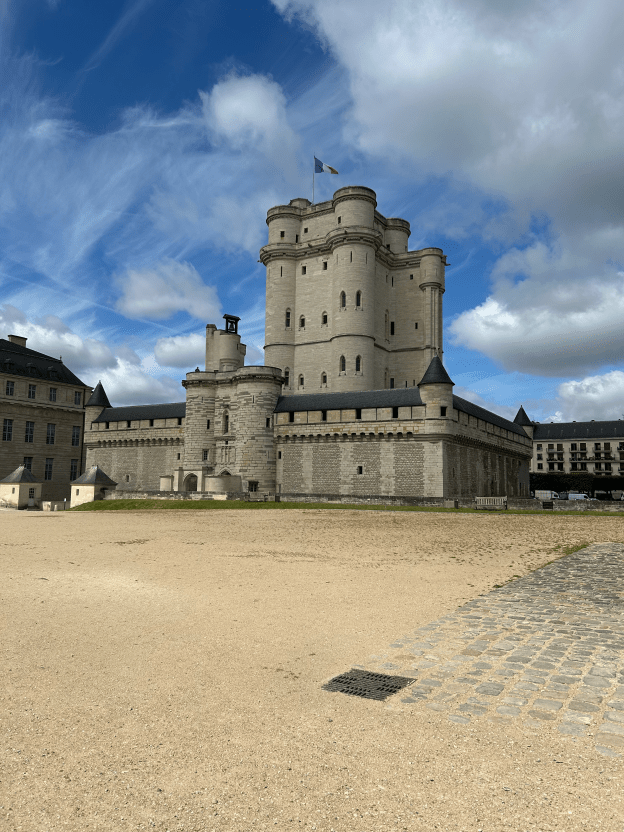

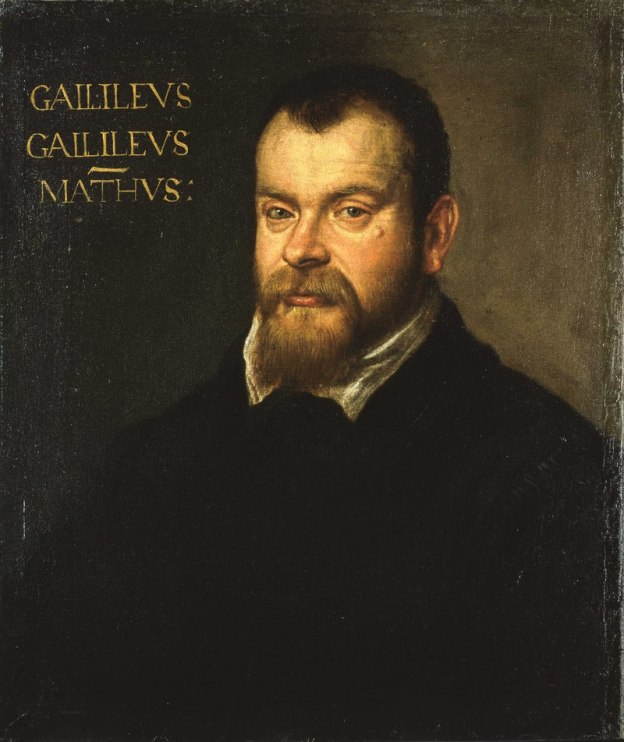

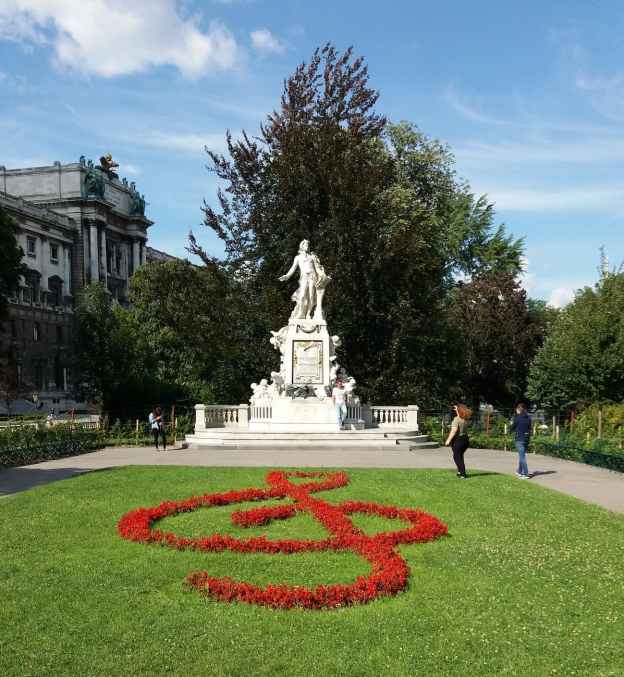

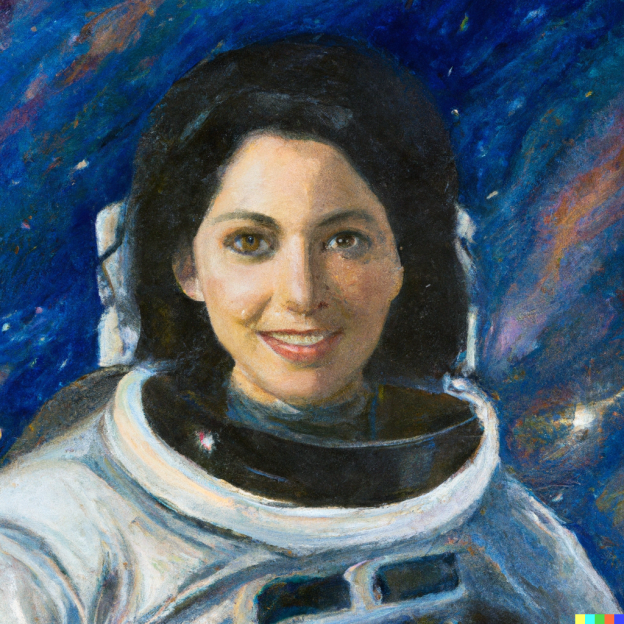
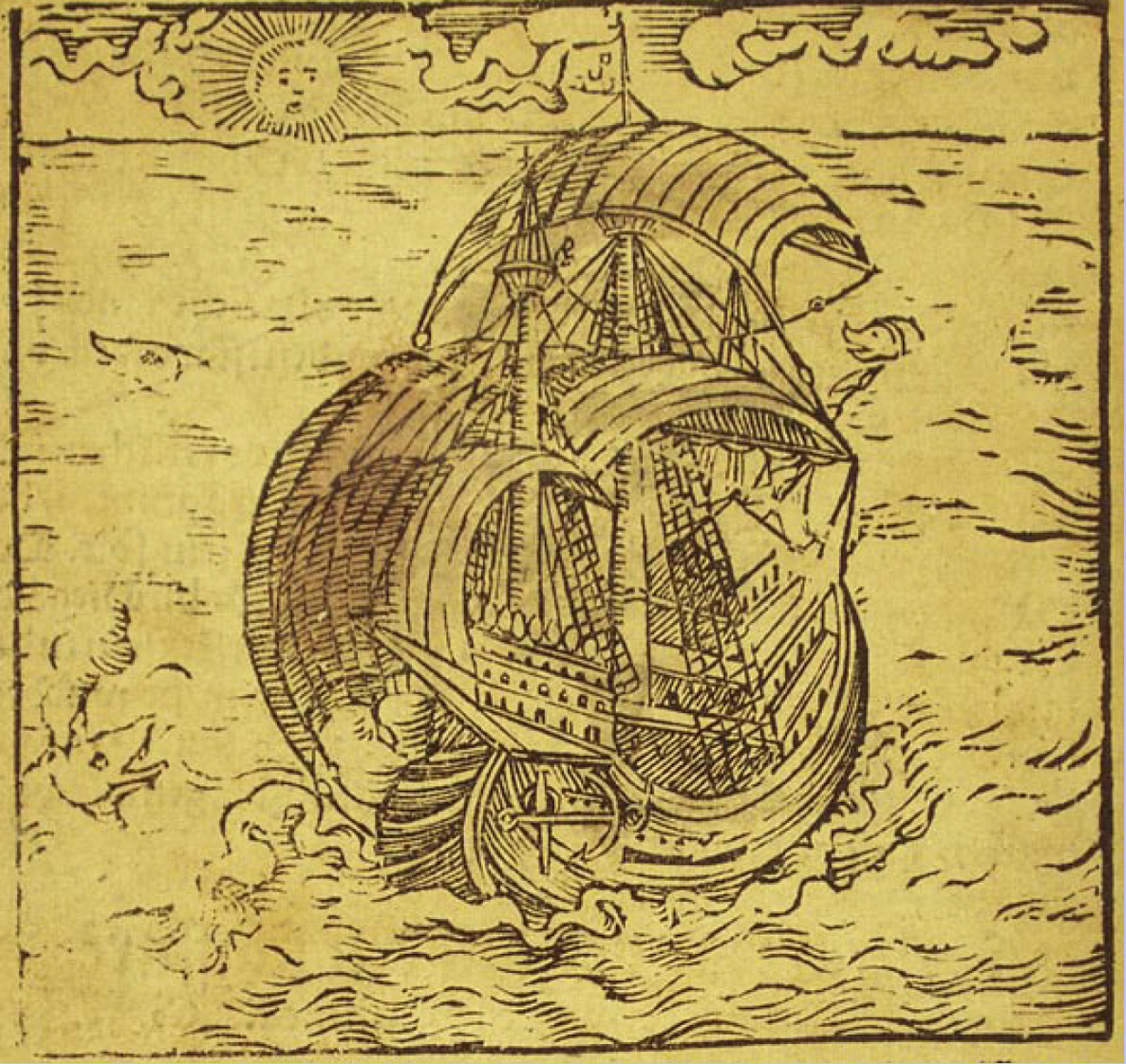
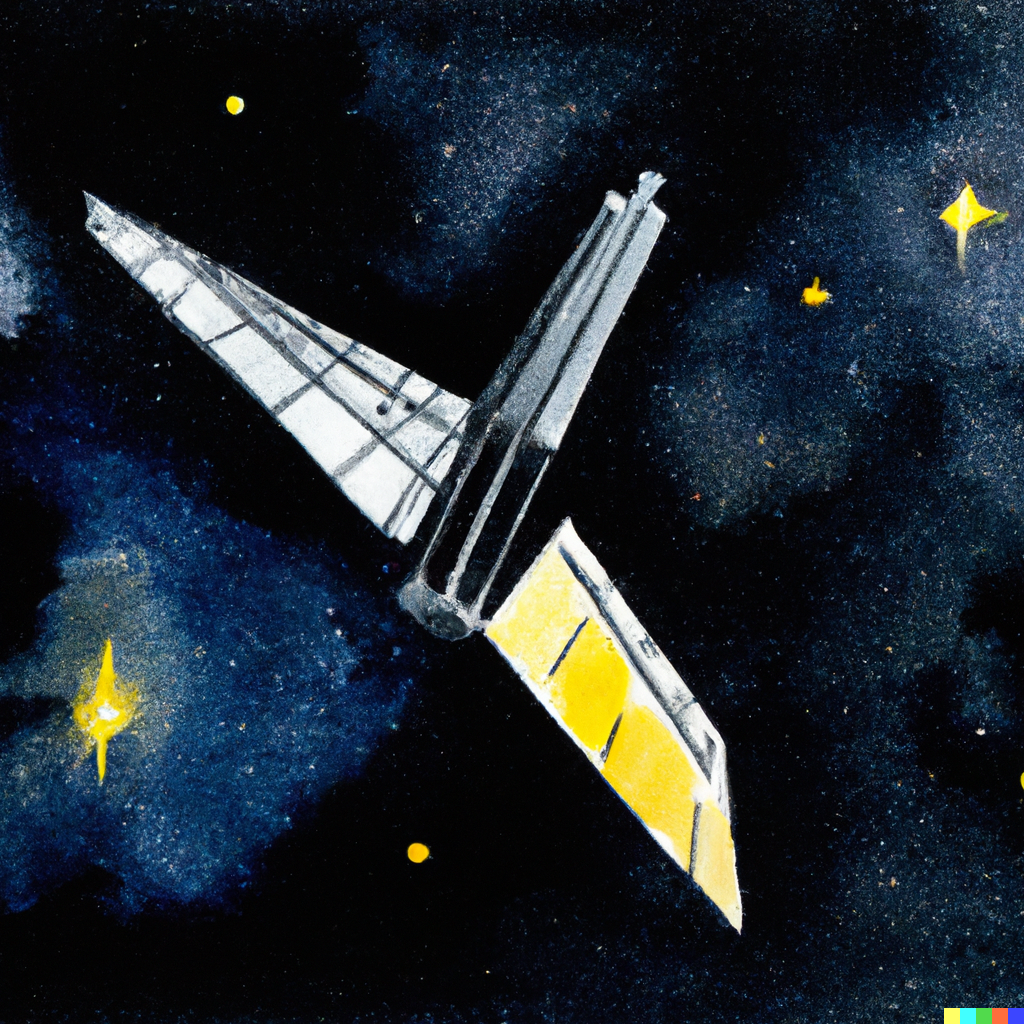
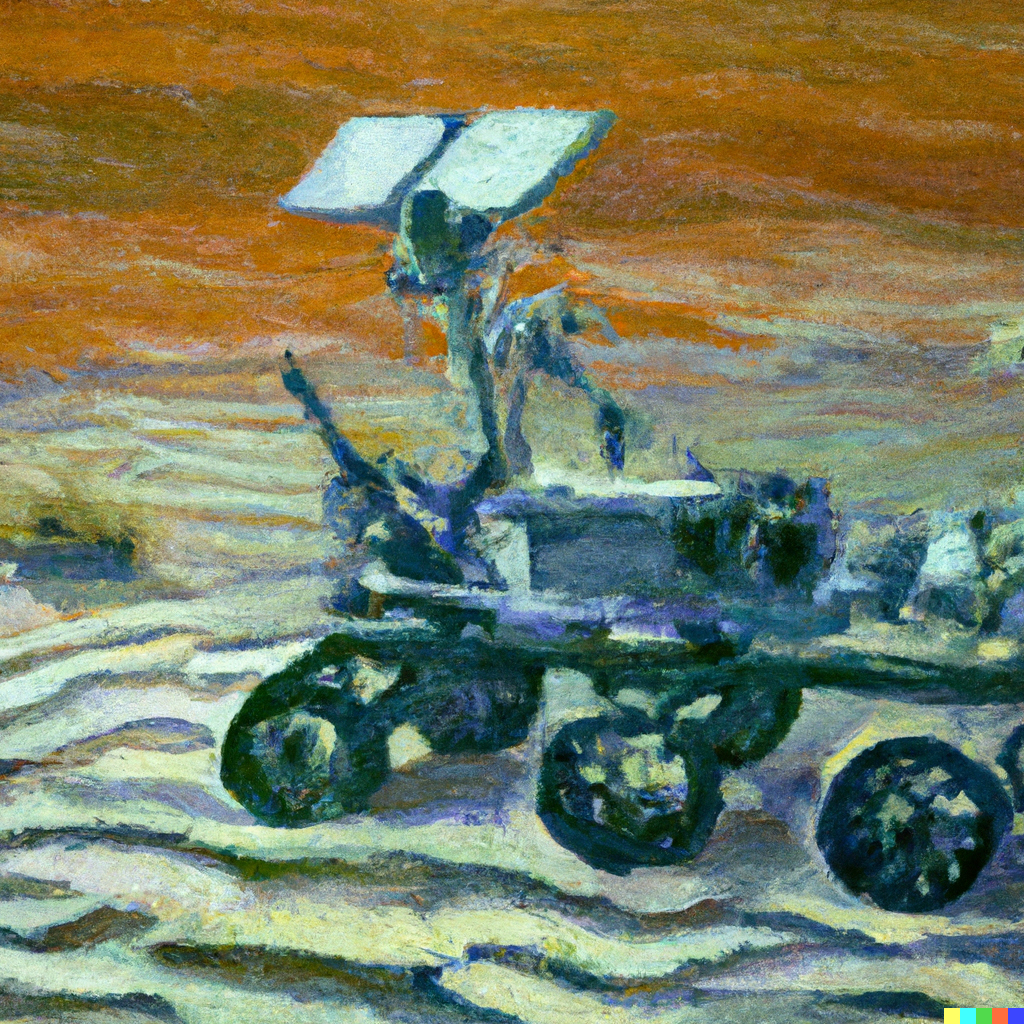
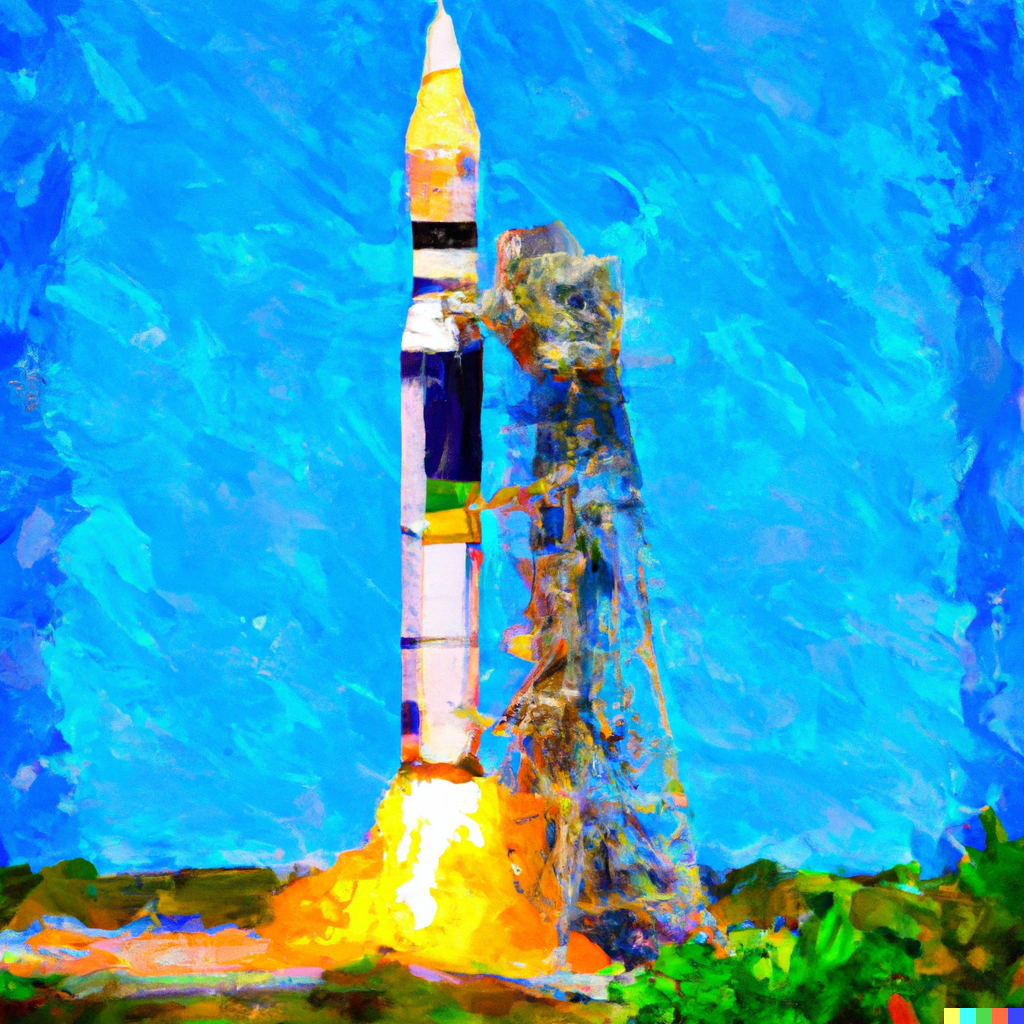
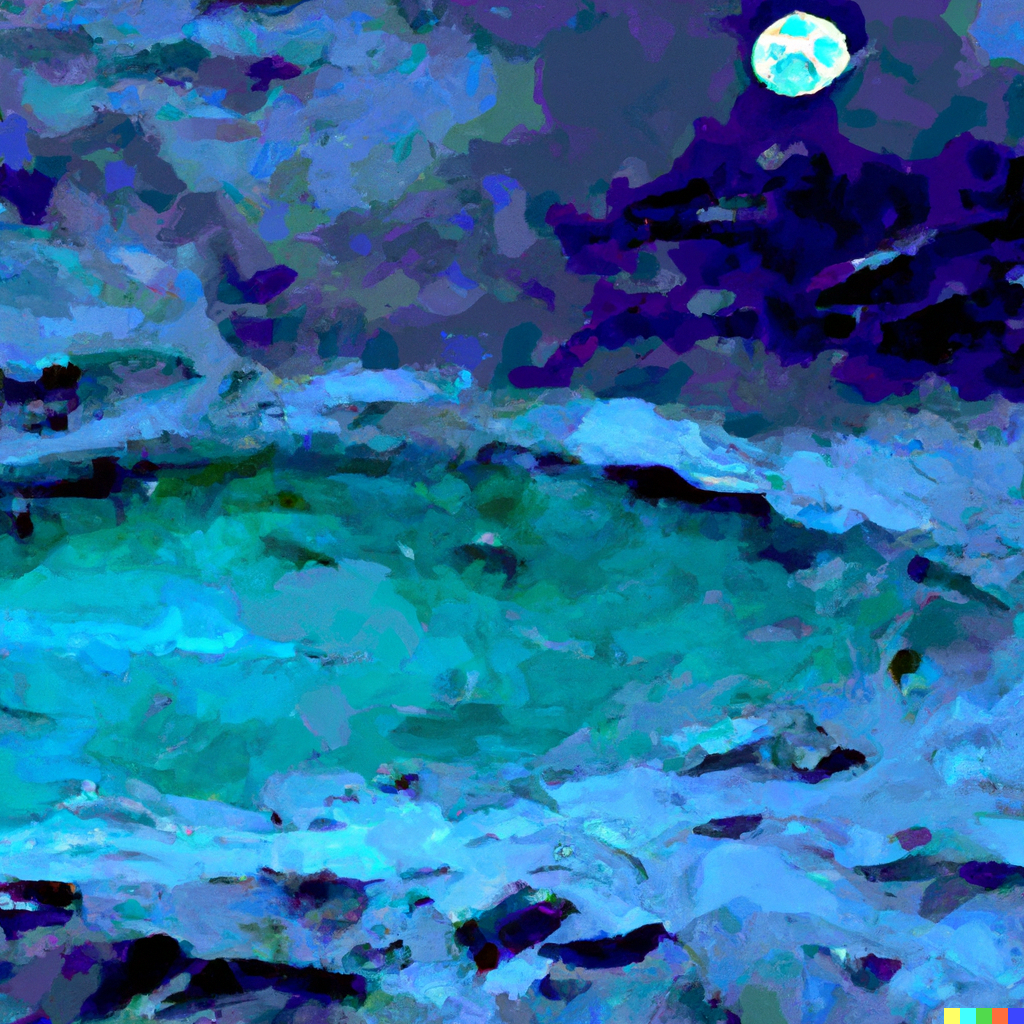
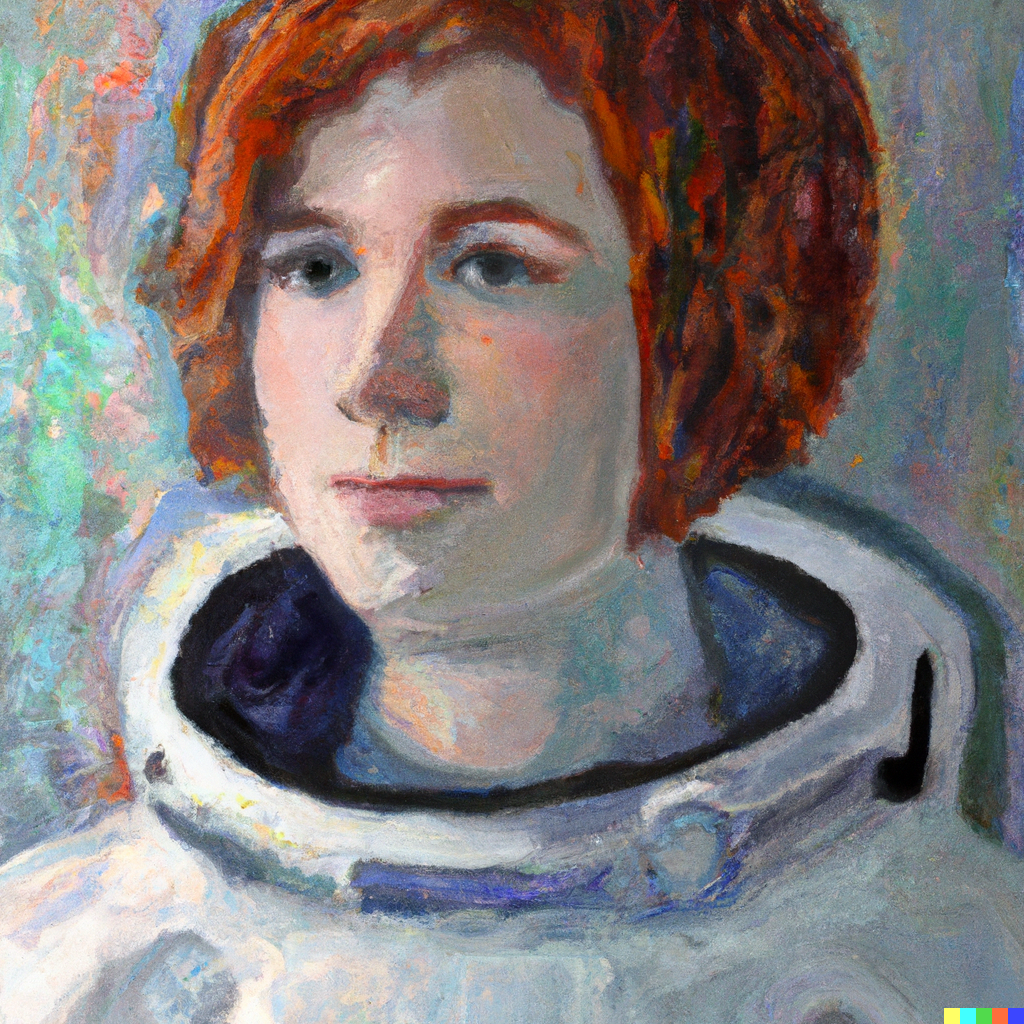
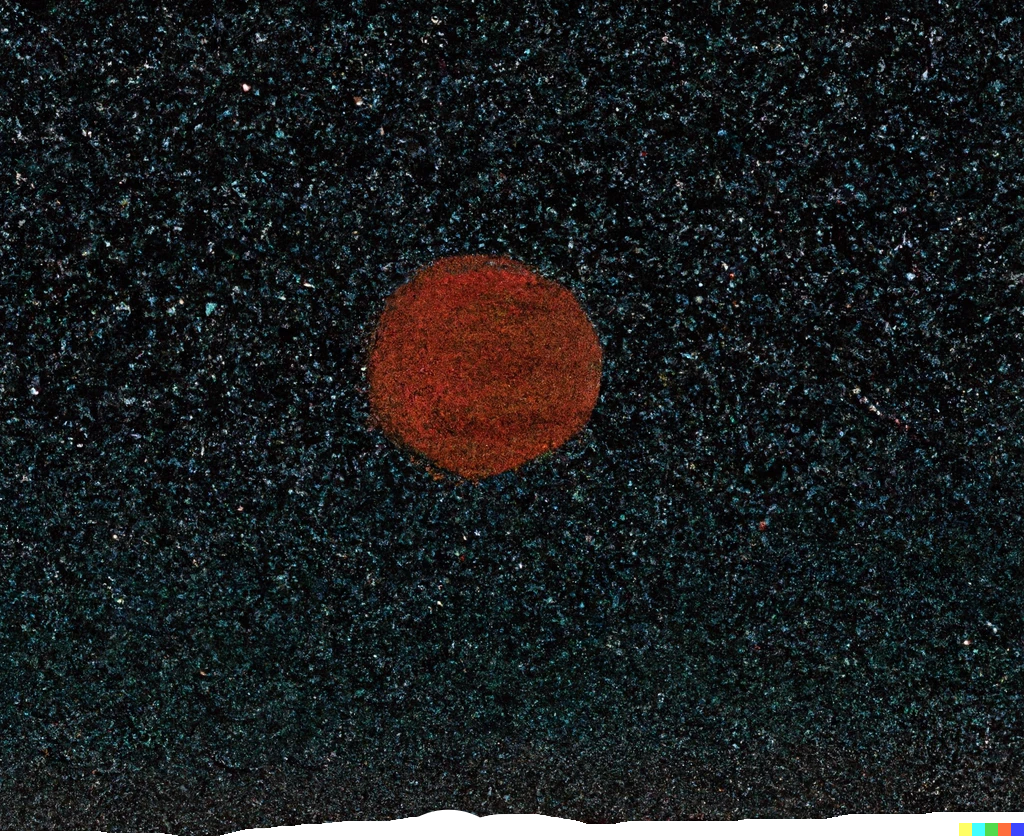
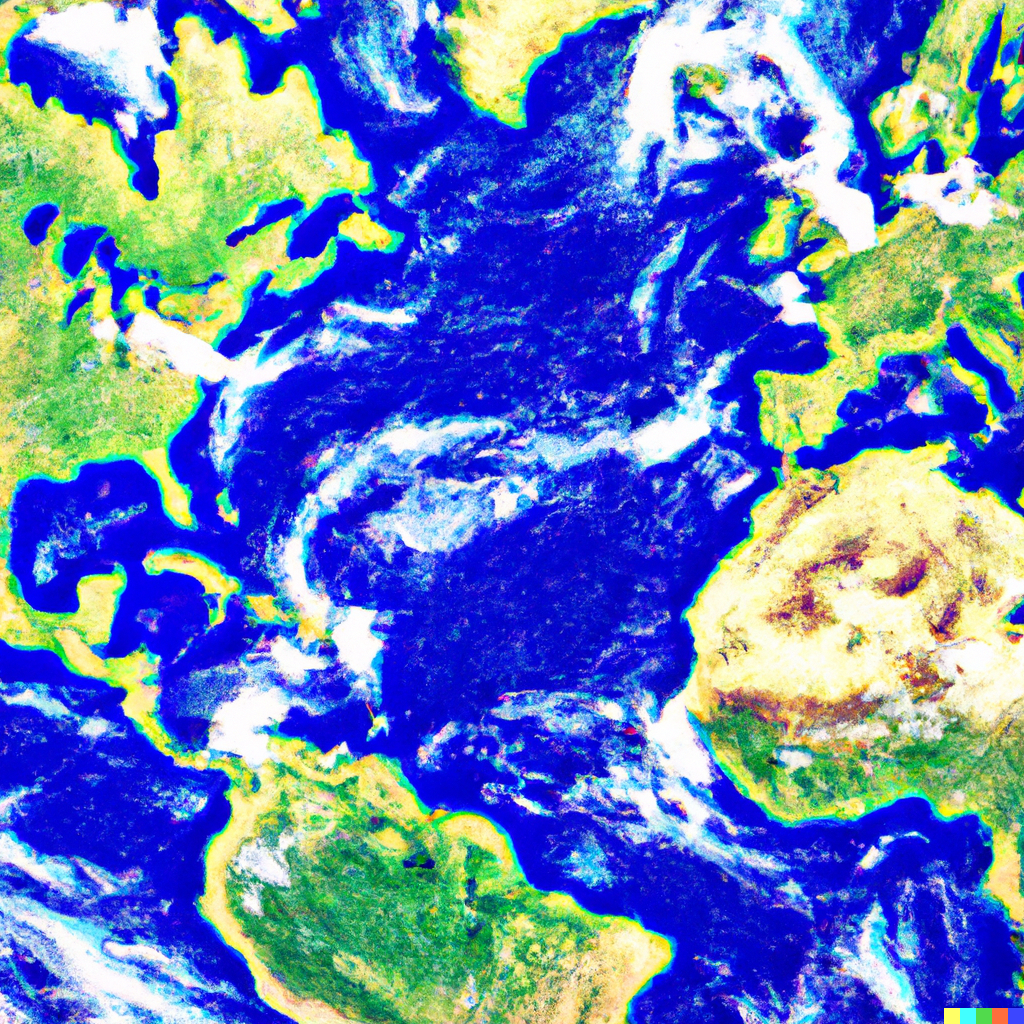



 Wednesday Blog by Seán Thomas Kane