Tag Archives: animals

What’s the Difference between Beavers and Humans?

What's the Difference between Beavers and Humans? Wednesday Blog by Seán Thomas Kane

This week, to conclude a month of chaos I interviewed environmental journalist Ben Goldfarb about his book Eager: The Surprising, Secret Life of Beavers and Why They Matter. — Click here to support the Wednesday Blog: https://www.patreon.com/sthosdkane. Links Ben Goldfarb's Website: https://www.bengoldfarb.com NOAA Fisheries, "Oregon Beavers Engineer Better Fish Habitat, More Fish," 14 July 2016. Popular Science, "From the Archives: Do Beavers Rule on Mars?", 6 May 2022. Harvest Public Media, "The Midwest and Great Plains are gearing up for water fights fueled by climate change", 3 Sep 2024. Photo Credit: Beaver in the Pipestone Creek, Pipestone National Monument, Minnesota. Photo: Gabe Yellowhawk. Public Domain. Learn more here.


This week, to conclude a month of chaos I interviewed environmental journalist Ben Goldfarb about his book Eager: The Surprising, Secret Life of Beavers and Why They Matter.


What follows is a transcript of our conversation.

STK: This is a really fascinating book, I have to say.

STK: I was reading something back in June that was talking about the idea of the Homo faber where we should identify ourselves by our ability to build and to imagine solutions to get out of our problems. I read that and said, “that’s what beavers do to, right?” So, the premise of this one is what is the difference between humans and beavers?

STK: When you talked in the book here about the restoration of beaver dams on Bridge Creek in Oregon; could this be a model for a clearer for how humanity could adapt to cohabitate with the rest of nature?

BG: Yeah, I think so. The situation in Bridge Creek and other places like that is that humans are building beaver dam analogues to help beavers flourish. When we wiped out several hundred million beavers over several centuries in North America, we made it harder for beavers to recolonize, so when you have a healthy beaver-rich stream they are pooling that water up and pushing it out onto the floodplain. When the beavers disappear there’s nothing to cool or check the water, streams then cut through the sediment on the bottom, and they turn into these miniature canyons or ravines. That’s a hard place for beavers to recolonize because the stream is trapped in its place and that’s where these human-built beaver dams come in because we can knock some big wooden posts into the stream bed and weave some willows in there and build some stability. It’s not as good as what the beavers do but it’s a starter dam that they can come in, build off of, and advance. So, these beaver dam analogues are like beaver kick starters, and they allow them to recolonize places where they otherwise couldn’t colonize. And to your point, I think we’ve spent hundreds of years in North America making life harder for beavers in many ways, mostly by killing them directly, and this is a way that we’re making life a little bit easier for them. You can apply this model onto many other wildlife restoration projects like wildlife crossings, or the planting of oyster reefs or salt marshes. These are things which work with ecosystems rather than against them.
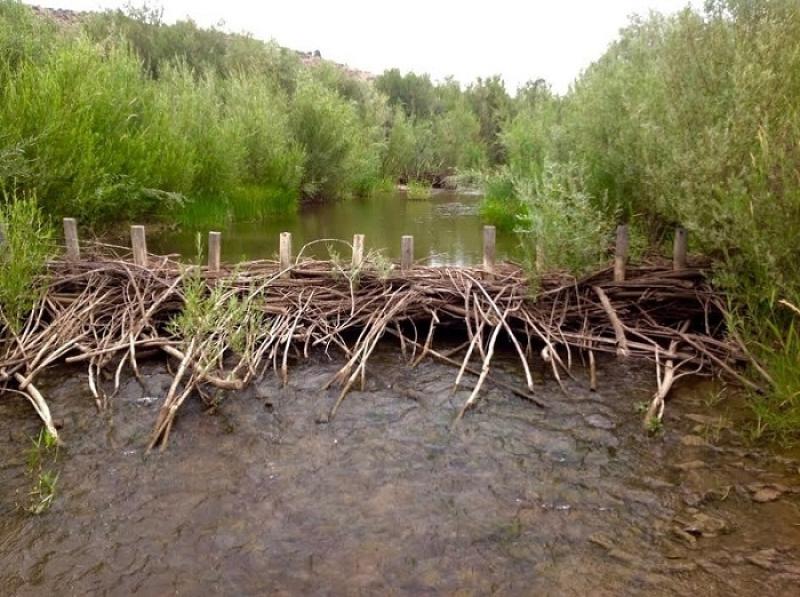
A beaver dam on Bridge Creek in Oregon. Photo: NOAA Fisheries, Public Domain. Learn more here.

STK: Yeah, I know they talk here about the butterfly gardens that give them a place to land and such when they migrate.

We’re the species that created the grid system whereas beavers have their own idea of fluid stability. What would you say to that?

BG: We as a species are obsessed with linearity and if Homo faber is a construction species or an infrastructure species as some historians have put it. Linear features are what we construct: highways, railroads, power lines, fiberoptic cables, just look at our crop furrows. Beavers create what looks to us like chaos, there’s water ponding up everywhere with trees dying all over the place, and there’s sediment muckiness that smells a bit. This looks to us like fluid chaos, and I think we need to recognize that those kinds of beaver-modified or beaver-influenced systems are first the historical rule rather than the exception at the time of European arrival, but more important that those beaver systems are profoundly healthy as ecosystems compared to our infrastructure which are destructive to nature. We kill more than 1 million animals per day in the U.S. alone with our cars, whereas beavers create infrastructure that is highly beneficial to other animals from salmon and trout to waterfowl to moose and amphibians. It’s hard to name a species that doesn’t benefit from beavers at some point in its lifecycle.

STK: Beavers seem to have a human attitude to modifying the landscape. It reminds me of theories of terraforming other worlds. André Thevet described how on his way back to France from Brazil in 1556 most places hadn’t been colonized yet except how the island of Haiti was transformed by the Spanish into Hispaniola, “Little Spain,” in part by the influx of pigs they brought. So, this idea of terraforming in astrobiology seems pertinent here. You have a quote here, “We are a nation of floodplain dwellers and farmers, drawn to river valleys yet intolerant of riparian anarchy.” So, are we hostile to beavers because they challenge our sense of order?

BG: Right, the whole terraforming thing is funny because there was a story in, I believe Popular Science, in the 1930s that posited that beavers dug out the canals on Mars . So, that idea that beavers are world-makers have been applied to other planets as well. I think it’s instructive to think of the ways that beaver dams and human dams both impact the landscape, especially here in the West where I live. Every single river has a colossal mega dam on it, and those dams are immense, and they create enormous, consolidated reservoirs and they take a diverse and distributed approach to building ponds. Each of those ponds are only an acre or so, but they store more water in the landscape. You think about what the future of solar energy looks like, we’re on track to build giant industrial solar farms in the California desert when we could put a panel on every roof and opting for this more distributed and dispersed approach to power generation. That’s another interesting thing that beavers teach us: the value of the energy and strength of these distributed systems rather than the hyper-centralized systems that we tend to favor out of some misguided love of efficiency.

STK: Yeah, I just read this morning that our local NPR station was reporting that there’s a bill being proposed in the Missouri Assembly to ban water exportation from Missouri to the western states anticipating that Colorado, Utah, Arizona, et cetera are going to ask for our water eventually. It’s interesting to see that, we have the Missouri River here and the Mississippi River is on the eastern side of the state, and the Missouri floods at least once a year because they release the dams from the Dakotas that get all of the snowmelt and that floods down here typically. The Missouri is very heavily managed by the Army Corps of Engineers to the point that it’s faster than it used to be, but you know, it still floods.
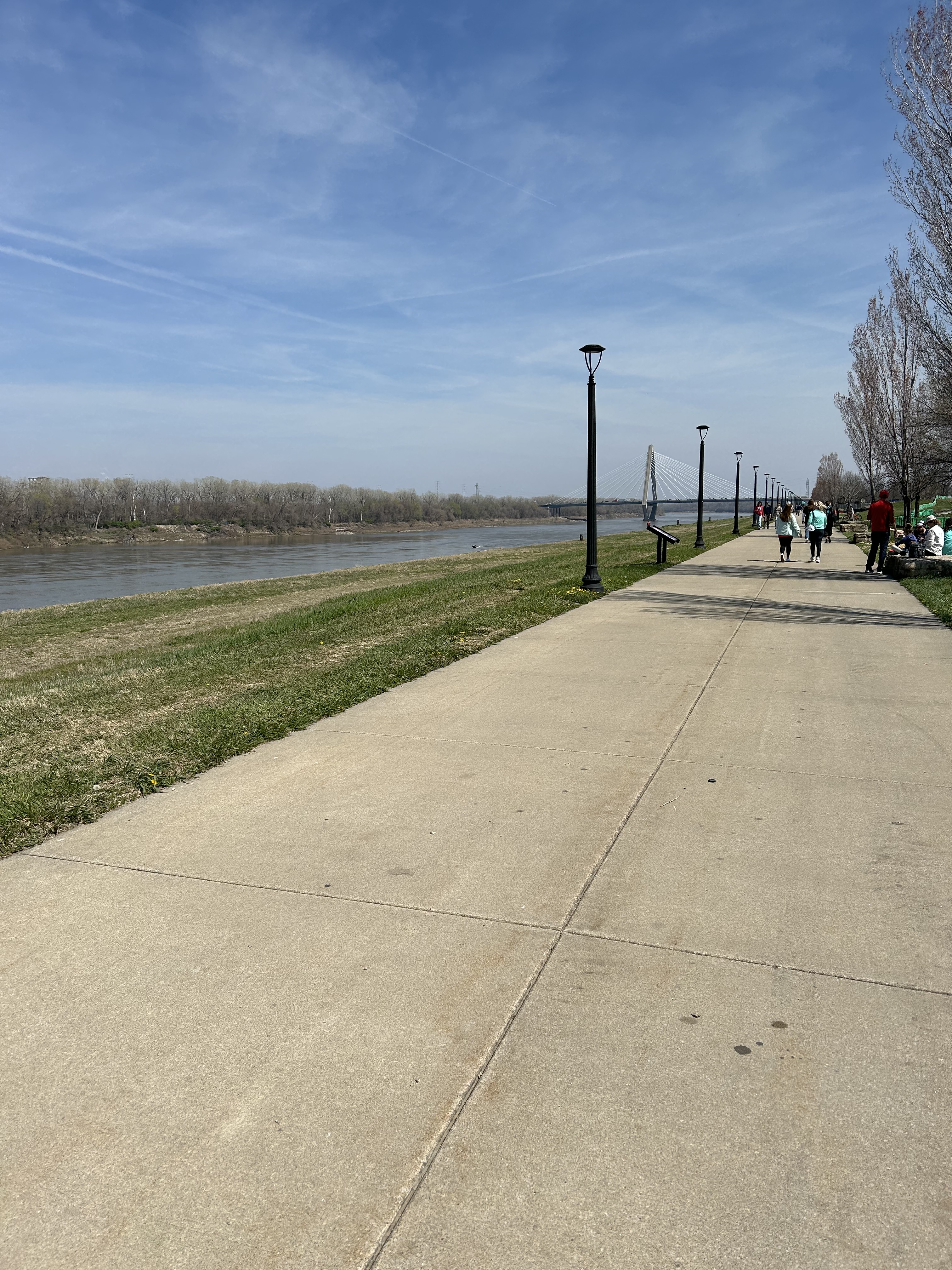
Kansas City, Missouri’s Riverfront Walk along the Missouri River. Photo by the author.

BG: Look, the Missouri is one of the most hydrologically modified rivers in the U.S., and it’s certainly up there, and look at the catastrophic impacts it’s had most prominently on the Pallid sturgeon, and it speaks to the impact of human infrastructure being catastrophic for nature whereas beaver ponds are the world’s greatest fish production system. Trout and salmon grow exponentially faster in beaver ponds. The Missouri is like the Colorado River, one of those rivers that was incredibly full of sediment, “too thick to drink, too thin to plough,” so by damming the Missouri we changed water flows and sediment flows as well, and I think the beavers show us what a healthier and more beneficial relationship with sediment looks like. Beavers are capturing sediment as a resource which allows them to push more water onto the floodplain; they’re managing sediment better than we are in a lot of cases.

STK: Yeah, we actually saw one a couple of weeks ago on a Sunday morning crossing I-29 in Downtown Kansas City near the river, and it flopped itself over the barrier to get off the highway. I’m hoping there isn’t too much of a fall there, it’s all brush there. It was neat to see. We’re heavily redeveloping the riverfront now, so there’s going to be a lot more people up there were previously it was [among other things] an industrial waste dump by the railroads and such.

STK: I like what you said in the ninth chapter of this book when you were over in the U.K., and I’ve thought for a long time living here in Kansas City, my neighborhood was built here 100 years ago, and there weren’t trees here before they built this neighborhood, and all of the streets are named after colonial New Englanders. I’ve said then to people offhand that the developer tried to make this area a little New England, and as William Cronon wrote, New England was built out of the forests there as a new form of England. So, I wonder there, were you getting toward saying that we could look to Britain for the inspiration for American ecological policies, and secondly that the end goal of unlimited development would be how Britain is today?

BG: Yeah, to me one of the really striking things about visiting the U.K. for the book was how biologically improvised Britain and Ireland are today, and how fortunate we are to have the wildlife here in the U.S.: we have wolves, bison, and moose which were all species that once existed there that were annihilated there. And fortunately, here in the U.S. we were colonized recently enough, and we have enough rugged and inaccessible topography to allow these animals to be conserved, and we’ve done enough wildlife reintroductions here in a way that the U.K. is just beginning to get around to with beavers, and lynx someday. So, visiting made me feel extremely grateful for everything we’ve hung onto in the U.S., and beavers are one of those organisms of an animal in the Lower 48 that we pushed to the brink of extinction, but enough beavers survived up in Canada that we were able to use reintroduced beavers from Canada and some that hung on in Yellowstone National Park to reintroduce beavers on a wide-scale here in the U.S. Beavers today aren’t as ubiquitous as they were at their peak, not by a long shot so maybe we take them for granted a little bit and have beavers in the landscape.

When I went back to England a year later on my book tour, I got to go on a nature walk where we saw beavers doing their thing and people were in tears with joy at seeing these beavers who had been eliminated from the landscape in the 1600s. It’s sort of like seeing the Loch Ness Monster, they’re these giant rodents with their paddle tails and they cut down trees with their teeth to build walls. They’re objectively these cool, bizarre, magical critters, and it was cool to be reminded of that in the U.K. where people are seeing this part of their natural heritage return to the landscape, while meanwhile they hang out in Downtown Kansas City, or Downtown Seattle, or in the Bronx River. It was a good reminder to appreciate our wildlife in general and beavers specifically.
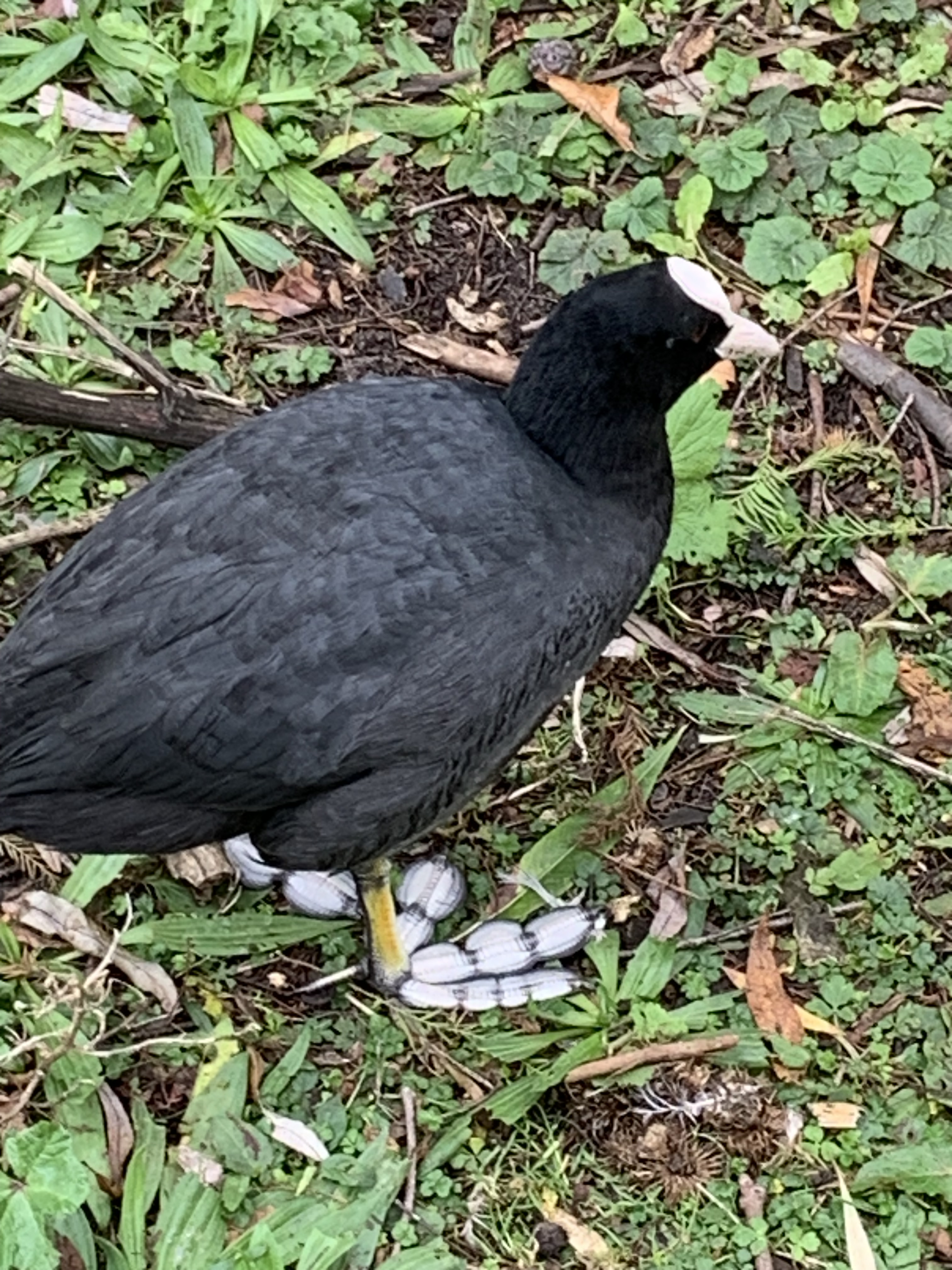
Note that webbing. Photo by the author.

STK: Yeah, I lived in London for a year doing my first Master’s, and you’d see some nature in the parks. I was fascinated looking at the webbing on some of the duck’s feet in St James’s Park where they’ve been protected because that’s been a part of the Palace for 300 years. But if you really wanted to see nature, you’d watch Naturewatch on BBC 1 on weekday mornings.

STK: So, has colonization forever changed beavers? Are they a different animal than they were 400 years ago?

BG: That’s a good question, and I think that ecologically and biologically they’re not. You could take a beaver from the 1300s and plop him down in modern North America and he’d do his thing and build dams and create ponds. They’ve survived so much over the last handful of centuries creating the kinds of landscapes you’d have seen before colonization. I went to Voyageurs National Park in Minnesota where these animals are protected from trapping and the landscape is conducive to beaver dam building, and there were dams that were 1000 ft long and 15 ft high, and I thought it was this great glimpse into pre-colonial America and what this would’ve looked like. These animals are the same but what’s changed is our relationship with beavers where before we perceived them as commodities that we extracted on an industrial scale to make hats. In the 20thcentury beavers began to be protected a little bit, and their populations began to increase, but all of a sudden, they were coming into conflict with humans and flooding our roads and cutting down our apple trees and flooding our irrigation ditches, and so we now see them less as commodities and more as pests. So, we still kill tens if not hundreds of thousands of beavers in the U.S. per year for causing conflict when we’re the nuisance species more than they are, they were here first. So, we need to transition out of the commodity phase and out of the pest phase and into the symbiotic phase where we harness all of the ecological benefits that these animals provide for us. Their ponds filter out water pollution and create oases against drought and prevent wildfires in some cases, especially in the West. They provide incredible fish & wildlife habitat and mitigate flooding in New England. Their value is immense beyond measure and we need to recognize that and treat them as ecological partners in conservation. Indigenous people in North America had that approach. The Blackfeet didn’t kill beavers but saw them as sacred because they created water holes to help other species. Respecting and honoring beavers isn’t new to western science, we just need to rediscover what native people knew for millennia.

STK: Are you working on any big projects now?

BG: I’m working on a book about fish, about fish as ecological engineers putting my beaver hat back on. Fish as drivers of human movement and culture over the course of our species’ own history and all the ways in which we lost fish from our lives and landscapes. I’ve always loved fish, both as quarry (I’m an angler) and as beautiful special specimens, like beavers they’re both concealed by the opacity of water.

BG: I look forward to coming back and joining you when that’s out in, I don’t know, 2056!

STK: Yeah, I’ve got a couple of books that I hope will come out before 2030 hopefully.

BG: Yeah, cool, I look forward to reading about three-toed sloths in human history.
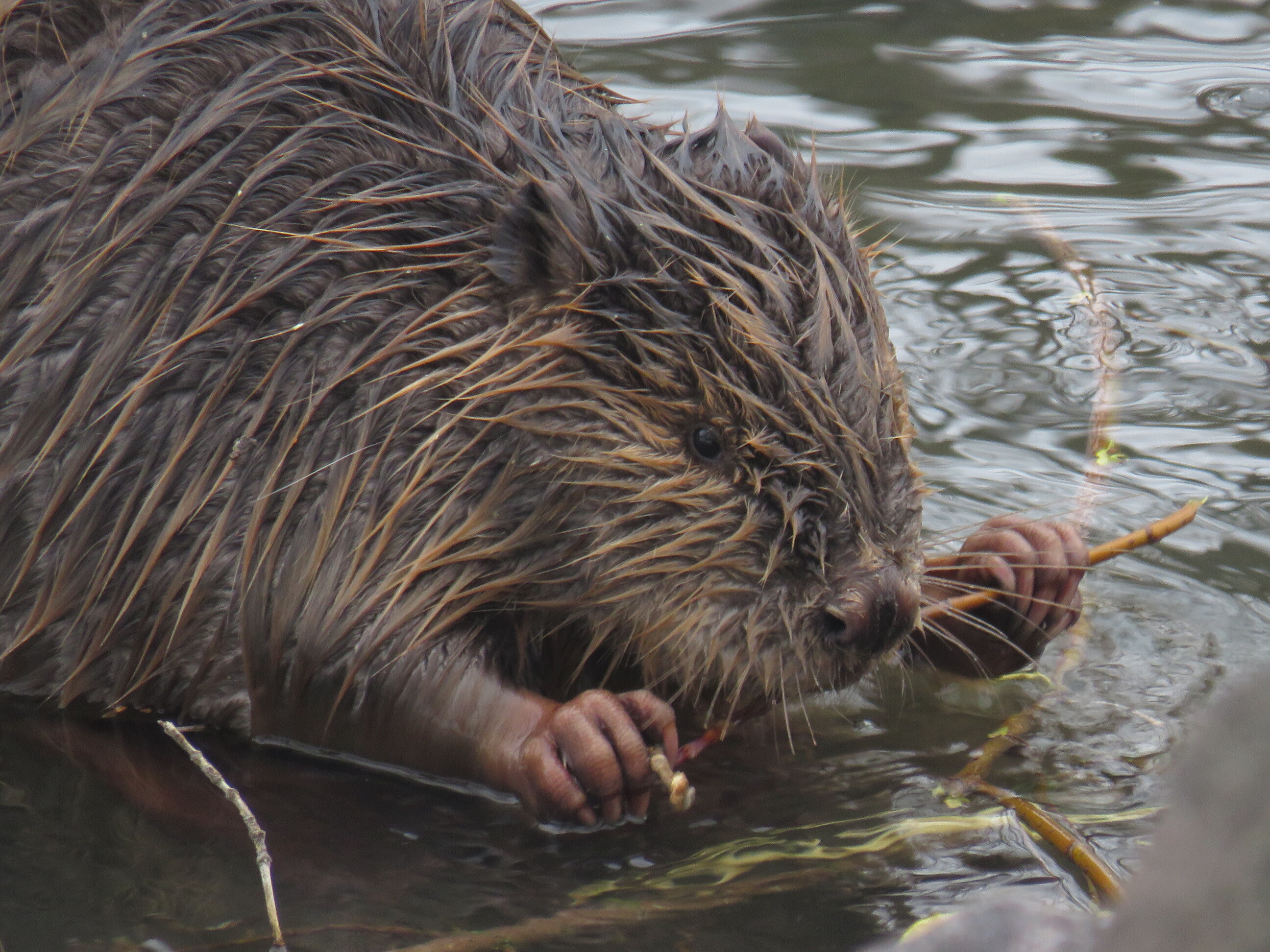

Beaver in the Pipestone Creek, Pipestone National Monument, Minnesota. Photo: Gabe Yellowhawk. Public Domain. Learn more here.

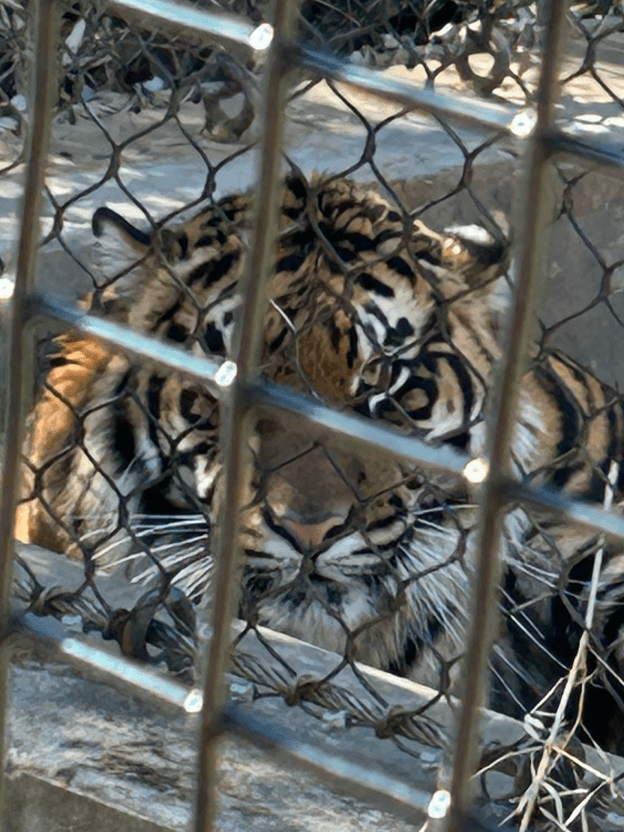
A tiger staring at the camera through two fences.

A Tiger in the Sun

This week, I have a short story for you, in the style of an Irish aisling, a dream narrative, about a tiger basking in the warm February sun. — Click here to support the Wednesday Blog: https://www.patreon.com/sthosdkane


This week, I have a short story for you, in the style of an Irish aisling, a dream narrative, about a tiger basking in the warm February sun.


On a sunny, warm, and blustery day in February I left my desk in the afternoon for a walk at the city zoo. You could never really know how many warm days you’d have in February on the prairies, a time of snow, cold, and gray skies. I showed my member’s pass at the gate to the clerk and strolled between the polar bear’s wide enclosure and the lorikeets’ walk in cage towards the penguin house where I often liked to stand quietly and watch the birds waddle and swim about. There was something wistful about these penguins today, their black and white feathers glowing with a renewed exuberance from the lengthening days outside. I’d seen these penguins in all seasons, confined to their Antarctic chamber with many good places to swim, enclosures, and crevices that even I hadn’t seen. Worlds still unfamiliar to my eyes yet already known to my imagination which saw places where these birds could play and rest away from human eyes.

I left the penguins and began to walk further into the zoo towards the Asian and Australian animals who I hadn’t seen in my last few afternoon visits. I’d read that a new pair of Sumatran tigers had been brought to the zoo from another facility on the West Coast where they’d been born into captivity. These animals it seemed had a comfortable life, if confined as they were from the wilds their ancestors had once known. My walk took me past the alligators still hidden indoors and the camels who wandered about the edges of their sandy glade looking for new grass and leaves to eat. 

After passing the pelicans I came to a grand sign displaying a portrait of a tiger, in all its majestic ferocity. The entry to this Asian walkway was marked by a fleeting glimpse of another red, black, and white animal whose furry legs and tail darted behind a wall to my left. I walked onward and rounding the wall met a red panda on a stroll within the confines of its fenced enclosure. I stopped to look at the red panda who climbed a gangway that’d been set up for its enrichment and admired its ease of movement, the jolly grace of its demeanor. Yet still, the hairs on the back of my neck stood tall, alert. I knew the tigers dwelt behind me, yet they could’ve been anywhere in their terraced enclosure. I turned and caught the yellow eyes of a cat staring back at me, its orange nose wreathed in a beard striped black, orange, and white. This new tiger was smaller than I imagined, perhaps little older than a cub. It lay there on its side like my own cat often does, finding a nice place at the highest point in its home with the sun’s rays glittering down upon its neck and back between the barren branches of the cottonwood grove which towered above both feline and me.

I stood stock still, my nature sensing some intrinsic danger in my situation despite the double layers of fencing between us. This was a tiger after all, a hunter who if in the mood would gladly seek prey from either myself or its red panda neighbors across the path. Who was I to say I was any finer a creature than this one, who was lounging the afternoon away in the warm winter sun. It had no need of work or time; no economy or politics furrowed its brow. Here was a creature free of all our worldly concerns in its terraced enclosure. I would soon have to leave this tiger and continue on my way. My walk in the zoo was merely a distraction from my labors, an escape from the small walled enclosure of my desk where Sisyphean work awaited my attention. What time did I have to lay out in the sun and cherish the day? I walked on, my body moving back towards my work, yet my imagination remained. I dreamed as I walked of adventures I might have, greater escapes from my work, and of absconding for more than an afternoon from worry.

As I rounded the corner past the lower terrace of the tiger’s enclosure my phone began to ring. I pulled it from my pocket and caught myself seeing the number, “213, who’s calling me from Los Angeles?” I answered, looking up towards where the tiger lounged high above me. “Hello?”

            “Hello, I’m calling you about your application for the archivist position at the Space Science Center.”

            “Oh yes, how may I help you?” I asked reflexively, a knot building in my throat worried at what word might come next after so many rejections.

            “We would like to offer you the position here, if you’re still interested.”

            I caught myself in my jubilation, remembering I was in public, “Oh!” I cried, “what wonderful news!”

            “So, you’ll take it?”

            “Yes,” I stopped myself from being too exuberant, “It would be an honor to work with all of you there.”

            I thought I heard a smile from the other end of the phone. “I’m glad to hear that. Can you be here later this week to start?”

            “Later this week?” I asked, stopping in my tracks near the entrance to the kangaroos’ enclosure.

            “Yes, we’d like you to take over the work from our outgoing archivist who’s retiring at the end of this week.”

            I looked at my watch, it was nearly 3 ‘o clock in the afternoon. “Well, it’s Monday now, I can be there on Friday morning if that’d be alright with you.”

            “That’d be fine,” the herald of good news replied over the phone. “We’ll see you on Friday morning here in Pasadena.”

            “Thank you again!” I said as I heard the phone on the other end hang up. “Friday, Friday morning in Pasadena. I need to start packing,” I turned from the kangaroos and was about to walk past the building ahead when I remembered that path was closed for winter renovations. I turned back again towards the gate and strolled through; my head held higher than before with a newfound exuberance. Soon I wouldn’t be scraping by just as a freelancer, my four part-time jobs would have to go. Now, I could really earn enough to begin living my life.

I passed the Australian birds in their walk-through enclosure and was amused to see they were all standing stock still on various fenceposts. One squawked at the world, in what seemed to me a jubilant chord of praise for the wonderous afternoon sun.

If I was going to be in California on Friday morning, I would need to leave at dawn tomorrow. I could drive to Denver on Tuesday and stay at my cousin’s house there, if he’ll have me, and then cross the Rockies and the high deserts on Wednesday. I’d driven most of that route before one summer vacation several years ago, but the Rockies in winter would surely be an entirely different challenge than they are to cross in summer. The last time I drove through the Eisenhower Tunnel that bored its way beneath the Continental Divide I waited to use my breaks for just a few seconds too long on the western side and nearly ignited them in their furious efforts to slow my car down as it pulled into a parking spot along a creek in the village of Silverthorne. Should I get my snow tires out then, and have those on in case the interstate was slick up in the mountains? But I wouldn’t need them once I reached Utah where the high deserts would surely be dry, and possibly still hot despite it being February.

Once in Utah, even if my tank was nearly full, I would still stop in Green River, the last town before nearly 125 miles of open desert to ensure I wouldn’t run out of fuel on that other most dangerous part of the trip. I’d avoided that part of the interstate last time, taking a smaller high mountain pass through Central Utah. This time though there was no avoiding the desert. Once I made it to the junction with Interstate 15, I could turn south and make my way to my second overnight stop in Las Vegas. I figured I might not be the only traveler passing through Sin City who wasn’t there to gamble or for the spectacle. Then at last, on Thursday, I would finish with the last leg of the drive southwest across the California border and to Pasadena where my future awaited me. Work, to be sure, was something that drove me forward, the aspiration that I might make something of myself, that I might better my stars and spend my days doing something that both kept the lights on and fulfilled my dreams.

Like the tiger, I would perhaps have time to rest in the sun, to enjoy the afternoons on a park bench near the science center. Surely in California, I would never have to shovel snow again, or scrape the ice off my car in the cold January mornings. Wasn’t California where that tiger was born? I thought about that for a moment as I walked along the path. To my left the local kangaroo mob lounged and grazed on the grasses of their meadow. A kangaroo stood and stared at me. I warily watched it, silently snapping a photo of it with my phone, and continued on my way, keeping ever a respectful distance from those remarkable creatures.

But what of my cat? How would she fare the long voyage west? Would she appreciate so much time in the car? She’d never been one for car rides even to her vet just a few blocks away. Perhaps she’d rather stay with my parents, they always enjoyed her company and she theirs. She was surely napping now too, finding a sunbeam somewhere near a south-facing window where she could enjoy this lovely day like her far larger yet far distant cousin. It would be a great change for my cat, as much as it was for me. We’d have to travel light, perhaps I could send for the rest of my belongings, especially my books, after we settled into our new abode. 

I paused at the southern gate leaving the kangaroo enclosure. Before me one of the camels stopped its grazing to stare back at me as I stood there, deep in thought. I could see my life in California well. I’d probably get a space in the basement of the science center, somewhere with no natural light where they kept their records. My domain would exist in the deep darkness there, somewhere I could make my own. Maybe I’d be far enough away from the rest of the staff or the general public to bring a radio in and listen to baseball games during the season like my grandmother used to do in her kitchen. There’d always be a part of me that would yearn for home of course, for the prairies and woodlands of the Midwest. Who would I be without this place that I came from? What would my life be like so far from everyone I know and love? Could I really separate myself off, devote my working hours to a place where few would understand what it meant to be from here, where few would understand me?

My mind returned to that tiger lying there in the sun, content with its lot in life. There was a creature that could try to hunt and prowl, perhaps it did so in its dreams. What are dreams but the longings of the subconscious? I’d always been a dreamer, an imaginer of wonders near and far from the truth. Do dreams then tell the truth, or is there such a thing as truth in the surreal realm which we imagine? I remembered a story I read as a child, from P.L. Travers’s original Mary Poppins novel, of a scene in which the roles were reversed and all the animals of London Zoo were gawking at the humans in the cages. Was fantasy so different from reality that it could not be informed by the real but instead kept unreal? 

I felt I had to return to that being whose yellow eyes had so deeply captured my thoughts that even now as I planned the monumental voyage of these coming days, a week spent crossing half a continent in winter, I couldn’t shake the image of those deep yellow eyes. I followed the path back towards the tiger sign that greeted visitors to the Asian footpath and ignored the red pandas in all their charm and found my captor laying there still. Those eyes caught mine again, and they seemed to recognize me from only a few minutes before. In those eyes I saw a truth that life was meant to be enjoyed, to be lived, yet in my eyes I was sure the creature could only see fear and wonder. Without these fences we both knew those yellow eyes would be a death sentence for me and that my power was devised in only the most artificial of means. The tiger was the real power, the true monarch of our shared domain. And yet it blinked at me, slowly, a signal that my own cat offers when it feels comfortable around me. Could this tiger feel at ease in its enclosure or is its ease perhaps from its inherited knowledge that nature gave it the upper hand over feeble, clawless, scaleless, featherless, furless me.

I didn’t feel the need to speak, this tiger could understand my expressions. I gazed into those eyes deeper, feeling my thoughts free fall into that yellow sea of potent grace. Did these eyes envision things like mine did? Could this tiger see things unknown to it in its dreams? Could it imagine a Creator? Would I still feel such a connection when I retired from my native place to that basement archive where surely, I would spend my waking hours? I wasn’t sure that the adventure of it all would be worth the query, yet I felt my nature pull me towards exploring further and deeper. I heard a noise from before me, a deep hiss emanating from a striped sea of orange, black, and white. The tiger had enough of my gaze, and with a hiss told me enough, “move along, leave me be.”

I backed out from the tiger’s view and turned away, looking to the red panda who seemed unfazed by the hissing hunter across the way. Move along indeed. In this adventure I’ll learn more about myself, and what I am capable of. When I reach the end of the line on this drive, when I arrive in California, there will surely be many new possibilities and wonders to behold. How often had I experienced a warm, sunny day in February here on the prairies? Wonderous things remained for me to find beyond my desk. I walked back to the front gate of the zoo and felt something new inside of me glow with confident glee at the thought of all that was to come.