
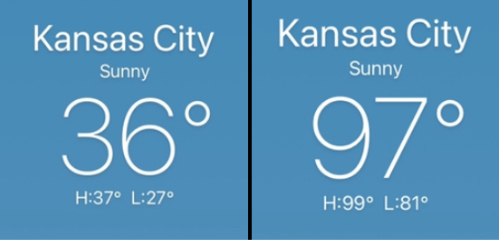
It’s hot again here in Kansas City. At the time of writing the current air temperature is 36ºC (97ºF) with a heat index of 45ºC (113ºF) and a humidity measuring at 55%. Like I said, it’s hot again here in Kansas City. And while August is usually the hottest month of the year here in the Midwest, and while thankfully we aren’t dealing with the horrific wildfires that are burning up the Mountain West and Pacific states, it’s still hot here on the prairies.
The thing about this heat that makes it more unusual to me than our regular summer heat waves is the fact that based on a UN climate report that was published earlier this week this sort of heat is going to be the norm in places like Kansas City in the coming decades, and to be honest we have only ourselves to blame. As warm as it is here it must be even worse further to the south right now in Texas and beyond the Rio Grande in Mexico and Central America. Our summer discomfort bodes even worse for the people who live in places where 35ºC+ temperatures in the summer are the norm because when our weather gets that hot theirs is bound to get even hotter.
It makes me wonder then how will this impact our winters? In the last decade we’ve seen harsher winters with more formidable blizzards and snowfall here in Kansas City than I can remember in my own relatively short lifetime. Will our summers get hotter and our winters cooler? Or will the summer heat mean our temperature cycles won’t fall quite as far as they have? For the record low temperature that I’ve experienced here has been -26ºC (-15ºF), though thankfully I was away in comparably balmy yet snowy Upstate New York when the temperature dropped even lower than -26ºC (-15ºF) this past February during the storms that knocked out power to Texas and by extension most of the Great Plains.
I’m not terribly fond of this sort of heat, and yes there is a difference to dry heat compared to this wet heat (take that pun where you will). When I was on a road trip with my Dad driving across the deserts of the Colorado Plateau in western Colorado and eastern Utah in June I got to experience this same temperature, 36ºC (97ºF) in a very dry climate, and it was actually a pleasant experience. Would I want to live out there in the deserts near Moab and Green River? Probably not. But if a KCUR article today about a local group of triathletes is correct, as KCUR usually tends to be, the human body can adapt rather well to extremes in temperature. I’ve tried to take the opportunity to go out and walk earlier in the mornings when the temperature is still in the high 20s, low 30s C (around 80ºF), which has certainly helped me cope with the few times I’ve needed to go outside during the height of the afternoon when as it happens I’m writing this post.
I guess the best answer I can give now is that we’ll adapt. We’ll adapt both in realizing we have to shift towards renewable energy sources ASAP or risk our very survival as a species, and we’ll adapt to the new climate that we ourselves have created, for better or worse. While it’s been fairly obvious for a while I’d say the new UN Climate Report is rightfully the herald of the Anthropocene, the latest geological epoch in Earth’s history. It’s an epoch when the greatest impact upon the balanced and complex ecosystem of our planet has been transformed and impacted the most by us and our industriousness. We’ve created our bed, now it’s time to sleep in it, and make sure the feathers don’t fly out of the mattress and pollute the entire bedroom floor. That cleanup would be practically impossible.
 Wednesday Blog by Seán Thomas Kane