Tag Archives: Aristotle

The Lotus-Eaters

This week, comparing the benefits of pleasure with the rewards of good work.—Click here to support the Wednesday Blog: https://www.patreon.com/sthosdkane—Sources:Photo: © Juan Valentín CC BY-NC 4.0 https://www.inaturalist.org/photos/427040191. No modifications made. Available under public license. Image slightly cropped length-wise for podcast episode art.[1] André Thevet, Les Singularitez de la France Antarctique, (Antwerp, 1558), 4v ; Aristotle, Situations and Names of Winds 973b, 12–13.[2] Homer, Odyssey 9.106–110, trans. Robert Fagles, (Penguin, 1996), 214.[3] Homer, Odyssey 9.110–117, trans. Fagles, 214.[4] Aristotle, Nicomachean Ethics 1118a.[5] Aristotle, Nicomachean Ethics 1118a, 8.

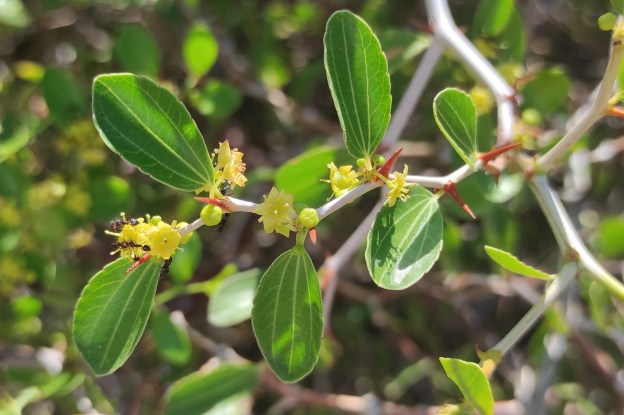
Photo: Ziziphus lotus, © Juan Valentín CC BY-NC 4.0 https://www.inaturalist.org/photos/427040191. No modifications made. Available under public license.


This week, comparing the benefits of pleasure with the rewards of good work.


A recurring challenge of my life is finding a good work-life balance. Perhaps central to this conundrum is the fact that I simply enjoy the work that I do, so I’m more willing to approach something work-related at all hours because it brings me joy. There are plenty of things that I need to do with my time, and plenty more that I know I will someday accomplish, yet I feel less pressed to push through any weariness or writer’s block to finish a given project today than I have in the past. For most things, I have a wide enough gap leading up to project deadlines that I can afford to work as I will on a given project. This is a luxury of the moment, which was foreign to me even a year ago, and I know well that the ample time I have now is a singular moment in my life that will likely not repeat often again. So, as long as I have the time to spend working on the Wednesday Blog and the handful of articles and book chapters that I’m writing, I’ll use that time to the best of my ability.

Each of us operates within the structures of our civilization, and within the cultural edifices built up over millennia that define our very identities. No one exists in true solitude everyone comes from somewhere. There are plenty of stories of loosening the burdens of life for the splendid abandon. Life is hard for all of us; one of the great unifying factors of the human experience is struggle. I doubt that either the richest or the poorest people alive today are fully happy and content in their present state. There are certainly things I would like to change about my life, things that I’m now approaching with the same resolve that I dedicate to my work and I see that among my family and friends too, such potent dedication to completing tasks difficult and easy alike that when all is said and done the doer can rest proud of their work.

Still, there is value to taking time to rest. I’ve developed a bad habit of sitting at my desk until I’m so tired that I can’t sit up straight, or even to the point that I find one eye closing so that I can keep reading with the other. These make for good stories but they’re bad habits overall. It seems to me like there’s so much to learn and not enough time to commit it all. We Americans are particularly bad at our work-life balance. While we have a strong work ethic in this country, we don’t give ourselves enough time to enjoy the fruits of our labor. I now work at some of the places where otherwise I would go to rest, places like the Kauffman Center for the Performing Arts where when I returned to Kansas City in December 2022, I was a frequent patron of the Kansas City Symphony’s performances until March 2023 when I signed on as a Team Captain of the Volunteer Usher Corps. Now, I work at the Kauffman Center and while I don’t get to relax and soak in the music there anymore, I’m proud of the work that I do and I work with people who I genuinely enjoy being around. In fact, working at the Kauffman Center has magnified the value of my historical research and writing even more. That’s what I love most in all the things that I do because it’s what I’m best at, and it’s through academia that I’ve met some of the people I most admire in all the world. The last two months then when I singularly devoted my attention to researching, writing, and editing a new and better introduction to my dissertation I poured all my effort and energy into the task and the work shows it. Yet I also drained myself of that same strength and realized that the working hours I kept four years ago when I was reading 12 hours a day in preparation for my comprehensive exams were no longer tenable. Life moves on, and with the changes in my life so too my stamina for these sorts of long hours have changed. I’m doing a lot more now than I was during the height of the pandemic in January, February, and March of 2021. Thus, it’s reasonable to say that I cannot do quite as much of the same things that I once did.

There are times when I can get so caught up in what it is I’m doing in the moment that I miss the world going by. I mourn a little bit how fast 2025 has been for me, there are things I wish I had done in the first half of this year that I failed to do for one reason or another. Often those reasons were out of my control. Yet they remain monuments to things that could have been. In other cases, though those things are goals which I turned away after finding better things to pursue. I’ve learned that I must remain open to change, flexible in my ways of living and doing things. How many times have I thought I was done with my dissertation only to be told that there was still more work to do? I know that endeavor defines my career and will continue to do so as long as I’m contributing to the scholarship of Renaissance natural history. Still, at times the idea of abandoning my efforts and falling into a state of rest has its appeal. At this moment, I would appreciate a vacation, even if only 24 hours away from my work. I took some time to enjoy the friendly company of my brother Hibernians and their families, and my Gaelgeoir friends this weekend at the Kansas City Irish Fest. It was lovely using that time to be with people whose company I enjoy, yet it was just as great a joy to return to my work this week and especially now that I’ve finished this round of work on my dissertation’s introduction to return to editing my translation of André Thevet’s 1557 book Les Singularitez de la France Antarctique. I had a delightful day spent reading through the Loeb Classical Library and the Perseus database hunting down Thevet’s Greek and Roman references on the geography, ethnography, and zoology of Sub-Saharan Africa.

The legacy of those ancient authors lies heavy on the European perception of their southern neighbors. The Greeks especially perceived Libya, their name for Africa, as the great desert landmass on the southern edge of their world. Thevet wrote that Libya was named by the Greeks for the southwestern wind, or Lips (Λίψ), a notion he got from Aristotle’s book the Situations and Names of Winds.[1] Thus, while Libya was the Greek name for Africa as a whole in antiquity, that the name was associated more with the southwest than the south suggests that their notion of Libya was west of Egypt and in the general vicinity today known as Libya. Further west along the Mediterranean coast of Africa lay an island where Homer records that Odysseus’s ship made a beachhead born by the north wind across what Robert Fagles translates as “the fish-infested sea.” On the tenth day “our squadron reached the land of the Lotus-eaters,” who Homer described as “people who eat the lotus, mellow fruit and flower.” Odysseus’s crewmen “snatched a meal by the swift ships” and found as “they mingled among the natives” that they “lost all desire” to do their duties 

“much less return

their only wish to linger there with the Lotus-eaters,

grazing on lotus, all memory of the journey home

dissolved forever.”[2]

The lotus-eaters of the Odyssey who live in bliss induced by the plant. Their worries carried far away they could bask in the glow of their sun and live out their days in a sense of peace. Yet Odysseus saw in this idyll a great distraction from what must be done, he and his crew needed to still return home to Ithaca. The king in his wisdom continued his story,

“But brought them back, back

To the hollow ships, and streaming tears––I forced them,

Hauled them under the rowing benches, lashed them fast

And shouted out commands to my other, steady comrades:

‘Quick, no time to lose, embark in the racing ships!’––

So none could eat the lotus, forget the voyage home.”[3] (9.92-117)

The danger lay less in an immediate threat to life and limb but rather in a threat to mission, to vocation. Odysseus knew his charge was to shepherd as many of his men home as he could; what a tragedy it was that after all his efforts he returned home alone. The threat of the lotus-eaters lay in their carefree abandon of the need of self-preservation. Eventually, had the King of Ithaca and his men stayed on the island they would have faded in body and in spirit, dying not in war but by becoming stale and wasting away slowly until they had not even their memory to keep alive. Too much of a good thing becomes a bad thing, just as everything changes over the long dance of time.

Moderation then is the best way of living, to do things such that we humans not only survive but thrive in the conditions in which we find ourselves. Aristotle expresses this best in his Nicomachean Ethics that for every sort of action or feeling there is an excess and a deficiency and between them a mean which is the moral virtue. Thus, the lotus-eaters lived in a state of self-indulgent excess, born from their love of the lotus plant and the way it can make all their troubles disappear.[4] Aristotle argued that “temperance and profligacy are concerned with those pleasures which man shares with the lower animals, and which consequently appear slavish and bestial.”[5] It is human to have passions, desires, and urges to do one thing over another, yet it is an entirely different thing to give into those passions and abandon control over one’s own life. I think it is a greater sorrow to give up this control thoughtlessly than it is to have that control taken from you, even if the act of subjugation remains in the eye of the subduer and only as powerful as society wills it to be. This is something we too often forget: so many of the bad things that go on in our world are things of our own making. We choose to allow rampant gun violence in our country, or to let the institutions of our democracy crumble, or to let people go hungry, die from treatable diseases, and remain illiterate all because people in positions of power benefit from having others in need. I suspect that we don’t have to live like this. Perhaps the root of these societal woes comes from an understandable inability to understand death, that final act of life which often is so very unfair to the dying and those left behind. So long as the greatest inequity exists then why should we bother with trying to fix our own problems?Dear reader, I’ve been writing this Wednesday Blog now for four and a half years, and I’ve always said that my one rule for this publication is that I will end it once it’s no longer fun to write. Just before the pandemic during a family gathering, one of my uncles remarked that he had no interest in retiring soon because he loves the work he does. This struck me because it explains why I’ve stuck around in academia in spite of all the trouble I’ve been through in these past few years. I do this work because I love it; I write because I enjoy writing, and I’m writing to you today to suggest that we could make our world a better place to live for ourselves and our children and grandchildren who’ll come after us, we just have to leave the island and its lotuses and climb back into our boat and set out onto the fish-infested sea again. For all that I’ve learned about a great many topics, I still often need reminding to do basic things like stop reading or writing late at night and go to bed. I suspect that’s the case for most of us, that we get caught up in the worries or passions of the day and lose sight of the good things that we can do to really find true peace. Here in the United States the first big step that we ought to take is reconsider how we prioritize work to such a degree that it becomes life itself. We ought to work to live, not live to work. On this Labor Day week that’s as good a starting place as any.


[1] André Thevet, Les Singularitez de la France Antarctique, (Antwerp, 1558), 4v ; Aristotle, Situations and Names of Winds 973b, 12–13.

[2] Homer, Odyssey 9.106–110, trans. Robert Fagles, (Penguin, 1996), 214.

[3] Homer, Odyssey 9.110–117, trans. Fagles, 214.

[4] Aristotle, Nicomachean Ethics 1118a.

[5] Aristotle, Nicomachean Ethics 1118a, 8.
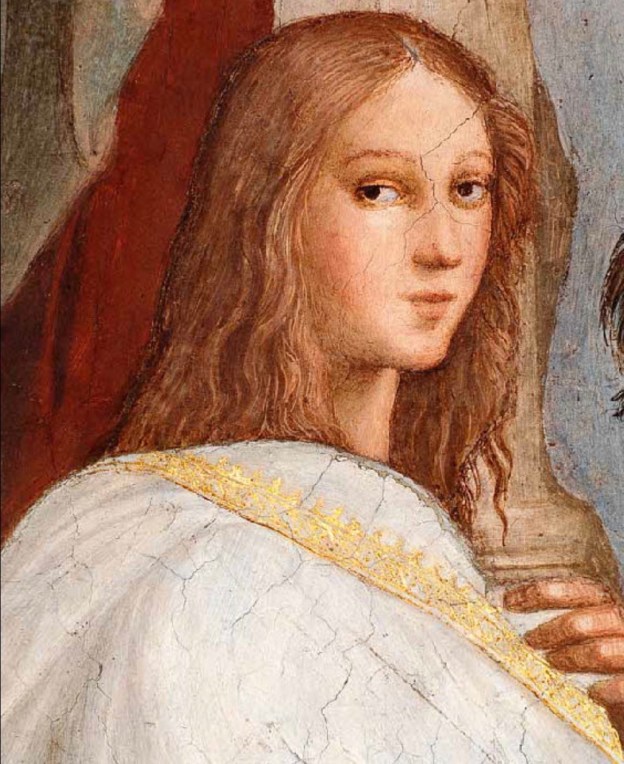

A figure from Raphael's "The School of Athens" variously identified as Francesco Maria della Rovere, Pico della Mirandola, or Hypatia of Alexandria.

On Knowledge

This week, I want to address how we recognize knowledge in comparison to the various fields of inquiry through which we refine our understanding of things.—Click here to support the Wednesday Blog: https://www.patreon.com/sthosdkaneArtRaphael, The School of Athens (1509–1511), Apostolic Palace, Vatican Museums, Vatican City. Public Domain.Sources“On Writing,” Wednesday Blog 6.27.Surekha Davies, Humans: A Monstrous History, (University of California Press, 2025).Marcy Norton, The Tame and the Wild: People and Animals After 1492, (Harvard University Press, 2024), 307.Dead Poets Society, (1989) "What will your verse be?" Video on YouTube.


This week, I want to address how we recognize knowledge in comparison to the various fields of inquiry through which we refine our understanding of things.


Lately my work has been dedicated to a thorough review of the historiography within which I’m grounding my dissertation. I wrote about this two weeks ago in an essay titled “On Writing.”[1] My research is historical, yet it touches on secondary literature which operates within various fields within the discipline of history. These include Renaissance history, and its larger sibling early modern history, the history of cartography, the history of animals, the history of botany, and more broadly the history of early modern science. Methodologically, I owe a great deal to two great twentieth-century Francophone anthropologists, Alfred Métraux (1902–1963) and Claude Lévi-Strauss (1908–2009). While Métraux and Lévi-Strauss aren’t considered directly in the historiographic section of the new introduction that I’m writing for my dissertation, which is limited to sources published since the millennium, they nevertheless stand tall in the background of my history.

Today we often talk within academia about a desire for interdisciplinarity in our work and our research. We’ve found ourselves too narrowed by our ever shrinking fields and seek greener common pastures for grazing as our intellectual and pastoral ancestors alike once knew. In my case, this interdisciplinarity lies more in my efforts to incorporate historical zoology into my work, a methodology which seeks to use zoological methodology and theory to explain historical animals. I have friends who study many things. Among them is one whose passion for history, classics, and mathematics has come together to craft a dissertation which seeks to demonstrate the intersections between those three to better understand the great transitions in human inquiry. Another seeks to follow the medical connections across oceans between disparate regions in the Americas and Europe that nevertheless existed even if they seem remarkable today. Still more, I have a friend who applies basic economic need to explain a complex diplomatic situation that once existed between the Venetian Republic and the Ottoman Empire in the Adriatic Sea. All of these historians of whom I write are applying a degree of interdisciplinarity to their work that reflects their own disparate interests and curiosities. In early modern history we talk about curiosities as objects which were collected from disparate and exotic lands into cabinets to display the erudite collector’s prestige and wealth. I say our curiosity is something to be collected by those worthy archives, libraries, museums, or universities that will employ us in the near future and for us to feed with new ideas and avenues of investigation that we will never be bored with life.

In all of these things, there is an underlying genre of knowledge which I am addressing. I’ve written thus far about history alone, yet it is the same for the anthropologists, astronomers, planetary scientists, and physicists who I know. Likewise for the literature scholars and the linguists. Our fields of inquiry all grow on the same planet that comprises of our collected knowledge. In English, this word knowledge is somewhat nebulous. To me, it says that we know things broad or specific. In London, for instance, the Knowledge is the series of tests which new cabbies must complete in order to learn every street within a certain radius of Charing Cross. The Latin translation of this word, scientia, makes things even more complicated as that is the root of the English word science. Thus, when we refer to Renaissance science, there is always a caveat in the following sentence explaining that “this is not science as we know it but a sort of protoscience.” I was advised, similarly, after a particularly poorly received presentation at a workshop at the Museum of Natural Sciences in Brussels in October 2023 that I shouldn’t refer to “sixteenth-century conservation” because no such concept existed at the time; instead, it would be better to discuss a “genealogy of conservation.” This sense that modern terms, in use since the Enlightenment of the eighteenth century, ought not to be pulled further back into the past I think loses some of the provenance of those terms and how the Enlightenment philosophes first came across them. 

I find it telling that the Ancient Greek translation of knowledge, γνῶσις (gnôsis), is a word with which I’m more familiar from theology and the concept of Gnosticism whereas scientia reminds me of philosophy and the other fields of inquiry which grew from that particular branch of the tree of human curiosity. One might even say that philosophy and theology are a pair, siblings perhaps? They seek to understand similar things: on the one hand an inquiry into thought, and ideally wisdom, and on the other a search for the nature of the Divine, which at least in my Catholicism we can know because we are made in the Image of God. The division here between the Ancient Greek term being affiliated with faith and the Latin one with reason I think speaks to the Latin roots of my own education in Catholic schools and at a Jesuit university, where I learned about Plato and Aristotle, yet I recognized Aristotle’s Historia animalium (History of Animals) by its Latin name by which it was generally known in Western Europe for centuries before the rise of vernacular scholarship rather than by its Greek original Τῶν περὶ τὰ ζα ἰστοριῶν (Ton peri ta zoia historion). Note that the English translation of this title, History of Animals reflects better the Latin cognate of ἰστοριῶν rather than the better English translation of that Greek word, Inquiry.

Added onto these classical etymologies, in my first semester Historiography class at Binghamton University I was introduced to the German translation of scientiaγνῶσις, and knowledge. Wissenschaft struck me immediately because I saw the German cognate for the English word wizard in its prefix, and because I knew that the -schaft suffix tends to translate into English as -ship. Thus, my rough Anglicization of Wissenschaft renders Wizardship, which is rather nifty. Yet this word Wissenschaft instead was seen in the nineteenth century as a general word which could be translated into English as science. This is important for us historians trained in the United States because our own historiographic tradition, that is our national school of historians traces our roots back to German universities in the early and middle decades of the nineteenth century. I remember long sessions of my historiography class at UMKC discussing the works of Leopold von Ranke (1795–1886), the father of research-based history. I felt a sense that this concept of Wissenschaft seemed relatable, and as it turned out that was because Irish has a similar concept. 

Whereas in English we tack on the suffix -ology onto any word to make it the study of that word, in Irish you add the suffix -ocht. So, geology is geolaíocht and biology is bitheolaíocht. Yet note with the second example that the suffix is not just -ocht but an entire word, eolaíocht. This is the Irish word for science, added onto the end of bitheolaíocht to demonstrate that this word refers to the study of bith- a prefix combining form of the word beatha, meaning life. So, biology then is the science of life itself. Powerful stuff. I appreciate that Irish linguists and scholars have sought overall to preserve our language’s own consistency with its scientific terminology. It means that these fields of study, these areas of knowledge, can exist purely within the purview of the Irish language without any extra need to recognize that their prefixes or suffixes come from Latin, Greek, or English. There are some exceptions of course: take zó-eolaíocht, the Irish word for zoology, which effectively adopts the Greek word ζῷον perhaps through the English zoo into Irish. Would it not have been just as easy for whoever devised this hyphenated word to instead write ainmhíeolaíocht, translated into English as the science of animals? Here though I see more influence from English because this language adopts as much as it can from other languages out of prestige and a desire for translingual communicability. As an English speaker, I find scholarly works often easier to read because we share common etymologies for our words relating to knowledge. English’s sciencegeology, biology, and zoology are French’s sciencegéologie,biologie, and zoologie. In English, we drop any pretense of Englishness to clothe ourselves in a common mantle familiar to colleagues from related cultures around the globe. In academia this is to our mutual benefit, after all so much of our work is international. I’m regularly on webinars and Zoom calls with colleagues in Europe for instance. I believe this is the lingering spirit of the old scholarly preference for Latin as a lingua franca which at least to me seems close enough in the past that it’s tangible yet realistically it’s surely been a very long time since any serious scholarly work beyond classics was published in Latin for the benefit of a broad translingual readership?

I for one admire the Irish word eolaíocht and its root eolas, which translates into English as knowledge, that is an awareness of things because eolaíocht represents a universal concept while retaining its own native nature. So often in my research I am discussing the early assimilation of indigenous cosmovisions, to borrow a Spanish word put to good use by Surekha Davies in her latest book, into the nascent global world centered on Europe.[2] I see how these cosmic conceptions faded until they were rendered in Gothic or Latin letters on the voluminous pages of encyclopedic Renaissance general and natural histories which remain among the most often cited primary sources for these indigenous cultures who Marcy Norton argued in her 2024 book The Tame and the Wild: People and Animals After 1492 had their own classical past made remote from their colonial present by European contact, conquest, and colonization.[3] Seeing these indigenous perspectives fade into their categorized and classified statuses within the cosmos defined by Europe’s natural philosophers I feel fortunate that my own diaspora (which was also colonized) has retained this element of our individual perspective. I first came across the -ocht suffix in the word poblacht, the Irish word for republic. A famous story from the birth of the Irish Free State during the Anglo-Irish Treaty negotiations in 1921 tells of British Prime Minister David Lloyd-George, a Welsh speaker, remarking to Michael Collins, an Irish speaker, that their choice of a republic was unusual because none of the Celtic languages naturally have a word for republic. That word evokes its Roman roots in the ancient Res publica Romana, the Roman Republic, whose northward expansion across the Alps led to the gradual death of the Continental Celtic languages, whose speakers’ descendants today are largely the Western Romance speakers of French, Romansh, Occitan, Catalan, Spanish, Galician, and Portuguese, among others. Romance languages are noted for their common descent from Latin, whence they all derive variations on the Latin word scientia; English gets science through Old French. “How are you going to name your new government in the Irish language?” Lloyd-George asked. Collins replied something along the lines of “a kingdom is called a ríocht, so this government of the people (pobal) will be called a poblacht. Thus, the Republic of Ireland is named in Irish Poblacht na hÉireann. Naturally, this word pobal derives from the Latin populus, so the shadow of Rome hovers even over unconquered Hibernia. Yet that is another topic for a different essay.

Let me conclude with a comment on the difference between knowledge and wisdom, as I see it. The former is far more tangible. We can know things through learning embodied best in living and in reading. I know for instance to look both ways before crossing a street because plenty of people in the last 140 years have been hit by cars, buses, and trucks, and you can never be too careful. Likewise, I know everything I do about the things I study through reading what others have written about these topics. It’s my job then to say what I will. In Whitman’s words made immortal by our recitation, the answer to the eternal question, “that the powerful play goes on, and you may contribute a verse.” That’s history, people! Reading the powerful play of what others have written and summoning up the courage to take the podium and have your say. I first heard this particular poem, as did many in my generation, recited by Robin Williams in the 1989 film Dead Poets Society. Knowledge is the recitation of these facts we’ve learned. Wisdom is understanding how these facts fit together and speak to our common humanity. What makes us human? I believe it’s as much what we know as what we remain ignorant of. Our ignorance isn’t always a curse, rather it’s another foggy field we’ve yet to inquire about, a place where someone’s curiosity will surely thrive someday. It is another evocation of eolas still to come in our long human story. How wonderous is that?


[1] “On Writing,” Wednesday Blog 6.27.

[2] Surekha Davies, Humans: A Monstrous History(University of California Press, 2025).

[3] Marcy Norton, The Tame and the Wild: People and Animals After 1492, (Harvard University Press, 2024), 307.


Classics

This week I'm discussing what the word "classical" means to me in musical as well as historical and political terms. — Click here to support the Wednesday Blog: https://www.patreon.com/sthosdkane

During my high school years in Kansas City, I would often listen to either NPR or 1660 AM, the local classical music station, on my 30 minute drive south to St. James Academy. In those years I continued to embrace Classical Music, especially opera, as an art form that remains a particular passion of mine, even to the point of several ill-fated attempts at composing.

Still, it strikes me that our term classical has a rather complicated set of meanings and uses. In the musical sense, it’s used to refer to the most highbrow of our genres, the rare musical tradition that still sees performances of music composed within the last 400 years rather than the decade-based music that usually makes the Pop and Rock charts. Classical Music tends to embrace the trappings of old European and American elite while also providing a gateway for the rest of us to enter that refined space and hear the radiant melodies and harmonies that have been the soundtrack for generations.

I began to explore Classical Music in my middle school years, like many Americans my introduction to this wide scope of music was through jazz and Gershwin’s blending of the classical and jazz orchestras. I’ve been wanting to write a blog post all about my appreciation for Gershwin’s music, though my continuing uncertainty regarding copyright law has kept me from ever publishing it or trying to record a podcast version of it. From Gershwin I jumped backwards to Mozart, Beethoven, and the other big names before settling both in the Baroque world with Lully and in the realm of the Romantics with the likes of Johann Strauss II, Verdi, Wagner, and Mahler. Today, I still love the music from all of those composers, yet I’m also drawn to more recent works written by the likes of Debussy, film music that fits in the 20th Century late Romantic tradition embodied by Prokofiev and the German film composer Gottfried Huppertz, who longtime Wednesday Blog readers and listeners will remember is the composer of the score for Fritz Lang’s 1926 science fiction film Metropolis

In the last couple of years, I’ve returned to my first unwitting introduction to classical music through the film music of the likes of John Williams and Elmer Bernstein and found myself drawn to electronic-classical compositions of Vangelis, which inspired the theme for the Wednesday Blog, and the choral classical-crossover albums of Christopher Tin and 2022’s The Moons Symphony written by Amanda Lee Falkenberg. I’ll gladly spend an afternoon listening to Jerry Goldsmith’s themes for the various Star Trek series and Mr. Williams’s compositions for Star Wars as much as I’ll choose to hear a Mozart piano concerto or Bernard Lallement’s Missa Gallica.

I’ve long thought that classical music saw its greatest innovation in the last century when its venue diversified from the concert hall alone to include the sweeping compositions that breathe life into films. Film music to me fits in the long tradition of ballet music. This comes out of the great silent film tradition of a century ago which reached its zenith in the late 1920s with epics like the original Ben-Hur and Phantom of the Opera films as well as with Metropolis and the other great German expressionist films. Sound film took some of the storytelling need off of the music as now the characters on screen could too be heard, yet the power of music in film was already clear. I relish the chance to hear the Kansas City Symphony perform a concert of film music, because even when it’s disassociated from the pictures that score was originally created to accompany that score often holds up on its own as a concert piece.

It is interesting then to consider that within the world of Classical Music the term “classical” generally only refers to a short span of musical composition within the long history of the wider “classical” genre. The Classical Period in music matches up with the Neo-Classical Period in art, architecture, and literature that ran from around 1750 to 1820. This period includes great composers like Gluck, Haydn, Mozart, Beethoven, and Schubert, all of whom worked in Vienna the beating heart of Europe’s music industry in this period. Yet by this definition the word classical implies a separation from the present, clear limits to its scale and span, and an air of antiquity.

In many other contexts the term classical refers to the far older Classical Antiquity of European History, the centuries during the height of Greek and later Roman civilization from around the 8th century BCE to the 5th century CE. When I write about the classics in my work, I am most often referring to people and ideas conceived during this 13-century long span of time. The classical fathers of Western philosophy––Socrates, Plato, and Aristotle––continue to be required reading in modern philosophy studies, while Aristotle and Pliny the Elder have a foundational role in my own discipline in the History of Natural History. Those two, Aristotle and Pliny, were central influences for the naturalists who defined the Americas in the sixteenth century, people like the focus of my dissertation André Thevet, as well as Gonzalo Fernández de Oviedo and José de Acosta who both wrote natural histories of the Spanish Americas, and Conrad Gessner & Carolus Clusius whose works were written about distant worlds from the comfort of their own homes back in Europe.

Classical is a tricky word because it can be interpreted as something which is removed from common life. It stands apart from popular things because of its high status. I’m often struck by the adoption of mannerisms and norms from the classical music world in popular music, there was one concert I attended nearly a decade ago where the musicians on stage went from dancing in circles playing their violins to suddenly, briskly, taking chairs and sitting in a neat orchestral row in them as though playing the part yet ever with a wink and a nod about it. There has been a general loosening of expectations and normalities in our culture, a sort of reaction to the manners of past generations. I tend to see our present moment as responding to the norms of the 1980s and 1990s, politically we are in a period of unstable transition from the Reagan Conservativism and Clinton centrism of the 80s and 90s, though that needle continues to move forward in time and it does feel now that American conservativism and liberalism now seems to be working in response to the policies of the Bush and Obama Administrations as our youngest generation of voters now were born after the Millennium. I’m happy to see more classical musicians on social media releasing short videos of their performances, rehearsals, and daily practice for all to see. That’s one way for the classical to remain vibrant in the present moment. Still, it worries me that today in 2023 classical and jazz tend to be the exception in popular performance compared to pop, rock, and country.

Kitty

Kitty, Easter 2022
This week, I want to tell you about my cat Kitty.

I’ll freely admit I’m more of a dog person. I am fascinated by cats, their social behaviors, their mannerisms, their temperamentality. Yet at the end of the day, I like the unconditional love a dog will always offer if you treat it well. This summer is my first one in over 20 years without a dog in my life, as my best friend Noel died a year ago at the start of June at the ripe old age of 16. Throughout all that time that I’ve had dogs, first Pretty the Beagle, then Spot the Aussie Shepherd, then Caesar the Black Lab mixed with a pony, and finally Noel the Shih Poo. 

I’ve also lived with a succession of cats. First among these was a black cat named Mrs. Norris, who we more commonly called Nora, then a grey cat we rescued who we named Crookshanks. After these two Harry Potter-themed names my Dad and I adopted a Siamese farm cat named Leo who could be very lovable but also was a bully to first Nora. Finally in the Summer of 2009 my Dad rescued a fourth cat, an orange and white cat who we named Kitty Kiernan, or Kitty for short.

When I first met Kitty on that Saturday afternoon, she was standing on an ottoman in our living room at our old house on the farm looking out the window onto the porch and into the western fields beyond. She quickly turned at my entrance and began talking to me, meowing with so much excitement. We became fast friends and over the next year she loved to sit in my lap when I was at the computer or watching TV. She also became best friends with Noel, after all Leo and Crookshanks were friends, and while Crookshanks was kind to Kitty, Leo was a jerk to her from the first moment they met. So, Kitty became Noel’s best friend. They slept together a lot when they were young and continued playing with each other even into their senior years until Kitty got tired of Noel jumping on her and tackling her and retreated to her own parts of our current house where Noel couldn’t reach her.

Over the years I’ve collected a large photo album of what I call “Noel Pictures.” I still look at them from time to time, I’ll freely admit I’m still in mourning for my pup. One of my favorites taken a few days before Noel died is of her sleeping on the old red Victorian sofa in the sunroom in my parents’ house with Kitty sitting on the floor below her looking up at Noel with concern clearly written all over her face. In those last few weeks Kitty came downstairs to check on Noel from time to time, and in the last day she came to say goodbye, sniffing Noel and rubbing her head against the ailing pup’s. The amount of affection those two showed for each other both in their youth and as they’ve grown up together really does touch my heart.

This week I’m reading about the premodern concept of the Great Chain of Being, a hierarchy of nature which places God at the top followed by Angels, then Humans, then Animals, followed by Plants, and finally Minerals at the bottom. This is inspired by both Plato and Aristotle, but especially Aristotle’s biology found in his book the History of Animals (Books 1 & 8). Aristotle classified life forms based on what sort of soul they have between a Rational, Sensitive, or Vegetative Soul. We humans, Aristotle wrote, had all three types of soul in ours. All other animals lacked reason but had the sensitive and vegetative types in their souls. Plants, as the name suggests, are just vegetative in their essence. When I was a freshman in high school my theology teacher said that animals don’t go to Heaven, that Salvation is reserved for humans alone, and even then, only those humans who willingly surrender themselves to God. As I’ve lived with Noel and Kitty, as well as Caesar, Spot, Leo, Crookshanks, Nora, and Pretty over the years I’ve come to see more in their eyes than just a partially completed soul. When I saw Noel die last June, I saw something leave her, the will to keep going, the consciousness that dwelt within her little body for sixteen years left her, and her body fell into a far more restful slumber once her last snores stopped.

On Monday evening, as with every other time when I sit down with my parents to enjoy that evening’s televisual feast (to borrow a phrase from Fawlty Towers) Kitty was quick to jump up onto my lap for some quality pet time. I’ve learned where she likes to be petted and try to do my best at it. Considering how blissful the look on her face often is after just a few minutes I suspect I meet my objective time and time again. This Monday though it went a step beyond just mere bliss. Kitty curled up in a ball on my lap and slowly, softly, gently began to snore as I petted her in one smooth stroke from forehead to the tip of her tail and back again in a circle. In that moment I too started to relax, to breath deeper, and to feel something of the serenity I often feel when I imagine myself floating in air or dream of the delicate beauty of the evolutionary order of the Cosmos.

Kitty conked out, June 2022

I don’t entirely agree with Aristotle’s idea that animals are inherently lesser than us, sure they aren’t human, but we are animals in our own right. We’ve just evolved differently than animals. Whereas Kitty’s daily routine involves napping, watching birds and squirrels out the windows, eating and drinking, and getting petted whenever there’s a free lap for her to lay down on, mine is far more focused not only on the abstract, both the past and the future, but also on affairs far from our home. Sure, I think about meals just as she does, and I long for those moments of physical interaction with the people I love, holding my Mom’s hand or giving my parents hugs from time to time. When it comes to Kitty though, I do enjoy letting her jump up onto my lap so I can pet her. I appreciate being appreciated. I like the fact that even when we do have disagreements (she has bit me from time to time) she always returns to me when she wants to.

I don’t know how much longer Kitty will be around, we never really figured out how old she is seeing as she was found by a friend in the parking lot of an apartment building here in Kansas City. But regardless of how much longer I get to be her friend, she’s taught me a lot about empathy and what it means to care for someone else.

Kitty snoozing on the clock, September 2015.

The Puzzle of the Source Material used by my Primary Sources

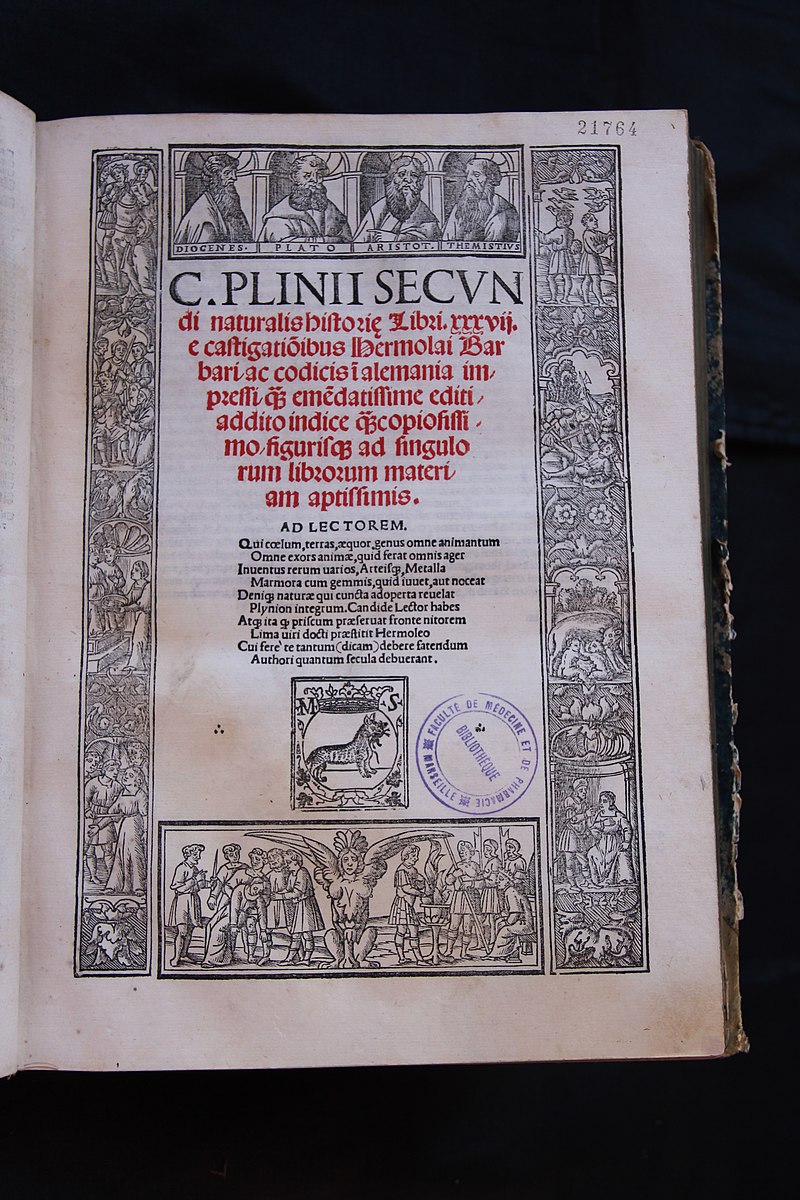
Title page of Pliny’s Natural History. Source: Wikimedia Commons, uploaded by user LDove (2018).

This is a rare blog post that deals directly with my day job. For those of you who aren’t aware, I’m currently a PhD Student in History at Binghamton University. I study sixteenth century French natural history discussing Brazil, drawing particularly from the works of André Thevet (1516–1590) and Jean de Léry (1536–1613). As such, my main primary sources are pretty straightforward: Thevet’s Les Singularitez de la France Antarctique (1557) and Cosmographie Universelle (1575) and Léry’s Histoire d’un voyage fait en la terre du Brésil (1578) form the backbone of my work. But beyond those sources is another layer of source material that those two authors used to ground their own writing. In the case of natural history, Renaissance Natural History is largely founded on Pliny’s Natural History (published 77–79 CE) and Aristotle’s works on natural philosophy and zoology, in particular his History of Animals (4th c. BCE).

Thankfully, I came into this project already fairly familiar with Pliny, having used his Natural History in a project on classical geography and the legacy of the voyages of Pytheas of Massalia (c. 350–306 BCE) in my undergrad. I’ll admit I’m less familiar with Aristotle outside of his works on ethics, but luckily for me and all other scholars there are plenty of resources available today that can give you everything from a quick citation to a thorough discussion of Aristotle. My two favorite are the Loeb Classical Library side-by-side Greek-English translations and the Perseus database provided by Tufts University. These are often the best resources I’ve found, and have in a sense made buying copies of these classical texts unnecessary, which my budget appreciates.

That said, in the context of Renaissance Natural History how much should I really be using these twentieth and twenty-first century editions of these classical sources? If I really want to be accurate to the period I’m writing about, I ought to be using sixteenth-century editions of both authors. The easiest and most accurate way to do this would be to figure out which editions were used by my authors and look for copies of those that have been digitized and are available online. But more often than not it’s not that easy to figure out which editions exactly were used. The secondary literature about Renaissance editions of Pliny and Aristotle provide some clues as to how the early printed editions differ from our modern edited ones, both in the original languages and in translation, but those articles and books don’t quite take the runner to home plate.

The best guide then seems to be using the examples and patterns set by other books that I know for sure were owned and read by these authors and use those to guess at which editions of Pliny and Aristotle they would most likely have known. One good lead for Thevet at least appears to be the fact that he had a connection to the court of François I (r. 1515–1547) who like Thevet came from the provincial city of Angoulême. This means if there’s a specific edition noted as being present in François I’s library, then that might be a good lead to follow to see what Thevet was reading. Looking at the nine books known to have been owned by Thevet, curiously all of them were in French, none in Latin. Generally, I’ve taken this to mean that he probably preferred to read in his native language, so he may have preferred a French translation of both Pliny and Aristotle rather than reading editions in Latin and Greek.

At the end of the day as much as I see a profound benefit in using these sixteenth-century editions of Pliny and Aristotle to really establish my research in the natural history being written in the Late Renaissance, I’m still going to keep my modern edited versions of those same classical works handy. After all, they’re much easier to search than any sixteenth-century version, so if anything the modern editions will continue to prove to be good road maps to help me navigate through their centuries old forbearers.