
Tag Archives: Awesome Alliance

Friends

This weekend, I got the opportunity to attend the wedding of one of my close high school friends. It was probably my first big event outside of my own family since being vaccinated, and the first time that I was indoors around a lot of other people who I didn’t know. There was a core group of us, friends from our days at St. James Academy, among the first three graduating classes of that fine institution, who tended to stick together throughout the wedding on Saturday afternoon and reception later that evening, a number of whom I hadn’t seen in nearly a decade.

All throughout the day and evening, I was struck by how much I had come to appreciate these people over the years, and the memories I had of our time studying together, and in many cases, making The Awesome Alliance (2009–2013) together. It seems to me that I never really came to appreciate the people around me until after we had all moved on with our lives, and especially until the COVID pandemic forced all of us to stop what we were doing for nearly 13 months, giving us all a lot of time to think.

I think my own appreciation for my friends from high school, undergraduate, my two masters degrees, and now my doctorate has been just as influenced by my own self-perception as it has on any of their actions. My own shyness and self-doubt often left me doing less than I wanted to, being less outgoing than I hoped for, often feeling like Chaplin’s Little Tramp looking through the windows of the dance hall in The Gold Rush watching other people’s happiness from afar. On Saturday though, I did something I hadn’t done in a long time, at least since I began to overthink nearly everything: I danced at the reception, if only briefly. Sure, I still needed to announce some sort of justification aloud for why I felt like joining in the dance, something to justify it to my own self-doubt, so that I could let my guard down for at least a little bit and have a bit of fun with everyone else.

After the last year of on again, off again isolation, I’ve come to really appreciate what it meant to be with other people, family and friends alike. In the past I’ve written about how dearly I appreciated my friends and their willingness to spend time with me, but today my sentiments feel richer and fuller than before. Maybe it comes with maturity, I am after all nearing my 30th birthday. Getting to spend time with these people as an adult, rather than as a teenager was a memorable experience, and as I drove away that evening alone, I was struck as I have been in the recent past after similar events, at how much I appreciate these people who I spent a good four years of my life with. It reminds me to not take this current time, my time as a graduate student in the Binghamton History Department, for granted.

Why We Need Explorers

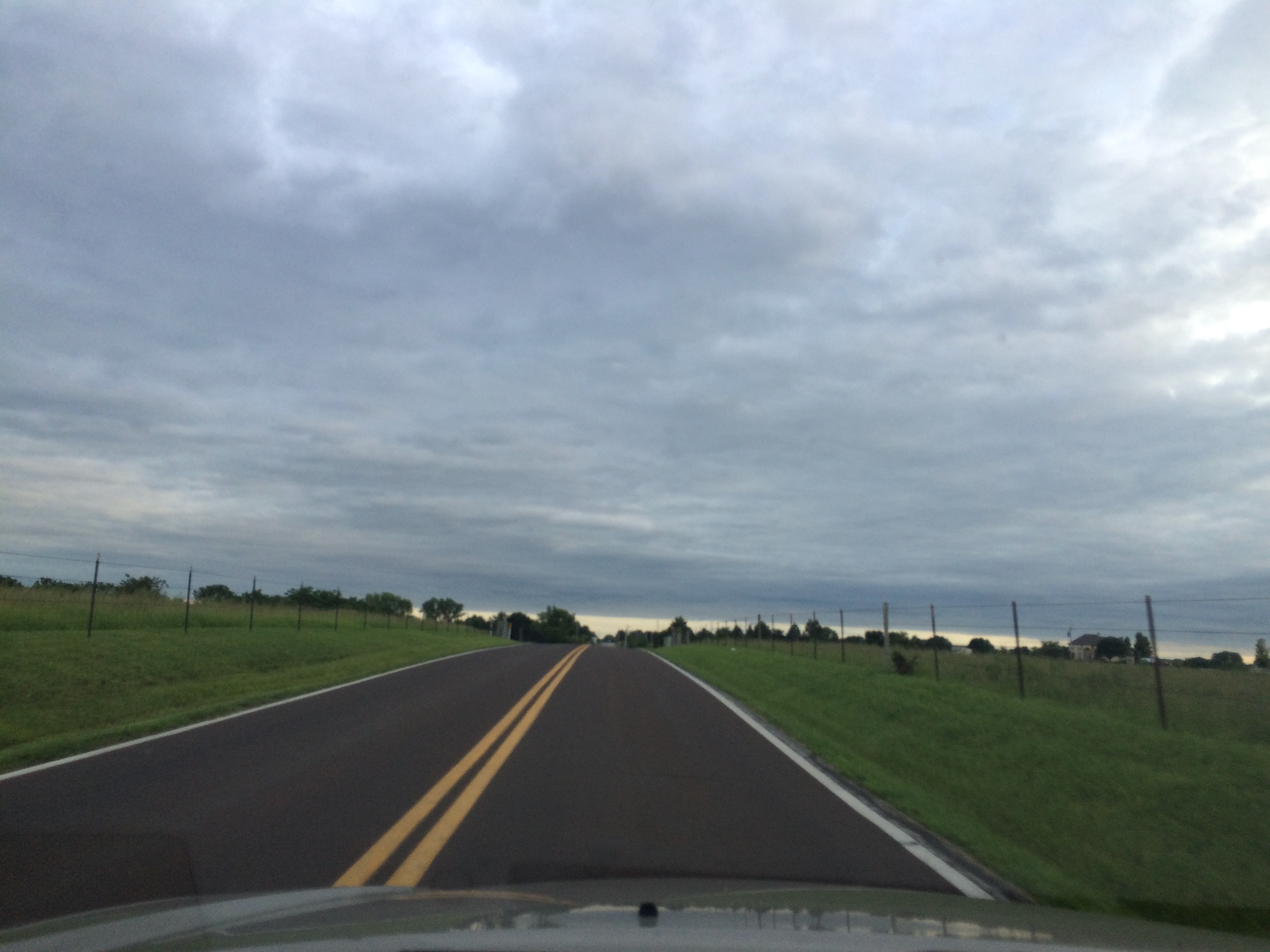
I’ve always loved the idea of exploration. I remember on the evening of Sunday, 31 May 2015, I decided to take my dog Noel for a drive down State Line Road here in Kansas City. We kept going south until the Sun started to set, making it as far as about 300th Street. Lately, during my time in Binghamton this Spring, I made a point of doing some sort of weekend drive into the surrounding countryside, just choosing a cardinal direction and driving until I decided to turn around. I suppose it makes sense then that I’d end up training as a historian of Renaissance explorers and travelers in the Americas.

When I decided to write about this topic rather than another post about grammar (you’re welcome), I started wondering why is it that so many of our history’s greatest explorers and most pivotal encounters happened at times of great social unrest at home? Columbus’s world-defining 1492 voyage launched the most recent great Age of Exploration, which I would say lasted from 1492 to around 1800, 1 yet much of that same period is also characterized by a series of disastrous internal conflicts in Europe collectively known as the Wars of Religion and the later eighteenth century dynastic wars of succession, and the first truly global war, the Seven Years’ War (the French and Indian War here in English-speaking North America). Why would a civilization so focused on its own internal divides, the prejudices and hatreds of its own communities, polities, churches, and states, also want to invest so much time, effort, and capital in exploring places in what were ostensibly other worlds across vast hitherto impassable oceans?

I think one main reason was well expressed by a Bonnie Tyler song, originally from the 1984 film Footloose, that my friends and I happened to lovingly use for the theme tune of our YouTube series The Awesome Alliance (2008–2013), they needed a hero, someone ambitious and daring who was wiling to push the boundaries of what was believed possible and achieve something extraordinary. In these cases, the extraordinary is encountering previously unknown worlds.

I wonder what might have become of a Europe wracked by generations of successive wars, after all, it’s important to remember that many of the continent’s major powers were at war with each other before the Reformation and Wars of Religion began. At that point, the European wars were largely dynastic fights between royal families like the Habsburgs, the Valois, and the Tudors. Naturally then, once the Wars of Religion had generally fallen out of fashion after the disastrous Thirty Years’ War, Europe settled down into a familiar pattern of dynastic warfare, only now between the Habsburgs in Austria and Spain, the Bourbons in France and also in Spain, and Hanoverians in Britain.2

All throughout the sixteenth, seventeenth, and eighteenth centuries, with some very real continuations into the nineteenth and twentieth centuries (here lies another historical debate), explorers traveled from their homes to faraway places. Their travels inspired people to keep looking beyond what was known, to keep pushing the boundaries of knowledge and society. The diversity that characterizes our world today wouldn’t have been possible without the explorers of 500 years ago challenging the mould of their day.

Today, we need to continue to celebrate and fund our explorers, to embrace them. We need their efforts to inspire us to remind us that we can to amazing things. When we reach for the stars as our astronomers and astronauts do, we discover new horizons over which we can glimpse. And when we wander into a new city or country where we might not’ve been before, taken that road less traveled, we meet people who enrich our lives with their stories, their experiences, their memories.

Wherever my next trip takes me, off into some place I may not have been before, I hope it’ll be somewhere exciting, somewhere new. Once we’re past the pandemic, and travel is easier and safer again, I hope to use my time in Binghamton to visit more of the Northeast, to see the Green Mountains of Vermont or to visit Boston again for the first time in 20 years. Maybe, if my timing works out right, I can drive down to the Space Coast in Florida and see one of the Artemis mission launches in 2022 and beyond, and see that new class of astronauts begin their long voyage to establish the first human outpost on the Moon.

Eventually, I hope, we’ll have a new name for the Moon as we discover and settle on many other moons and the planets they orbit. The horizon continues eternally, and while chasing after it might seem quixotic, it only means there’s always another adventure to be had, another place to explore out there.

“Holding out for a Hero,” the “Awesome Alliance” theme song

Notes

1 My fellow historians will no doubt recognize the fertile ground for historiographical debate here. For the sake of the sanity of my readers, I’m going to leave that for a later publication.

2 This is a gross over-simplification of 17th and 18th century European political history, especially coming from someone who’s TAing a class called “Europe Since 1500” at the moment.