
Tag Archives: Bibliothèque nationale de France

On Translation

This week, how I take nuance and particularity into account in my efforts as a translator.—Click here to support the Wednesday Blog: https://www.patreon.com/sthosdkane


This week, how I take nuance and particularity into account in my efforts as a translator.


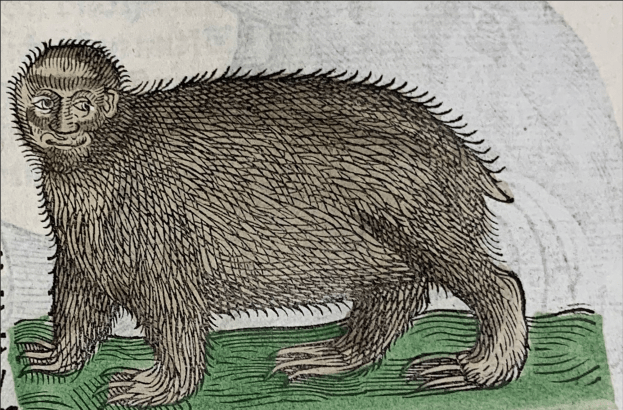
When I chose to study André Thevet (1516–1590) and the three-toed sloth in August 2019 I did so because I already knew French and the need to learn a new language was less pressing than if I’d chosen to study another source in the history of natural history. I chose Thevet because it was practical, and I chose the sloth because the thought of being a sloth historian made me laugh. From the first day working on Thevet, I found that my understanding of his books was heightened when I took the time to type out my own translations of his text. Thevet wrote in Middle French that is native to the middle decades of the sixteenth century. I arrived at this project very familiar with Early Modern English, the contemporary form of this language to Thevet’s time, as my history master’s thesis delt with sources in that chronological variety of English from Thevet’s generation and the one just before. I’ve never had much trouble understanding the most prolific author of Early Modern English literature, Shakespeare, but I think I’ve had a tolerance for varieties in speech that’s allowed for me to try to think beyond my own millennial Midwestern metropolitan American English and be willing to understand the likes of Shakespeare from a young age.

So, when I began translating passages from Thevet’s Singularitez de la France Antarctique for my own professional use in my dissertation, I decided that as long as I was translating that book I might as well translate it with the intention of sharing Thevet’s words beyond the scholarly analysis and critique which lie at the heart of my work as a historian. This first draft is built around the 1558 French edition published by Christophe Plantin (c. 1520–1589) in Antwerp and contains footnotes drawn from the 1878 French edition by Paul Gaffarel published in Paris, two Brazilian Portuguese translations by Sergio Amado (1978) and Estêvão Pinto (1944, using the 2018 reprint), and the partial 1986 English translation by Arthur Stabler and Roger Schlesinger which contains only Thevet’s North American chapters.

I finished the first draft of this translation in Summer 2023 and am now looking ahead toward the second draft which is the next stage of the project, and I hope the last one before I feel confident in formally writing to the publishing editors whose press sales agents I’ve spoken with about this project at conferences over the last two years. The second draft will consist of two main stages. First, I will cross-reference my translation and the 1558 Antwerp edition on which it is primarily based with the 1557 first and 1558 second editions published in Paris by Maurice de la Porte, two Venetian editions translated into Italian by Giuseppe Horologgi and published by Gabriel Giolito de’ Ferrari (c. 1508–1578) in 1561 and 1584, and the 1568 full English translation by Thomas Hacket published in London by Henry Bynneman. Second, I will seek to make my translation more understandable for a 21st century English-speaking reader while endeavoring to preserve Thevet’s particular mannerisms and voice, a writing style with which I’ve become quite familiar in the last 6 years to the point that I can now confirm at least two French translated manuscripts in the Bibliothèque nationale’s collections in Paris are verifiably written by Thevet. He had a way of writing that’s unmistakable.

These two competing axes create a binary star system around which my translation revolves. On the one hand, I want to be true to the original text, to preserve the author’s voice and something of their spirit which remains in those words. On the other hand, I need to make my efforts readable for my own contemporaries. Thevet and his contemporaries are notorious for long run-on sentences that would make Hemingway shake his head in earnest frustration. Where do I break up a long sentence while preserving its overall integrity? Furthermore, at what point should I decided to remove the bracketed notations of page breaks in the original text? There the 1558 Antwerp edition is most fully evident as its pagination has several quirks that make it stand out from the 1557 & 1558 Paris editions. At this point, Plantin published books with folio numbers rather than page numbers, so the first two pages were in fact folios 1 recto (1r) and 1 verso (1v). These names refer to the custom that scribes traditionally started writing on the back side of the vellum (recto in Latin) and then flipped the skin over once ready to continue writing on the verso, or opposite side. In several instances the folio numbers actually decrease in the book, notably in Thevet’s chapter on the sloth, which makes the footnotes on that core element of my research particularly confusing if you’re paying close enough attention. So, in summation the inclusion of the page breaks with the folio numbers keeps my translation grounded in Plantin’s edition, however that may break up the text in an uncomfortable way for some readers.

Ultimately, I am not the author of this book, merely a herald relaying it on for our time. My voice is there in the handful of introductory chapters I’ve written to go along with this book. These chapters describe Thevet as a reader of travel literature and place his accounts of the Americas beyond what he himself saw in Brazil in the context of their French and Spanish sources. I see my efforts in this as a means of introducing the reader to Thevet, a man who today exists on the furthest margins of the popular imagination of the First Age of Exploration in the English-speaking world. Thevet remains present in academic circles, there were at least four papers presented at this weekend’s annual meeting of the Renaissance Society of America in Boston which discussed Thevet, mine included. I hope this book will be useful to fellow academics and perhaps will entice curious readers to learn more about this man who I’ve spent the last 6 years of my life getting to know.I find myself drawn as much to the effort of a translator as I do to the work of a historian these days. We live in such a fractious time when reasoned debate and earnest discourse is riddled with dangers and seemingly improbable to undertake. I feel as though I’m constantly translating my thoughts and character for others to understand me. It’s why I enjoyed my time in Boston because that city has a large enough Irish American population that when I’d tell my name to a cashier to put on a carry-out order they’d actually spell it in the proper Irish manner; this never happens in Kansas City. That said, I felt that I had to translate my expectations and personal limits to be able to live even for just a few days in a city as expensive as Boston where I was often paying double what I’d normally pay at home in restaurants. In translating I recognize that each of us think in slightly different ways and see the world in which we all live in just as unfamiliar terms to one another. Difference enhances our common humanity and elevates our manner to something greater than ourselves.

Two Cities

This week, a few words about the trip I just completed to London and Paris. — Click here to support the Wednesday Blog: https://www.patreon.com/sthosdkane


This week, a few words about the trip I just completed to London and Paris.


If there’s anywhere in Europe, I’ve visited more than anywhere else it’s London and Paris. 

When I was eight my Mom took me on a two week tour of those two cities which I found to be life changing for how they opened my eyes to a far wider world than what I’d previously known. My fascination for European history began on that trip; it’s a fascination that I’ve made into my career. I remember that February she put a “Learn French” cassette tape on while our family was driving through the hills of northwestern Illinois from Chicago to visit relatives at Mount Carmel, the Motherhouse of the Sisters of Charity of the Blessed Virgin Mary in Dubuque. I still think of that evening, watching the sunset over those hills, as the moment when I was first introduced to French, a language that I have come to define a great deal of my brand as a historian, writer, and translator by.

I remember thinking after our return from Paris in June 2001 that before that trip when I thought of what I was most excited about it was the Space Shuttle, dinosaurs, cowboys, and American history. Yet after that trip, while still thrilled by these things they still felt dulled somewhat by a new passion for medieval castles and far older history than what we had in our young republic. What’s funny to me about this is that these same thoughts returned in the days before I left for Europe. While normally Memorial Day wouldn’t have as much of an impact upon me, I think it’s pairing this year with the 80th anniversary of D-Day left me far more profoundly moved with pride in our republic, and what our people have accomplished across these generations. I returned to Europe then in much the same mindset that I had when I first visited London and Paris 23 years before, albeit with those 23 years of experience framing my thoughts.

London remains a home-away-from-home for me, having lived there for a time. Some of the optimism I remember feeling in that city in 2015 and early 2016 seemed to be renewed, if slightly, by the prospect of the upcoming General Election which will likely see a change in the governing party for the first time since 2010. I arrived there not entirely wanting to cross the Atlantic on June 6th. I always feel a hint of fear when I travel, especially overseas; this has been magnified since the pandemic when international borders were closed and for years afterward travel remained severely limited. The thought of being stranded somewhere away from my family leaves me shuddering, and has given me more pause when considering travel since 2020. Still, the flights, trains, lodgings, and some museum visits booked, I left home on the morning of June 6th and flew west to San Francisco, where I caught my transatlantic flight on United to Heathrow.

Why go west to go east? I tend to use my miles to fly international, and it was 30,000 miles cheaper to fly through San Francisco than my usual connections in Chicago, Newark, or Washington, or even through Toronto on Air Canada. Like last time, I felt a renewed sense of welcome when I arrived in London, and throughout my stay with friends in the Home Counties, I knew that this remained a place where I could build myself a home if the opportunity or need arose. One key difference from my last trip in October was that I was less concerned with visiting every single place I wanted to see from my time living there. I didn’t feel that desperation or passion to see and do everything that I’ve long known. Rather, I was content to be there again, and to enjoy what I was able to see and do. I prioritized seeing special exhibits at the museums alongside the permanent collections and was thrilled to visit the Tropical Modernism Architecture and Independence exhibit at the V&A, an exhibit on birds at the Natural History Museum, and two exhibits at the British Museum. 

The first of the British Museum exhibitions spoke to the initial field of study I wanted to pursue after finishing my MA in International Relations and Democratic Politics at the University of Westminster. It followed the life of a Roman legionary during the reign of Trajan, and provided a full introduction to the legions and auxiliaries of the Roman Army during the height of the Empire. In 2016, when I chose to return to History from Political Science, I wanted to study the expansion of Roman citizenship to provincial subjects either after the Social War during the late Republic or during the reign of Caracalla when in 212 CE the emperor extended citizenship to all free men in the Roman Empire. That initial interest eventually led me to where I am today studying the natural history of the Americas in the Renaissance, by admittedly a circuitous route. The second British Museum exhibition was closer to what I study today in its chronology as it covers the life and works of Michelangelo Buonarroti (1475–1564). It was inspiring to see his own self-portrait gazing out at us visitors, and to see his letters and sonnets in his own hand on paper there in the exhibit gallery.

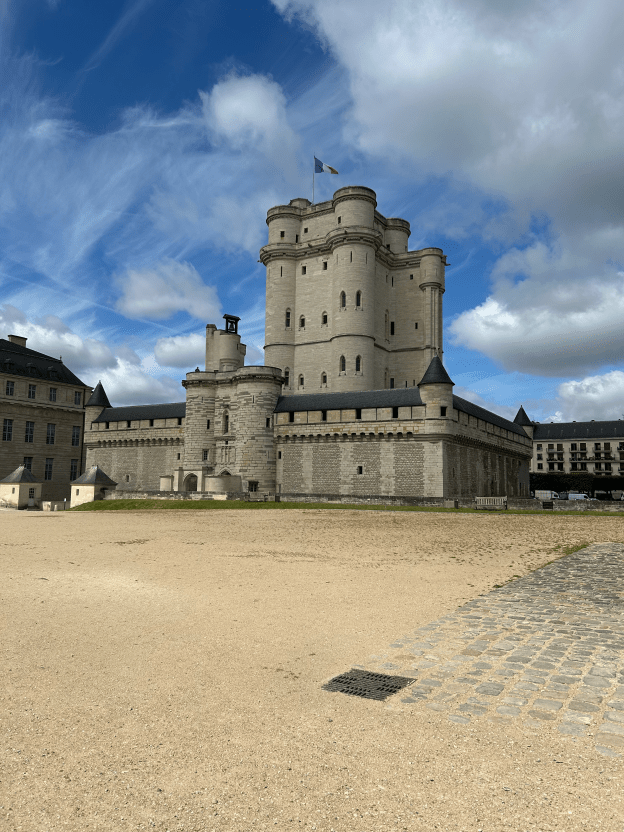
After a weekend in London, I traveled south to Paris for a conference on collecting in early modernity that was held at the École des Hautes Études en Sciences Sociales (the School for Advanced Studies in the Social Sciences) in their building on Boulevard Raspail in the 6th Arrondissement. The building in question is important in the historical profession as it is where the French Annales school has been based since 1947, the Annalistes being quite influential in introducing new methods and theories of studying history to the profession globally in the postwar years. There, I presented my research into the provenance of two Tupinambá ritual artifacts today housed in the Musée du Quai Branly, also in Paris, which were likely brought to France by André Thevet in 1556 as gifts from the Tupinambá leader Quoniambec (d. 1555).

I’d intended to use the majority of my time in Paris to work in the various departments of the Bibliothèque nationale de France and Archives nationales to look at some sources I didn’t have online access to, but instead in the months leading up to the trip I was able to find and request several of these documents be emailed to me, while others were restricted due to their poor physical condition. As a result, I only viewed one document, Thevet’s 1553 French translation of the Travels of Benjamin of Tudela, a 12th century Sephardic traveler who toured the Mediterranean. I spent a lovely morning sitting in the ornate Department of Manuscripts in the BNF Richelieu site reading and photographing Thevet’s translation. It was the first time I’d ever seen Thevet’s handwriting in person and gotten somewhat of an unscientific sense of the man himself between the lines. Looking at the folios, I had a sense of familiarity in a man who started with elegant pen-strokes which with each turn of the page became quicker and impatient. The last significant work that I wrote out by hand, a play I wrote in 2011 titled The Poet and the Lamb, had the same feel to it. I enjoyed writing it by hand, but it proved to be more of a burden than the art I intended it to be when I eventually typed it all out after all.

My theory is that considering Thevet took the time to translate Tudela’s travels into French, all 56 folios (112 pages) of it, that he likely modeled his own Mediterranean travel account La Cosmographie de Levant and his later Atlantic travel account Les Singularitez de la France Antarctique on aspects of Tudela’s work. I found my efforts at reading his Tudela translation were aided by my deep knowledge of the Singularitez, which I’ve translated into English. Thevet has a particular style and verbiage that you get to know after translating an entire book of his, a project that for the first draft alone took me three years to complete.

Without any other archival visits scheduled, I spent the rest of the week enjoying a few days of life in Paris. I visited several museums each day, wandered about the city from bakery to bakery (it’s not just a joke I tell about the bakery crawl being my favorite type of walk), and looking around bookshops selling both general titles, specialized academic titles, and several antique bookshops selling volumes largely published in the 18thand 19th centuries, though there were several I browsed through printed in the 17th century.

All around, this was a pleasant trip. When I returned home to the United States on Bloomsday, the holiday commemorating Leopold Bloom’s day about Dublin on 16 June 1904, I was left with an unsettling feeling that both in climate and in history that I fit in better in Europe than in America. For one, none of the muscular or joint pains I often feel walking around Kansas City are present when walking similar distances in either London or Paris. For another, the pace of life and the dearth of car dependency is certainly better all-around than how we’ve built our cities and lives here in the United States. I’d happily take the bus around town at home, if the temperature dropped below 90ºF (32ºC) during the day, and if the bus schedule worked with my own.

In these two cities I’ve grown to become much of the guy who I am today. This was my sixth visit to Paris, and a return to an old hometown of mine in London once again. In them, to draw the Dickens analogy out further, I’ve seen some of the best of times, and yes some of the worst of times, yet I’ve learned now to go with the flow, to not worry too much, and to embrace the opportunity to travel to these places. Travelling has made our world far smaller than ever before, so that the 4,500 miles (7,242 km) between Kansas City and Paris seem not as far as it really is. After all, before aviation it would’ve taken close to 10 days to travel between these two cities, whereas now it’ll take only a day.