Tag Archives: Bill Nye

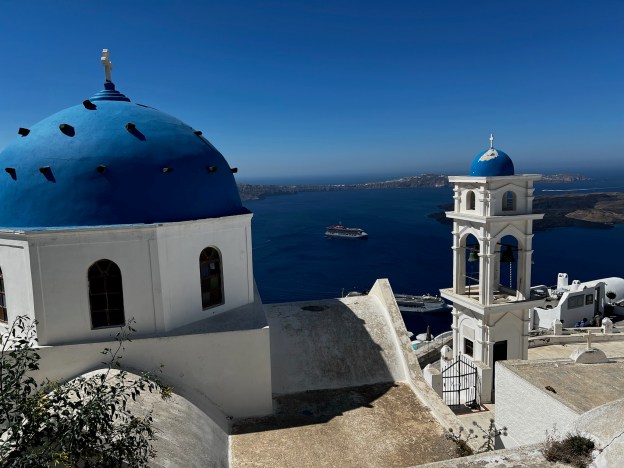
A view from behind a church on the Greek island of Santorini.

On Simplicity

This week, how the greatest wisdom is simple in nature.—Click here to support the Wednesday Blog: https://www.patreon.com/sthosdkane—Sources:Photo by Elizabeth Duke.[1] Nikos Kazantzakis, Zorba the Greek: The Saint’s Life of Alexis Zorba, trans. Peter Bien, (Simon and Schuster, 1946, 2014), 81.[2] “Elephant Tails,” Wednesday Blog 5.24.[3] “Asking the Computer,” Wednesday Blog 5.26.[4] “On Political Violence,” Wednesday Blog 5.17.


This week, how the greatest wisdom is simple in nature.


Over the last several weeks I’ve written about forms of knowledge and knowledge collecting. Knowledge is easier to identify, as it is empirical in its core. Yet on a scale even beyond knowledge lies wisdom, the cumulative sum of humanity’s understanding of the underlying character of human nature. It’s very easy for me to get bogged down in words, words, words and tie myself in knots which I find nigh unbreakable and even more undecipherable. Yet amid all those layers of paint there are often gems which merely need good editing to illuminate. This is what fills my days today, a big edit which I hope will signal the beginning of the end of my years of doctoral study.

In these years, while I’ve devoted my days to reading histories of the Renaissance intersections between the Americas and France, I’ve made a point of reading for fun all the same. I need to read things not related to my research for the escape they provide. At times these fun readings have been more thoroughly connected to my research, as in my recent choice of Jason Roberts’s Every Living Thing, yet in Binghamton I spent many happy evening hours reading Star Trek anthologies and novels while returning to my vocation each day. Of the stories that I’m drawn to, I enjoy reading books and watching films with characters that embody a certain lived experience that begats wisdom. Recently, this desire for such a character led me to read Peter Bien’s new translation of Nikos Kazantzakis’s Zorba the Greek: The Saint’s Life of Alexis Zorba. This is phronesis. Zorba’s wisdom is one that’s been gathered over the sixty years of his life and funneled toward living a good life as he sees fit. His is a simple wisdom which recognizes the physical limitations of the body in opposition to the limitless potential of the soul. I loved the first dance scene in Zorba the Greek in which the old miner erupted upward from his dinner and began to leap about. Kazantzakis describes it as though his soul could not be contained by his body and that it was that spiritual essence which spoke so fervently and wordlessly of its own joy. Kazantzakis can make even the simplest of scenes appear elegant and luminous. His description of the passage of time on the Mediterranean reaching up from Africa to the southern shore of Crete is one of my favorites. Here, I quote from Bien’s translation with the affection that beautiful prose deserves:

“The immense sea reached African shores. Every so often a warm southwest wind blew from distant red-hot deserts. In the morning the sea smelled like watermelons; at midday it vented haze, surged upward discharging miniature unripe breasts; in the evening, rose pink, wine red, eggplant mauve, dark blue, it kept continuously sighing.”[1]

The wisdom inherent in Kazantzakis’s prose lies in his ability to evoke the variable texture of nature, the changing face of it with the passage of the day. I remember once in Binghamton I have the idea to take a selfie once an hour throughout the day to see how my face, hair, stubble, and what not changed as the hours passed. I know for instance that if I want to have a lower register in my recordings of this Wednesday Blog that I need to record first thing in the morning when my tenor is closer to a baritone. This week, owing to a general sense of exhaustion, I haven’t gotten around to writing this essay until nearly 90 minutes before when the podcast normally publishes. Rather than force myself to write something earlier in the day I waited and gave myself the time to think of something good.

Wisdom is knowing that worrying won’t get you anywhere; it lies in the peace of mind and heart that keeps us happy and healthy. This evening, while I was having dinner with one of my best friends and his wife and young son, I brought up my particular conundrum of the day. Jokingly, the suggestion that I write about simplicity was made. I shrugged, thinking of William of Ockham, one of Bill Nye’s favorite history of science examples to use, and decided to run with it. After all, often the wisest people that I’ve met are the ones who embrace the simplicity of living a life embracing their own nature. The wise know that they are going to grow old and die and don’t worry about it. I find myself thinking of this as I watch without much resource as my hair recedes. I’ve joked that my particularly follicly impaired genes may require an eventual investment in a variety of hairpieces for different degrees of formality. I’ve grown in my own comfort with taking care of myself, applying sunscreen before going out on walks around the neighborhood now to mitigate the inevitable that comes from having largely Irish genes and living in the far sunnier Midwestern climate than my ancestors’ rain soaked home soil in Mayo. In his Saint’s Life, Alexis Zorba often doesn’t worry about these things and expresses frustration and even anger when the narrator, his boss, frets about the things he cannot control. I’m better at this than I have been, which is reassuring in some ways of looking at things, yet I still have room to grow.

Wisdom is trusting the people around you to do what they feel is best. If the simplest solution is often the best, then why aim to make things overly complex? Complexity requires forethought, or sometimes is the result of a lack of forethought. Last summer I delighted in writing several essays for the Wednesday Blog attempting to adapt chaos theory to explain human behavior.[2] We need both complexity and simplicity to understand ourselves and the world in which we live. Think about it: we cannot narrow things down to binary options. More often, the binary is one of a series of binaries which together form a logical thought or series. I marvel at the fact that computers most fundamentally work in the binary language of 1s and 0s, and that in this manner language and thought are boiled down to so rudimentary an interpretation. It’s for this reason that while I’m concerned by the rise and development of artificial intelligence and its misuse, I feel a sense of assurance that it is still limited by its basic functions and limited by the abilities of its artifice.[3] The human brain is a wonderous and ever complicated organ which evolved to fulfill its own very particular needs. On the simplest level the brain thinks, it sends directions to the rest of the body to keep the body operating. In a theological framework, I’ve argued that the brain may be the seat of the soul, the consciousness that is at the core of our thought. My earliest memory that I’ve written about here was the first time I recognized that particular voice of my own consciousness, which occurred sometime when I was 3 years old.[4]

Wisdom is intangible, it’s something that you have to learn to recognize. This is perhaps the most complex tenant that represents something simple. In order to truly become wise, one must understand that wisdom isn’t something you can buy off the shelf or write your way into. For all the words which Zorba’s boss writes, allowing them to consume him, he remains feeling unfulfilled in life. It’s why the narrator of the novel struck out from his books and sought to live among ordinary people, buying a stake in a lignite mine on the southern shore of Crete. On his way there in the Piraeus he met Zorba, the man who within a few pages became his foreman and the one who’d realize his idea of finding wisdom in the living world. The simplest explanations are often best. Zorba lives to enjoy the life he has, and when things go wrong––as they often do––he finds something to build upon and start over again.

A couple of months from now I’m going to be contributing my own experiences to a tacit knowledge panel at the History of Science Society’s conference in New Orleans about how I’ve been able to maintain a full research load and writing all year round with hardly any funding at all. I recognize that the circumstances of these past few years have been marked by my own poor decisions and mistakes that I’ve made along the way. Yet in spite of those, and bad luck in many respects, I’ve been able to continue with my work and to produce historical studies that are beginning to make a decent contribution to the history of science in the Renaissance and specifically to the history of animals in that same period. I’m looking forward to that panel, and to the two papers I’m presenting during the same weekend. Maybe, like Zorba, when things feel like they are about to go well I’ll feel the need to rise to my feet and leap into the air as though my soul were attempting to escape from my body. Simply put, for all the trouble that life has brought, joy is overpowering when pure.


[1] Nikos Kazantzakis, Zorba the Greek: The Saint’s Life of Alexis Zorba, trans. Peter Bien, (Simon and Schuster, 1946, 2014), 81.

[2] “Elephant Tails,” Wednesday Blog 5.24.

[3] “Asking the Computer,” Wednesday Blog 5.26.

[4] “On Political Violence,” Wednesday Blog 5.17.
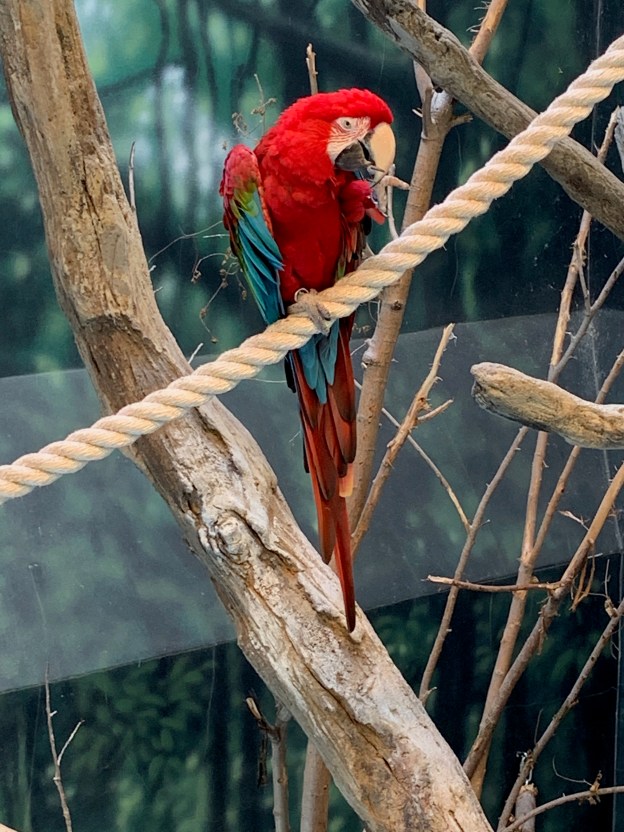

A macaw

On Skepticism

This week, I express my dismay at how fast time seems to be moving for me of late and how it reflects the existence of various sources of knowledge in our world.—Click here to support the Wednesday Blog: https://www.patreon.com/sthosdkane—Sources:%5B1%5D Ada Palmer, Inventing the Renaissance: The Myth of a Golden Age, (University of Chicago Press, 2025), 603.[2] If this word epistemology leaves you confused, have no fear, for my own benefit as well I wrote a blog post explaining this word alongside two of its compatriots. “Three Ologies,” Wednesday Blog 6.6 (podcast 5.6).


This week, I express my dismay at how fast time seems to be moving for me of late and how it reflects the existence of various sources of knowledge in our world.


I first noticed the passage of time on my tenth birthday, that is to say I remember remarking on how from that day on for the rest of my life, I would no longer be counting my years in single digits. I remember distinctly the feeling of surprise at this, a sense that I could never go back to my earliest years. That was especially poignant for me as those first six years lived in the Chicago suburbs held a nostalgic glow in my memory then as they do now. In those early years I felt that time moved slowly; I remember once as a kid I fretted over a 3 minute cooking timer, worrying that I would be unable to stand there and watch the flame over which I was cooking eggs for a full 3 minutes. Today that sounds silly, yet I believe it is vital to remember how I felt all those years ago lest I lose my empathy with my past self or anyone else I may encounter with similar concerns over things I see as minute.

Soon after my tenth birthday, I found a new method of getting through things that I found tedious or even odious to endure. I realized that if I tricked myself into enjoying the moment that the tedium would pass by quicker than if I wallowed in my annoyance and misery. Perhaps there was a degree of pessimism in this realization: that the good moments don’t seem to last as long as the bad ones in my recollection of things, or that it’s in fact easier to remember the bad more than the good. This is something I’ve been struggling with lately, that when I find my thoughts sinking to these depths of my greatest uncertainty and grief that I need to remind myself of all the good in my life. Time seems to move faster today than it did before. The days fly by more than linger, and there’s always something new or old that I need to do. I’ve long thrived on work, a trait I inherited from my parents. Often my happiest days are those spent dedicated to a specific task; those days are made happy by my sense of accomplishment once the task has progressed or even is done. I’ve learned to accept that good things won’t often be finished in a day. I’ll push myself instead to do as much as I feel I can do in the span of a day and see where that leaves me when I go to bed at night. With the new introduction to my dissertation this meant that it took me 9 days to write all 105 pages of it. This is one of those times where I feel that I’m on a roll and in my writer’s paradise when I can write and write and write and not run out of ideas to commit to paper.

Yet I worry about that quicker passage of time because I feel that there are less things that I’m able to do in a given day than I would like. I sacrifice rest sometimes in order to see a project to completion, or I choose to try and find a balance between my work and the rest of my life only to see one side, or another overwhelm its counterpart leaving me feeling unfulfilled when I retire for the night. I do worry that the time I’m afforded is limited, and that I’m not going to do everything I want to undertake. There are plenty of things I want to write, so much I want to say, yet so little time in a given day to say it. I’m still young, just a few weeks over halfway to my 33rd birthday. I have this lingering feeling that there’s so much that I want to do with the life I have and an indeterminate amount of time with which to do those things. Am I content with what I’ve done with my life so far? Yes. Is there so much more I want to do? Absolutely.

I suspect this shock at time moving faster is my own realization of my mortality. Everything has a beginning and an end, the mystery lies in not knowing either terminus directly. How many of us can remember our own birth? I certainly can’t. By the same token we can’t necessarily interview the dead after they’ve shuffled off this mortal coil because, in the words of Dr. McCoy, they’re dead. Thus, we remain doubters of our own mortality, our limits. I often hear older friends talk about how the young feel invincible and immortal and make mistakes which reinforce that sentiment of invincibility all while, if they’re particularly bold or just unlucky, asserting their mortality with a sudden abandon. Our doubts are aimed at established sources of knowledge, authorities to whom we feel no particular duty to abide even if we begrudgingly accept their precepts out of bare necessity. I see enough people every day ignore pedestrian crossing lights even though they are there on the city’s authority to protect us pedestrians when crossing the streets that we’ve abdicated to vehicles. It usually leaves me at least frustrated at the ignorance of the driver, at most even angry when I’ve gotten close to being hit by such an ignoramus.

Skepticism is a significant marker in Renaissance studies as a transitional element from the classically inspired scholarship of the fifteenth and sixteenth centuries into the empirical knowledge-making that traditionally we’ve said was emblematic of the Scientific Revolution. I have many colleagues who are working now on disproving the existence of that Scientific Revolution; I admire that cause and yearn to read what they’re writing even though one of my stock courses to teach is called “the Scientific Revolution: 1500-1800.” Ada Palmer calls Michel de Montaigne, in some ways the inspiration for my Wednesday Blog, “the avatar of this moment” when skepticism became a driving force in Renaissance thought.[1] I argue in my dissertation that the American experience drove the course of skeptical thought in the Renaissance; all the things which André Thevet called singular in the Americas represented a dramatic break from classical standards of knowledge which required a new epistemology to explain them.[2] The key here is that we should never be complacent that our current knowledge is all there is to know, after all a well-lived life is a life spent learning. I’m skeptical about many things and have a drive to continue learning, to continue exploring. Curiosity hasn’t killed this cat yet.[3]I find then that my time is best spent in pursuit of this knowledge, and as much as one can learn alone in the solitude of their study reading and thinking quietly to oneself like a monk, it is far better to learn in communion with others. Since the pandemic began, I’ve grown particularly fond of Zoom lectures, webinars, and workshops as much for the expertise on show as for the community they build. Even if we only communicate through these digital media I still look forward to seeing these people, to experiencing that one part of life with them. We learn so that we might have richer experiences of our own lives, so that we might find comfort in our knowledge, so that we might, in Bill Nye’s words, “change the world.” In the time that I have afforded to me I want to learn more than anything else, to learn about the people around me, about our common heritage, about what our future may hold, and about myself. If I can do that, then when I am “no more, cease to be, expired and gone to meet my maker, become a stiff, bereft of life and resting in peace” I’ll be content in my leave-taking. Hopefully unlike the dead parrot they won’t nail me to my perch like Bentham’s auto-icon which greets knowledge-seekers in the South Cloisters of University College London, though that could be a rather humorous way to go.


[1] Ada Palmer, Inventing the Renaissance: The Myth of a Golden Age, (University of Chicago Press, 2025), 603.

[2] If this word epistemology leaves you confused, have no fear, for my own benefit as well I wrote a blog post explaining this word alongside two of its compatriots. “Three Ologies,” Wednesday Blog 6.6.

[3] Meow.


On Democracy

This week, for my birthday I want to write to you about my belief in all of us and how democracy remains our best hope. — Click here to support the Wednesday Blog: https://www.patreon.com/sthosdkane


This week, for my birthday I want to write to you about my belief in all of us and how democracy remains our best hope.


One of those great efforts with which human history is concerned is the question of what our original nature was at our beginning and if and how we have changed that nature. The French anthropologist Claude Lévi-Strauss’s notion of the primitive as “closer to humanity’s origins” and living in a state without the societal and technological innovations “that obscure their nature” evokes this original nature, what in Christianity is called our original sin, or biologically our evolved state as a particular form of bipedal mammals among other lifeforms.[1] The seeming natural state of human societies until very recently has been toward forms of monarchy and aristocracy, the Tory Party in Britain today still refers to itself as the natural party of government because they descend through many generations from the old Cavaliers who supported Charles I and the aristocrats in the Parliaments of the Stuart and Georgian centuries who opposed the liberal reforms of the Whigs. Here in the United States, our own whiggish political tradition sees its modern manifestation in the old establishment wing of the Republican Party, also known as the Grand Old Party or G.O.P., whose founders in the 1850s included former Northern members of the Whig Party once led by our own aristocrats, men like Henry Clay and John Quincy Adams in the early republic.

Yet those same men stood for something beyond just preserving their own aristocratic power within their own society. These American Whigs and their Republican and Democratic successors aspired to a high ideal of human nature that entrusted power in the hands of the many rather than in those of a few or the one. Dr. Heather Cox Richardson recently wrote in her Letters from an American about how the Secessionists who dragged this country into our Civil War in 1860 and 1861 were trying to assert their own aristocratic vision of the republic that would benefit the few at the disregard of most and the expense of the many. As James J. Sheehan reminded us in his essay in the December 2024 issue of Commonweal, Tocqueville wrote that the chief difference between the source of power in an aristocracy or a monarchy, or their corrupted forms oligarchy and a tyranny, and the source of power in a democracy is that “despotism may govern without faith, but liberty cannot.”[2] The despots rely less on our trust in their rule, and in many of the cases we see today they sew discontent in government, the economy, and for all of us with each other in order to assert their authority and keep hold of power. 

Democracy is a far harder thing to keep, as Dr. Franklin knew well. The inclusion of more and more people complicates any organization, yet it also allows that organization to better reflect all involved. Democracy requires the efforts of all of us to survive; if left unwatered and unnourished by each generation it will wither and die like any other flower or fruit on the vine. Throughout my life, I’ve looked to heroes in our history from Lincoln, Mandela, Óscar Romero, Popes Francis and St. John XXIII, to people closer to my own life. What all of them have in common is a desire to improve the lot of humanity, and in the case of Lincoln and Mandela to promote democracy in their homelands. When I look ahead and worry about what might be coming in these next four years, I often wonder if I would be safer, happier, healthier, and living a more fulfilled life elsewhere in another country where I can leave the troubles of my own behind. Yet I remember these heroes, MacDonagh and MacBride, and Connolly and Pearse, my great-grandfathers who fought in the two World Wars, the dreamers and optimists who organized and marched non-violently for civil rights here in America and in Ireland too, and looking again at our own day I pause. This is our time to make life better for our successors while we live to overcome the long winter of fear before us. If I left now, could I look those heroes of mine in the eye when my time ends?

I believe in democracy because it is the best form of government we’ve yet imagined. I believe in representative government because I would rather have a say in my neighborhood, my city, my county, my state, and my country than not. I believe in democracy because I believe in humanity and that all of us can make something better if only we believed in ourselves and in each other. I believe that before that original sin there was original grace, original goodness; that before the first frown there was the first smile; that before the first thoughts of lust there were thoughts of love. I believe in democracy because I need to believe that I will have a future, that all the things which I’ve done in these last 31 years are building up to something which will, in Bill Nye’s words, “change the world,” no matter how small that change may be. To do any of this, to see any of this goodness in our hearts, to believe in ourselves again we need to be willing first to acknowledge our faults and second to forgive ourselves and put in the effort to make our lives better. For all our technology and our ever increasingly complicated ways of life, we are still the same humans as our ancestors living in Lévi-Strauss’s primitive manner. We retain the same bodies and souls. Because of this, we can build a future for our posterity in a spirit of grace, compassion, and optimism that would make the heroes of old proud.


[1] Claude Lévi-Strauss, From Montaigne to Montaigne, trans. Robert Bononno, (Minneapolis: University of Minnesota Press, 2019), 25.

[2] James J. Sheehan, “Democracy and Its Discontents,” Commonweal, December 2024, 13.


Creatures of Habit

Photo by Jeremy Bishop on Pexels.com

This week, how we tend to stick to the same things over our lives.

I’m writing this week’s blog post substantially later than I usually do. This past week has been very uncomfortable for me, first with a bout of food poisoning last Tuesday and Wednesday, and now with the continuing aftereffects of it still in my system. So, at a time like this when I feel physically terrible, I often find myself returning to the same old routines and manners that I’ve practiced my entire life. There’s something comforting in watching an old episode of Bill Nye the Science Guy all these years later because it’s nostalgic as well as staying educational.

Last night I found myself craving some good music, the soaring melodies and rich harmonies found in opera. I ended up listening to a couple of things including the Queen of the Night’s second aria “Der Hölle Rache kocht in meinem Herzen” from Mozart’s Magic Flute. For all the hellfire innate in the words––the title translates to “Hell’s vengeance boils in my heart”––there’s one line near the end that caught my eye, “Alle Bande der Natur.” At the moment I thought of “Bande” as in “bonds” or more metaphorically “customs” when in fact it really means “bonds” as in “connections.” So, in my elementary level German I translated “Alle Bande der Natur” as “all bonded by Nature” or that it was a matter of instinct and habit.

My misinterpretation of the German text there brought me to think a bit more about habit and instinct. What sets us off to do what we do? Why for example do some people eat each thing on their plate in turn rather than mix the flavors together? Or why does my cat like to extend her claws when she’s happily being petted?

Instinct is a survival mechanism. If you recognize you’re in a bad situation, you’ll probably do your best to get out of it. That goes back to the days when our distant ancestors were hunted as prey by other larger animals. Perhaps the urge to laugh at other people’s misery, embodied in my youth by America’s Funniest Home Videos and today by a good portion of the content on Instagram and the “Hold My Beer” subreddit, comes from a similar primal satisfaction that it’s not me who’s getting his leg gnawed off by a lion today.

As long as we’re tuned into our own natures, we’re bound to avoid some of the pitfalls that inspired that particular metaphor and survive. I learned the hard way to avoid bad food this past week and am still suffering the consequences now eight days later. On the other hand, my pup Noel learned in which house her best friend the black lab Henry lived and liked to stop and sit at the bottom of his stairs to see if he’d come out to play. We create habits out of experience and grow as a consequence.So, the moral of the story, the greatest lesson to learn here: to quote the Two-Thousand-Year-Old Man himself, “never run for a public bus, there’ll always be another.”