Tag Archives: blog

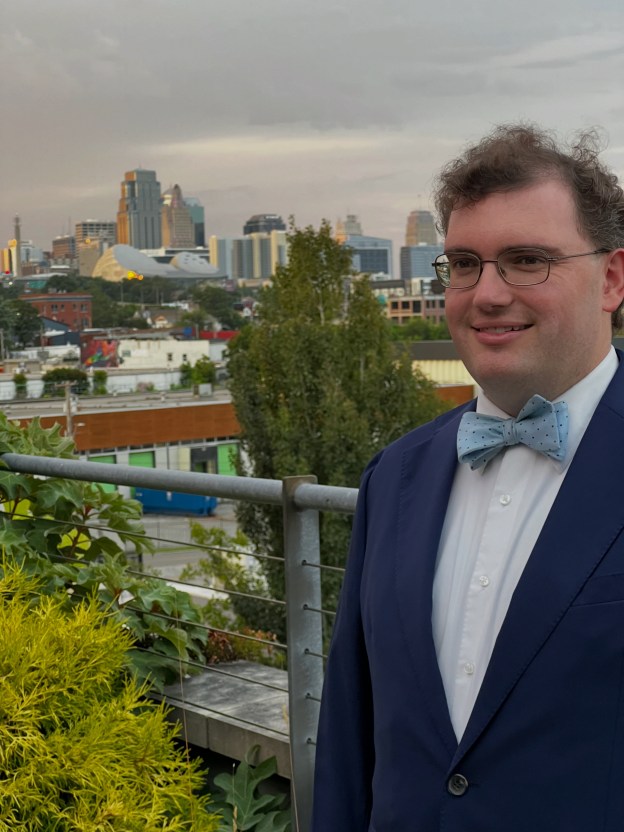
The author posing in front of the Kansas City skyline in July 2025.

The Wednesday Blog

This week, to conclude what I’ve been saying.—Click here to support the Wednesday Blog: https://www.patreon.com/sthosdkane—Sources:%5B1%5D “Signs,” Wednesday Blog 1.10.[2] “On Servant Leadership,” Wednesday Blog 6.15.[3] Percy Bysshe Shelley, “Ozymandias,” Poetry Foundation.


This week, to conclude what I’ve been saying.


I’ve said over the four years that I’ve been writing the Wednesday Blog weekly that I would stop writing this when it ceased to be fun. That’s a good rule for life overall that I’ve found: devote your life to things you love doing and keep them fun in the process. I tend to put on a very dry public face; a friend recently commented that I didn’t seem like one to scream or cheer at a concert, I affirmed that statement and demonstrated my own gentle “hurray!” to great amusement. This blog has changed with the times. It began as a project for me to write about things I enjoy outside of my research. I like to point to an early blog post all about my favorite state highway signs as a good example of this.[1] Yet I’ve found the topics I write about are changing, they’re becoming more academic, outlets where I can introduce some of the ideas I’m working on in my professional life and workshop them in a public forum. It’s a bald faced way of getting more readers to the Blog, I admit, yet so far, it’s worked.

I continue to cover politics here when I feel there’s a need to say something. Yet I’ve tried to balance what I’m writing to keep it positive, or at least to ensure that what I end up publishing suggests ways we can move forward out of the current crises we face. After all, there are enough writers out there pointing out the crises of the moment, some of us should be looking to the future to offer a light ahead that we all can reach for. This Spring, I was inspired by the commemorations in Boston of the 250th anniversary of the start of the American Revolution and the rallies for democracy here in Kansas City to focus that positive attention on popular action, the root of any good political system. I believe that government must act with the consent and full participation of the governed, and that through our elected representatives at all levels we ought to consider ourselves both governed and government. It sounds paradoxical, I know, and to an extent I believe that paradoxes are often a good thing. I devised one of my favorite phrases, “the extraordinary acts of ordinary people” to express this sentiment, that it is people acting out of the ordinary, out of what is considered ordered, which propels political change and keeps our politics fresh.[2] In 2023 one of the fads of the year on the internet was women asking men how often they think of the Roman Empire. I was asked this by one of my colleagues over lunch at the Nativity Parish School and remarked that because I was teaching the Romans at the time they were front of mind. Beyond this however, as much as I am familiar with the remains of the Empire, I am more drawn to the Republic and its ideals of popular government, even if they were never realized. The founders of the United States sought to model this federal republic on Roman models, yet they kept the Constitution they framed fresh for its day, an American constitution living in its ability to be amended to fit the changing times and passage of each generation rather than a Roman one deemed sacred through association with the old Republic’s gods and ancient institutions. Our republic is secular because for it to be sacred is to make it inviolate and unchanging, a monolith which will grow ever more distant from the people it was meant to govern, until like Shelley’s Ozymandias it is left as a mere pedestal of itself adrift in the sands of time.[3]

I want to stay a while longer with this phrase because I am so proud of it. To trumpet the extraordinary acts of ordinary people is to say that everyone has a voice and an impact upon the rest of us. In the first few years of the Wednesday Blog, my political essays tended to get lower readership across the board. I started writing the Blog in March 2021, a year after the January 6th insurrection showed how much the Republic was corrupted by the refusal to concede the 2020 election which caused that attack on the Capitol. I’ve seen a steady decline in political readership for my writing since the 2016 election, yet after 2020 that readership dropped off a cliff. American politics today is not a happy thing to write about, and at the moment it only seems to be getting worse. Yet by focusing less on the people in power and more on the people engaged for the common good I saw my readership grow on these political essays until they tended to be level with my other non-academic writing. A great inspiration for me here lies in the revolutionary era anthem Chester, sung by the New Englanders in the Continental Army and one of the older tunes in this country’s patriotic songbook. I’d been listening to it here and there without realizing for months, yet once I figured out what it actually was, when I was in Boston in March no less, I found that it spoke to my sentiment in a far greater way than I anticipated. I’m listening to William Schuman’s arrangement in his New England Triptych (1956) as I write this now, a New Deal era work intended to celebrate the democratic spirit of the cradle of the revolution.

There is a great deal of history behind my politics, naturally I notice that being a trained historian, and having taught American and British history on several occasions and having read a great deal in Irish history I can point out the various threads which I’ve coalesced into a logical genealogy of my political philosophy. Suffice to say, I believe it is better to look to the future and enact political policy which will build a future that we can all be proud of. At the core of this is listening to the people around us, hearing what they have to say, and listening to our own logic and empathy, two things which should always work together in our decisions. In writing about the extraordinary acts of ordinary people I look to those who will appear from the crowd as the leaders from my millennial generation and those coming up behind us in Generations Z and Alpha. We have inherited a great mess, and we have a lot of work to do. There are plenty of people arguing and advocating on what needs to be reformed, I feel better suited to provide an optimistic voice of what we could look forward to. By putting ordinary people front and center, I hope to make clear that policy should address problems from the bottom up, help reinforce and support the poorest in society that the whole structure grows stronger in kind. You might call this trickle-up economics, to speak to the Reaganites. We could build a future where everyone has good work, they can be proud of, enough to eat, a roof over their heads, and where every child learns how to read. We could have this future where people feel that law is meant to support them rather than push them down. I see this every day when I’m out around town: I suspect that the general sentiment behind people who run stop signs, red lights, or drive in transit only lanes is that the law has never worked in their favor, always rather beaten them down and stripped them of their humanity, so why should they follow the law? We must find our humanity in each other if we are ever going to grow out of this time of crises and begin to build a better future.

I enjoy thinking about the future in other languages, not just in the sense of the future tense but in the mentality of the language. How do they express things which haven’t happened but will come? In English we have the word future as a monolith on its own, derived from French and originally from the Latin futūrus, an irregular future active participle of the to be verb sum. In English, the future is as much a place as it is a time, it’s the destination we’re going to. Yet is it not better to think of the future as the scenery about to pass by as we go down the line like the trees and fields that we pass on a train? The present is momentary, here and gone in the blink of an eye, each millisecond the present, and the past a great gulf of memory whence we came. Yet the future is something both unknown and recognizable. It is both what we can see ahead of us along the way and what is just over the next horizon. It is an irregular version of being which will come someday. French expresses the concept of the future like this, whereas futur refers to the tense, l’avenir is instead the noun I’ve heard used most to describe the concept of the future. Yet l’avenir instead merely is the crafting of a phrase, temps à venir (time to come) into a noun, avenir, or that which is coming. We don’t know in truth what it is, what it will feel like when it comes, yet we know that someday we will see it and live in it. The future is inevitable, yet it is not singular by nature. Rather, if there is one past and present those are merely the choices made by actors in those moments which were chosen from the multitude that is possible from what could come. 

Irish expresses this sense of the future well because Irish really has no specific word for future. There is a future tense, which in some ways is more regular in its formation than the Irish present tense. Instead, Irish uses a phrase which breaks down the future into its core concepts:  An rud atá le teacht, or the thing which is coming. Therein lies the future in its baldest form: it is merely the thing that is coming next out of all the possibilities. Another topic which I seemed to write about a fair deal for a while was faith, self-help, and religion. My Catholicism is influential to my cosmovision and political philosophy in my core belief of the paradoxical nature of God, that God can exist yet also be omnipotent and omniscient. Because of this, I like to say, “anything is possible in the Eyes of God,” or for short, “anything is possible.” As I think about the end of my doctoral writing and needing a dedication to affix on my dissertation, I’ve found myself thinking about this phrase, and about who my audience is. After all, you now reading this sentence in my future, just as I wrote it in your past. It is possible that just about anyone could be reading this now, and so rather than dedicate my work to one person in particular in the moment in which I am writing it, perhaps I ought to instead dedicate it to the possible, or rudaí indéanta in Irish. That second word indéanta is a neat one because it comes from the verb déan, meaning to do, thus the possible is something that might be done. In English and French, I say, “I am studying” or « J’étudie, » yet in Irish, I say, “Déanaim ag staidéar,” or “I am doing study,” which makes the study more of an act than a state of being. The future has and always will be something acted, something done by individuals in our own small ways that creates great change in the collective form.

I study history because of all the things I am interested in it is history which brings them together. So far, history is a human creation made in our image and likeness which seeks to tell our story as best as we can recall it. We’ve devised historical methods of a similar manner to understand other histories, salvation history, church history, and natural history to name three. I returned to natural history as an adult yearning for the halcyon days of curiosity and wonder from my early childhood and built my career on my study of André Thevet’s (1516–1590) sloth. It’s become my gateway into the history of natural history, and through it I’m beginning to make my name as a sloth historian. I do not believe in prescriptivism, the notion that history in inexorably leading to some great moment in the future when the final form of human nature will announce itself. I think this is limiting, claustrophobic in fact. It’s far too simplistic to say that we will all wake up someday and find the morning sunlight is just a little bit brighter, the grass and trees greener, and the sky a prettier shade of blue because there’ll be somebody among us who will find something contrary about the experience. I for one an enjoying the gray skies outside my window today, it’s finally cool enough in mid-October for me to open the blinds in my room and let some sunlight in without making it too hot. Rather, history teaches us that the future is what we will make of it. I chose to not study the twentieth century because I felt this dolorous pain in my heart that there were so many things which happened in the last century which could have been avoided, choices which could have been different. In studying recent history, I worried I would be faced with the ghosts of the world wars, Great Depression, and all the troubles faced by humanity in general and my fellow Irish Americans in particular throughout my working life. 

Instead, I looked deeper into the past, first to the Roman Republic with an interest in studying the expansion of Roman citizenship in the late Republic after the Social War of the 90s and 80s BCE and later to the Renaissance, a period that seemed similar enough, Latinate to be sure, yet full of people and stories who I felt I could relate to better than the ancients. I found Thevet almost accidentally, and through his sloth I feel that I’ve found balance in my life that sustains me today, makes me feel more fulfilled in my efforts than I was before. My history is fundamentally interdisciplinary, historical zoology adopts zoological methods and theories to determine the true nature of historical animals, layering their scientific taxa upon their far older human memory and legendaria. In Thevet I am able to work with the ancients, looking especially Aristotle and Pliny, yet soon after I can turn around and look ahead to Buffon and Linnaeus and see how they interpreted what Thevet wrote in order to establish a clear lineage through the historical record for the animal in question. There is nothing sure about this history, often the historical sources are lacking with detail about a given animal, or the zoological data may not have enough detail about an extinct species to offer a clear picture of what it is I am describing. Both are limited by the foggy memory of the human past, yet together they can offer a light with which to move ahead and keep exploring those parts of our cosmos which are still strange and unfamiliar to us today.

I write because it is the greatest way I’ve yet found to express myself. I can say far more in an essay such as this than I could in a conversation. The Wednesday Blog remains less formal than my academic writing, here I use the first person. Yet with the passage of time, I’ve found the Blog has become more academic to the point that friends have told me they got an education about Thevet that they never expected. The Blog has several antecedents, including earlier less regular blog posts which you can find on this same website from before 2021 that all form the roots of this project. I’m proud of the writing I’ve done here, the Wednesday Blog now is comprised of 238 essays and 200 podcast episodes, I’ve written 521 pages, and the total word count is over 300,000. The future is defined as much by its potential as the fact that once it comes to be what was present will then be past. To see an end gives all things meaning. It is for this reason, at the end of the sixth book of the Wednesday Blog, and fifth season of the podcast, that I’ve decided to end this particular publication. This remains a fun thing to write, yet I have so much more to do today, and I only see that workload growing as I try my hand at more peer-reviewed articles, books, and translations in the coming decades. I hope the Wednesday Blog will be a testament to who I was at this point in my life in the years after the COVID-19 Pandemic and during my long years of doctoral study. Let these essays remain a monument of the first half of the 2020s, a sign of where we’ve been and where I hope we will be going.


[1] “Signs,” Wednesday Blog 1.10.

[2] “On Servant Leadership,” Wednesday Blog 6.15.

[3] Percy Bysshe Shelley, “Ozymandias,” Poetry Foundation.
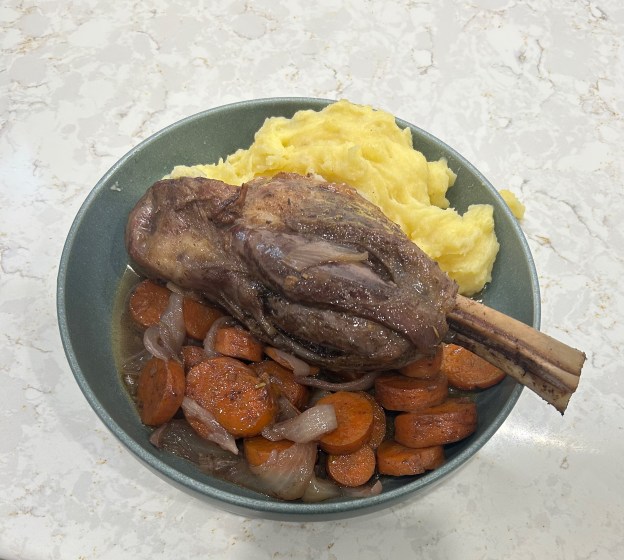

Roasted lamb shank, mashed potatoes, and vegetables cooked by the author in May 2025.

On Little Things

This week, recent events have inspired me to think about the wide, wide world on a smaller scale.—Click here to support the Wednesday Blog: https://www.patreon.com/sthosdkane—Click here to buy a copy of my book Travels in Time Across Europe which tells the stories from my year living in London that began 10 years ago this week.


This week, recent events have inspired me to think about the wide, wide world on a smaller scale.


Last Wednesday, after publishing “On Democracy, Part II” I took my place in the driver’s seat of my car, the Mazda Rua, and went out on a day trip to Jefferson City to join the protest against the congressional redistricting underway here in Missouri. I wanted to drive long distance at highway speeds again like I used to four times a year on my Long Drives East and West between Kansas City and Binghamton. There’s a lot of little things about those drives that I miss now that I’m more rooted here in Brookside. Today, I don’t drive every day. Often times if I can I’ll choose to walk to wherever I want to go in the neighborhood. It’s healthier to be sure, and I get the same free time away from the obligations that crowd my desk to listen to music, podcasts, birdsong, or to just think. These walks aren’t terribly taxing, Apple Fitness likes to remind me that the difficulty is “easy” to “moderate,” yet each one adds up into a sum which says that I am healthier today in mid-September than I was in mid-February or mid-March, let alone a year ago now. Moreover, I loved driving even just about town for that free time. Drivetime was often my podcast time. Now, I’m also reassured that I’m not operating a large and potentially dangerous vehicle while I’m listening to an engaging conversation or story; instead, I can focus on the story itself and not split my attention between that and the road.

So, last Wednesday I did try to recreate the things I loved most about those road trips that marked the beginning of this decade. On the outbound drive I listened to a fascinating discussion about political philosophy and space policy on Planetary Radio and on my return trip I listened to the pilot of the new audio drama Star Trek: Khan. Yet as much as I was thrilled to be back on the road and experiencing things that I felt like I had lost, even at my own volition, I still found that some of the little things got to me. For one, I was annoyed at getting stuck behind a semi-truck on the outbound drive for about 10 miles east of Sedalia and even more frustrated that I couldn’t pass a pair of semis that were ahead of me on the return drive as we transitioned from the two-lane divided highway in Cole County back to the one-lane country road that is US 50 in between the state capital and Sedalia. I know well that I control how I react to things, and therefore that I ought to react better to most things today than I did in my younger years, yet getting stuck behind those larger, slower vehicles on the stretch where passing was far more difficult really annoyed me. The beauty of a country drive is lost somewhat when you’re staring at the same big box retailer’s advertisement on the back of their vehicle for mile after mile.

These little things are what give our experiences life. The great, grand gestures that get remembered are one thing, yet they cannot be sustained without the small tokens of affection or whispered advice that comes from living and making the choices that define who we are. I believe that we are fundamentally formed by our experiences for good or ill. I’ve often ended up resorting to grand actions to try and solve questions or puzzles that find their way onto my desk. Marking something off a checklist is one of the most satisfying things I can do in my life. Those grand acts often become boxes which I can fill with the little things that I undertake. Currently, I am working on editing my translation of André Thevet’s (1516–1590) book Les Singularitez de la France Antarctique to send its book proposal off to an academic press. I have enough of my translation edited to send to them now, the first 16 chapters to be precise, yet there’s more still I need to do. This publisher prints page-facing translations and requires that the original text be sent alongside the translation. So, now I am spending my time typing out the original Middle French text of these first 16 chapters to be included in my proposal. There is a Wikisource page for this book, taken from the 1878 French edition that I could copy and paste from, yet it lacks the folio numbers from the original that are vital signposts to navigate the text and has enough nineteenth-century re-renderings of the sixteenth-century French original that I decided it was better if I just went ahead and typed it out myself. The first chapter took me about an hour to do, so I figure in all I might be able to have most of this typing done by the time I publish The Wednesday Blog next week.

Each character here is a little thing that together add up to the surviving thoughts and memories of a man who lived 450 years ago who exists in the scholarly memory of his time yet rarely in the spotlight. In my work, I hope to turn that spotlight on him and demonstrate his erudition and centrality to the cosmographic profession as it existed in the 1550s and 1560s. All this boils down to the same solution I’ve used to get through big projects for years. On Monday I smiled hearing a friend say essentially the same thing with her work in the history of mathematics, that the best way to solve a problem is to break it down into its constituent parts and figure it out piece by piece. A decade ago, this week when I moved to London, I found that the only way that the move was not overwhelming was to think of each thing I needed to do separately. My frustration rose when I found that I couldn’t make sense of a particular facet of one of the things I needed to do. One particular moment of note here was when I was summoned to the international student office to provide visa papers to confirm that I could legally study in the United Kingdom well after I’d started my coursework. Something got lost in the shuffle, but it was serious enough to scare me a little. When I moved to Binghamton, I had similar bureaucratic problems from issues getting my New York residency owing to my Missouri driver’s license having cracked in two, to a year later having big issues proving my residency to my university because I forgot to cross a t somewhere on a form.

Again, I choose how I react, and in the years since I’ve learned to take little things in stride and think of them in the broader context in which they exist. I believe doing the little things can show fidelity to a greater cause because it shows that I’m there for the long run, not just in the good moments. That’s something I learned from Robin Williams in Good Will Hunting, one of the finest movies I’ve ever seen. I think perhaps the best metaphor to explain what I’m trying to say to you, dear Reader, is that we should approach the things in life like we approach cooking. Recipes break down the task of cooking into smaller pieces that are more easily attainable. In May I made an Easter roast for some of my best friends that comprised several recipes I’d never tried before that day, and I truly didn’t know if it had worked until I finally sat down and took a bite of it. The roasted lamb shanks were perfect, as were the mashed potatoes, and the flourless chocolate cake that I rounded things out with was excellent and just as good the following day. In each recipe, I not only took things one at a time but even experimented a bit here or there based on my own experience from cooking similar things. For one, I had to quickly rethink how I was going to cook the lamb shanks because they were larger than nearly all of the pans I had. For another, I realized later than I wanted that in melting the chocolate chips for the cake I should’ve encouraged the process along with a spatula here and there. Each of these little things rounded out with a fine Tempranillo wine from Rioja to make one of the best dinners I’ve yet cooked.

I have a lot to do right now, and in every respect I’m on course to complete the things I have in my docket. The work would be overwhelming if I looked at it as a great mass, yet it is far easier to approach in small bites. That’s the big reason why I’m ending the Wednesday Blog one month from this week on 15 October. I’ve said what I wanted to say, and looking ahead I can use the time that I devote to writing this blog and recording the podcast working on other things great and small that need my attention. This publication is made up of a great many little things, small ideas that flower with their peers and culminate in an essay each week that I usually feel proud of writing. Little things make the lives we live.


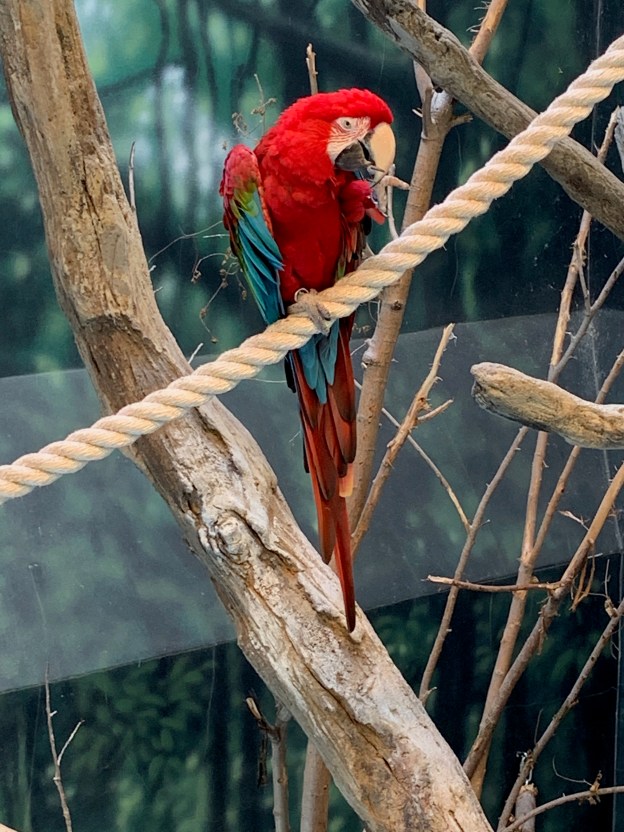
A macaw

On Skepticism

This week, I express my dismay at how fast time seems to be moving for me of late and how it reflects the existence of various sources of knowledge in our world.—Click here to support the Wednesday Blog: https://www.patreon.com/sthosdkane—Sources:%5B1%5D Ada Palmer, Inventing the Renaissance: The Myth of a Golden Age, (University of Chicago Press, 2025), 603.[2] If this word epistemology leaves you confused, have no fear, for my own benefit as well I wrote a blog post explaining this word alongside two of its compatriots. “Three Ologies,” Wednesday Blog 6.6 (podcast 5.6).


This week, I express my dismay at how fast time seems to be moving for me of late and how it reflects the existence of various sources of knowledge in our world.


I first noticed the passage of time on my tenth birthday, that is to say I remember remarking on how from that day on for the rest of my life, I would no longer be counting my years in single digits. I remember distinctly the feeling of surprise at this, a sense that I could never go back to my earliest years. That was especially poignant for me as those first six years lived in the Chicago suburbs held a nostalgic glow in my memory then as they do now. In those early years I felt that time moved slowly; I remember once as a kid I fretted over a 3 minute cooking timer, worrying that I would be unable to stand there and watch the flame over which I was cooking eggs for a full 3 minutes. Today that sounds silly, yet I believe it is vital to remember how I felt all those years ago lest I lose my empathy with my past self or anyone else I may encounter with similar concerns over things I see as minute.

Soon after my tenth birthday, I found a new method of getting through things that I found tedious or even odious to endure. I realized that if I tricked myself into enjoying the moment that the tedium would pass by quicker than if I wallowed in my annoyance and misery. Perhaps there was a degree of pessimism in this realization: that the good moments don’t seem to last as long as the bad ones in my recollection of things, or that it’s in fact easier to remember the bad more than the good. This is something I’ve been struggling with lately, that when I find my thoughts sinking to these depths of my greatest uncertainty and grief that I need to remind myself of all the good in my life. Time seems to move faster today than it did before. The days fly by more than linger, and there’s always something new or old that I need to do. I’ve long thrived on work, a trait I inherited from my parents. Often my happiest days are those spent dedicated to a specific task; those days are made happy by my sense of accomplishment once the task has progressed or even is done. I’ve learned to accept that good things won’t often be finished in a day. I’ll push myself instead to do as much as I feel I can do in the span of a day and see where that leaves me when I go to bed at night. With the new introduction to my dissertation this meant that it took me 9 days to write all 105 pages of it. This is one of those times where I feel that I’m on a roll and in my writer’s paradise when I can write and write and write and not run out of ideas to commit to paper.

Yet I worry about that quicker passage of time because I feel that there are less things that I’m able to do in a given day than I would like. I sacrifice rest sometimes in order to see a project to completion, or I choose to try and find a balance between my work and the rest of my life only to see one side, or another overwhelm its counterpart leaving me feeling unfulfilled when I retire for the night. I do worry that the time I’m afforded is limited, and that I’m not going to do everything I want to undertake. There are plenty of things I want to write, so much I want to say, yet so little time in a given day to say it. I’m still young, just a few weeks over halfway to my 33rd birthday. I have this lingering feeling that there’s so much that I want to do with the life I have and an indeterminate amount of time with which to do those things. Am I content with what I’ve done with my life so far? Yes. Is there so much more I want to do? Absolutely.

I suspect this shock at time moving faster is my own realization of my mortality. Everything has a beginning and an end, the mystery lies in not knowing either terminus directly. How many of us can remember our own birth? I certainly can’t. By the same token we can’t necessarily interview the dead after they’ve shuffled off this mortal coil because, in the words of Dr. McCoy, they’re dead. Thus, we remain doubters of our own mortality, our limits. I often hear older friends talk about how the young feel invincible and immortal and make mistakes which reinforce that sentiment of invincibility all while, if they’re particularly bold or just unlucky, asserting their mortality with a sudden abandon. Our doubts are aimed at established sources of knowledge, authorities to whom we feel no particular duty to abide even if we begrudgingly accept their precepts out of bare necessity. I see enough people every day ignore pedestrian crossing lights even though they are there on the city’s authority to protect us pedestrians when crossing the streets that we’ve abdicated to vehicles. It usually leaves me at least frustrated at the ignorance of the driver, at most even angry when I’ve gotten close to being hit by such an ignoramus.

Skepticism is a significant marker in Renaissance studies as a transitional element from the classically inspired scholarship of the fifteenth and sixteenth centuries into the empirical knowledge-making that traditionally we’ve said was emblematic of the Scientific Revolution. I have many colleagues who are working now on disproving the existence of that Scientific Revolution; I admire that cause and yearn to read what they’re writing even though one of my stock courses to teach is called “the Scientific Revolution: 1500-1800.” Ada Palmer calls Michel de Montaigne, in some ways the inspiration for my Wednesday Blog, “the avatar of this moment” when skepticism became a driving force in Renaissance thought.[1] I argue in my dissertation that the American experience drove the course of skeptical thought in the Renaissance; all the things which André Thevet called singular in the Americas represented a dramatic break from classical standards of knowledge which required a new epistemology to explain them.[2] The key here is that we should never be complacent that our current knowledge is all there is to know, after all a well-lived life is a life spent learning. I’m skeptical about many things and have a drive to continue learning, to continue exploring. Curiosity hasn’t killed this cat yet.[3]I find then that my time is best spent in pursuit of this knowledge, and as much as one can learn alone in the solitude of their study reading and thinking quietly to oneself like a monk, it is far better to learn in communion with others. Since the pandemic began, I’ve grown particularly fond of Zoom lectures, webinars, and workshops as much for the expertise on show as for the community they build. Even if we only communicate through these digital media I still look forward to seeing these people, to experiencing that one part of life with them. We learn so that we might have richer experiences of our own lives, so that we might find comfort in our knowledge, so that we might, in Bill Nye’s words, “change the world.” In the time that I have afforded to me I want to learn more than anything else, to learn about the people around me, about our common heritage, about what our future may hold, and about myself. If I can do that, then when I am “no more, cease to be, expired and gone to meet my maker, become a stiff, bereft of life and resting in peace” I’ll be content in my leave-taking. Hopefully unlike the dead parrot they won’t nail me to my perch like Bentham’s auto-icon which greets knowledge-seekers in the South Cloisters of University College London, though that could be a rather humorous way to go.


[1] Ada Palmer, Inventing the Renaissance: The Myth of a Golden Age, (University of Chicago Press, 2025), 603.

[2] If this word epistemology leaves you confused, have no fear, for my own benefit as well I wrote a blog post explaining this word alongside two of its compatriots. “Three Ologies,” Wednesday Blog 6.6.

[3] Meow.


The Strenuous Life

This week, to conclude what I’ve been saying.—Click here to support the Wednesday Blog: https://www.patreon.com/sthosdkane—Sources:%5B1%5D “Signs,” Wednesday Blog 1.10.[2] “On Servant Leadership,” Wednesday Blog 6.15.[3] Percy Bysshe Shelley, “Ozymandias,” Poetry Foundation.
  1. The Wednesday Blog
  2. On Machinery
  3. On Language Acquisition
  4. On Drink
  5. On Little Things


This week, to start November, a realization I had recently about how to overcome less severe colds.


2024 has been a tough year for me, that is a definite fact. Among all the rough seas of this year have been a series of nearly monthly colds that knocked me down at times when I otherwise would have lived to my fullest potential. I started to see a pattern at the end of July when I developed a cold after spending too much time under an overworked ceiling fan in our living room watching the Summer Olympics on television. A month before, on the morning I was due to drive my parents to the Kansas City International Airport for their summer Mediterranean trip, I woke up to find my voice gone, and after the return drive from the airport I was sapped of any and all energy.

That illness was one of the worst I’ve experienced since the pandemic. I ended up taking a week to do nothing and merely rest and return to my teenage summer hobby of watching television and reading all day. It was perhaps my first weeklong break from working since 2020, if even before. In the following week, even though I was still unwell I wrote two significant papers I needed to complete, and began writing papers for the three conferences I attended at the end of October and on the week of this blog post’s release. I thought I’d learned my lesson, I had a similar summer cold in 2021 after over-exposing myself to the ceiling fan in my bedroom which led to me to being sick throughout my western road trip in Colorado and Utah that year. 

And yet, at the end of July of this year I found myself getting sick again in the exact same manner. I figured it was a minor thing, and I adopted the tack I’d first tried out in 2020 at the start of the pandemic of doubling or tripling the amount of water I drank to flush whatever it was out of my system. In both instances, in late June and late July, I stayed home as much as possible, close to the kitchen where I could get more water, and close to my supply of tissue boxes. I’d figure each illness would last for maybe a week, though often they’d end up lasting for 10-14 days. I ended up traveling to Orlando while I was still recovering at the end of July for the National Convention of the Ancient Order of Hibernians (AOH) to lobby as a member of the Kansas delegation and spent that week in Florida with a bad cough. When I finally returned home to Kansas City at the end of that trip I slept for a full day, and eventually felt fully recovered the following morning.

I felt lucky to break the cycle at the end of August and not get sick over Labor Day weekend, one of my usual weekends when I’m unwell thanks to my seasonal allergies. I was very careful to avoid overexposing myself to the ceiling fans at home, which are essential to keeping the rooms in our century-old house cool in the increasingly muggy Kansas City summers, and I made sure to pay close attention to my allergies if they would announce themselves while I spent Labor Day weekend outdoors volunteering with the Fr. Donnelly AOH at the Kansas City Irish Fest’s Pershing Gate at the southeast corner of Pershing Rd. and Grand Blvd. The same luck held out at the end of September and beginning of October when I spent a long day outdoors at Wyandotte County Park in my role as Chairman of the Fr. Donnelly AOH’s Irish Road Bowling Tournament. I think I helped myself there by staying in the A-frame shelter that is our tournament’s headquarters for most of the day and avoiding going out onto the park’s lawns.

And yet, the end of October saw this cycle of monthly ailments returning. This time though it wasn’t due to an overactive ceiling fan drying my throat and making it easier for me to get sick. Instead, with the cooling weather and our ongoing drought I waited too long to buy a new humidifier for my bedroom. By the time I bought one, my throat had been sore from dryness for a full 4 days. I woke up on Day 5 to find the dry throat was gone but the congestion and sneezing familiar from late June and late July had arrived. This was a serious worry, as I would be spending the following three weeks traveling to three separate academic conferences in three separate cities in three separate countries here in North America. I figured I could make the first two work, those were in San Antonio and Toronto, but the third in Mérida, Mexico was more worrisome because I knew I would need to use only bottled water there, and so would need to be careful with my weakened immune system traveling to Mexico for the first time.

I will actually be arriving in Mérida on the day this blog post is published, so it remains to be seen how this leg of my “2024 North American Tour” goes.

Despite these worrying signs, I found a glimmer of hope to latch onto on Days 5, 6, and 7 of this late October sickness that helped me realize how I can end this particular cold sooner. Those three days, as well as Day 4 when I bought my new humidifier, I was hard at work at my current employer, the Kauffman Center for the Performing Arts, as a team captain leading teams of ushers during performances. On Day 5 I was less active for most of the performance, staying to my assigned floor and managing affairs there, yet on Days 6 and 7 I signed up to work in a role that took me all throughout the public-facing side of the building. I easily walked a good 15,000 steps during my shifts those two days and was struck by the fact that I was less congested during those shifts than I expected. On Day 7, walking up the grand staircase for the umpteenth time that afternoon it occurred to me that this could prove the merit of President Theodore Roosevelt’s idea of the strenuous life.

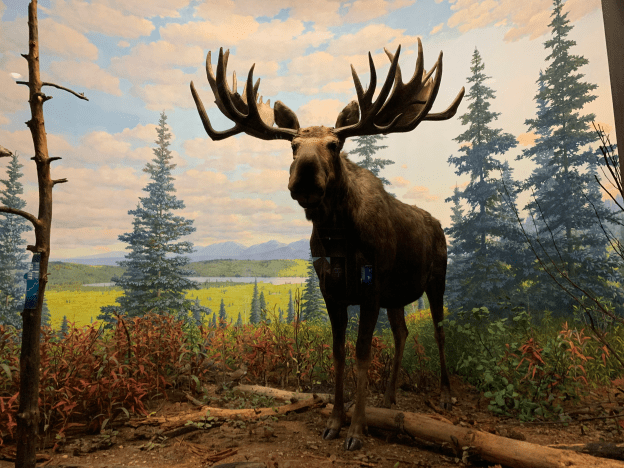
As a boy and young man, Roosevelt was beset by a variety of ailments that left him homebound and unable to experience the vigorous life that he dreamed of. So, entering adulthood as a student at Harvard, he began to live out that strenuous life that he’d dreamed of, and slowly but surely worked hard to strengthen his body and rise out of the afflictions that confined his childhood. I’d wondered for a while now how this could have worked, today we often identify people by the ailments they suffer, even identifying ourselves in this manner. It’s good to acknowledge ourselves, yet I wonder if it also keeps our eyes as a species and especially here in the United States focused on what holds us back rather than what will allow us to rise up? During this weekend hard at work though, running up and down stairs and working directly with thousands of my fellow Kansas Citians and visitors to our fountain city, I found that even though I could feel the congestion that beset me, it didn’t control what I was doing. The more I kept moving, the more I kept observing the people around me, and the more I helped those people to have the best experience they could attending the performances on in the building, the better I felt. By the end of my shift on Day 7, while I certainly was congested, my primary physical sensation was exhaustion, which was fitting. Perhaps then this conference tour would be good for my health and would make it easier for me to fully recover. Granted, the congestion I began feeling at the end of October was far less severe than the two colds I caught in June and July of this year. I was reminded over the weekend that if I were sicker, like I was at the end of June, it would be a far different story. Still, perhaps this is a lesson in how to keep the onset of these colds at bay: to keep moving, to keep working, all while drinking double or triple the usual amount of water. Maybe then I too can come close to saying I’m as fit as a bull moose.