Tag Archives: blogging

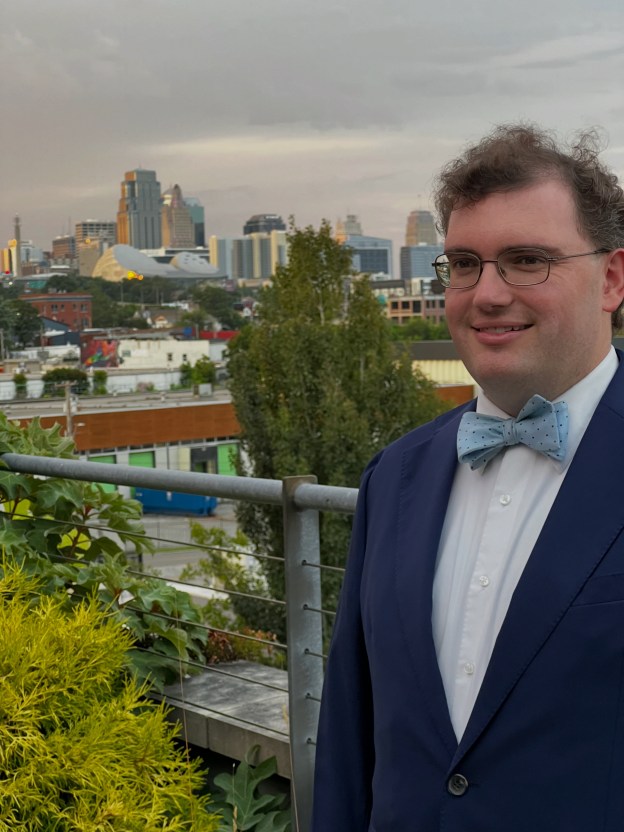
The author posing in front of the Kansas City skyline in July 2025.

The Wednesday Blog

This week, to conclude what I’ve been saying.—Click here to support the Wednesday Blog: https://www.patreon.com/sthosdkane—Sources:%5B1%5D “Signs,” Wednesday Blog 1.10.[2] “On Servant Leadership,” Wednesday Blog 6.15.[3] Percy Bysshe Shelley, “Ozymandias,” Poetry Foundation.


This week, to conclude what I’ve been saying.


I’ve said over the four years that I’ve been writing the Wednesday Blog weekly that I would stop writing this when it ceased to be fun. That’s a good rule for life overall that I’ve found: devote your life to things you love doing and keep them fun in the process. I tend to put on a very dry public face; a friend recently commented that I didn’t seem like one to scream or cheer at a concert, I affirmed that statement and demonstrated my own gentle “hurray!” to great amusement. This blog has changed with the times. It began as a project for me to write about things I enjoy outside of my research. I like to point to an early blog post all about my favorite state highway signs as a good example of this.[1] Yet I’ve found the topics I write about are changing, they’re becoming more academic, outlets where I can introduce some of the ideas I’m working on in my professional life and workshop them in a public forum. It’s a bald faced way of getting more readers to the Blog, I admit, yet so far, it’s worked.

I continue to cover politics here when I feel there’s a need to say something. Yet I’ve tried to balance what I’m writing to keep it positive, or at least to ensure that what I end up publishing suggests ways we can move forward out of the current crises we face. After all, there are enough writers out there pointing out the crises of the moment, some of us should be looking to the future to offer a light ahead that we all can reach for. This Spring, I was inspired by the commemorations in Boston of the 250th anniversary of the start of the American Revolution and the rallies for democracy here in Kansas City to focus that positive attention on popular action, the root of any good political system. I believe that government must act with the consent and full participation of the governed, and that through our elected representatives at all levels we ought to consider ourselves both governed and government. It sounds paradoxical, I know, and to an extent I believe that paradoxes are often a good thing. I devised one of my favorite phrases, “the extraordinary acts of ordinary people” to express this sentiment, that it is people acting out of the ordinary, out of what is considered ordered, which propels political change and keeps our politics fresh.[2] In 2023 one of the fads of the year on the internet was women asking men how often they think of the Roman Empire. I was asked this by one of my colleagues over lunch at the Nativity Parish School and remarked that because I was teaching the Romans at the time they were front of mind. Beyond this however, as much as I am familiar with the remains of the Empire, I am more drawn to the Republic and its ideals of popular government, even if they were never realized. The founders of the United States sought to model this federal republic on Roman models, yet they kept the Constitution they framed fresh for its day, an American constitution living in its ability to be amended to fit the changing times and passage of each generation rather than a Roman one deemed sacred through association with the old Republic’s gods and ancient institutions. Our republic is secular because for it to be sacred is to make it inviolate and unchanging, a monolith which will grow ever more distant from the people it was meant to govern, until like Shelley’s Ozymandias it is left as a mere pedestal of itself adrift in the sands of time.[3]

I want to stay a while longer with this phrase because I am so proud of it. To trumpet the extraordinary acts of ordinary people is to say that everyone has a voice and an impact upon the rest of us. In the first few years of the Wednesday Blog, my political essays tended to get lower readership across the board. I started writing the Blog in March 2021, a year after the January 6th insurrection showed how much the Republic was corrupted by the refusal to concede the 2020 election which caused that attack on the Capitol. I’ve seen a steady decline in political readership for my writing since the 2016 election, yet after 2020 that readership dropped off a cliff. American politics today is not a happy thing to write about, and at the moment it only seems to be getting worse. Yet by focusing less on the people in power and more on the people engaged for the common good I saw my readership grow on these political essays until they tended to be level with my other non-academic writing. A great inspiration for me here lies in the revolutionary era anthem Chester, sung by the New Englanders in the Continental Army and one of the older tunes in this country’s patriotic songbook. I’d been listening to it here and there without realizing for months, yet once I figured out what it actually was, when I was in Boston in March no less, I found that it spoke to my sentiment in a far greater way than I anticipated. I’m listening to William Schuman’s arrangement in his New England Triptych (1956) as I write this now, a New Deal era work intended to celebrate the democratic spirit of the cradle of the revolution.

There is a great deal of history behind my politics, naturally I notice that being a trained historian, and having taught American and British history on several occasions and having read a great deal in Irish history I can point out the various threads which I’ve coalesced into a logical genealogy of my political philosophy. Suffice to say, I believe it is better to look to the future and enact political policy which will build a future that we can all be proud of. At the core of this is listening to the people around us, hearing what they have to say, and listening to our own logic and empathy, two things which should always work together in our decisions. In writing about the extraordinary acts of ordinary people I look to those who will appear from the crowd as the leaders from my millennial generation and those coming up behind us in Generations Z and Alpha. We have inherited a great mess, and we have a lot of work to do. There are plenty of people arguing and advocating on what needs to be reformed, I feel better suited to provide an optimistic voice of what we could look forward to. By putting ordinary people front and center, I hope to make clear that policy should address problems from the bottom up, help reinforce and support the poorest in society that the whole structure grows stronger in kind. You might call this trickle-up economics, to speak to the Reaganites. We could build a future where everyone has good work, they can be proud of, enough to eat, a roof over their heads, and where every child learns how to read. We could have this future where people feel that law is meant to support them rather than push them down. I see this every day when I’m out around town: I suspect that the general sentiment behind people who run stop signs, red lights, or drive in transit only lanes is that the law has never worked in their favor, always rather beaten them down and stripped them of their humanity, so why should they follow the law? We must find our humanity in each other if we are ever going to grow out of this time of crises and begin to build a better future.

I enjoy thinking about the future in other languages, not just in the sense of the future tense but in the mentality of the language. How do they express things which haven’t happened but will come? In English we have the word future as a monolith on its own, derived from French and originally from the Latin futūrus, an irregular future active participle of the to be verb sum. In English, the future is as much a place as it is a time, it’s the destination we’re going to. Yet is it not better to think of the future as the scenery about to pass by as we go down the line like the trees and fields that we pass on a train? The present is momentary, here and gone in the blink of an eye, each millisecond the present, and the past a great gulf of memory whence we came. Yet the future is something both unknown and recognizable. It is both what we can see ahead of us along the way and what is just over the next horizon. It is an irregular version of being which will come someday. French expresses the concept of the future like this, whereas futur refers to the tense, l’avenir is instead the noun I’ve heard used most to describe the concept of the future. Yet l’avenir instead merely is the crafting of a phrase, temps à venir (time to come) into a noun, avenir, or that which is coming. We don’t know in truth what it is, what it will feel like when it comes, yet we know that someday we will see it and live in it. The future is inevitable, yet it is not singular by nature. Rather, if there is one past and present those are merely the choices made by actors in those moments which were chosen from the multitude that is possible from what could come. 

Irish expresses this sense of the future well because Irish really has no specific word for future. There is a future tense, which in some ways is more regular in its formation than the Irish present tense. Instead, Irish uses a phrase which breaks down the future into its core concepts:  An rud atá le teacht, or the thing which is coming. Therein lies the future in its baldest form: it is merely the thing that is coming next out of all the possibilities. Another topic which I seemed to write about a fair deal for a while was faith, self-help, and religion. My Catholicism is influential to my cosmovision and political philosophy in my core belief of the paradoxical nature of God, that God can exist yet also be omnipotent and omniscient. Because of this, I like to say, “anything is possible in the Eyes of God,” or for short, “anything is possible.” As I think about the end of my doctoral writing and needing a dedication to affix on my dissertation, I’ve found myself thinking about this phrase, and about who my audience is. After all, you now reading this sentence in my future, just as I wrote it in your past. It is possible that just about anyone could be reading this now, and so rather than dedicate my work to one person in particular in the moment in which I am writing it, perhaps I ought to instead dedicate it to the possible, or rudaí indéanta in Irish. That second word indéanta is a neat one because it comes from the verb déan, meaning to do, thus the possible is something that might be done. In English and French, I say, “I am studying” or « J’étudie, » yet in Irish, I say, “Déanaim ag staidéar,” or “I am doing study,” which makes the study more of an act than a state of being. The future has and always will be something acted, something done by individuals in our own small ways that creates great change in the collective form.

I study history because of all the things I am interested in it is history which brings them together. So far, history is a human creation made in our image and likeness which seeks to tell our story as best as we can recall it. We’ve devised historical methods of a similar manner to understand other histories, salvation history, church history, and natural history to name three. I returned to natural history as an adult yearning for the halcyon days of curiosity and wonder from my early childhood and built my career on my study of André Thevet’s (1516–1590) sloth. It’s become my gateway into the history of natural history, and through it I’m beginning to make my name as a sloth historian. I do not believe in prescriptivism, the notion that history in inexorably leading to some great moment in the future when the final form of human nature will announce itself. I think this is limiting, claustrophobic in fact. It’s far too simplistic to say that we will all wake up someday and find the morning sunlight is just a little bit brighter, the grass and trees greener, and the sky a prettier shade of blue because there’ll be somebody among us who will find something contrary about the experience. I for one an enjoying the gray skies outside my window today, it’s finally cool enough in mid-October for me to open the blinds in my room and let some sunlight in without making it too hot. Rather, history teaches us that the future is what we will make of it. I chose to not study the twentieth century because I felt this dolorous pain in my heart that there were so many things which happened in the last century which could have been avoided, choices which could have been different. In studying recent history, I worried I would be faced with the ghosts of the world wars, Great Depression, and all the troubles faced by humanity in general and my fellow Irish Americans in particular throughout my working life. 

Instead, I looked deeper into the past, first to the Roman Republic with an interest in studying the expansion of Roman citizenship in the late Republic after the Social War of the 90s and 80s BCE and later to the Renaissance, a period that seemed similar enough, Latinate to be sure, yet full of people and stories who I felt I could relate to better than the ancients. I found Thevet almost accidentally, and through his sloth I feel that I’ve found balance in my life that sustains me today, makes me feel more fulfilled in my efforts than I was before. My history is fundamentally interdisciplinary, historical zoology adopts zoological methods and theories to determine the true nature of historical animals, layering their scientific taxa upon their far older human memory and legendaria. In Thevet I am able to work with the ancients, looking especially Aristotle and Pliny, yet soon after I can turn around and look ahead to Buffon and Linnaeus and see how they interpreted what Thevet wrote in order to establish a clear lineage through the historical record for the animal in question. There is nothing sure about this history, often the historical sources are lacking with detail about a given animal, or the zoological data may not have enough detail about an extinct species to offer a clear picture of what it is I am describing. Both are limited by the foggy memory of the human past, yet together they can offer a light with which to move ahead and keep exploring those parts of our cosmos which are still strange and unfamiliar to us today.

I write because it is the greatest way I’ve yet found to express myself. I can say far more in an essay such as this than I could in a conversation. The Wednesday Blog remains less formal than my academic writing, here I use the first person. Yet with the passage of time, I’ve found the Blog has become more academic to the point that friends have told me they got an education about Thevet that they never expected. The Blog has several antecedents, including earlier less regular blog posts which you can find on this same website from before 2021 that all form the roots of this project. I’m proud of the writing I’ve done here, the Wednesday Blog now is comprised of 238 essays and 200 podcast episodes, I’ve written 521 pages, and the total word count is over 300,000. The future is defined as much by its potential as the fact that once it comes to be what was present will then be past. To see an end gives all things meaning. It is for this reason, at the end of the sixth book of the Wednesday Blog, and fifth season of the podcast, that I’ve decided to end this particular publication. This remains a fun thing to write, yet I have so much more to do today, and I only see that workload growing as I try my hand at more peer-reviewed articles, books, and translations in the coming decades. I hope the Wednesday Blog will be a testament to who I was at this point in my life in the years after the COVID-19 Pandemic and during my long years of doctoral study. Let these essays remain a monument of the first half of the 2020s, a sign of where we’ve been and where I hope we will be going.


[1] “Signs,” Wednesday Blog 1.10.

[2] “On Servant Leadership,” Wednesday Blog 6.15.

[3] Percy Bysshe Shelley, “Ozymandias,” Poetry Foundation.
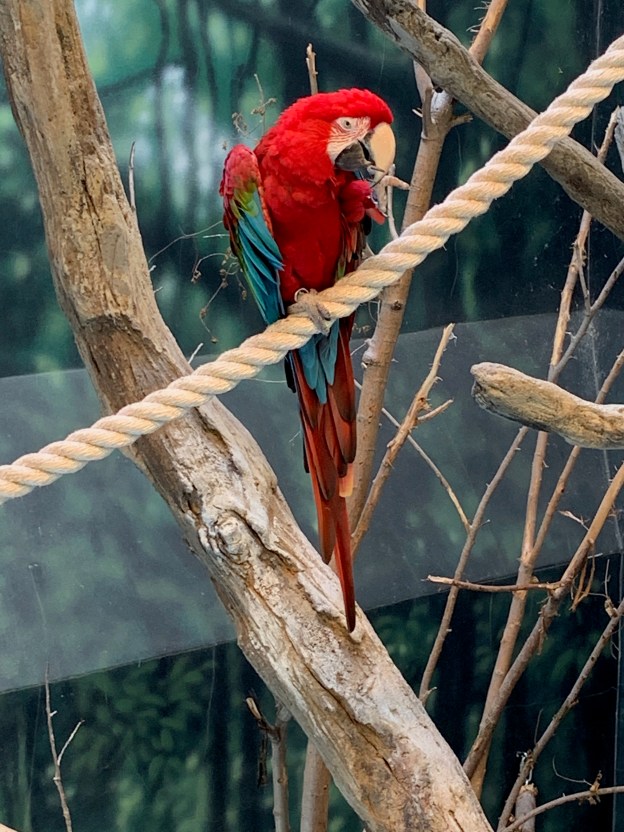

A macaw

On Skepticism

This week, I express my dismay at how fast time seems to be moving for me of late and how it reflects the existence of various sources of knowledge in our world.—Click here to support the Wednesday Blog: https://www.patreon.com/sthosdkane—Sources:%5B1%5D Ada Palmer, Inventing the Renaissance: The Myth of a Golden Age, (University of Chicago Press, 2025), 603.[2] If this word epistemology leaves you confused, have no fear, for my own benefit as well I wrote a blog post explaining this word alongside two of its compatriots. “Three Ologies,” Wednesday Blog 6.6 (podcast 5.6).


This week, I express my dismay at how fast time seems to be moving for me of late and how it reflects the existence of various sources of knowledge in our world.


I first noticed the passage of time on my tenth birthday, that is to say I remember remarking on how from that day on for the rest of my life, I would no longer be counting my years in single digits. I remember distinctly the feeling of surprise at this, a sense that I could never go back to my earliest years. That was especially poignant for me as those first six years lived in the Chicago suburbs held a nostalgic glow in my memory then as they do now. In those early years I felt that time moved slowly; I remember once as a kid I fretted over a 3 minute cooking timer, worrying that I would be unable to stand there and watch the flame over which I was cooking eggs for a full 3 minutes. Today that sounds silly, yet I believe it is vital to remember how I felt all those years ago lest I lose my empathy with my past self or anyone else I may encounter with similar concerns over things I see as minute.

Soon after my tenth birthday, I found a new method of getting through things that I found tedious or even odious to endure. I realized that if I tricked myself into enjoying the moment that the tedium would pass by quicker than if I wallowed in my annoyance and misery. Perhaps there was a degree of pessimism in this realization: that the good moments don’t seem to last as long as the bad ones in my recollection of things, or that it’s in fact easier to remember the bad more than the good. This is something I’ve been struggling with lately, that when I find my thoughts sinking to these depths of my greatest uncertainty and grief that I need to remind myself of all the good in my life. Time seems to move faster today than it did before. The days fly by more than linger, and there’s always something new or old that I need to do. I’ve long thrived on work, a trait I inherited from my parents. Often my happiest days are those spent dedicated to a specific task; those days are made happy by my sense of accomplishment once the task has progressed or even is done. I’ve learned to accept that good things won’t often be finished in a day. I’ll push myself instead to do as much as I feel I can do in the span of a day and see where that leaves me when I go to bed at night. With the new introduction to my dissertation this meant that it took me 9 days to write all 105 pages of it. This is one of those times where I feel that I’m on a roll and in my writer’s paradise when I can write and write and write and not run out of ideas to commit to paper.

Yet I worry about that quicker passage of time because I feel that there are less things that I’m able to do in a given day than I would like. I sacrifice rest sometimes in order to see a project to completion, or I choose to try and find a balance between my work and the rest of my life only to see one side, or another overwhelm its counterpart leaving me feeling unfulfilled when I retire for the night. I do worry that the time I’m afforded is limited, and that I’m not going to do everything I want to undertake. There are plenty of things I want to write, so much I want to say, yet so little time in a given day to say it. I’m still young, just a few weeks over halfway to my 33rd birthday. I have this lingering feeling that there’s so much that I want to do with the life I have and an indeterminate amount of time with which to do those things. Am I content with what I’ve done with my life so far? Yes. Is there so much more I want to do? Absolutely.

I suspect this shock at time moving faster is my own realization of my mortality. Everything has a beginning and an end, the mystery lies in not knowing either terminus directly. How many of us can remember our own birth? I certainly can’t. By the same token we can’t necessarily interview the dead after they’ve shuffled off this mortal coil because, in the words of Dr. McCoy, they’re dead. Thus, we remain doubters of our own mortality, our limits. I often hear older friends talk about how the young feel invincible and immortal and make mistakes which reinforce that sentiment of invincibility all while, if they’re particularly bold or just unlucky, asserting their mortality with a sudden abandon. Our doubts are aimed at established sources of knowledge, authorities to whom we feel no particular duty to abide even if we begrudgingly accept their precepts out of bare necessity. I see enough people every day ignore pedestrian crossing lights even though they are there on the city’s authority to protect us pedestrians when crossing the streets that we’ve abdicated to vehicles. It usually leaves me at least frustrated at the ignorance of the driver, at most even angry when I’ve gotten close to being hit by such an ignoramus.

Skepticism is a significant marker in Renaissance studies as a transitional element from the classically inspired scholarship of the fifteenth and sixteenth centuries into the empirical knowledge-making that traditionally we’ve said was emblematic of the Scientific Revolution. I have many colleagues who are working now on disproving the existence of that Scientific Revolution; I admire that cause and yearn to read what they’re writing even though one of my stock courses to teach is called “the Scientific Revolution: 1500-1800.” Ada Palmer calls Michel de Montaigne, in some ways the inspiration for my Wednesday Blog, “the avatar of this moment” when skepticism became a driving force in Renaissance thought.[1] I argue in my dissertation that the American experience drove the course of skeptical thought in the Renaissance; all the things which André Thevet called singular in the Americas represented a dramatic break from classical standards of knowledge which required a new epistemology to explain them.[2] The key here is that we should never be complacent that our current knowledge is all there is to know, after all a well-lived life is a life spent learning. I’m skeptical about many things and have a drive to continue learning, to continue exploring. Curiosity hasn’t killed this cat yet.[3]I find then that my time is best spent in pursuit of this knowledge, and as much as one can learn alone in the solitude of their study reading and thinking quietly to oneself like a monk, it is far better to learn in communion with others. Since the pandemic began, I’ve grown particularly fond of Zoom lectures, webinars, and workshops as much for the expertise on show as for the community they build. Even if we only communicate through these digital media I still look forward to seeing these people, to experiencing that one part of life with them. We learn so that we might have richer experiences of our own lives, so that we might find comfort in our knowledge, so that we might, in Bill Nye’s words, “change the world.” In the time that I have afforded to me I want to learn more than anything else, to learn about the people around me, about our common heritage, about what our future may hold, and about myself. If I can do that, then when I am “no more, cease to be, expired and gone to meet my maker, become a stiff, bereft of life and resting in peace” I’ll be content in my leave-taking. Hopefully unlike the dead parrot they won’t nail me to my perch like Bentham’s auto-icon which greets knowledge-seekers in the South Cloisters of University College London, though that could be a rather humorous way to go.


[1] Ada Palmer, Inventing the Renaissance: The Myth of a Golden Age, (University of Chicago Press, 2025), 603.

[2] If this word epistemology leaves you confused, have no fear, for my own benefit as well I wrote a blog post explaining this word alongside two of its compatriots. “Three Ologies,” Wednesday Blog 6.6.

[3] Meow.


The author pulling a face at the camera.

On Writing

This week, some words about the art, and the craft, of writing.—Click here to support the Wednesday Blog: https://www.patreon.com/sthosdkane—Links in this episode:Patrick Kingsley, Ronen Bergman, and Natan Odenheimer, “How Netanyahu Prolonged the War in Gaza to Stay in Power,” The New York Times Magazine, (11 July 2025).John McWhorter, “It’s Time to Let Go of ‘African American’,” The New York Times, (10 July 2025).Bishop Mark J. Seitz, D.D., “The Living Vein of Compassion’: Immigration & the Catholic Church at this moment,” Commonweal Magazine, (June 2025), 26–32.“On Technology,” The Wednesday Blog 5.2.“Artificial Intelligence,” The Wednesday Blog 4.1.


This week, some words about the art, and the craft, of writing.


In the last week I’ve been hard at work on what I hope is the last great effort toward completing my dissertation and earning my doctorate. Yet unlike so much of that work which currently stands at 102,803 words across 295 U.S. Letter sized pages inclusive of footnotes, front matter, and the rolling credits of my bibliography I am now sat at my desk day in and day out not writing but reading intently and thoroughly books that I’ve read before yet now find the need for a refresher on their arguments as they pertain to the subject of my dissertation: that André Thevet’s use of the French word sauvage, which can be translated into English as either savage or wild, is characteristic of the manner in which the French understood Brazil as the site of its first American colony and the Americas overall within the broader context of French conceptions of civility in the middle decades of the sixteenth century. I know, it’s a long sentence. Those of you listening may want to rewind a few seconds to hear that again. Those of you reading can do what my eyes do so often, darting back and forth between lines.

As I’ve undertaken this last great measure, I’ve dedicated myself almost entirely to completing it, clearing my calendar as much as I see reasonable to finish this job and move on with my life to what I am sure will be better days ahead. Still, I remain committed to exercising, usually 5 km walks around the neighborhood for an hour each morning, and the occasional break for my mind to think about the things I’ve read while I distract myself with something else. That distraction has truly been found on YouTube since I started high school and had a laptop of my own. This week, I was planning on writing a blog post which compared the way that my generation embraced the innovation of school-issued laptops in the classroom and the way that starting next month schools and universities across this country will be introducing artificial intelligence tools to classrooms. I see the benefits, and I see tremendous risks as well, yet I will save that for a lofty second half of this particular essay.

I’ve fairly well trained the YouTube algorithm to show me the sorts of videos that I tend to enjoy most. Opening it now I see a segment from this past weekend’s broadcast of CBS Sunday Morning, several tracks from classical music albums, a clip from the Marx Brothers’ film A Night at the Opera, the source of my favorite Halloween joke, and a variety of comic videos from Conan O’Brien Needs a Friend to old Whose Line is it Anyway clips. Further down are the documentary videos I enjoy from history, language, urbanist, and transportation YouTubers. Yet in the last week or so I’ve been seeing more short videos of a minute or less with clips from Steven Spielberg’s 2012 film Lincoln. I loved this film when I saw it that Thanksgiving at my local cinema. As longtime readers of the Wednesday Blog know, I like to call Mr. Lincoln my patron saint within the American civic religion. As a young boy in Illinois in the ‘90s, he was the hero from our state who saved the Union and led the fight to abolish slavery during the Civil War 130 years before. Now, 30 years later and 160 years out from that most horrific of American wars I decided to watch that film again for the first time in a decade. In fact, I’m writing this just after watching it so some of the inspiration from Mr. Lincoln’s lofty words performed by the great Daniel Day-Lewis might rub off on my writing just enough to make something inspirational this week before I return in the morning to my historiography reading.

Mr. Lincoln knew what every writer has ever known, that putting words to paper preserves them for longer than uttering even the longest string of syllables can last. What I mean to say is they’ll remember what you had to say longer if you write it down. He knew for a fact that the oft quoted and oft mocked maxim that the pen is mightier than the sword is the truth. After all, a sword can take a life, as so many have done down our history and into our deepest past to the proverbial Cain, yet pens give life to ideas that outlive any flesh and bone. I believe writing is the greatest human invention because it is the key to immortality. Through our writing generations from now people will seek to learn more about us in our moment in the long human story. I admit a certain boldness in my thinking about this, after all I’ve seen how the readership and listener numbers for the Wednesday Blog ebb and flow, and I know full well that there’s a good chance no one in the week I publish this will read it. Yet I hold out hope that someday there’ll be some graduate student looking for something to build a career on who might just stumble across my name in a seminar on a sunny afternoon and think “that sounds curious,” only to then find some old book of my essays called The Wednesday Blog and then that student will be reading these words. 

I write because I want to be heard, yet I’ve lived long enough to know that it takes time for people to be willing to listen, that’s fair. I’ve got a growing stack of newspaper articles of the affairs of our time growing while my attention is drawn solely to my dissertation. I want, for instance, to read the work of New York Times reporters Patrick Kingsley, Ronen Bergman, and Natan Odenheimer in a lengthy and thorough piece on how Israeli Prime Minister Netanyahu “prolonged the War in Gaza to stay in power” which was published last Friday.[1] I also want to read John McWhorter’s latest opinion column “It’s Time to Let Go of ‘African American’”; I’m always curious to read about suggestions in the realm of language.[2] Likewise there are sure to be fascinating and thoughtful arguments in the June 2025 issue of Commonweal Magazine, like the article titled “’The Living Vein of Compassion’: Immigration & the Catholic Church at this moment” by Bishop Mark Seitz, DD of the Diocese of El Paso.[3] I’m always curious to read what others are writing because often I’ll get ideas from what I read. There was a good while there at the start of this year when I was combing through the pages of Commonweal looking for short takes and articles which I could respond to with my own expertise here in the Wednesday Blog. By writing we build a conversation that spans geography and time alike. That’s the whole purpose of historiography, it’s more than just a literature review, though that’s often how I describe what I’m doing now to family and friends outside of my profession who may not be familiar with the word historiography or staireagrafaíocht as it is in Irish. 

Historiography is writing about the history that’s already been written. It’s a required core introductory class for every graduate history program that I’m familiar with, I took that class four times between my undergraduate senior seminar (the Great Historians), our introductory Master’s seminar at UMKC (How to History I), and twice at Binghamton in courses titled Historiography and On History. The former at Binghamton was essentially the same as UMKC’s How to History I while the latter was taught by my first doctoral advisor and friend Dr. Richard Mackenney. He challenged us to read the older histories going back to Herodotus and consider what historians in the Middle Ages, Renaissance, Enlightenment, and Nineteenth Century had to say about our profession. Looking at it now, the final paper I wrote for On History was titled “Perspectives from Spain and Italy on the Discovery of the New World, 1492–1550.” I barely remember writing it because it was penned in March and April 2020 as our world collapsed under the awesome weight of the Coronavirus Pandemic. Looking through it, I see how the early stages of the pandemic limited what I could access for source material. For instance, rather than rely on an interlibrary loan copy of an English translation, perhaps even a more recent edition, of Edmundo O’Gorman’s The Invention of America, I instead was left working with the Spanish original that had been digitized at some point in the last couple decades. Likewise, I relied on books I had on hand in my Binghamton apartment, notably the three volumes of Fernand Braudel’s Civilization and Capitalism, in this case in their 1984 English translations. I wrote this paper and then forgot about it amid all the other things that were on my mind that Spring, only to now read it again. So, yes, I can say to the scared and lonely 27 year old who wrote this five years ago that someone did eventually read it after all.

What’s most delightful about reading this paper again is I’m reminded of when I first came across several names of fellow historians who I now know through professional conferences and have confided in for advice on my own career. The ideas first written in the isolation of lockdown have begun to bear fruit in the renewed interactions of my professional life half a decade later. What more will come of those same vines planted in solitude as this decade continues into its second half? Stretching that question further back in my life, I can marvel at the friendships I’ve cultivated with people I met in my first year of high school, now 18 years ago. That year, 2007, we began our education at St. James Academy where many of us were drawn to the promise of each student getting their own MacBook to work on. I wrote here in March 2024 about how having access to that technology changed my life forever.[4] So, in the last week when I read in one of my morning email newsletters from the papers about the soon-to-be introduction of artificial intelligence to classrooms across this country in much the same way that laptops in classrooms were heralded as the new great innovation in my youth I paused for a few moments longer before turning to my daily labor.

I remain committed to the belief that having access to a laptop was a benefit to my education; in many ways it played a significant role in shaping me into the person I am today. I wrote 14 plays on that laptop in my 4 years in high school, and many of my early essays to boot. I learned how to edit videos and audio and still use Apple products today because I was introduced to them at that early age. It helps that the Apple keyboard comes with easy ways to type accented characters like the fada in my name, Seán. Still, on a laptop I was able to write much the same that I had throughout my life to that point. I began learning to type when I was 3 years old and mastered the art in my middle school computer class. When I graduated onto my undergraduate studies though I found I could take notes far better that I could remember by hand than if I typed them. This is crucial to my story: the notes that I took in my Renaissance seminar at UMKC in Fall 2017 were written by hand, in French no less, and so when I was searching for a dissertation topic involving Renaissance natural history in August 2019, I remembered writing something about animals in that black notebook. Would I have remembered it so readily had I typed those notes out? After all, I couldn’t remember the title of that term paper I wrote for On History in April 2020 until I reopened the file just now.

Artificial intelligence is different than giving students access to laptops because unlike our MacBooks in 2007, A.I. can type for the student, not only through dictation but it can suggest a topic, a thesis, a structure, and supporting evidence all in one go. Such a mechanical suggestion is not inherently a suggestion of quality however, and here lies the problem. I’ve read a lot of student essays in the years I’ve been teaching, some good, some bad. Yet almost all of them were written in that student’s own voice. After a while the author’s voice becomes clear; with my current round of historiography reading, I’m delighting in finding that some of these historians who I know write in the same manner that they speak without different registers between the different formats. That authorial voice is more important than the thesis because it at least shows curiosity and the individual personality of the author can shine through the typeface’s uniformity. Artificial intelligence removes the sapiens from we Homo sapiens and leaves our pride in merely being the last survivor of our genus rather than being the ones who were thinkers who sought wisdom. Can an artificial intelligence develop wisdom? Certainly, it can read works of philosophy both illustrious and indescribably dull yet how well can it differentiate between those twin categories to give a fair and reasoned assessment of questions of wisdom?These are some of my concerns with artificial intelligence as it exists today in July 2025. I have equally pressing concerns that we’ve developed this wonderous new tool before addressing how it will impact our lived organic world through its environmental impact. With both of these concerns in mind I’ve chosen to refrain from using A.I. for the foreseeable future, a slight change in tone from the last time I wrote about it in theWednesday Blog on 7 June 2023.[5] I’m a historian first and foremost, yet I suspect based on the results when you search my name on Google or any other search engine that I am better known to the computer as a writer, and in that capacity I don’t want to see my voice as soft as it already is quieted further by the growing cacophony of computer-generated ideas that would make Aristophanes’ chorus of frogs croak. Today, that’s what I have to say.


[1] Patrick Kingsley, Ronen Bergman, and Natan Odenheimer, “How Netanyahu Prolonged the War in Gaza to Stay in Power,” The New York Times Magazine, (11 July 2025).

[2] John McWhorter, “It’s Time to Let Go of ‘African American’,” The New York Times, (10 July 2025).

[3] Bishop Mark J. Seitz, D.D., “The Living Vein of Compassion’: Immigration & the Catholic Church at this moment,” Commonweal Magazine, (June 2025), 26–32.

[4] “On Technology,” The Wednesday Blog 5.2.

[5] “Artificial Intelligence,” The Wednesday Blog 4.1.


On Pauses

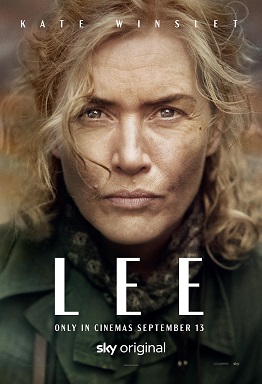
This week, some words about silence in communication. — Click here to support the Wednesday Blog: https://www.patreon.com/sthosdkane Photo: the poster for the new film "Lee" which is discussed in this episode.


This week, some words about silence in communication.


In my current job, one thing that is often challenging for new hires is learning how to operate our radios. In general, personal radios are the same no matter where you go, albeit with different features added to higher-end models like screens telling you which channel it’s tuned to. I found our radios to be one of the easier parts of the job to adapt to, I have experience working with radios from my time in the Boy Scouts for one. Yet I wish when teaching people how to use radios for the first time we would talk about how we communicate on a most basic level. We use all of our senses to communicate but especially our sight and hearing. 

Sound is the purest medium of communication for us humans: we talk with one another by emitting sounds from our mouths and receiving them with our ears. There’s a whole genre of performance these days called “spoken word” which annoys me because that’s the purest and most fundamental form of communication, let alone art, that we have. Rather, it should be called speakingtalking, or if you want to be fancier oratory. It’s only since we began to read silently that this distinction between speech and writing has grown. From what I remember hearing, the first significant reader to read silently was St. Augustine of Hippo, though that could be apocryphal.

Beyond sound there’s visual communication. In my job when we’ve talked about backup plans should our radios no longer be functional or useful I’ve suggested, perhaps a tad jocularly, that we should resort to semaphore flags, or some sort of similar if more rudimentary system. I have the semaphore Wuthering Heightssketch from Monty Python’s Flying Circus in mind when making this suggestion, but still, it’s always worth considering. In writing we are stuck having to express the full range of emotions and meanings in a manner that is limited by letters, words, and symbols on a physical surface. Emojis now help in more popular parlance to express the emotion behind our texts and social media posts, yet there again I often get annoyed when I see the bubbly and bucolic emojis used in places where they seem unfit, as though a contemporary expectation is that we all are using a string of emojis at the ends of our sentences because everyone else is doing it. I removed the emojis placed by default on a happy birthday message that Facebook suggested I send to a friend because they aren’t a necessary part of my communication. I use the period, or full stop for my non-American readers, at the ends of my texts because that’s how I end a sentence unless it’s interrogatory or exclamatory in nature.

As you can see, I have more to say about visual communication, especially the written word, because that is my own medium. I also dabble in photography, and have embraced Instagram for this reason, yet again I feel less need to take selfies everywhere I go because I can far more honestly demonstrate my presence in a place through writing. On my Instagram stories, I decided about a decade ago when I first opened my account that I would always format my captions with a highlighted blue background and white text as a way of saying, however subtly, to my readers that these are my words. I’ve kept to that, though this is the first time I’ve acknowledged that practice.

In either of these senses, hearing or sight, should we lack one we have to rely even more on the other to understand our surroundings and what others are trying to express. I’ve learned a hard lesson that my nonfiction writing benefits greatly from firm clarity over the opacity that I prefer as I unravel the story in my fiction. The same occurs when using radios: these are devices which allow an individual to communicate with others from a distance sight-unseen. The words we speak into our radios then need to be crystal clear for the people listening to understand what we are trying to say. I like to think of the mission controllers in Houston or Star City who have relayed intricate strings of numbers up to astronauts and cosmonauts beyond our planet to help them complete their missions and return home safely. It gives me a thrill to try to be that clear on my radio, and to be comfortable with that level of clarity when speaking into it.

Yet beyond these two senses, we have minds which are experiencing all of the things that our senses relay to it. We see more than just the messages other people display or transmit, and we hear more than just talk. Our minds are capable of parsing through all of this and making meaning out of it to orientate us in our lived worlds. This summer when I was back in London, I knew I was in a very public setting in close proximity to about 10 other people when I took the new Elizabeth line from the Docklands to the West End one Sunday afternoon, yet I also knew from experience and from seeing the people around me that no one would think anything if I pulled out the book I’d just bought, Michael Palin’s Erebus, and start reading it. Sure, everyone around me could see what I was reading if they wanted, but in that moment it was perfectly alright to do that because it was an unspoken part of life on the trains of the British capital that people pass the time by reading, so long as those readers don’t then share what they’ve just read with the strangers seated or standing about them.

On Friday afternoon last week, I went to one of the local cinemas to see the new film Lee staring Kate Winslet as Lee Miller, one of the great photographers and war correspondents of the last World War. I bought my ticket knowing it was going to be a stellar performance from Winslet, yet I was struck just as much by the dialogue as I was by the pauses written into the script. In one scene, one such pause propelled the story forward far more than any other moment in the whole film, connecting the postwar framing narrative together with the main story being told. That’s the beauty of theatre and film: it’s a medium where the written script is interpreted by actors who we see and hear, and so these two senses are unified to bring these characters and stories to life. This film, like its contemporary Freud’s Last Session which I saw earlier this year, had the feel of a play, and could probably work as such though the realism of Lee is that it takes the audience along with the photographer as she witnesses the destruction of Europe and the horrors committed by the Nazis in the wake of their fall from power in 1944 and 1945.

These silent moments are something that I find can be expressed more in my narrative writing, a style I usually use writing fiction, where I’m writing dialogue as well as the connecting tissue giving those words spoken by the characters their place in the world of the story. In real life we can express nearly as much with a look as we can with a word. This setting of Britain, Occupied France, and Germany in World War II is a potent one for telling stories, after all so many movies continue to be made about that war even as we move ever further from those years. I wonder if in the twenty-first century when we are so connected by our technology, how are our innate communicative abilities adapting to our newfound world? When I was little it was a big deal to see a copy of a foreign newspaper available for sale here in Kansas City; you could maybe buy a copy of the Sunday Times at Barnes & Noble in the magazine section, but they wouldn’t always have it available. Today though, we have people from all around the globe talking at once.

What is it we aren’t saying amid all the cacophonic chaos of our modern social media?